
An engineer comparing components and a purchasing manager looking for a supplier may arrive on the same website with very different questions. One needs specifications and product details, while the other wants to understand your capabilities and find the right person to contact. A good manufacturing website helps both get where they need to go without making them work through your entire catalog.
That makes your agency choice about more than the look of the site. Depending on your business, the project could involve organizing thousands of products, bringing several brands together, or making distributor information easier to find. You’ll want a team that can show you how it has approached the kind of complexity you’re dealing with.
The 20 agencies in this guide offer different design and development strengths, with examples you can explore before reaching out. Use the specialties to narrow your options, then look closely at the work that resembles your own needs in the ways that matter: products, audiences, and how customers buy.
How we selected these manufacturing web design agencies
We reviewed the selected agencies’ accounts of named industrial projects, looking at what they delivered and how that work relates to a manufacturing website. The examples include catalogs, corporate websites, content hubs, and distributor resources, with each profile explaining the scope rather than treating every project as the same kind of redesign.
BRIX Agency is our agency and appears first, with our template design projects clearly labeled as templates. The remaining entries feature selected client engagements. Use those distinctions when comparing the work, then ask the teams on your shortlist how their experience would apply to the website you want to build.
The manufacturing web design agency shortlist
- BRIX Agency: A design and development agency creating custom websites, with industrial and solar-energy template projects that demonstrate its design work.
- Windmill Strategy: A B2B web agency building product selection and ecommerce experiences that help industrial customers find and configure equipment.
- Blue Archer: A web design agency connecting technical product information with distributor resources and portals that support industrial sales relationships.
- Orbit Media Studios: A web design agency bringing manufacturing brands together through shared websites and content structures that remain manageable for editors.
- SPINX Digital: A digital agency developing industrial brand identities and websites that introduce technical businesses through a connected visual direction.
- TopSpot: A digital agency designing manufacturing websites around product information and enquiry paths that connect interested visitors with sales teams.
- Lform Design: A web design agency building custom WordPress websites that organize industrial products and help customers explore equipment applications.
- FINE: A branding agency connecting industrial brand changes with website experiences that help buyers explore products and their uses.
- BASIC/DEPT: A design agency combining interface design and content strategy to make advanced manufacturing technology easier to explore online.
- Atomicdust: A branding and web agency explaining industrial machinery through product stories, interactive comparisons, and a connected visual identity.
- Clear Digital: A digital agency building custom manufacturing websites with the technology integrations and ongoing support needed behind the pages.
- Synchronicity: A marketing and web agency connecting industrial websites with enquiry flows and automation that support the follow-up process.
- DBS Interactive: A digital agency developing industrial content hubs that give technical audiences a place to find information and resources.
- weCreate: A web design agency organizing manufacturing capabilities and specifications into websites that help buyers understand the services available.
- Gorilla 76: An industrial marketing agency connecting website structure and educational content with the questions buyers ask before contacting sales.
- ArmstrongB2B: A B2B branding agency building corporate websites that connect manufacturing groups with the companies and capabilities within them.
- Three Seven: A marketing agency combining manufacturing website design and search-focused content to help relevant buyers find the business.
- Kuno Creative: A marketing agency organizing technical products and search paths so industrial customers can locate the components they need.
- Celerart: A design and development agency building Webflow websites that connect industrial products, applications, and resources through structured content.
- Digital Silk: A digital agency creating industrial websites with interactive product visuals that help visitors explore equipment before making contact.
1. BRIX Agency: Best Manufacturing Web Design Agency for Custom Design
 1
1BRIX Agency
A design and development agency creating custom websites, with industrial and solar-energy template projects that demonstrate its design work.
At BRIX Agency, we design and develop custom websites around the business they need to represent. For an industrial company, that conversation starts with what you make, who needs to understand it, and how the website can make your capabilities easier to explore.
Our portfolio includes website templates focused on industrial and solar-energy businesses, giving you a way to explore how we present products, capabilities, and the company behind them. Our broader template collection is used by more than 1,000 people, and the designs below show the kind of work our team creates for these industries.
A closer look at our manufacturing web design portfolio
When you hire BRIX Agency, we only build custom websites, with the design created around your business and the people you want to reach. The examples here are separate template design projects included so you can review the quality of our work.
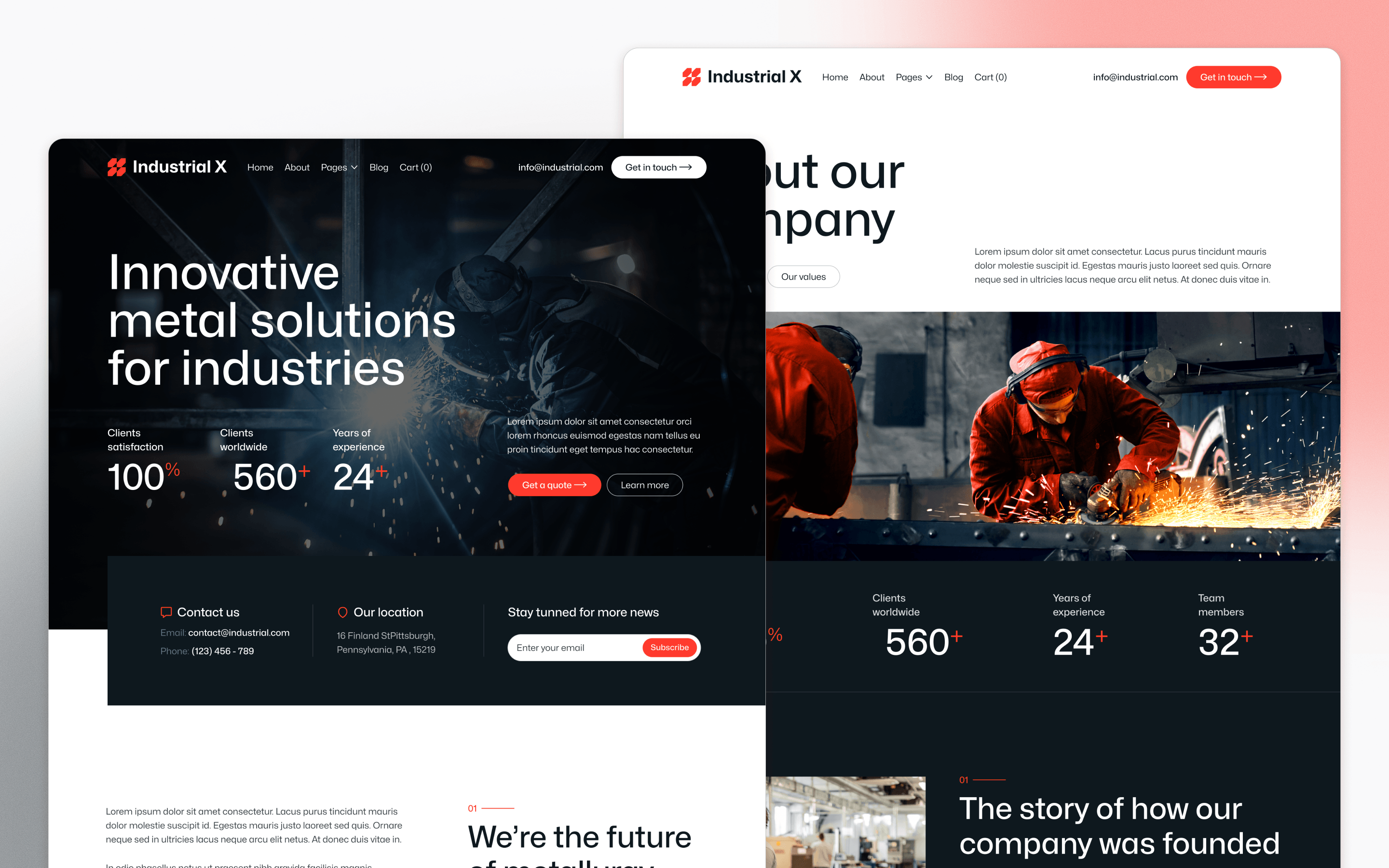
Industrial X is a website template focused on manufacturers and industrial companies, with product, service, and company pages that help introduce the business. The design shown here pairs metalworking photography with a clear product story, carrying its red accents from the homepage into the company page.
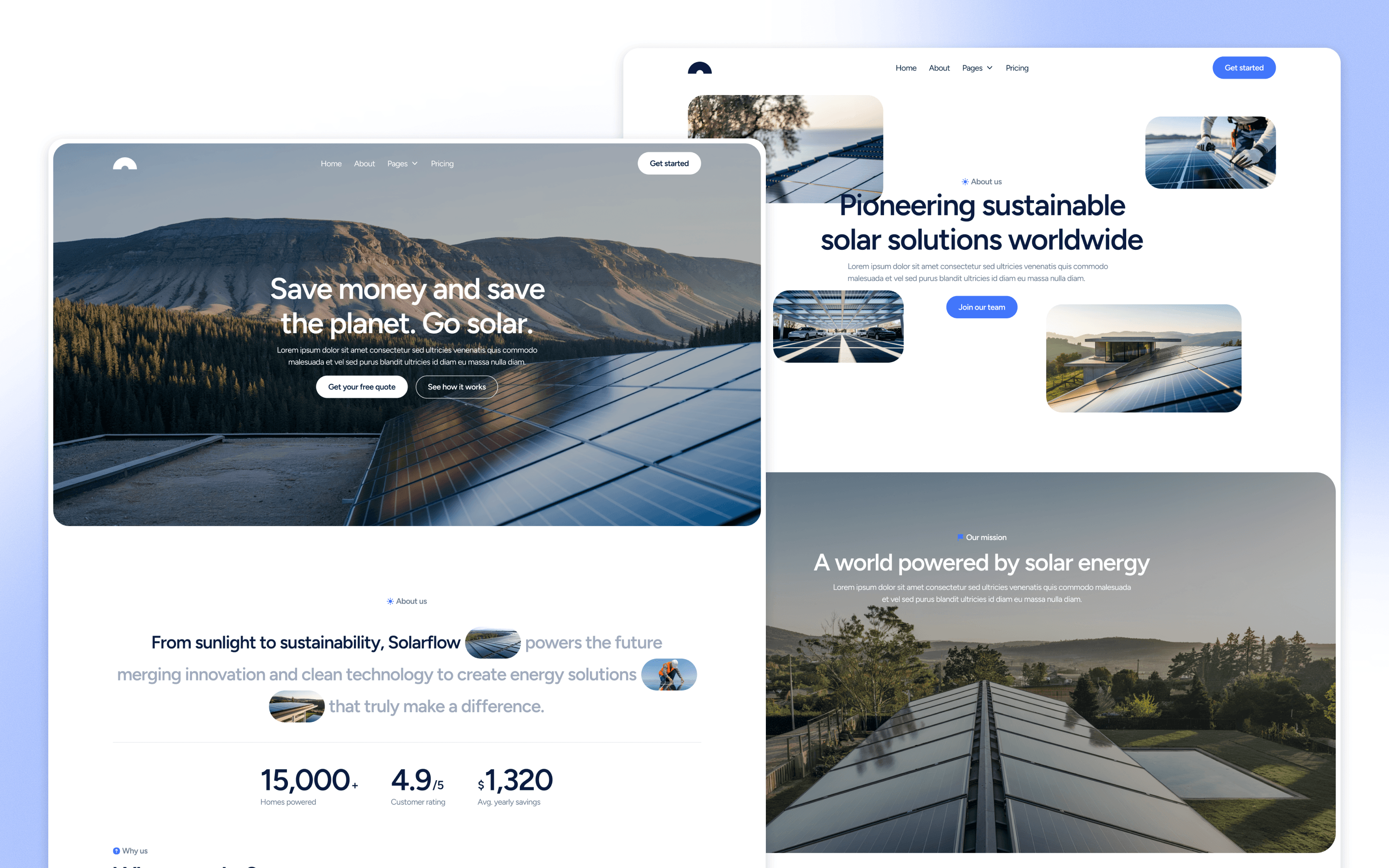
Solarflow is a website template focused on solar-energy businesses, using solar-panel photography and a blue-and-white palette to connect the homepage with the company story. It is an unpublished design project, included here to show another direction our team can take when presenting an industrial or energy business.
If you have an industrial website in mind, share your current site and the products or capabilities you want to present more clearly. We can work through the content and design direction with you, then plan a custom build around the way your business operates.
2. Windmill Strategy: Best Manufacturing Web Design Agency for B2B Ecommerce
 2
2Windmill Strategy
A B2B web agency building product selection and ecommerce experiences that help industrial customers find and configure equipment.
Windmill Strategy is a B2B web agency with work that goes beyond presenting an industrial product range. Its FasTest engagement includes product comparison, configuration, and ecommerce, making it a relevant reference if customers need help choosing an item before they can buy it.
For that kind of website, the selection process is part of the design brief. Bring the questions your sales team asks when matching a customer to a product, then discuss which of those decisions the website should support and where a person still needs to take over.
Featured project: FasTest
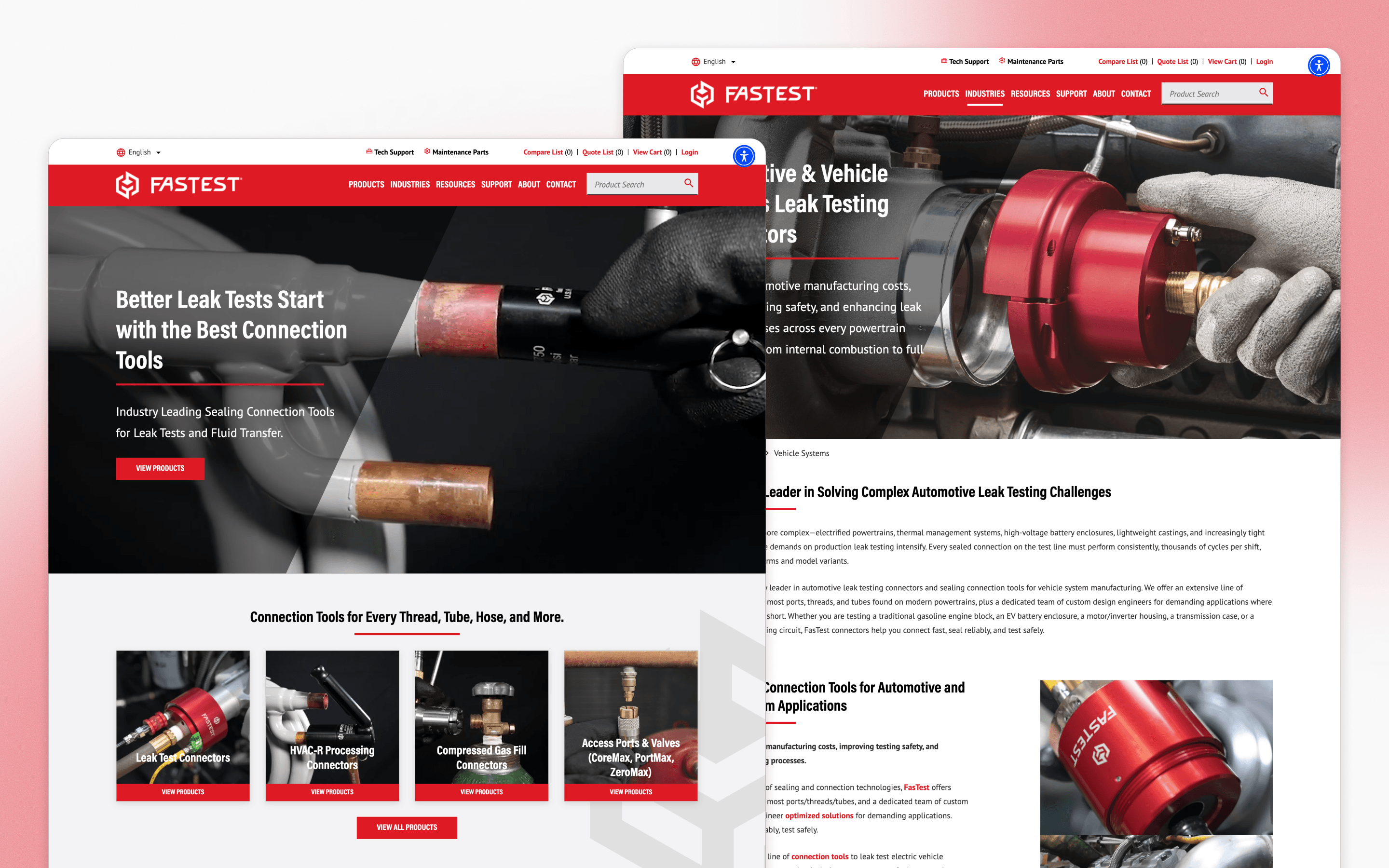
For FasTest, a manufacturer of industrial connection and sealing tools, Windmill Strategy created a Shopify-based experience with product comparison and configuration, multilingual support, and a distributor locator. Its scope also included connections to Infor Visual, Salesforce, and Pardot.
This is useful work to examine if your catalog needs to connect with the systems behind sales and operations. Ask how the agency would model your product choices, which data would come from existing tools, and how it would test the customer’s route from finding an item to completing the intended action.
3. Blue Archer: Best Manufacturing Web Design Agency for Distributor Portals
 3
3Blue Archer
A web design agency connecting technical product information with distributor resources and portals that support industrial sales relationships.
Blue Archer is a web design agency with a CFR Engines project that combines public product information and resources for distributors. It’s a team to explore when your website serves both prospective customers and existing partners who need a more specific set of information.
Define what belongs in public and what partners need separately, rather than putting every document behind the same login. That distinction helps the agency design the main website around discovery while giving distributors a useful place to find the material they need for their work.
Featured project: CFR Engines
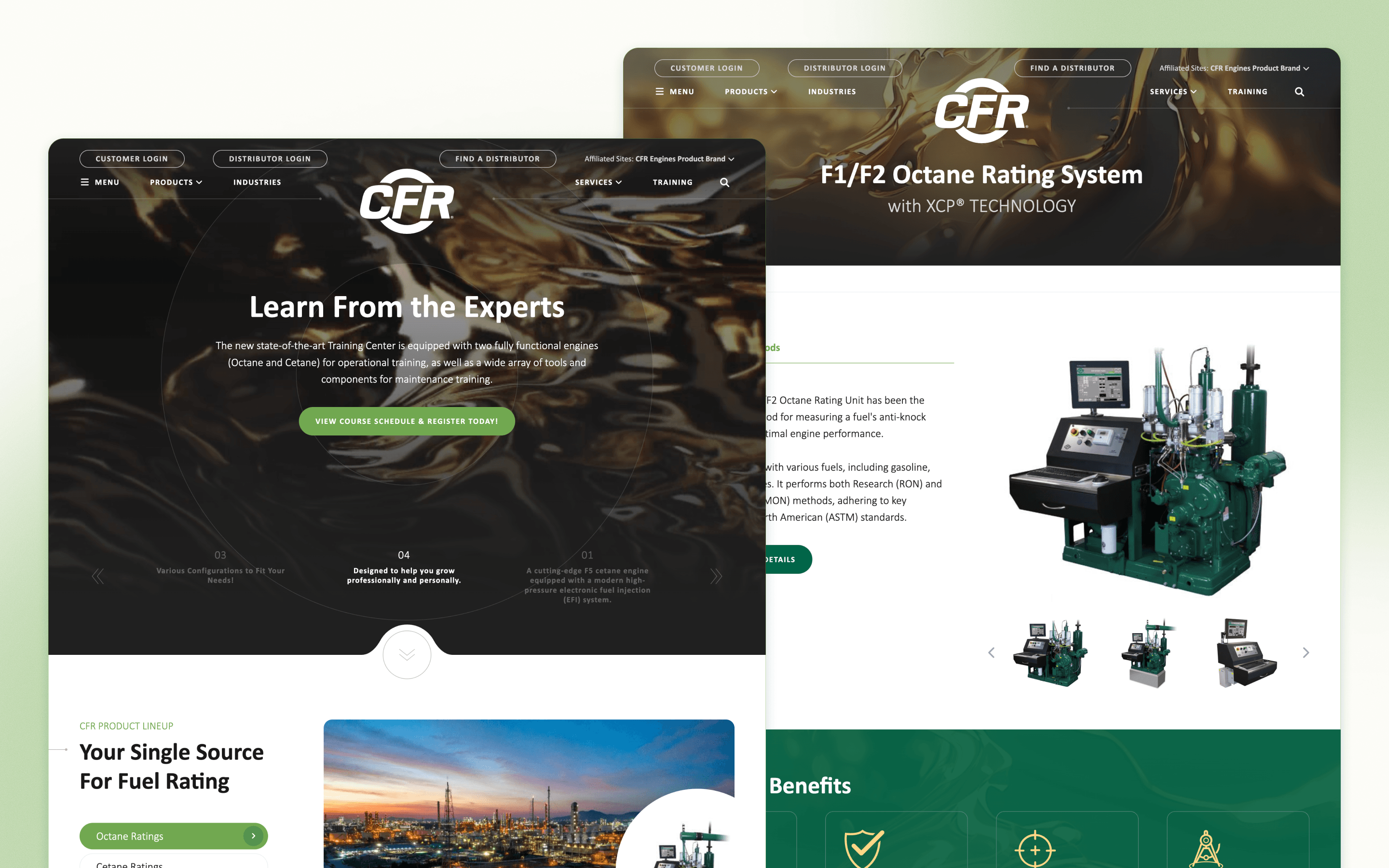
For CFR Engines, a fuel-testing equipment company, Blue Archer created a responsive custom website with business-unit and product templates, specification content, a territory map, distributor resources, and a password-protected portal. The engagement provides a concrete example of a site supporting more than one audience.
Use the project to discuss your own partner relationships and how the website should support them. Ask about account ownership, content updates, and how access would be managed, then distinguish those portal requirements from the public pages that introduce your equipment to someone encountering the company for the first time.
4. Orbit Media Studios: Best Manufacturing Web Design Agency for Multi-Brand Websites
 4
4Orbit Media Studios
A web design agency bringing manufacturing brands together through shared websites and content structures that remain manageable for editors.
Orbit Media Studios is a web design and development agency with a relevant project for manufacturers managing several brands or websites. Its work for Marmon Fastener involved bringing 8 legacy websites and 10 brands into 1 WordPress platform, which makes it a strong reference for a redesign with substantial content to organize.
If your business has grown through acquisitions or separate divisions, you may recognize the problem: each website has its own structure, and updating the group’s online presence becomes a series of separate jobs. Orbit’s project gives you a concrete starting point for discussing how those sites could work together.
Featured project: Marmon Fastener
For Marmon Fastener, Orbit consolidated the existing websites into a shared WordPress platform and created reusable content blocks. The work also included English and French support through WPML, along with changes to the site’s SEO and lead-generation structure.
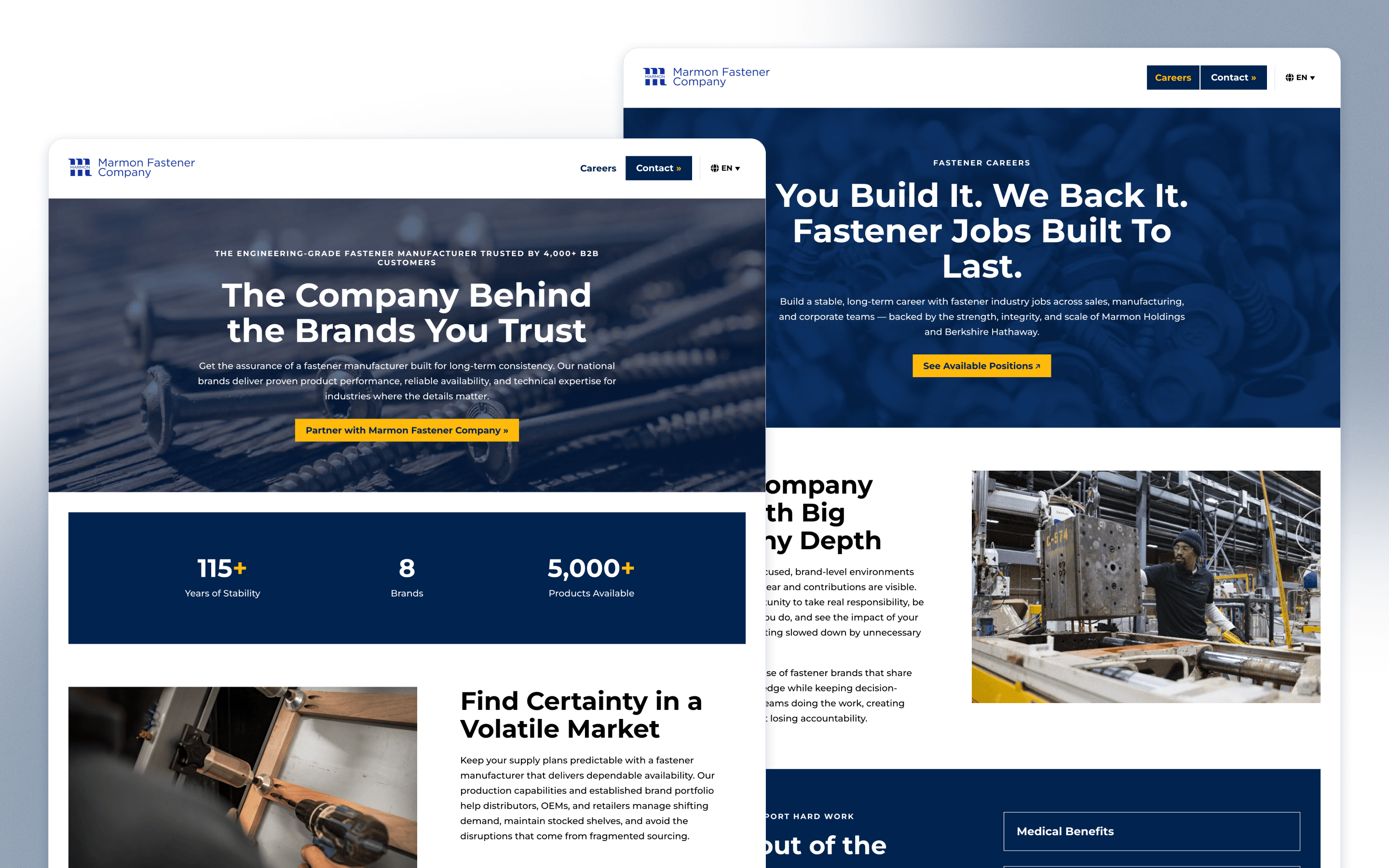
This example is especially useful if your redesign needs to give several brands a shared foundation while helping customers find the products or businesses relevant to them. When you review it, consider which information your own brands could share and which pages would still need to tell a more specific story.
5. SPINX Digital: Best Manufacturing Web Design Agency for Branding
 5
5SPINX Digital
A digital agency developing industrial brand identities and websites that introduce technical businesses through a connected visual direction.
SPINX Digital is a digital agency whose United Rare Earths engagement connects an industrial identity with its marketing website. It’s worth exploring when your company needs a clear visual starting point and the site will be one of the first places that identity appears.
For a technical business, the brand should help introduce what the company does. Ask how the agency would connect the name, logo, visual direction, and written explanation, so someone arriving without prior knowledge can understand the business before moving into more detailed information.
Featured project: United Rare Earths
For United Rare Earths, SPINX Digital created the industrial brand identity, logo, and marketing website. The project translated a technically complex materials proposition into a public company narrative, connecting the visual work with the way the business was introduced online.
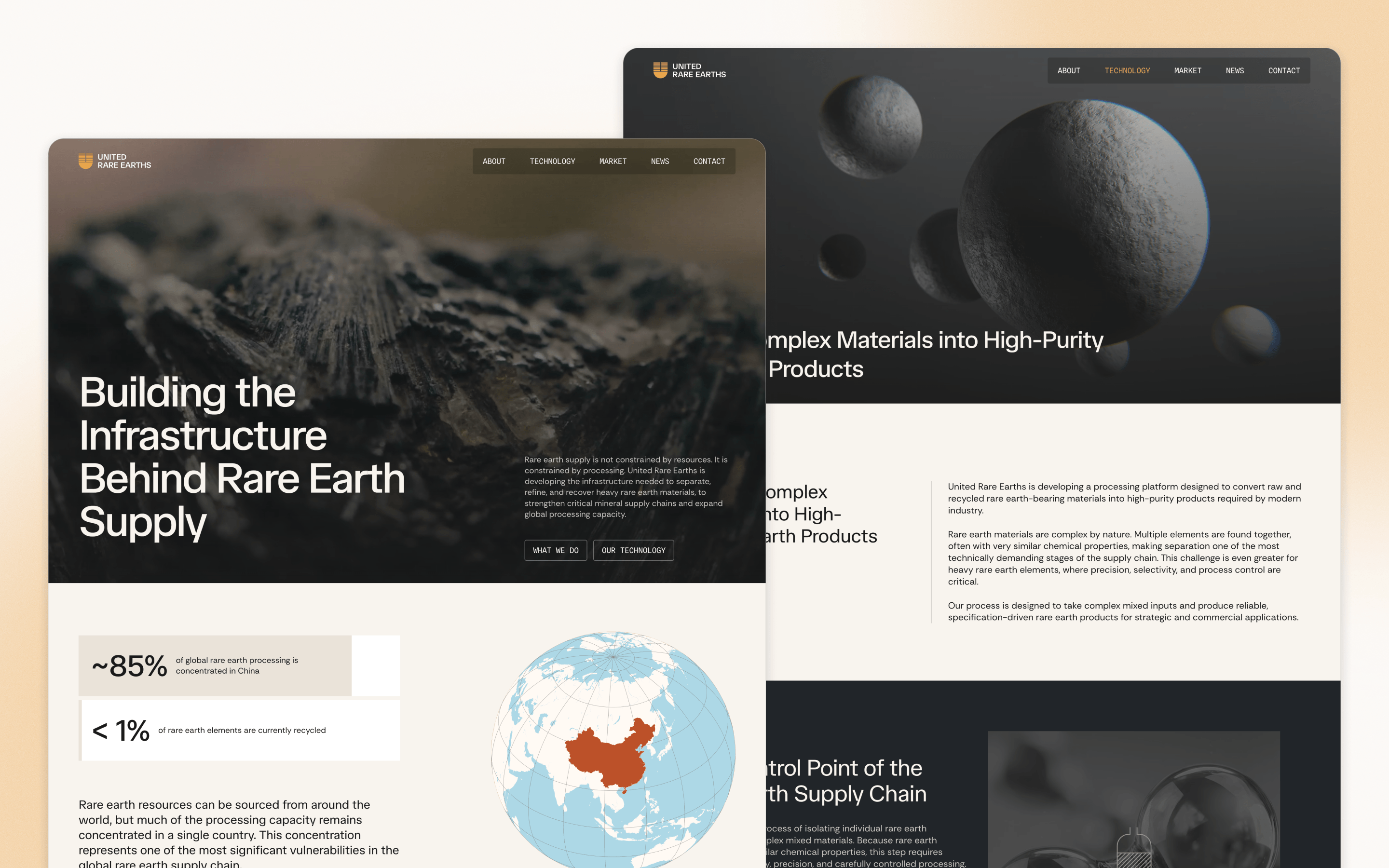
The project is useful if your website is part of establishing a new business identity rather than only replacing an old layout. Bring examples of how the company is described today and discuss what a buyer should understand after the first page, with technical claims supplied and approved by your own team.
6. TopSpot: Best Manufacturing Web Design Agency for Lead Generation
 6
6TopSpot
A digital agency designing manufacturing websites around product information and enquiry paths that connect interested visitors with sales teams.
TopSpot is a digital agency with a Rol-Tec website project focused on presenting the manufacturer’s product line and directing interested visitors toward sales enquiries. It’s a relevant reference if your website needs to help people identify a fit and contact the right team.
Start by defining a useful enquiry, including the information sales needs to understand the request. The design can then connect product exploration with that next step, rather than asking every visitor to complete the same general form before they have enough context to know what to ask.
Featured project: Rol-Tec
For Rol-Tec, an industrial roller manufacturer, TopSpot created a responsive website presenting the full product range and directing qualified visitors toward sales contact. The work is a reference for connecting product content with enquiry paths rather than a claim that every industrial site needs an online checkout.
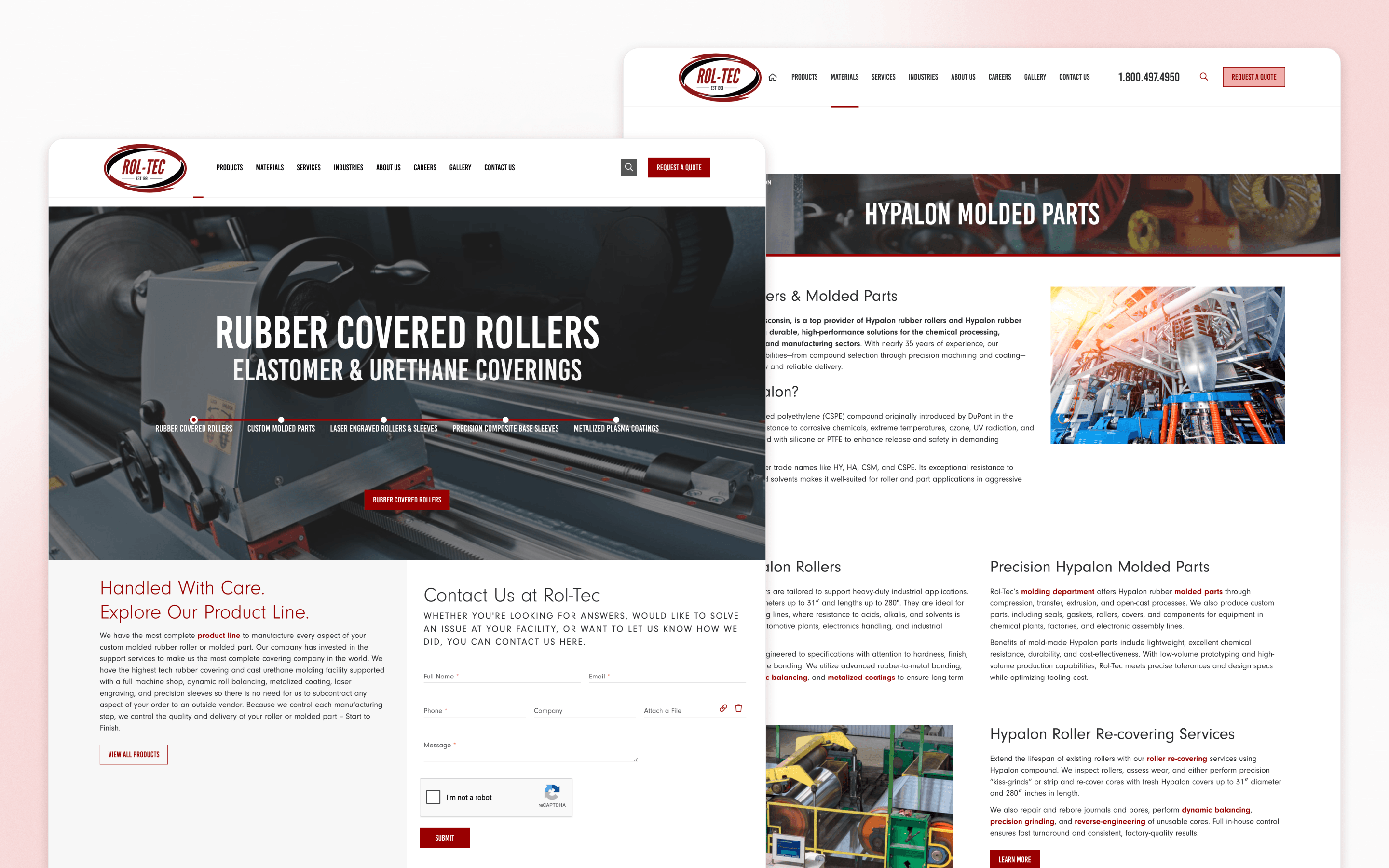
Review the project with your own sales process in mind, then ask how the agency would measure the enquiries your site produces. Discuss routing, the information carried through from product pages, and how your team will review lead quality after launch, without treating a redesign as a guaranteed increase in sales.
7. Lform Design: Best Manufacturing Web Design Agency for WordPress
 7
7Lform Design
A web design agency building custom WordPress websites that organize industrial products and help customers explore equipment applications.
Lform Design is a web design agency whose Hockmeyer project combines custom WordPress development with industrial product and application content. It’s a useful team to explore when the website needs a manageable CMS and a clearer way to introduce technical equipment.
The editing setup matters because product descriptions, specifications, and applications can change on different schedules. Ask how those content types would be maintained, including whether the same information appears in several places and how the build would keep your team from having to update it repeatedly.
Featured project: Hockmeyer
For Hockmeyer Equipment Corporation, a mixing and milling machinery manufacturer, Lform redesigned and developed a custom WordPress site. The engagement included UX and SEO work, technical product and application organization, and paths intended to help visitors request quotations.
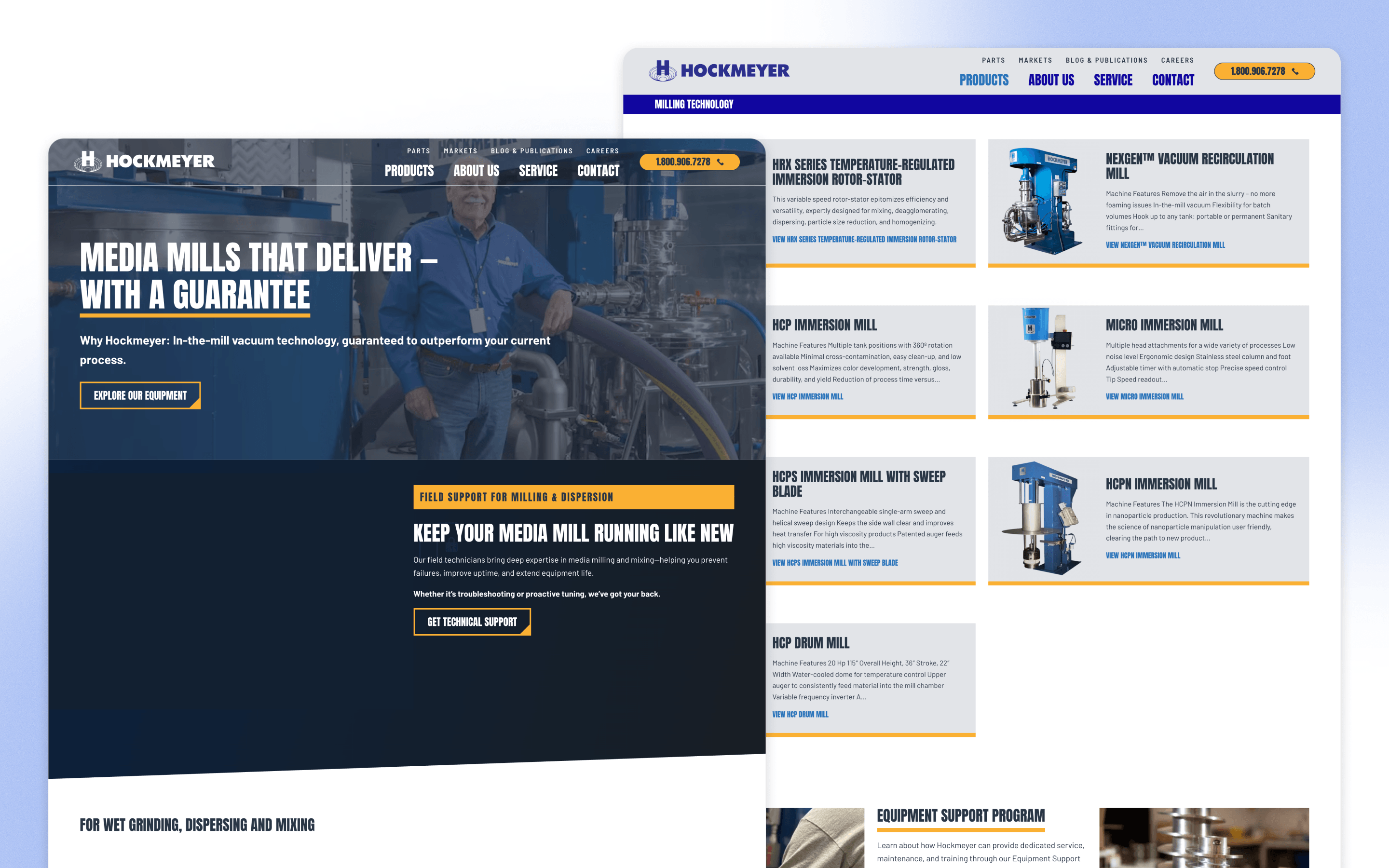
This is relevant if you want to explain both what a machine is and where it can be used. Ask the agency to show how a product update would work in the editor and how buyers would discover related applications, then include those content relationships in the project scope before the page layouts are approved.
8. FINE: Best Manufacturing Web Design Agency for Rebranding
 8
8FINE
A branding agency connecting industrial brand changes with website experiences that help buyers explore products and their uses.
FINE is a branding agency whose IEM work connects a brand transformation with website strategy and product exploration. It’s an option to consider when the company’s public identity needs to catch up with the scale or direction of the business.
A rebrand can create a chance to rethink how people discover the products as well as how the site looks. Discuss the buyer’s route through the new identity, especially if your current navigation reflects internal divisions that a prospective customer may not recognize.
Featured project: IEM
For IEM, an electrical distribution equipment company, FINE led brand transformation and website strategy, including search-friendly information architecture. The work also covered product exploration, industry pathways, and a new visual and digital system for the business.
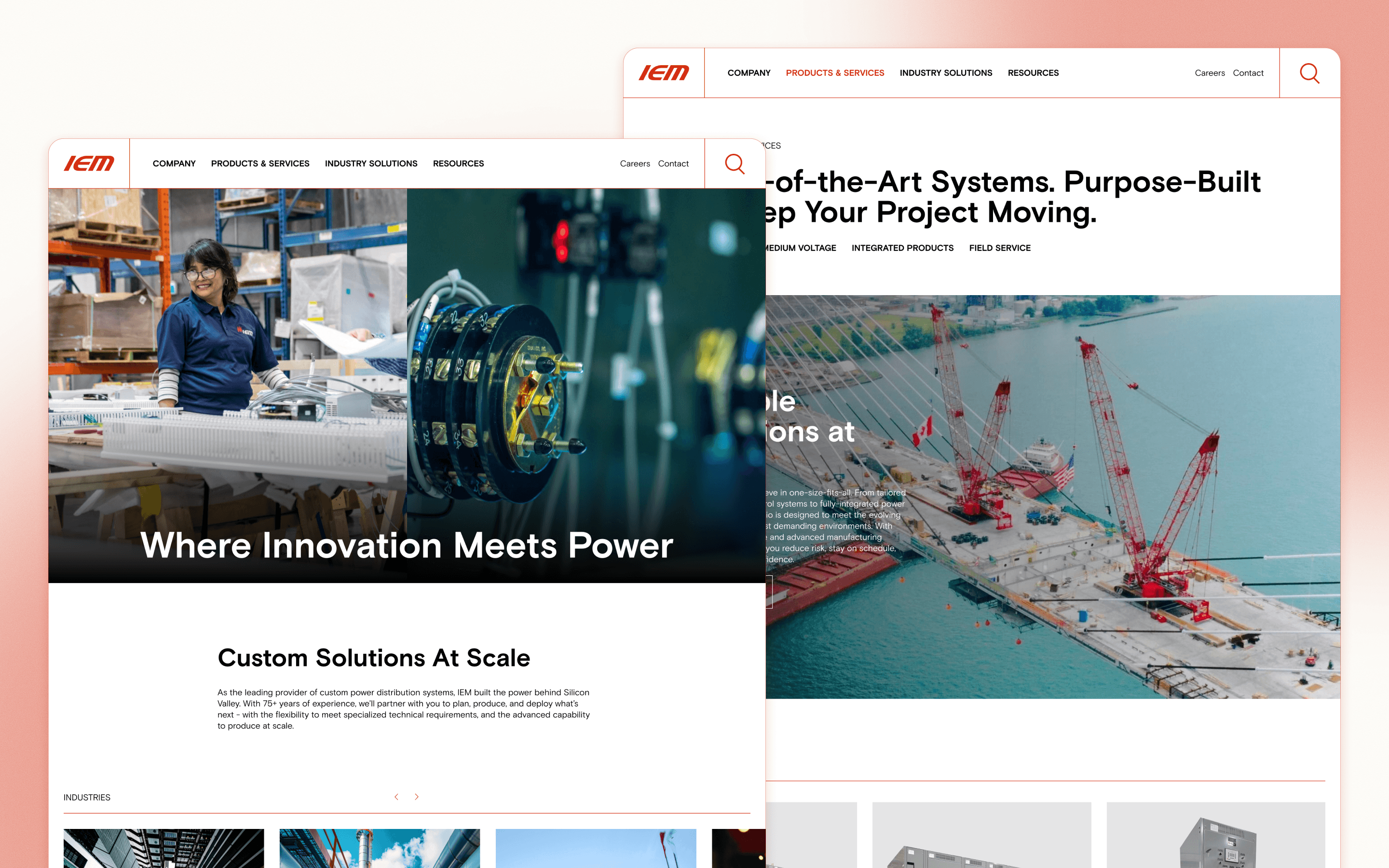
Use this project to examine how your company could introduce itself while still helping visitors get to specific equipment. Ask which parts of your existing structure should carry forward and which need to change, then make sure the rebrand proposal explains how those decisions will reach the website and its content.
9. BASIC/DEPT: Best Manufacturing Web Design Agency for UI/UX Design
 9
9BASIC/DEPT
A design agency combining interface design and content strategy to make advanced manufacturing technology easier to explore online.
BASIC/DEPT is a design agency whose Desktop Metal engagement combines interface design with content strategy and engineering. It’s a relevant reference when advanced manufacturing technology needs a clear digital experience that people can explore without already knowing the company’s product range.
The relationship between the content and the interface determines how that exploration works. Ask the agency to show how it would guide a new visitor from a broad understanding of your technology into product-level detail, while keeping the pages usable across screen sizes and ways of navigating.
Featured project: Desktop Metal
For Desktop Metal, an additive-manufacturing hardware company, BASIC/DEPT delivered experience and content strategy, creative direction, UI/UX, art direction, and engineering. Its scope also included accessibility and SEO work, a style guide, and a simplified website architecture as part of the digital rebrand.
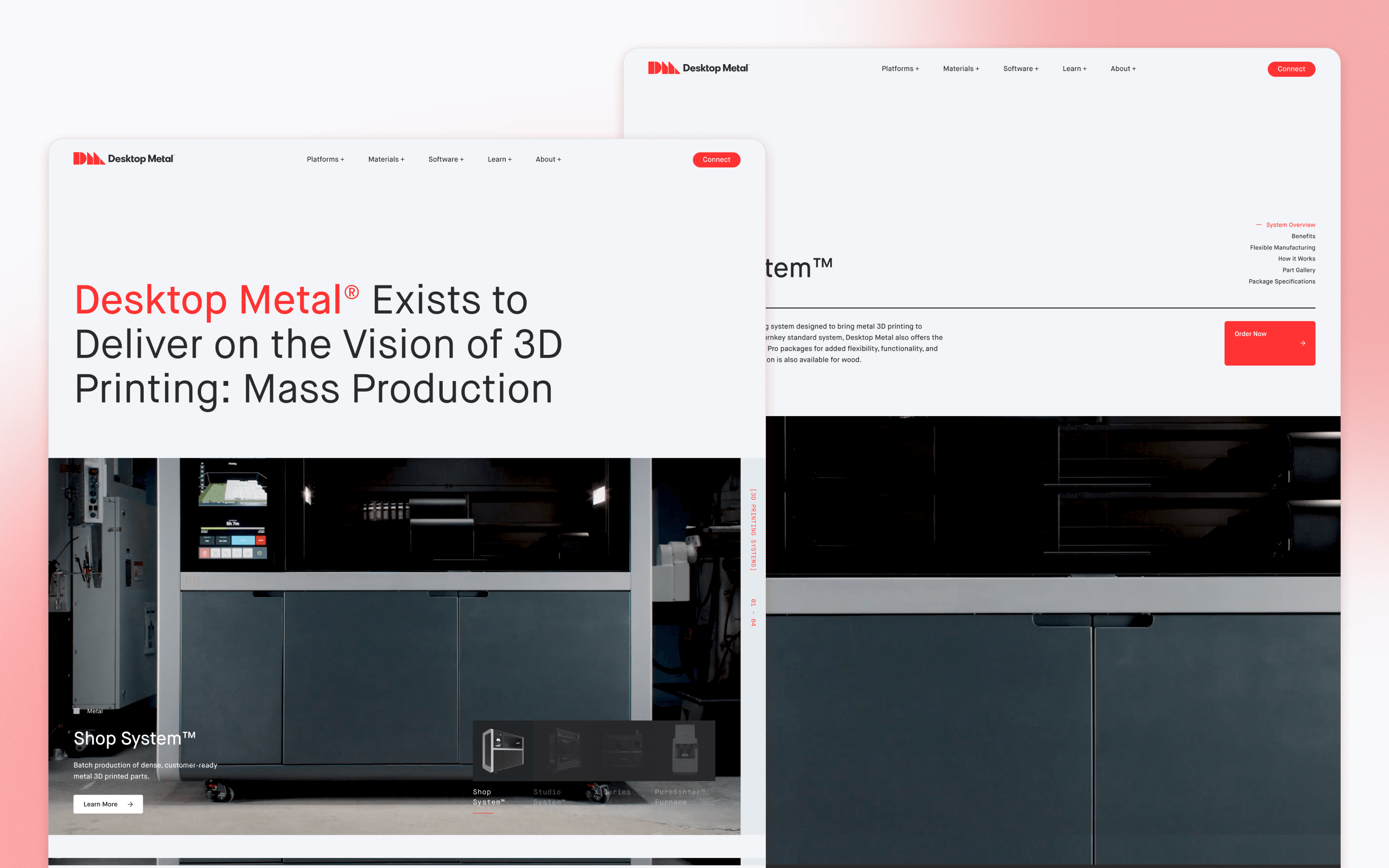
This example is worth reviewing if your website needs to introduce a technology category as well as the products within it. Discuss how the team would test the proposed structure with representative content, including the longer explanations and technical detail that can reveal problems a short homepage mockup will miss.
10. Atomicdust: Best Manufacturing Web Design Agency for Product Storytelling
 10
10Atomicdust
A branding and web agency explaining industrial machinery through product stories, interactive comparisons, and a connected visual identity.
Atomicdust is a branding and web agency whose DIDION work uses machine and application stories alongside interactive comparisons and animation. It’s a useful reference if your equipment is easier to understand through an explanation of what it does than through a product name alone.
Your sales team may already have the story the website needs: the problem a customer brings, the process the machine supports, and what a buyer should compare. Turn that knowledge into the content brief, then ask how the agency would help visitors follow it through words and visuals.
Featured project: DIDION International
For DIDION International, a foundry and metal-processing machinery company, Atomicdust developed positioning, messaging, and brand expression, then designed and built the website. The work organized machine and application stories and introduced interactive before-and-after comparisons and animation.
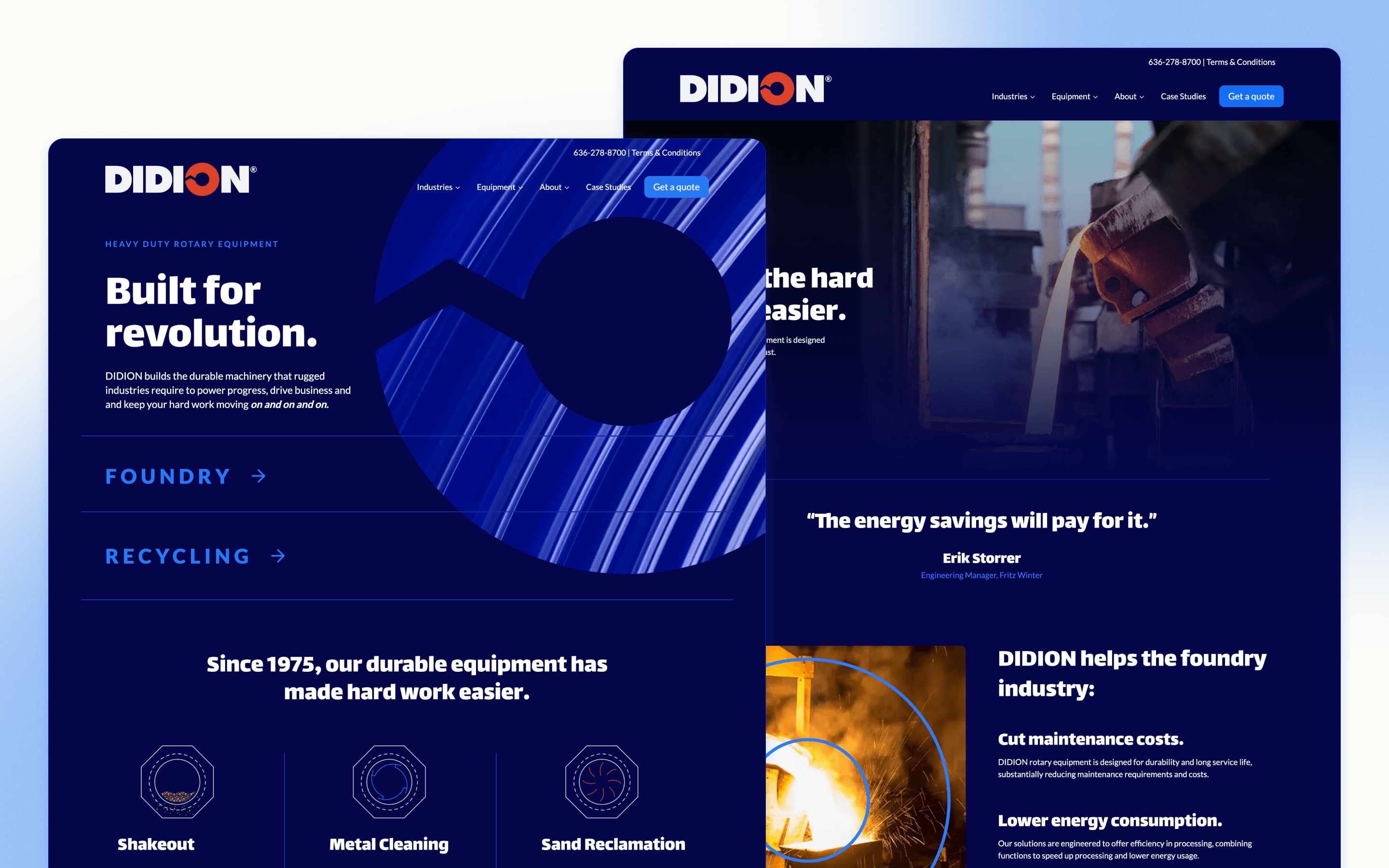
If your current site lists equipment without explaining its role, this project offers a different point of reference. Discuss which product demonstrations or comparisons would help a buyer understand your offering, and identify the technical information your team will need to provide so the visual story stays accurate.
11. Clear Digital: Best Manufacturing Web Design Agency for Custom Integrations
 11
11Clear Digital
A digital agency building custom manufacturing websites with the technology integrations and ongoing support needed behind the pages.
Clear Digital is a digital agency with a Heat and Control project that brings strategy, UX/UI, custom development, and technology integration together. It’s a team to explore when the website must work with systems or processes beyond its visible pages.
Describe the information that needs to move between systems before asking for an integration estimate. An agency needs to understand where the data comes from, which system owns it, and what should happen when someone requests information, rather than receiving only a list of software names.
Featured project: Heat and Control
For Heat and Control, a food-processing and packaging equipment company, Clear Digital created the website from the ground up. Its scope covered strategy, information architecture, UX/UI, technology integration, custom development, and ongoing support for the site.
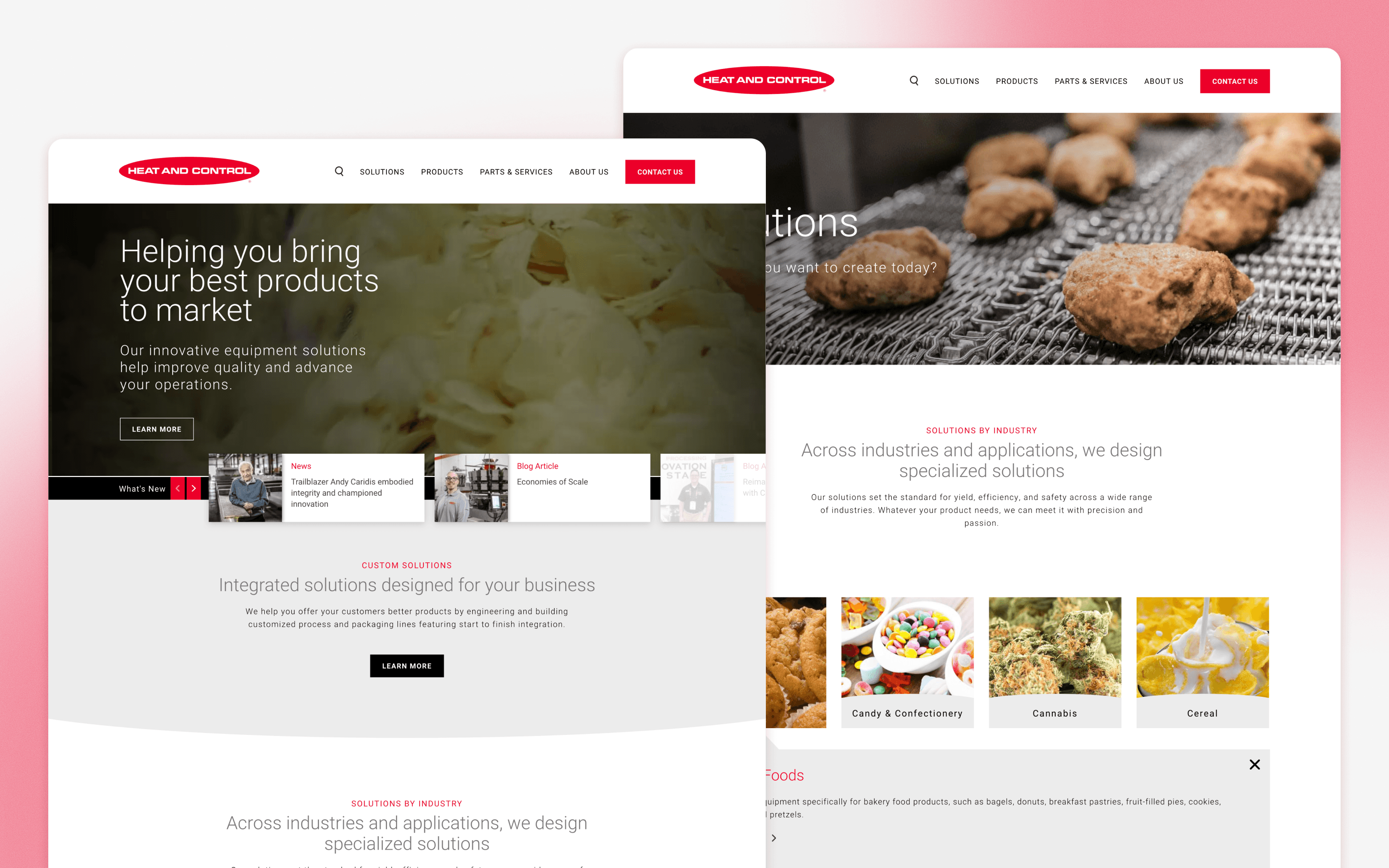
The project gives you a relevant starting point for a website that combines design and operational requirements. Ask the agency which parts of a comparable build it handled, how it would test your specific connections, and who would maintain them when an external system or internal process changes after launch.
12. Synchronicity: Best Manufacturing Web Design Agency for Marketing Automation
 12
12Synchronicity
A marketing and web agency connecting industrial websites with enquiry flows and automation that support the follow-up process.
Synchronicity is a marketing and web agency whose Wyatt Seal project connects website changes with enquiry paths and marketing automation. It’s worth exploring when your site needs to support the follow-up that happens after a buyer asks about a product or application.
For a business serving different needs, the enquiry should arrive with useful context. Discuss which information helps sales understand the request and which follow-up steps your team wants to support, so the website and marketing setup are designed around an actual process.
Featured project: Wyatt Seal
For Wyatt Seal, a business combining engineered sealing-product distribution and in-house manufacturing, Synchronicity refreshed the brand and designed a custom website. The project included clearer navigation, targeted messaging, structured content, a streamlined request-for-quote path, and marketing automation.
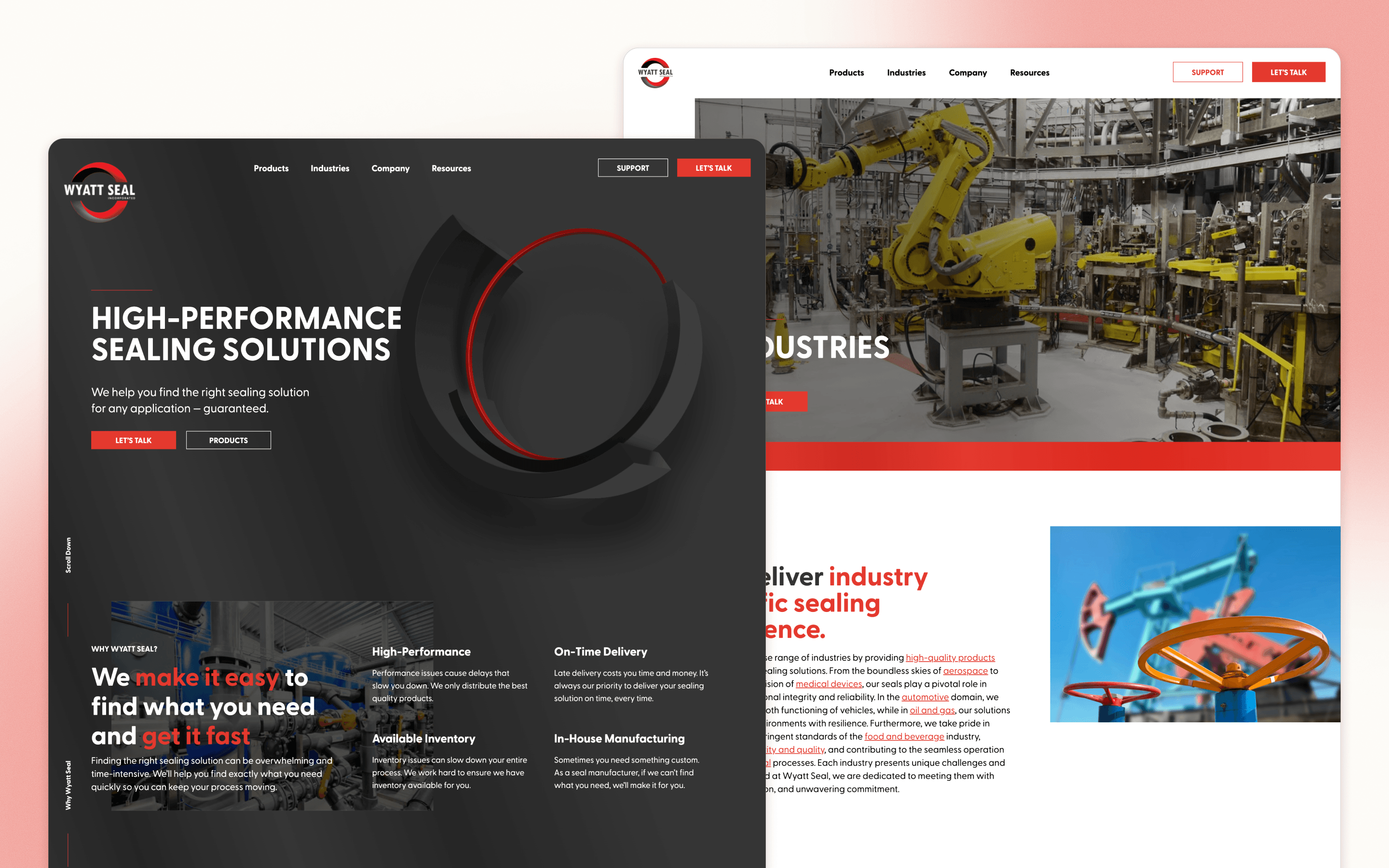
This is a useful example if your own company combines products and services or manufacturing and distribution. Ask how the agency would distinguish those offers on the website, then trace a representative enquiry into the follow-up process to agree on what the build should automate and what remains with your team.
13. DBS Interactive: Best Manufacturing Web Design Agency for Content Hubs
 13
13DBS Interactive
A digital agency developing industrial content hubs that give technical audiences a place to find information and resources.
DBS Interactive is a digital agency with a Kao Collins project centered on an educational microsite. It’s a relevant option when your audience needs technical information and resources that deserve a more organized home than a growing collection of unrelated blog posts.
A content hub has a specific job within the wider website, so define the questions it should help readers answer. Ask how the agency would organize topics, connect related material, and make the publishing process manageable for the people who know the subject.
Featured project: The Ink Tank for Kao Collins
For Kao Collins, an industrial inkjet ink manufacturer, DBS developed and launched The Ink Tank, a microsite for industry news, insights, tools, and educational content. The example demonstrates that resource-hub scope rather than a complete redesign of the manufacturer’s corporate website.
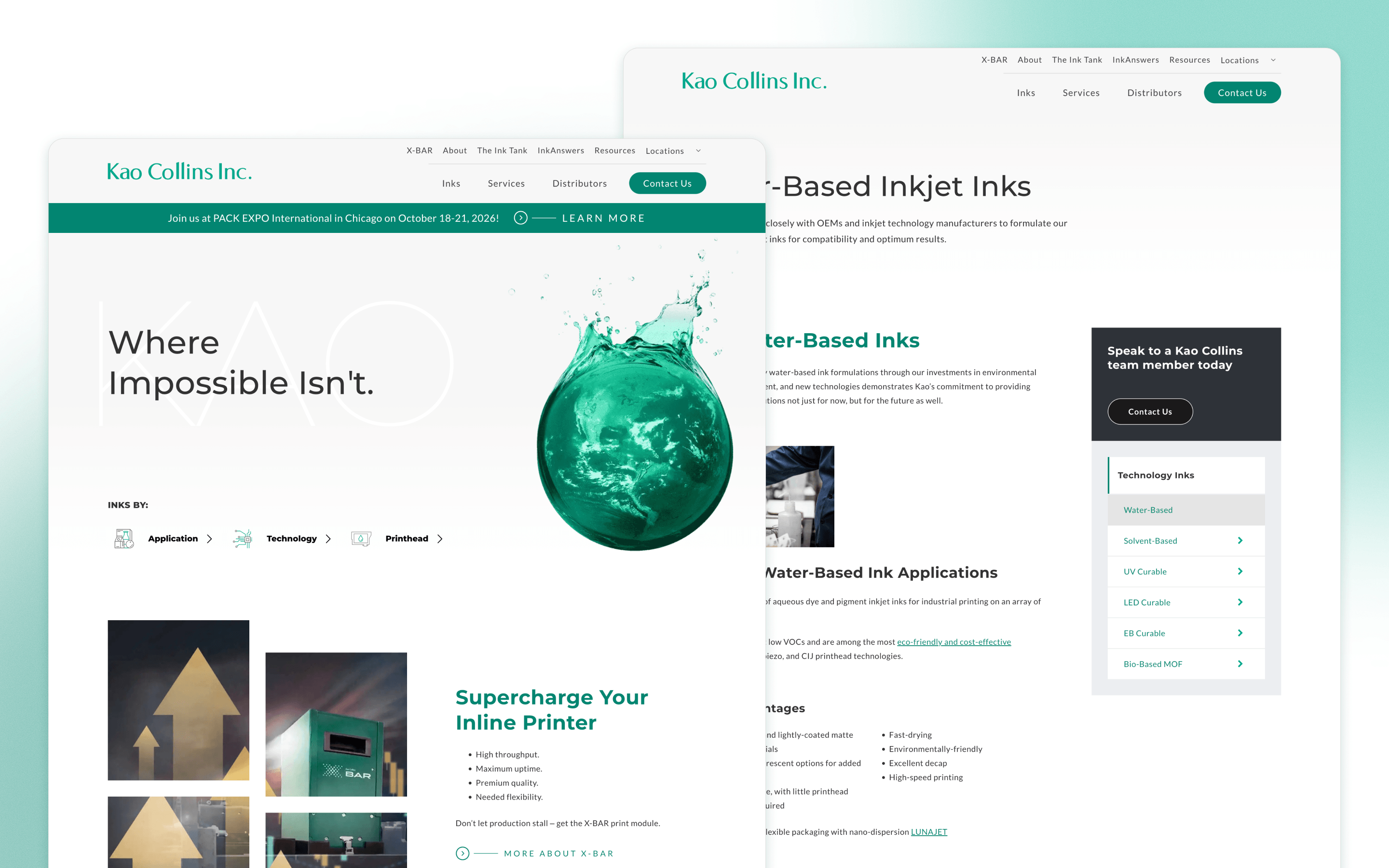
Use it as a reference if your buyers research materials, processes, or applications before contacting a supplier. Discuss how the hub would sit alongside product pages and who would maintain the articles, then make sure the proposed structure helps visitors continue toward useful product information when they are ready.
14. weCreate: Best Manufacturing Web Design Agency for Technical Products
 14
14weCreate
A web design agency organizing manufacturing capabilities and specifications into websites that help buyers understand the services available.
weCreate is a web design agency whose Precision Steel Services project focuses on making manufacturing capabilities easier to understand. It’s a relevant team to explore if your site leaves visitors unsure about the difference between the materials you supply and the work your business can perform.
Clear capability pages can answer that question before a sales call, while specifications give a more informed buyer the detail needed to assess fit. Ask how the agency would learn those distinctions from your technical team and translate them into navigation and page content.
Featured project: Precision Steel Services
For Precision Steel Services, weCreate redesigned the website to distinguish fabrication services from raw steel supply. Its account describes organized capability pages, equipment specifications, and prominent quote-request paths, connecting the explanation of the business with a way to enquire about the work.
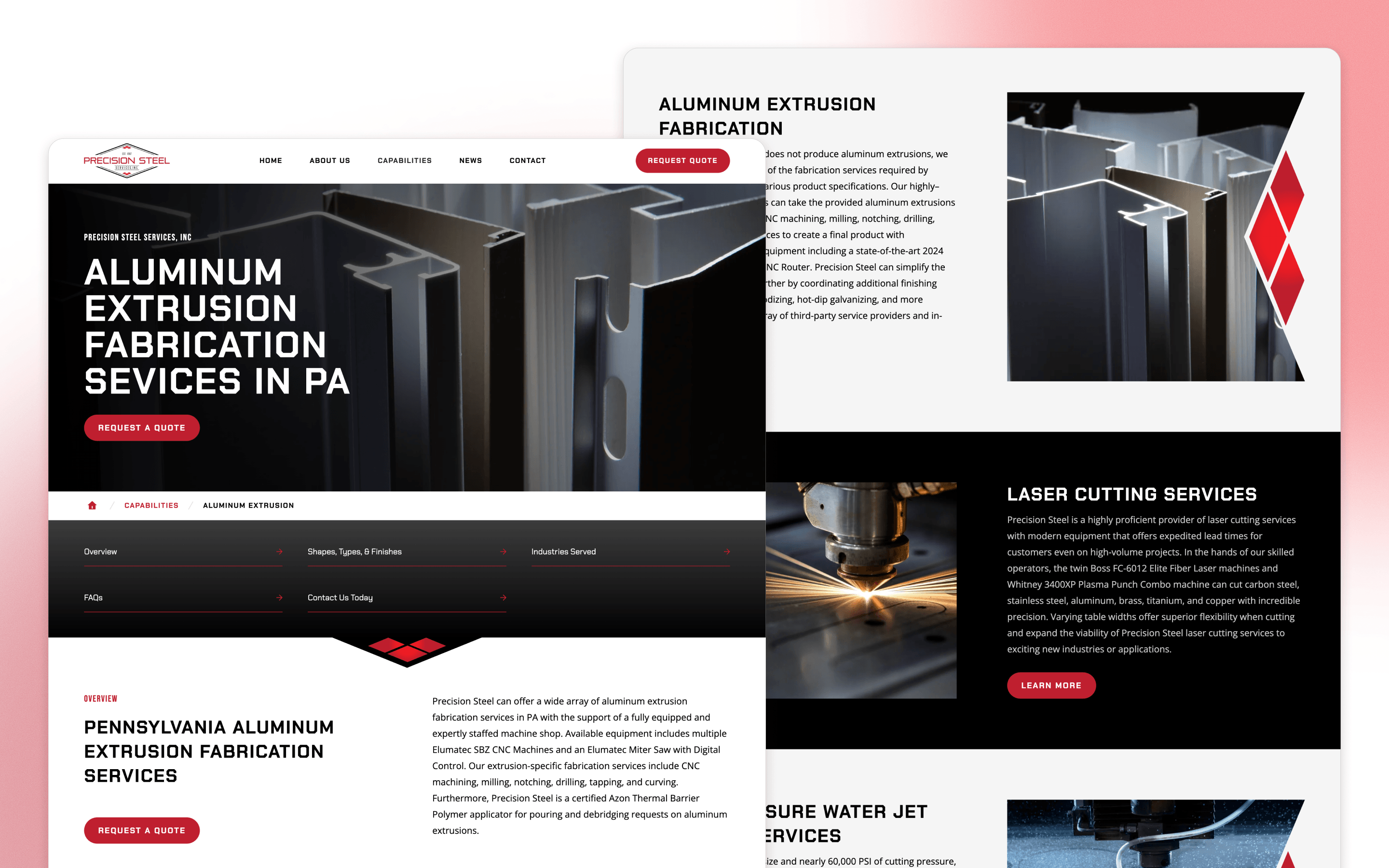
This example is useful if people regularly contact your team with the wrong impression of what the company offers. Bring those recurring questions into the project and ask how the website could answer them more directly, while still giving qualified buyers a straightforward route to discuss their requirements.
15. Gorilla 76: Best Manufacturing Web Design Agency for Content Marketing
 15
15Gorilla 76
An industrial marketing agency connecting website structure and educational content with the questions buyers ask before contacting sales.
Gorilla 76 is an industrial marketing agency whose CK Power engagement connects site architecture with guides, brochures, and conversion paths. It’s an option to consider when useful technical content already exists but the website does little to help buyers find it.
Organize the content around the buyer’s questions, including what someone needs to learn before speaking to sales. A website can introduce the equipment, provide a relevant resource, and make a conversation easy to start without treating every page as a request to fill out a form.
Featured project: CK Power
For CK Power, an engine and generator business, Gorilla 76 remapped and wireframed the site, reorganized its architecture, and separated engine and generator visitor paths. It also integrated guides and brochures, improved forms, and added chat within an inbound marketing program.
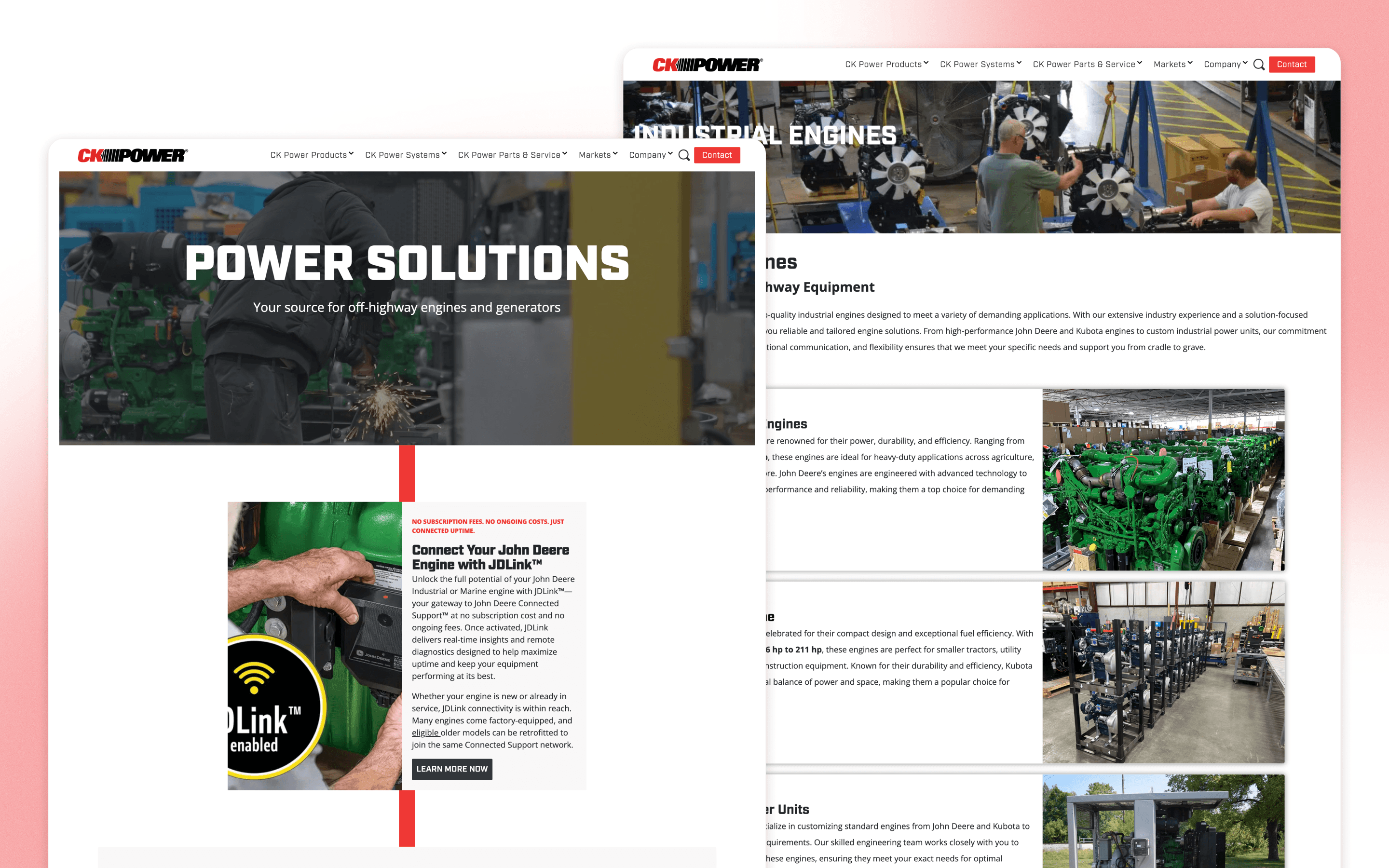
Review the project if you want the website to support a longer evaluation process, especially when visitors arrive with different equipment needs. Ask how the agency would connect your product pages and educational material, then clarify which content it will create and which technical input your own team must supply.
16. ArmstrongB2B: Best Manufacturing Web Design Agency for Corporate Websites
 16
16ArmstrongB2B
A B2B branding agency building corporate websites that connect manufacturing groups with the companies and capabilities within them.
ArmstrongB2B is a B2B branding agency with a Westley Group project covering both group and company websites. It’s a useful reference when the corporate site needs to explain how several manufacturing businesses fit together while giving each company enough room to describe its own capabilities.
The group story and the company detail have different roles, so ask how the agency would connect them. A visitor should understand the wider organization without losing the route to the specific operation, location, or service relevant to the work they need.
Featured project: Westley Group
For Westley Group, a foundry and precision-machining group, ArmstrongB2B conducted a customer audit and developed strategy, messaging, and visual identity. The engagement also delivered group and company websites, with supporting marketing assets extending the brand beyond the sites.
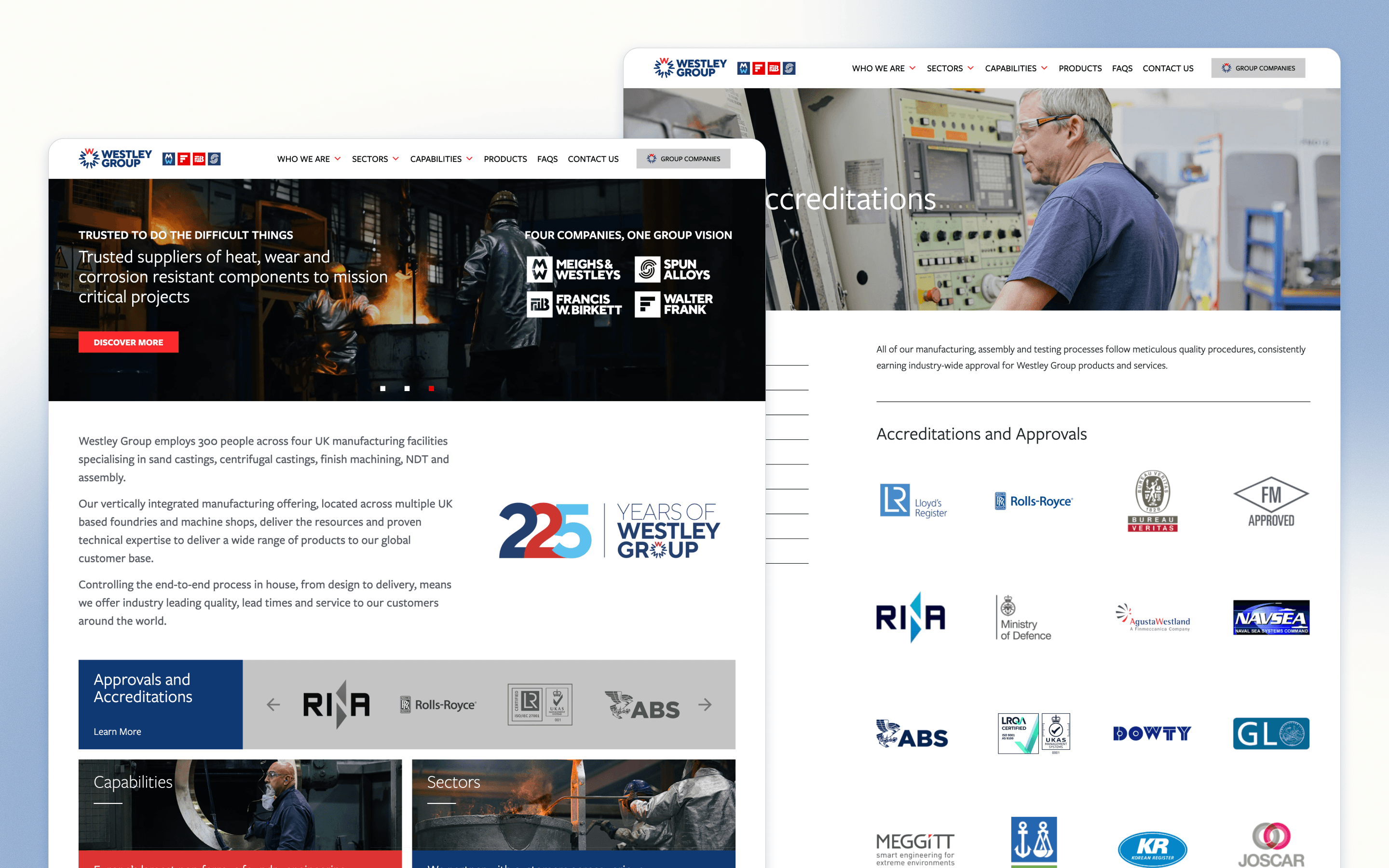
This is worth exploring if your current corporate website is little more than a list of business names. Discuss what buyers need to know about the group, which details belong at company level, and who will update each part of the online presence when the organization or its capabilities change.
17. Three Seven: Best Manufacturing Web Design Agency for SEO
 17
17Three Seven
A marketing agency combining manufacturing website design and search-focused content to help relevant buyers find the business.
Three Seven is a marketing agency whose Insulgard project combines a WordPress redesign with SEO, content, and conversion strategy. It’s a relevant option when the website needs to speak more directly to the people searching for the products and specifying them for a project.
Search visibility begins with knowing what buyers are trying to find, including the language they use for an application or requirement. Ask how the agency would connect that research with useful page content and the way visitors move toward a relevant enquiry.
Featured project: Insulgard Security Products
For Insulgard, Three Seven carried out discovery and market research, repositioned the offer around architects and specifiers, and redesigned and built a responsive WordPress site. SEO, content, and conversion strategy were included in the work supporting the new website.
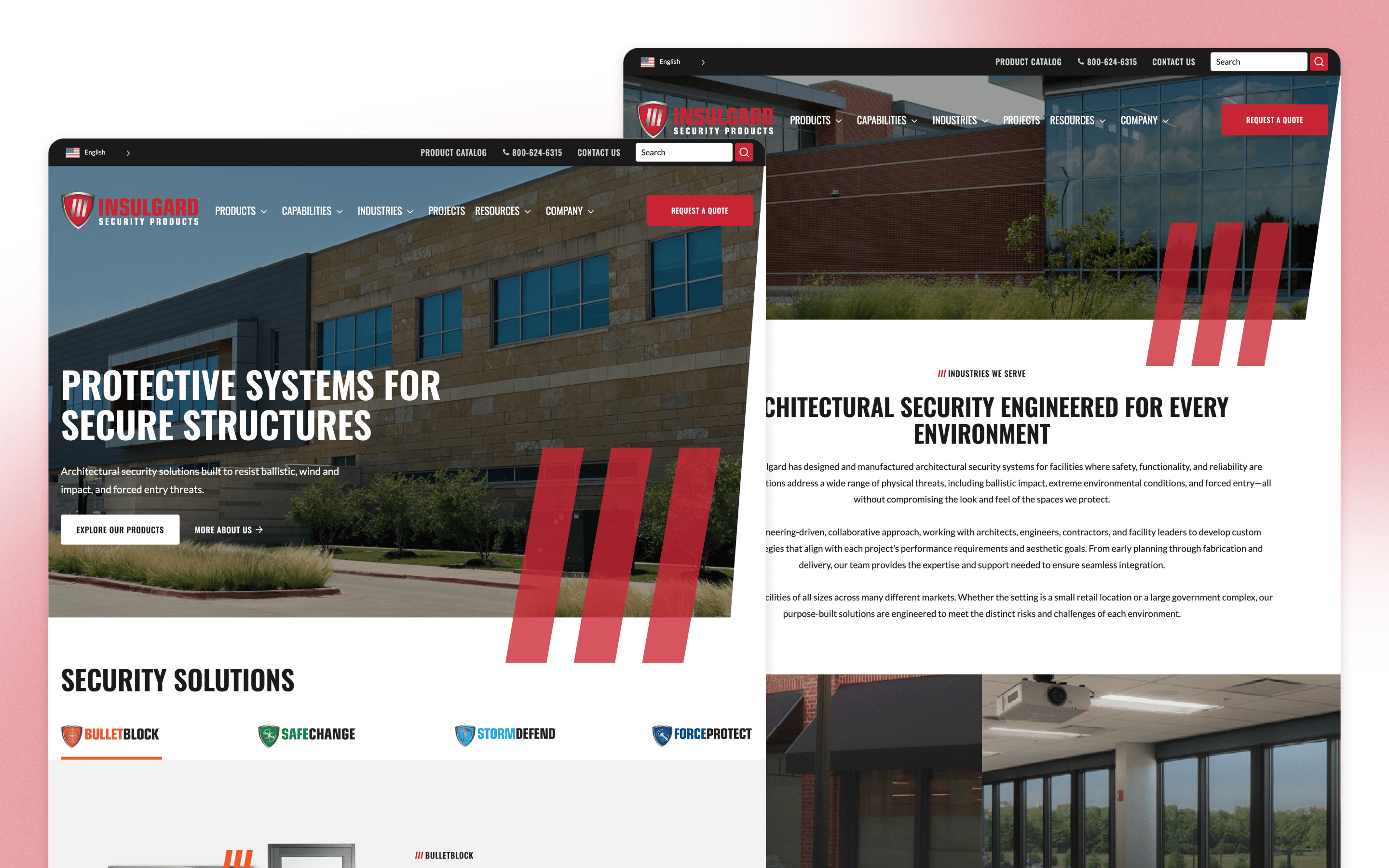
The project is useful if your audience includes people who define requirements before purchasing takes place. Discuss how the website would support those visitors and how existing pages would be reviewed during a redesign, including redirects and post-launch checks rather than assuming a new design alone will improve rankings.
18. Kuno Creative: Best Manufacturing Web Design Agency for Product Catalogs
 18
18Kuno Creative
A marketing agency organizing technical products and search paths so industrial customers can locate the components they need.
Kuno Creative is a marketing agency whose Amerline project includes product navigation and competitor part-number search. It’s a useful reference if your buyers often arrive looking for a specific component or trying to identify an alternative to something they already use.
A catalog’s design should reflect that behavior, giving experienced buyers a direct route while helping others explore the range. Start with the ways customers identify a product, then discuss the fields, relationships, and search tools required to support those routes.
Featured project: Amerline Enterprises
For Amerline, a circular-connector company, Kuno conducted stakeholder and customer research, developed the value proposition and imagery, and mapped UX flows. The work reorganized product navigation, added competitor part-number search, and connected SEO, content, and quotation paths.
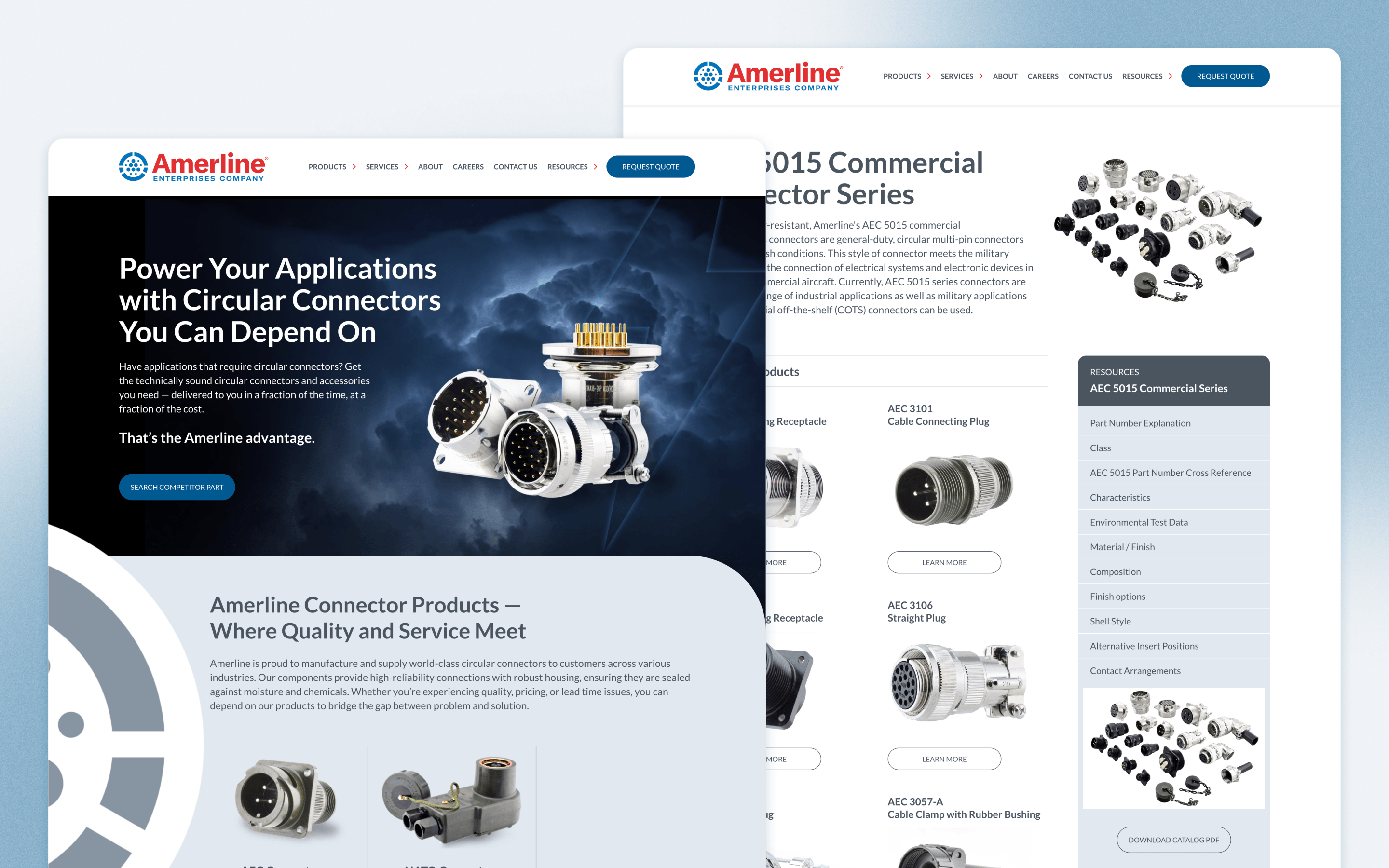
This example is relevant if buyers use technical identifiers rather than broad product categories to find what they need. Ask how the agency would structure and maintain those identifiers, what should happen when a search has no result, and how a product discovery path would connect with a quotation request.
19. Celerart: Best Manufacturing Web Design Agency for Webflow
 19
19Celerart
A design and development agency building Webflow websites that connect industrial products, applications, and resources through structured content.
Celerart is a design and development agency whose Elite Robots engagement uses Webflow to organize products, industries, applications, and editorial content. It’s a team to explore if you want a visually editable website with different content types connected through a shared structure.
The useful question is how your team would maintain those relationships when a new product or application is added. Ask for an editor demonstration using information similar to your own, including the documents, images, and forms that customers will encounter alongside the product pages.
Featured project: Elite Robots
For Elite Robots, a collaborative-robotics company, Celerart overhauled the website using the existing identity as a base. It delivered graphic design, UI/UX, Webflow development, structured CMS collections, CRM-connected forms and downloads, and multiple languages through Weglot.
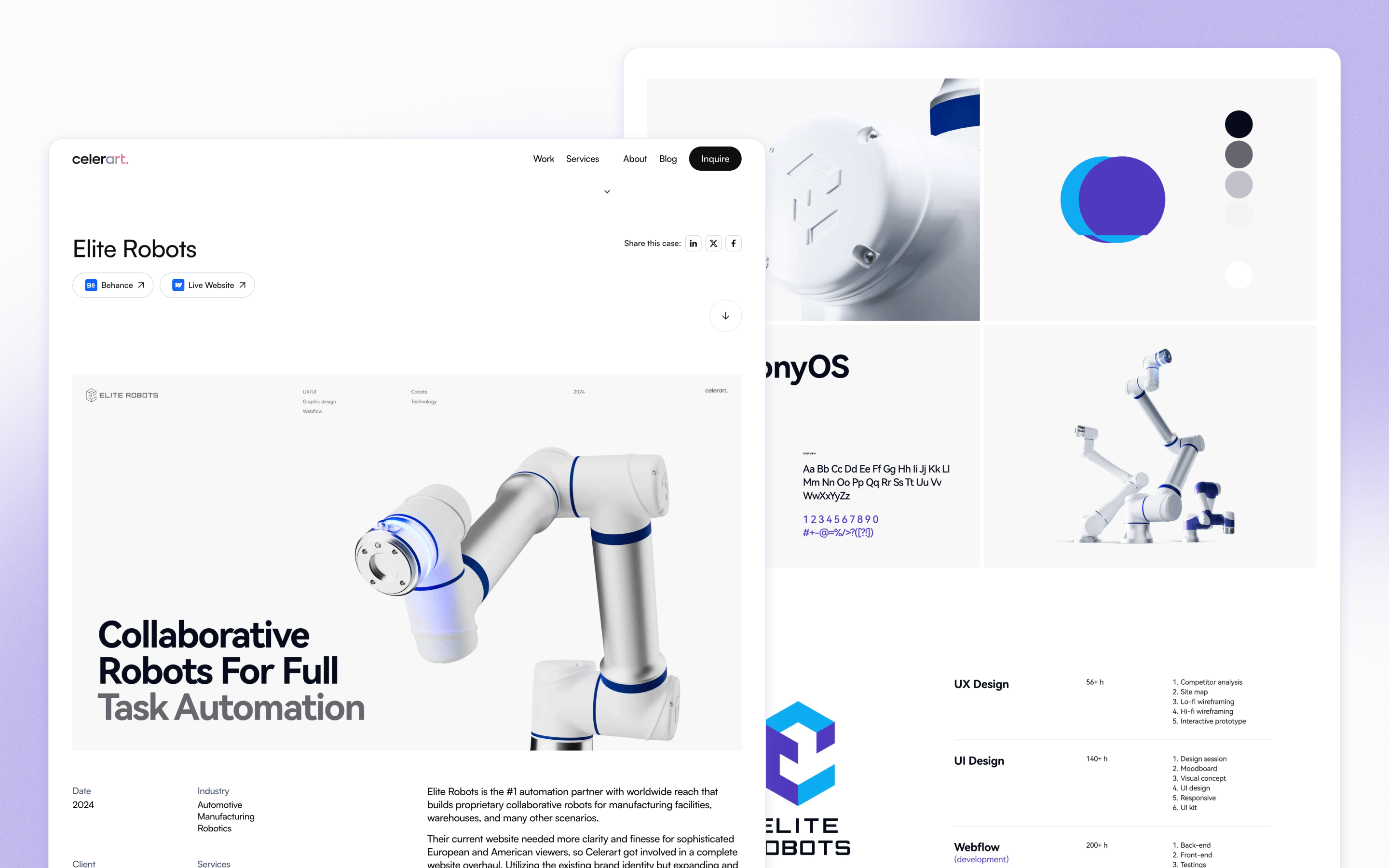
This is a relevant example if your site needs to show both the equipment and the situations it supports. Review the agency’s case study, then ask how it would model your content and manage translated versions, with the specific language and integration requirements included in the proposed build.
20. Digital Silk: Best Manufacturing Web Design Agency for Interactive Design
 20
20Digital Silk
A digital agency creating industrial websites with interactive product visuals that help visitors explore equipment before making contact.
Digital Silk is a digital agency whose POWR2 project brings an interactive 3D model into an industrial website. It’s a relevant option if a product’s physical form or components can be explained more clearly through interaction than through a single static image.
Choose the interaction around a buyer’s question, such as what the equipment looks like or which details deserve a closer view. Ask the agency how the experience will work on mobile and what information remains available if someone simply wants to read the page and contact your team.
Featured project: POWR2
For POWR2, a portable energy-storage systems company, Digital Silk created a custom website with large product visuals, streamlined navigation, mobile and speed improvements, and an interactive 3D model. The work also included mapped user journeys and prominent advisor-contact calls to action.
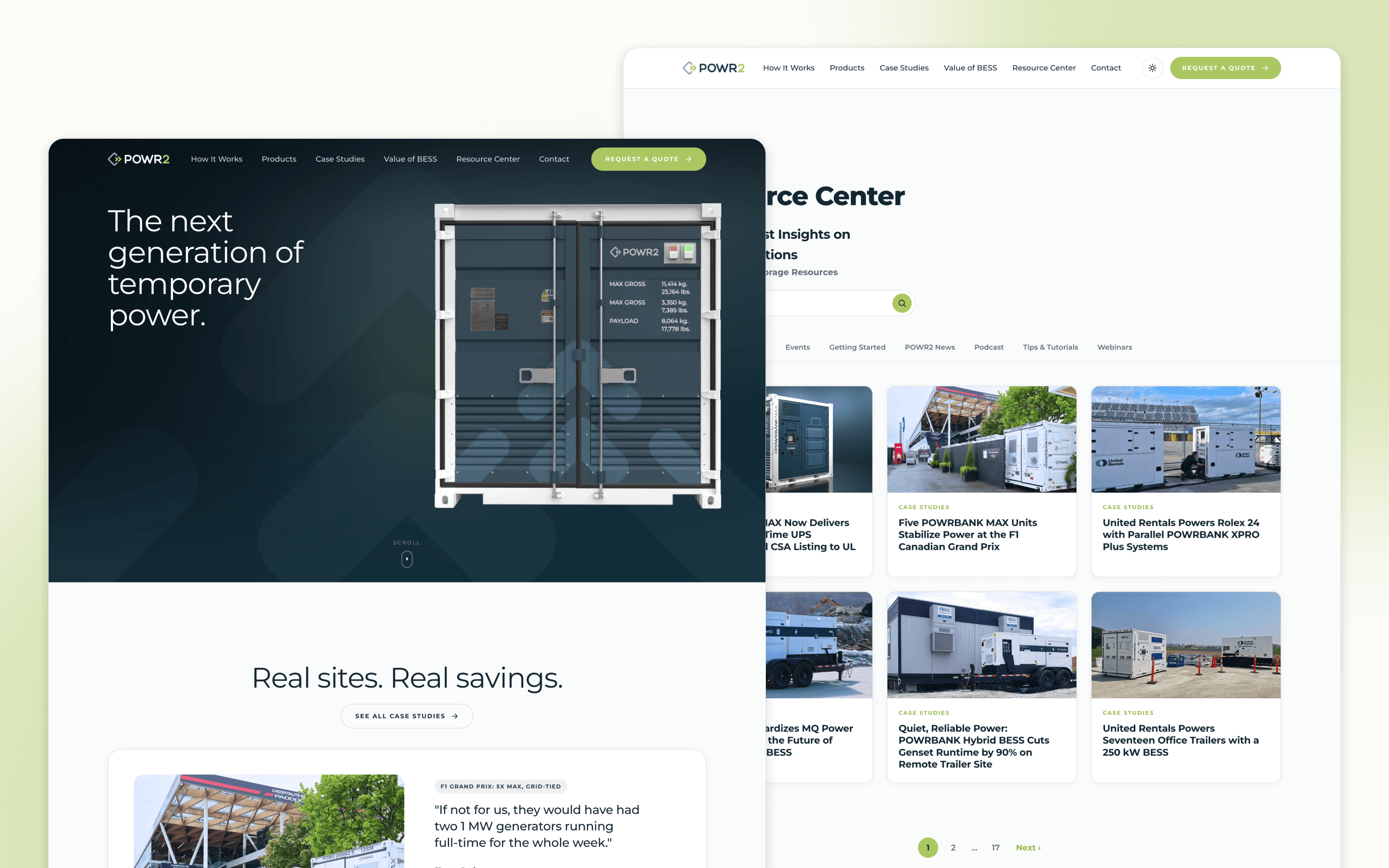
The project offers a useful reference for presenting equipment while keeping a route to a conversation visible. Discuss which product assets you already have, what new visual work the agency would need to create, and how you will judge whether the interactive element helps visitors understand the offering.
What a manufacturing web design agency should help you with
A manufacturing website should explain what your company makes and help the right buyer find enough detail to continue. That can mean organizing a product range, showing equipment applications, presenting fabrication capabilities, or directing someone to a distributor. Start with the way customers evaluate your business, then define the pages and tools that support it.
For some companies, a clear corporate site and capability pages will cover the brief; for others, the project includes a searchable catalog, document library, or partner portal. A catalog does not automatically need checkout. Products that require configuration or a technical conversation may be better served by a quote-request path, while standard items may support direct online purchasing when the business is ready for it.
Your agency should explain how it will work with the information you have, including spreadsheets, product databases, existing pages, and PDF catalogs. Name who checks specifications and supplies photography, drawings, or approved product claims. Content preparation is part of the project, even when the data already exists somewhere inside the company.
The handoff also needs to cover ongoing use. Agree on who can update products, replace documents, manage enquiries, and maintain the site, with a demonstration of the editor and the responsibilities left to development. For connected systems, identify which source owns each piece of information and who investigates a failed update after launch.
How to choose a manufacturing website design agency and compare costs
Give potential agencies a representative product or capability to work through with you, rather than beginning with a list of pages alone. Include the specifications, related documents, applications, and route to a quote or order. A real example reveals the shape of the project, from content organization to the tools a buyer needs on the page.
Choose 2–3 teams with work that addresses your main requirement and send them the same brief. Explain how many products or content records you have, where the information lives, whether you serve distributors, and which systems the site needs to connect with. If you are combining several brands, describe that structure before asking for an estimate.
Subject Website project for [manufacturer], [catalog size or capabilities], target launch [month]
Hi [name],
I found your work in BRIX Agency’s manufacturing web design agency list. We’re [company], and we manufacture [products] for [industries or applications]. We want buyers to find [technical information or capabilities] and [request a quote, contact a distributor, or order a product] more easily.
Our current site is [URL]. The new site needs [product families, capability pages, applications, downloads, and company information], with approximately [number] product records currently stored in [system, spreadsheet, or catalog]. We also need [languages, distributor resources, or integrations].
Our team can supply [product data, approved specifications, photography, and content], and we’ll need your help with [strategy, copy, design, development, and migration]. The target launch is [date], with a project budget of [range].
Could you share a comparable project and explain your proposed scope and content-preparation process? Please separate the initial website cost from data cleanup, integrations, hosting, maintenance, and continuing support, and identify the decisions you need from us.
Thanks,
[Your name], [role and company]
Compare the proposals by what each team will actually prepare and deliver. Check whether data cleanup, product entry, document migration, photography, filters, and integration testing are included, along with design and development. A catalog can contain many records but only a few layouts, so distinguish the work of building those layouts from filling them with accurate information.
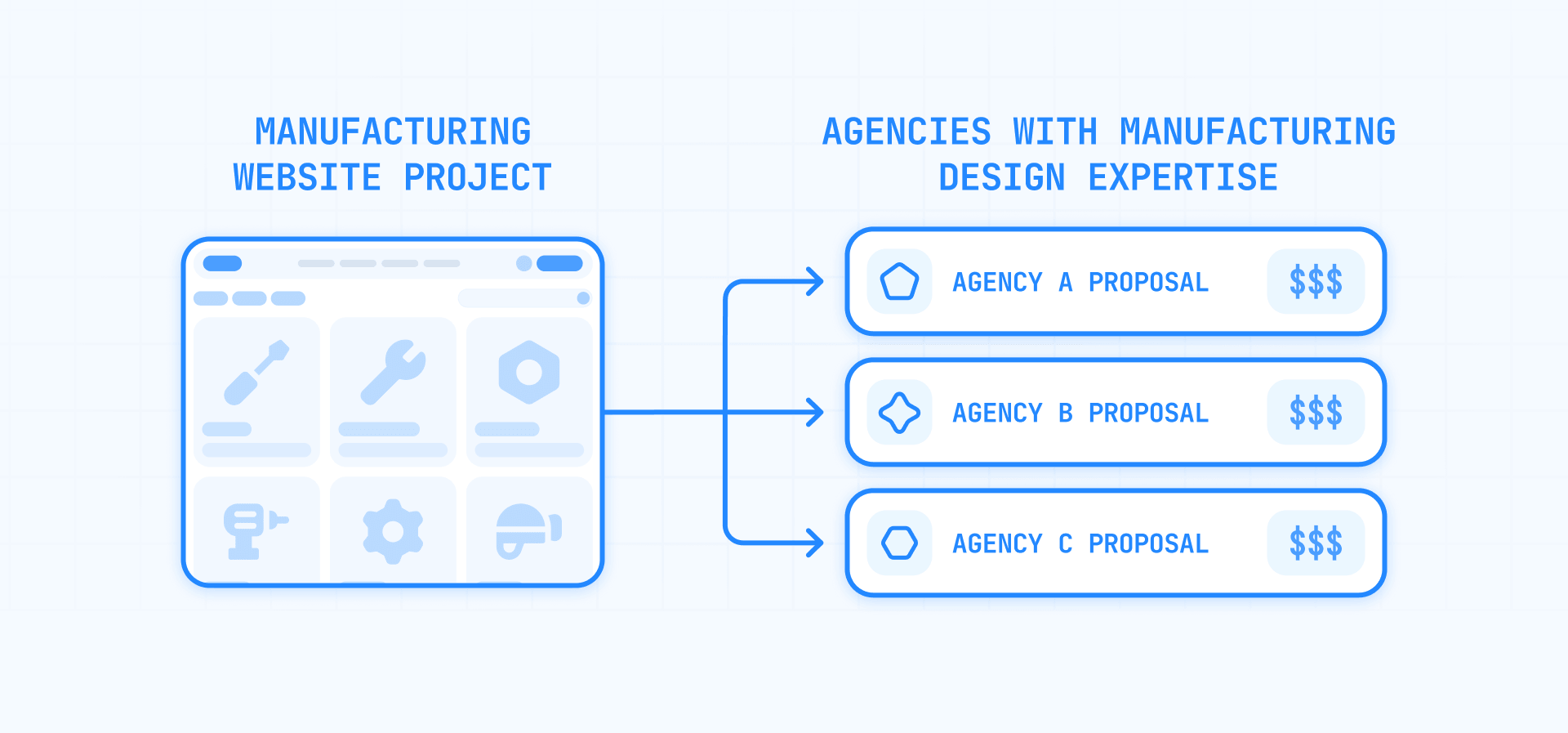
The selected projects do not establish a single comparable market price, so use scoped proposals to set your budget. Ask for the required launch work and optional additions separately, then discuss what can fit into an initial release if the total exceeds the amount available. A smaller agreed scope is easier to manage than a low estimate that leaves the data and integrations undefined.
For scheduling, ask when the agency needs product data, approved specifications, and design feedback, and who will verify the catalog before launch. Include time to review redirects, test enquiry delivery, and check representative products on mobile. If the business has a fixed event or launch date, work backward from the content and approval deadlines needed to meet it.
Choose a manufacturing CMS that keeps product information current
A CMS decision becomes clearer when you try updating a real product. Take a record with specifications, related applications, a downloadable drawing, and a translated description, then ask the agency to show how your team would change it. The editor should make that work predictable, especially when the same detail appears in more than one place.
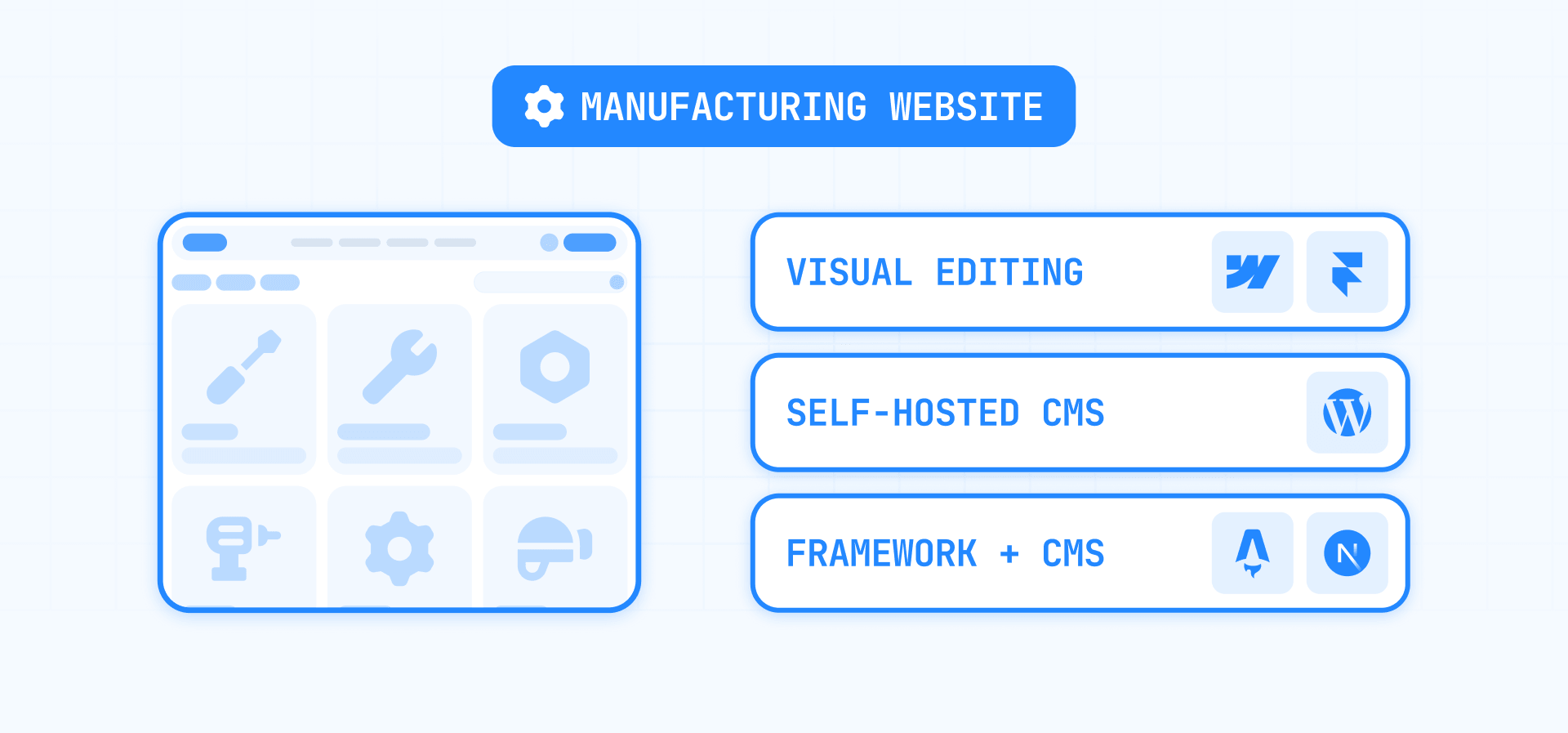
Give product data a clear home
Decide which information belongs in the website editor and which comes from an existing product or business system. Your team should know where to correct a specification and how that change reaches the site, without maintaining several conflicting copies. Ask the agency to map those sources before designing bulk imports, filters, or integrations.
Webflow can organize structured content alongside a visual website, while Framer also provides a visual publishing workflow with CMS content. Evaluate either with your real catalog structure and required relationships, and ask the agency to confirm the limits and custom work involved in its proposed setup. A company site with a small product range and a complex catalog are different briefs.
Match hosting and development to the business
WordPress gives you the option to choose where the website and its CMS database are hosted, with an editing setup that can be tailored to your product content. Ask for a demonstration of the blocks, fields, and document-management process the agency would build. Include responsibility for updates, backups, and hosting support when comparing the overall proposal.
For a custom site connected to a separate content source, Astro or Next.js can be paired with a CMS. These are frameworks, so the agency still needs to identify the editor, explain how product data reaches the pages, and define who supports the code. Choose that approach around a demonstrated requirement and a maintainable workflow.
Test more than the easiest product
Try a record with a long name, several documents, missing optional information, and more than one application. Check a search with no results and a product that has been replaced, then ask how your team would manage those situations. A useful CMS handles the catalog you actually have, with readable pages and an editing process your staff can keep using after handoff.
Manufacturing website design essentials: catalogs, technical content, and enquiries
Help buyers understand what you make
Introduce the company’s products or capabilities directly, then give visitors routes based on what they know. Some will arrive with a part number, while others know an application or a problem they need to solve. A product catalog can support those different starting points through clear categories, search, and relevant relationships rather than relying on a single long product list.
Give important technical information its own readable place on the site, with downloadable documents available alongside it. PDFs can support evaluation, but a buyer should not need to open several files just to understand what a product is. Use consistent fields and clear document labels, and have the technical owner review the information before launch.
Make quote requests useful for buyers and sales
Let someone request information from the product or capability they are exploring, carrying useful context into the enquiry when the implementation supports it. Decide which details sales needs at the first step and which can be discussed afterward, so the form asks for a manageable amount of information. Explain what will happen after submission and where a distributor enquiry should go.
If the website includes direct ordering, configuration, or an ERP or CRM connection, describe the complete route and test it with representative records. Check field mapping, notifications, error states, and the person responsible for follow-up. The enquiry is only useful when it reaches the right place, with enough information for the receiving team to respond.
Preserve useful content during the redesign
Inventory existing product pages, documents, and search-visible content before replacing the site. Agree on a URL and redirect plan, metadata, internal links, and checks for missing files, then review the launch with the people who know the products. Search work should connect to useful pages and accurate information rather than a promise that the new platform will automatically raise rankings.
For distributor resources or multiple languages, identify who maintains each version and what content can be shared. Review the site on mobile, including filters, tables, document links, and forms, because the product page often carries more demanding content than the homepage. Include a plan to correct errors found after launch and keep the catalog current.
Frequently asked questions about manufacturing web design agencies
What should a manufacturing website show on its homepage?
Show what the company makes and who it serves, with a clear route to products or capabilities. A visitor should be able to distinguish a manufacturer from a distributor or service provider without searching through several pages. Use understandable product language and relevant imagery, then help people continue toward the information they need for their particular application or purchasing role.
The homepage does not need to contain the entire catalog, but it should make the main paths visible. Ask the agency how someone with a known part number would proceed compared with a buyer researching an application for the first time. Review the proposed page with those different visitors in mind before approving a design based only on its visual presentation.
Which CMS works best for a manufacturing product catalog?
Choose the CMS around the product structure and editing tasks, including specifications, documents, relationships, and languages. The useful comparison is how the proposed setup manages your real information, not which platform name appears most often in agency portfolios. A small product range may need a different implementation from a catalog connected to existing business systems or shared across several markets.
Give candidates a representative product record and ask them to demonstrate an update, including replacing a document and changing a related application. Confirm the limits, integrations, hosting responsibilities, and development support included in their proposals. Choose the setup after your staff has seen how it will maintain the actual catalog, including more complicated records and the situations that occur after launch.
Does a manufacturing product catalog need ecommerce checkout?
No, a catalog can help buyers evaluate products and request quotes without taking online payments. The right next step depends on how the business sells, including whether equipment needs configuration, technical review, or a conversation about the application. Direct ordering may suit some product ranges, while other offers need a more detailed enquiry before a price or order can be agreed.
Describe the buying process to the agency and identify which decisions a visitor can make independently. Ask it to distinguish catalog navigation from quotation, configuration, and checkout requirements, with the cost of each part visible in the scope. Build the route that matches your sales process rather than adding ecommerce simply because the website contains a list of products.
How much does a manufacturing website redesign cost?
The cost follows the defined content and functionality, including layouts, product records, data preparation, document migration, and integrations. A corporate site and a searchable catalog are different assignments, even when both are described as manufacturing websites. Ask candidates to identify the work their estimate includes and which information or assets your internal team will need to prepare for the project.
Compare 2–3 proposals using the same brief, separating the initial website fee from hosting, maintenance, and continuing support. Check whether product entry and data cleanup are included, because those tasks can sit outside a design quote. If the proposed scope exceeds your budget, agree on a smaller first release with named deliverables and clearly priced additions for later work.
How long does it take to build a manufacturing website?
The schedule depends on the site scope and the readiness of the product information, along with the time needed for design, development, and review. Catalog records, technical documents, translations, and integrations can each affect the sequence. Ask the agency to explain the milestones and the material it needs from your team before committing to a launch date for the project.
Name the people responsible for approving specifications and checking the catalog, then include their review deadlines in the plan. Allow for testing representative products, mobile layouts, enquiry delivery, and redirects before the site goes live. If a trade show or business event sets the deadline, define the required first release and work backward through the dependencies needed to finish it.
Can a manufacturing website connect to our ERP or CRM?
Yes, when the connection is defined around the information and process it supports. Explain which system owns the data, what should move into or out of the website, and how often it needs to change. A product-data connection and a sales-enquiry integration are different jobs, so the agency needs more than the software names to estimate the implementation responsibly.
Ask for the required access, field mapping, testing plan, and ownership of failures after launch. Use representative records to check the complete route, including what happens when data is missing or a destination is unavailable. Include ongoing maintenance in the proposal and assign a contact on each side so the integration has a clear support path when either system changes.
Should product specifications be on web pages or in PDFs?
Put the information needed for initial evaluation on readable web pages, with detailed documents available alongside it. PDFs can support technical review, but visitors should not need to download several files just to understand what a product is or whether it fits their application. Consistent specification fields and clearly labeled documents make the relationship between the page and its supporting material easier to follow.
Ask the agency how your team will update both the page and the document when information changes, including which version is authoritative. Review longer tables and download links on mobile, and have a technical owner approve the content before launch. Keep the website useful on its own while making the additional files easy to find for buyers who need deeper detail.
Can a manufacturing web design agency build a distributor portal?
Some agencies can include a distributor portal as a separately defined part of the website. Start by identifying the resources partners need and which information should remain public for prospective customers. A protected document area, account-based resource library, and ordering system involve different requirements, so the proposal should describe the access and functionality included rather than use a broad portal label.
Discuss who creates and removes accounts, maintains the content, and supports users after handoff. Ask the agency to explain how the portal relates to the main website and any connected systems, then review a relevant project with those responsibilities in mind. Approve the portal scope only after its users, content, access process, and ongoing ownership have been clearly identified.
How can a manufacturing website generate better quote requests?
Connect product and capability information to a clear enquiry path, giving visitors enough context to know what they are asking about. Decide which details sales needs at the first step and avoid requesting information that can be resolved later in a conversation. The design should make the action understandable and explain what happens after the form has been submitted successfully.
Test whether the request reaches the correct team with the relevant product context, notifications, and any agreed CRM fields. Ask how your organization will review enquiry quality after launch, rather than measuring only the number of submissions. Choose the form and routing around the sales process, then make one person responsible for investigating delivery issues and keeping the follow-up process working.
Can a redesign preserve our manufacturing website’s SEO?
A redesign should include a plan for existing URLs and useful content, rather than treating the new pages as a completely separate site. Inventory product pages, documents, metadata, and internal links, then agree on redirects and checks for missing material. Those steps support continuity, but neither a new design nor a platform switch guarantees that search rankings will remain unchanged.
Ask the agency who owns the migration checks and how the website will be reviewed after launch. Include product pages and documents in the review, since broken technical resources can affect visitors even when the homepage looks correct. Preserve the information buyers use, verify the planned redirects, and name the person responsible for resolving errors found during the transition.
Choose an agency that understands how your customers buy
The most useful portfolio example is one that helps you discuss the work your website needs to do. A catalog, a group website, and a technical resource hub serve different purposes, so begin with the buyer’s questions and the information your team needs to maintain. That gives the agency a concrete problem to solve through design and development.
Send a representative product or capability alongside the same brief to 2–3 candidates, then compare the scope, content responsibilities, and handoff. A clear proposal should explain both what visitors will be able to do and how your staff will keep the website useful after launch.
If you’d like to explore a custom website with BRIX Agency, send us your current site and project outline. We reply in less than 24 hours, with a response in 1–2 hours during business hours (PST), and can help you plan a design around the products and capabilities you want people to understand.




Join readers commenting on this post!