

A childcare website should help parents picture their child at your center and understand whether it fits their day. The photographs and personality matter, but so do the age groups, opening hours, location, and route to arranging a visit. A good design brings those details together instead of making families search for each one.
That balance changes with the business. An independent preschool may need a clearer introduction to its teachers and learning approach, while a nursery group needs parents to find the right location before comparing programs. The agency you choose should be able to explain how its design supports that decision, using work you can actually explore.
We've brought together 15 childcare and daycare web design agencies with portfolio work covering independent centers, Montessori schools, forest schools, and larger groups. Below, you'll find the selected projects, what each team contributed, and a guide to comparing proposals, choosing a CMS, and planning the information parents need before they book a tour.
How we selected these childcare and daycare web design agencies
This list focuses on agencies with identifiable childcare website work and a public project to explore. We considered the documented contribution, the way the selected site organizes parent information, and the relevance of that work to different kinds of childcare providers. A strong homepage is a starting point; program pages and inquiry routes deserve the same attention.
As the publisher of this guide, BRIX Agency appears first; our profile features work from our own portfolio. The specialties below describe a strength in the selected work, helping you narrow the list to teams whose experience fits your website. They are a starting point for a conversation about your scope, rather than a promise of enrollment results.
The childcare and daycare web design agency shortlist
- BRIX Agency: A design and development agency creating custom childcare websites that connect a distinctive brand with clear program information and parent journeys.
- Toporin Studio: A digital studio combining preschool website design with local search work to help nearby families find and contact a center.
- Made Nice: A design studio creating distinctive websites with editable content, helping early learning providers present their approach and centers clearly.
- Three Girls Media: A web design agency organizing nursery programs and admissions information so families can understand their options and arrange a visit.
- Hopscotch Digital: A creative agency pairing childcare website design with visual identity, helping early learning centers introduce a consistent and recognizable brand.
- Fruitcake Media: A digital agency building managed nursery websites that bring room information, staff profiles, and parent resources into an accessible structure.
- Flow Cre8tive: A design studio building editable websites that connect location pages, curriculum information, and inquiry tools for early learning providers.
- Emote Digital: A digital agency bringing website strategy, design, development, and visual content together for childcare groups with several centers.
- MoMac: A creative agency combining character design, photography, and website development to give early learning centers a recognizable visual identity.
- GSL Media: A digital agency developing shared website systems that give nursery groups consistent content tools and individual locations their own presence.
- Magic Fingers Graphics: An independent design studio creating illustrated identities and editable websites that help early learning centers express their own character.
- Fuel Design: A website agency creating custom designs and reusable content sections that early learning teams can maintain after launch.
- Telsa Media: A digital agency designing responsive childcare websites that organize nursery information and guide parents toward visits and inquiries.
- Nifty Design Studio: A design studio combining website structure and copywriting to help independent childcare providers explain programs and receive better tour inquiries.
- PK Design: A digital consultancy developing and maintaining website platforms that help childcare groups organize location information as their operations grow.
1. BRIX Agency: Best Childcare and Daycare Web Design Agency for Custom Design
 1
BRIX Agency
A design and development agency creating custom childcare websites that connect a distinctive brand with clear program information and parent journeys.
At BRIX Agency, we design websites that make a business easier to understand and give its brand a recognizable presence. For childcare providers, that means bringing the learning environment, programs, and people into a clear website, with a path from exploring the center to getting in touch.
Our team also creates BRIX Templates, and that work gives us experience with the layouts and content patterns behind early learning websites. The projects below show how we adapted that design foundation into different childcare identities, from bright classroom-focused pages to a quieter presentation of the school's approach.
A closer look at our childcare website design portfolio
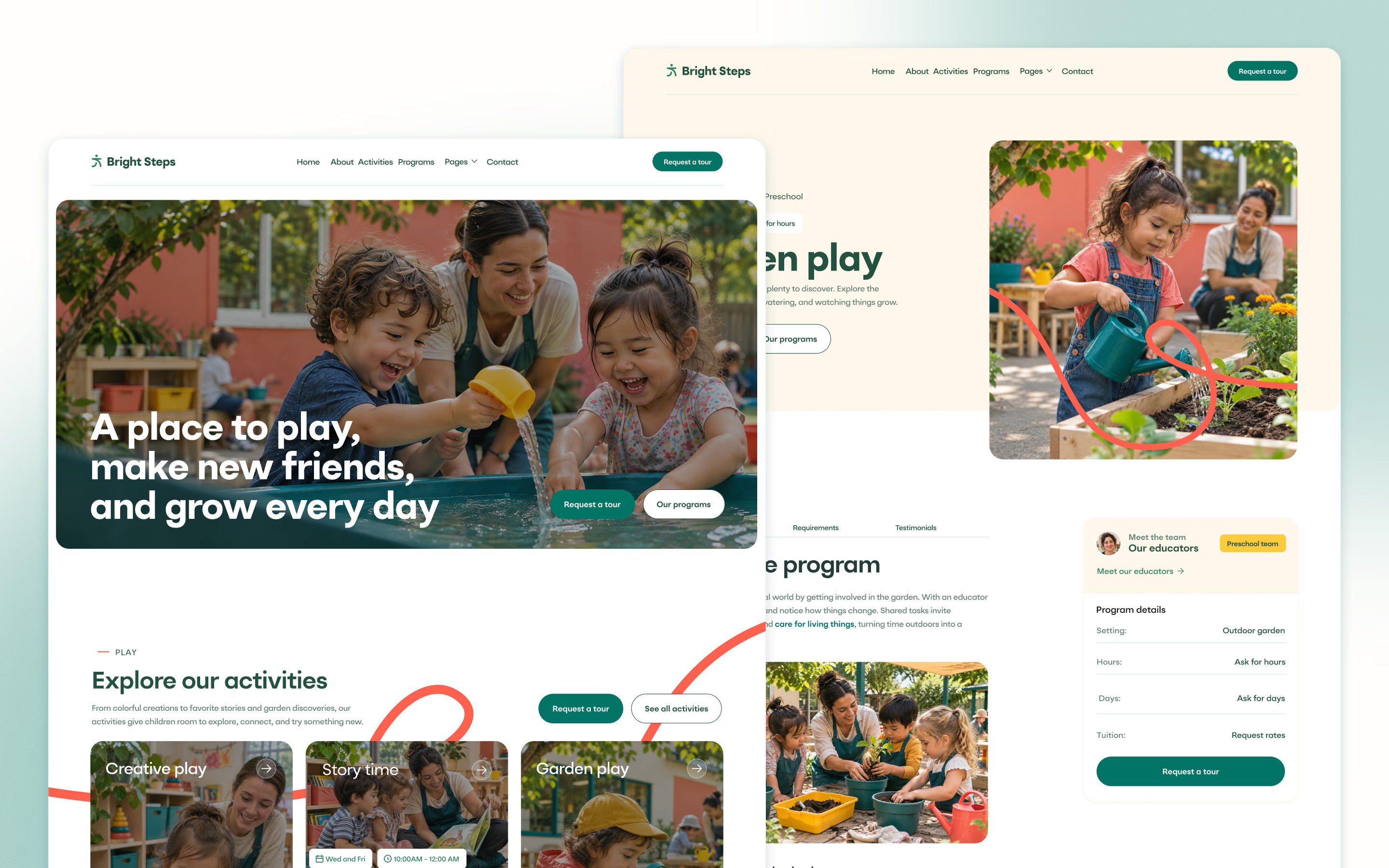
For Bright Steps, we adapted one of our templates into a childcare website with green buttons, outdoor activity photography, and a rounded visual style. The opening introduces the learning environment before the next sections give families more context about the school. Keeping the text and imagery in distinct blocks makes the page feel lively while leaving the explanation easy to follow.
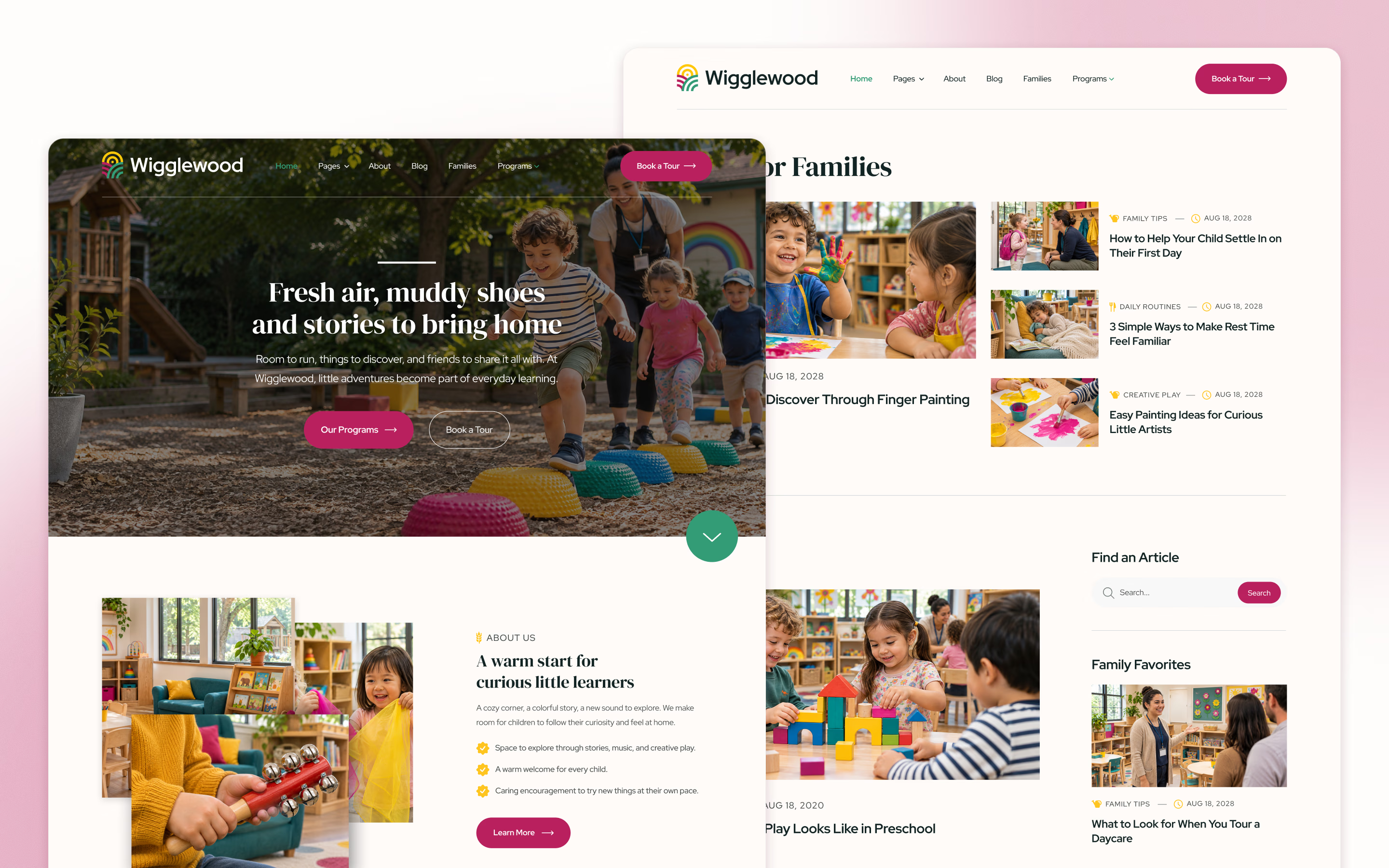
The Wigglewood project takes a more playful direction. We adapted our template with outdoor photography, pink tour buttons, and a clear introduction to learning, then carried that personality into family article sections. Those different content areas give a preschool room to explain its approach and share useful updates without making every page feel like a repetition of the homepage.
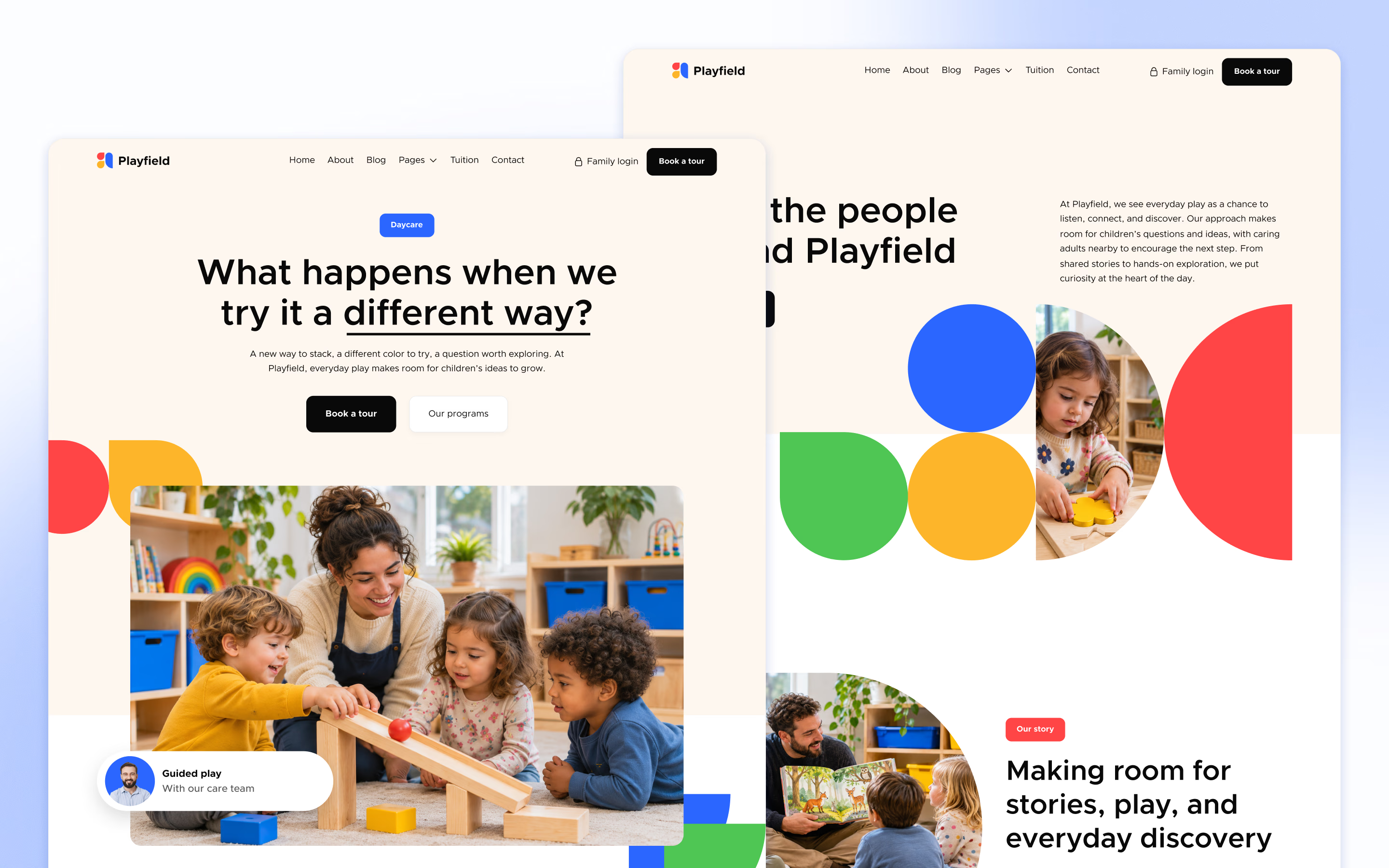
With Playfield, we adapted a template around colorful geometric shapes, large photographs, and a spacious presentation of the school. The design leaves room for its learning approach and values alongside the imagery, so families can get a sense of the setting and the thinking behind it. It shows a different way to give an early learning website warmth without filling every section with decorative elements.
Our templates are used by more than 60,000 websites across all categories. For your childcare business, our team will create a fully custom website around your brand, programs, and goals, drawing on that design experience.
2. Toporin Studio: Best Childcare and Daycare Web Design Agency for Local Search
 2
Toporin Studio
A digital studio combining preschool website design with local search work to help nearby families find and contact a center.
Toporin Studio connects website work with local discovery, which matters when a preschool's families are searching within a small part of a city. Its work for My Room To Grow includes the pages parents read and the search presence that helps them arrive there.
That combination makes it worth considering if your existing site gives a reasonable introduction but your location, programs, and inquiry routes need a clearer plan. Ask how the proposed pages will answer local parent questions before discussing traffic targets.
Featured project: My Room To Grow Preschool
For My Room To Grow Preschool in Poway, Toporin redesigned and custom-developed the website, improved its mobile experience, navigation, and forms, and worked on its SEO structure and Google Business Profile. Its project account describes the work.
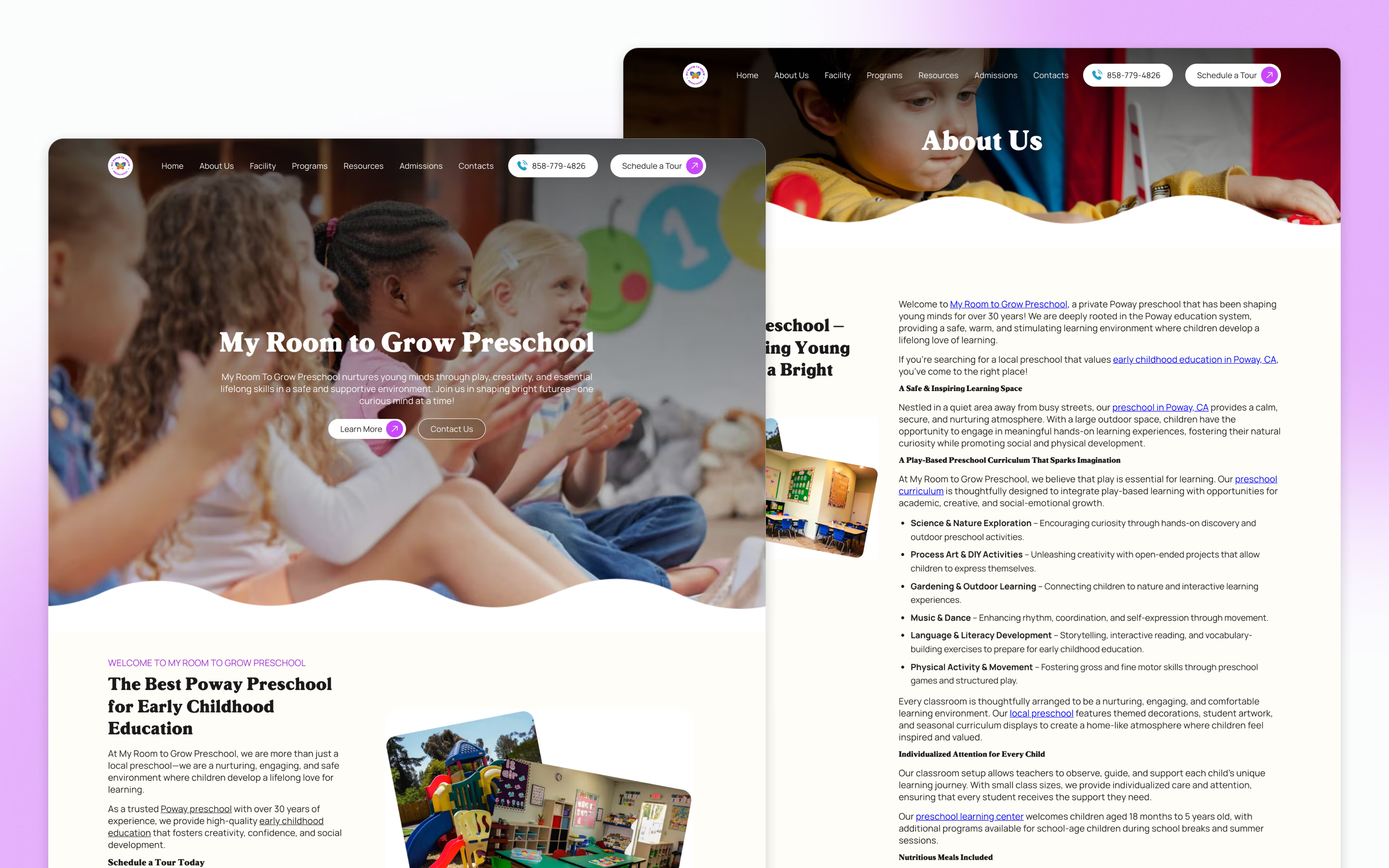
The large photograph gives the school a welcoming opening, while the tour route connects that first impression to a visit. For an independent preschool, the useful lesson is to give local search visitors enough information to recognize the right school and a clear way to meet the team.
3. Made Nice: Best Childcare and Daycare Web Design Agency for Custom Redesign
 3
Made Nice
A design studio creating distinctive websites with editable content, helping early learning providers present their approach and centers clearly.
Made Nice's Future Focus work is relevant when a previous website no longer feels like the business behind it. The studio documented a fresh design process, beginning with new wireframes and continuing through the finished build.
For a childcare provider, that means the project can address how families move between information as well as how the pages look. Its selected work makes it a candidate for a redesign where the team wants a clearer identity and control over everyday content.
Featured project: Future Focus
Made Nice designed and developed the Future Focus website with an editable CMS. The project replaced an earlier design and brought the center and enrollment routes into a new website structure. Its project account describes the work.
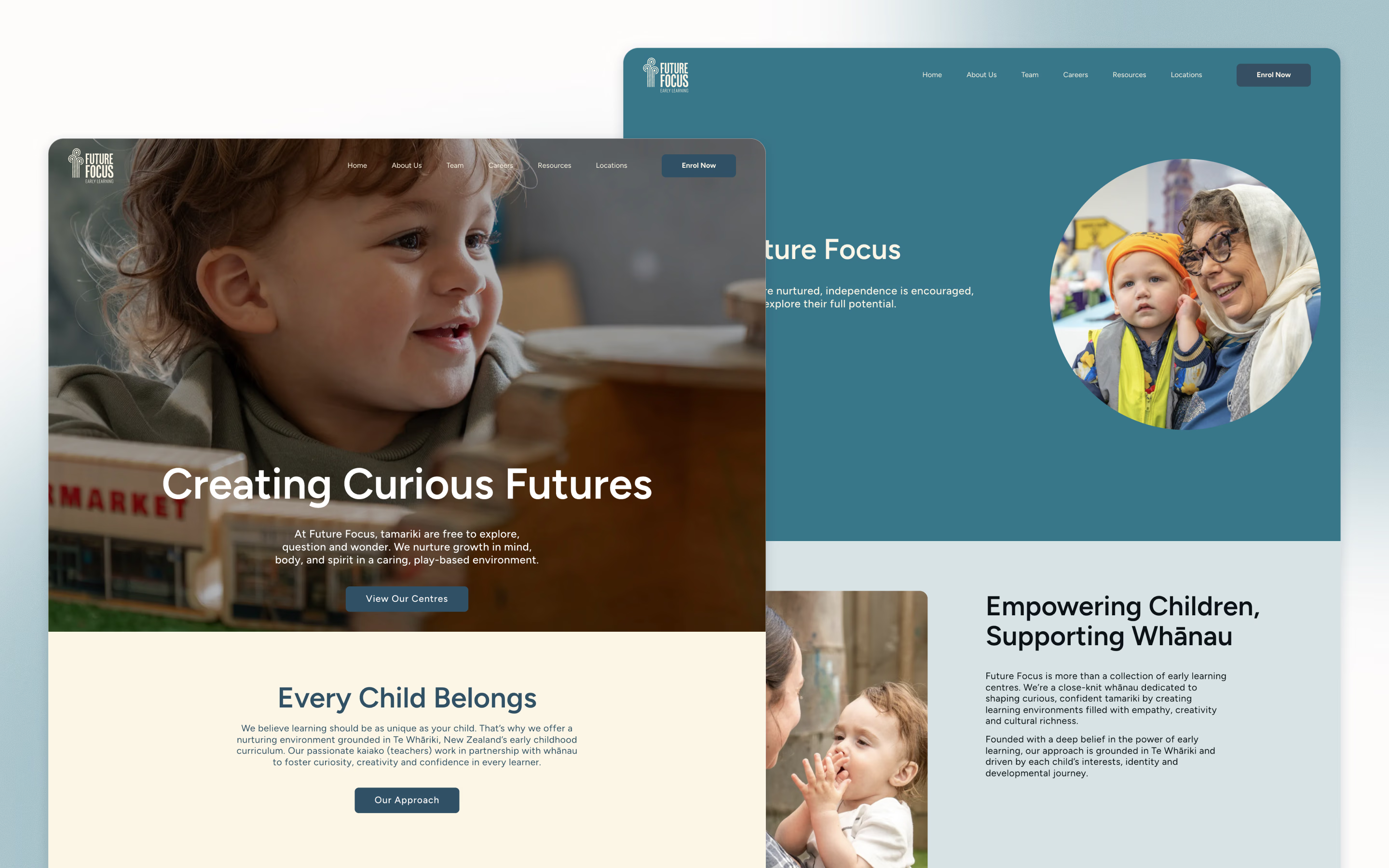
A full-width photograph introduces the children and setting, with direct buttons for finding a center and exploring enrollment. Those routes keep the opening useful: a parent can move from getting a feel for the provider to checking whether one of its centers fits their family.
4. Three Girls Media: Best Childcare and Daycare Web Design Agency for Admissions Journeys
 4
Three Girls Media
A web design agency organizing nursery programs and admissions information so families can understand their options and arrange a visit.
Three Girls Media approaches nursery websites through the information a family needs before visiting. Its Montessori project brings programs and admissions into the same journey, rather than leaving parents to work out which page applies to them.
This is a useful fit for providers with more than one program or educational setting to explain. The agency's project shows how curriculum, visits, and an existing parent portal can each have a recognizable place without competing for the same visitor's attention.
Featured project: Clapham & Clapham Park Montessori
For Clapham & Clapham Park Montessori, Three Girls Media delivered a reorganized website with separate program pages, curriculum information, admissions and open-session routes, and links to the existing parent portal. Its project account describes the work.
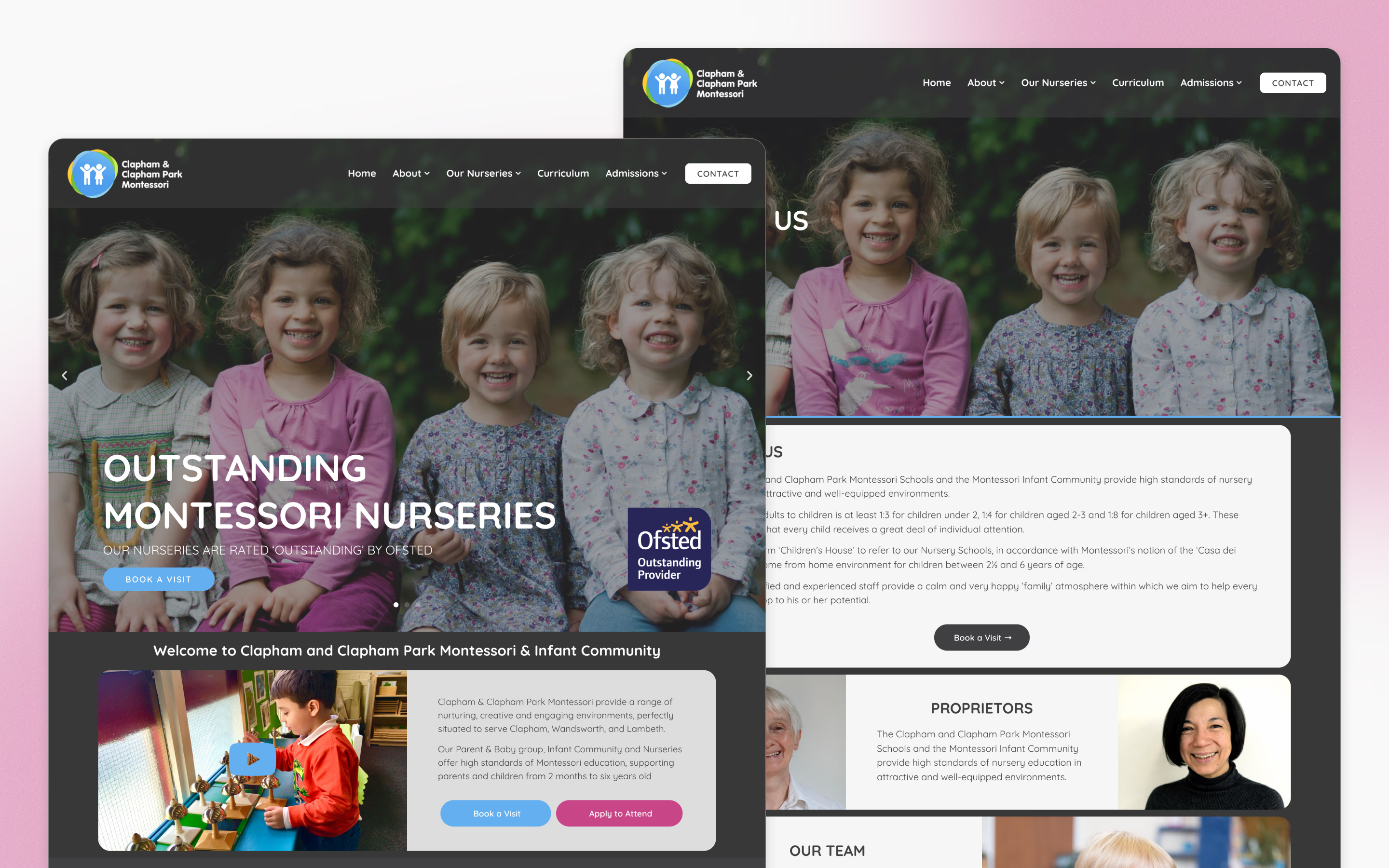
The visit button is easy to identify, while the program pages let families understand the Montessori offering before taking that step. Separating the public admissions journey from the parent portal also helps existing families reach their tools without filling the prospect's navigation with operational information.
5. Hopscotch Digital: Best Childcare and Daycare Web Design Agency for Brand Identity
 5
Hopscotch Digital
A creative agency pairing childcare website design with visual identity, helping early learning centers introduce a consistent and recognizable brand.
Hopscotch Digital's childcare work connects the website with the identity used around the center. At Little Stones, the documented contribution includes both website design and the logo and visual system supporting it.
That makes the agency relevant when a new center needs its first identity, or an established provider wants its website to feel consistent with its physical setting. Compare the design across program pages and parent information, where the brand has to support reading as well as make an impression.
Featured project: Little Stones Early Learning
Hopscotch Digital designed the Little Stones Early Learning website and created its logo and cohesive visual identity. The public site organizes age-based programs, parent information, and enrollment routes. Its project account describes the work.
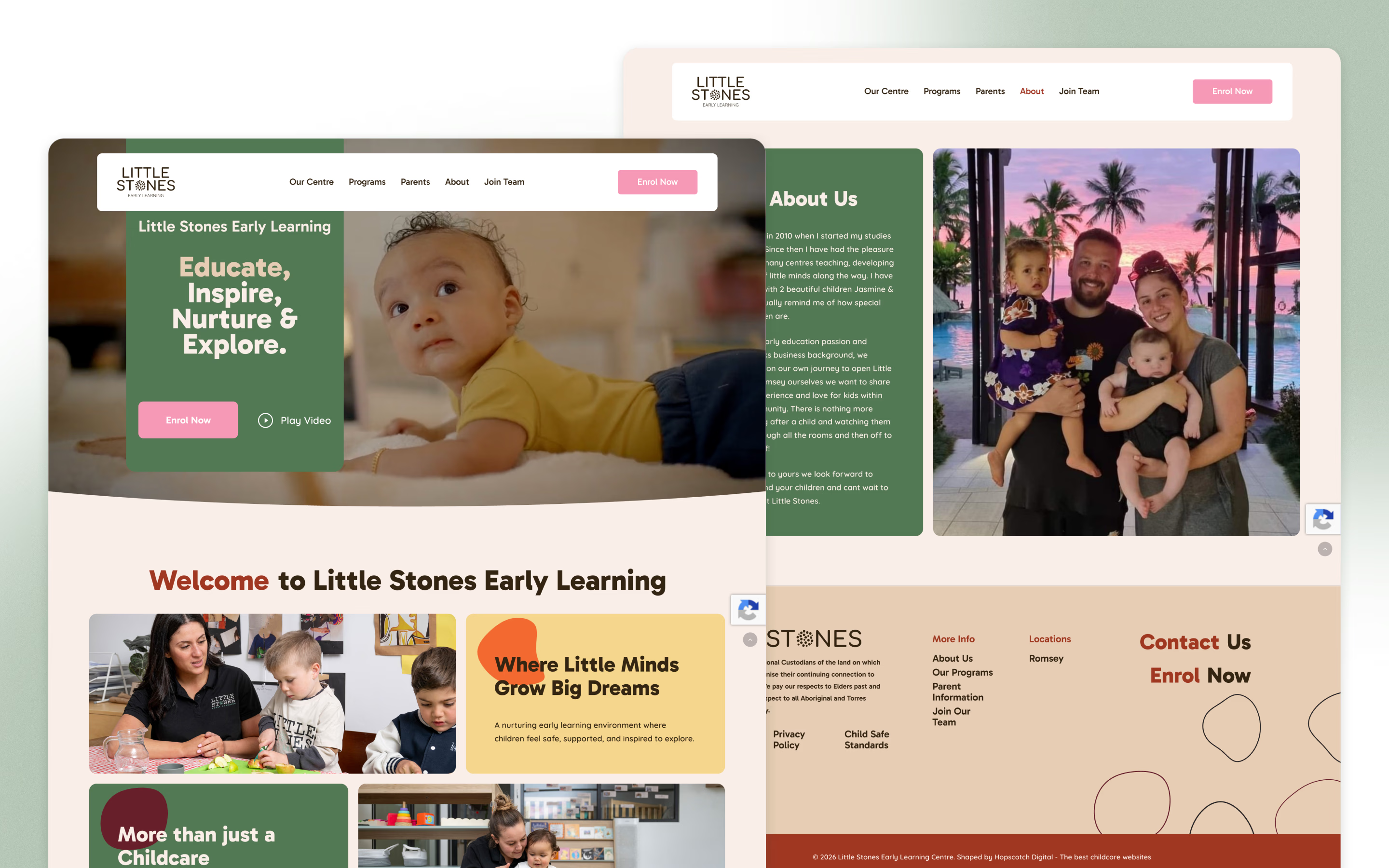
The project is useful for looking at how one identity carries across information for different age groups. A family should recognize the center throughout the site, while still understanding which program is intended for their child and where to ask about availability.
6. Fruitcake Media: Best Childcare and Daycare Web Design Agency for Parent Resources
 6
Fruitcake Media
A digital agency building managed nursery websites that bring room information, staff profiles, and parent resources into an accessible structure.
Fruitcake Media's Wild Explorers work gives practical parent information the same attention as the first impression. The agency documented a rebuild that organized rooms, people, and policies around an existing woodland identity.
Its managed website approach is worth discussing if your team prefers help with ongoing content changes. Be specific about who will update policies, staff profiles, and holiday notices, because those responsibilities affect how useful the site remains after launch.
Featured project: Wild Explorers Forest School
Fruitcake rebuilt the Wild Explorers Forest School website on its managed platform, adding room and staff pages, organizing parent resources and policy PDFs, and providing a persistent show-around inquiry route. Its project account describes the work.
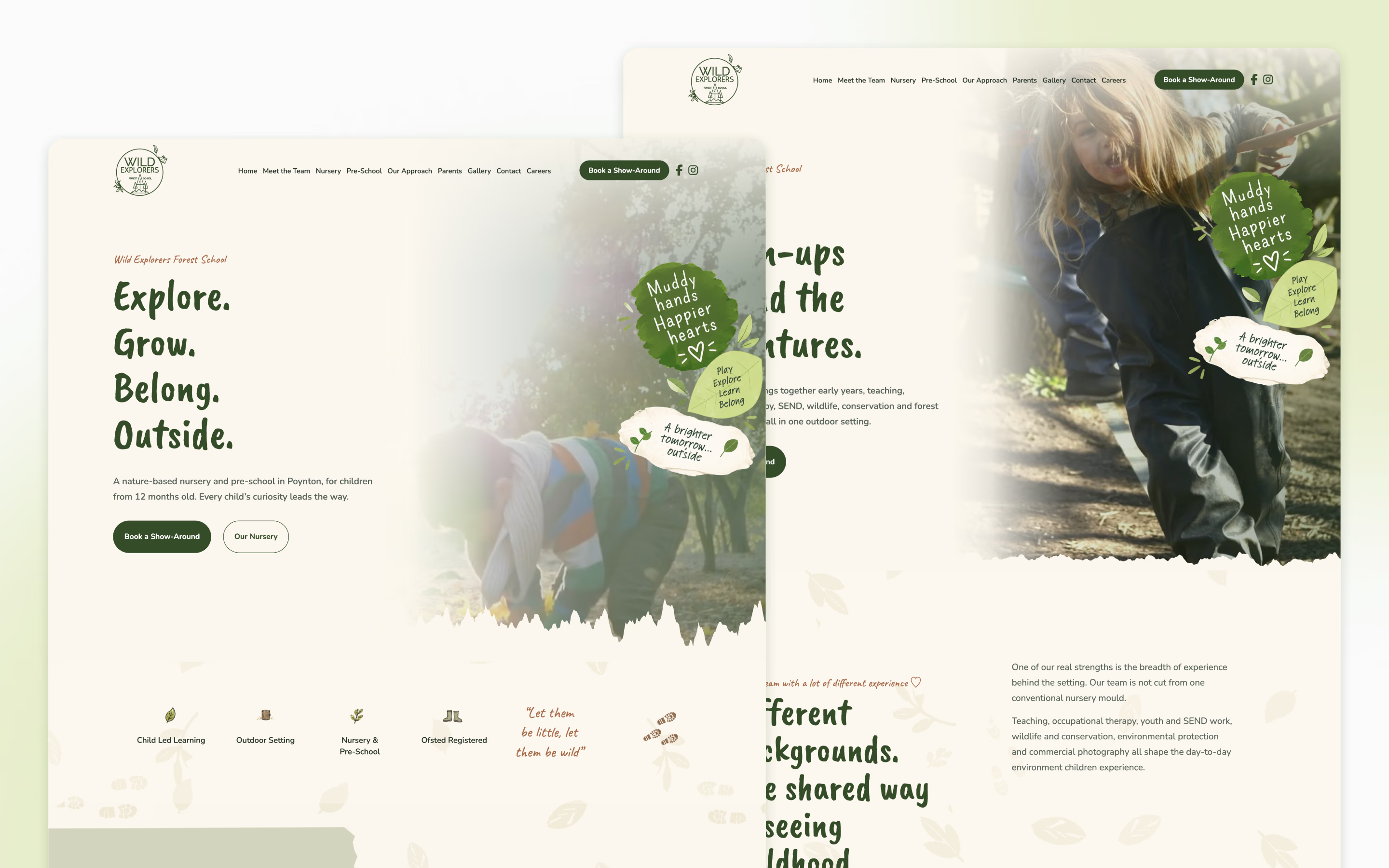
The woodland presentation suits the school, but the more transferable idea is how the website makes practical documents and visits easy to find. An expressive brand can still have straightforward navigation, particularly when new parents need to compare the nursery and preschool options.
7. Flow Cre8tive: Best Childcare and Daycare Web Design Agency for Wix Studio
 7
Flow Cre8tive
A design studio building editable websites that connect location pages, curriculum information, and inquiry tools for early learning providers.
Flow Cre8tive brings a platform-specific option to this list through its Wix Studio work for The Green Elephant. The documented project combines the visual rebuild with content migration and the organization of information across centers.
It is a useful reference when your team wants reusable pages for locations and programs. Ask how changes to shared curriculum information will flow through the site and which details each center can maintain independently.
Featured project: The Green Elephant
Flow Cre8tive redesigned and built The Green Elephant website in Wix Studio, migrating content and creating dynamic location, curriculum, and environment pages. The scope also included copy, basic SEO, and CRM setup. Its project account describes the work.
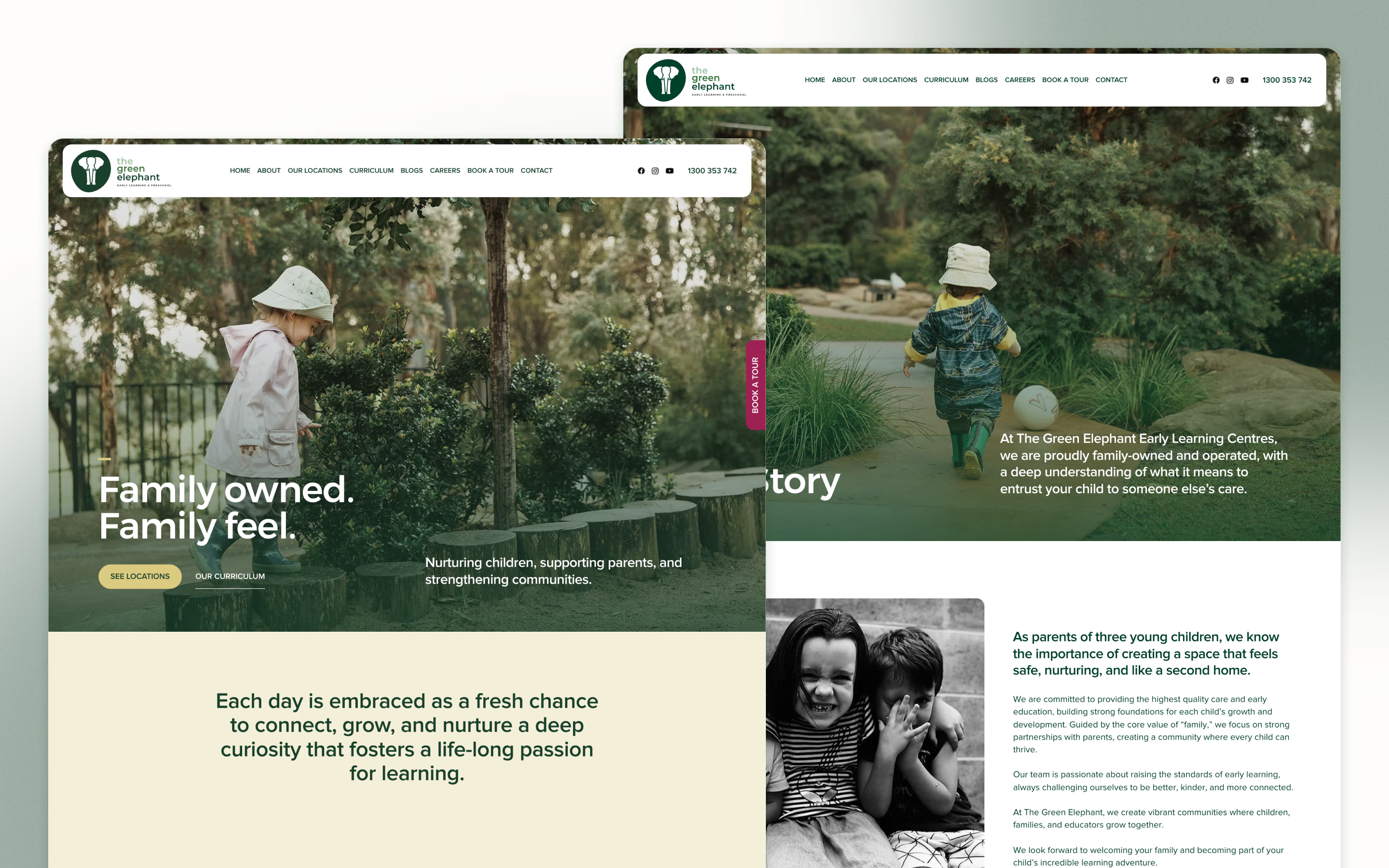
The center and age-group routes give families different ways to find the information they need. For a growing provider, the value of that structure is the ability to add another location without rebuilding the same curriculum explanation or losing its local contact details.
8. Emote Digital: Best Childcare and Daycare Web Design Agency for Multiple Locations
 8
Emote Digital
A digital agency bringing website strategy, design, development, and visual content together for childcare groups with several centers.
Emote Digital's Little Lane engagement covers the planning and production behind a childcare group website. Its documented responsibilities span the sitemap and wireframes, visual design, development, and coordination of photography, video, and written content.
That breadth is relevant when a redesign depends on more than a new layout. A group may need to decide what every center shares, commission consistent photography, and agree on how location inquiries reach the right people before development begins.
Featured project: Little Lane Early Learning
For Little Lane Early Learning, Emote delivered website strategy, UX and visual design, and development, applying brand assets and coordinating the content used throughout the site. The public website offers center discovery alongside programs, nutrition, and inquiry information. Its project account describes the work.
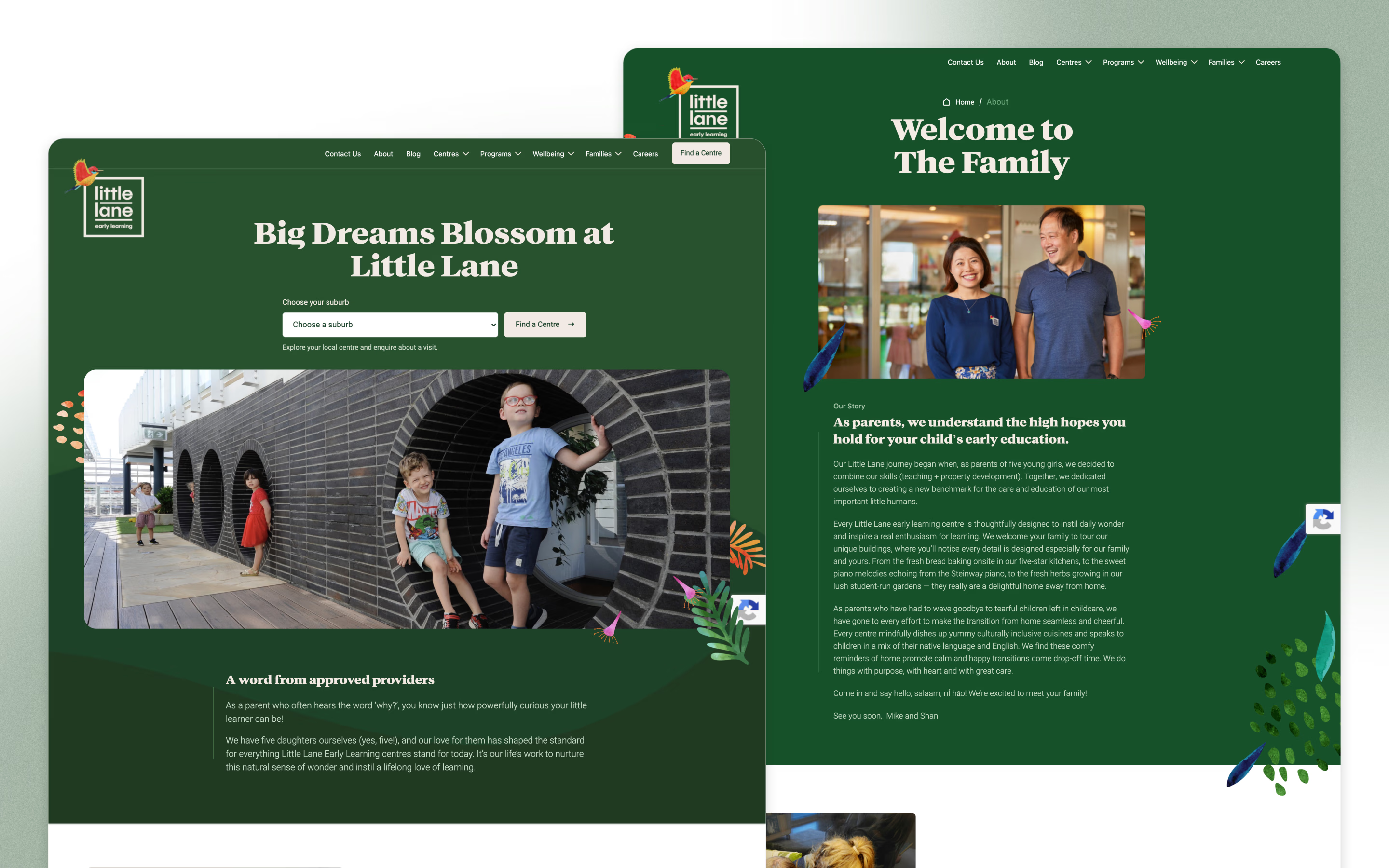
The suburb and center routes help bring a large offering back to a parent's local decision. When reviewing this project, follow one location all the way to its inquiry destination, because that is where a group website needs to become specific to an individual family.
9. MoMac: Best Childcare and Daycare Web Design Agency for Illustrated Branding
 9
MoMac
A creative agency combining character design, photography, and website development to give early learning centers a recognizable visual identity.
MoMac's Oxford Early Learning Centre project brings several creative disciplines into one website. Its scope includes character design, a new logo, and team photography alongside design and development.
That approach suits a center looking for an identity it can use beyond the homepage. Illustrations can connect the website with signs and printed material, while photographs introduce the real people families will meet when they visit.
Featured project: Oxford Early Learning Centre
MoMac created the brand concept, logo, and characters for Oxford Early Learning Centre, then designed and developed its website. The documented work also included SEO, hosting, and team photography. Its project account describes the work.
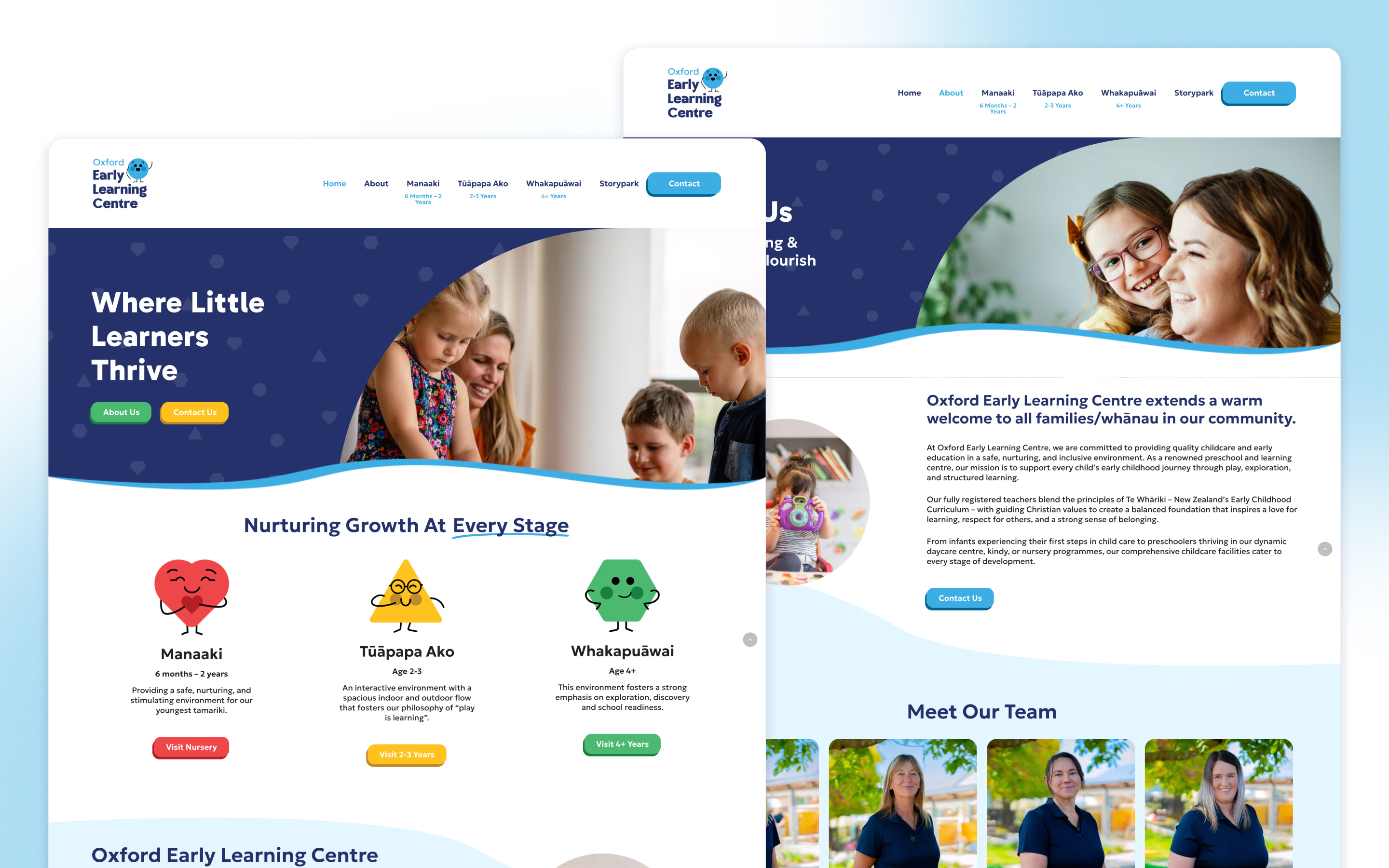
The site provides routes for three age groups alongside an explanation of the center's approach. That organization gives the playful identity a practical role: it can make the school memorable while leaving the age and program information easy for an adult to understand.
10. GSL Media: Best Childcare and Daycare Web Design Agency for Shared Platforms
 10
GSL Media
A digital agency developing shared website systems that give nursery groups consistent content tools and individual locations their own presence.
GSL Media's Devon Nurseries project addresses a different problem from a single-center redesign: how to maintain a group website and its individual nurseries together. Its work uses a shared CMS while giving local sites their own information.
For a provider planning additional locations, this is a useful reference for content ownership. The agency discussion should cover which pages belong to the group, which belong to a nursery, and how an editor avoids publishing a local change across every location.
Featured project: Devon Nurseries
GSL designed and built a Payload CMS platform for Devon Nurseries, including a group homepage and individual nursery sites. The project refreshed the existing palette and structured parent resources, careers, local content, and direct inquiries. Its project account describes the work.
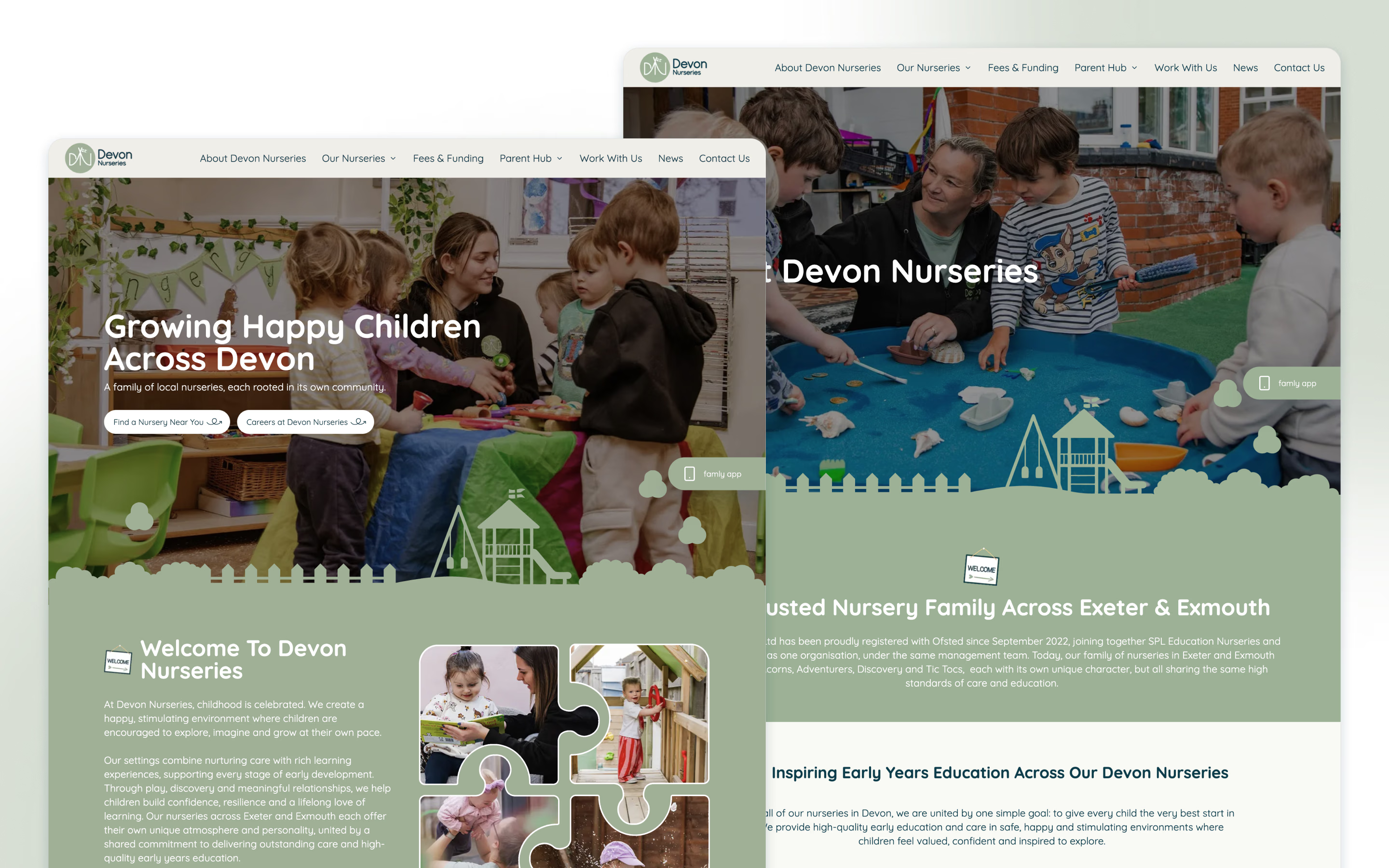
The group-to-nursery route makes the architecture visible to visitors: families can find a local setting while staff can reach careers and resources. This is worth studying if your current site either buries each nursery in a long list or makes every location repeat the same information.
11. Magic Fingers Graphics: Best Childcare and Daycare Web Design Agency for Custom Illustration
 11
Magic Fingers Graphics
An independent design studio creating illustrated identities and editable websites that help early learning centers express their own character.
Magic Fingers Graphics combines hand-drawn illustration with website work, as shown in its Little Moas project. The contribution includes the visual identity around the pages, rather than treating illustration as a decorative addition at the end.
For an independent center, that offers a way to make the website recognizable without relying entirely on a large photography library. The important balance is keeping expressive graphics around readable information about fees, enrollment, and the educational approach.
Featured project: Little Moas Early Learning Centre
Magic Fingers refined the Little Moas Early Learning Centre brand, developed its illustrations and palette, and rebuilt the website in Rocketspark. The wider engagement included stationery and social media assets. Its project account describes the work.
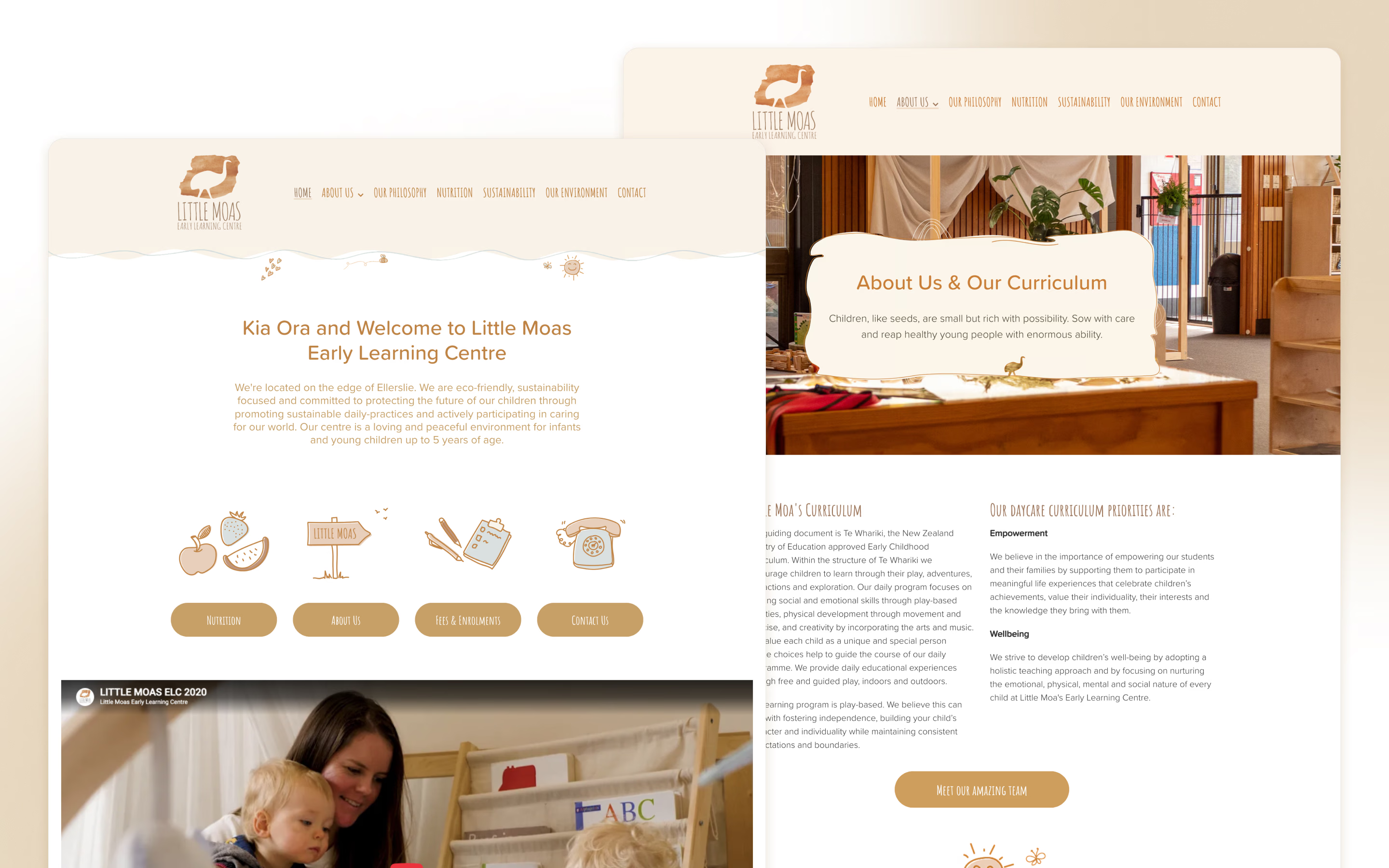
The public site brings fees and enrollment, nutrition, sustainability, and philosophy into its navigation. Those practical topics give the illustrated identity substance, helping families understand both how the center feels and what attending it would involve.
12. Fuel Design: Best Childcare and Daycare Web Design Agency for Easy Editing
 12
Fuel Design
A website agency creating custom designs and reusable content sections that early learning teams can maintain after launch.
Fuel Design's Sunnyside project focuses on the relationship between a custom design and the people who will maintain it. Its editable content sections cover staff, news, and resources, all areas where childcare websites can become outdated quickly.
This is a useful agency to assess when the current website depends on a developer for routine changes. Ask to see how the proposed editing system distinguishes shared design components from the text and images your team will update.
Featured project: Sunnyside Early Learning Centre
Fuel designed and developed the Sunnyside Early Learning Centre website in Oncord, with reusable illustrated components, collaborative content work, and inquiry forms. It also provided editable staff, news, and resource sections. Its project account describes the work.
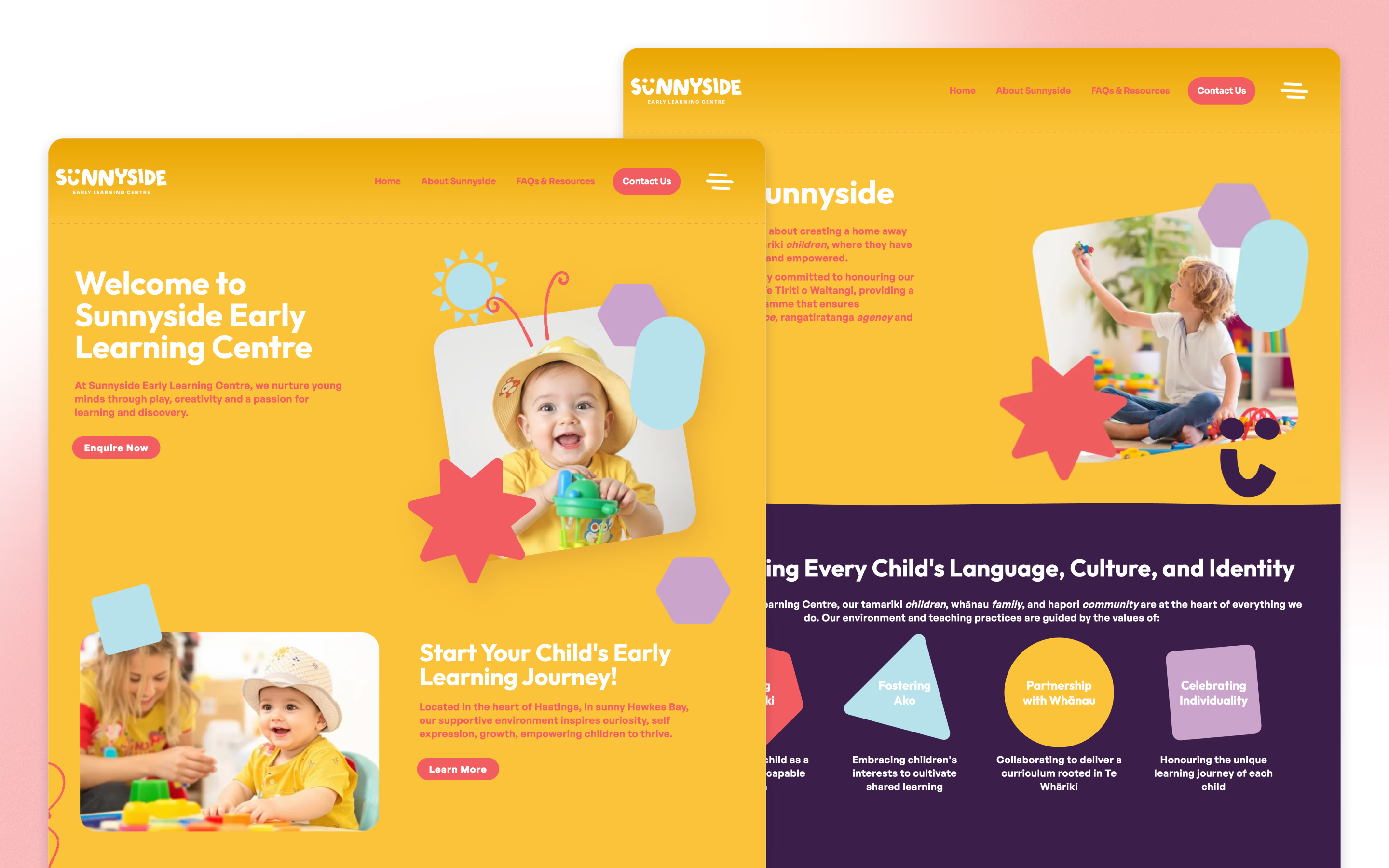
The center's values and practical resources can remain part of one consistent website while the team changes their content. For a childcare operator, that is a more useful editing goal than access to every layout setting: staff need to publish accurate information without having to redesign each page.
13. Telsa Media: Best Childcare and Daycare Web Design Agency for Enrollment Information
 13
Telsa Media
A digital agency designing responsive childcare websites that organize nursery information and guide parents toward visits and inquiries.
Telsa Media's work for Jancett Childcare is relevant to providers with several kinds of parent information to organize. The project documents a responsive design and build with clear inquiry routes around the nursery offering.
When evaluating the agency, look at how its pages connect the practical and educational sides of childcare. A parent may need to read about fees and funding as well as the approach to learning before deciding to book a visit.
Featured project: Jancett Childcare
Telsa designed and built Jancett Childcare's responsive website, introducing clear navigation and calls to action for nursery information and parent inquiries. The public website presents individual nurseries, fees and funding, a parent hub, and visit booking. Its project account describes the work.
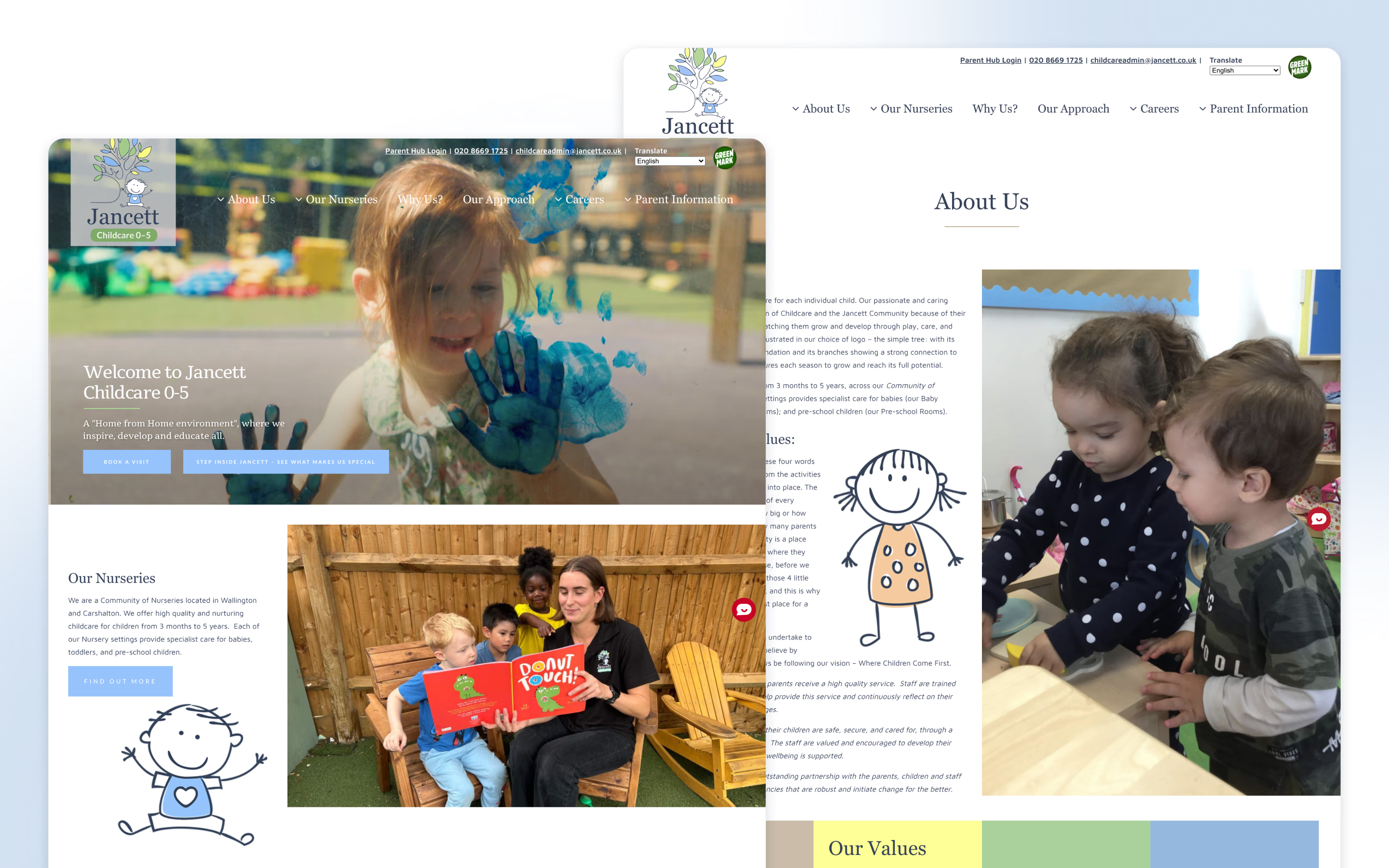
That range of content makes Jancett a useful reference for organizing questions that do not all belong on a program page. Keeping the parent hub recognizable also gives existing families a place to return while prospective parents explore the nursery options.
14. Nifty Design Studio: Best Childcare and Daycare Web Design Agency for Tour Requests
 14
Nifty Design Studio
A design studio combining website structure and copywriting to help independent childcare providers explain programs and receive better tour inquiries.
Nifty Design Studio's Montrose project joins website redesign with copywriting and tour requests. The documented work addresses how the information is explained and how families act on it, not just the visual treatment.
That combination is useful when an independent daycare has the right information but parents struggle to find it. Review how the agency separates programs and services, then consider whether your own inquiry form asks the questions your team needs to arrange a useful visit.
Featured project: Montrose Daycare & Childcare
Nifty redesigned Montrose Daycare & Childcare's website, reorganizing navigation and program content, writing copy, improving the gallery, and adding a customizable tour-request form. The scope also included on-page search optimization. Its project account describes the work.
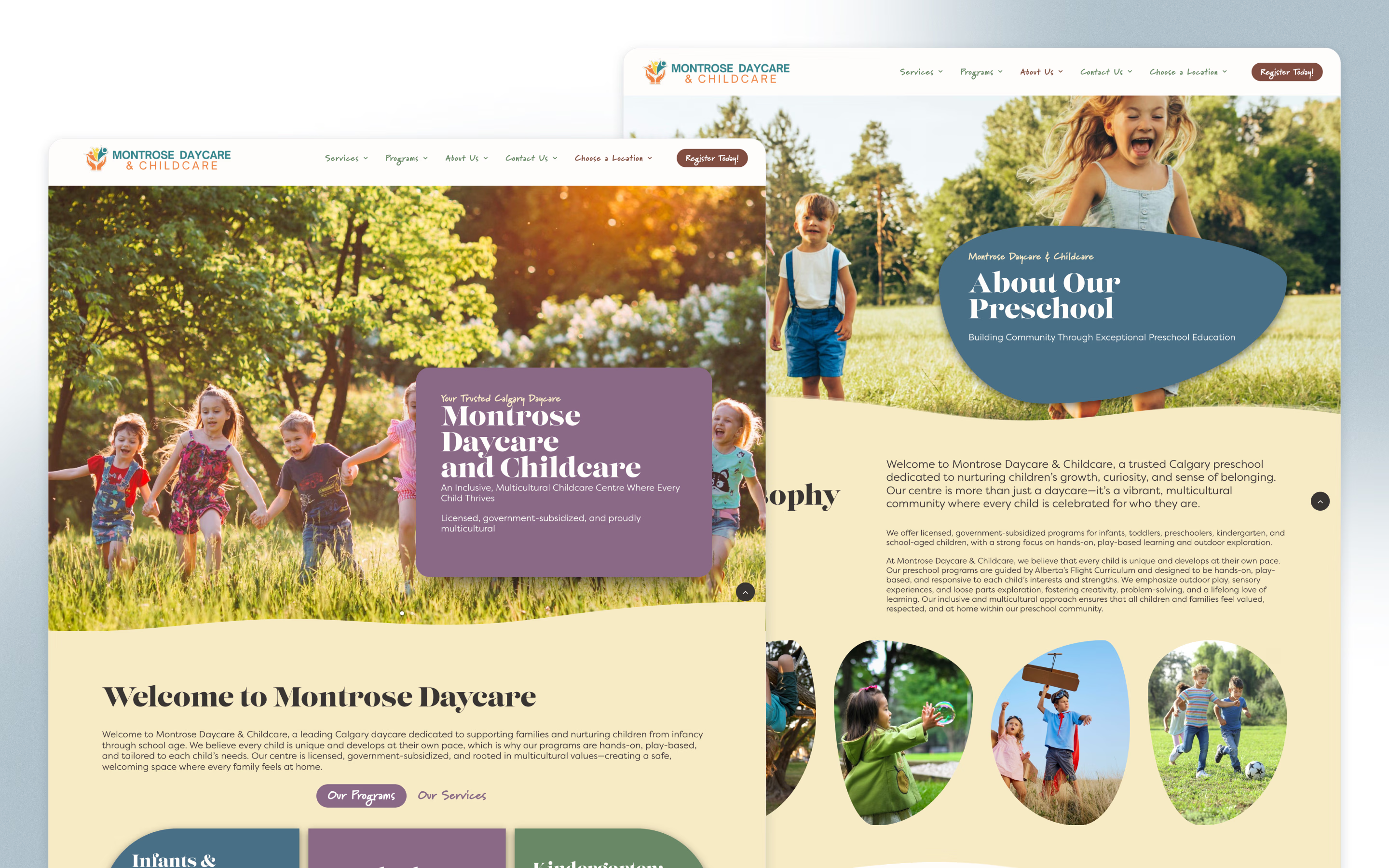
The project connects a clearer description of the daycare with a specific next step. A tour form can help staff prepare for the conversation when it identifies the relevant program and timing, while keeping the initial request short enough to complete on a phone.
15. PK Design: Best Childcare and Daycare Web Design Agency for Platform Support
 15
PK Design
A digital consultancy developing and maintaining website platforms that help childcare groups organize location information as their operations grow.
PK Design brings a platform and support perspective through its Little Shining Stars work. Its documented role includes content structure and development for a multi-location website, followed by maintenance and support.
This is relevant when your concern extends beyond launching a new design. Discuss how the platform will accommodate another center, who can change shared information, and how ongoing support will keep location pages and inquiry routes working as the group changes.
Featured project: Little Shining Stars Early Learning Centre
PK Design worked on the multi-location website platform for Little Shining Stars Early Learning Centre, covering strategy, UX and content structure, development, and ongoing maintenance. The selected current website provides center discovery and tour routes. Its project account describes the work.
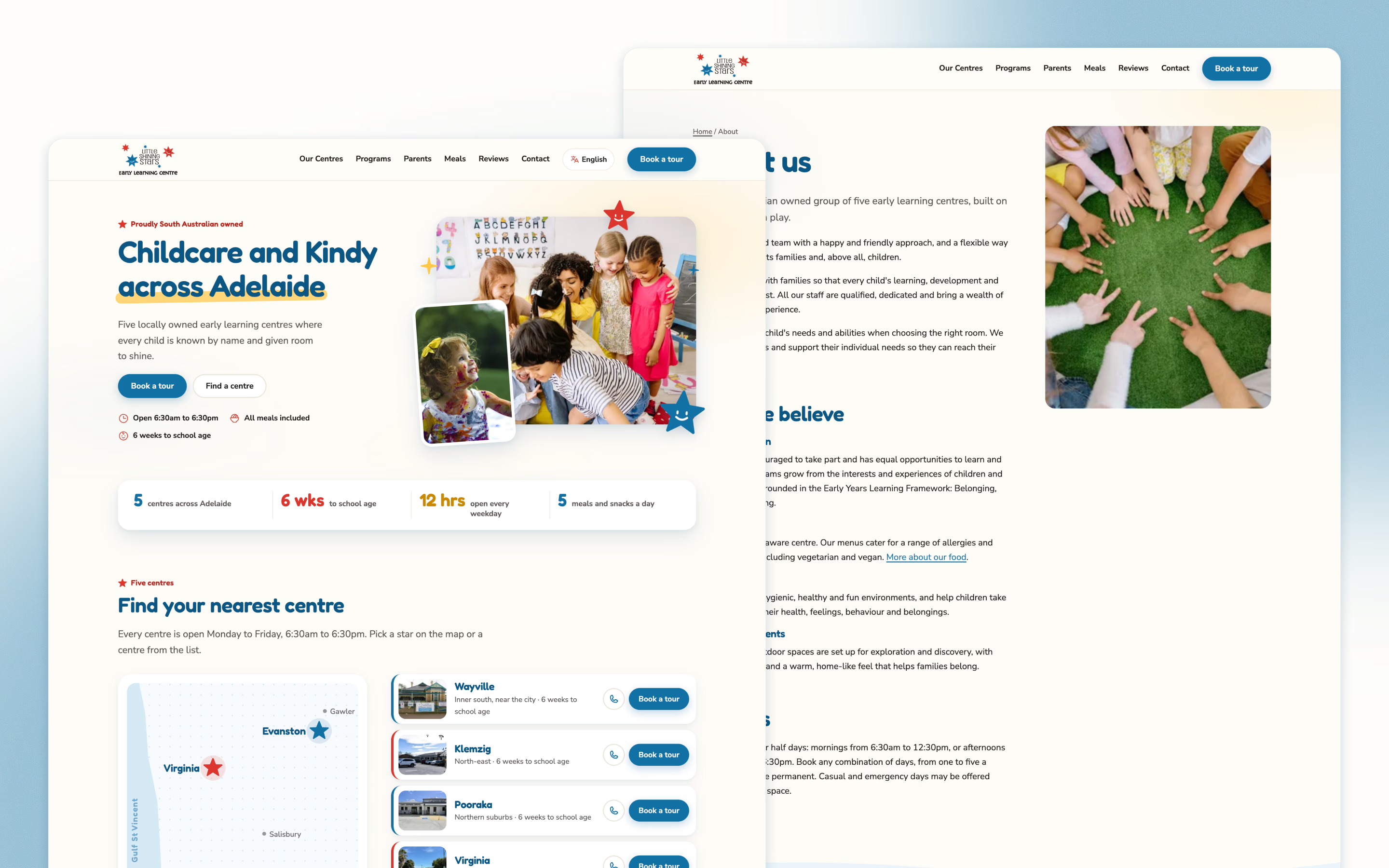
The useful takeaway is the pairing of local discovery with a maintained platform. When comparing proposals, ask how adding a center affects navigation, content, forms, and support costs, rather than assuming that a new location is simply another page to duplicate.
What childcare website design services should include
A childcare website project starts with deciding what families need to know before they can consider a visit. That includes the age groups you serve, schedules, location, learning approach, and practical details about enrollment. The agency should organize those topics into a clear page structure before designing the homepage, because the introduction needs to lead somewhere useful.
Design and content production should support each other. Staff introductions, photographs of the rooms and outdoor spaces, and plain descriptions of a typical day help explain the setting. Agree on who will write the copy, arrange photography, obtain permission for images, and approve information about programs and fees. A gallery full of attractive photographs cannot explain an age requirement or a pickup time on its own.
The technical scope should name the forms, CMS, redirects, and connections included in the build. A tour request, a waiting-list application, and an existing family's portal are different journeys. Decide whether each stays on the website or opens another service, and include testing, analytics, staff training, and support in the proposal. Ask the agency to identify what your staff will be responsible for after launch.
How to choose a childcare web design agency and compare pricing
Choose candidates around the problem your website needs to solve. A preschool with a dated identity may need branding and photography as much as development, while a group with several centers may need a shared content system and better location pages. Pick projects from this list that resemble that challenge, then explore the program information and tour journey as well as the homepage.
Give 2–3 agencies the same brief, including your locations, programs, existing enrollment tools, content, and preferred launch date. Describe the people who will maintain the website and the changes they expect to make. This gives each agency a common starting point and makes its assumptions easier to compare.
Subject Website redesign for [Childcare business name]
Hi [Agency name],
I found your team through BRIX Agency's childcare web design guide. We run [Center or group name], serving [Age groups] in [Locations], and we're planning a website that makes our programs and tour process clearer.
We need [Program pages, location pages, staff profiles, parent resources, and tour requests]. Our team will supply [Copy and photographs], and we'll need help with [Remaining content]. We currently use [Enrollment or parent platform] and would like to understand the best way to connect it.
Our preferred launch is [Date], with an initial budget of [Optional range]. Could you share a relevant project and a proposal covering design, development, content, integrations, ongoing costs, and the editing handover?
Thanks,
[Name]
Review each quote against the agreed scope: distinct page designs, writing, photography, migration, forms, integration work, testing, and training. Ask whether a location uses a repeatable page or its own website, and whether tour booking is a simple inquiry or a calendar with confirmed availability. Those differences can change the amount of work considerably, so a lower total is only useful when you understand what it covers.
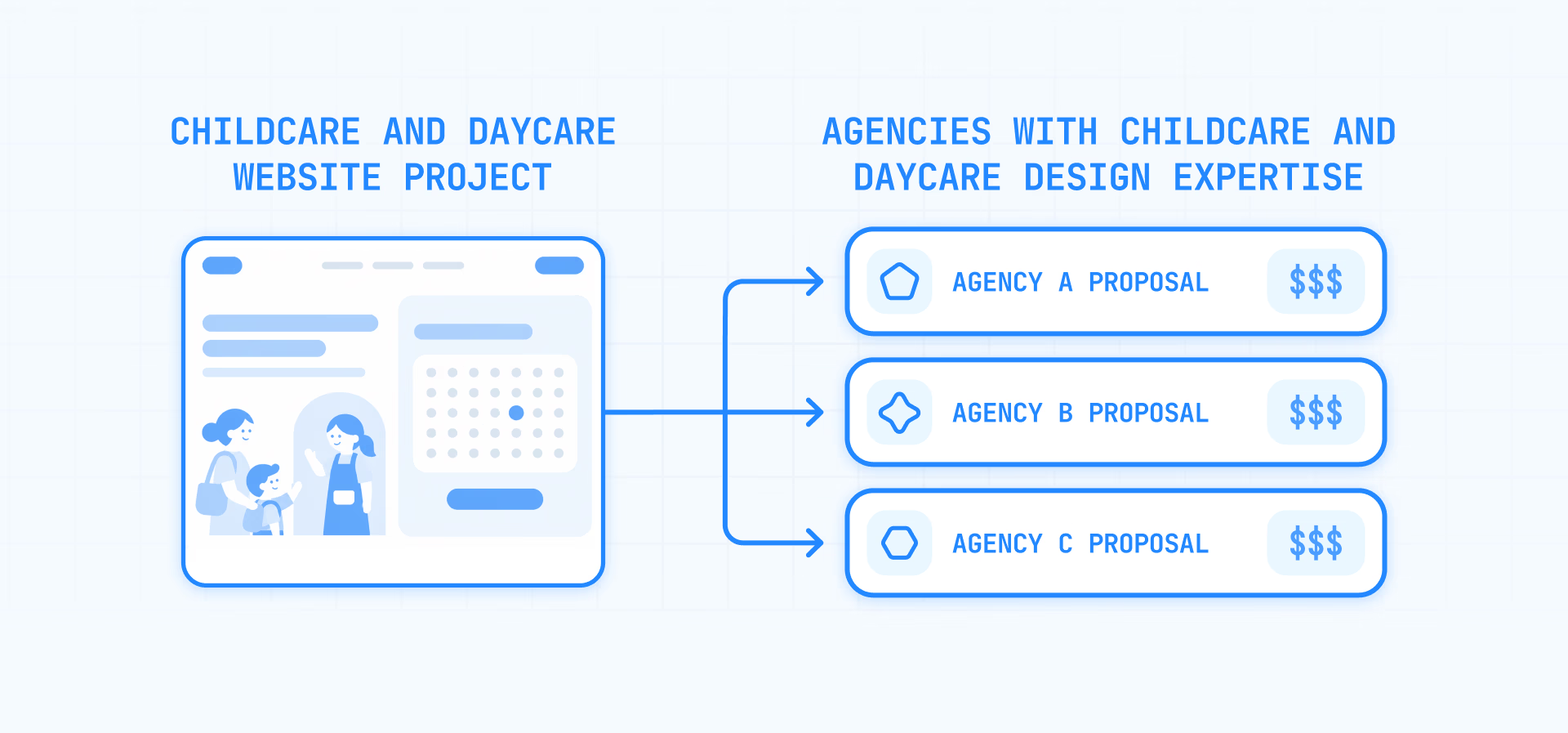
Separate the launch price from ongoing costs. Hosting, CMS subscriptions, booking software, backups, maintenance, and content support may be billed separately. Confirm ownership of the domain, accounts, design files, and finished content, along with what happens if you change providers. For the timeline, request milestones for content approval, design, development, and testing rather than relying on a launch date with no dependencies.
Before launch, follow a tour request from a phone through to the staff member who receives it. Check the confirmation, the selected location, and what happens when a required field is missing. Track completed inquiries and booked visits as separate events where your tools allow it, and compare those figures with attendance through your own records. Agree on who will keep opening hours, program details, and availability current.
Choosing a CMS your childcare team can keep up to date
The right CMS should make ordinary updates feel ordinary. Changing a staff profile, adding a closure notice, or revising program information should not require rebuilding a page. Start with the editing tasks your team will perform, then ask the agency to recommend a setup that also keeps the website fast and readable for families using a phone.
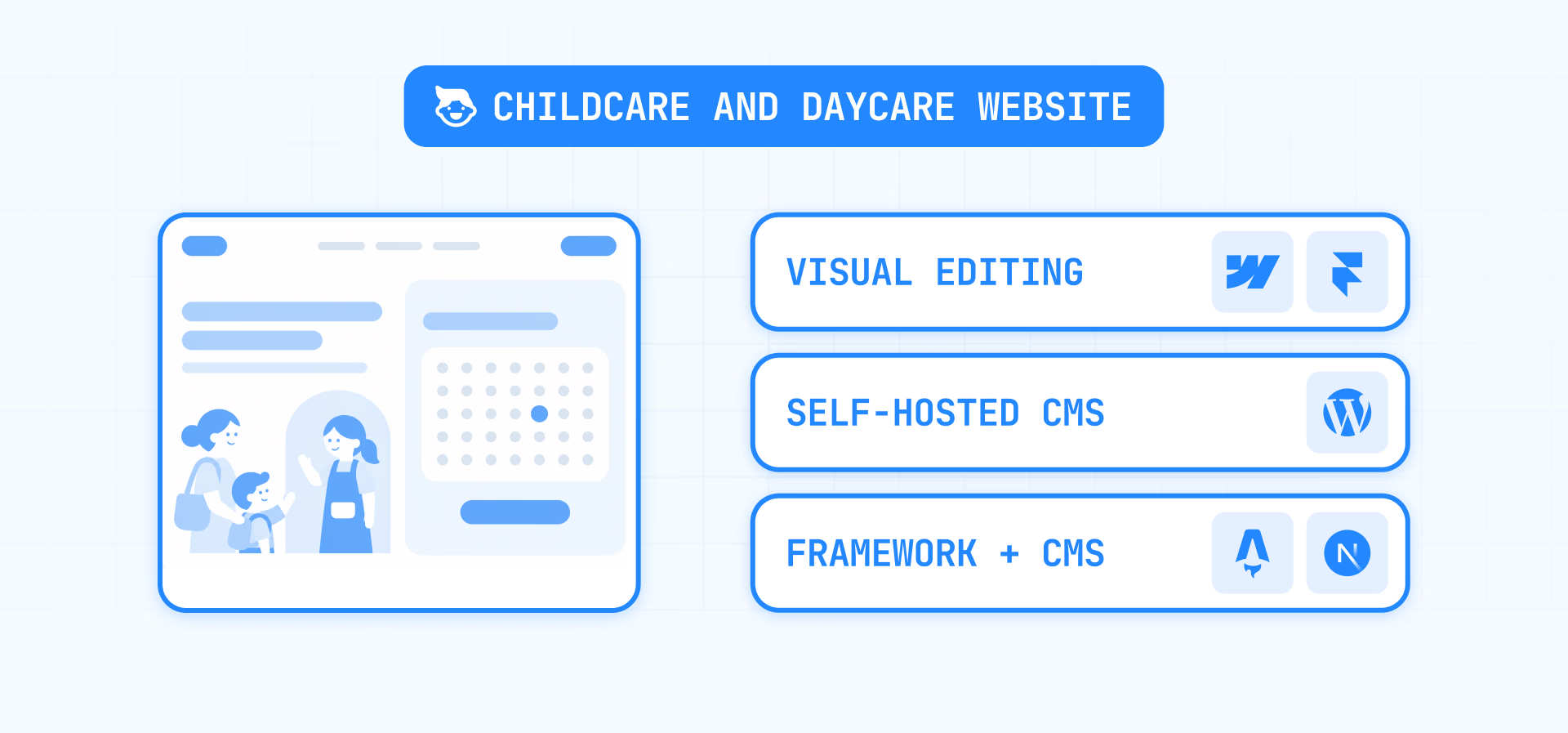
Webflow and Framer offer visual website and content tools that can support repeatable program, team, and article pages. Ask how editors will work with those collections and how the proposed plan accommodates your content. A tour or enrollment connection still needs its own scope, including where the information goes and who maintains the connection.
WordPress can suit teams that want a choice of hosting and an established publishing system. The proposal should explain the editing experience as well as responsibility for updates, backups, plugins, and support. A familiar product name does not tell you whether your particular setup will be straightforward for a center manager to maintain.
Astro and Next.js are development frameworks that can be paired with a separate CMS. That approach can support a more tailored website or a shared system across locations, but the agency should name the actual editor your staff will use. Ask for a relevant site it has delivered with the proposed technology and an explanation of how that client manages content after handover.
Childcare website design essentials for parents and center teams
Make program information specific enough to compare
Put age ranges, hours, attendance options, and the learning approach on the relevant program pages. Explain tuition or the factors that determine it, including where parents can request current rates. If you publish prices, make clear what they cover and who keeps them current. Introduce the team and give parents a practical picture of the day, using information the center has reviewed rather than broad promises about outcomes.
Distinguish a tour, a waiting list, and an available place
Use labels that match what happens next. A parent asking to join a waiting list has not secured a place, and a tour request may still need staff confirmation. Say so beside the action and in the confirmation message. If availability changes by age group or location, avoid a general banner that implies every program has space. Explain how families will receive an update without promising a date the center cannot support.
Keep each location useful on its own
A parent arriving directly on a center page should find the address, contact details, programs, hours, and a relevant visit route without returning to the group homepage. Use local photographs and accurate information rather than duplicating the same page with a different place name. Make the relationship between the center, the group, and the person receiving its inquiries clear.
Plan for privacy, accessibility, and useful follow-up
Use photographs with the permissions your organization requires, and review what information should appear publicly. Keep the initial inquiry focused on what staff need to respond; detailed child records belong in the appropriate enrollment system. Explain where form information goes and work with the people responsible for your privacy requirements when defining the process.
Readable text, visible focus states, labeled forms, and keyboard access help more families use the site. Test those details alongside loading speed on a phone, especially where large photos, videos, or external booking tools are involved. After launch, review whether inquiries reach the correct team and whether parents complete the next step, rather than treating traffic alone as proof that the website is doing its job.
Frequently asked questions about childcare website design
What should a childcare website include?
Start with programs, practical details, and a visit route. Families should be able to find the age groups you serve, opening hours, location, learning approach, and information about fees or requesting current rates. Staff introductions and photographs of the setting give those details context, helping parents understand the center before they contact you.
Organize the information around the questions your team hears repeatedly. A program page can explain attendance options, while a parent resource area holds documents and routine updates. Keep enrollment inquiries separate from an existing family's portal, and give each location its own contact information. Before approving the site, ask someone unfamiliar with the center to find the program and visit route that apply to them.
How much does a daycare website cost?
The cost depends on the work included, rather than the childcare label alone. A small site built around finished copy and photography has a different scope from a group website requiring branding, new content, location templates, and an enrollment connection. The useful first step is to identify those deliverables before requesting a total.
Send the same brief to several agencies and ask them to separate the launch price from recurring costs. Compare page designs, content production, migration, testing, and training, then look at hosting, software, maintenance, and support. If one quote is lower, check what your team would need to supply or manage. Choose a proposal with clear responsibilities and costs you can sustain after the website goes live.
How long does a childcare website redesign take?
The schedule should follow defined milestones, including content, design, development, and testing. The number of locations, the amount of new photography or writing, and any external enrollment connection affect the work involved. An agency should explain those dependencies before committing to a launch date, especially if the center has a fixed enrollment period.
Ask the proposal to show when your team needs to provide materials and approve each stage. Identify one person who can gather program information and coordinate feedback from center staff. Leave time to test forms, location details, and the mobile experience before launch. If a deadline is fixed, agree on a complete first-release scope and put later additions in a separate plan with their own responsibilities.
Should we show daycare tuition on our website?
Give parents useful cost information, whether that is a current rate or a clear explanation of how to request one. If tuition varies by age group, attendance pattern, or location, explain those factors where families explore the relevant program. A number without its conditions can create confusion just as easily as a page with no guidance.
If you publish rates, name the person responsible for updating them and state what is included. When the center provides a quote instead, make that route easy to find and explain what information staff need to respond. Review the website against the material your team sends directly to parents, so a family does not encounter different answers depending on where they look.
Can a website manage tour requests and waiting lists?
Yes, with a clearly defined process. A website can collect tour inquiries or connect families to an existing booking or waiting-list tool. Those actions need different wording and follow-up: requesting a visit is not always a confirmed appointment, and joining a waiting list does not guarantee an available place at the center.
Decide which information the first form needs, which location receives it, and what confirmation the parent sees. Ask the agency to test the complete route with your staff, including missing fields and requests from phones. If you display availability, give someone responsibility for keeping it current. Explain how families can expect updates, and avoid promising a start date unless the center can actually honor it.
Which CMS is best for a childcare website?
The best choice is one your team can maintain with support that fits the business. Webflow, Framer, and WordPress offer different editing and hosting arrangements, while Astro and Next.js can support a website connected to a separate CMS. The platform name alone does not tell you how easy your particular program or location pages will be to update.
List the changes staff will make most often, such as updating hours, team profiles, fees, and notices. Ask the agency how its proposed setup supports those tasks and what training is included. Review a website it has already delivered with the same technology, and discuss the client's ongoing responsibilities. Include software subscriptions, maintenance, and help with integrations when comparing the options.
Does each childcare center need its own website?
Each center needs clear local information, but that does not always require a separate website. A shared group site can provide individual location pages with their own address, programs, photographs, and tour route. A larger organization may prefer separate nursery sites supported by one content system, as the selected Devon Nurseries project demonstrates.
Choose the structure around how the group operates and who maintains its content. Identify information shared across all centers and details that change locally. Ask how another location would be added and how inquiries reach the correct team. A parent who lands directly on a center page should be able to evaluate that location without returning to the group homepage to find basic details.
Can we keep our existing parent portal?
Often, the public website can link to it, while the portal continues serving existing families. Start by identifying whether you need a simple login destination, an embedded tool, or a deeper connection. Those are different scopes, and the agency needs to understand the provider's supported options before promising how the systems will work together.
Keep the parent login easy to recognize without making it compete with the visit or enrollment route for new families. Explain what opens when someone follows it, especially if it leads to another service. Include ownership, support, and testing in the plan, and confirm where submitted information is stored. Your staff should know whom to contact if the website or the connected service stops working.
How should we use photos of children on the website?
Follow your organization's permission process and decide what should appear publicly before supplying photographs to the agency. Images can help families understand the rooms, outdoor areas, and daily activities, but the team responsible for the center should review the material and its intended use. The website project should name who makes that decision and keeps the records.
Give the designer an approved image set and agree on a process for replacing or removing an image later. Consider staff, spaces, and activities alongside close-up portraits, so the site can explain the setting through several kinds of photography. Ask for compressed files and responsive image handling, then check the finished pages on a phone. Large photos should support the information without making it slow to reach.
How can we tell whether the new website is helping enrollment?
Measure the steps toward enrollment separately. Website visits, tour inquiries, confirmed visits, and enrolled families describe different parts of the process. A website may help people understand the center and request a visit, but an inquiry alone does not establish that a place was offered or that a family decided to enroll.
Agree on the events the website can track, then connect those figures with the center's own follow-up records. Check whether requests reach the correct location, whether staff respond, and whether parents complete the next step. Review the content when repeated questions reveal missing information. This gives the team a practical way to improve the website without treating a rise in traffic as proof of a better enrollment outcome.
Find a childcare web design team that understands your next step
The most useful portfolio is one that helps you see how your own website could work. Look beyond the opening image and follow the route a parent would take to understand a program, find a location, and arrange a visit. Then ask the agency to explain the decisions behind that route and what it would change for your business.
A focused brief makes that conversation easier. Bring your program information, existing tools, available photographs, and the questions your team answers most often. Share that brief with 2–3 teams so you can compare their proposals on the work your center actually needs.
If you'd like to discuss a childcare website with BRIX Agency, tell us about your center and website plans. We reply in less than 24 hours, and can help you work through the design, content, and development scope before you decide how to proceed.



Join readers commenting on this post!