
Pest control websites can look surprisingly similar, even when the businesses behind them are very different. A local owner, a growing regional company, and a wildlife specialist each have a different story to tell. The website should make that difference easy to see, while helping customers understand whether the company can handle their problem.
That takes more than choosing a pest photograph and adding a phone number. The right web design agency can bring your people, services, and coverage into a recognizable identity, then carry it through to a useful inquiry or booking process. It should also make recurring plans and one-time services straightforward to compare.
Below are 8 pest control web design agencies with selected work ranging from local service brands to larger pest-management businesses. We explain each team’s contribution, show a project, and link to the websites. The rest of the guide covers how to choose a partner and plan a site your customers and office team can use.
How we selected these pest control web design agencies
We reviewed the selected agency records and project images, using the published case studies to describe each team’s contribution. The shortlist includes different strengths, from a full brand launch to WordPress development and booking connections. Each specialty is tied to the selected work, so you can compare approaches rather than rely on a generic ranking alone.
BRIX Agency publishes this guide and takes the first position with our own portfolio. The outside profiles name a pest-control or wildlife-service client and link to the supporting project and live business. Descriptions distinguish the work documented by the agency from practical observations you can make while exploring the site.
The pest control web design agency shortlist
- BRIX Agency: A web design agency building custom pest-control websites with distinctive branding, clear service information, and straightforward inquiry paths.
- Coalmarch: A pest-industry marketing agency rebuilding websites around regional service coverage, local markets, and a coordinated customer-acquisition strategy.
- DAGMAR Marketing: A marketing agency refining pest-control websites through clearer page flow, useful service blocks, FAQs, and visible contact options.
- Freckle Creative: A creative agency designing and developing WordPress pest-management websites with a coordinated identity for residential and commercial services.
- LUMEN Marketing Studio: A brand and marketing studio connecting pest-control identity, website design, and booking tools with the wider customer experience.
- 253 Media: A digital agency designing and developing Webflow pest-control sites with distinctive visual character and reusable sections for future content.
- The Cool Moon: A creative studio combining custom wildlife illustration, visual identity, and website design for a distinctive local service presence.
- Bananas Creative: A creative agency translating pest-control branding into a website and a consistent visual identity across customer-facing materials.
1. BRIX Agency: Best Pest Control Web Design Agency for Custom Websites
 1
BRIX Agency
A web design agency building custom pest-control websites with distinctive branding, clear service information, and straightforward inquiry paths.
At BRIX Agency, we help service businesses give their expertise a clear and recognizable place online. For a pest control company, that means explaining the problems you handle, the areas you cover, and the people customers will be trusting in their homes or workplaces.
We also develop templates, which gives us experience working through different visual directions and page structures. Our pest control portfolio shows how we connect a brand’s character with practical service and plan information, so the website stays useful beyond its opening image.
Pest control projects from our portfolio
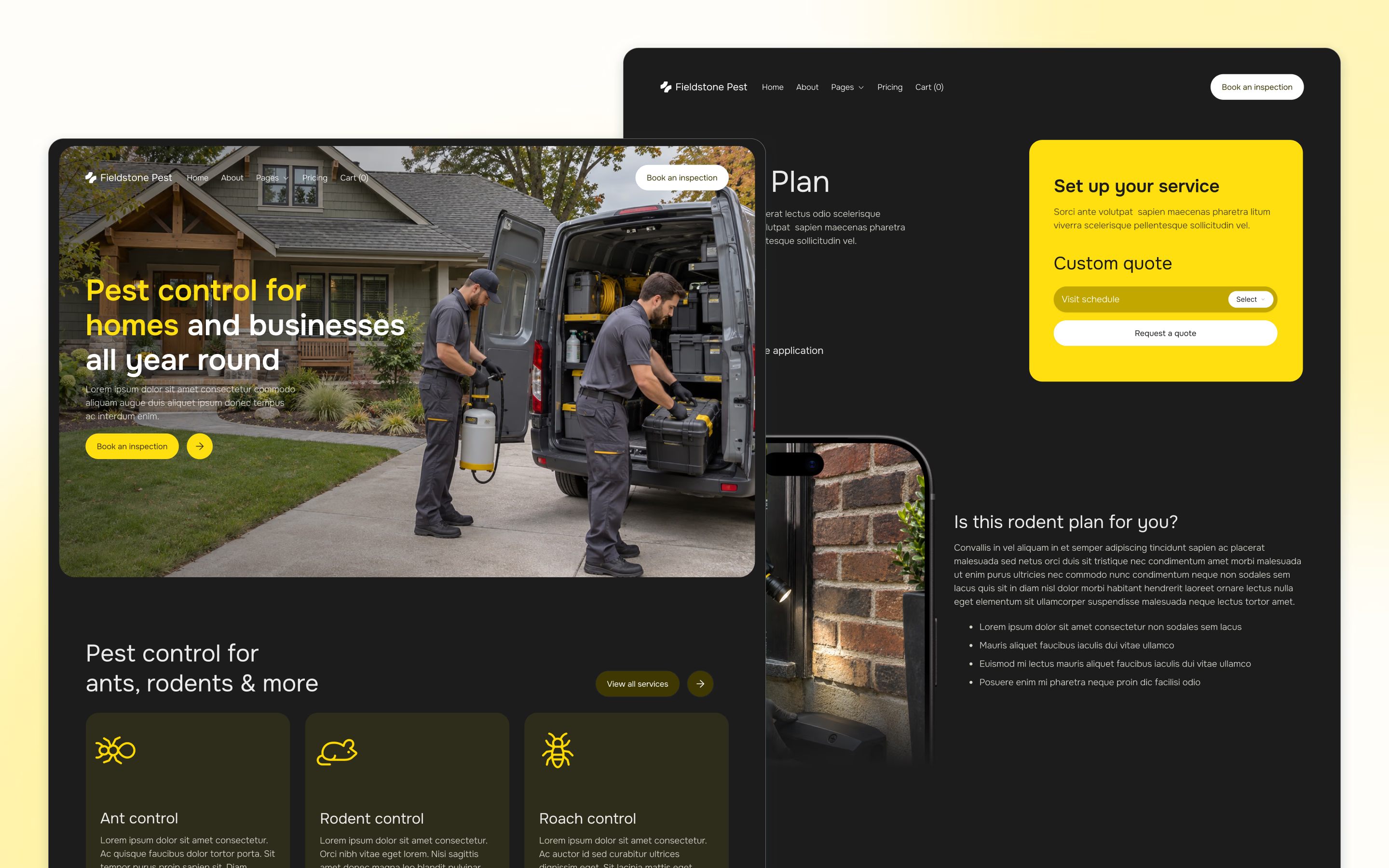
For Fieldstone Pest, we adapted one of our templates for a pest control business with a direct, confident identity. Dark sections and yellow accents frame technician imagery and clear service cards. The rodent-plan page carries that style into a more detailed offer, giving the visitor room to understand the service before starting a quote request.
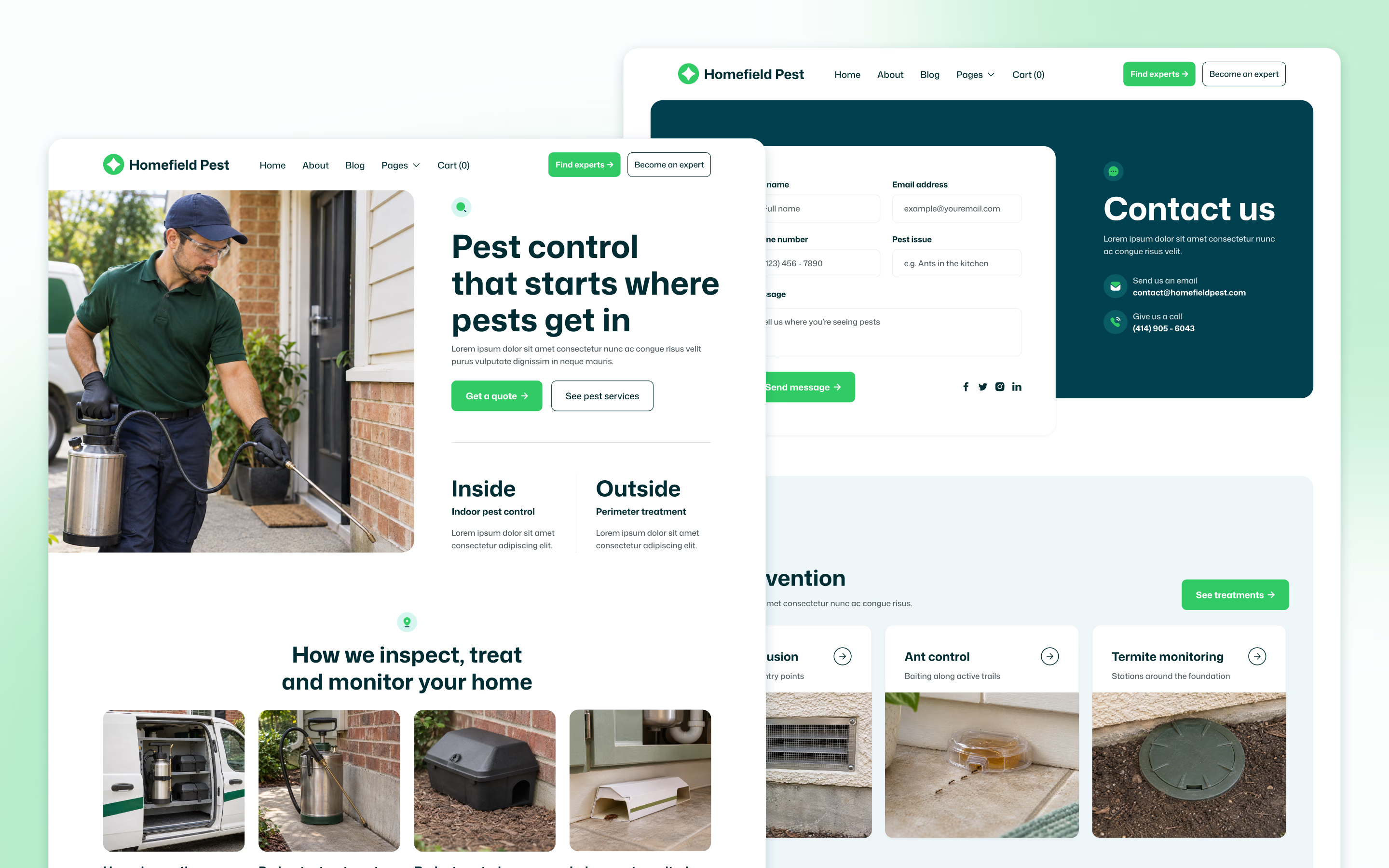
For Homefield Pest, we adapted a template around a more welcoming home-service presentation. Green and white layouts introduce the technician and organize the offer around help inside the home, outside it, and ongoing prevention. We continued that simple structure into the contact page so asking for help feels connected to the information the visitor has just read.
Across categories, more than 60,000 websites use our templates. Our agency work draws on that experience while giving your business a fully custom website, designed around its brand, services, and customers. We shape the site around how your team explains the offer and handles new inquiries, rather than asking your business to fit an existing layout.
2. Coalmarch: Best Pest Control Web Design Agency for Regional Websites
 2
Coalmarch
A pest-industry marketing agency rebuilding websites around regional service coverage, local markets, and a coordinated customer-acquisition strategy.
Coalmarch is relevant for pest control businesses whose websites need to support several markets. Its HTP project connects the website with the company’s regional marketing work, rather than treating the relaunch as a purely visual exercise.
That is a useful angle when different offices or service areas need clearer representation. A customer should be able to recognize the overall company and still find information that applies to the place they live. The structure needs to support both parts of that decision.
Featured project: HTP Termite & Pest Control
For HTP Termite & Pest Control, Coalmarch documented a website relaunch and market-specific rebuilding alongside organic and paid marketing across four Tennessee markets. The selected design combines a green and yellow identity with local company information, service coverage, and an accessible route to request an estimate.
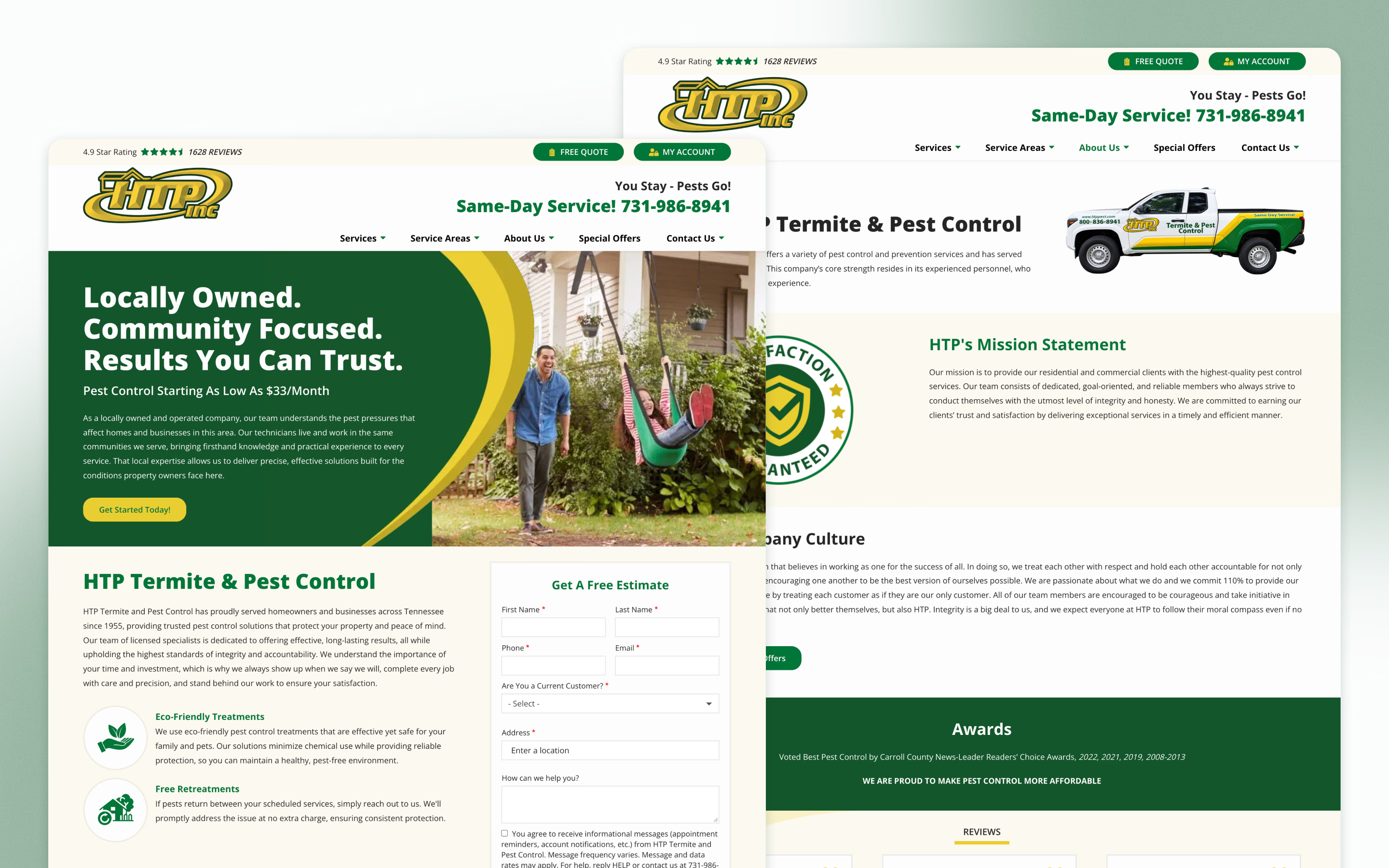
Look at how the regional offer connects to individual services. For a similar project, give the agency your actual coverage and routing rules before it maps the pages. That helps the website send a useful inquiry to the right team instead of presenting the same broad message to every visitor.
3. DAGMAR Marketing: Best Pest Control Web Design Agency for Website Redesigns
 3
DAGMAR Marketing
A marketing agency refining pest-control websites through clearer page flow, useful service blocks, FAQs, and visible contact options.
DAGMAR Marketing offers a practical reference for a business with substantial content that needs a clearer presentation. Its Turner Pest Control work focuses on how information is arranged and how a visitor moves from reading about a service to contacting the company.
This can be a valuable redesign brief when the problem is not a lack of pages. Existing content may need better grouping, stronger photographs, and answers placed where customers look for them. The agency’s case gives you specific decisions to discuss instead of a generic promise of a fresh appearance.
Featured project: Turner Pest Control
For Turner Pest Control, DAGMAR redesigned page flow and content presentation, introducing service blocks and FAQs, incorporating the client’s photographs, and adding contact calls to action. The selected pages show real team imagery alongside treatment and bundle information, connecting the company introduction with the available services.
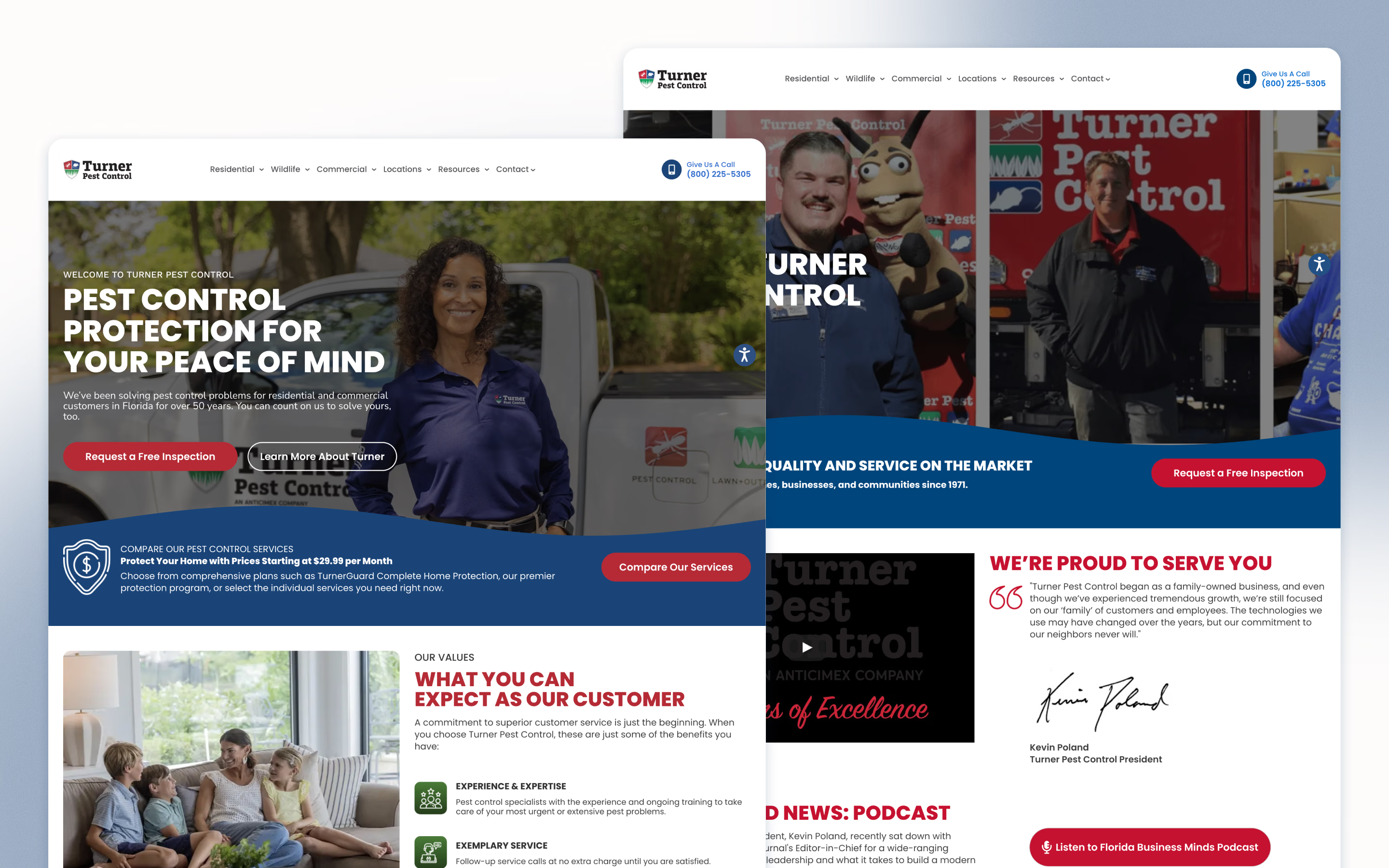
Choose one service and follow its explanation through to the contact step. Notice which questions the page answers before asking for an inquiry. If your current site has useful material scattered across many pages, ask the agency how it would consolidate and place it without losing the details customers need.
4. Freckle Creative: Best Pest Control Web Design Agency for WordPress Design
 4
Freckle Creative
A creative agency designing and developing WordPress pest-management websites with a coordinated identity for residential and commercial services.
Freckle Creative shows how a pest-management brand can work across the website and physical parts of the business. Its Vergo portfolio includes both the website and separate identity and vehicle-livery work, giving you more than a single page to assess.
The website is particularly relevant for companies serving households and organizations. Those audiences may recognize the same brand but need different information about scope, contact, and ongoing service. A coherent design can keep the business recognizable while giving each audience a useful starting point.
Featured project: Vergo Pest Management
Freckle designed and developed Vergo Pest Management’s WordPress website. A separate project documents the brand identity and vehicle livery. The selected web pages use dark green and mint tones to organize the offer, with routes into commercial and residential pest management and a clear way to request a quote.
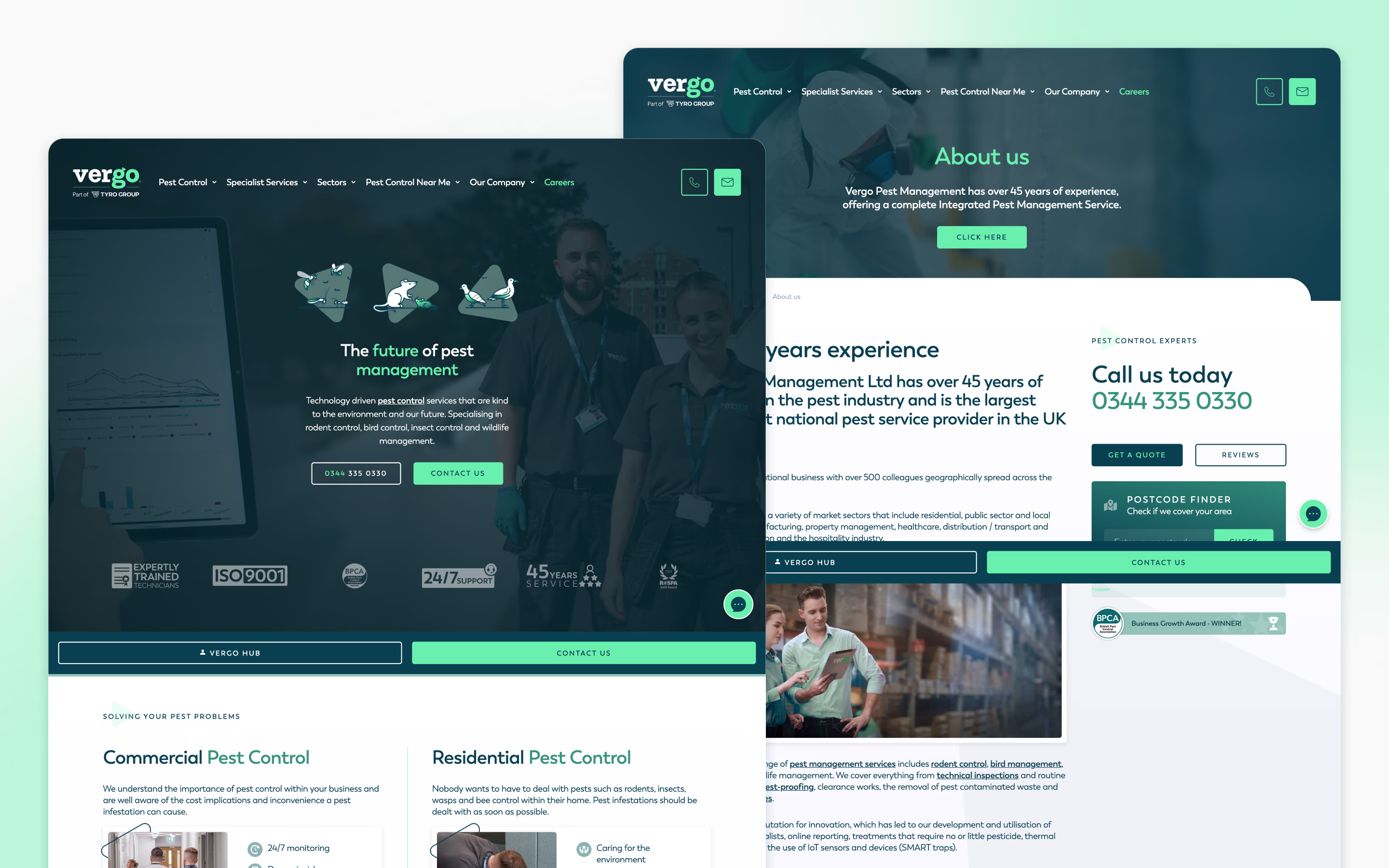
Compare the business identity with the labels used to separate its services. For your own project, ask how the same visual system will work on a detailed commercial page and a simpler household inquiry. Consistency should make those pages feel related without forcing them to say the same thing.
5. LUMEN Marketing Studio: Best Pest Control Web Design Agency for Booking Integrations
 5
LUMEN Marketing Studio
A brand and marketing studio connecting pest-control identity, website design, and booking tools with the wider customer experience.
LUMEN Marketing Studio is a useful choice to explore when a new website is part of a larger change to how the business presents itself. Its REDANT project extends from the logo and identity to the website and materials used around the operation.
The booking connection is especially relevant to a practical brief. A recognizable brand can bring a customer to the site, but the next step still needs to connect with the team managing appointments. LUMEN’s case includes both sides of that work in the documented engagement.
Featured project: REDANT Pest Control
For REDANT Pest Control, LUMEN’s scope included logo and identity work, a website, and Jobber booking and job-management integration. It also covered photography, video, print, vehicle materials, and advertising. The selected pages use a strong red identity and team imagery, with a direct route for customers to arrange service.
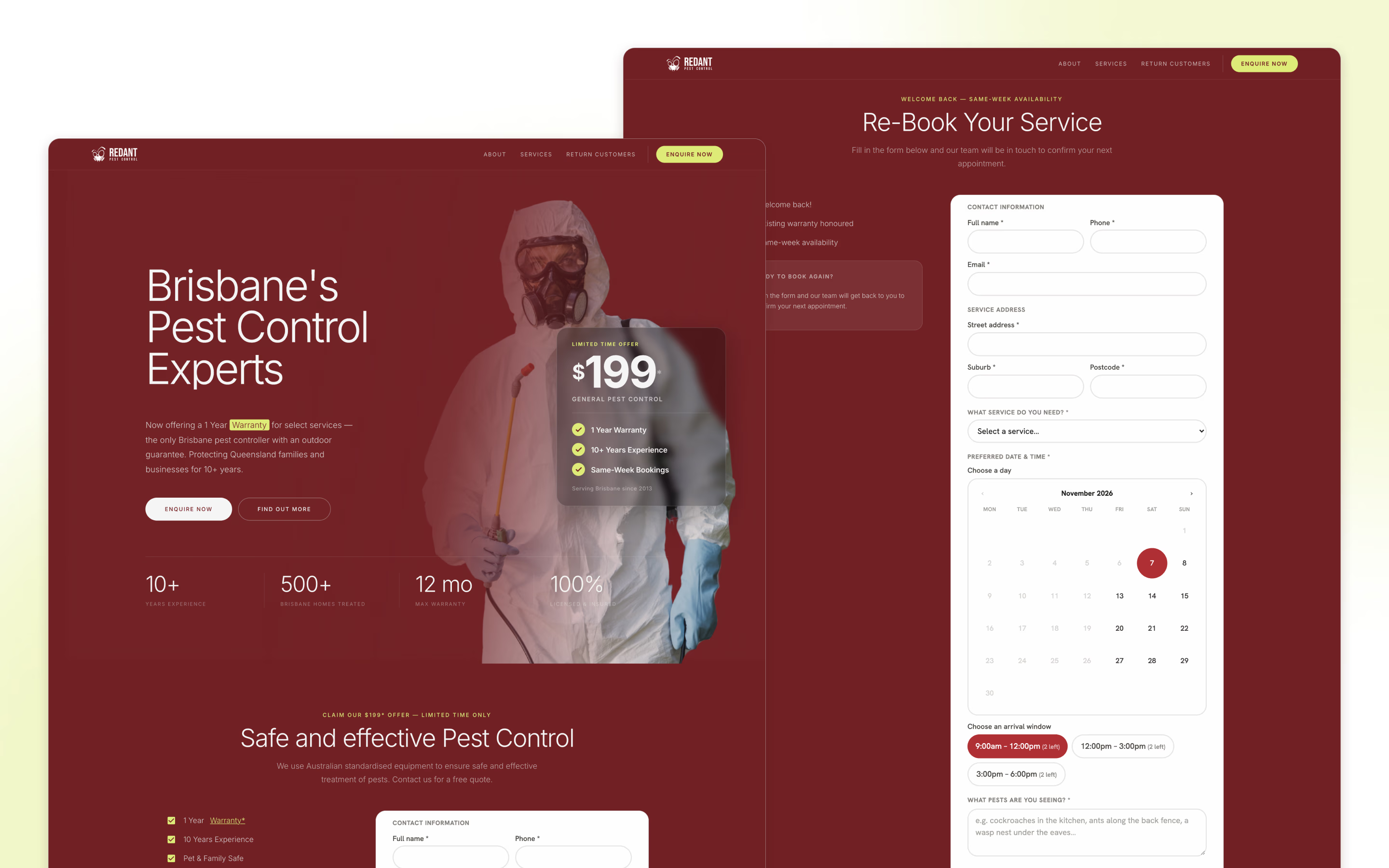
Ask how the booking tools will reflect your service types, coverage, and availability. A connection should be demonstrated with the actual system your office uses, including its confirmation and follow-up steps. It is easier to plan those details alongside the website than to discover after launch that the two processes do not match.
6. 253 Media: Best Pest Control Web Design Agency for Webflow Websites
 6
253 Media
A digital agency designing and developing Webflow pest-control sites with distinctive visual character and reusable sections for future content.
253 Media offers a reference for a pest control brand that wants a more expressive first website. Its Gingerly project uses bright colors and a friendly personality while keeping the business and its services recognizable.
That balance is worth considering when you want to stand apart from a crowded local market. A distinctive identity should carry through the service pages and contact route, not disappear after an elaborate homepage. Reusable sections can help the team maintain that visual consistency as the site grows.
Featured project: Gingerly Pest Control
253 Media designed and developed Gingerly Pest Control’s first website in Webflow, including a custom section library and SEO-oriented structure. The selected pages bring together teal, purple, and orange accents, owner imagery, and a mascot-led identity.
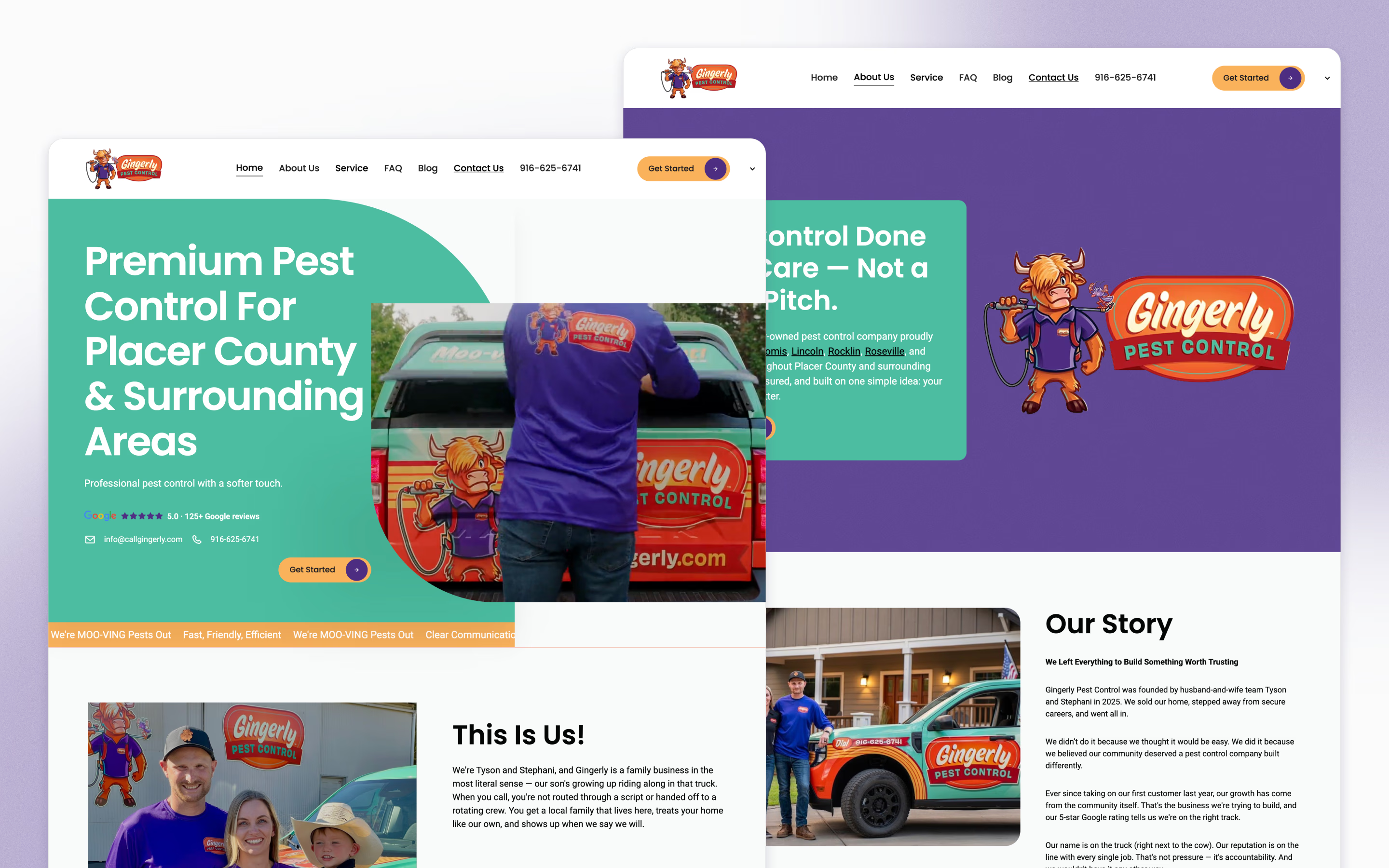
Review how the expressive styling works around ordinary service information. Then ask the agency to show how you would add or update a page using the same sections. A strong launch design becomes more useful when your team can keep its character without needing a new layout for every update.
7. The Cool Moon: Best Pest Control Web Design Agency for Illustrated Websites
 7
The Cool Moon
A creative studio combining custom wildlife illustration, visual identity, and website design for a distinctive local service presence.
The Cool Moon takes a more illustrative approach through its Professional Wildlife Solutions work. The project gives wildlife services their own visual language, rather than relying on the familiar pest-control combination of stock insects and generic service badges.
This is relevant when the business needs to explain a particular specialty. Illustration can give the website a memorable character, while clear service and coverage information keeps the presentation grounded in what the company actually does. Both elements should be visible when you review the work.
Featured project: Professional Wildlife Solutions
The Cool Moon’s documented contribution to Professional Wildlife Solutions includes website design, visual identity, custom wildlife artwork, transitions, and service and county content. The selected pages use a cream and black palette with animal illustration, then connect that identity to an inspection inquiry form.
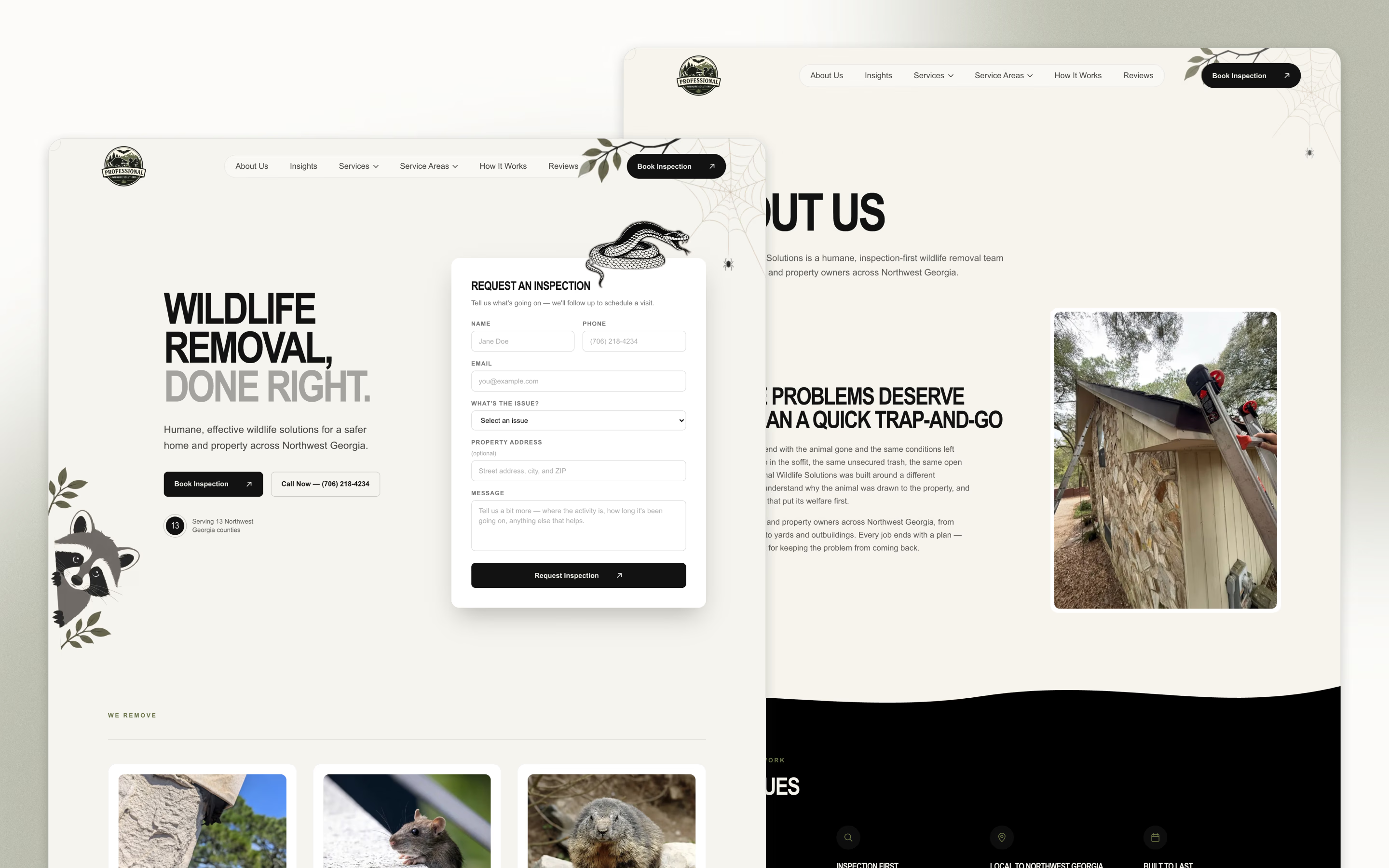
Look at how the artwork supports the service labels and how quickly you can reach an inquiry. If you want a similarly distinctive site, ask which illustrations and page components are included in the scope. That gives you a realistic plan for extending the design when the business adds another service.
8. Bananas Creative: Best Pest Control Web Design Agency for Brand Websites
 8
Bananas Creative
A creative agency translating pest-control branding into a website and a consistent visual identity across customer-facing materials.
Bananas Creative is useful for businesses that want their website to feel like part of a complete brand. Its Summit Pest Control work includes a mascot, colors, and several physical and digital applications, so the identity has room to become familiar beyond the homepage.
This kind of engagement can suit a company refreshing the way its team, vehicles, and marketing appear together. The website becomes one important expression of that work, with the same visual cues helping customers recognize the business when they see it elsewhere.
Featured project: Summit Pest Control
For Summit Pest Control, Bananas Creative’s published branding scope includes the logo, mascot, colors, uniforms, print, social materials, and vehicle wraps. The client’s live website also credits the agency for web design. The selected pages use green and orange with the ant mascot to connect service information and the company’s identity.
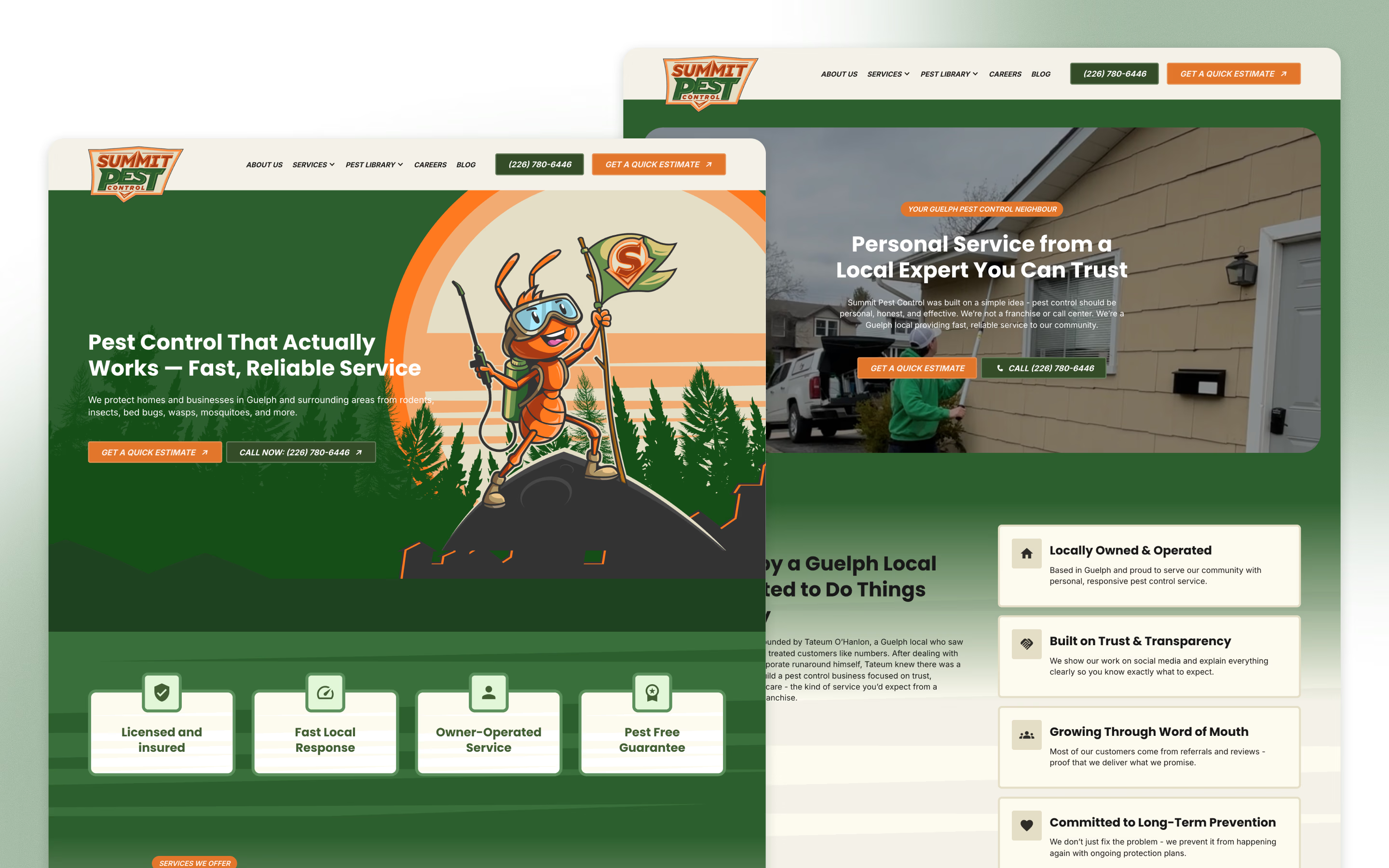
Compare the personality of the brand with the clarity of the offer. A mascot can help recognition, but the site still needs understandable services and a practical contact step. In your proposal, separate the brand deliverables from the website work so you know which materials you will receive and be able to reuse.
What pest control web design services should cover
A pest control website needs to connect the problem, the service, and the next step. The agency can help organize pest pages, treatment plans, coverage information, and contact routes so customers can work out where to begin. That planning should happen before page layouts, because it determines what the design needs to explain.
Branding and content can be part of the scope too. Real team photography, clear descriptions of the services, and a recognizable visual identity help introduce the business behind the offer. Ask whether the agency creates those materials or builds around what you supply. If a mascot or custom illustration is central to the direction, include its production and usage files in the deliverables.
The build may also cover forms, booking tools, CMS setup, search-friendly page structure, and migration from the existing site. Specify what each connection should do. A request for an inspection, an appointment booking, and access to an existing customer account are separate tasks even if they sit next to each other in the navigation.
How to compare pest control agencies and website pricing
Start by identifying the website’s main job for your business. A new company may need a credible introduction and a straightforward inquiry route. An established operator may need clearer plans, better local pages, or a connection to scheduling software. Use that priority to choose a shortlist whose selected work is relevant to the project.
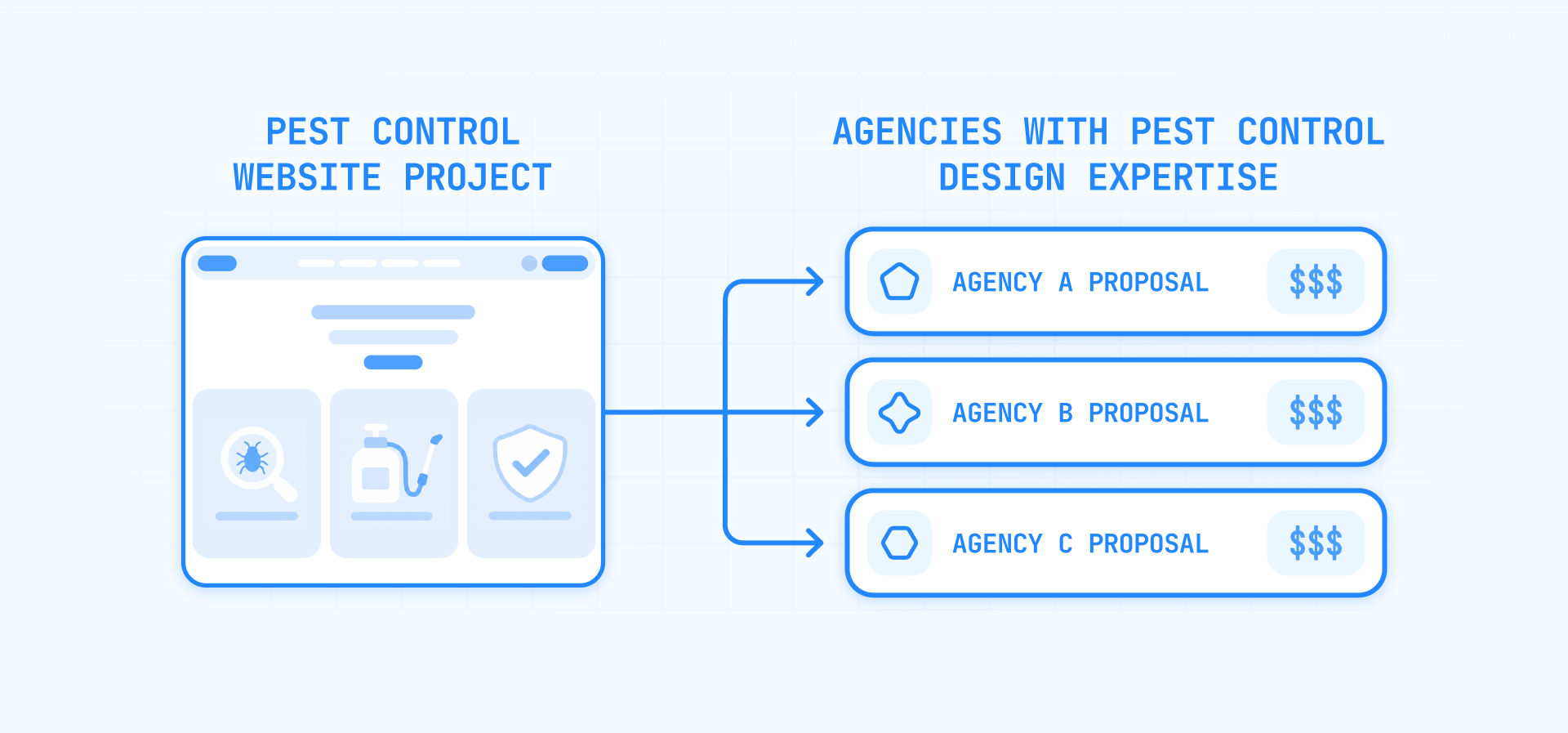
Send 2–3 agencies the same brief, including your services, coverage, existing software, and available content. Explain the difference between one-time and recurring work in your business, and say what you want customers to do on the website. A focused request will give you more useful answers than asking for a price for “a new site.”
Subject Pest control website project for [business name]
Hi [agency name],
We are [company], serving [areas] with [residential / commercial / wildlife services]. We want a website that makes our services and plans easier to understand and gives new customers a clear route to [an inspection / a quote / a booking].
We need [service and coverage pages], [plan information], and [connection to existing software]. We have [brand files, photographs, and copy] and would need your help with [remaining materials]. Our intended launch is [month] and our budget is [range].
Please share a relevant project and explain the scope you recommend, how you would test the inquiry process, and the build and ongoing costs.
Thanks,
[name and role]
Compare the work included in each proposal: planning, brand design, writing, photography, development, integrations, and launch testing. Ask which pages will have distinct layouts and which will use a shared structure. A booking connection and a basic contact form need different work, so check the assumptions behind the quote before comparing totals.
Then review monthly and annual costs, including hosting, maintenance, software plans, and support. Confirm the business will own its accounts and receive the agreed brand files. If a paid tool manages bookings or customer details, understand its separate fees and who will help when the connection needs attention.
Use the launch plan to test the whole inquiry route. Have the office submit trial requests for different services and locations, check where they arrive, and review the customer confirmation. Also confirm who updates plan information after launch. The website should reflect the offer the team can actually provide today.
Choose a CMS that fits the way you update your services
Your team should be able to update a service description, adjust a coverage area, or revise a plan without disturbing the layout. That is the editing experience to ask for when choosing a CMS. Pair it with a fast, readable visitor experience, so the tool works for both the office maintaining the site and the customer using it.
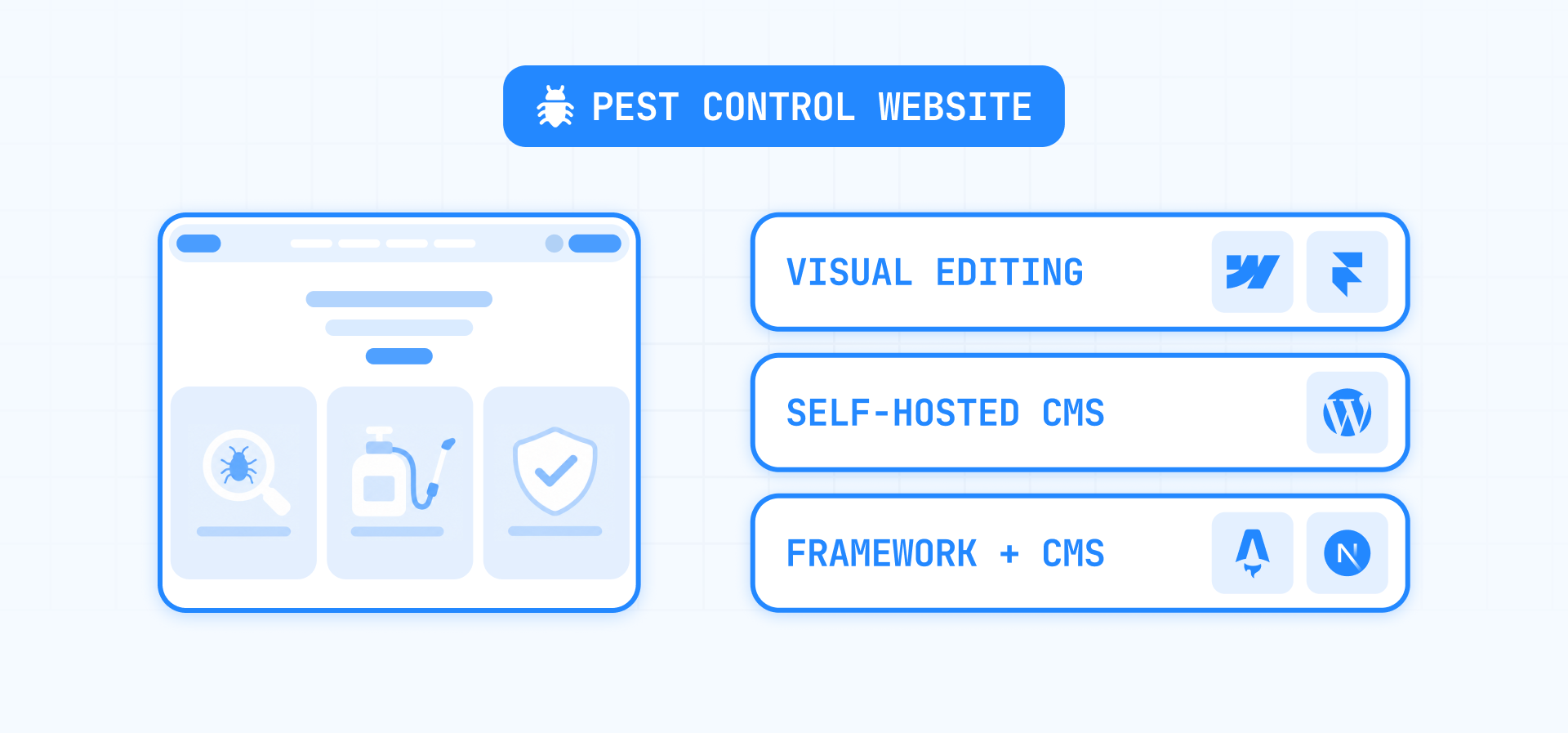
Webflow and Framer offer visual building and CMS tools for repeatable content. Ask how the agency would set up pest, service, and location pages, and how it would connect your inquiry tools. Their Webflow CMS and Framer CMS references are useful for checking the publishing features behind the proposed design.
WordPress is an option if you want the website and its CMS database on your own hosting. Plan for software updates and backups, and be clear about responsibility for plugins. The WordPress maintenance documentation gives you concrete tasks to include in the support discussion.
Astro and Next.js are development frameworks that can work with a separate CMS. That setup can suit a more custom website, but it should come with an editor your staff can use and a team responsible for maintaining the code. Astro’s CMS guide describes the separation between the website and its publishing system. Choose this route for a defined requirement, with its upkeep included in the decision.
Three things a pest control website should make clear
Help visitors recognize the service they need
Use the names your customers understand, then explain the service in plain language. A household inquiry about an unfamiliar pest is different from a facility manager asking about an ongoing commercial program. Give those visitors useful routes without making them diagnose the problem before they are allowed to contact you.
Explain plans without hiding the important details
Show what a recurring plan includes, how it differs from a one-time visit, and what the customer should expect next. If a price requires an inspection or depends on the property, explain that at the point of inquiry. Keep any promises consistent with the business’s actual terms and have the team responsible for the service review the copy.
Connect the inquiry to the right person
Decide what the website needs to collect and where each request should go. If you use online booking, verify the service options and scheduling rules with your existing provider. Tools such as Jobber’s online booking include configurable services and availability; the agency still needs to confirm the setup for your operation. Tell the customer what happens after submission and give staff a way to notice a request that fails to arrive.
Frequently asked questions about pest control web design
How do I choose a pest control web design agency?
Choose an agency whose work fits your services and customer journey. A wildlife specialist, residential operator, and commercial pest-management company may need different content and inquiry routes. Review a relevant project beyond the homepage and ask what the agency delivered, including the distinction between branding, website design, development, and ongoing marketing services.
Give a small shortlist the same brief and compare how they explain the project. You should understand the proposed structure, the material your business must provide, and how the inquiry or booking process will work. A clear answer to those questions is more useful than a long list of features that has not been connected to your operation.
What affects the cost of a pest control website?
The main cost drivers are scope, content, and integrations. A compact website using existing branding and photographs needs less work than a full identity launch with custom illustrations, new copy, and booking connections. Service and location content also require planning, writing, and review even when several pages share the same underlying layout.
Request a breakdown that separates the build from ongoing hosting, software, maintenance, and support. Check what happens when you add a service or revise a plan later. Comparing those responsibilities makes the quotes easier to understand and helps you decide which work belongs in the first release and which improvements can be planned after launch.
How can our website look different from other pest control companies?
Build the visual direction around your actual business: the people, service approach, and character customers recognize. Original photography, a considered identity, or custom illustration can make that introduction more distinctive. The selected projects show several approaches, from restrained service layouts to mascot-led brands, without requiring every pest control company to look the same.
Ask the agency to carry the direction into service pages and contact forms, not only the opening screen. Your company should remain recognizable wherever a visitor arrives. Also confirm which brand and image files you will receive, so the website’s visual identity can be used consistently in the other materials your team puts in front of customers.
Should every pest or treatment have its own page?
Create a separate page when it answers a distinct customer need. A page can explain the signs people recognize, the service your business provides, and how to request help. The structure should reflect your actual offer rather than create a large number of pages that repeat the same description with a different pest name.
Plan the content with your service team before the agency starts writing. Identify which questions belong on a pest page, which belong in a plan comparison, and which need a conversation. This gives visitors useful information without asking the website to replace an inspection or encouraging people to choose a treatment based only on a short description.
Can customers book pest control services directly on the website?
They can when your booking system and service rules support it. Start by deciding which services can be scheduled directly and which require an inspection or a callback. The website should label those options accurately, so a customer knows whether a submission confirms an appointment or simply asks your team to arrange one.
Have the agency demonstrate the complete flow with your office before launch. Check availability rules, coverage, the information collected, and the confirmation shown to the customer. Also establish who maintains the connection and any separate software subscription. A visible booking button is only useful when the operation behind it can honor what the website tells people.
What information should a pest control inquiry form ask for?
Collect enough information for the right first response: contact details, service location, the type of property, and a short description of the concern. Let visitors describe what they have noticed without requiring a precise pest identification. Additional fields should help the team route or prepare the inquiry rather than make the form unnecessarily difficult to complete.
Review the form with the employees who answer requests and test it on a phone. Check the error messages, confirmation, and destination record using trial submissions. If more detail is needed before a visit, explain how the team will collect it next. This keeps the first contact approachable while still giving your office a useful starting point.
How should the website explain recurring pest control plans?
Use a clear comparison of inclusions, showing what each plan covers and how it differs from a one-time service. Explain the next step and any important conditions near the offer, using wording approved by the business. If pricing depends on the property or an inspection, say so before asking the customer to request service.
Make one person responsible for keeping that information current across the site. A plan description can appear in several places, so the CMS should help avoid conflicting versions. Ask the agency to show how a change is made and reviewed. The website and office team should be describing the same offer when a customer follows up.
Which CMS works well for a pest control business?
A suitable CMS makes routine updates straightforward while supporting the website’s content and inquiry tools. Webflow and Framer offer visual workflows with CMS features, and WordPress provides another publishing and hosting arrangement. A custom framework with a separate CMS can suit more specific development needs, provided the editing and support responsibilities are clearly defined.
Judge the options by tasks your team will actually perform. Ask to update a plan, revise a coverage area, and add a service page in the proposed setup. Then compare maintenance, account ownership, subscriptions, and integration support. The platform choice should make those responsibilities manageable instead of leaving staff dependent on a developer for every ordinary content change.
Do residential and commercial pest control need different website sections?
Different sections help when the audiences need different information before contacting you. A homeowner may want to understand a visit or recurring plan, while a business contact may need to explain a property, operation, or ongoing service requirement. Separate routes can make those conversations clearer while keeping the overall company identity consistent.
Ask the agency to plan the questions each section should answer rather than duplicating the same content under two headings. Use relevant service descriptions and an inquiry route that collects useful context for your team. If the business serves only one audience, keep the structure focused on that audience instead of adding sections simply because another company has them.
What should we verify before launching a pest control website?
Verify service accuracy and working inquiries together. Check the coverage, plan descriptions, phone numbers, and contact instructions, then submit test requests for the main customer routes. The office should confirm where each request arrives and whether the information is useful. Test on smaller screens as well as desktop, including navigation and form errors.
Finish by checking the editing handover, account access, recurring costs, and support contact. If the project replaces an existing site, review the old addresses and their intended destinations too. A launch is ready when the website represents the current business and the team can operate it, not just when the visual design has been approved.
Build a pest control website that feels like your business
A strong website makes the company behind the service recognizable and gives customers a clear way to ask for help. The agencies in this guide show several ways to do that, from a coordinated brand launch to a more useful service structure or connected booking experience.
Pick the teams whose work matches your priorities, then compare their responses to one focused brief. Look for a proposal that explains the content, design, and inquiry process together, with clear responsibilities for the work that continues after launch.
If you want to explore a custom direction with BRIX Agency, let’s talk about your pest control website. You can expect a reply in less than 24 hours, or within 1–2 hours during business hours PST. Tell us about your services and the parts of your current site you would like to improve.



Join readers commenting on this post!