

Your ophthalmology practice may be easy to understand in person. A receptionist can explain which doctor to see, where to go, and what happens before a first appointment. A website needs to make that same information approachable, while giving people a sense of the team and the care behind it.
The challenge grows as a practice adds specialists, treatments, or locations. Patients should not have to understand your internal organization to find a useful starting point. Choosing a web design agency means finding a team that can bring those details together in a clear, readable site that still feels like your practice.
This guide brings together 9 ophthalmology web design agencies with selected work across eye-care practices and surgical services. You can compare their specialties, see what each contributed to a project, and visit the websites yourself. We also cover the decisions that shape a good brief, from appointment routes to ongoing content updates.
How we selected these ophthalmology web design agencies
Our shortlist draws on the selected eye-care projects, the agencies’ published descriptions of their roles, and the website images supplied for this guide. We used those records to identify useful differences between the teams, including branding, content organization, Webflow builds, and development. The specialties describe what the selected work supports rather than a clinical endorsement.
BRIX Agency is the publisher and appears first with our own eye-care portfolio. Each outside agency is linked to a named practice and its documented work. Where an agency’s role is development, we describe it that way; where the work spans design and a wider brand launch, we explain that scope.
The ophthalmology web design agency shortlist
- BRIX Agency: A web design agency creating custom eye-care websites with readable service information, considered visual identities, and clear patient journeys.
- Denali Creative: A creative agency designing and building eye-care websites that introduce clinical teams and make practice information easy to explore.
- Northern Artillery: A digital agency organizing eye-care websites around treatment information, growing location networks, and clear routes for patient inquiries.
- WebToMed: A medical website team combining ophthalmology design with patient resources, optical information, and connections to existing practice tools.
- Studio 3 Marketing: A creative marketing agency bringing original patient imagery, video, and motion into the design and development of eye-care websites.
- Digital Ash Agency: A branding agency carrying an eye-care practice’s identity across a custom website, launch materials, and clinical and cosmetic service presentation.
- Amadeus Brand: A brand studio designing and developing Squarespace practice websites around clear service pages, supplied clinical content, and coordinated photography.
- Launch Studio: A Webflow studio building larger eye-care websites with structured treatment content, CMS-managed pages, and planned migration and booking connections.
- Medsolve: A healthcare website provider developing practice sites that organize eye-care services, useful visitor information, and a clear route to contact.
1. BRIX Agency: Best Ophthalmology Web Design Agency for Custom Websites
 1
BRIX Agency
A web design agency creating custom eye-care websites with readable service information, considered visual identities, and clear patient journeys.
At BRIX Agency, we help practices turn a broad range of services into a website people can comfortably explore. That starts with how the information is arranged: an introduction to the team, useful service pages, and a clear way to ask about an appointment.
Our template design work gives us experience shaping those elements for different eye-care brands. The projects below show how we adapt typography, imagery, and page structure to give each identity its own character while keeping the practical information easy to find.
Eye-care projects from our portfolio
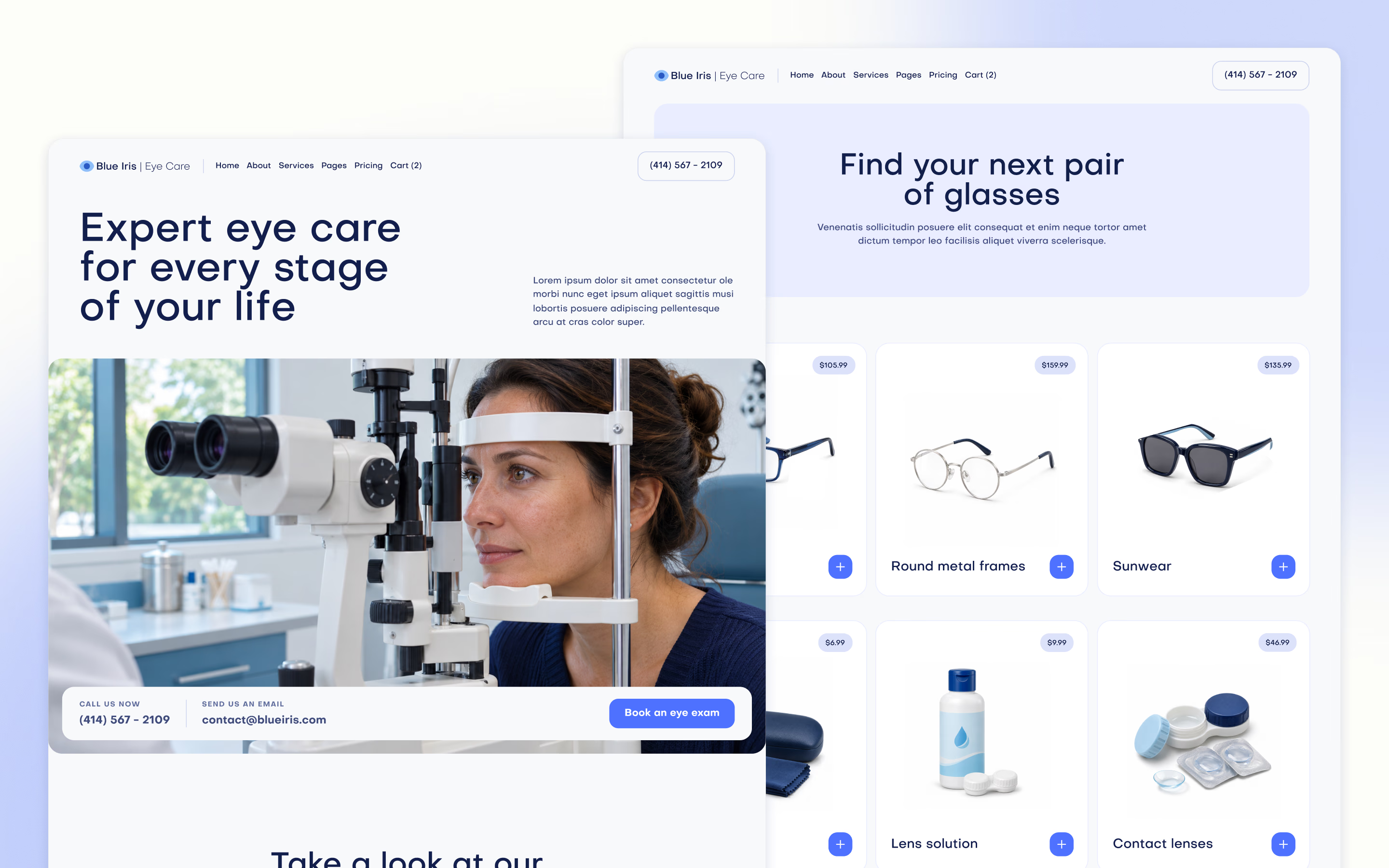
For Blue Iris Eye Care, we adapted one of our templates for an eye-care business with both clinical services and eyewear. The blue and white palette gives examination imagery a calm setting, while the product page carries that identity into browsing glasses. The two views connect the practice experience with the everyday choices patients make after an appointment.
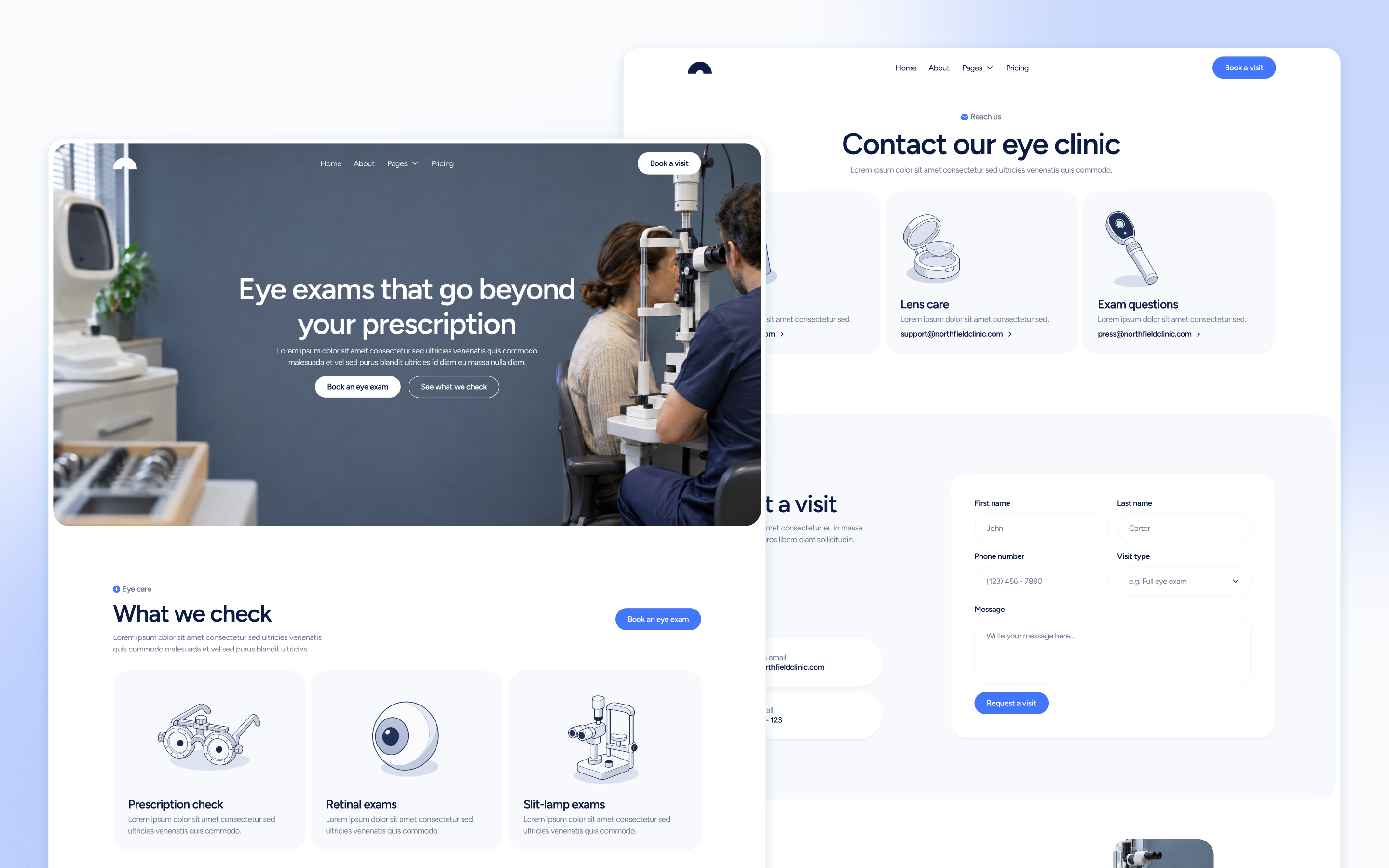
For Northfield Clinic, we adapted a template to put eye examinations and practical service information at the center of the site. A clear introduction leads into service cards and a contact form, with short answers that give visitors somewhere to begin. The design keeps the information organized without making the clinic feel distant or overly technical.
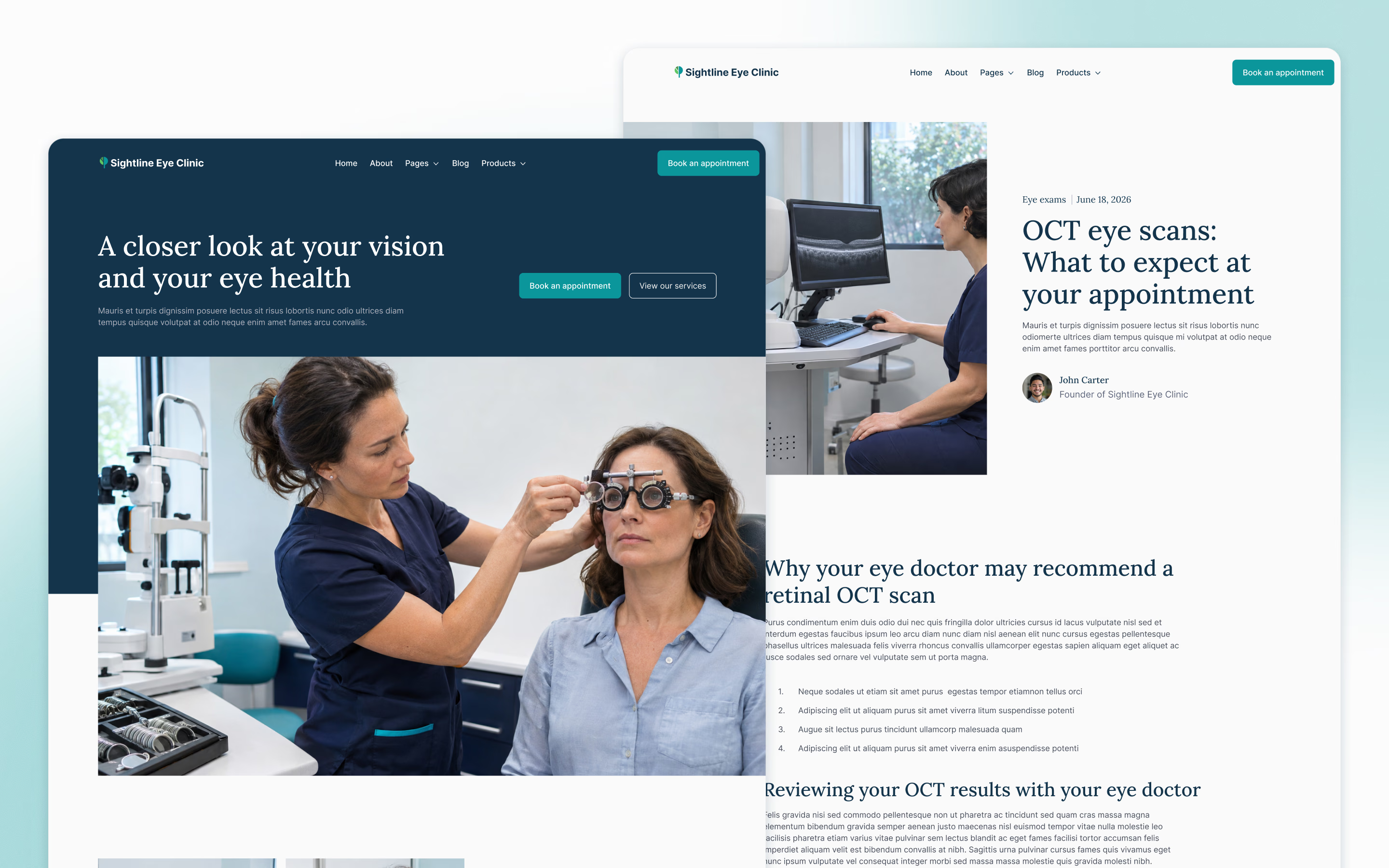
For Sightline Eye Clinic, we adapted a template with more room for educational content alongside the practice introduction. Teal and navy details connect the eye-examination imagery with an article layout, giving longer explanations a consistent place in the website. That relationship helps a clinic’s service pages and reading material feel like parts of the same experience.
Our templates are used by more than 60,000 websites across categories. We bring that design experience to our agency work, where your practice gets a fully custom website shaped around its identity, services, and patients. The goal is a site your team recognizes as its own and can keep useful as the practice grows.
2. Denali Creative: Best Ophthalmology Web Design Agency for Practice Websites
 2
Denali Creative
A creative agency designing and building eye-care websites that introduce clinical teams and make practice information easy to explore.
Denali Creative provides a useful starting point for a practice that wants its doctors and services to be immediately recognizable. Its Westlake work combines a clear clinical introduction with the people behind the care, rather than relying only on broad claims about expertise.
This is worth looking at when your practice already has a strong reputation but the website does not communicate it well. The design needs to give new visitors enough context to understand the team while leaving established patients a direct route to the information they came for.
Featured project: Westlake Eye Specialists
Denali’s ophthalmology portfolio identifies Westlake Eye Specialists as a website design-and-build project. The selected site introduces cataract care alongside doctor portraits and routes for patient and referral information. Its portfolio uses the shorter Westlake Eyes name, while the practice’s website carries the full identity.
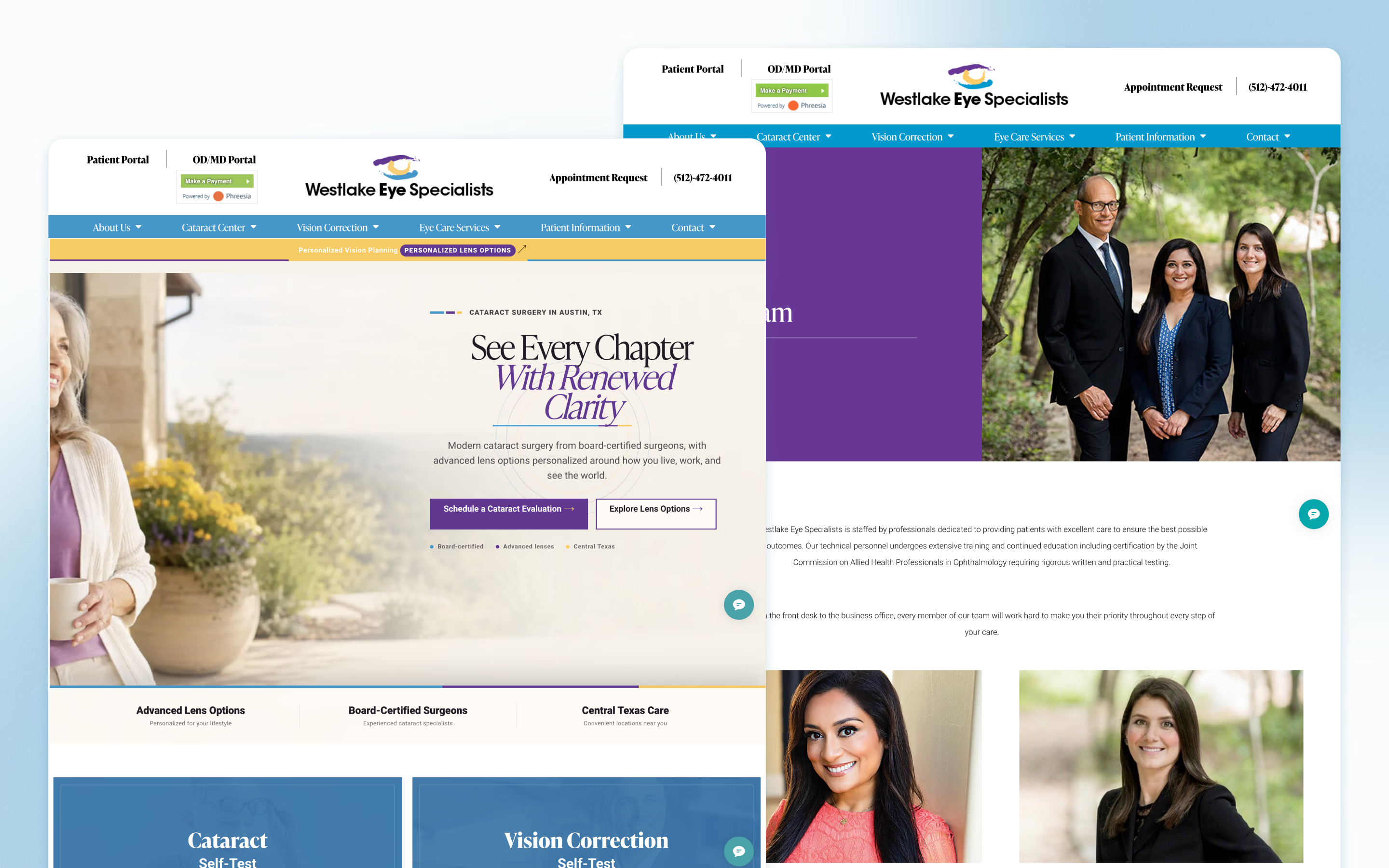
Review how a new patient meets the doctors and how an existing patient reaches practical information. Those are related but different tasks. In your agency conversations, ask to see both routes in the proposed structure so a strong introduction does not make everyday actions harder to find.
3. Northern Artillery: Best Ophthalmology Web Design Agency for Multi-Location Websites
 3
Northern Artillery
A digital agency organizing eye-care websites around treatment information, growing location networks, and clear routes for patient inquiries.
Northern Artillery is relevant when the practice website needs to grow with a network of locations. Its Freedom Vision work addresses the structure behind that growth, including how treatment information and local details relate to each other.
That is more than a menu decision. Patients may arrive through a location page, a treatment search, or a recommendation for a particular clinic. A useful site gives them enough context at each starting point and helps them continue without having to return to the homepage.
Featured project: Freedom Vision
For Freedom Vision, Northern Artillery redesigned and developed the website using Strapi, with scalable location and treatment architecture, patient navigation, and inquiry-focused interfaces. The selected pages combine a restrained green and white identity with warm patient imagery and clear information about the care offered.
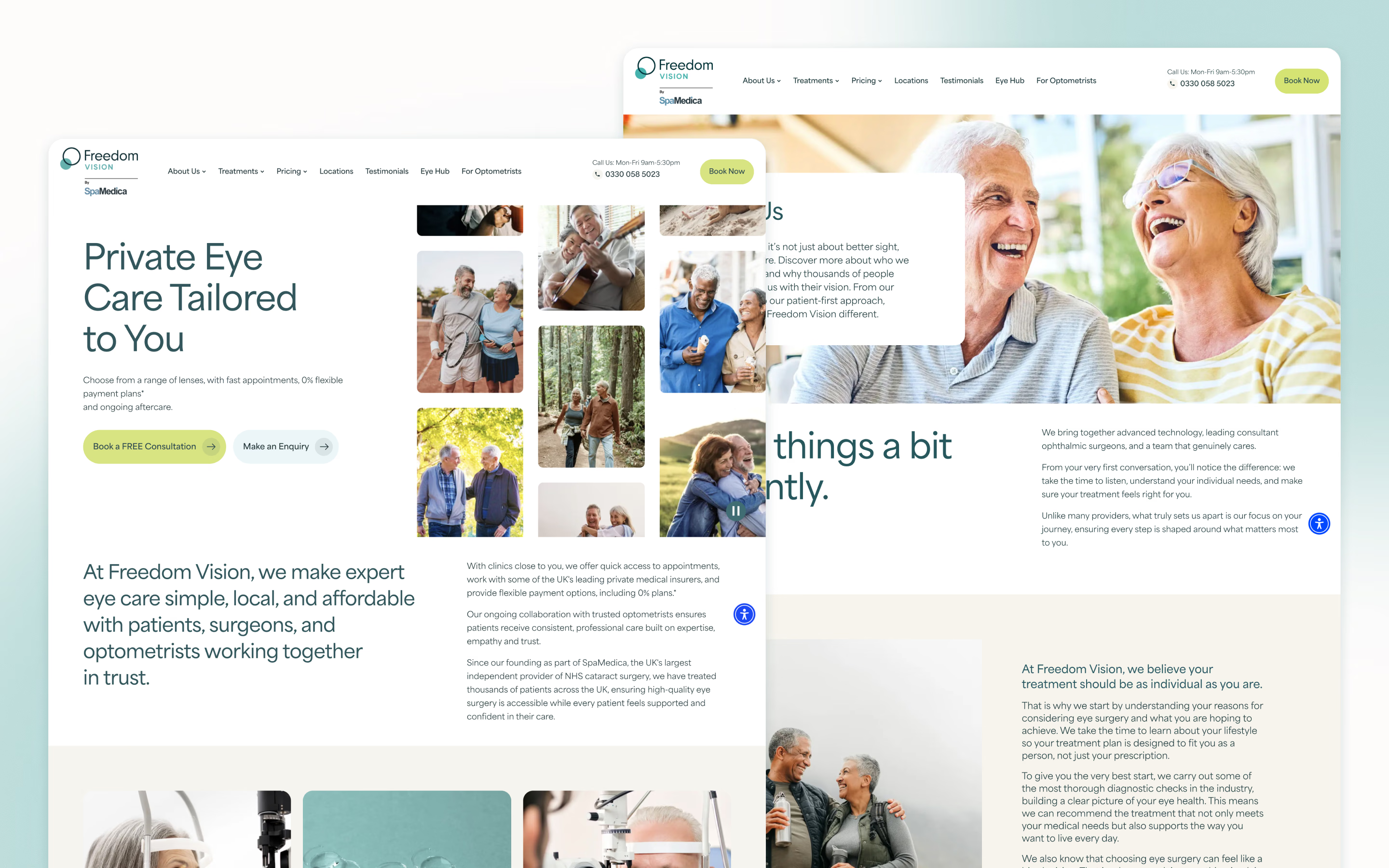
Explore the connection between a treatment and the place where it is offered. If your own group has several locations, ask how staff will maintain those relationships in the CMS. A well-organized page structure should make the information easier to update as well as easier for patients to browse.
4. WebToMed: Best Ophthalmology Web Design Agency for Patient Resources
 4
WebToMed
A medical website team combining ophthalmology design with patient resources, optical information, and connections to existing practice tools.
WebToMed offers a reference for practices whose websites need to support several kinds of patient information. The Midwest Center for Sight project brings clinical services, optical content, and a patient portal into the same overall site.
It is useful to examine that range before reducing a project brief to appointment requests alone. People may return to a practice website for resources, office details, or access to another system. Those visits deserve a clear route even when they are not part of a new-patient inquiry.
Featured project: The Midwest Center for Sight
WebToMed’s documented work for The Midwest Center for Sight includes ophthalmology website design, custom graphics, optical department content, SEO-oriented code, and patient portal integration. The selected design uses eye imagery and explanatory illustrations to introduce services while keeping the practice identity consistent across the pages.
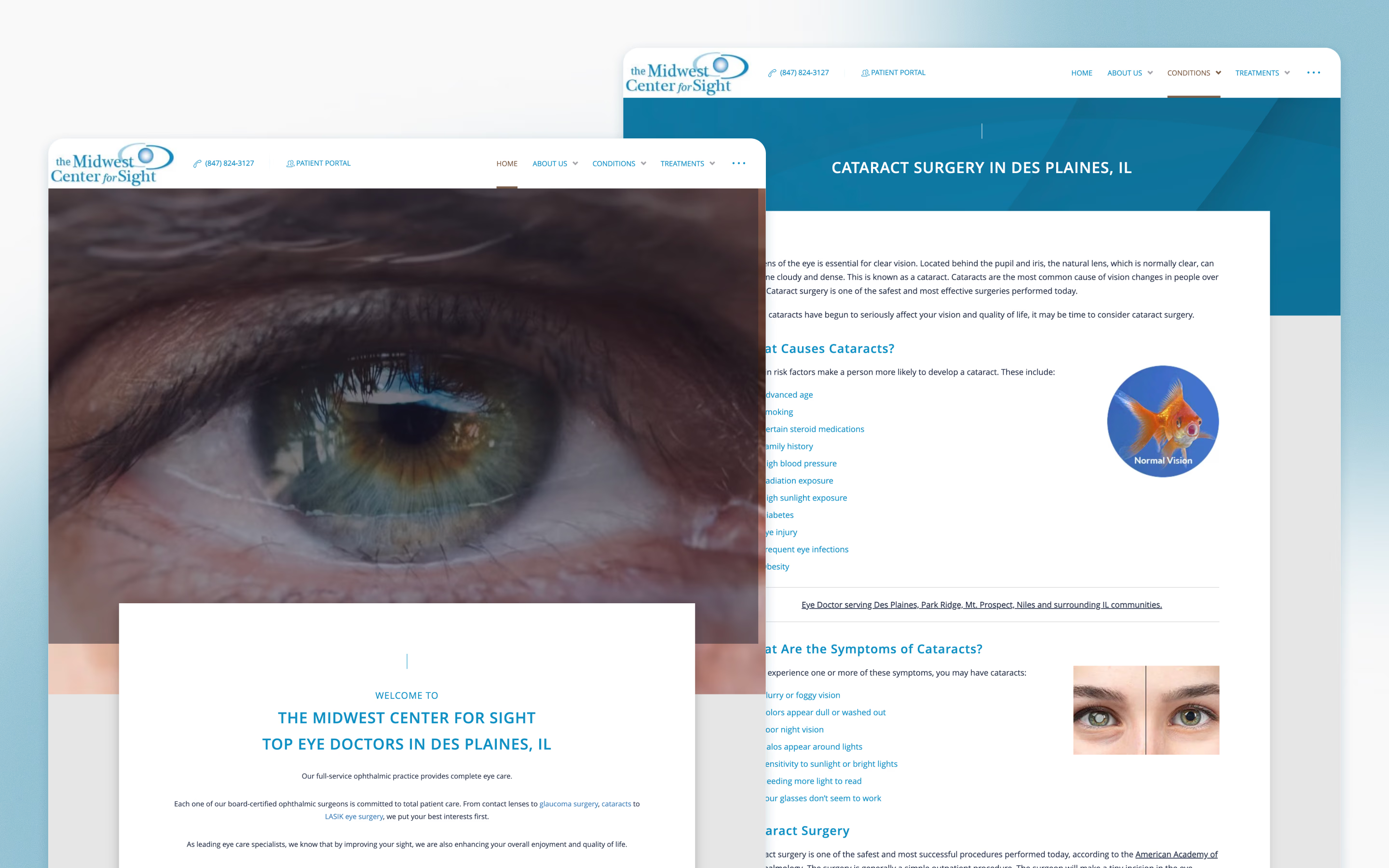
Ask the agency to map which resources live on the website and which open a separate service. Patients should understand when they are leaving the public site for a portal. Your staff should also know who maintains each destination, so a redesign does not leave familiar patient resources disconnected.
5. Studio 3 Marketing: Best Ophthalmology Web Design Agency for Motion Design
 5
Studio 3 Marketing
A creative marketing agency bringing original patient imagery, video, and motion into the design and development of eye-care websites.
Studio 3 Marketing is a useful portfolio to explore when photography and video will be central to the practice’s identity. Its Chu Vision Institute work treats those materials as part of the website experience rather than decoration added at the end.
That approach can help a practice introduce its team with a more personal tone. It also makes the production scope important: filming, writing, editing, and implementing motion are different jobs, and the website must remain clear when a visitor simply wants to read or arrange a visit.
Featured project: Chu Vision Institute
For Chu Vision Institute, Studio 3’s scope covered website design and development, copy, and on-location patient photography and video. The project also uses a blur-to-clear motion treatment. The selected pages show a deep blue identity, prominent film imagery, and an introduction to the doctor behind the practice.
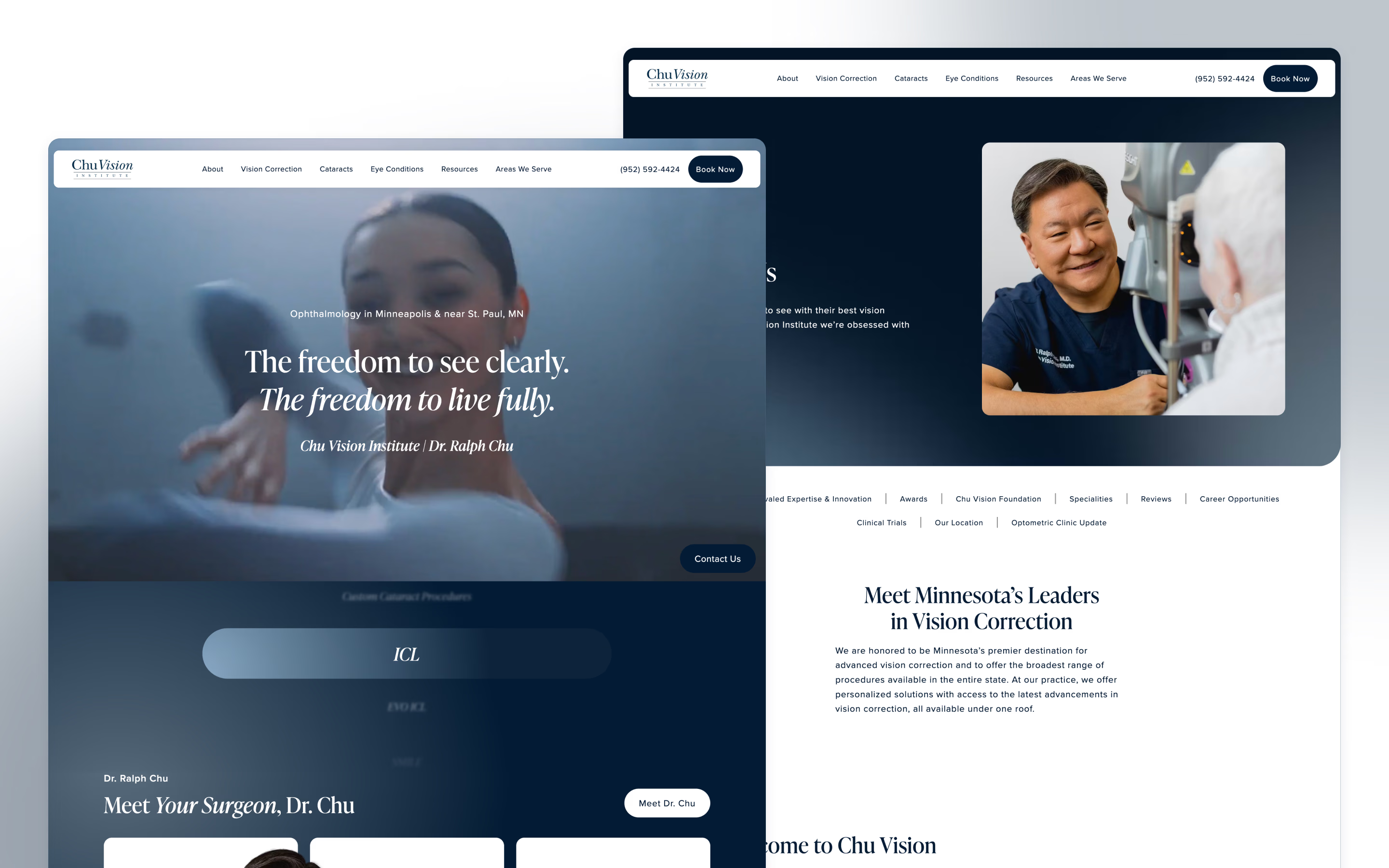
When reviewing a motion-led proposal, ask to see the same page with movement reduced and on a phone. The information and appointment route should still make sense. Discuss how the original photography and footage will be reused across pages so the production effort contributes to a consistent site.
6. Digital Ash Agency: Best Ophthalmology Web Design Agency for Brand Launches
 6
Digital Ash Agency
A branding agency carrying an eye-care practice’s identity across a custom website, launch materials, and clinical and cosmetic service presentation.
Digital Ash Agency offers a relevant reference for practices introducing a new identity or bringing clinical and cosmetic services together. Its Texas Eye Aesthetics work connects the website with a wider launch, including the materials people encounter away from the screen.
That consistency matters when prospective patients are getting to know the practice for the first time. The website should feel like the same organization as the office signage and printed information, while clearly explaining the different reasons someone might book a consultation.
Featured project: Texas Eye Aesthetics
For Texas Eye Aesthetics, Digital Ash created a brand and custom website as part of a scope that also included marketing, signage, print, and launch materials. The selected pages use warm green tones and portrait-led layouts to introduce the practice, with separate attention to clinical and cosmetic services.
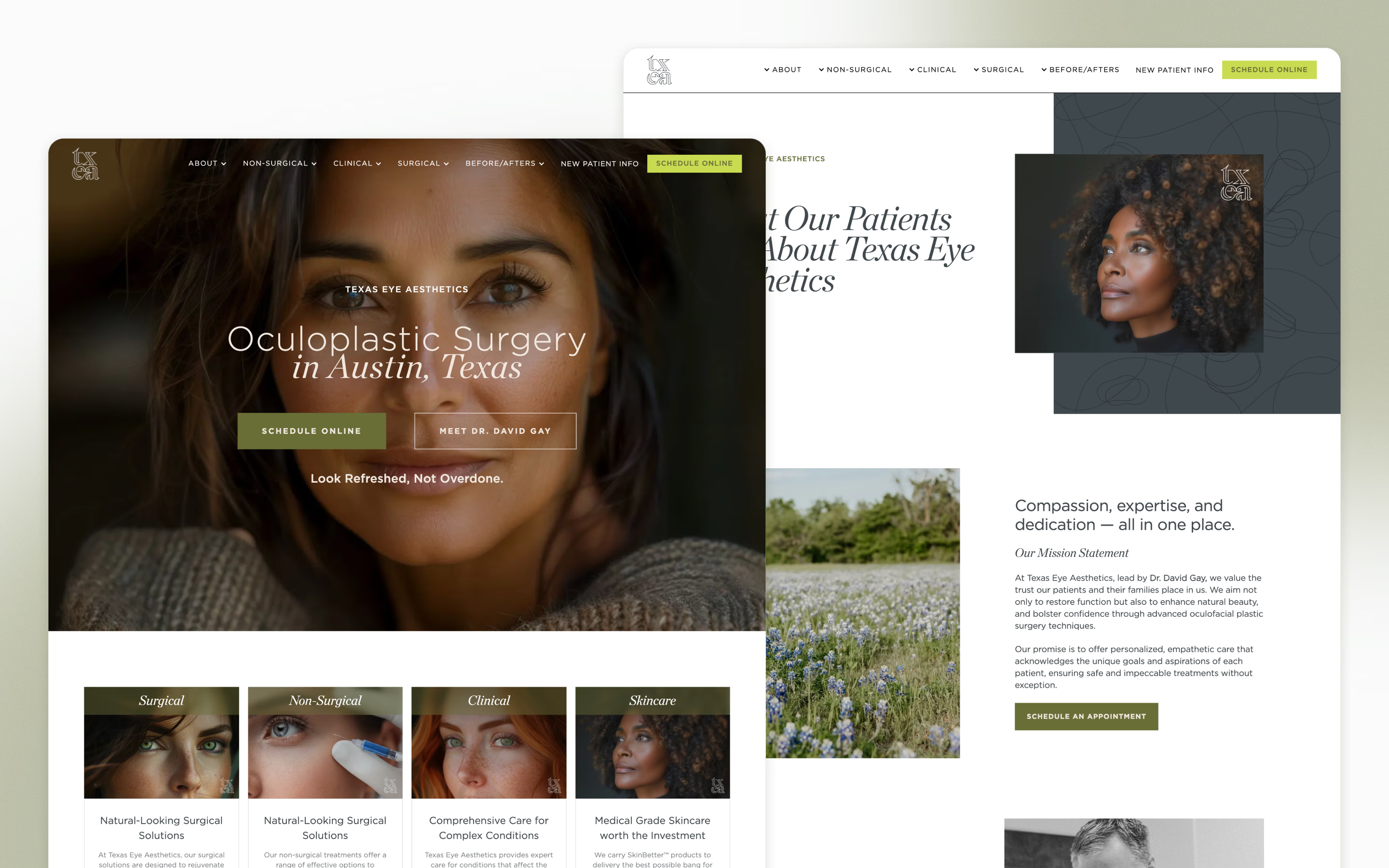
Look at whether the brand helps visitors understand the offer instead of asking them to interpret it. If you provide several types of care, ask the agency to show how it will label those routes. A coordinated launch is more useful when the same clear language carries across every touchpoint.
7. Amadeus Brand: Best Ophthalmology Web Design Agency for Squarespace Websites
 7
Amadeus Brand
A brand studio designing and developing Squarespace practice websites around clear service pages, supplied clinical content, and coordinated photography.
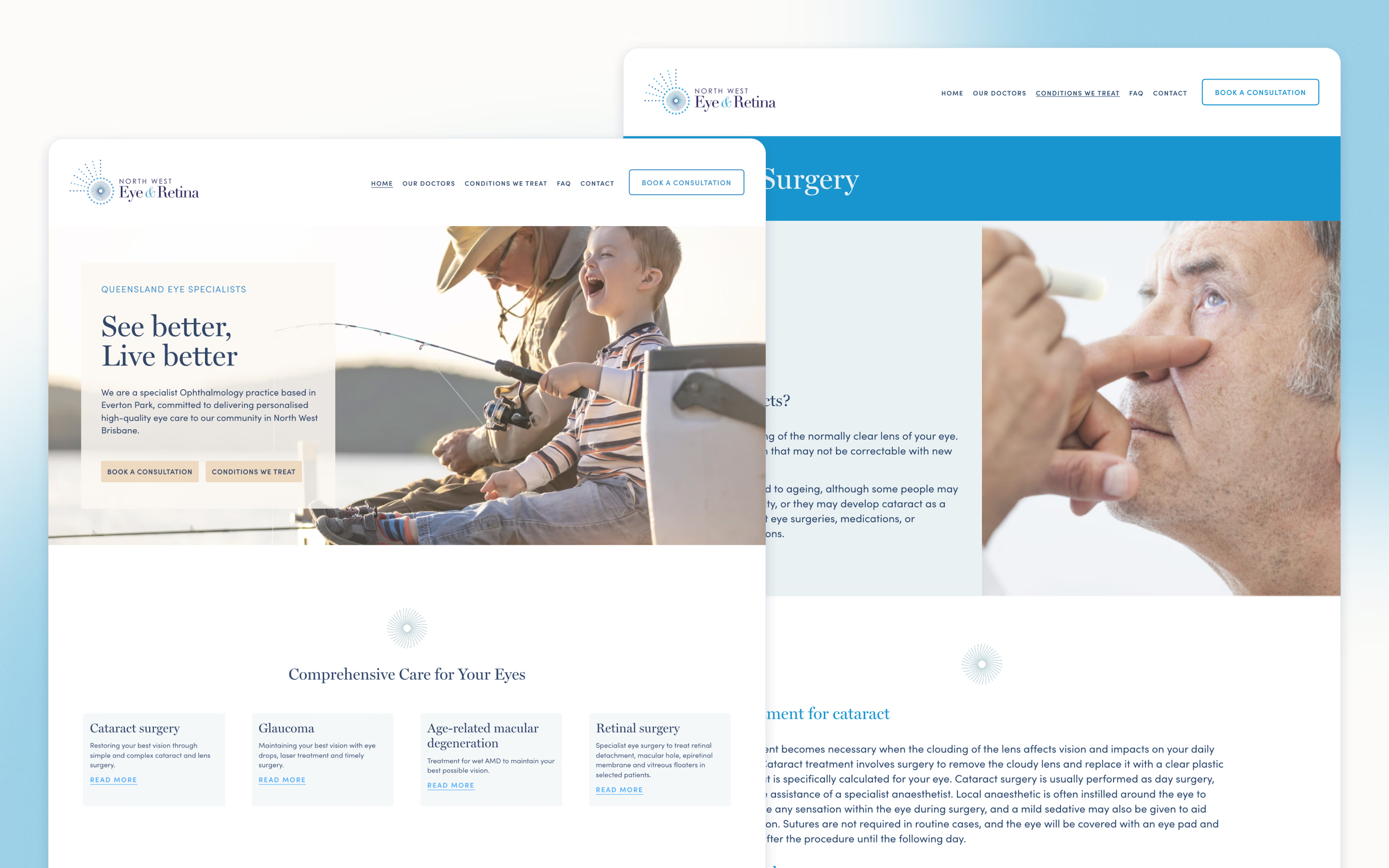
Amadeus Brand shows how a practice can build a coherent website from materials it already has. Its North West Eye & Retina project uses a supplied logo and copy, together with photography commissioned by the client, as the foundation for the site.
This is a useful scope to explore when your identity is settled and your main need is a well-organized website. The design work still matters: typography, spacing, and the relationship between images and service descriptions determine how comfortably people can read that existing material.
Featured project: North West Eye & Retina
Amadeus designed and developed the North West Eye & Retina website in Squarespace. The project used the practice’s supplied brand and content, with an eye-color-inspired palette. The selected pages pair blue and beige tones with treatment cards and clinical photography, giving the service information a consistent visual structure.
Bring your existing material into the proposal discussion and ask what the agency would change, keep, or request. That helps separate a focused website project from a larger branding engagement. It also gives your clinical reviewers a clearer picture of which content will need their attention before launch.
8. Launch Studio: Best Ophthalmology Web Design Agency for Webflow Development
 8
Launch Studio
A Webflow studio building larger eye-care websites with structured treatment content, CMS-managed pages, and planned migration and booking connections.
Launch Studio is worth considering when the project includes a substantial amount of practice content. Its Laser Eye Centre work covers a site with more than 50 pages, making the organization behind the design a meaningful part of the engagement.
For a practice with treatment, surgeon, and location pages, a redesign is also a content-management project. The agency needs to decide which information is shared, how editors will maintain it, and how existing page addresses will move into the new structure.
Featured project: Laser Eye Centre
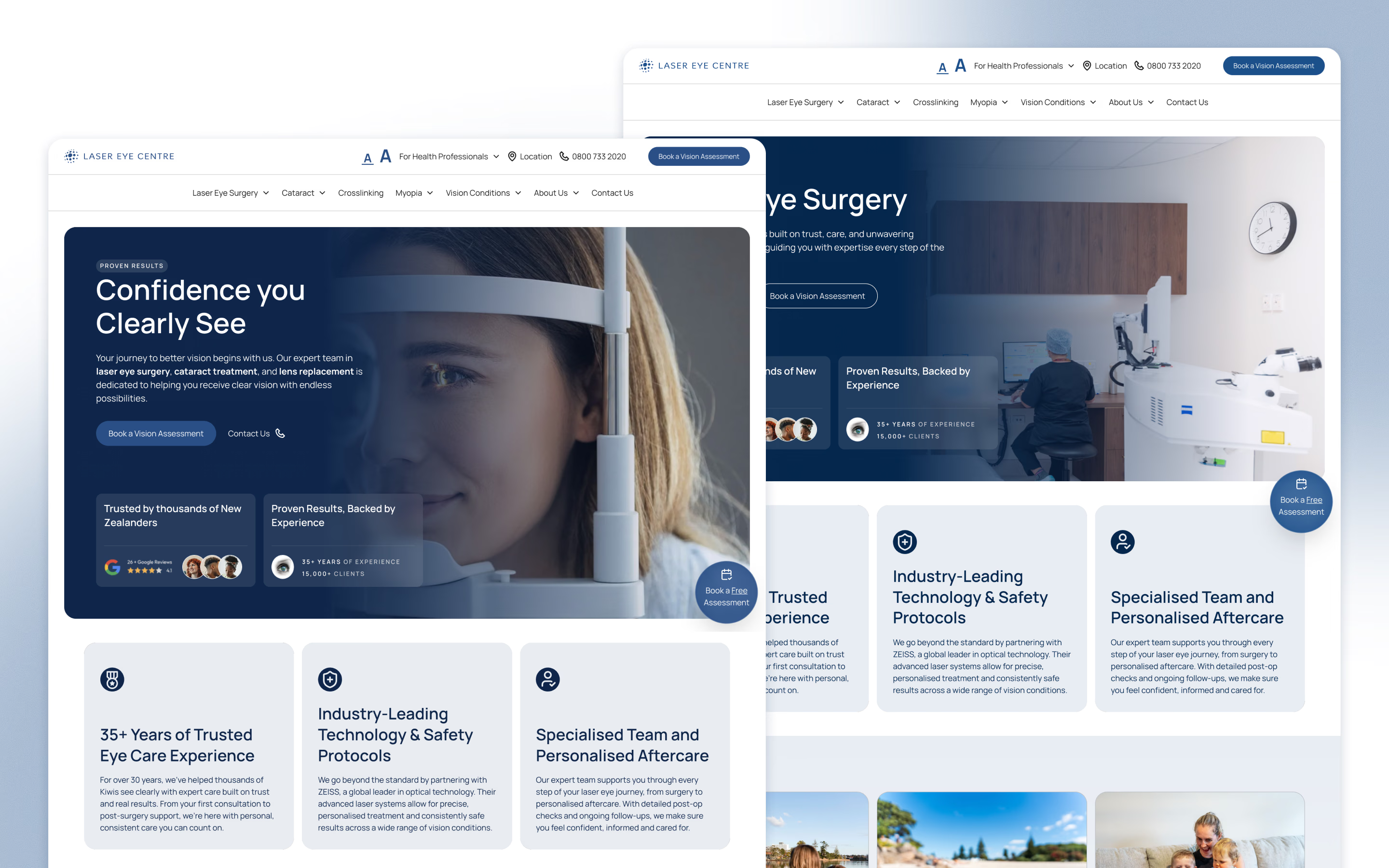
Launch Studio built Laser Eye Centre’s website in Webflow, including CMS-managed treatment, surgeon, and location content. The documented scope also includes SEO migration, redirects, and booking integration. The selected pages use deep blue branding and clinical imagery to introduce services and guide visitors toward an assessment.
Ask to see a content map and redirect plan alongside the visual designs. A larger site needs a controlled way to move information, not just a new appearance. Have the agency demonstrate how an editor updates a surgeon or service without manually changing the same information on several pages.
9. Medsolve: Best Ophthalmology Web Design Agency for Website Development
 9
Medsolve
A healthcare website provider developing practice sites that organize eye-care services, useful visitor information, and a clear route to contact.
Medsolve belongs on the shortlist for practices reviewing the implementation side of a website project. Its Central Sydney Eye Surgeons case documents website development, giving you a specific contribution to evaluate rather than assuming every part of the creative work came from one team.
That distinction is useful if your practice already has designs or works with a separate branding partner. The developer still has to turn the agreed presentation into pages that behave consistently, display well on smaller screens, and support the content the practice needs to maintain.
Featured project: Central Sydney Eye Surgeons
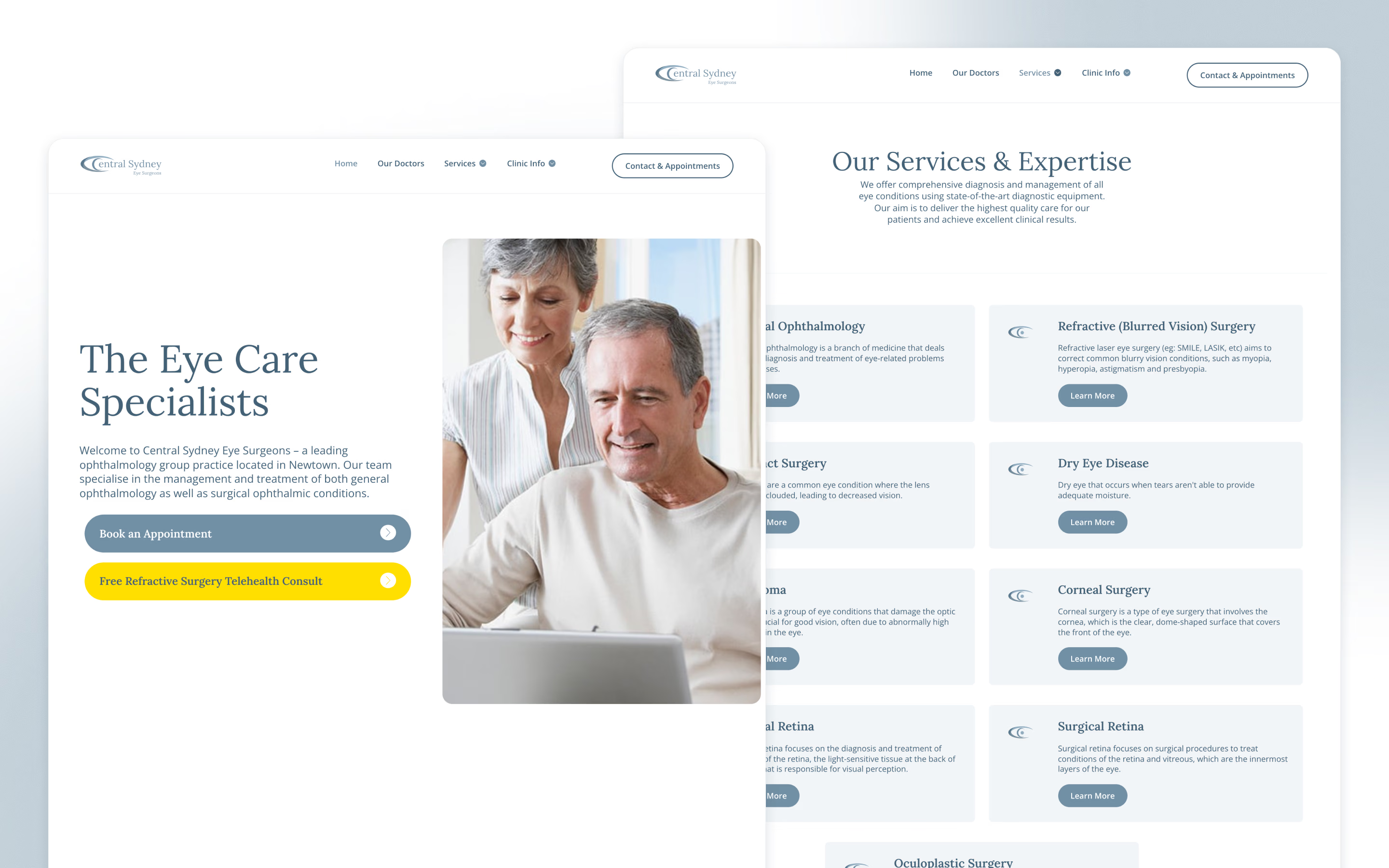
Medsolve’s published scope for Central Sydney Eye Surgeons is website development. The selected website presents eye-care services through calm white and beige layouts, patient imagery, and a collection of service cards. Its service cards give visitors a concise introduction before they explore the practice’s care in more detail.
If your project separates design from development, agree who reviews the finished pages against the approved layouts. Include keyboard use, readable text, and working contact routes in that review. A shared acceptance checklist helps the practice, designer, and developer know when the site is ready for everyday visitors.
What an ophthalmology web design project should include
A practice website needs a clear relationship between doctors, services, and locations. Planning that relationship is part of the design work. A patient should be able to explore a treatment, learn about the relevant team, and understand where to ask for an appointment without piecing the information together from unrelated pages.
The agency can help with page structure, visual identity, writing, photography, and development, but the proposal should say which of those it provides. Your clinical team should review medical information. Assigning that review early gives the writers and designers a reliable way to resolve questions instead of leaving important wording until the end.
Also define the connections to existing practice tools. A public website, patient portal, and booking service can have different owners and maintenance arrangements. The project should cover how visitors move between them, how the links are labeled, and who verifies that the right destination opens after launch.
Choosing an ophthalmology agency and understanding its proposal
Evaluate agencies against a few real tasks: finding a doctor, understanding a service, choosing a location, and contacting the practice. Review those tasks on the agency’s selected client work. A strong homepage is useful, but it does not tell you whether the rest of the site will help a patient who arrives through a treatment page.
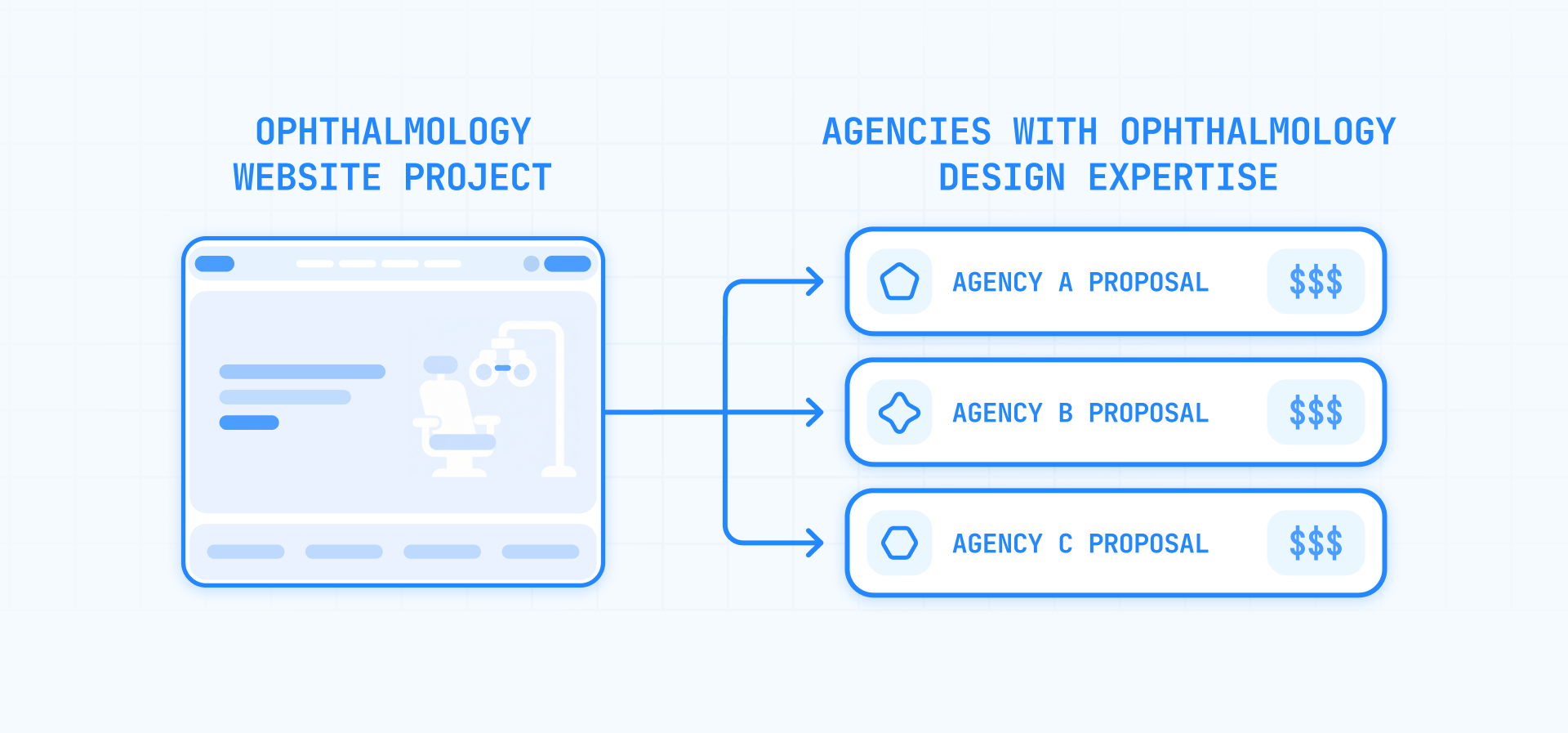
Write a brief that names your locations, providers, services, existing systems, and content reviewers. Share it with 2–3 agencies so you can compare their approaches to the same project. Include any material you already own, such as photography or approved service descriptions.
Subject Ophthalmology website for [practice name]
Hi [agency name],
We are [practice], with [number] locations and services including [specialties]. We are reviewing our website so patients can understand our care, find the right doctor or location, and request an appointment more easily.
We need [provider and service pages], [location information], and a connection or clear handoff to [appointment system]. Our clinical team will review medical content. We can provide [available materials] and need help with [remaining work].
Could you outline your approach, a relevant practice project, the content and testing included, and your expected costs and schedule? Our target is [month], with [budget range] available.
Thank you,
[name and role]
Read the proposal as a list of responsibilities. Who organizes the content, writes it, checks it, enters it into the CMS, and tests the finished pages? Separate those tasks from the design and development fees. A quote that includes a full content migration and original photography covers a different amount of work from one based on supplied material.
Ask for the ongoing costs as well: hosting, maintenance, paid software, and support for connected tools. Confirm account ownership and access for the practice. If the site uses a separate booking or portal provider, make sure the proposal explains where the agency’s responsibility ends and who will help with that system.
Before choosing a launch date, agree on review milestones and a testing plan. Include mobile reading, keyboard navigation, enlarged text, provider and location details, and the appointment handoff. The practice team should approve the content and verify the destinations using test data, so the finished site reflects how the office actually works.
Pick a CMS that makes practice updates straightforward
A practice website changes whenever a provider joins, a clinic moves, or a service page needs an update. Your CMS should make those edits manageable without requiring staff to rebuild a layout. Ask the agency to demonstrate the editing tasks your team will perform most often, including previewing a change before publishing it.
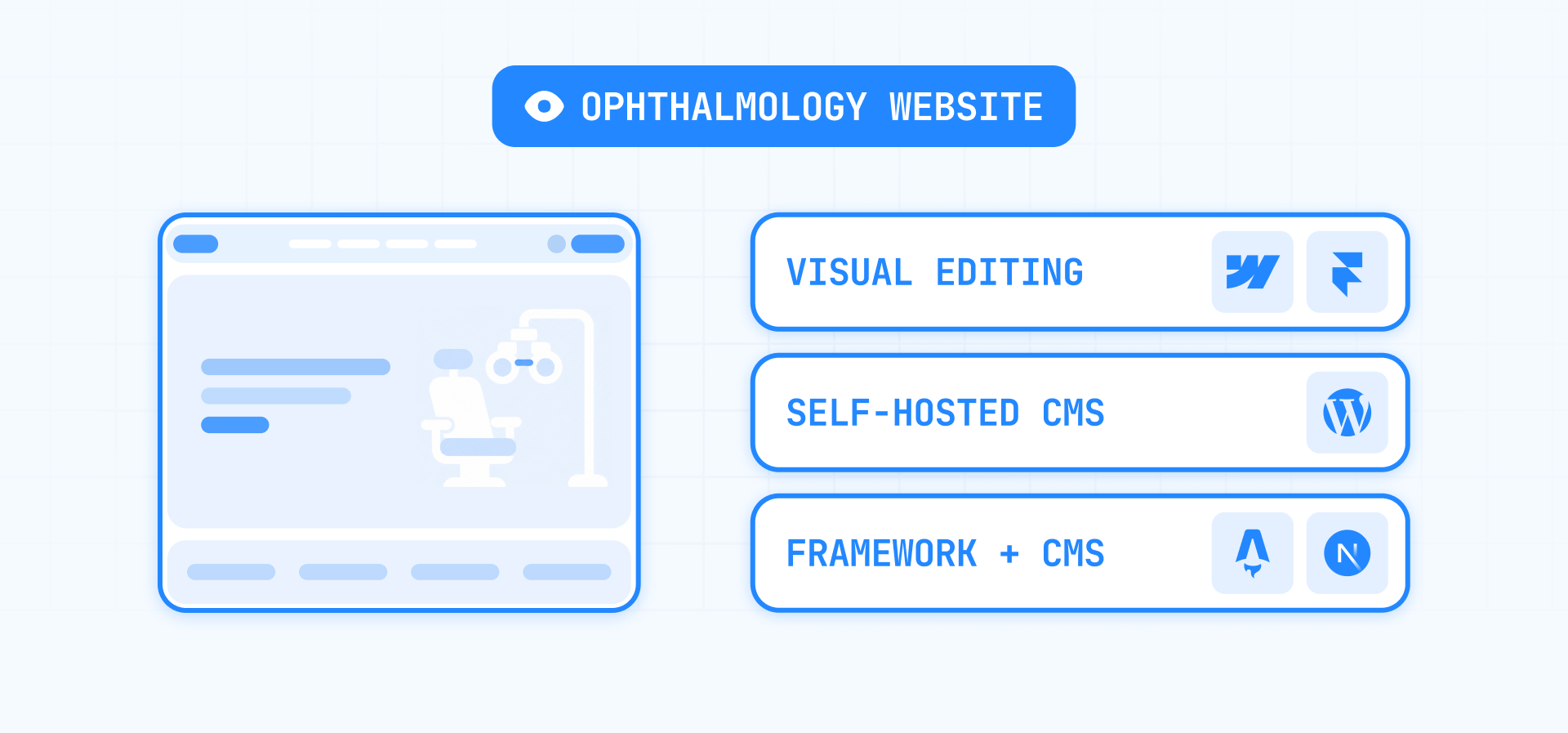
Webflow and Framer combine visual website tools with CMS features. For a practice marketing site, evaluate how they would organize provider profiles, locations, and educational content. The useful question is whether the proposed setup makes those relationships easy to maintain. The current Webflow CMS overview and Framer CMS documentation provide the starting points for comparing features.
WordPress can suit a practice that wants the website and CMS database on its own hosting. That choice comes with a maintenance plan: software updates, backups, and responsibility for the plugins in use. Read the WordPress maintenance guidance with the agency and decide who will perform those tasks.
Astro and Next.js are frameworks that developers can pair with a separate CMS. This approach gives a team room to build more specific behavior, but it also needs a clear support arrangement. Astro documents its CMS integrations, and Next.js documents its application framework. Ask to see the actual editor your staff would use, rather than judging the choice by the developer-facing technology alone.
Three priorities for an eye-care practice website
Make reading comfortable before adding visual effects
Readable type, clear contrast, generous spacing, and recognizable controls deserve attention from the beginning. Test pages with enlarged text and keyboard navigation, and make sure motion does not carry information that disappears when it stops. The W3C’s accessibility design guidance offers practical starting points for reviewing those choices with your agency.
Connect the clinical information to a practical next step
Service pages should explain the practice’s offer in language its patients understand, with medical wording reviewed by the clinical team. Then show the relevant doctor, location, and contact route. Keep public inquiries focused on arranging the next conversation, and direct detailed patient information to the practice’s approved systems rather than asking for it in a general website form.
Give the team a clear content-review process
A readable site can still become confusing if office details and provider information fall out of date. Assign an owner for each type of content and a way for clinical reviewers to approve changes. Keep the site’s appointment instructions aligned with the front desk, so a patient receives the same information online and when they call.
Frequently asked questions about ophthalmology web design
How do I choose a web design agency for an ophthalmology practice?
Choose a team that can connect practice information with patient needs. Ask to see how it organizes doctors, treatments, locations, and appointment routes in a comparable project. Review a few internal pages on a phone, not only the homepage, and discuss the agency’s exact role in the work you are using to evaluate it.
Then compare how each candidate would approach your practice. Share the same service list, content needs, existing systems, and review process with a small shortlist. A useful response should explain responsibilities and deliverables in terms your office can follow. That is a stronger basis for hiring than a long list of features without a plan for your actual content.
How much does an ophthalmology website redesign cost?
Costs depend on the content and implementation scope. A single-location practice using approved materials needs a different project from a group with many providers, treatment pages, and booking connections. Brand work, new photography, writing, content migration, and testing can each add substantial work beyond the visual design of a homepage or a few page layouts.
Request a proposal that separates those deliverables and identifies what the practice must supply. Include the first year of hosting, subscriptions, maintenance, and support when comparing totals. This gives you a clearer way to decide where to invest and what to phase later, without assuming that two quotes with similar page counts cover the same amount of work.
Can an eye-care website support online appointment requests?
Yes, but the design should match the practice’s scheduling process. A request form, a callback route, and a system that confirms a specific appointment are different experiences. Decide which your office can support and label it clearly, so patients understand whether they have asked to be contacted or have actually reserved a time.
Have the agency test the handoff with your staff and the provider of the scheduling system. Check the confirmation, where the request arrives, and how the office follows up. Keep detailed patient information in your approved practice tools, and make the website’s instructions agree with what the front desk tells people when they call to arrange a visit.
How should a practice website handle patient forms and portal links?
Give each link a clear purpose and destination. Patients should be able to distinguish a general appointment inquiry from a portal login or a form the office asks them to complete. Organize these routes around familiar tasks, and explain when a link opens a separate service so the change does not feel unexpected or confusing.
Confirm with the practice which systems are approved for each kind of information before the agency builds the pages. Assign responsibility for checking links and updating instructions when those systems change. During review, ask staff to follow the routes using test information and report any step where a patient might reasonably be unsure what to do next.
What makes an ophthalmology website easier to read and use?
Start with readable text and clear navigation. The design should give headings, links, and controls enough contrast and space to be recognizable. Content needs to remain usable when someone enlarges text or moves through the page with a keyboard. These details deserve deliberate review, especially on a website whose audience may include people with difficulty seeing.
Ask the agency how it tests those behaviors instead of judging accessibility from a screenshot. Try a treatment page, a doctor profile, and the contact route with different screen sizes and interaction methods. Document problems and confirm the fixes before launch. A visual style can be distinctive while still making ordinary reading and navigation comfortable for the people using it.
Do each of our doctors and locations need their own pages?
Separate pages are useful when they provide specific, maintainable information. A doctor profile can explain relevant experience and where the doctor sees patients. A location page can bring together directions, contact details, and the services available there. The benefit comes from helping people answer a real question, not simply increasing the number of pages on the site.
Plan the relationships before creating the pages. If a doctor works at several locations, the CMS should make that information easy to keep consistent. Ask the agency to demonstrate how a staff member updates it and how the change appears across the site. Clear editing responsibilities matter as much as the initial page design once the practice begins using it.
Who should write and approve the treatment information?
The agency can help make information clear and well organized, while the practice’s clinical reviewers should approve medical wording. Establish that division at the beginning of the project. Writers need access to the people who can answer questions about the practice’s services, and reviewers need a defined stage to check the content before it is placed into finished pages.
Give each page a named reviewer and agree how feedback will be collected. Keep explanations focused on the services the practice actually offers and the next step a reader can take. After launch, retain the same ownership for updates. That makes it easier to improve the writing without leaving clinical statements or practical appointment instructions out of date.
Which CMS should an ophthalmology practice choose?
Choose a CMS around the updates your staff makes. Provider information, office details, and approved educational content should be straightforward to edit and preview. Webflow, Framer, and WordPress offer different publishing arrangements, while a custom framework can be paired with another CMS. The right choice depends on the site’s structure and the people responsible for its upkeep.
Ask each agency to demonstrate a few practice-specific tasks rather than giving only a feature list. Add a doctor, change a location detail, and revise a service page. Then compare access controls, hosting, maintenance, and support responsibilities. You want a manageable publishing process with clear ownership, not a technology choice that makes routine office updates depend on a developer.
Can we keep our existing content when redesigning the practice website?
Yes, and a content review should determine what stays, changes, or is retired. Existing provider biographies, service explanations, and practical office information may still be useful. Check their accuracy and readability before moving them, and identify pages whose addresses should remain or redirect to an equivalent page in the new website structure.
Ask the agency to include that inventory and migration work in its proposal. Your clinical team should review medical content, while office staff confirm locations and appointment instructions. Testing should cover the migrated pages and their links as well as new designs. This helps the redesign improve the experience without accidentally discarding information that patients and staff already rely on.
What should we test before launching an ophthalmology website?
Test the main patient tasks: finding a doctor, reading service information, choosing a location, and reaching the right appointment or portal destination. Check those tasks on smaller screens, with enlarged text, and using a keyboard. Also verify that the practice’s phone numbers, addresses, provider details, and published instructions match the information staff use in the office.
Include the agency and practice team in the review, with a record of issues and who will resolve them. Use test information for any inquiry flow and check its destination before opening it to visitors. Finish with editing training and a support contact so staff know how to correct a detail or report a problem after the new site launches.
Choose a website team that makes your practice easier to understand
The agencies in this guide approach eye-care websites from different directions: branding, clinical content, patient resources, motion, and development. Use those differences to narrow your shortlist around the work your practice actually needs, then explore the selected projects beyond their opening screens.
A useful brief connects the clinical team’s knowledge with the front desk’s everyday questions. Once you agree on the providers, services, locations, and appointment routes the site must explain, it becomes easier to judge an agency’s proposal and give focused feedback on its designs.
To discuss that work with BRIX Agency, share your practice’s website plans with us. We respond in less than 24 hours, or within 1–2 hours during business hours PST. We can help you work through the structure and visual direction for a custom site that feels like your practice.





Join readers commenting on this post!