Your dental practice might feel welcoming from the moment someone walks through the door, but does your website give people that same feeling? Before a first appointment, patients want to meet the dentist, understand their treatment options, and work out how to get in touch. A good dental website makes that first visit feel a little less unfamiliar, starting well before someone sits in the chair.
That's why choosing a dental web design agency takes more than finding a homepage you like. A family practice introducing a new dentist has different needs from an orthodontic clinic explaining a first consultation, and a group with several offices needs to make the right location easy to find. The design should bring those details together in a way that feels natural to the people reading it.
Below, you'll find 13 agencies with work worth exploring, from custom design and video to local SEO and websites for multiple locations. We've included specific projects so you can look beyond the agency pitch, along with practical guidance on comparing proposals and choosing an editing setup your staff can use between the other jobs in their day.
How we selected these dental web design agencies
We built the shortlist around dental websites we could connect to named agencies, then reviewed the selected projects for the kind of work each team contributed. The examples cover practice launches, redesigned websites, treatment content, and ongoing marketing, with the profiles separating those responsibilities so you know what you're looking at.
BRIX Agency is the publisher of this guide and appears first, with work from our own portfolio included for you to explore. Each specialty points to a strength shown by the selected work; use it to find a few relevant teams, then explore their treatment pages and appointment paths as closely as their homepages.
The dental web design agency shortlist
- BRIX Agency: A design and development agency creating custom dental websites with distinctive visuals, clear treatment pages, and a welcoming introduction to the practice.
- Rosemont Media: A dental marketing agency pairing thoughtful website copy with original practice photography to help patients get to know their dentist.
- Lasso MD: A dental marketing agency rebuilding brands and websites together so an established practice can introduce a new direction.
- O360: A medical and dental web design agency creating specialist websites that explain procedures and make consultation requests easy to find.
- Wonderist Agency: A dental creative agency bringing branding, photography, and video into websites that show the personality of a practice.
- Infinity Dental Web: A dental website agency building responsive sites that introduce orthodontic teams and help visitors explore their treatment options.
- Golden Proportions: A dental marketing agency designing practice websites that connect a distinctive visual identity with clear explanations of cosmetic treatments.
- Sinreh Digital: A digital agency organizing dental websites around local searches, treatment pages, and straightforward routes to request an appointment.
- Healthcare Success: A healthcare marketing agency shaping dental website pages around the questions patients need answered before choosing where to book.
- Cosmetic Digital: A dental and aesthetics agency making treatment choices, membership information, and practice fees easier for prospective patients to explore.
- :Delmain: A dental marketing agency refreshing practice websites with clearer content and booking paths while supporting the site after launch.
- Profound Marketing: A marketing agency bringing new dental practices online through branding, website development, original photography, and ongoing local marketing.
- Whiteboard Marketing: A dental marketing agency building websites that help patients find the right office, meet its team, and explore available care.
1. BRIX Agency: Best Dental Web Design Agency for Custom Design
 1
1BRIX Agency
A design and development agency creating custom dental websites with distinctive visuals, clear treatment pages, and a welcoming introduction to the practice.
At BRIX Agency, we design websites that give a dental practice its own visual identity while making the useful information easy to reach. We're also the team behind BRIX Templates, including DentalCare X, a website template created for dental clinics, so our work already brings together dentist introductions, treatment information, and appointment pages. That experience informs how we plan a site around both the practice and its patients.
A welcoming design can take different forms, from a softer look for a family clinic to a more editorial presentation for cosmetic dentistry. We connect that direction with the words, photography, and page structure, giving people a clear introduction to your team before they decide to book.
A closer look at our dental web design portfolio
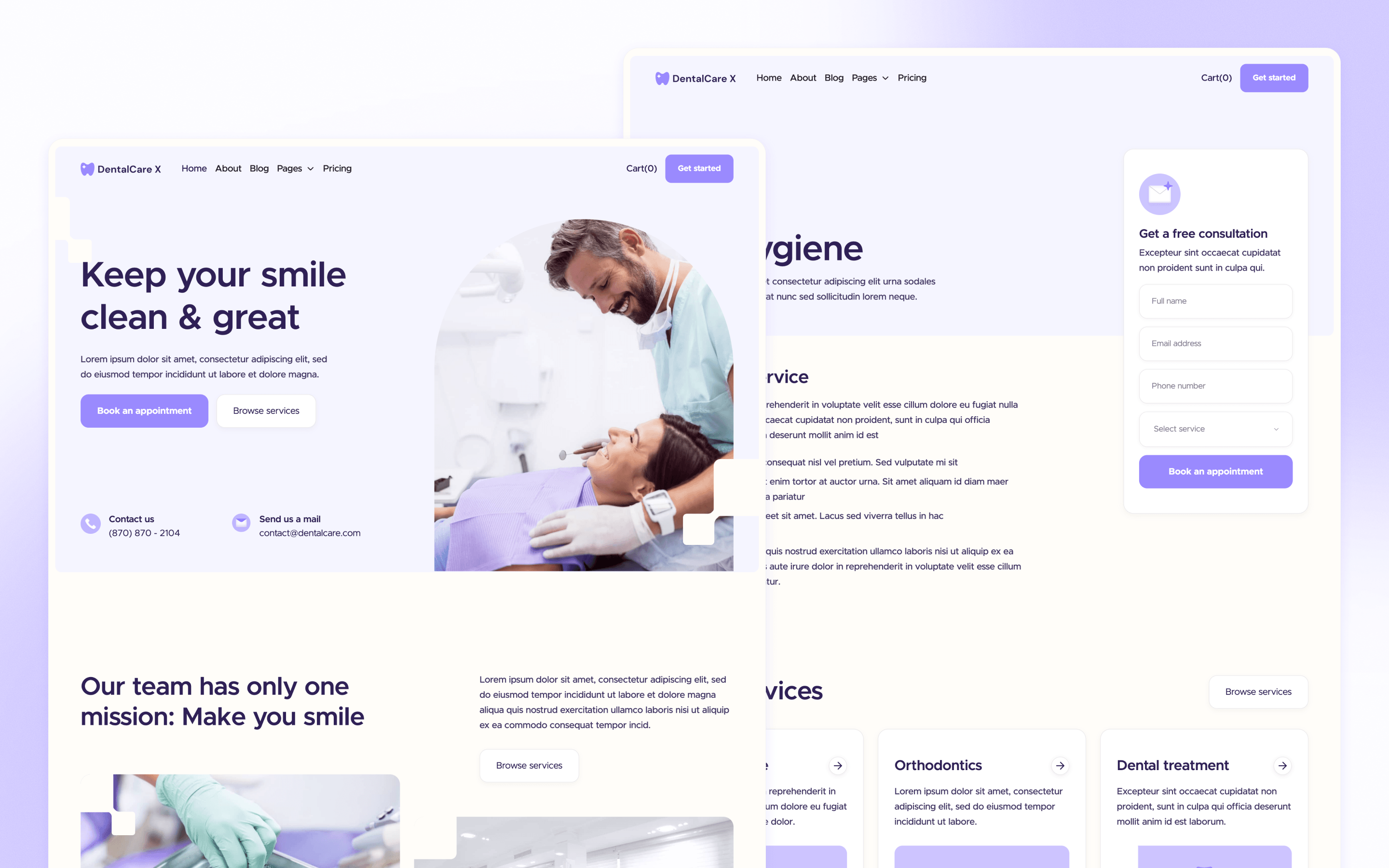
DentalCare X is our dental clinic template, shown here with light purple accents, treatment photography, and a service page alongside an appointment form. The layout gives each part of the visit its own space, helping someone move from learning about the practice to exploring a treatment without losing the way to get in touch.
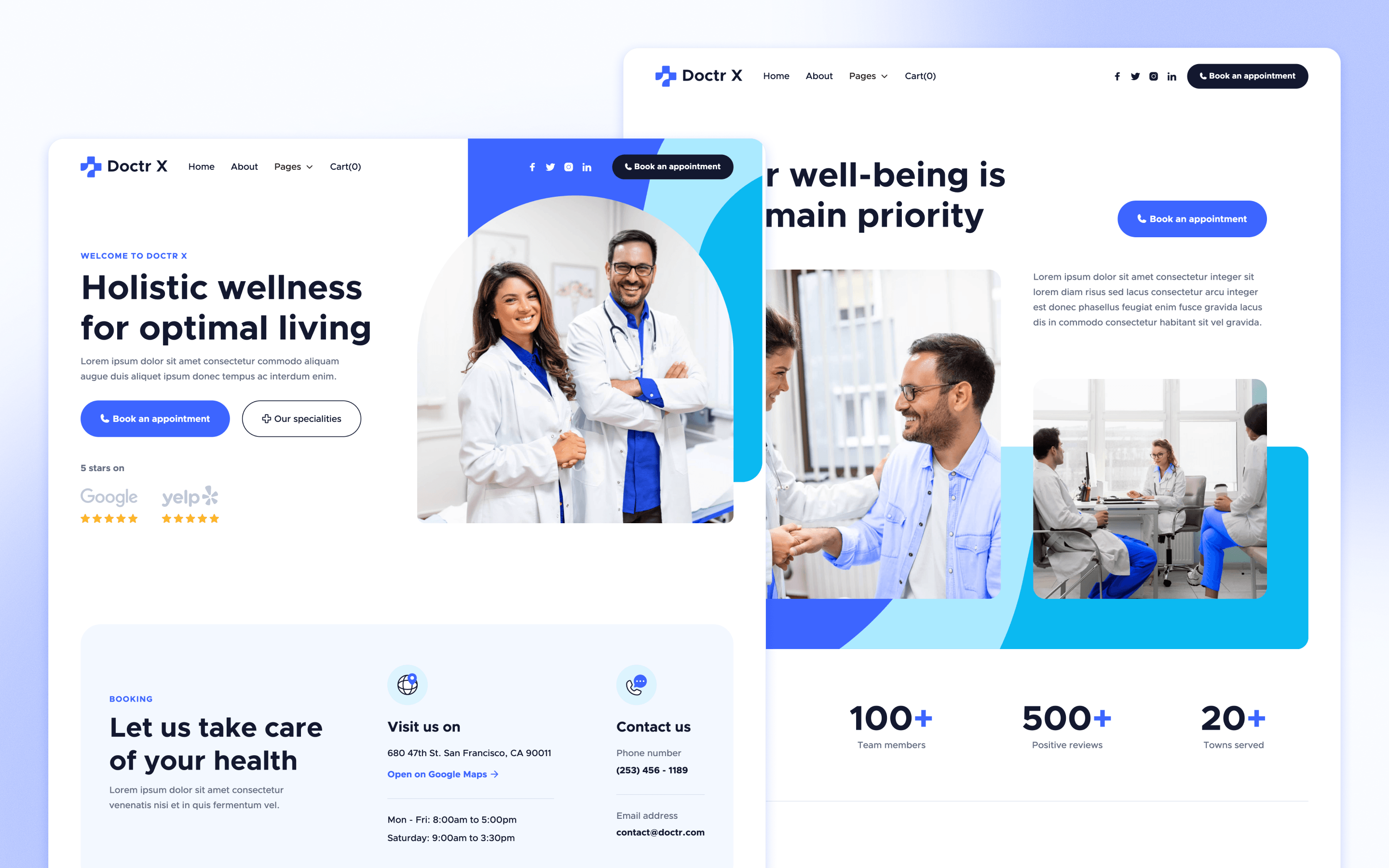
Doctr X is a medical website template that puts the people providing care at the center of the design. Large doctor portraits, clear specialty icons, and a bright blue palette give the pages an approachable feel, showing another way we bring personality and readable service information together for a healthcare audience.
Across our template collection, more than 1,500 websites use our designs. When you work with BRIX Agency, you get that same attention to quality in a custom website, designed around your practice, treatments, and appointment process.
2. Rosemont Media: Best Dental Web Design Agency for Website Content
 2
2Rosemont Media
A dental marketing agency pairing thoughtful website copy with original practice photography to help patients get to know their dentist.
Rosemont Media is worth a look when your website needs a clearer explanation of the care you provide. Its work for The Paddington Dental Surgery combines rewritten content with a new design, connecting the practice's approach to dentistry with the pages a patient reads before deciding to visit.
That combination matters when a site has plenty of treatment information but still feels difficult to understand. The words and the layout need to make room for each other, with photography introducing the people behind the explanations and a page structure that helps visitors find the details relevant to them.
Featured project: The Paddington Dental Surgery
For The Paddington Dental Surgery, Rosemont created a responsive redesign with original content, a CMS, SEO work, a blog, and galleries. The agency also worked with the practice on photography, and the project pages show a dentist portrait alongside a calmer, spacious presentation of periodontal care.
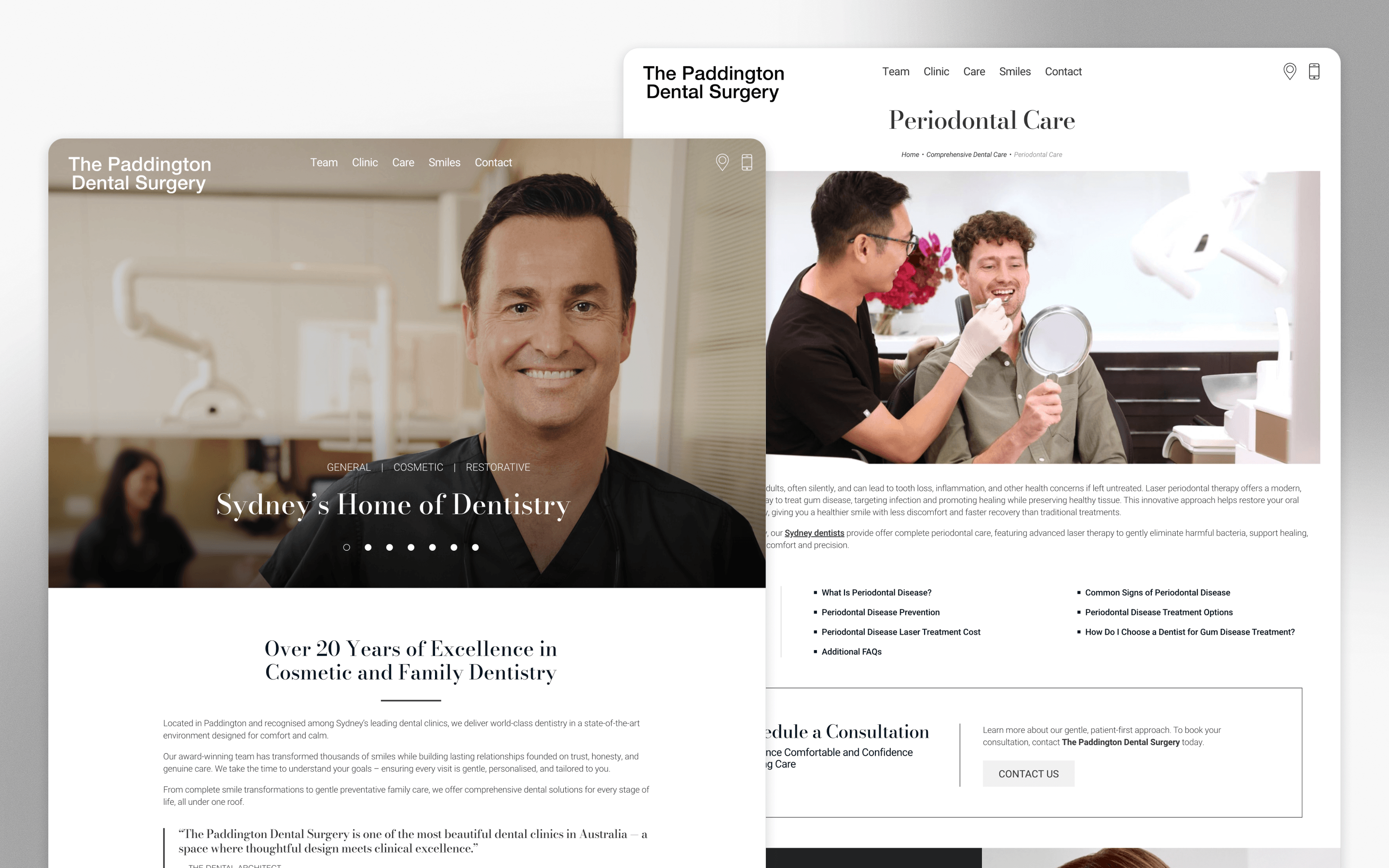
The example connects a personal introduction with more detailed treatment reading, without giving both the same visual weight. It's a useful project to explore if your current site sounds like a textbook and you'd like the copy to reflect how your team explains care during an actual conversation.
3. Lasso MD: Best Dental Web Design Agency for Rebranding
 3
3Lasso MD
A dental marketing agency rebuilding brands and websites together so an established practice can introduce a new direction.
Lasso MD combines dental marketing with brand and website work, making it a relevant option when a practice is ready for a change that goes beyond new page layouts. Its Shore Smiles engagement brought a rebrand, photography, video, and a responsive website together rather than treating each as an unrelated task.
An established practice may want a different look while keeping the familiarity patients value. Planning the identity and the site together gives the new direction somewhere to live, from the way the team is photographed to the language used on a family dentistry page.
Featured project: Shore Smiles
The Shore Smiles project included a full rebrand, custom website, onsite photography and video, SEO, local search, and advertising. Lasso also describes PatientLoop attribution work, which belongs to the marketing side of the engagement rather than the visual redesign alone.
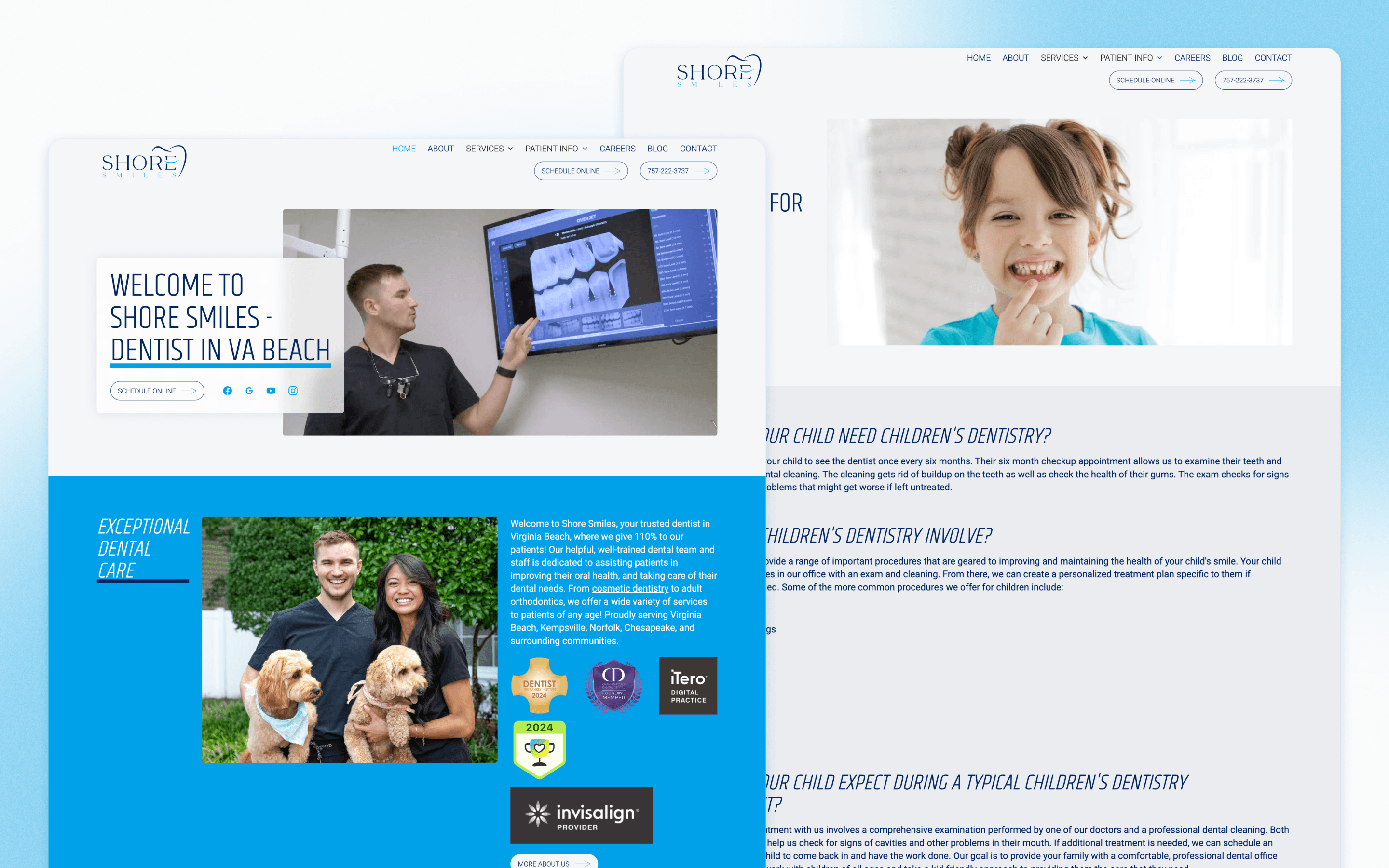
The pages shown here introduce the practice through team and family imagery, with blue accents carrying through to the treatment content. If your own redesign involves a new name, ownership change, or updated identity, this example gives you a way to discuss how the website and new creative material would come together.
4. O360: Best Dental Web Design Agency for Oral Surgery
 4
4O360
A medical and dental web design agency creating specialist websites that explain procedures and make consultation requests easy to find.
O360's selected work focuses on a specialist appointment rather than the full range of services at a general dental practice. Its Happy Wisdom Teeth Center website is a useful reference for oral surgery teams that need to introduce a focused service and help visitors understand where a consultation fits.
Someone researching wisdom tooth removal may arrive with very different questions from a person booking a routine cleaning. A focused website can give that visit a clearer explanation, introducing the team and the procedure while keeping the route to an appointment visible as the reader moves through the page.
Featured project: Happy Wisdom Teeth Center
O360 includes Happy Wisdom Teeth Center in its oral surgery portfolio. The project design pairs a homepage introduction with a wisdom teeth removal page, using patient photography, short content sections, and a consultation form to keep the site's main purpose easy to recognize.
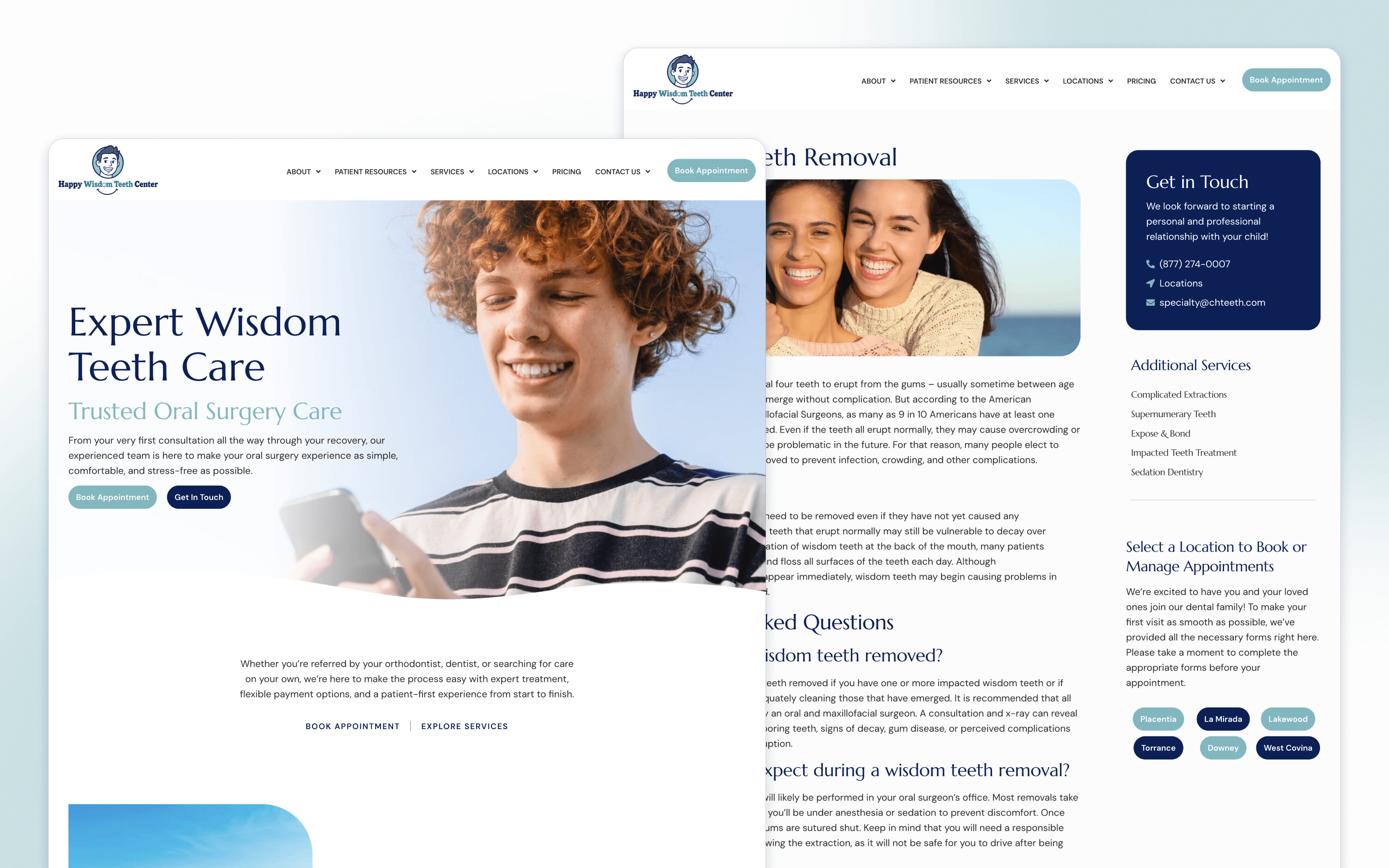
Notice how little work a visitor has to do to identify the service being offered. For a specialist clinic, that focus is useful inspiration: the opening can stay approachable while the supporting pages give people room to read, learn about the team, and decide which questions to bring to their consultation.
5. Wonderist Agency: Best Dental Web Design Agency for Video
 5
5Wonderist Agency
A dental creative agency bringing branding, photography, and video into websites that show the personality of a practice.
Wonderist Agency brings photography, video, and branding into its dental website work, with Flash Dental showing how a practice can introduce itself through its own visual material. It's a team to consider when the atmosphere of your office is part of what patients appreciate, but that feeling hasn't made it onto the website.
Plan video around what it helps someone understand, whether that's meeting the dentist or getting familiar with the space. The surrounding page still needs to make sense on its own, so visitors who scroll past a video can find the treatments, people, and contact details they came for.
Featured project: Flash Dental
Wonderist's website portfolio includes Flash Dental, with custom web design supported by photography, video, and branding. The project views show a warm practice introduction and a restorative dentistry page, bringing a recognizable visual identity into both the homepage and the more detailed service content.
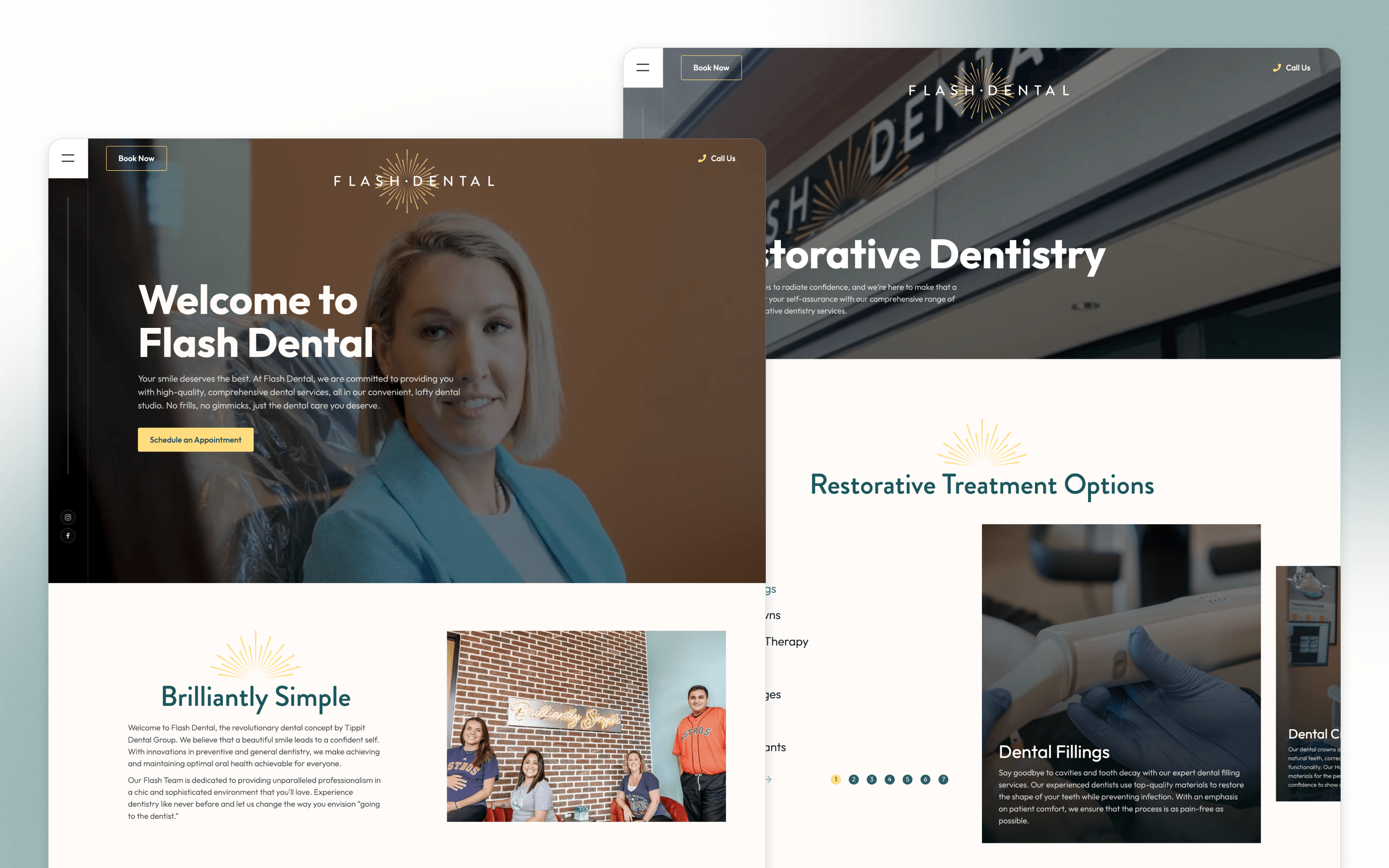
Dark backgrounds and yellow accents give the pages a distinct character, while the practice imagery keeps the people visible. Review that relationship when considering video for your own site: the footage should extend the introduction your pages already give, with production and editing included clearly in the proposed scope.
6. Infinity Dental Web: Best Dental Web Design Agency for Orthodontics
 6
6Infinity Dental Web
A dental website agency building responsive sites that introduce orthodontic teams and help visitors explore their treatment options.
Infinity Dental Web's Lake Travis Orthodontics project offers a different feel from the neutral, clinical look common to dental websites. Its bright colors and patient portraits make it a useful example for orthodontic practices that want an energetic introduction without making the information around a first visit hard to follow.
An orthodontic site often speaks to both the person considering treatment and a parent helping make the decision. Give each reader an understandable starting point, with the orthodontist's introduction and first-visit information close enough to the main treatment pages to feel like part of the same conversation.
Featured project: Lake Travis Orthodontics
For Lake Travis Orthodontics, Infinity Dental Web delivered a responsive website built from scratch, along with SEO and a blog. The project pages show a yellow homepage, patient portraits, an orthodontist introduction, and a page explaining the first visit.
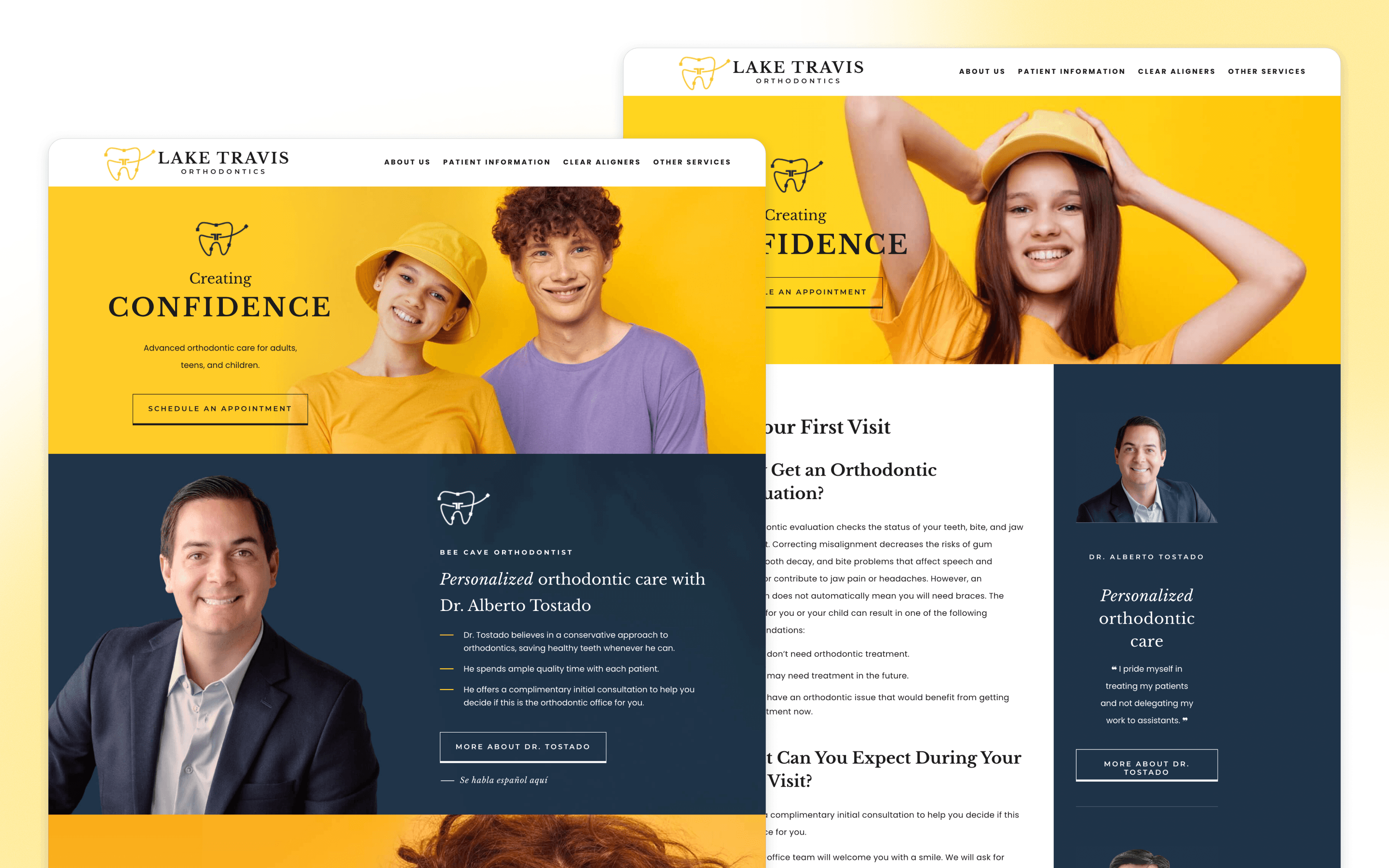
The design uses contrast to separate the upbeat introduction from the sections where someone may want to spend more time reading. That balance is worth discussing if your practice needs a lively identity alongside clear explanations, especially when visitors are comparing their options before committing to an initial appointment.
7. Golden Proportions: Best Dental Web Design Agency for Cosmetic Dentistry
 7
7Golden Proportions
A dental marketing agency designing practice websites that connect a distinctive visual identity with clear explanations of cosmetic treatments.
Golden Proportions is a dental marketing agency whose Expert Dental website gives cosmetic treatment content a refined, editorial presentation. It's an option to explore when the visual quality of the practice is part of the story, and you want the website to make room for detailed explanations as well as an attractive opening.
A polished design still needs useful treatment information, particularly when someone is considering an elective service and wants time to compare. The selected pages show how patient imagery and quieter layouts can support that reading without making every section look like an advertisement.
Featured project: Expert Dental
Golden Proportions lists Expert Dental in its custom dental website portfolio, presented under its writing, design, responsive development, and SEO-oriented website service. The project views pair the New York practice's homepage with a smile makeover page, using warm interior photography and generous space around the copy.
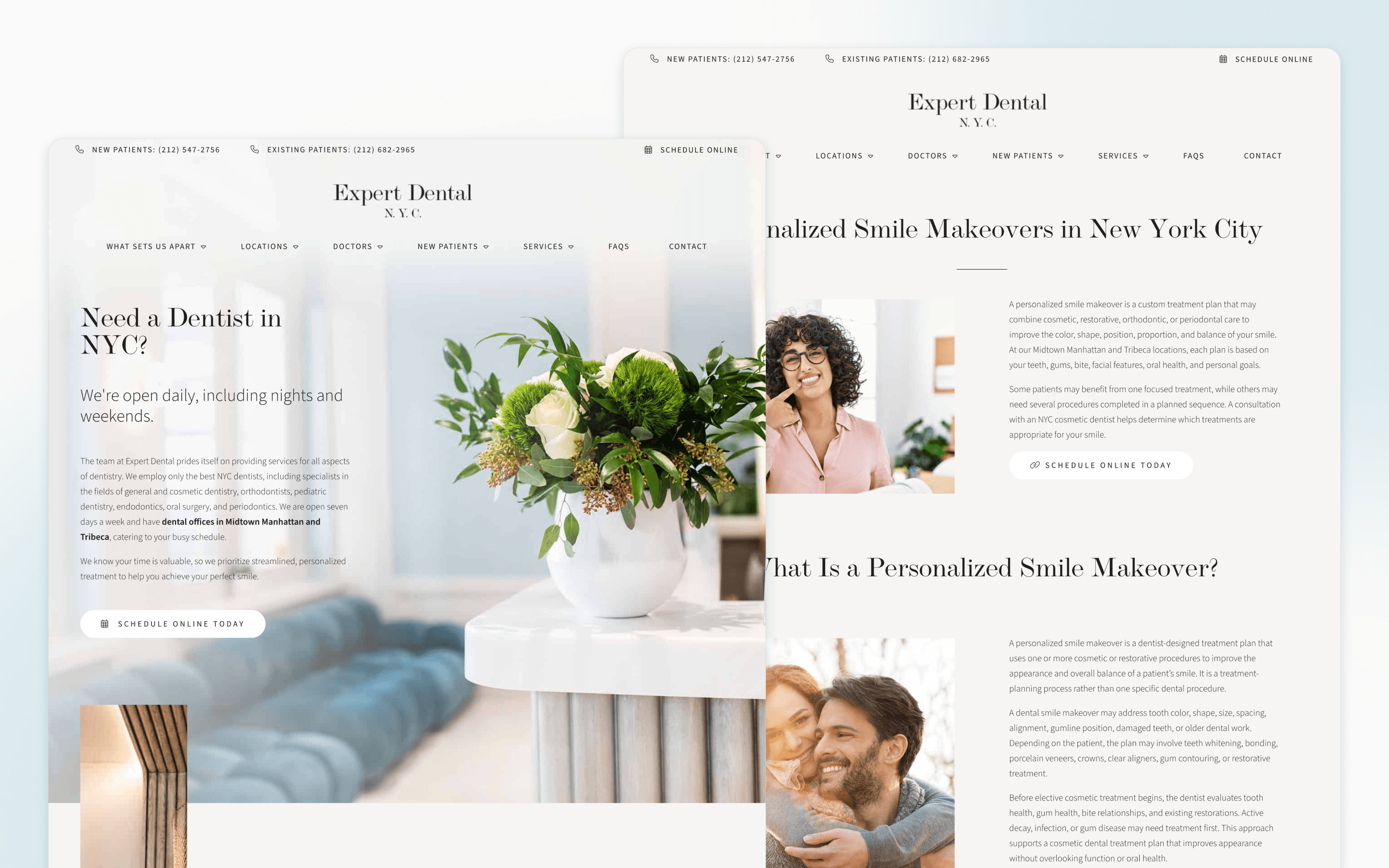
The page feels considered because the visual details support the subject instead of crowding it. For a cosmetic dentistry brief, use this example to discuss the balance between practice photography, treatment explanations, and an invitation to speak with the team, with the dentist reviewing all clinical wording before launch.
8. Sinreh Digital: Best Dental Web Design Agency for Local SEO
 8
8Sinreh Digital
A digital agency organizing dental websites around local searches, treatment pages, and straightforward routes to request an appointment.
Sinreh Digital connects website structure with local search in its Yonge Wellesley Dental project. It's a relevant team for practices whose website needs to explain both what they offer and where patients can find them, especially when a visitor lands directly on a treatment page rather than starting at the homepage.
Local relevance should be visible to the reader as well as organized for search engines. A treatment page needs its own useful context, including the practice, location, and next step, so someone arriving from a search doesn't have to return to the homepage to work out whether they're in the right place.
Featured project: Yonge Wellesley Dental
The Yonge Wellesley Dental redesign covered service organization, appointment paths, local SEO, and structured data. The project images show a team-led Toronto homepage alongside an emergency dentistry page, giving the site both a general introduction and a more specific entry point.
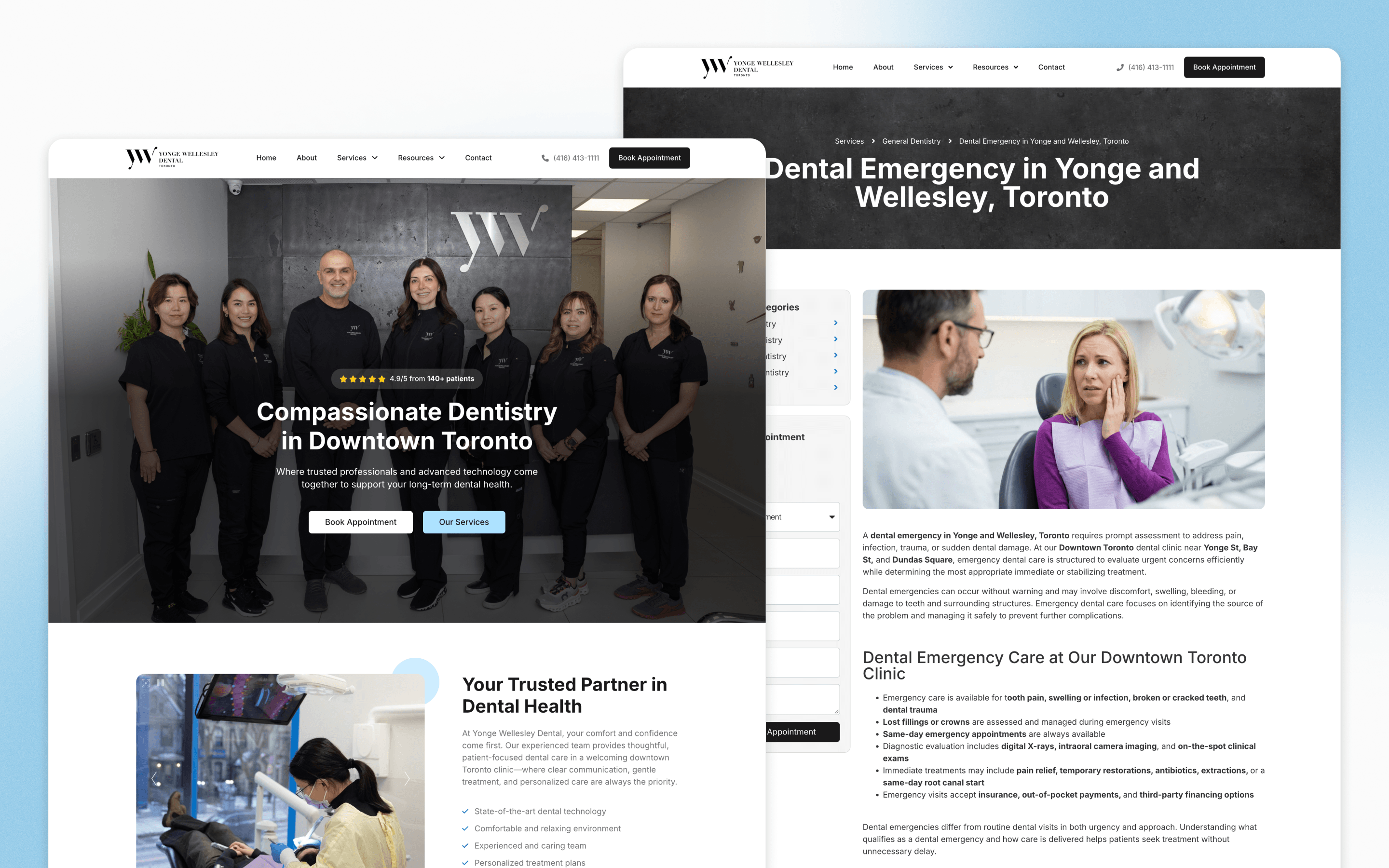
The connection between those pages is the useful detail here: each explains the practice from a different starting point. If you want to improve local visibility, discuss the treatment and location content the agency would create, alongside the technical work, rather than judging the proposal by a ranking promise.
9. Healthcare Success: Best Dental Web Design Agency for Patient Journeys
 9
9Healthcare Success
A healthcare marketing agency shaping dental website pages around the questions patients need answered before choosing where to book.
Healthcare Success approaches dental website design through the information patients need as they move toward a decision. Its Onsite Dental work is worth exploring when a site has several care options or different audiences to guide, and the main challenge is helping visitors understand which route belongs to them.
The first page should make those choices easier to follow, with supporting pages answering the questions that come next. Connect the explanation to a clear action, so a patient can move from reading about the care available to finding out how to access it without having to interpret the site's organization.
Featured project: Onsite Dental
For Onsite Dental, Healthcare Success describes page design organized around discovery, decision-making, services, promotions, and next steps. The project designs use patient portraits, colorful sections, and distinct care options to break the offer into parts a visitor can explore.
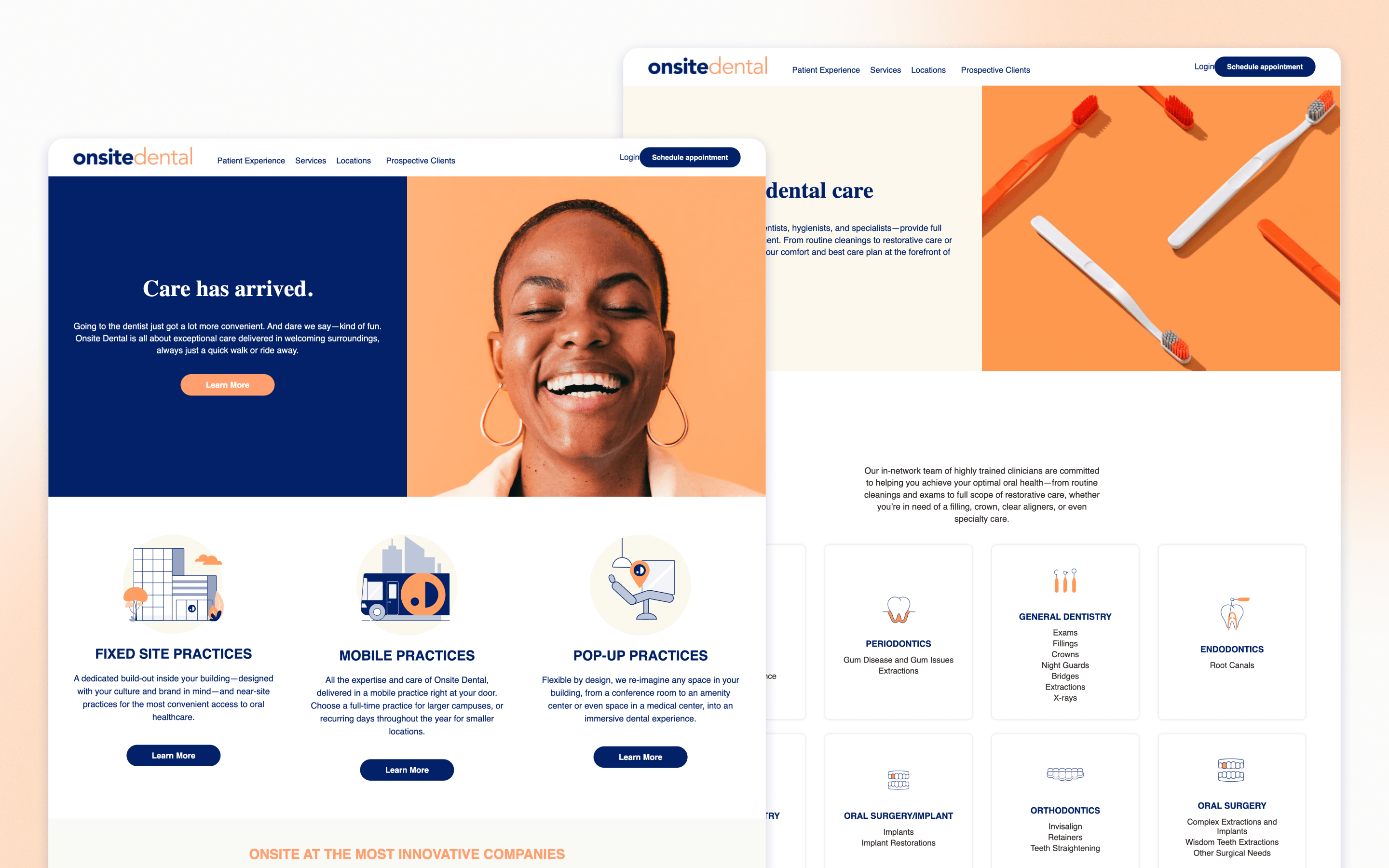
The example is useful for a dental organization whose website has to explain more than a single office's services. Bring your actual patient routes into the design conversation, including how someone finds the correct practice or care option, and ask the agency to show how those routes would connect across pages.
10. Cosmetic Digital: Best Dental Web Design Agency for Membership Plans
 10
10Cosmetic Digital
A dental and aesthetics agency making treatment choices, membership information, and practice fees easier for prospective patients to explore.
Cosmetic Digital's Viva Dental work connects website design with the way a practice explains membership, treatments, and fees. That makes it a useful candidate when visitors need a clearer picture of becoming a patient, rather than a site that only lists the procedures available.
Membership information belongs in the patient journey, where people can find it while considering their next step. It should sit comfortably alongside the practice introduction and treatment content, with the terms and fee details supplied and approved by the team that will answer patients' questions.
Featured project: Viva Dental
The agency describes Viva Dental as a second website for a long-term client, with a membership-focused journey, treatment navigation, a practice tour, fees, and new-patient enquiries. The project pages show the practice's visual identity alongside an oral health page, using patient portraits and softly colored backgrounds.
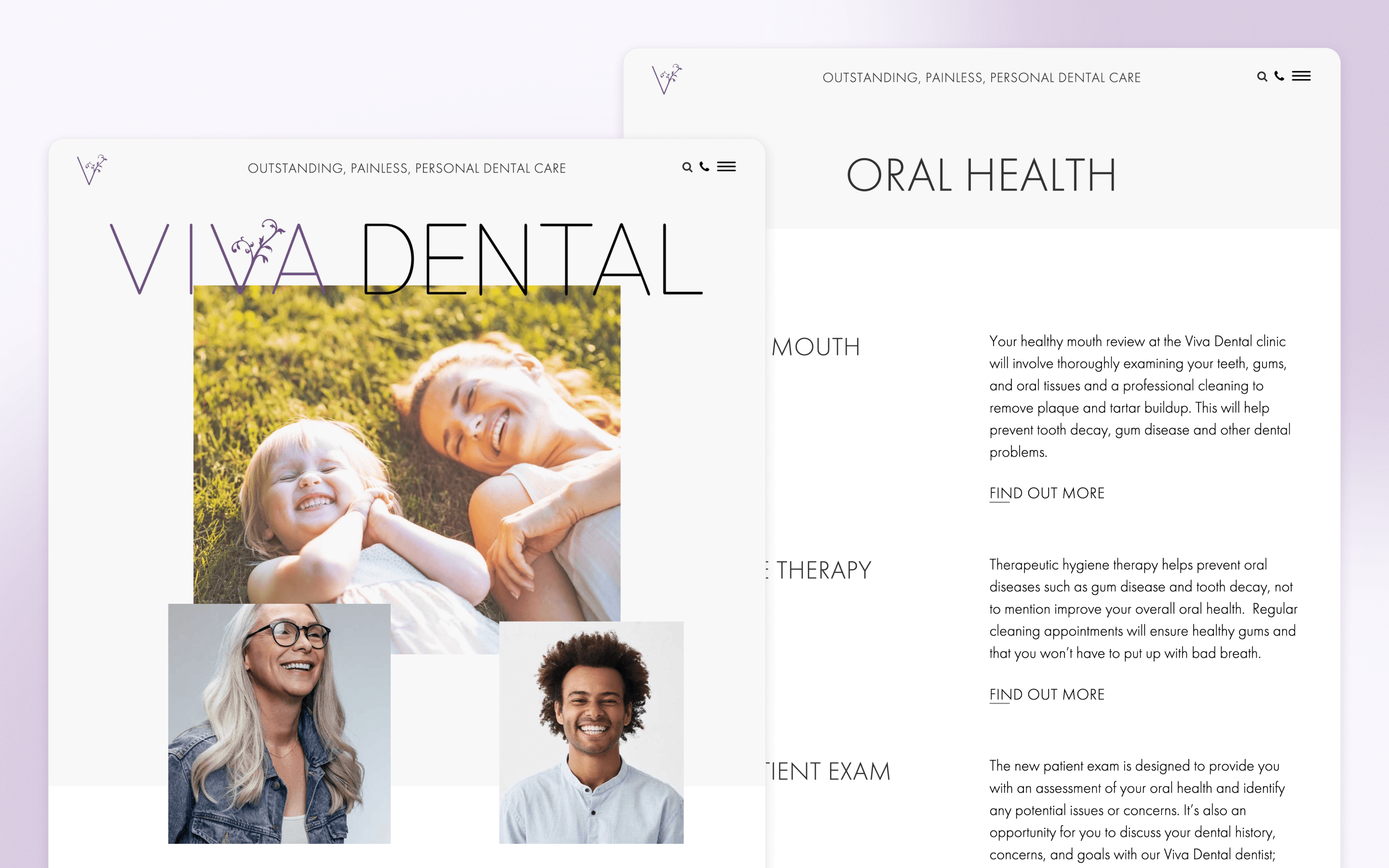
The result gives the practice room to discuss ongoing care as well as individual treatments. If your website has a membership plan tucked away in a PDF or a page patients rarely find, this project offers a concrete starting point for discussing how to bring that information into the main experience.
11. :Delmain: Best Dental Web Design Agency for Website Redesigns
 11
11:Delmain
A dental marketing agency refreshing practice websites with clearer content and booking paths while supporting the site after launch.
:Delmain's Adams Dental project centers on refreshing an existing practice website, with changes to the presentation, content, and path to booking. It's an agency to consider when the practice itself is well established but the website no longer gives a useful introduction to the care and people behind it.
A redesign starts with deciding what the current site already does well and where it gets in the way. Keep the useful material and give it a clearer home, so the new design improves how patients explore the practice without discarding content simply because it belongs to the old site.
Featured project: Adams Dental
For Adams Dental, :Delmain redesigned and launched the website, with visual updates, SEO work, new-patient booking improvements, and continuing content management. The project views show a practice introduction and restorative care page, combining treatment photography with a consistent blue and white design.
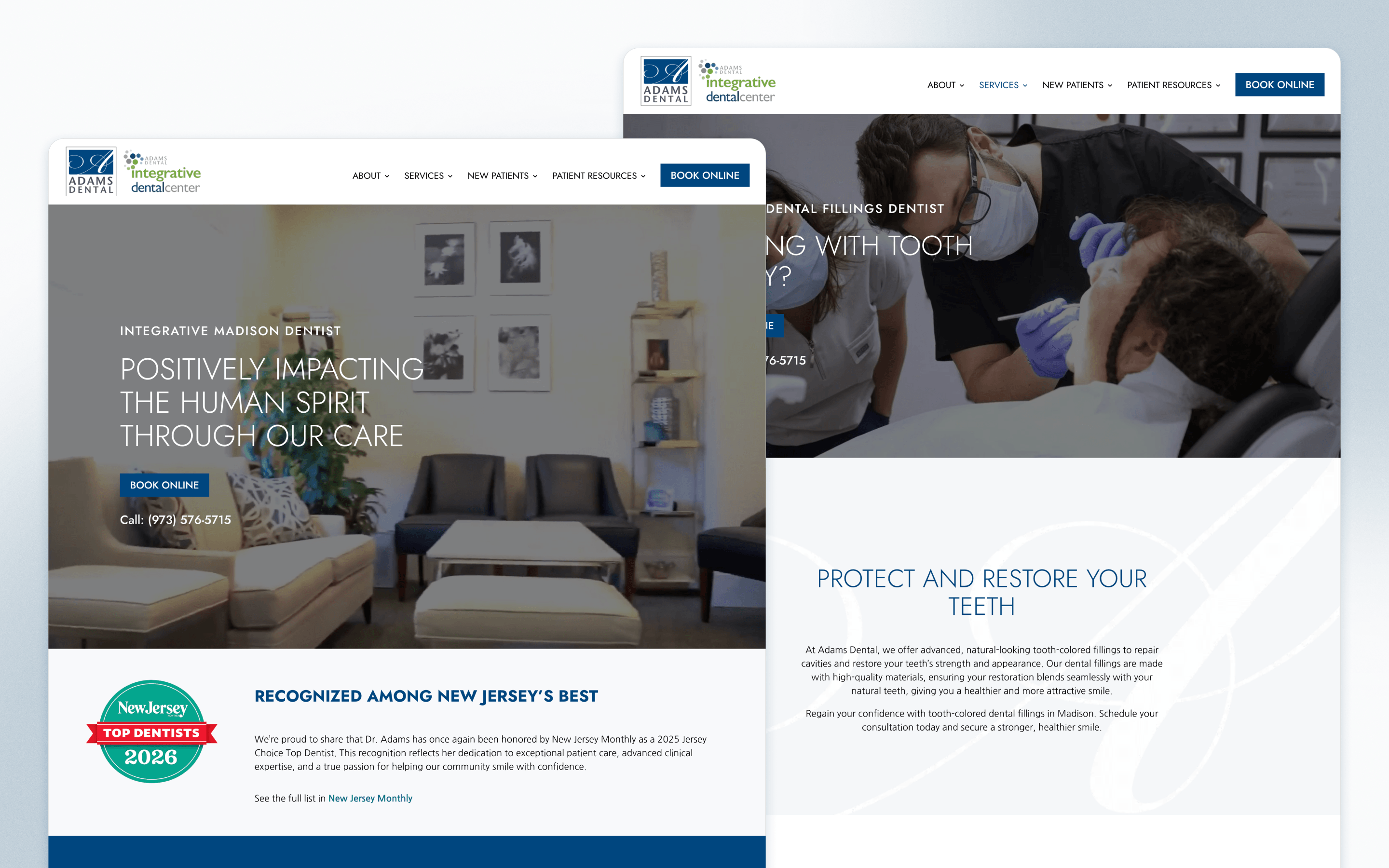
The project also gives you a reason to ask about life after the redesign, because keeping a website current is different from launching it. Discuss which updates your staff will make and which the agency will manage, then have the proposal separate those ongoing responsibilities from the initial website fee.
12. Profound Marketing: Best Dental Web Design Agency for Practice Launches
 12
12Profound Marketing
A marketing agency bringing new dental practices online through branding, website development, original photography, and ongoing local marketing.
Profound Marketing's Haven Dental project brings the pieces of a new practice's online presence together, from the brand and website to photography and local marketing. It's relevant when you're opening an office and need a team to help create the material the website depends on, rather than simply arranging existing assets.
A new practice needs a coordinated introduction, with the name, visuals, content, and appointment route ready to work together. Planning those items early also helps you see what the agency will produce and what needs time from the dentist, the office team, or a photographer.
Featured project: Haven Dental
For Haven Dental in Stoney Creek, Profound developed the brand and website with photography, video, treatment content, and appointment paths. Its broader work includes SEO, Google Business Profile, advertising, and continuing website improvements, giving the launch a marketing program beyond the initial build.
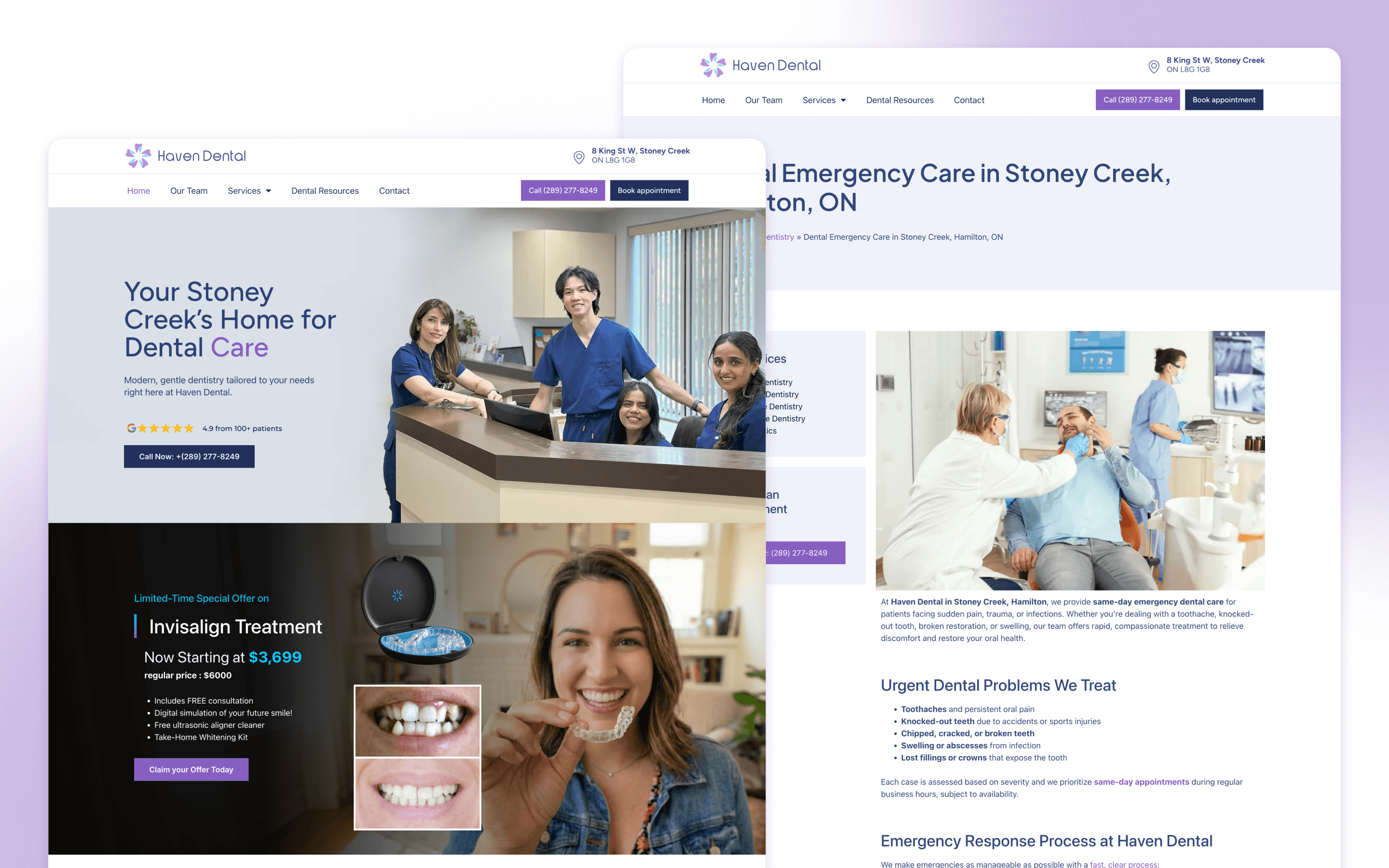
The project pages introduce the team and the practice's emergency dentistry service, showing how the brand continues into specific patient needs. For your own launch, compare that complete scope with the services you already have covered, then agree on the photographs, text, and booking setup needed before the doors open.
13. Whiteboard Marketing: Best Dental Web Design Agency for Multiple Locations
 13
13Whiteboard Marketing
A dental marketing agency building websites that help patients find the right office, meet its team, and explore available care.
Whiteboard Marketing's Fixari Family Dental website is a useful example for practices with several offices under one name. The design has to introduce a shared identity while giving each patient a clear route to the location and team they want, so location information belongs in the main experience rather than only in the footer.
Make the office choice easy to carry through the site, especially when services or opening hours differ. A visitor reading about implants should be able to find out where to enquire, while someone arriving for a routine appointment may simply need the correct address and telephone number.
Featured project: Fixari Family Dental
Whiteboard's client portfolio identifies its website work for Fixari Family Dental, covering responsive design, multiple locations, team presentation, content, and navigation. The project images show office choices on the homepage and a detailed All-on-6 dental implants page within the same blue visual identity.
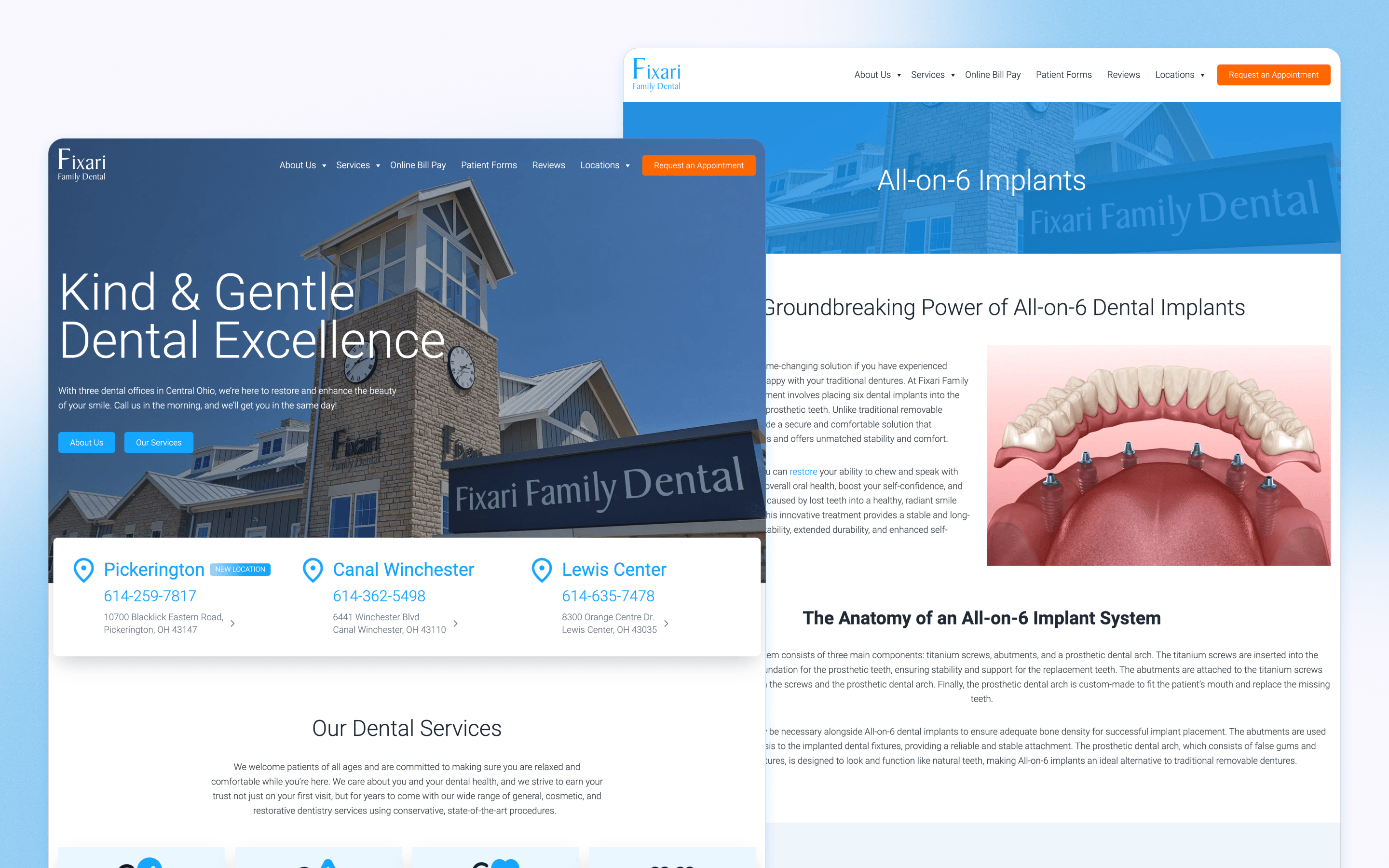
Use this example to discuss the relationship between shared treatment information and office-specific details. A group website needs a clear plan for maintaining both, including which staff member corrects an address or updates hours, and how an appointment request reaches the office the patient actually selected.
What a dental web design agency should help you with
Start with the questions your front desk answers every week. Patients may want to know whether you're accepting new families, which dentist provides a treatment, how membership works, or whether they can request an appointment outside office hours. Those questions are the starting point for the website, giving each page a useful job before anyone chooses a font or a color.
The core site will often include the practice introduction, dentist profiles, treatment pages, new-patient information, and contact or booking details. A group with several offices also needs location pages, while a practice promoting elective treatments may need more detailed explanations and approved photography. Work with the agency to decide what deserves its own page and what can be explained clearly within another one.
Content is a shared responsibility, even when the agency writes it. Your team supplies the services you actually offer, the details of your dentists, current fees or membership terms, and the language you use with patients, while a named dentist checks treatment descriptions before publication. Agree on who arranges photography and gathers permission for any patient material so the design has real content to work with.
The project should also cover the practical pieces behind the pages: an editing system, mobile layouts, search basics, and the appointment route. Make a distinction between an appointment request and a confirmed booking, then test the full process with your scheduling provider and office team. A clear confirmation message helps patients understand whether they have a time reserved or should expect a call.
At handoff, you should know how to change routine information and who supports the rest. Specify the training, account access, launch support, and maintenance included, along with how you request new pages later. Ongoing SEO and advertising can sit alongside the website, but their work and fees should be visible as separate services.
How to choose a dental website design agency and compare costs
Before contacting anyone, pick the biggest problem your website needs to solve. Perhaps the practice looks dated online, treatment enquiries reach the wrong office, or staff have to email a developer to change opening hours. A specific problem makes the first conversation useful, because the agency can explain how it would approach that work instead of presenting every service it sells.
Choose 2–3 agencies whose projects give you a reason to consider them, then send each the same short brief. Include your office count, main treatments, available photography, current website, and scheduling system, plus the date you hope to launch. Here's an example you can adapt without turning the first email into a full project specification.
Subject Dental website redesign for [practice], [number] offices, launch [month]
Hi [name],
I'm getting in touch from [practice], a dental practice in [location]. We saw your work in BRIX Agency's dental web design agency guide and would like help with [introducing our new office, explaining treatments, or improving appointment requests].
You can see our current site at [URL]. We have [number] dentists and [number] offices, and our main treatments are [services]. We'd like the new website to include [pages or features], with appointment requests going through [scheduling provider or office contact].
We already have [photography and approved content] and need help creating [remaining materials]. Our office team should be able to update hours, dentist profiles, and patient information after launch. We're working toward [date] with a website budget of [range].
Could you show us a relevant dental project and outline how you'd approach ours? Please include who writes the treatment pages, what you need from our team, and how you'll test the appointment process. We'd also appreciate separate figures for the website, hosting, maintenance, and any ongoing marketing, along with the account access we'll receive.
Thank you,
[Your name]
[Role], [practice]
Read the proposals as a list of responsibilities before comparing prices. Does the fee include treatment copy, team photography, content entry, redirects, scheduling setup, staff training, and launch checks? A proposal that includes writing 15 treatment pages covers different work from one that expects your practice to supply all the text, even if the finished websites have the same number of pages.
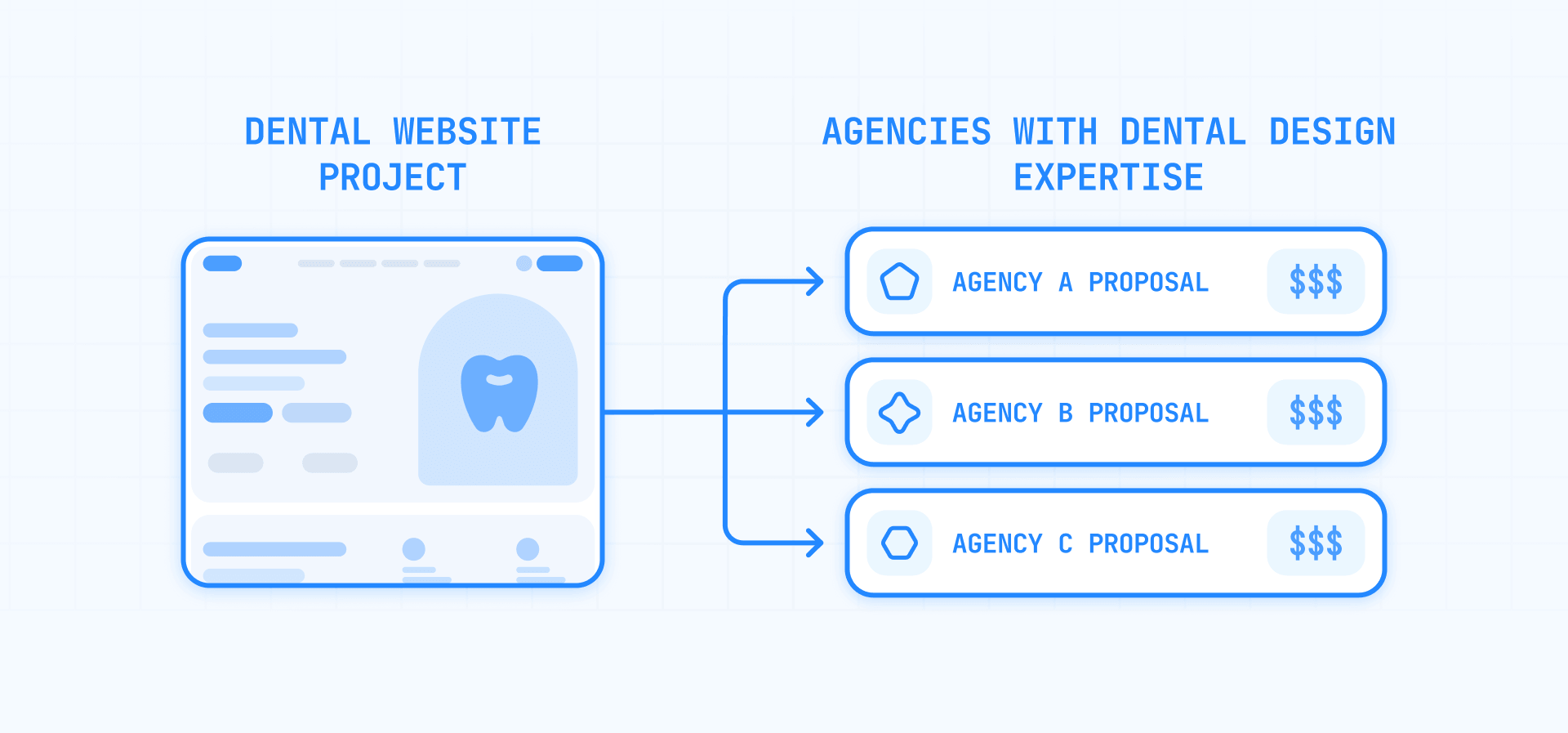
Separate the website fee from the monthly commitment. Ask for hosting, maintenance, content changes, SEO, advertising management, and ad spend to appear separately, with the contract length and cancellation terms. The selected portfolios don't establish a comparable dental website price range, so a scoped quote is a better budget guide than a figure borrowed from another clinic's project.
Before signing, confirm which accounts the practice will control, including its domain and website platform, and what files and content the agency hands over. Ask what happens if you change providers, with licensed software and any platform export limits explained in writing. If monthly support ends, you should already understand what stays online, what continues to cost money, and which responsibilities move back to your team.
For the schedule, have the agency name the content, design, development, and review milestones, with deadlines for your input. Photography, dentist approval, and access to the existing site can hold up a launch as easily as coding. If you're opening a new office on a fixed date, agree on the pages and booking route required for that first release, then place optional additions on a separate schedule.
Choose a dental website CMS your staff will enjoy using
Imagine your office manager needs to change holiday hours, add a new dentist, and update the membership page before leaving for the day. A CMS (the system you use to edit website content) should make those jobs straightforward, with clear fields and a preview that shows what patients will see. Choose around your team's regular updates, alongside the speed and usability of the finished pages.
Keep everyday edits simple
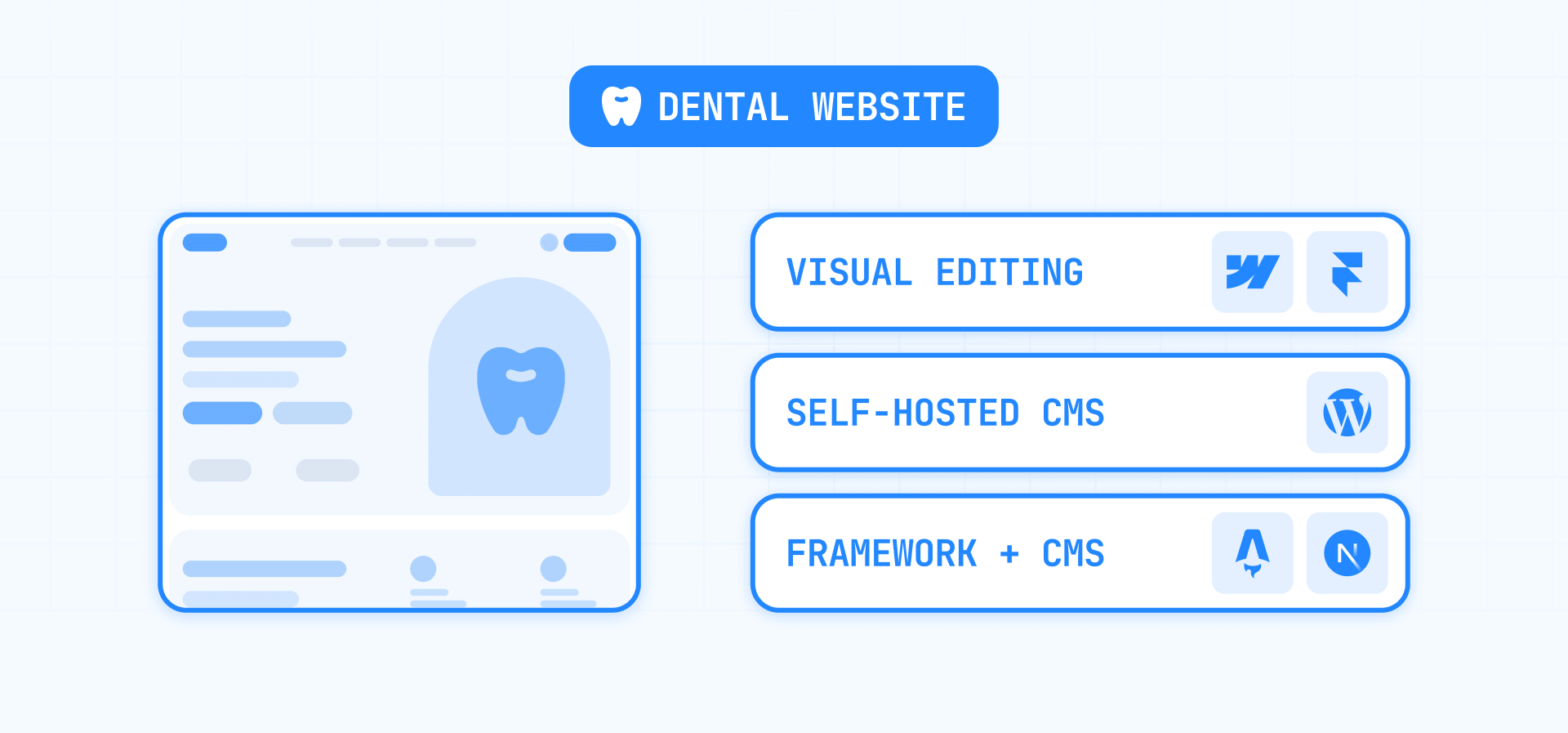
Webflow and Framer offer visual ways to manage website content, so they're worth discussing when your staff want to update text and images without working through code. Ask the agency how it would organize dentist profiles, treatments, and office details, including which changes your team can publish and which require design help. Check the proposed plan and permissions before assuming everyone will have the same access.
Some details appear in several places, such as an office telephone number or a dentist's name. The editing setup should make those relationships clear so a routine correction doesn't become a search through every page. Ask to see a website the agency has delivered with the proposed platform, and have it explain how that client maintains comparable information.
Choose hosting and technical support together
WordPress gives you the option to host the site and CMS database on your own chosen server, with editing screens that can be built around the practice's content. That arrangement also needs someone responsible for software updates, backups, and recovery. Your booking provider may still store information in a separate system, so discuss those connections independently from the website's hosting.
Astro and Next.js are frameworks for building websites, and an agency can pair either with a separate CMS when the project needs a custom development approach. Ask which editor your staff will use and who will maintain the code. The comparison should include the complete publishing workflow, rather than treating a framework name as a promise of an easier or faster website.
Make the handoff fit a busy practice
Include training for the person who will actually make changes, using your own pages rather than an empty example. Have the agency show how a new dentist joins the team page, where a treatment description is edited, and how to correct an office detail. Pair that with a clear support contact for changes outside the agreed editing controls.
Give someone at the practice responsibility for reviewing information after launch, including opening hours, team changes, and membership details. A friendly editor makes that upkeep manageable, while a planned support arrangement means the office manager doesn't have to solve a technical problem between patient calls.
Dental website design essentials: treatments, trust, and appointments
Explain treatments the way patients ask about them
Build treatment pages around the questions someone brings to the practice, using clear names and a short explanation before the deeper details. A visitor exploring cosmetic dentistry may want to understand their options, while someone looking for an emergency appointment needs an obvious way to contact the office. The page should support that particular decision instead of giving every service the same generic introduction.
Have the dentist review treatment claims, and keep published fees, membership terms, and insurance information current. When a question needs an examination or a conversation with the team, explain that next step plainly. Useful information helps people know what to ask, without promising an outcome the website cannot establish for their individual situation.
For search, give each important treatment a clear place in the site with a descriptive title and links from related pages. If you're replacing an existing website, inventory the current addresses and decide where useful content will move, including redirects for changed URLs. Check those routes after launch; a redesign can change search performance, so no agency should promise that rankings will remain fixed.
Introduce the people and the right location
A current portrait and a readable dentist profile can give patients a more useful introduction than a long list of credentials on its own. Explain the person's role and care interests using information the practice has approved, and show the office as patients will find it. Use patient photographs and testimonials only when the practice has confirmed permission and the wording for publication.
For several offices, make addresses, hours, telephone numbers, and available services easy to distinguish. Each location page should contain its own practical details, including directions and the correct appointment route, while shared treatment explanations can connect to the offices offering them. The patient should always know which office they're contacting, even when they enter through a treatment page.
Make appointment requests easy to finish
Choose the scheduling route before the final layouts are built. Your agency needs to know whether the existing provider offers a booking link, an embedded tool, or another supported connection, and which appointment types it can support. Agree on how new and returning patients are directed, what happens outside office hours, and how the office receives requests that need a person to respond.
Keep the first contact step focused on the information needed to arrange a conversation, and have the practice approve what the form collects. Test telephone links, error messages, delivery, and confirmations on a phone as well as a computer, with a clear fallback when a booking tool is unavailable. Readable contrast, keyboard access, and visible focus should be part of that review so the route works for more than a mouse user on a large screen.
After launch, review enquiries with the front desk rather than counting button clicks alone. A request that reaches the wrong office or looks like a confirmed appointment when it isn't can create extra work for everyone. Agree on who checks those issues and how they're corrected, keeping the website connected to the way your practice runs.
Frequently asked questions about dental web design agencies
How much does a dental website design project cost?
The budget depends on the work your practice needs, including the number of page layouts, treatment writing, photography, and scheduling setup. A clinic supplying approved content is commissioning a different project from a new practice that needs its identity and photographs created too, so the page count alone won't give you a useful comparison.
Ask 2–3 agencies to price the same brief and identify what your staff must supply. Keep the initial build separate from hosting, support, and ongoing marketing, then check whether training and content entry are included. If the total is beyond your budget, agree on a smaller first release with clearly named deliverables before removing items from the scope.
Do we need a monthly dental website maintenance package?
Choose monthly support around the tasks someone actually needs to do. Hosting, software updates, content edits, SEO, and advertising are different responsibilities, even when they're bundled into a single fee. Your office may be comfortable updating hours and team information, while still wanting a technical contact for a failed form or a software problem.
Ask the agency to name the included work, response arrangements, and charges for extra requests, with marketing services and advertising spend listed separately. Confirm the contract term and what happens when you cancel, including who keeps the website running. Buy the support your practice will use, with a clear owner for the tasks left outside the package.
Will our dental practice own its website and domain?
Confirm ownership and access before signing, with the domain, platform account, content, and design deliverables identified in the agreement. A practice can own its photographs and copy while using licensed software or a hosted service, so ask what you receive and which parts depend on continuing subscriptions or the platform's own terms.
Have the agency explain the steps involved in leaving its service, including account transfers, available exports, and any rebuilding a platform change would require. Make sure the practice can access the accounts it controls without relying on a single vendor contact. Include that handoff in the project acceptance checklist so the arrangement is clear before the site launches.
Can a dental website connect to our online booking system?
Yes, when your scheduling provider supports the proposed connection, which might be a link, an embedded booking tool, or a more involved integration. Give the agency the provider's name before approving the design, and explain whether patients will reserve a confirmed time or submit a request that your front desk needs to review.
Check the complete path with the office team, including appointment types, location selection, mobile screens, and the message patients receive afterward. Decide what happens when the tool is unavailable or someone needs help by telephone. Approve the connection after a test request reaches the correct destination and both the patient and practice can understand what happens next.
How long does it take to redesign a dental website?
Ask for a schedule tied to your practice's actual deliverables, including content preparation, design review, development, and launch checks. A site with approved photographs and treatment descriptions can move through different stages from a practice still arranging a photoshoot or deciding how to present its services, so a generic turnaround is only a starting point.
Assign someone to collect feedback and a dentist to approve treatment wording, then agree on the dates each review needs to happen. Include time to test booking, phone links, and redirects before launch. For a practice opening on a fixed date, define the essential first release and have the agency show how the milestones lead to that deadline.
Which CMS should we choose for a dental practice website?
Pick the editor that fits your staff's routine updates, such as dentist profiles, opening hours, treatment pages, and membership details. Webflow and Framer offer visual editing workflows, while WordPress can run on your chosen hosting. A website built with Astro or Next.js needs an identified editing system alongside the framework if your team will manage its content.
Ask the agency to show relevant work on its proposed platform and explain how the client updates similar information. Check access, recurring costs, training, and responsibility for technical maintenance, then involve the person who will look after your own pages. Make the choice based on that complete setup rather than the platform name or a polished demonstration alone.
Can a dental web design agency write our treatment pages?
Treatment copy can be part of the project when it's included in the scope, but some agencies expect your practice to supply finished text. Agree on the pages to be written, the information the writer needs, and the review rounds before comparing quotes, since a treatment page and a short team introduction involve different preparation.
Give the writer the questions patients ask, the services you provide, and the language your team uses to explain them. Have a named dentist check treatment statements, with the practice also approving fees, membership information, and provider details. Schedule that review alongside the design so the pages are built around copy your team is ready to publish.
What pages should a dental practice website include?
Cover the practice, its dentists, treatments, and the route to an appointment, with new-patient information that answers practical questions before someone calls. Depending on the practice, that can include fees, membership, office details, and first-visit guidance. A group with several locations needs distinct office information, while a focused specialist may need a smaller set of detailed service pages.
Work through the proposed page list with your front desk and dentist, giving each page a clear purpose and an owner for its content. Connect treatment explanations to the right team or office rather than leaving visitors to find that relationship themselves. Add resources when you have useful material to share and someone available to keep it current.
Can a dental website redesign protect our existing SEO?
Include an SEO migration plan in the redesign, with an inventory of current pages, useful content, and the addresses that will change. Treatment and location pages need a clear destination in the new site, alongside descriptive titles and working internal links. Redirects help visitors reach the replacement pages, but they don't guarantee unchanged search rankings.
Ask who will prepare and test those redirects, check for missing content, and review the site after launch. Keep continuing SEO work visible as a separate responsibility so you know what the redesign fee covers. Launch once the agreed checks are complete, then review search performance and patient enquiries to identify problems that need attention during the transition.
How do I choose between dental website design agencies?
Compare the work that matches your main website problem, whether that's an outdated identity, confusing treatment pages, or appointment requests going to the wrong office. Open each agency's selected client site and follow a realistic patient journey, then ask what the team contributed so you can connect the example with the services in its proposal.
Send the same brief to your strongest 2–3 candidates and compare their questions as well as their pricing. Look for a clear plan for content, photography, scheduling, and staff handoff, with ownership and support explained before the contract is signed. Choose the team whose demonstrated work and proposed responsibilities fit the website your practice actually needs.
Give patients a clearer introduction to your practice
A dental website should help people arrive at a first appointment knowing a little more about your team and what to expect. The agencies here approach that job through different strengths, so start with the part of your own site that needs the most attention and use the project examples to explore who could improve it.
Once you've narrowed the list, send the same practice outline to 2–3 teams and compare how they would turn it into a finished website. A useful proposal explains the content and photography as clearly as the design, with an appointment route your front desk understands and an editor your staff can keep using.
If you'd like BRIX Agency to be part of that conversation, tell us about your dental website. We reply in less than 24 hours, or 1–2 hours during business hours (PST), and we'd be happy to explore a design that gives your practice a more personal, useful introduction online.





Join readers commenting on this post!