

A property website is often the link that gets passed around before anyone books a viewing. A broker sends it to a tenant, the tenant forwards it to a colleague, and the building has to make its case without you there to explain what makes it worth considering.
That makes the small decisions matter: whether someone can find the right floor plan, understand the location, or work out who to call. Good commercial real estate web design gives the property character while keeping those practical details close enough that an interested visitor can keep the conversation moving.
Below are 14 commercial real estate web design agencies with different strengths, from launching individual developments to organizing brokerage websites and interactive property experiences. We have included work you can explore for each team, followed by a guide to comparing proposals and choosing a setup that stays useful as your portfolio changes.
How we selected these commercial real estate web design agencies
We looked for named work that shows how an agency approaches commercial property online, then checked its role in the project. The selection includes company websites and individual developments, with examples across offices, logistics, retail, and coworking, so the list reflects different assignments rather than a single style of site.
BRIX Agency publishes this guide and takes the first position, with our own portfolio open for you to review. The specialties highlight a reason to consider each team, and the project links let you examine the work more closely. Use them to narrow your choices around the property, audience, and functionality your website needs to serve.
The commercial real estate web design agency shortlist
- BRIX Agency: A design and development agency creating distinctive websites that help property businesses present their spaces, services, and people.
- Neoscape: A creative agency bringing property brands, architectural imagery, and websites together for developments preparing to meet the market.
- inMotion Real Estate Media: A commercial real estate marketing agency connecting public websites with investor information, buyer records, and property inquiry workflows.
- DNCO: A branding and design studio translating a property developer’s positioning into a distinct identity and an expressive company website.
- New Media Campaigns: A web design agency organizing campus stories, amenities, location information, and leasing resources into useful commercial property websites.
- BOWEN: A web design agency building commercial real estate company websites that connect available properties with services, leadership, and market insights.
- Bluebird Creative Co.: A creative agency combining commercial property branding and WordPress websites with content that introduces the owner, portfolio, and tenant experience.
- North Street Creative: A branding and web design studio helping commercial real estate firms express their approach through clear identities and company websites.
- Winton + Partners: A website agency connecting commercial property search and inquiries with the systems a brokerage already uses to manage its business.
- KOTA: A creative agency designing property websites that use building exploration and visual storytelling to explain mixed-use developments.
- Vide Infra: A digital agency creating commercial property websites with interactive building models, architectural visualization, and detailed spatial exploration.
- The Future Forward: A branding and design studio creating coworking websites that communicate the character of a space and the community around it.
- Calico Marketing: A commercial real estate website agency building retail property sites that connect tenant directories, visitor information, and leasing opportunities.
- Pave Design: A property marketing studio updating commercial websites with fresh photography and design support that keeps the existing brand recognizable.
1. BRIX Agency: Best Commercial Real Estate Web Design Agency for Custom Design
 1
1BRIX Agency
A design and development agency creating distinctive websites that help property businesses present their spaces, services, and people.
At BRIX Agency, we design websites that give a business a distinct identity and make its offer easy to explore. For commercial real estate, that means treating the spaces, the company, and the path to an inquiry as parts of the same experience, so the design supports the conversation you want to have with a prospective client.
We also create the designs behind BRIX Templates, including websites for coworking, architecture, and interiors. That work gives us experience presenting spaces at different scales, from a searchable workspace collection to the details of an individual room, with clear layouts that help the imagery and the information work together.
A closer look at our property and design website portfolio
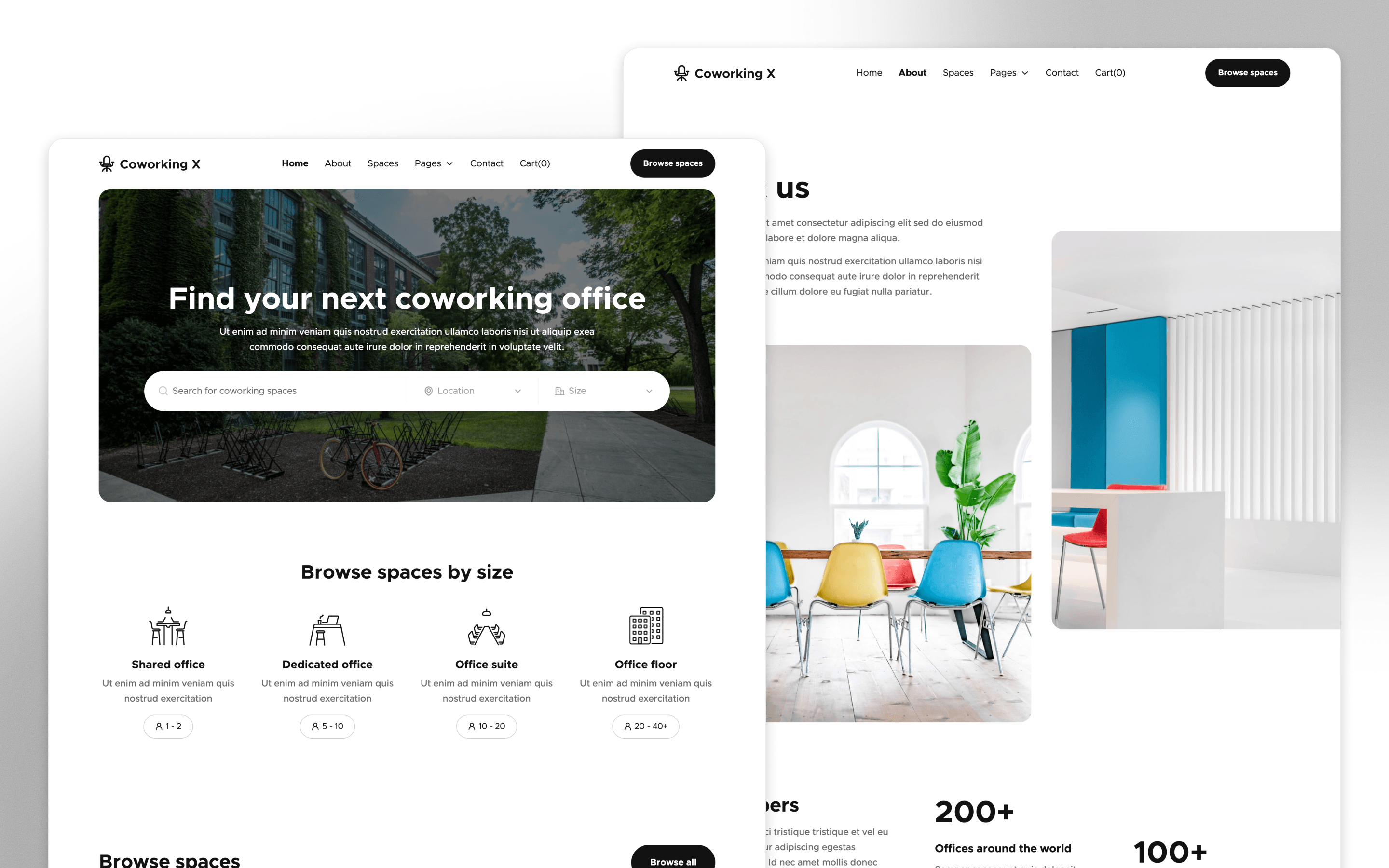
Our Coworking X template makes finding a workspace the natural starting point, with search and space categories positioned close to the introduction. The pages give individual offices a clear place within the wider business, showing how we connect the appeal of a workspace with the practical task of finding an option that fits.
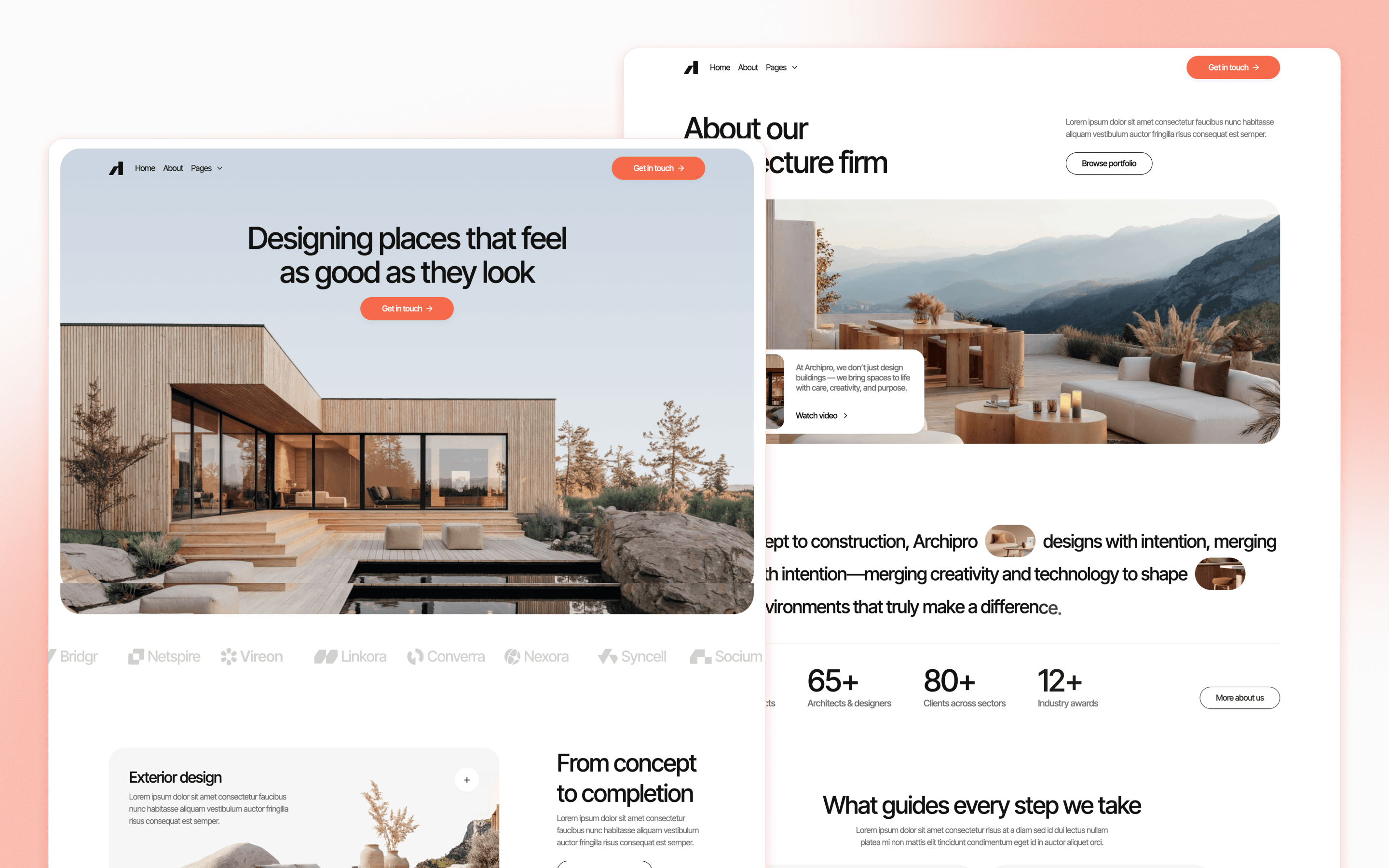
Our Archipro template is designed for architecture firms, with large project views and a warm, open presentation. The company story sits comfortably alongside the buildings, giving visitors a way to understand the thinking behind the work. It demonstrates how we use architectural imagery to introduce a business while keeping its people and approach in view.
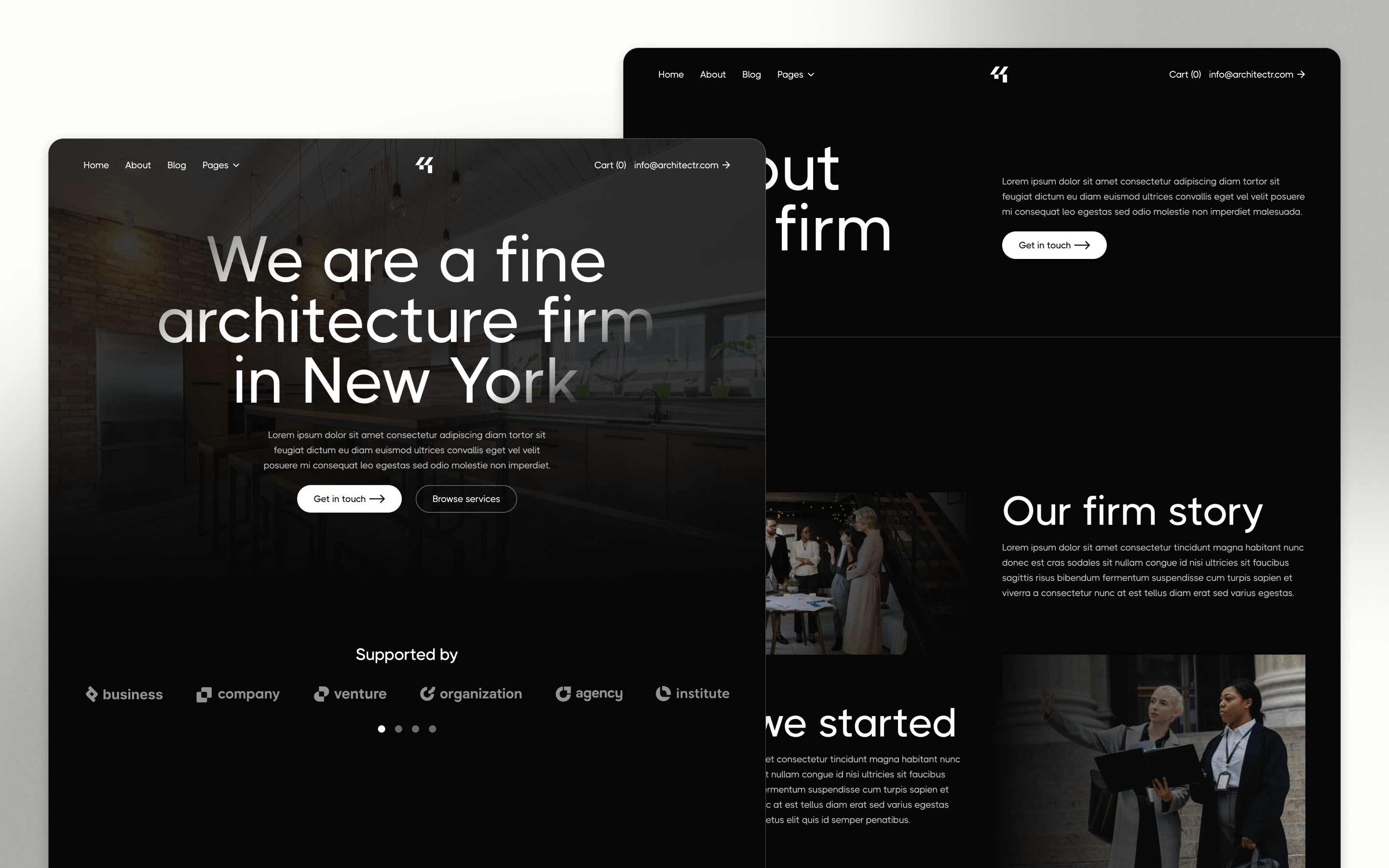
Our Architectr X template explores a darker visual direction for architecture practices. Generous images and large typography give the projects a confident opening, while the firm’s story and team appear in the supporting pages. That balance shows how we create a memorable first impression and carry the same identity into the information that builds trust.
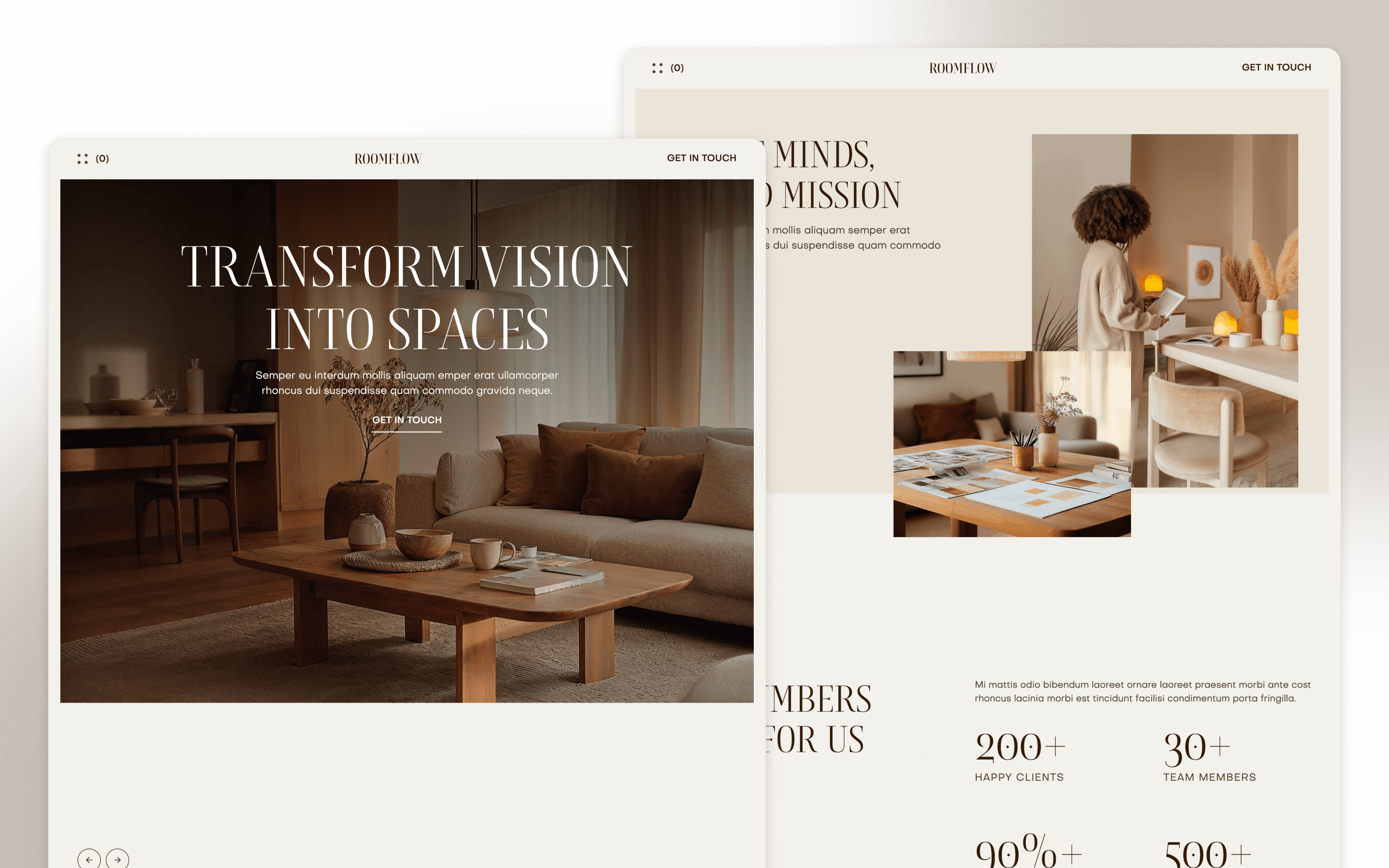
Our RoomFlow template introduces interior design studios through the spaces they create. The editorial layout pairs room photography with clear service and company content, giving visitors time to notice materials and proportions. It is an example of how we make a visually rich business easy to explore without asking every image to explain the whole offer.
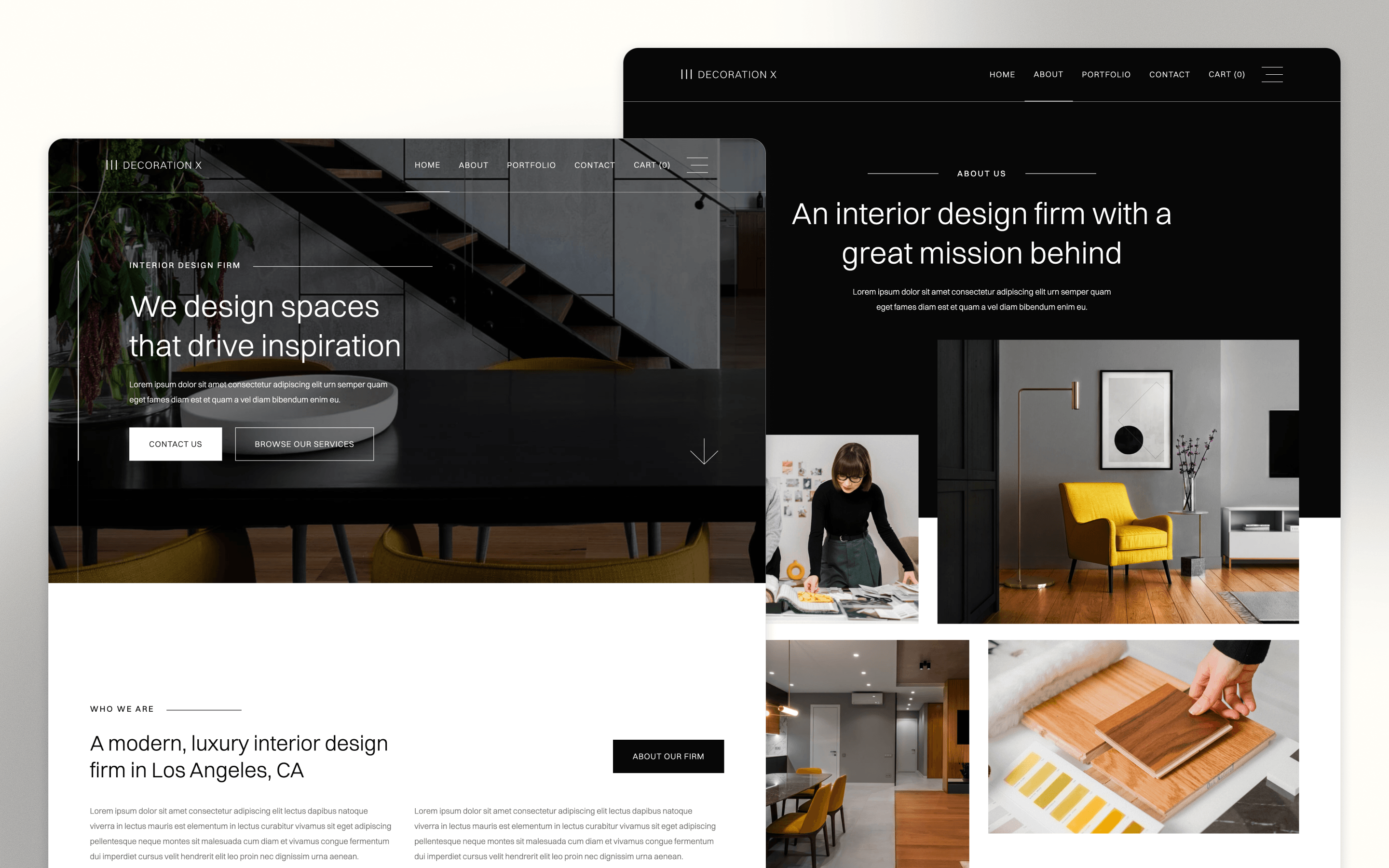
Our Decoration X template gives an interior design firm a more dramatic introduction, moving from a large architectural view into the studio’s mission and work. The contrast between the opening image and the lighter information sections creates a clear reading rhythm, helping the visitor move from an impression of the spaces to a closer understanding of the team.
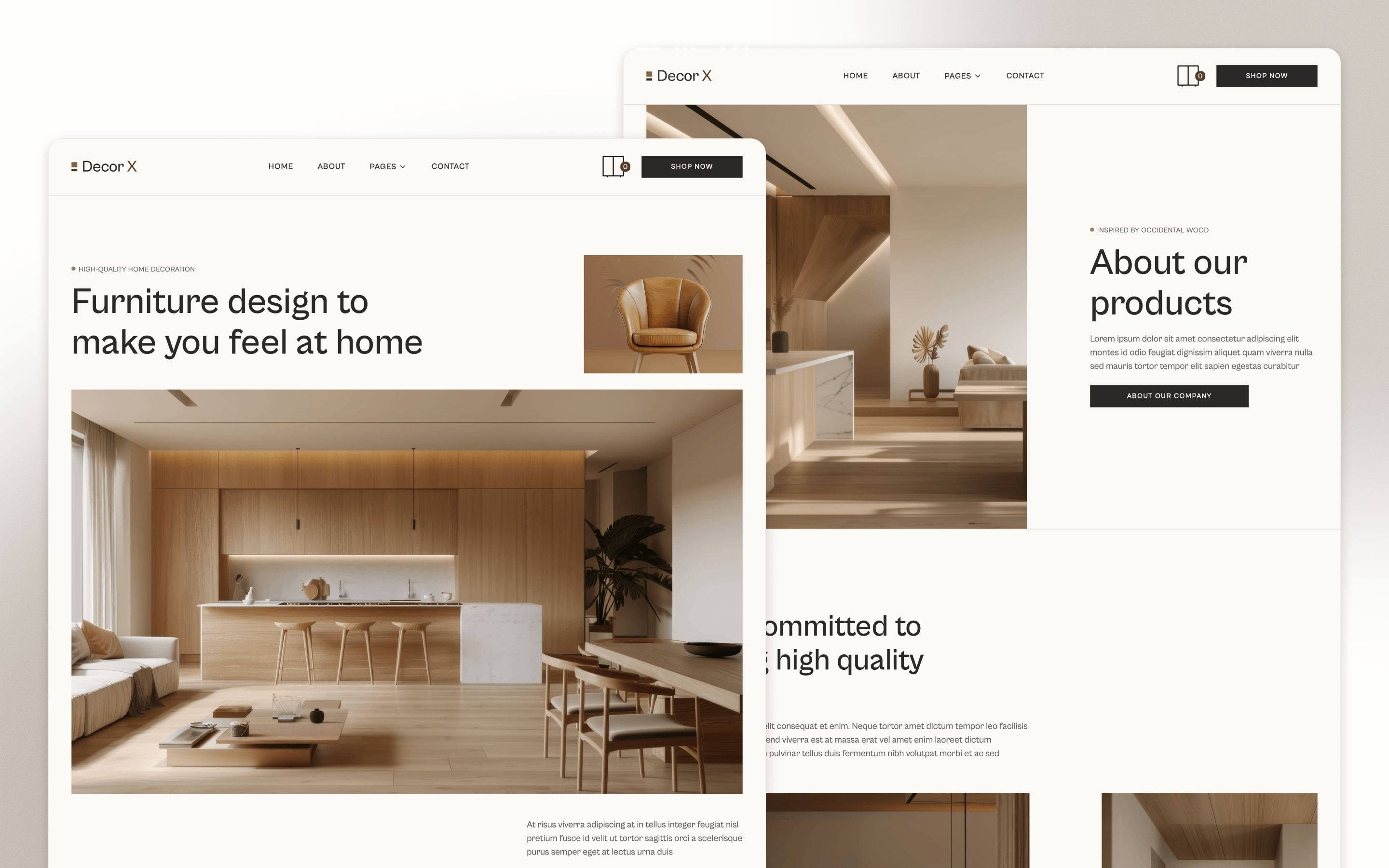
Our Decor X template is made for furniture ecommerce, with products presented in the context of finished rooms. Its quiet colors and spacious composition keep attention on the details that make a space feel considered. The design shows another side of our work with interiors, connecting individual objects to the overall environment they help create.
Across all categories, our templates are used by more than 60,000 websites. The examples here give you a look at our design approach, and when you work with BRIX Agency, we bring that experience to a fully custom website built around your properties, your brand, and the people you want to reach.
2. Neoscape: Best Commercial Real Estate Web Design Agency for Property Launches
 2
2Neoscape
A creative agency bringing property brands, architectural imagery, and websites together for developments preparing to meet the market.
Neoscape is a strong place to start when a development needs a complete public introduction, with the website forming part of a larger property story. Its work brings branding, architectural imagery, and digital presentation together, giving a project a recognizable identity before a prospect ever walks through the door.
That combination is useful for a building with features that take some explaining. A logistics facility, for example, needs to communicate how it operates as well as how it looks, so the visual work has to carry information about access, scale, and the opportunity for a tenant.
Featured project: Bronx Logistics Center
For Bronx Logistics Center, developed by Turnbridge Equities, Neoscape created the brand, website, renderings, film, and digital brochure. The website uses motion and oversized graphics to introduce the industrial development, while the wider campaign explains circulation, tenant access, and the flexibility of the building.
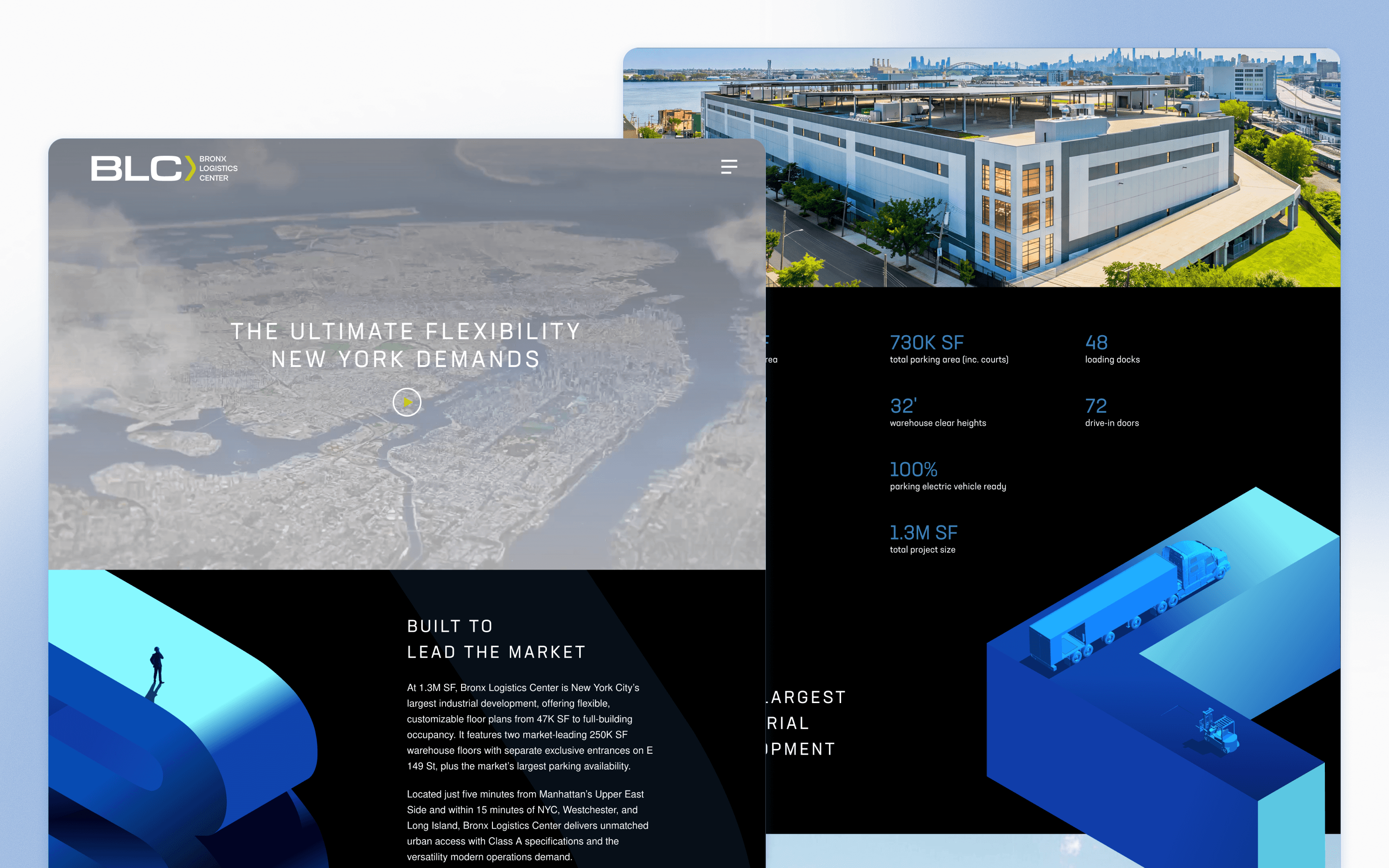
The useful lesson is the connection between visual identity and property information. The imagery gives the building presence, and the supporting material helps visitors understand why its layout and location matter. Consider Neoscape when your website needs to carry a coordinated property launch rather than sit apart from the rest of the marketing.
3. inMotion Real Estate Media: Best Commercial Real Estate Web Design Agency for Investor Portals
 3
3inMotion Real Estate Media
A commercial real estate marketing agency connecting public websites with investor information, buyer records, and property inquiry workflows.
inMotion Real Estate Media is worth considering when your website needs to support the work that follows an initial property inquiry. Its selected project brings the public company presentation together with investor access and buyer information, making the website part of a longer conversation about an asset.
For an investment sales team, that distinction matters. The homepage introduces the business, but the next steps may involve reviewing a portfolio, requesting material, and giving the team enough context to respond. Those activities need to be included in the design brief from the beginning.
Featured project: GOVT Real Estate Group
The agency’s GRE Group project account documents a responsive WordPress website, a custom investor portal, a confidentiality-agreement process, and a buyer database. The selected client destination is GOVT Real Estate Group, whose presentation focuses on government-leased properties and the team behind the investment services.
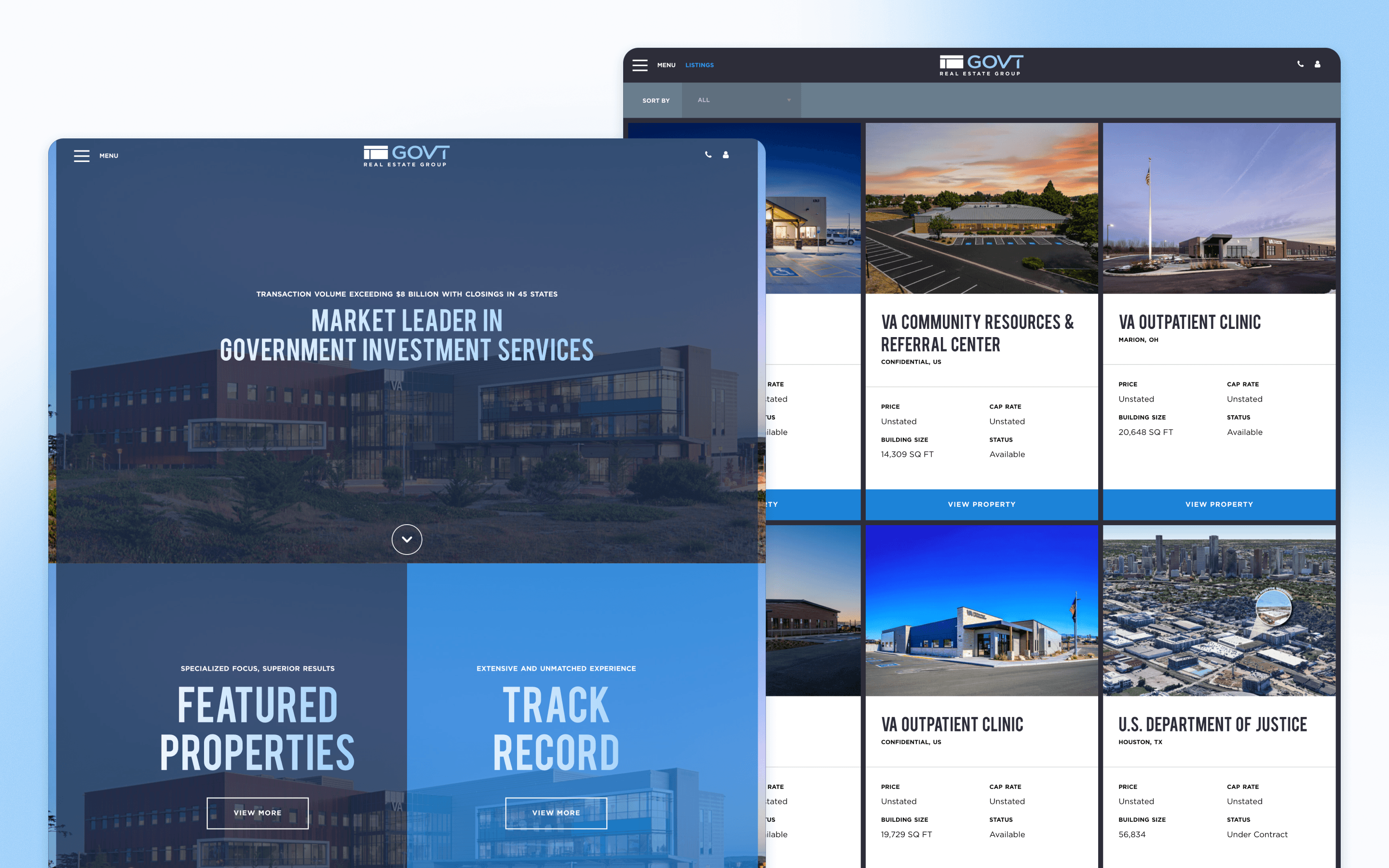
This is a useful example of public content and investor workflows being planned together. When reviewing a comparable proposal, separate the marketing pages from the portal requirements, and ask how access, records, and ongoing updates will be managed. That gives you a clearer basis for comparing the work than a page count alone.
4. DNCO: Best Commercial Real Estate Web Design Agency for Developer Branding
 4
4DNCO
A branding and design studio translating a property developer’s positioning into a distinct identity and an expressive company website.
DNCO suits a commercial developer whose website needs to express a clearer point of view. Its work for CO—RE begins with the meaning of the business and carries that thinking into the identity and website, giving the company more to say than a list of completed buildings.
This approach can be valuable when the portfolio has grown but the company presentation still reflects an earlier chapter. The design can help connect different projects through a recognizable philosophy, while making the people, partnerships, and ambitions behind them easier for a visitor to understand.
Featured project: CO—RE
For CO—RE, DNCO developed the idea of Collaborative Real Estate and created a refreshed identity, supporting content, and website. The presentation brings the London developer’s projects and people into a restrained layout, with architectural imagery and a strong typographic treatment tying the pages together.
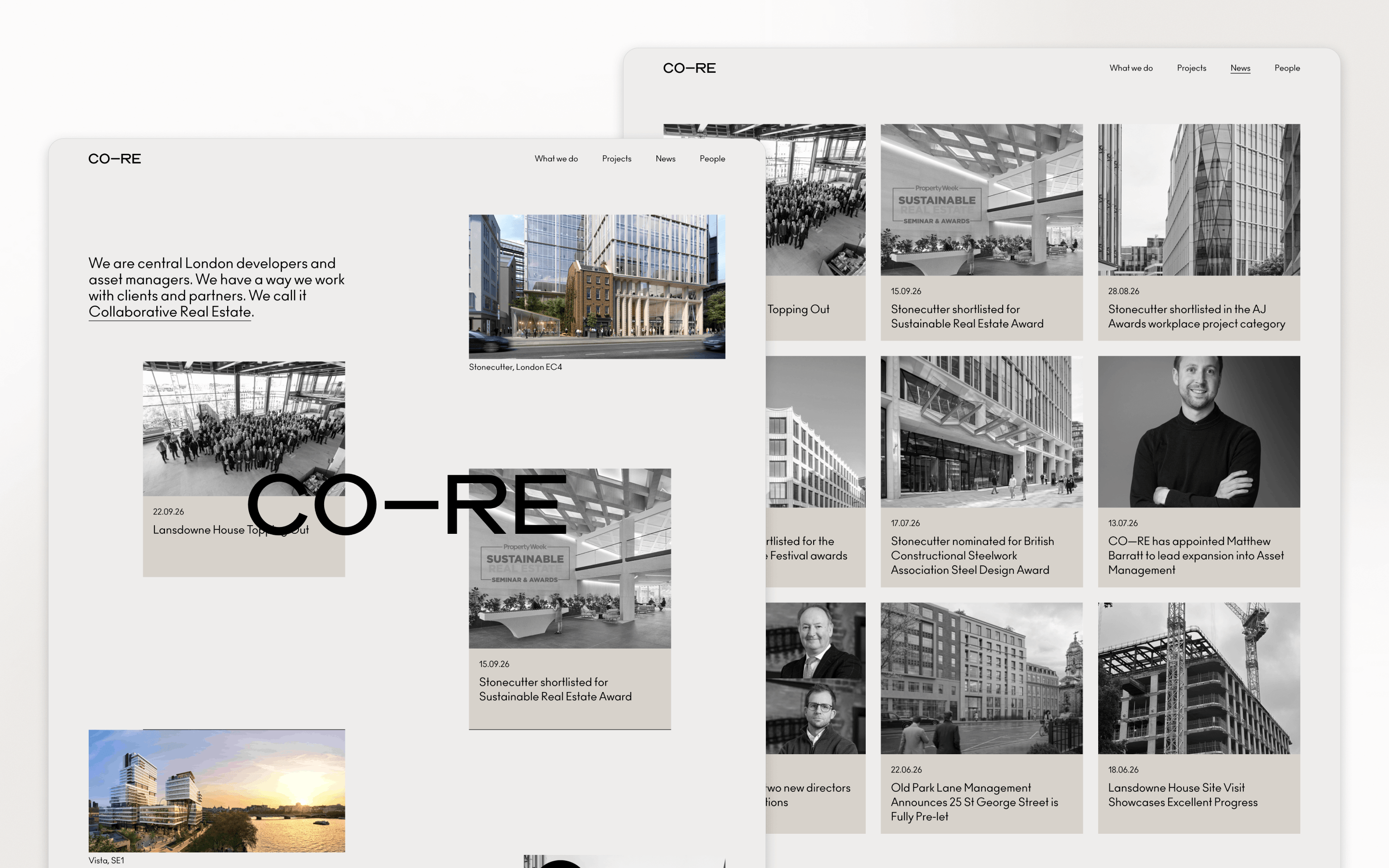
The strength here is company positioning carried through the actual website. A prospective partner can explore the work while getting a sense of how the developer approaches it. Look at DNCO if your next site needs to introduce a more mature or more clearly defined version of your business.
5. New Media Campaigns: Best Commercial Real Estate Web Design Agency for Campus Websites
 5
5New Media Campaigns
A web design agency organizing campus stories, amenities, location information, and leasing resources into useful commercial property websites.
New Media Campaigns is a good candidate for developments that need to explain the experience of a whole place. Its Park Point work combines campus information, amenities, maps, and leasing material, so a prospective tenant can build a picture of everyday use as well as the physical property.
A campus website often has several audiences, including businesses evaluating space and people curious about what is coming to the area. Giving each group a clear way to explore the development keeps the site useful without forcing every visitor to read a long leasing presentation.
Featured project: Park Point RTP
The agency designed and built Park Point RTP’s website around the office and life science campus. It combined existing branding with site drawings, amenity content, custom location maps, master-plan material, news, and downloadable brochures, adding movement to selected elements to reflect the development’s lively character.
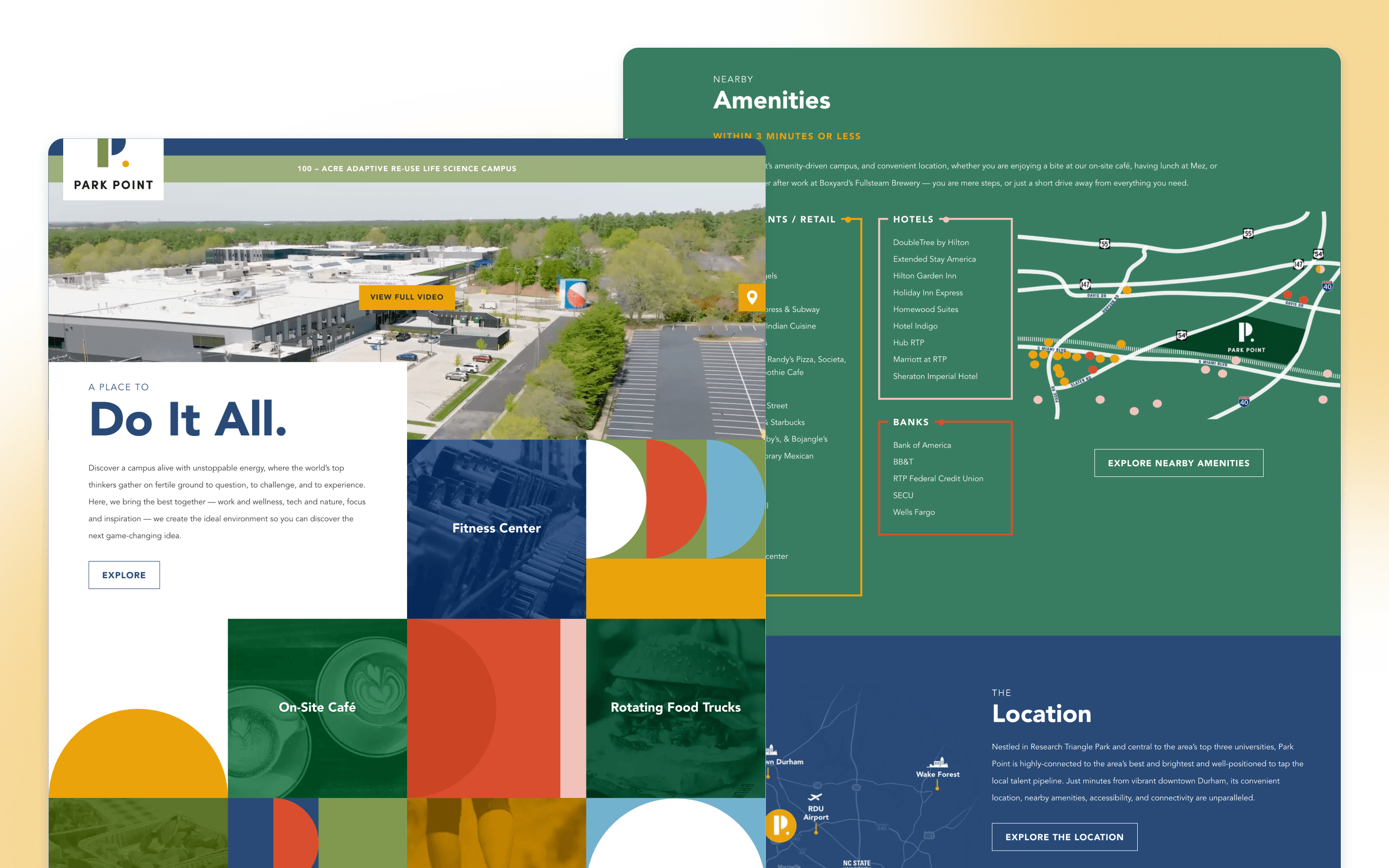
The result offers a helpful model for layered property information: an inviting overview, followed by practical material for a closer review. Consider New Media Campaigns when the website must explain a campus or larger development and give leasing teams a useful resource to share after the first conversation.
6. BOWEN: Best Commercial Real Estate Web Design Agency for Property Search
 6
6BOWEN
A web design agency building commercial real estate company websites that connect available properties with services, leadership, and market insights.
BOWEN is a useful option for a commercial real estate firm with several parts of the business to introduce. Its Intelica CRE work gives property discovery a clear place alongside services, leadership, and insights, keeping the website from becoming either a listings database or a company brochure alone.
That balance matters when visitors arrive with different levels of familiarity. Someone looking for a space needs a direct route to listings, while an owner considering representation may first want to understand the team and its approach. The same website should make both journeys feel intentional.
Featured project: Intelica CRE
Intelica CRE approached BOWEN after completing a rebrand, and the agency delivered digital strategy, web design, and development for the new site. The work includes a property-discovery area, an insights section, and company pages that introduce the people and thinking behind the services.
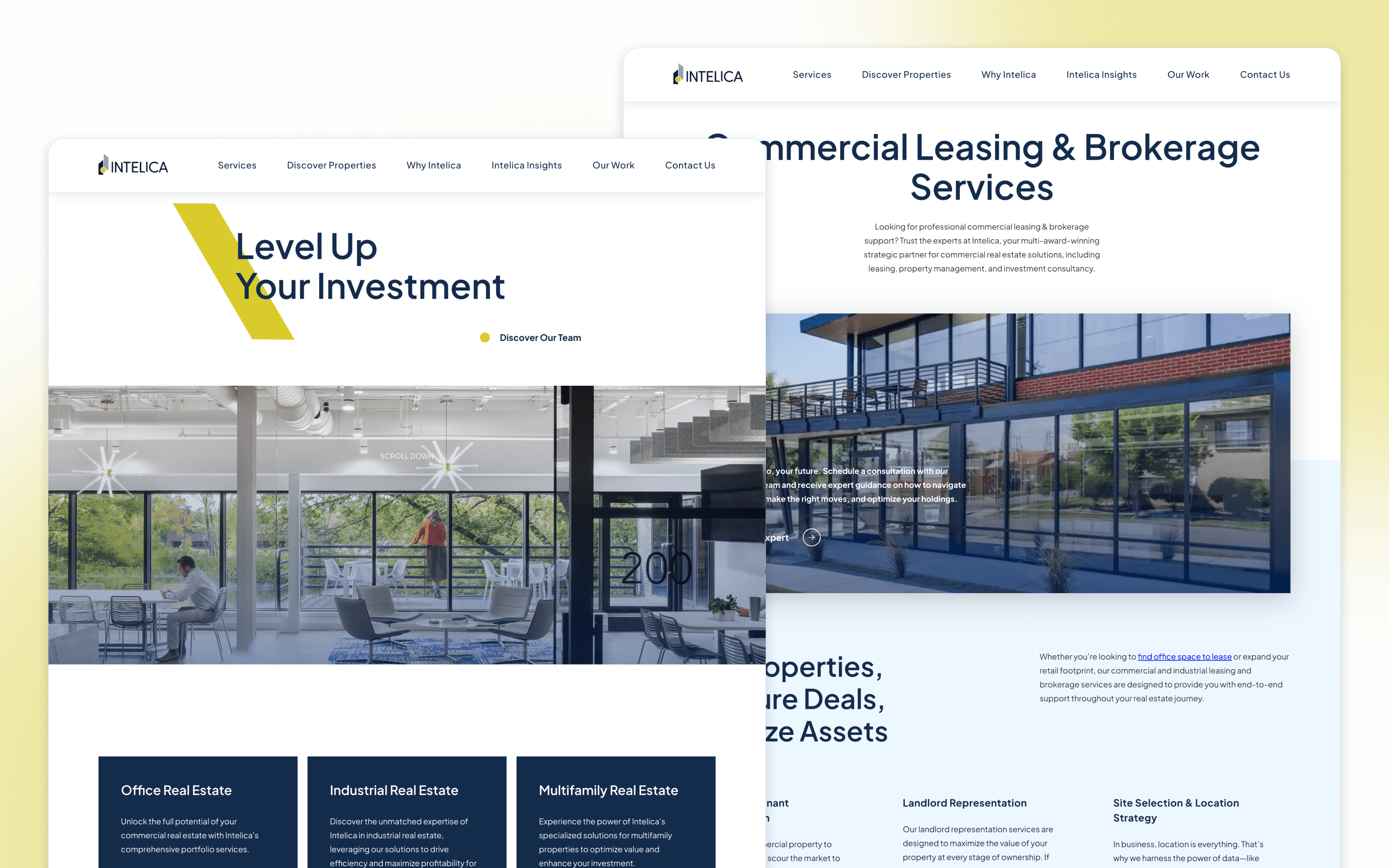
The point to notice is how listings fit the company story. Property information creates a reason to explore, while team and service content give visitors context for choosing whom to contact. BOWEN is worth reviewing if your redesign needs to connect those parts of a broader commercial real estate business.
7. Bluebird Creative Co.: Best Commercial Real Estate Web Design Agency for WordPress
 7
7Bluebird Creative Co.
A creative agency combining commercial property branding and WordPress websites with content that introduces the owner, portfolio, and tenant experience.
Bluebird Creative Co. offers a useful example for property owners who want their website to feel more personal. Its Empire Holdings project presents the buildings alongside the company’s history and tenant experiences, giving visitors a sense of the organization they would be dealing with after choosing a space.
For an established owner or developer, that can be a valuable shift. A website can show the scale of a portfolio and still leave room for the practical story of the businesses inside it, helping a prospective tenant imagine a longer relationship with the property team.
Featured project: Empire Holdings
Bluebird refreshed Empire Holdings’ identity and delivered a custom WordPress website as part of its broader marketing work. The site presents the commercial portfolio and tenant growth stories, with supporting photography direction and content helping the brand feel consistent across the website and other materials.
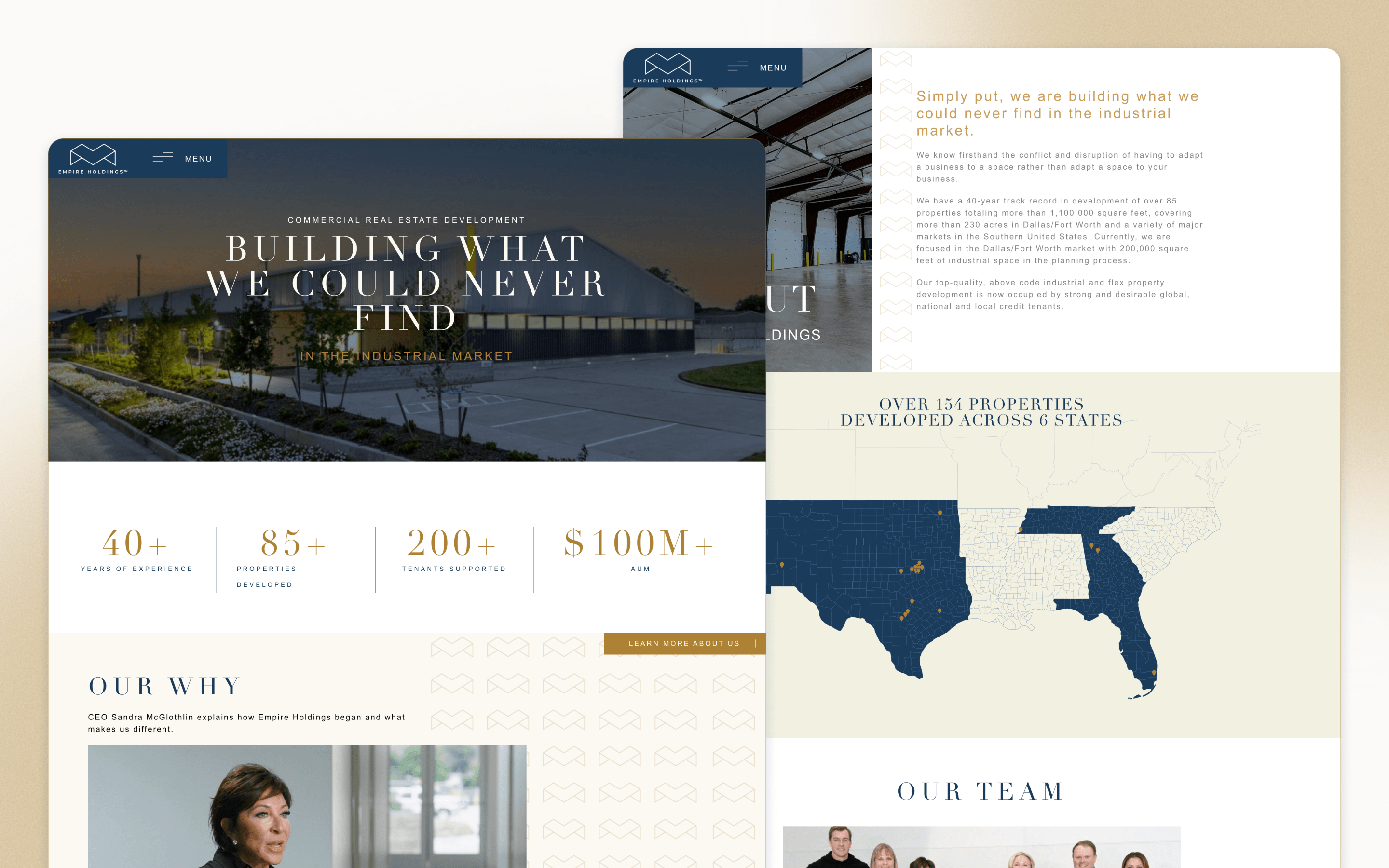
Its clearest strength is an editable portfolio with a human story. The company’s experience is visible, but the site also explains what its properties mean to the people using them. Review this example if you want a WordPress website that brings ownership, buildings, and tenant relationships into the same presentation.
8. North Street Creative: Best Commercial Real Estate Web Design Agency for Brokerage Branding
 8
8North Street Creative
A branding and web design studio helping commercial real estate firms express their approach through clear identities and company websites.
North Street Creative is a good fit to explore when your commercial real estate firm needs a visual identity and website that feel like the same business. Its Stoic project connects a distinctive brand with a straightforward explanation of the firm’s services, keeping the company recognizable across different parts of its presentation.
That kind of work is especially relevant for a brokerage competing on its people and approach. A visitor should be able to understand what the firm does and form an impression of how it works, without relying on familiar industry language to fill in the gaps.
Featured project: Stoic Real Estate Partners
For Stoic Real Estate Partners, North Street delivered brand strategy, a logo and visual identity, website design and development, and supporting collateral. The selected website introduces the Dallas–Fort Worth firm through its commercial real estate services, with a dark visual direction and a clear emphasis on relationships.
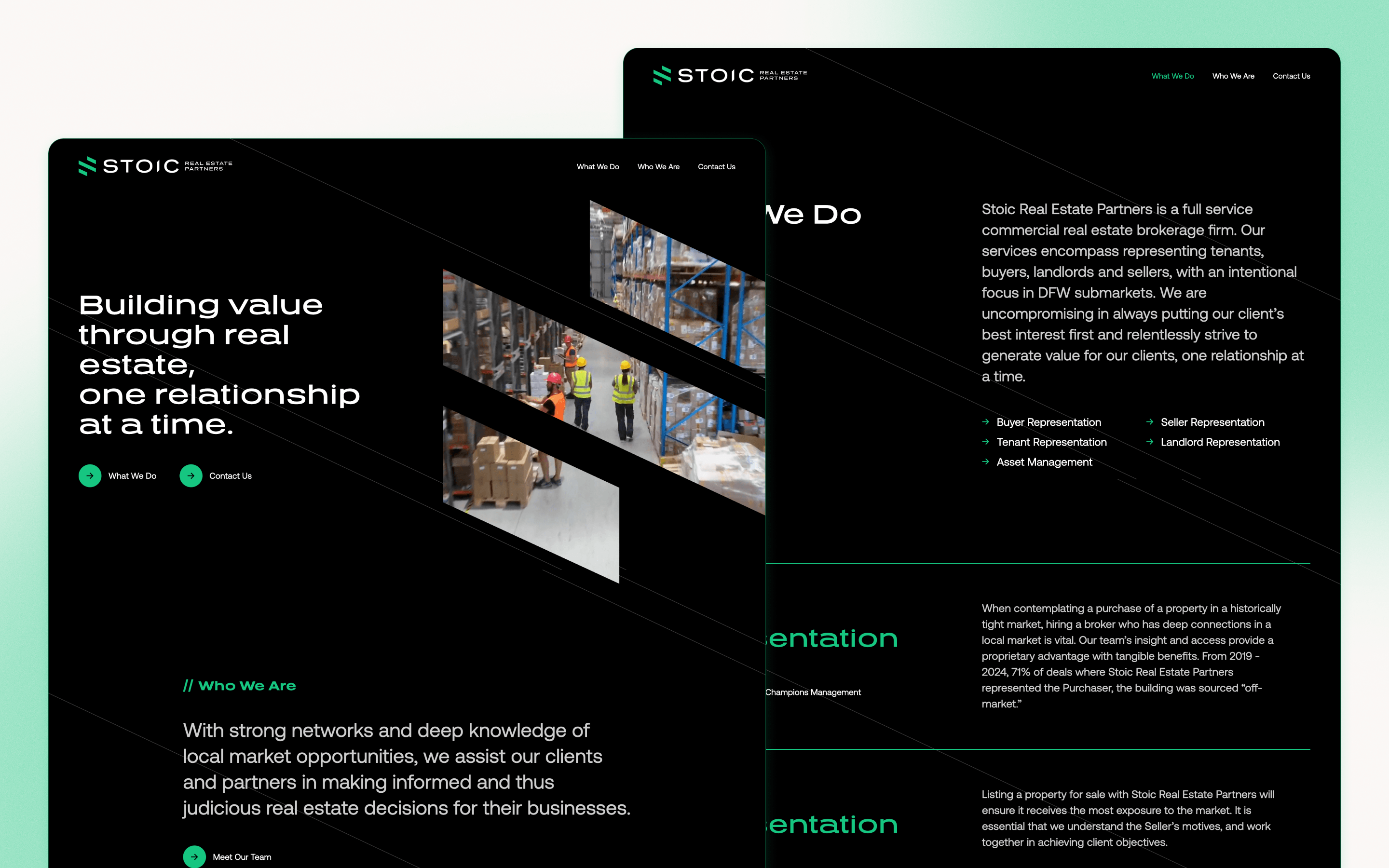
The example is strongest as a connected brand and website engagement. The identity makes the firm easy to recognize, while the page structure explains the offer behind it. Consider North Street if your website project also needs to clarify how your brokerage presents itself to clients and partners.
9. Winton + Partners: Best Commercial Real Estate Web Design Agency for CRM Integrations
 9
9Winton + Partners
A website agency connecting commercial property search and inquiries with the systems a brokerage already uses to manage its business.
Winton + Partners is worth a close look if the main challenge is connecting a polished website to your brokerage’s working systems. Its Hurst Warne project gives property search a central role, with the agency’s case describing how listings and inquiries move between the website and Kato.
That is a practical consideration for a team managing changing availability. A new design needs a reliable publishing process behind it, so the same property information does not become a separate maintenance job on every channel and an inquiry reaches the people responsible for following it up.
Featured project: Hurst Warne
Winton + Partners designed and built Hurst Warne’s website, alongside analytics and search work. The documented Kato integration feeds properties into the site and sends inquiries back to the agency system, supporting the firm’s commercial sales and lettings activity.
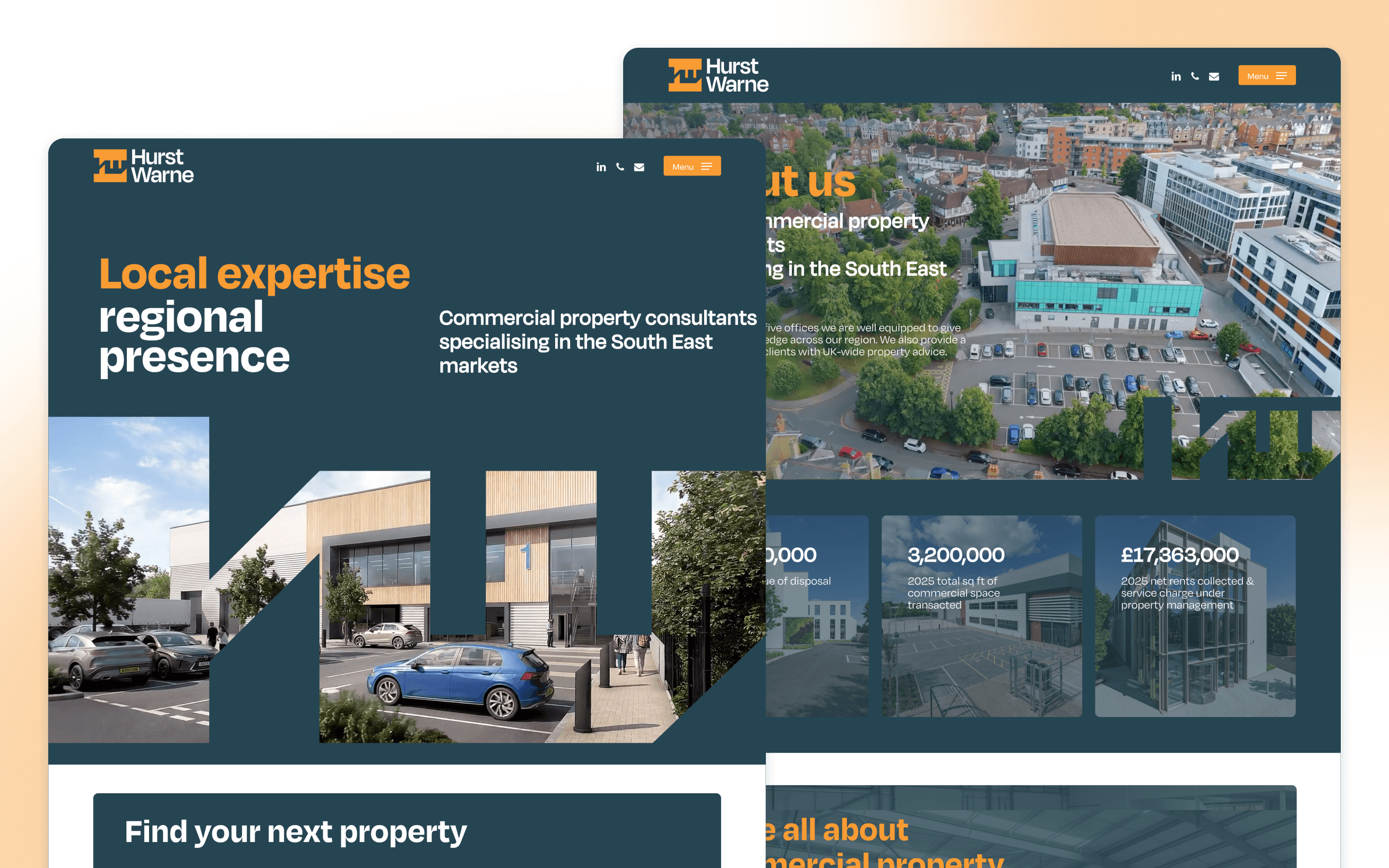
The useful distinction is a two-way operational connection, rather than a property gallery that looks integrated. If your brief includes a CRM or listing platform, ask for this level of explanation: which data appears, how it updates, and where the inquiry goes. Winton’s example provides a concrete starting point for that conversation.
10. KOTA: Best Commercial Real Estate Web Design Agency for Floor Explorers
 10
10KOTA
A creative agency designing property websites that use building exploration and visual storytelling to explain mixed-use developments.
KOTA is a strong visual candidate for a property with several uses to explain. Its Luxmill website combines the character of the building with an interactive way to explore its floors, helping visitors understand the relationship between the spaces rather than treating each facility as an isolated feature.
For a mixed-use development, that can be more helpful than a long sequence of photographs. Offices, hospitality, amenities, and shared spaces contribute to the appeal of the whole building, and the design needs to show how those pieces fit together while leaving room for practical questions.
Featured project: Luxmill
KOTA’s Luxmill project covers website design and a showcase video for the development in Belval, Luxembourg. A key part of the site lets visitors select floors and discover the facilities within them, while the visual direction draws on the area’s industrial history and the project’s approach to wellbeing.
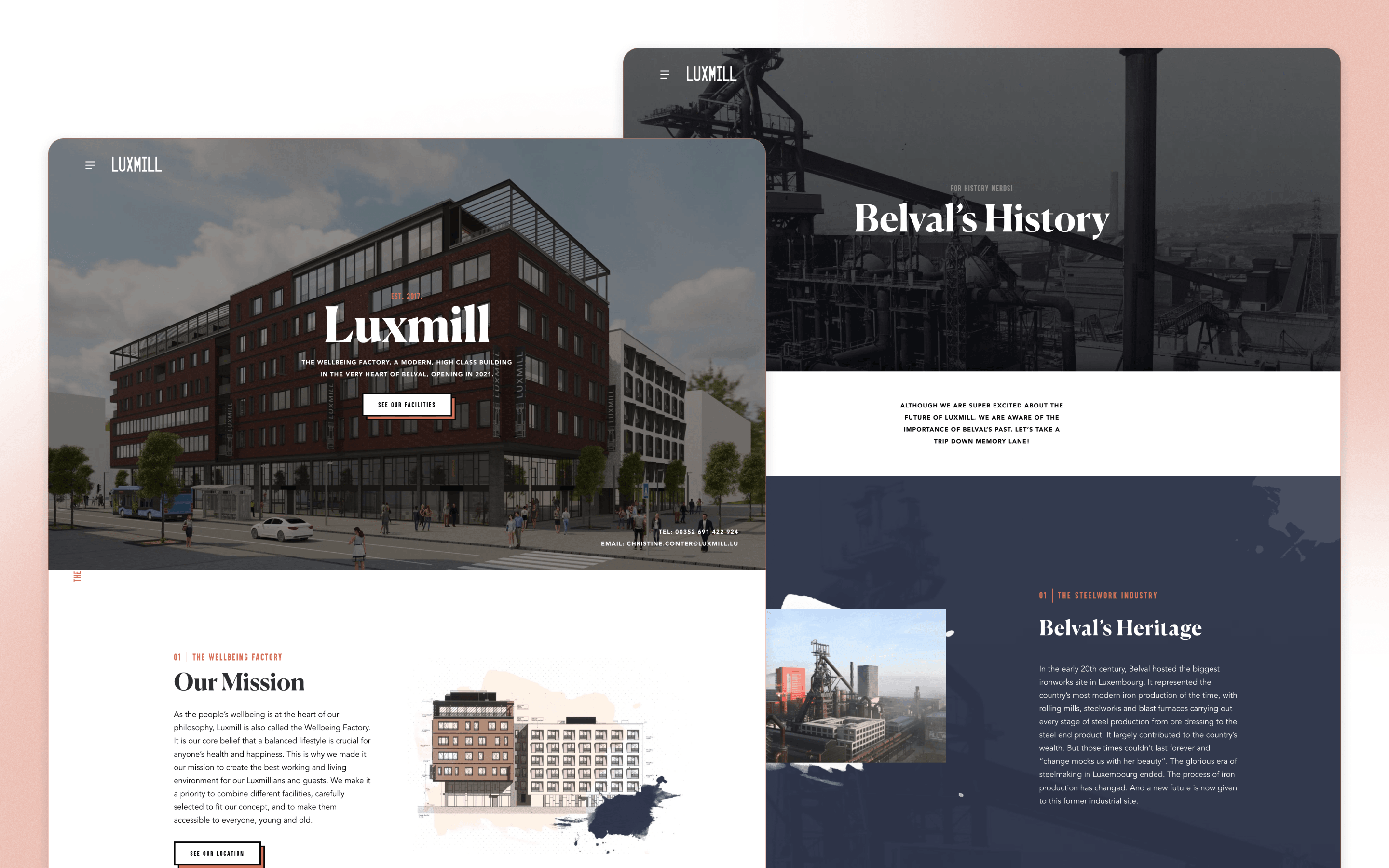
The relevant strength is explaining a building through interaction. The floor explorer gives the visitor a more active role in discovering the property, while the surrounding story establishes its character. Consider KOTA when the experience of moving through a development is central to how you want to present it online.
11. Vide Infra: Best Commercial Real Estate Web Design Agency for Interactive 3D
 11
11Vide Infra
A digital agency creating commercial property websites with interactive building models, architectural visualization, and detailed spatial exploration.
Vide Infra is a candidate for commercial developments where the architecture itself should guide the digital experience. Its Likova project uses interactive 3D to explain the building and its surroundings, giving visitors ways to inspect the property that go beyond viewing a finished rendering on a page.
This direction makes sense when the relationship between volumes, outdoor areas, and available space is part of the appeal. The important question is what the interaction helps someone understand, because the most useful visual work brings a prospect closer to evaluating the property rather than simply adding movement.
Featured project: Likova
For Likova, Vide Infra created a website with WebGL scenes, an interactive building model, a site plan, and architectural visualizations. The project carries the building’s stepped forms into the interface, linking the visual design to the structure that visitors are being invited to explore.
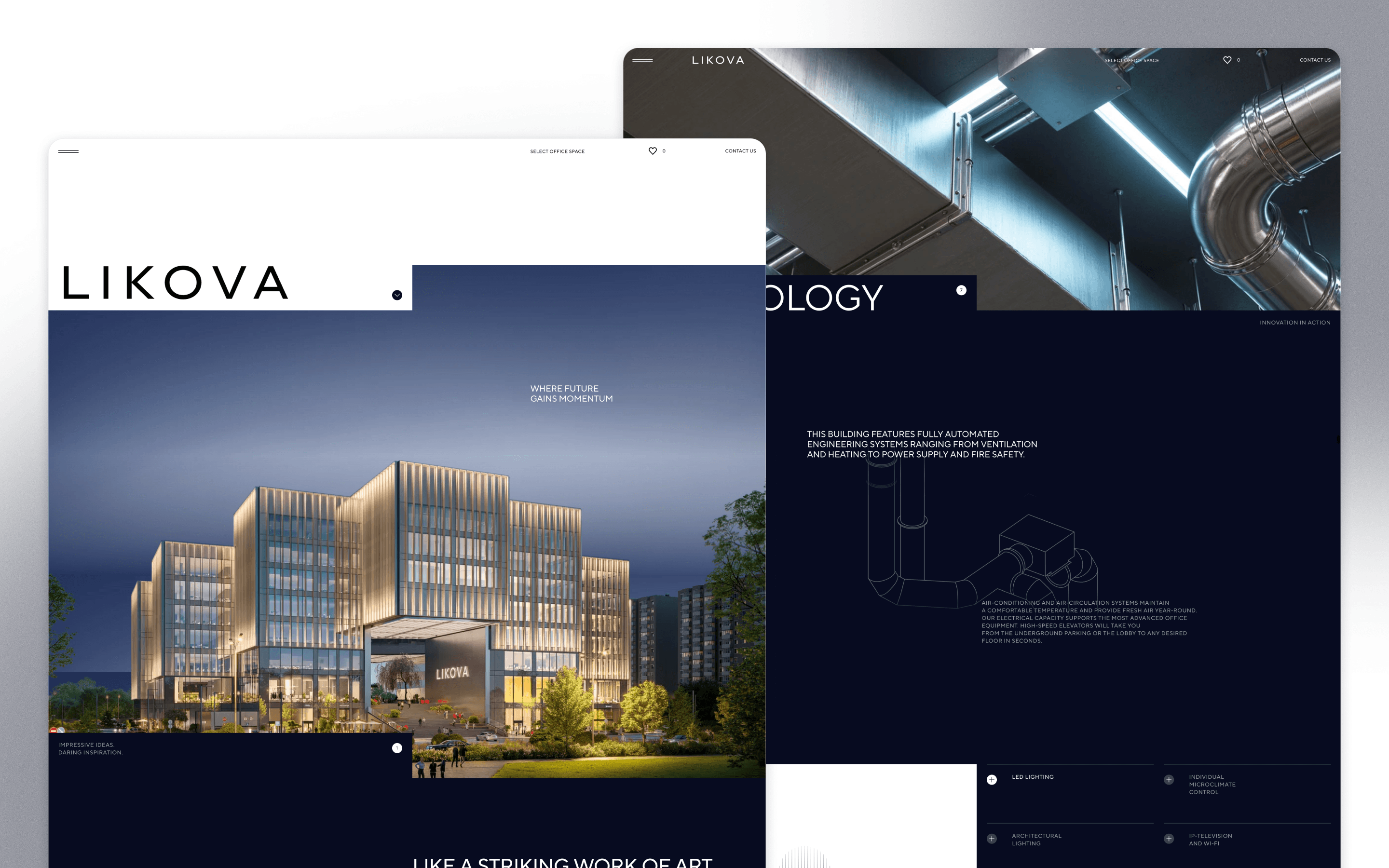
The example demonstrates 3D as a browsing tool. Someone can examine the building in context and move toward more specific information about space. If you take this approach, include mobile behavior and readable alternatives in the brief, then ask Vide Infra how a similar experience would support your particular leasing story.
12. The Future Forward: Best Commercial Real Estate Web Design Agency for Coworking Spaces
 12
12The Future Forward
A branding and design studio creating coworking websites that communicate the character of a space and the community around it.
The Future Forward is a useful choice to consider for coworking businesses whose identity is closely tied to the experience of being there. Its New Work Project work combines branding and website design to introduce both the physical setting and the kind of community the space wants to attract.
That is a different task from publishing an inventory of desks. A prospective member wants to understand the atmosphere, the rooms, and how the space fits their working day, so photography and written content need to help them picture themselves using it before they arrange a visit.
Featured project: The New Work Project
The studio created the brand identity and website design for The New Work Project, a private coworking space in Williamsburg, Brooklyn. The selected work uses confident typography and a considered visual presentation to convey the interior experience and introduce the business to people in creative industries.
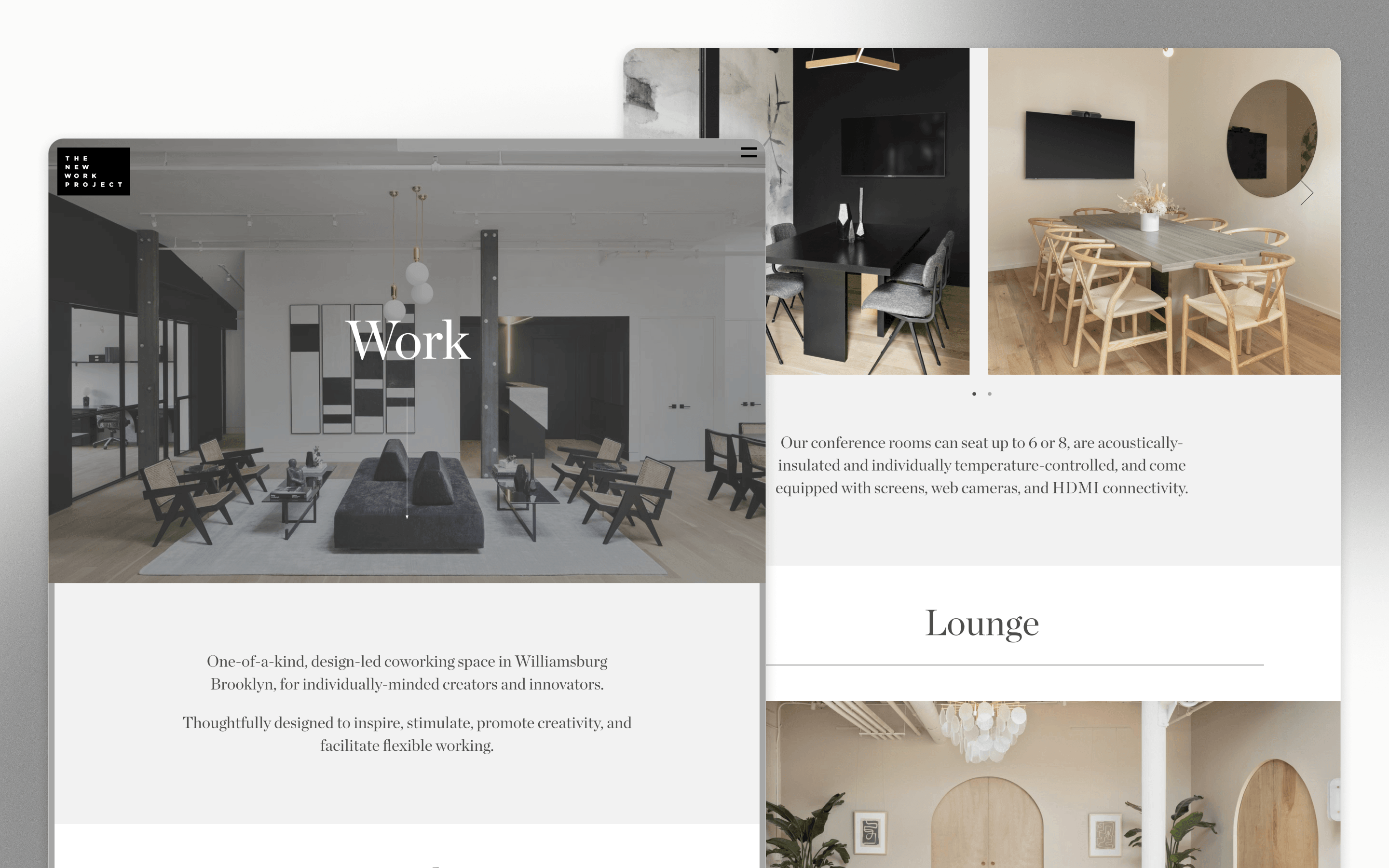
Its strength is turning a space into a recognizable brand. The website gives the rooms a coherent identity while making the offer feel approachable. Explore The Future Forward if you are launching or repositioning a coworking business and want the digital introduction to feel connected to the place members will actually visit.
13. Calico Marketing: Best Commercial Real Estate Web Design Agency for Retail Centers
 13
13Calico Marketing
A commercial real estate website agency building retail property sites that connect tenant directories, visitor information, and leasing opportunities.
Calico Marketing offers a relevant example for retail properties with two jobs online: helping people visit the destination and helping businesses consider space there. Its selected project combines a public directory and events information with a separate leasing story, keeping both audiences within one property website.
A shopping center has information that changes frequently, from tenant details to upcoming activities. The value of the website depends partly on how easily that material stays current, so the editing and publishing process deserves attention alongside the visual design of the homepage.
Featured project: The Pavilions at Talking Stick
For The Pavilions at Talking Stick, the named De Rito Partners testimonial describes Calico’s delivery of a custom interactive directory and automated events calendar. The selected site pairs visitor-facing information with a leasing page that introduces the property as an opportunity for prospective tenants.
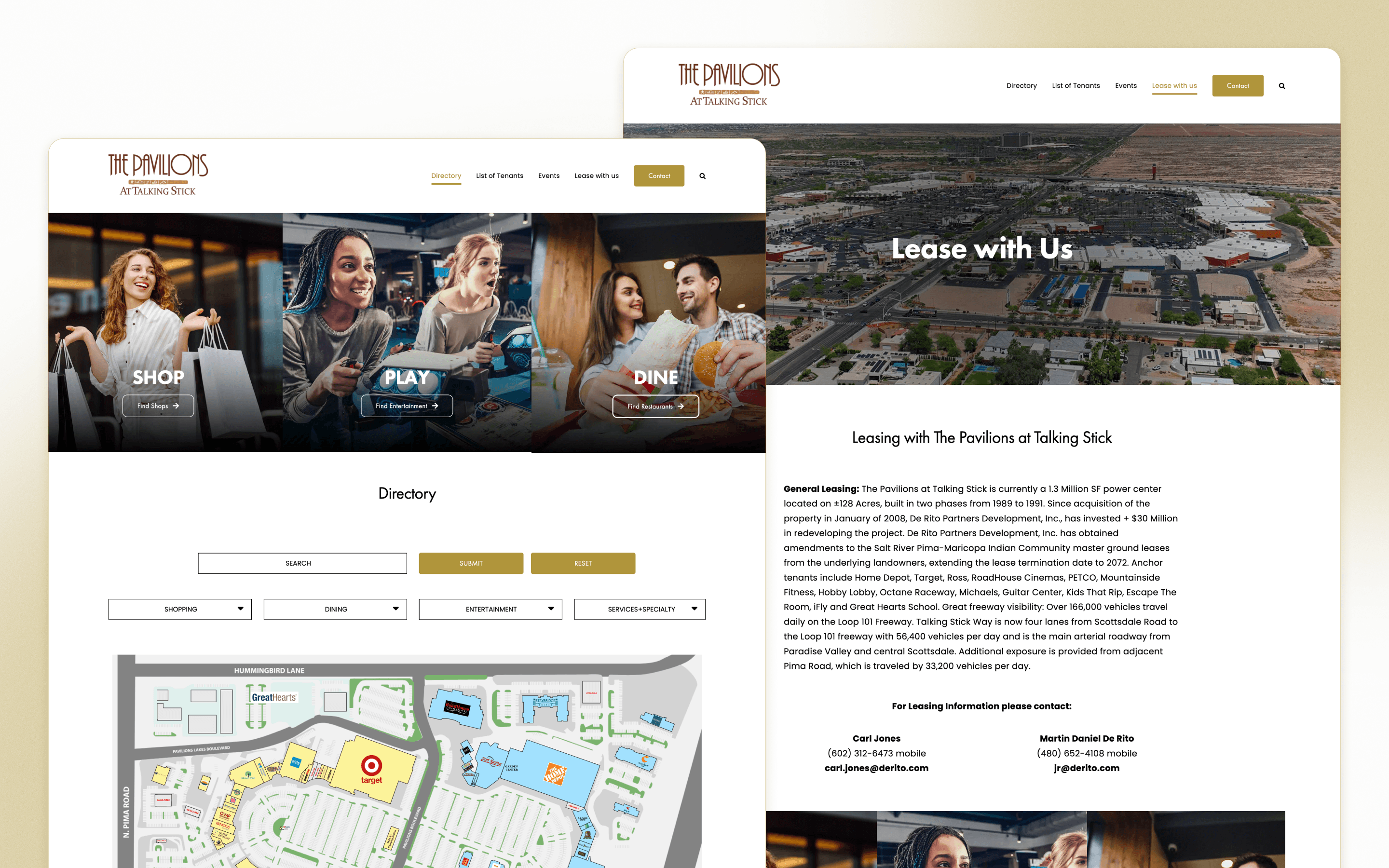
The useful strength is retail information that serves different visitors. A shopper can explore the destination, while a business has a route into the leasing conversation. Consider Calico when the website needs to remain an active resource for a retail center, and clarify who will maintain tenant records and events after launch.
14. Pave Design: Best Commercial Real Estate Web Design Agency for Property Refreshes
 14
14Pave Design
A property marketing studio updating commercial websites with fresh photography and design support that keeps the existing brand recognizable.
Pave Design is worth reviewing when your property already has a website and a brand, but the presentation needs to catch up with the space. Its Concorde Park engagement brings new photography and website updates into an established identity, showing a more focused route than starting the entire marketing system again.
That can be useful after improvements to a campus, a change in available space, or a renewed leasing campaign. A clear brief should identify what remains valuable and what needs replacing, so the photography, plans, website, and brochure all describe the same current offer.
Featured project: Concorde Park
At Concorde Park, Pave photographed the campus and provided design and development support for updates to the existing website and brochure. The project built on the property identity created by Cabin42 and Simon Peacock, with Pave’s work refreshing the material used to present the office campus.
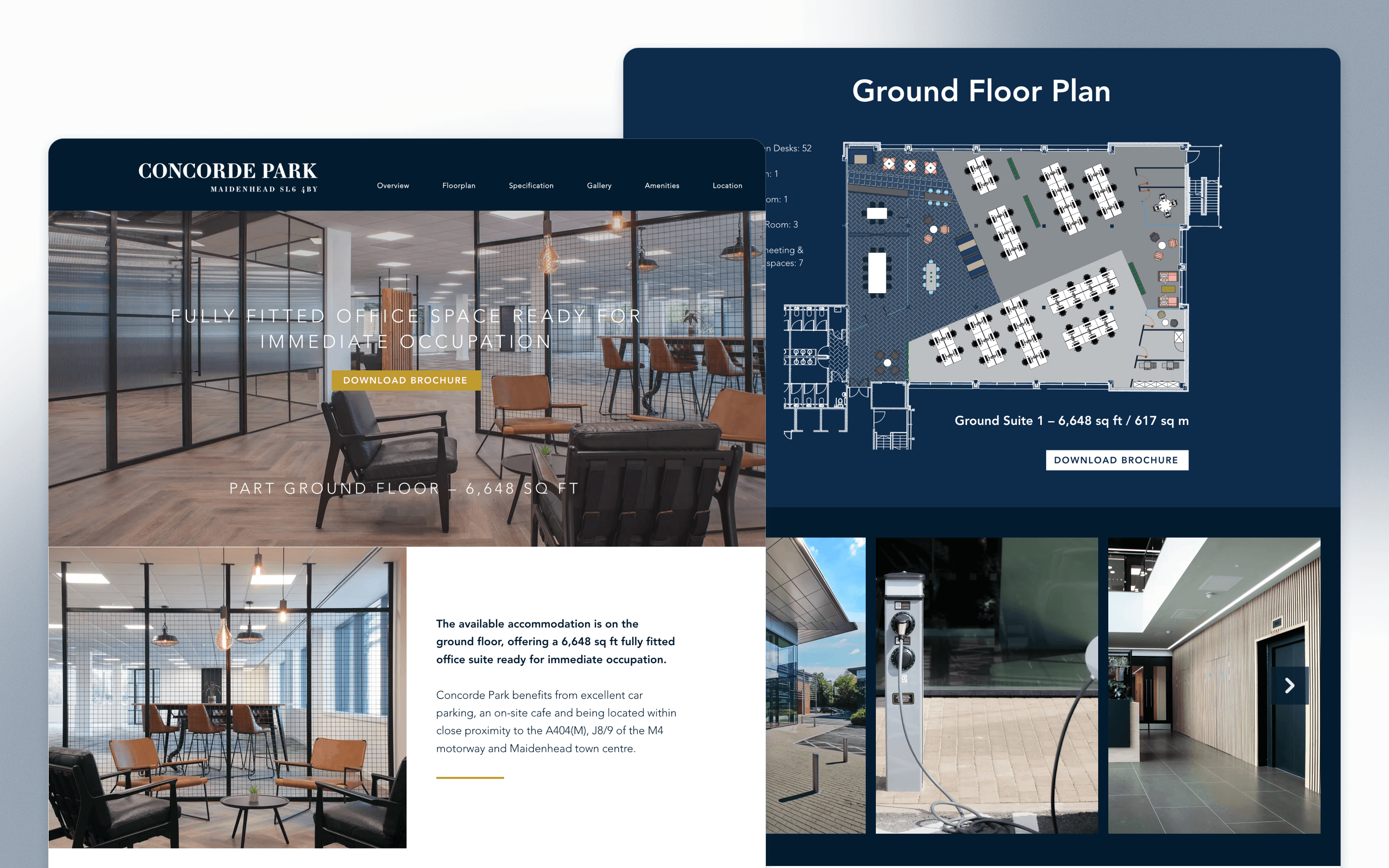
The example highlights photography and website updates as a coordinated assignment. Fresh views of the buildings and grounds give the presentation new life, while plans and supporting content help a prospect examine the details. Consider Pave if your project is an informed refresh of a commercial property’s existing marketing assets.
What a commercial real estate web design agency should help you with
The first thing to settle is what the website represents. A company site explains a brokerage, owner, or developer across its portfolio; a property site gives one building or destination its own story. Some businesses need both, with a clear relationship between the company brand and the individual properties it markets.
Ask the agency to organize the content around the decisions your visitors make. A tenant might compare size, location, and availability before requesting a viewing, while an owner considering your services may want to see your team, market knowledge, and relevant assignments. Those journeys should guide the page structure and the information you prepare.
The scope should explain who creates the copy, photography, renderings, maps, floor plans, and downloadable material. It should also describe the listing system, inquiry routing, mobile behavior, and handover. Agree on content responsibilities early, because a well-designed page is only useful if the right information is ready to go into it.
How to choose a commercial real estate website design agency and compare costs
Start with the type of project you actually need and review examples that match it. If you are launching an office campus, look beyond a brokerage homepage; if your firm manages hundreds of listings, ask to see how an agency has organized a comparable inventory. Similar visual taste is helpful, but relevant delivered work gives you more to discuss.
Compare what each proposal includes before comparing its total. A fee covering supplied photos and a handful of company pages is different from one that includes property-data migration, new architectural imagery, an investor portal, and ongoing updates. Ask for the page types, integrations, content production, revisions, training, and recurring charges to be listed separately.
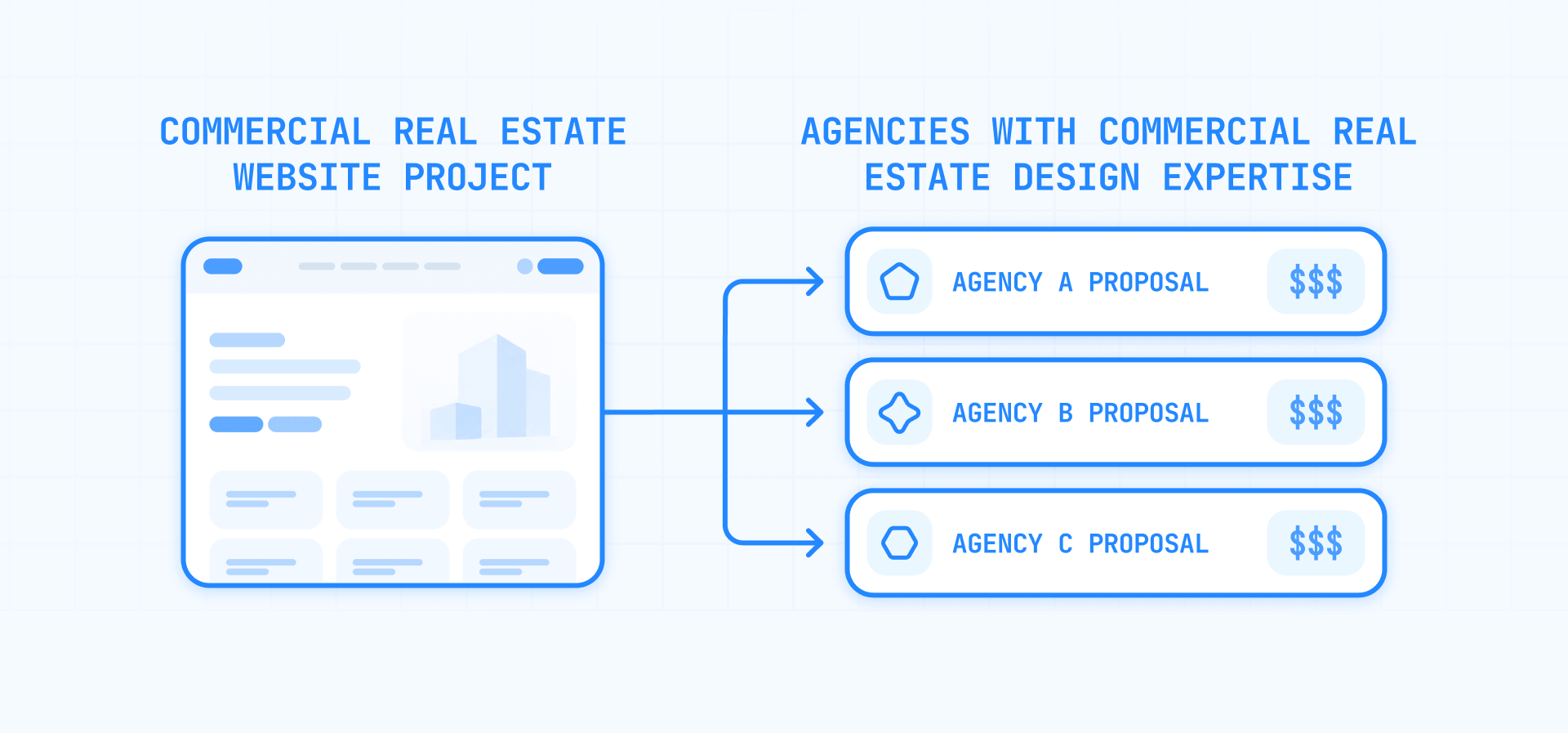
Send the same brief to 2–3 agencies so their replies describe the same assignment. Include the number of properties or spaces, the information you already have, and the system that currently holds your listings. The example below gives a team enough context to ask useful follow-up questions and prepare a realistic proposal.
Subject Website project for [company or property name]
Hi [name],
I came across your work in BRIX Agency’s commercial real estate web design guide. We’re [company], a [brokerage, developer, owner, or workspace operator], and we’re planning a website for [the company, a property, or a portfolio].
We want [target audience] to understand [the opportunity or services] and [arrange a viewing, contact a broker, or request information]. The scope includes around [number] pages and [number] properties or spaces, with [plans, location maps, brochures, team profiles, and news].
Our current website is [URL], and our listing information lives in [system]. We need [listing connection, CRM routing, document access, or other functionality]. We can supply [existing content and imagery] and would need your help with [remaining materials].
We are aiming to launch by [date], with a budget of [range]. Our [role or team] will review the property information and manage updates after launch.
Could you send a relevant example and explain the proposed scope, timeline, content responsibilities, and handover? Please identify hosting, software, support, and any other recurring charges separately from the initial project.
Thank you,
[Your name]
[Role and company]
Use the replies to examine the working relationship as well as the scope. Establish who approves property facts, who coordinates feedback, and what happens if imagery or listing data arrives late. Ask for a schedule with those dependencies made explicit, particularly when the website is part of a launch campaign with a fixed date.
Before you commit, confirm ownership and access for the domain, website account, content, and connected services, along with any licensing limits on photos or renderings. Your team should know which costs continue, which updates it can make, and whom to contact when something needs development after the initial project is finished.
Choosing a CMS for your commercial real estate website
Think about the morning a broker needs to update an available suite, replace its floor plan, and change the contact person. A useful CMS makes that a simple publishing task, with clearly named fields and a page layout that stays intact. The goal is an easy editing experience behind a website that feels quick and comfortable to browse.
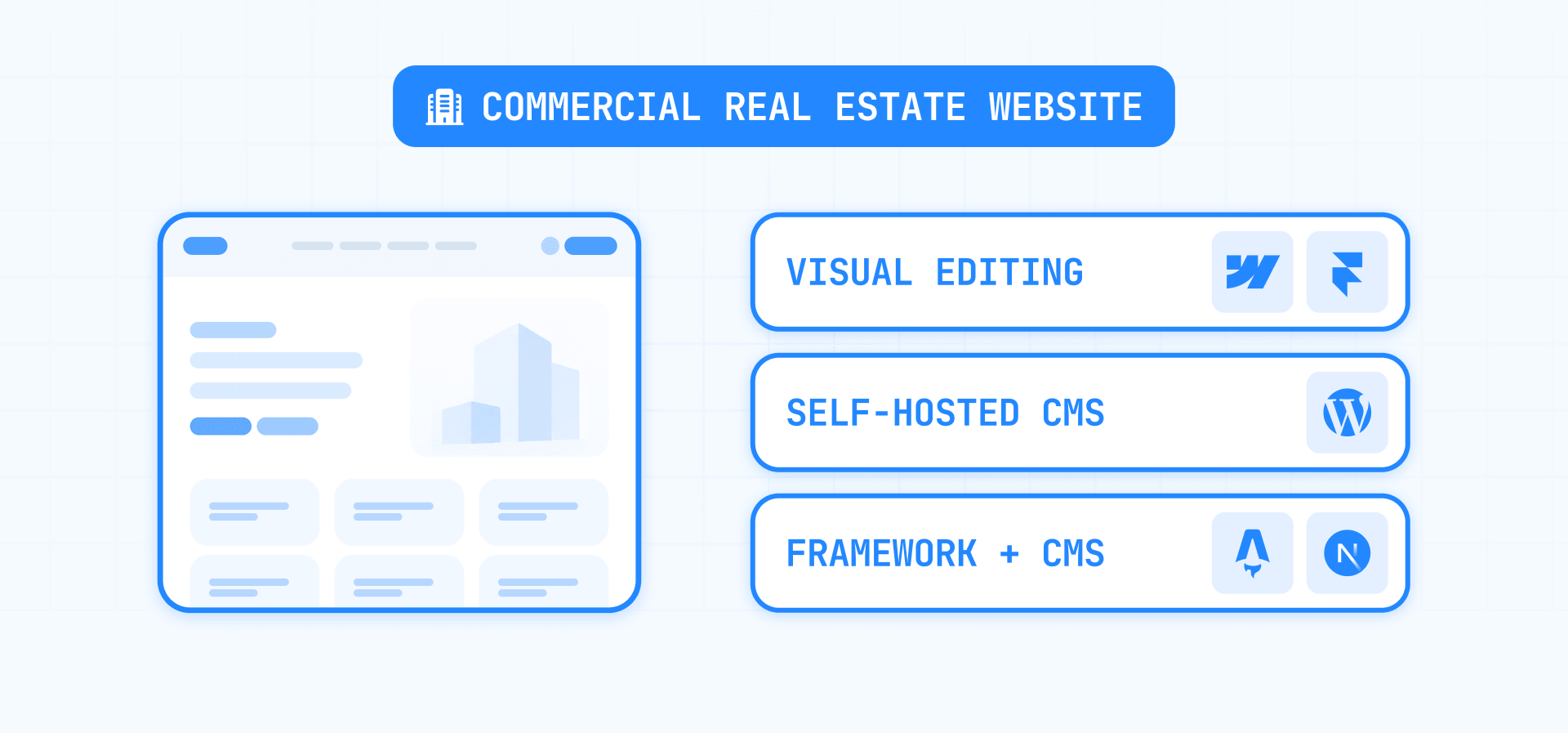
Webflow and Framer can provide visual publishing workflows for marketing websites. Ask how the proposed build will organize properties, people, project stories, and news, then check how that structure fits the volume of content and the connections your business needs. A polished editor still needs thoughtful setup around the way your team works.
WordPress is an option when you want to host the website and its CMS database on your own server. That also brings decisions about hosting, maintenance, backups, and extensions. Confirm those responsibilities with the agency, and remember that connected listing services, analytics tools, or CRMs may store their own data separately.
A custom website built with Astro or Next.js can pair with a separate CMS for editing. These are development frameworks, so ask which product supplies the content editor and what your team will be able to change there. The proposal should describe the publishing experience as clearly as it describes the technology.
For listing-heavy sites, decide where property data is maintained. If the agency connects an existing listing system, identify which fields come from it and which your team edits on the website. Review a delivered project using the proposed setup, and ask how the client manages new listings, changes, and withdrawn properties in day-to-day use.
Commercial real estate website design essentials: listings, plans, and inquiries
Property listings that stay useful as availability changes
A visitor should be able to narrow the offer using information that matters to the search, such as location, property type, size, and availability. Keep terminology and units consistent, and give each property a clear page with its address, relevant specifications, images, documents, and contact details rather than relying entirely on a downloadable brochure.
Keeping those pages current is a workflow decision as much as a design decision. Agree on one source for each field, how updates reach the website, and what happens when a property is no longer available. Connections to tools such as Kato or Buildout depend on the actual account and integration, so verify the supported flow before promising automation.
Floor plans and location details people can actually use
Photography creates interest, while plans and location information help someone assess the space. Place floor areas, layouts, amenities, access information, and downloadable documents near the relevant property content. A map or building explorer can be valuable when it makes the relationship between spaces easier to understand.
Test those details on a phone as well as a large screen. Someone should be able to read the important information and reach the contact route without mastering an elaborate 3D experience. Provide a clear static plan or text alternative where an interactive view is difficult to use, and keep image and video loading from delaying the rest of the page.
Inquiry routes that keep the property context
Make the next step specific to the page, whether that is arranging a viewing, discussing representation, or requesting more information. A property-aware inquiry should tell the receiving team which building or space prompted the message, so a visitor does not need to repeat details that were already clear on the website.
If a project includes confidential investor material, define who can request it, who approves access, and how permission is checked when a document is opened. A visible gate is only part of that process; the implementation must protect the file itself. Keep ordinary property information accessible while agreeing the restricted-document workflow with the people responsible for it.
Before launch, submit real test inquiries from the main property and company pages, check the destination and confirmation, and verify the access rules for any restricted material. These checks give your team a working handoff from the website into the conversations the site is meant to support.
Frequently asked questions about commercial real estate web design
How do I choose a commercial real estate web design agency?
Choose around the kind of website you need, then look for an agency with a delivered example that addresses similar requirements. A property launch, a brokerage website, and a retail destination have different audiences and content, so a relevant project tells you more than a portfolio full of attractive homepages.
Explore the example beyond its opening screen and ask the agency to explain what it actually delivered, including design, development, content, and integrations. Share the same brief with a few suitable teams and compare how clearly they explain the work, your responsibilities, and the handover. Favor a team that can connect its experience to the practical decisions in your project.
How much does a commercial real estate website cost?
The cost follows scope, content, and functionality, rather than the industry label alone. A company site using finished material has a different workload from a property launch that needs new photography, a searchable inventory, and restricted document access, so a useful estimate begins with a shared description of what must be delivered.
Ask agencies to separate design and development from content production, data migration, integrations, and ongoing services. Include the number of property records and distinct page layouts in the brief, and check which revisions and training are covered. Comparing those details gives you a fairer view of the price than choosing a quote based only on the total or advertised starting fee.
How long does a commercial real estate website project take?
The schedule depends on content readiness and technical scope, as well as the time your team needs to review the work. A property site with approved imagery and plans can follow a different schedule from a brokerage redesign that needs listing migration, new copy, and a connection to an existing business system.
Give the agency your intended launch date and identify what is already ready, what must be created, and who approves property information. Ask for milestones covering content, design, development, testing, and handover, with dependencies shown clearly. If a leasing campaign sets the deadline, agree which pages and functions must be live for that launch before finalizing the project schedule.
Does a property need its own website or a page on our company site?
Use a dedicated property website when the development needs its own story, audience, and marketing destination. A substantial campus or mixed-use building may have enough plans, amenities, and location information to justify that space, while a simpler listing can fit comfortably within a well-organized company website without creating a second publishing responsibility.
Think about how people will discover and share the property, how much information they need, and who will maintain it after launch. Your company site should still explain the business behind the asset and provide a clear connection to its portfolio. Ask the agency to recommend the structure around the property’s marketing needs and your team’s ability to keep the content current.
Can a commercial real estate website connect to our listing system?
Yes, when the listing system supports the required connection and the agency includes that work in the project. The exact setup depends on your provider, account, data access, and website requirements, so it should be verified against the system you actually use rather than assumed from a general promise about integrations.
Ask which fields will transfer, how quickly changes will appear, and what happens when a listing is removed or the connection stops working. Clarify whether inquiries also return to your business system and whether any third-party fees apply. Review a comparable integration the agency has delivered, then agree on test cases for new properties, edited availability, withdrawn listings, and incoming inquiries.
What information should a commercial property website include?
Include the details someone needs to assess the opportunity: location, property type, relevant size and availability information, images, plans, supporting documents, and a clear contact route. The selection should reflect the asset and audience, because a prospective office tenant has different immediate questions from a business exploring a retail destination.
Keep the main facts readable on the page, with downloads available for a closer review rather than as the only source of useful information. Use consistent labels and units across the portfolio, and make responsibility for updates explicit. Before launch, ask someone unfamiliar with the property to find the information they would need to decide whether a viewing or conversation is worthwhile.
Should a commercial property website include interactive floor plans?
Interactive plans are worthwhile when they make the space easier to understand, such as showing how floors, facilities, or available units relate to one another. A clear static plan may be enough for a simpler property, so the choice should come from the visitor’s questions rather than a desire to add another visual feature.
Ask the agency to explain the information each interaction reveals and how the experience will work on mobile devices. Keep essential specifications and contact options accessible outside the interactive view, and provide a readable alternative when needed. Review the finished plan with someone evaluating the space, checking whether it helps them compare their requirements with what the property actually offers.
How should a real estate website protect confidential property documents?
Plan access to the documents themselves, along with the form or approval step a visitor sees. Your team needs to define which material is restricted, who can request it, who authorizes access, and when that permission ends, so the agency can implement a process that matches the business’s requirements.
A hidden button or a form placed before a download does not, by itself, establish that the file is protected. Ask the developer how access is checked when someone opens the document and what records your team can review. Include authorized and unauthorized access in the launch tests, while keeping ordinary property information easy for prospective clients to explore without unnecessary barriers.
Which CMS is best for a commercial real estate website?
The best fit is a CMS that matches your publishing workflow, including property updates, people, company news, and any connected listing source. Webflow and Framer offer visual approaches, while WordPress can suit a team that wants control over its hosting. A build using Astro or Next.js needs a separate CMS to provide the editor.
Ask an agency to show a comparable site it has delivered with the proposed technology and explain how that client maintains it. Check which changes your team can make, which require development, and how listing data stays consistent between systems. Choose based on those practical responsibilities and the full running costs, rather than the platform name or a screenshot of its editing interface.
Who should own the website and property data after launch?
Your agreement should make ownership and access explicit before the project begins, covering the domain, website account, content, property records, and connected services. Some elements may depend on a software subscription or a licensed asset, so it is useful to separate what your company owns from what it is entitled to use.
Ask for the relevant account access, a clear handover, and an explanation of how your content and records can be exported or transferred. Document ongoing charges and the support arrangement, including who maintains integrations and handles technical updates. Before signing, make sure the proposal describes how your team will operate the website and what happens if you change providers in the future.
Choose a website partner that understands the property
The most useful shortlist is the one that reflects what you are bringing to market. A development with a strong architectural story, a brokerage with changing listings, and a coworking business selling an experience can all benefit from good design, but each gives the agency a different job to do.
Use the examples here to find a few teams whose work feels relevant, then bring them a clear picture of the property, the audience, and the information you need to maintain. Their proposals should help you see how the website will support the business long after the launch images have been approved.
To discuss that with BRIX Agency, tell us what you are bringing to market. You will hear from us in less than 24 hours, or 1–2 hours during business hours PST, and we can explore a website direction that fits your brand and the people you want to reach.





Join readers commenting on this post!