Your product has come a long way since your first website, but someone visiting today might never know it. Features have turned into entire products, you’re selling to different teams, and the homepage still tells the story you had 2 years ago. A redesign gives you a chance to catch up, provided the agency understands what your buyers need to know before they book a demo.
That’s where choosing a SaaS web design agency gets interesting, because the work can go in very different directions. You might need a clearer way to explain your product, custom animation that shows how it works, or a website your marketing team can update without waiting for a developer. The right portfolio should give you something specific to look for in each case.
We’ve brought together 17 SaaS web design agencies, with different strengths to help you narrow your search. The named client projects below give you something concrete to compare, so start with the teams whose work matches what’s holding your site back, then open their projects to see how they approached a similar challenge.
How we selected these SaaS web design agencies
We started with named software-company projects and checked the agencies’ published accounts of their work, looking for a clear connection between the team and the public website. That distinction matters because a portfolio can include branding, product interfaces, and website development within the same engagement, while your project may need only some of those services.
The specialties highlight a reason to consider each agency, based on the work described in its projects. BRIX Agency is our agency and appears first, with our client work available for you to review alongside the other entries. Use the order as a starting point, then build your own shortlist around the work you need.
The SaaS web design agency shortlist
- BRIX Agency: A design and development agency creating custom websites that help software companies explain their products and manage content.
- Webstacks: A web design agency organizing enterprise software websites around reusable components and content structures that support growing marketing teams.
- Clay: A digital design agency connecting website interfaces with visual systems that help software companies present their products consistently.
- Refokus: A creative studio bringing brand direction and website design together for software companies seeking a distinctive digital presence.
- N4: A digital design studio building Webflow websites that combine product presentation with custom motion and a considered user experience.
- Digidop: A web agency developing multilingual platforms with shared components that help software groups organize products across different markets.
- Baunfire: A digital agency using content, illustration, and animation to help software companies tell a clearer story about their products.
- Ramotion: A design agency connecting brand identity and marketing websites so software companies present a recognizable experience across touchpoints.
- StanVision: A design and development agency creating reusable website systems that give software marketing teams a consistent foundation for new pages.
- Happy Cog: A digital agency managing CMS migrations and reusable components while helping marketing teams take ownership of their website content.
- Everything Design: A branding and web design agency organizing software messaging and content into websites that explain enterprise products clearly.
- L&S Creative: A web design agency creating Webflow marketing pages and campaign components for software companies with ongoing publishing needs.
- Flowtrix: A web design agency translating technical software products into marketing websites through page structure, custom graphics, and motion.
- Focus Lab: A branding agency extending new visual identities into website design for software companies changing how they present their businesses.
- Polybox Studio: A brand and web design studio creating custom illustrations that help software companies give technical products a recognizable visual identity.
- LoudFace: A branding and web agency connecting software positioning with website layouts that guide visitors toward the next step.
- Flowscape Studio: A Webflow development studio implementing supplied designs and improving website structure, tracking, and performance for software marketing teams.
1. BRIX Agency: Best SaaS Web Design Agency for Custom Design
 1
1BRIX Agency
A design and development agency creating custom websites that help software companies explain their products and manage content.
At BRIX Agency, we design and develop custom websites for software companies whose products need more explanation than a headline and a screenshot. That can mean giving a platform’s different capabilities room to make sense, or creating a visual direction that feels like your company while keeping the pages straightforward for your buyers to use.
We also think about the people who will run the website after launch, because custom design should come with a practical way to publish. Our work for Celigo and CertifID shows 2 different approaches to that problem, using WordPress and Webflow to support the needs of each engagement.
Featured work from our SaaS web design portfolio
Our portfolio also includes popular website templates we design for BRIX Templates, with more than 1,000 websites using LaunchHub, SmartAssistant, and EditorTech X combined. They give you a few more examples of how we present different software products, from AI assistants to code editors.
When you hire BRIX Agency, we only build custom websites, with the design created around your product, your brand, and the people you want to reach. The templates below are separate products included here so you can explore the quality and range of our design work.
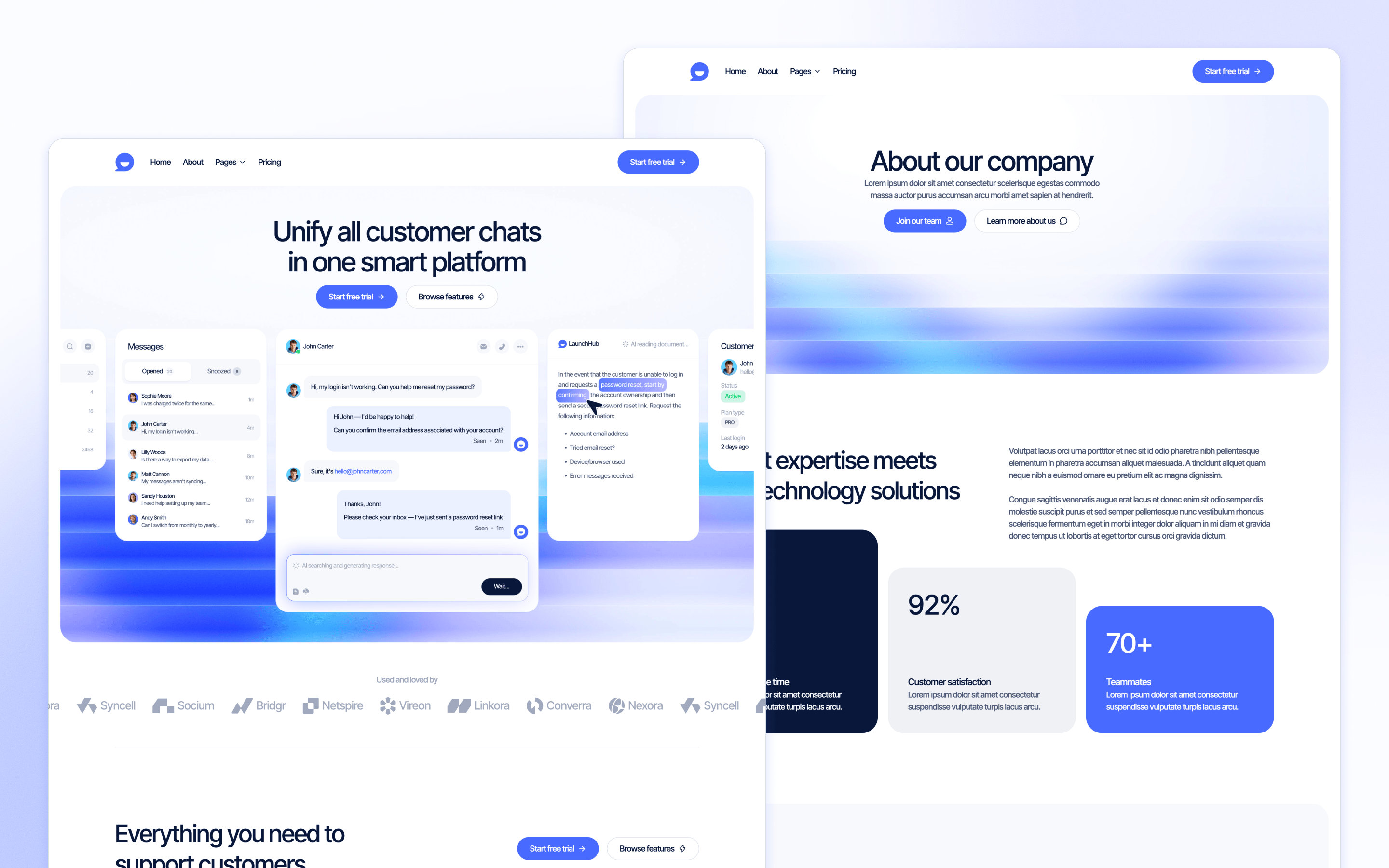
LaunchHub is a website template focused on AI customer-support platforms, with conversation previews that help visitors picture how the software answers customer questions. That product-led approach continues into the company page, where the team’s story sits alongside the interface.
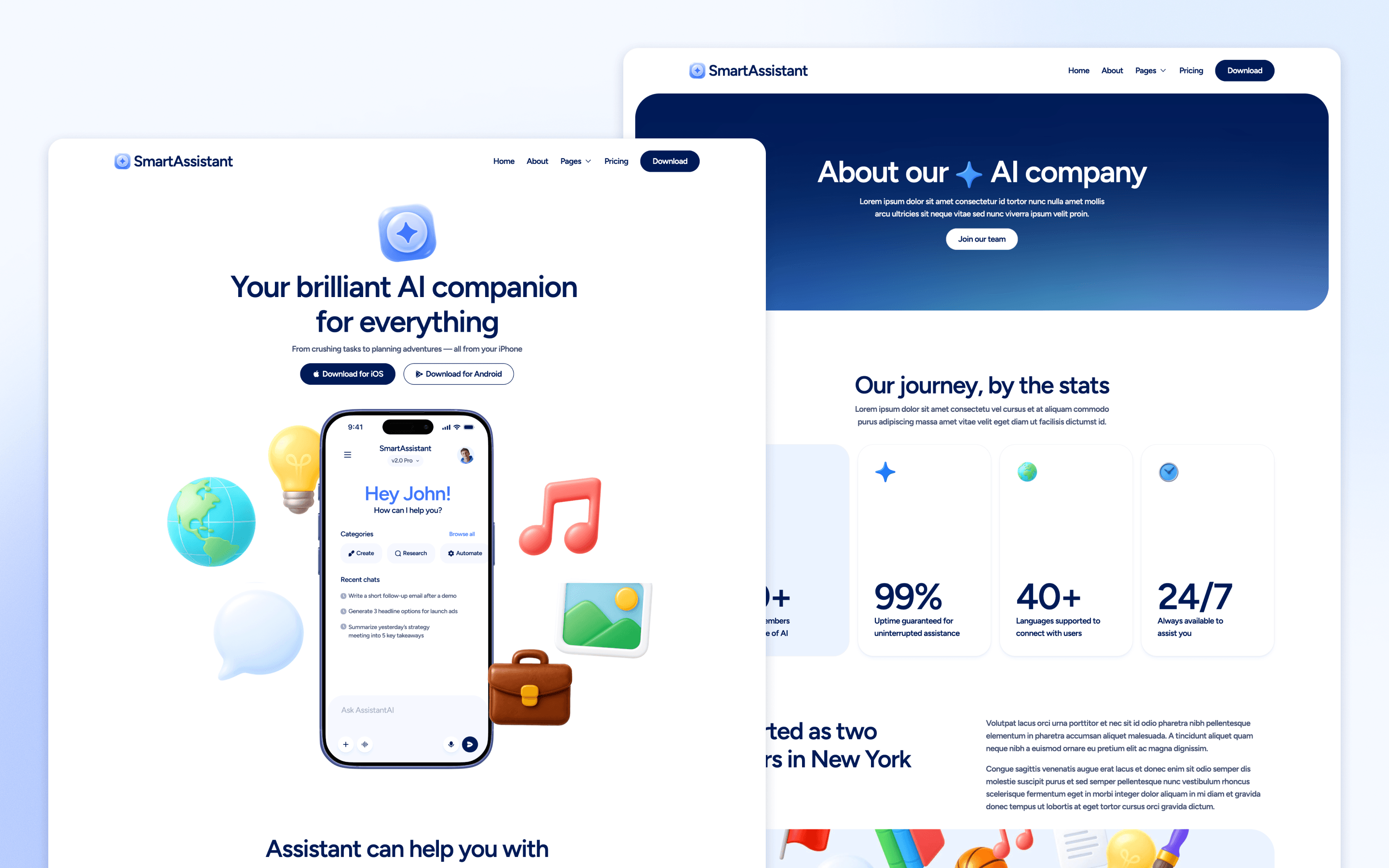
SmartAssistant is a website template focused on AI assistants and chatbot platforms, using a mobile interface and colorful illustrations to introduce the assistant from the opening screen. Pricing, integration, and company pages carry that direction through the rest of the website, giving visitors room to explore how the product would fit into their day.
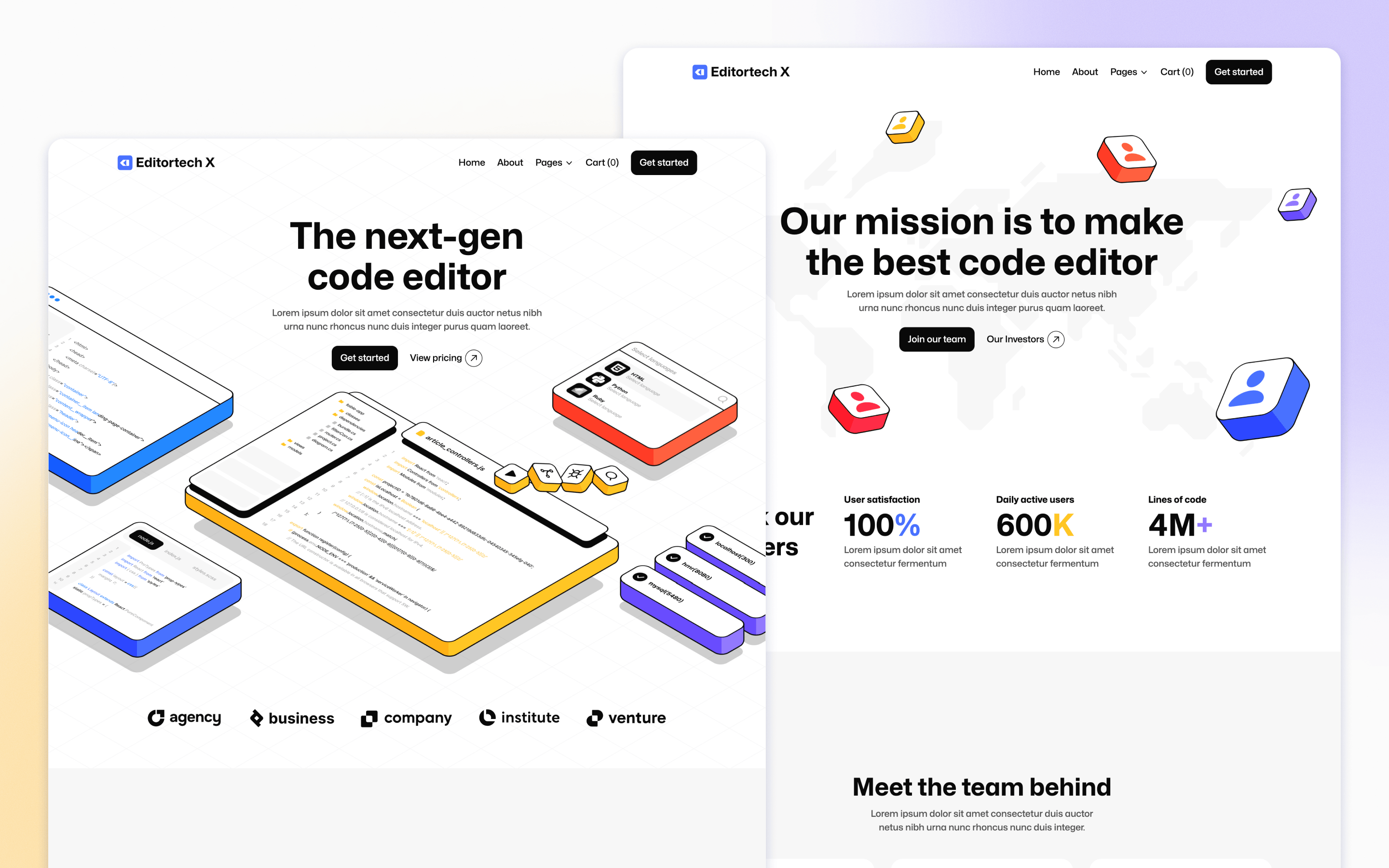
EditorTech X is a website template focused on code editors, with illustrated code windows that give developers a feel for the tool before they try it. The company page carries that same visual direction into the team’s story, keeping the product and the people behind it connected.
Featured project: Celigo
Celigo is an integration platform, and our work for its marketing website included new WordPress pages, reusable blocks, flexible sections, and custom PHP components. The work brought design and development together around a useful goal: giving marketers building blocks for creating pages.
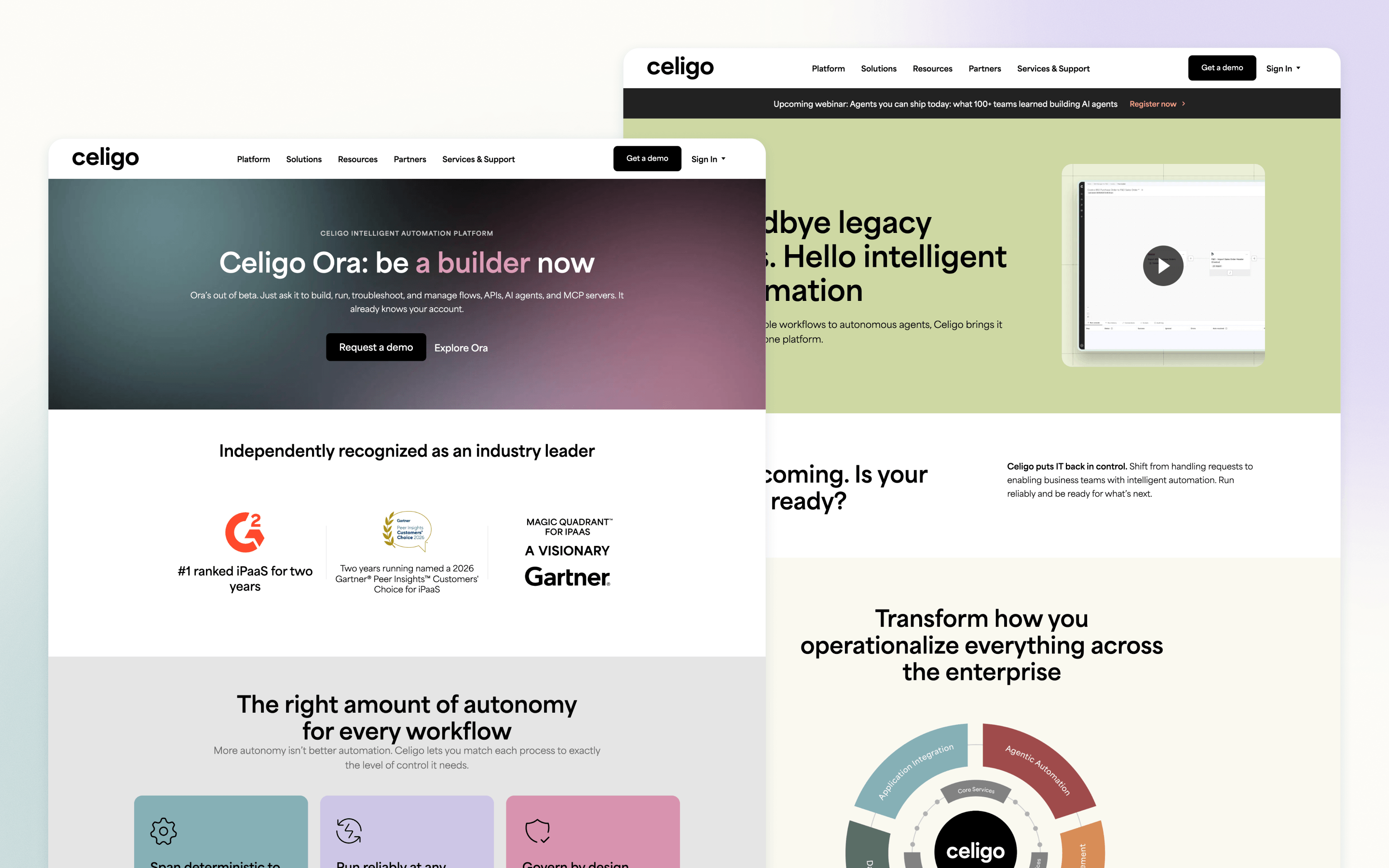
For a company with different products, integrations, and use cases to explain, that flexibility becomes part of the website’s everyday value. Your team needs to introduce a new offering without treating every page as a separate development project, while the design still feels connected across the site.
Another SaaS project: CertifID
For CertifID, a fraud-prevention software company, we redesigned the public website and migrated it from WordPress to Webflow. The engagement included web design, development, graphic design, and HubSpot-related implementation, bringing the visual work together with the tools supporting the website.
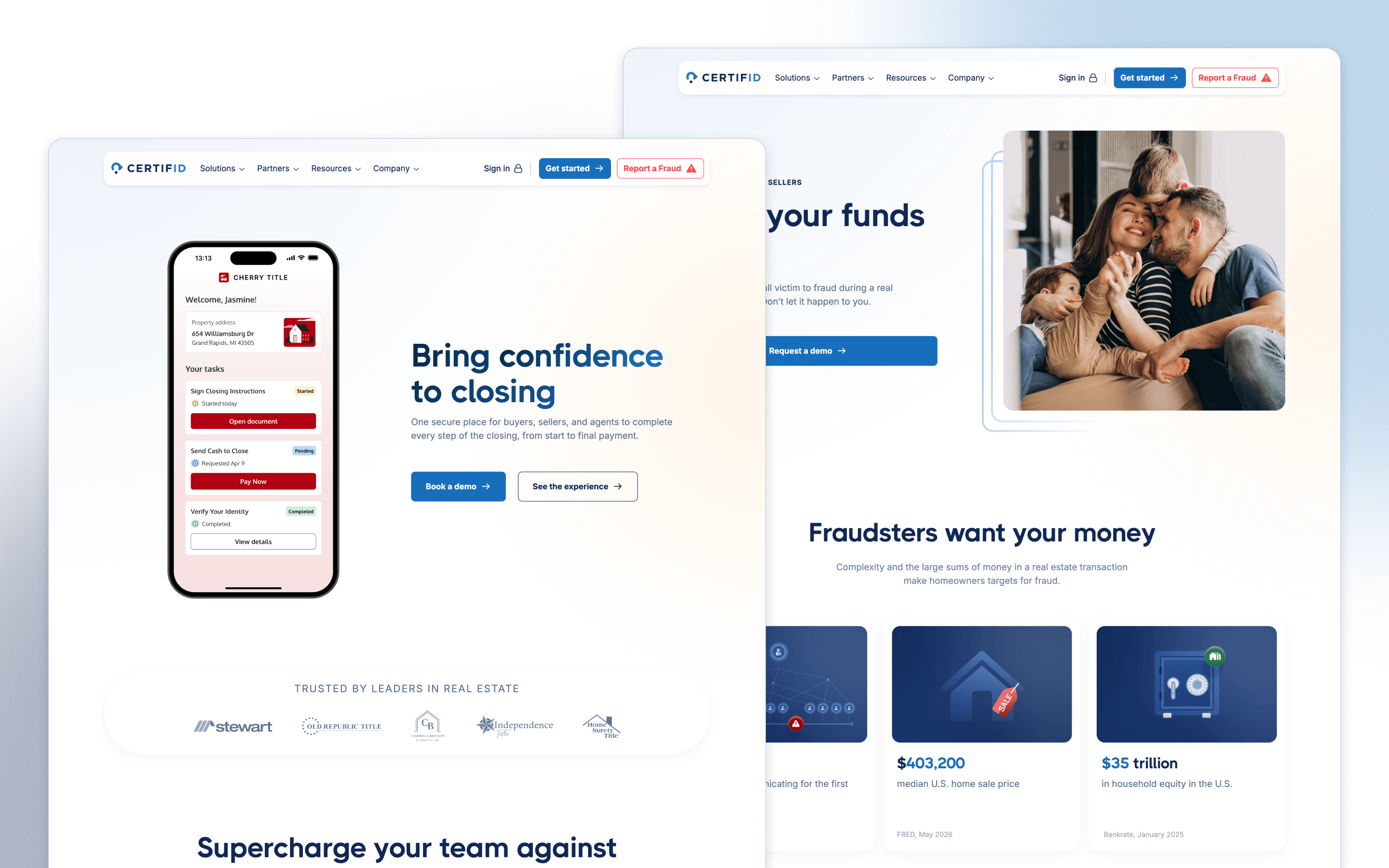
This is a useful example if your redesign also involves changing platforms, because the design and the migration need to be planned together. Before choosing that route, we’d want to understand what your marketing team publishes, which integrations it relies on, and where the current setup makes those tasks harder than they should be.
If your website no longer reflects the product you’re selling, we can help you work through both the design and the publishing setup behind it. Share what you’re building and what you want your team to do with the new site, and we’ll take it from there.
2. Webstacks: Best SaaS Web Design Agency for Enterprise SaaS
 2
2Webstacks
A web design agency organizing enterprise software websites around reusable components and content structures that support growing marketing teams.
Webstacks is a web design and development agency worth considering when your SaaS website has grown beyond a handful of product pages. Its work for Gong brings together navigation, a modular design system, and a CMS migration, making it a useful reference if your redesign involves reorganizing a growing website.
For a marketing team, those decisions affect what happens long after launch. You’ll want to know how new solution pages fit into the navigation, which layouts your team can reuse, and how much help you’ll need to publish the next campaign. These are good questions to bring to a conversation with Webstacks.
Featured project: Gong
For Gong, Webstacks redesigned the public website, reorganized its navigation and solution pages, and migrated content from WordPress to Sanity. The project also included a modular design system, giving the website a set of reusable pieces to support its pages.
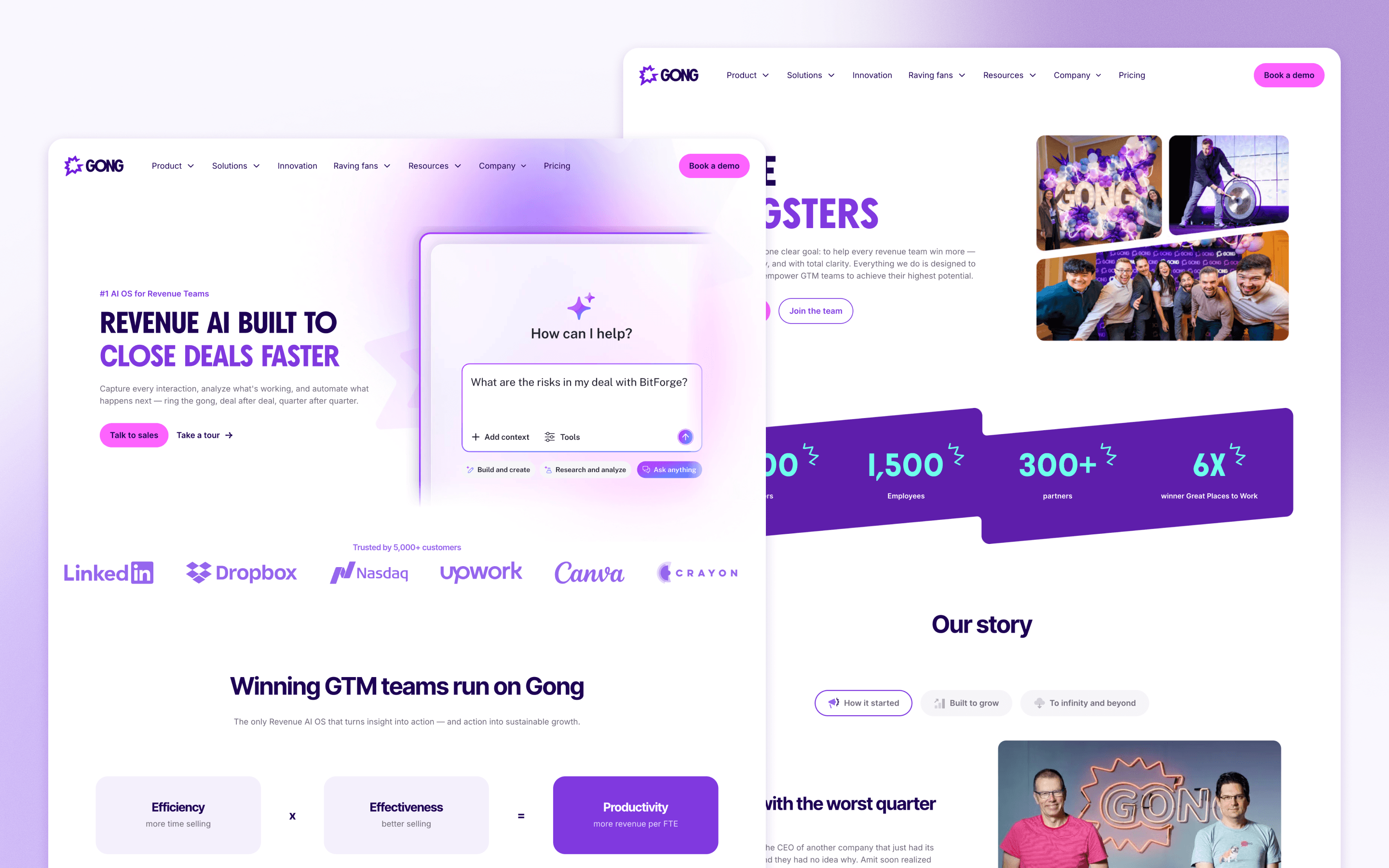
This is a useful project to explore if your company serves several audiences or keeps adding products, because the challenge extends beyond making the homepage look better. As you review Gong’s website, consider how your own products, use cases, and customer stories would fit into a similarly structured experience.
3. Clay: Best SaaS Web Design Agency for UI/UX Design
 3
3Clay
A digital design agency connecting website interfaces with visual systems that help software companies present their products consistently.
Clay is a digital design agency whose Phenom project connects website design with a broader visual system. Its work includes content, interface design, custom icons, animation, and development, giving you several parts of the visitor experience to examine within a single engagement.
That makes Clay worth exploring when your software is difficult to explain through standard page layouts alone. The relationship between content and interface design can help a buyer understand what they’re looking at, particularly when a platform has different capabilities that need to feel like parts of the same product.
Featured project: Phenom
For Phenom, an HR software company, Clay created website and UI design, a reusable design system, custom iconography, and strategic animation, with light and dark visual treatments. The project also included content and development, connecting the visual direction with the finished website work.
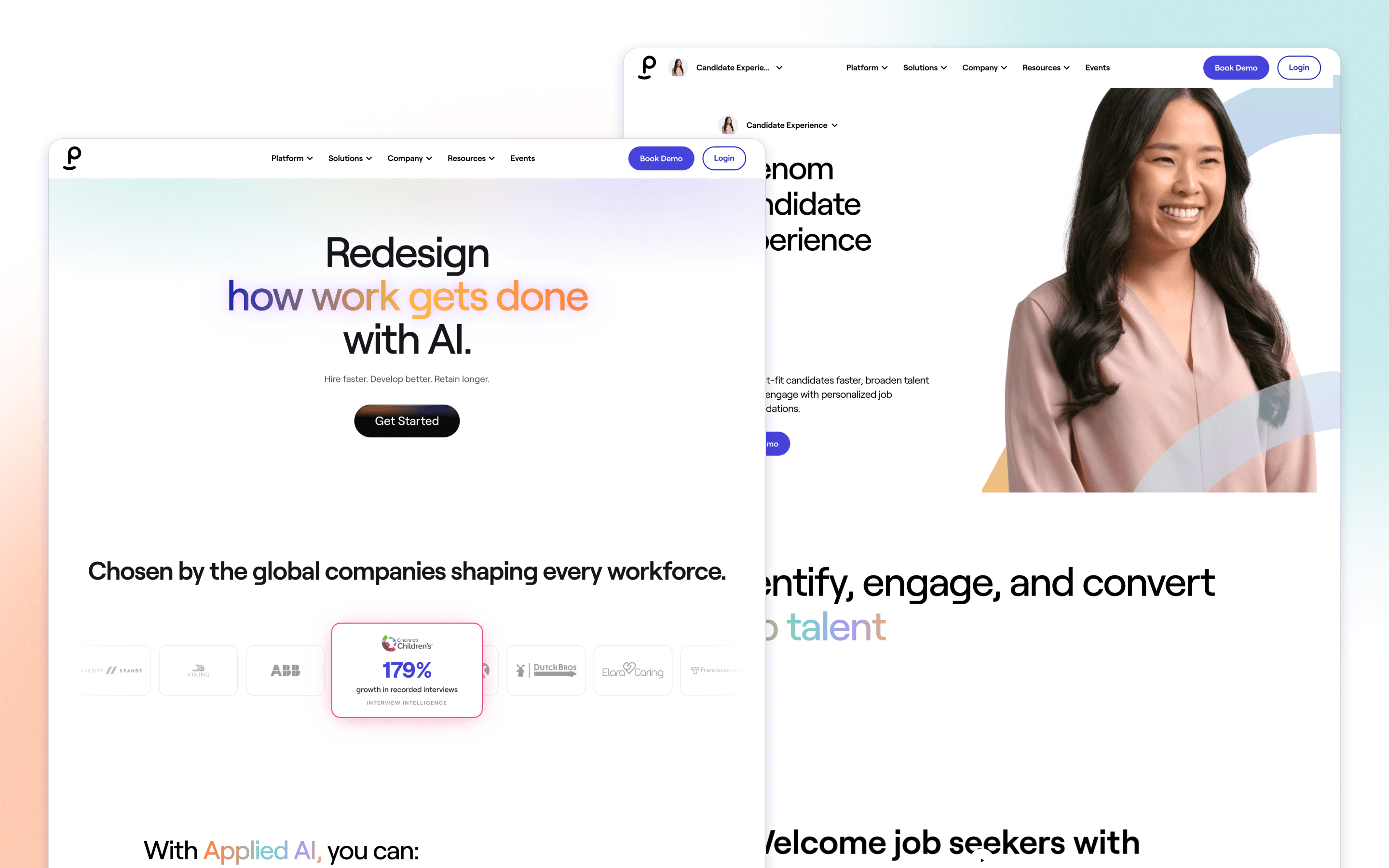
When reviewing this project, look beyond the opening screen and consider how the design introduces different parts of the platform. If your own site has become a collection of unrelated product pages, this is a useful reference for discussing how shared visual decisions can make the experience feel more coherent.
4. Refokus: Best SaaS Web Design Agency for Motion Design
 4
4Refokus
A creative studio bringing brand direction and website design together for software companies seeking a distinctive digital presence.
Refokus is a creative studio to explore if motion is part of the direction you want for your SaaS website. Its selected Meridian engagement brings positioning, identity, website strategy, design, and Webflow development together, which gives you a broader starting point than adding animation to an already finished design.
For your own brief, describe what movement should help someone understand. It could introduce a workflow, connect related ideas, or give a product reveal its rhythm; asking the studio to explain that purpose is more useful than requesting animation on every section of the page.
Featured project: Meridian
Meridian is an AI search visibility software company, and Refokus worked on the positioning, brand identity, website strategy, design, and Webflow development for its launch website. That combination makes the project a reference for building the product’s public identity alongside its website.
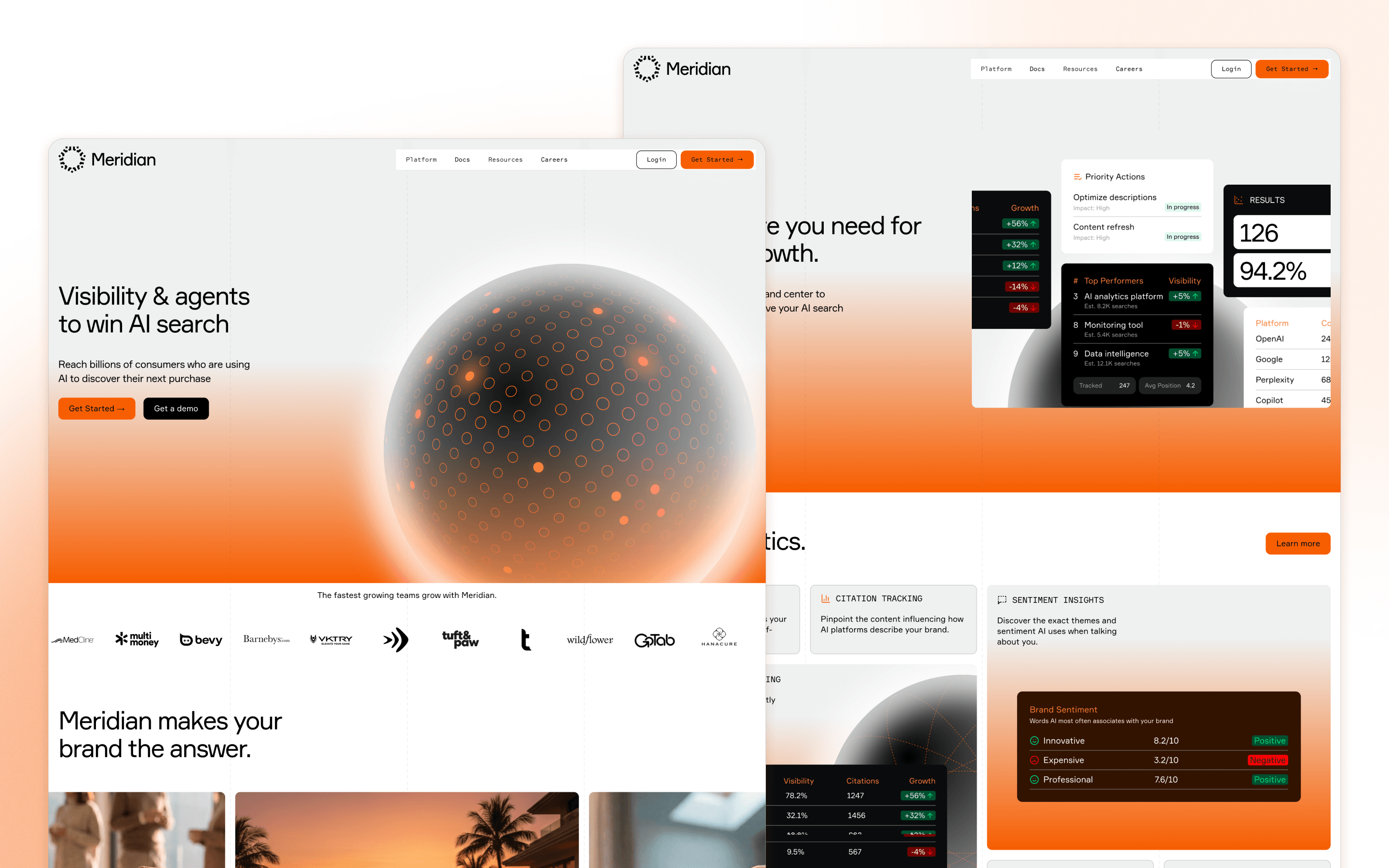
A launch project like this is useful when your product’s public identity is still taking shape. Review the website alongside the studio’s motion work, then ask which interactions it would propose for your product and how they would behave on smaller screens, where visitors have less room to take everything in.
5. N4: Best SaaS Web Design Agency for Webflow
 5
5N4
A digital design studio building Webflow websites that combine product presentation with custom motion and a considered user experience.
N4 is a digital design studio whose Wispr Flow project combines Webflow development with strategy, UX/UI, and motion. It’s a relevant team to explore when you already want to build on Webflow and need an agency that can shape the website’s design as well as implement it.
The platform choice is only part of that conversation, because a website still needs a clear way to introduce the product and guide someone through it. Ask to see how the design translates into an editable build, including which sections your team would be able to reuse after launch.
Featured project: Wispr Flow
For Wispr Flow, a voice productivity software company, N4 shaped the launch website through digital strategy, interface design, digital brand expression, Webflow development, and motion development. The engagement covers the public-facing website rather than the software’s application interface.
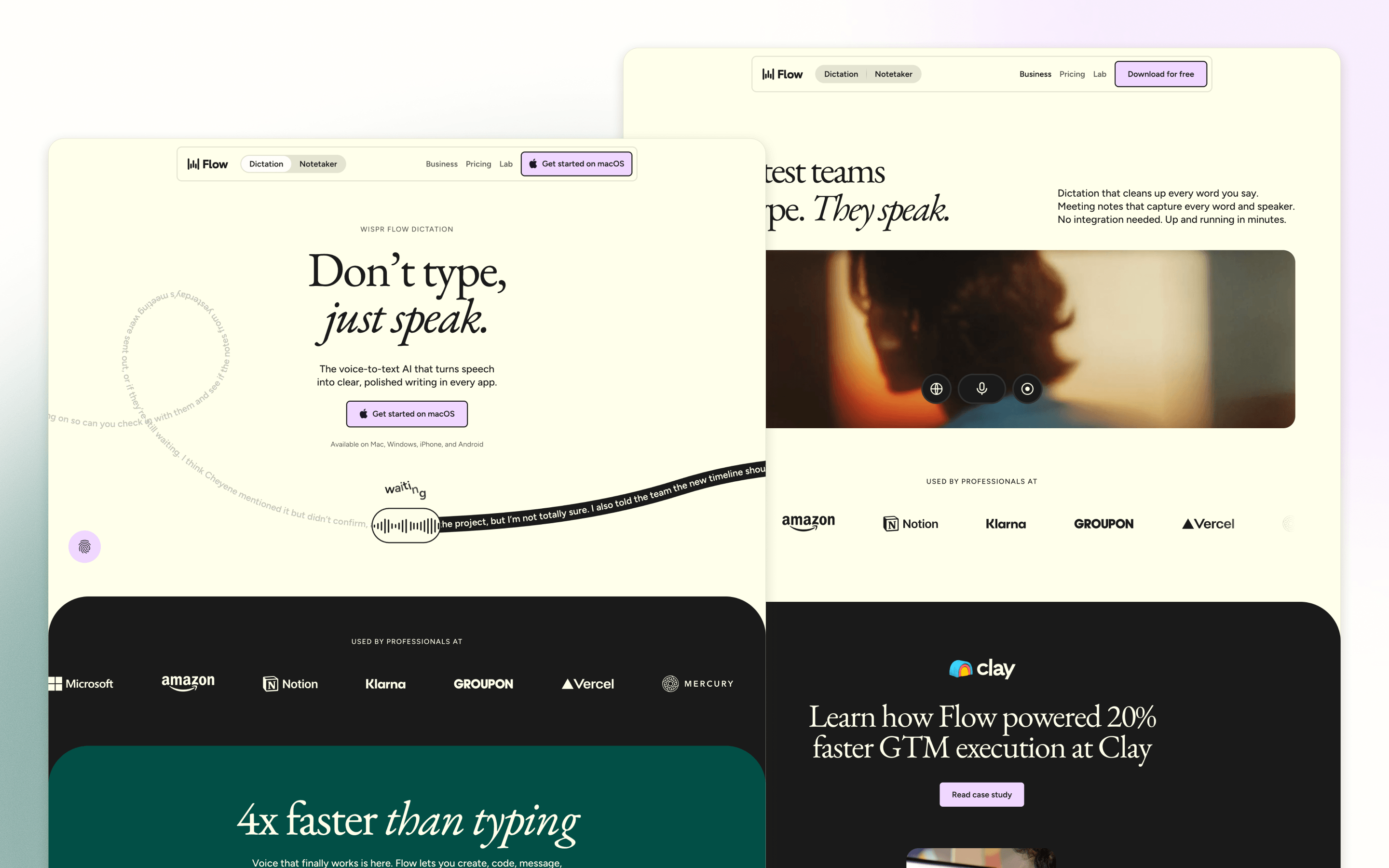
This project is a useful reference if your software does something that’s easier to demonstrate than describe. As you explore it, think about which parts of your product deserve a visual explanation and which should stay simple enough for visitors to understand while quickly moving through the page.
6. Digidop: Best SaaS Web Design Agency for Multilingual Sites
 6
6Digidop
A web agency developing multilingual platforms with shared components that help software groups organize products across different markets.
Digidop is a web agency with a relevant reference for software groups serving several markets. Its Orisha engagement involved a unified multilingual platform, shared components, and structured content, making it worth exploring when the website needs to connect more than a single product or country.
In that kind of project, how content is organized across languages becomes a design question as much as a publishing one. You’ll want to understand which sections can be shared, how product information is maintained, and who can change each part of the website without disrupting another team’s work.
Featured project: Orisha
For Orisha, Digidop directed creative and UX/UI work and built the Webflow Enterprise architecture and front end. The wider project involved separate partners for AI-assisted migration and SEO/AEO, while Digidop’s scope included shared components, product discovery, and structured CMS content.
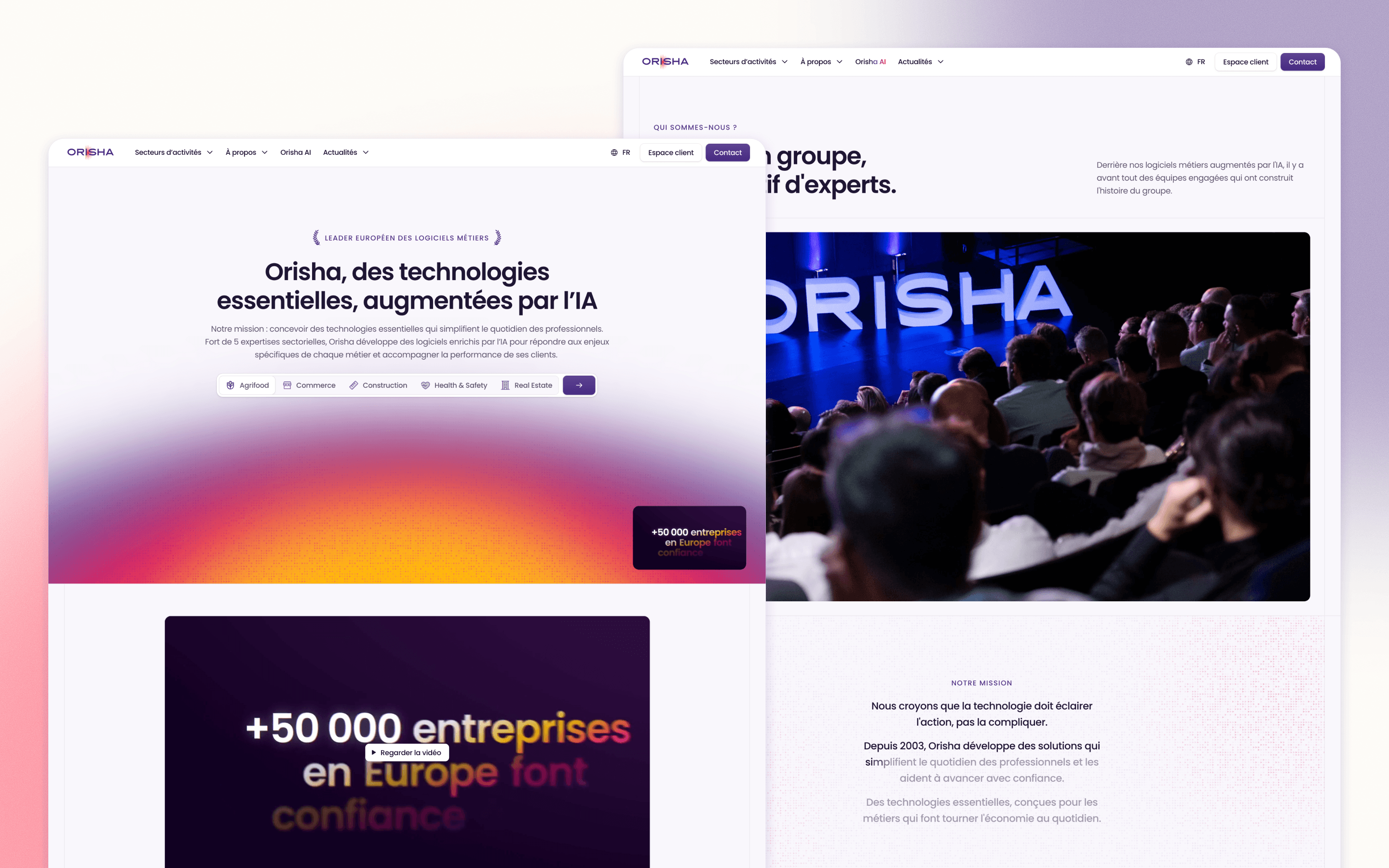
That division of responsibilities is useful to discuss if your own project will involve several teams. Ask Digidop how it would coordinate design, content, and development with your translation or migration partners, so everyone works toward the same page structure and launch requirements.
7. Baunfire: Best SaaS Web Design Agency for Product Storytelling
 7
7Baunfire
A digital agency using content, illustration, and animation to help software companies tell a clearer story about their products.
Baunfire is a digital agency whose work for Replicant combines content strategy with illustration, animation, and website design. It’s worth considering when visitors can see your features but still need help understanding how those features fit into a useful product.
A clearer story starts with the order in which you introduce information, then gives the design something specific to communicate. Content and visuals should work through the same explanation, so ask how the agency would turn your product demo or sales conversation into pages a new visitor can follow.
Featured project: Replicant
For Replicant, a conversational AI software company, Baunfire launched a new corporate site with content strategy, design direction, illustration, and animation. The project also included a streamlined conversion path, reusable templates, and an editable content system.
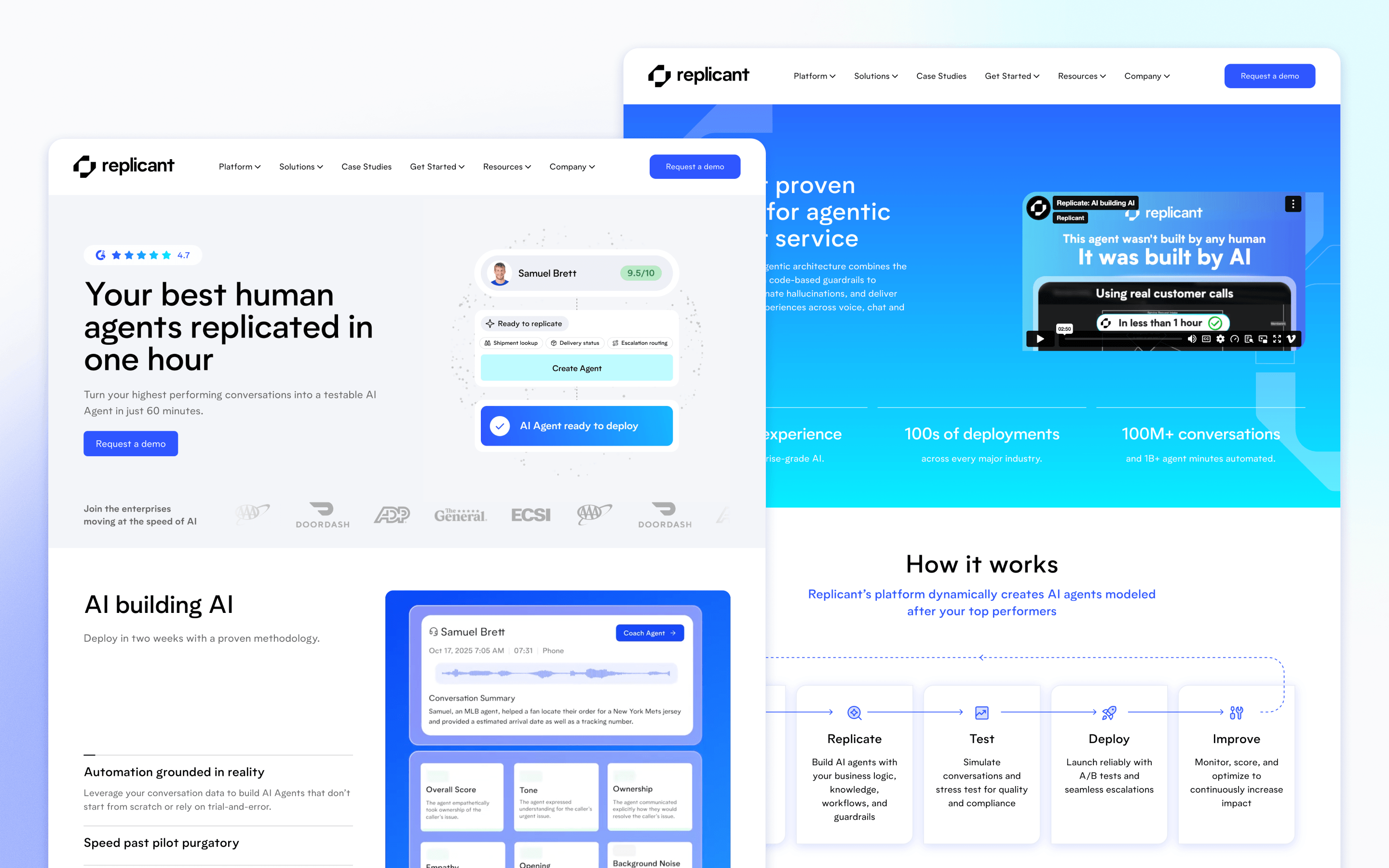
This is a helpful reference if your website needs to explain unfamiliar technology without requiring a long technical introduction. Look at how the product story is organized, then consider which questions your own visitors need answered before they would be comfortable requesting a conversation with your team.
8. Ramotion: Best SaaS Web Design Agency for Branding
 8
8Ramotion
A design agency connecting brand identity and marketing websites so software companies present a recognizable experience across touchpoints.
Ramotion is a design agency whose work for Descript connects brand identity with a public marketing website. Its scope spans visual assets, iconography, explainer animation, and website implementation, making it a relevant reference if your brand and website need to develop together.
That can be especially helpful when different parts of your company already look like they belong to different businesses. A shared visual identity gives the website a foundation, while the page design works out how that identity supports explanations, examples, and the next action you want someone to take.
Featured project: Descript
Ramotion created identity assets and marketing-site work for Descript, an audio and video productivity platform. Its published account describes animation, iconography, and CMS/front-end work across an engagement that evolved through different technologies, rather than a single fixed implementation.
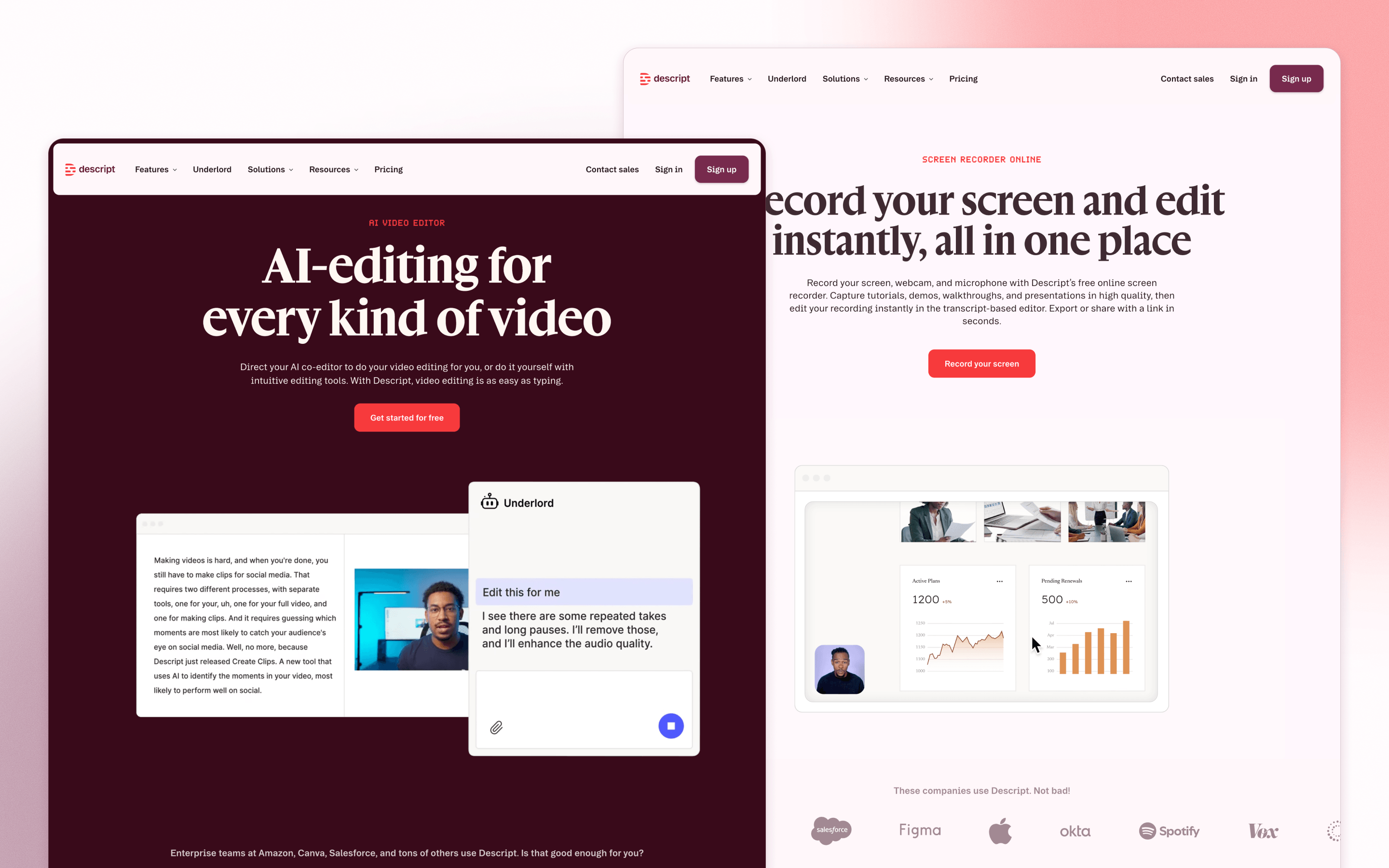
For your own project, the useful question is how the agency would keep the brand recognizable as the website changes. Bring examples of your product, sales materials, and existing pages so you can discuss where consistency would help and where the website needs its own way of presenting information.
9. StanVision: Best SaaS Web Design Agency for Design Systems
 9
9StanVision
A design and development agency creating reusable website systems that give software marketing teams a consistent foundation for new pages.
StanVision is a design and development agency with a useful reference for SaaS teams that want their pages to share a consistent system. Its Flowcase project combines a Webflow website, CMS, reusable design system, and custom visual assets within the same engagement.
For a marketing team, reusable design decisions make new pages easier to plan. Instead of starting every section from scratch, you have patterns for introducing features, presenting proof, and connecting related information, with room to create something different when a page calls for it.
Featured project: Flowcase
For Flowcase, a proposal and HR workflow software company, StanVision designed and developed an enterprise Webflow site with CMS content, custom animation, and illustration. It also recreated product screens for feature explanation; those screens are marketing assets rather than evidence of authorship of the application itself.
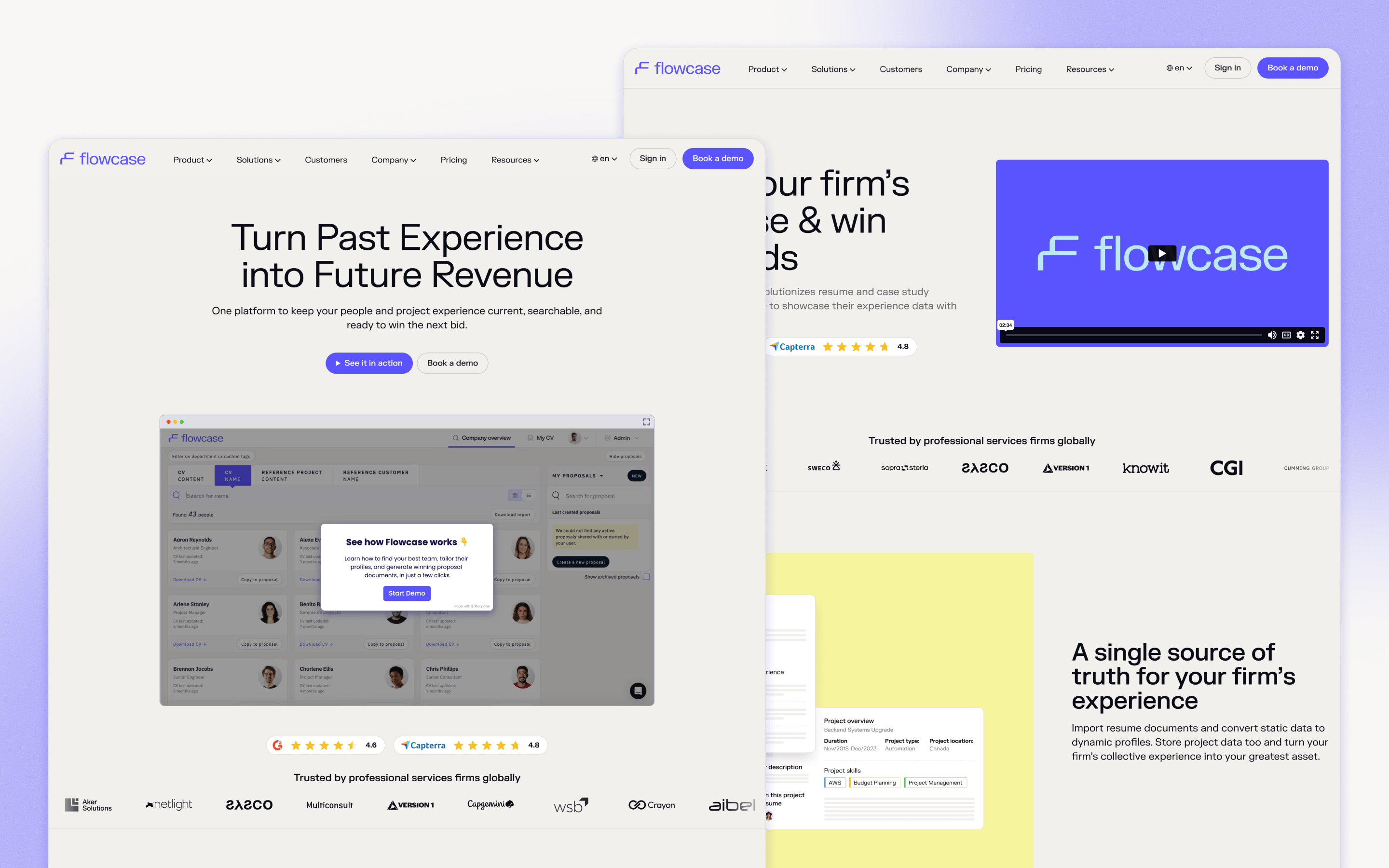
This is a relevant example if your product changes often and the website needs a repeatable way to explain new features. Ask how the system would accommodate longer copy, different product screenshots, and new page types, because those everyday changes reveal how useful a design system will be after delivery.
10. Happy Cog: Best SaaS Web Design Agency for CMS Migrations
 10
10Happy Cog
A digital agency managing CMS migrations and reusable components while helping marketing teams take ownership of their website content.
Happy Cog is a digital agency to consider when changing your CMS is a substantial part of the website project. Its Greenhouse engagement includes functionality review, component building, content migration, training, and continued support, giving you a concrete example of the work behind the platform switch.
If your existing site has years of content, the migration deserves its own scope. Ask how the agency will inventory pages, map CMS fields, preserve required functionality, and prepare the people who publish, so the new platform supports the work your team already does.
Featured project: Greenhouse
For Greenhouse, a recruiting software company, Happy Cog planned and executed a Webflow Enterprise migration, moved thousands of CMS items, and collaborated on more than 100 static pages. Its role also included components and marketing-team training, with ongoing support after the initial migration.
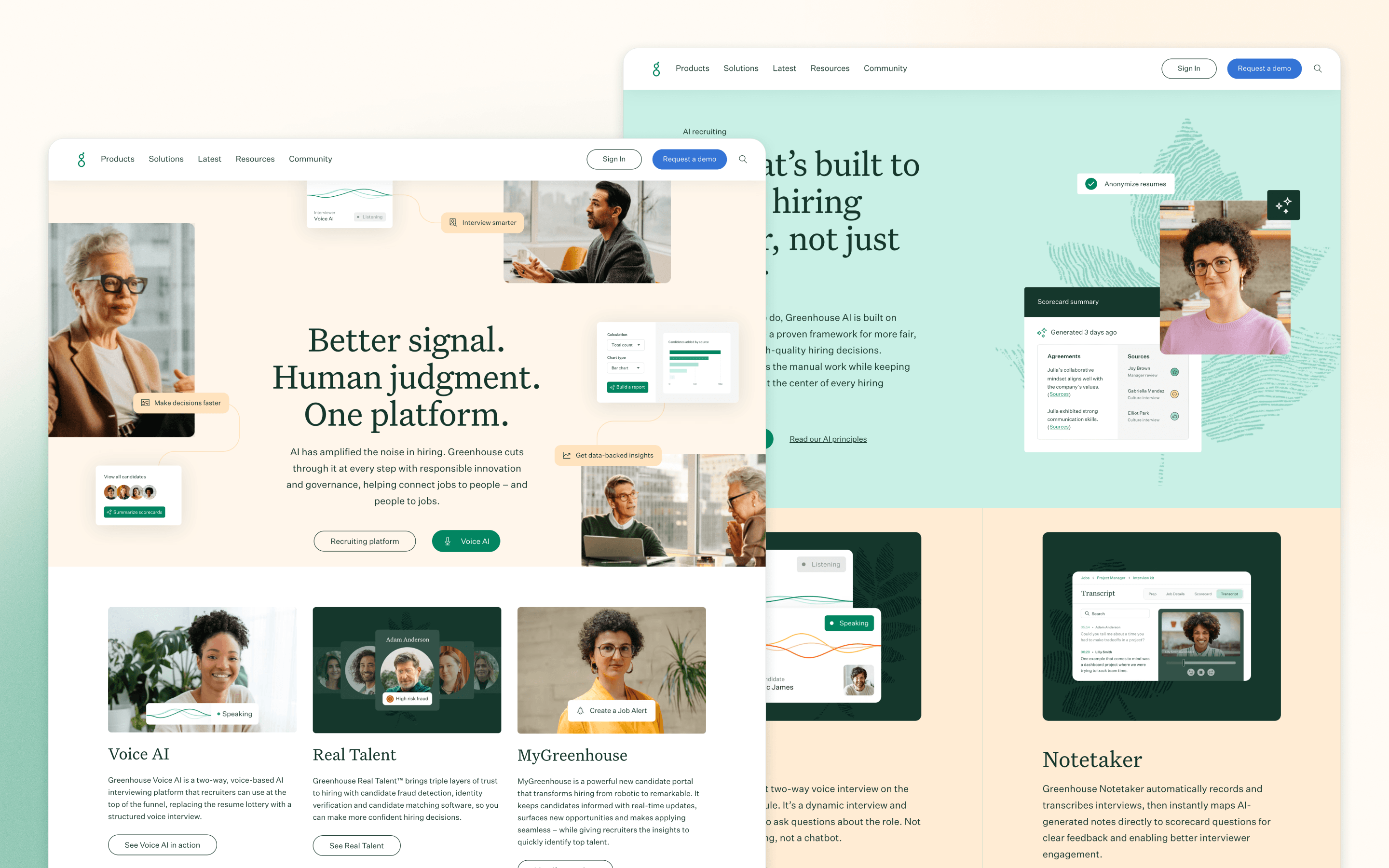
The value of this example is the migration and publishing work, so use it to ask about that process rather than assuming sole authorship of the original visual design. A walkthrough of the content model and handoff would be particularly useful if your team expects to take over routine changes immediately after launch.
11. Everything Design: Best SaaS Web Design Agency for Content Strategy
 11
11Everything Design
A branding and web design agency organizing software messaging and content into websites that explain enterprise products clearly.
Everything Design is a branding and web design agency whose Entropik project covers strategy, information architecture, visual design, and development. It’s a relevant team to explore when you need to decide what the website should say and how that information belongs together before moving into page design.
For enterprise software, the product explanation can become crowded with features, audiences, and technical detail. A clearer content structure gives those ideas a place, allowing the homepage to introduce the business while other pages answer the questions a more interested buyer will bring.
Featured project: Entropik
For Entropik, an experience analytics software company, Everything Design developed brand and website strategy, organized information architecture, and created visual design and custom graphics. Website development was also part of the engagement, connecting the content direction with the build.
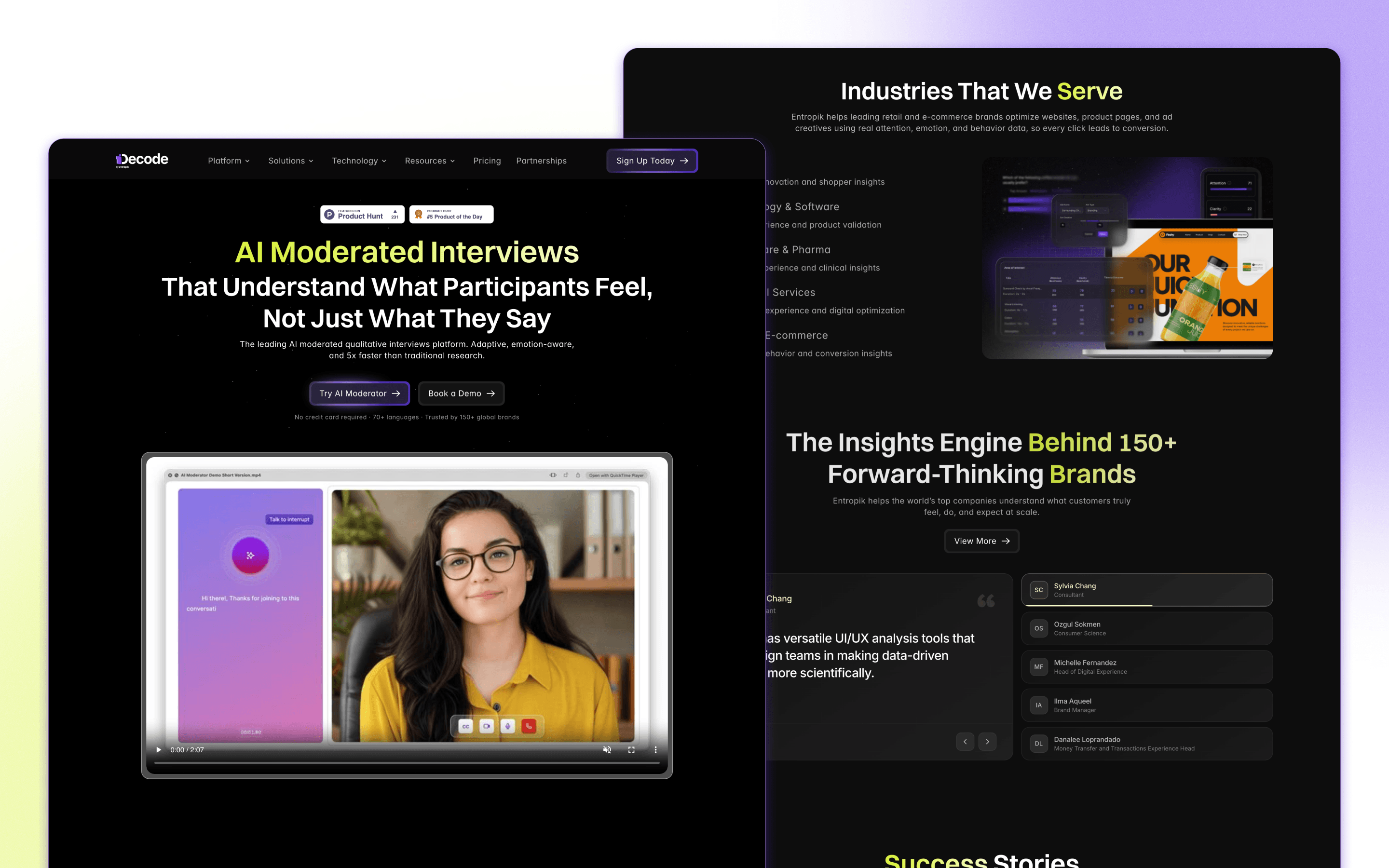
If your current website tries to explain everything at once, this project provides a starting point for discussing priorities. Ask the agency how it would learn from your product and sales teams, then turn that knowledge into a page plan that introduces the software without overwhelming someone encountering it for the first time.
12. L&S Creative: Best SaaS Web Design Agency for Marketing Teams
 12
12L&S Creative
A web design agency creating Webflow marketing pages and campaign components for software companies with ongoing publishing needs.
L&S Creative is a web design agency with SaaS marketing work in Webflow, including a named engagement for DoorLoop. It’s a team to explore if your website needs to support ongoing campaigns and page creation as part of the marketing team’s regular work.
The practical question is how much your team can publish independently. Bring examples of the pages you create most often and ask which elements would be reusable, which edits would require the agency, and how new campaigns would stay consistent with the website’s design.
Featured project: DoorLoop
L&S Creative identifies DoorLoop, a property management software company, among its SaaS Webflow engagements. The agency describes SaaS marketing-page design and development with conversion-oriented layouts and campaign components; ask for a walkthrough of its DoorLoop work to see which pages and elements it delivered.
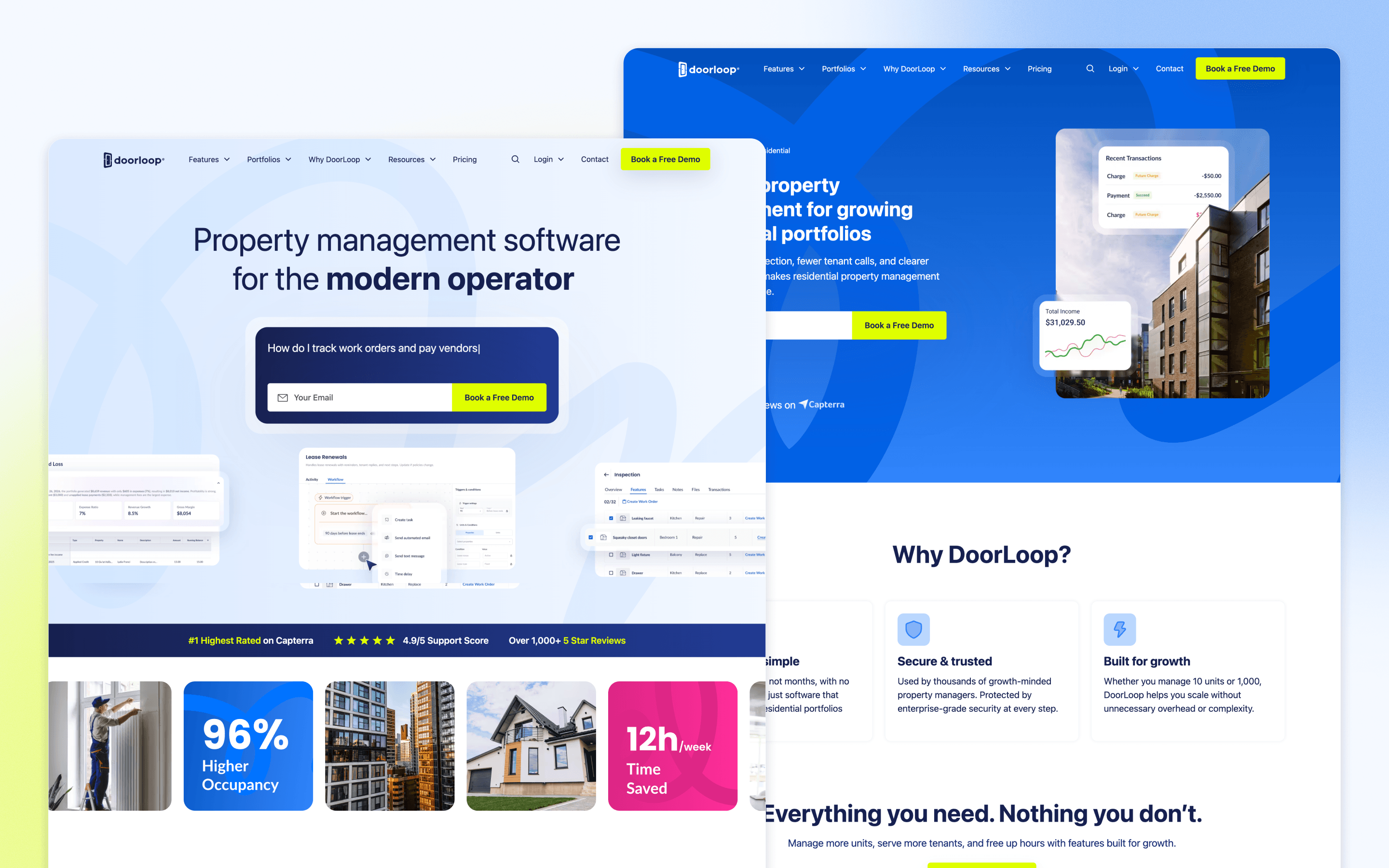
Because the published detail is less extensive than a dedicated case study, ask the agency to walk through the pages it delivered. That conversation can also show how its work would fit your own campaign process, including who supplies copy, who builds new layouts, and how the finished pages are reviewed before publishing.
13. Flowtrix: Best SaaS Web Design Agency for Technical Products
 13
13Flowtrix
A web design agency translating technical software products into marketing websites through page structure, custom graphics, and motion.
Flowtrix is a web design agency whose Databahn work combines page architecture, product storytelling, visual assets, and Webflow development. It’s a relevant reference when the audience needs to understand a technical product before deciding whether a sales conversation is worth their time.
A technical website still has to welcome someone who is learning the category, while giving an experienced buyer enough substance to keep reading. The order of the explanation matters, so consider how an agency would introduce the product before moving into architecture, workflows, or deeper technical details.
Featured project: Databahn
For Databahn, a security data platform, Flowtrix created the website’s page structure, design, graphics, motion, and Webflow implementation. The engagement focused on presenting the product to a technical B2B audience through the public marketing website.
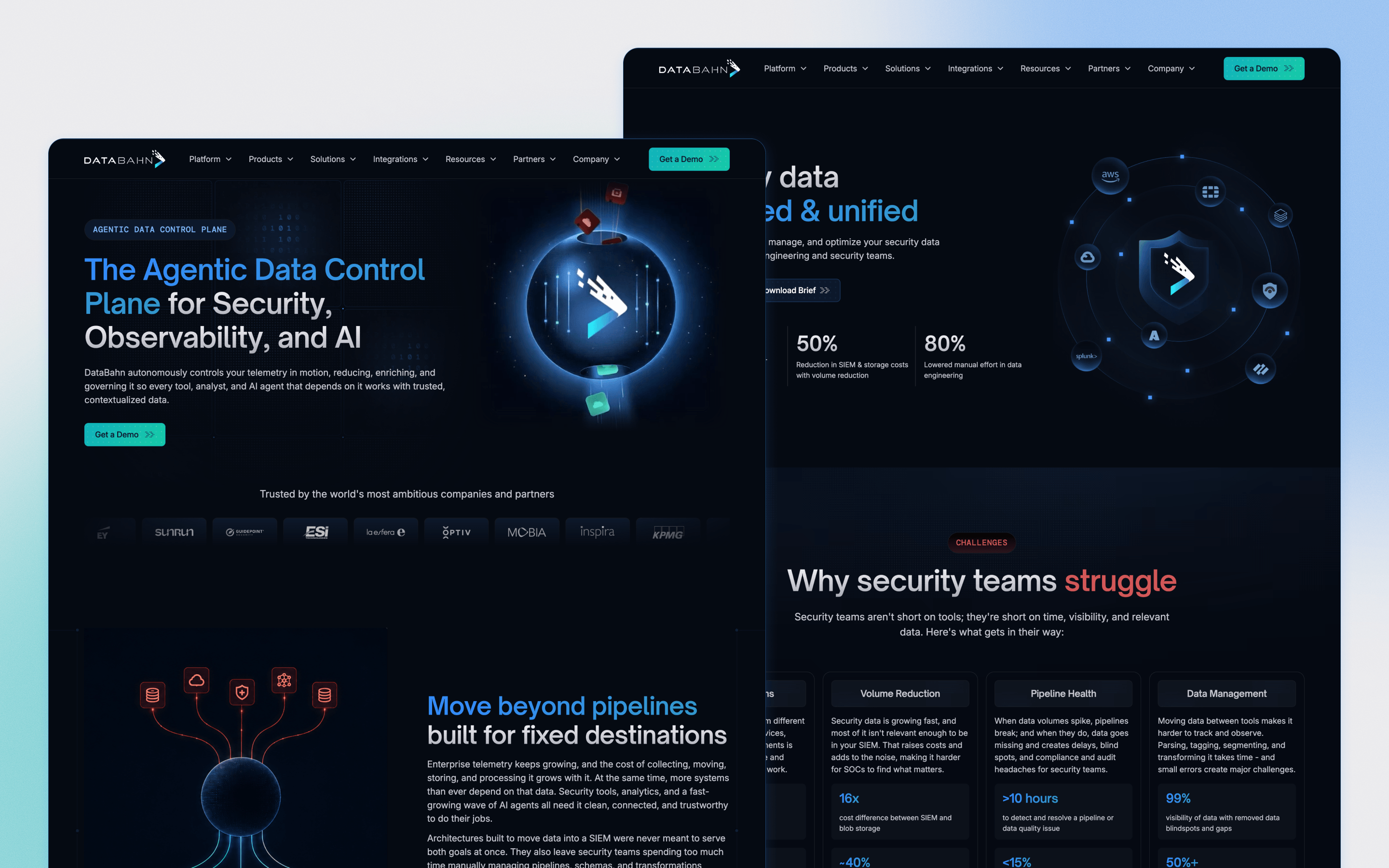
This is a useful example if your internal product language is difficult for new buyers to follow. Bring a demo or a technical overview to the agency conversation and ask how it would translate the important ideas into a page sequence, including where visual explanation would help and where precise written detail should remain.
14. Focus Lab: Best SaaS Web Design Agency for Rebranding
 14
14Focus Lab
A branding agency extending new visual identities into website design for software companies changing how they present their businesses.
Focus Lab is a branding agency whose Contentstack work extends a new identity into interactive website design. It’s worth exploring if your company is changing how it presents itself and the website needs to express that change clearly, rather than simply carrying a new logo.
A rebrand affects more than the visual surface of the site, because the way you describe the business may change too. Discuss the brand and website as connected work, with a clear agreement about which parts the agency will design and who will turn those designs into a production build.
Featured project: Contentstack
For Contentstack, Focus Lab developed brand strategy, identity, illustration, motion, and interactive website design to clarify its composable platform. Use the project to review its brand and design approach, then discuss production development separately when defining your own engagement.
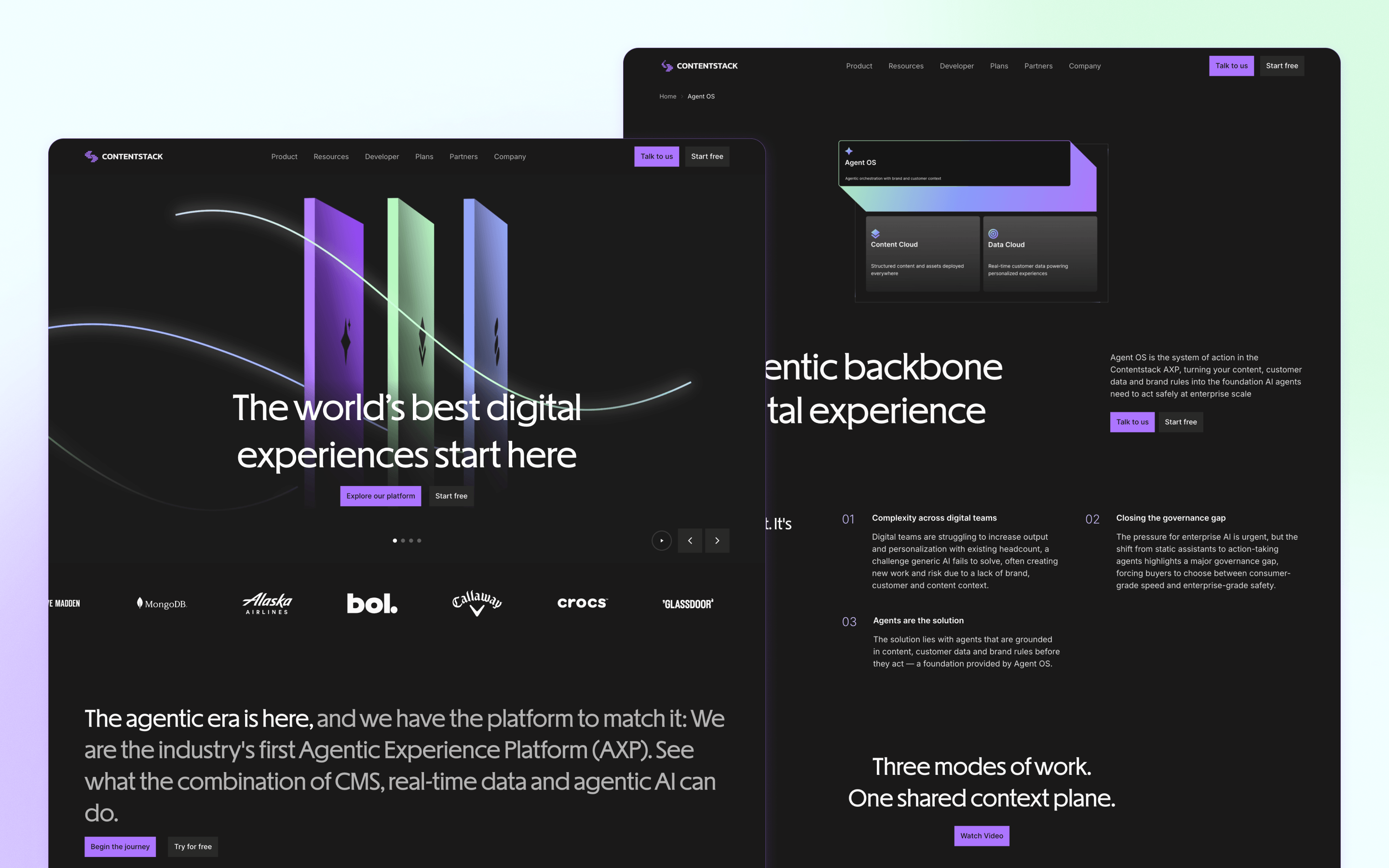
That makes this project especially useful for evaluating the creative direction of a rebrand. If you already have a development partner, ask how the design handoff would work and which interactions, reusable components, and responsive states would be specified before implementation begins.
15. Polybox Studio: Best SaaS Web Design Agency for Custom Illustrations
 15
15Polybox Studio
A brand and web design studio creating custom illustrations that help software companies give technical products a recognizable visual identity.
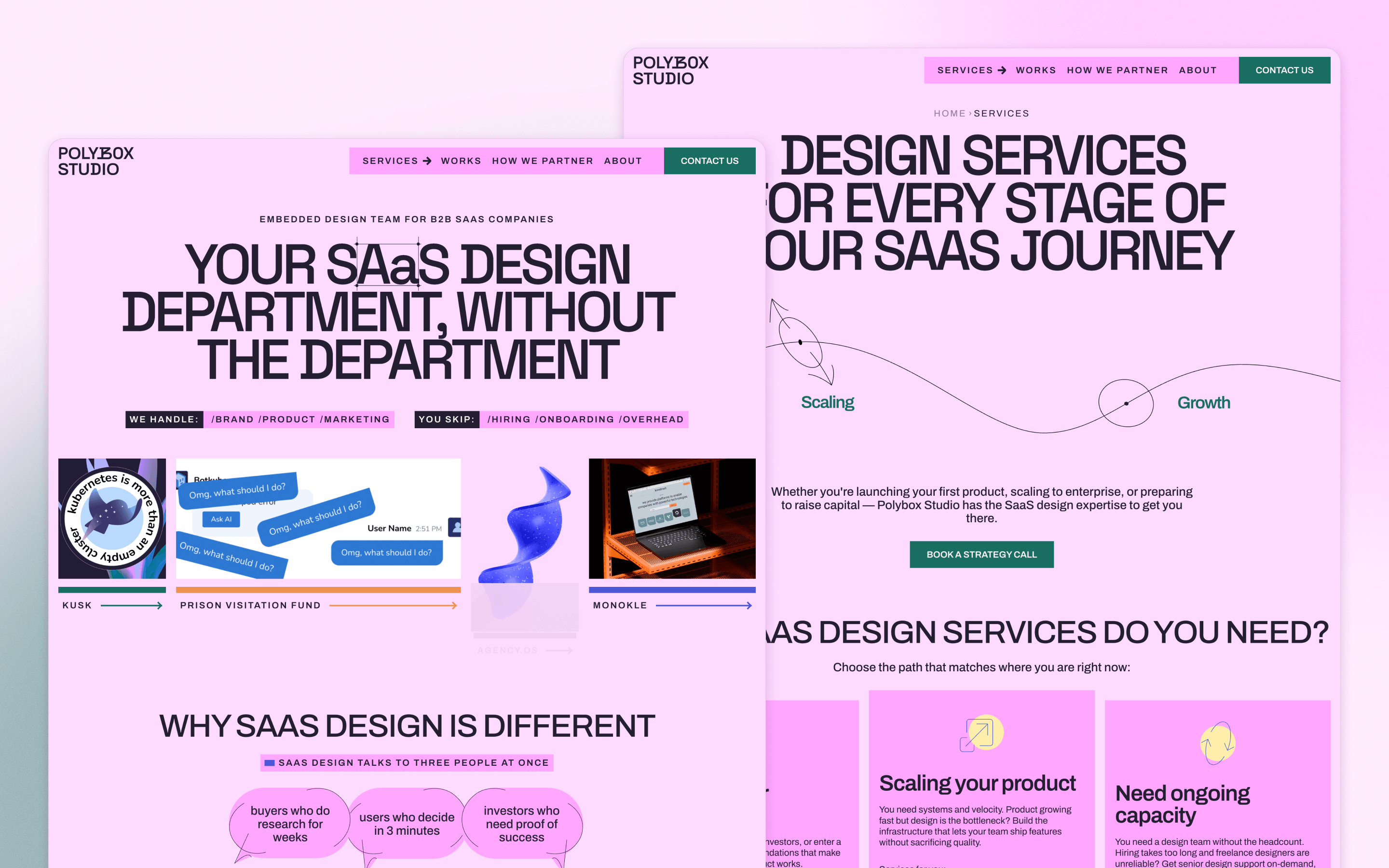
Polybox Studio is a brand and web design studio whose Botkube work brings custom illustrations into the way a technical product presents itself. It’s a relevant team to explore if your website needs a visual identity that can explain software without relying entirely on screenshots or generic technology imagery.
Illustration can give an unfamiliar product a recognizable character, while still leaving room for the details a technical buyer needs. In your brief, explain where visitors struggle to follow the product and ask the studio which ideas would benefit from a custom visual treatment.
Featured project: Botkube
For Botkube, a Kubernetes collaboration and automation tool, Polybox created brand identity, website design, illustrations, and a reusable visual system. The project included a mascot as part of that identity, giving the software a recognizable presence across its brand materials.
This is a useful reference if your software deals with infrastructure or workflows that are difficult to show in a single product image. Review how the visual language supports the brand, then discuss which assets your own team would need for the website and future product announcements.
16. LoudFace: Best SaaS Web Design Agency for Conversion-Focused Design
 16
16LoudFace
A branding and web agency connecting software positioning with website layouts that guide visitors toward the next step.
LoudFace is a branding and web agency whose Icypeas engagement connects positioning, messaging, and website design. It’s a useful reference if your redesign needs to improve the path from understanding the product to taking the next step, with the brand and copy supporting that path.
Conversion-focused design starts with a clear action, whether that’s a trial, a demo, or a conversation about the product. Before discussing results, agree on what the website should encourage and how your team will measure it, so the design brief has something more concrete than a general request for more leads.
Featured project: Icypeas
For Icypeas, a sales prospecting software company, LoudFace repositioned the brand, developed a visual identity and messaging system, and redesigned the public website. Webflow development and a conversion-focused page structure were also part of the recorded engagement.
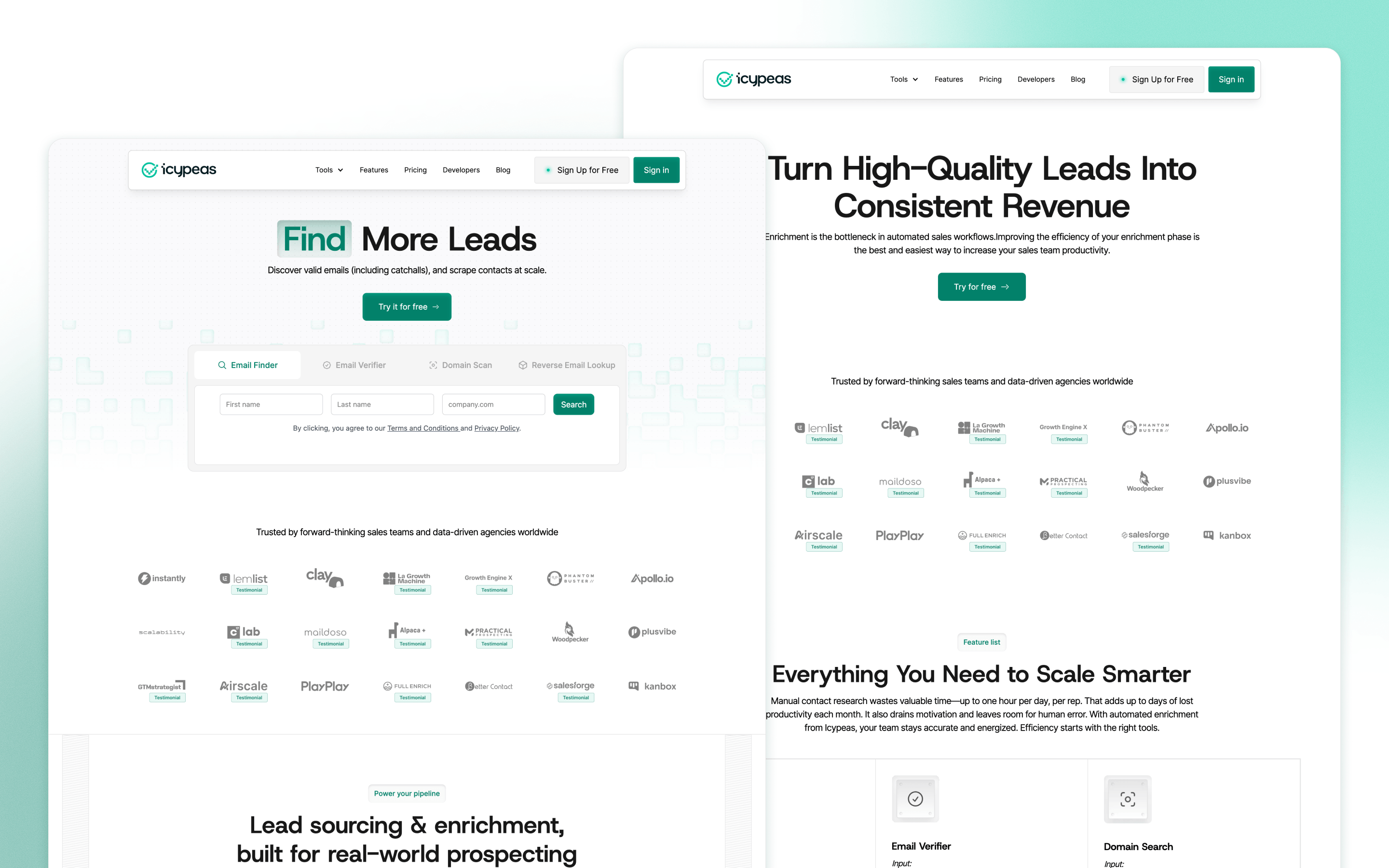
The project offers a starting point for discussing how the explanation of your product affects the actions visitors take. Ask which decisions came from the positioning work and how the agency would evaluate your own pages, while treating any improvement target as something to measure rather than a guaranteed outcome of the redesign.
17. Flowscape Studio: Best SaaS Web Design Agency for Web Development
 17
17Flowscape Studio
A Webflow development studio implementing supplied designs and improving website structure, tracking, and performance for software marketing teams.
Flowscape Studio is a Webflow development studio with a relevant reference for teams that already have their designs ready. Its DualEntry project began with a supplied design and focused on implementation and optimization, so the example is particularly useful when you’re choosing a build partner.
That distinction can simplify your search if another team has already completed the creative work. Ask about turning the design into a maintainable website, including reusable components, content structure, tracking, and the checks needed before your marketing team takes ownership of it.
Featured project: DualEntry
For DualEntry, an accounting software company, Flowscape implemented the supplied design across more than 70 Webflow pages. The work also covered SEO structure, the conversion funnel, performance, and server-side tracking, rather than original brand, copy, or visual design.
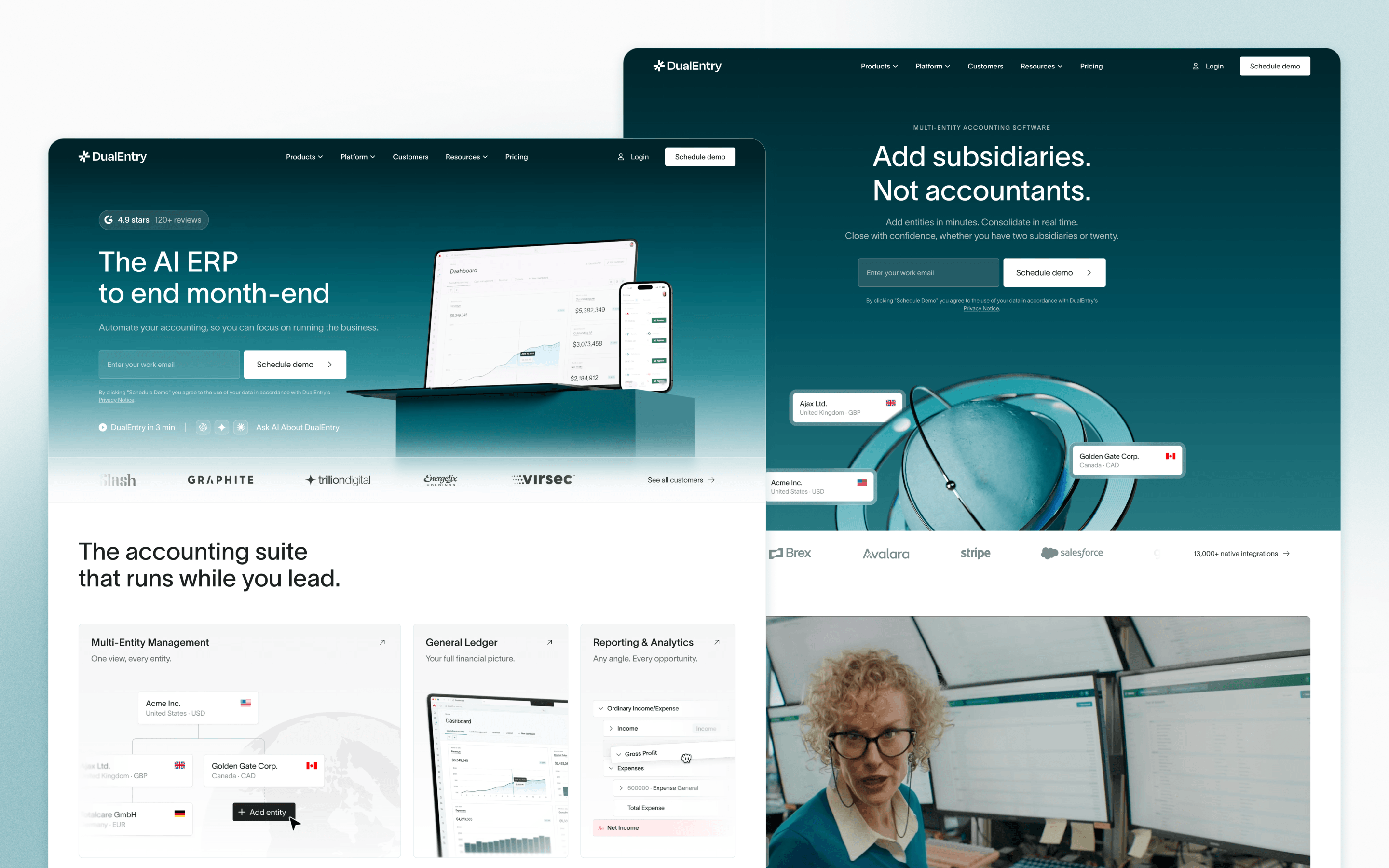
If your project is at a similar stage, use this example to discuss what the development handoff should include. A page count alone won’t explain the job, so share the designs, responsive requirements, CMS content types, and integrations before asking for a schedule or a quote.
What a SaaS web design agency should help you with
A SaaS website project should connect the way you explain your product with the way visitors explore it. That starts with the audience, the page structure, and the content, then carries through design, development, and the publishing tools your team will use after launch. Get those responsibilities into the proposal, because agencies package them differently.
The public website and the application are separate scopes, even when they share a visual identity. Designing feature illustrations or recreating a dashboard for a marketing page doesn’t automatically include redesigning the product interface, account registration, or onboarding. If the visitor journey crosses into the app, agree on the handoff with your product team and name who owns each step.
Copywriting needs the same clarity. Some teams will help shape positioning and write the pages, while others expect approved copy before design begins. Bring product demonstrations, customer questions, and existing sales material into the process so the writing reflects what buyers actually need to understand.
For the build, ask about reusable sections, mobile layouts, CMS content, and the tools connected to forms or scheduling. The handoff should include a practical editing walkthrough, access to the relevant accounts and files, and a written explanation of which changes your team can make independently. Agree on post-launch support separately, including who fixes a form that stops delivering enquiries.
How to choose a SaaS website design agency and compare costs
Start with the work your site needs, then choose 2–3 agencies whose projects show something relevant. If your main problem is explaining the product, review their content and design work; if you already have approved designs, focus the conversation on implementation. Send each team the same brief so their proposals describe comparable work.
A useful brief includes your audience, primary action, page types, content volume, integrations, and launch goal. State whether you need copywriting or branding, and whether your team will migrate the content. A page count helps, but the kinds of pages matter too: a repeated case-study layout is a different assignment from a custom product comparison or interactive demo.
Subject SaaS website redesign, [number] pages, launch in [month]
Hi [name],
I found your agency through BRIX Agency’s SaaS web design agency list. We’re [company], and our software helps [audience] with [main task]. We’d like our website to explain [product or change] more clearly and help visitors [book a demo, start a trial, or contact sales].
We’re planning [number] pages, including [products, use cases, integrations, pricing, and customer stories], with [number] existing content items to review or migrate. We’ll need help with [strategy, copy, design, development, and migration], plus connections to [CRM, scheduling, analytics, or product signup].
Our target launch is [date], and our budget is [range]. After launch, our marketing team should be able to [publish campaigns, edit pages, and add resources].
Could you share a relevant project and explain the team, deliverables, and review milestones you’d propose? Please separate the project fee from hosting, software, maintenance, and ongoing support, and tell us what you would need from our side.
Thanks,
[Your name]
[Role and company]
When the proposals arrive, compare who supplies the copy, how many unique layouts are included, which integrations are covered, and how much migration each team will do. Look for review rounds, training, testing, and support as well, because a lower total can represent a smaller scope. Compare the included work before the price, then ask each agency to resolve the gaps in writing.
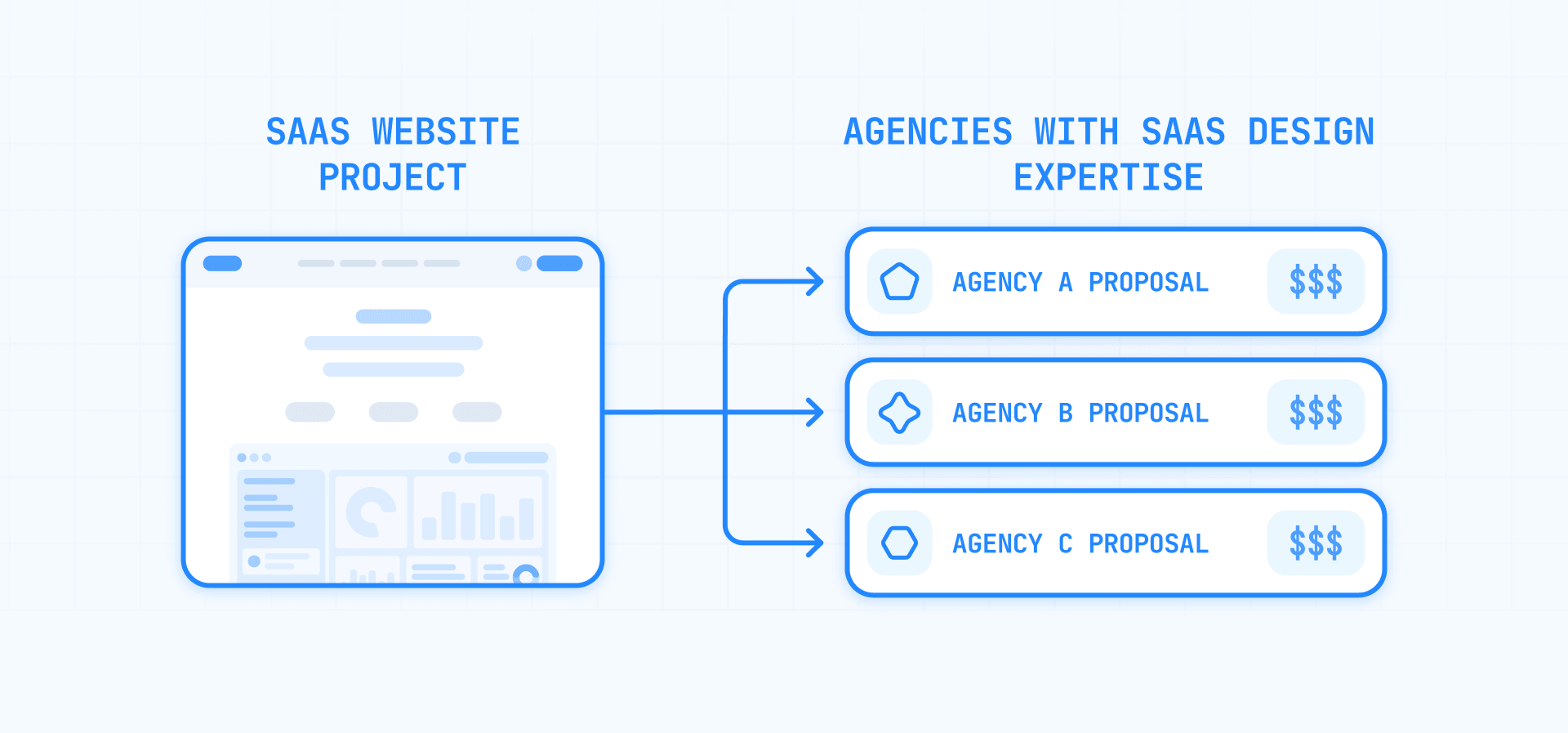
There isn’t a single price that describes all the projects in this list, and their published scopes don’t provide a comparable set of quotes. To budget your own redesign, ask for a fixed proposal or a scoped estimate that separates required work from optional additions. If the total exceeds your budget, agree on a smaller first release with named pages and features instead of leaving the deliverables undefined.
Treat the schedule the same way: ask for milestones for discovery, copy, design, development, migration, testing, and launch, along with the feedback deadlines your team must meet. Assign an internal decision-maker and identify any product or brand changes that could affect the brief, then make sure the proposed date accounts for those dependencies.
Choose a SaaS CMS around your next product launch
Imagine your team needs to announce a new integration next week. The release needs a product page, a customer quote, an update to the navigation, and a campaign landing page, while someone else is preparing a blog post about it. Use that launch as your CMS test, because it will tell you more than a tour of the platform’s dashboard.
Try the work your marketing team actually does
Ask an agency to walk through those tasks using a site it has built, then let the person who will manage your website try the editor. Can they reuse a section, replace a product image, and preview the mobile page without disturbing another campaign? Record which tasks they can finish independently and which need design or development help, so the handoff matches the way your team works.
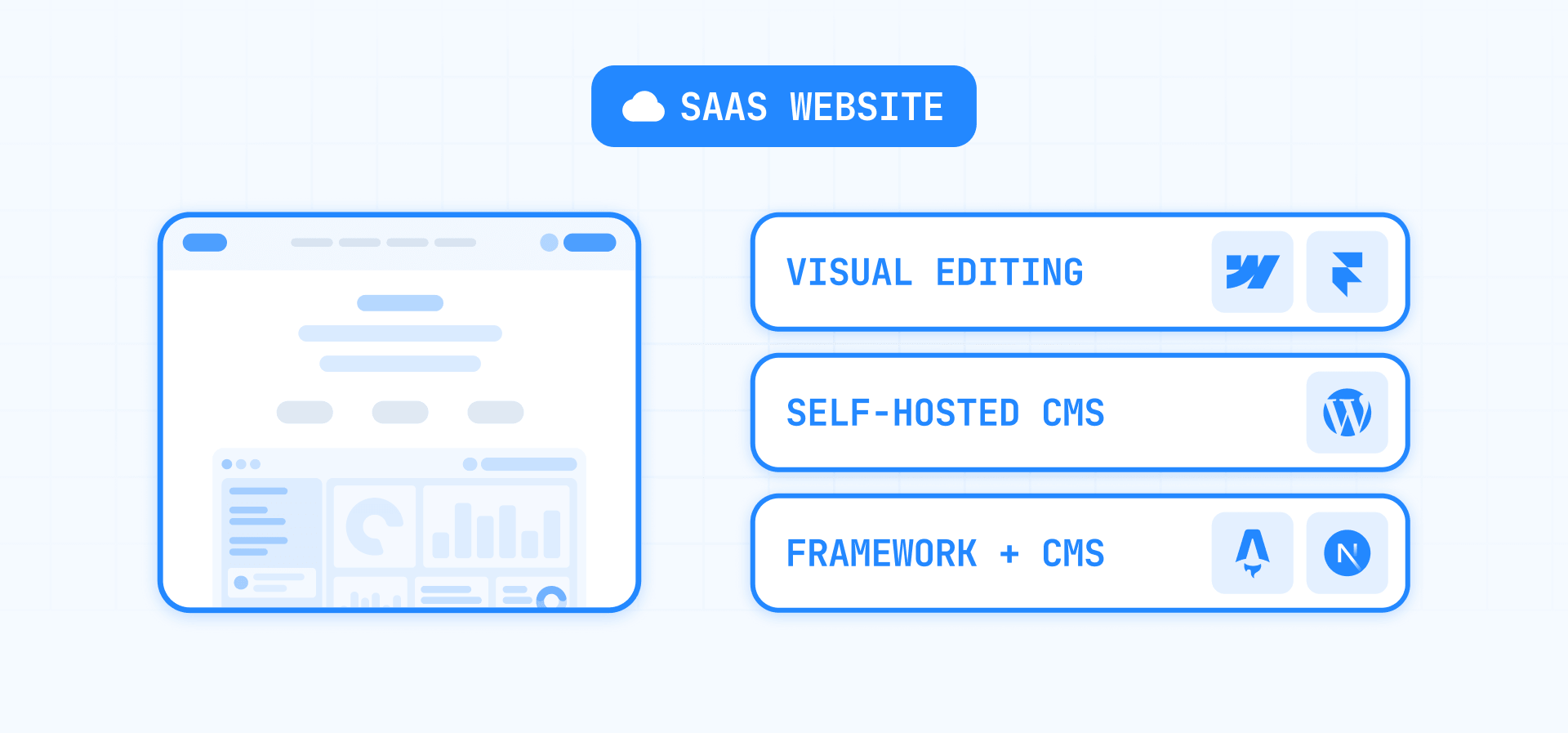
Webflow and Framer are worth evaluating for visual publishing workflows, with CMS content connected to page layouts. Rather than declaring one the winner for every SaaS company, compare how each proposed build would organize your integrations, case studies, and resources. The useful answer is the one your team can demonstrate with its own content.
Decide where the content should live
If your company wants to run the website and CMS database on its own server, WordPress belongs in the conversation. Ask the agency to show the editing blocks it would create and explain who maintains the installation, because hosting control and a friendly editor are separate parts of the decision. Your CRM and other connected services still have their own hosting arrangements.
For a custom development approach, Astro or Next.js can be paired with a CMS that supplies the content editor. This can be useful to explore with your engineering team when the website has requirements beyond ordinary page publishing, but the agency should identify the specific CMS and show how marketers will use it. A framework name alone does not answer that question.
Check what happens after the launch
Before committing, ask how the next release would be handled, what support costs continue, and who owns the website accounts and code. Review a content-heavy page on mobile with its real images and scripts, then discuss what keeps the experience fast as the site grows. Choose the setup your team can keep using, with development support clearly defined for the changes outside its everyday workflow.
SaaS website design essentials: product clarity, demo journeys, and content
Explain the software with useful product examples
A visitor should be able to understand who the product helps and what it does before working through a long feature list. Use product examples, screenshots, or demonstrations to support the explanation, with enough context to make each visual meaningful. On a landing page, connect the message to the campaign that brought the visitor there and give them a clear next action.
Motion can show a sequence or draw attention to a useful detail, but the explanation should still work when someone scrolls quickly or prefers reduced motion. Keep the product recognizable, and label conceptual illustrations when they differ from the actual software. Ask the agency to plan for changing screenshots and features so updating the visuals doesn’t become a separate redesign.
Connect demo requests and trial signups to the right next step
Decide which actions belong on each page and what happens after someone takes them. A demo request might lead to scheduling, while a trial link may move into an application managed by your product team. Review those transitions together so the visitor understands what to expect and the receiving system gets the information it needs.
Before launch, test the complete path from the page to the destination, including confirmation messages, CRM delivery, scheduling, and analytics events. A submitted form isn’t the whole journey if the enquiry never reaches the right team. Agree on what counts as a qualified action and review results after launch without assuming the redesign alone explains every change.
Build content that can grow with the product
Plan where product pages, integrations, use cases, customer stories, and resources belong before the CMS is configured. Each content type needs a purpose and a maintainable structure, with relationships that help visitors discover the next useful page. Startups can begin with fewer pages, while established platforms may need a larger migration and navigation plan.
For an existing website, include a URL inventory, redirect mapping, metadata review, internal-link checks, and analytics continuity in the launch scope. Preserve useful content and review pages that no longer match the product, while avoiding promises that a platform switch will automatically increase rankings. Name the person responsible for checking the site after launch and resolving any indexing or broken-link issues.
Frequently asked questions about SaaS web design agencies
How much does a SaaS website redesign cost?
The cost depends on the defined scope, including page types, copywriting, custom visuals, development, and content migration. A project that refreshes a small set of pages is different from one that reorganizes an enterprise website, so a price without those details gives you little to compare. Ask whether the estimate includes the work your internal team cannot provide.
To establish your budget, send the same brief to 2–3 agencies and request a breakdown of the initial project and recurring expenses. Compare hosting, software, maintenance, and support separately, then identify optional work that could follow the first release. Choose a proposal with clear deliverables and responsibilities rather than relying on a broad price range from an unrelated project.
Is Webflow or Framer better for a SaaS marketing website?
Choose around your publishing tasks and content structure, then ask an agency to demonstrate those tasks in the proposed platform. Both Webflow and Framer combine visual website workflows with CMS content, but the useful comparison is how your specific pages, resources, and campaigns will be managed. A preference for one editor does not establish that every build on it will meet your needs.
Bring examples of a product page, customer story, and campaign page to the discussion, and ask which changes your marketers could make without development help. Include the expected content volume, integrations, hosting costs, and support responsibilities in the comparison. Select the platform after your team has seen its everyday workflow and the agency has explained the complete implementation.
Can our marketing team update a SaaS website without developers?
Yes, when the site is built around editable content and reusable sections, with a clear handoff showing your team how to use them. Routine changes such as replacing copy or publishing a customer story can be planned into the CMS, while new functionality may still require development. The boundary depends on the implementation rather than the platform name alone.
Before signing, list the tasks your team expects to do each week and ask the agency to demonstrate them in a relevant build. Include training, account access, and basic documentation in the proposal, along with support for changes outside the agreed editing scope. Make the handoff practical by having a marketer complete a representative publishing task before accepting the website.
What does a SaaS web design agency do?
A SaaS web design agency plans and creates the public website for a software business, helping visitors understand the product and find a useful next step. The engagement can include content strategy, copywriting, design, development, CMS setup, and integrations, although each agency packages those services differently. Its portfolio should explain which parts of a named project it actually delivered.
Website work may sit alongside branding or product design, but those are separate responsibilities to clarify in the proposal. A recreated dashboard on a feature page, for example, does not mean the agency built the software application. Ask for a written scope that identifies the public pages, visual assets, technical work, and client contributions included in your project.
How long does it take to design and develop a SaaS website?
The schedule follows the scope and the decisions required to finish it, so ask for milestones instead of treating an unrelated project timeline as your own. Copywriting, brand changes, unique page layouts, integrations, and content migration can each affect the sequence. Your team’s availability for feedback also belongs in the plan, particularly when several people approve the work.
Have the agency explain the path from discovery through design, development, testing, and launch, including what it needs from you at each stage. If you have a fixed release date, agree on the pages and features that must be ready first and identify later additions separately. Accept a launch schedule only after its dependencies and review deadlines are clear.
Can a SaaS web design agency also redesign our product?
Some agencies offer product design as a separate service, but a marketing website engagement does not automatically include the application. The public site helps people evaluate the software, while the product interface supports the tasks customers perform after signing in. Even when they share branding, their requirements, stakeholders, and implementation work need to be scoped separately before the project begins.
If both need attention, ask for named examples of application work in addition to public websites and clarify who owns product development. Discuss the transition from marketing pages into signup and onboarding so the teams understand where their responsibilities meet. Put the application screens, website pages, and shared assets into separate deliverable lists before comparing proposals or agreeing on dates.
What makes a SaaS landing page effective?
A useful SaaS landing page connects the visitor’s reason for arriving with a clear product explanation and next action. That means matching the campaign message, showing relevant product context, and making the intended action easy to understand. Screenshots, examples, or customer evidence should answer the questions a prospective buyer is likely to bring rather than fill space in the layout.
Ask the agency how the page will work on mobile and where a demo or trial action will lead, including any transition into your application. Agree on the event your team will measure and verify that tracking works before launch. Review the page against its specific audience and campaign goal, then use observed behavior to decide what to improve.
Should an early-stage SaaS startup hire a web design agency?
An agency can make sense when the website needs work your internal team cannot cover, such as product messaging, custom design, or a coordinated build. An early-stage company may only need a focused set of pages, so the decision should follow the actual brief and available budget. A template can also be a starting point when its structure fits the content.
Before reaching out, identify what visitors need to understand now and which parts of the product story are still changing. Ask candidates to propose a defined first release, with optional additions separated from the initial work, rather than assuming you need an enterprise-sized site. Choose the arrangement that gives you a clear deliverable and a manageable publishing setup.
What pages should a SaaS website include?
Choose pages around the questions buyers need answered, including what the product does, who it serves, and how to take the next step. Depending on the business, that can mean product, use-case, integration, pricing, customer-story, and resource pages. A smaller product may explain several of those topics together, while a broader platform may need separate paths for different audiences.
Work with the agency to define the purpose of each page before finalizing the sitemap or configuring the CMS. Review how the pages connect, which content needs regular updates, and whether the team can maintain the proposed structure. Begin with the pages that support your current buying journey, then add new sections when there is useful content and a clear audience for them.
Can a SaaS website connect to our CRM and demo-booking tools?
Yes, those connections can be included in the website project, provided the agency scopes the systems, required data, and implementation responsibilities. A demo request may need to create a CRM record, route an enquiry, or open a scheduling flow, while a trial signup may involve your product team. Describe the complete journey before asking for an integration quote.
Before launch, test the path from the website through each destination, including field mapping, confirmation messages, and the analytics event your team will use. Agree on who owns accounts and who investigates failures after handoff, since the website is only one part of the flow. Include those checks and ongoing responsibilities in the proposal rather than assuming a form embed covers everything.
Choose a SaaS agency around the work your website needs
The best starting point is the part of your website that no longer serves the business well. It might be the product explanation, a publishing setup your team has outgrown, or a design that doesn’t reflect what you’re building today. Choose agencies whose projects give you something relevant to discuss, then use that conversation to understand how they would approach your situation.
Once you have 2–3 candidates, send the same brief and compare the work each team proposes. Look for clear responsibilities, a practical editing handoff, and a launch plan that includes the content and tools your site depends on, so you can make the decision with more than a portfolio impression.
If you’d like to explore a custom website with BRIX Agency, send us a message with your current site and what you want to change. We reply in less than 24 hours, and during business hours (PST), you can expect a response in 1–2 hours. We’ll review the project and help you understand what working together could look like.


Join readers commenting on this post!