A donor, a volunteer, and someone looking for help can arrive at the same nonprofit website within a few minutes of one another. Each needs a different answer, and none should have to understand your organizational chart to find it. That is where a thoughtful website can make a real difference.
The challenge is giving those people a clear path while still telling the story of the work. Your website needs to explain why the mission matters, show what the organization does, and make participation feel manageable, all within a publishing setup your staff can realistically keep up with.
We've brought together 18 nonprofit web design agencies with projects you can review directly. The list includes teams working on resource libraries, chapter networks, fundraising, service information, and brand clarity, followed by advice for choosing a partner and planning a website around the people who will use it.
How we selected these nonprofit web design agencies
We chose teams with named nonprofit projects, considering the audiences they serve and the work each agency delivered. The examples include fundraising, service information, membership, and resource libraries, with design and development roles explained so you can compare the kind of support your organization needs.
BRIX Agency publishes this guide and is listed first with our own portfolio. The specialties are intended to help you find a relevant starting point, not to suggest that every nonprofit needs the same approach; a chapter network, research foundation, and local service organization can have very different website priorities.
The nonprofit web design agency shortlist
- BRIX Agency: A web design agency creating custom nonprofit websites with clear storytelling, approachable visual design, and straightforward paths to participation.
- Teal Media: A nonprofit digital agency connecting public information, member resources, donations, and service discovery within a coordinated website system.
- Constructive: A nonprofit branding and web design agency organizing complex subjects into clear identities, useful websites, and searchable digital resources.
- Cosmic: A social-impact design agency connecting nonprofit brands, program stories, interactive content, and fundraising journeys in custom websites.
- ThinkShout: A digital agency developing shared nonprofit website platforms with reusable design systems, migration tools, and coordinated publishing across affiliates.
- Blue State: A digital agency helping nonprofits organize places, events, memberships, and public information into websites built around participation.
- Loop: Design for Social Good: A social-good design agency extending nonprofit brands into flexible websites with campaign content, publishing modules, and donor-system connections.
- Kanopi Studios: A website agency supporting nonprofit chapter networks through shared WordPress infrastructure, donation tools, location finding, and ongoing development.
- Studio Republic: A charity-focused digital agency grounding website design, accessibility review, and connected experiences in research with the people using them.
- IE Digital: A digital agency designing nonprofit websites around distinct audience journeys, practical content structures, and connected donation and communication tools.
- RAD Campaign: A nonprofit digital agency combining website redesigns with advocacy actions, fundraising tools, CRM connections, and continued platform support.
- Torchbox: A digital agency connecting nonprofit audience research, website design, content management, donations, and volunteering into a coherent supporter experience.
- William Joseph: A design and digital agency bringing nonprofit websites together through content strategy, reusable components, migration, and connected participation tools.
- Reason Digital: A digital agency shaping nonprofit websites through research with service users and careful organization of help and supporter information.
- Hyperakt: A branding and design agency helping nonprofits express their purpose through clearer language, website design, and organized service information.
- Fat Beehive: A charity website agency planning audience routes, content architecture, and visual design in collaboration with specialist implementation partners.
- BoldLight: A digital agency delivering charity website redesigns and supporting organizations with audience insight and connected campaign work.
- Embark: A nonprofit creative agency combining brand refreshes and website delivery with clearer program information and easier staff content management.
1. BRIX Agency: Best Nonprofit Web Design Agency for Custom Design
 1
1BRIX Agency
A web design agency creating custom nonprofit websites with clear storytelling, approachable visual design, and straightforward paths to participation.
At BRIX Agency, we help organizations make their work easier to understand through clear, carefully designed websites. For a nonprofit, that means giving the mission a strong introduction while making room for the programs, people, and practical details that turn interest into a useful next step.
Our original nonprofit designs explore different ways to bring those elements together, from people-focused storytelling to environmental causes. The examples below come from our portfolio and show the attention we bring to imagery, content hierarchy, and the relationship between explaining the work and inviting someone to take part.
Nonprofit design examples from our portfolio
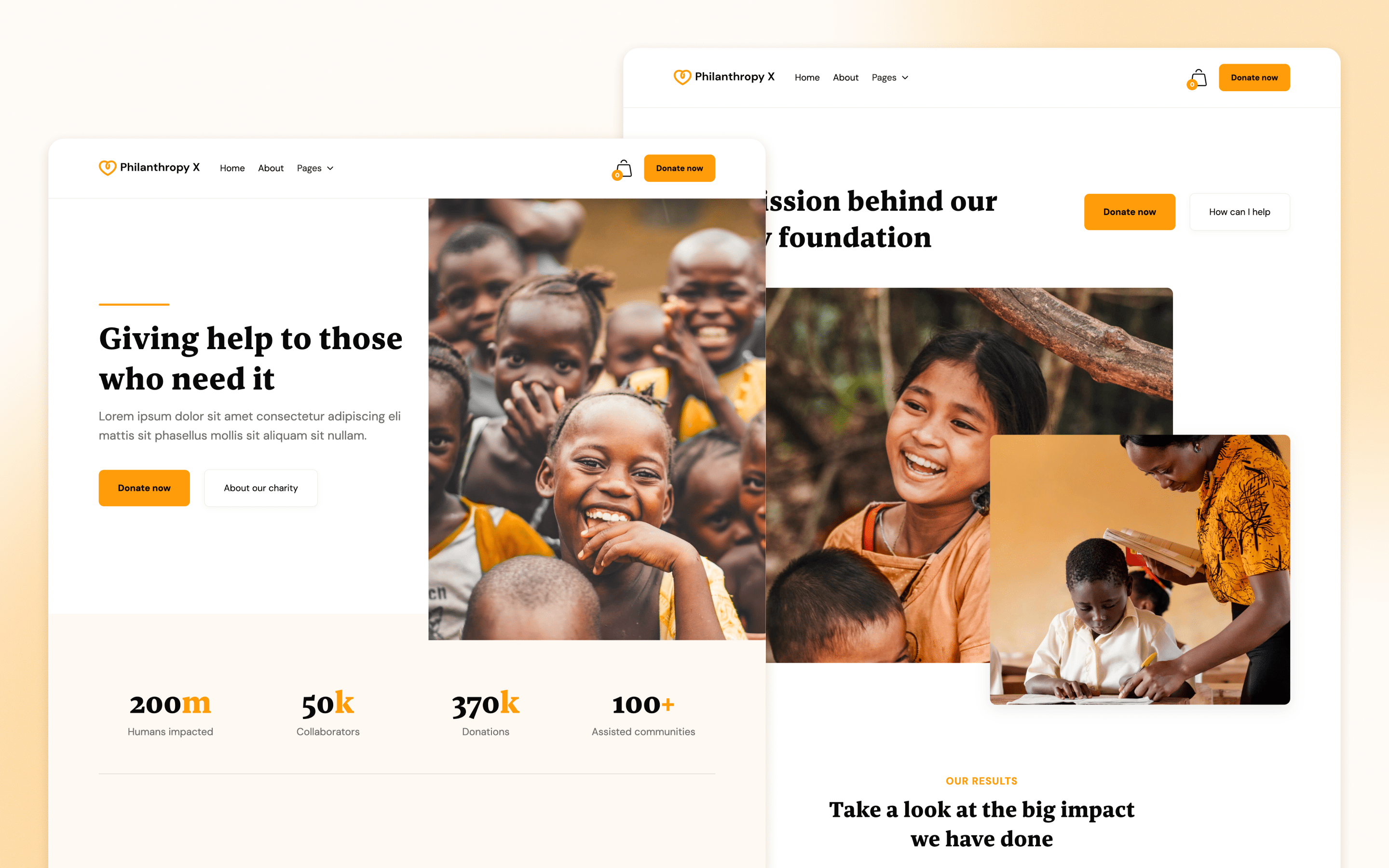
Our Philanthropy X template puts people and the mission at the center of the design. The opening establishes the cause while the supporting pages give the organization space to explain its work, showing how we connect an inviting visual introduction with a more complete story.
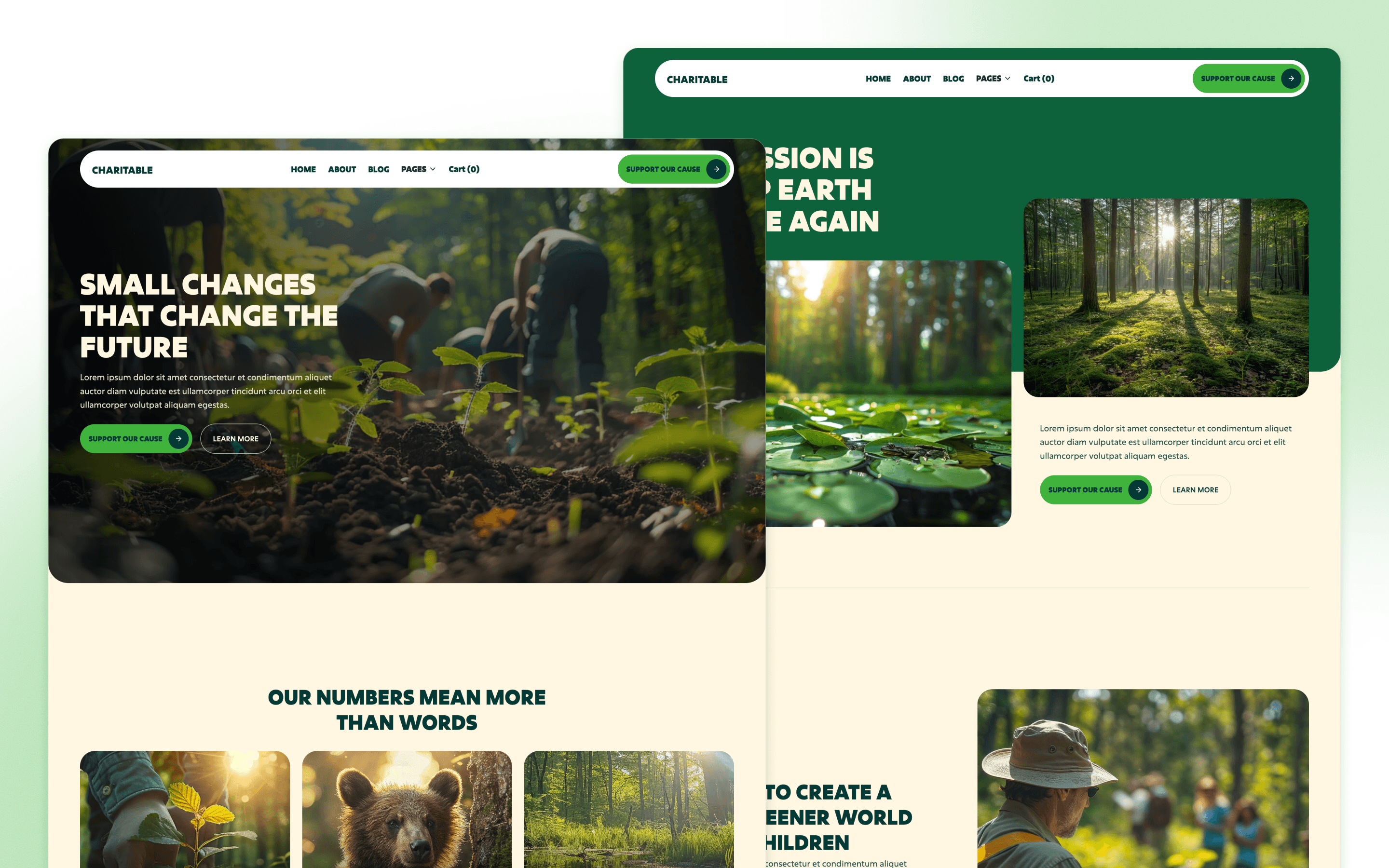
Our Charitable template takes a warm, direct approach to presenting a nonprofit. Photography and clear sections help readers understand the organization before exploring ways to participate, with enough flexibility in the layout to give programs and company background their own place.
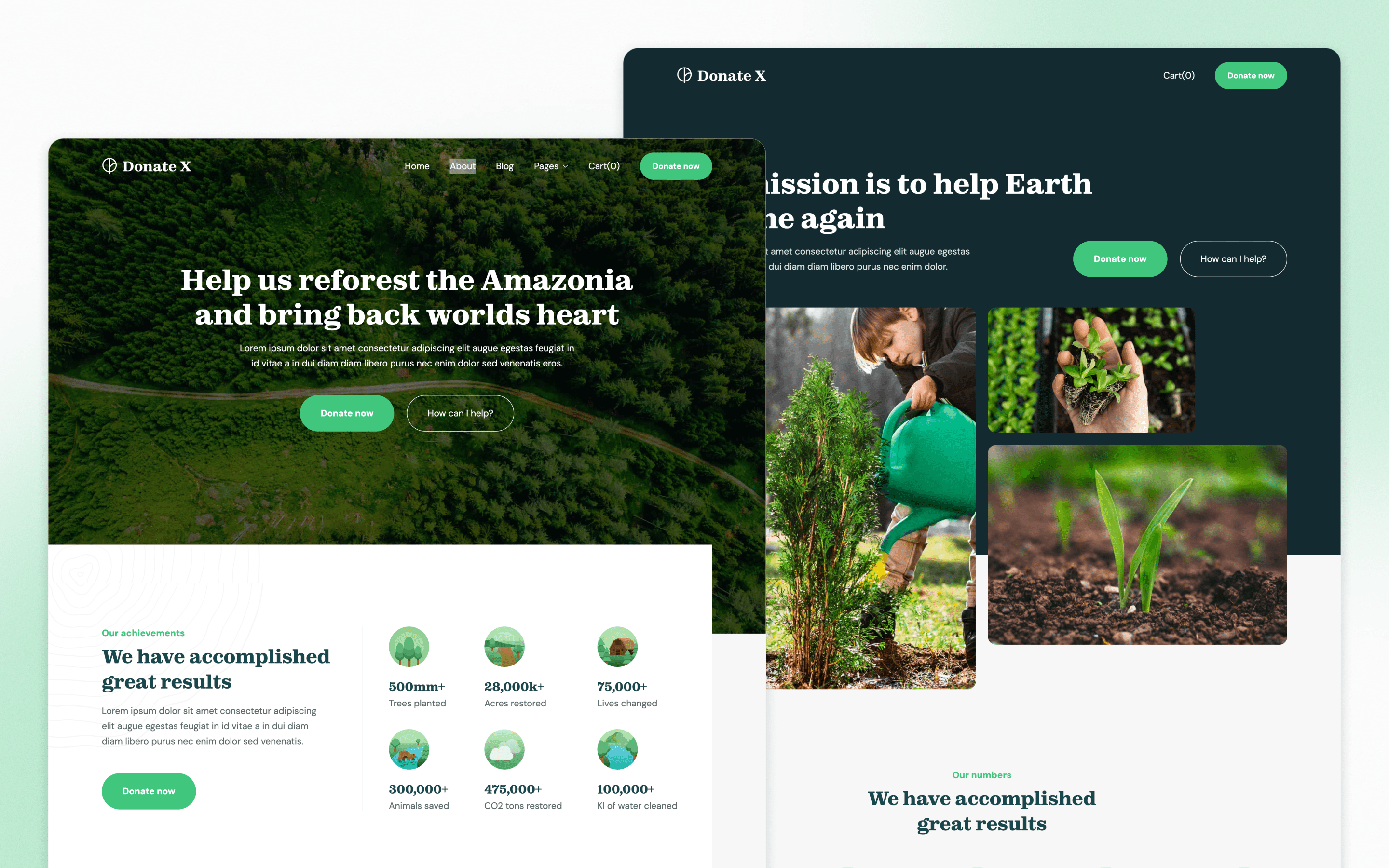
Our Donate X template explores an environmental cause through strong imagery and a clear introduction to the work. The example shows how a focused visual direction can give a mission a recognizable presence while the page structure supports a deeper explanation of the organization.
Our templates are used by more than 60,000 websites across all categories. For your organization, BRIX Agency creates a fully custom website around your mission, audiences, and team, bringing that design experience to a project made specifically for you.
2. Teal Media: Best Nonprofit Web Design Agency for Member Organizations
 2
2Teal Media
A nonprofit digital agency connecting public information, member resources, donations, and service discovery within a coordinated website system.
Teal Media is a useful candidate for an organization whose website serves both the public and an established member network. Its selected engagement connects those audiences through shared content management, with service and resource discovery considered alongside the donation journey rather than added as separate pieces.
That matters when visitors arrive with very different needs, such as finding help, volunteering, or accessing professional resources. Ask the team how it would distinguish those routes in your own organization and which information should be shared across them, so the website feels coherent without treating every audience identically.
Featured project: Meals on Wheels America
For Meals on Wheels America, Teal designed and developed public and member WordPress websites. The documented work includes shared content management, donation journeys, organized resources, and CRM-connected meal and volunteer lookup tools, giving the project a substantial role beyond presenting the organization's mission.
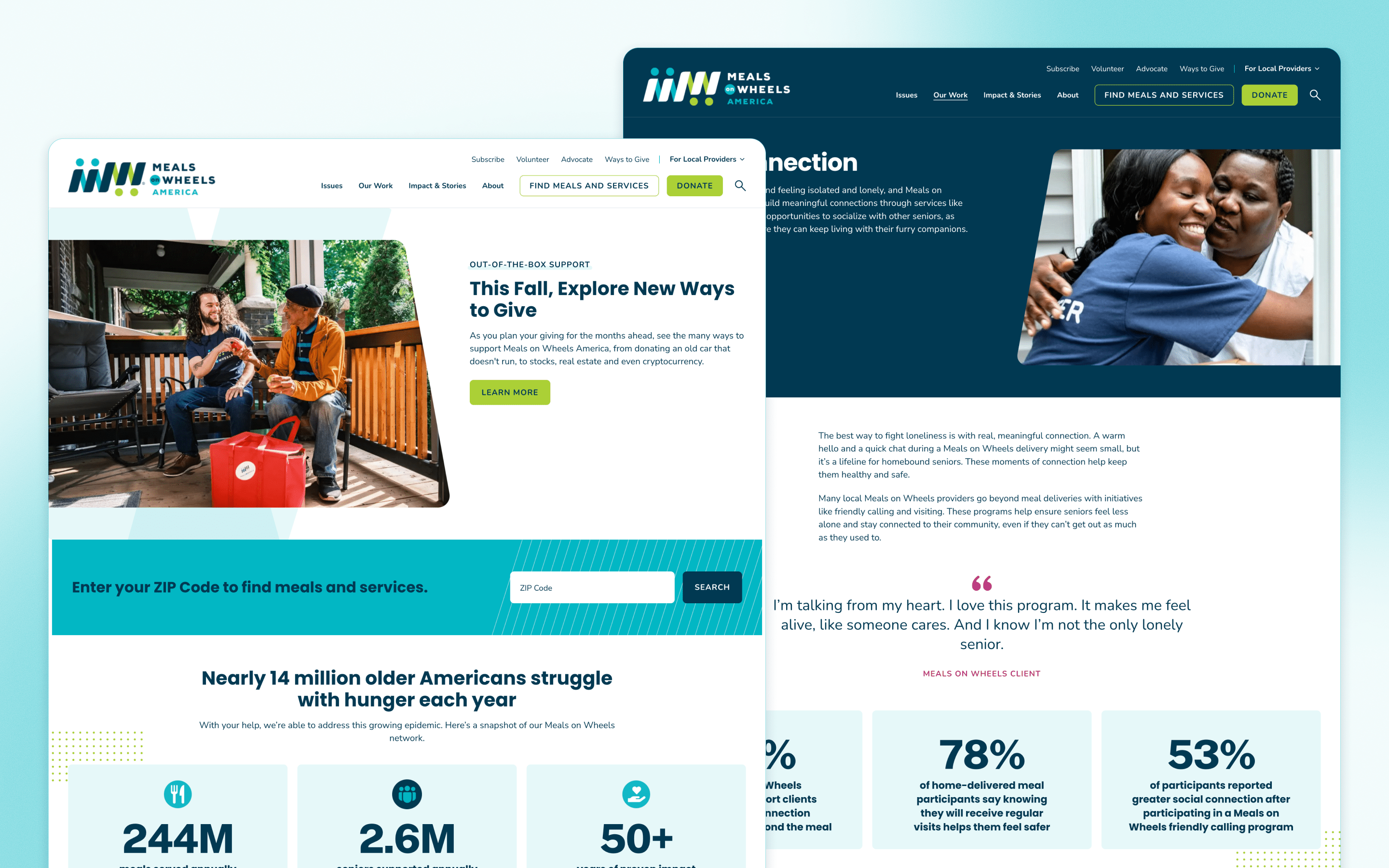
The public site is worth exploring through a specific task, such as finding a local service or learning how to participate. For a comparable brief, discuss the data and systems behind those journeys as well as the page designs, and clarify which features need coordination with your internal team or existing providers.
3. Constructive: Best Nonprofit Web Design Agency for Resource Libraries
 3
3Constructive
A nonprofit branding and web design agency organizing complex subjects into clear identities, useful websites, and searchable digital resources.
Constructive stands out as an option for organizations whose knowledge and resources are a major part of their mission. Its selected work includes brand strategy, information architecture, and a filterable library, making content organization a central reason to explore the agency rather than focusing only on the visual identity.
A research or education nonprofit may need to serve readers with very different levels of familiarity. Ask how Constructive would help newcomers understand the subject while giving experienced visitors efficient routes to specific materials, and how your staff would maintain that structure as the collection expands.
Featured project: Dana Foundation
For the Dana Foundation, Constructive delivered brand strategy and identity, UX and website design, information architecture, and development of a filterable digital resource library. The foundation's website also credits the agency, supporting the connection between the published site and the documented engagement.
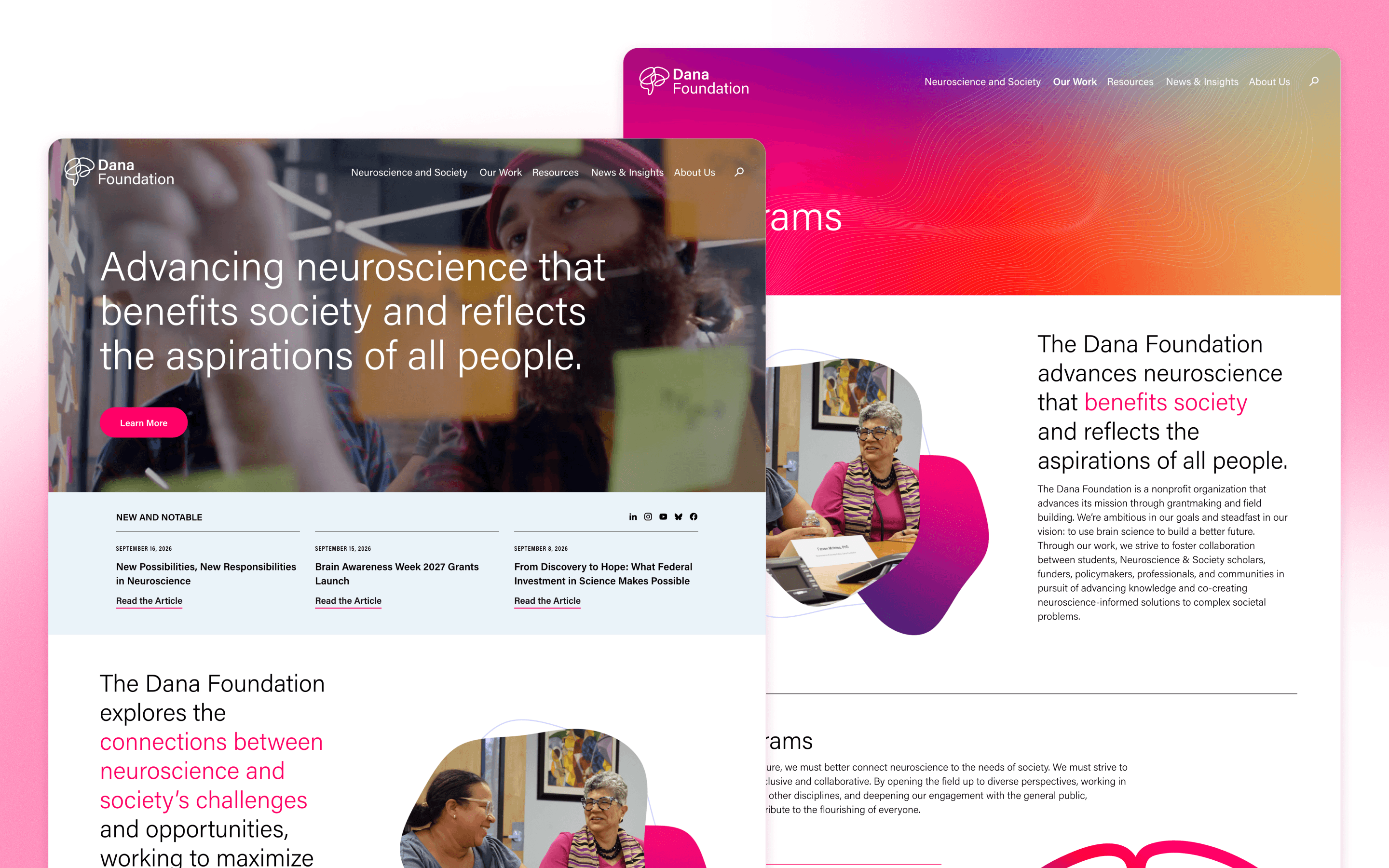
Look at the way the organization's broader purpose connects to individual resources. If your own site holds a large archive, the useful conversation concerns taxonomy, navigation, and editorial responsibilities as much as page appearance, because the next hundred additions should be as findable as the content prepared for launch.
4. Cosmic: Best Nonprofit Web Design Agency for Impact Storytelling
 4
4Cosmic
A social-impact design agency connecting nonprofit brands, program stories, interactive content, and fundraising journeys in custom websites.
Cosmic is an agency to review when showing the reach of your work is central to the website brief. Its selected project combines a rebrand, messaging, custom website delivery, and an interactive impact map, using the organization's activities as a foundation for both the story and the experience.
That approach can be relevant for nonprofits working across locations or programs that are difficult to explain in one paragraph. Discuss what evidence and imagery your team can supply, and how the website will keep that material current, so an engaging presentation remains tied to the work actually taking place.
Featured project: High Atlas Foundation
For the High Atlas Foundation, Cosmic delivered a rebrand and messaging overhaul, designed and built the website, and added an impact map, donation and peer-to-peer fundraising pathways, and editor preview functionality. The scope connects public storytelling with both participation and the staff's publishing needs.
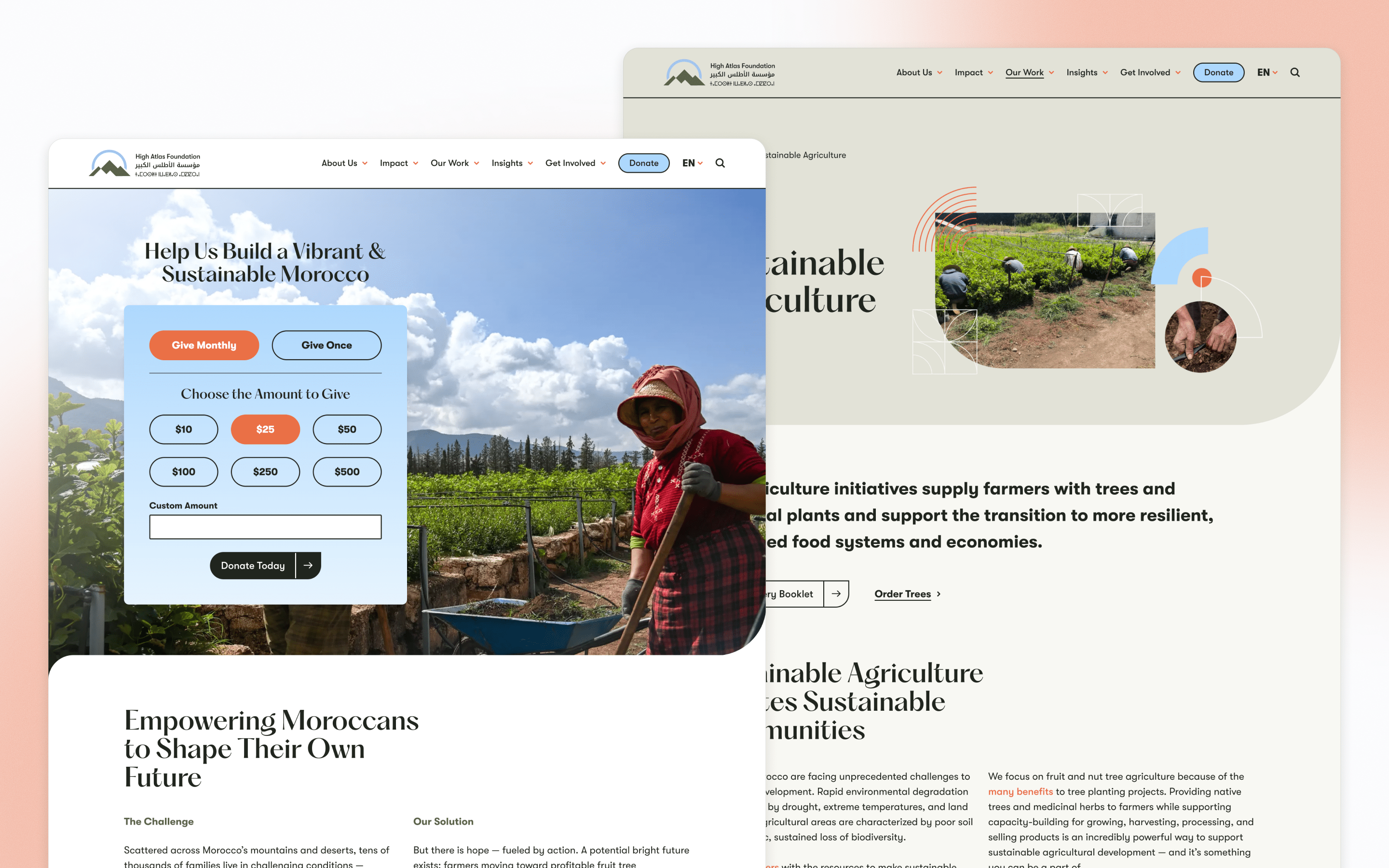
Review how a visitor can move from understanding a program to taking action. For your own project, define which impact information you can reliably maintain and who approves it, then ask the agency how the same content can support maps, stories, and fundraising pages without becoming several disconnected editing tasks.
5. ThinkShout: Best Nonprofit Web Design Agency for Affiliate Networks
 5
5ThinkShout
A digital agency developing shared nonprofit website platforms with reusable design systems, migration tools, and coordinated publishing across affiliates.
ThinkShout is a relevant choice for a nonprofit network that needs local websites to share a consistent foundation. Its selected engagement centers on shared platform infrastructure and a reusable design system, with migration and deployment considered alongside the experience each affiliate presents to its own community.
This kind of work is useful when local teams need flexibility without rebuilding the same website repeatedly. Ask which parts of the system are centrally maintained, what affiliates can change, and how updates are introduced, so the proposed platform reflects the way your organization actually distributes responsibility.
Featured project: ACLU of Utah
Working with the ACLU's teams, ThinkShout created a WordPress affiliate platform with a parent theme, reusable components, a living style guide, and migration tooling. ACLU of Utah is an explicitly linked launched affiliate, providing the public example here rather than implying that this was a redesign of the national website.
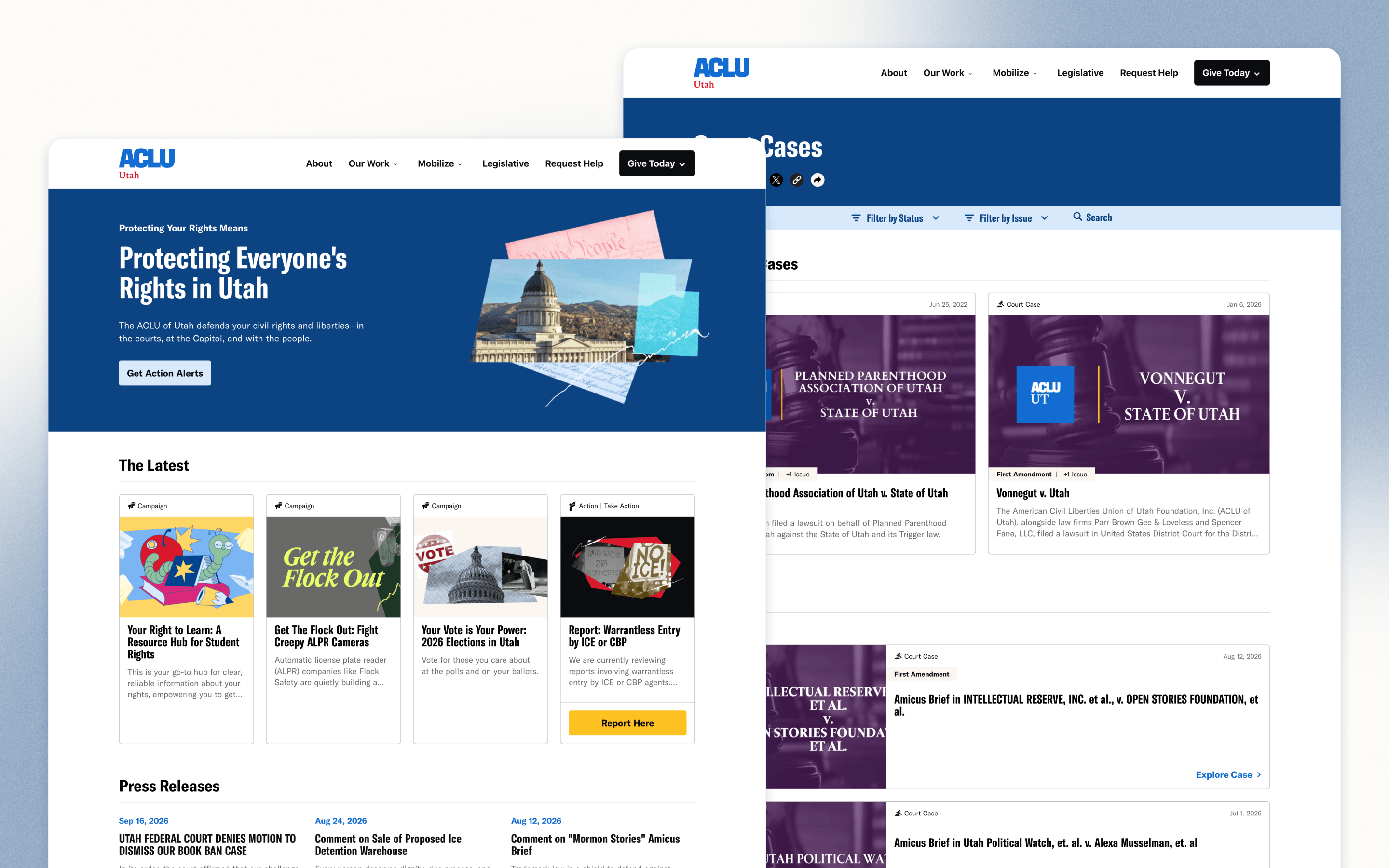
Explore the local site for the balance between a shared identity and locally relevant campaigns and information. If your nonprofit has chapters or affiliates, discuss the onboarding process and content ownership early, because a successful central system still needs to work for the people maintaining each local destination.
6. Blue State: Best Nonprofit Web Design Agency for Visitor Experiences
 6
6Blue State
A digital agency helping nonprofits organize places, events, memberships, and public information into websites built around participation.
Blue State provides a useful example for nonprofits whose work brings people to physical places and events. Its selected project combines a digital roadmap with website and CMS delivery, including property discovery and filtering, so the experience helps visitors decide what they can actually do with the organization.
That is a different brief from a site focused primarily on donations or a publication archive. Ask how the agency would connect your locations, activities, and membership offer, and how staff would keep the practical details current when availability, programming, or seasonal information changes.
Featured project: The Trustees of Reservations
For The Trustees of Reservations, Blue State delivered a refreshed visual identity, public website design, CMS development, and navigation and filtering for visits, events, and membership. Interactive property discovery formed part of the work, bringing the organization's places into the website's practical structure.
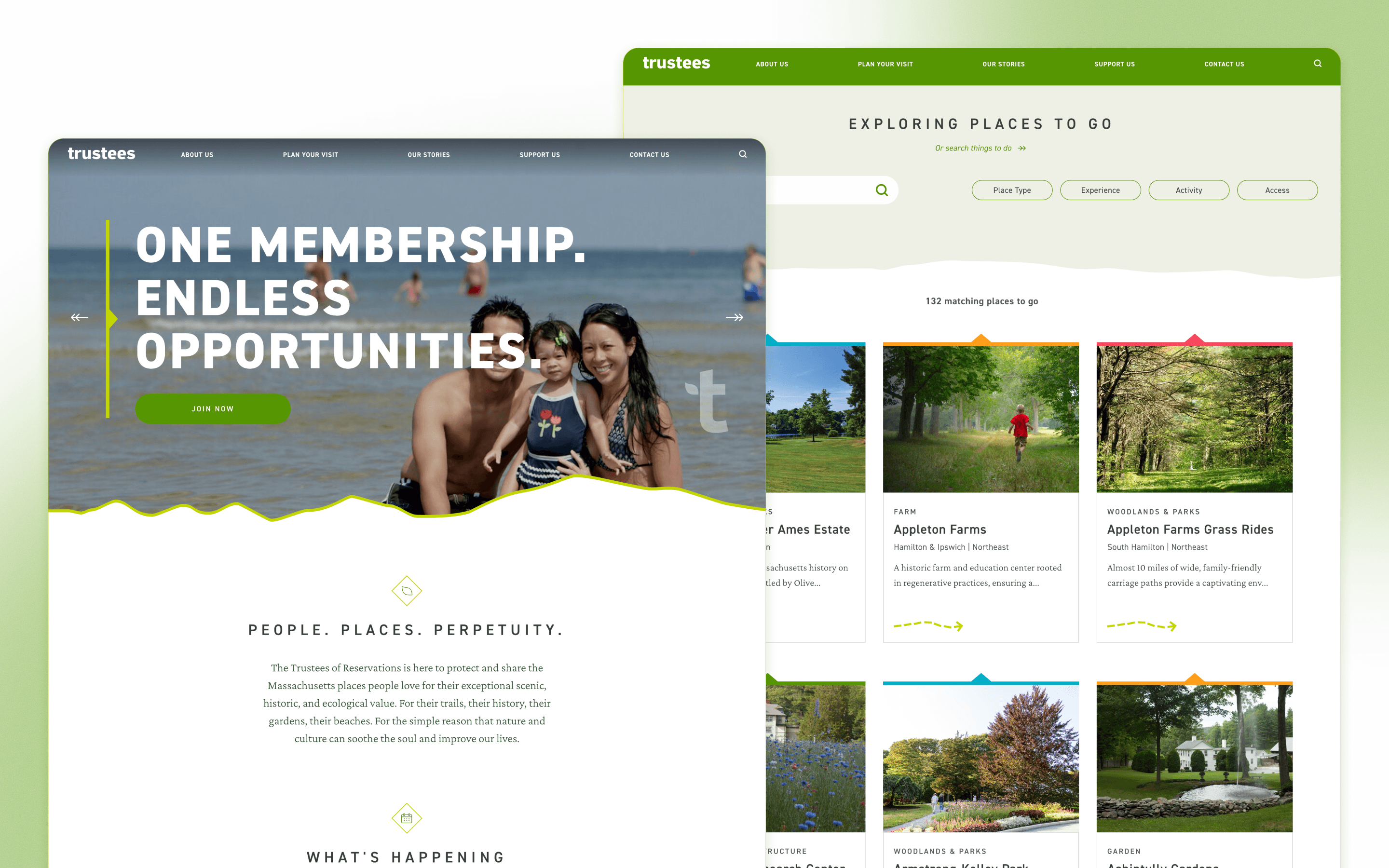
Use the example to test the journey from inspiration to planning a visit. For your own scope, distinguish the public discovery experience from any later backend integration work, and identify which booking or membership systems need to participate before an agency can promise a connected end-to-end journey.
7. Loop: Design for Social Good: Best Nonprofit Web Design Agency for Campaign Websites
 7
7Loop: Design for Social Good
A social-good design agency extending nonprofit brands into flexible websites with campaign content, publishing modules, and donor-system connections.
Loop is worth considering when an established nonprofit identity needs to work harder across digital campaigns. Its selected engagement combines content architecture, migration, design, development, and reusable publishing modules, with donor and campaign software connected to the website rather than treated as an unrelated afterthought.
For an active organization, the key issue is often how quickly staff can publish a new appeal without losing visual consistency. Ask Loop to demonstrate how a campaign page is assembled, reviewed, and connected to its action, and how that page relates to the organization's longer-lasting program content.
Featured project: Oxfam Canada
For Oxfam Canada, Loop extended the existing brand into a website with custom WordPress modules, content migration, and donor and campaign software integration. The original Oxfam International identity is credited separately; Loop's documented contribution concerns the digital extension and website work presented here.
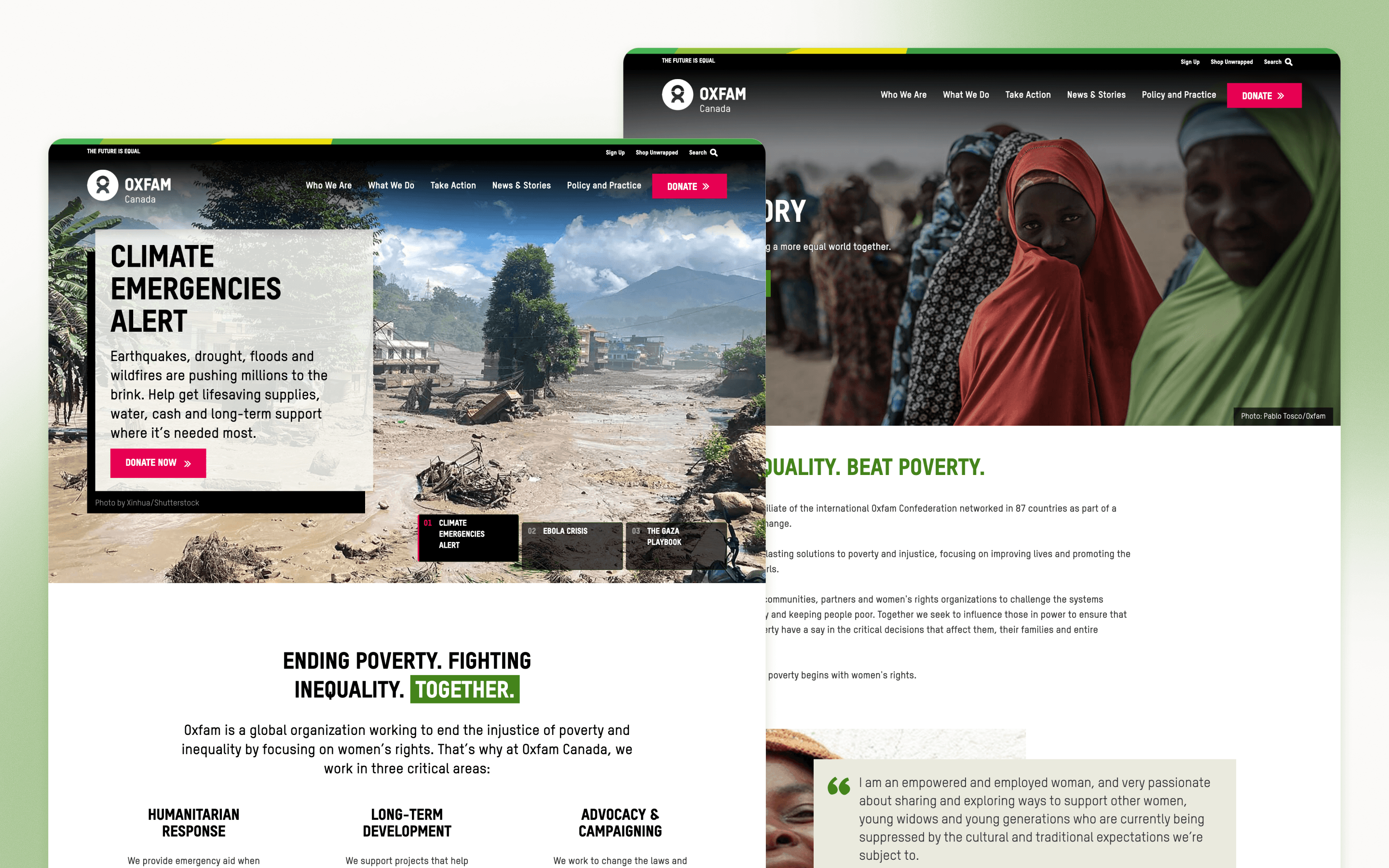
Review the relationship between urgent appeals and ongoing stories, since both need attention without competing for every inch of the homepage. A comparable brief should establish who creates the campaign material, how the action is tested, and what editors can change safely when a timely response is needed.
8. Kanopi Studios: Best Nonprofit Web Design Agency for Chapter Websites
 8
8Kanopi Studios
A website agency supporting nonprofit chapter networks through shared WordPress infrastructure, donation tools, location finding, and ongoing development.
Kanopi Studios is a practical option for an organization with chapters that need to feel connected online. Its selected work brings together WordPress multisite, a shared donation integration, a chapter finder, and ongoing support, linking the national experience with the places people can participate locally.
A network website needs to account for different levels of staff capacity as well as different audiences. Ask how the agency balances common structures with local content and what happens when a chapter needs help, so the system's maintenance is considered alongside its initial design and development.
Featured project: First Tee
For First Tee, Kanopi delivered UX and WordPress multisite development, along with a shared donation integration, chapter location finder, and continued support. The example gives you a public nonprofit website to review while the documented scope explains the network-oriented work behind it.
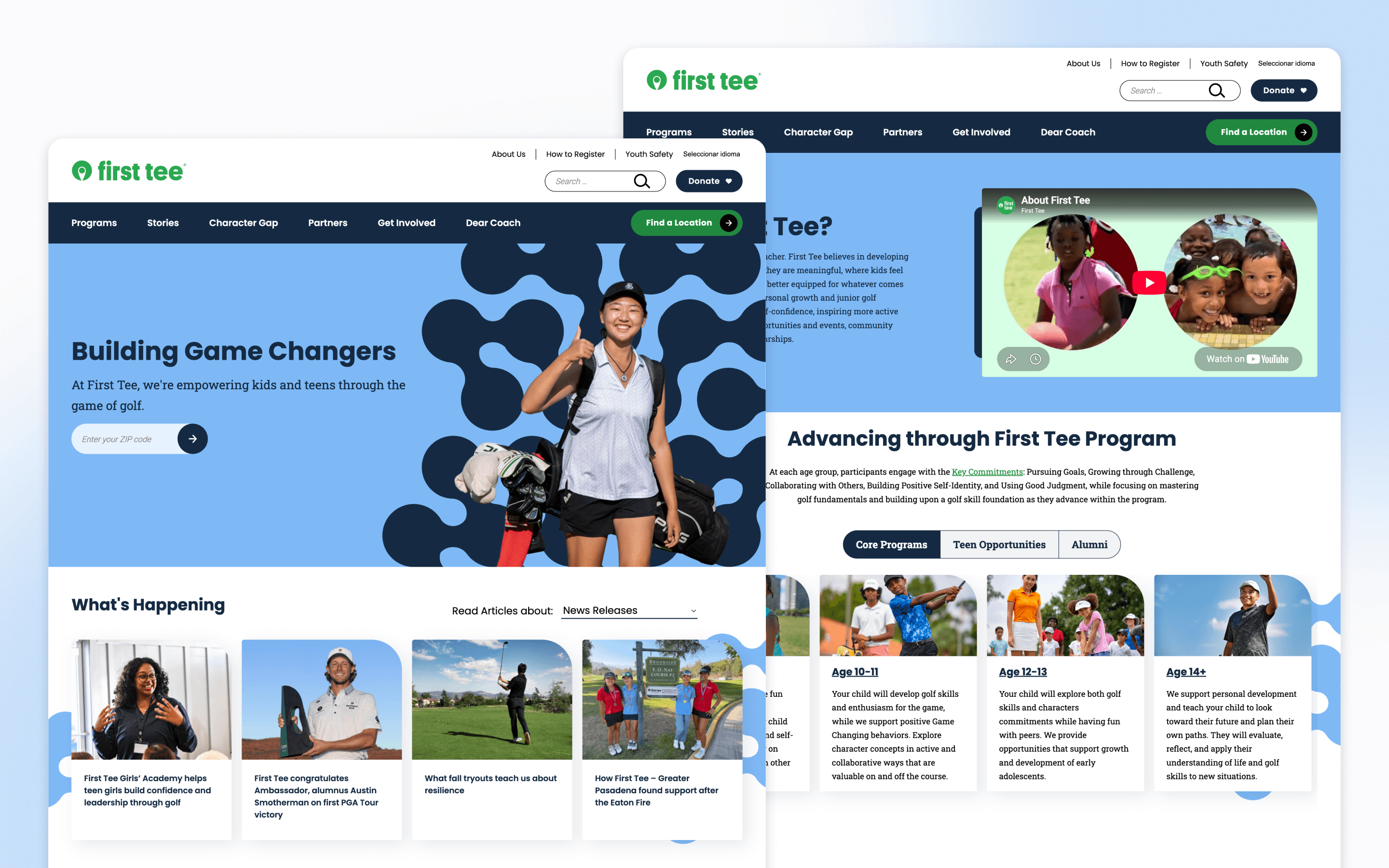
Try the route from learning about the program to finding a local chapter, and consider whether your own organization needs a similar connection. In a proposal, look for clear responsibilities around shared updates, local publishing, and ongoing assistance, because those are the details that keep a distributed website useful after launch.
9. Studio Republic: Best Nonprofit Web Design Agency for Audience Research
 9
9Studio Republic
A charity-focused digital agency grounding website design, accessibility review, and connected experiences in research with the people using them.
Studio Republic is an agency to explore when understanding your audiences needs to come before deciding what the website should look like. Its selected work includes research, UX, digital design, accessibility review, and a build, with audience needs informing both the initial experience and later improvements.
That can be especially useful when an organization serves people directly while also communicating with supporters. Ask how the research will include those different groups and how findings become concrete decisions, so the discovery stage produces more than a report that has little effect on the finished pages.
Featured project: Ellen MacArthur Cancer Trust
For the Ellen MacArthur Cancer Trust, Studio Republic delivered research, design, accessibility review, and website build, with a Salesforce post-trip feedback integration and ongoing modular improvements. The client's homepage also credits the agency, providing an additional connection to the named work.
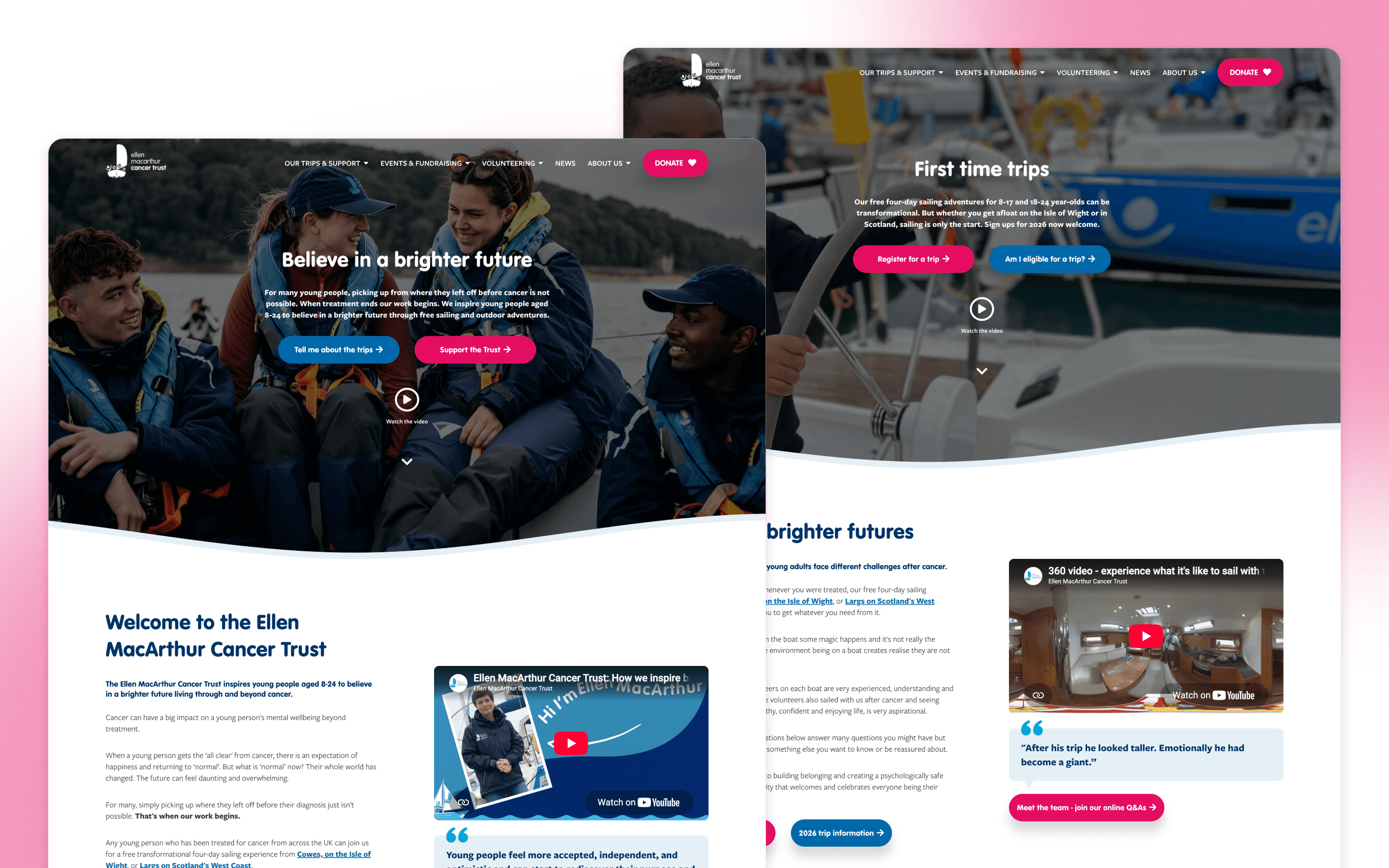
Consider the example as a website supporting an ongoing relationship with participants, not just an introduction to a cause. For a similar project, identify where information is needed before, during, and after participation, then ask how the site and connected tools will support those moments without adding unnecessary work for staff.
10. IE Digital: Best Nonprofit Web Design Agency for Service Navigation
 10
10IE Digital
A digital agency designing nonprofit websites around distinct audience journeys, practical content structures, and connected donation and communication tools.
IE Digital is relevant when people seeking a service need a different route from people hoping to support it. Its selected project includes discovery, audience journeys, information architecture, and website delivery, making clear service navigation a useful reason to place it on your shortlist.
The benefit of that focus is not simply a smaller menu. It is a clearer understanding of what visitors need at a particular moment and which information helps them continue. Ask how the agency will work with service teams to keep explanations accurate and avoid organizing the site only around internal departments.
Featured project: Keech Hospice
For Keech Hospice, IE Digital delivered discovery, wireframes, visual design, WordPress development, migration, and training, with Stripe donations and Mailchimp integration. The selected website provides a practical reference for presenting care information alongside the ways supporters can take part in the organization's work.
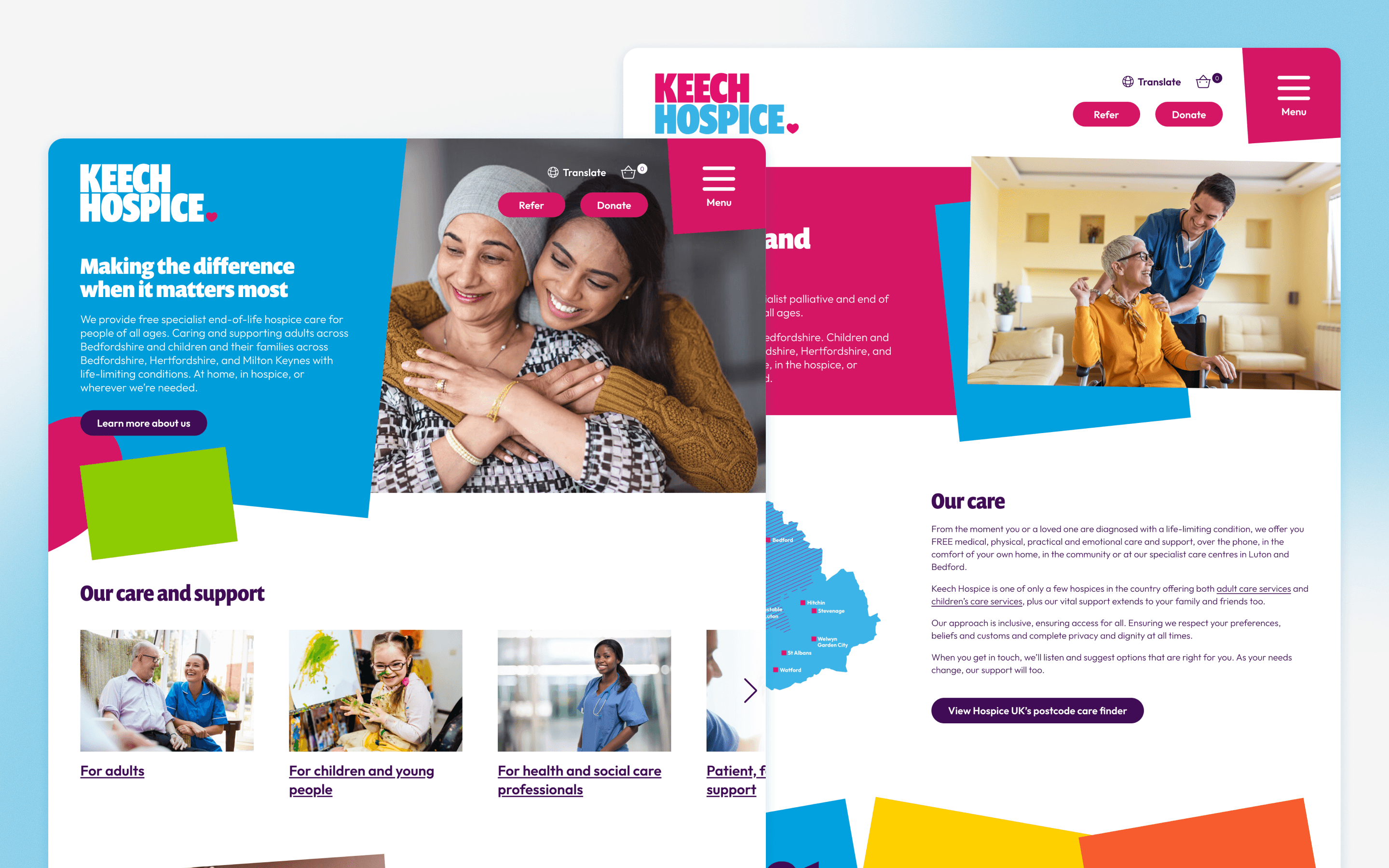
Review the site from more than one audience's perspective, paying attention to where the paths separate and reconnect. In your own brief, name the people responsible for checking service information and decide how editors will maintain it, so useful navigation is supported by dependable content after the redesign is complete.
11. RAD Campaign: Best Nonprofit Web Design Agency for Advocacy Websites
 11
11RAD Campaign
A nonprofit digital agency combining website redesigns with advocacy actions, fundraising tools, CRM connections, and continued platform support.
RAD Campaign is a useful option when a nonprofit's website needs to support both giving and public action. Its selected engagement connects a redesign with advocacy and CRM integrations, showing experience with the systems that turn a visitor's interest into participation beyond reading a story.
This kind of brief calls for a clear view of the tools already in use and the data moving between them. Ask the agency to map those connections and explain how actions will be tested, including who checks the resulting records and messages before an appeal or campaign is published.
Featured project: Defenders of Wildlife
For Defenders of Wildlife, RAD delivered a full website redesign and Drupal consolidation, flexible layouts, donation starter forms, advocacy and CRM API integrations, and Engaging Networks implementation. Testing and ongoing support were also part of the documented relationship, rather than the engagement ending at visual approval.
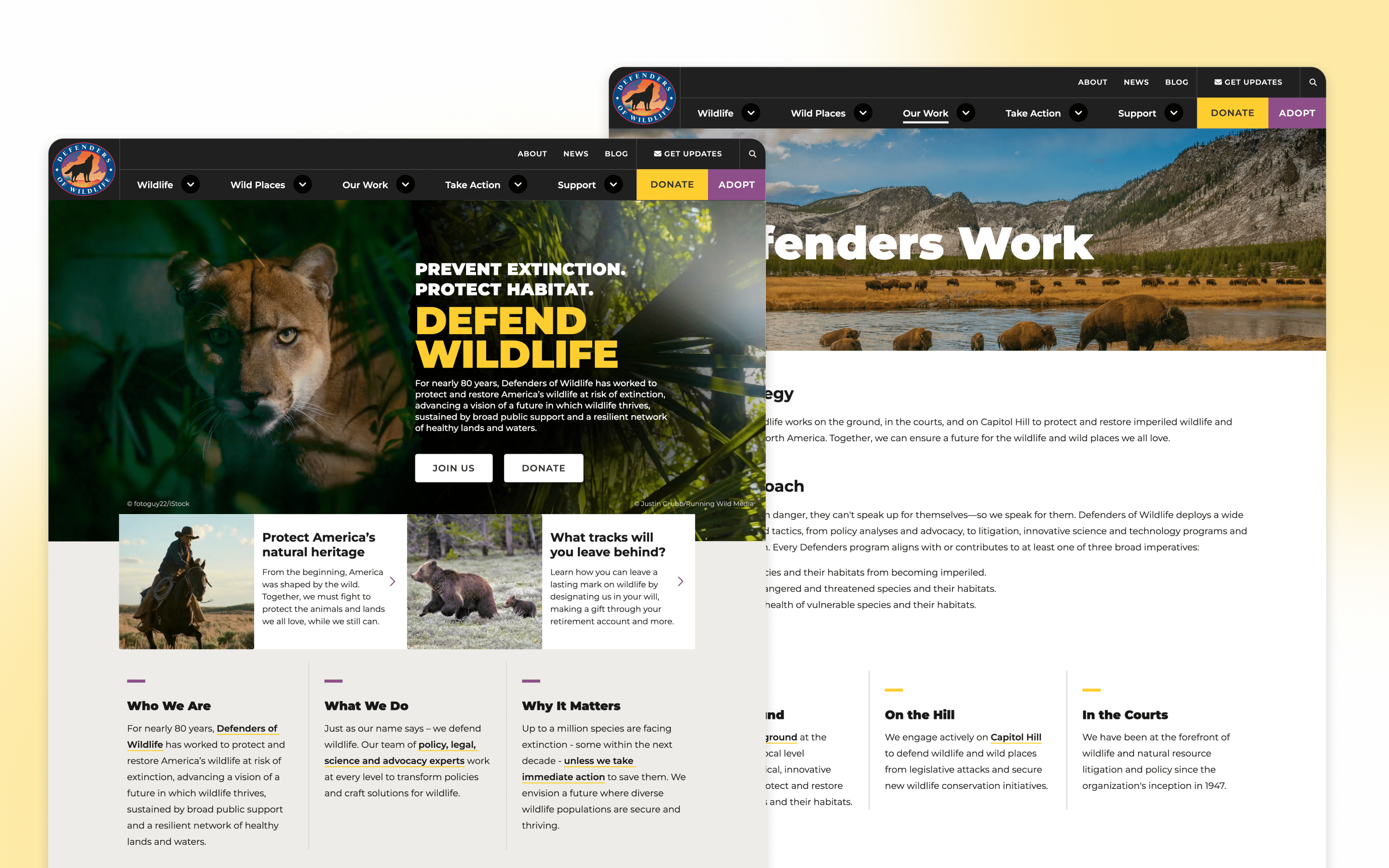
Explore how the organization connects its conservation content with opportunities to act. For your own project, distinguish the website work from configuration inside connected platforms and confirm the current tools directly, because the systems named in a historical engagement should not be assumed to remain unchanged today.
12. Torchbox: Best Nonprofit Web Design Agency for Supporter Journeys
 12
12Torchbox
A digital agency connecting nonprofit audience research, website design, content management, donations, and volunteering into a coherent supporter experience.
Torchbox is worth reviewing when your brief starts with the different ways someone can support the organization. Its selected project includes supporter research, information architecture, visual design, and CMS implementation, with giving and volunteering considered as connected parts of the public website.
That approach can help a nonprofit avoid treating every visitor as a potential donor on the same timeline. Ask how the agency will understand different motivations and translate them into navigation and content, giving people room to learn about the work before choosing the form of participation that fits them.
Featured project: Oxfam GB
For Oxfam GB, Torchbox delivered a website using Wagtail, supported by research, information architecture, visual design, donation functionality, and volunteering journeys. The selected example is specifically Oxfam GB's public website, separate from the Oxfam Canada engagement elsewhere in this guide.
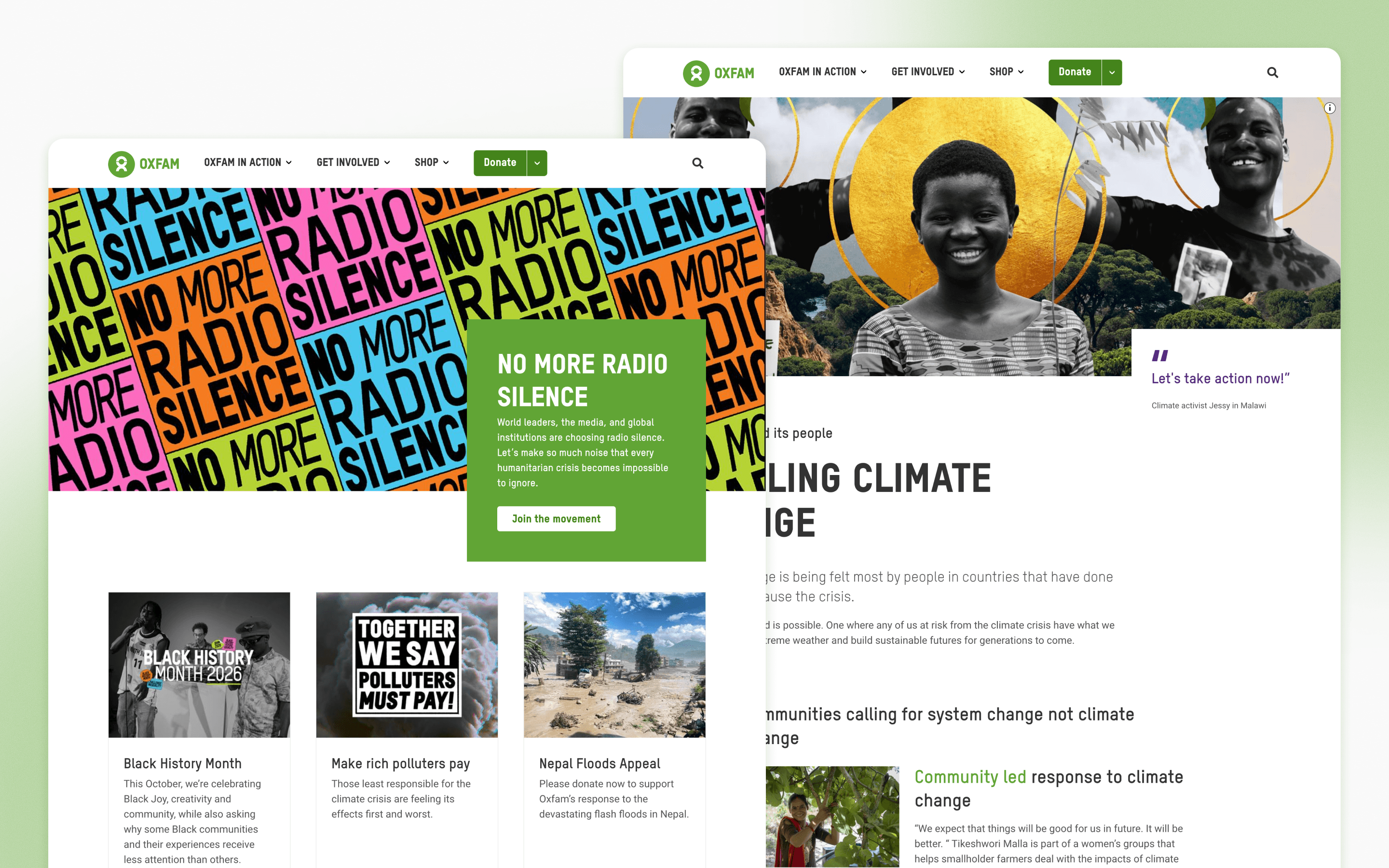
Review the paths into giving and volunteering and the information available before each action. For your own brief, discuss how campaign content and permanent service information will coexist, and ask the agency to demonstrate how editors can keep those routes current without rebuilding the underlying page structure each time.
13. William Joseph: Best Nonprofit Web Design Agency for Website Consolidation
 13
13William Joseph
A design and digital agency bringing nonprofit websites together through content strategy, reusable components, migration, and connected participation tools.
William Joseph is a relevant candidate when a nonprofit is combining organizations, brands, or existing websites. Its selected project includes merged-site migration, content strategy, testing, and connected volunteer and donation tools, showing the practical work involved in creating one destination from previously separate experiences.
A consolidation needs more than a fresh visual identity because people may still arrive through old links or recognize an earlier name. Ask how the agency will decide what to preserve, how it will organize the combined content, and how staff will manage the new site once the transition is complete.
Featured project: Felix
For Felix, William Joseph delivered website design and build, reusable Craft components, content migration, Microsoft Dynamics volunteer forms, and FinDock donation integration. The documented project credits Red Stone's brand contribution separately, keeping the website team's role clear within the wider organizational change.
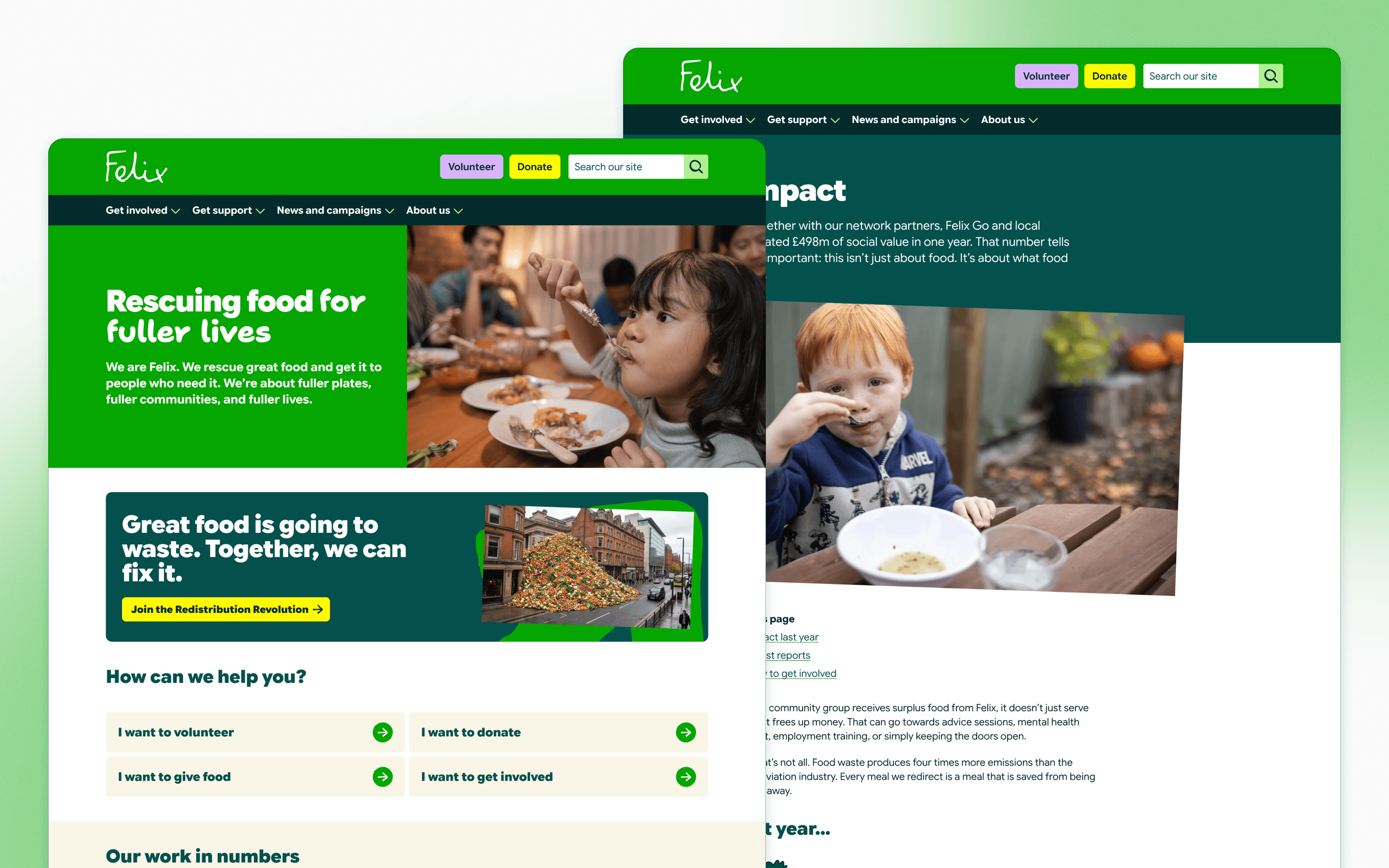
Use the example to discuss the connections between content, systems, and the public explanation of a merger. Your brief should identify legacy URLs, active campaigns, and ownership of incoming data, then ask the agency how it will test those dependencies before the combined website becomes the main destination.
14. Reason Digital: Best Nonprofit Web Design Agency for Support Services
 14
14Reason Digital
A digital agency shaping nonprofit websites through research with service users and careful organization of help and supporter information.
Reason Digital is an important option to review when the website is a route to support for people in difficult circumstances. Its selected work is grounded in research with service users, making the context in which someone visits the site part of the design problem rather than a detail added afterward.
For this type of organization, a clear route to help may matter more than a promotional introduction. Ask how the agency involves the right people in research, protects participants during that work, and translates findings into understandable content and interactions that your service team can review before launch.
Featured project: Refuge
For Refuge, Reason Digital researched with survivors and delivered a website with support signposting, supporter-focused content, and emergency-exit functionality. Those features are part of the documented engagement; the example is not a claim that a visible exit button alone provides a complete safety solution.
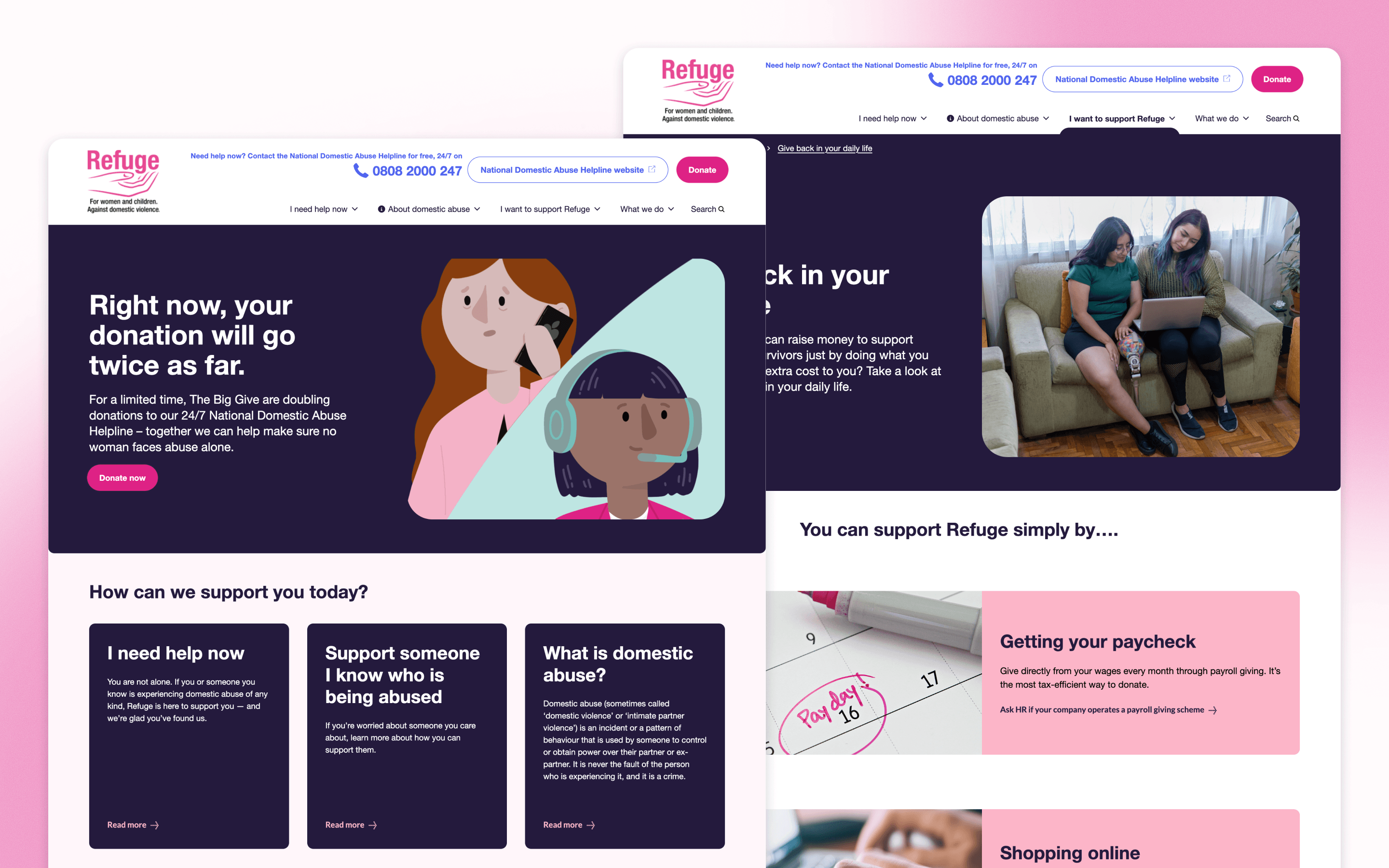
Review how the site distinguishes seeking help from supporting the organization. If your nonprofit faces similar needs, involve qualified service and safety specialists in the brief and acceptance process, and ask the agency to explain the limits and testing of any feature intended to support people in sensitive situations.
15. Hyperakt: Best Nonprofit Web Design Agency for Mission Clarity
 15
15Hyperakt
A branding and design agency helping nonprofits express their purpose through clearer language, website design, and organized service information.
Hyperakt is a useful agency to consider when a nonprofit's work is substantial but difficult to explain clearly. Its selected engagement combines a brand transformation, content strategy, copywriting, and website design, with mission and service clarity connecting the visual direction to the information people need.
That can be relevant for organizations whose internal descriptions have become more complicated than the public's questions. Ask how the team will work with staff to find approachable language without losing important distinctions, and how the resulting structure will help both people seeking services and people learning about the cause.
Featured project: Brooklyn Defenders
For Brooklyn Defenders, Hyperakt delivered brand and content work, website design, attorney-discovery journeys, and organization of client help resources. The scope connects the organization’s identity with practical routes for the people seeking its services, giving the design a clear role beyond the opening impression.
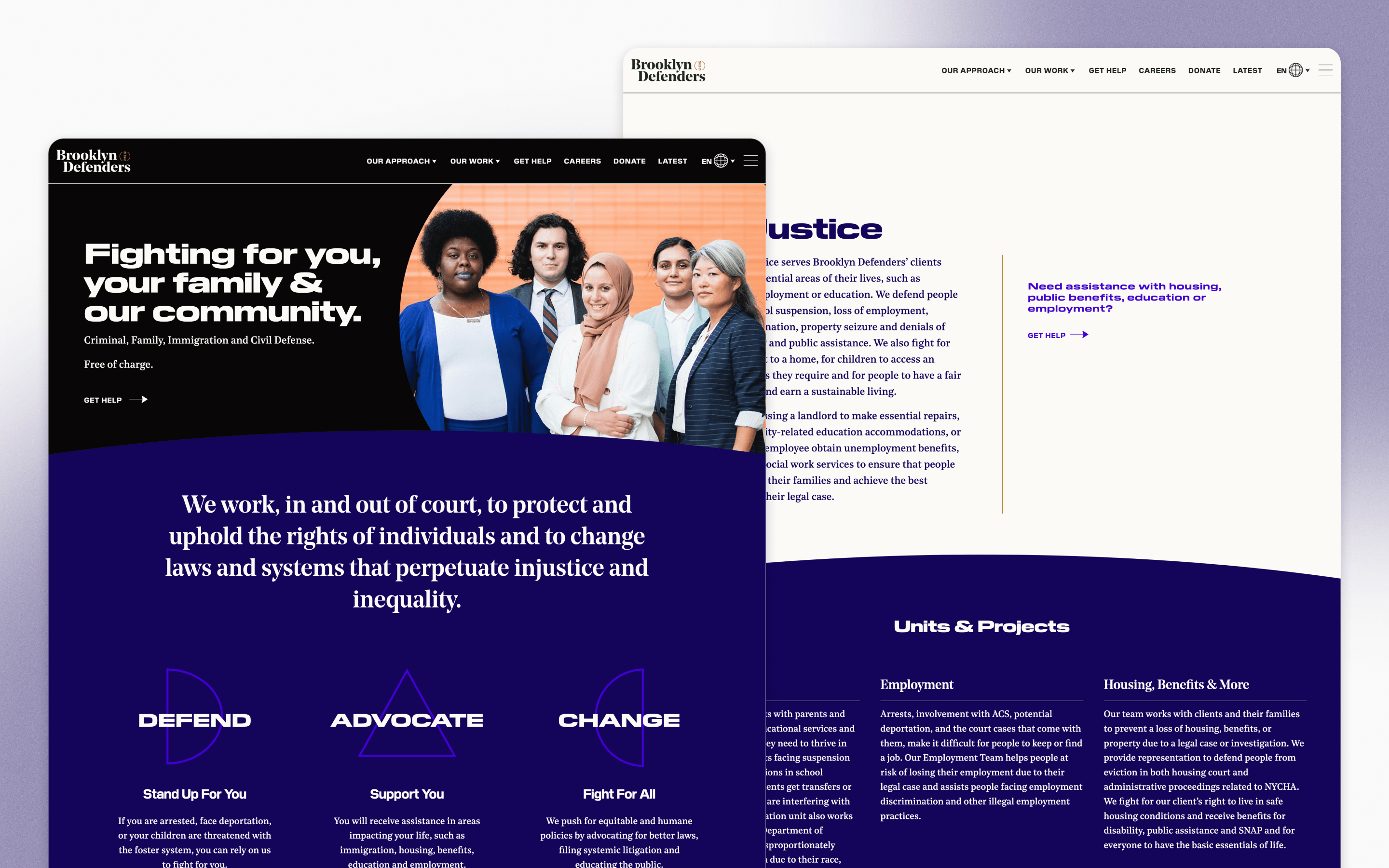
Look at the relationship between the organization's public identity and its practical help content. For your own project, clarify the handoff from strategy and design to implementation, and make sure the people who deliver services can review the wording and routes before the finished site is placed in front of users.
16. Fat Beehive: Best Nonprofit Web Design Agency for User Journeys
 16
16Fat Beehive
A charity website agency planning audience routes, content architecture, and visual design in collaboration with specialist implementation partners.
Fat Beehive is an option for a nonprofit that wants discovery and audience journeys to lead the redesign. Its selected work includes workshops, information architecture, wireframes, and visual design, offering a clear example of planning the experience before the implementation team builds the finished site.
A collaborative delivery model can work well when the website needs specialist integrations, provided responsibilities are explicit. Ask who owns the overall schedule, how design decisions are communicated to developers, and how your organization will review the working site against the research and page designs it has already approved.
Featured project: Dogs for Good
For Dogs for Good, Fat Beehive handled discovery, user journeys, architecture, wireframes, and visual website design. Wattle implemented the Umbraco website and Microsoft Dynamics 365 integration, so the selected example credits the design work and the separate technical delivery without blending them together.
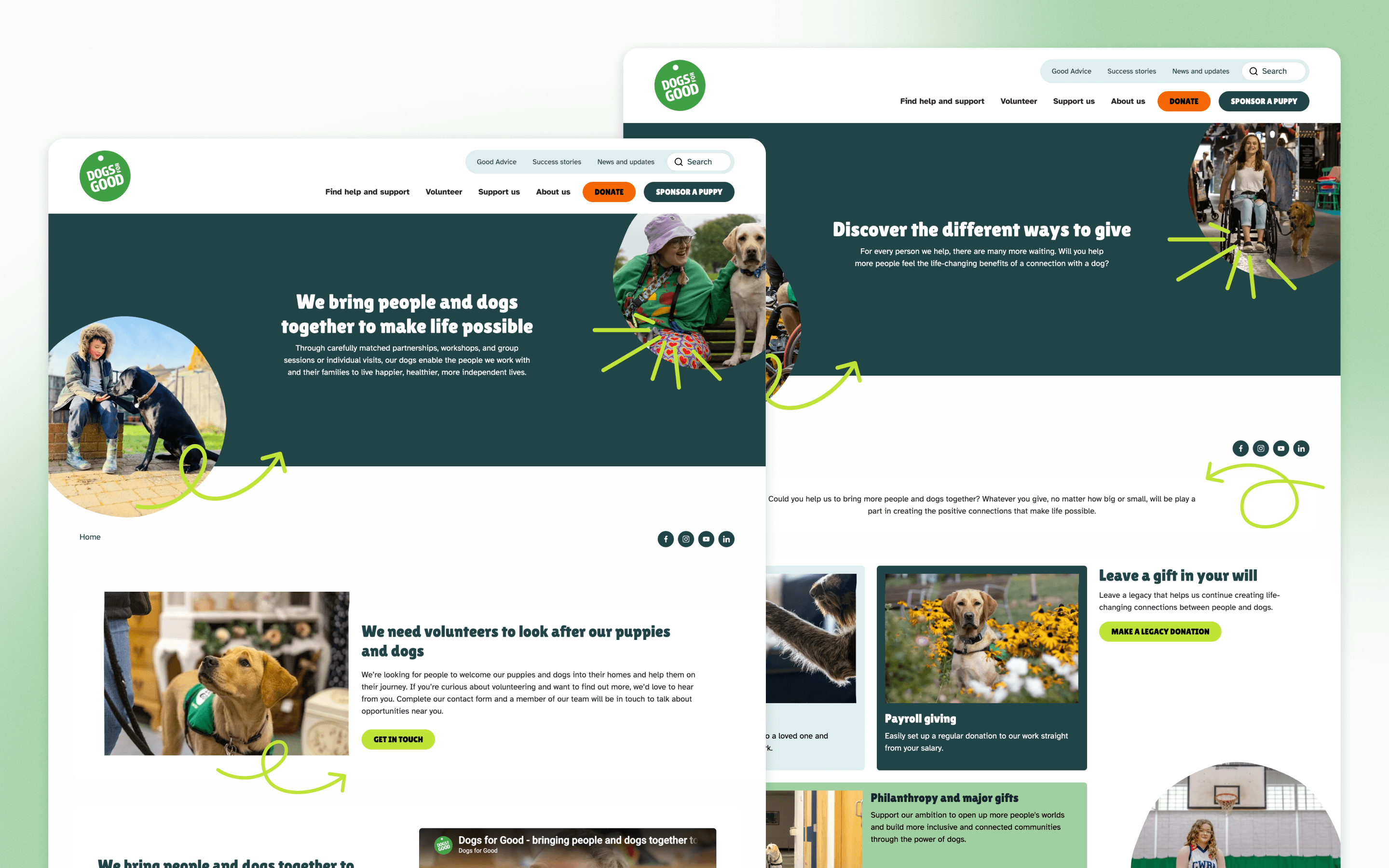
Review how the organization introduces its work and guides different visitors toward relevant information. If you choose a similar partnership, make the design-to-build handoff part of the proposal, including responsibility for testing and corrections, so your team has a clear route for resolving questions throughout the project.
17. BoldLight: Best Nonprofit Web Design Agency for Research Charities
 17
17BoldLight
A digital agency delivering charity website redesigns and supporting organizations with audience insight and connected campaign work.
BoldLight is worth a look for a research charity that needs to make a complex cause understandable to a broad audience. Its selected website engagement is supported by a named client testimonial, with user insight and campaigns also acknowledged as part of the wider relationship.
A research organization often needs to connect detailed information with the everyday reasons someone might seek help or offer support. Ask how the agency would balance those audiences in your own content, and how it would work with specialists to keep explanations accurate without making every page read like a technical publication.
Featured project: Kidney Research UK
BoldLight redesigned and built the website for Kidney Research UK, with the client's testimonial and the website's agency credit supporting the attribution. The example establishes the website relationship while leaving detailed platform or integration questions for a direct discussion with the team.
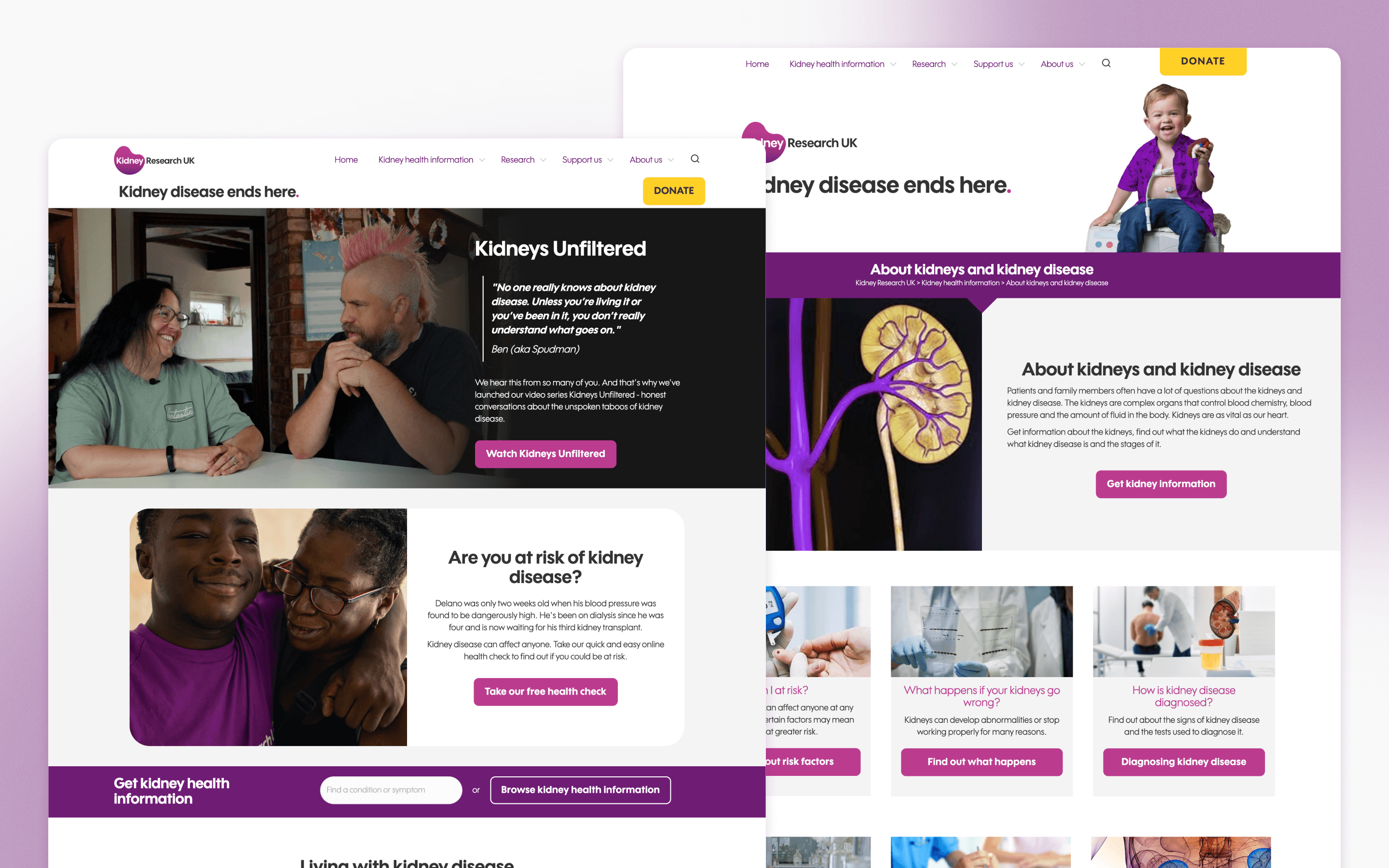
Explore the way research, information, and support opportunities are presented together. If that balance resembles your brief, bring examples of your most difficult content into the first conversation and ask how the agency would make it clearer, with a review process that gives both subject specialists and general readers a role.
18. Embark: Best Nonprofit Web Design Agency for Program Websites
 18
18Embark
A nonprofit creative agency combining brand refreshes and website delivery with clearer program information and easier staff content management.
Embark is a relevant option for nonprofits whose programs need a more approachable public introduction. Its selected work combines a brand refresh with website design and development, with content organization and administration forming part of the project rather than limiting the brief to a new visual style.
For a program-based organization, people may need to understand eligibility, participation, staffing, and support before taking action. Ask how the agency will separate those questions into useful routes and how your staff will update them when dates or program details change, particularly during a busy registration period.
Featured project: Camp Starfish
For Camp Starfish, Embark delivered a complete brand refresh and website design and development, improving content organization and administrative management. The documented engagement also lists related advertising and email services, while the selected example here focuses on the website and its presentation of the program.
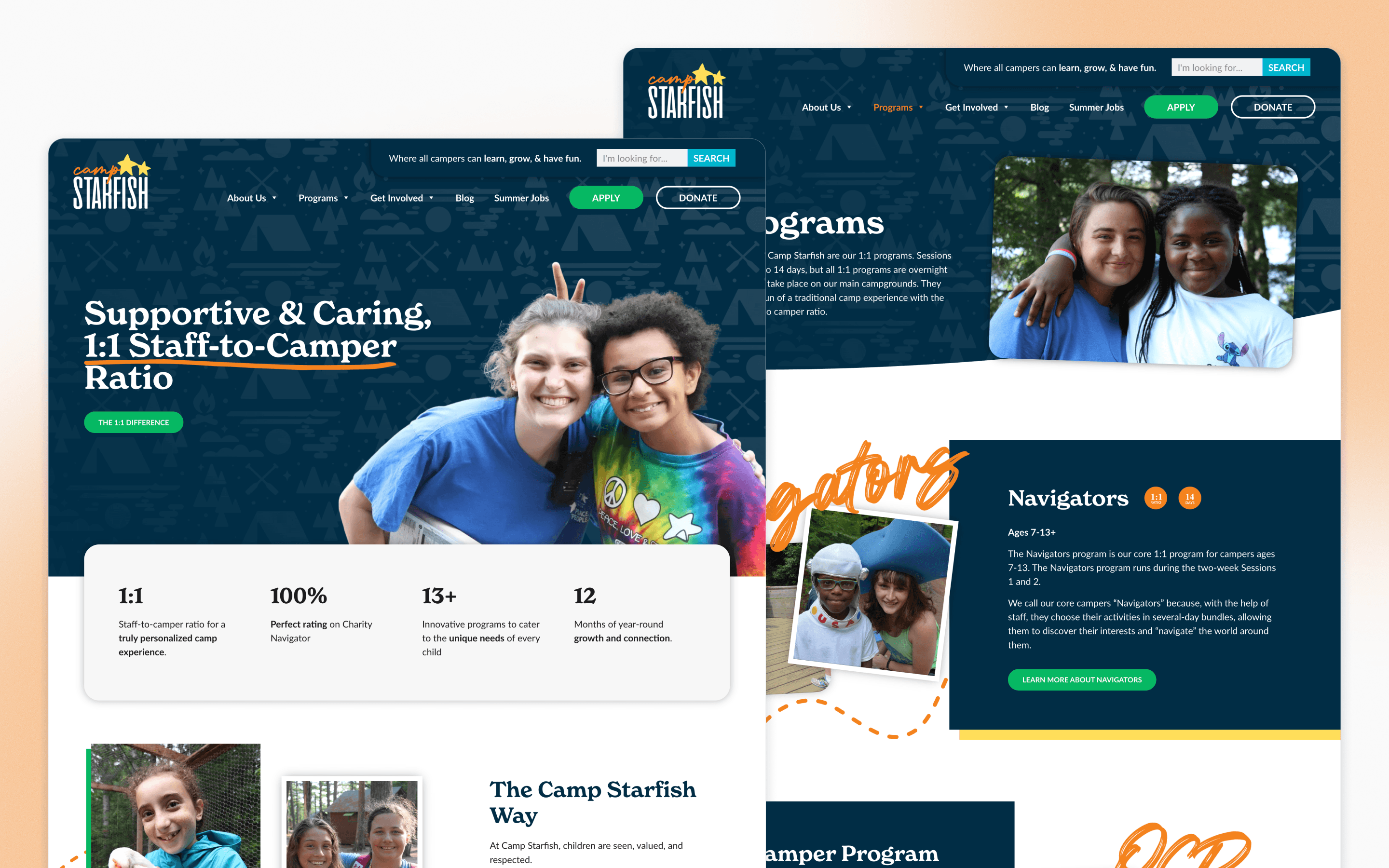
Review the path from learning about the camp to finding application or participation information. For your own project, define which seasonal updates staff will manage and which systems receive applications, so the website's design is supported by a workable process during the periods when your team needs it most.
What should nonprofit website design services cover?
Begin with the people the website serves, then list the tasks each needs to complete. Someone seeking a program should not have to pass through a donation pitch to find eligibility information, while a potential supporter needs a clear explanation of the work. That audience-first structure should guide the content plan before page design begins.
Your scope may include research, content strategy, writing, visual design, development, and migration, along with connections to donation, event, CRM, or membership systems. List those tools and the people responsible for them. A button leading to an existing donation page is a different assignment from rebuilding a giving journey or integrating its records with another system.
Decide who will maintain program pages, stories, resources, and campaign content after launch. Include editor training, account ownership, accessibility testing, and support in the brief, and plan around the capacity your staff actually has. A website that depends on constant specialist help should have that help funded and clearly assigned.
How to choose a nonprofit web design agency and compare costs
Start with a small group of agencies whose selected projects reflect your main challenge. A membership network, a service provider, and a research foundation may all need nonprofit experience, but the website work can be very different. Ask each team to explain a comparable project and the responsibilities it took on.
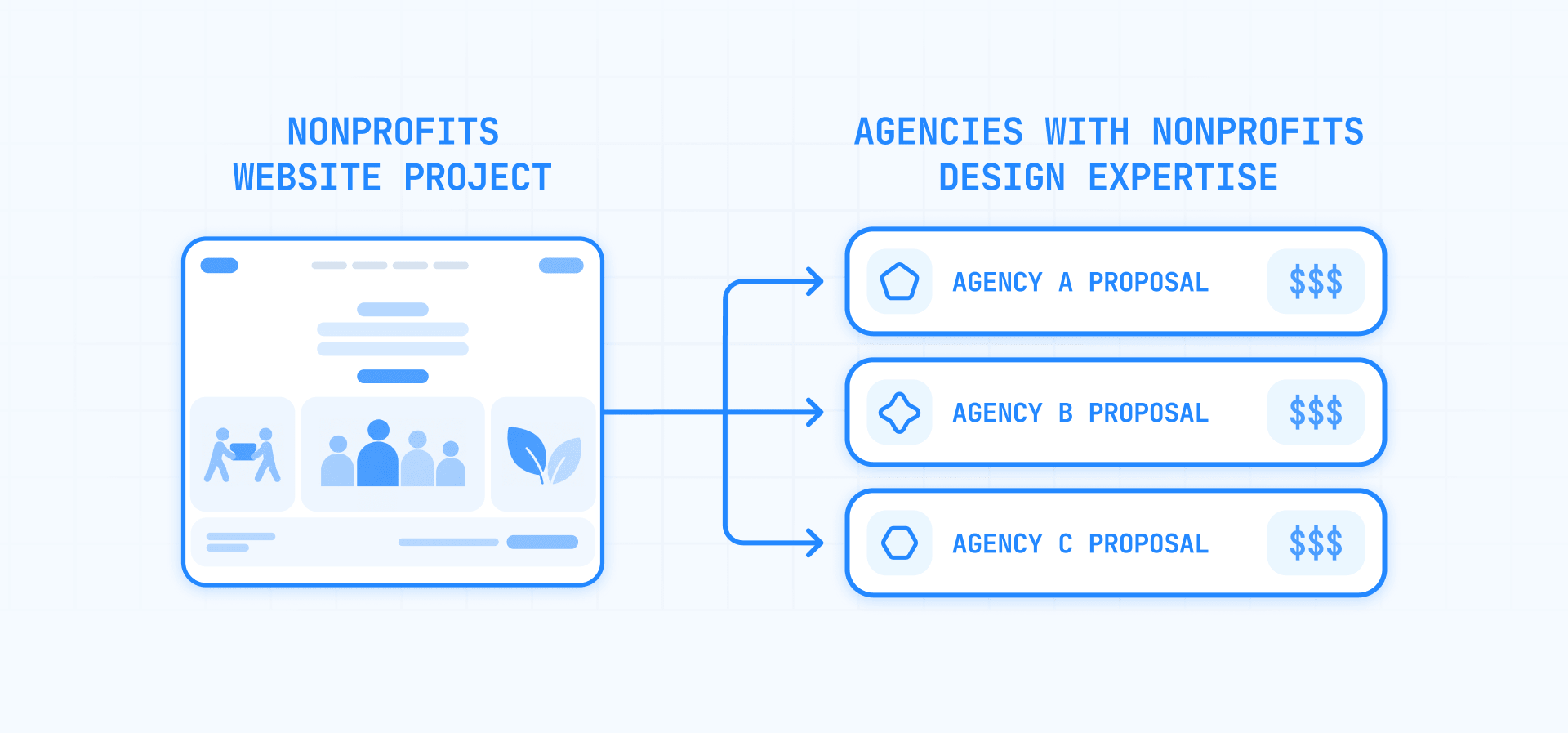
Send the same written brief to 2 or 3 agencies, including your audiences, content, connected tools, internal capacity, and available budget. That gives them a fair basis for proposing an approach and helps your team compare what will actually be delivered, rather than trying to interpret several differently scoped quotes.
Subject Website project for [organization]: [audiences] and [main goal]
Hi [name],
We are [organization], working on [mission]. We found your project in BRIX Agency’s nonprofit web design guide and would like to discuss a website that helps [audiences] with [main tasks].
Our current site contains [programs, resources, locations, or chapters]. We use [donation platform, CRM, event tools, or member system], and need [connections] to continue working.
We can provide [content and images] and need help with [research, writing, design, development, or migration]. Our staff will maintain [content types], so a manageable editor and training are important.
We hope to launch around [date] with a budget of [range]. Please explain your proposed phases, similar nonprofit work, and the responsibilities you would need our team to take on.
Please separate the project fee from software, hosting, transaction-related provider costs, maintenance, and future support.
Thank you,
[Your name]
[Role and organization]
Compare the initial work and the cost of keeping it useful. Check content preparation, migration, integrations, testing, training, hosting, software, and support, while separating any fees charged by your donation or event providers. If the budget needs to be phased, ask which improvements form a coherent first launch and which can follow without rebuilding the same work.
Name a project lead and a final decision-maker, with service, fundraising, and communications staff involved at agreed points. A clear review process helps the agency avoid designing around conflicting instructions and gives your team a manageable schedule. Before signing, confirm milestone deliverables, launch checks, and what happens if required content arrives late.
Choosing a nonprofit CMS your staff can keep up with
The editing experience should fit the organization on an ordinary busy day. Think about publishing an appeal, changing a program date, or adding a story when the person who built the site is unavailable. Ask the agency to show those tasks in the proposed CMS, including how a colleague reviews a change and how a mistake is corrected.
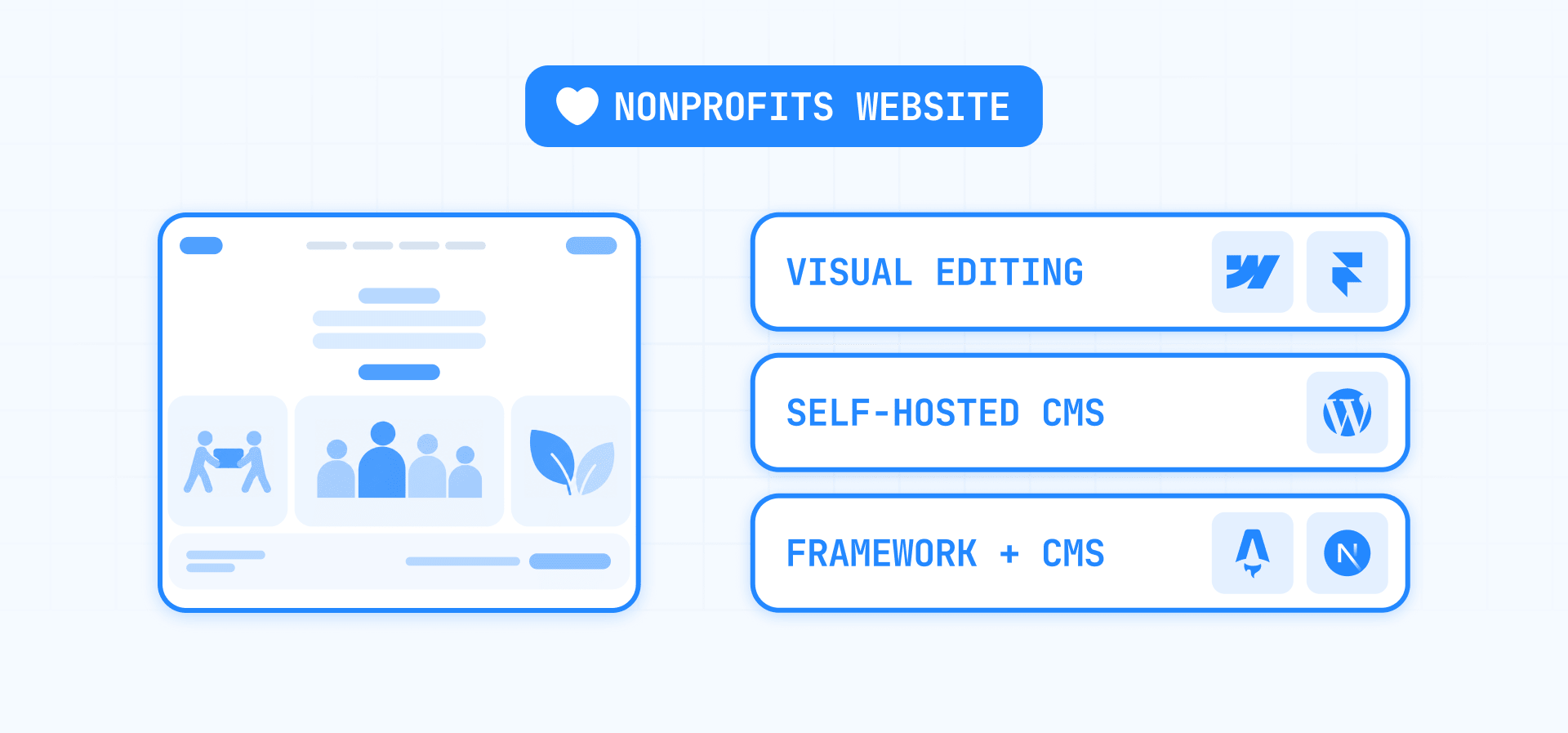
Webflow and Framer can provide approachable visual editing for a nonprofit's public website. Evaluate the proposed setup against your content types and connected tools, especially donations, events, or member features. The platform name alone does not tell you whether the finished site will let staff complete those jobs easily.
WordPress is a self-hosted option with room for a tailored editor and a substantial resource collection. If your organization wants control over hosting or relies on specific extensions, discuss those needs explicitly, then assign responsibility for maintenance, backups, and updates so the website does not become dependent on an undocumented volunteer setup.
Astro and Next.js can connect a custom frontend to a separate CMS when the requirements justify that architecture. Ask why it is useful for your nonprofit and what ongoing development support it needs. Whatever the technology, include staff training and a practical handover that another person can follow when roles change.
Ask the agency to explain a nonprofit website it has delivered on that platform, including how staff maintain program information and campaign content. A real example can make the support commitments and day-to-day workload much easier to understand.
Nonprofit website priorities: giving, access, and manageable content
Connect each action to a clear explanation
A donation, volunteer application, or program inquiry should follow naturally from the information around it. Explain what participation involves and test the journey through the connected provider, including confirmation messages and the records staff receive. Use approved stories and imagery with the necessary permissions, particularly when the people featured are also receiving services.
Make the website usable for the people you serve
Plan readable pages, meaningful headings, keyboard access, usable forms, and helpful image descriptions. Include people with relevant lived experience in research where that can be done responsibly, and define the accessibility review rather than assuming a theme or overlay settles it. Service and safeguarding specialists should guide any features intended for sensitive support situations.
Keep what is useful and give it an owner
A redesign is an opportunity to retire outdated material, not a reason to discard every existing resource. Identify useful pages and links, plan redirects, and assign owners to information that changes. A smaller collection of maintained program pages and resources is easier to trust than a large archive with no clear indication of what still applies.
FAQs about nonprofit web design agencies
How do we find the right nonprofit web design agency?
Start with your organization's main website job, whether that is explaining programs, supporting donations, serving members, or helping people find assistance. Look for agencies with relevant named work and ask them to explain their role. The most useful experience is the kind that relates to your audiences, content, and operational needs.
Share the same brief with a small shortlist and compare how each team approaches the problem. Ask who will work with your staff, what input they need, and how decisions and changes are managed. Speak with a comparable client about the working relationship and handover, since the quality of the process matters when your own team already has a full workload.
Can we have a custom nonprofit website that is easy to update?
Yes, with a deliberate CMS setup. Custom visual design and manageable editing can work together when the agency plans reusable page elements and structured content around your staff's tasks. The website does not need to expose every layout control to every editor in order to let people publish useful updates independently.
Ask to see a staff member add a story, update a program, and prepare an appeal in the proposed system. Include training and written instructions in the scope, and clarify which changes still need technical help. Account access, backups, and a support route should also be documented so the organization retains practical control if its staff or agency relationship changes.
How much should a nonprofit budget for website design?
Build the budget around the work you need delivered, including research, content, design, development, migration, and connected tools. A small public information site has different needs from a member platform with events, payments, and a large resource archive, so a single average price can conceal more than it explains.
Request comparable proposals and separate launch costs from ongoing hosting, software, maintenance, and provider fees. Be clear about what staff can realistically supply, especially writing and content review. If funding is limited, ask agencies to define a useful first phase with a manageable support plan, rather than accepting a low initial quote that leaves essential responsibilities unassigned or unfunded.
How can we avoid delays in a nonprofit website project?
Make the scope and decisions visible. Complex content, member features, and integrations can cause delays when they are discovered late or described vaguely. Before work begins, agree on the actual deliverables, the materials your team must provide, and who can approve decisions, with milestones that show progress toward a working website.
Ask for regular demonstrations rather than relying only on status updates, and include your connected-system owners in the schedule. If the agency identifies a dependency, record who will resolve it and how it affects the next stage. A realistic plan should account for your staff's availability, so the project can move forward without assuming everyone can immediately set aside their other responsibilities.
Which CMS is best for a nonprofit website?
The best CMS fits your staff and content as well as the website's functions. Webflow and Framer can suit visually managed public sites, WordPress offers a self-hosted route, and a custom frontend may use Astro or Next.js with a separate CMS. More complex membership or integration needs should be evaluated as specific requirements.
Have the agency demonstrate the updates your team makes most often and explain the maintenance each option needs. Check permissions, previews, account ownership, and connections to donation or event tools. A familiar platform can still be difficult to use if the editor is poorly configured, while a thoughtful setup should make routine work clear to someone who did not build the website.
Can a nonprofit website connect to our donation platform and CRM?
Often, but define the connection. Linking to a hosted donation page, embedding a form, and moving donor records into a CRM are different types of work. Tell the agency which systems you already use and what should happen after a visitor takes action, including the messages and records your staff expects to receive.
Ask who will configure each platform and how the complete journey will be tested before launch. Include recurring provider costs and any limits or dependencies in the proposal. Keep control of the organization's accounts and involve the staff who use the resulting data, so the website connection supports an actual fundraising process rather than stopping at a button that appears to work.
Should we redesign the whole nonprofit website or improve what we have?
Identify the problem first. If people cannot understand the mission because the language is unclear, content improvements may help before a full rebuild is justified. If the current structure, editing setup, or connected tools prevent the organization from doing essential work, a broader redesign may offer a more practical route forward.
Collect examples of failed tasks, outdated information, and staff difficulties, then ask an agency to assess those findings. Compare a focused improvement plan with a larger project, including ongoing maintenance in both. The aim is to choose work that addresses the organization's real needs, rather than replacing a website solely because its appearance feels old or another nonprofit has launched something new.
What should a nonprofit website include besides a donation button?
Include clear mission and program information, along with practical routes for the people the organization serves. Depending on your work, that may mean eligibility details, locations, resources, volunteering, events, or membership. Supporters also need enough context to understand the organization and decide whether its work is something they want to contribute to.
Organize the content around visitor tasks rather than reproducing every internal department in the navigation. Use approved stories and evidence to explain the work, and keep participation instructions current. Before adding another section, decide who will maintain it and what it helps someone do, so the website stays useful instead of gradually becoming a collection of unrelated campaign leftovers.
How important is accessibility in nonprofit website design?
It belongs in the core brief. A nonprofit website may be a route to services, information, or participation, so its essential tasks should be usable across different needs and circumstances. Readable content, meaningful headings, keyboard navigation, clear forms, and appropriate alternatives for images are part of that work, not decorative finishing touches.
Ask the agency to define its review standard, test scope, and correction process, with knowledgeable human evaluation alongside automated checks. Include the people responsible for future content in training, because new documents and updates can introduce problems after launch. Where the organization has specific legal, contractual, or service requirements, have the responsible specialists confirm them and include them explicitly in the project.
What ongoing support does a nonprofit website need?
Plan for content and technical upkeep as separate responsibilities. Program details, events, stories, and campaign links need owners inside the organization, while the platform may also require updates, backups, monitoring, and specialist help. A clear support agreement should identify who does each job and how the team requests assistance when needed.
Ask what is included after launch, what counts as a new feature, and how urgent issues are handled. Keep account access and documentation available to more than one authorized staff member, and include a handover that survives personnel changes. The website should remain an organizational asset rather than something only one volunteer, employee, or former supplier knows how to manage.
Build a nonprofit website around the people it serves
A clear website helps people understand the mission and find their place in it. That might mean receiving support, joining a program, volunteering, or giving, and each path deserves thoughtful content and a practical next step rather than the same message repeated for every visitor.
Use the projects in this guide to find a few agencies whose experience relates to your organization's needs. Compare their plans for research, content, delivery, and ongoing care, and choose a scope your staff can participate in and maintain after launch.
If you would like a custom website that gives your work a clearer home, introduce your nonprofit to the BRIX Agency team. We respond in less than 24 hours, or within 1–2 hours during business hours in PST.
Join readers commenting on this post!