

A restaurant owner clicks ‘Get a quote’ expecting a price. The next screen asks for a phone number, and the confirmation says a broker will call. A conversation may be exactly what this business needs, but one line explaining the next step would have made the whole experience feel different.
That's a good place to start when choosing an insurance web design agency. A team that knows how to guide someone through a pet insurance quote may bring different skills than one that can bring dozens of brokerage offices onto a single website. We've grouped the work by those kinds of decisions so you can find the right conversation to have.
Open Acera's site to see how a visitor can find a branch, look at Tysers through the eyes of a business seeking specialist advice, or explore how Everypaw introduces pet cover. Across the 19 profiles below, the featured projects give you something specific to compare before you ask an agency for a proposal.
How we selected these insurance web design agencies
We selected agencies with named insurance work and checked what each team contributed. A broker's marketing site, a carrier's corporate website, and a quote-and-buy experience solve different problems, so the specialty beside each name reflects the work you can explore in its profile.
BRIX Agency publishes this guide and appears first with examples from our own portfolio. For the other teams, you'll find a project reference alongside the live client website. A few businesses have changed direction since launch, so we've identified the original engagement where that distinction matters.
The insurance web design agency shortlist
- BRIX Agency: A design and development agency creating custom insurance websites around the way customers explore coverage and contact an adviser.
- Twirling Umbrellas: A digital agency connecting branch directories, coverage information, and quote requests when several brokerages come together under one brand.
- Parker Design: A design agency helping commercial brokers organize specialist divisions so businesses can find the people who understand their risks.
- 8020: A Webflow agency rebuilding content libraries and partner pages for insurance teams that publish regularly and need connected marketing tools.
- NVISION: A digital agency building brokerage websites that distinguish coverage needs early and direct enquiries to the right commercial team.
- Takt: A branding and web agency connecting coverage education with broker discovery for mutual insurers serving a regional market.
- Dusted: A brand and digital agency designing multilingual corporate websites for insurers with teams and audiences in several markets.
- Wolf IQ: A WordPress agency supporting insurance campaigns with editable landing pages, mobile layouts, and forms connected to other systems.
- Cake & Arrow: A design agency organizing brokerage services and industry expertise around the decisions a prospective client needs to make.
- Studio Tonic: A digital studio translating an established brand into an insurance website with motion, filterable resources, and connected enquiry forms.
- BrightFire: An insurance website provider pairing custom design with managed services for independent agencies that want ongoing help with their site.
- Agency Revolution: An insurance website provider bringing coverage education and everyday policyholder requests together on a managed agency platform.
- Norml Studio: A brand and website studio designing separate paths for the audiences an insurance distribution business needs to reach.
- Digital Spiders: A design and development studio structuring specialist insurance services into product pages that a small editorial team can maintain.
- Ragged Edge: A branding agency developing identity, language, and website design for insurance businesses introducing a different way to buy coverage.
- Pancentric Digital: A digital agency connecting consumer research, insurance brand development, and quote journeys for products sold directly online.
- Wrapped: A branding and marketing agency turning audience research into clearer messaging and website design for a brokerage relaunch.
- e9digital: A web design agency helping benefits advisers explain employer services and give buyers a manageable route into plan information.
- Commence Studio: A brand and digital studio connecting the consumer website, partner experience, and purchasing interface of an insurance marketplace.
1. BRIX Agency: Best Insurance Web Design Agency for Custom Design
 1
BRIX Agency
A design and development agency creating custom insurance websites around the way customers explore coverage and contact an adviser.
At BRIX Agency, we design and build websites for businesses that need to explain a service before someone is ready to buy it. With insurance, that often comes down to a small decision on a product page. Do you invite the reader to compare coverage, request a quote, or speak to someone who can help?
Two designs from our portfolio show how we'd answer that question for different brands. We adapted our templates for Limetech and Parker Insurance, giving one a product-led introduction and the other the feel of a neighborhood insurance office.
Inside our insurance web design portfolio
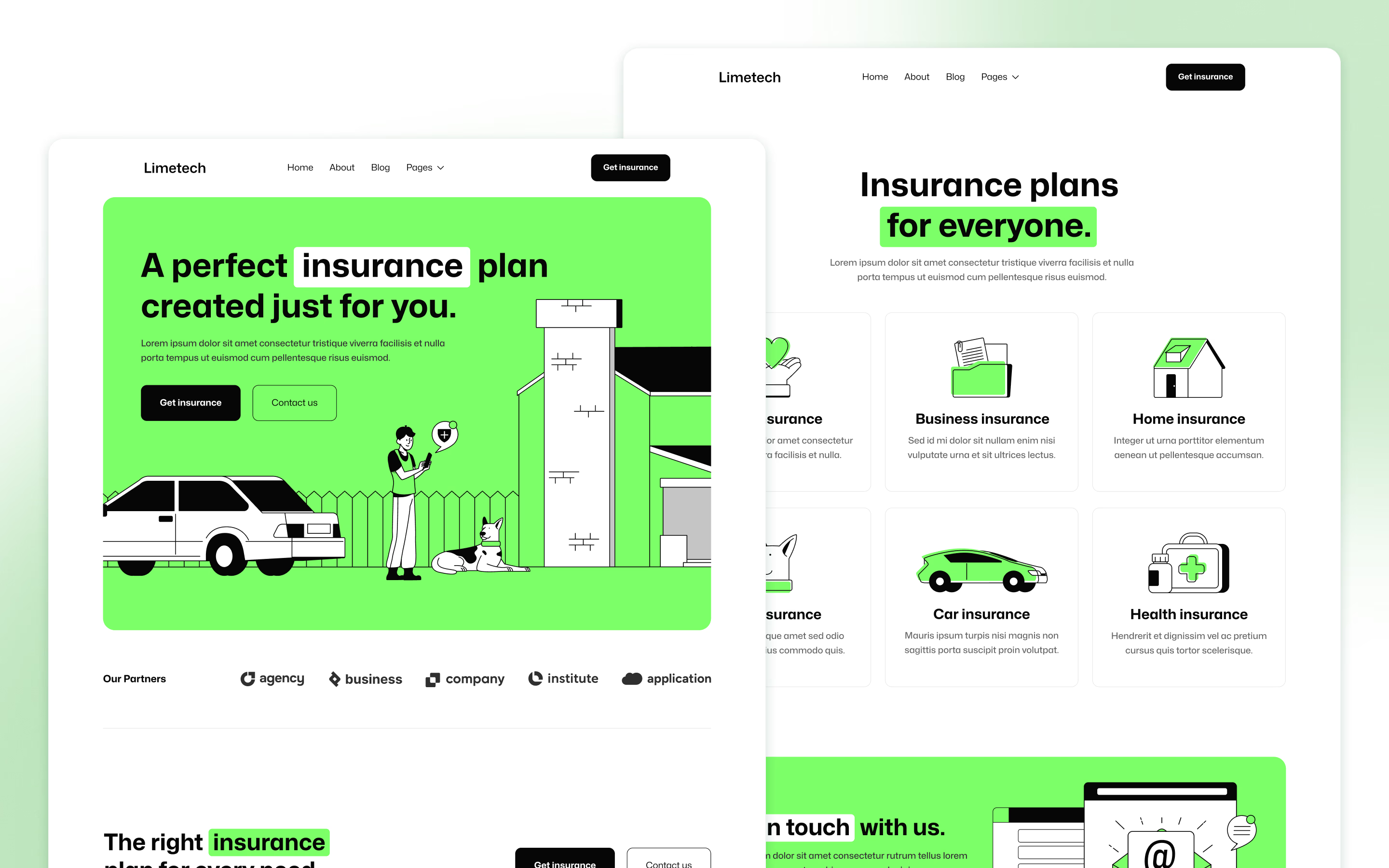
For Limetech, we adapted our template around a question a first-time visitor might ask: which kind of plan should I look at? The illustrated homepage introduces the quote route, while the coverage page gives business and home insurance their own cards. The illustrations carry through both views, so the choices feel like part of the same conversation.
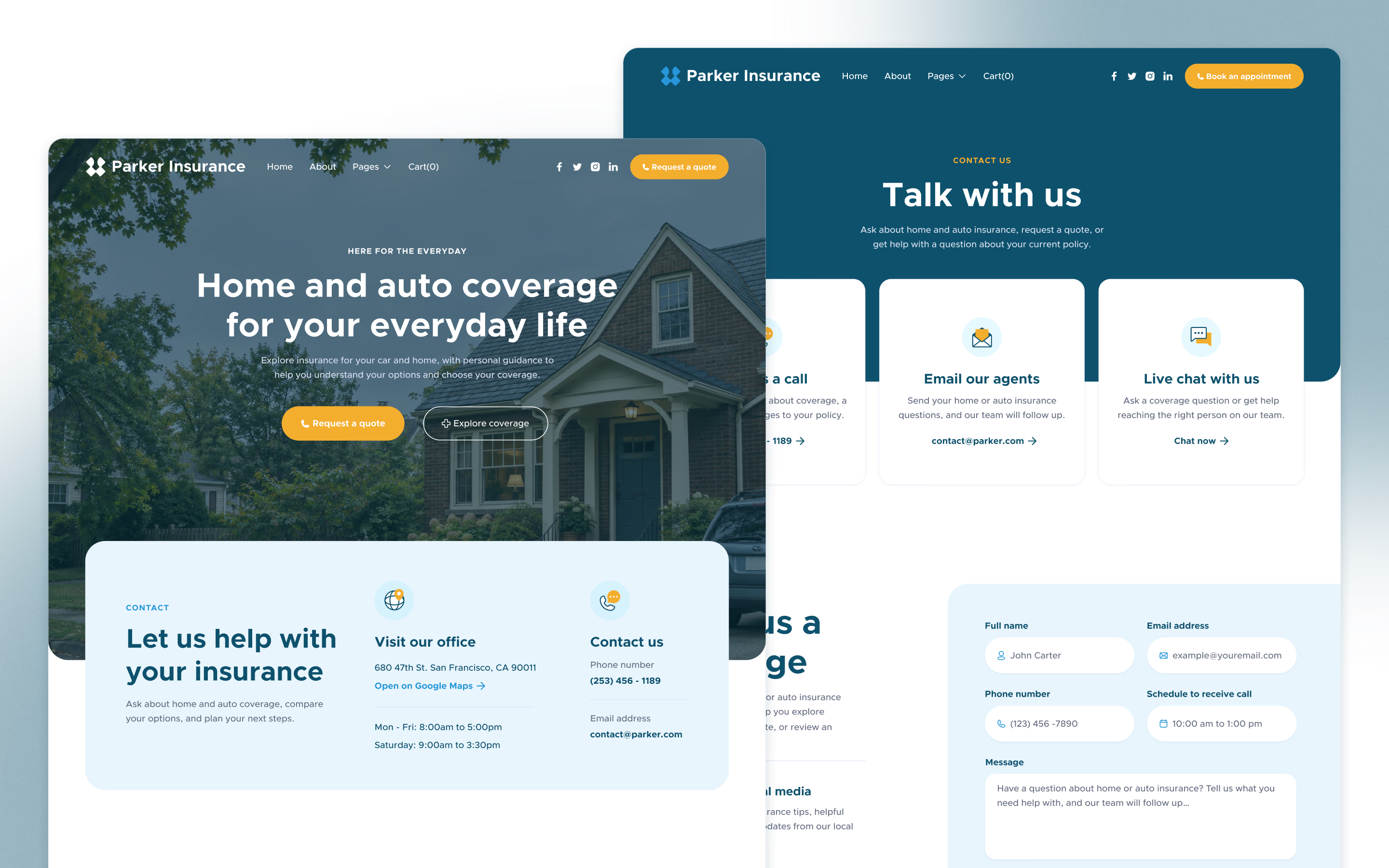
For Parker Insurance, we took a more personal approach. A house photograph introduces home and auto coverage, and a light-blue panel brings office and contact details up into the homepage. On the contact page, calling, emailing, and chatting each get their own space. Someone with a quick question can choose how to ask it before committing to a quote.
More than 60,000 websites use our templates across categories. When you hire us, we design a fully custom website around your brand, the coverage you offer, and the way your team helps customers.
2. Twirling Umbrellas: Best Insurance Web Design Agency for Brokerage Mergers
 2
Twirling Umbrellas
A digital agency connecting branch directories, coverage information, and quote requests when several brokerages come together under one brand.
A merger leaves a surprisingly practical design problem. A customer may still search for the office that arranged their policy years ago, while someone landing on the new brand for the first time just wants help insuring a business. Twirling Umbrellas has worked on bringing those routes together.
For a brokerage with several branches, we'd look closely at how this team treats the directory. An office page can carry its own address and contact details while drawing coverage descriptions from the same source as the rest of the site.
Featured project: Acera Insurance
For Acera Insurance, the team worked on digital strategy, content, and WordPress development. It built a branch directory and quote tool, with forms connected to Salesforce so that the journey could continue after someone left the website.
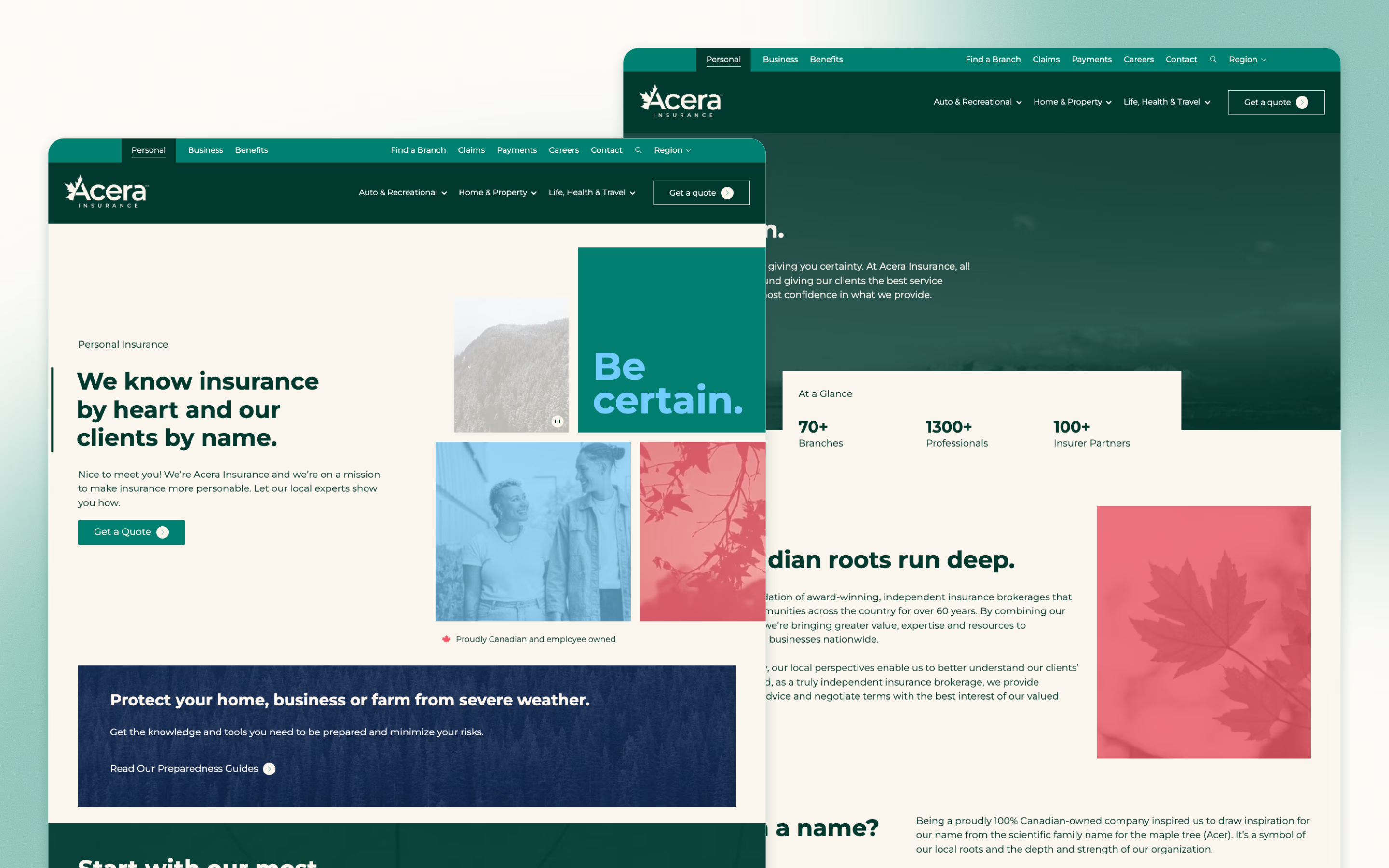
Try approaching the site twice, once with an office name in mind and once with only a coverage question. A branch directory earns its place when both people can reach someone who knows their market.
3. Parker Design: Best Insurance Web Design Agency for Commercial Brokers
 3
Parker Design
A design agency helping commercial brokers organize specialist divisions so businesses can find the people who understand their risks.
A broker's internal divisions make sense to the people who work there. The buyer might only know that they run a production company or need to insure a shipment. Parker Design's work is worth exploring when translating one vocabulary into the other is a central part of the brief.
Look at the way its design links photography, sector names, and search. For a firm with specialist teams, a useful test is whether a visitor can recognize their own line of work before they need to understand the brokerage's structure.
Featured project: Tysers
Parker Design built a mobile-first WordPress site for Tysers, including predictive search, pages for individual divisions, photography, and tools for publishing editorial content. The sector grid gives the brokerage several entry points beyond its main navigation.
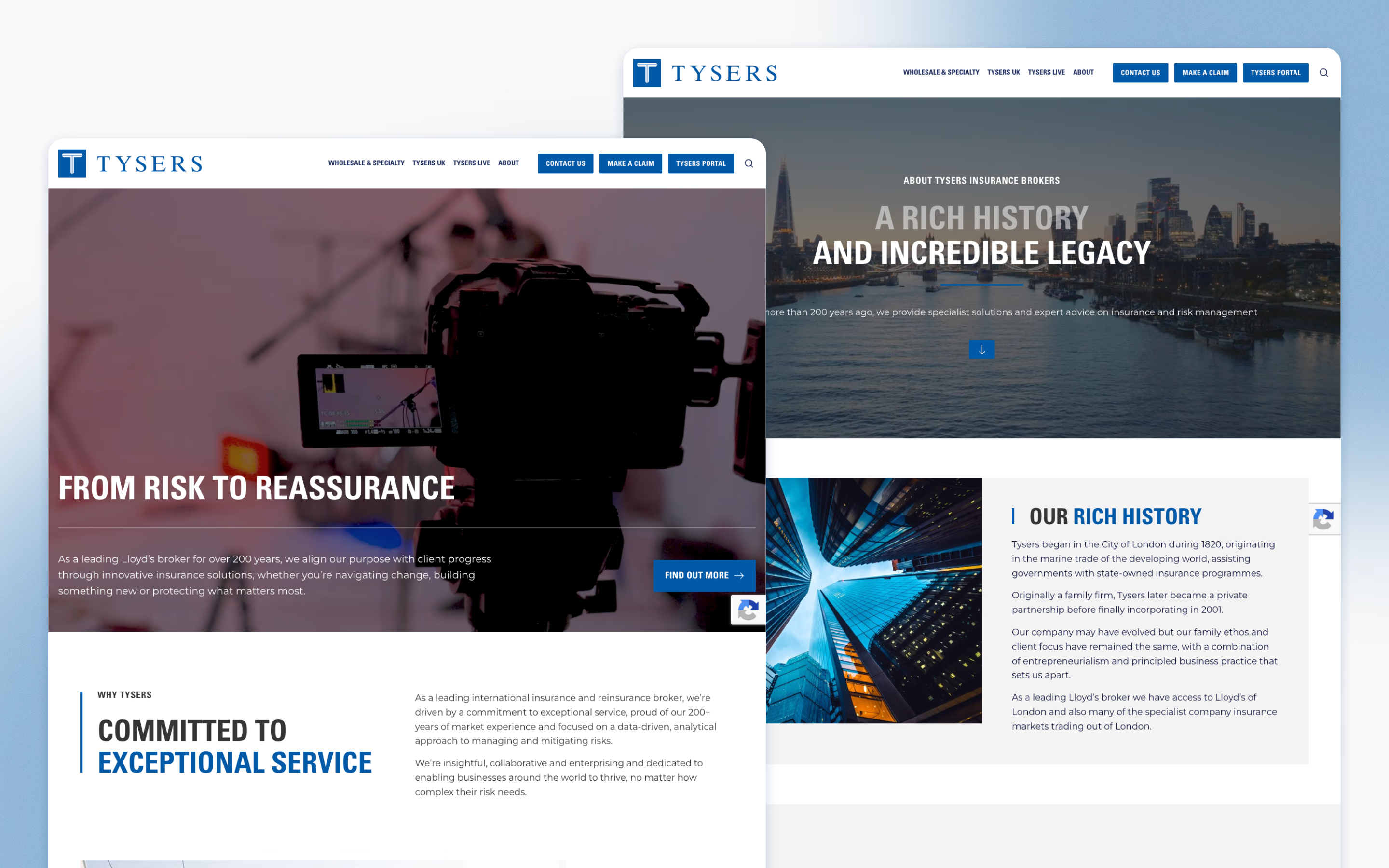
Ask a prospective partner to show what happens when a search uses an industry term instead of a policy name. That small exercise tells you more about specialist navigation than a list of menu items does.
4. 8020: Best Insurance Web Design Agency for Webflow Rebuilds
 4
8020
A Webflow agency rebuilding content libraries and partner pages for insurance teams that publish regularly and need connected marketing tools.
If marketing already likes the brand but struggles to publish, a redesign can start inside the CMS. 8020's Vouch work is useful for teams whose most expensive problem is rebuilding similar pages and untangling old content whenever a campaign changes.
Bring a resource with several versions and a partner page to the first conversation. Watching how the team would model those two items makes it easier to judge whether a rebuild would actually reduce the work your editors do.
Featured project: Vouch
8020 collaborated with Vouch on its Webflow redesign and rebuild, migrating CMS content, organizing a resource hub, and creating partner templates. Analytics, forms, and marketing integrations were part of the engagement alongside the public site.
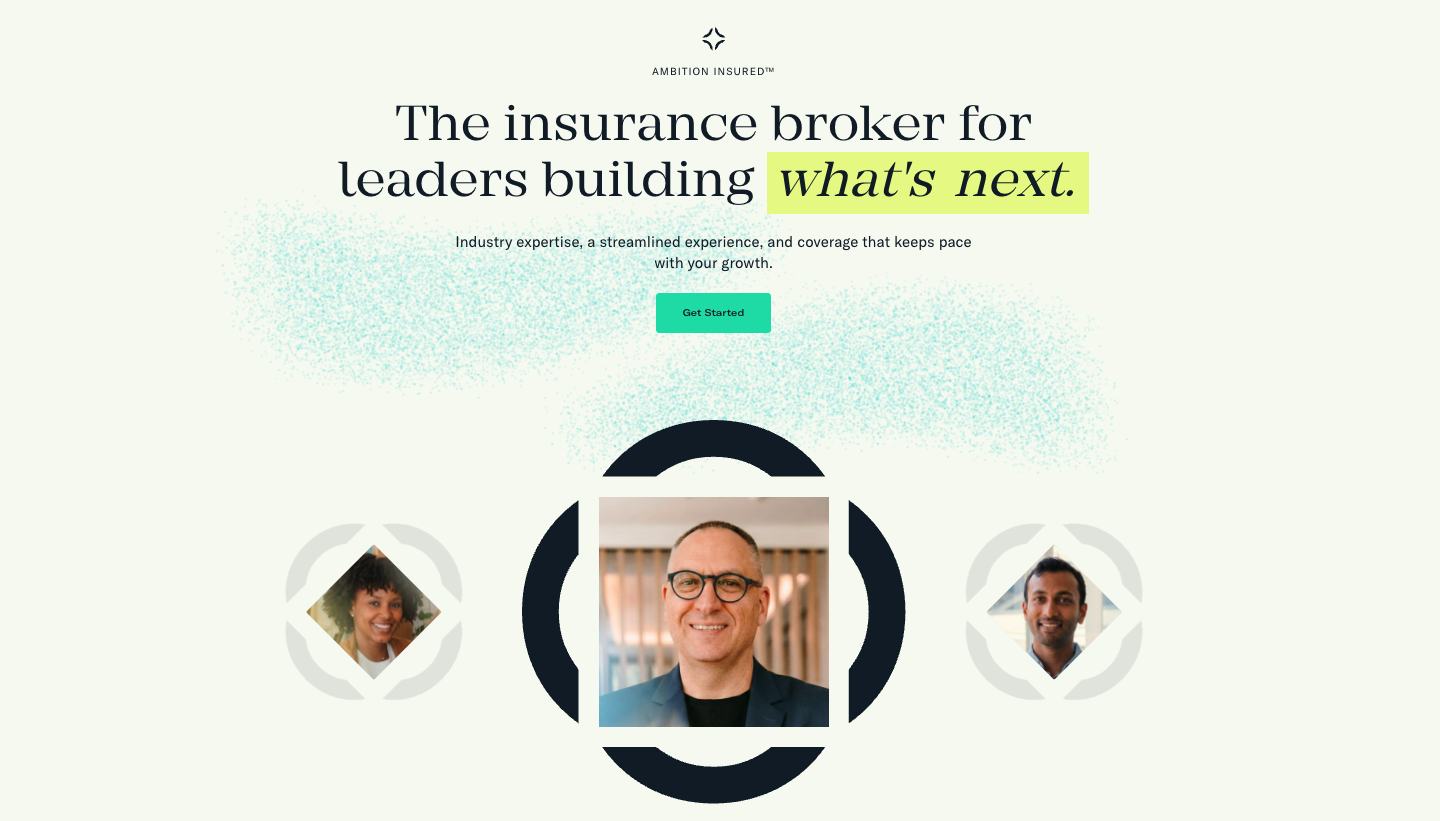
The resource hub matters beyond launch day. A visitor who arrives through an older article still needs a relevant next step, while an editor should be able to update that destination without hunting through unrelated pages.
5. NVISION: Best Insurance Web Design Agency for Quote Qualification
 5
NVISION
A digital agency building brokerage websites that distinguish coverage needs early and direct enquiries to the right commercial team.
A form that generates plenty of submissions can still leave a broker doing too much sorting. NVISION's work for KRGinsure addresses that problem upstream, using industry pages and the steps leading to a quote to narrow down what a business needs.
This makes the team worth a look if your current measure of success is simply the number of forms received. Ask which questions help producers respond and which ones people could more comfortably answer in a conversation.
Featured project: KRGinsure
The KRGinsure engagement included audience research, a website rebuild, commercial industry pages, qualifying quote flows, and analytics. NVISION also describes ongoing work on conversion after the initial project.
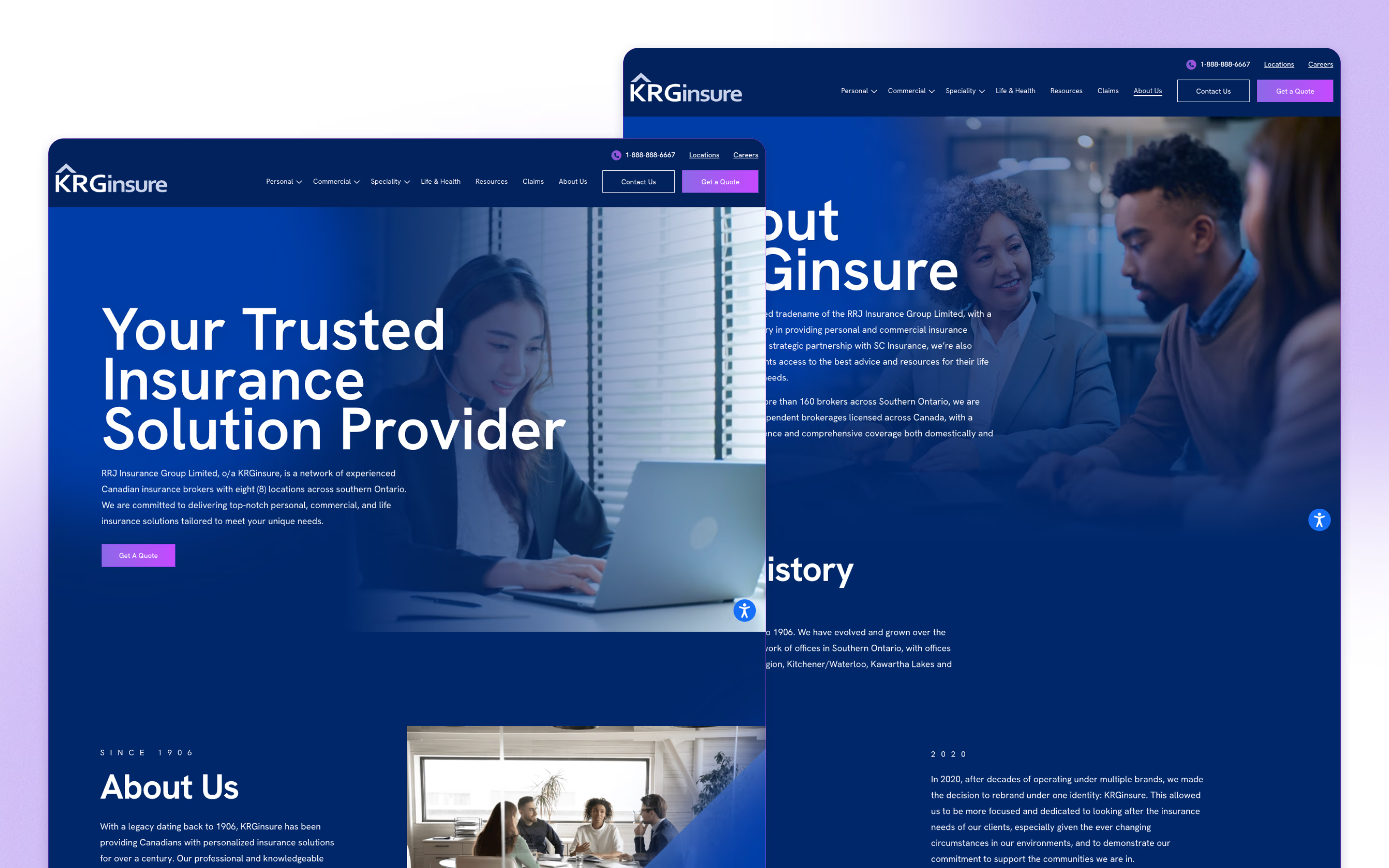
Follow one commercial enquiry from an industry page. Notice how much the visitor has already told you by choosing that page. Passing that context along can save the visitor from explaining their business twice.
6. Takt: Best Insurance Web Design Agency for Mutual Insurers
 6
Takt
A branding and web agency connecting coverage education with broker discovery for mutual insurers serving a regional market.
A mutual insurer that sells through brokers has a different job for its website than a direct seller. Visitors need enough information to recognize the right coverage, followed by a straightforward way to find a local person who can help.
Takt's portfolio gives that distinction some visual substance. In the Kent & Essex work, agricultural photography and room for an explanation help establish who the insurer serves before the reader has to pick a product.
Featured project: Kent & Essex Mutual Insurance
Takt refined the brand and developed a custom WordPress site for Kent & Essex Mutual Insurance. The work brought insurance education, coverage information, and broker search into the same site structure.
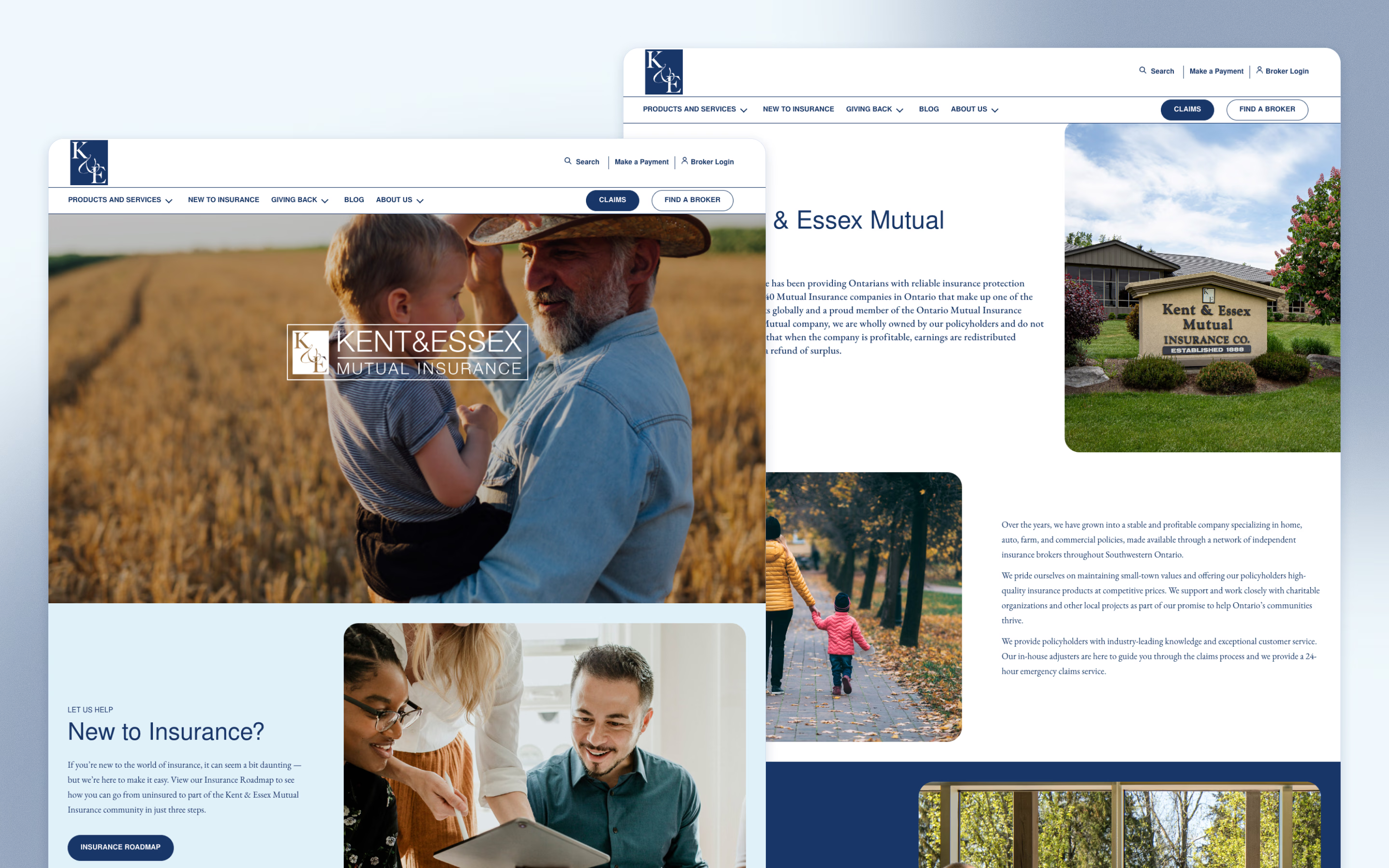
For a broker-led business, try reading a coverage page on a phone, then finding a broker without returning to the homepage. That handoff is a more useful design test than counting clicks from the main menu alone.
7. Dusted: Best Insurance Web Design Agency for Multilingual Websites
 7
Dusted
A brand and digital agency designing multilingual corporate websites for insurers with teams and audiences in several markets.
An insurance group's corporate site has its own audience. A prospective employee may be looking for the people behind the business, while a partner wants to understand where it operates. Neither necessarily needs to start a quote.
Dusted's work for Prima brings those corporate questions into the brief. For an international team, we would also ask how country editors can adapt a story while keeping names, imagery, and the company's broader narrative consistent.
Featured project: Prima
Dusted developed Prima's corporate story and website using photography, illustration, and a multilingual Sanity CMS with Next.js. Portraits and greetings across languages make the international organization visible in the design.
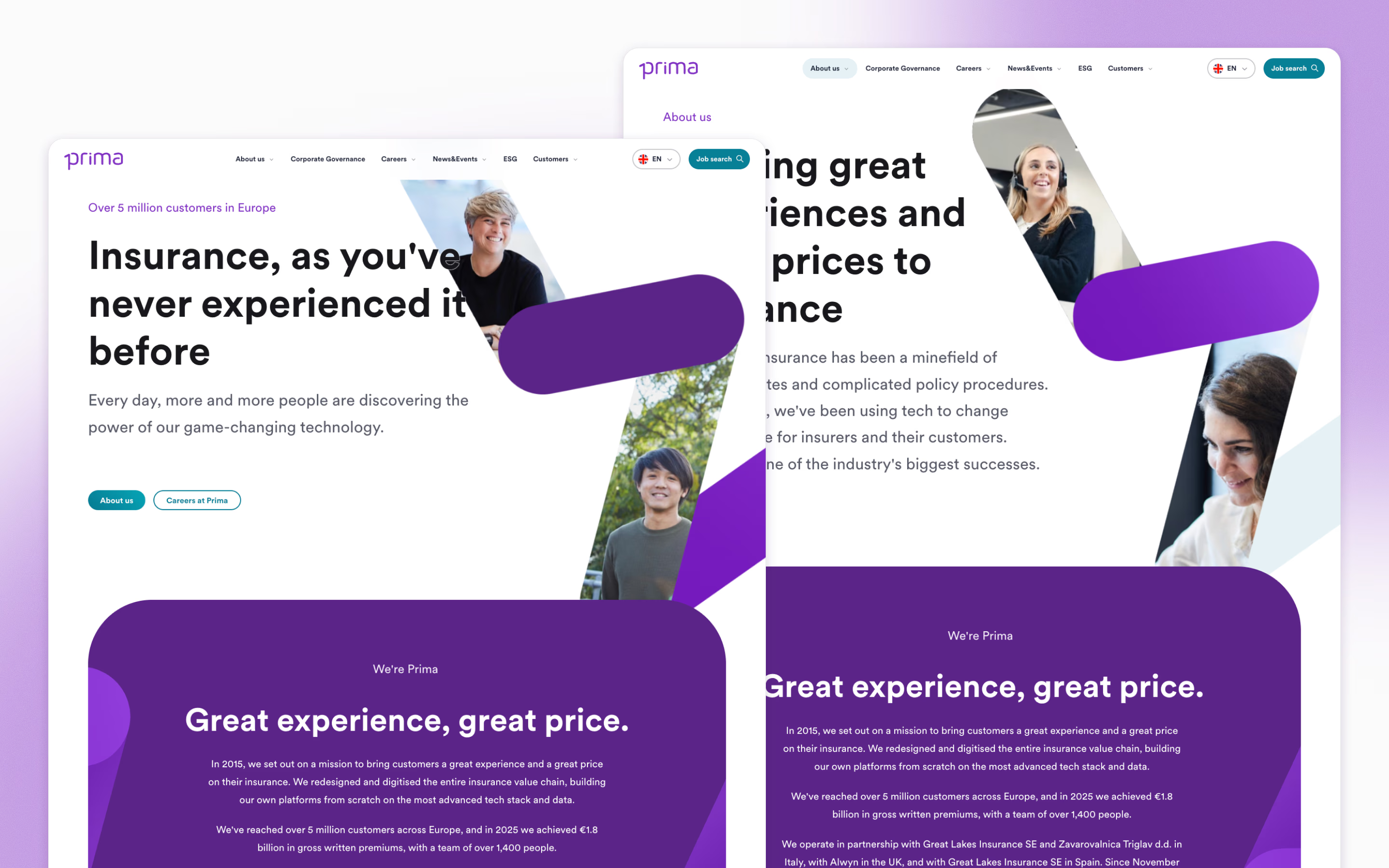
When comparing multilingual sites, open the same story in two languages. Look beyond the switcher to how the page handles longer headings, locally relevant material, and a missing translation.
8. Wolf IQ: Best Insurance Web Design Agency for Campaign Websites
 8
Wolf IQ
A WordPress agency supporting insurance campaigns with editable landing pages, mobile layouts, and forms connected to other systems.
Campaign pages often live on a different schedule from the main redesign. A launch may need a new introduction, a different audience, or a changed question on a form. Wolf IQ combines that ongoing work with website development.
The question to bring to this team is who can change what. An editor may be able to update the offer while a developer still needs to test the connection that carries an enquiry into another system.
Featured project: Stella Insurance
Wolf IQ refreshed Stella Insurance's website with a responsive WordPress and Elementor build. Its case also covers campaign pages, ongoing development, and a custom form connected through an API.
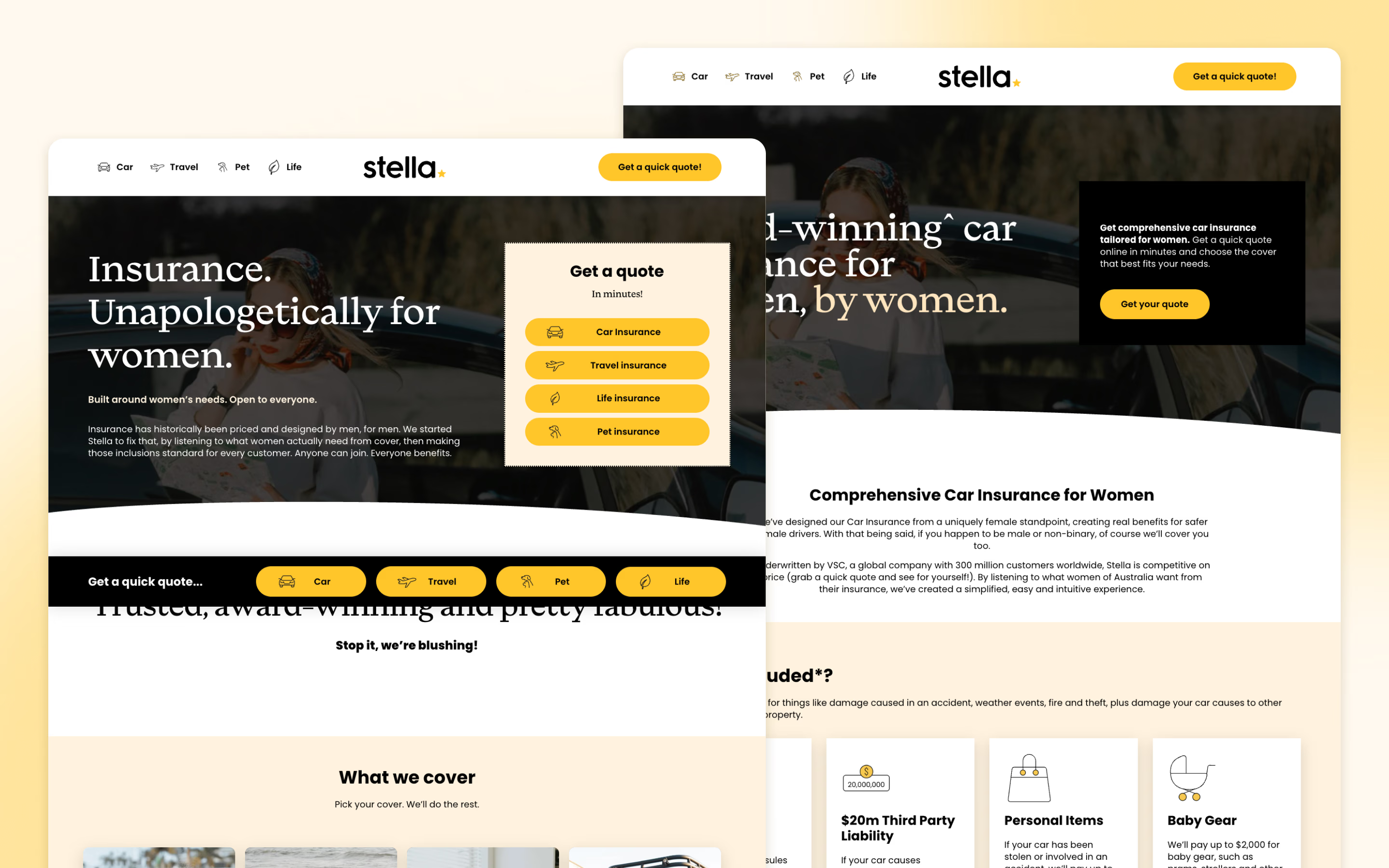
For a campaign launch, ask for two demonstrations: changing the page and following a test submission to its destination. A polished mobile layout and a reliable handoff are separate parts of the same visitor experience.
9. Cake & Arrow: Best Insurance Web Design Agency for Insurance UX
 9
Cake & Arrow
A design agency organizing brokerage services and industry expertise around the decisions a prospective client needs to make.
Cake & Arrow is a useful candidate when deciding what the website should say is as important as deciding what it should look like. A benefits adviser and a business risk consultant may sit under the same brand but answer very different early questions.
Give a team like this a pair of real enquiries from your brokerage. Ask how each person would recognize the relevant practice and find a useful example before reaching an adviser.
Featured project: Holmes Murphy
Cake & Arrow identifies marketing website design, content strategy, and development among its contributions to Holmes Murphy. The brokerage's current public site offers both services and industries as ways into its business.
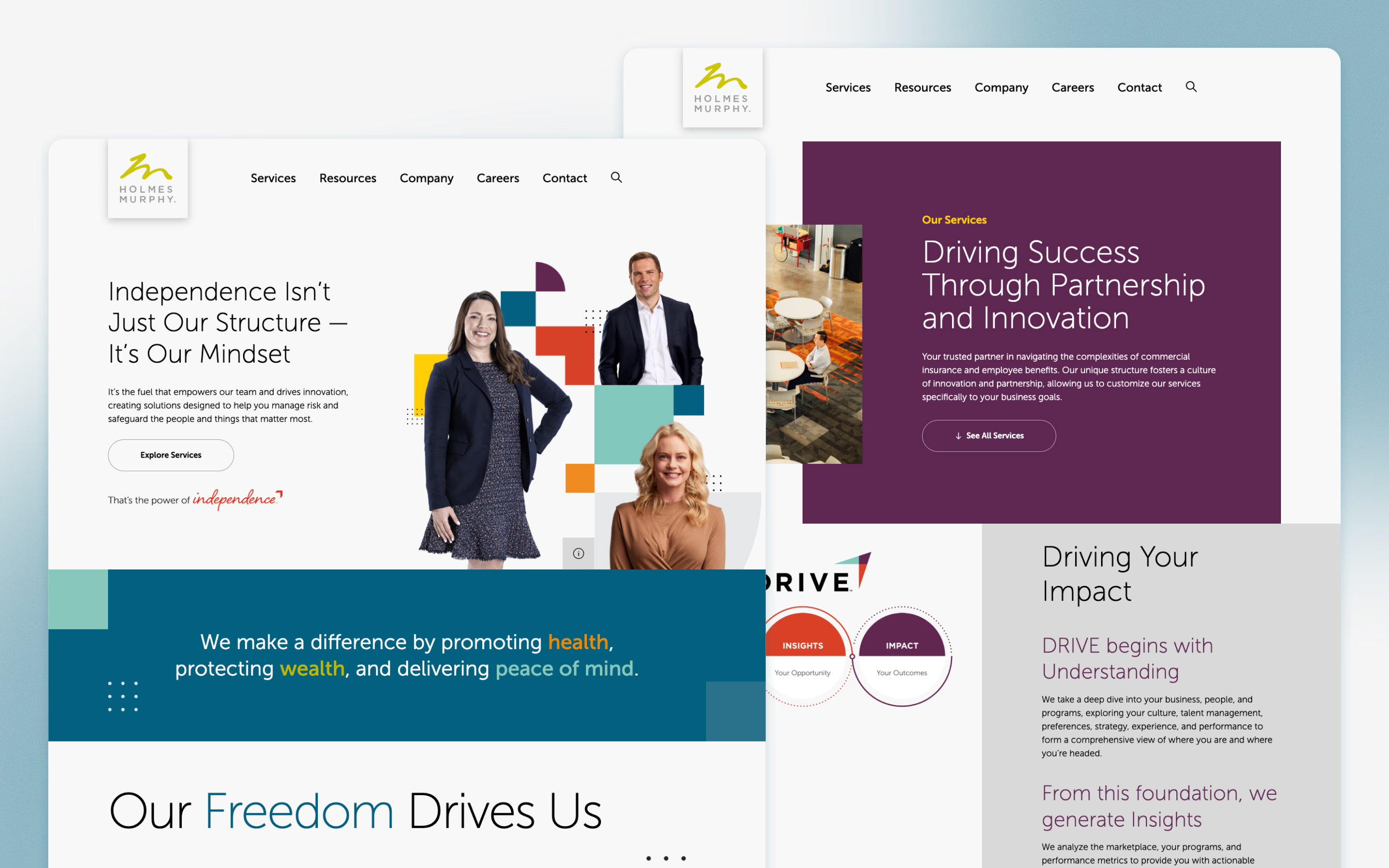
Those two routes let you evaluate content organization from the buyer's side. Someone who knows the service name can move directly, while a buyer who recognizes their industry first can begin there.
10. Studio Tonic: Best Insurance Web Design Agency for Fleet Insurance
 10
Studio Tonic
A digital studio translating an established brand into an insurance website with motion, filterable resources, and connected enquiry forms.
Fleet insurance is easier to explain when a website gives operators something specific to look at. Studio Tonic worked from an established identity for Flock, making this a relevant example for businesses that already have brand guidelines and need a team to bring them onto the web.
When reviewing the work, separate the contribution of the original brand designer from the studio that built the website. That distinction helps you decide which skills you actually need to hire.
Featured project: Flock
Studio Tonic translated Koto's identity into Flock's website, developed it in Webflow, and added animations, filterable content, and a HubSpot integration. A timeline in the case uses year markers to make the company's story easy to follow.
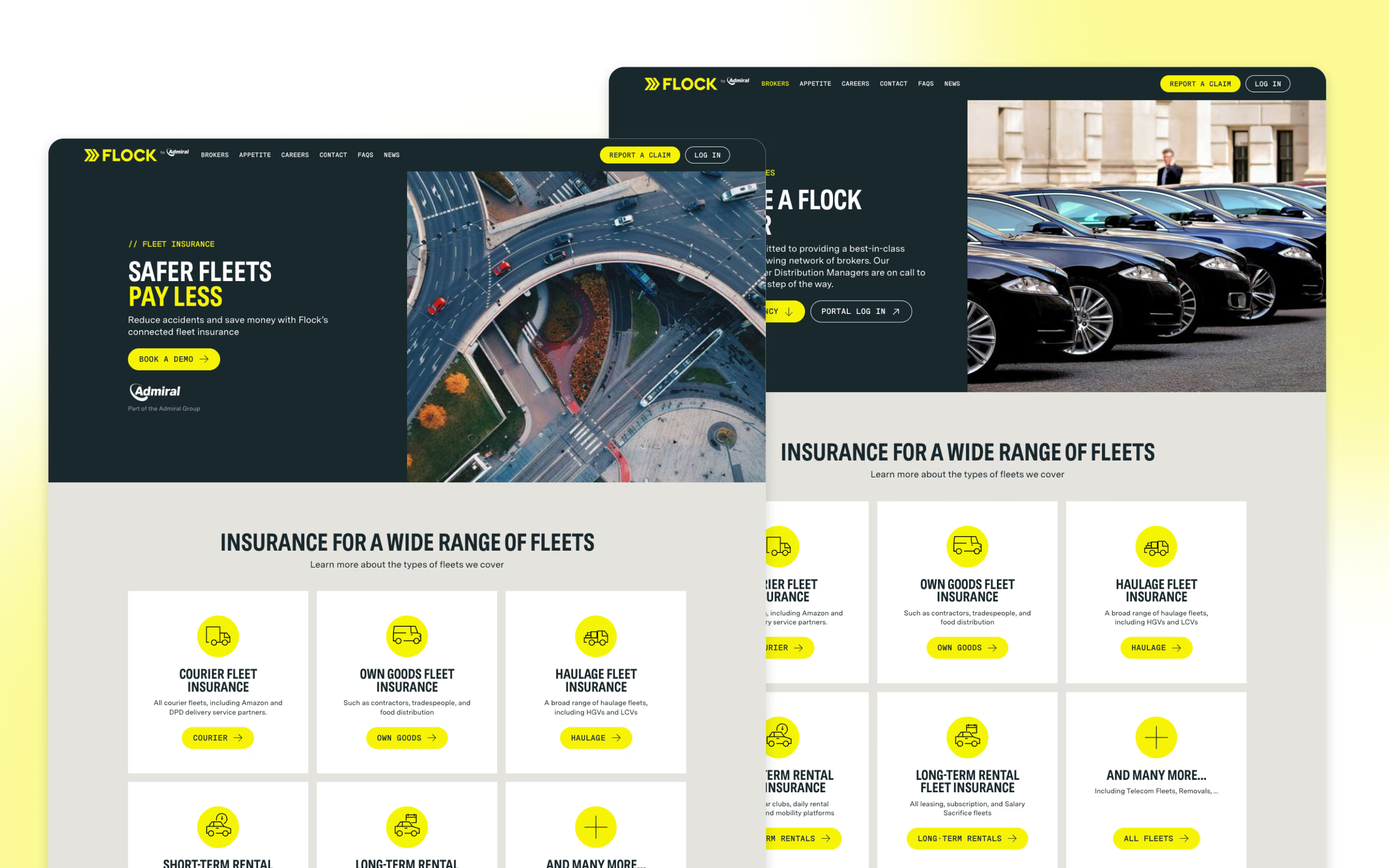
For a fleet insurance brief, look for motion that helps a visitor follow a sequence, then check how quickly an operator can move from that explanation to a commercial conversation.
11. BrightFire: Best Insurance Web Design Agency for Independent Agents
 11
BrightFire
An insurance website provider pairing custom design with managed services for independent agencies that want ongoing help with their site.
Independent agencies sometimes have one person handling renewals, local marketing, and website updates. For that buyer, the people who keep the site running after launch can matter as much as the designers who put the first version together.
BrightFire offers a managed approach. Ask to see exactly which changes your staff can make directly, which are covered by support, and what happens to your domain and content if the relationship ends.
Featured project: Lightship Insurance
Lightship Insurance appears in BrightFire's design portfolio. The project presentation gives a quote form a prominent position beside a grid of images, with contrasting buttons making the enquiry route easy to spot.
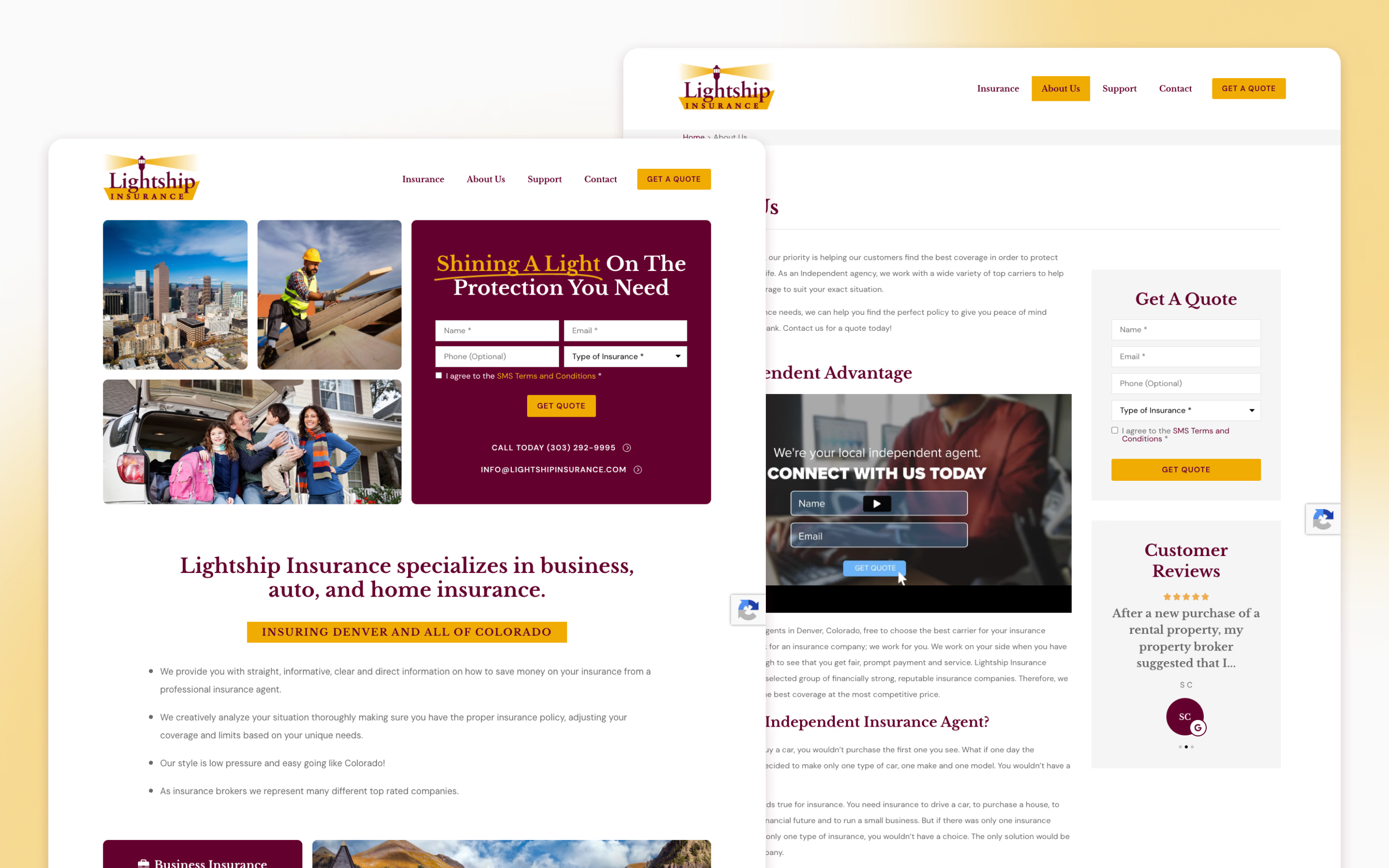
That layout gives you a simple evaluation exercise. Cover the form and see whether the rest of the page still explains why someone should choose this agency. Quote access works best when the page also earns the conversation.
12. Agency Revolution: Best Insurance Web Design Agency for Policyholder Services
 12
Agency Revolution
An insurance website provider bringing coverage education and everyday policyholder requests together on a managed agency platform.
People who already hold a policy often visit an agency website with a specific job to do. Placing every visitor into the same sales funnel makes a simple service request feel like starting over.
Agency Revolution's Forge platform is worth considering if your team wants website design and continued upkeep together. Look at the choices available to an existing customer alongside the routes intended for new business.
Featured project: Synergy Insurance
Synergy Insurance identifies Agency Revolution's work on its agency site. The public experience groups insurance into four categories and makes room for interactive coverage material, service requests, and contact information.
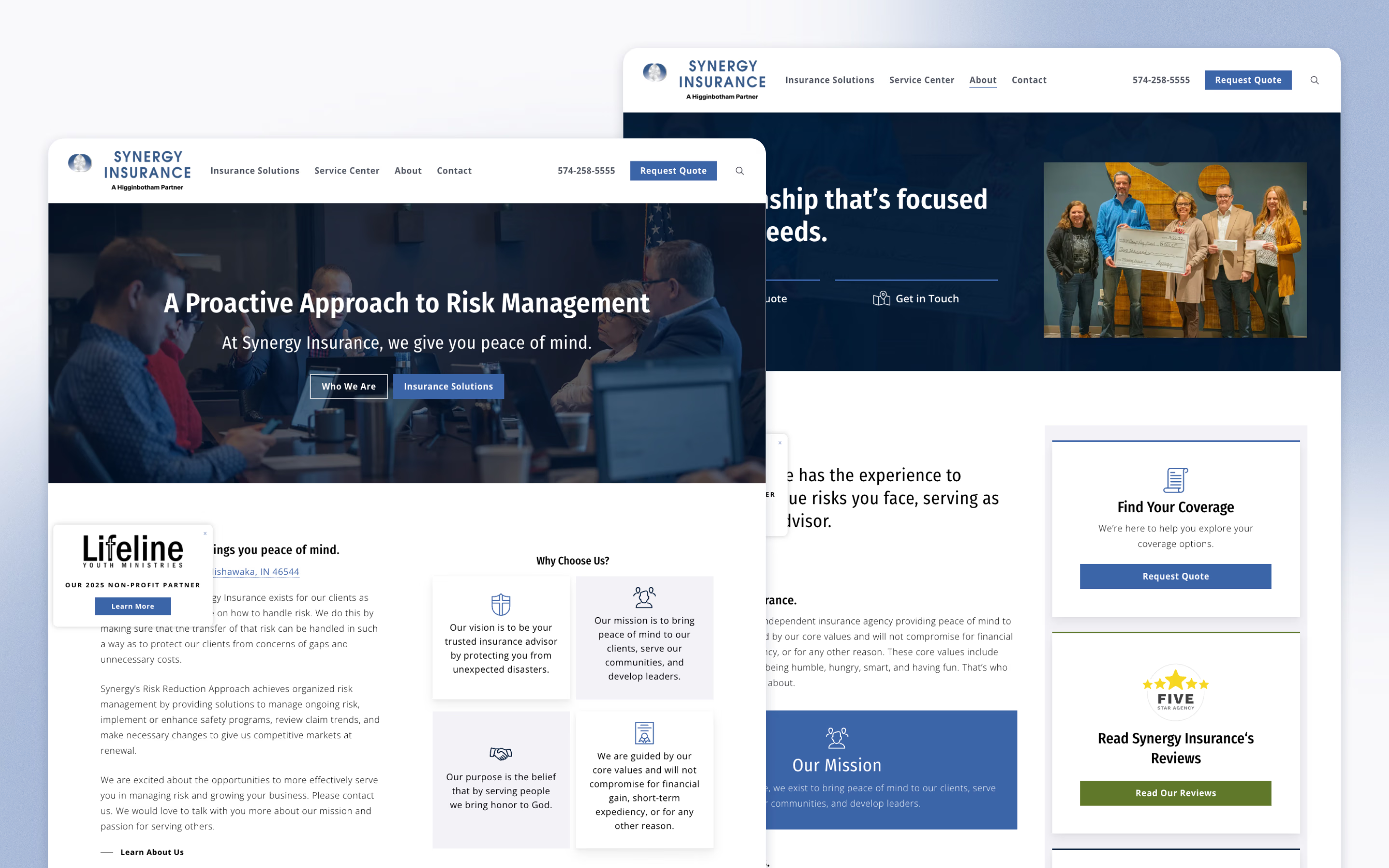
Try finding help as an existing customer before looking for a quote. A clear service request path can prevent a policyholder's message from reaching the new-business inbox, even when both teams work in the same office.
13. Norml Studio: Best Insurance Web Design Agency for Audience Navigation
 13
Norml Studio
A brand and website studio designing separate paths for the audiences an insurance distribution business needs to reach.
Insurance distribution businesses can have several entirely different reasons for bringing someone to their site. Copy written only for the policy buyer can leave agents and partners guessing where they belong.
Norml Studio works on positioning and messaging alongside design. The useful question here is how early each audience can recognize itself, especially if everyone arrives through the same homepage.
Featured project: InsuraTec
For InsuraTec, Norml developed positioning, a modular identity, website copy, design, and development. Its audience pages and tailored lead paths sit within one visual system, with motion supporting the presentation.
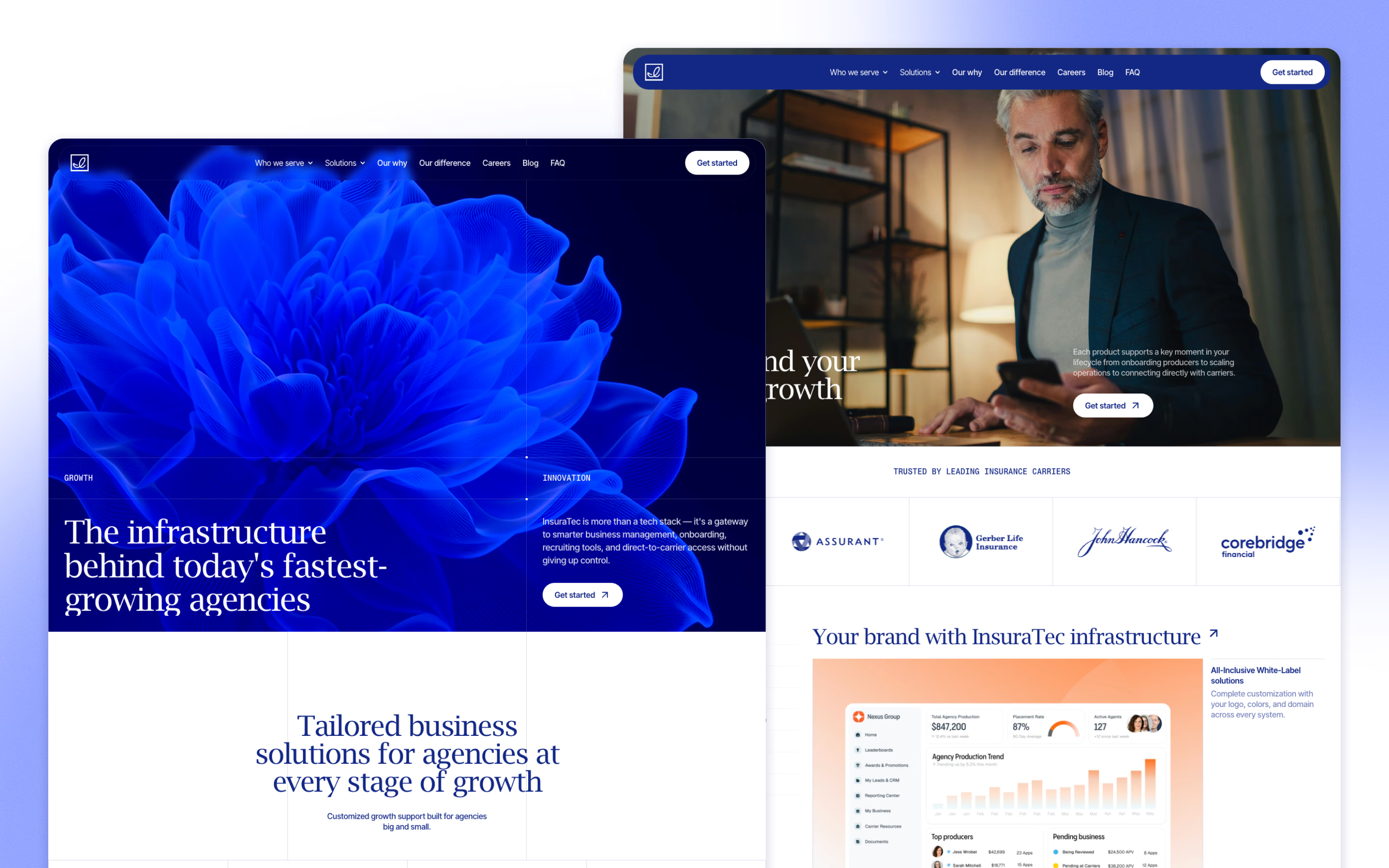
Compare what a visitor is invited to do at the end of each path. Audience navigation has done its job when the destination and the follow-up fit the visitor, not just when the home screen has several buttons.
14. Digital Spiders: Best Insurance Web Design Agency for Specialty Insurance
 14
Digital Spiders
A design and development studio structuring specialist insurance services into product pages that a small editorial team can maintain.
Specialist insurance can be hard to browse when every service is described with the same broad promise. Digital Spiders' work for SIMA is useful because it starts with a finite set of services and gives each a place in the architecture.
It also makes a useful comparison for buyers considering a custom front end. Ask which details marketing can change in the CMS and what happens if the business introduces a fifth service.
Featured project: SIMA
Digital Spiders used SIMA's existing identity to design and build a four-service website with product pages. The implementation combines Astro, Sanity, and GSAP motion, with oversized typography and a swan motif in the opening design.
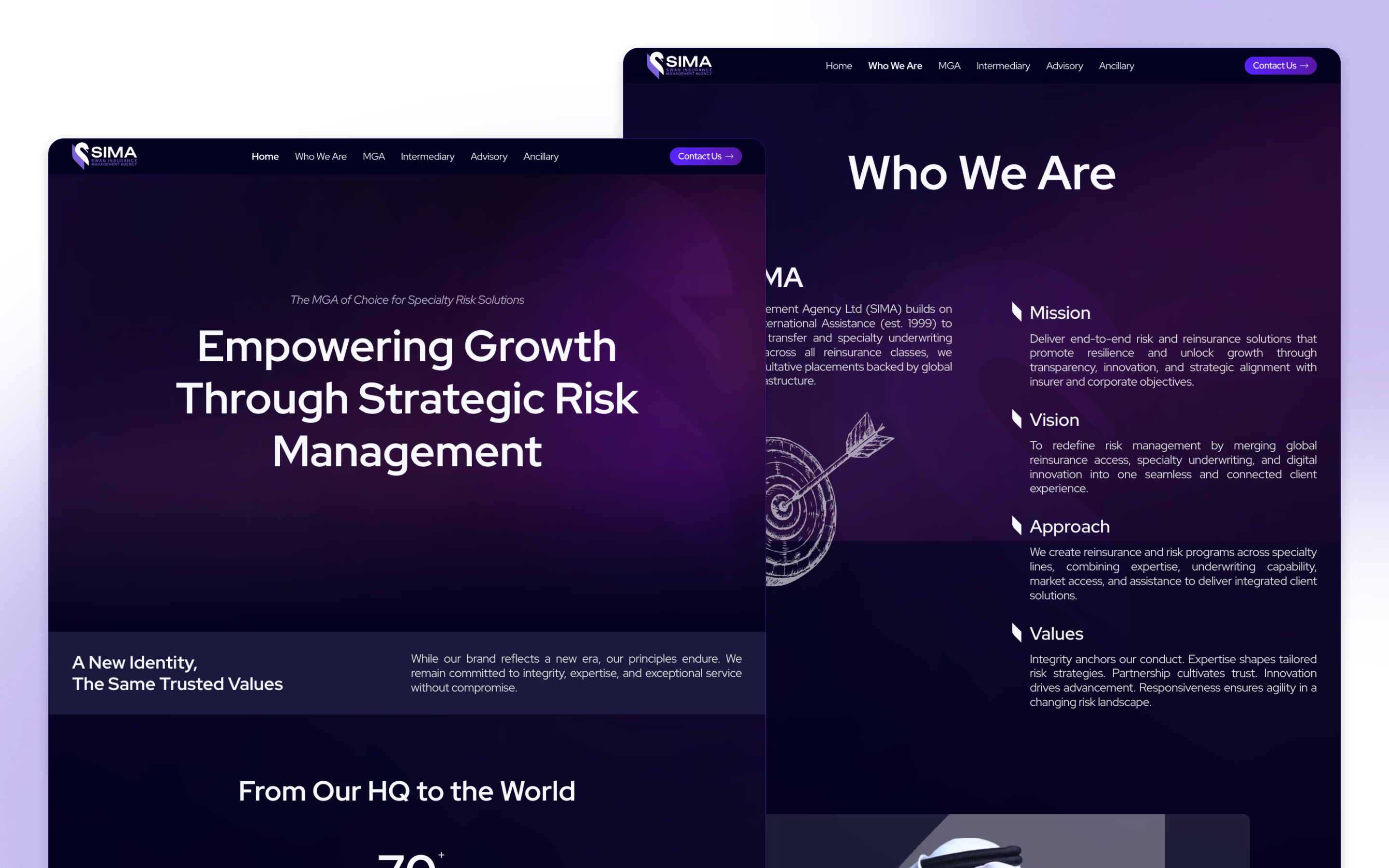
Take one specialty product and see whether its page gives the reader a reason to enquire about that particular service. A clear distinction between offerings does more work here than another general company introduction.
15. Ragged Edge: Best Insurance Web Design Agency for Challenger Brands
 15
Ragged Edge
A branding agency developing identity, language, and website design for insurance businesses introducing a different way to buy coverage.
A new insurance model asks people to understand something unfamiliar before they will trust it. Ragged Edge's work for Laka shows why the words on the page deserve as much attention as the visual identity.
For a brand team, the interesting question is whether distinctive language makes the offer easier to explain. A memorable headline is worth more when a reader can repeat the idea accurately to someone else.
Featured project: Laka
Ragged Edge's work for Laka included brand strategy, identity, website writing and design, a design system, and commissioned photography. The partnership drew on cycling culture to give the brand a voice that riders could recognize.
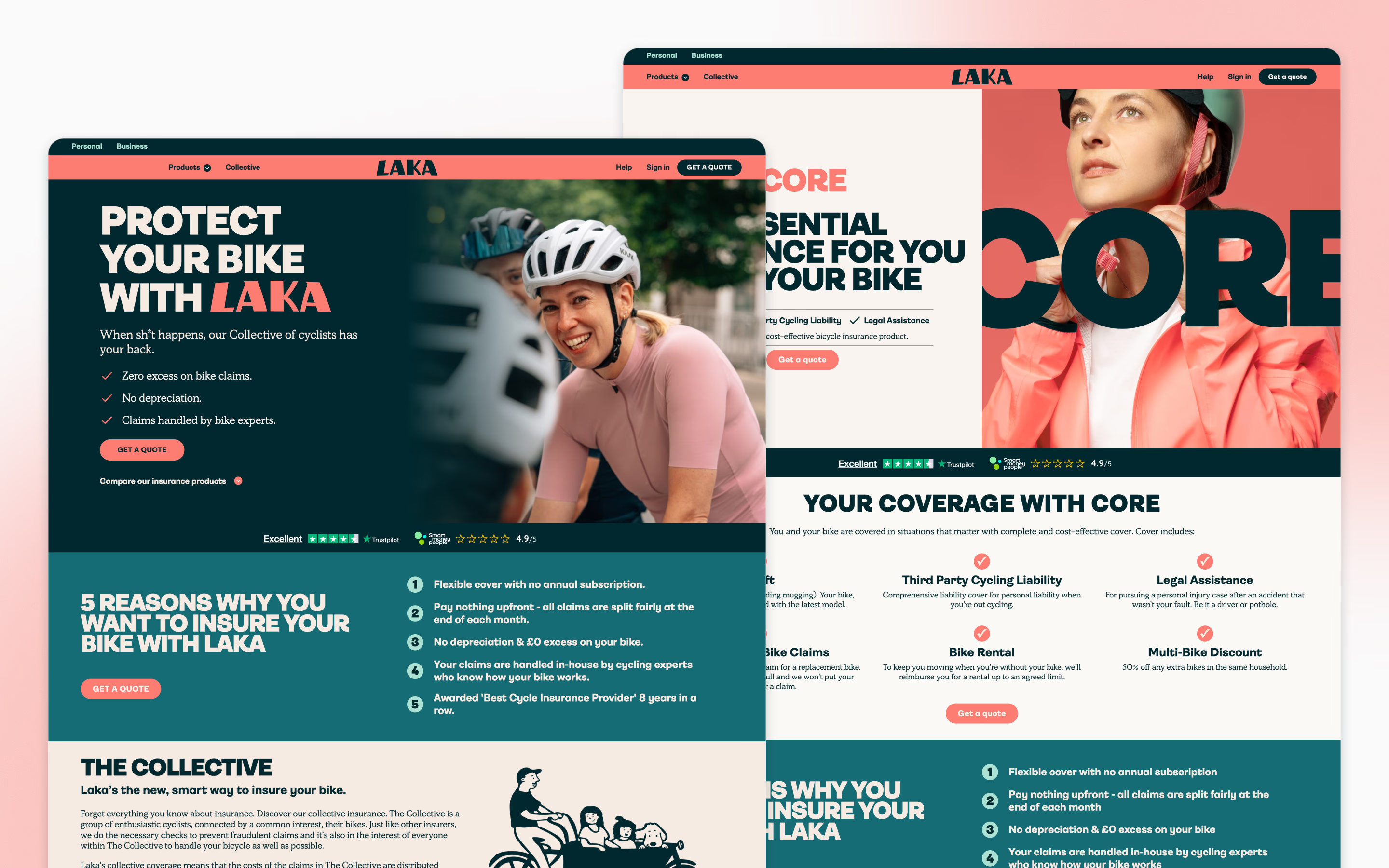
Read the product explanation alongside the photography. The community references give the brand character, but the buyer still needs to understand how the offer works before choosing to go further.
16. Pancentric Digital: Best Insurance Web Design Agency for Online Quotes
 16
Pancentric Digital
A digital agency connecting consumer research, insurance brand development, and quote journeys for products sold directly online.
For a direct-to-consumer insurer, the quote journey begins before the first question on the form. Expectations are already taking shape in an ad, on a comparison site, or on the product page that leads into the application.
Pancentric's work brings those earlier steps into the conversation. Ask prospective partners to demonstrate a journey arriving from somewhere other than the homepage, particularly if aggregators are a meaningful source of traffic.
Featured project: Everypaw
Pancentric worked on consumer research, branding, the Everypaw website, quote-and-buy journeys, and aggregator integration for the pet insurance launch. Its case shows how pet imagery and plain product messaging informed the early design.
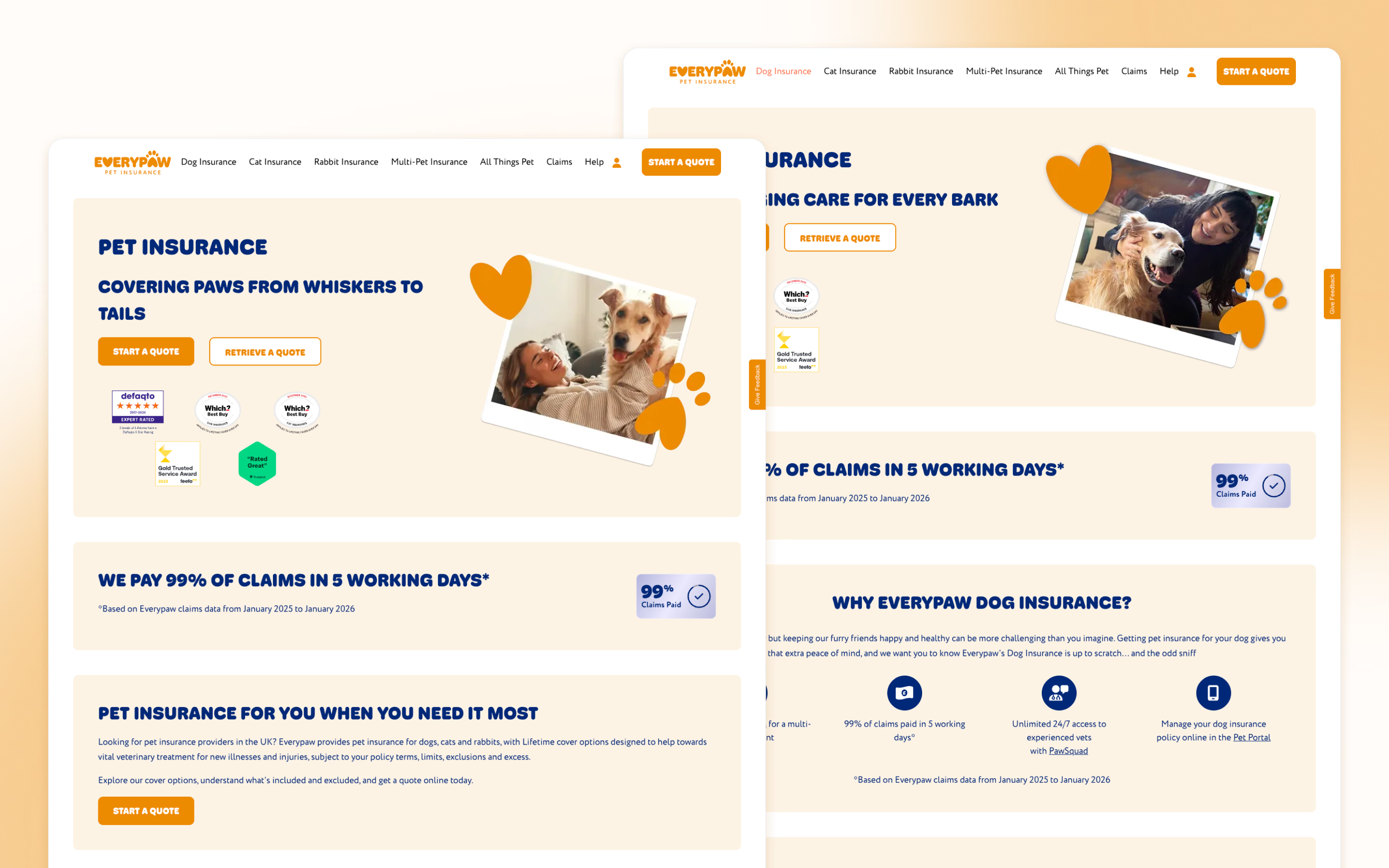
The quote handoff is the part to examine. A pet owner shouldn't have to guess whether a choice they made before entering the application still applies after moving to the next screen.
17. Wrapped: Best Insurance Web Design Agency for Broker Rebrands
 17
Wrapped
A branding and marketing agency turning audience research into clearer messaging and website design for a brokerage relaunch.
A brokerage taking on a new identity has two audiences to reassure. New customers need a reason to get in touch, while existing customers need to recognize the business they already trust.
Wrapped's work for Insurely ties the visual changes to research and messaging. That makes it a useful reference if the redesign needs to explain a shift in positioning rather than simply introduce a new logo.
Featured project: Insurely
Wrapped ran strategic workshops and audience research, then worked on identity, messaging, content, website design, and development. Its Insurely presentation pairs customer photography with business insurance messaging and direct ways to contact the broker.
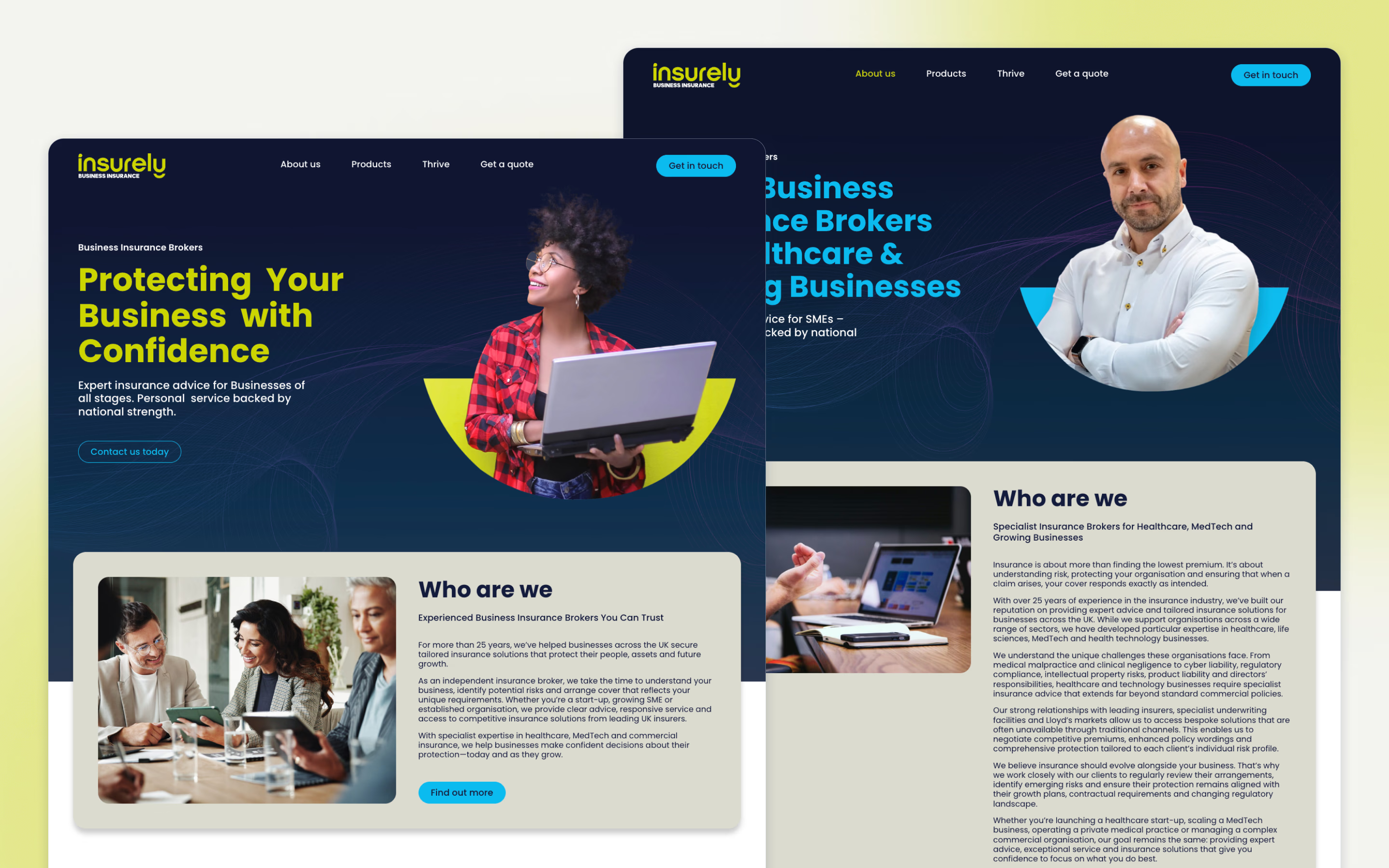
During a broker rebrand, try giving the homepage to a long-standing customer and to someone unfamiliar with the firm. The first should recognize who is behind it and the second should understand whom the brokerage helps.
18. e9digital: Best Insurance Web Design Agency for Employee Benefits
 18
e9digital
A web design agency helping benefits advisers explain employer services and give buyers a manageable route into plan information.
An employer looking at benefits may be preparing a recommendation for several colleagues. A site that merely lists plans leaves that person to assemble the argument alone.
e9digital's work for Sustainable Benefits Group gives buyers an example of how messaging and service information can sit together. When comparing portfolios, look for pages an HR lead could actually share with a finance colleague.
Featured project: Sustainable Benefits Group
The redesign covered employer-focused messaging, service exploration, results presentation, and health-plan information. The project image puts a short benefits statement and a route to the plans beside healthcare photography.
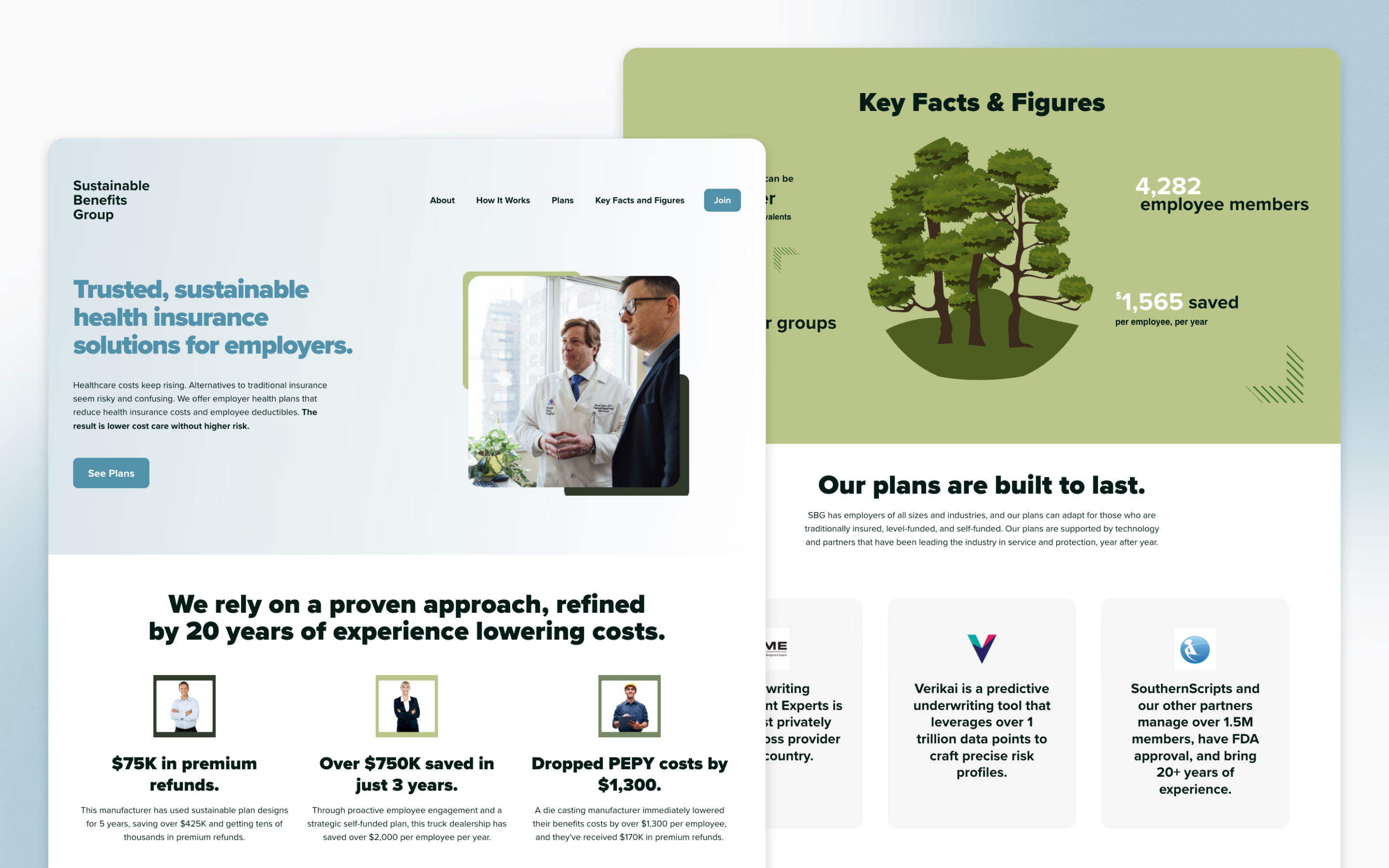
For an employer audience, the second page matters as much as the first. Check what the reader finds after selecting a plan and whether the site tells them which questions are better discussed with an adviser.
19. Commence Studio: Best Insurance Web Design Agency for Insurance Marketplaces
 19
Commence Studio
A brand and digital studio connecting the consumer website, partner experience, and purchasing interface of an insurance marketplace.
A marketplace website may need to serve people buying insurance and businesses distributing it. Those audiences share a brand, but a potential partner is unlikely to need the same explanation or first action as a shopper.
Commence Studio's Covered Insurance engagement spans both sides. It is worth reviewing if your marketing site is only one part of a broader product and different teams will own what happens after someone enters it.
Featured project: Covered Insurance
Commence worked on branding, illustration, UI design, the consumer website, a partner portal, and an insurance purchasing portal. The case documents the earlier consumer experience, while Covered's current public site addresses mortgage enterprises.
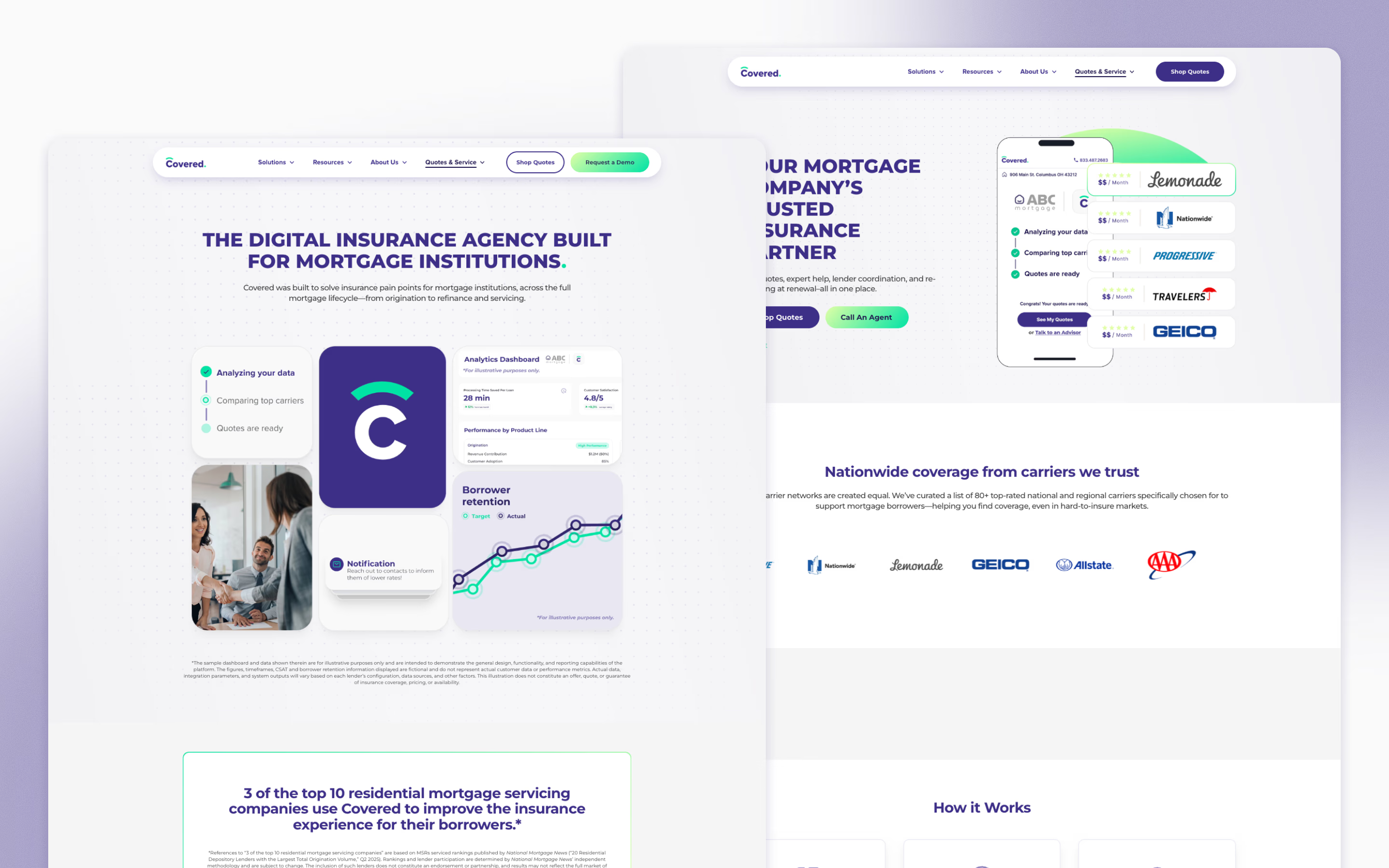
That difference is useful during an agency interview. Ask to see the original project and the live site side by side so you can discuss what the studio delivered and how the business has evolved since.
What an insurance web design agency should help you with
Start with your inbox. Pull three anonymized examples: a request for a new policy, a policyholder asking for a document, and a business owner who needs specialist advice. Ask the design team to trace each one backward. Which page should that person land on? What does the page need to explain? Who should receive the message?
That exercise gives you a brief for the public website. List coverage lines, offices, contact details, and the language your customers actually use. Have your team identify which descriptions need an internal or carrier review and who can approve them. A designer can turn that material into a readable page, but someone who knows the product needs to own its accuracy.
Now draw the boundary around the site. A button that opens a carrier portal, a form that creates a CRM record, and a rating engine that returns a price are three different pieces of work. Give each a name in the proposal and assign someone to test it with the receiving team.
How to choose an insurance website design agency and compare costs
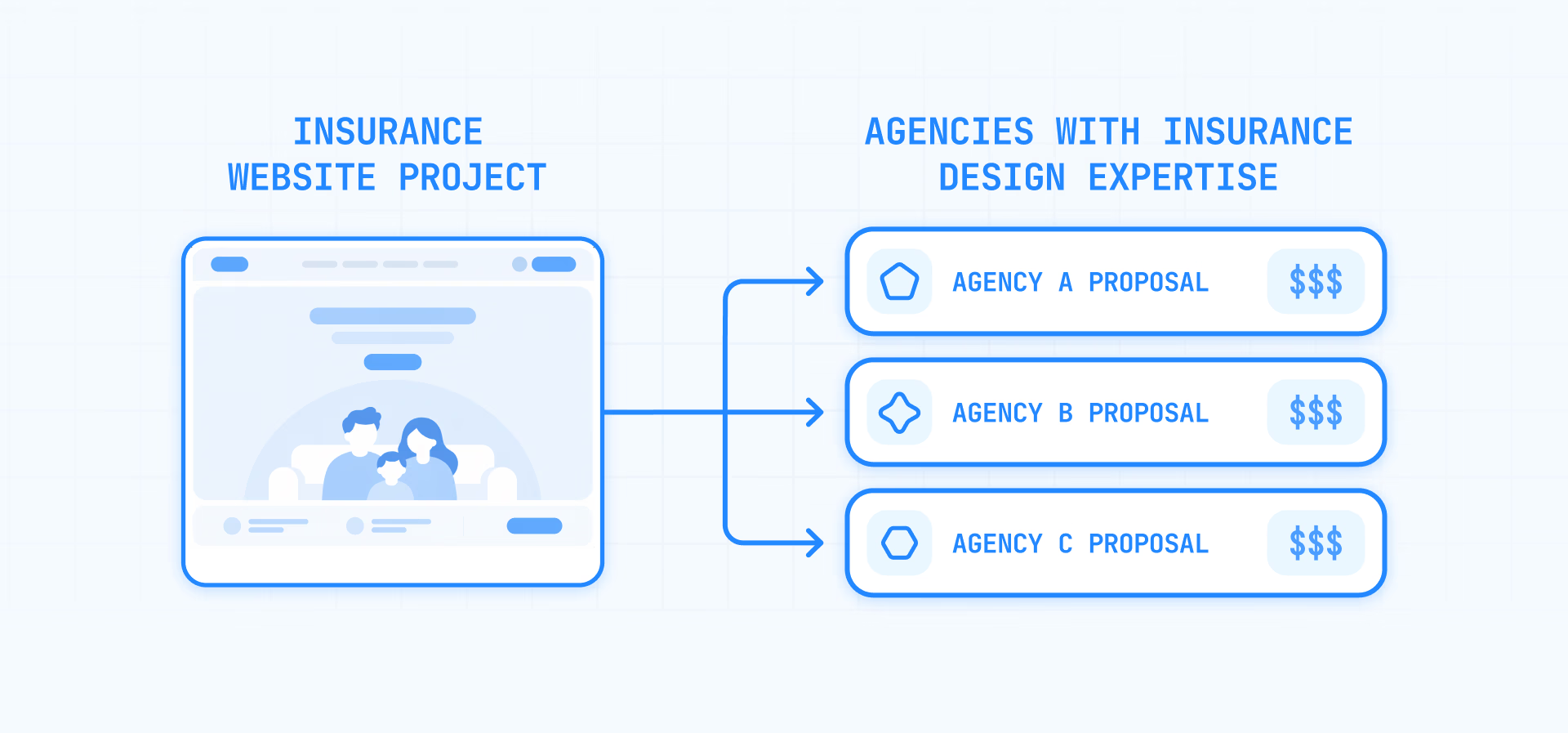
Send the same short brief to 2–3 agencies. Include one product, one office, and one enquiry that represents the harder end of your business. Those examples give each team something concrete to estimate and give you a fair way to compare their answers.
Subject [Brokerage name] website redesign and quote routing
Hi [name],
I found your work through BRIX Agency’s insurance web design guide. We're a [brokerage, carrier, or insurance technology company] serving [audience and markets]. We'd like to redesign [number] pages so visitors can [find a broker, compare coverage, or request a quote].
Our team updates [coverage lines and locations]. Enquiries need to reach [system or person], and [role] approves product copy. We’re aiming for [date], with a budget of [optional range].
Could you share a similar project and explain who would handle copy, migration, and testing? Please price ongoing support and vendor costs separately from the launch work.
Thanks,
[Your name]
Read the proposals side by side before looking at the totals. Mark who will write each coverage page, enter branch records, map old URLs, and test the quote handoff. Separate one-time work from hosting, support, and vendor charges. If a team says “integration included,” have it name the receiving system and the test that will count as completion.
Ask for a schedule with three milestones you can verify: an approved sample product page, migrated content ready for review, and a test enquiry received by the right producer. Your review time and access to the quote provider belong on that schedule too. For ongoing support, ask who responds to a broken form and who follows up with the provider.
Before signing, establish who owns what. Your domain registration, analytics account, original copy, licensed photographs, CMS records, and design files can have different owners. Ask what you'll receive if you leave a managed plan, and which parts would need to be rebuilt. It is much easier to compare costs when you know what you can keep.
How to choose a modern CMS for your insurance website
Hand a prospective agency a real editing task: a branch has moved, its phone number has changed, and its commercial coverage page still lists the old address. Ask them to show your editor where the information lives, how to preview the change, and how to get it approved before publishing. Repeat the exercise on a phone to see what a visitor gets.
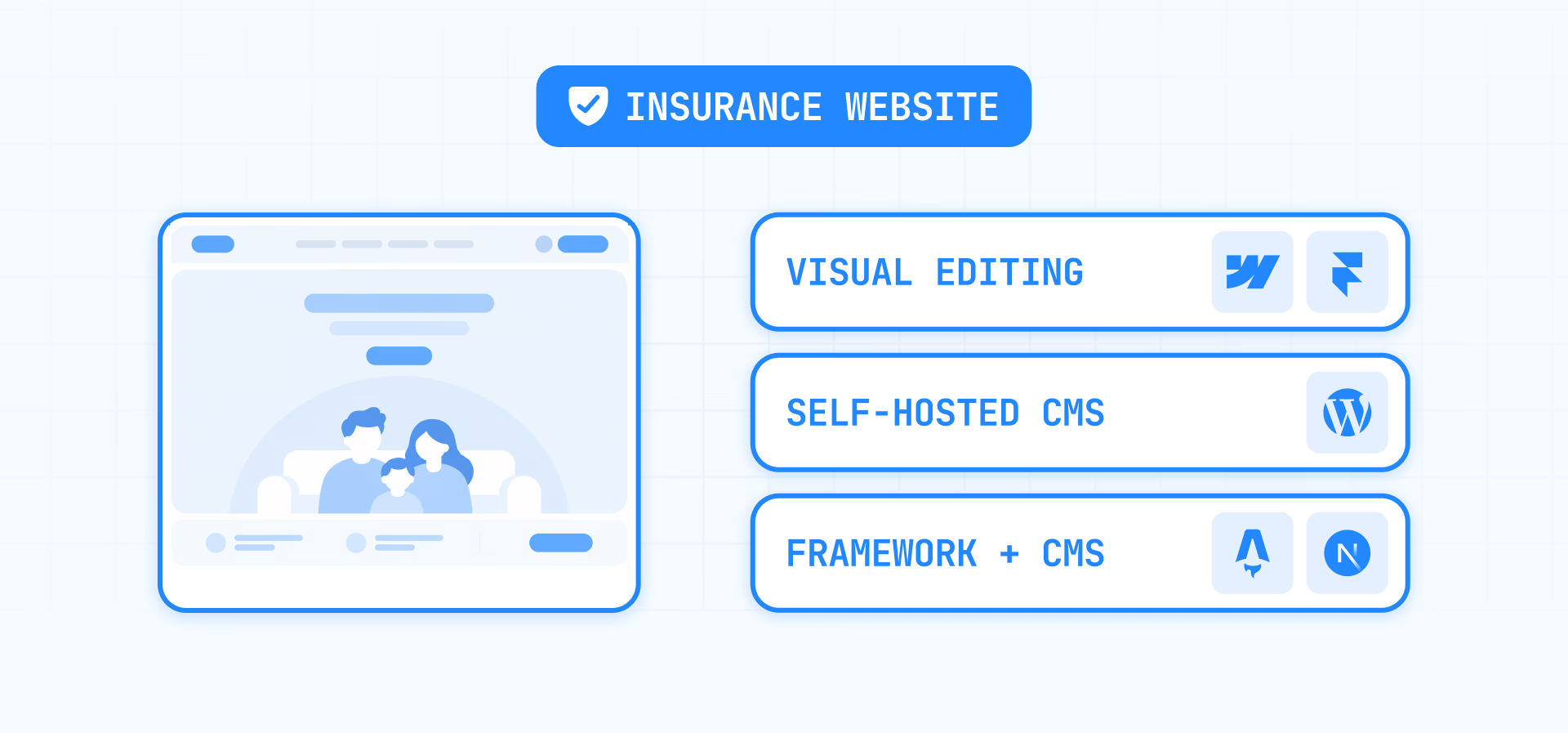
Webflow and Framer are worth exploring when your marketing team wants visual editing. Ask to see an insurance resource or campaign page the agency has built and watch it add another entry. For WordPress, have the team explain who will host the site and database, maintain plugins, and test updates against your forms.
Astro and Next.js are frameworks that developers can pair with a separate CMS. SIMA and Prima give you concrete examples of this arrangement. The buyer's question is what your editors can change without a developer, who maintains the connection, and how the published page performs. Compare plans using the same branch update and coverage-page exercise.
Insurance website essentials: coverage pages, quotes, and policyholder access
Explain whom a policy is for
Start a product page with a situation a buyer recognizes, then explain what to ask an adviser. A restaurant owner shopping for business cover and a homeowner comparing auto policies need different examples. Give your product owner a place to review the exact wording and an easy way to find every page that uses it.
Make the quote handoff visible
Tell the visitor whether they will see an estimate, leave the site for a carrier, or hear back from a person. Keep the first form limited to information the receiving team needs at that step. Use test data to check a successful submission, a missing field, and the route for a different branch. Let the producer verify the result inside the CRM.
Give existing customers their own route
Someone looking for an ID card, billing help, or a claims contact should be able to bypass the sales form. Use clear labels for the tasks your office handles and identify any destination operated by a carrier. Keep a list of those external links, and assign an owner to check them after launch.
Frequently asked questions about insurance web design agencies
How can I tell whether an agency understands insurance websites?
Ask for a walkthrough of one relevant project. Give the designer a specific starting point, such as a contractor who needs commercial coverage and has found the brokerage through a search result. Ask them to follow that visitor to the person or system that receives the enquiry. Pay particular attention to the point at which the visitor leaves the public website.
Listen for the decisions behind the screens. The team should be able to explain who wrote the coverage descriptions, who chose the form fields, and who tested the handoff. If another vendor built the quote engine, ask the agency to show exactly where its own work began and ended.
Should my insurance website offer instant quotes or a callback?
Use the next step you can actually deliver. If a visitor can receive a price through a connected quoting system, explain what information they need before they begin. If a producer needs to review the enquiry, say who will contact the visitor and what they'll discuss. Give the customer a contact option if they have questions along the way.
You can offer different routes for different products. A complex commercial risk may deserve an early conversation even if another line supports an online quote. Walk through the confirmation screen with your sales team and make sure its wording matches what happens after someone clicks the button.
How do I know quote requests reach the right agent?
Verify delivery inside the receiving system. A thank-you message shows that the website reached a particular screen. To check the whole journey, send an agreed test enquiry with a recognizable name and have a producer open the resulting record while you are still reviewing the site together. Include one submission made outside office hours in your test plan.
Repeat that exercise for a different coverage line or office, then try an incomplete form on a phone. Record who receives each enquiry, what information arrives, and who hears about a failure. Keep those examples so your team can repeat the same checks after a form or integration changes.
Who should own the domain and content after a redesign?
Settle access and ownership in the proposal. The domain, published copy, licensed photos, design files, hosting account, and content database can each have different terms. Ask the agency to identify what your team controls, what you can export, and what you can continue using after the engagement ends. Write down where the account recovery details are held as well.
For a managed subscription, request a concrete exit example. If you move a year after launch, can you take your coverage articles, office records, and redirects to another provider? Keep the answer with the contract and make sure someone at your brokerage can sign in to the domain account.
How much should we budget for an insurance website redesign?
Budget around the work your quote includes. A small brokerage refreshing its public pages has a different project from an insurer connecting a rating engine or merging several branch directories. Count the distinct page layouts, content records, migrations, and integrations before asking for a useful estimate. Include staff time for reviewing copy and entering old records in that calculation.
Request separate figures for discovery, design, development, content entry, integration testing, and ongoing support. If one proposal comes in lower, check who supplies copy and who fixes a failed handoff. Compare the cost to launch and the cost to operate the finished site over the same period.
What should our team prepare before the agency starts?
Gather the material people use with customers. Give the agency your current coverage descriptions, the questions producers hear most often, and an accurate list of branches and service areas. A handful of anonymized enquiry types is more useful for designing navigation than a long list of internal department names. Give reviewers a single place to record their decisions and corrections.
Identify who can approve descriptions, supply photography, and grant access to the CMS and connected tools. If carrier review is part of your existing process, include that person in the schedule. Agree on owners and review dates for the first product page before scaling the design across the site.
Can we move our coverage pages without losing their existing links?
Plan a page-by-page migration. Export the old addresses and record what each page helps a visitor do. Some descriptions can move almost intact, some need another review, and some overlap enough to combine. Give every useful old address a deliberate destination on the new site. Check the most frequently visited office and coverage pages individually.
Before launch, follow a sample of links from old emails, branch profiles, and resource articles. Check that each lands on the right subject and still offers a sensible next action. Keep the mapping after launch so someone can investigate a broken link without reconstructing the redesign from memory.
Which CMS works best for an insurance marketing team?
Choose the CMS your team can use for real changes. Ask the agency to demonstrate a coverage update, a branch move, and a new campaign page using the proposed setup. Have the editor who will own those tasks try the same changes and preview the result on a phone. Use a real staff account with the permissions an editor will have.
The right choice depends on who maintains the website and how approvals work. An organization with a developer on staff may be comfortable with a separate front end and CMS, while a small team may prefer visual editing and managed support. Make the handoff demonstration part of the proposal.
How long does it take to launch an insurance agency website?
The schedule depends on approvals and integrations as well as design time. Ask for dates tied to decisions your team can see, such as approval of a sample coverage page, completion of the content migration, and a successful test quote reaching its destination. Those milestones make delays easier to understand. Ask which parts of the build can continue while copy is under review.
If several offices need to review their own information, agree on one contact per office and one person who can resolve conflicting feedback. Identify any vendor access needed for testing before committing to a launch date. A schedule is more useful when every dependency has a named owner.
What support should we ask for after launch?
Ask for a named support contact and a clear list of responsibilities. Your team should know who updates software, who changes a coverage description, and who investigates when enquiries stop arriving. Managed plans and custom builds can divide those tasks differently, even when the public pages look similar. Include third-party contacts and renewal dates in the handoff notes.
Discuss a realistic incident before signing. If a broker reports that a form worked yesterday but today's requests are missing, who checks the website, who contacts the CRM provider, and how will you learn that delivery is restored? Put those responsibilities and the support price in writing.
Choose an insurance website partner by following one enquiry
Choose a project from this list that resembles the way you sell. A regional brokerage might start with a branch search, a pet insurer with a quote, and an employee benefits adviser with a plan overview. Begin where a customer would begin and see how much you understand by the time you're asked to get in touch.
Give the two or three teams you like the same example and invite them to walk you through it. The most revealing part is often the last step: which details arrive, who receives them, and how your team knows that the person asking for help got an answer.
If you'd like us to look at that journey with you, send BRIX Agency a coverage page and the next step you'd like to improve. We reply in less than 24 hours, typically in 1–2 hours during business hours (PST).




Join readers commenting on this post!