You can almost picture the weekend: a room with a view, a slow breakfast, and somewhere worth exploring nearby. Then you open the hotel's website and can't tell which room has that view, whether the restaurant is open, or where to check your dates. A good hotel website keeps that first spark of interest alive by making the practical details easy to find.
Choosing an agency means finding a team that understands both sides of that experience. The photography and design should make your property feel like somewhere guests want to stay, while the room pages, navigation, and booking journey help them make a decision. A beautiful opening screen is a start, but there is plenty more to look at before choosing who will build yours.
We've brought together 12 hotel web design agencies with different strengths, from independent inns and boutique properties to resort collections. Each profile includes a portfolio example you can explore, so you can compare how the teams present accommodation, dining, and the wider guest experience. Further down, you'll find a practical way to compare proposals and decide what your own website needs.
The selection brings together agencies with documented hotel website work, with project links that let you look beyond the agency's own homepage. We used the selected work to identify a useful specialty for each team, including brand strategy, content management, and booking experiences, rather than treating every hotel project as the same kind of brief.
BRIX Agency publishes this guide and appears first, with our portfolio included for you to review alongside the other agencies. Use the specialties to narrow your shortlist, then follow the guest journey through a room page and into the reservation process before deciding which team feels right for your property.
The hotel web design agency shortlist
- BRIX Agency: A design and development agency creating custom hotel websites that connect a distinctive property presentation with clear guest journeys.
- UP Hotel Agency: A hospitality design agency organizing rooms, dining, events, and activities into websites that make larger resorts easier to explore.
- Spherical: A hospitality creative agency building hotel websites with an editorial feel and a strong sense of the property’s individual character.
- AZDS Interactive Group: A hospitality digital agency connecting hotel website design with booking experiences for luxury properties and multi-property brands.
- FINE: A branding and digital agency translating a resort’s identity into a website that connects accommodation, experiences, and reservations.
- Tambourine: A hospitality marketing agency combining property photography and website production to help hotels communicate the character of a stay.
- 80 DAYS: A hospitality agency creating coordinated hotel websites that give individual properties room to express their own facilities and experiences.
- Kollective: A hospitality creative agency developing brand direction and websites for hotels preparing to introduce themselves to future guests.
- Gourmet Marketing: A hospitality marketing agency connecting website development with customer systems and the practical needs of hotel marketing teams.
- Mediaboom: A digital design and marketing agency building hotel websites with WordPress editing tools and clearly organized guest information.
- Clockwork Marketing: A hospitality marketing agency pairing website design with content planning, editing tools, and training for the hotel’s own team.
- Arise Hotel Marketing: A hotel marketing agency creating websites that connect independent accommodation with the dining and local experiences around it.
1. BRIX Agency: Best Hotel Web Design Agency for Custom Design
 1
1BRIX Agency
A design and development agency creating custom hotel websites that connect a distinctive property presentation with clear guest journeys.
At BRIX Agency, we create hotel websites that give a property its own recognizable presence, from the first photograph to the details that help guests plan a stay. We are also the team behind BRIX Templates, where our hospitality work includes designs for resorts, hotels, and outdoor retreats, giving us experience with the different ways accommodation businesses introduce themselves online.
That work starts with what makes the place worth visiting. A quiet retreat might lead with its surroundings and activities, while a resort may need to balance rooms, dining, and several locations. We use those differences to shape the content and visual direction, helping visitors understand the experience before they move toward choosing their accommodation.
A closer look at our hotel web design portfolio
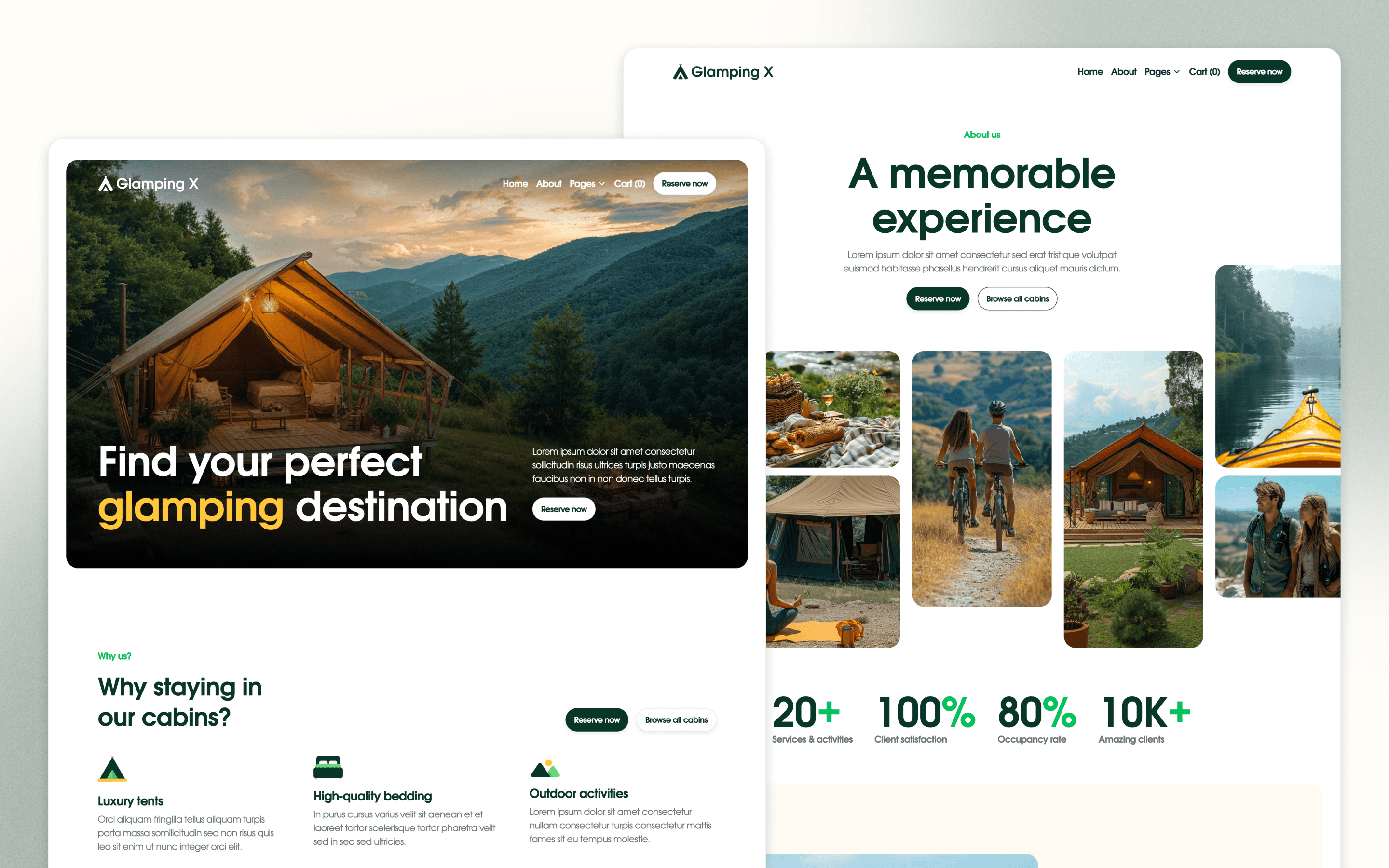
Glamping X is our template for luxury camping businesses and outdoor retreats. The cabin photography introduces the setting immediately, while the accompanying activity imagery helps visitors picture how they could spend their time there. It is an approach that gives the accommodation and its surroundings equal attention, useful for a destination where the experience extends well beyond the room.
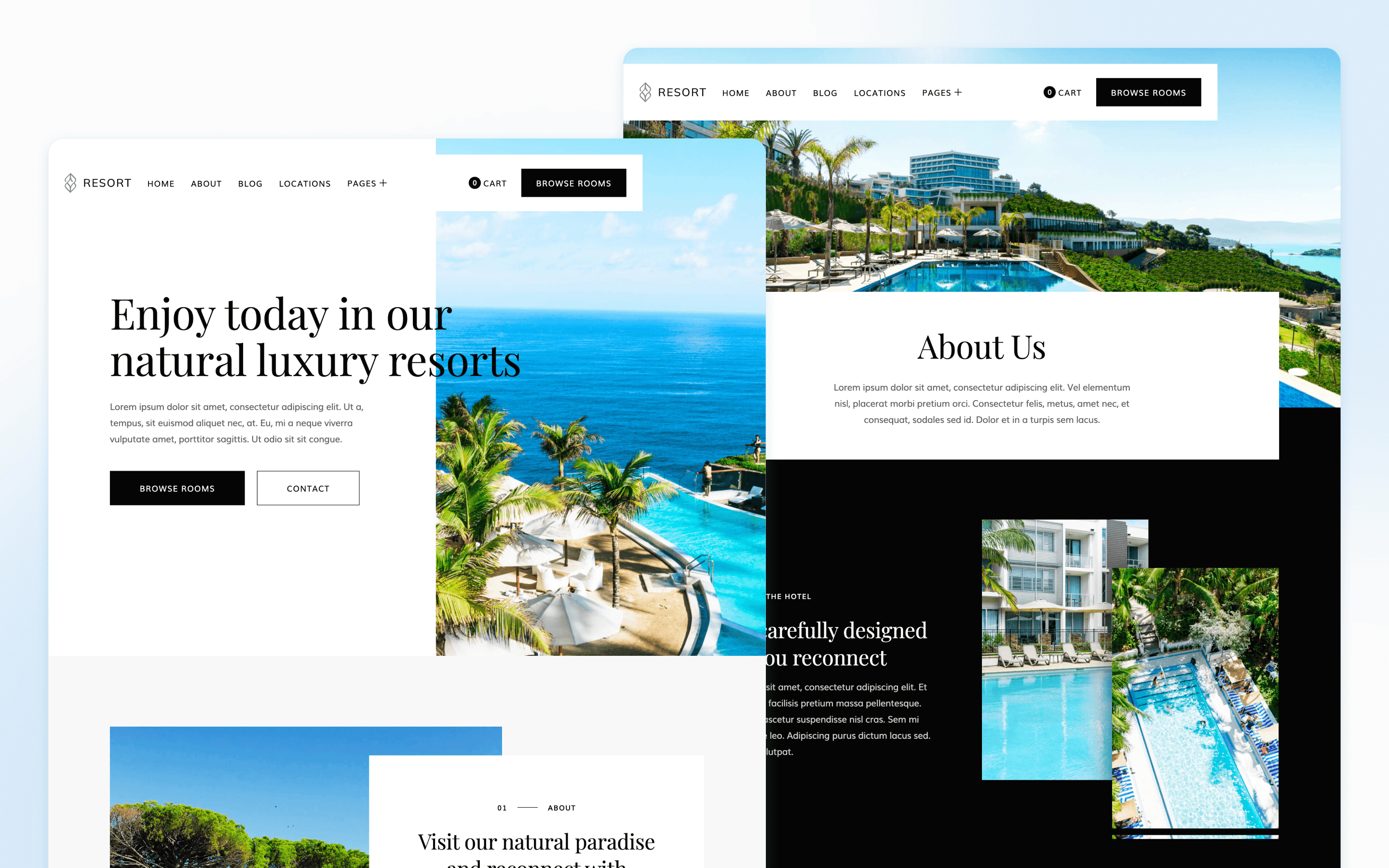
Our Resort template gives the property room to make an impression, pairing large coastal photographs with a clear path to exploring the rooms. The about page carries that same style through the hotel’s story, helping guests picture both the setting and the spaces they’ll enjoy during their stay.
Our hospitality designs are used by more than 2,700 websites, with over 60,000 websites using our designs across all categories. When you work with BRIX Agency, we bring that experience to a custom website built around your property, your brand, and your guests.
2. UP Hotel Agency: Best Hotel Web Design Agency for Resort Navigation
 2
2UP Hotel Agency
A hospitality design agency organizing rooms, dining, events, and activities into websites that make larger resorts easier to explore.
A resort can feel like several businesses sharing one address, with overnight guests, restaurant visitors, golfers, and event planners all arriving for different reasons. UP Hotel Agency is worth a look when the main challenge is bringing those experiences together without making visitors work out the structure for themselves.
Its work for The Grove gives that specialty a concrete example. Alongside the accommodation pages, the project covers practical ways to explore the grounds and plan a visit, making it relevant to properties where choosing a room is only one part of the decision.
Featured project: The Grove
For The Grove, UP Hotel Agency delivered UI and UX design and custom WordPress development, with a golf-course tour, events calendar, grounds map, and booking interface for rooms and resort activities. Those elements give different kinds of visitors their own starting points within the same website.
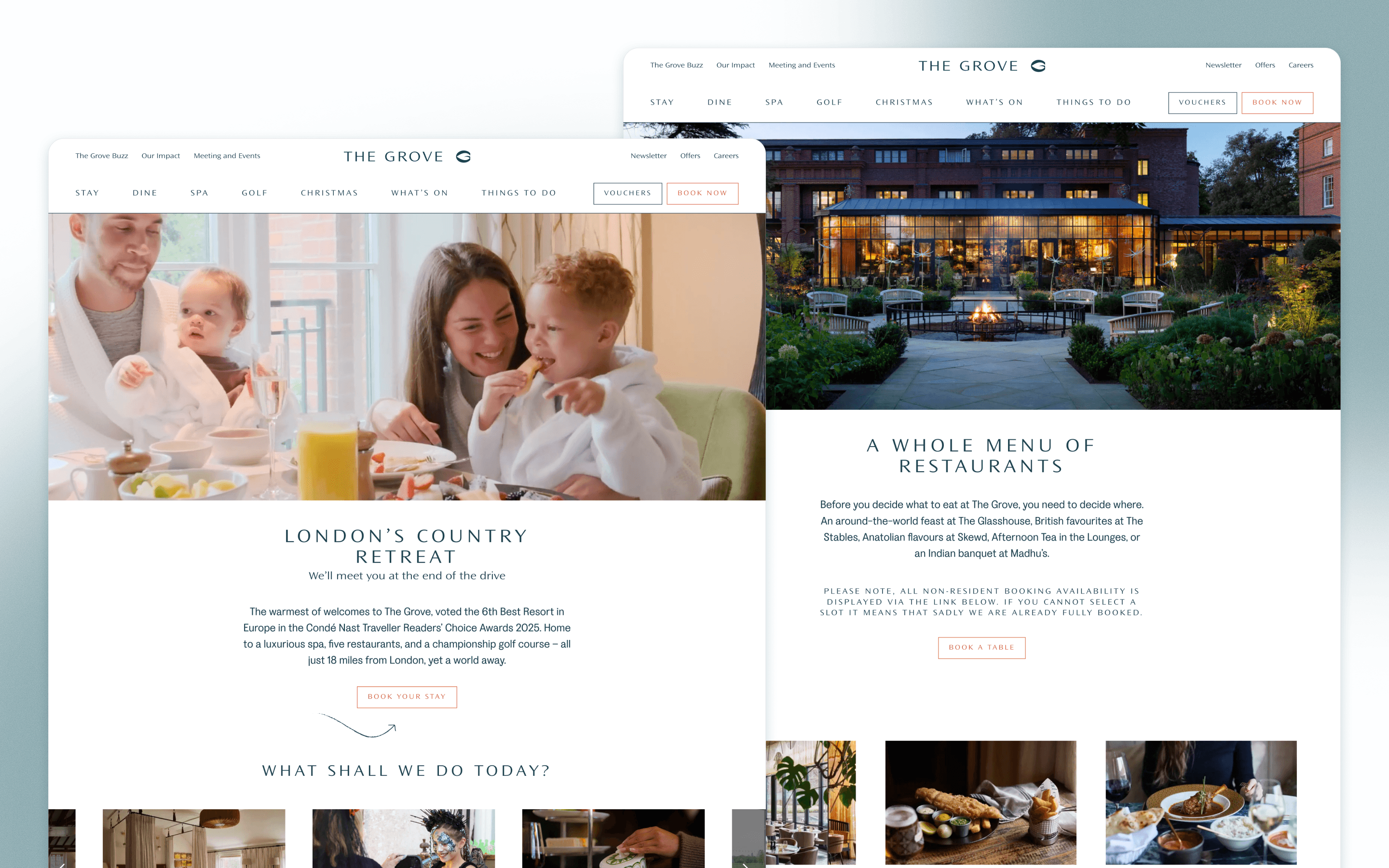
The presentation makes room for the property's food, surroundings, and atmosphere rather than asking one hotel photograph to tell the whole story. If your resort has several attractions, explore how each one connects back to planning a stay, and ask UP which parts of that experience it would design around your existing reservation systems.
3. Spherical: Best Hotel Web Design Agency for Boutique Hotels
 3
3Spherical
A hospitality creative agency building hotel websites with an editorial feel and a strong sense of the property’s individual character.
Some hotels are chosen as much for their personality as their location. For those properties, a website needs to communicate the mood of the place while still giving guests straightforward information about a stay. Spherical is a useful team to consider when that balance is central to your brief.
The Madrona shows a more editorial approach to hospitality design, where the grounds, interiors, and dining experience help introduce the hotel. It is a relevant reference for owners who want the website to feel connected to the property rather than interchangeable with other accommodation in the area.
Featured project: The Madrona
Spherical's website work for The Madrona brings rooms, dining, and the grounds into a guest-facing presentation with a direct reservation entry point. The selected views pair an illustrated property map with photography and restrained typography, giving visitors several ways to get a feel for the setting.
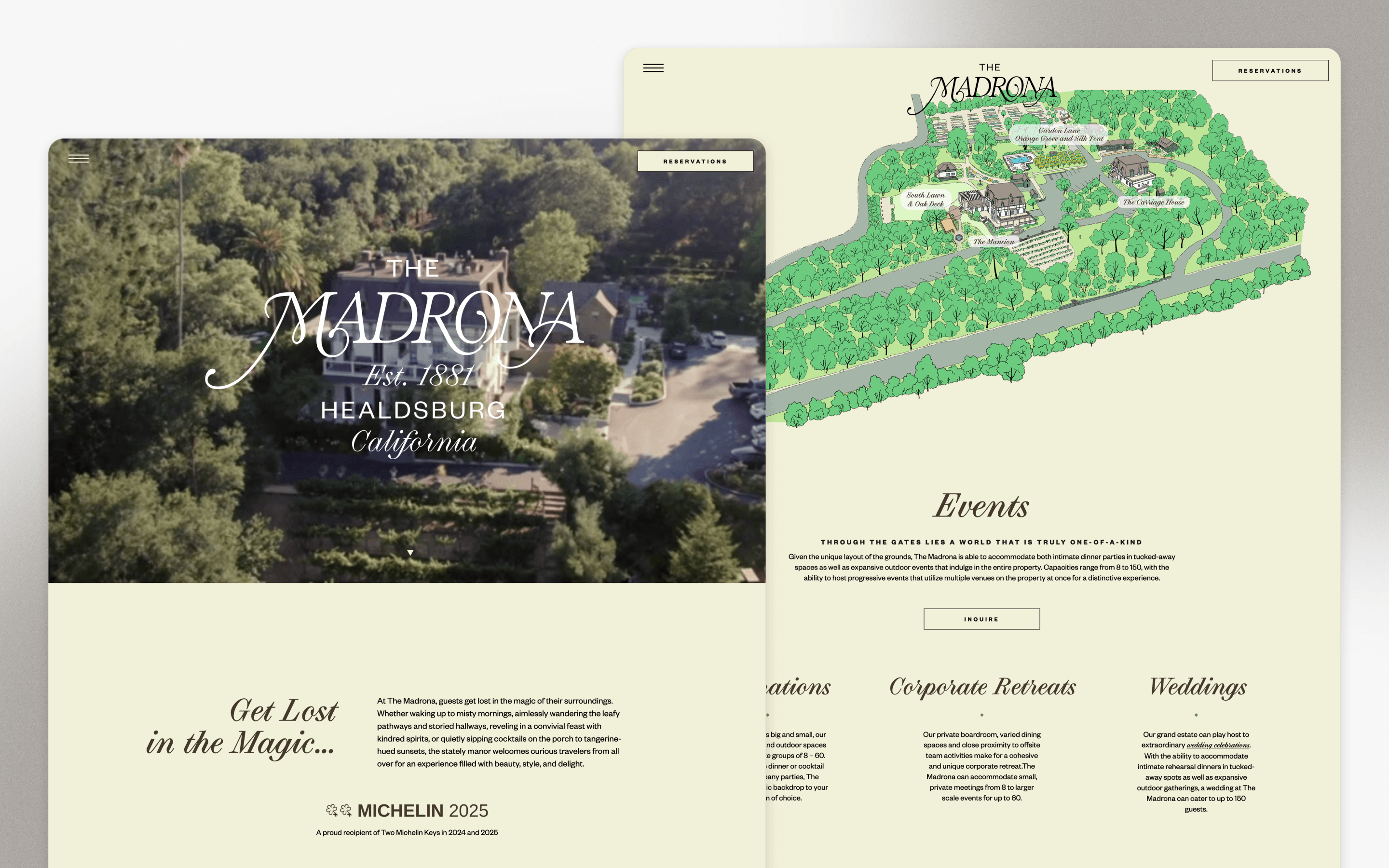
Notice how the visual character extends beyond the opening photograph. That consistency matters for a small hotel with a distinctive point of view, because the room pages and practical information still need to feel like part of the same place. Review those details alongside the reservation link when comparing Spherical with other boutique-hotel teams.
4. AZDS Interactive Group: Best Hotel Web Design Agency for Booking Experiences
 4
4AZDS Interactive Group
A hospitality digital agency connecting hotel website design with booking experiences for luxury properties and multi-property brands.
The moment a guest decides to check a room is a handoff worth examining closely. If the reservation experience feels disconnected from the website, it can leave visitors working out whether they are still looking at the right property. AZDS Interactive Group has relevant experience spanning both the website and booking work.
Its Montage project is especially useful for hotel brands with multiple destinations. A group website has to introduce the collection, let each property show its own character, and help visitors move toward a specific stay without losing track of where they are.
Featured project: Montage Hotels & Resorts
AZDS Interactive Group's work for Montage Hotels & Resorts includes website design and development along with custom booking-engine work. The property-level views shown here illustrate how destination photography and accommodation information sit within the wider hotel presentation, from a mountain setting to a coastal resort.
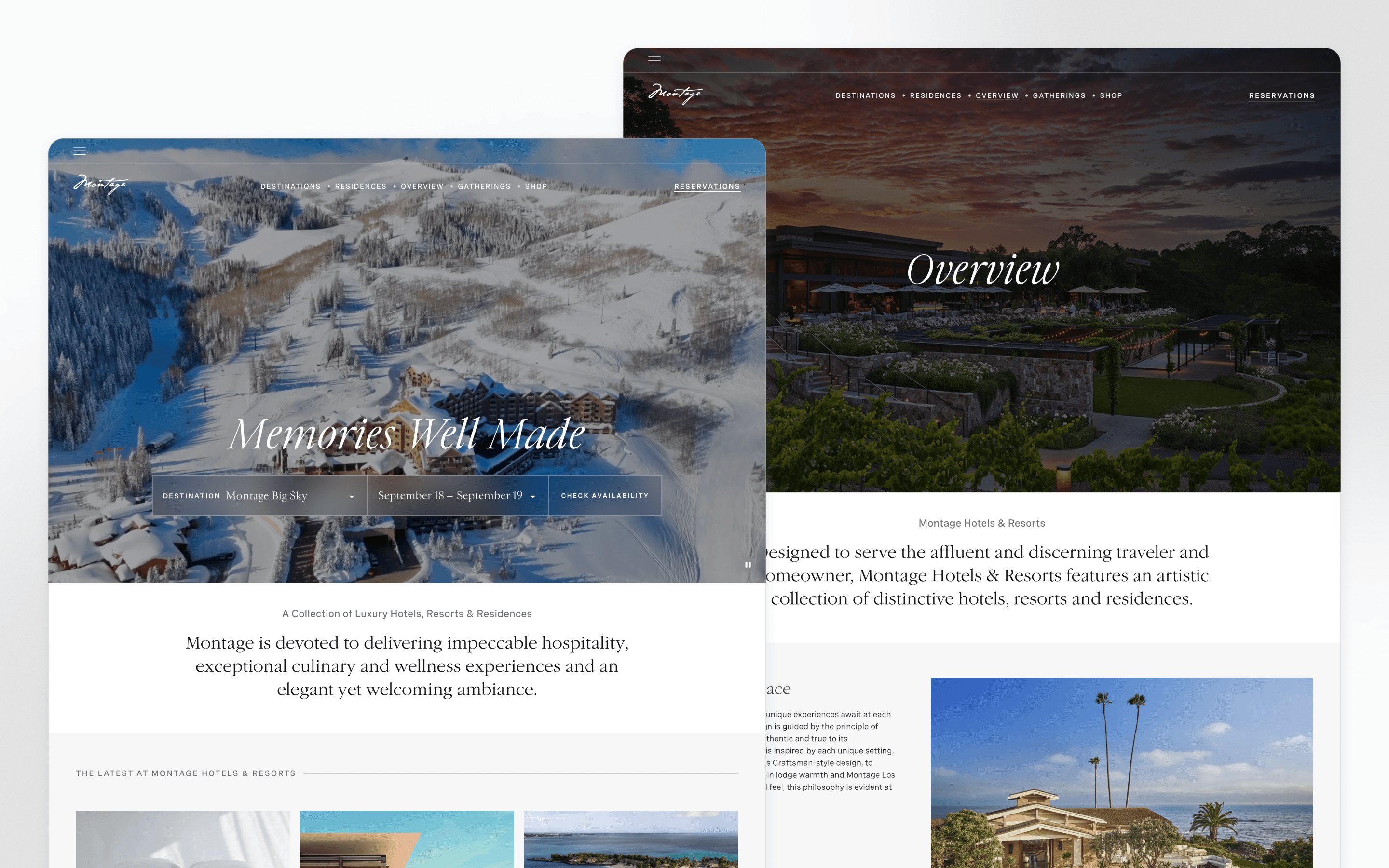
For a collection, compare both the shared elements and the room each property has to tell its own story. AZDS is a relevant option when your brief reaches beyond refreshing page layouts and into how guests select dates and accommodation. Ask the team to separate the website scope, reservation work, and any other software in its proposal.
5. FINE: Best Hotel Web Design Agency for Brand Strategy
 5
5FINE
A branding and digital agency translating a resort’s identity into a website that connects accommodation, experiences, and reservations.
A hotel redesign sometimes starts with a bigger question: what should people remember about this place? FINE brings brand strategy and website work together, which makes it relevant when the property's identity needs attention alongside the pages that guests use to plan their stay.
That combination can help a resort with several strong attractions present a coherent story. Golf, dining, weddings, and accommodation each need space, but the website should still make them feel like parts of one experience rather than separate brochures placed under the same menu.
Featured project: Silverado Resort
For Silverado Resort, FINE's scope covers brand strategy and identity, resort website design, and the organization of experience and event content. The project also includes a booking widget connected to SynXis and other hospitality systems, bringing the refreshed presentation into contact with the practical steps of arranging a visit.
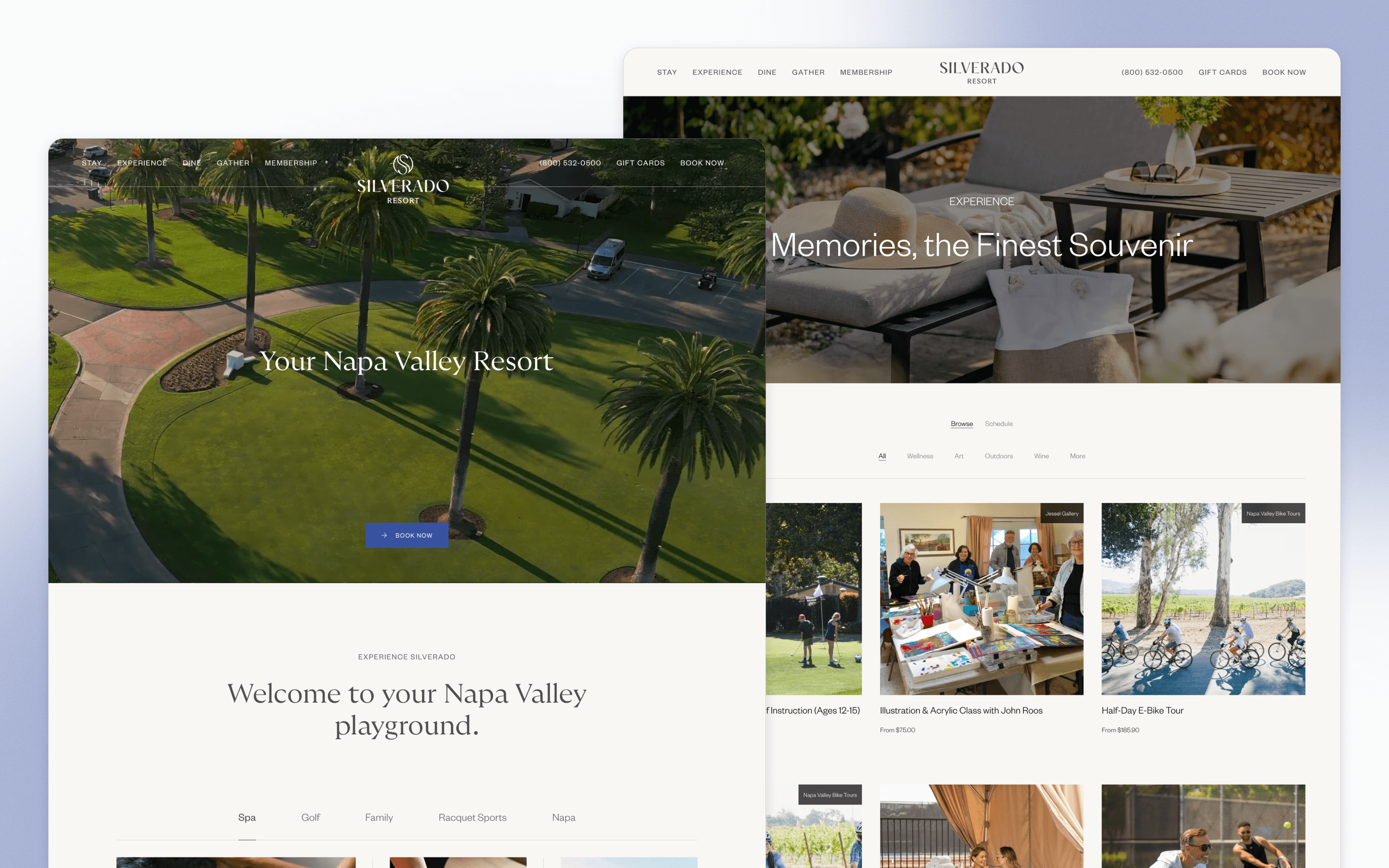
The selected design puts the landscape and golf setting in the foreground, then gives individual experiences their own clear places to live. This is a useful example to review when your hotel has a strong existing reputation but the website no longer expresses it well. Look at how the brand carries through the smaller content sections, too.
6. Tambourine: Best Hotel Web Design Agency for Photography
 6
6Tambourine
A hospitality marketing agency combining property photography and website production to help hotels communicate the character of a stay.
Sometimes the missing piece in a hotel website is the material the design has to work with. Beautiful layouts cannot show a villa's setting or a room's proportions if the right photographs do not exist. Tambourine is relevant when you want to plan the imagery and website together.
Its Round Hill project documents architectural photography as well as website design and development. That gives hotel teams a useful reference for discussing what needs to be captured before page layouts are finalized, particularly when the property has several types of accommodation or spaces guests need to understand.
Featured project: Round Hill Hotel and Villas
Tambourine's work for Round Hill Hotel and Villas includes architectural photography and the design and development of the hotel website. The selected views use property imagery to establish the setting and introduce the accommodations, with the surrounding page elements giving the photographs room to do their job.
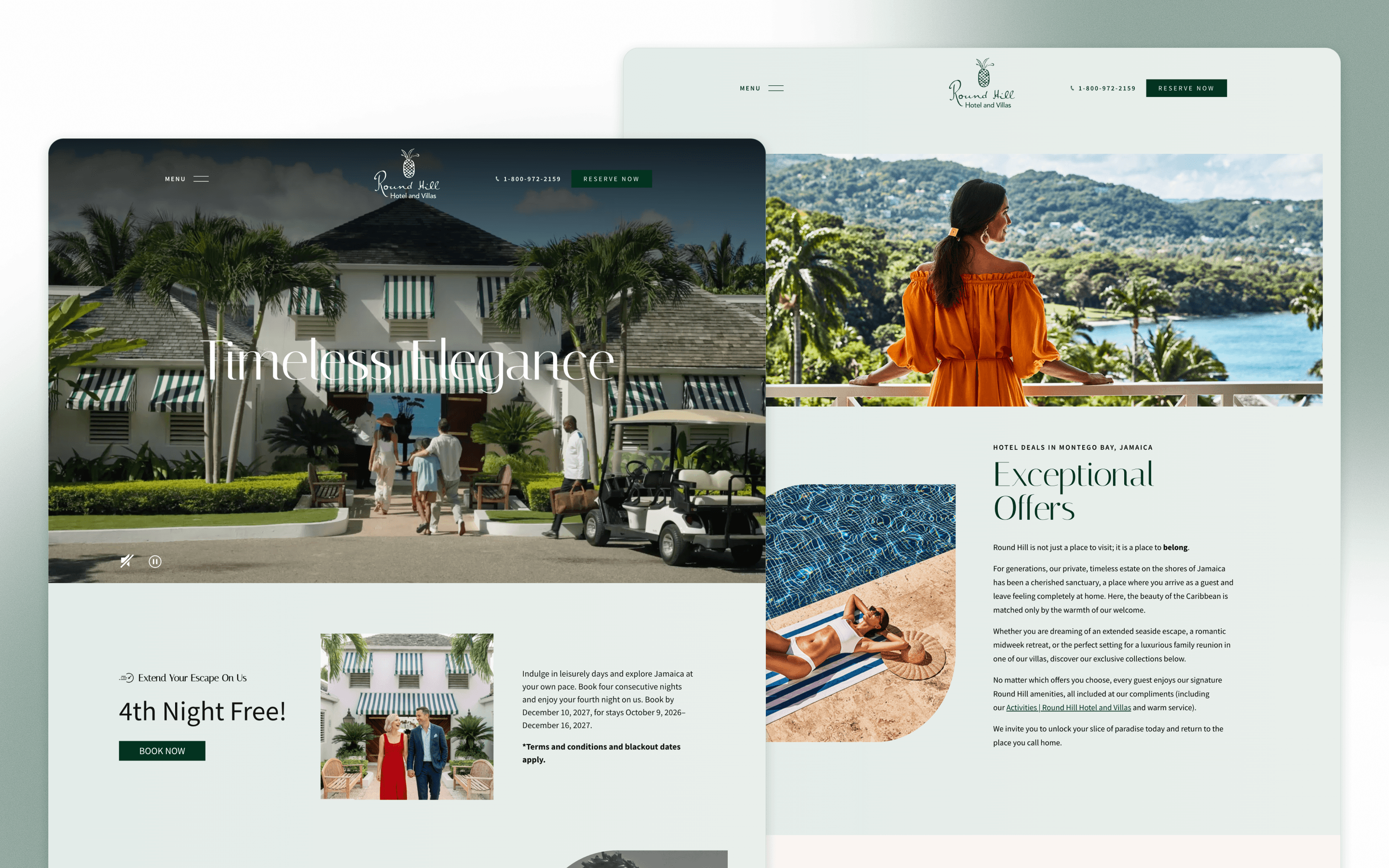
For your own brief, look beyond whether the pictures are attractive and consider what they explain. Guests may need to distinguish a villa from a room, understand the surroundings, or picture how they will spend their time. This project is a useful starting point for asking how a photography plan will support those decisions across the site.
7. 80 DAYS: Best Hotel Web Design Agency for Hotel Collections
 7
780 DAYS
A hospitality agency creating coordinated hotel websites that give individual properties room to express their own facilities and experiences.
Managing several hotel websites brings a familiar tension: the team wants a consistent system, but each property has different reasons to visit. 80 DAYS has a useful example of working within that balance through its website program for Iconic Luxury Hotels, which includes Chewton Glen.
This makes the agency relevant to collections that need shared building blocks without flattening the differences between their hotels. The questions are practical as well as visual: which sections should be consistent, what should each property control, and how should updates carry across the group?
Featured project: Chewton Glen
80 DAYS worked on the redesign and relaunch of Chewton Glen within Iconic's shared modular website program. The case describes property-specific adaptations for spa and member content alongside coordinated booking-bar updates, showing how a common approach can accommodate the needs of a particular hotel.
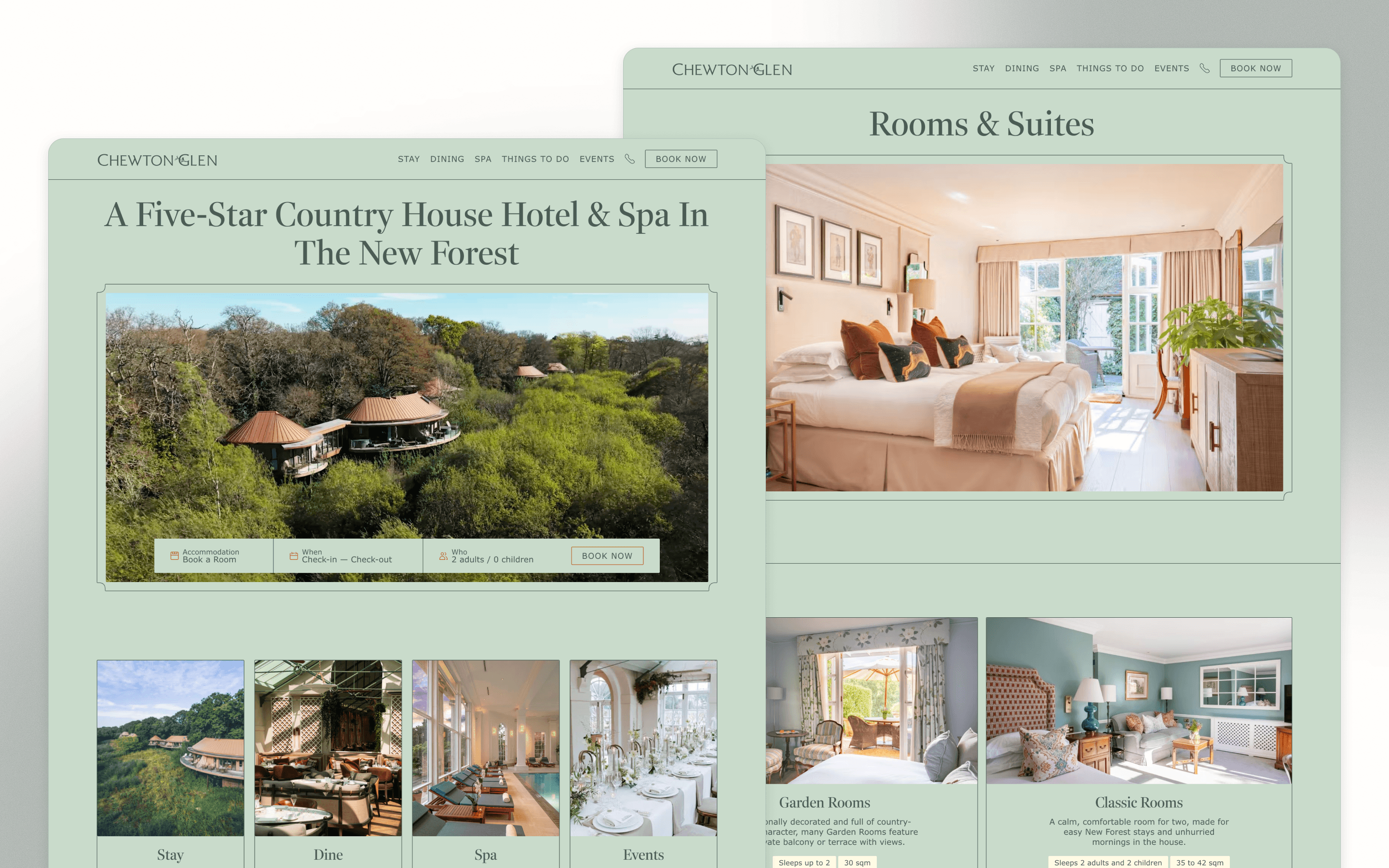
The selected pages move from the broader property introduction into rooms and suites while keeping a recognizable visual style. For a hotel collection, use this example to discuss where consistency will save your team work and where a property needs a different layout or content type. Those decisions should appear in the scope before design begins.
8. Kollective: Best Hotel Web Design Agency for Hotel Launches
 8
8Kollective
A hospitality creative agency developing brand direction and websites for hotels preparing to introduce themselves to future guests.
Launching a hotel means asking guests to imagine a stay before the property has years of familiarity behind it. The name, photography, written introduction, and website all have to work together to make that first impression clear. Kollective has relevant pre-launch experience through its work for Eliamos.
The value here is a connected creative process, with the website taking shape alongside the hotel's identity. For an opening property, that gives you a useful basis for discussing which materials need to be ready, how the early site will present the experience, and what can grow after launch.
Featured project: Eliamos
Kollective's work for Eliamos includes pre-launch brand identity and creative direction followed by website design and development. The selected pages introduce the suites and coastal setting alongside the dining experience, creating a view of the stay that goes beyond an accommodation listing.
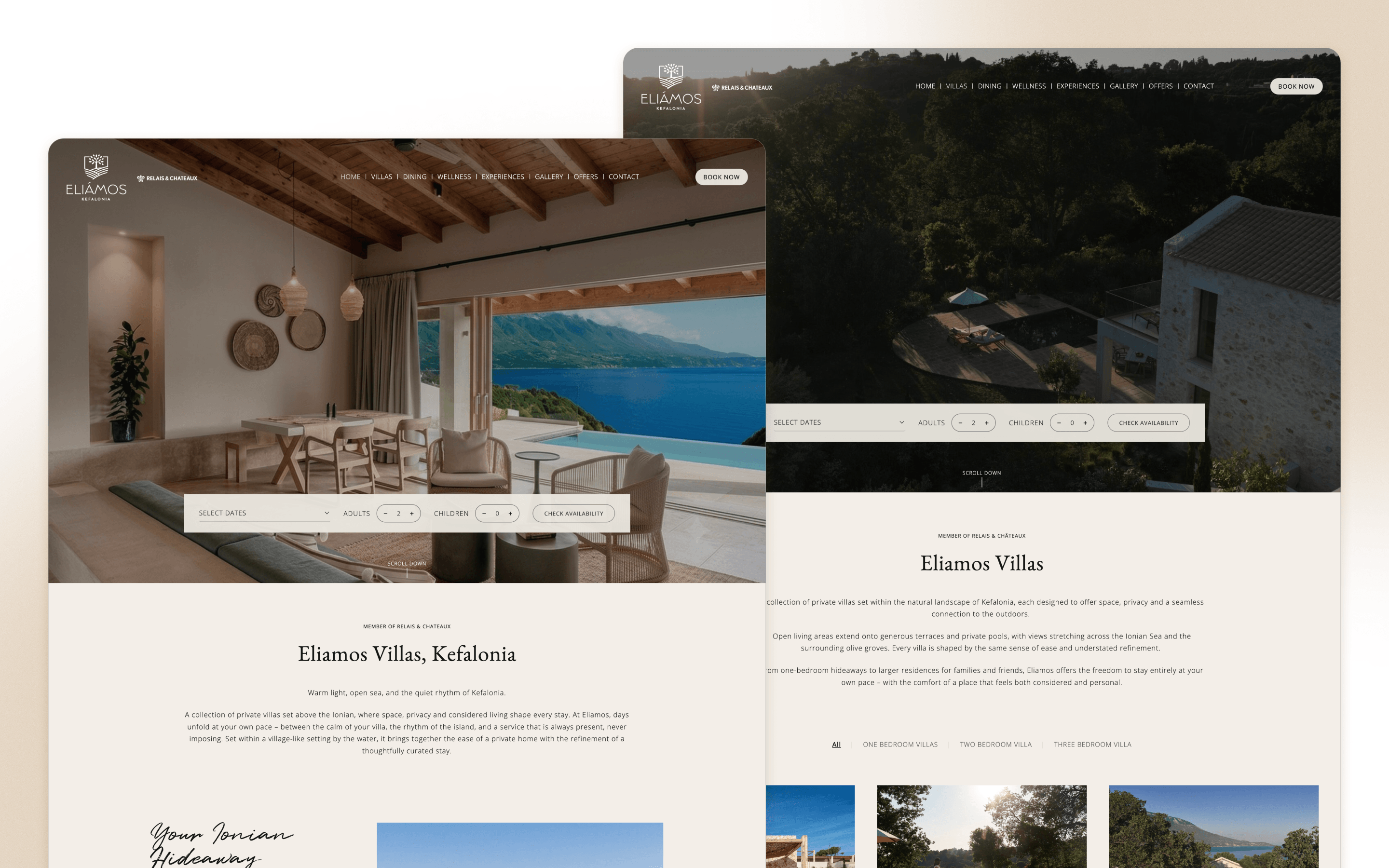
The presentation gives the setting room to establish the mood while keeping the individual experiences visible. If you are preparing an opening, ask how Kollective would organize the website around your launch milestones, including photography delivery and the start of reservations. A strong creative direction is most useful when the production schedule supports it.
9. Gourmet Marketing: Best Hotel Web Design Agency for CRM Integration
 9
9Gourmet Marketing
A hospitality marketing agency connecting website development with customer systems and the practical needs of hotel marketing teams.
A hotel website often needs to support more than room reservations, particularly when the business also handles event enquiries, dining, and ongoing marketing. Gourmet Marketing is worth considering when your brief includes how information moves from the site into the systems your team uses.
Its FORTH Atlanta work is relevant for that operational side of a project, with documented custom development and CRM integration. When reviewing the agency, look at those connections alongside the pages themselves, and discuss which enquiries your team needs to receive, organize, and follow up after someone visits the site.
Featured project: FORTH Atlanta
For FORTH Atlanta, Gourmet Marketing's documented scope includes custom website development, HubSpot CRM integration, and redesign support. The selected views show the hospitality presentation that work supports, introducing the property and its hotel offering through imagery, content sections, and clear navigation.
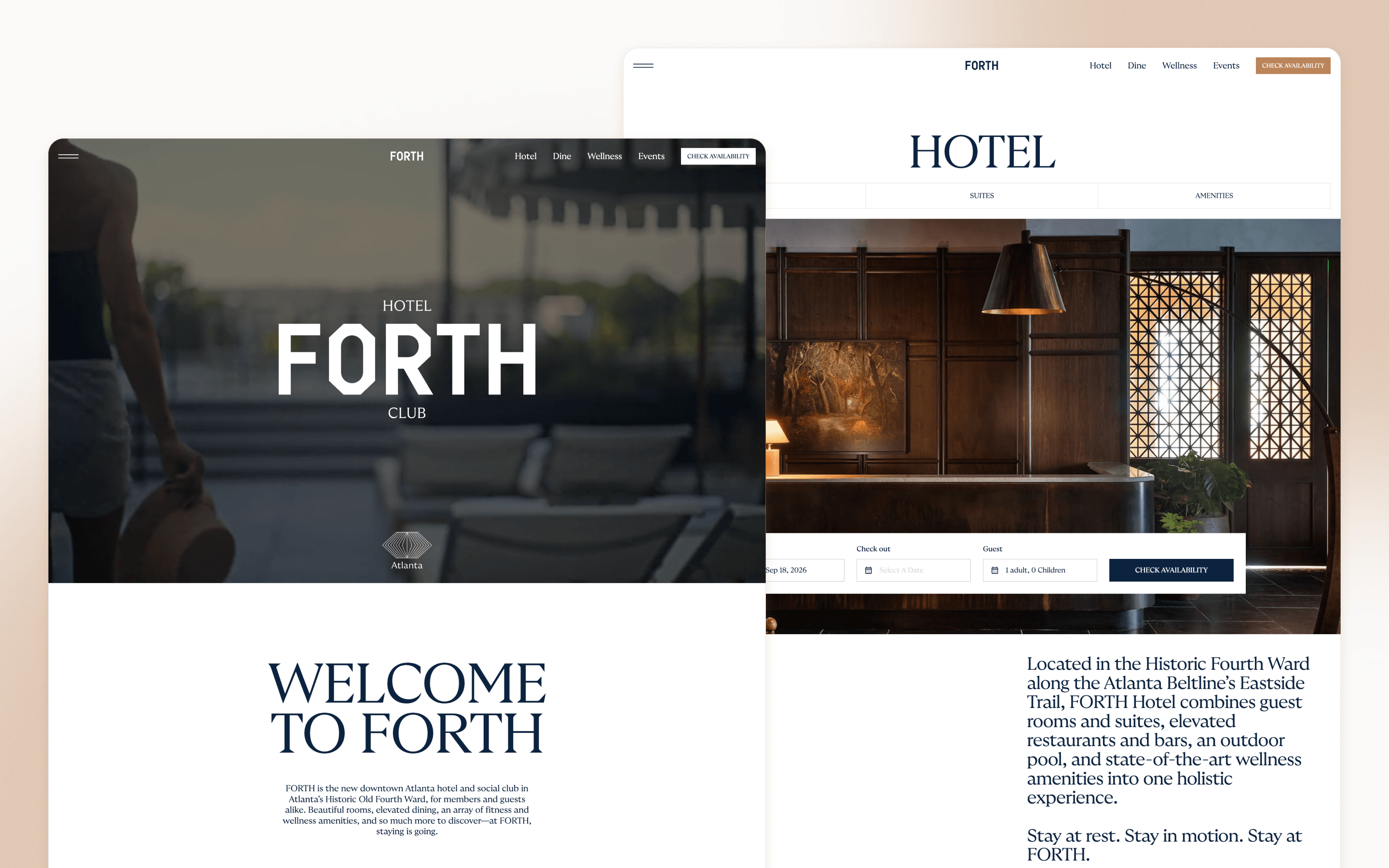
This is a useful reference when the website needs to fit into a larger marketing operation. Your proposal should explain which forms or interactions connect to the CRM, what information is passed through, and who maintains those connections. Ask for that detail separately from the visual-design deliverables so the responsibilities are easy to compare.
10. Mediaboom: Best Hotel Web Design Agency for WordPress
 10
10Mediaboom
A digital design and marketing agency building hotel websites with WordPress editing tools and clearly organized guest information.
An established hotel may already have plenty of useful content, but guests can struggle to find it if the site has grown one page at a time. Mediaboom is relevant when a redesign needs to reorganize that material as well as give the property a fresh presentation.
Its Marina Inn project combines website design with WordPress development and navigation work. That makes it a practical example for hotel teams looking for a familiar editing platform while reconsidering how rooms, amenities, and other information are grouped and reached from the main menu.
Featured project: Marina Inn at Grande Dunes
Mediaboom's work for Marina Inn at Grande Dunes includes website design and development, a WordPress CMS, revised information architecture, a mega-menu, and booking-engine integration. The selected pages bring together the property's hospitality imagery and more detailed accommodation content within the refreshed site.
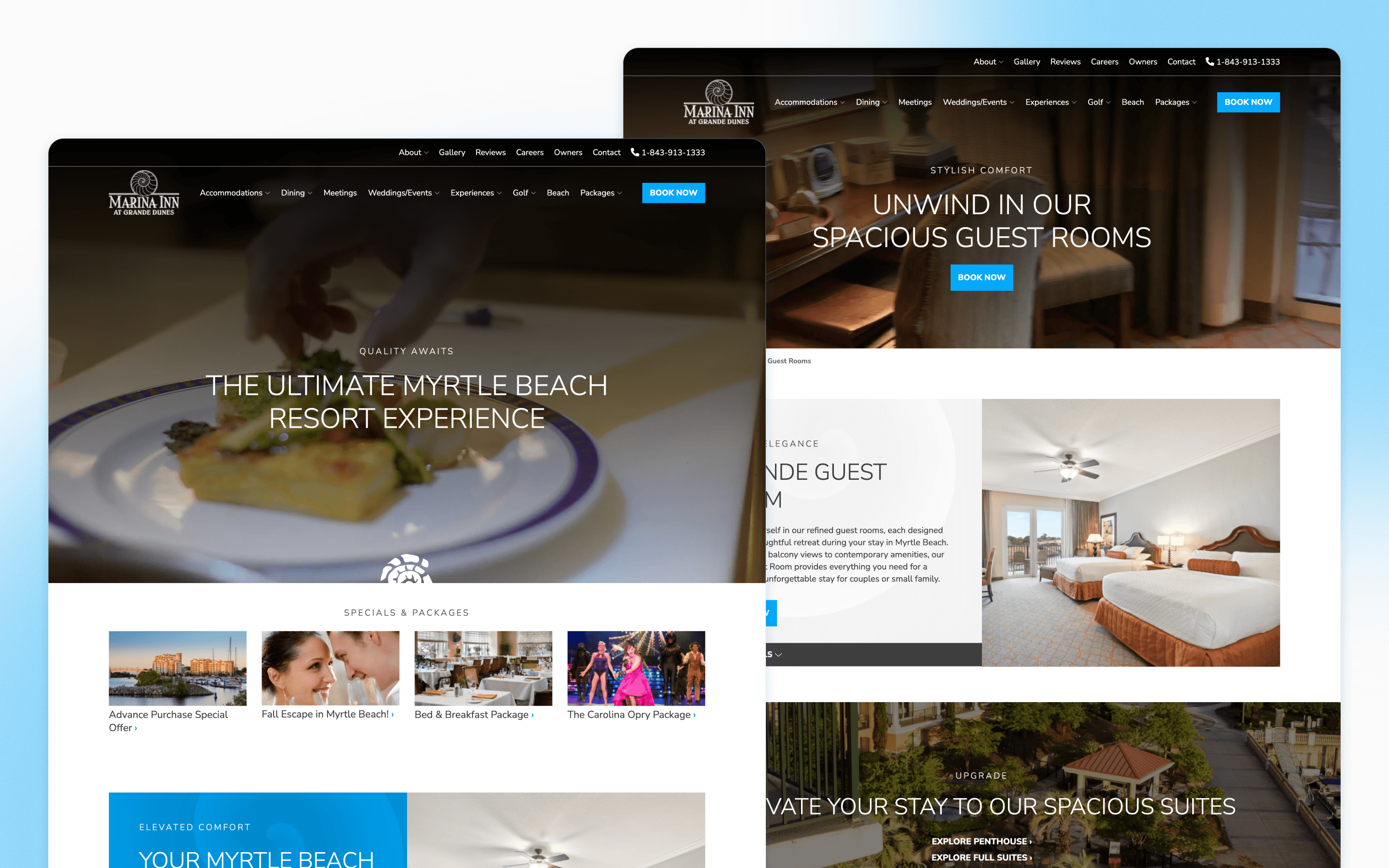
For your own hotel, review the route from the homepage to a specific room rather than stopping at the overall look. A useful redesign should make existing information easier to find and maintain. Ask Mediaboom which content your staff would edit in WordPress and how that content relates to the reservation system's room and rate information.
11. Clockwork Marketing: Best Hotel Web Design Agency for Content Management
 11
11Clockwork Marketing
A hospitality marketing agency pairing website design with content planning, editing tools, and training for the hotel’s own team.
After launch, someone at the hotel has to update the seasonal package, change the dining details, and add the new room photography. Clockwork Marketing is a useful option to review when that ongoing work matters as much as the initial design, with a project that includes content and staff training.
Its St Michaels Resort case brings discovery, page planning, development, and the editing system into the same story. For a busy hospitality team, that is a helpful way to assess a partner: who will prepare the content, how will it be organized, and what will maintaining it actually involve?
Featured project: St Michaels Resort
For St Michaels Resort, Clockwork Marketing documents discovery workshops, wireframes and navigation, a new website design, and mobile-first development on Clockwork CMS. Copy and client training are also part of the scope, supporting both the public-facing experience and the people responsible for keeping the site current.
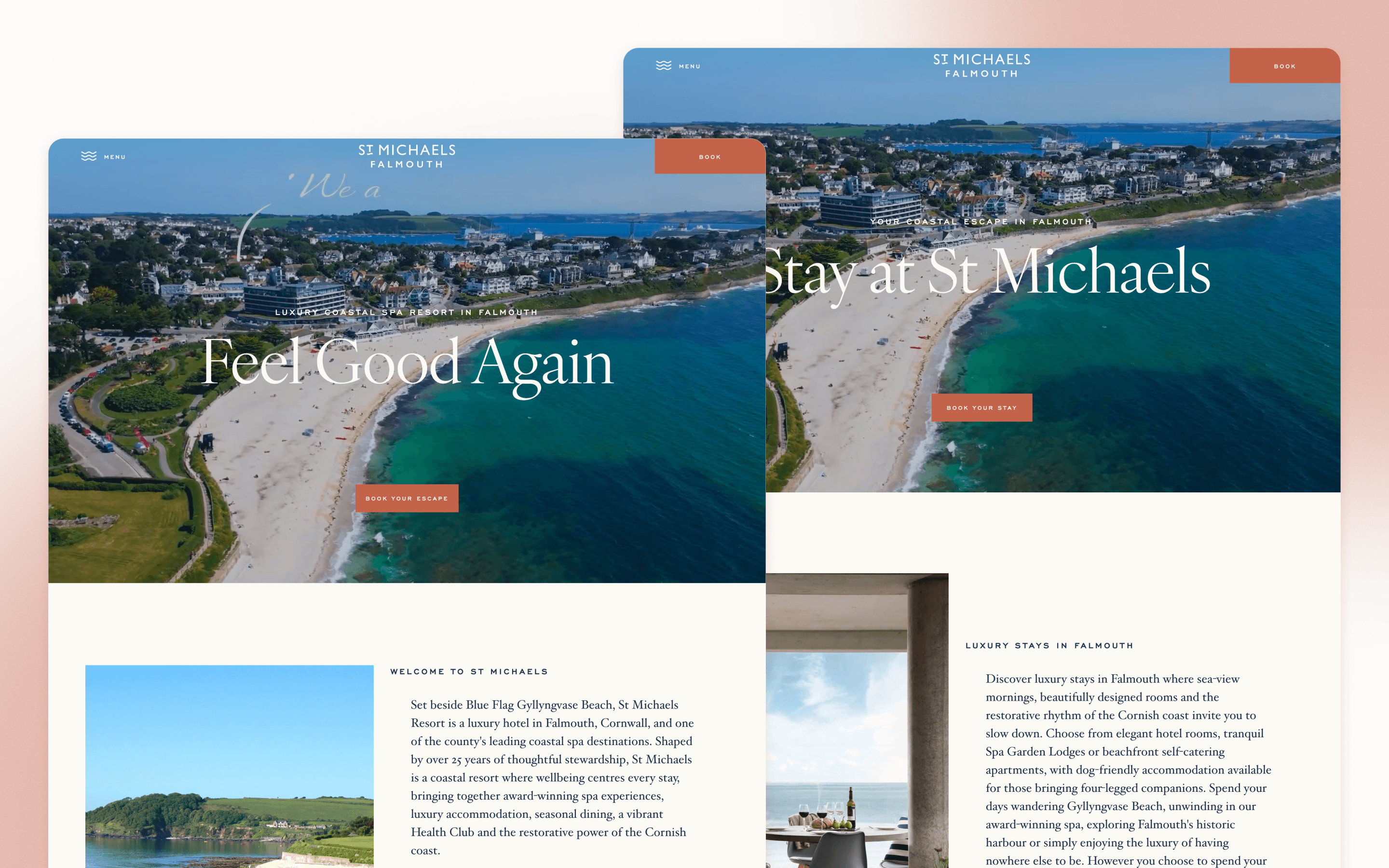
The selected views introduce the coastal resort and its accommodation with a consistent visual approach. When exploring this example, ask to see how comparable content is maintained behind the scenes and what support continues after handover. That conversation will help you assess the editing workflow as well as the finished pages.
12. Arise Hotel Marketing: Best Hotel Web Design Agency for Independent Inns
 12
12Arise Hotel Marketing
A hotel marketing agency creating websites that connect independent accommodation with the dining and local experiences around it.
An independent inn may welcome overnight guests, people arriving for a meal, and visitors who already know it as a local landmark. Arise Hotel Marketing has a relevant example of giving those audiences clear routes through one website, without losing the character of the business.
The Sloop Inn project is useful for smaller accommodation businesses with more than one reason to visit. It shows why a good brief should cover the entire guest offering, even when rooms are the main commercial focus, so the site can support a meal booking or a longer stay with equal clarity.
Featured project: The Sloop Inn
Arise Hotel Marketing created a custom WordPress website for The Sloop Inn, using structured content fields and mobile-first layouts. The documented scope separates accommodation, dining, and brewery pathways, while the selected views connect the coastal setting with the more detailed room presentation.
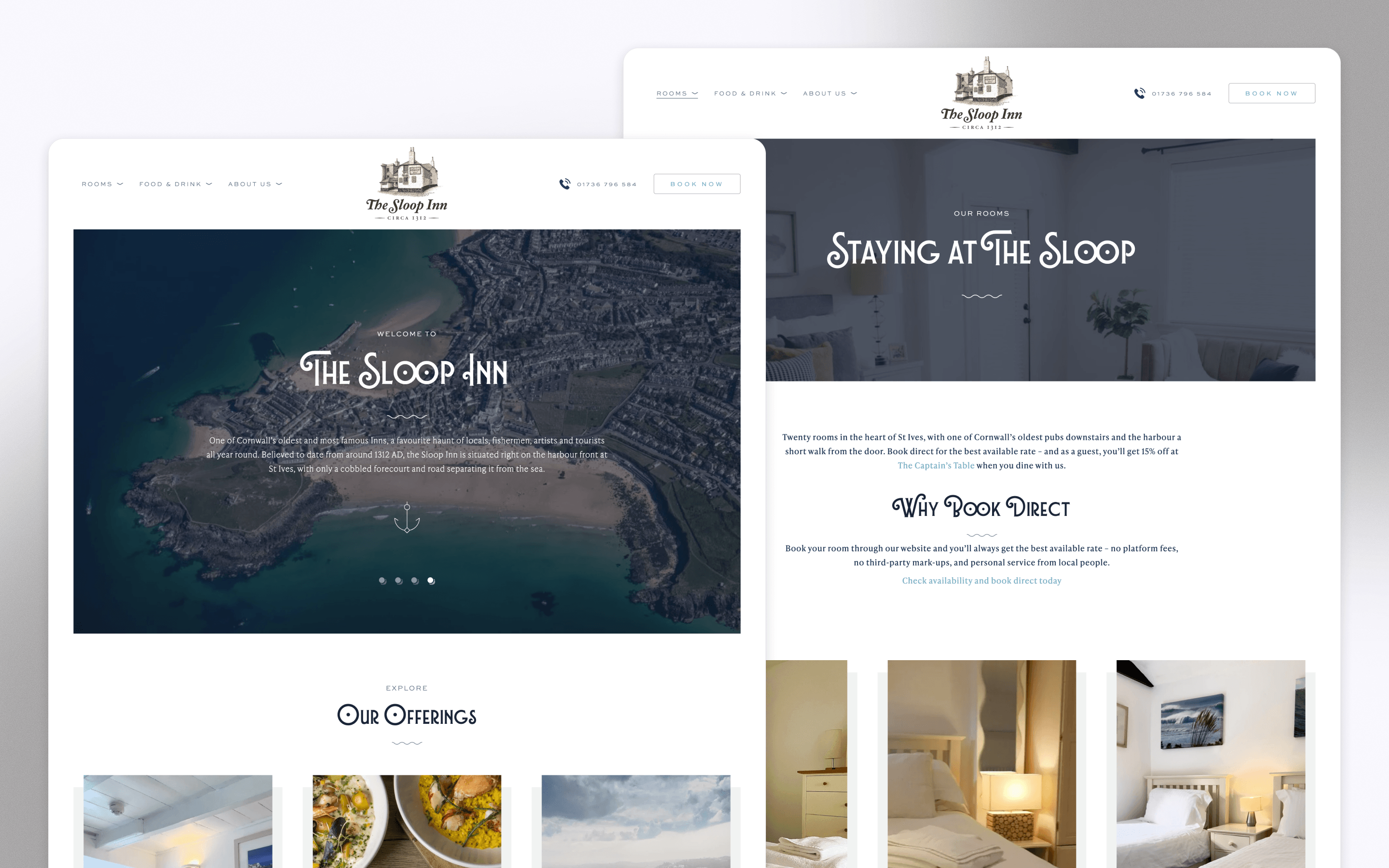
The broad property view gives visitors a sense of place before they explore what is available. For an inn or small hotel, this is a useful example of balancing local identity with practical navigation. Ask how Arise would organize your own services and which pages your staff could update without changing the design.
What should a hotel website design project include?
Start with the questions your reservations team hears most often. Guests might want to know whether two children can share a room, how far the beach is, or whether dinner requires a separate booking. Those questions help define the pages and content your website needs, giving the agency a more useful starting point than a request for a fresh look.
A typical scope may cover the homepage, room categories, individual accommodation pages, dining, facilities, offers, location, and contact information. Your property may also need weddings, meetings, spa treatments, or separate destination pages. Ask the agency to distinguish unique page designs from repeatable content entries, because building one room-page layout and filling it with several categories is different from designing every page separately.
The reservation connection deserves its own line in the proposal. Confirm whether the agency will link to your current booking engine, embed a supported booking interface, or undertake a deeper integration, and identify any work your reservation provider must do. The public website and the software managing rates, availability, and bookings have different responsibilities, even when guests experience them as one journey.
Include photography, copy, content entry, redirects, mobile checks, and staff training in the discussion. A realistic schedule should connect design approval to the delivery of those materials and to any booking-provider work. If photography or translations arrive late, the site may be technically ready while still missing the information guests need to make a reservation.
How to choose a hotel web design agency and compare costs
Choose 2–3 agencies whose projects resemble the challenge at your property, then send them the same brief. For example, a hotel collection with shared editing needs should compare different things from an independent inn preparing its first professional website. Matching the brief matters more than finding the agency with the longest list of hotel logos.
Give each team your current website, room categories, guest audiences, booking provider, and the content you already have. Include your ideal launch date and explain whether that date is tied to an opening, refurbishment, or seasonal campaign. The example below gives you a starting point you can adapt without having to write a full specification first.
Subject Hotel website for [property name], launch in [month]
Hi [name],
We run [hotel name], a [hotel, resort, inn, or collection] in [location]. We found your work in BRIX Agency's hotel agency guide and would like a website that helps guests [understand our room choices, explore the property, or book a stay].
Our current website is [URL]. We have [number] room categories and need pages for [rooms, dining, facilities, offers, and events]. Our reservations run through [booking provider], and we would like to [keep that system or discuss a change].
We can supply [photography, room details, and approved copy] and need help with [remaining content]. Our team will update [offers, images, and property information]. We are aiming for [launch date], with a project budget of [range].
Could you share a similar hotel project and propose the scope, schedule, and responsibilities? Please explain the booking connection and separate the website fee from hosting, software, and ongoing support, including any work required from our reservation provider.
Thanks,
[Your name]
[Role and hotel]
When the replies arrive, compare the same scope before comparing the totals. Look for the page types, content responsibilities, booking work, revision stages, and handover included in each quote. A lower fee may cover fewer deliverables, while a larger proposal may include photography or copy that you would otherwise need to commission separately.
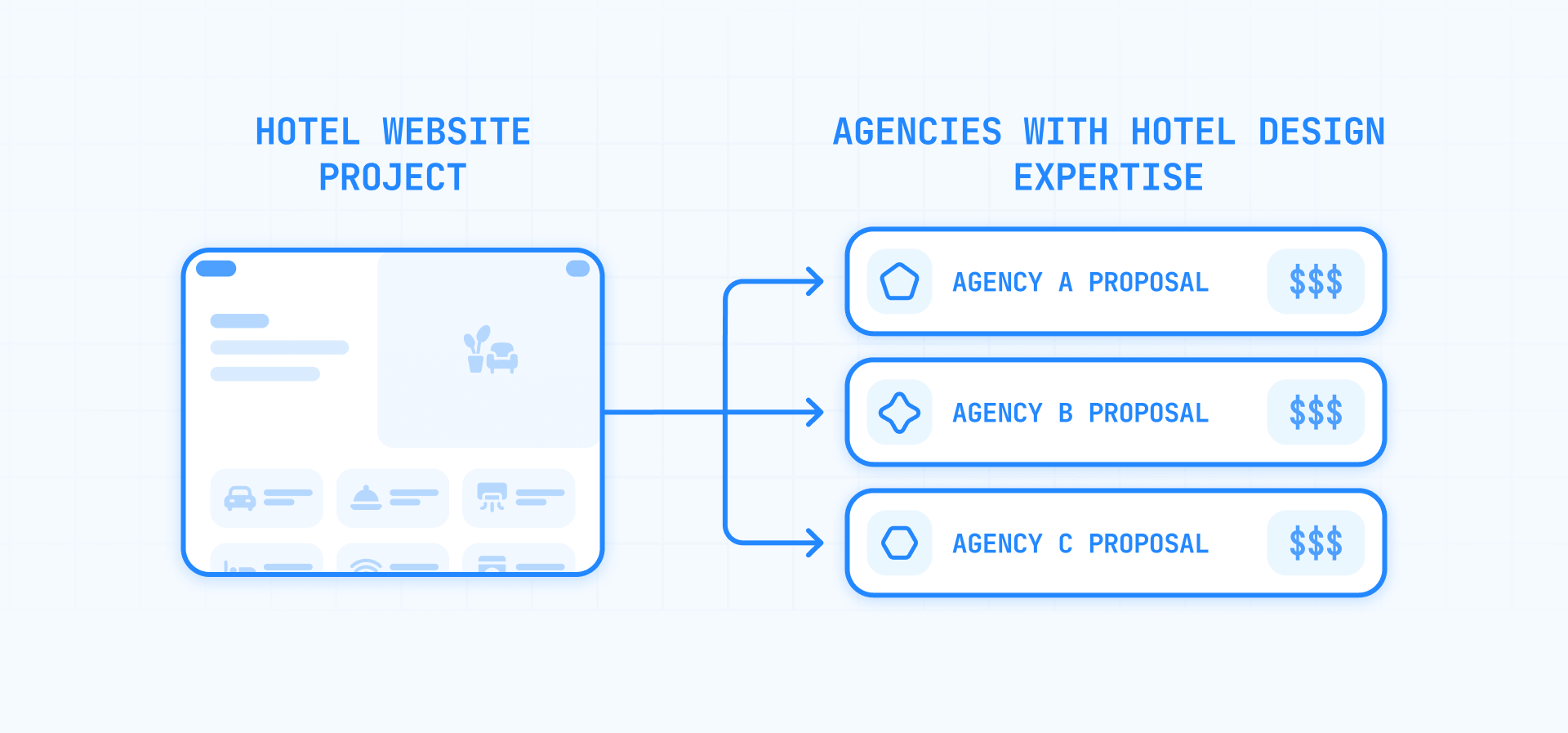
Ask each agency to separate the one-time project fee from hosting, software subscriptions, support, and any reservation-provider charges. There is no useful single price for a hotel website without knowing those details. Get the assumptions in writing, including what happens if your room structure changes or an integration takes more work than expected, so you can choose with a clear view of the full commitment.
Before making the decision, request a relevant finished project and ask how the client maintains it now. That gives you a practical way to judge both the guest-facing result and the relationship after launch. A clear explanation of responsibilities, timeline, and ongoing access is more helpful than an ambitious promise about bookings that the website alone cannot guarantee.
Choosing a hotel website CMS your team can keep current
The best editing setup is one your team can use between the other demands of running a hotel. Changing an offer, updating restaurant hours, or replacing room photographs should be straightforward, with content fields that match the way you organize the property. Start with those everyday updates, then ask the agency which platform makes them manageable.
Webflow and Framer are options for teams that want a visual editing environment and managed hosting. Discuss how room categories, packages, and destination content would be structured, and who can change what after launch. For either platform, ask the agency to explain the connection to your booking provider rather than treating a reservation button as the whole integration plan.
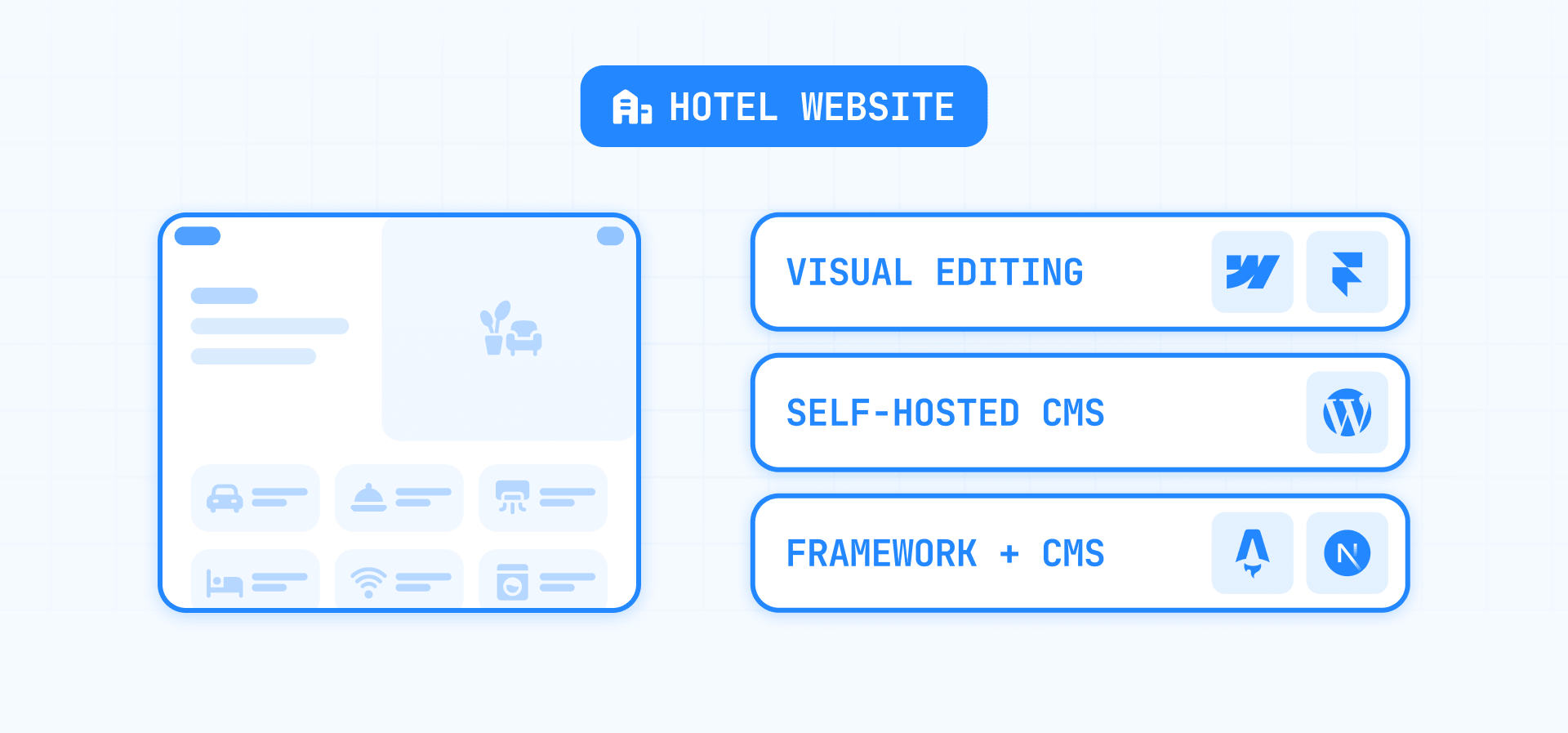
WordPress can suit a hotel that wants control over its hosting environment, with an editing setup tailored to the content staff maintain. That control also comes with decisions about updates, backups, and support, so name the person or provider responsible for them. Self-hosting the website does not mean an external booking service or CRM stores its information on the same server.
Astro and Next.js are development frameworks that an agency can pair with a separate CMS. They may fit a more tailored website, but the framework name does not tell your staff what editing will feel like. Ask which CMS supplies the editor, how content is previewed and published, and who supports the connection between those systems.
Keep editorial content and reservation data clearly assigned. Your team may maintain room descriptions and seasonal guides in the CMS while rates and availability come from a booking system. Ask to see a hotel site the agency has delivered with its proposed setup, and discuss how the owner keeps both sources consistent without entering the same information in several places.
Hotel website design essentials for a better guest journey
Help guests compare the rooms they can actually book
Give each room category accurate photographs, occupancy details, bed arrangements, and the features that make it different. If a view, balcony, or bathtub only belongs to certain rooms, make that distinction visible beside the relevant category. Room-specific information helps guests choose with more confidence than a beautiful mixed gallery that leaves them guessing which space they will receive.
Use the same room names on the website and in the booking engine wherever the systems allow it. When the names differ, explain the relationship clearly before guests leave the room page. Add useful details about the location and facilities, too, so someone can judge whether the property fits the trip they are planning rather than simply liking the photographs.
Make the route to direct booking easy to recognize
A visible booking link should lead to the right property and a clear date-selection process. Review the transition on a phone, including whether guests need to enter dates again and how they return to room information. If booking opens on a provider's domain, keep the hotel identity recognizable and make the purpose of the link clear.
Plan for unavailable dates as carefully as available ones. Ask your booking provider what the interface can show when a search has no results, such as alternative dates or a way to contact reservations. Keep rate claims and offer conditions consistent with the booking system, and avoid leaving expired packages on the public site after the underlying deal has ended.
Keep photographs useful on smaller screens
Large property images can establish the atmosphere, but the site still needs to load comfortably and keep text readable on a phone. Ask the agency how it will prepare image sizes, handle video, and check the pages on slower connections. Review the actual room and offer pages, where guests are often weighing details, as well as the homepage.
Include accessibility checks in the scope: readable contrast, visible keyboard focus, descriptive image alternatives, and forms with clear labels and error messages. Check which parts of the booking journey belong to another provider so responsibilities are explicit. Useful hotel details should also appear as readable page content, rather than only inside a photograph or a downloadable brochure.
Make hotel content easy to find and maintain
Give rooms, dining, offers, and location information clear page titles and a logical place in the navigation. During a redesign, map old URLs to their replacements so existing links still lead somewhere useful. An agency should explain its SEO migration work in concrete terms, including redirects, indexable pages, and how it will check the site after launch.
Assign owners to time-sensitive content before handover. Someone should know when to remove a seasonal offer, update a menu link, or change the photography after a refurbishment. That simple responsibility map helps the website keep making accurate promises long after the design project is finished, which matters just as much to a guest as the first impression.
Frequently asked questions about hotel web design agencies
What does a hotel web design agency do?
A hotel web design agency plans and builds the guest-facing website, including how the property is presented and how visitors find rooms, facilities, and reservation information. Its scope may include page design, development, content organization, and a connection to your booking provider, with photography or copy available as separate parts of the project.
Ask the agency to put those responsibilities into a written proposal rather than assuming every service is included. Your hotel will still need to supply accurate operational details and approve the content, while the reservation provider may handle rates, availability, and booking functionality. Knowing who owns each part makes the design process and the handover easier to manage.
What pages should a hotel website include?
The core pages should help guests understand the property, compare room categories, and find the next step toward booking. That often means a homepage, accommodation pages, facilities, location, offers, and contact information, with dining, spa, weddings, or meetings added when they are relevant to the hotel and its visitors.
Build the page list around the questions your team regularly answers, then decide which pages need unique layouts and which can share a structure. A room category should have enough detail to explain its photographs, occupancy, and distinguishing features. Keep those names and details aligned with the reservation system so guests can recognize the accommodation when they check their dates.
How much does a hotel website cost?
The cost depends on the agreed scope, including page types, content preparation, booking integration, and the amount of custom design and development. A proposal that includes photography and copy covers different work from one that expects your team to provide both, so a single headline price is not a reliable basis for comparison.
Send the same brief to 2–3 suitable agencies and ask them to separate the initial website fee from hosting, subscriptions, and ongoing support. Check how many content entries they will prepare, what the reservation connection includes, and how changes are priced. This gives you a clearer comparison of the work you are buying and the costs that continue after launch.
How long does a hotel website redesign take?
The schedule depends on the page scope, content readiness, approval process, and any work needed from your booking provider. Photography, translations, and room information can affect the launch just as much as design and development, particularly when a hotel is also preparing an opening or finishing a refurbishment at the same time.
Ask for a timeline with clear milestones for page planning, design approval, content delivery, integration, and final checks. Tell the agency about any fixed opening date before the proposal is prepared, and identify who can approve work on your side. A useful schedule explains the dependencies and responsibilities behind the dates rather than giving you a launch promise with no supporting plan.
Which CMS is best for a hotel website?
The best CMS is one your team can use confidently for routine content updates, with a structure that suits your rooms, offers, and property information. Webflow and Framer offer visual editing approaches with managed hosting, while WordPress gives you options for controlling the hosting environment and tailoring the editing experience to the team.
If an agency recommends Astro or Next.js, ask which separate CMS will provide the editor and how publishing works. Keep the distinction between editorial content and reservation data clear, whichever platform you choose. Request a comparable site the agency has already delivered and discuss how its owner maintains the content, including the support needed after the website is handed over.
Can a new hotel website use our existing booking engine?
A redesign can often retain an existing booking provider, but the available connection depends on that provider and the proposed website. The work might involve a direct link, a supported booking interface, or a more involved integration, so ask the agency and provider to confirm the approach before you approve the scope.
Have the proposal explain who configures and tests the connection, including the route from room pages to date selection. Review property names, room labels, and the experience on a phone, and clarify which team supports problems after launch. Keeping the same reservation software can still require careful website work; the important thing is to make the responsibilities visible before the project starts.
How should we choose between hotel website design agencies?
Start with relevant finished work, then look at how clearly each agency explains the project it would deliver for your hotel. A collection managing several properties has different needs from an independent inn, so review examples that match the challenge rather than choosing purely from the appearance of the agency's homepage.
Explore accommodation pages and the path into booking, then send a consistent brief to your shortlist. Compare the proposed content work, integrations, editing setup, schedule, and ongoing costs, and ask what your own team will need to provide. The strongest fit is a team whose work you like and whose proposal makes the responsibilities and practical details easy to understand.
How can a hotel website make direct booking easier?
Make the booking route visible and give guests enough room information to feel comfortable using it. Clear accommodation names, useful photographs, and a recognizable handoff to the reservation system help visitors understand what they are choosing and where they are going, especially when the booking interface opens on a separate provider's domain.
Review the journey on a phone from the homepage and from an individual room page, including any repeated date entry or confusing changes in labels. Ask the agency and booking provider which parts they can improve, and make sure guests can return to property information when they need it. A clear process supports a reservation decision without relying on a guaranteed increase in bookings.
What photographs should a hotel website show for each room?
Show accurate category-specific photographs that help guests understand the room they can book, including its layout, bed arrangement, and distinguishing features. If a balcony, view, or particular bathroom is available only in certain categories, present it with those categories rather than letting a shared gallery suggest it belongs to every room.
Plan the image list alongside the room-page content so the photography answers useful questions rather than only setting a mood. Ask the agency how the images will be prepared for smaller screens and how staff can replace them after a refurbishment. Keep the room names and descriptions consistent with the booking engine so guests can connect the photographs with the accommodation offered there.
What should guests see when their preferred dates are unavailable?
Guests should receive a clear availability message and an understandable next step, rather than being left to guess whether the booking system has failed. Depending on what your provider supports, that next step could be trying alternative dates or contacting the reservations team for help with the stay they are planning.
Ask your booking provider to explain the available options and have the agency review how guests reach them from the website. Keep seasonal offers and rate statements current so the public pages do not promise something the reservation system cannot supply. Assign someone at the hotel to maintain that information, particularly when a package expires or the conditions of an offer change.
Find the right web design team for your hotel
A hotel website should make it easy to picture a stay and just as easy to work out whether that stay fits the trip. As you explore the agencies above, pay attention to the smaller decisions: how rooms are compared, how facilities are explained, and what happens when a guest is ready to check dates. Those details will help you narrow the list.
At BRIX Agency, we bring our hospitality design experience to custom websites built around the character of the property and the people visiting it. Whether you are introducing a new retreat or rethinking an established hotel's presentation, we can help connect the visual direction with clear content and a practical path through the site.
Tell us what you have in mind for your hotel website, including your current site and the experience you want guests to have. We reply in less than 24 hours, or within 1–2 hours during business hours PST, so you can get an initial conversation started while you compare your options.




Join readers commenting on this post!