

Someone looking for help with a skin condition and someone considering a cosmetic treatment can land on the same dermatology homepage with very different questions. If both have to search through a wall of services to find their next step, even a beautiful website is making the visit harder than it needs to be.
The right dermatology web design agency helps you sort that out while giving your practice a look that feels like your own. Some teams are particularly good at launching a new identity, others at organizing treatment information or making a busy website easier to use, so it helps to compare the work behind the pitch.
We've brought together 11 agencies with selected work you can explore, including boutique practices, cosmetic dermatology, and larger care organizations. Start with the specialties that sound closest to your project, then open the examples and follow a patient's path beyond the homepage; the guidance afterward will help you turn what you like into a useful brief.
How we selected these dermatology web design agencies
We started with named dermatology projects and looked for evidence of the work each agency contributed, using agency case studies, portfolio entries, and client credits. That gives the list a mix of website specialists and creative teams, with each profile explaining the particular reason you might want to speak to them.
BRIX Agency publishes this guide and takes the first position, with our own portfolio available to review alongside the other entries. The specialties are a way to narrow your options, so consider the examples in relation to your practice rather than treating the order as a score for every possible project.
The dermatology web design agency shortlist
- BRIX Agency: A design and development agency creating distinctive websites for dermatology practices, skincare brands, and businesses with a strong visual identity.
- HALCON Marketing Solutions: A healthcare marketing agency bringing a practice's identity, website, and launch materials together around a clear introduction to its care.
- Goldman Marketing Group: A medical marketing agency designing polished practice websites that connect a personal introduction with detailed cosmetic treatment information.
- MD DesignLab: A healthcare design studio organizing practice websites so patients can move between services, provider information, and the right office.
- Anne-Claire Thomassin: A design studio creating personal, carefully composed dermatology websites that give independent practices a recognizable presence online.
- Etna Interactive: A medical marketing agency designing dermatology websites with room for treatment explanations, practice information, and patient results galleries.
- Handsome Ground Studio: A branding and design studio giving dermatology practices an approachable identity with clear introductions to their physicians and services.
- NKP Medical: A medical marketing agency pairing website design and SEO with a refined presentation of cosmetic practices and their services.
- LOLO: A creative agency connecting dermatology website design with brand identity, photography direction, and the physical character of a clinic.
- C42D: A branding agency shaping dermatology identities and website design around a practice's point of view and the people it serves.
- Glacial Multimedia: A medical website agency designing patient contact and scheduling paths for healthcare organizations with substantial service information to share.
1. BRIX Agency: Best Dermatology Web Design Agency for Custom Design
 1
1BRIX Agency
A design and development agency creating distinctive websites for dermatology practices, skincare brands, and businesses with a strong visual identity.
At BRIX Agency, we bring a design-led approach to websites for dermatology practices and skincare businesses, with close attention to how people move from a first impression into the information they need. We're also the team behind BRIX Templates, where our work includes designs for skincare brands and wellness businesses, giving us experience presenting both services and products in a clear, visually distinctive way.
That work spans different kinds of first impressions: a product-focused introduction, a calmer service experience, or a bright storefront where the photography leads. For your practice, the starting point is the people you want to reach and the care you provide, so the visual direction has a purpose beyond looking different.
A closer look at our dermatology web design portfolio
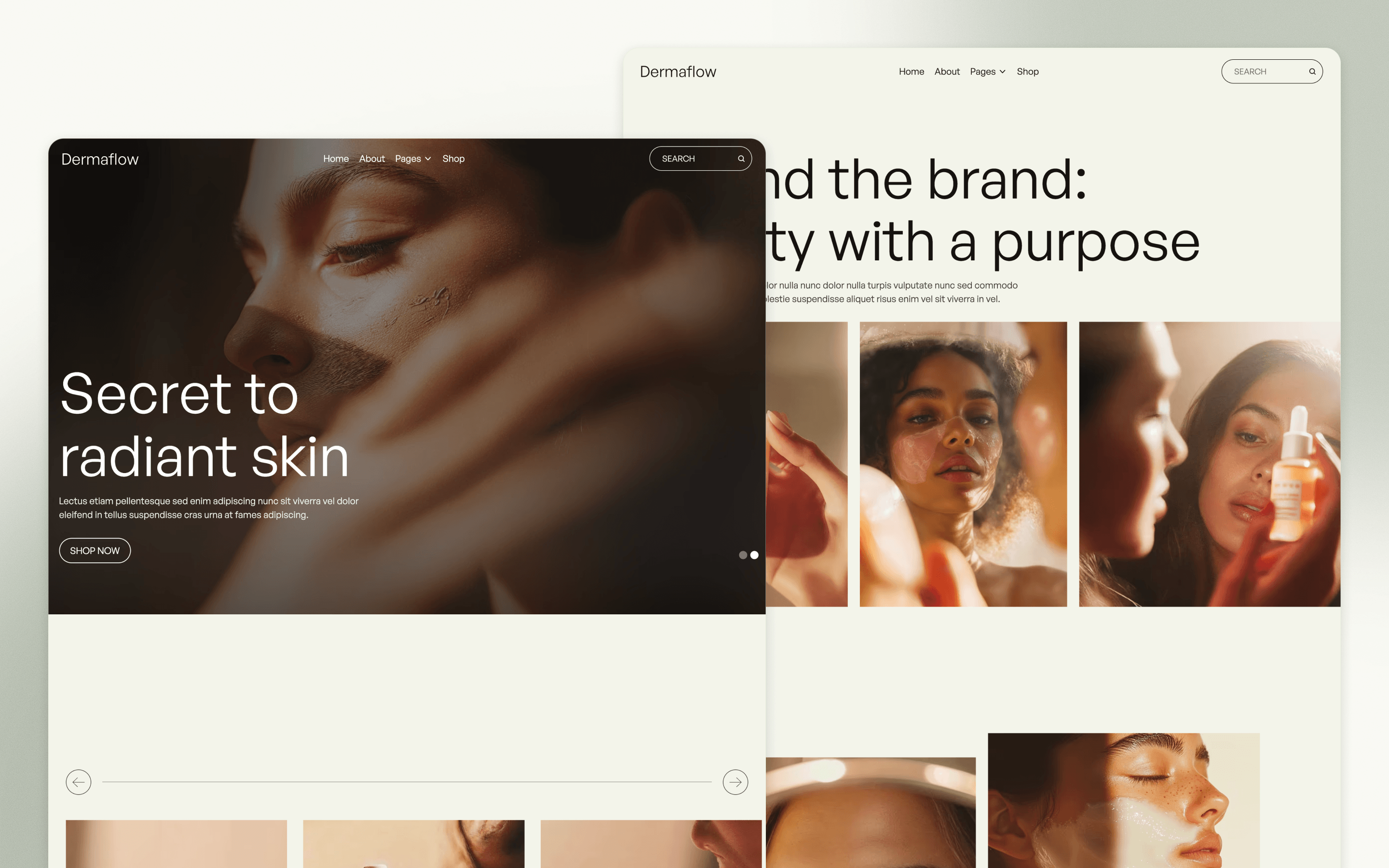
Dermaflow is our template for skincare and beauty brands, with large product and skin photography setting the direction from the first screen. The selected layouts pair that close-up visual style with a brand-story page, showing how a site can give its products a recognizable personality while leaving room to explain the business behind them.
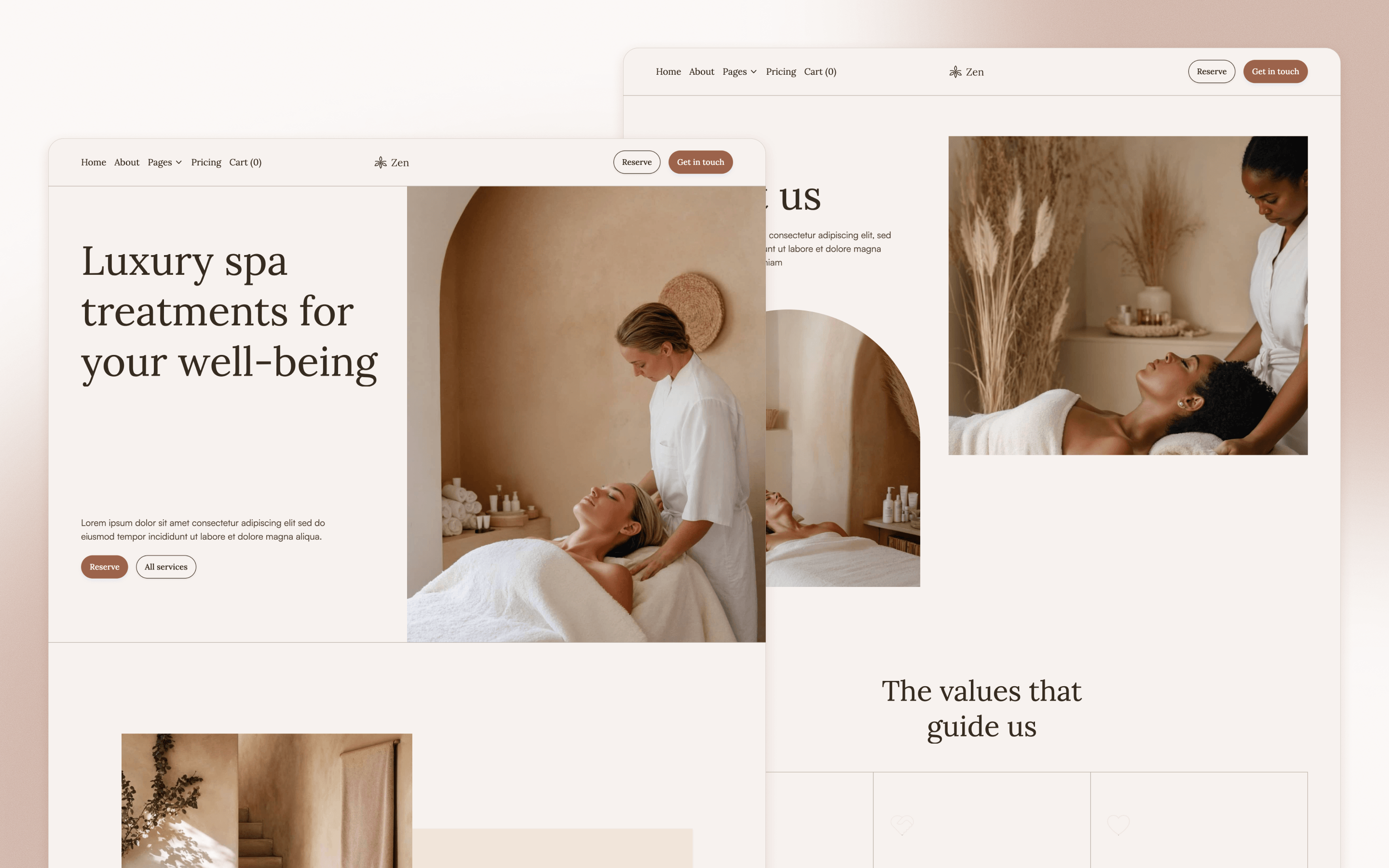
Zen, our spa and massage template, takes a softer approach to presenting a service business. Treatment photography sits beside a simple introduction and clear reservation links, while the about page carries that same warmth into the story of the team. It shows how thoughtful spacing and imagery can make a service feel approachable before someone visits.
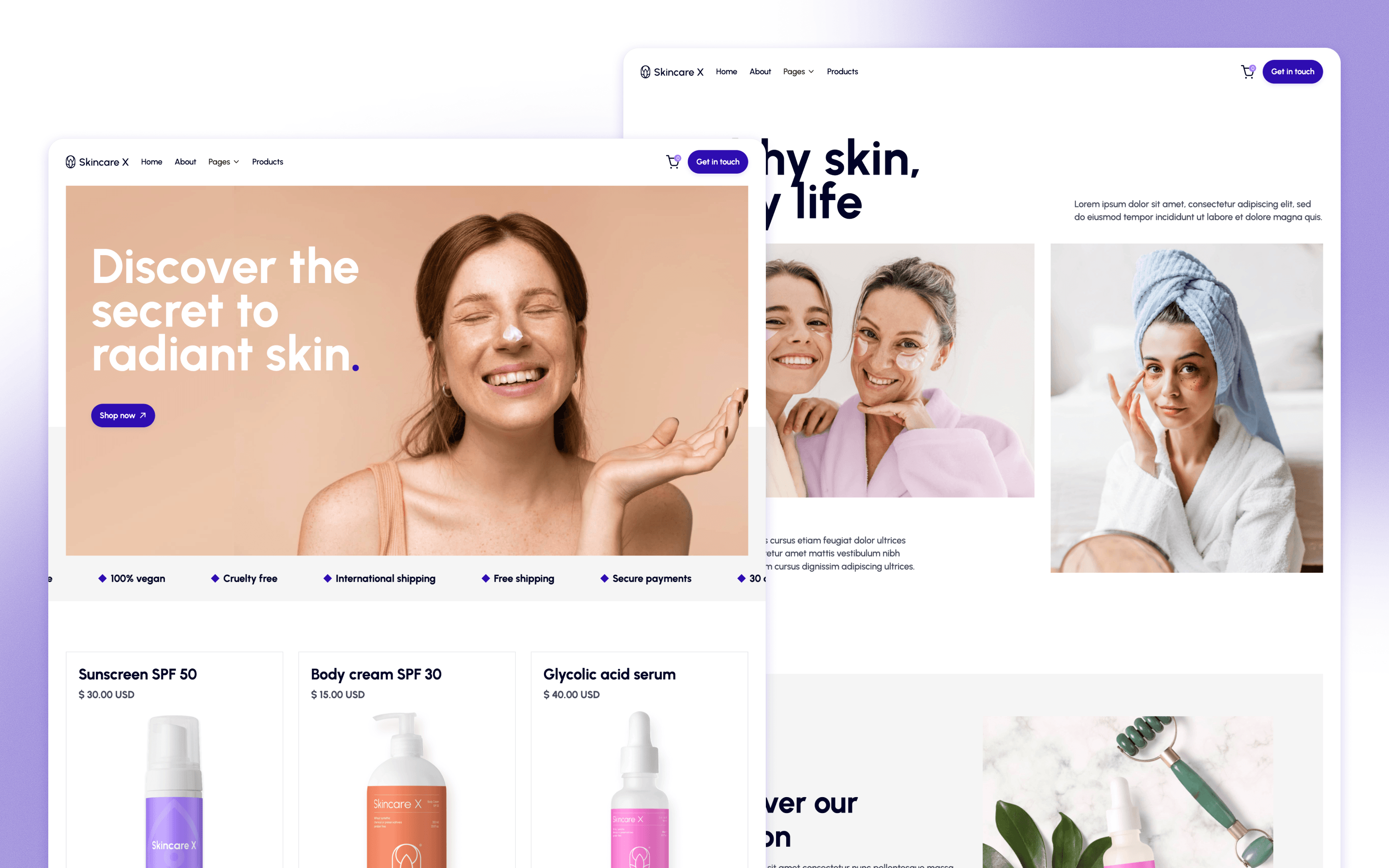
Skincare X is our skincare ecommerce template, designed to give beauty products an inviting place to be explored. A large opening photograph leads into readable product cards, with a brand introduction alongside the storefront. For a business with a skincare collection, it demonstrates how the shopping experience and the visual identity can feel like parts of the same website.
Across our template collection, more than 1,500 websites use our designs. Working with BRIX Agency brings that design experience to a custom website shaped around your practice, its identity, and the way you want patients to find and explore your care.
2. HALCON Marketing Solutions: Best Dermatology Web Design Agency for Practice Launches
 2
2HALCON Marketing Solutions
A healthcare marketing agency bringing a practice's identity, website, and launch materials together around a clear introduction to its care.
Opening a practice means making a lot of first impressions at once, from the name on the door to the page a patient finds online. HALCON Marketing Solutions is a good agency to explore when the brand and website need to take shape together, with its Vista Dermatology work showing how those pieces can belong to one project.
For a new practice, that can make the design process easier to coordinate. The team introducing your physicians and services also understands the identity behind them, so the website has a direction before individual pages start competing for attention.
Featured project: Vista Dermatology
HALCON's Vista Dermatology project covered brand strategy, visual identity, website design and development, and launch support. The selected pages put the clinical team near the front of the experience, with a restrained layout and a bright accent guiding visitors toward the next step.
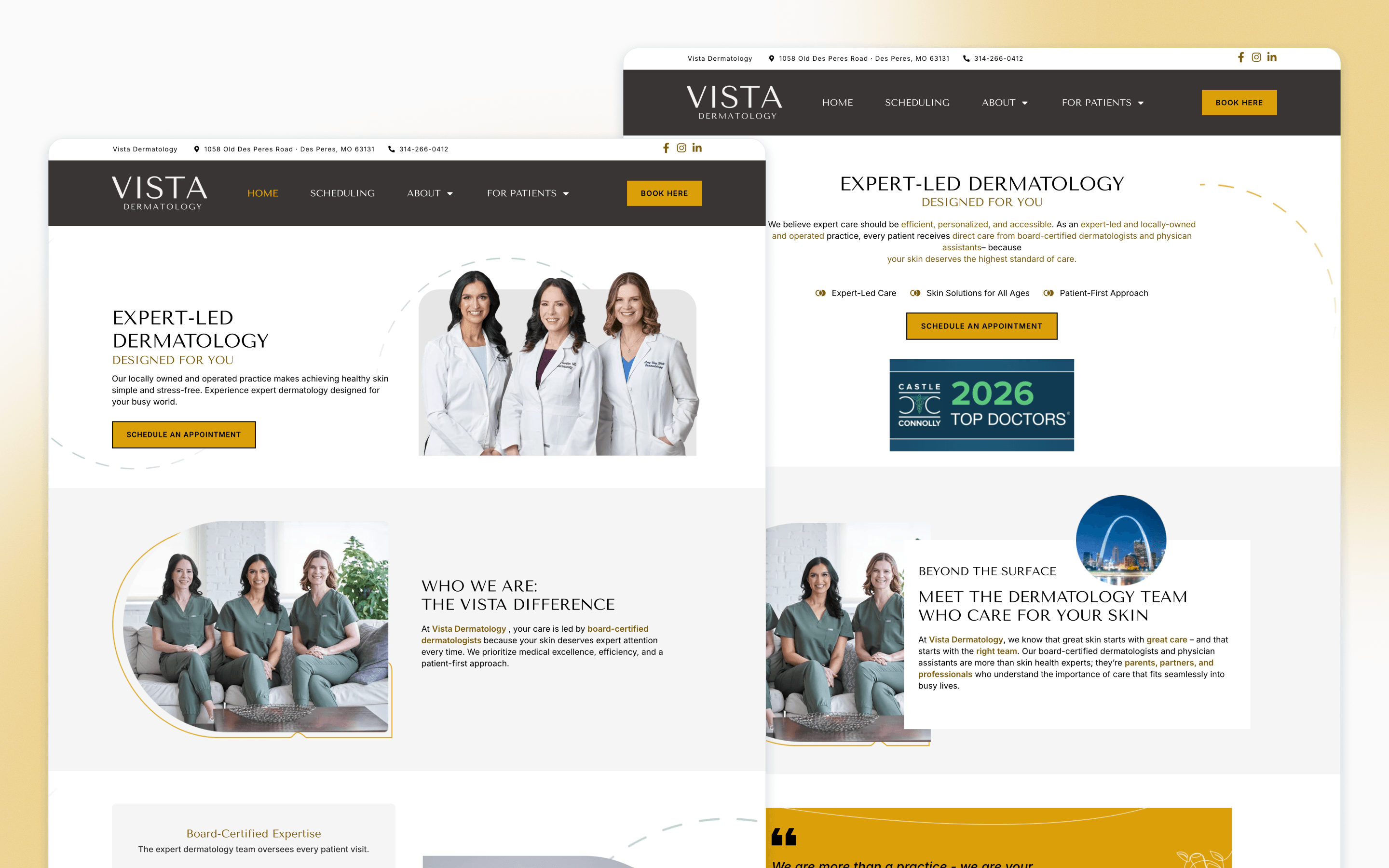
Notice how the team portraits give the practice a personal presence without crowding the page. It's an example to discuss if you're planning a practice launch and want the website, photography direction, and brand to feel familiar to a patient from their first visit.
3. Goldman Marketing Group: Best Dermatology Web Design Agency for Cosmetic Dermatology
 3
3Goldman Marketing Group
A medical marketing agency designing polished practice websites that connect a personal introduction with detailed cosmetic treatment information.
A cosmetic dermatology website needs room for both the people providing care and the details someone wants before booking. Goldman Marketing Group brings those together in its selected work, making it worth considering when your website needs to feel polished while still giving visitors something useful to read.
Its Potozkin + Ellis example moves from a team introduction into a focused treatment page, rather than asking one homepage to explain every procedure. That gives you a concrete way to talk about how your own services would be organized and presented.
Featured project: Potozkin + Ellis Dermatology
Goldman's portfolio attributes responsive website design and development for Potozkin + Ellis Dermatology. The supplied image pairs the practice homepage with its Botox page, showing how portraits, treatment imagery, and longer explanations sit within the same visual style.
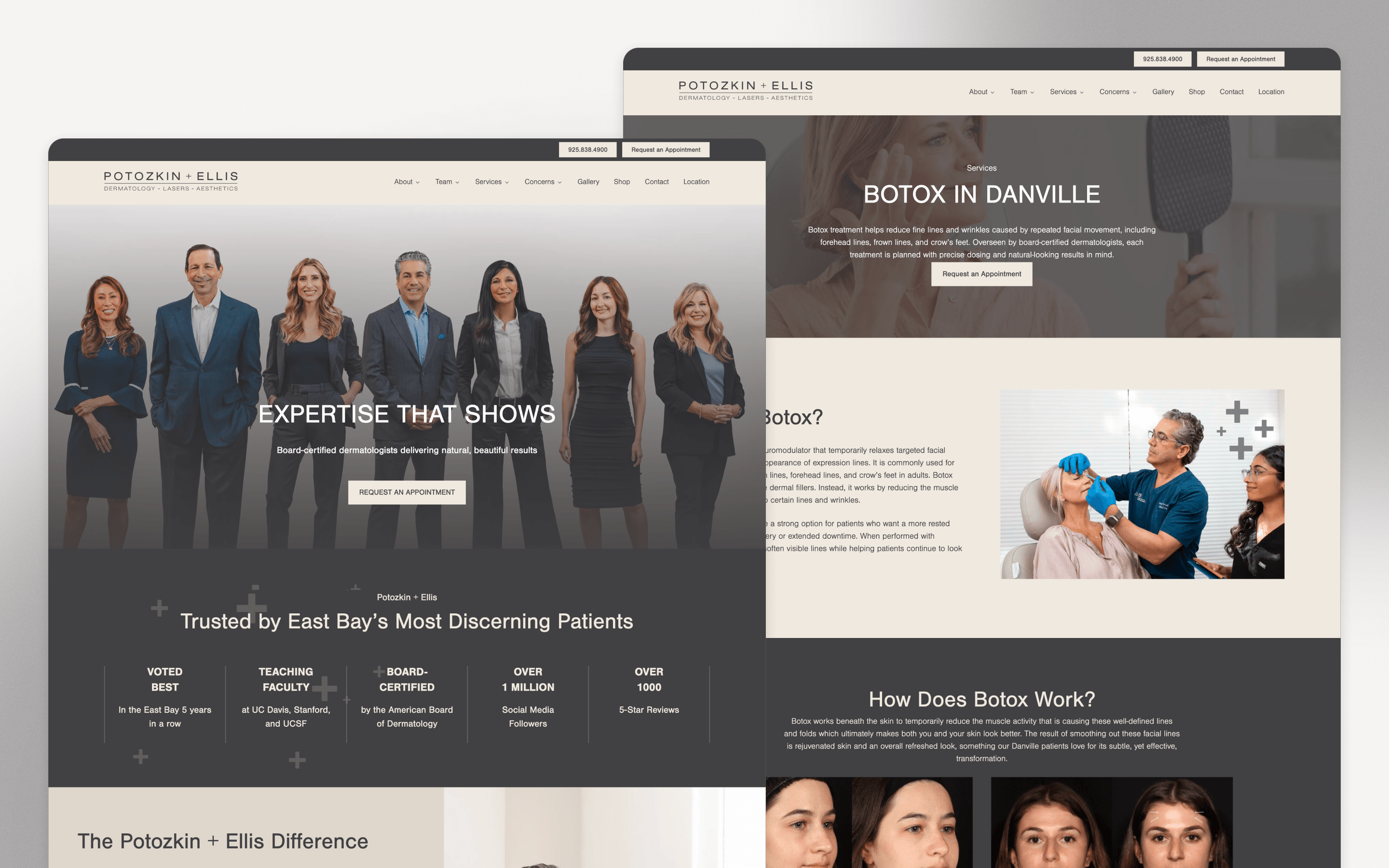
The useful detail is the balance between team and treatment: visitors can get a sense of the practice before reading about an individual service. When exploring the example, follow that route on a phone and consider whether your own treatment pages would need more explanation, more imagery, or a simpler next step.
4. MD DesignLab: Best Dermatology Web Design Agency for Website Navigation
 4
4MD DesignLab
A healthcare design studio organizing practice websites so patients can move between services, provider information, and the right office.
When a practice offers several kinds of care, the difficult part of a redesign can be deciding where everything goes. MD DesignLab has documented work on the structure behind a dermatology website, including service pages, provider information, and location navigation, which makes it a useful option for a site that has become hard to browse.
That work matters when your practice has grown but the website still reflects an earlier, smaller version of it. A clearer route through the content can help visitors understand what's available without having to read every page or call the office for directions.
Featured project: Advanced Dermatology of Alaska
For Advanced Dermatology of Alaska, MD DesignLab describes information architecture alongside website design and development. Its project covers the service and provider structure, with the supplied website views showing a broad practice introduction next to a more detailed medical dermatology page.
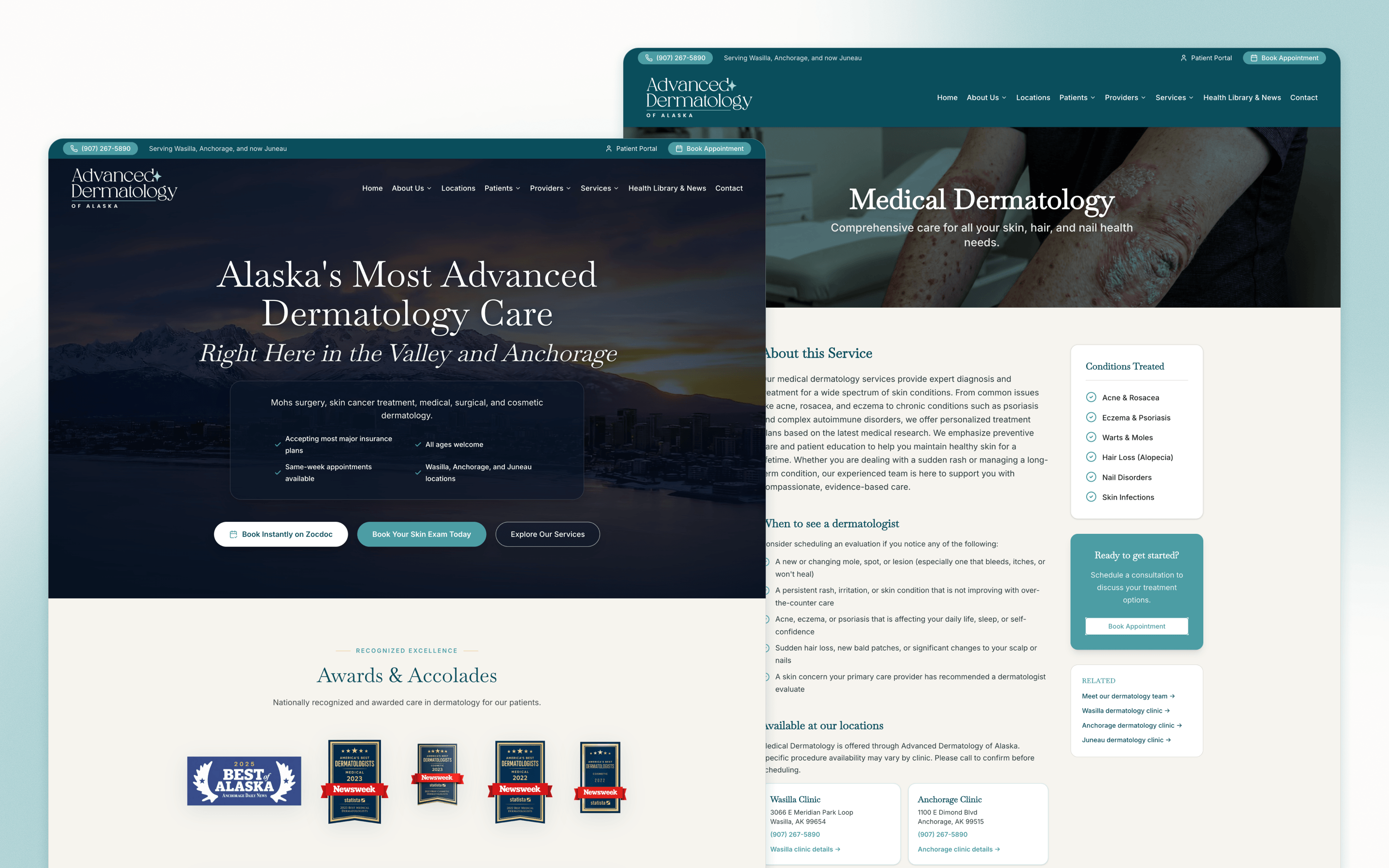
Explore how the site separates a general overview from deeper service reading. If your current navigation mixes conditions, treatments, and locations in one long menu, this is a relevant project to discuss when asking an agency to plan a more useful content structure.
5. Anne-Claire Thomassin: Best Dermatology Web Design Agency for Boutique Practices
 5
5Anne-Claire Thomassin
A design studio creating personal, carefully composed dermatology websites that give independent practices a recognizable presence online.
An independent practice can have a strong personality without needing a large, busy website. Anne-Claire Thomassin offers a more personal design direction in the selected Cosmedica project, where typography, physician photography, and generous space create an introduction that feels specific to the practice.
It's a useful option to explore if you'd like your site to feel closer to the experience of meeting your dermatologist. The design gives the person behind the practice room to be seen, while the surrounding content explains the approach to care.
Featured project: Cosmedica Dermatology
Thomassin's Cosmedica Dermatology project includes website design and development. The supplied pages use an understated palette and editorial layouts, moving from a physician portrait and practice introduction into a longer explanation of its dermatology services.
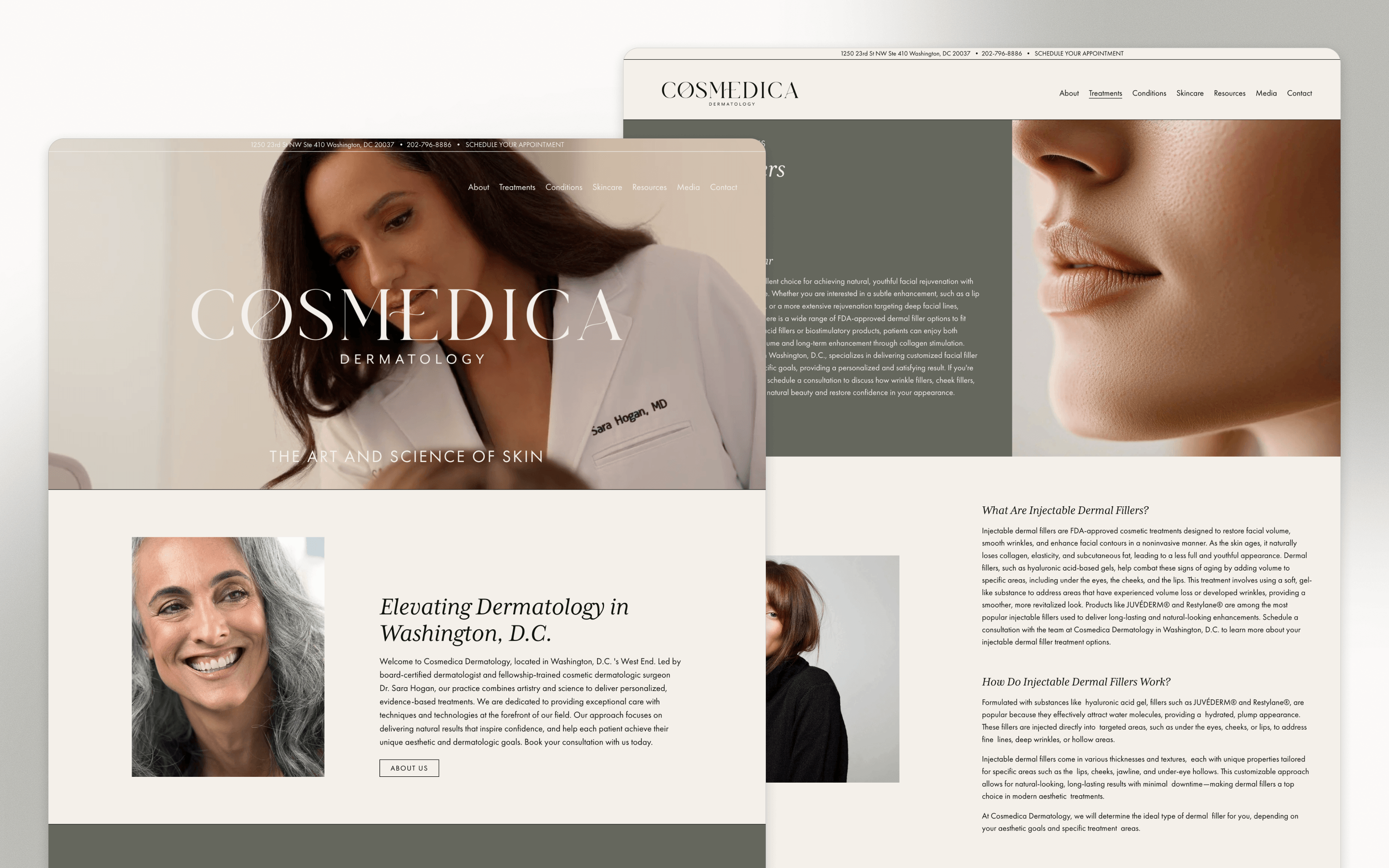
The example shows how a boutique practice can make its website feel considered without filling the screen with competing messages. Look at the relationship between portraits and written introductions, then ask how your own photographs and voice could shape a similarly personal result.
6. Etna Interactive: Best Dermatology Web Design Agency for Treatment Pages
 6
6Etna Interactive
A medical marketing agency designing dermatology websites with room for treatment explanations, practice information, and patient results galleries.
Some patients arrive knowing the treatment they're interested in, while others are still trying to understand their options. Etna Interactive is worth exploring when that second group needs more help from your website, with selected work that makes space for detailed service content and visual examples.
The agency combines website design with medical marketing, so the conversation can cover both the new pages and how you'll maintain their usefulness afterward. Keep those responsibilities clear in the proposal, especially if you want content support as well as the initial redesign.
Featured project: Dermatology Associates of Rochester
Etna lists Dermatology Associates of Rochester in its dermatology portfolio, and the practice credits it for medical website design and marketing. The supplied views show the main practice introduction alongside a gallery page, giving prospective patients different ways to explore the clinic's work.
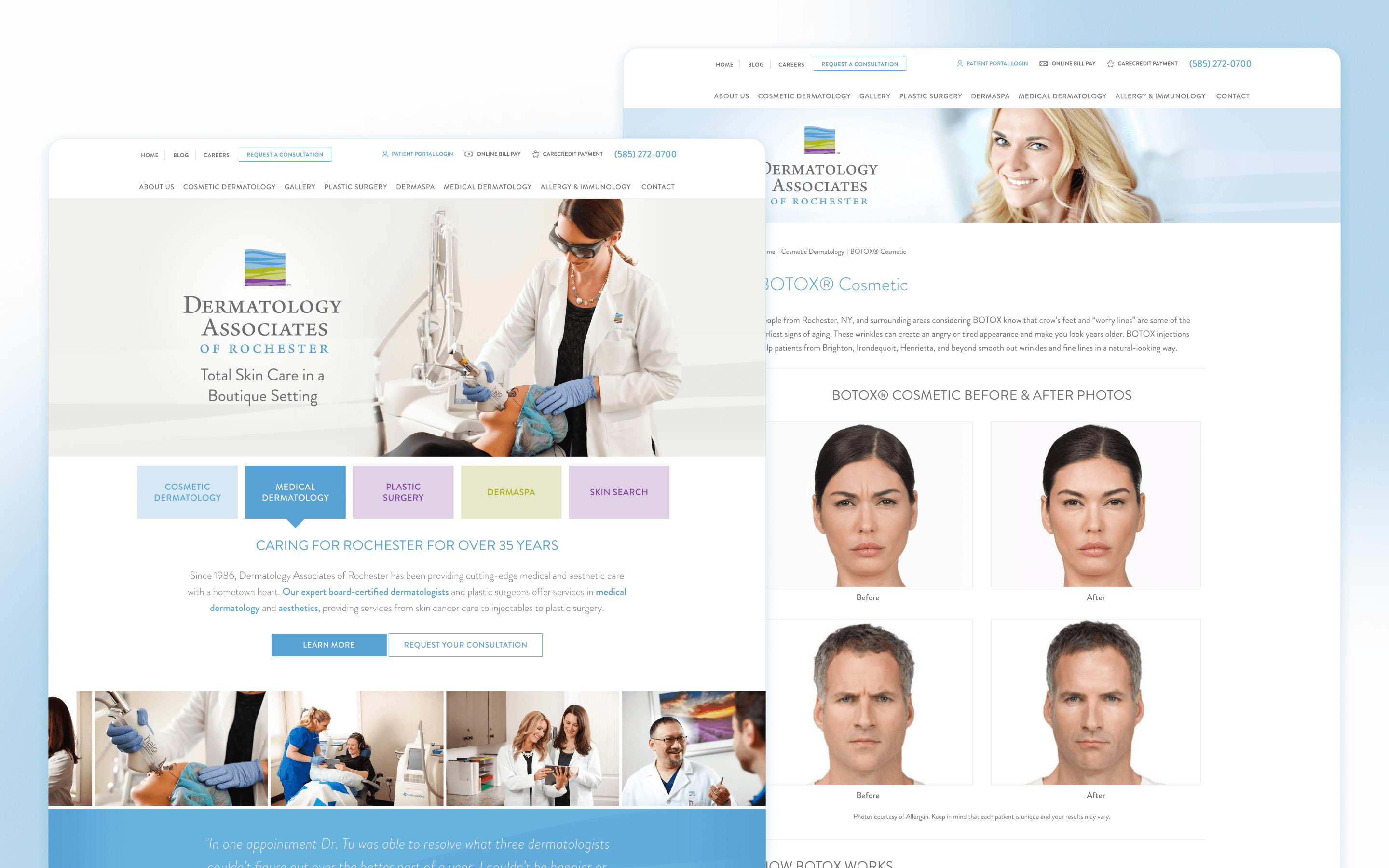
For your own site, the question is how a gallery and a treatment explanation support each other. Ask to see how the team would connect those pages, add practice-approved context to images, and keep consultation access visible while someone is reading more closely.
7. Handsome Ground Studio: Best Dermatology Web Design Agency for Family Dermatology
 7
7Handsome Ground Studio
A branding and design studio giving dermatology practices an approachable identity with clear introductions to their physicians and services.
A website serving adults and children needs to feel approachable to people arriving with very different questions. Handsome Ground Studio demonstrates that direction in its Ascot Dermatology work, combining practice branding with a website that introduces the team and explains its care in a calm, readable way.
The appeal here is the relationship between identity and everyday information. A practice can look welcoming while making room for physician backgrounds, service descriptions, and practical visit details, so prospective patients don't have to choose between a friendly website and an informative one.
Featured project: Ascot Dermatology
The studio's Ascot Dermatology project covers branding and website design. The supplied pages introduce adult and pediatric dermatology alongside physician portraits, then carry the same visual language into a skin-check page with a straightforward explanation of the service.
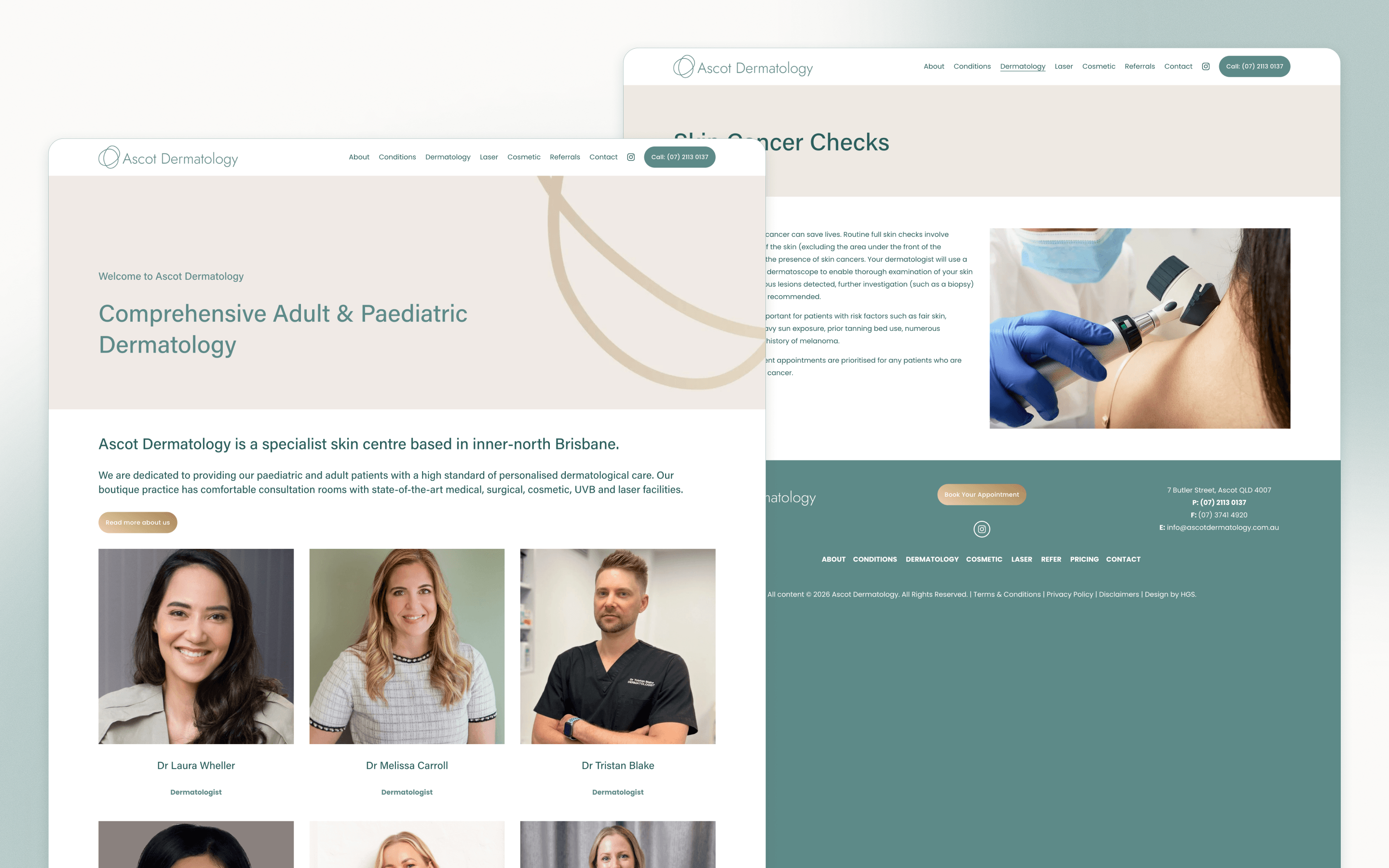
The portrait-led introduction is a helpful reference for a family-focused practice. As you review it, think about which people and questions belong near the start of your own website, particularly when a parent is choosing care for a child as well as themselves.
8. NKP Medical: Best Dermatology Web Design Agency for Luxury Aesthetics
 8
8NKP Medical
A medical marketing agency pairing website design and SEO with a refined presentation of cosmetic practices and their services.
For a practice offering cosmetic dermatology, the physical setting can be an important part of its identity. NKP Medical's selected work for SHERBER+RAD shows a refined presentation where the environment, physician imagery, and service information all contribute to the first impression.
That makes the agency relevant when you want the website to reflect a carefully designed in-person experience. The useful question is how that visual direction will carry into treatment pages, where visitors still need clear information and a practical way to arrange a conversation.
Featured project: SHERBER+RAD
NKP features SHERBER+RAD in its dermatology work, and the client credits the agency for website design and SEO. The supplied image combines the practice's interior-led introduction with a cosmetic treatment page, using soft tones and generous spacing across both.
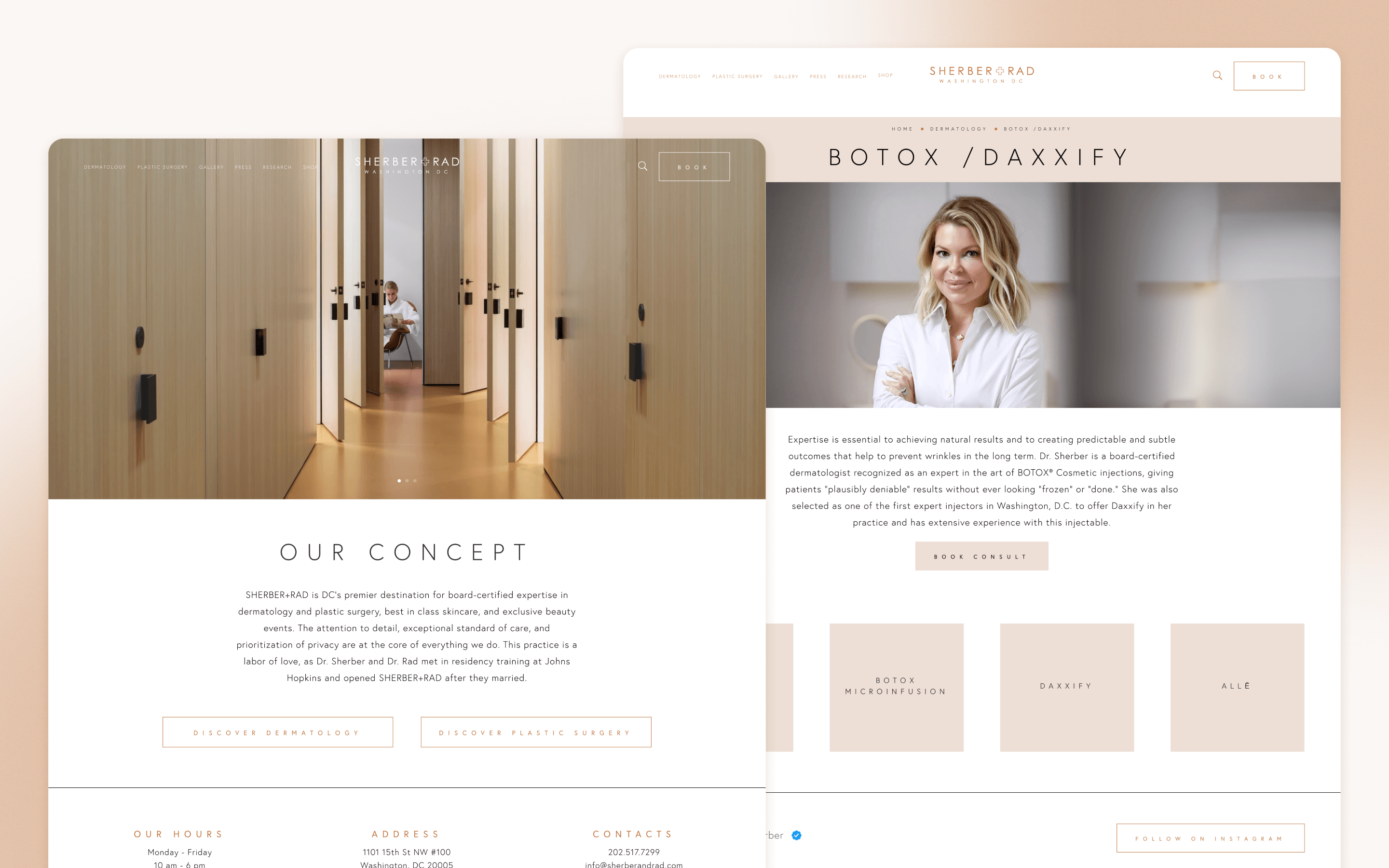
The example is worth opening if luxury aesthetics are part of your brand. Review how the treatment page supports the atmosphere established by the homepage, then ask which photography and written materials your practice would need to achieve that level of consistency throughout the site.
9. LOLO: Best Dermatology Web Design Agency for Art Direction
 9
9LOLO
A creative agency connecting dermatology website design with brand identity, photography direction, and the physical character of a clinic.
If you want your dermatology website to have a distinctive visual point of view, LOLO offers a different starting point from a conventional medical layout. Its Surface Dermatology Clinic engagement brings website design into a wider identity project, with art direction and physical brand details considered alongside the online experience.
That kind of collaboration is useful when the photographs, typography, and clinic environment are meant to tell the same story. It also means the brief should explain which creative materials need to be developed, rather than treating the website as a set of empty pages waiting for images.
Featured project: Surface Dermatology Clinic
LOLO's Surface Dermatology Clinic case study includes brand strategy, identity, art direction, website design, collateral, and wayfinding. The supplied website views feature close-up skin photography and a warm palette, giving the clinic a recognizable visual character from the opening screen.
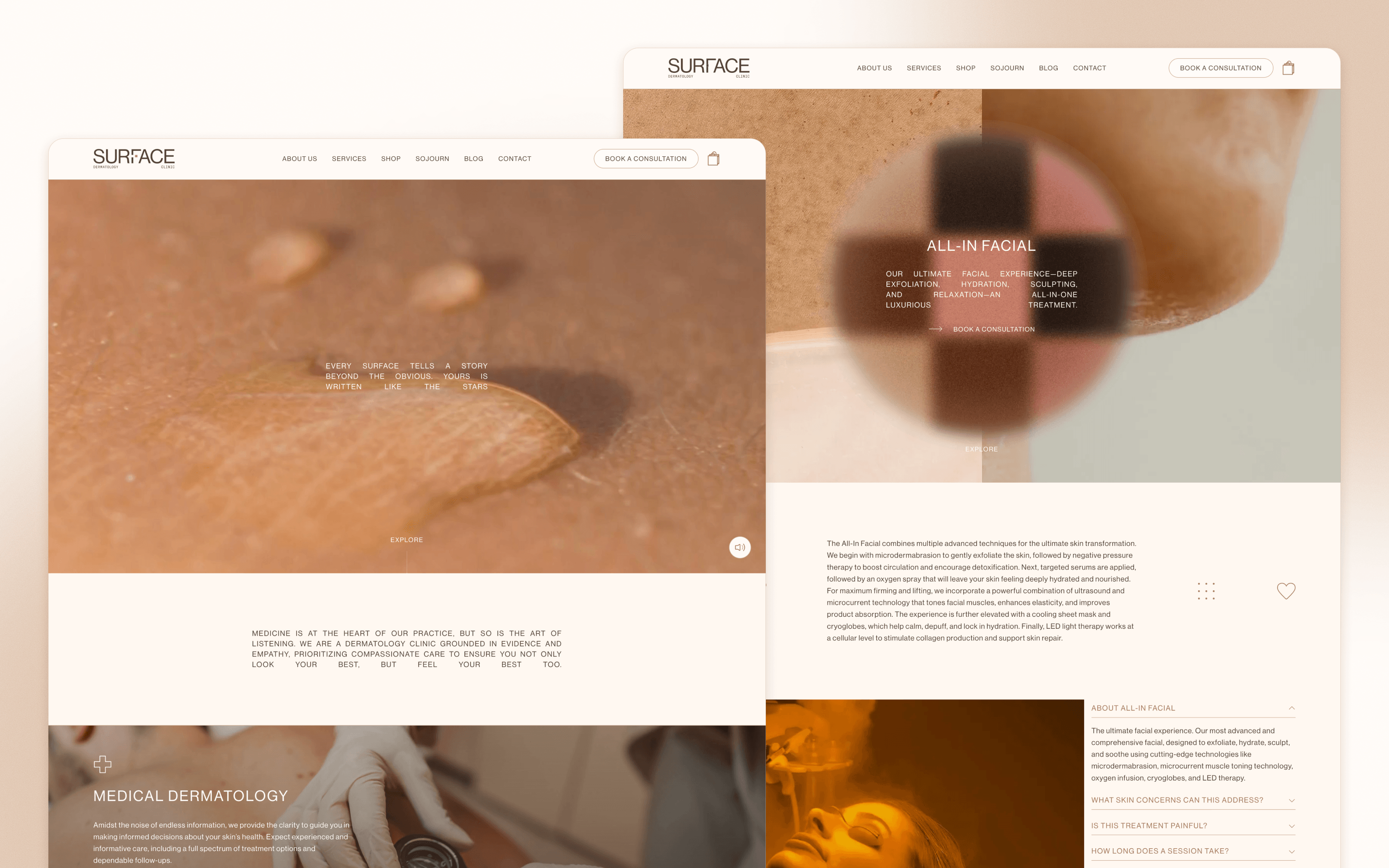
The photographs do much of the work here, so art direction is the point to discuss with the agency. Ask how a similar engagement would plan your imagery and page layouts together, with enough variation to keep treatment and physician pages useful as well as visually coherent.
10. C42D: Best Dermatology Web Design Agency for Brand Identity
 10
10C42D
A branding agency shaping dermatology identities and website design around a practice's point of view and the people it serves.
A redesign can expose a question that new layouts alone won't answer: what should people remember about your practice? C42D is an option when that identity work belongs in the brief, with a documented dermatology engagement connecting the brand's message and visual presentation to its website design.
For a practice trying to express a clearer point of view, that can be a useful place to begin. Agreeing on the message first gives the photographs, headlines, and individual pages something to work toward, rather than choosing a style and filling in the explanation later.
Featured project: Tone Dermatology
C42D's Tone Dermatology case study documents brand identity and website visual design. The image below shows Tone's current website, while the case study provides the reference for C42D's earlier contribution to the brand and its online presentation.
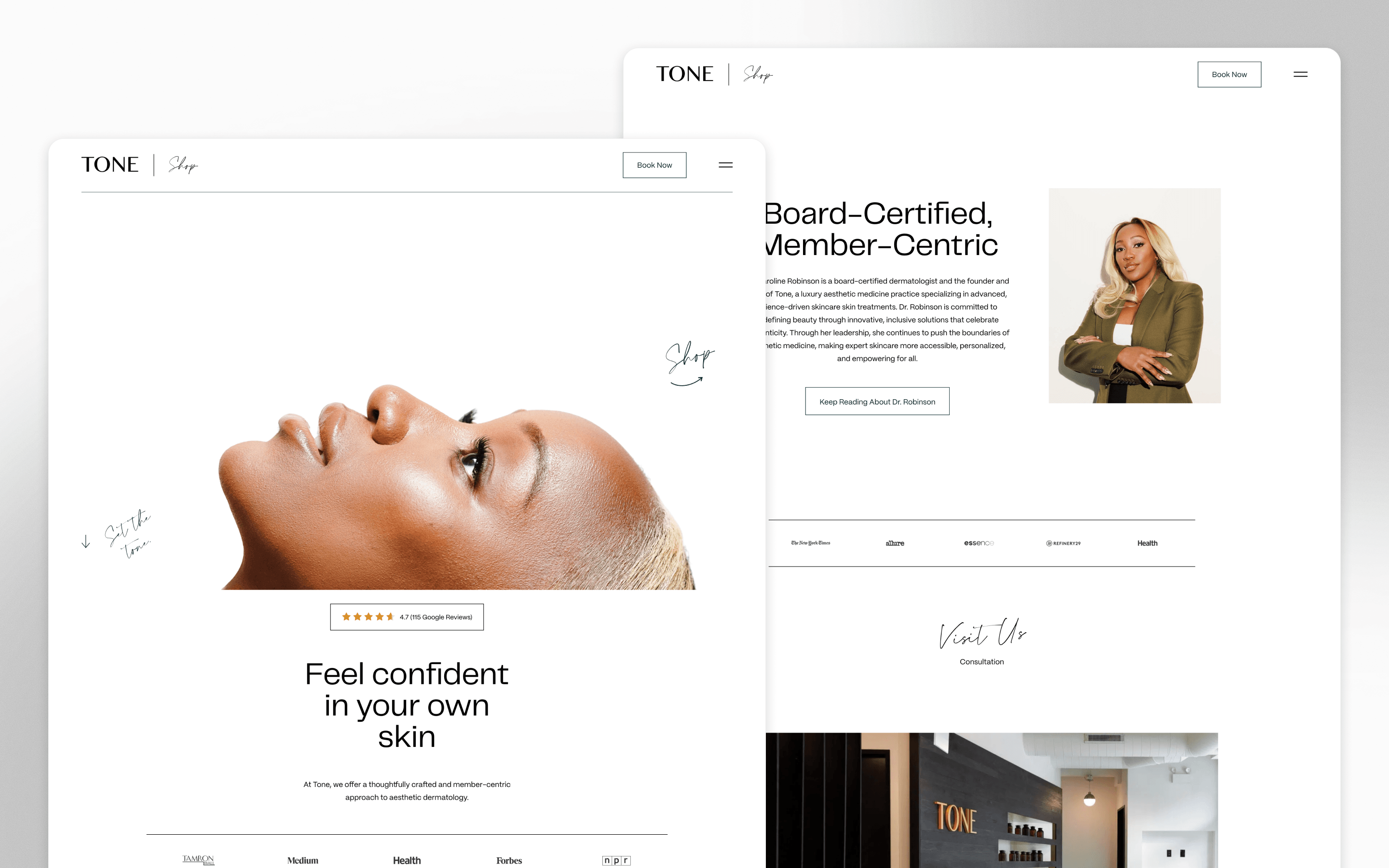
Use the case and current site together when discussing brand identity: ask C42D to show the original deliverables and explain how the practice's positioning informed them. That conversation is more useful than assuming every detail on a client's current website belongs to the same engagement.
11. Glacial Multimedia: Best Dermatology Web Design Agency for Patient Access
 11
11Glacial Multimedia
A medical website agency designing patient contact and scheduling paths for healthcare organizations with substantial service information to share.
A large dermatology website can introduce plenty of expertise and still leave someone unsure how to get an appointment. Glacial Multimedia has documented dermatology work involving patient contact and scheduling features, making it worth considering when the next step needs as much attention as the page design.
That conversation becomes especially useful as a practice adds services, physicians, or locations. The website should help visitors connect what they've read with the right destination, rather than leaving the front desk to untangle requests sent through one generic contact route.
Featured project: Skin and Cancer Institute
Glacial's Skin and Cancer Institute case study describes an earlier website update with patient contact and scheduling features. The supplied image shows the organization's current homepage and a treatment page, providing a view of the range of content its website presents today.
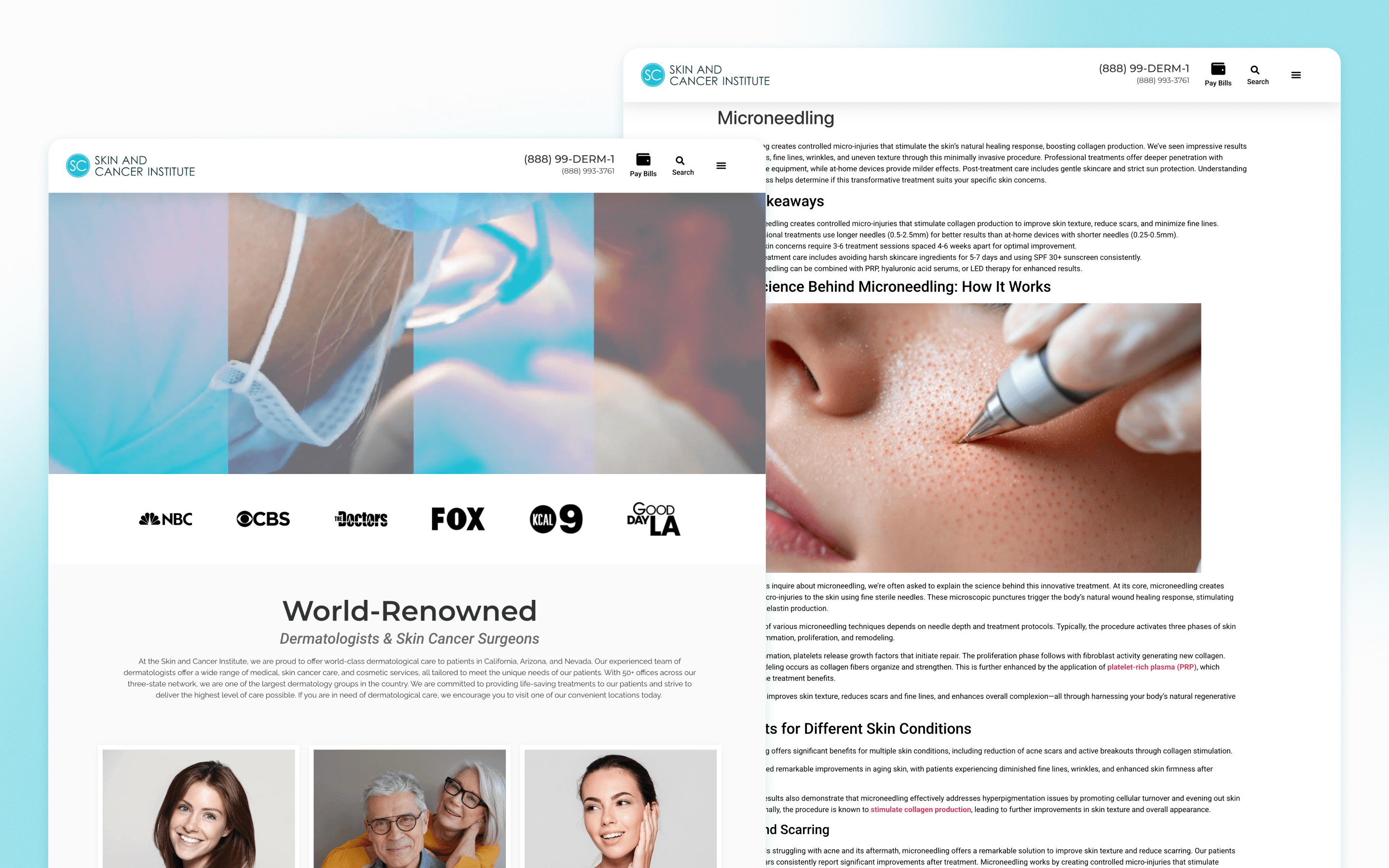
When reviewing this example, focus on patient access and ask the agency to demonstrate the specific appointment features it delivered. Use that walkthrough to discuss how your practice would route new enquiries, returning patients, and location-specific requests without making them all follow the same path.
What a dermatology web design agency should help you with
A useful engagement starts with the people your practice wants to reach and what they need to understand before contacting you. Your agency should help turn that into a page plan, covering medical and cosmetic services, physician profiles, location details, and new-patient information. That plan also gives your team a manageable list of copy, photographs, and approvals to prepare.
From there, the work can include writing, visual design, development, content entry, and the connection to your appointment system. Ask which services the agency delivers itself and which need a separate specialist, especially for photography and treatment copy. A clinician at your practice should review the medical wording before it reaches the finished pages.
Make launch and handoff part of the scope from the beginning. The finished site needs working contact routes, tested mobile pages, and an editor your staff can use, with account access and support arrangements explained. Marketing after launch is another responsibility, so distinguish ongoing SEO and advertising from the work required to deliver the website itself.
How to choose a dermatology web design agency and compare costs
Before contacting anyone, name the problem you'd most like the redesign to solve. You might be opening a cosmetic service line, bringing several offices onto one site, or finding that people repeatedly call to ask whether you offer a treatment. A specific problem gives an agency more to respond to than “we'd like a modern website,” and makes its proposed approach easier to judge.
Choose 2–3 teams whose projects show the kind of work you need, then give each the same practice outline. Include your clinical and cosmetic services, the number of locations, and the booking system already in use. Here's an email you can adapt without turning the first conversation into a lengthy specification.
Subject Dermatology website for [practice], [number] locations, launch [month]
Hi [name],
We're [practice], a dermatology practice in [location] offering [medical dermatology, cosmetic treatments, or both]. Your work in BRIX Agency's dermatology agency guide caught our attention, and we'd like to discuss [the main change we want patients to experience on our website].
Our current website is [URL]. We have [number] physicians and [number] offices, and expect around [number] pages covering [services, providers, locations, patient information, and galleries]. Appointment enquiries currently go through [provider or office process], which we'd like to [keep or change].
We can supply [approved copy, portraits, and practice images] and need help with [remaining content]. [Staff role] will maintain the website, and [clinical reviewer] will approve treatment wording. Our preferred launch is [date], with a project budget of [range].
Could you show us a comparable project and explain your approach, deliverables, and review stages? Please separate the website fee from hosting, software, maintenance, and marketing, and include content entry, migration checks, and staff training in the scope you recommend.
Thank you,
[Your name]
[Role and practice]
Compare the included responsibilities before the totals. One agency may be pricing a design with copy supplied by your practice, while another includes interviews, treatment writing, and content entry. Ask each to identify the page layouts, review rounds, appointment setup, migration work, and staff training in its fee so the differences are visible.
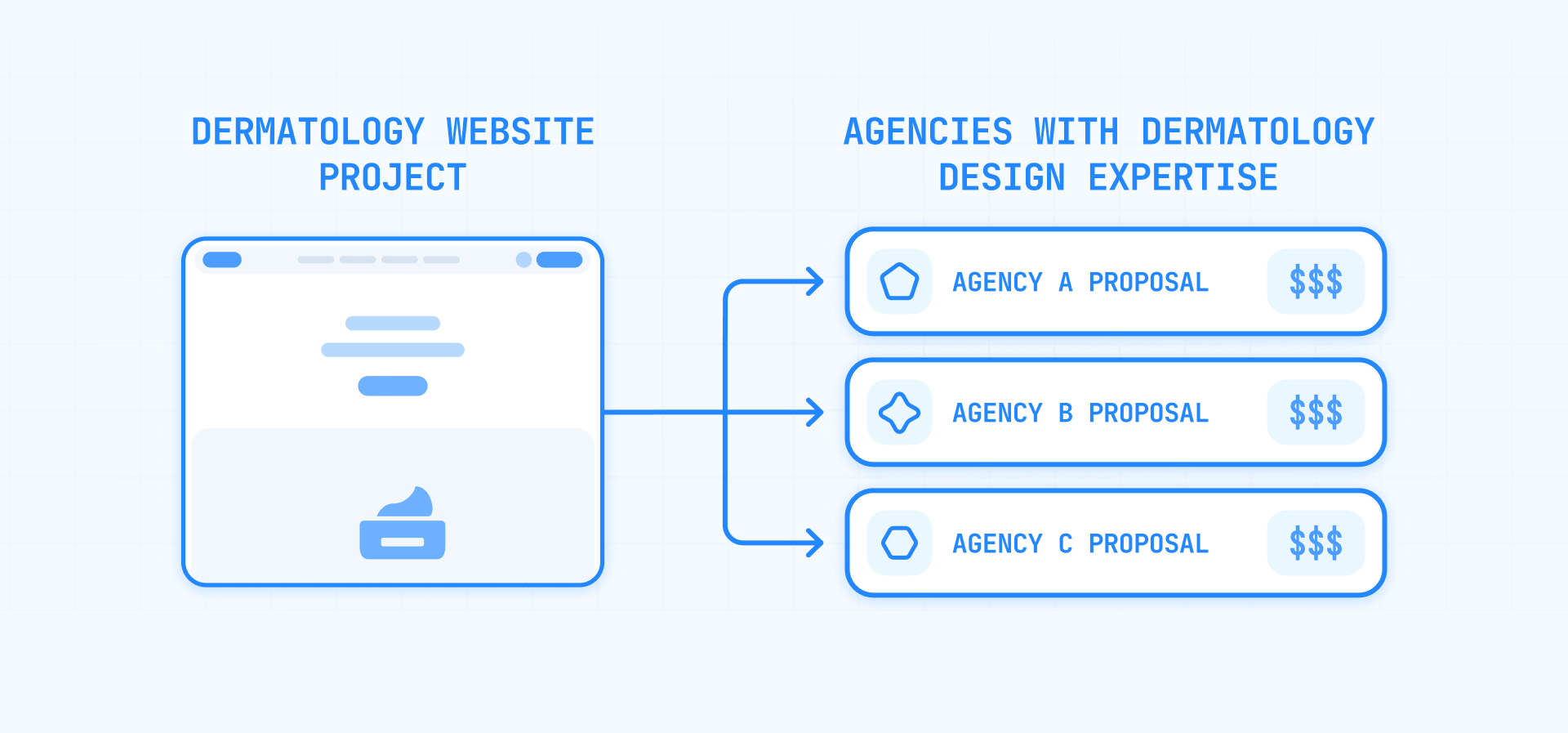
A useful budget separates the first build from the costs of keeping it running: hosting, software, technical support, and any ongoing marketing. We haven't assigned a price range to these agencies because their selected projects don't establish comparable quotes. Request a figure for your own scope, and ask what would change that figure if you add another office or a new set of treatment pages.
Discuss ownership and access while you're still comparing proposals. Clarify who controls the domain, CMS, photographs, and design files, which items are licensed, and what a future handoff would involve. If support is a monthly arrangement, the agreement should explain the tasks covered and what happens to the site if you end that arrangement.
For timing, ask for milestones tied to your materials and approvals: practice interviews, photography, page designs, clinical review, development, and launch testing. A website can't be finished on a reliable schedule if nobody knows who will approve the treatment descriptions. Name that person early and reserve time for the review, especially when several physicians need to contribute.
Choosing a CMS for a dermatology website that keeps changing
Think of your CMS as the place your staff will go when a physician joins, an office changes hours, or a treatment page needs a correction. Those updates should be easy to make without rebuilding a layout, and the published pages should remain fast and readable. Start with what your team edits, then choose the system and support around that routine.
Keep shared information in one place
A dermatologist's profile might appear on a team page, a location page, and several service pages. Plan how those relationships will work so a new photograph or corrected biography doesn't require several separate edits. The same thinking applies to office details and treatment categories, especially when a growing practice has more than one person maintaining its site.
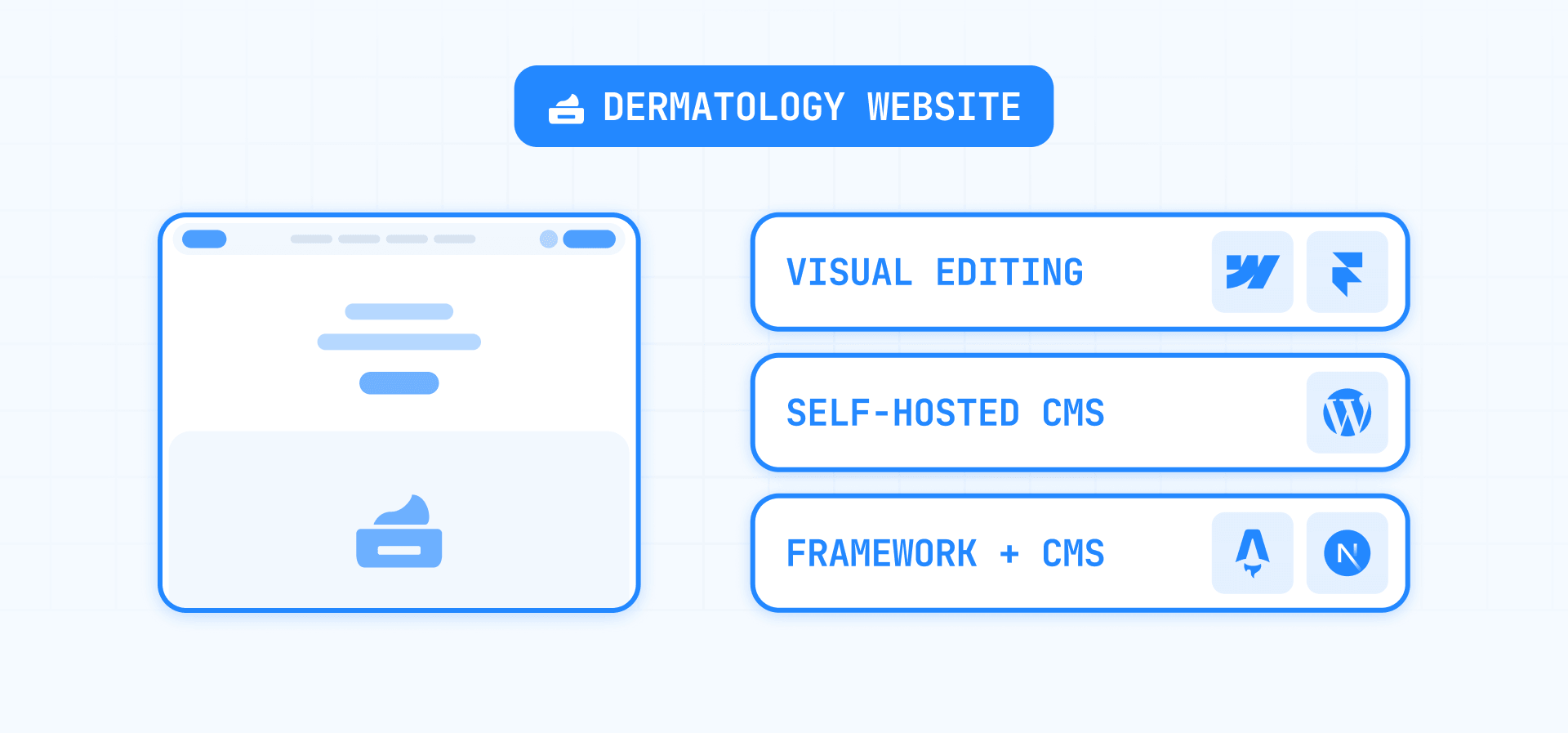
Webflow and Framer offer visual editing and CMS tools that can make this kind of publishing approachable. Have the agency explain how it would organize your content and which changes staff can make within the proposed plan. The right setup should let an editor focus on the information, with a preview and clear publishing permissions.
Match the platform to the people maintaining it
WordPress is an option when you want the website and its CMS database on your own chosen server. Ask for an editing setup built around your practice rather than a dashboard full of unused features, and name the person responsible for updates, backups, and technical upkeep. Booking or patient-portal services may still run elsewhere, so review those arrangements separately.
Astro and Next.js are development frameworks that can be paired with a separate CMS for a more tailored build. A proposal using either should name that CMS and show what your staff will actually see when editing. Include responsibility for the code and hosting in the comparison, rather than assuming a newer technical stack will automatically be easier to maintain.
Ask to see the agency's editing approach
Request a relevant website the agency has already delivered on its proposed platform, then ask how that client maintains profiles, services, and locations. Before your own handoff, have the person responsible for updates practice those tasks on your pages. Include a short guide and a support contact for changes beyond the editor's controls, so a routine update doesn't become an unresolved ticket.
Dermatology website design essentials: care, confidence, and booking
Give medical and cosmetic dermatology clear paths
Visitors shouldn't need to know your internal service categories to find useful information. Introduce medical and cosmetic care in familiar language, then let each route explain the services, people, and next steps relevant to it. A person looking for a skin examination should be able to recognize that path just as easily as someone researching a cosmetic consultation.
Build individual pages around the questions patients bring to the office, with a brief overview followed by the detail your team has approved. Include who provides the service, where it's available, and how an enquiry is handled. Explain your practice's referral, insurance, and consultation arrangements where they matter, giving visitors a contact route when their situation needs clarification.
For a practice with several offices, connect each location to its physicians, services, hours, and appointment destination. Shared explanations can stay consistent while the local details remain specific. That is more useful to a visitor than several nearly identical pages that leave them guessing where a particular dermatologist works.
Let people understand the care behind the images
Real physician portraits, readable biographies, and current practice photographs help introduce the people someone may meet. Give credentials and clinical interests enough context to be understood, with the practice confirming their accuracy. The goal is to make an informed introduction rather than asking a collection of badges to do all the explaining.
If the practice publishes before-and-after images, agree on the approval and permission process before the gallery is built. Ask the clinical team to supply accurate treatment context and explain how images will be reviewed and updated. A gallery should be easy to browse without making photographs stand in for an individual assessment or a promise about someone's result.
The visual details need to support reading too. Check text contrast, image descriptions, keyboard navigation, and visible focus, then review long service pages on a phone. A restrained design can still be distinctive when its typography and photography feel deliberate, without putting small text or complex interactions between a visitor and the information.
Make the appointment handoff understandable
Decide whether the main action is a confirmed booking, a consultation enquiry, or a call to the practice, and label it accordingly. If you use a third-party scheduler or patient portal, give the agency the provider's details before the layouts are approved so it can plan a supported link, embed, or integration.
Keep new-patient enquiries separate from returning-patient tasks where the practice needs different routes. Explain referral or visit requirements before someone begins, and provide a useful alternative if the booking tool is unavailable. Have the practice's responsible team approve what information each form collects and where it goes; the public website and the clinical system have different jobs.
Test the complete route with staff using test data, from the first button to delivery and confirmation, including the correct office and appointment type. After launch, check whether enquiries are reaching the right people. A click count won't reveal a message sent to an unmonitored inbox or a request that patients mistake for a reserved appointment.
Carry useful search pages into the redesign
Before removing old content, identify the treatment and location pages people already find through search. Map changed addresses to their relevant replacements, retain useful information, and give new pages descriptive titles and internal links. Include redirect testing and post-launch Search Console checks in the project scope; a redesign deserves a migration plan, not a promise that rankings can never change.
Frequently asked questions about dermatology web design agencies
How much does a dermatology website cost?
The price depends on your project scope, including design, treatment content, physician profiles, location pages, and appointment connections. A practice that supplies approved writing and photography needs a different amount of help from one creating those materials for the first time, even when the finished sites have a similar page count.
Give a few agencies the same outline and ask them to separate the initial website fee from hosting, software, support, and marketing. Check what your staff must provide and what changes would add to the price. Use those written proposals to set a realistic budget for your practice, rather than treating another clinic's project as a reliable estimate.
How long does a dermatology website redesign take?
The schedule follows the work and approvals involved, so ask for milestones rather than relying on a general turnaround claim. Organizing several locations, writing treatment pages, and arranging physician photography all affect the project before development is finished. Your team's review availability belongs in that schedule alongside the agency's design and build time.
Choose one person to coordinate feedback and identify the clinician who will review medical wording. Ask when the agency needs each item, then allow time to test contact routes, mobile pages, and changed URLs before launch. If the redesign supports a new office opening, agree on the essential first release and confirm which later additions sit outside that deadline.
Can a dermatology website use our existing appointment system?
It can when your provider supports the proposed booking connection, whether that's a link, an embedded tool, or an integration. Share the exact system with the agency before approving the scope, including how it handles locations, appointment types, and new versus returning patients, so the website can direct people to the right place.
Make the distinction between a confirmed appointment and an enquiry clear in the button labels and confirmation message. Your practice should also explain its own referral or consultation requirements before the handoff. Test the journey with staff on desktop and mobile, using test data, and keep a contact alternative visible for visitors who cannot complete the online route.
Should medical and cosmetic dermatology have separate website sections?
Separate content paths can help when your practice provides both kinds of care, because visitors may arrive with different questions and expectations. That doesn't require two websites; a clear navigation structure can introduce each area while keeping the practice identity, physician information, and location details connected within a single site.
Give each service a useful explanation and link it to the people, offices, and enquiry route that apply. Ask your front desk which questions patients struggle to answer online, then use those questions to improve the page plan. Choose the structure that makes your actual services understandable, rather than adding categories simply because another dermatology website uses them.
What should a dermatology website include?
Start with services, physicians, locations, and a clear way to contact or book with the practice. Prospective patients also need practical visit information, such as your consultation process and the referral or insurance arrangements your team has confirmed. The exact pages should reflect what you offer and how people arrange care with you.
A cosmetic practice may also need a carefully managed results gallery, while a larger group needs clear connections between offices and providers. Assign someone to maintain each type of information, including photographs and service descriptions. Ask the agency for a page plan that explains the purpose of each section before approving a design based only on its homepage.
Can a dermatology web design agency write our treatment content?
Content writing can be included, but confirm it explicitly because some agencies build with text supplied by the practice. Ask which pages the writer will produce, how they will gather information from your clinicians, and how many review rounds are included, especially when treatment descriptions make up a substantial part of the website.
Provide your actual services, patient questions, and preferred language, then assign clinical review before publication. The writer should help make that information readable while your practice approves medical statements, physician details, and visit requirements. Coordinate writing with the page designs so neither team is waiting for finished content that nobody has agreed to prepare or review.
Which CMS is best for a dermatology practice website?
The best fit supports your regular editing tasks without making staff work through page code. Webflow and Framer offer visual publishing tools, WordPress can run on your chosen server, and Astro or Next.js can be paired with a separate CMS. Compare the complete editing and maintenance setup rather than choosing from platform names alone.
Ask the agency how physician profiles connect to services and locations, and who can publish changes under the proposed plan. Request a relevant site it has built and an explanation of how that client maintains similar information. Include staff training, recurring costs, and technical responsibility in the decision, then practice real updates before accepting the handoff.
How should a dermatology website present before-and-after photos?
A results gallery should make images easy to browse and give them accurate context supplied by the practice. Agree on how photos are organized and described, with the clinical team reviewing the information and confirming permission for publication. The design should help visitors understand what they're viewing without treating an example as a guaranteed personal outcome.
Discuss the approval process before the agency builds the gallery, including who can add, replace, or remove images afterward. Check image loading, descriptions, and usability on a phone as part of the review. Keep relevant treatment information and consultation access nearby so someone interested in an example has a clear route to ask about their own situation.
Will a dermatology website redesign affect our SEO?
A redesign can change search performance, particularly when page addresses, content, or navigation change. Plan the migration before launch by identifying useful treatment and location pages, deciding where their content belongs, and mapping old URLs to relevant replacements. No design approach removes the need to check what visitors and search engines will encounter.
Have the agency name the person responsible for redirects, page titles, internal links, and launch checks, with follow-up monitoring included in the scope. Keep ongoing SEO separate from those migration responsibilities so you know what each fee covers. Review Search Console after launch and investigate missing pages or unexpected changes instead of assuming that a successful launch ends the work.
Do dermatology websites need an ongoing maintenance plan?
They need clear ongoing responsibilities, whether those are covered by a monthly agency plan, your own team, or separate providers. Hosting, software upkeep, content changes, and marketing are different jobs, so ask what the proposed package actually includes and which tasks remain with the practice after the website has launched.
Check support arrangements, extra-request pricing, account access, and the process for ending the agreement. A plan can be useful when it gives your team dependable help with work it cannot maintain internally, but its value should be visible in the named services. Decide who will own every continuing task before choosing the package or declining it.
Help patients find the right starting point
A good dermatology website makes a broad range of care feel easier to navigate. Someone should be able to recognize the service they need, get to know the people providing it, and understand how to take the next step, with a design that feels right for your practice throughout that journey.
Use the projects here to narrow your choices, then send the same outline to 2–3 agencies and compare their approach. The most helpful reply will connect your actual services and patient questions to a plan for the pages, content, appointment route, and ongoing updates.
If you'd like to explore that with BRIX Agency, share your dermatology website plans with us. Our team replies in less than 24 hours, or 1–2 hours during business hours (PST), and we can start with the parts of your website you'd most like to improve.





Join readers commenting on this post!