
A prospective client has heard your name and opens your website to see what you have built. They find a great photograph, but it takes a little digging to figure out whether you handle their kind of project, work in their area, or have the team they need.
That is where a good construction web design agency can help. Your website should make your experience easy to evaluate, whether someone is planning a commercial development, comparing residential builders, or looking for a specialist to take on one part of a much larger job.
We have brought together 12 agencies with different strengths and linked the work behind each recommendation, so you can see more than a company description. Start with the type of website you need, then explore the projects that feel closest to the way you want to present your own business.
How we selected these construction web design agencies
We reviewed agency portfolios and published project descriptions alongside the construction websites featured below, looking for a clear connection between each team and its work. The selection covers commercial contractors, infrastructure specialists, residential builders, and interior fitout businesses, because those companies need to explain different things to different buyers.
We publish this guide at BRIX Agency, and our team takes the first spot, where you can explore examples from our portfolio. The specialties are a starting point for your shortlist: compare the linked examples, look beyond the opening screen, and ask the agencies you like what they would do for your particular company.
The construction web design agency shortlist
- BRIX Agency: A web design agency creating distinctive websites that give construction services, company stories, and completed work room to stand out.
- EDUCO: A design and development agency bringing construction portfolios, company culture, and recruitment together in websites managed with Drupal.
- Third & Arch: A branding and web design agency helping established construction firms connect their reputation with a more recognizable online presence.
- The Brand Constructors: A construction marketing agency building WordPress websites with clear service information and practical tools for publishing company updates.
- Redback Solutions: A digital agency designing websites that make specialized construction capabilities and large infrastructure projects easier for prospective clients to explore.
- MadeByShape: A design studio pairing visual identity and website design for businesses whose interiors and finished spaces lead the conversation.
- HUEMOR: A web design agency organizing regional construction businesses into cohesive websites with shared content, navigation, and project presentation.
- TOKY: A branding and design agency combining company narratives, original photography, and website design to present the people behind construction work.
- Springer Studios: A creative studio developing construction websites that organize field services and project photography around the work a contractor performs.
- Mile6: A digital agency redesigning construction websites around clear navigation and project collections that help visitors evaluate relevant experience.
- Vachal Design: A web design studio building reusable WordPress layouts that help construction teams maintain services, divisions, and project content.
- Red Eye Design: A web design studio creating image-led websites that help residential builders introduce their homes, renovation work, and services.
1. BRIX Agency: Best Construction Web Design Agency for Custom Design
 1
1BRIX Agency
A web design agency creating distinctive websites that give construction services, company stories, and completed work room to stand out.
At BRIX Agency, we design websites that help a company’s work speak for itself, with clear service pages and a visual direction that feels like the business behind them. For a construction firm, that means making room for the scale of your projects while keeping the details a prospective client needs easy to find.
We also create the designs behind BRIX Templates, including work for contractors and architecture firms. That experience runs through the portfolio below, from presenting practical building services to giving an individual project the kind of attention its design deserves.
A closer look at our construction web design portfolio
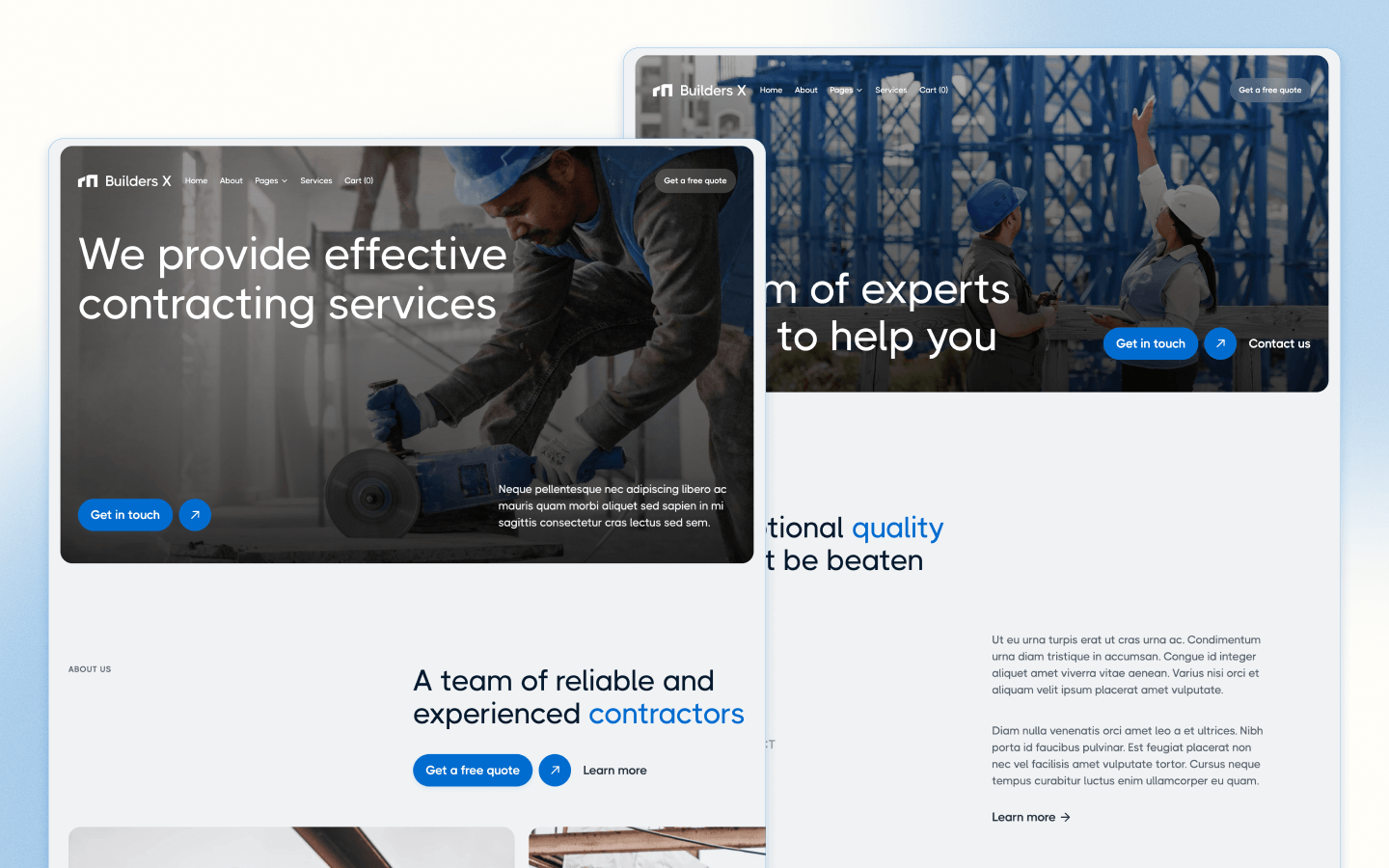
Our Builders X template is designed for construction businesses and contractors, with worksite photography and blue accents that give the services a direct, confident introduction. The company page brings the team into that story, connecting the work visitors see with the people who carry it out. It is a good example of how we give a practical business a strong visual presence without making the content feel complicated.
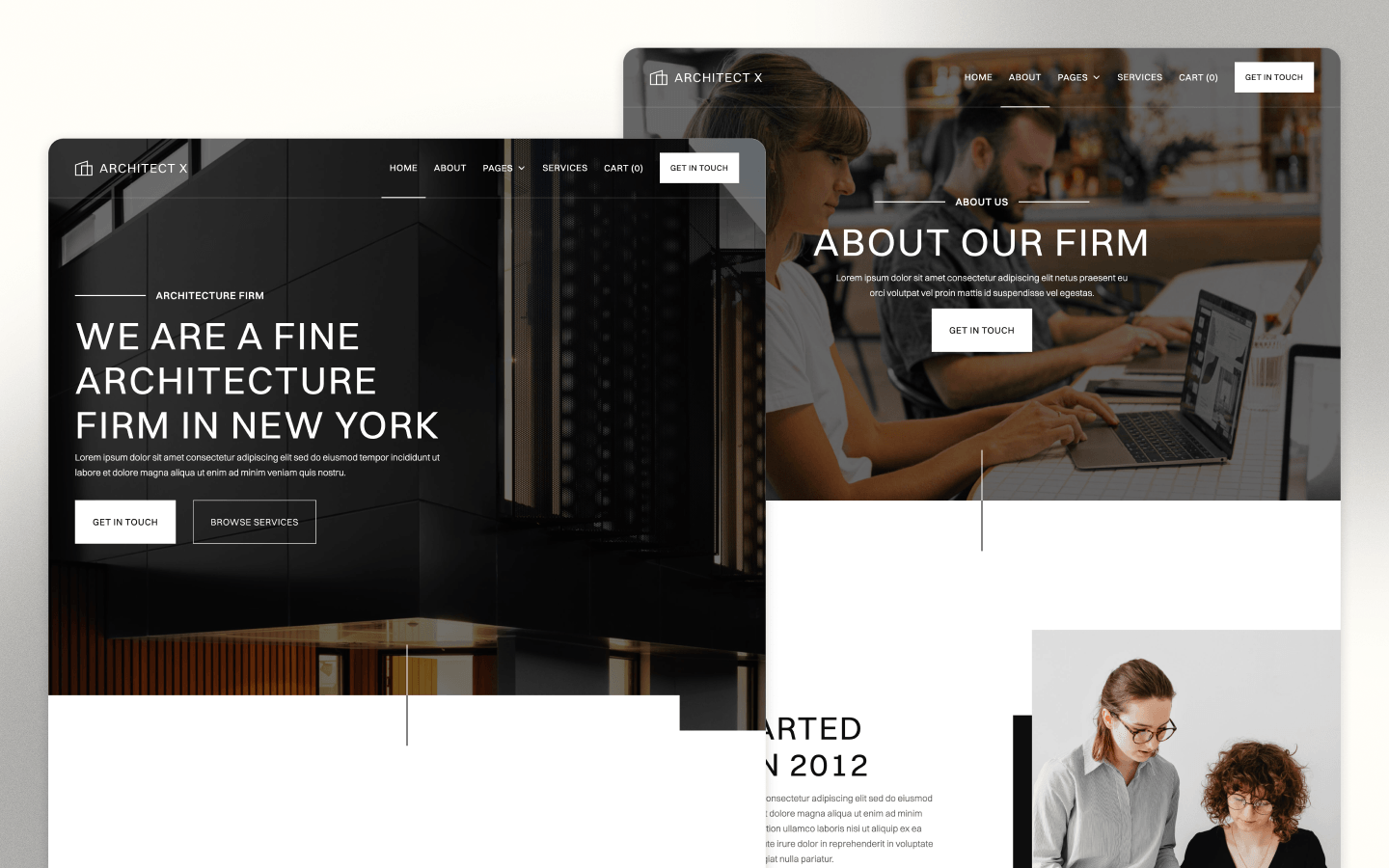
Our Architect X template takes a more architectural direction, using a dark palette and large photographs to give spaces and buildings the focus. Created for architecture firms, it shows another side of our work: pairing a visual portfolio with an introduction to the studio, so visitors can explore both the projects and the thinking behind them.
Across all categories, over 60,000 websites use our templates. The examples here give you a feel for our design quality, while working with BRIX Agency means getting a fully custom website that puts your company’s services, completed work, and ambitions at the center of the brief.
2. EDUCO: Best Construction Web Design Agency for Drupal
 2
2EDUCO
A design and development agency bringing construction portfolios, company culture, and recruitment together in websites managed with Drupal.
EDUCO is a good place to look if your construction website has several jobs to do, from introducing market sectors to helping people find open roles. Its work for Power Construction brings those different needs into the same redesign, with Drupal supporting the content behind it.
That makes the agency relevant to established contractors whose sites have grown beyond a small service menu and a gallery. When you review its work, pay attention to how company information, projects, and careers connect, because those relationships can matter as much as the opening screen.
Featured project: Power Construction
For Power Construction, EDUCO’s 2026 redesign included original written content, photography, video, and project pages built around owners and developers. The documented delivery also covered Drupal 10, an editable visual menu, and a Ceridian/Dayforce recruitment integration.
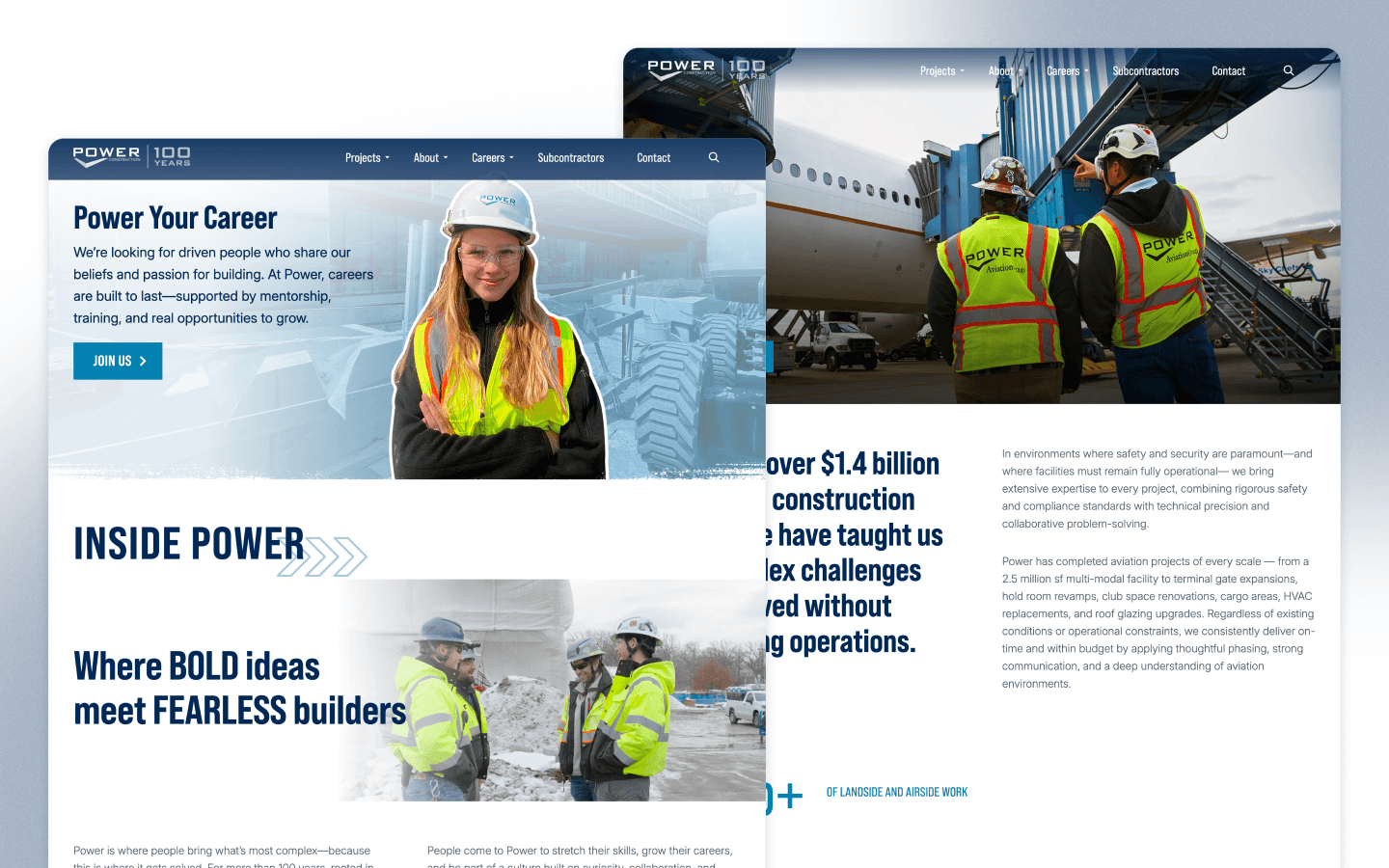
The example gives both the construction work and the people behind it a clear presence. If hiring is part of your website brief, explore this alongside the portfolio rather than judging only the hero; a prospective employee and a prospective client should each be able to find the information they came for.
3. Third & Arch: Best Construction Web Design Agency for Brand Refreshes
 3
3Third & Arch
A branding and web design agency helping established construction firms connect their reputation with a more recognizable online presence.
Third & Arch is worth considering when the website is one part of a bigger change in how your firm presents itself. Its construction work brings brand identity and website design together, so the company’s message can carry from a proposal through to the pages a prospect opens afterward.
For a contractor with a familiar name and an outdated site, that approach offers a way to keep what clients recognize while improving the presentation. The useful question is what needs to evolve: your logo, the language around your services, or simply the way those things appear online.
Featured project: Muckleroy & Falls
In its Muckleroy & Falls project, Third & Arch handled brand strategy, identity, and website strategy, design, and development. The website brought that work into sector-based project browsing and a team experience designed to introduce the people behind the contractor.
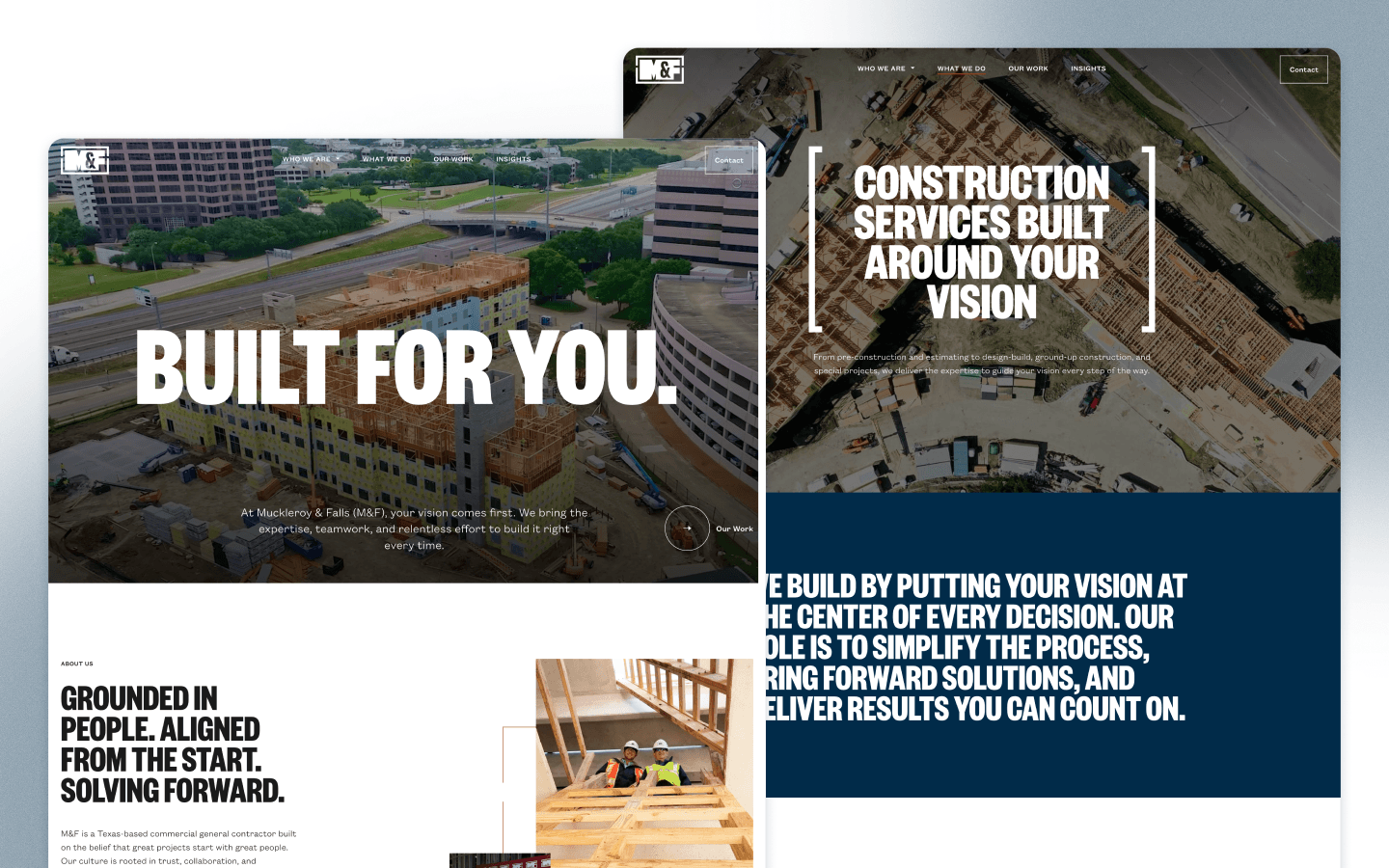
The strong photography and confident visual style give the business an immediate identity, while the project structure adds something practical for an owner comparing firms. A refreshed brand becomes more useful when visitors can connect it with relevant buildings, markets, and people instead of seeing it only in the header.
4. The Brand Constructors: Best Construction Web Design Agency for WordPress
 4
4The Brand Constructors
A construction marketing agency building WordPress websites with clear service information and practical tools for publishing company updates.
The Brand Constructors focuses on construction marketing, with website work that connects service information to the way contractors introduce their businesses. Its Marmer project is particularly useful if you want WordPress and expect your own team to keep projects, people, and news current after launch.
There is a practical benefit to reviewing that editing setup early. A construction company might finish several jobs before anyone has time to write them up, so the website needs a repeatable way to turn new photos and a few approved facts into a useful project page.
Featured project: Marmer Construction
The agency’s Marmer Construction case study describes a custom responsive WordPress website, service organization, and content management for projects, staff, news, and career opportunities. It also identifies hosting and ongoing maintenance as part of the relationship.
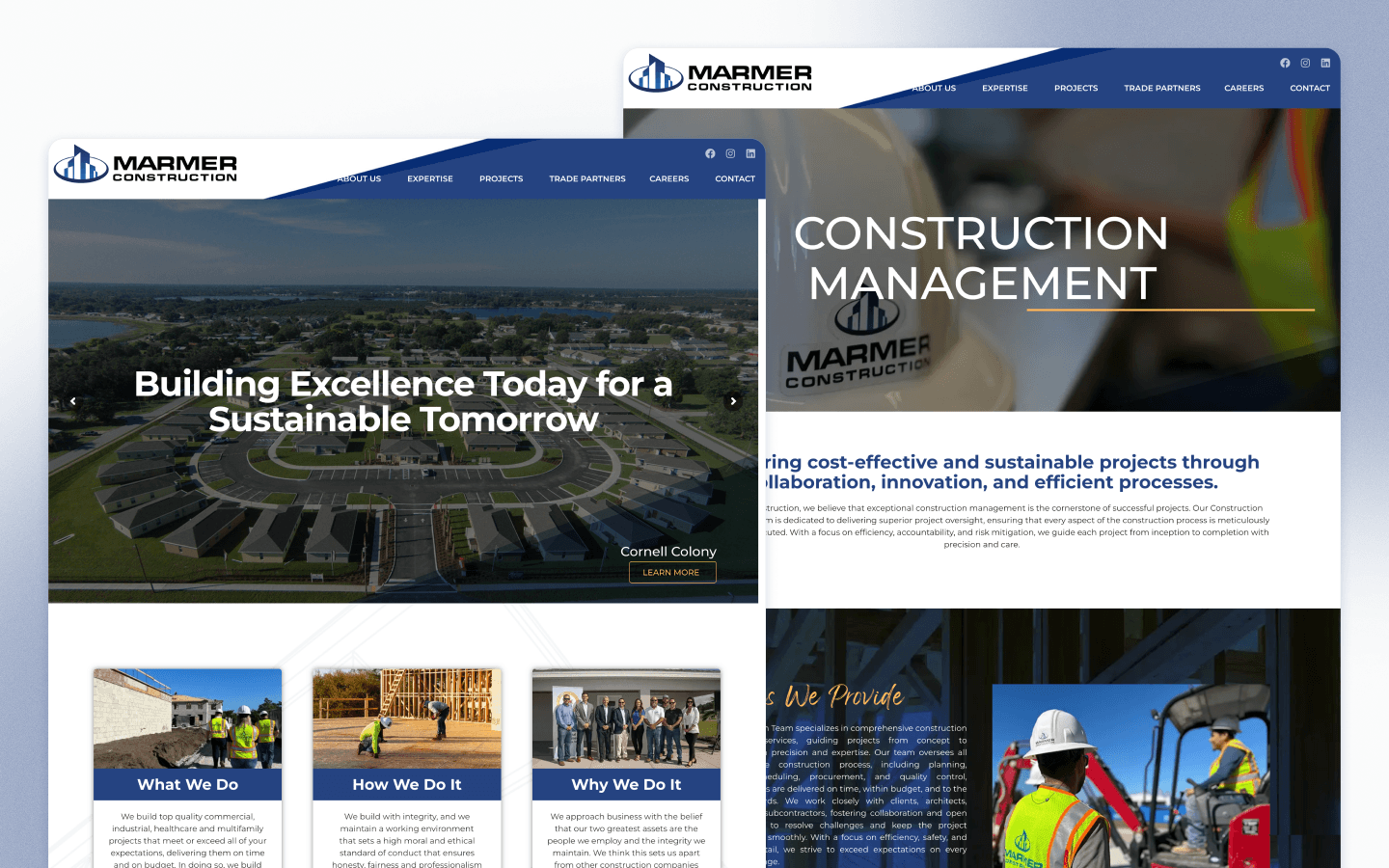
Marmer’s presentation balances construction imagery with an introduction to how the company works. When considering a similar engagement, ask to see the editing experience behind those sections and clarify which ongoing services belong in the website agreement, so publishing support and maintenance have a defined owner.
5. Redback Solutions: Best Construction Web Design Agency for Civil Infrastructure
 5
5Redback Solutions
A digital agency designing websites that make specialized construction capabilities and large infrastructure projects easier for prospective clients to explore.
Redback Solutions belongs on the shortlist for contractors whose work takes more explanation than a building photograph can provide. Its marine construction example shows how specialized capabilities can sit alongside project imagery, helping a visitor understand the business before getting into the technical detail.
That is a useful direction for civil and infrastructure firms serving buyers who already know what they need. They may be looking for experience with a particular environment, type of asset, or delivery challenge, so a website should make those connections easy to follow through the portfolio.
Featured project: SMC Marine
For SMC Marine, Redback documents UX design and custom WordPress development for a new website showcasing the company’s marine infrastructure capabilities and projects. The engagement gives this entry a specific construction reference beyond the agency’s broader digital services.
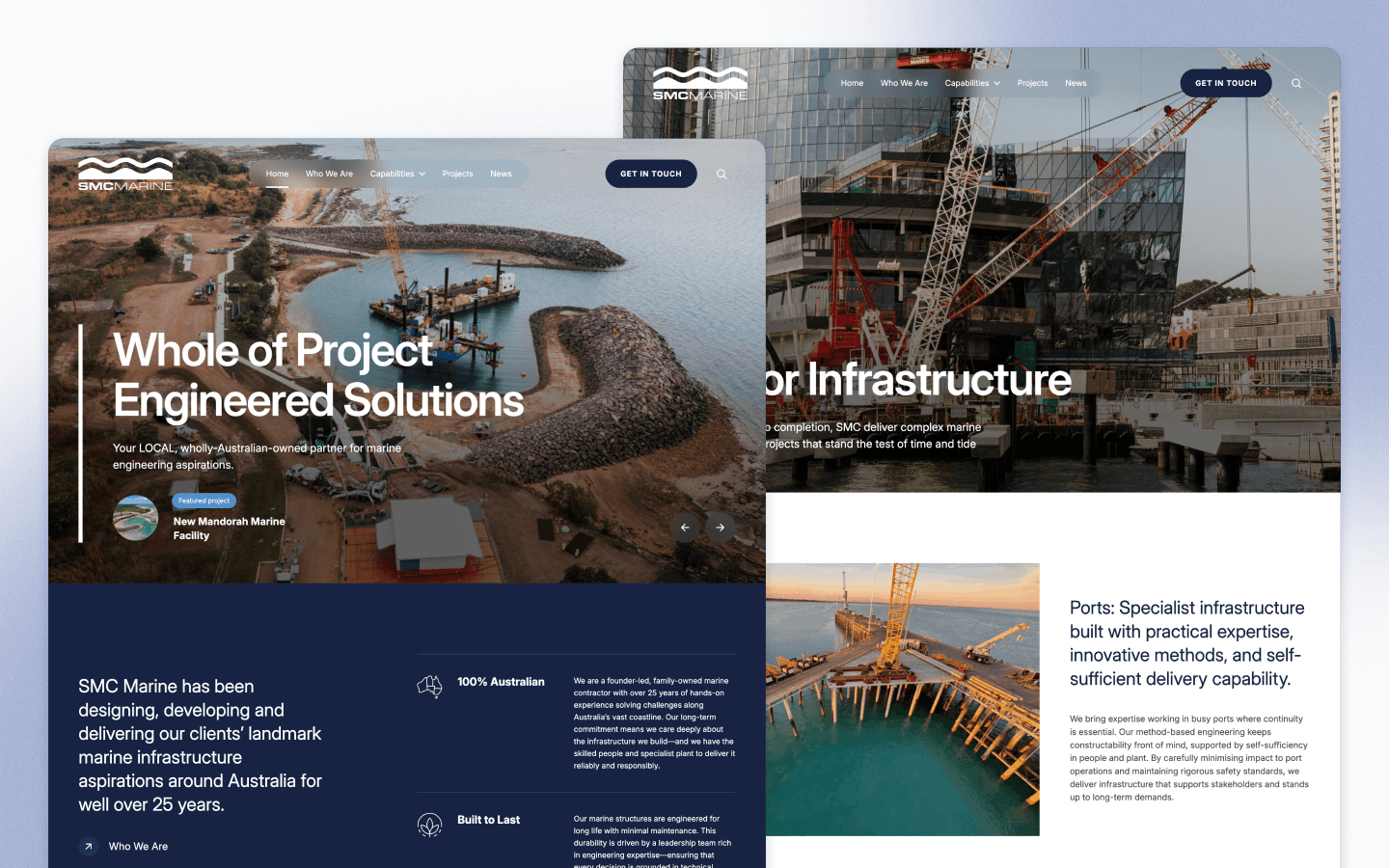
Large waterfront images establish the setting, while the capability pages give visitors another way into the work. If your projects involve specialist equipment or unusual site conditions, consider how that same combination could show both the finished result and the expertise required to deliver it.
6. MadeByShape: Best Construction Web Design Agency for Interior Fitouts
 6
6MadeByShape
A design studio pairing visual identity and website design for businesses whose interiors and finished spaces lead the conversation.
MadeByShape offers a useful reference for fitout and workplace businesses with finished spaces worth exploring. Its Loop Interiors project places interior photography at the center of the experience, making it relevant when the quality of the environment is a major reason someone would contact your team.
A portfolio like this still needs enough structure to explain what the company actually does. As you browse, consider whether a visitor can move from liking a room to understanding the service behind it, especially when your business combines design, refurbishment, and construction under one roof.
Featured project: Loop Interiors
MadeByShape’s Loop Interiors case study presents an identity and website overhaul for the workplace interiors business. It is a fitting example for this list because the subject is the delivery of working spaces, with the design giving those environments a prominent place.
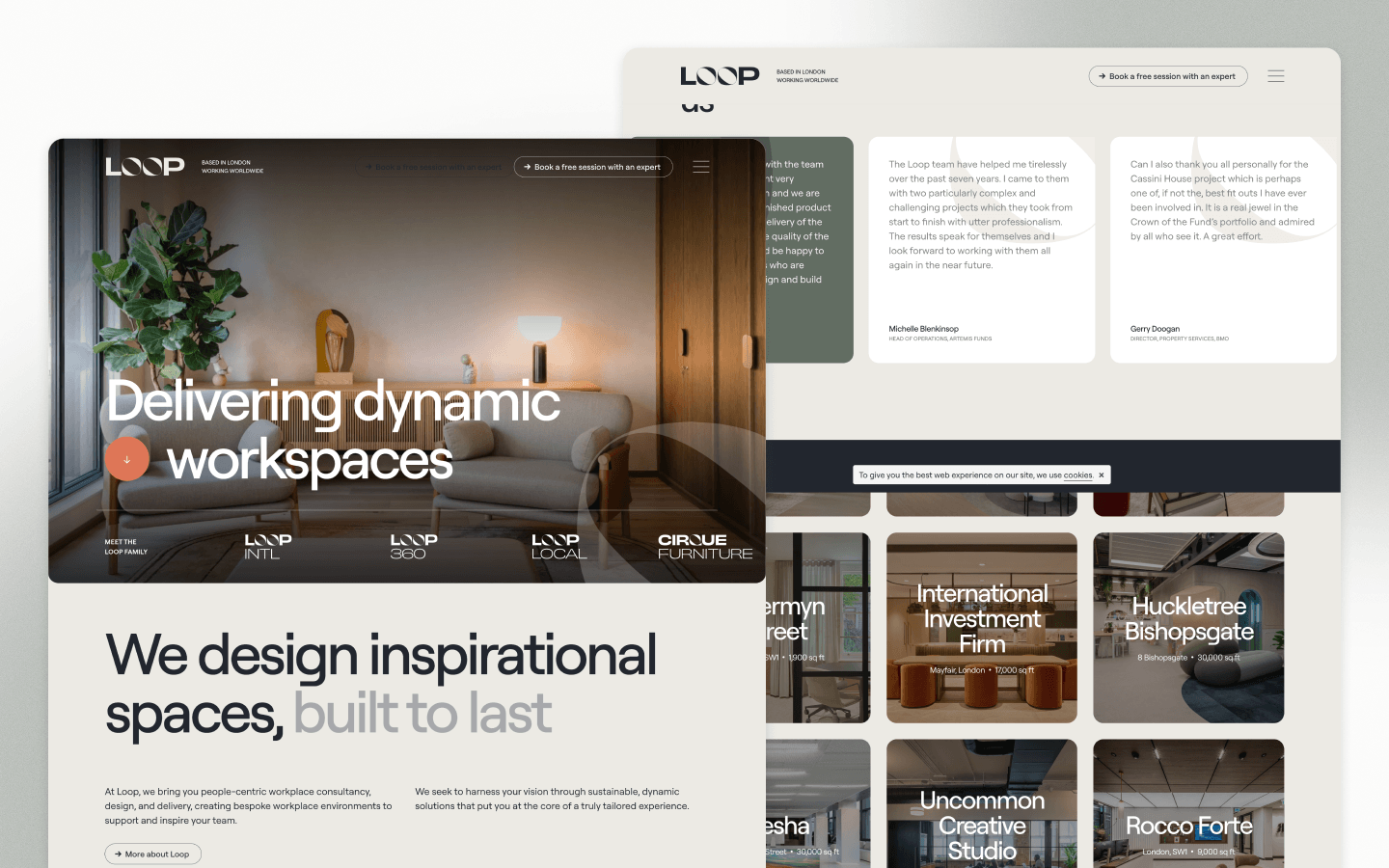
The restrained palette leaves the spaces themselves to introduce the work, while the project grid gives visitors more than one example to explore. For an interiors contractor, that can be a strong starting point: let the photographs create interest, then use the project pages to explain the scope and your contribution.
7. HUEMOR: Best Construction Web Design Agency for Multi-Location Companies
 7
7HUEMOR
A web design agency organizing regional construction businesses into cohesive websites with shared content, navigation, and project presentation.
HUEMOR is a relevant option when a construction company has expanded across regions and the website needs to catch up. Its Skyline work addresses regional brand consolidation, a different challenge from polishing the homepage of a business with one office and a single service area.
The question for a growing firm is how much belongs together and what still needs its own space. Visitors should be able to understand the wider company while finding the local team and completed work that matter to their project, without having to navigate several disconnected websites.
Featured project: Skyline Construction
The Skyline Construction engagement included strategy, copy, content migration, a design system, UX and UI, and WordPress development. HUEMOR describes bringing regional brands together through the new website, connecting the content decisions with the design and implementation.
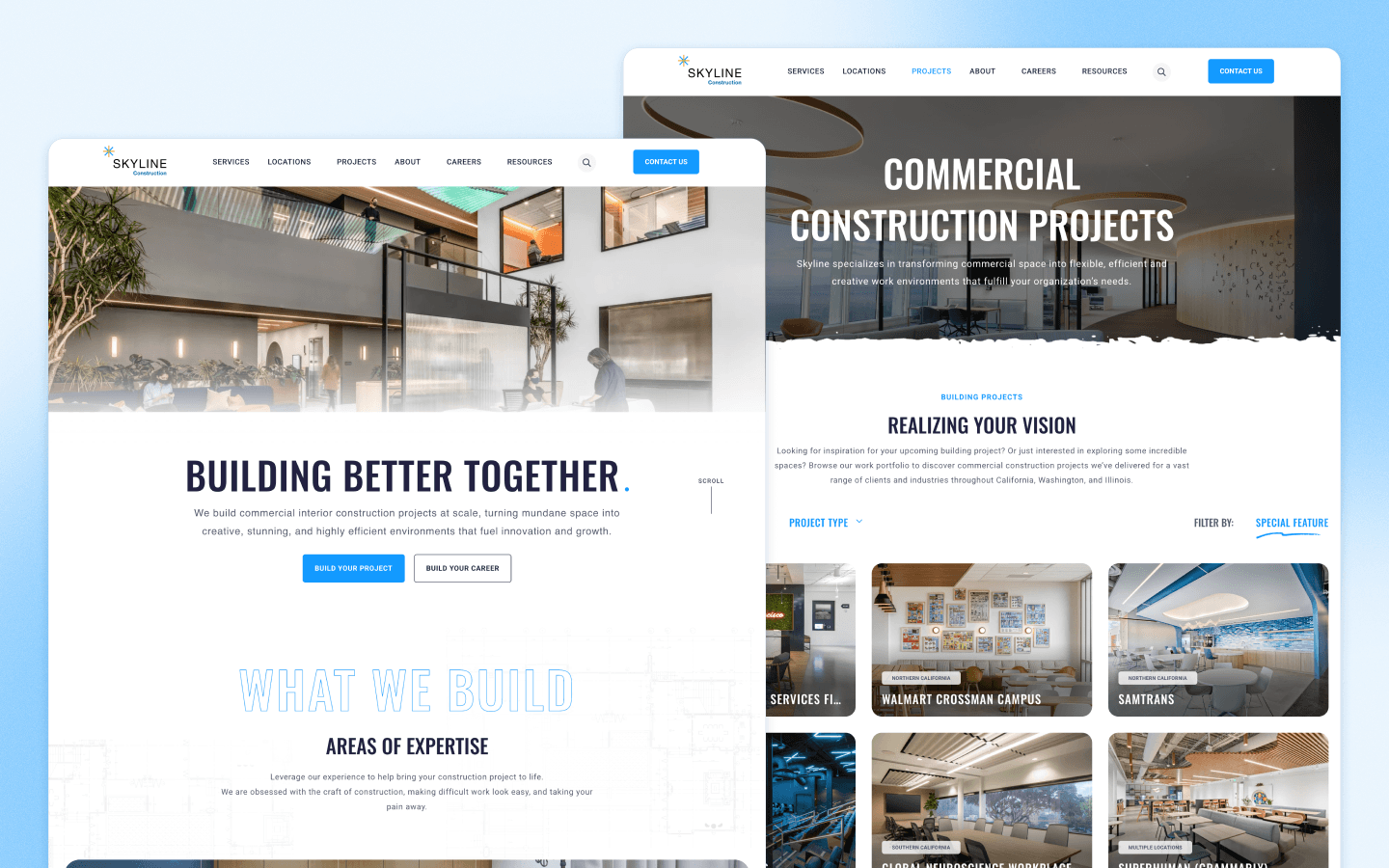
Skyline’s project presentation gives commercial interiors plenty of room while keeping the company recognizable across the experience. For a multi-office contractor, use this example to start a conversation about shared project records, regional content responsibilities, and how someone finds the right contact after viewing the work.
8. TOKY: Best Construction Web Design Agency for Visual Storytelling
 8
8TOKY
A branding and design agency combining company narratives, original photography, and website design to present the people behind construction work.
TOKY is an interesting choice if your website has plenty of projects but says too little about the company delivering them. Its Brinkmann work combines the brand story with original team photography, giving construction experience a more personal presentation alongside the buildings themselves.
That direction can help when several contractors appear equally qualified on paper. Rather than adding more broad claims about quality, the website can introduce how your team approaches the work, who clients will meet, and which projects help make those ideas concrete for a prospective owner.
Featured project: Brinkmann Constructors
TOKY’s Brinkmann Constructors portfolio entry credits brand research, messaging, website design, and original photography, with video produced by Once Films. Together, those elements give the company story a consistent direction across the website and the material used to introduce its team.
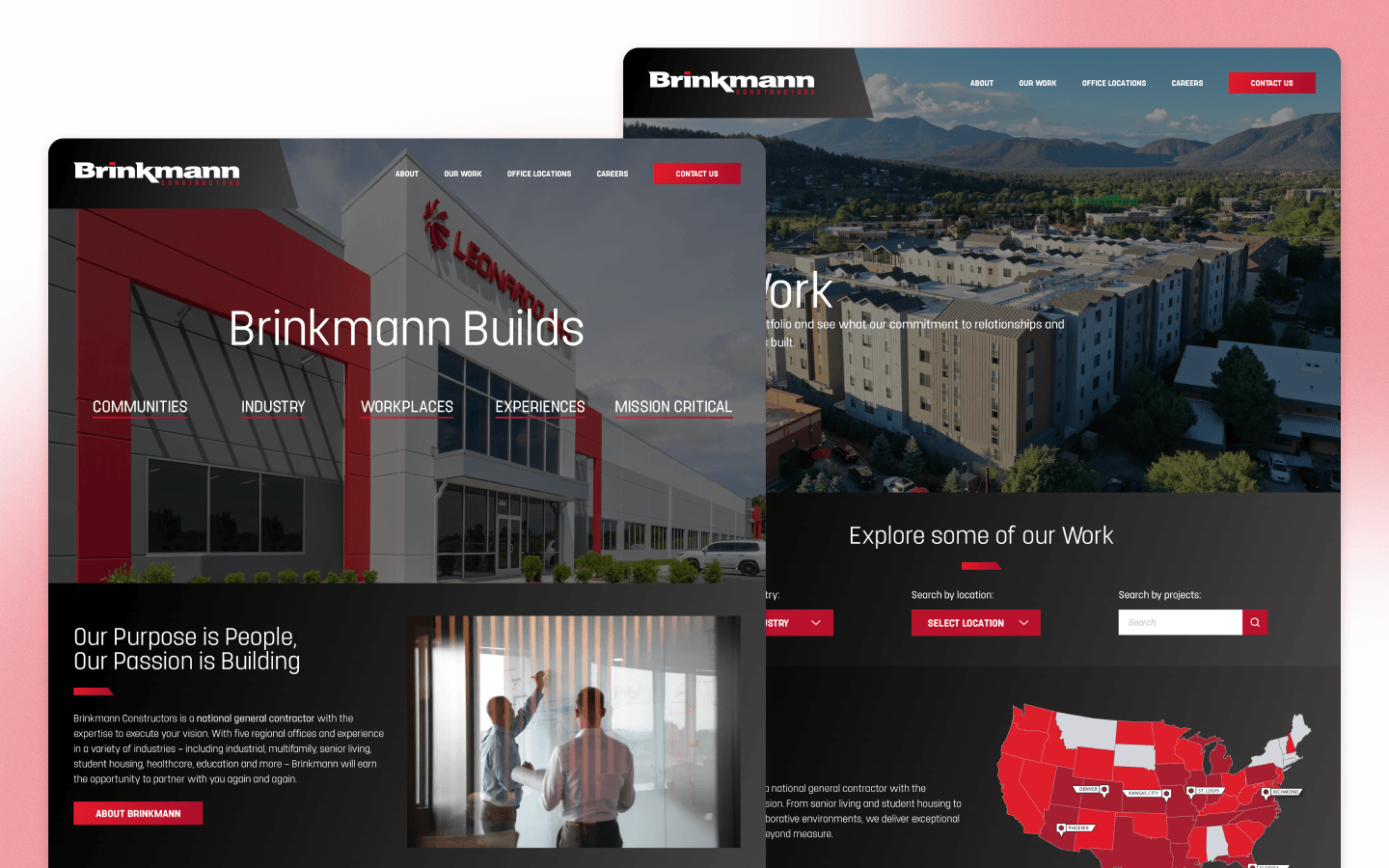
Brinkmann’s bold red accents and project imagery create a recognizable first impression, and the variety of sectors gives that presentation depth. When reviewing a storytelling-led proposal, ask how the agency will gather the material behind it, including interviews, project facts, and photographs of your own team.
9. Springer Studios: Best Construction Web Design Agency for Sitework Contractors
 9
9Springer Studios
A creative studio developing construction websites that organize field services and project photography around the work a contractor performs.
Springer Studios provides a useful example for sitework companies, where the most telling project photo may show earthmoving rather than a finished building. Its Honeycutt work brings field capabilities into the website, giving this type of contractor a more relevant reference than a gallery of luxury homes.
For businesses handling early stages of construction, the site should help visitors understand where the team fits into the larger job. Clear descriptions of services and well-labeled projects make that role easier to assess, especially when the photos show several trades working on the same property.
Featured project: Honeycutt Construction Services
The studio’s Honeycutt Construction Services project covered a website redesign and development, including navigation, CMS content, forms, and a categorized portfolio. The case study also credits Will Page for photography, distinguishing the website work from the images used to present it.
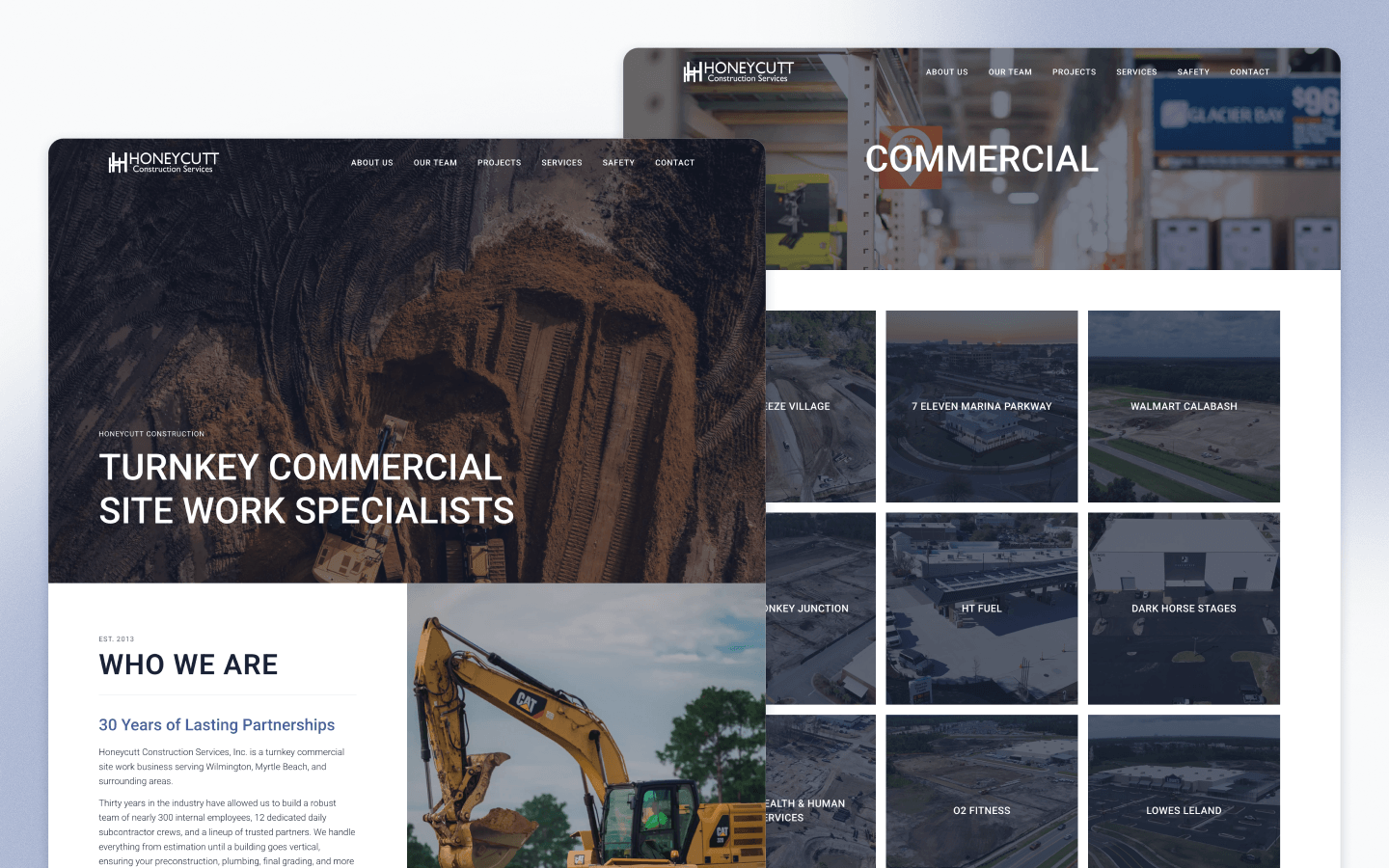
The design makes the scale of the fieldwork visible from the opening screen and carries that subject into the project tiles. For a sitework contractor, a strong next step is to pair those images with concise details about the service delivered, the location, and the conditions the team worked through.
10. Mile6: Best Construction Web Design Agency for Project Portfolios
 10
10Mile6
A digital agency redesigning construction websites around clear navigation and project collections that help visitors evaluate relevant experience.
Mile6 is worth a look when your company has a substantial body of work and the website makes it difficult to explore. Its Benchmark engagement focused on digital strategy, design, and development while working with the contractor’s existing brand, making it a useful reference for a website-led update.
Not every redesign needs to begin with a new identity. Sometimes the more valuable change is giving visitors a clearer route through the material you already have, so the projects that support your services are easy to discover instead of getting lost in a long gallery.
Featured project: Benchmark Construction
For Benchmark Construction, Mile6’s website redesign brought digital strategy, UX and UI design, and development together around the presentation of the company and its work. The engagement included reorganizing the project experience without making a full rebrand the starting point.
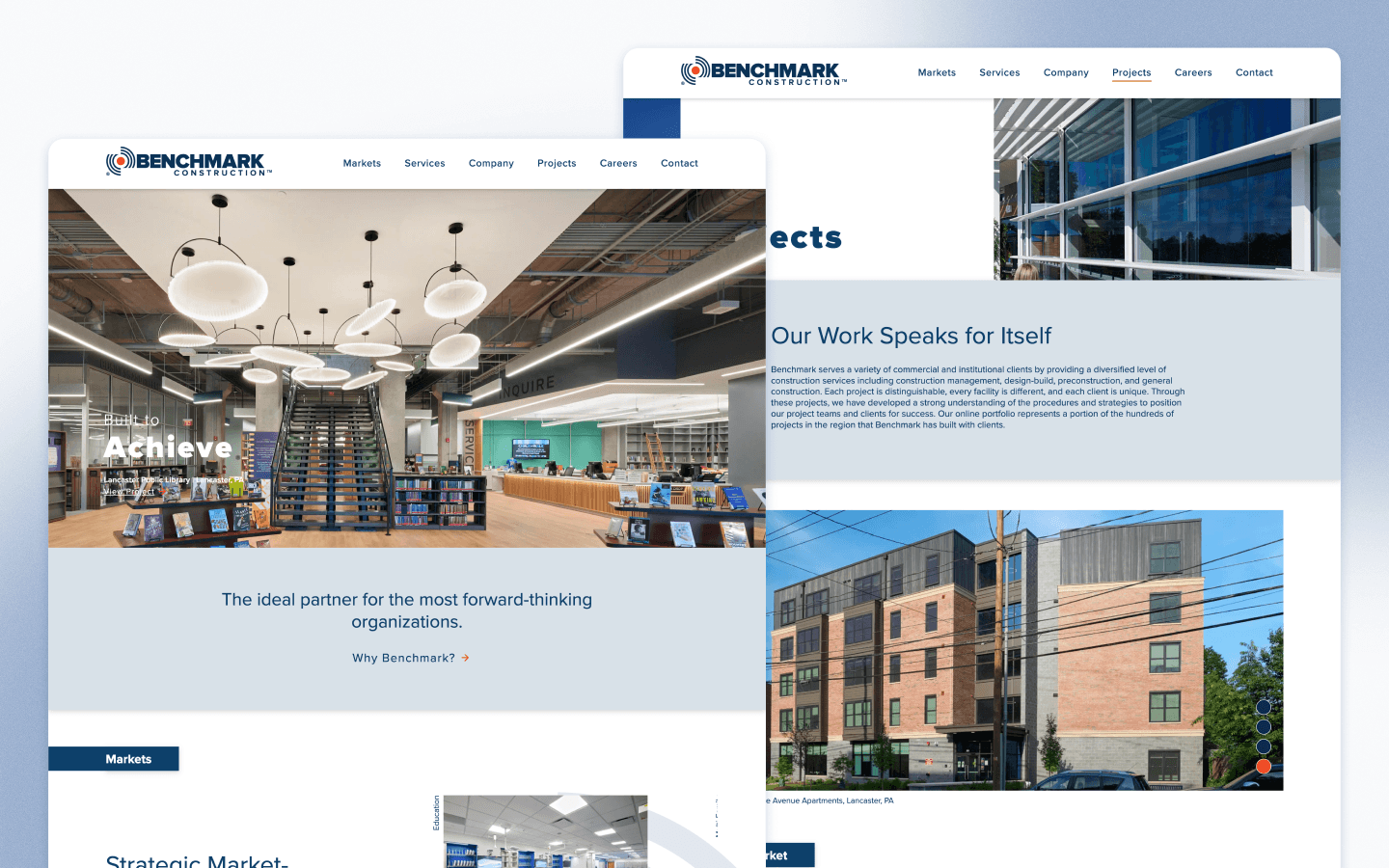
The example uses commercial building and interior imagery to give visitors a range of work to review. If your portfolio is growing, ask how an agency would group those projects and what information each entry should carry, so the collection becomes more useful as you add to it.
11. Vachal Design: Best Construction Web Design Agency for Easy Editing
 11
11Vachal Design
A web design studio building reusable WordPress layouts that help construction teams maintain services, divisions, and project content.
Vachal Design is a practical option to review if updating the website is a recurring frustration for your team. Its Industrial Builders case study describes reusable layouts and an editing handover, putting the ongoing management of the site alongside its initial design.
For a contractor with multiple divisions, that can make a real difference to the brief. The goal is to keep each service clear while giving the company one consistent way to publish, so adding a project does not require someone to recreate the page design every time.
Featured project: Industrial Builders
The Industrial Builders website was built with WordPress and Elementor, with division pages, a project collection, and shared styles. Vachal also documents reusable editing patterns and handover, which are concrete items to ask about when comparing content-management proposals.
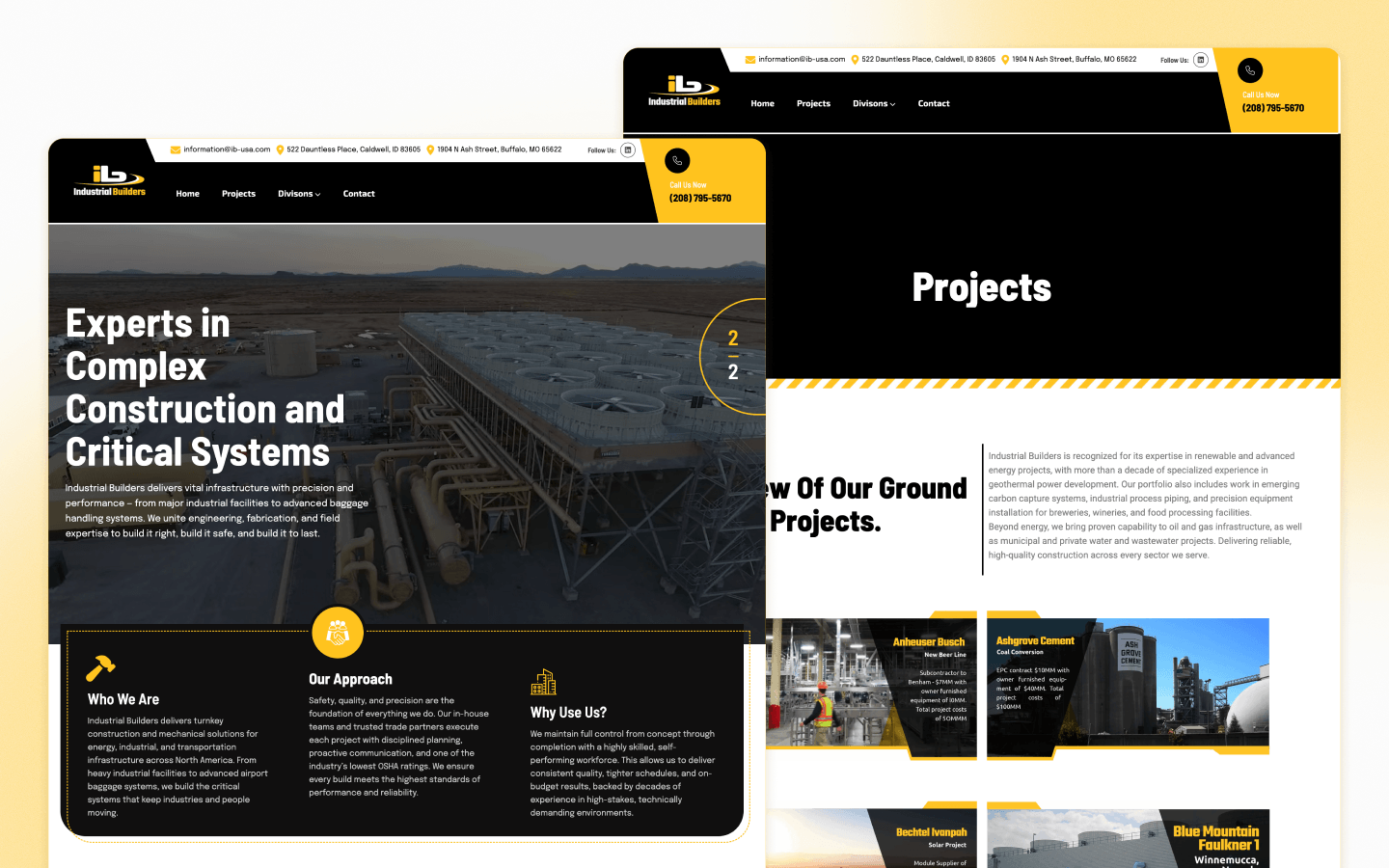
The industrial imagery and black-and-yellow palette give the company a direct visual identity, while separate capability sections help explain the range of work. To assess whether the approach suits your team, ask for a demonstration of adding one project and updating one division page using the delivered tools.
12. Red Eye Design: Best Construction Web Design Agency for Residential Builders
 12
12Red Eye Design
A web design studio creating image-led websites that help residential builders introduce their homes, renovation work, and services.
Red Eye Design rounds out the list with a residential construction example, where the visitor is more likely to be picturing a home than reviewing a commercial qualification package. Its Finelines website uses large project photographs and concise text to introduce the builder’s work.
That gives homeowners an approachable way into the business, but the images still need a clear next step. For a custom home or renovation company, someone should be able to see a project they like, understand which services you offer, and find out how to begin a conversation.
Featured project: Finelines Construction
Red Eye Design’s Finelines Construction portfolio entry identifies its website design and build for the company. The example centers on residential work, including new homes and renovations, rather than the larger commercial and infrastructure projects elsewhere in this list.
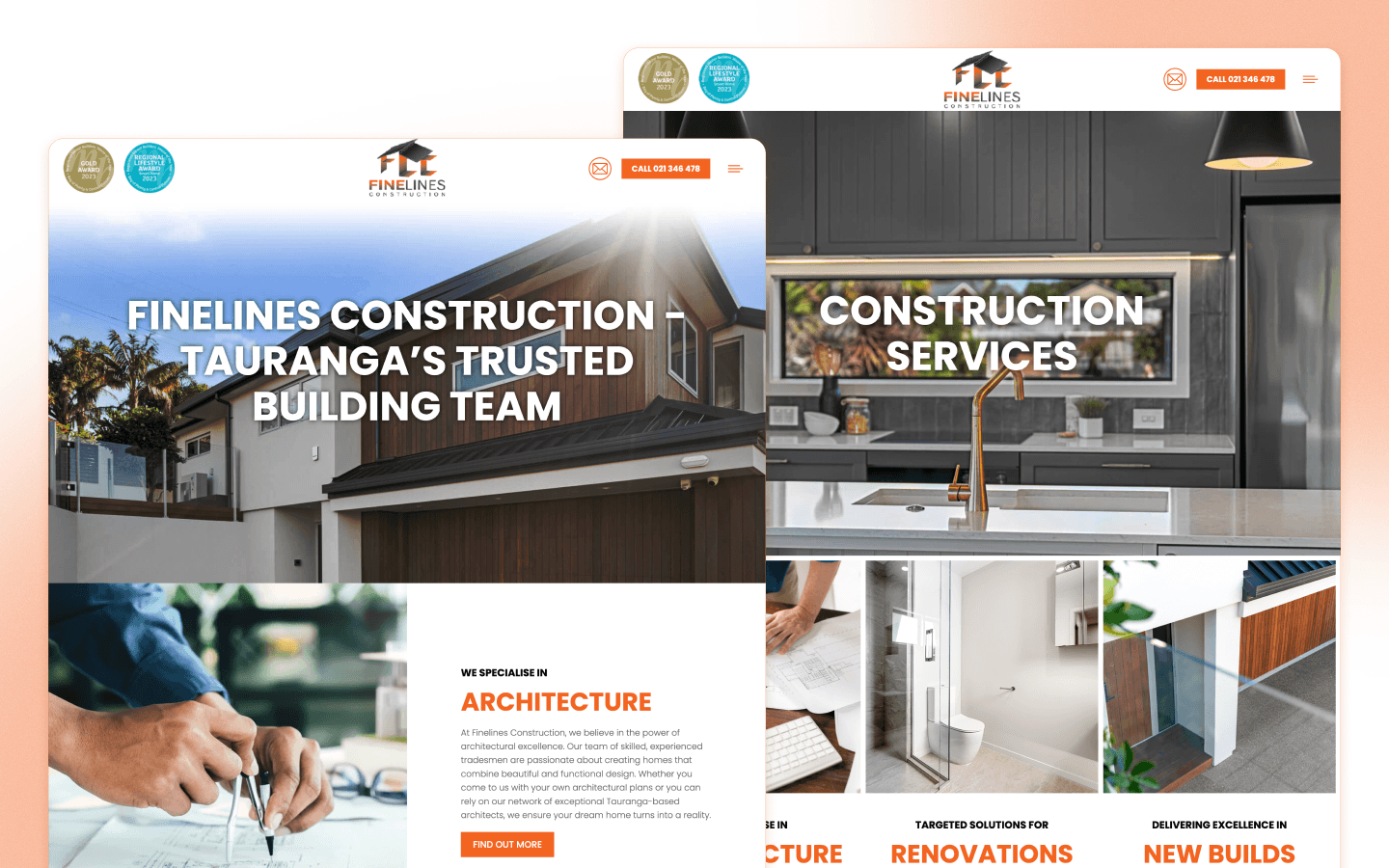
The house imagery sets the tone immediately, with service sections giving visitors a little more direction as they continue. If that is close to the way you sell your work, review the experience on a phone as well, paying attention to image crops, readable text, and the route to an inquiry.
What a construction web design agency should help you explain
A construction website has to connect the work people can see with the expertise they cannot judge from a photograph alone. A finished lobby might look impressive, but an owner may want to know whether your team managed the whole build, completed a fitout, or delivered a specific trade package before deciding to reach out.
Start with services, sectors, and projects, then connect them. A healthcare construction page, for example, can introduce the kind of work you take on and point to relevant facilities, while each project explains your role, location, and scope in plain language. Publish client names, project facts, and images only when you have permission to share them.
The website also needs to work for people who are not buying construction services. Give job seekers a clear careers route and trade partners their own contact information, so an applicant does not have to use a project-inquiry form and your business development team receives the messages it can act on.
How to choose a construction web design agency and compare costs
Begin with 2 or 3 agencies whose work fits your company, then send each the same brief. Name your main services, the clients you want to reach, and the part of the current website that makes your job harder, whether that is an outdated portfolio, confusing regional pages, or a CMS nobody wants to open.
Construction website design costs depend on the work behind the page count. Designing a reusable project layout is different from writing and uploading 80 project records, and a careers link is a smaller task than connecting an applicant-tracking system. Ask each agency to separate design and development from copywriting, photography, content entry, integrations, and ongoing support before comparing the total.
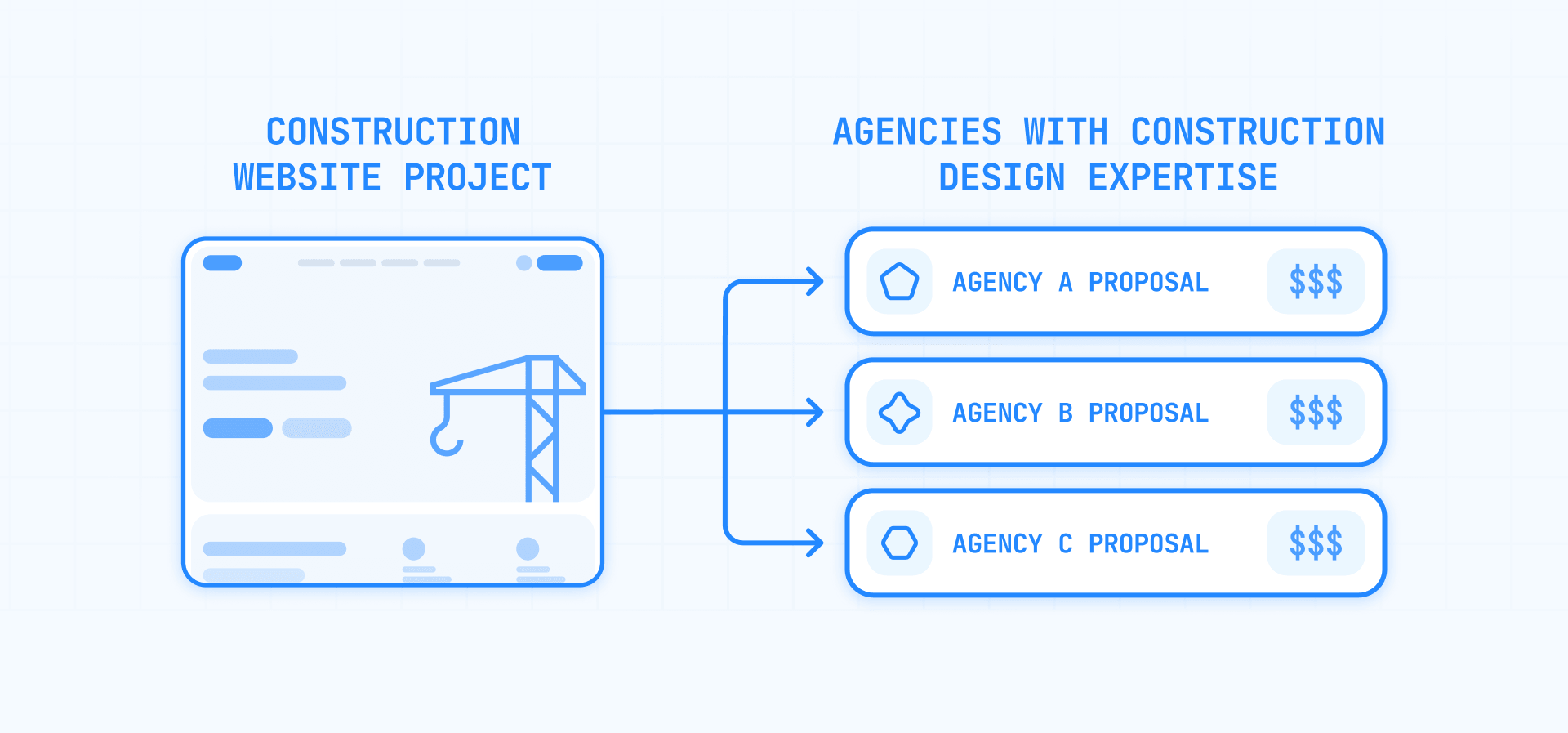
Here is a short email you can adapt. The details in brackets help the agency scope your project, while sending the same version to each team makes the replies easier to compare.
Subject Website redesign for [company], targeting [month]
Hi [name],
We’re [company], a construction business working in [locations] and specializing in [services or sectors]. We found your work through BRIX Agency’s construction guide and would like to discuss a website that helps us [show our commercial experience, introduce a new division, or present our work more clearly].
Our current site is [URL]. We have [number] projects to include, with [photography and descriptions available / content still to prepare], and we would like pages for [services, sectors, projects, team, and careers]. The website needs to connect with [CRM or recruitment system, if required].
Our team should be able to add projects and update [other content] after launch. We need help with [copy, photography, design, development, or migration], and [person or role] will coordinate our reviews. Our target launch is [date], with a budget of [range].
Could you share a relevant example and outline the scope, content responsibilities, review stages, and handover? Please show ongoing hosting, software, and support costs separately from the website project.
Thanks,
[Your name]
[Role and company]
When proposals arrive, compare deliverables and responsibilities before price. Check how many distinct page layouts are included, who prepares project descriptions, how many records will be migrated, and whether your team gets training. Request separate figures for hosting, software, maintenance, and any continuing marketing work so you can see the cost of keeping the site running.
Ask for a timeline built around those responsibilities as well. Photography access, permission to name clients, and reviews by project leaders can affect when content is ready, so agree who approves it and when. For a redesign, include an inventory of current URLs, redirects for changed addresses, and launch checks in the scope, with someone assigned to review the site afterward.
Choosing a CMS for a construction website your team can keep current
Picture the week after a project is completed: you have 6 approved photos, a location, a short description, and a sector to assign it to. The right CMS should make publishing that update straightforward, with a page layout that already looks good and fields your team can understand without calling the developer.
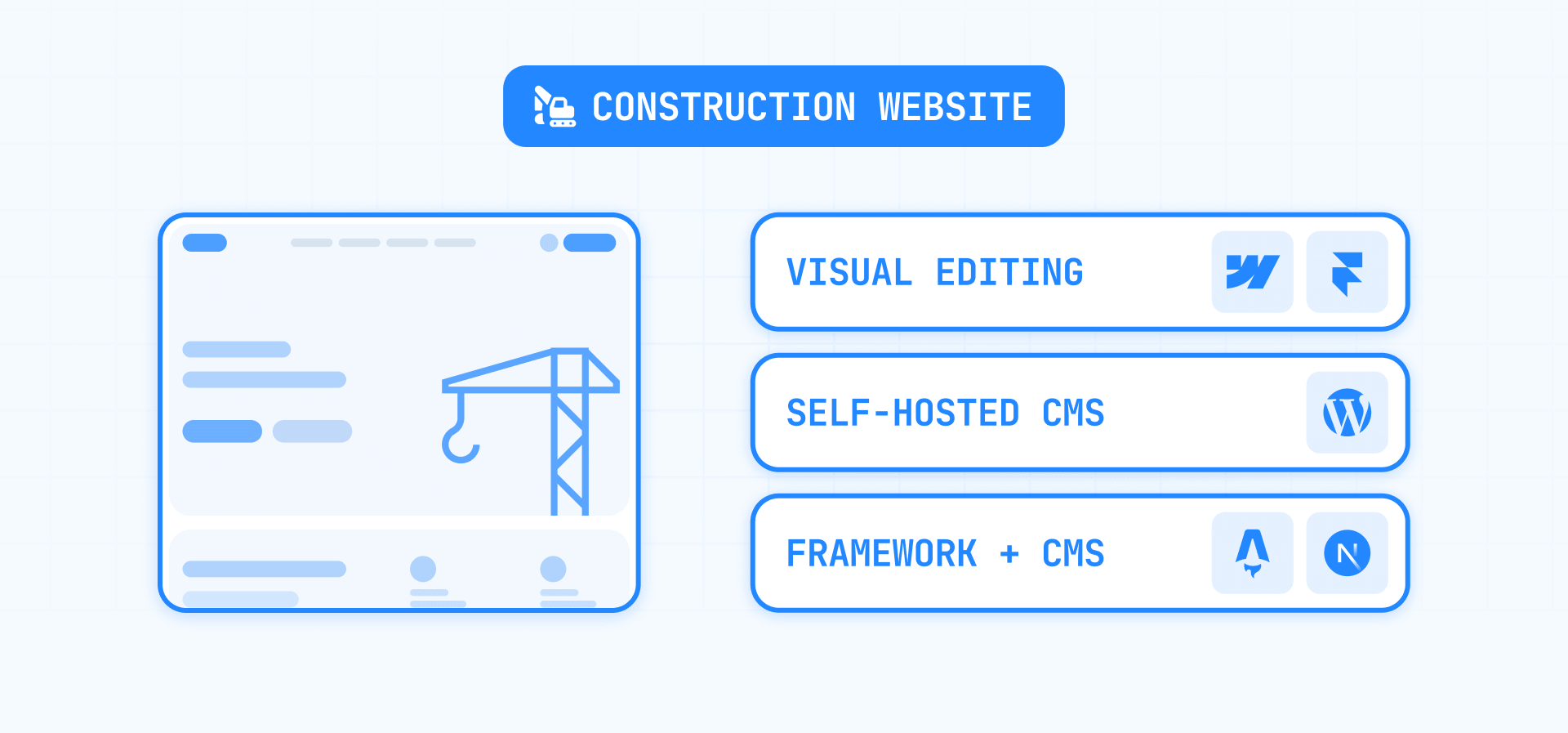
Webflow is worth considering for a custom marketing site with repeatable project, team, and news content. Its CMS collections let an agency structure those records and connect them to designed layouts, so ask to see how your editors would add a project, choose its sector, and review it before publishing.
Framer also combines visual design with CMS content and can be a good candidate for a focused, image-led company website. Bring your actual content needs to the conversation, including the size of your portfolio, any filtering you want, and the people who need editing access, rather than choosing from the homepage animation alone.
WordPress gives you the option to run the site with your own hosting provider or on infrastructure your company controls. Several agencies here have documented WordPress construction work, but the editing experience depends on the build; ask who manages updates and backups, and have the agency show you the exact tools your team will use.
Astro and Next.js are web frameworks that can be paired with a CMS, rather than ready-made editing systems on their own. A developer-led build may suit a site with particular data or integration needs, but the proposal should name the CMS, hosting, maintenance, and editorial workflow. Astro’s CMS integration guide illustrates that separation, while Next.js documents the application framework behind the site.
Before deciding, ask the agency to demonstrate one real update: add a project, replace a photo, and connect it to a service page. Include account ownership, editor permissions, documentation, and training in the handover, so the person maintaining the website can actually perform the work the platform was chosen for.
Construction website design details to include in your brief
Project pages that explain your role
Give each selected project a short, useful story: what was built, where it is, what your company delivered, and which service or sector it represents. Add approved details about a challenge or construction phase when they help explain your expertise, and credit collaborators accurately so a visitor understands your contribution.
A commercial owner may compare relevant facilities and delivery experience, while a homeowner may care more about the finished space and the process of working with you. Let those differences shape the information on the page, rather than giving every project a long technical description or only a slideshow.
Service pages and search visibility
Use specific language for the services you actually provide and the places you work, connecting those pages with relevant projects. A page explaining commercial fitouts in a region can be useful when it includes real experience and contact information; repeating the same copy under a list of city names gives a reader much less to evaluate.
Include readable page titles, descriptive image text, sensible internal links, and a mobile review in the build. During a redesign, plan how existing addresses will move and check the resulting pages against Google’s site-move guidance. Treat search visibility as work to maintain and measure, rather than a ranking an agency can promise at launch.
Photography and video that leave room for the content
Real photographs help visitors understand the scale and character of your work, but a large file should not be the price of seeing the homepage. Ask the agency to prepare responsive images, choose useful crops for phones, and make essential text and navigation available without waiting for a video to finish loading.
Check keyboard navigation, visible focus, form labels, and text contrast during review, with image descriptions that communicate the purpose of each meaningful picture. W3C’s image guidance is a useful reference for that last point: the description should help someone understand the image in its context.
Inquiry forms for the right conversations
A project inquiry can ask for the site location, type of work, and expected timing without turning the first conversation into a full bid submission. Decide which fields help your team respond, where messages should go, and how someone knows their inquiry was received; use a separate route for careers and supplier introductions.
If the website connects to a CRM, recruitment platform, or another company system, name that connection in the scope and test it before launch. Include a plan for checking forms and updating content afterward, so responsibility for the website remains clear when the design project is finished.
Frequently asked questions about construction web design agencies
How do I choose the best web design agency for a construction company?
Choose an agency whose documented work matches your needs, then check the websites behind its portfolio. A residential builder, an infrastructure specialist, and a contractor combining regional brands need different content structures, so look for evidence that the agency understands the kind of information your visitors will use to evaluate your company.
Shortlist 2 or 3 teams and send the same brief to each, including your services, project content, editing needs, and target launch date. Ask who will write and upload the content, how reviews work, and what training is included. Compare the answers with the work you have seen before choosing on visual style or price alone.
How much does a construction website design cost?
The cost depends on scope and responsibilities, so a page count alone is not enough to compare quotes. A small company site with supplied copy and photography is a different assignment from a multi-office redesign that includes interviews, project migration, sector filters, and connections to a recruitment platform or CRM.
Ask for the website fee to be broken down into design, development, content work, and integrations, with hosting, software, and maintenance shown separately. Confirm how many project records and page layouts the quote includes, rather than assuming everything on your current site will be recreated. Sending the same brief to several agencies gives you a more useful comparison than unrelated starting prices.
What should a construction company website include?
Start with services and relevant projects, supported by company information and a clear way to get in touch. A visitor should be able to understand what you build, where you work, and which part of a project your team delivers without having to interpret a gallery of unlabeled photographs.
Add sector pages, careers, team profiles, or trade-partner information when they serve the people using your site. Connect those sections rather than leaving them isolated: a service page can lead to related work, and a project can point to the team or capability behind it. Review the proposed navigation against actual questions your business receives before adding more pages.
Which CMS is best for a construction website?
The best CMS is the one your team can use confidently after launch while meeting the website’s requirements. Webflow and Framer are options for visually designed marketing sites with repeatable content, while WordPress gives companies another route with control over their hosting choice and a wide range of ways to build the editing experience.
Astro and Next.js are frameworks that can sit alongside a CMS when a developer-led setup fits the project. Whatever an agency recommends, ask it to demonstrate adding a project, changing a photograph, and updating a service. Compare that experience alongside maintenance responsibilities, account ownership, and training, so the platform decision reflects the work your team will actually do.
What should construction portfolio pages show besides photos?
Show your company’s role, the location, the type of project, and the work delivered, using information you are allowed to publish. A short explanation of a challenge or construction phase can make the photographs more useful, especially when the finished building does not reveal which parts your team was responsible for.
Choose the level of detail for the intended reader. A commercial owner might want relevant sector experience, while a homeowner may need a clearer sense of the finished space and working process. Link each project to the service it demonstrates, and ask someone outside the project team to read it before publishing to check that the contribution is understandable.
Can a construction website help attract more qualified inquiries?
A website can help visitors understand whether you fit their project by explaining services, locations, and relevant experience before they contact you. Clear project examples and service pages give a prospective client useful context, while an inquiry form can collect the basic details your team needs to start a productive conversation.
That does not make a new design a guarantee of leads or signed contracts. Agree how inquiries will be received and reviewed, then look at their relevance alongside the number arriving. Keep careers and supplier messages on separate routes, and refine the questions in the project form based on what your team needs rather than adding fields without a reason.
Do construction web design agencies also handle SEO?
Some agencies include SEO work in the build, but you should ask what that means in the proposal. Page titles, internal links, service content, image preparation, and redirects are different tasks from ongoing content production or search reporting, and an agency may price those services separately rather than include them in website development.
For a redesign, have the team document existing URLs and explain how changed addresses will redirect to relevant pages. For new service or location pages, ask what useful company experience the content will cover. Set responsibilities for launch checks and follow-up reporting, and evaluate the plan itself instead of relying on a promise of a particular Google position.
How long does it take to redesign a construction website?
The timeline depends on content readiness and scope as well as the build. An agency needs to know how many layouts, project records, integrations, and review stages are involved before giving you a useful schedule, particularly if your company is gathering photography or rewriting its service information at the same time.
Ask for milestones covering content, design, development, testing, and handover, with an owner for each approval. Include time for project leaders to confirm facts and for permission to publish client names or images where required. A schedule becomes easier to manage when both teams know which materials are needed next and who can approve them without another round of internal discussion.
Can our team update projects and job openings after launch?
Yes, when editing is included in the build and your team receives the access and training to use it. Projects can be organized as repeatable CMS records, while careers may be managed as content or connected to a recruitment system, depending on how your company already handles open positions and applications.
Ask the agency to show the exact steps for an everyday update before accepting the handover. Confirm who owns the accounts, which fields editors can change, and where documentation lives, then have your own team try it. Also name the person or provider responsible for maintenance and support, so a future technical issue has somewhere clear to go.
Should a construction company choose a custom website or a template?
The choice depends on how closely the structure fits your business. A template can provide an existing design and page system, while a custom website lets the design, content structure, and functionality be planned around your services, project portfolio, brand, and the people who need to use the site.
List the requirements before deciding, including sector browsing, regional content, editing roles, and integrations, then ask how each approach would meet them. The BRIX portfolio examples above show template design work from our team, while our agency service creates custom websites. Whichever route you choose, confirm what will be designed for your business and what is included in the quoted scope.
Give your construction experience a website that explains it
Your next client may already know your name before visiting the site, but they still need a reason to put you on the shortlist. Relevant projects, clear service information, and an introduction to the people behind the work can help them take that next step with a better understanding of your company.
Choose a few agencies from this list and review the parts of their work that matter to your business. Then share a brief with the same requirements and ask how each team would organize your portfolio, support your editors, and bring the website through launch, so you are comparing a plan as well as a design style.
If you would like our team to help, tell us what your construction website needs to do. We will work with you on a custom direction for your business and reply in less than 24 hours, or within 1–2 hours during business hours PST.




Join readers commenting on this post!