
You might have a promising platform, years of research, and a team that can explain every detail, yet your website still leaves people asking what the company actually does. That gap is worth closing. A good biotech website gives someone a clear first explanation, then makes it easy to explore the science behind it without feeling lost along the way.
The right biotech web design agency can help you find that balance. Some teams are particularly good at scientific illustration and motion, while others bring experience with product websites, publishing systems, or the communications around a company launch. Which one fits depends on the part of your website that needs the most attention.
We've brought together 15 agencies with relevant work to explore, including examples from drug discovery, research software, therapeutics, and pharmaceutical services. You'll see a specific project for each team, followed by practical advice on choosing a partner, comparing proposals, and planning a website your own staff can keep up to date.
How we chose these biotech web design agencies
Our starting point was the work itself: named life science websites with a documented agency contribution. We reviewed the selected projects and their visual presentation, then used that evidence to give each team a practical specialty. The list includes creative studios, development partners, and communications agencies because biotech companies don't all need the same kind of help.
This guide is published by BRIX Agency, so our team appears first and shares its own portfolio alongside the other examples. Use the specialties to narrow your options, then follow the projects into the scientific and company pages. Those deeper sections will tell you more about the fit than an attractive opening screen on its own.
15 biotech web design agencies at a glance
- BRIX Agency: A design and development agency creating custom biotech websites that connect a distinctive visual identity with clear scientific communication.
- FiftySeven: A creative agency combining motion, scientific visuals, and website design to give ambitious biotech brands a distinctive online presence.
- Wizardly: A branding and web design studio using scientific illustration and thoughtful page structure to explain emerging biotech companies.
- Root Agency: A branding and website agency building custom WordPress sites that make company news, scientific information, and careers easier to maintain.
- Craft & Root: A creative studio bringing branding, animation, and clear website content together to introduce complex life science products.
- Mars: A digital agency shaping biotech websites around a clear company story for investors, prospective employees, and scientific partners.
- WDB Agency: A digital agency connecting life science websites with ecommerce, partner workflows, and the systems supporting a more involved buying process.
- Ladybugz Interactive: A web agency developing biotech websites with structured content, animation, and a publishing setup that supports an existing creative direction.
- Douglass Digital: A web design agency organizing scientific, company, and partnership information into websites that visitors can explore easily.
- The Branx: A branding and design studio connecting biotech software websites with product identity, illustrations, and a clearer explanation of the offer.
- Orizon: A design agency pairing thoughtful website experiences with 3D visuals and data presentation for companies explaining complex biotechnology platforms.
- That’s Nice: A science marketing agency connecting pharmaceutical service companies with a digital presence that introduces their capabilities and business relationships.
- Ten Bridge Communications: A biotech communications agency connecting website delivery with the announcements and media activity surrounding important moments for a company.
- Baunfire: A digital agency using photography, renderings, and clear page layouts to introduce biotech products and manufacturing technology.
- Pitcher & Crow: A life science creative agency connecting brand identity and digital work to give research companies a more recognizable website presence.
1. BRIX Agency: Best Biotech Web Design Agency for Custom Design
 1
1BRIX Agency
A design and development agency creating custom biotech websites that connect a distinctive visual identity with clear scientific communication.
At BRIX Agency, we help biotech companies turn complex ideas into websites that feel clear, considered, and distinctly their own. Our work brings together custom web design, development, and ongoing creative support, so the way you introduce your science can carry through to the campaigns and communications around it.
We're also the creators behind BRIX Templates, where our designs give us experience building complete page systems for specialized audiences. In biotechnology, that includes an AI drug discovery template alongside our client work with Iambic, whose website and continuing design needs show how that experience translates into a longer working relationship.
A closer look at our biotech web design portfolio
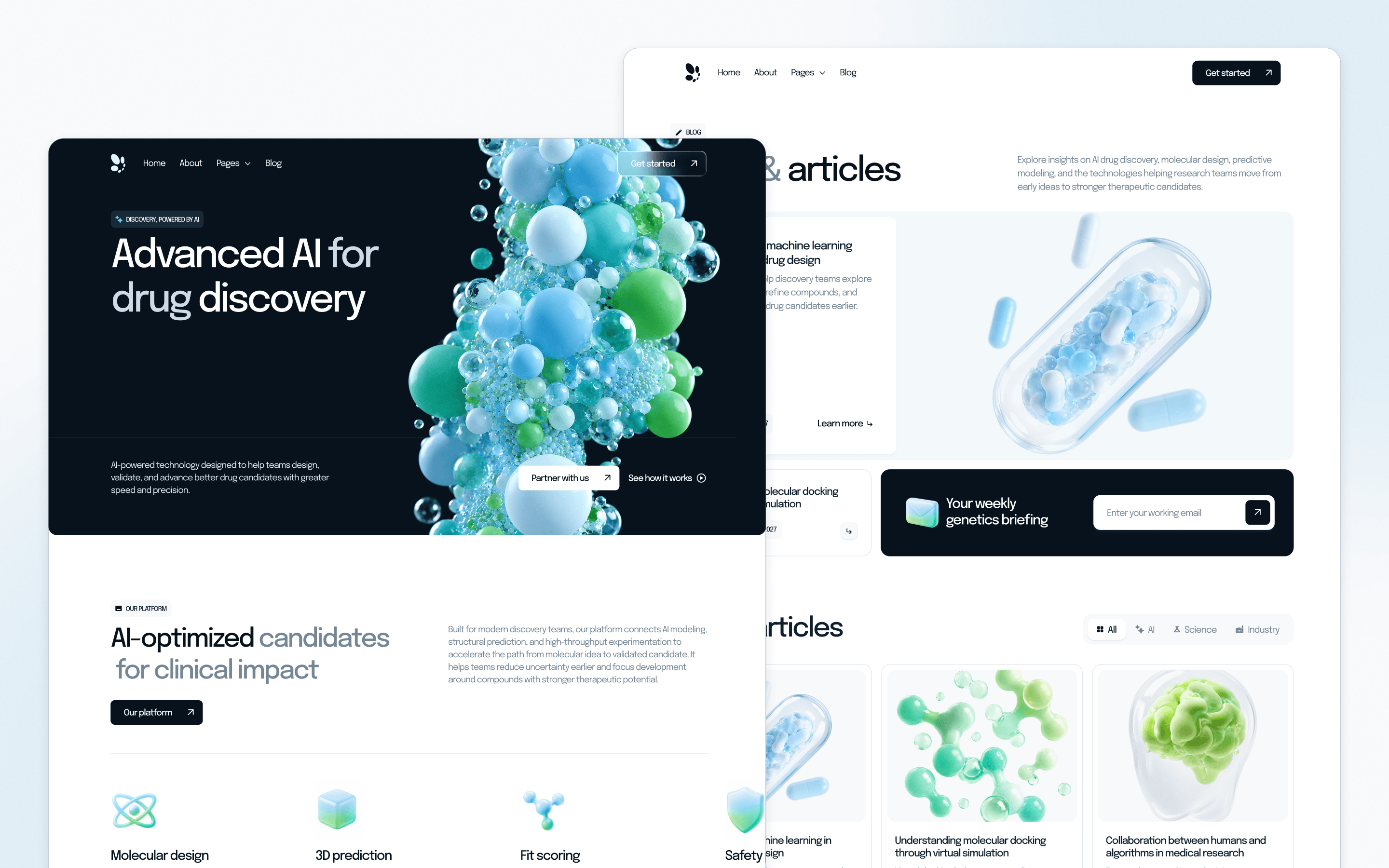
Renetics is our website template for AI drug discovery companies, with more than 1,000 installations. Its molecular imagery and dark opening section give the science a strong visual introduction, while the lighter resource pages make room for articles and ongoing updates. It shows how a specialized subject can have a distinctive identity without making every page feel dense.
Featured project: Iambic
Our work with Iambic includes helping with its first website design, Webflow development, a custom CMS, and supporting graphics. We also continue to create designs for its advertising and communications campaigns, giving the team creative support as the company has new work and ideas to share.
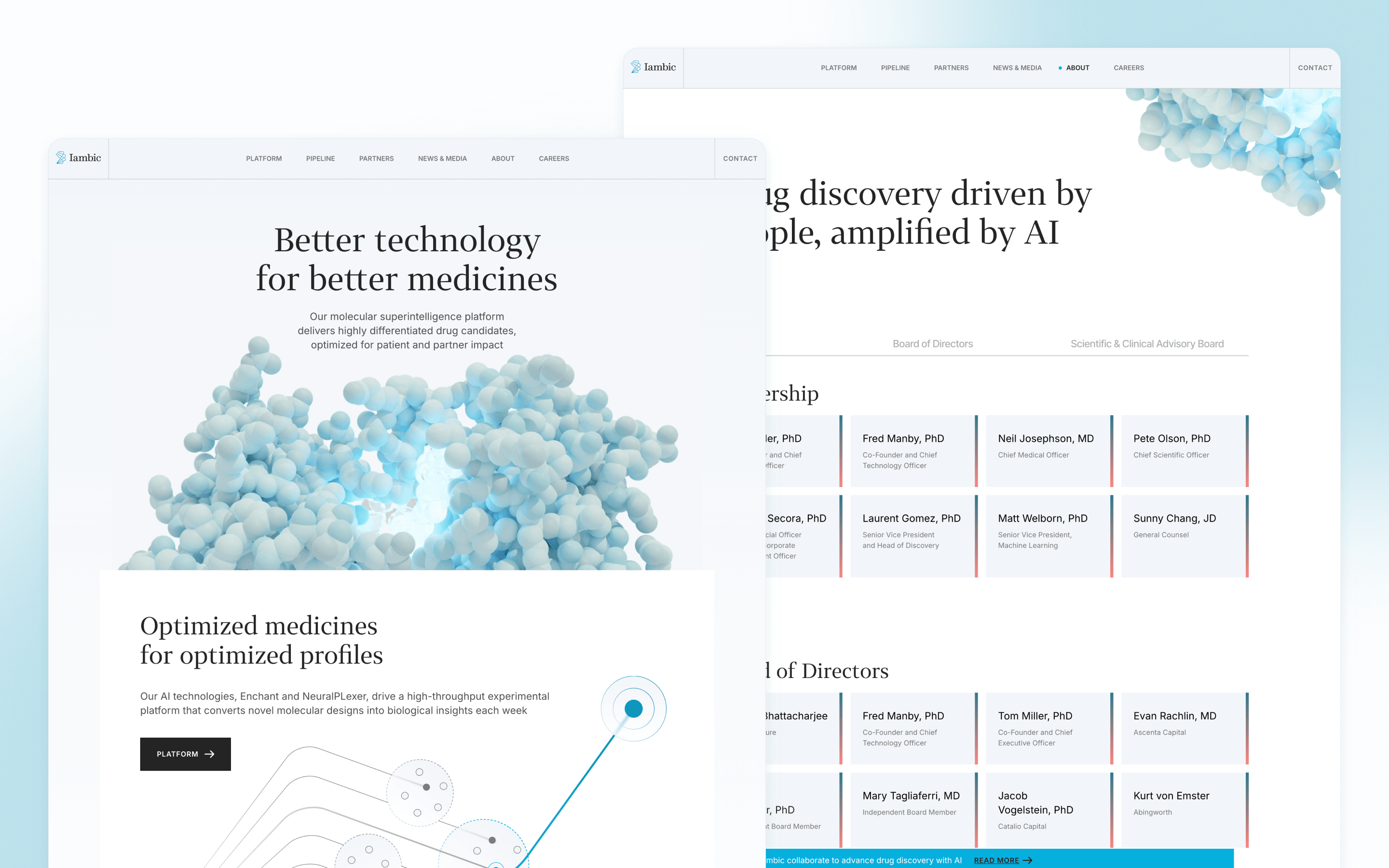
The website shown here pairs soft scientific imagery with an open layout, giving the company introduction, platform, and program information their own space. That same attention to clarity matters beyond the site, where campaign designs need to feel connected to the company while working in different formats.
When you hire BRIX Agency, we create a custom website for your company. Our portfolio shows the quality and care we bring to the work, while your design is built around your own science, audiences, and communication needs.
2. FiftySeven: Best Biotech Web Design Agency for Motion Design
 2
2FiftySeven
A creative agency combining motion, scientific visuals, and website design to give ambitious biotech brands a distinctive online presence.
FiftySeven is a creative agency with a strong example of how motion can become part of a biotech website's identity. Its work for 1910 Genetics brings the brand, scientific imagery, and interface together, giving an AI drug discovery company a visual language that extends beyond a familiar laboratory photograph.
That makes the agency worth exploring if your site needs more personality but still has a difficult subject to explain. The useful question is where motion helps the explanation, whether it introduces a platform, connects sections, or draws attention to a particular piece of evidence.
Featured project: 1910 Genetics
For 1910 Genetics, FiftySeven worked on a brand refresh, website UX and UI, and creative development, with 2D and 3D scientific assets and motion supporting the new direction. The project also included interactions and CMS work, connecting the visual concept with a website the company could keep updating.
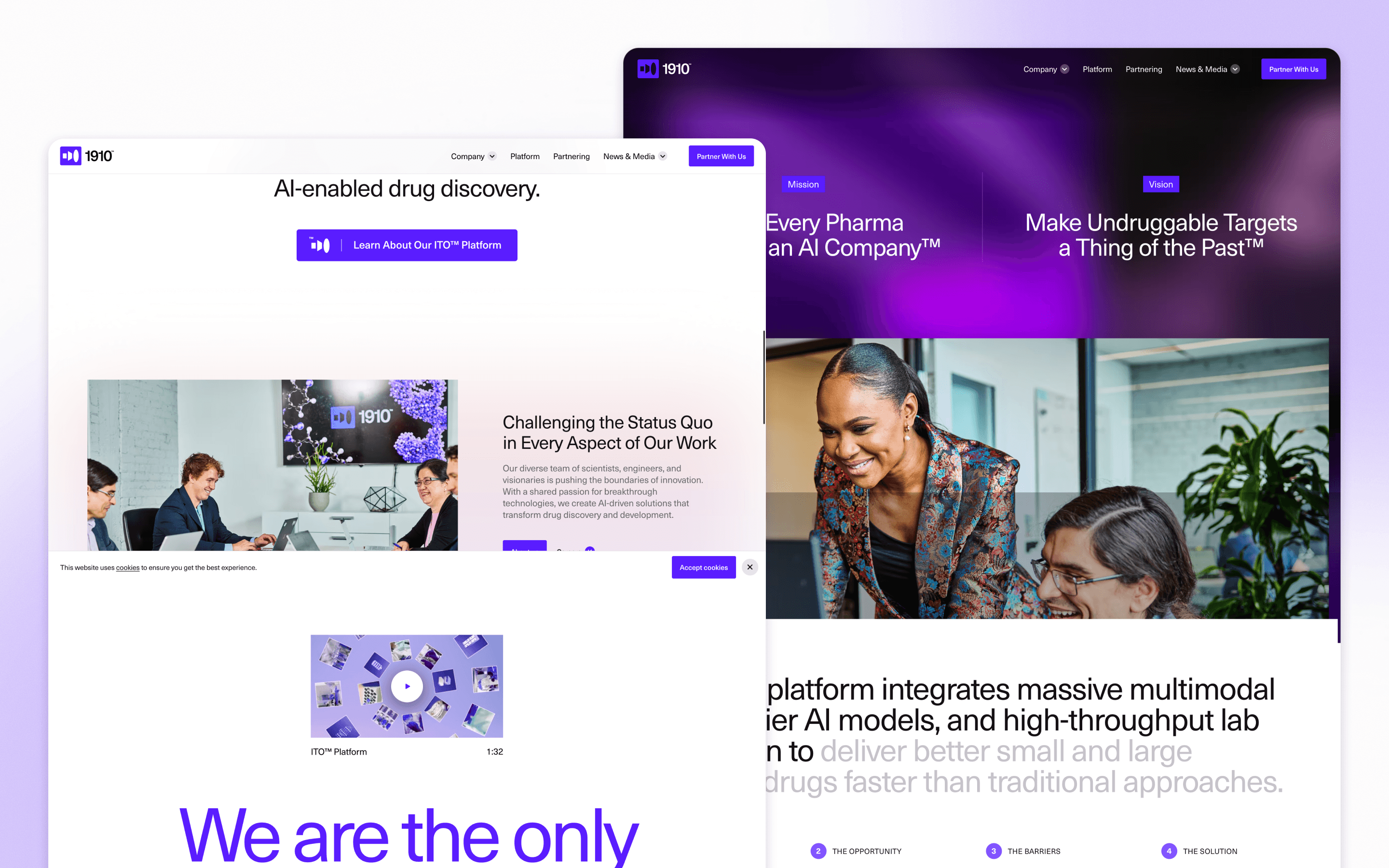
The purple accents and varied compositions give these pages an energetic feel while separating the company's technology from its team story. Look through that balance when comparing motion-focused agencies, then ask to see how the same content reads on a phone and when animations are reduced.
3. Wizardly: Best Biotech Web Design Agency for Scientific Illustration
 3
3Wizardly
A branding and web design studio using scientific illustration and thoughtful page structure to explain emerging biotech companies.
Wizardly is a branding and web design studio whose Tr1X Bio project gives scientific illustration a practical job. Rather than leaving the science in one dense block of copy, the work connects a new identity with visual explanations and pages intended for patients, scientists, and investors.
A project like this suits a company that needs help deciding how much to explain at each stage of a visit. Your scientists can supply the detail, while the design team develops a readable visual explanation that gives newcomers a starting point without removing the material specialists need.
Featured project: Tr1X Bio
Wizardly's Tr1X Bio engagement covered brand strategy, website redesign and development, and an information structure for different audiences. Its work also included a Figma design system, scientific illustrations, interface data visualization, and ongoing support, bringing those elements into a shared direction for the company.
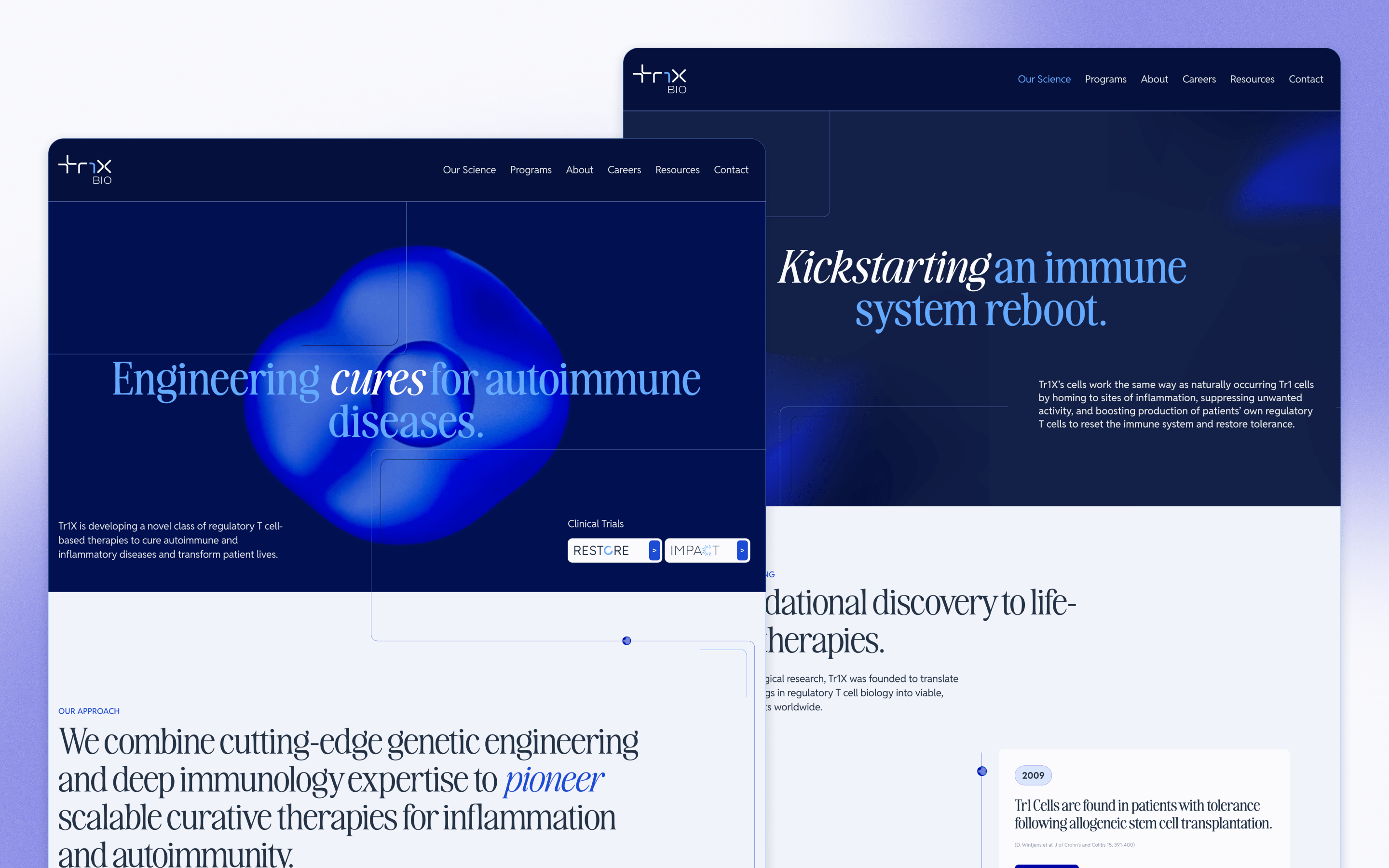
The selected pages pair a dark opening screen with lighter explanatory sections and distinct scientific imagery. It's a useful example to bring into a conversation about visual consistency, especially if you want the website, a research presentation, and future campaign pages to feel connected.
4. Root Agency: Best Biotech Web Design Agency for WordPress
 4
4Root Agency
A branding and website agency building custom WordPress sites that make company news, scientific information, and careers easier to maintain.
Root Agency is a branding and website agency with a custom WordPress project for Alesta Therapeutics. The work joins the company's identity with its page structure and publishing tools, making it relevant when your team wants both a new visual direction and a manageable way to keep the website current.
For a smaller biotech team, routine changes can quickly become a queue of requests to an outside developer. A well-planned WordPress editing setup gives those updates a home, with fields and page sections designed around the information your staff actually publishes.
Featured project: Alesta Therapeutics
The Alesta Therapeutics project included branding, information architecture, UX and UI, and responsive WordPress development. Root also built CMS areas for press and careers, linking the public presentation of the business with some of the recurring content work behind it.
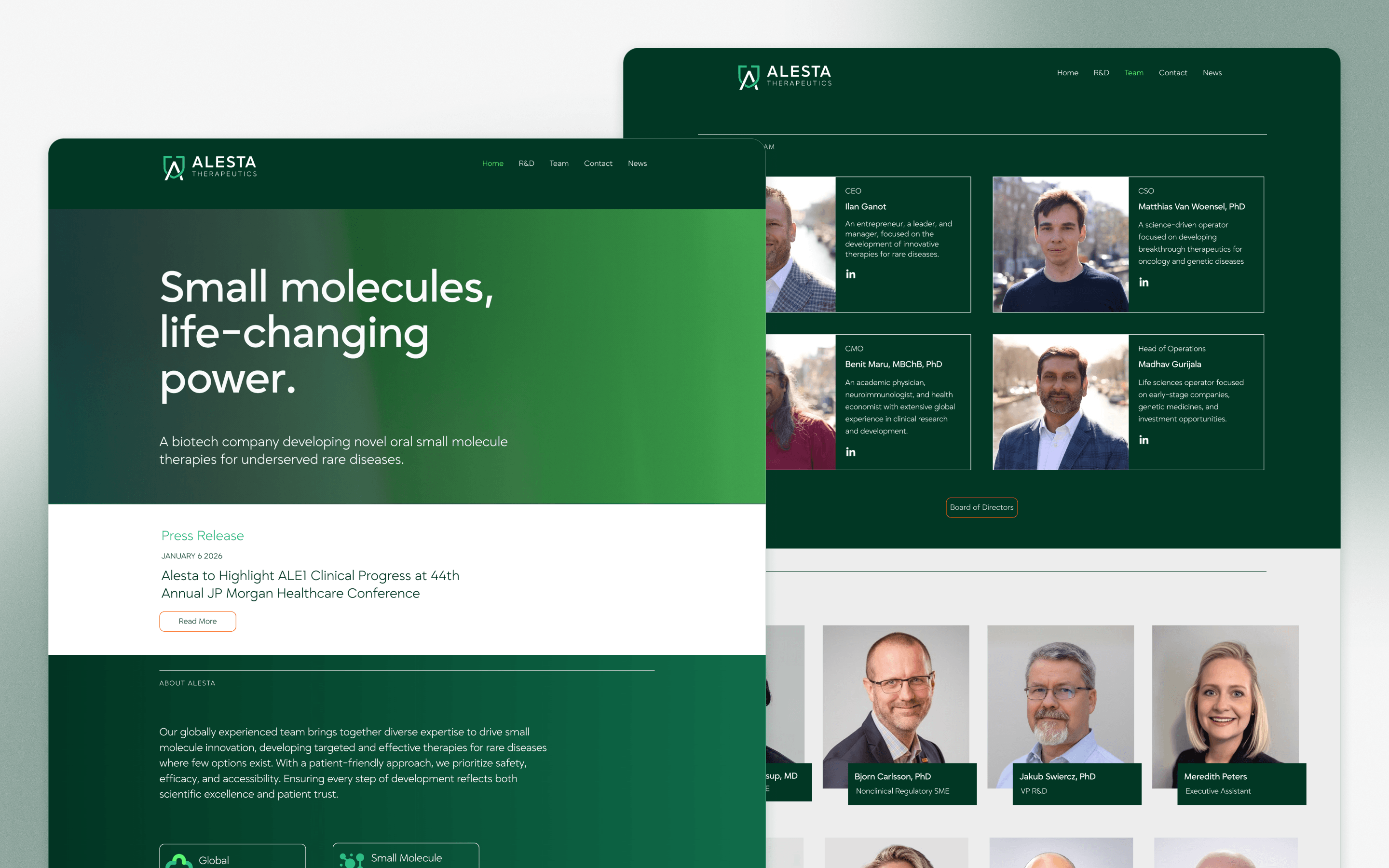
The green palette and restrained layouts give the scientific introduction and team profiles a consistent setting. Use this example to discuss an ordinary week after launch: adding a news item, changing a biography, or publishing a vacancy should feel as considered as the homepage design.
5. Craft & Root: Best Biotech Web Design Agency for Scientific Storytelling
 5
5Craft & Root
A creative studio bringing branding, animation, and clear website content together to introduce complex life science products.
Craft & Root is a creative studio whose XYLYX Bio work connects a scientific company's identity with the way its website explains the offer. Its contribution spans branding and web production, with content simplification, animation, and icons supporting a subject that can take some introduction.
The appeal here is how the story is organized. A visitor shouldn't need to understand every technical term before learning what your company does, but the first explanation should still lead naturally into the more detailed material a potential partner will want to read.
Featured project: XYLYX Bio
For XYLYX Bio, Craft & Root provided identity work and website design and development, alongside visual and content elements intended to make the science easier to follow. The pages shown here combine the company's work on engineered organ grafts with a more personal, human introduction to its purpose.
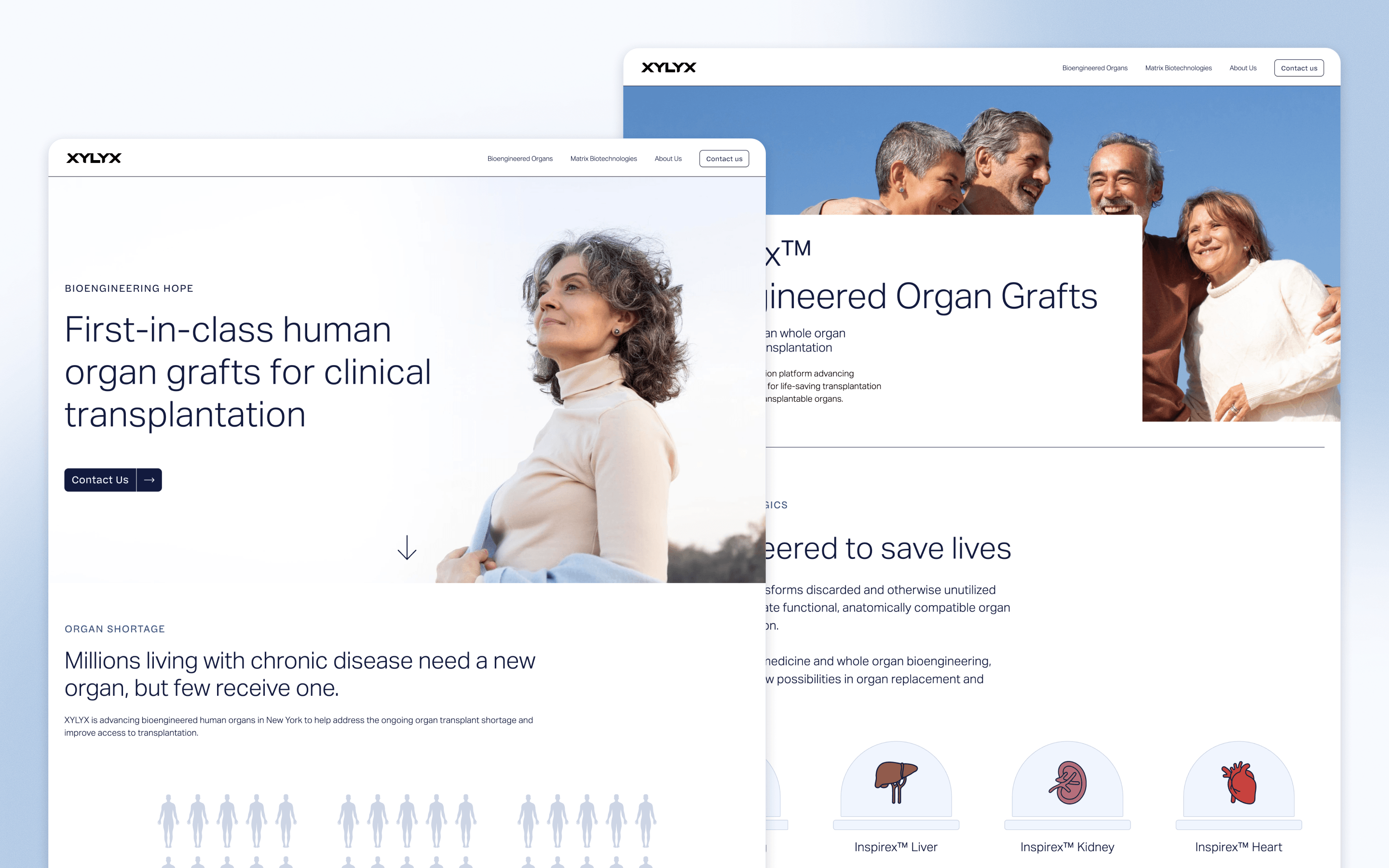
Large photography gives the opening room to breathe, while the supporting page moves toward specific information and diagrams. That progression is worth reviewing if your current site moves straight from an ambitious headline into technical copy without helping readers connect the two.
6. Mars: Best Biotech Web Design Agency for Investor Websites
 6
6Mars
A digital agency shaping biotech websites around a clear company story for investors, prospective employees, and scientific partners.
Mars is a digital agency whose Scenic Biotech project pays attention to the people evaluating a company's next chapter. Its work connects digital brand direction and web production with a structure intended to serve investors and prospective employees, while keeping the scientific story part of the introduction.
Those audiences share some questions, but they don't arrive for the same reason. The website needs to explain where the company is going and let each visitor find the supporting information, whether that means exploring the technology, learning about leadership, or looking for an open role.
Featured project: Scenic Biotech
The Scenic Biotech website brought together digital branding, design, development, and scientific storytelling. Mars organized the experience around the company's audiences, connecting its research direction with the broader story a prospective partner or future team member would encounter online.
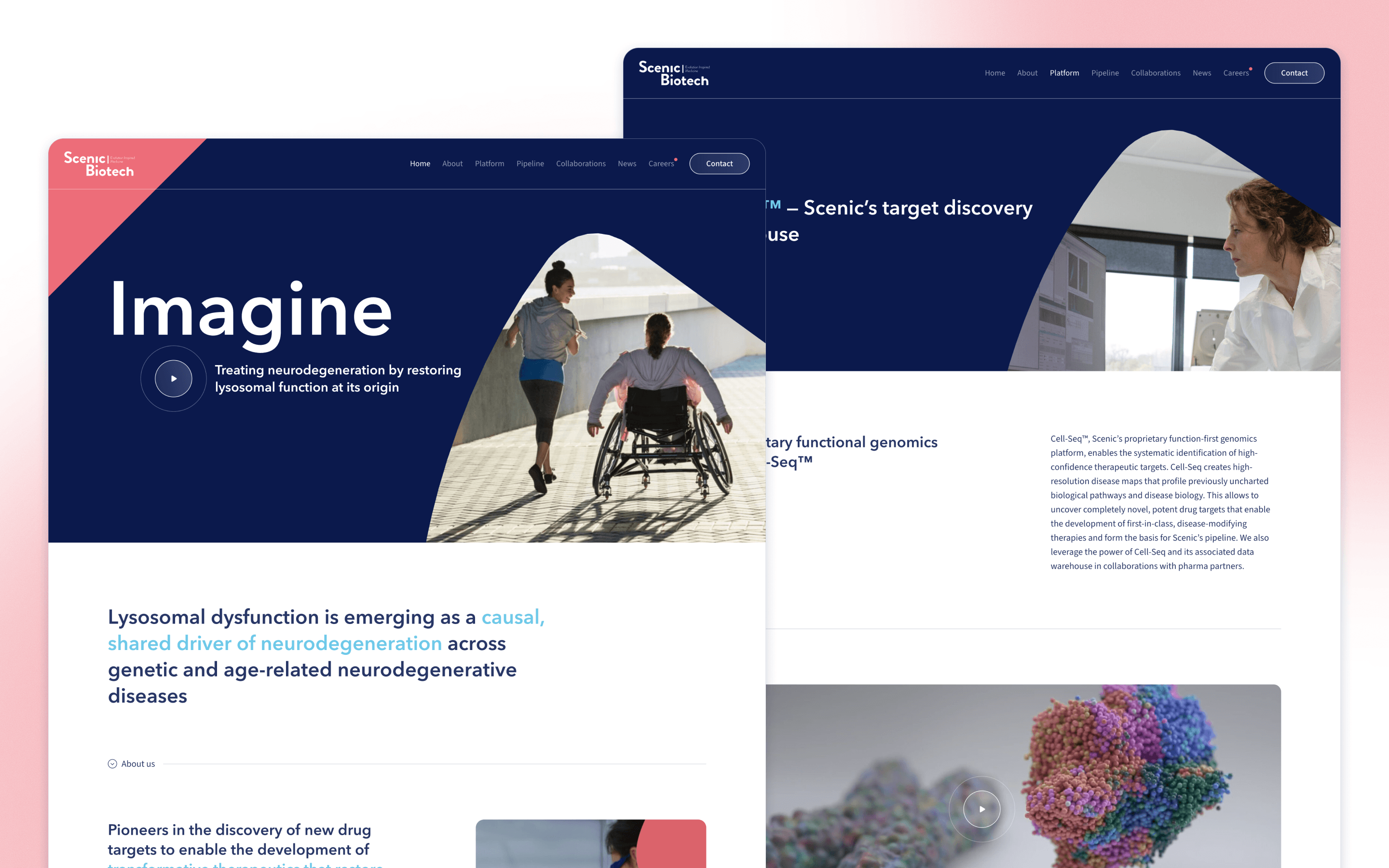
The selected pages use bold color, human imagery, and generous space to give that story a recognizable identity. Consider the sequence as well as the styling: a visitor should be able to move from the company introduction into meaningful evidence without searching through unrelated announcements.
7. WDB Agency: Best Biotech Web Design Agency for Ecommerce
 7
7WDB Agency
A digital agency connecting life science websites with ecommerce, partner workflows, and the systems supporting a more involved buying process.
WDB Agency is a digital agency with a Kailos Genetics project that extends into ecommerce and operational workflows. It's an agency to explore when your website needs to support a transaction or a partner process, alongside the information that explains your science and services.
That brief needs more detail than a page list. Different buyers may need different checkout paths, account information, or updates after an order, so the buying workflow deserves as much attention in the proposal as the visual design of the product pages.
Featured project: Kailos Genetics
WDB describes its Kailos Genetics work as an enterprise ecommerce platform built with Drupal Commerce. The engagement included persona-based workflows, dynamic partner checkout, project tracking, and Salesforce connections, placing the website within a larger system for serving the company's customers and partners.
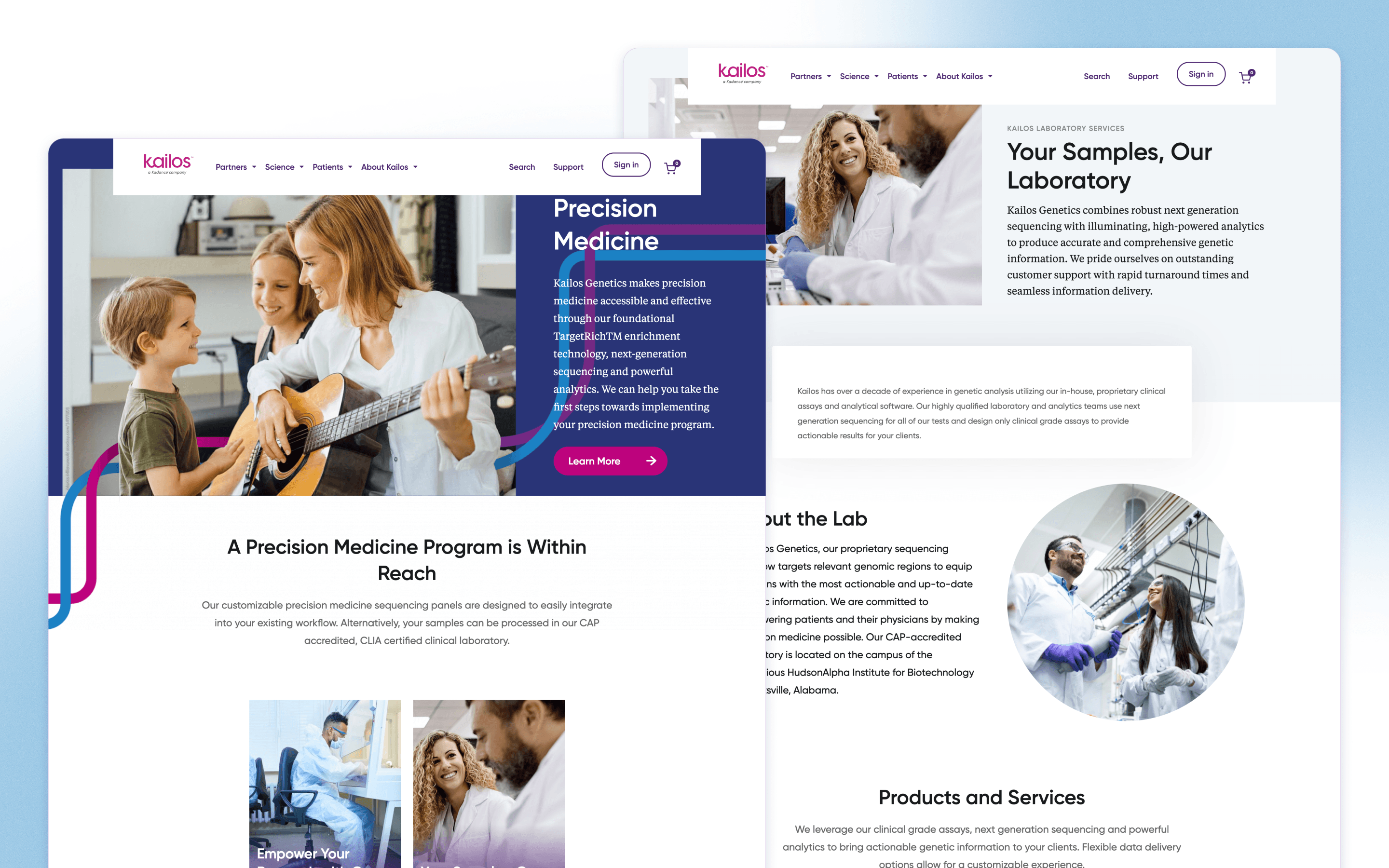
The screenshots introduce precision medicine and laboratory services through approachable imagery and defined content sections. To judge a comparable project, also request a demonstration of the less visible work, including checkout and partner interactions, because a homepage alone can't show how those processes function.
8. Ladybugz Interactive: Best Biotech Web Design Agency for Website Development
 8
8Ladybugz Interactive
A web agency developing biotech websites with structured content, animation, and a publishing setup that supports an existing creative direction.
Ladybugz Interactive is a web agency with a TScan Therapeutics engagement that shows how a development partner can work alongside another creative team. Its role included planning and WordPress production, helping bring an established design and content direction into a working biotech website.
This is useful when your company already has a brand or communications partner and needs someone to deliver the website. A clear design-to-development handoff lets the teams agree on page behavior, editable content, and review responsibilities before details start getting lost between files and the browser.
Featured project: TScan Therapeutics
For TScan Therapeutics, Ladybugz describes research, strategy, messaging and site-structure work, WordPress development, animation, and SEO. Rise and Align supplied the designs and content, making this a collaborative example with distinct responsibilities rather than a claim that one agency produced every part of the site.
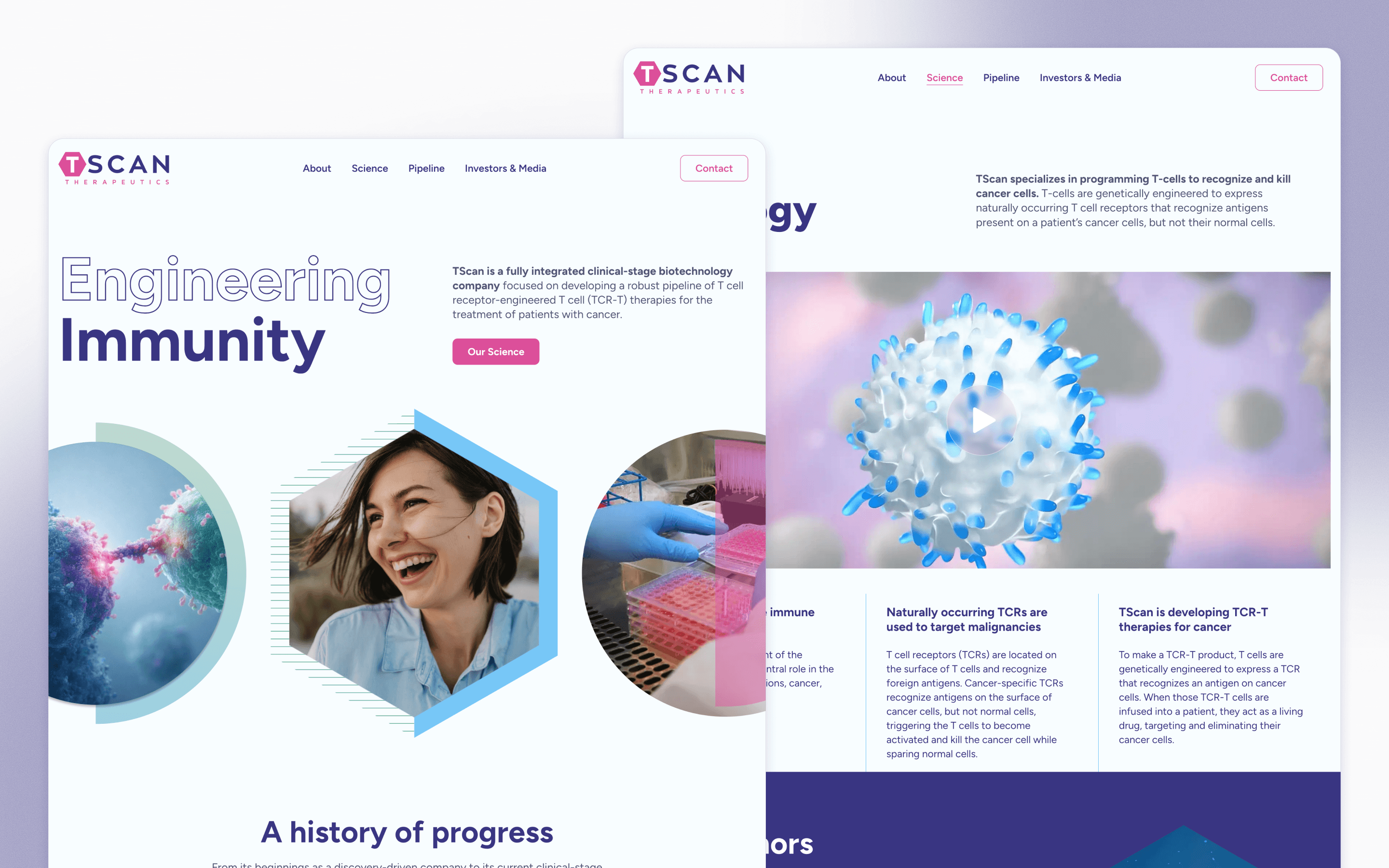
The project images show scientific visuals, team photography, and a consistent magenta accent across different page types. If your own project has a similar split, ask candidates how they review supplied designs and test the finished pages together with the team that created them.
9. Douglass Digital: Best Biotech Web Design Agency for Website Navigation
 9
9Douglass Digital
A web design agency organizing scientific, company, and partnership information into websites that visitors can explore easily.
Douglass Digital is a web design agency whose Transimmune work puts the organization of scientific information at the center of the project. Its documented design gives research, company background, publications, and partnership information clear places to live, making it a useful team to explore when visitors struggle to find their way through your site.
That structure matters when your audience arrives with different questions. A potential partner may want to understand the technology, while a candidate is looking for the team and open roles, so each needs a straightforward route without having to read every page first.
Featured project: Transimmune
Douglass Digital designed and developed an earlier Transimmune website, with dedicated sections for science, partnerships, publications, and careers. The case study explains how the team used visuals, maps, and organized lists to help visitors follow the research and find the information relevant to them.
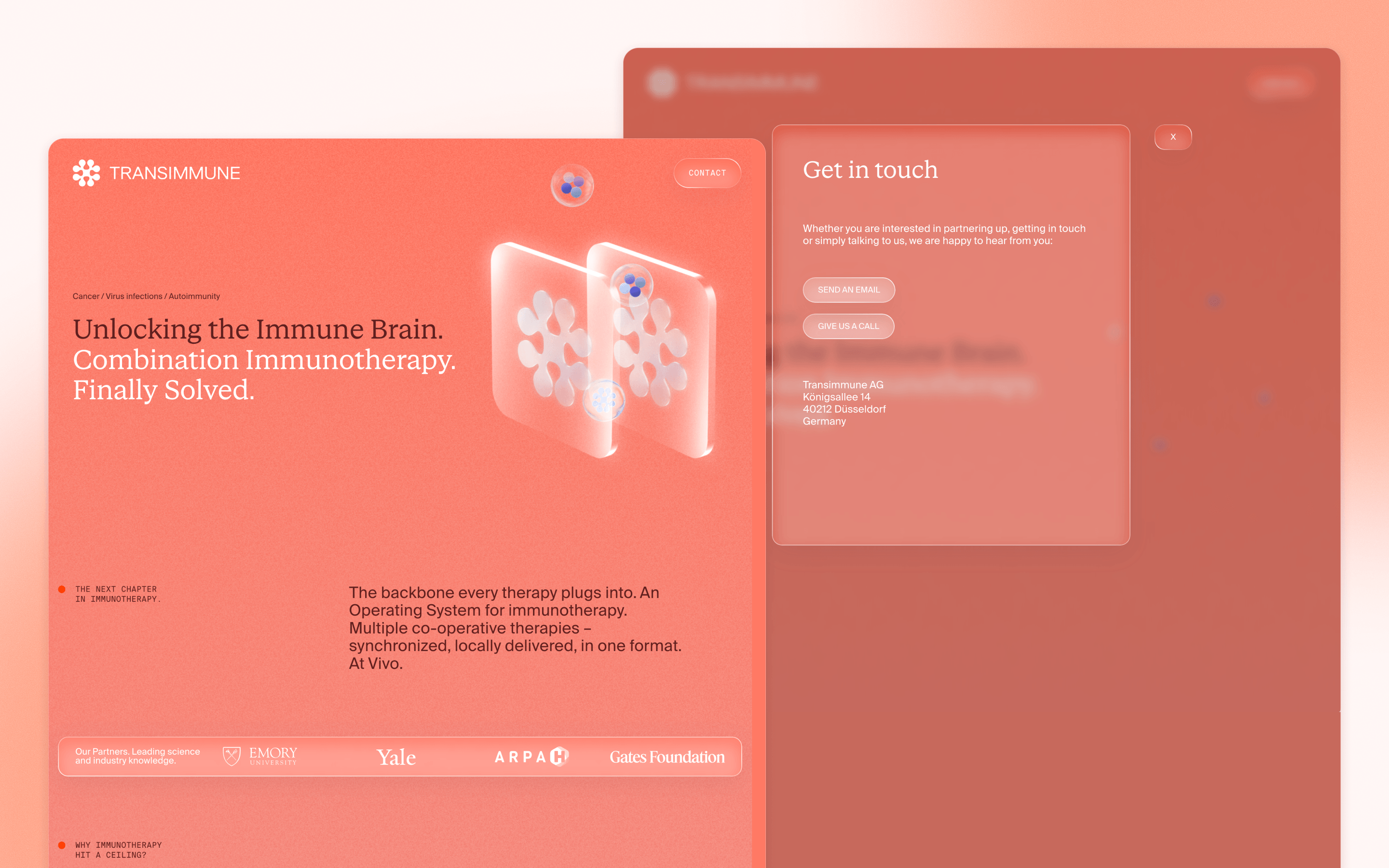
The image above shows Transimmune's current website, while Douglass Digital's case study documents an earlier version. Open the case study to assess that agency's design work, then use the live site to explore how the company's scientific and corporate information is presented today.
10. The Branx: Best Biotech Web Design Agency for Product Storytelling
 10
10The Branx
A branding and design studio connecting biotech software websites with product identity, illustrations, and a clearer explanation of the offer.
The Branx is a branding and design studio with a Causaly project that sits where biotechnology meets software. Its work brings positioning, visual identity, and website design together, making it a useful reference if your platform needs to make sense to scientific users and the people evaluating a purchase.
A software website has to connect what the product does with the situation in which someone would use it. Product storytelling helps that connection feel concrete, especially when a broad description of artificial intelligence doesn't explain the actual work the platform supports.
Featured project: Causaly
For Causaly, The Branx worked on brand strategy, positioning, identity, illustration, icons, and website design, including motion and interaction. The engagement also considered the relationship between corporate and product narratives, giving the platform a place within the wider company story.
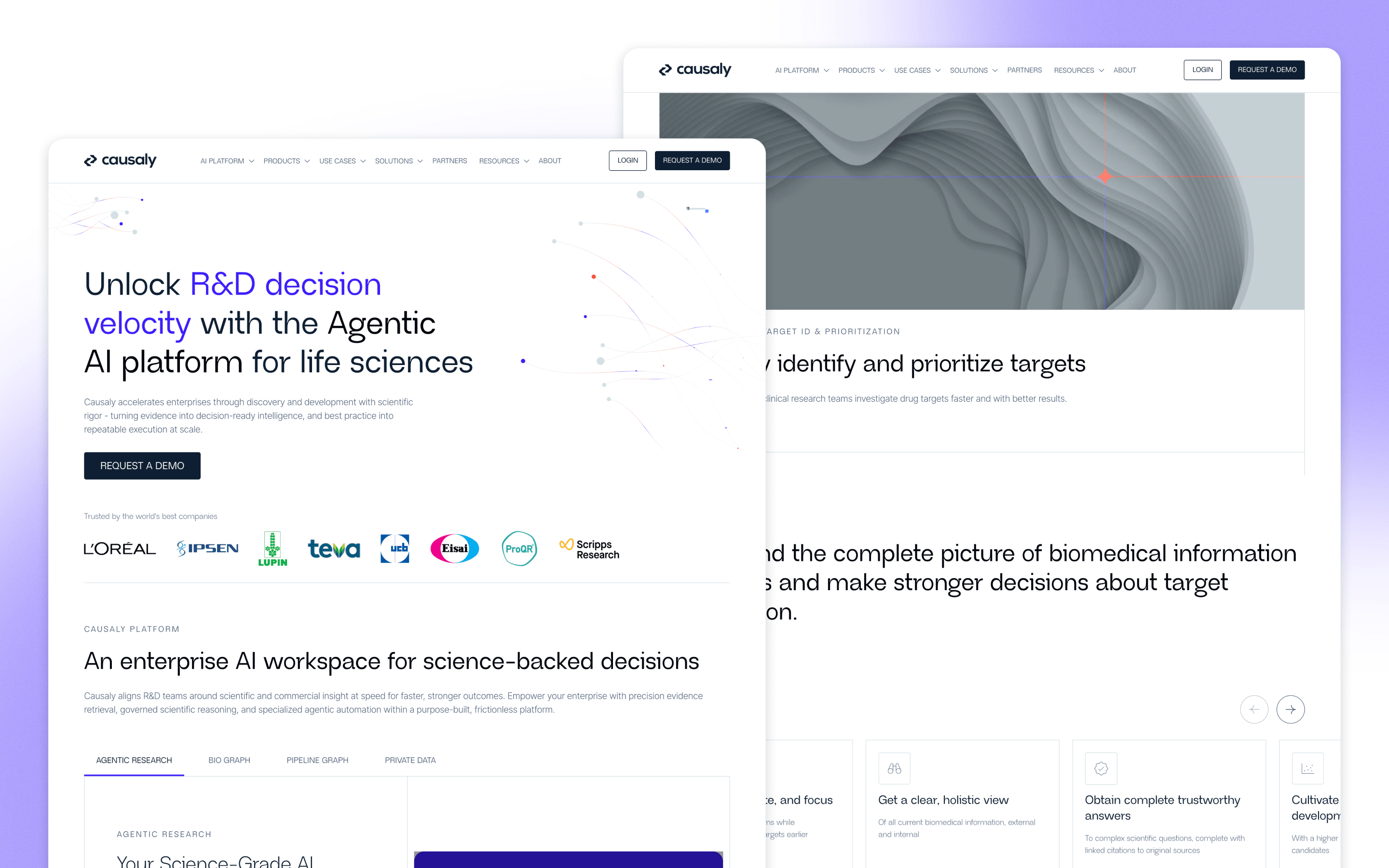
The selected website pairs an airy visual treatment with interface imagery and specific product sections. Follow how those elements introduce the software, then ask prospective agencies to explain how they would turn your own product material into pages that help a buyer assess its relevance.
11. Orizon: Best Biotech Web Design Agency for UI/UX Design
 11
11Orizon
A design agency pairing thoughtful website experiences with 3D visuals and data presentation for companies explaining complex biotechnology platforms.
Orizon is a design agency whose Vivodyne work combines website strategy, UX and UI, and scientific visual material. The project considers researchers, pharmaceutical companies, and investors, making it worth exploring when the same platform needs to be understood from several different starting points.
Good UI/UX design is visible in those small decisions about what to show first, how to group information, and where to offer more detail. A distinctive visual direction helps, but visitors still need to recognize the next useful page without learning an unfamiliar navigation system.
Featured project: Vivodyne
Orizon's Vivodyne project includes responsive website design, 3D visuals, and data visualization, with the company's audiences informing the experience. The work gives a technical platform a visual introduction while creating space for the material that supports a deeper evaluation.
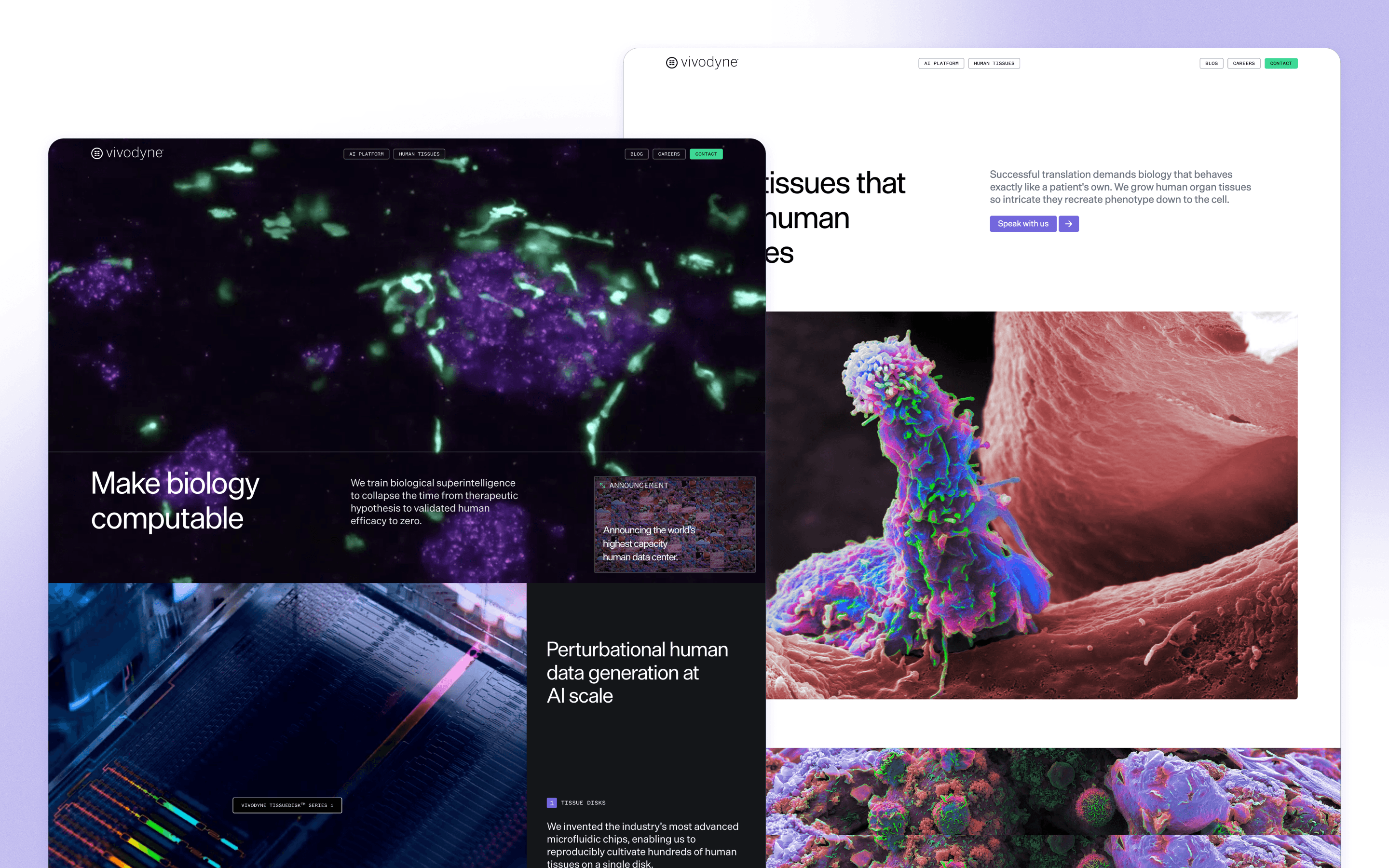
Dark backgrounds and vivid scientific imagery give the selected pages a strong identity, while lighter sections introduce additional explanation. Look at how the design moves between those modes, and discuss how your own charts, images, and longer scientific descriptions would fit into the same system.
12. That’s Nice: Best Biotech Web Design Agency for Pharma Services
 12
12That’s Nice
A science marketing agency connecting pharmaceutical service companies with a digital presence that introduces their capabilities and business relationships.
That's Nice is a science marketing agency with work for Formulated Solutions, a company offering pharmaceutical development and manufacturing services. The example is relevant when the website needs to introduce capabilities and partnership opportunities, rather than revolve around a single research program or technology platform.
For a services business, visitors need to understand what a partnership could involve. The website can help by making the offer easy to explore, connecting the company's capabilities with enough context for a potential customer to decide whether a conversation would be useful.
Featured project: Formulated Solutions
Formulated Solutions credits That's Nice with developing and executing a new digital platform, linking the work to its innovation, marketing, and partner-facing presence. The selected pages provide a reference for that broader engagement and the way a pharmaceutical services company introduces its offer online.
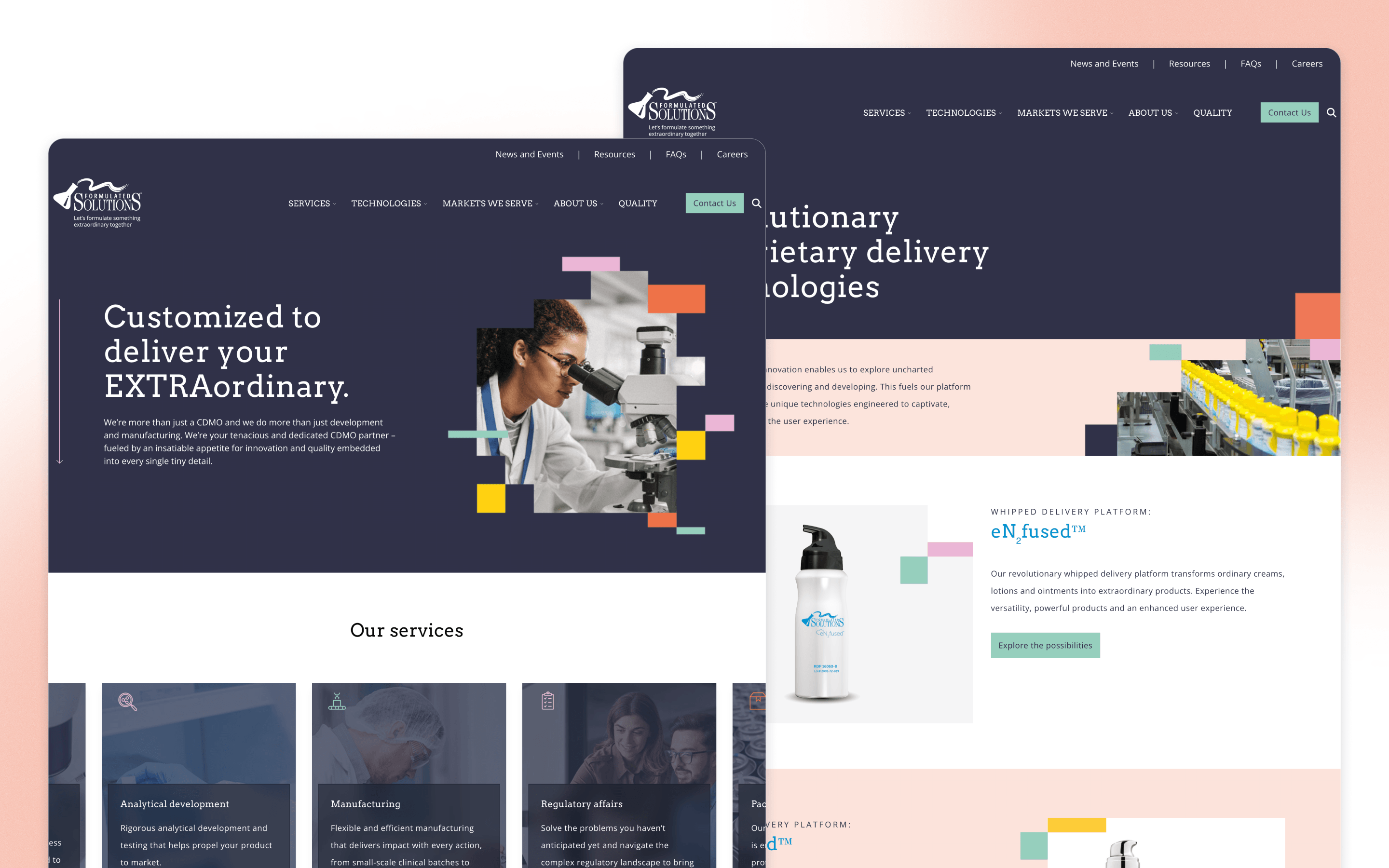
The design pairs product-related imagery with a clear service grid and a recognizable color palette. Explore how those pages distinguish one capability from another, then ask the agency to walk through its contribution and the deliverables a comparable website engagement would include for your company.
13. Ten Bridge Communications: Best Biotech Web Design Agency for Launch Support
 13
13Ten Bridge Communications
A biotech communications agency connecting website delivery with the announcements and media activity surrounding important moments for a company.
Ten Bridge Communications is a biotech communications agency that brings website work into the broader way a company introduces itself. Its portfolio includes AIRNA, and its services span creative work, company launches, and major announcements, making it a relevant option when your website needs to support a specific moment for the business.
A project like that benefits from one coordinated launch plan. Your public pages, media materials, and internal approvals should tell a consistent story, with clear responsibility for what needs to be ready and enough room to add detail as the company develops.
Featured project: AIRNA
Ten Bridge includes AIRNA in its selected work, linking to the RNA therapeutics company's website. It is a useful starting point for discussing how the team approaches a scientific company introduction and how website responsibilities fit alongside its wider communications services.
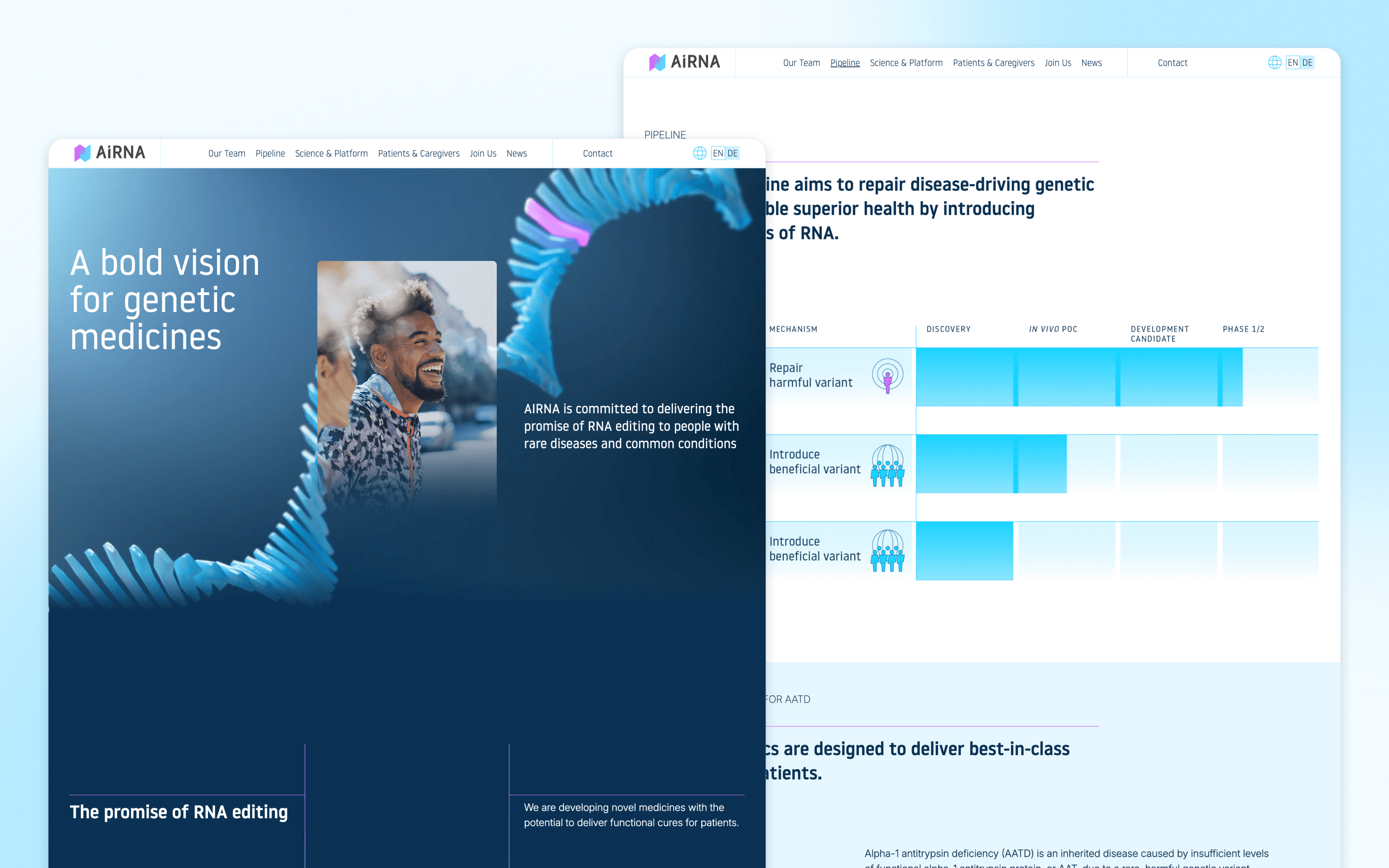
The AIRNA visuals combine a bold company statement with scientific imagery and more detailed program information. If your website has a similar deadline, discuss what belongs in the first release, who approves it, and how later updates will stay consistent with the launch materials.
14. Baunfire: Best Biotech Web Design Agency for Product Visualization
 14
14Baunfire
A digital agency using photography, renderings, and clear page layouts to introduce biotech products and manufacturing technology.
Baunfire is a digital agency whose Cellares project gives cell therapy manufacturing technology a clear visual introduction. The work brings custom photography and renderings into a light, open website, making it a relevant example when your company needs to explain physical equipment as well as the science behind it.
For that kind of site, product visuals should help someone understand what the company makes and how it fits into their work. A close view of the equipment can start that explanation, while nearby text gives the reader the context an image cannot provide on its own.
Featured project: Cellares
Baunfire's Cellares engagement covered website design, UI/UX, development, branding, and content strategy. The team used photography and renderings to introduce the technology, with layouts and animations adapted for mobile visitors as well as desktop screens.
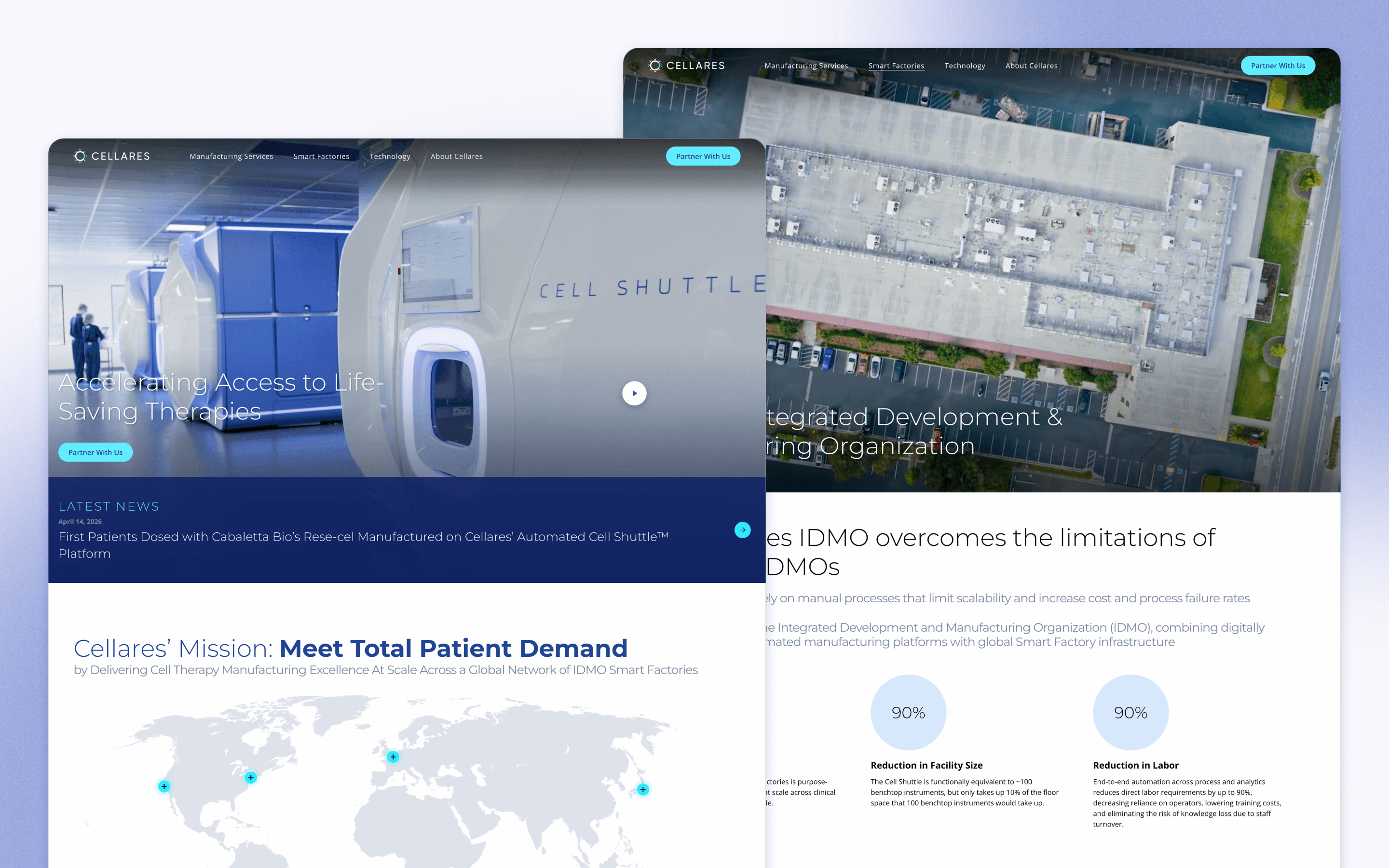
The selected pages give equipment imagery and supporting explanations enough space to be read together. If your company has a similarly technical product, explore how an agency would combine diagrams, photography, and written detail, then ask which of those assets your team would need to supply.
15. Pitcher & Crow: Best Biotech Web Design Agency for Brand Identity
 15
15Pitcher & Crow
A life science creative agency connecting brand identity and digital work to give research companies a more recognizable website presence.
Pitcher & Crow is a life science creative agency whose portfolio includes C4X Discovery. Its brand and digital work makes it a team to explore when your company's visual identity and website need a shared direction, particularly if existing pages feel disconnected from the story your team tells elsewhere.
For a biotech company, a recognizable identity can come from a few consistent choices: the way scientific imagery is treated, the typography, or how a program is introduced. Those choices should help readers stay oriented as they move between company information and more detailed research content.
Featured project: C4X Discovery
Pitcher & Crow's portfolio identifies C4X Discovery within its life science brand and digital work. The selected website gives you a concrete reference to review with the agency, bringing the company's introduction and research-program information into the same visual setting.
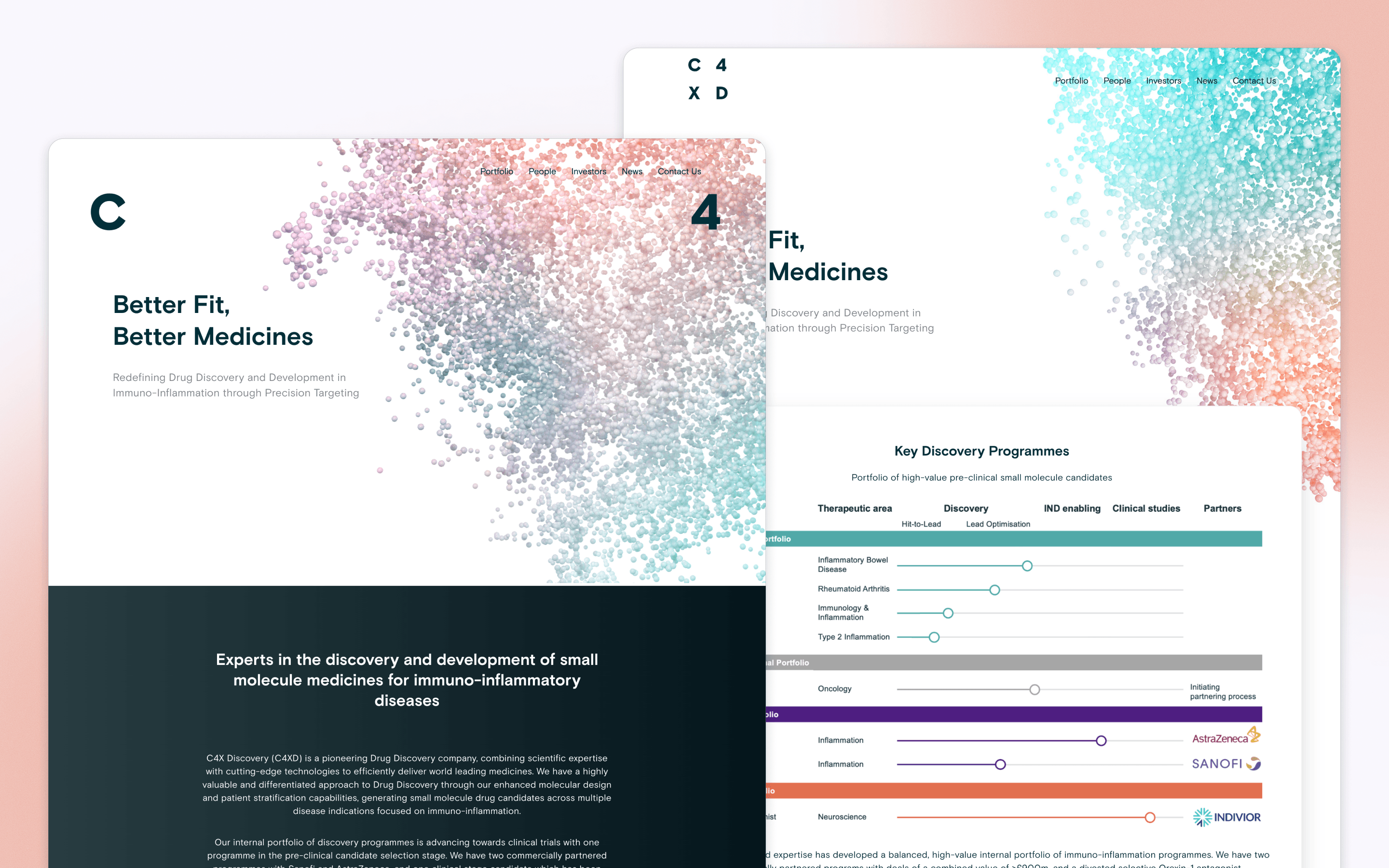
The opening pairs a simple statement with a colorful abstract visual, while the supporting page gives program information a more structured treatment. Consider whether that balance fits your company, then ask for a walkthrough of the team's role and how it would carry a comparable identity across your own pages.
What a biotech web design agency should help you get right
A useful first meeting starts with the company, not a page count. Explain what you do, who needs to understand it, and what you'd like that person to do next. A therapeutics company introducing its pipeline has a different brief from a laboratory selling services or a software team arranging product demonstrations, even when all 3 call themselves biotech.
From there, the agency should help connect content, design, and development. That means organizing the science, deciding where illustrations will help, building the pages around real copy, and giving your team an editing process it can use. If writing or scientific visualization belongs to another partner, include that partner in the plan so the website doesn't wait on an undefined handoff.
Ask to see a finished site that resembles the difficult part of your brief. For a pipeline, that could mean programs with different stages and related publications; for a service business, it might be a clear route from capability information to an inquiry. Have the agency explain its actual contribution, including any collaborators, so you can compare the experience you need with the work it delivered.
How to choose a biotech web design agency and compare costs
Once you've found 2–3 relevant teams, give each the same project outline. Include the pages you expect, the scientific material you already have, and the next event or announcement the site must support. If the date is fixed, distinguish what must be ready for that release from content that can follow, rather than squeezing an open-ended website into a deadline.
Biotech website costs depend on more than how many pages appear in the navigation. Original scientific illustration, 3D work, copy development, publication migration, and connections to other systems can each change the scope. There isn't a useful common price across the projects in this list, so request a proposal for your actual brief and ask for any dollar amounts to be labeled in USD.
Compare the included work before comparing totals. One proposal may include interviews and writing while another starts with approved copy; one may create custom visuals while another expects your team to supply them. Look for named deliverables, revision rounds, scientific review milestones, mobile testing, CMS training, and separate costs for hosting, software, and continuing support.
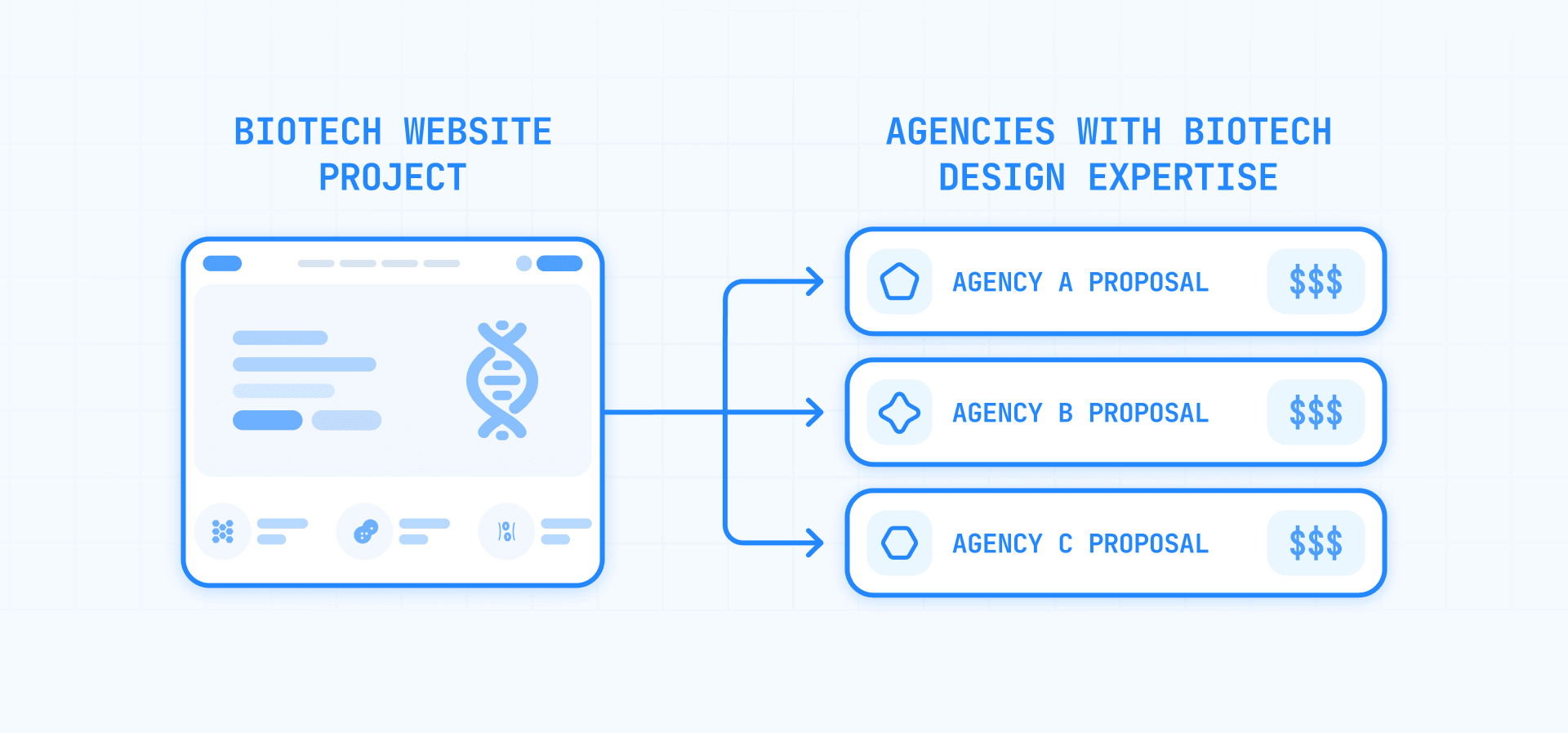
You can use this email as a starting point. Replace the examples with your own audience and content needs, then send the same version to each shortlisted agency so their replies address the same project.
Subject Website for [company], [number] pages, ready for [milestone]
Hi [name],
I'm writing from [company], where we work on [brief description of the science or service]. We found your work through BRIX Agency's biotech web design agency guide and would like help making our website clearer for [scientific partners, investors, customers, or prospective employees].
Our current site is [URL]. We're planning around [number] pages, including [technology, programs, publications, company news, and careers], with [forms, CRM, recruiting, or other integrations]. The main goal is [what visitors should understand or do].
We have [approved copy, research material, and existing visuals] and need help with [writing, illustration, design, or development]. Scientific review will come from [person or team], and we'd like our staff to manage publications and program updates after launch.
We're aiming for [date or company milestone], with an initial budget of [range and currency]. Could you share a relevant project and explain your role, the review process, and what you'd need from us? Please separate the website scope from hosting, subscriptions, maintenance, and ongoing creative support.
Thank you,
[Your name]
[Role], [company]
When the replies arrive, ask each team to explain any assumptions before choosing. Agree on who owns the domain, website accounts, design files, and project code, along with any licensed dependencies and ongoing fees. Your scientific team should own factual approval, with someone coordinating feedback so the agency receives one clear set of comments at each milestone.
Put the handoff and post-launch support in the agreement too. Establish who checks forms and integrations, who can publish an urgent update, and how additional work is requested. A launch tied to a conference or company announcement should also have a named person available to investigate a problem while your communications team is busy elsewhere.
Choosing a CMS for a biotech website that keeps changing
A new publication, an updated program, and a funding announcement shouldn't each require your team to relearn the website. Choose a modern CMS that makes those recurring tasks straightforward, with easy editing, useful previews, and pages that stay fast as you add content. Start with a few real updates from your own company, then use them to compare the proposed systems.
Try the publishing work before choosing the platform
Ask the agency to demonstrate adding a publication, editing a program's stage, and creating a news post on a site it has built. Your editor should be able to understand the fields, preview the result, and see which related pages change. For material requiring scientific approval, agree on how reviewed copy gets to the person responsible for publishing it.
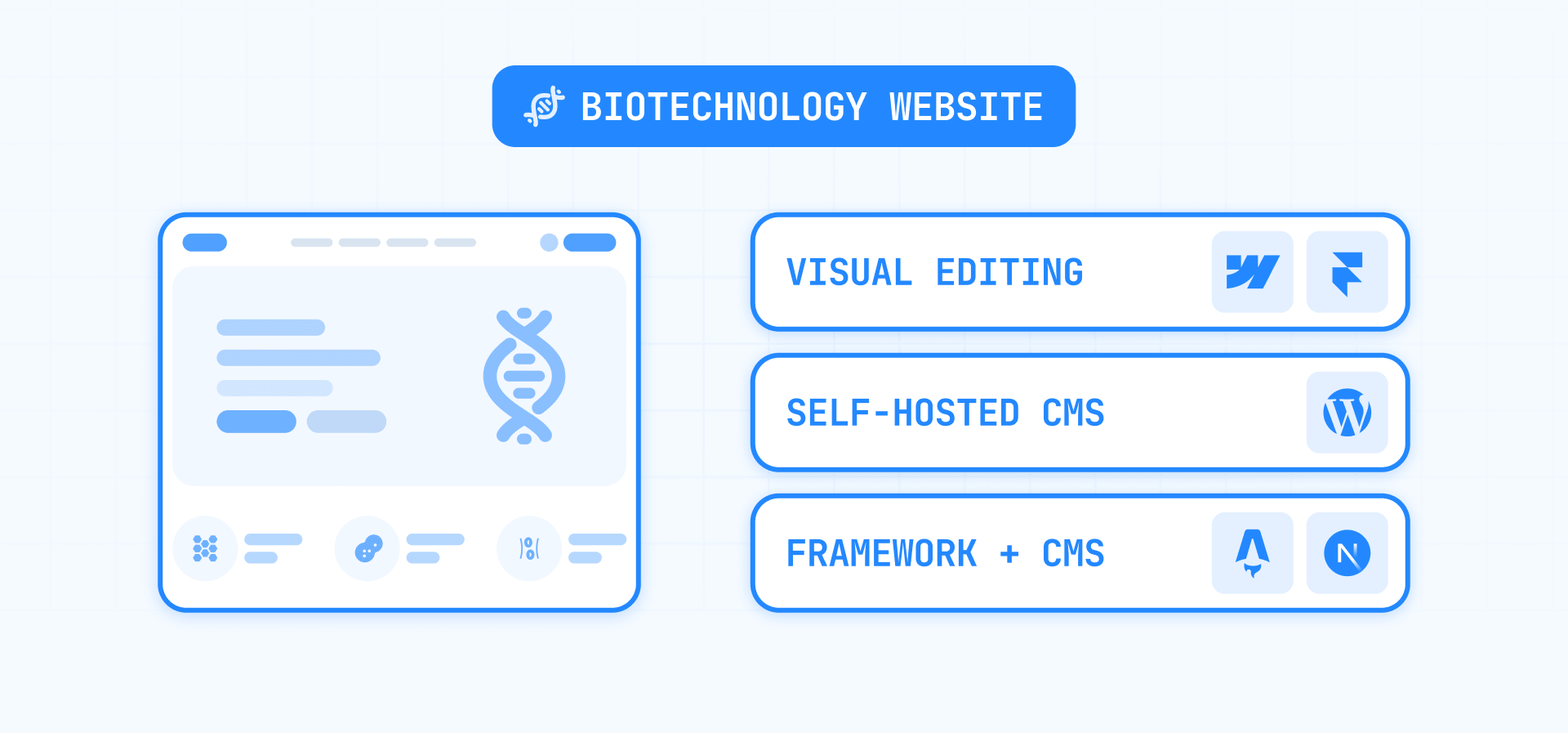
Webflow and Framer are options for teams that want a visual workflow and a CMS for recurring content. Compare them using your actual records, relationships, and editing roles, then confirm that the proposed plan supports them. A quick demo with one news item won't tell you how a larger publication library will feel to maintain.
Match the hosting setup to your team's responsibilities
WordPress can run on your chosen server when you want control over hosting the website and its CMS database. A tailored editor can organize programs, leadership profiles, and resources into reusable content types, while your agreement assigns responsibility for updates, backups, and support. Connected tools can have their own storage arrangements, so check those separately.
Astro and Next.js offer a custom development route with a separate CMS providing the editing interface. They are frameworks, so the agency should show the complete setup, including previews and publishing, before you compare it with a visual platform. Choose this route because it fits your website and available support, rather than because the technology sounds newer.
Leave with a website your team can keep using
Before handoff, have the people who will maintain the site make those same sample updates themselves. Check long publication titles, a program with more information than the others, and a news post containing several images. Include short training materials and a support contact, then agree on which changes are everyday editing and which require design or development work.
Biotech website design essentials: science, programs, and clear next steps
Explain the company before asking readers to study the science
Someone arriving from a conference, a news article, or a colleague's introduction may know little about your company. Give that person a plain explanation of the problem you work on, the approach you take, and who the work is for. From there, let readers explore the technology, team, and supporting material at the depth they need.
Scientific accuracy belongs in the writing and design process from the beginning. Use company-approved information, connect claims to the material your team is ready to share, and distinguish research in development from an available product or service. Illustrations can make a concept easier to follow, while the scientific reviewers confirm what each visual and statement should communicate.
Make pipeline and publication information usable
For a company developing therapeutic programs, a pipeline should help readers connect the program name with its focus and current stage. Use clear labels, reviewed descriptions, and related resources where they add context, with an owner responsible for keeping the information current. Companies selling tools or services may need product and capability pages instead of a pipeline chart.
A wide diagram can be difficult to read on a phone, so ask for a usable mobile version rather than a smaller picture of the desktop layout. Important labels and explanations should be available as readable text, with keyboard access and visible focus for interactive elements. If the site uses motion or 3D, keep the explanation understandable when those effects are reduced or unavailable.
Give publications enough context to be useful before someone opens a document: a title, a date, and a short explanation of the subject can help them choose. Group a larger collection by meaningful topics, and preserve useful pages and document links during a redesign. Include titles, descriptions, internal links, and redirects in the migration plan, then check the released site for missing material.
Give each audience a sensible way to continue
A researcher looking for a paper shouldn't have to begin with a sales form, while a potential partner shouldn't need to guess which email address reaches the right team. Organize navigation around recognizable tasks, with clear routes to scientific information, company news, careers, and business inquiries where those sections belong in your brief.
For a service or software business, connect the offer to an inquiry or demonstration request that explains what happens next. Keep the form focused on the information needed for that first conversation, then test its confirmation and delivery with the connected systems. Review those routes alongside the content, so the website helps interested visitors continue once they've understood what you do.
Frequently asked questions about biotech web design agencies
How do I find a web design agency with biotech experience?
Start with named biotech projects and ask the agency to explain what it contributed to each one. A company logo in a portfolio doesn't show whether the team designed the site, developed supplied layouts, or supported a campaign. The relevant experience should match the part of your project that needs the most help.
A therapeutics company might prioritize scientific content and program pages, while a CRO could need clearer service information and inquiry routes. Open the examples, follow the pages beyond the homepage, and discuss them with the agency. Bring one difficult requirement from your own brief to the conversation and ask how the team would approach it.
What should a biotech company website include?
The starting point is a clear company explanation, supported by the science, people, and evidence relevant to your work. Many biotech websites also need program or product information, publications, news, careers, and contact routes, but the final page list should follow the business. A research platform and a laboratory service company won't need identical sites.
Think about the questions someone brings after first hearing your name: what you do, why the approach matters, and where they can learn more. Give each page a specific purpose and connect it to related information. Review the proposed structure with someone outside your immediate team before committing to a large collection of pages.
How should a biotech website present its pipeline?
A biotech pipeline should make programs and stages easy to understand, using the company's approved information and clear labels. Readers should be able to connect a program with its focus and current status, then reach further explanation where it is available. A visual chart can help, but the important information also needs readable text.
Plan the mobile version and editing process alongside the desktop design, especially when several programs have different amounts of detail. Assign someone to review updates and keep related pages consistent when the information changes. Ask the agency to demonstrate an update and show the result on a phone before accepting the pipeline component.
How much does biotech website design cost?
A useful budget comes from a defined project scope, including the writing, scientific visuals, website production, and integrations your company needs. Page count is only part of that work, and custom animation or a publication migration can change the effort considerably. Prices from unrelated websites won't give you a reliable comparison without those details.
Prepare one brief for several agencies and request separate amounts for the initial project and recurring costs. Check who supplies content, how reviews are managed, and whether training and launch support are included. Ask for a breakdown of optional work so you can decide what belongs in the first release before settling the budget.
How long does a biotech website redesign take?
The timeline depends on content and approval readiness as well as design and development. A project with reviewed copy and usable imagery can be planned differently from one that needs interviews, scientific illustrations, and a new company story. Identify those dependencies early so the proposed schedule reflects the work your team must contribute.
If the site supports a conference or announcement, give the agency that date and define the pages required for launch. Include scientific review, mobile testing, content migration, and inquiry checks in the milestones, with a named person coordinating decisions. Agree on a realistic first release before adding material that could be published afterward.
Can an agency help write scientific website content?
Yes, when writing is included in the engagement and the team has a process for working with your scientists. An agency can help organize material, interview subject experts, and turn approved information into readable pages. Your company still needs to review the scientific statements and decide which details are ready to share publicly.
Define who drafts, checks, and approves each content type, including diagrams and captions as well as page copy. Supply the existing research and company materials the writer can use, then build review time into the project plan. Ask to see a comparable scientific page and discuss how its content moved from initial material to publication.
Which CMS should a biotech company choose?
Choose the CMS around your publishing tasks, such as updating programs, adding publications, and announcing company news. Visual editing is available through Webflow and Framer, and WordPress gives you the option of hosting the website on a server you choose. Astro and Next.js are frameworks that need a separate CMS for editing, so evaluate the full implementation rather than its technology name.
Have the agency demonstrate your typical content updates, including previews and related pages, using a system it has delivered. The people maintaining your website should try that process before you approve the handoff. Select the setup they can use confidently, with clear responsibility for hosting, software maintenance, and changes that still require a developer.
Can a biotech website redesign preserve our SEO?
A redesign can protect useful search foundations through a planned content migration, although no agency can promise unchanged rankings. Scientific pages, publications, and resources need a destination in the new site, while changed URLs need redirects. Preserve meaningful titles, descriptions, and internal connections rather than treating the existing website as a collection of disposable layouts.
Ask the agency to inventory your pages and documents before the new structure is finalized, then identify who checks redirects and missing content after launch. Keep continuing SEO work visible as its own service so the proposal distinguishes it from migration tasks. Review the agreed page mapping before the new website replaces the old one.
Does a biotech website need custom design?
Custom design is useful when your content needs call for a more specific solution, such as scientific illustrations, distinct audience routes, or connected program and publication pages. It can also help establish a recognizable company identity. The decision should follow those requirements and your budget, rather than an assumption that every biotech website needs complex visuals.
Outline the information visitors need and the publishing work your team expects to manage, then ask candidates how their approach supports both. Compare the actual deliverables, including content planning and responsive layouts, rather than relying on the word custom alone. Choose a scope that solves your company's current communication needs and leaves room for future updates.
What support should a biotech web agency provide after launch?
Agree on editing and technical support separately, since a publication update and a broken integration involve different work. Your staff may manage routine content while the agency maintains the system or provides design help. The support plan should identify the tasks covered, how requests are sent, and what happens when work falls outside the agreement.
For a company with regular announcements, discuss who can help when timing matters and what availability is actually included. Assign ownership of hosting, accounts, backups, forms, and connected services, then keep training material accessible to new editors. Confirm the arrangement before launch so your team knows where to turn when the first update is needed.
Choose a website partner that can make your science easier to explore
You know the detail behind your company's work, but your next visitor may be encountering it for the first time. A good website gives that person a useful introduction and a clear path into the information that matters to them, with a visual identity that feels as considered as the work itself.
Use the projects in this list to decide what your own site needs most, whether that's clearer scientific explanations, stronger product pages, or a publishing setup your team can maintain. Then bring the same brief to a few agencies and look for a proposal that connects the creative work with the practical responsibilities of getting it live.
If you'd like our help, tell BRIX Agency about the biotech website you're planning. We'll get back to you in less than 24 hours, with replies in 1–2 hours during business hours (PST), and help you work out a custom design direction for your company.





Join readers commenting on this post!