A beautiful car can make almost any homepage look good. The harder test comes when someone tries to compare models, check whether a vehicle is available, or understand what your company actually builds. That's where the right automotive website starts earning its place in the buying process.
Choosing an automotive web design agency gets easier when you look at the kind of problem its work solves. A specialist workshop, an electric-vehicle launch, and an autonomous-driving company need different ways to tell their story, even if all three have great photography ready to use.
Below, you'll find 15 agencies and selected projects covering those different needs, followed by practical advice on proposals, content management, and the features worth planning early. Open the examples that feel closest to your business and look beyond the first screen, because the useful details often sit a few clicks further in.
How we selected these automotive web design agencies
Each external agency in this list has a named automotive or mobility project, with its contribution supported by a case study, client credit, or published project record. We looked at what that work demonstrates, from organizing a large model range to explaining a new technology, and used those strengths to give each profile a clear focus.
This guide is published by BRIX Agency, and our studio appears first with its own portfolio for you to explore. Use the specialties as a starting point for your shortlist, then compare the work with the website you need: a compelling product launch and a reliable inventory experience are different reasons to hire a team.
The automotive web design agency shortlist
- BRIX Agency: A design and development agency creating custom automotive websites with distinctive product presentations and clear paths for prospective customers.
- Fhoke: A design studio building bespoke WordPress websites that give specialist vehicle makers room to show their craftsmanship and individual builds.
- Orange Crush Digital: A digital agency organizing automotive websites with extensive product, racing, retail, and technical content into clearer paths for different visitors.
- Vrrb: A digital agency combining vehicle browsing with editorial content and owner experiences for dealerships that want a stronger brand presence.
- Montarev: An automotive marketing agency building service-focused websites that help repair businesses explain their work and turn interest into relevant enquiries.
- One Design Company: A design studio connecting brand identity and website storytelling for automotive technology businesses with unfamiliar products to explain.
- Bornfight Studio: A digital studio designing and developing automotive websites where motion helps introduce vehicles and explain the engineering behind them.
- Numbered: A creative studio bringing art direction, animation, and website design to automotive projects with a distinct visual point of view.
- Demonstrate x DDW: A creative agency bringing automotive website development, art direction, and writing together around the character of a specialist vehicle brand.
- Commerce Pundit: A web design and development agency connecting vehicle inventory, enquiry paths, and service content within custom automotive websites.
- Index Studio: A creative studio producing websites that help automotive suppliers present their capabilities, industrial expertise, and company story to business audiences.
- Antinomy Studio: A digital studio using interaction, motion, and website development to make complex automotive technology easier to explore and understand.
- Racecar: An automotive digital agency building websites and configurators that help customers explore vehicle options before starting a sales conversation.
- Studio DMCG / David McGillivray: A design studio shaping the creative direction and digital presentation of mobility products with a distinctive visual identity.
- REJOUICE: A brand and digital agency combining automotive launch strategy with art direction, website production, and a coordinated product story.
1. BRIX Agency: Best Automotive Web Design Agency for Custom Design
 1
1BRIX Agency
A design and development agency creating custom automotive websites with distinctive product presentations and clear paths for prospective customers.
At BRIX Agency, we design websites around what makes an automotive business worth choosing, whether that is the character of a vehicle, the expertise of a workshop, or the technology behind a new way of moving. We are also the team behind BRIX Templates, where our automotive designs bring those different kinds of businesses to life through product photography, clear service pages, and thoughtful visual direction.
That experience gives us several ways to approach your website. A car brand may need an introduction that lets the vehicle lead, while a repair business needs visitors to recognize its services and feel comfortable getting in touch. We connect the visual design to that next step, so the site has a clear purpose from its opening screen through to the enquiry.
A closer look at our automotive web design portfolio
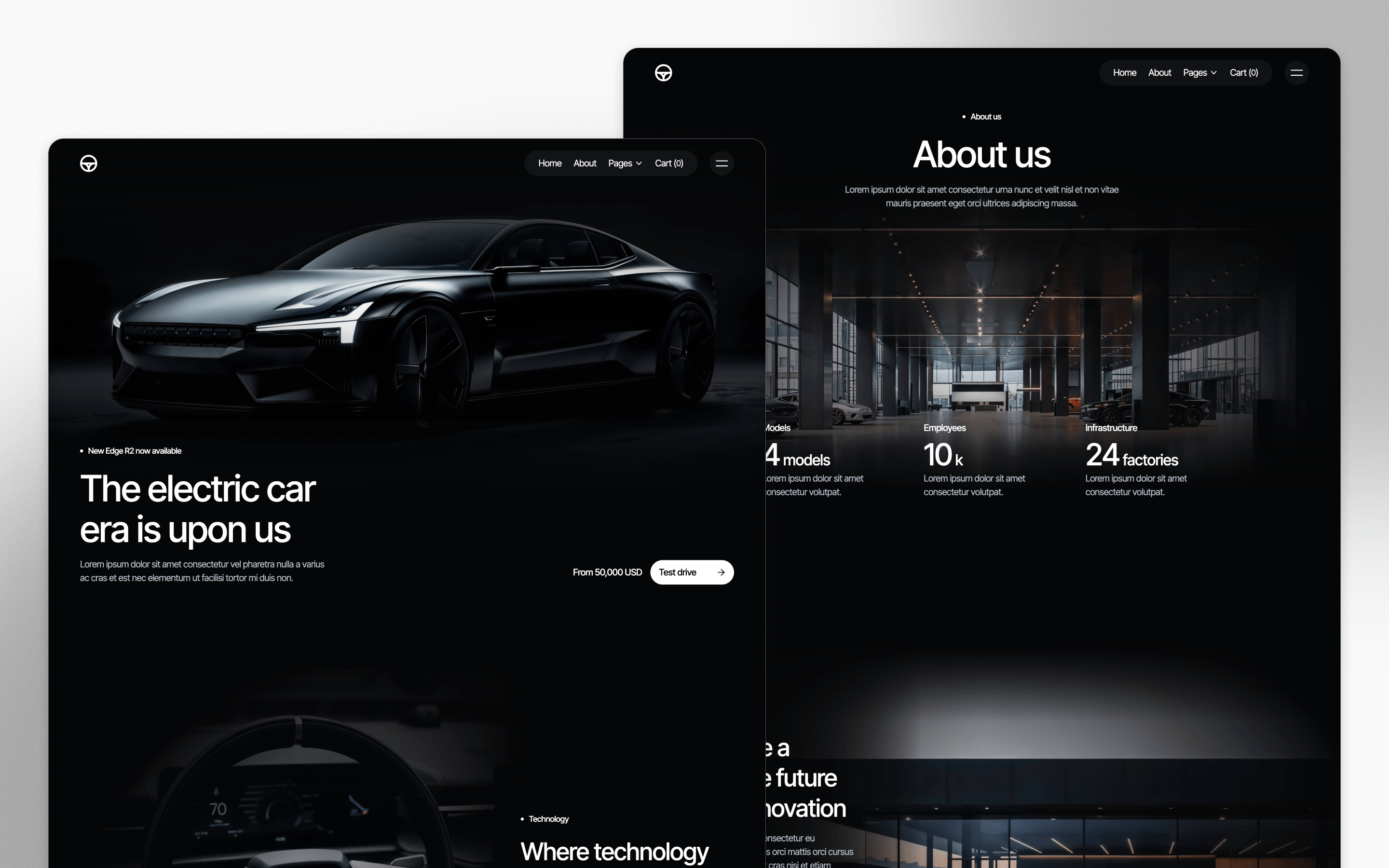
Motorflow is our automotive template with a product-led approach to presenting vehicles. The dark opening screen gives the car room to stand out, while the accompanying company page introduces the people and facilities behind it. Together, those views show how a striking product presentation can lead naturally into the story of the business.
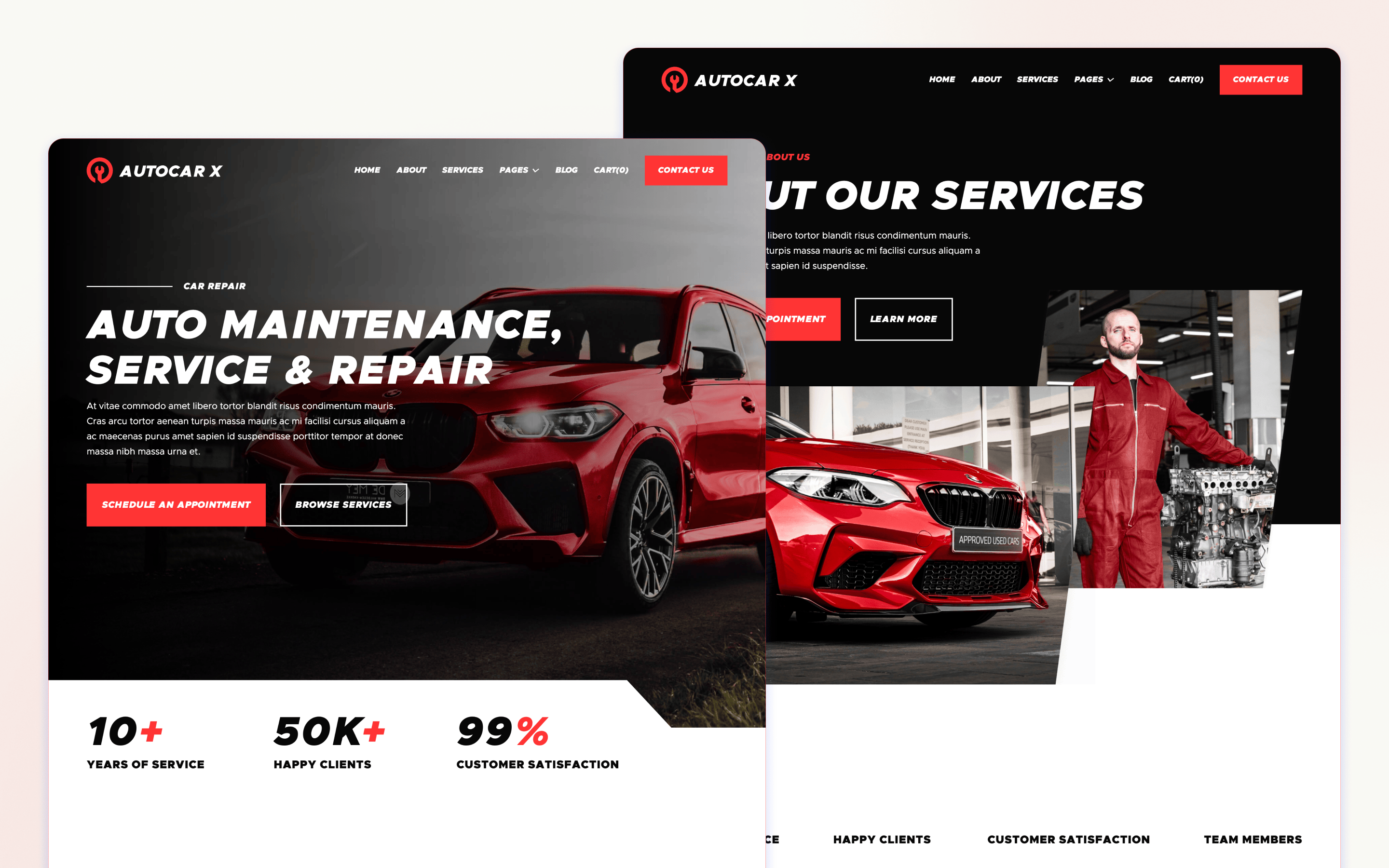
Autocar X is our automotive service template, designed around the practical reasons someone visits a workshop website. Bold vehicle photography introduces the business, with service and appointment links close to that first impression, while the about page gives the team a visible presence. The result brings personality to the shop without making its services hard to find.
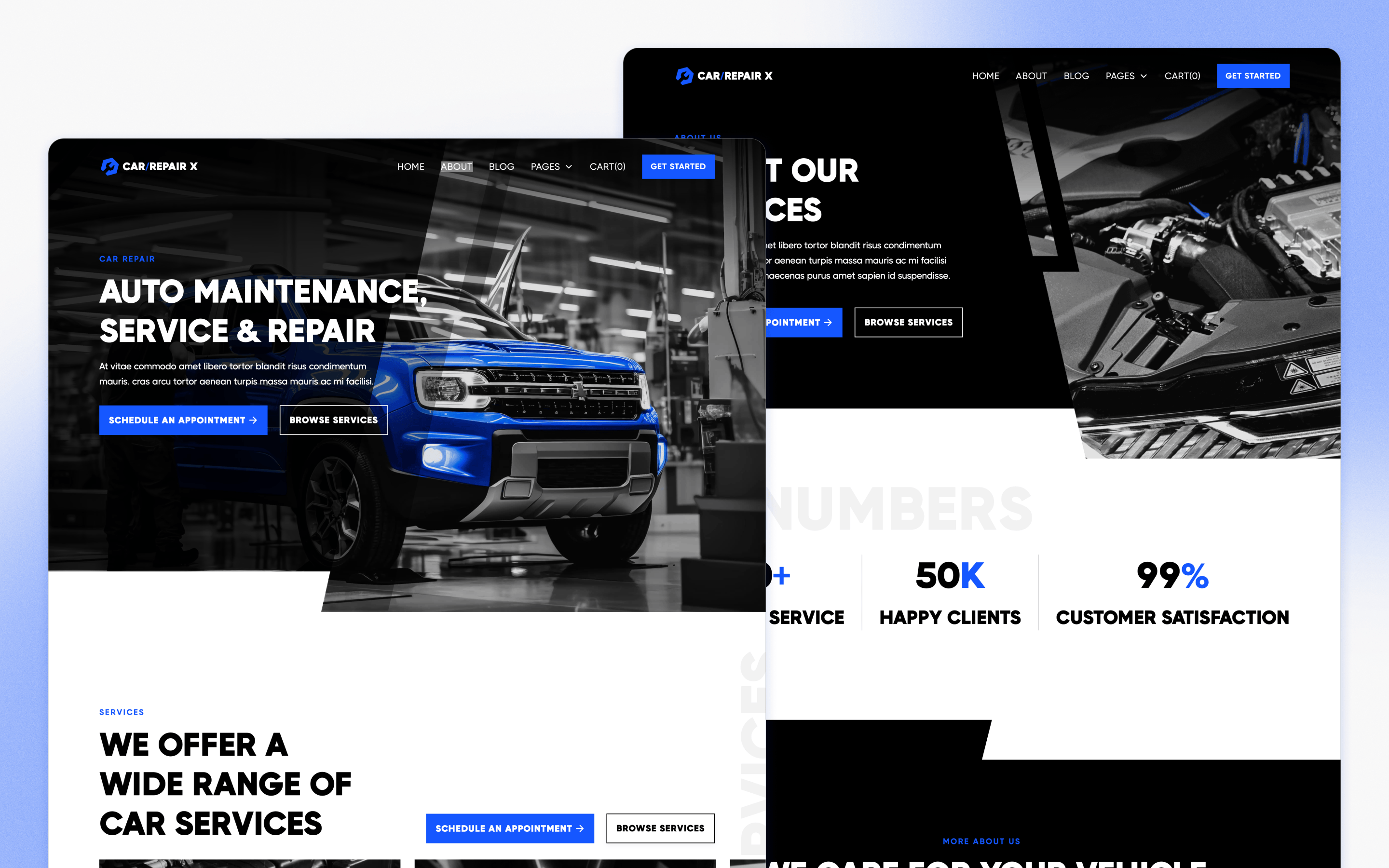
CarRepair X is our auto repair template, with a more workshop-focused visual direction and a clear route from the opening introduction into the services offered. Photographs of vehicles and technicians help visitors picture the business, while the layout gives individual repairs space to be explained before someone requests an appointment.
Across our template collection, more than 1,500 websites use our designs. When you work with BRIX Agency, we bring that experience to a custom website built around your brand, your customers, and the way your automotive business works.
2. Fhoke: Best Automotive Web Design Agency for WordPress
 2
2Fhoke
A design studio building bespoke WordPress websites that give specialist vehicle makers room to show their craftsmanship and individual builds.
A bespoke vehicle deserves more than a stock listing with a few photographs. Fhoke is worth exploring when your website needs to explain the thinking and craftsmanship behind a build, with a visual style that makes the workshop as interesting as the finished car.
Its New Legend 4x4 work also gives you a relevant WordPress reference. For a team regularly adding builds and photographs, the conversation can cover both the page design and how those stories will be published after the agency hands over the site.
Featured project: New Legend 4x4
Fhoke designed and developed a bespoke WordPress website for New Legend 4x4, bringing together build presentation, galleries, and inquiry-focused navigation. The project pairs a strong vehicle introduction with a closer view of the workshop and the people turning each build into a finished product.
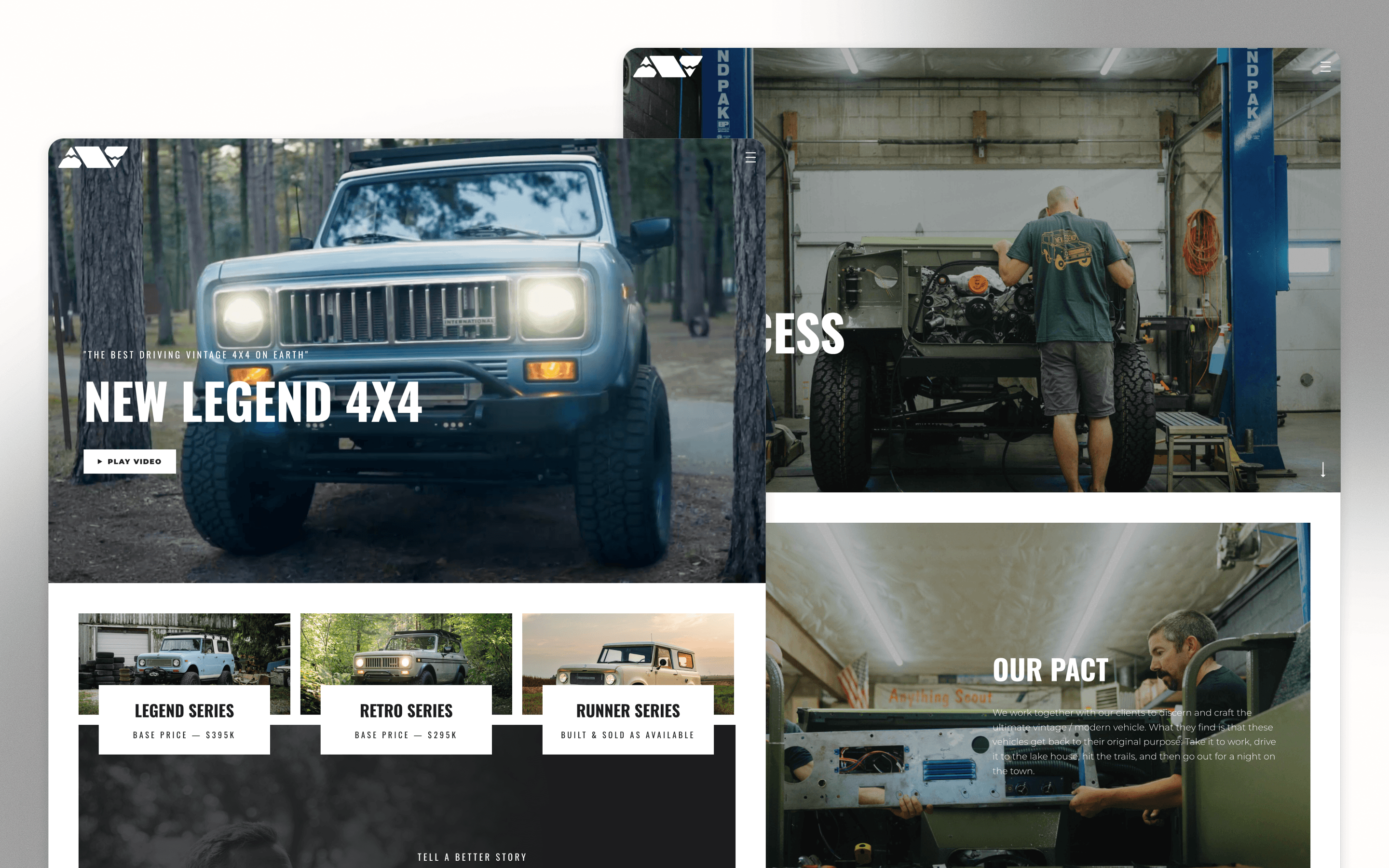
Notice how the images move between the vehicle and the work behind it. That balance makes the project a useful reference for specialist craftsmanship, particularly if your customers need to understand what makes one build different before they can have a meaningful conversation about commissioning their own.
3. Orange Crush Digital: Best Automotive Web Design Agency for Website Navigation
 3
3Orange Crush Digital
A digital agency organizing automotive websites with extensive product, racing, retail, and technical content into clearer paths for different visitors.
A manufacturer can have several audiences using the same website, from a prospective buyer to an owner searching for a technical document. Orange Crush Digital has a relevant project for that challenge in Ginetta, where the redesign needed to make a substantial amount of content easier to navigate.
The appeal is the combination of a strong visual introduction and a practical content hierarchy. If your website has grown through years of added menus and pages, this is a team to ask about simplifying the experience while keeping the information your existing customers rely on.
Featured project: Ginetta
The project record documents this work. Orange Crush designed and developed Ginetta's website, reorganizing car ranges, championship information, merchandise, and technical resources. Its case study explains how an accumulated, difficult-to-manage structure became a clearer set of journeys, with product imagery and video giving the main pages their character.
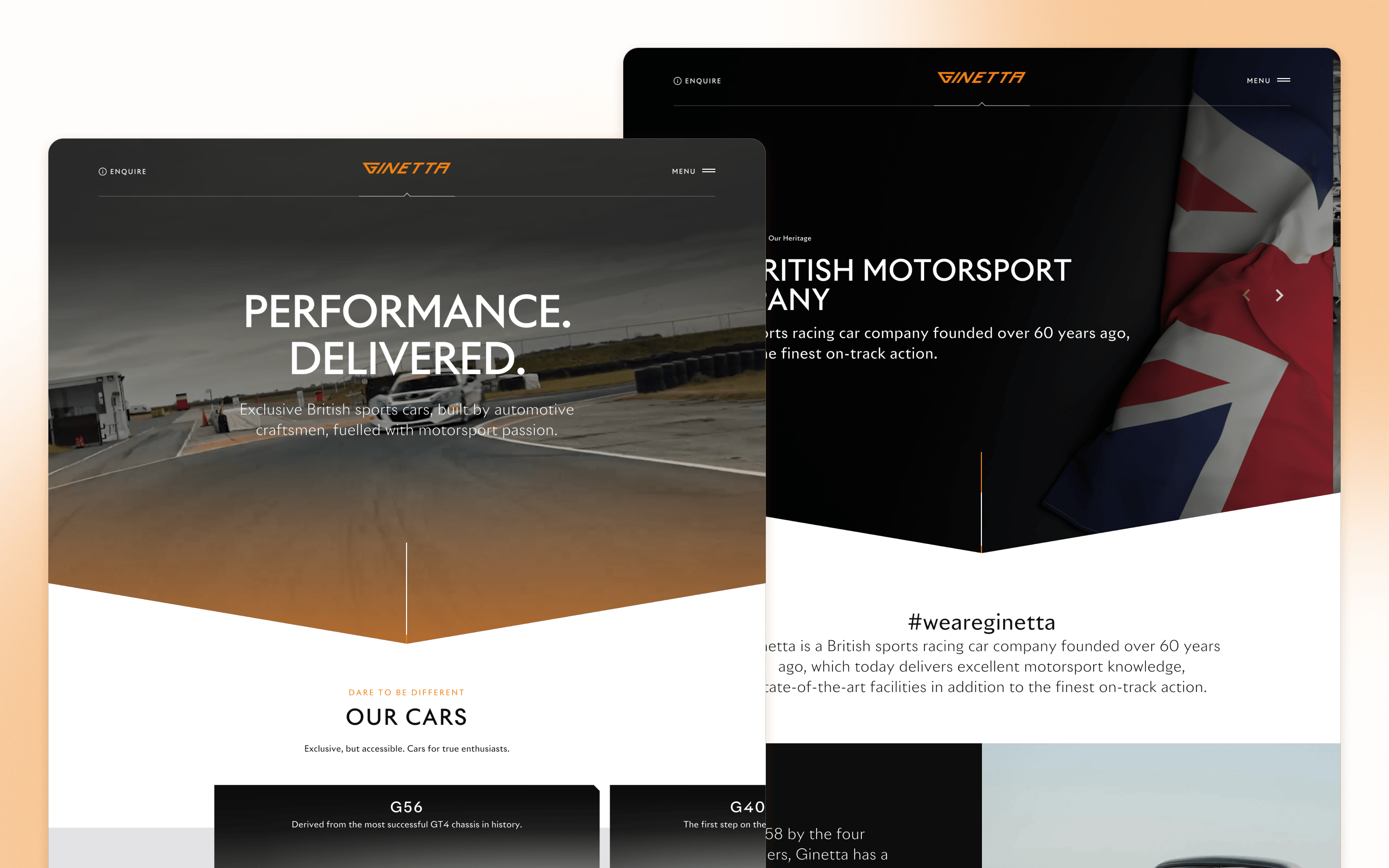
The selected views show the cars alongside the manufacturer's broader story. For your brief, use that relationship to discuss different visitor goals: which pages should introduce the brand, which should help someone choose a vehicle, and which should get an existing owner directly to a useful resource.
4. Vrrb: Best Automotive Web Design Agency for Luxury Dealerships
 4
4Vrrb
A digital agency combining vehicle browsing with editorial content and owner experiences for dealerships that want a stronger brand presence.
For a specialist dealership, the website can introduce a whole ownership experience as well as the cars available today. Vrrb's Ferrari Beverly Hills engagement is a good example to discuss when inventory needs to sit alongside service, events, and the enthusiasm that keeps customers connected to a brand.
That broader scope changes the design brief. The team needs to think about how someone moves from admiring a model into browsing available vehicles, while giving returning owners an equally useful reason to visit the site.
Featured project: Ferrari Beverly Hills
Vrrb's documented Ferrari Beverly Hills project combined website design and development with redesigned inventory browsing, editorial content, events, racing, and restoration presentation. The current website views below show the dealership's product and service content, while the linked case explains the agency's delivered engagement.
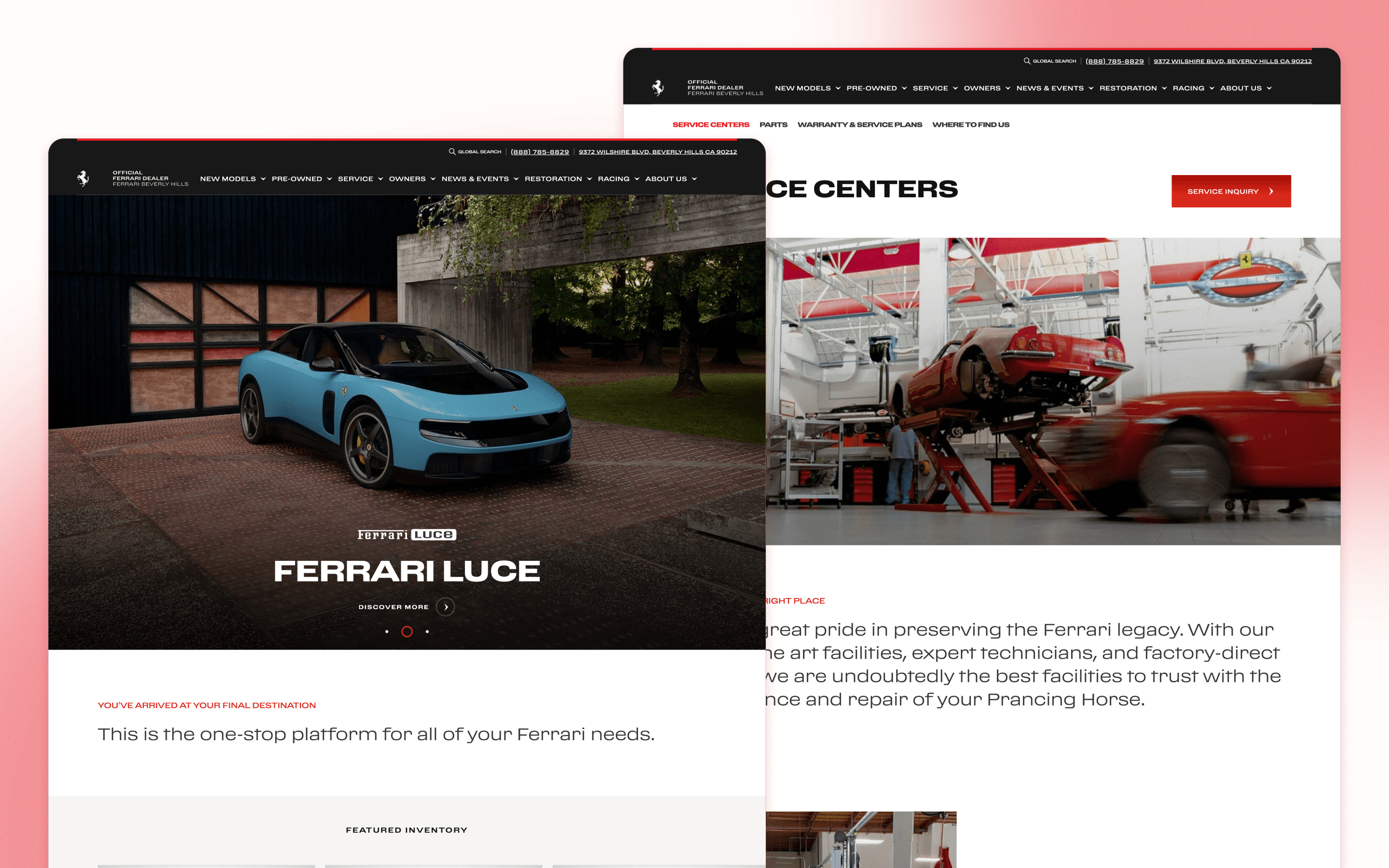
A useful question here is how inventory and ownership should relate on your own website. Ask the agency to walk through the original project and explain the separation between its design work, the inventory provider, and the systems your sales and service teams would continue to use.
5. Montarev: Best Automotive Web Design Agency for Repair Shops
 5
5Montarev
An automotive marketing agency building service-focused websites that help repair businesses explain their work and turn interest into relevant enquiries.
A repair shop's visitors often have a practical question before they care about the design: can this business help with my vehicle? Montarev approaches automotive websites from that service perspective, with work that puts the shop's capabilities and contact routes near the center of the experience.
Its Power Train Plus project is especially relevant for businesses with several specialties to explain. A customer looking for diesel repair should be able to recognize that service without first working out how it relates to the shop's performance and custom-build work.
Featured project: Power Train Plus
Montarev rebuilt the Power Train Plus website around clearer service pages and a more professional presentation. Its case describes additional SEO and advertising work as part of the wider engagement, while the supplied website views introduce the business through vehicles, workshop photography, and explanations of its services.
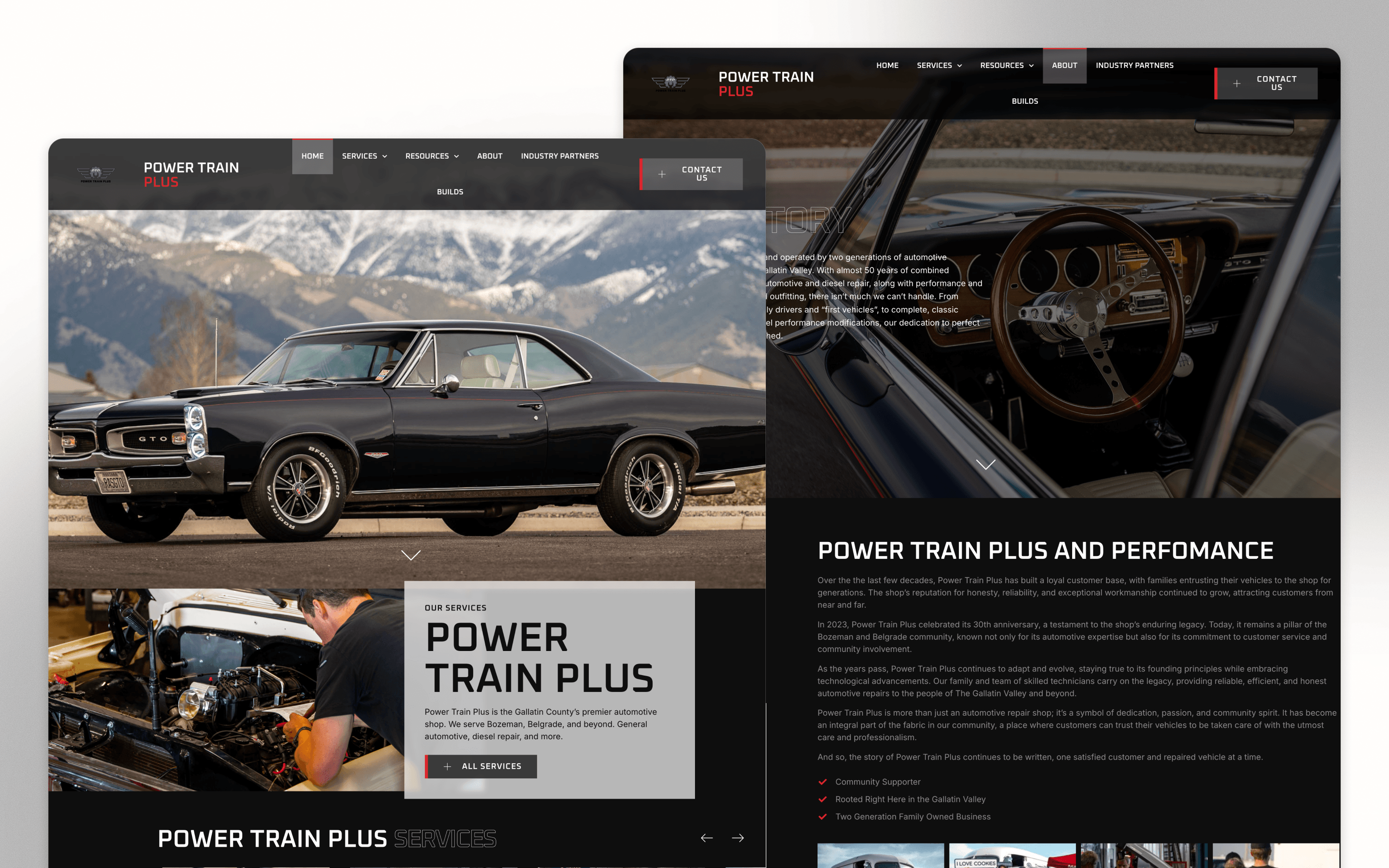
The combination gives you something concrete to discuss if service enquiries are the main goal. Start with the jobs your shop actually wants to receive, then ask how the agency would organize those pages and distinguish the initial website work from any ongoing marketing programme.
6. One Design Company: Best Automotive Web Design Agency for Brand Storytelling
 6
6One Design Company
A design studio connecting brand identity and website storytelling for automotive technology businesses with unfamiliar products to explain.
An automotive technology company may need to explain a new way of working before a buyer can judge the product. One Design Company's ISEE engagement offers a useful reference for that situation, connecting the brand's identity with a website story about autonomous commercial vehicles.
The design opportunity goes beyond choosing futuristic imagery. A visitor needs to understand where the technology operates, who uses it, and what it changes, so illustration and video should help answer those questions as part of a readable page.
Featured project: ISEE
One Design Company's ISEE project brought together brand identity and website design using custom illustration, animation, and video. The work introduced an autonomous-driving business to its audience, while the current website views below show the company's fleet-focused proposition and industrial setting.
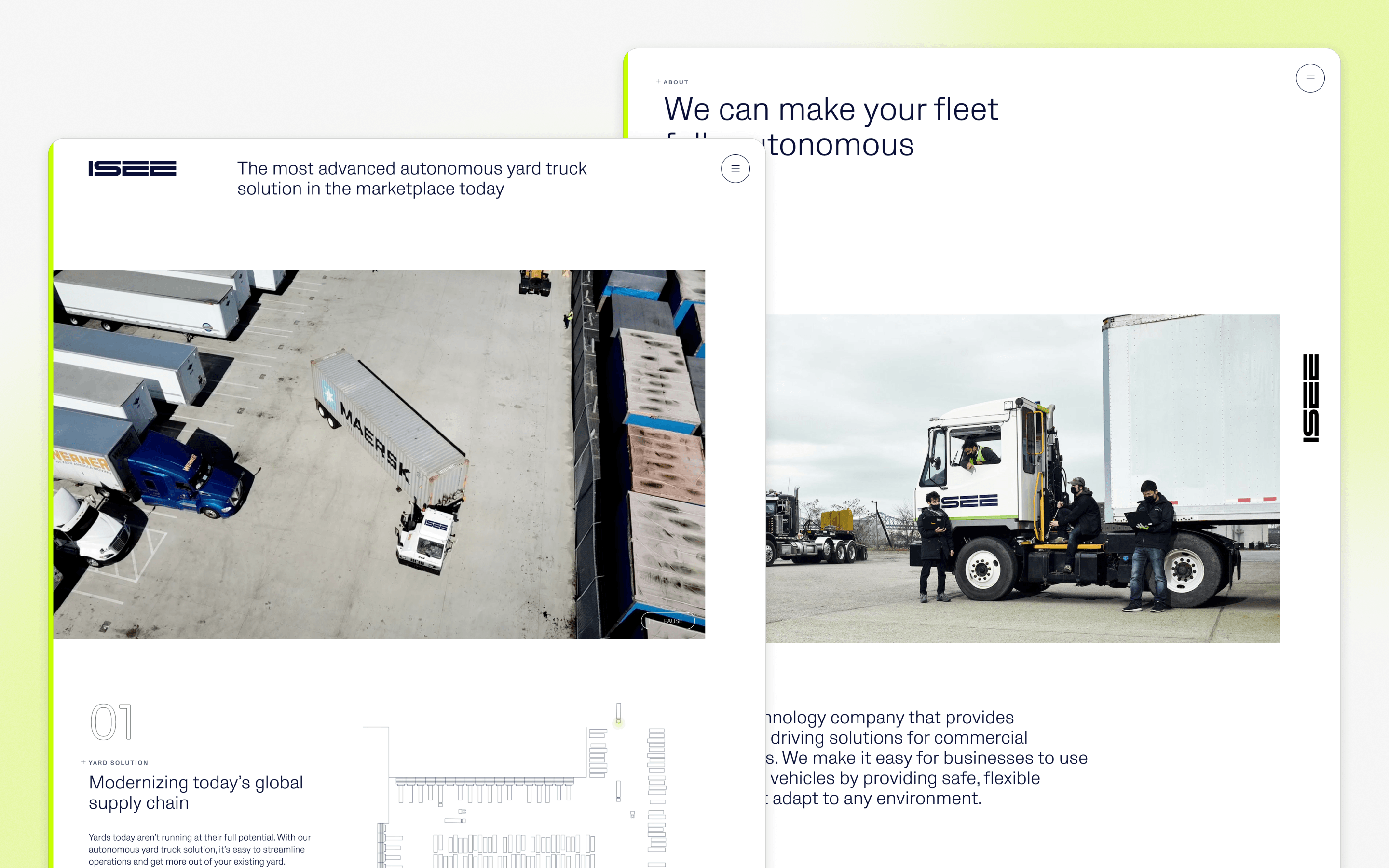
Consider the relationship between technology and application as you review this example. A convincing site gives the innovation a clear setting and purpose, so ask the studio how it would turn your own product explanation into a visual narrative that a prospective customer can follow.
7. Bornfight Studio: Best Automotive Web Design Agency for Motion Design
 7
7Bornfight Studio
A digital studio designing and developing automotive websites where motion helps introduce vehicles and explain the engineering behind them.
A performance vehicle offers plenty of visual material, but a website still needs a reason for each moving element. Bornfight Studio has documented automotive work that connects vehicle presentation with animation, making it a relevant option when you want motion to play a deliberate role in the experience.
Its Rimac Automobili engagement gives the discussion a specific product context. The challenge is to make engineering feel tangible while keeping the pages useful to someone who wants to read specifications, understand the company, or take the next step.
Featured project: Rimac Automobili
The project record documents this work. Bornfight's Rimac case documents website design and development, including design, frontend, and backend roles, with an animation-led vehicle presentation. The current Rimac website views shown here illustrate its vehicles and engineering story; the agency's case provides the reference for its earlier commission.
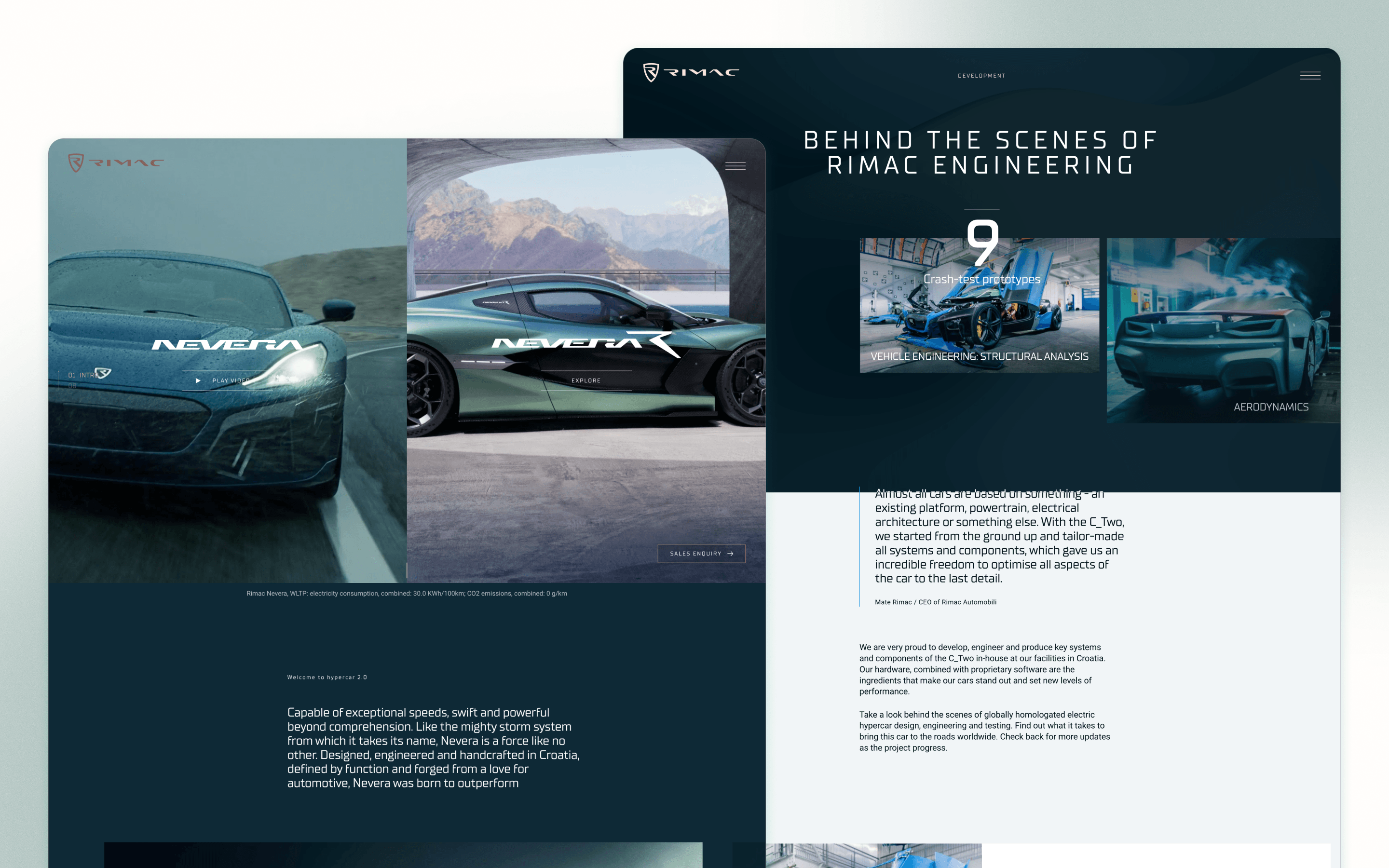
Ask to see how the original motion design worked on a phone and how the content behaved without its larger visual effects. That discussion helps you judge the agency's approach to product storytelling and performance together, rather than approving an animation only because it looks impressive on a desktop.
8. Numbered: Best Automotive Web Design Agency for Art Direction
 8
8Numbered
A creative studio bringing art direction, animation, and website design to automotive projects with a distinct visual point of view.
When the vehicle itself has a strong design identity, the website can give people space to notice its details. Numbered is an option to explore for that kind of presentation, with its credited capricorn 01 Zagato work offering a more concentrated, visually led automotive reference.
This is particularly useful when you're introducing one model or a small collection rather than maintaining a large inventory. The page can build interest through the shape, materials, and story of the vehicle, provided the essential product information remains easy to find.
Featured project: capricorn 01 Zagato
Siteinspire credits Numbered with animation, design and art direction, and development for the capricorn 01 Zagato website. The selected views use close vehicle photography, a restrained palette, and room around the written introduction to establish a consistent visual identity for the model.
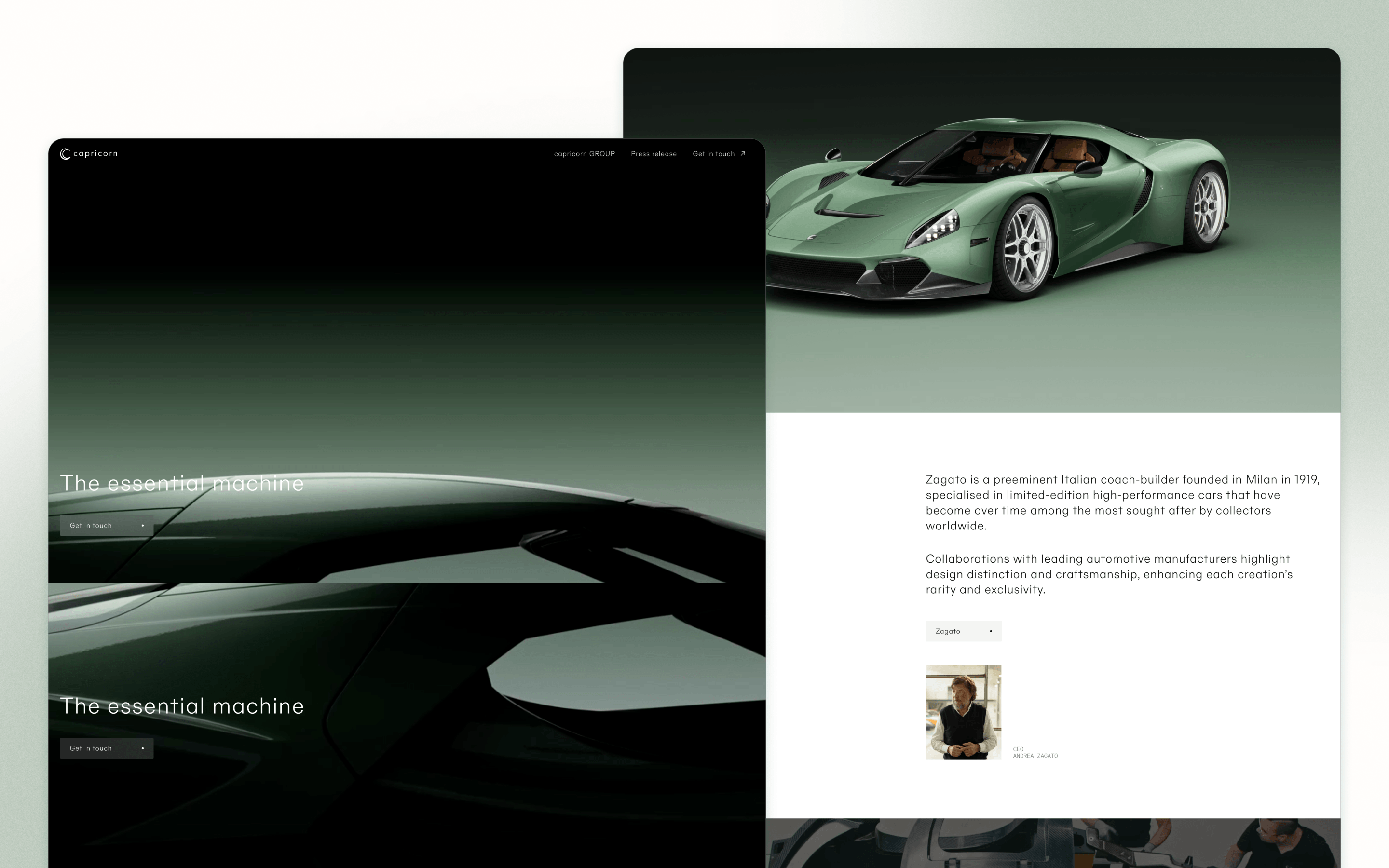
The value to discuss is art direction: how photographs, page composition, and movement would express your vehicle's character. Bring the agency your actual image resources and product story so the conversation moves beyond a mood board into the material needed to create the finished website.
9. Demonstrate x DDW: Best Automotive Web Design Agency for Editorial Design
 9
9Demonstrate x DDW
A creative agency bringing automotive website development, art direction, and writing together around the character of a specialist vehicle brand.
Some automotive brands sell a way of seeing the car as much as a particular specification. Demonstrate x DDW's Singer Vehicle Design engagement is relevant when photographs and words need to work together to express that point of view across the website.
The project brings several creative responsibilities into the same conversation, including art direction and copy. For a brand with a detailed design philosophy, that can help the page layouts grow from the story instead of leaving the writer to fill spaces after the visual work is finished.
Featured project: Singer Vehicle Design
The project record documents this work. Demonstrate's Singer case describes a website revamp involving web development, art direction, copywriting, and content creation. The current website views below pair large vehicle photography with more detailed editorial presentation, reflecting the range of material a specialist automotive brand needs to organize.
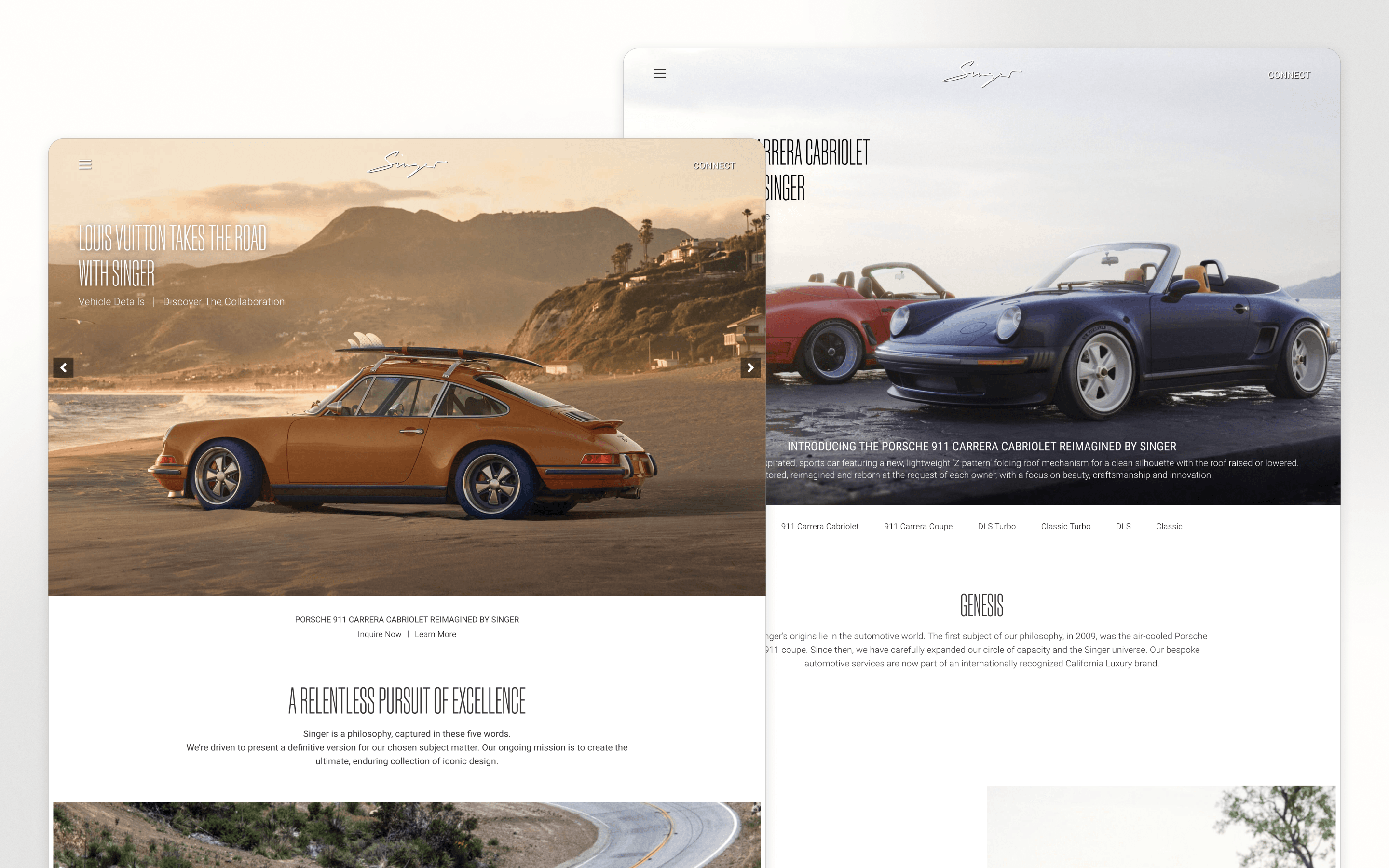
Use the example to discuss content and design as one piece of work. Ask what the agency would need from your team to explain the craft behind a vehicle, and which writing, photography, and production responsibilities it would include in its own proposal.
10. Commerce Pundit: Best Automotive Web Design Agency for Inventory Integration
 10
10Commerce Pundit
A web design and development agency connecting vehicle inventory, enquiry paths, and service content within custom automotive websites.
A dealer website has a lot happening behind the photographs: inventory changes, customer enquiries need context, and service bookings may go to a different team. Commerce Pundit has documented work across those connected parts, making it relevant when the project includes more than a visual refresh.
Its Merlin Auto Group case is a useful starting point for discussing the systems already running your business. Before choosing page layouts, the agency needs to know where vehicle data comes from, how it reaches the site, and where each customer request should go.
Featured project: Merlin Auto Group
Commerce Pundit's Merlin Auto Group project covers UX/UI redesign and custom WordPress development, including inventory filters, enquiries, service appointments, and external listing integrations. The current client views shown below bring together vehicle sales, consignment, and service content within the dealership's online presence.
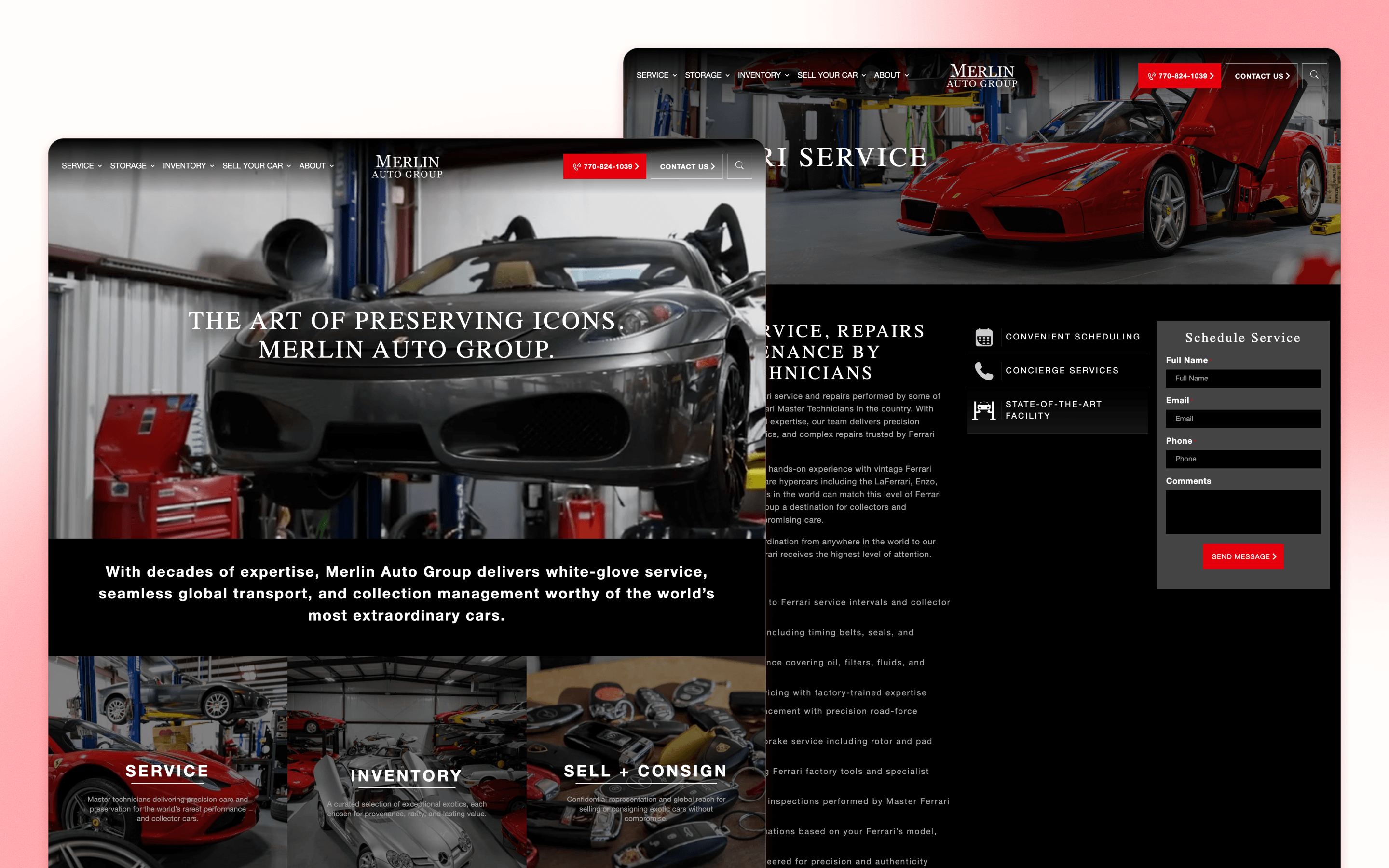
The practical focus is inventory integration, so ask for a walkthrough of the data flow and the features delivered in the case. Your proposal should identify which connections are included, which depend on outside providers, and who investigates an update that fails to reach the website.
11. Index Studio: Best Automotive Web Design Agency for Automotive Suppliers
 11
11Index Studio
A creative studio producing websites that help automotive suppliers present their capabilities, industrial expertise, and company story to business audiences.
An automotive supplier's website has a different job from a dealership: it needs to make the company's capabilities understandable to business visitors. Index Studio's credited Flex-N-Gate work provides a relevant reference when your products and expertise matter more than consumer-facing inventory or test-drive requests.
The design can still have a strong visual identity, but it should lead into a clear explanation of what the business makes and how it works. Factory photography and product imagery become useful when they support that explanation rather than simply filling a large hero.
Featured project: Flex-N-Gate
Flex-N-Gate's own legal page credits Index Studio with creating its website, and Siteinspire also records the project. The supplied views move from an automotive introduction to the company's manufacturing expertise, with industrial photography providing context for the products and systems it supplies.
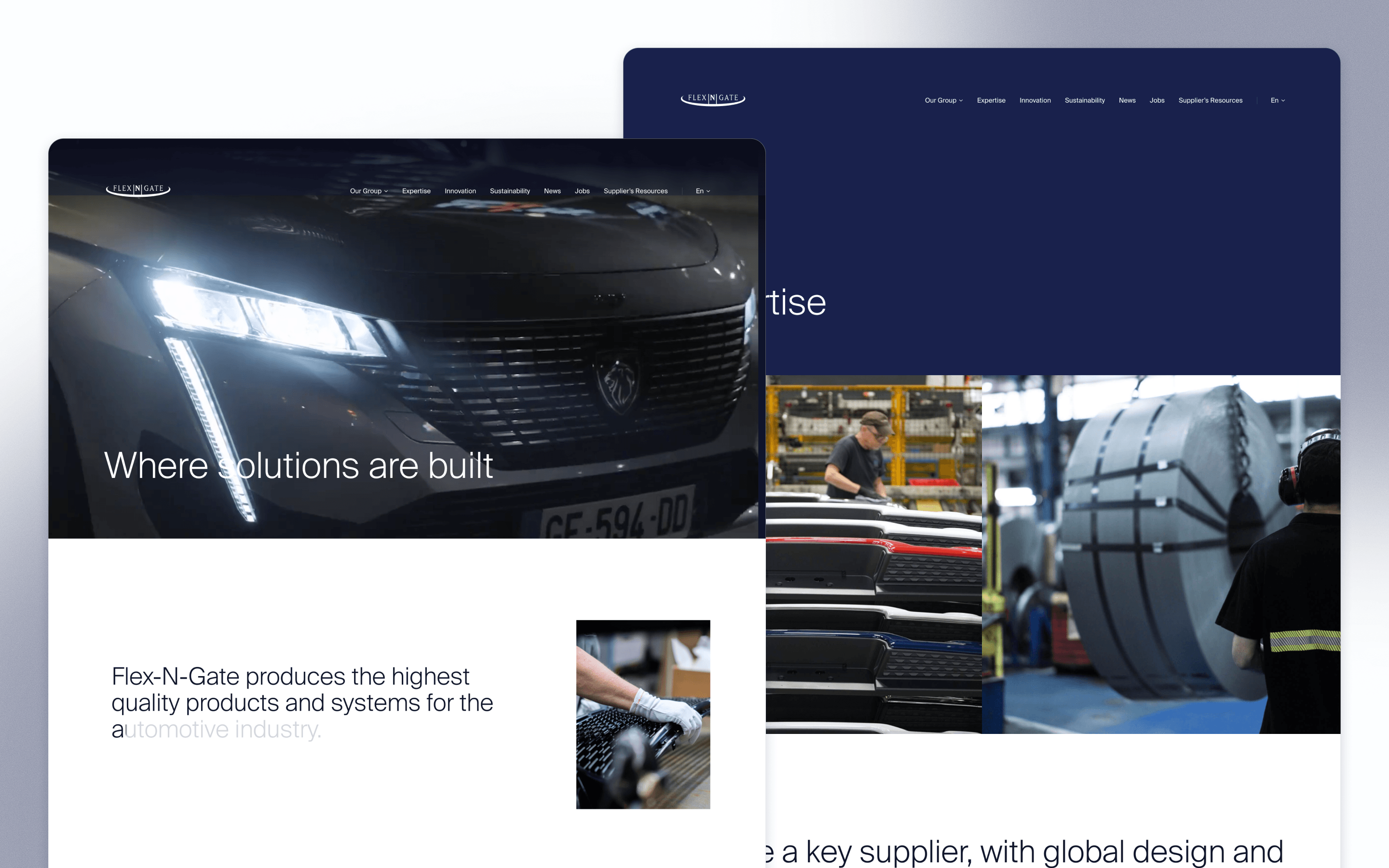
If you serve manufacturers or other business buyers, use this example to discuss capability pages and the information needed before an enquiry. Ask how the studio would organize your product families, facilities, and technical material, along with the exact design and development responsibilities in its proposed scope.
12. Antinomy Studio: Best Automotive Web Design Agency for Interactive Storytelling
 12
12Antinomy Studio
A digital studio using interaction, motion, and website development to make complex automotive technology easier to explore and understand.
Explaining autonomous-driving technology on a website requires more than a diagram and a list of features. Antinomy Studio is a relevant choice when interaction can help connect a technical idea to its real-world application, with Waabi providing a documented example of that approach.
The useful question is what the visitor should understand at each point in the page. A sequence of visuals can make a complex story easier to follow when the copy, interactions, and underlying structure are developed together, rather than treating motion as a finishing layer.
Featured project: Waabi
The project record documents this work. For Waabi, Antinomy delivered art direction, UX/UI, interactive design, motion, and web development, working with a brand identity supplied by Manual. The project connects the company's trucking application with a visual explanation of its physical-AI technology, as the selected website views illustrate.
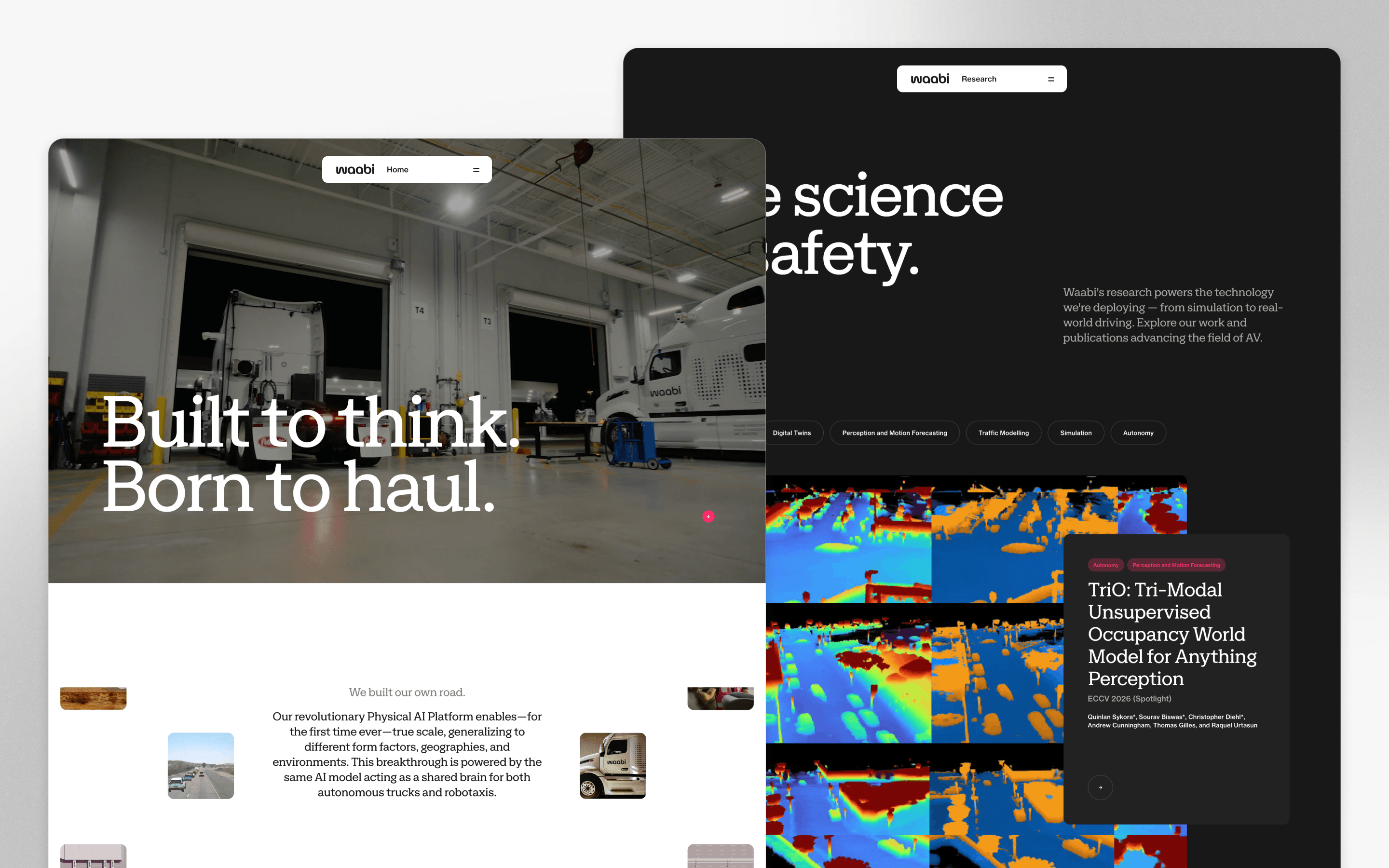
This is a strong reference for interactive storytelling when a mobility product is unfamiliar to its audience. Ask the studio which parts of your explanation would benefit from movement, which should stay readable as ordinary content, and how the experience would remain usable across screen sizes.
13. Racecar: Best Automotive Web Design Agency for Vehicle Configurators
 13
13Racecar
An automotive digital agency building websites and configurators that help customers explore vehicle options before starting a sales conversation.
When customers can choose finishes, specifications, or build options, the website needs to explain how those choices fit together. Racecar has a directly relevant Kingsley Cars project that combines the main website with a car configurator, giving you more to evaluate than a static product page.
That makes it worth a conversation if your sales process starts with a personalized vehicle. Define what the online configuration should produce, whether that's an enquiry, a saved specification, or another agreed output, so the experience connects to the way your team actually sells.
Featured project: Kingsley Cars
Racecar's Kingsley Cars portfolio lists website design and build, a content management tool, a 3D model, and a car configurator. The selected website views introduce the vehicle programmes with large photographs and a clear route into the different builds offered by the business.
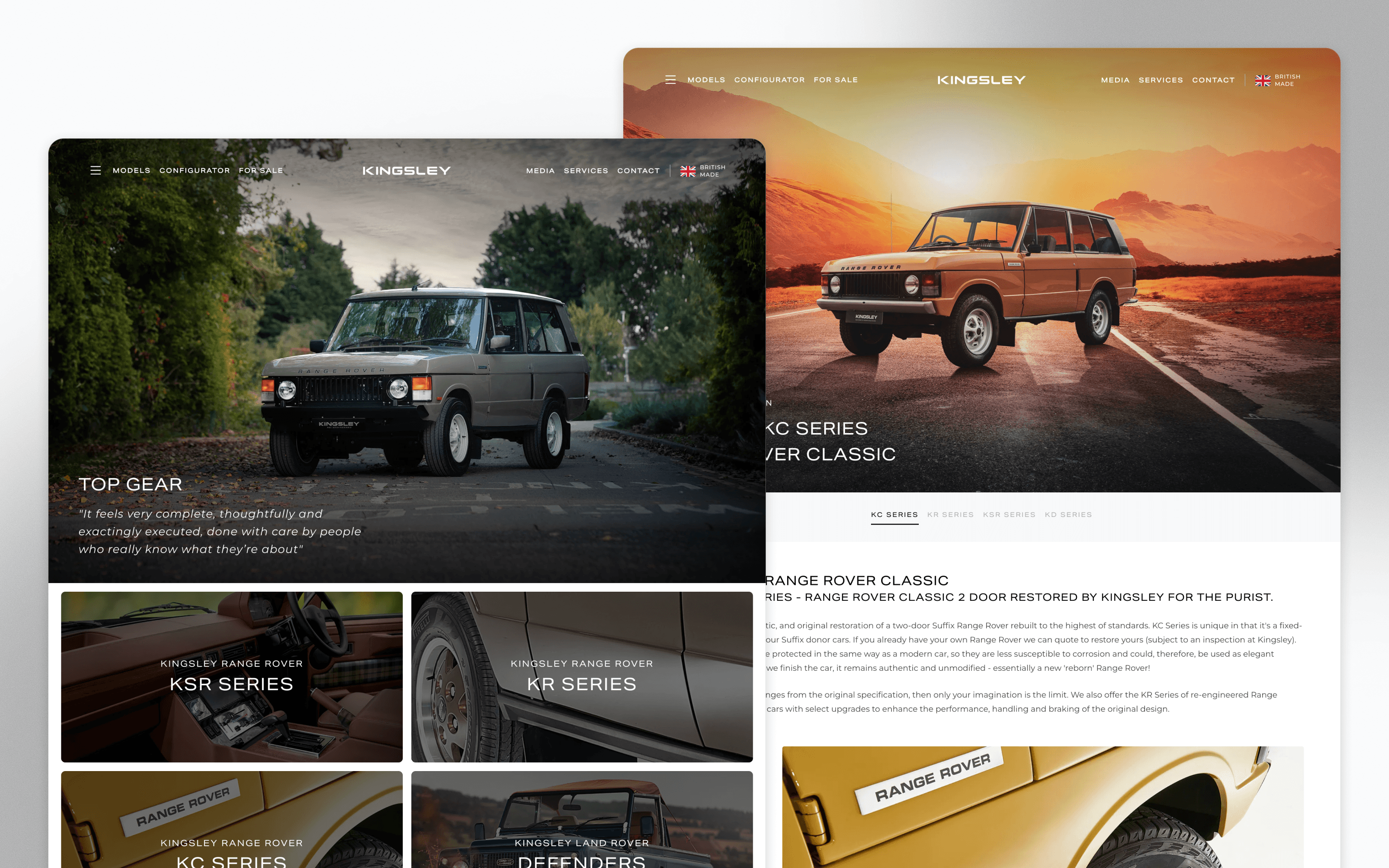
For a similar project, the important detail is the configuration handoff. Ask how available options would be maintained, how incompatible choices would be handled, and what information the sales team would receive, alongside the cost of creating and updating the visual assets.
14. Studio DMCG / David McGillivray: Best Automotive Web Design Agency for Product Launches
 14
14Studio DMCG / David McGillivray
A design studio shaping the creative direction and digital presentation of mobility products with a distinctive visual identity.
A new mobility product has to introduce its category and its personality at the same time. Studio DMCG / David McGillivray offers a useful reference through Infinite Machine, where the documented commission focused on the visual language and digital design of the product's early presentation.
That is relevant when you're still deciding how a new vehicle should appear online. The first task is often finding the right balance between a striking introduction and enough concrete information for a visitor to understand what the product is and who it is for.
Featured project: Infinite Machine
The project record documents this work. David McGillivray's Infinite Machine project credits creative direction, digital design, and visual language, with additional design by Ananya Arora. That commission concerned the P1-era presentation; the image below shows the company's current website and expanded product offering, including Olto.
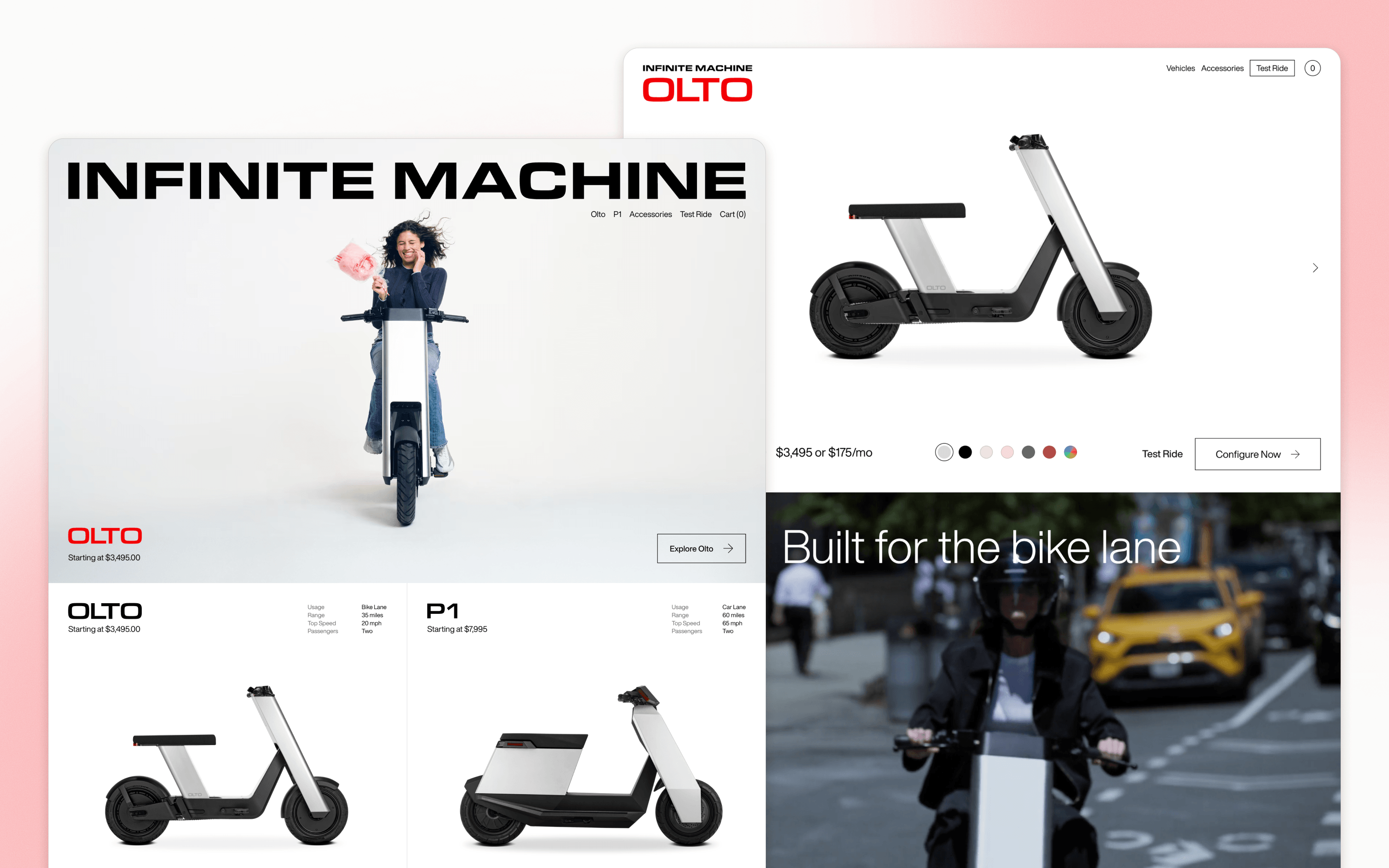
For your own product launch, ask to see the original design work and how it established a visual direction. Then agree on the separate responsibilities for development, product photography, and ongoing updates, so a strong creative concept has a clear route into a finished website.
15. REJOUICE: Best Automotive Web Design Agency for Brand Launches
 15
15REJOUICE
A brand and digital agency combining automotive launch strategy with art direction, website production, and a coordinated product story.
Introducing a new automotive brand means giving people a reason to care before they know the name. REJOUICE's Rivian launch engagement is relevant when your project needs the brand story, launch materials, and website to come together around that first introduction.
The scope is broader than designing a homepage. A launch site may need to speak to potential customers, press, and partners at once, so the message and the sequence of information deserve as much thought as the vehicle photography.
Featured project: Rivian
REJOUICE documents Rivian's historical brand launch, including strategy, art direction, copy, website design and development, motion/3D, and content. The current Rivian website views below show the brand's vehicle and technology presentation today, while the linked case is the reference for the launch commission.
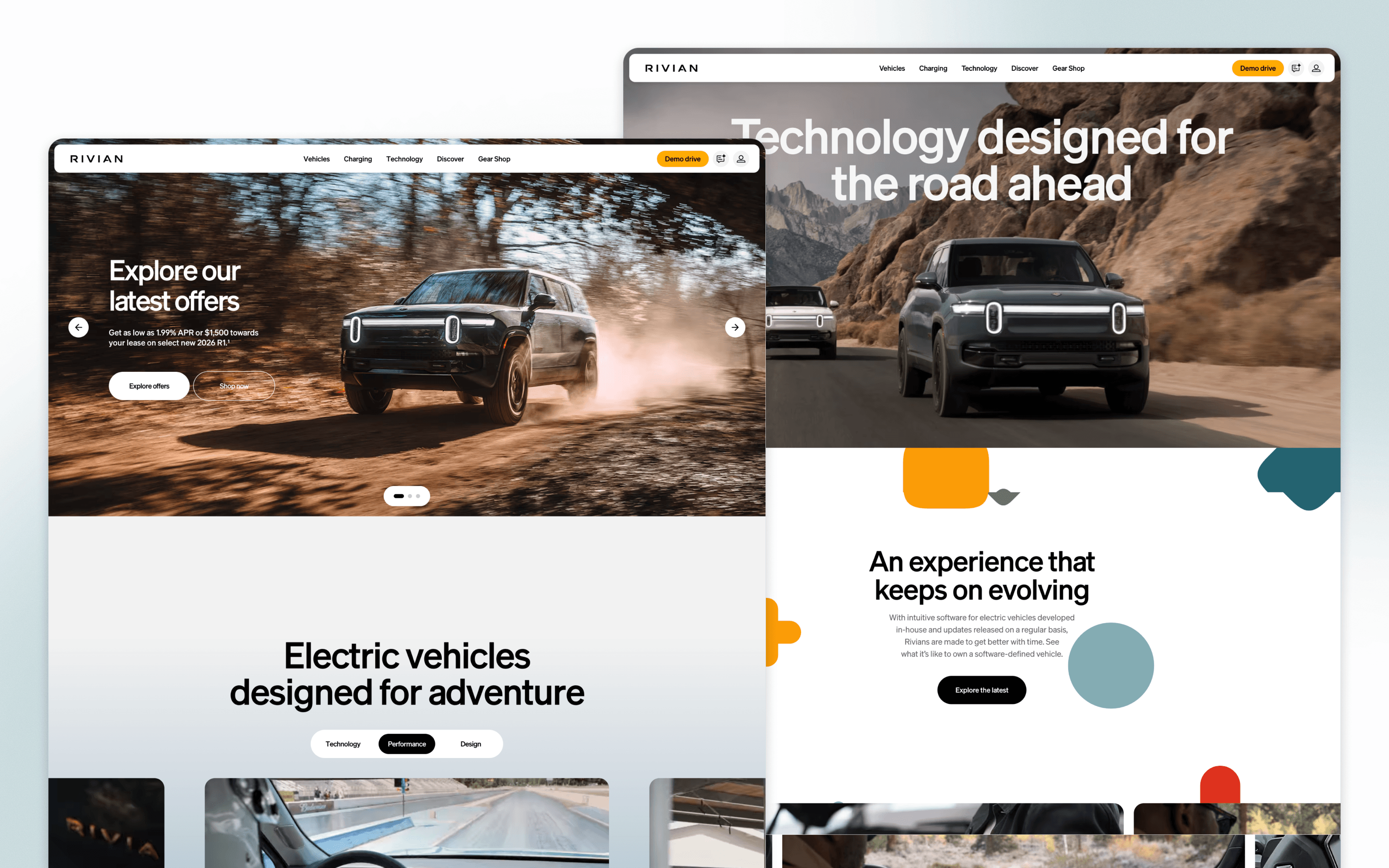
The point to explore is launch coordination: which audience needs which information, and how the website fits the wider release. Ask the team to walk through its original deliverables and explain the production, approvals, and post-launch support a comparable engagement would require.
What an automotive web design agency should help you with
The first deliverable should be a clear picture of what the website needs to do. For a dealer, that could mean finding an available vehicle and arranging a viewing; for a manufacturer, it might be comparing models; for a technology supplier, understanding an application well enough to request a conversation. An agency should translate that goal into the pages and interactions the project actually needs.
Agree on responsibility for the visual design, development, writing, photographs, and data before the build begins. Automotive projects can involve product renders, specification tables, inventory feeds, or a configurator, and each changes the work involved. The proposal should distinguish website production from the software or services it connects to, so everyone knows where the agency's responsibility starts and ends.
Include content entry and handoff in that scope. Someone needs to prepare the first vehicle records, check the images, approve product claims, and learn how to keep the site current. Ask what support remains available after launch, including who responds if a stock feed stops updating or an enquiry no longer reaches the right team.
How to choose an automotive web design agency and compare costs
Begin with a short list of the journeys that matter most to your business. “Find a used vehicle under a certain budget” is a different assignment from “understand why our autonomous system fits a distribution yard.” Once the goal is specific, you can look for agencies whose projects show the corresponding design and technical work.
Send the same brief to 2–3 agencies so their replies address the same business, content, and systems. Mention whether you are an independent company or have manufacturer requirements that affect the website, and include the tools you already use. The email below gives the agency enough context to ask useful questions without making you write the complete specification first.
Subject Automotive website for [company], launch in [month]
Hi [name],
We're [company], a [vehicle brand, dealership, workshop, or mobility business] serving [audience]. We found your work through BRIX Agency's automotive agency guide and would like to discuss a website that helps customers [compare vehicles, understand our product, or enquire about our services].
Our current site is [URL]. We expect [number] main page types covering [models, inventory, services, locations, and company information], and we use [inventory provider, CRM, or dealer management system]. We'd like the new site to [describe the required connections].
We can provide [photography, specifications, and approved copy], and need help with [remaining material]. [Team or role] will update the content after launch. Our target date is [date], with an initial project budget of [range].
Could you share a comparable project and outline your recommended scope, milestones, and responsibilities? Please separate the website fee from hosting, third-party software, and ongoing support, and explain how you would test inventory updates and enquiry delivery before launch.
Thanks,
[Your name]
[Role and company]
Read each proposal for what gets delivered before comparing its total. A design-only quote, a WordPress build with manually entered inventory, and a website connected to several live feeds represent different amounts of work. Ask for the page types, content entry, integrations, image production, testing, and training to be listed clearly, including the responsibilities left with your team.
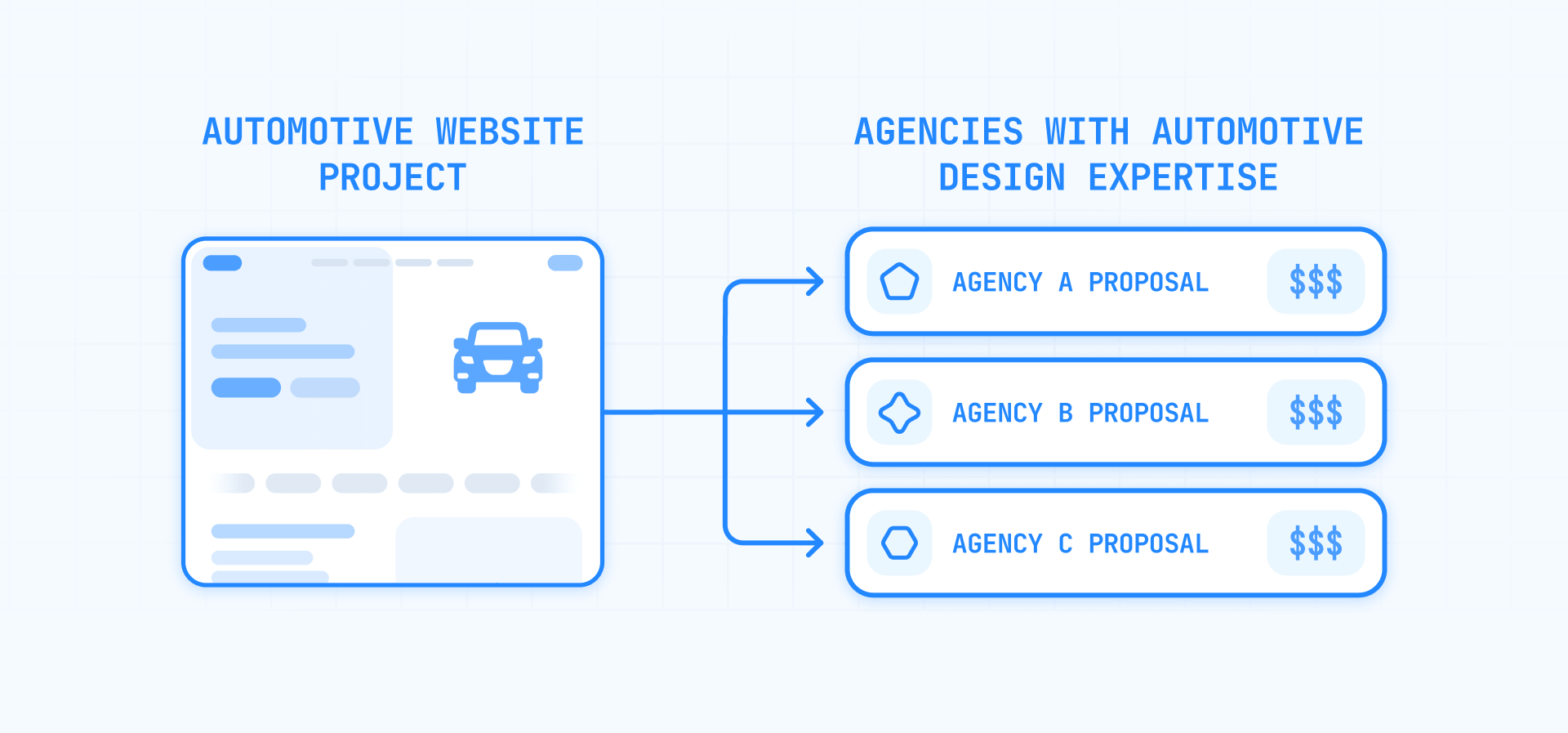
Separate the initial project from recurring charges for hosting, stock systems, CRM tools, support, and marketing. The selected case studies don't establish a comparable price for your project, so use scoped proposals rather than a supposed industry average. If the fee changes when you add another location, model range, or feed, have the agency explain that dependency before you sign.
The schedule needs the same level of clarity. Ask when the agency needs approved copy, vehicle photographs, product specifications, integration access, and stakeholder feedback. If a launch is tied to an event or new model announcement, define the first release around what can be completed and tested by that date, with later additions identified separately.
Finally, agree on ownership and access. Clarify who controls the domain, content, image licences, CMS, and customer enquiry records, and how those move if you change providers. For a franchise dealership, check your manufacturer's provider and brand requirements before commissioning a replacement; the agency's preferred platform may not be the only consideration.
Choosing a CMS your automotive team can keep up to date
Your website should be easy to change when a new model arrives, a service changes, or a vehicle sells. A friendly editor and a fast public site are useful starting points, but the key decision is where each update begins: with your marketing team, your inventory system, or another product database.
Separate the website editor from the inventory source
Marketing may own the homepage, model stories, workshop pages, and news while stock availability comes from a dealer management system or feed. Map that relationship before selecting a CMS, including which fields staff can edit locally and which will be replaced by the next import. Otherwise, a well-intended manual correction can disappear without anyone understanding why.
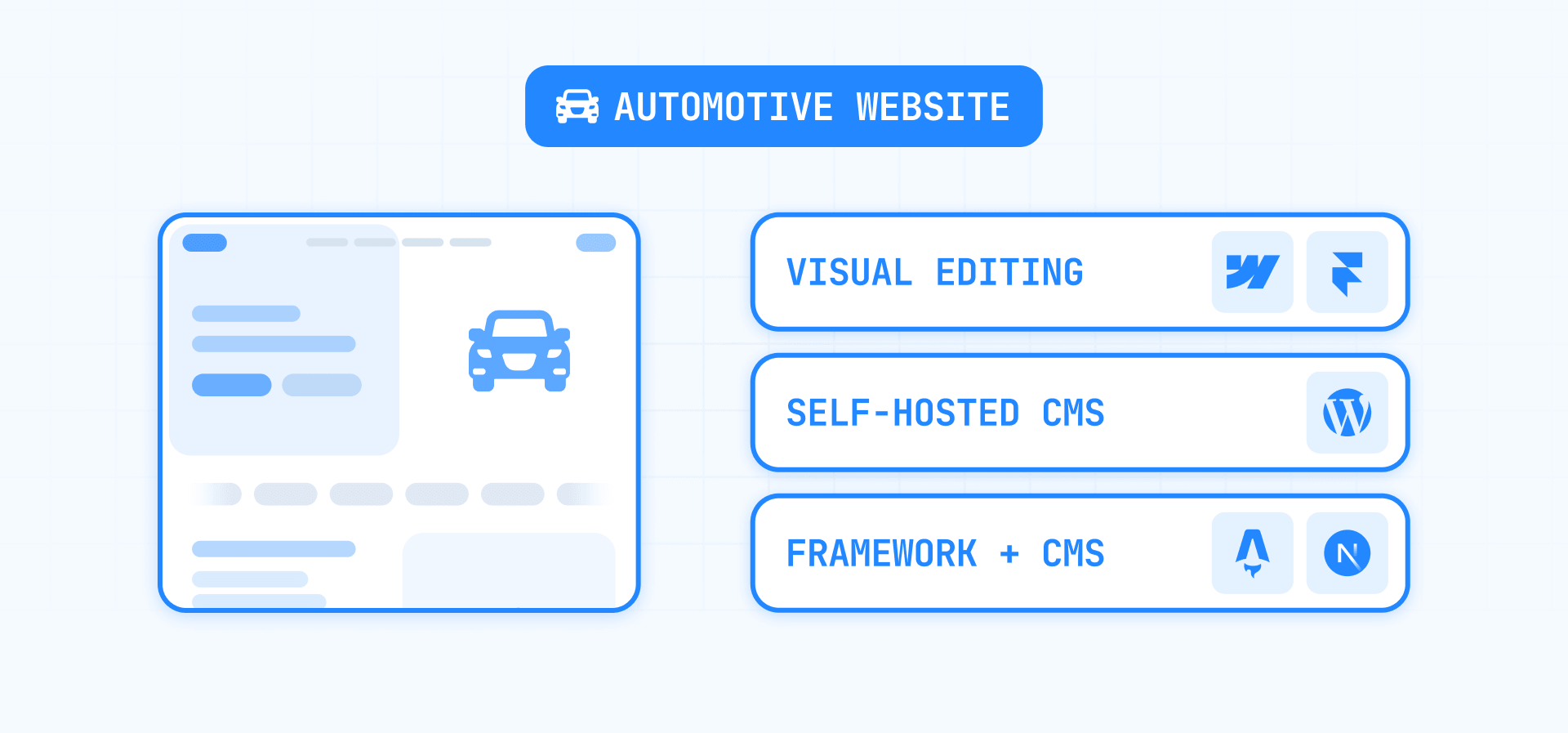
Webflow and Framer offer visual editing and CMS tools for teams that want a straightforward publishing experience. Ask the agency to demonstrate how it would organize model pages, stories, and reusable content on the proposed plan. If your site needs live inventory, assess that connection separately instead of assuming a CMS collection already solves the feed requirement.
Choose the maintenance arrangement along with the platform
WordPress lets you run the website and its CMS database on a server you choose. It can suit a team that wants that control, provided the proposal also explains how the editor will work and who maintains the installation, plugins, and backups. Connected stock, finance, or CRM providers may keep their own data elsewhere.
Astro and Next.js are frameworks for building websites and can work with a separate CMS. They're options for a tailored technical setup, but the editor, hosting, and integration support still need to be specified. Ask what your content team will use every week and what will require a developer after launch.
Look at a site the agency has already delivered
Request a relevant project on the proposed platform and ask how its client publishes a new model, changes a service, or updates a specification. That example should make the editing approach understandable before you commit. Include a written handoff and a named support route in your own project, especially where automated imports and staff-managed content share a page.
Automotive website design essentials: products, inventory, and enquiries
Help visitors understand the vehicle or technology
Start with the information a buyer needs to make progress, then decide how imagery and motion can support it. A model page might need dimensions, features, options, and availability, while a mobility platform needs to explain its use case and operating setting. Keep the product explanation readable even when the visual presentation is ambitious.
Plan photography and video early, including vehicle views, interiors, workshop details, or technical demonstrations. A strong visual concept depends on having the right material and permission to use it. Compress large assets, provide useful image descriptions, and make sure essential information is available without playing a video or completing an animated sequence.
A configurator belongs in the scope when choosing options is a meaningful part of your sales process. Agree on the available combinations, the source of configuration data, the images or 3D models required, and the result a customer receives. A saved specification or enquiry should carry enough detail for sales to continue the conversation without starting again.
Make inventory useful and keep it accurate
For a dealer, the vehicle detail page should connect the photographs to clear specifications, status, and a relevant contact action. Let shoppers narrow the stock with useful filters and retain their choices when they return from a listing. On a phone, the filters and enquiry controls need to leave enough room to actually look at the car.
Document the inventory update process, including how often data arrives, how sold or reserved vehicles appear, and what happens when an import fails. Test those states with sample records before launch, then name the person who investigates discrepancies. A successful connection on the first day doesn't establish that every later update will be noticed or handled correctly.
Decide how unavailable listings should guide visitors and how their URLs will be managed, rather than leaving broken pages or promising stock that has gone. During a redesign, map valuable existing model, service, and location pages to their new destinations, test redirects, and review search performance afterward. Migration checks and ongoing SEO are separate responsibilities to agree with the agency.
Connect the next step to the right team
Someone asking about a specific vehicle should not have to type its name again into a general contact form. Pass the relevant model or stock reference into the enquiry, then route it to the correct sales location. Service requests, partnership enquiries, and test-drive requests can need different information and different recipients, so plan those paths explicitly.
When connecting a CRM, scheduler, or stock provider, have the agency review its documentation and available access before promising the integration. Use supported finance-application tools when your business needs them, with the receiving system and responsibilities agreed separately. A public enquiry form should collect the information needed for a first response, with more sensitive processes handled through the appropriate system.
Test the complete customer journey on a phone, including forms, click-to-call links, confirmation messages, and delivery to staff using test data. Check it with every chat, consent, and promotional widget loaded, since those can obscure controls that looked fine in a design file. Keyboard access, visible focus, readable contrast, and reduced-motion behaviour belong in the same review.
For several locations, tie each enquiry to the right branch and make its hours, address, services, and available stock clear. Confirm who handles the follow-up and how you'll know a message arrived. The website's useful outcome is a conversation your team can continue, not simply a button that registers a click.
Frequently asked questions about automotive web design agencies
How much does an automotive website cost?
The cost depends on the website's scope, especially the page types, content production, inventory connections, and interactive features involved. A workshop site with service pages is a different project from a multi-location dealer website or a vehicle launch with a configurator, so a general price range can hide the work you actually need.
Ask a few agencies to quote the same brief and identify design, development, copy, image production, integrations, and training separately. Then compare recurring hosting, software, and support charges alongside the initial fee. Request clarification on anything assumed to be supplied by your team, and use the resulting scope to set your budget before selecting a provider.
How long does an automotive website project take?
The timeline depends on content and technical readiness as well as design work. Vehicle photography, approved specifications, access to inventory systems, and stakeholder feedback can all affect when a site is ready to launch. Ask the agency for a milestone plan that includes these dependencies rather than only the time needed to build pages.
If you have a fixed launch event, agree on the essential first release and the materials needed to support it. Reserve time for mobile review, inventory testing, enquiry delivery, and redirect checks before the deadline. Give one person responsibility for coordinating feedback, then confirm how a delay in content or integration access would change the schedule.
Can an automotive website connect to our CRM or dealer management system?
It can when the provider offers a supported connection and the agency can work within its access and data requirements. Share the exact CRM, dealer management system, and inventory providers during scoping, including what information should move between them and the website, so the proposed integration is based on your actual setup.
Ask the agency to identify the fields, update frequency, error handling, and ongoing support included in its work. An inventory feed and an enquiry sent to a CRM are separate connections, even when both appear on the same vehicle page. Test representative records and customer journeys before launch, and name who will investigate a failed update afterward.
What should an automotive vehicle detail page include?
A useful vehicle page combines clear product information with a relevant next step. Depending on your business, that means photographs, specifications, available options, pricing context, and current status, followed by a way to enquire about that vehicle. The page should give a visitor enough information to decide whether to continue the conversation.
For stock listings, carry the vehicle reference into the enquiry and make the responsible location clear. For a model or bespoke build, explain how options and availability are confirmed. Review the page on a phone with the full site's widgets active, and ensure the key details remain readable without watching a video or navigating a complex animation.
Can an automotive web design agency build a car configurator?
Yes, if configurator development is part of its demonstrated capability and the agreed project scope. Define what buyers can change, which combinations are allowed, and whether the result is a visual preview, a saved specification, or an enquiry. Those choices affect the data, design, and production work needed to make it useful.
Ask for a comparable configurator the agency has delivered and a breakdown of the required photography or 3D assets. Also discuss how your team will update options and what sales receives when someone finishes. Include mobile behaviour and incomplete configurations in testing, then agree who maintains the feature when the product range or available specifications change.
Which CMS should an automotive website use?
Choose a CMS around your content editing needs and the systems supplying vehicle data. Webflow and Framer offer visual publishing tools, WordPress can run on your chosen server, and Astro or Next.js can support a build with a separate CMS. The complete arrangement matters more than the platform name on its own.
Identify which fields marketing controls and which come from inventory or product feeds before approving the setup. Ask the agency to show a relevant delivered site and explain how its client maintains similar content. Your proposal should also name the hosting, training, and technical support responsibilities, so publishing a new model does not create an unexpected development task.
Can we keep our search traffic when redesigning an automotive website?
You can plan to preserve useful search pages, but no redesign comes with a guarantee that traffic will stay unchanged. Identify the model, service, and location pages people already use, retain valuable content, and map changed addresses to relevant replacements before launch. Inventory pages also need an agreed approach when vehicles become unavailable.
Have the agency include redirect testing, page titles, internal links, and post-launch Search Console checks in its scope. Keep those migration tasks distinct from ongoing SEO services so responsibility is clear. Review unexpected changes after the new site launches and investigate missing or misdirected pages, rather than treating a successful visual launch as the end of the migration.
How do we stop sold vehicles from appearing as available on our website?
Start with the source of inventory data and the rules that update the website. Agree on how sold, reserved, and unavailable vehicles are represented, how often updates run, and who can correct a discrepancy. The website cannot reliably display a sale that its source system has not yet recorded or supplied.
Ask the agency to test these states with sample records and explain how a failed import is detected. Decide what visitors should see when a listing is no longer available and how that page guides them onward. Assign ownership of the update process after launch, including a contact for the stock provider when the issue originates outside the website.
How can we make an automotive website easier to use on mobile?
Give visitors room to browse by keeping vehicle information, filters, and contact controls clear on a small screen. Large media files and overlapping chat, consent, and promotional widgets can make a polished design frustrating to use, so evaluate the complete page with those additions present rather than approving only a clean mockup.
Test a real journey from a model or stock listing through to an enquiry, including returning to search results and changing filters. Check readable text, visible focus, image loading, and alternatives to motion-heavy content. Ask the agency to demonstrate the finished experience on a phone and agree on the specific usability issues to resolve before the website is accepted.
Can a franchise dealership choose any website design agency?
That depends on the manufacturer's requirements and your existing provider agreements. Confirm the rules that apply to your dealership before choosing a replacement platform or committing to a custom build, including any prescribed providers, brand standards, integrations, and approval steps. An independent dealer or automotive business may have a different set of constraints.
Give those requirements to each agency at the start and ask how its proposed work fits them. Also clarify ownership of your domain, content, customer enquiry records, and access when an agreement ends. Settle those boundaries before comparing creative approaches, so the website you commission can be launched and maintained under the arrangements your business actually has.
Choose the team behind the experience you want to create
The best starting point is the part of your website that needs to work harder. That might be a model story, a clearer inventory journey, or a better explanation of technology that buyers haven't encountered before. A relevant project gives you a more useful basis for choosing an agency than a collection of impressive client logos.
Pick 2–3 teams, open their selected work, and follow the journey a customer would take. Then send them the same outline of your product, audience, content, and systems, with the questions you still need answered. Their replies should make both the creative direction and the practical responsibilities easier to compare.
If you'd like to bring that conversation to BRIX Agency, tell us what you're building in automotive. We respond in less than 24 hours, or 1–2 hours during business hours (PST), and can help you shape a website around the way your customers explore and choose.

Join readers commenting on this post!