

You can learn a lot about a restaurant before you ever sit down. The lighting, the way a dish is plated, even the music tell you what kind of evening to expect, and a good website should give people that same feeling while helping them decide whether to book a table.
Of course, guests also arrive with much simpler questions: what’s on the menu, whether you’re open on Sunday, and which location takes reservations. The best restaurant web design agencies make those answers easy to find without losing the personality that makes your place worth visiting, whether you run a neighborhood café or several very different dining rooms.
To help you find that balance, we’ve brought together 10 agencies with work you can explore for yourself. You’ll see websites for everything from a lively burger spot to fine dining, followed by practical advice on comparing proposals, choosing an editing setup, and planning a site your team can keep current between services.
How we selected these restaurant web design agencies
This list brings together 9 selected agencies and BRIX Agency, with a named restaurant project for each outside team. We reviewed their project descriptions alongside the selected website imagery, looking at the work they actually delivered and the different needs it could help a restaurant address. Each specialty is a useful starting point for your shortlist, rather than a claim that an agency only does that kind of work.
As the publisher, BRIX Agency takes the first position, and you can browse our portfolio alongside the other teams’ work. Restaurant websites can change after an agency’s engagement, so where the selected image shows a current site beyond the documented project, we distinguish the two. Follow the agency’s project link to understand its contribution, then visit the restaurant to see its website today.
The restaurant web design agencies at a glance
- BRIX Agency: A design and development agency creating custom restaurant websites with distinctive visuals, inviting food photography, and straightforward guest navigation.
- Propeller: A digital agency building restaurant websites that connect venue discovery with location-specific booking journeys across multiple markets and dining concepts.
- Superrb: A design and development studio giving restaurant websites a distinctive personality while keeping menus, locations, and booking easy to reach.
- Nucleus: A brand and digital agency creating restaurant websites that pair a considered visual identity with practical content management and reservations.
- SDCO Partners: A branding and design studio bringing restaurant identities to life through website design, copywriting, illustration, and a consistent visual identity.
- Orbit Media Studios: A web design and development agency helping restaurant businesses organize location information, menus, and online ordering within an editable website.
- Lounge Lizard: A digital agency designing restaurant websites that help guests move between menus, location details, reservations, and takeout without unnecessary searching.
- The 215 Guys: A web design and development agency building WordPress restaurant websites with straightforward navigation, clear ordering links, and room for seasonal promotions.
- Happy Cog: A design and development agency organizing restaurant group websites around shared content systems that still give individual dining concepts their own identity.
- Ignite Media: A creative agency combining website design and development with brand graphics for restaurant concepts that connect dining, drinks, and nightlife.
1. BRIX Agency: Best Restaurant Web Design Agency for Custom Design
 1
1BRIX Agency
A design and development agency creating custom restaurant websites with distinctive visuals, inviting food photography, and straightforward guest navigation.
A restaurant’s website should feel like an introduction to the place itself, whether that means the warmth of a coffee shop or the playful energy of an ice cream counter. At BRIX Agency, we bring that character into the design while giving guests clear ways to explore the food, learn about the business, and plan a visit.
Our work also includes the restaurant and café products in BRIX Templates, part of a wider collection that thousands of people use for their websites. Creating those products has given us experience with different ways of presenting food, telling a founder’s story, and organizing the details guests look for before choosing where to eat.
A taste of our restaurant web design portfolio
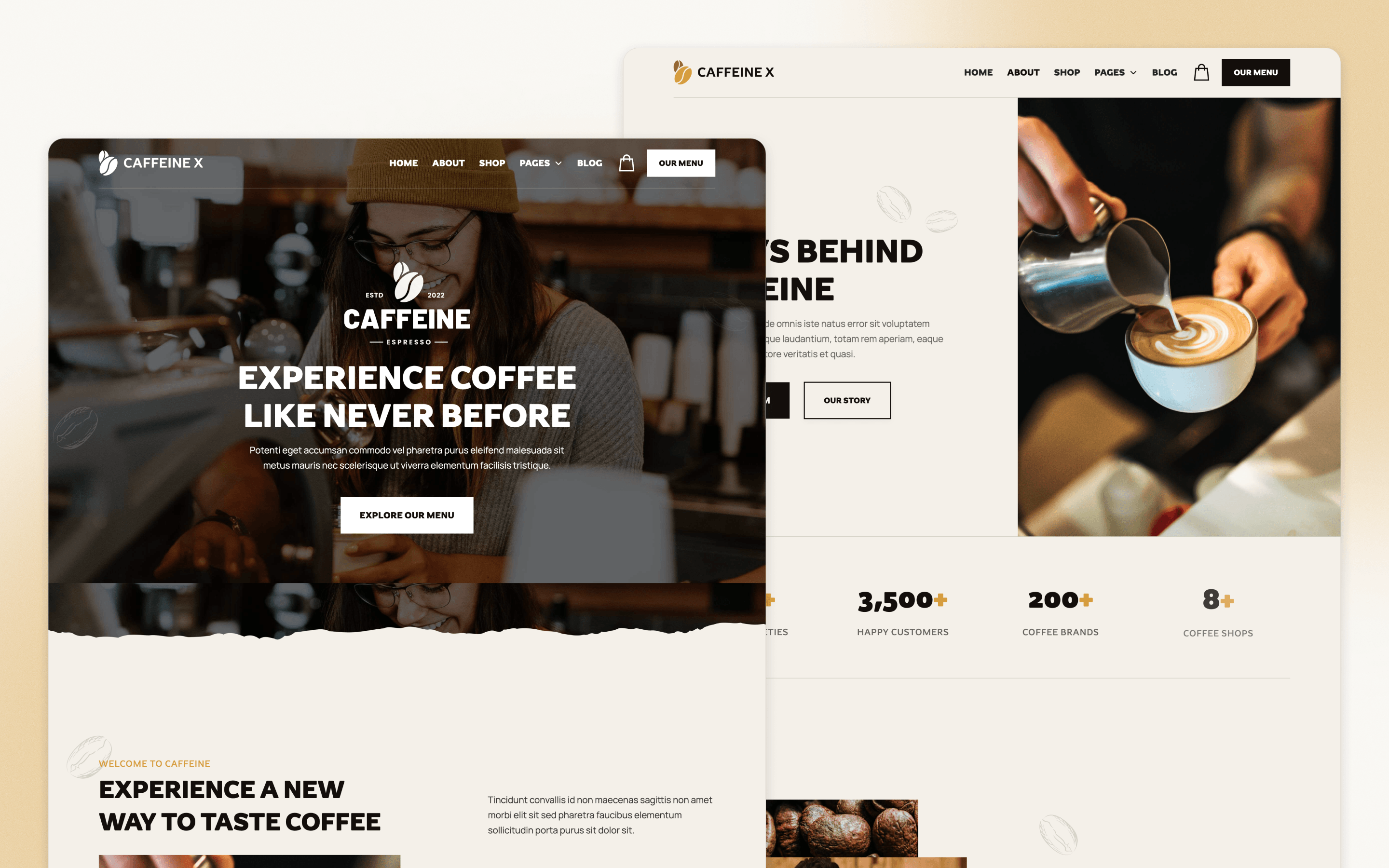
Caffeine X is our coffee shop template, designed around the craft and atmosphere behind a good cup. Warm photography and an open layout give the coffee and the people making it room to shine, while the supporting pages help a café tell its story beyond a list of drinks.
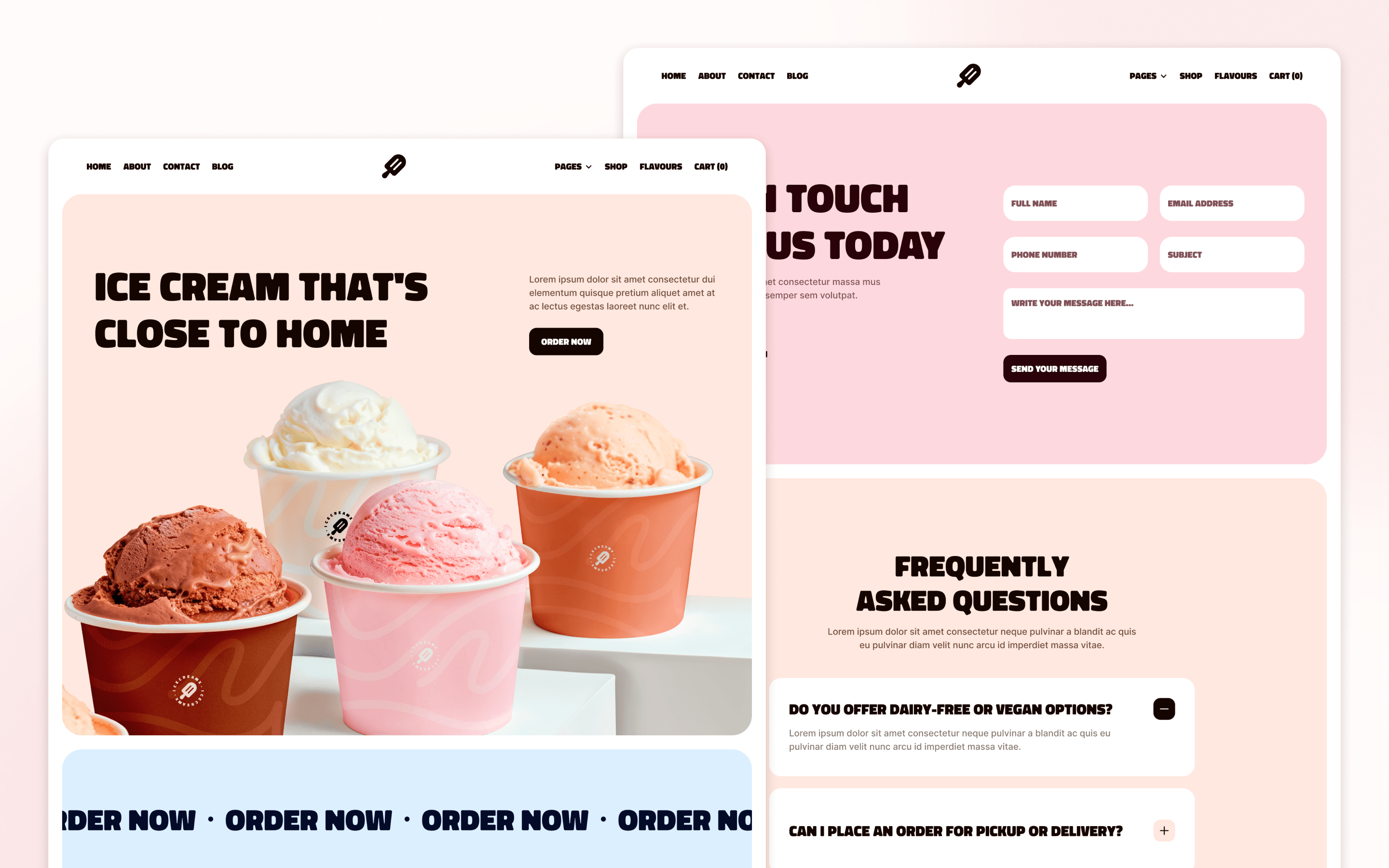
Ice Cream X brings a more playful approach to an ice cream shop template, with generous product images and colorful sections that make the flavors the center of attention. That same personality carries into the story and contact pages, helping the business feel recognizable wherever a guest lands.
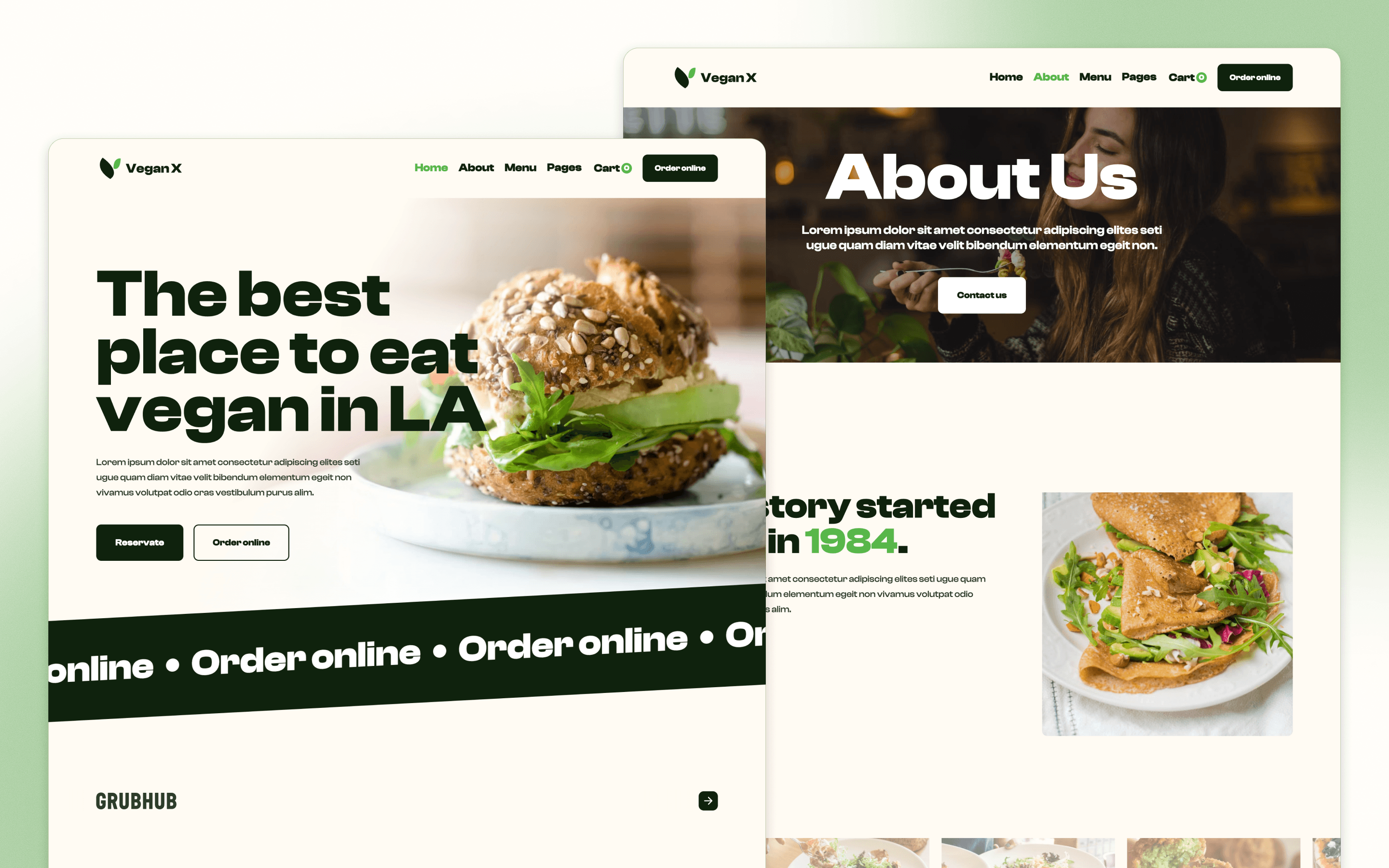
Vegan X is a vegan restaurant template that puts the food first, pairing close-up dishes with a warm, welcoming identity. Its ordering prompts and restaurant story show how practical information can sit comfortably alongside the imagery that makes someone want to try the menu.
When you hire BRIX Agency, we use this experience to create a custom website around your restaurant’s brand, food, and guest experience. We’ll help turn the things people love about your place into a website that feels just as considered.
2. Propeller: Best Restaurant Web Design Agency for Reservations
 2
2Propeller
A digital agency building restaurant websites that connect venue discovery with location-specific booking journeys across multiple markets and dining concepts.
A beautiful dining room can bring someone to your website, but finding the right booking page is what lets them plan a visit. Propeller is worth considering when that journey involves several venues, different markets, or reservation options that change from one restaurant to the next.
Its restaurant work connects the visual experience with the practical steps that follow. For a business with destinations in different cities, that means giving each venue enough space to show its character while making the location choice clear before a guest begins a reservation.
Featured project: SUSHISAMBA
For SUSHISAMBA, Propeller’s project account describes website design and development with mobile-first navigation and location-specific reservation options. The work brings a restaurant brand known for its food and interiors into a website that helps visitors explore a venue and reach the relevant booking path.
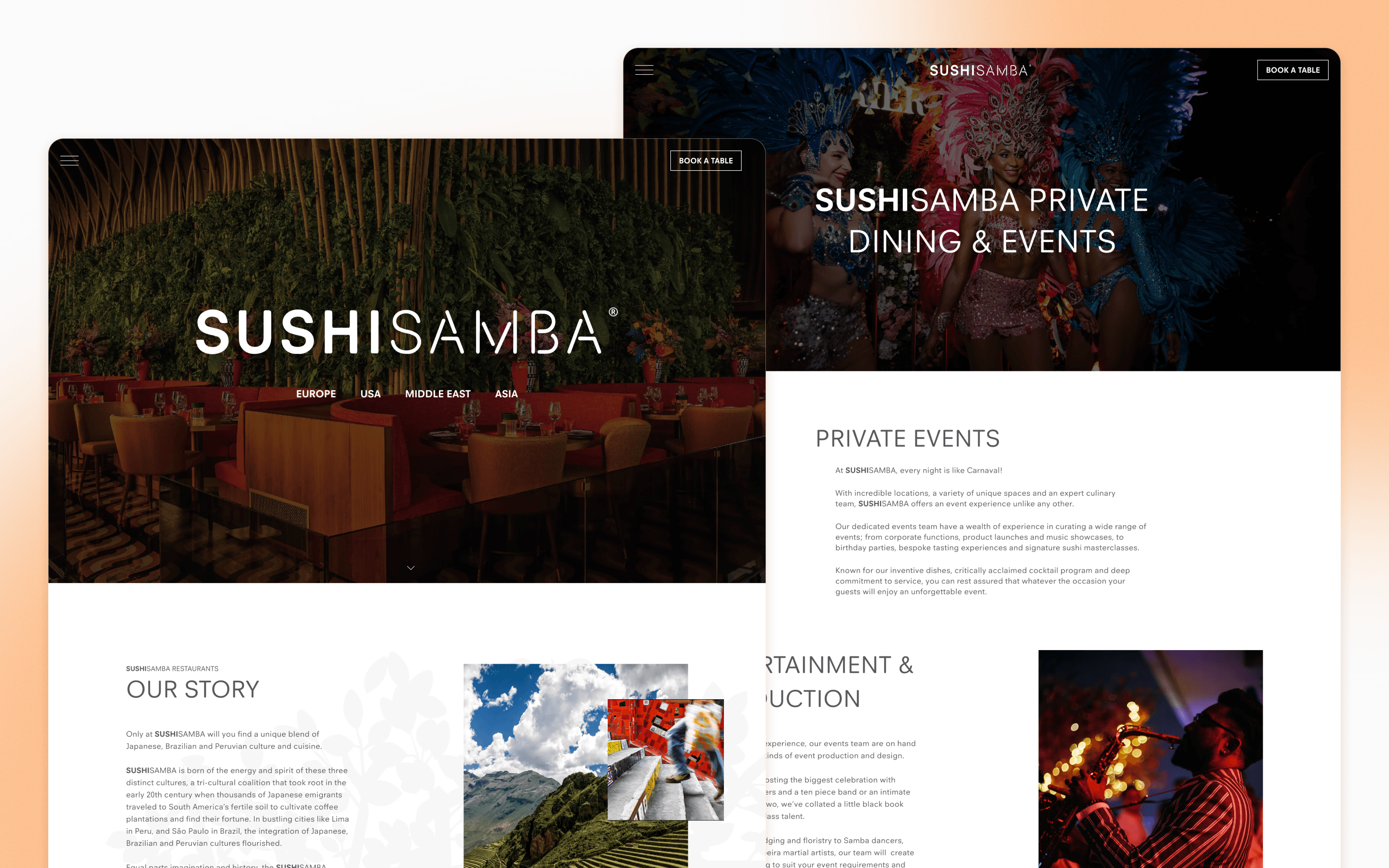
The selected pages balance atmospheric interior photography with information about private events, showing how more than one kind of visit can belong in the same website. If your restaurants use different booking arrangements, ask Propeller to walk you through the venue selection and reservation handoff on a phone, including how a guest returns to the menu before committing.
3. Superrb: Best Restaurant Web Design Agency for Creative Design
 3
3Superrb
A design and development studio giving restaurant websites a distinctive personality while keeping menus, locations, and booking easy to reach.
Some restaurants would lose a lot of their appeal in a quiet, restrained website. Superrb is a useful option when the place has a louder personality and you want the design to carry that energy through the photography, page layouts, and way people explore the food.
The practical side still matters, especially when a guest arrives on a phone with dinner plans already in mind. Superrb’s selected work combines an expressive presentation with the navigation, location content, and booking features that keep that personality from getting in the way of a visit.
Featured project: Dirty Bones
Superrb documents website design and development for Dirty Bones, including mobile usability, location management, booking, and editorial content. Its contribution is the website; the restaurant’s branding has separate creative credits, so the project is most useful here as an example of translating an existing identity into a digital experience.
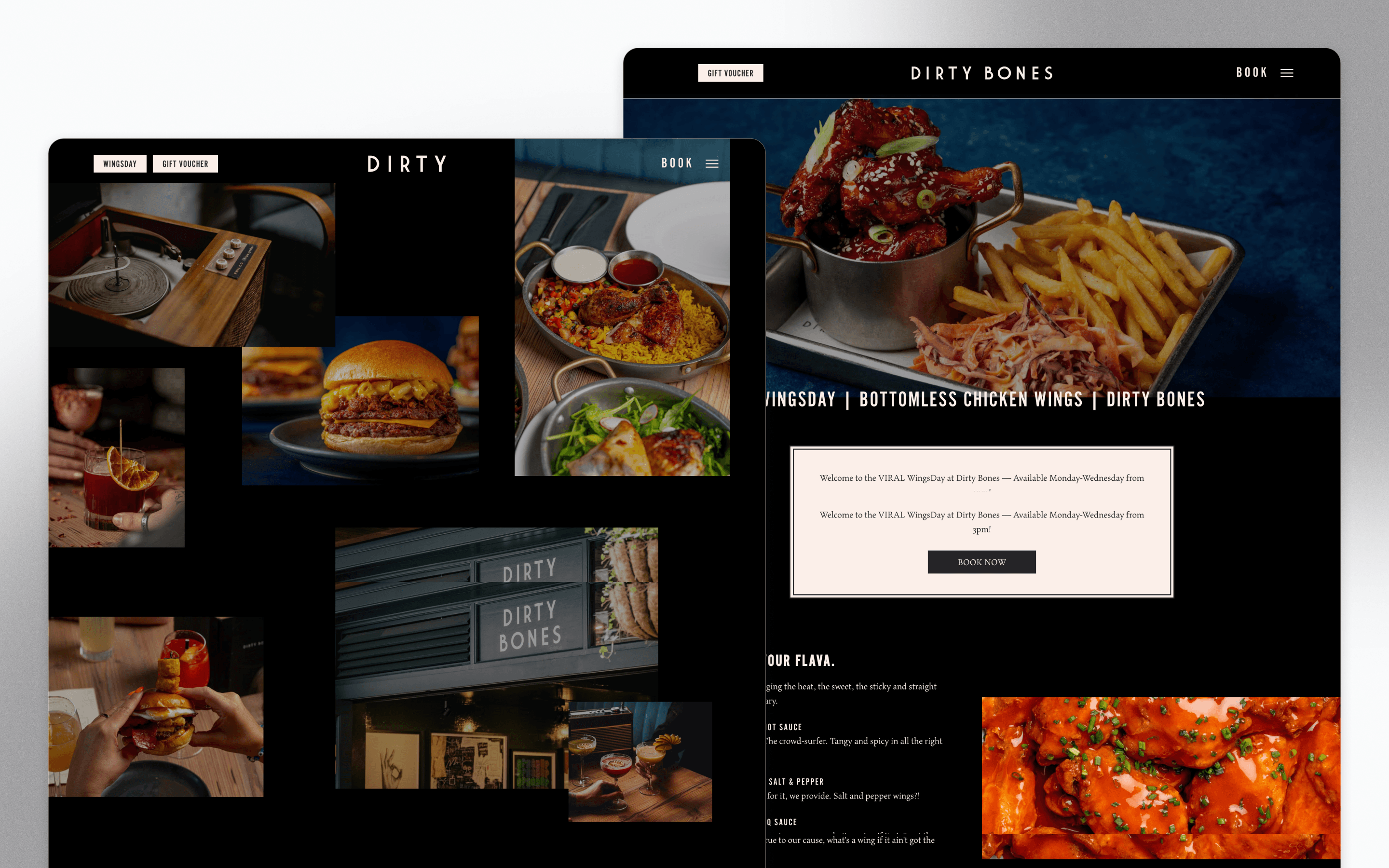
The food photography and bold composition make Dirty Bones feel lively before you read much about it. For a burger restaurant, bar, or similarly expressive concept, look at how that visual personality sits alongside the next step: finding a location, checking its menu, or booking a table without having to work through the whole story first.
4. Nucleus: Best Restaurant Web Design Agency for Fine Dining
 4
4Nucleus
A brand and digital agency creating restaurant websites that pair a considered visual identity with practical content management and reservations.
A fine dining website needs to help people picture the occasion as well as understand the food. Nucleus brings brand and digital work together, which makes it relevant when the restaurant’s setting, reputation, and service are as much a part of the decision as the menu itself.
That doesn’t mean every page needs a long introduction. A considered website can use photography and a few well-chosen details to establish the atmosphere, then let guests look at menus and reservations at their own pace without losing the feeling that drew them in.
Featured project: Amaya
Nucleus includes Amaya in its MW Eat engagement, with website design and development for the restaurant. The wider project describes an Umbraco content setup and SevenRooms reservations, connecting the presentation of the restaurants with the tools used to maintain information and welcome bookings.
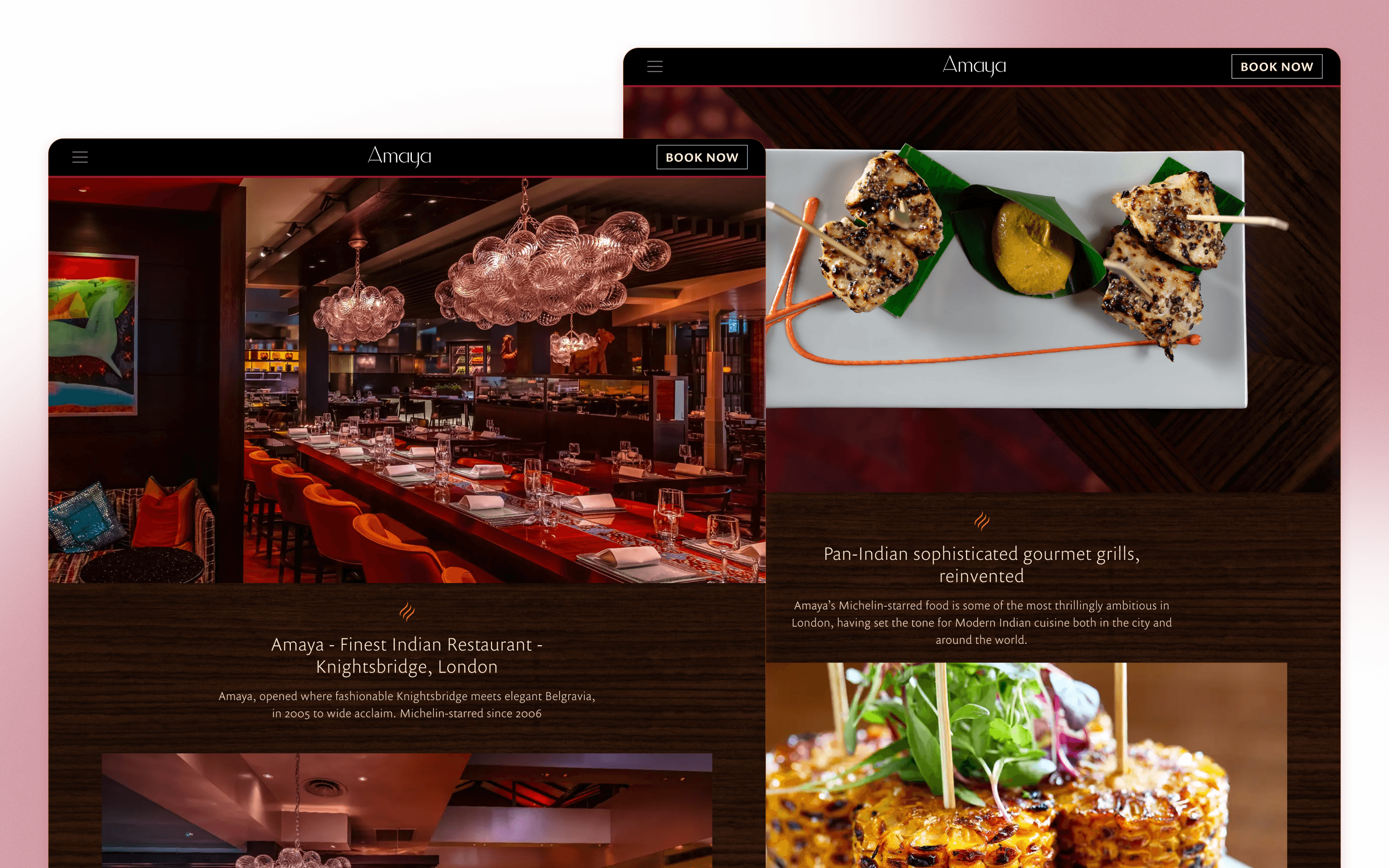
Amaya’s dark palette, interior photography, and close views of the food make the dining experience the focus. It’s a helpful reference if you want the website to feel polished without burying practical information, particularly when your team needs to update menus while preserving the same visual quality from one page to another.
5. SDCO Partners: Best Restaurant Web Design Agency for Branding
 5
5SDCO Partners
A branding and design studio bringing restaurant identities to life through website design, copywriting, illustration, and a consistent visual identity.
Sometimes the website is one piece of a larger question: how should the restaurant look, sound, and feel to someone meeting it for the first time? SDCO Partners is worth a look when you want the website and the wider identity to be developed together.
That can be especially useful for an established restaurant with a recognizable history. The challenge is to carry the things guests already love into a fresh presentation, giving the photography, writing, and design a shared direction rather than updating each piece separately.
Featured project: The Prime Rib
For The Prime Rib, SDCO’s case study lists positioning, brand development, copywriting, illustration, website design, and development. That breadth matters because the website sits within a coordinated identity, with the restaurant’s story expressed through more than its logo or a new homepage layout.
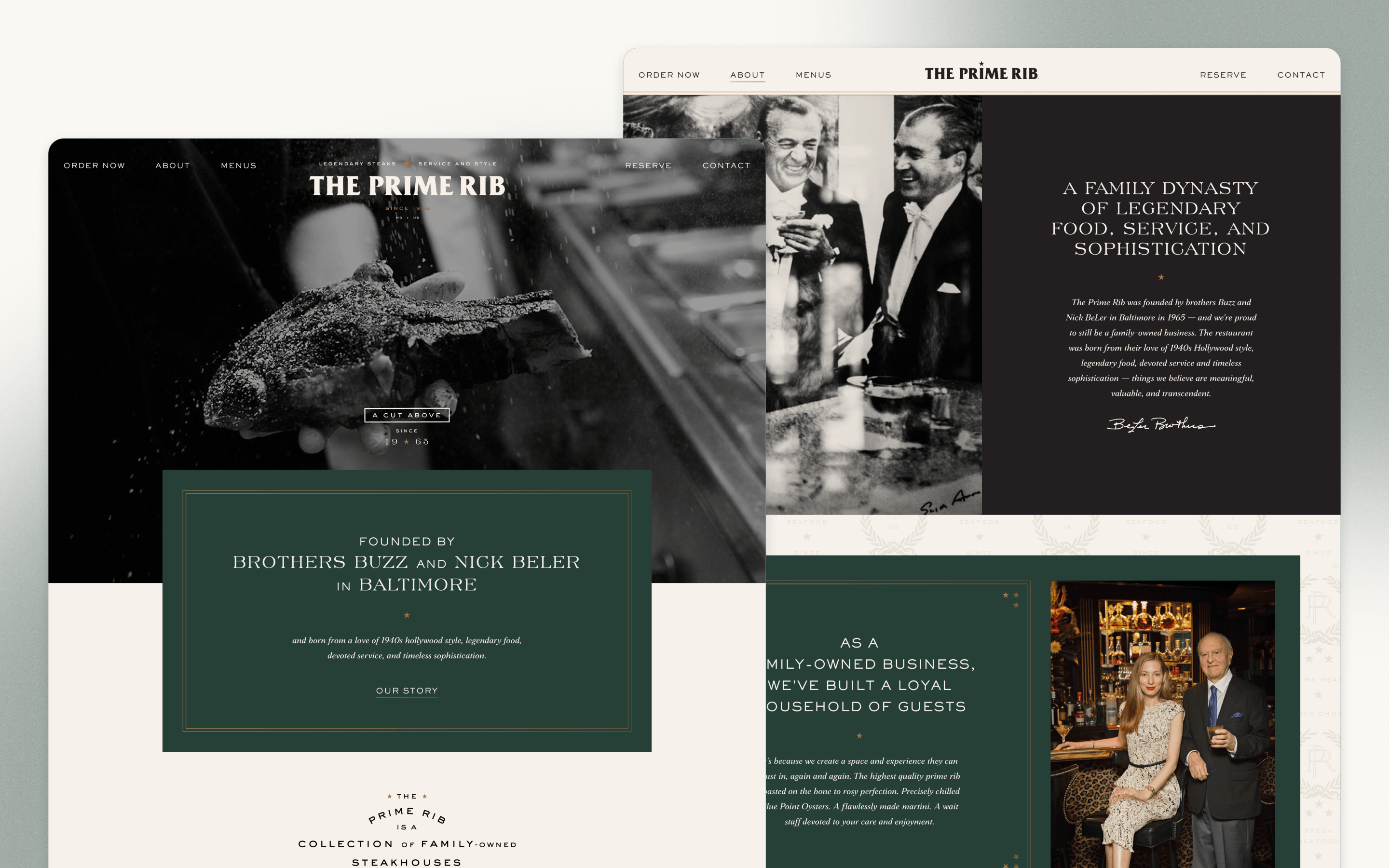
The selected pages pair a deep green palette with classic photography and generous typography, giving the restaurant an established, welcoming presence. If your own project includes a brand refresh, use this example to discuss how the same decisions will carry across the website, menus, event materials, and other places guests encounter your restaurant.
6. Orbit Media Studios: Best Restaurant Web Design Agency for Location Pages
 6
6Orbit Media Studios
A web design and development agency helping restaurant businesses organize location information, menus, and online ordering within an editable website.
For a restaurant with several locations, small differences become important quickly: one has a dining room, another focuses on pickup, and a third keeps different hours. Orbit Media Studios is relevant when organizing those details is a central part of the website project.
Its documented restaurant work looks beyond the homepage to the navigation and editing tools that support a larger business. That gives you useful ground for discussing how guests find the right restaurant and how staff keep information consistent as locations or services change.
Featured project: Lou Malnati’s
Orbit’s Lou Malnati’s case study describes several engagements covering homepage and navigation redesign, a store locator, menu and ordering access, and backend flexibility. The image below shows Lou Malnati’s current website; it illustrates the restaurant being discussed, while Orbit’s case study documents the scope of its earlier work.
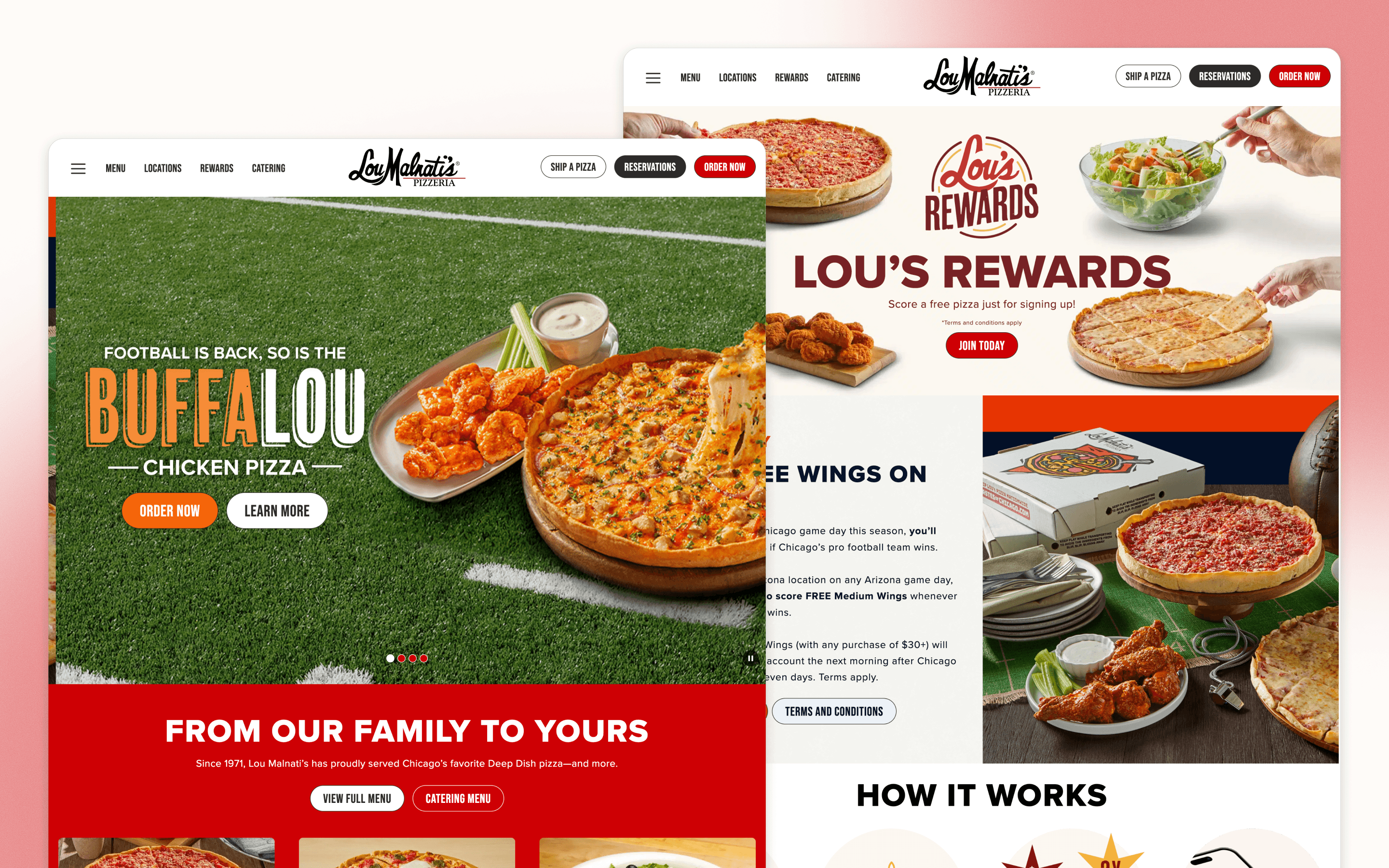
A business like this needs to serve people ordering dinner, looking for a nearby restaurant, or exploring catering without sending everyone through the same path. When evaluating Orbit, ask how a location page would bring those choices together and what your staff would do when a restaurant changes its hours or adds a service.
7. Lounge Lizard: Best Restaurant Web Design Agency for Menu Navigation
 7
7Lounge Lizard
A digital agency designing restaurant websites that help guests move between menus, location details, reservations, and takeout without unnecessary searching.
A varied menu is part of the appeal of many restaurants, but it can also make the website harder to organize. Lounge Lizard is worth considering when your project needs to make a broad food offering easier to explore alongside locations, reservations, and takeout.
The useful question is how quickly a guest can reach the information that matches their plans. Someone looking for a lunch menu may need a different route from someone arranging dinner for a group, even though both started on the same homepage.
Featured project: Maggie McFly’s
Lounge Lizard’s Maggie McFly’s project covers user experience, website design, and development, with attention to menus, locations, reservations, and takeout. The website design scope puts those everyday guest tasks at the center of the project, giving a varied restaurant offering a more organized presentation across its pages.
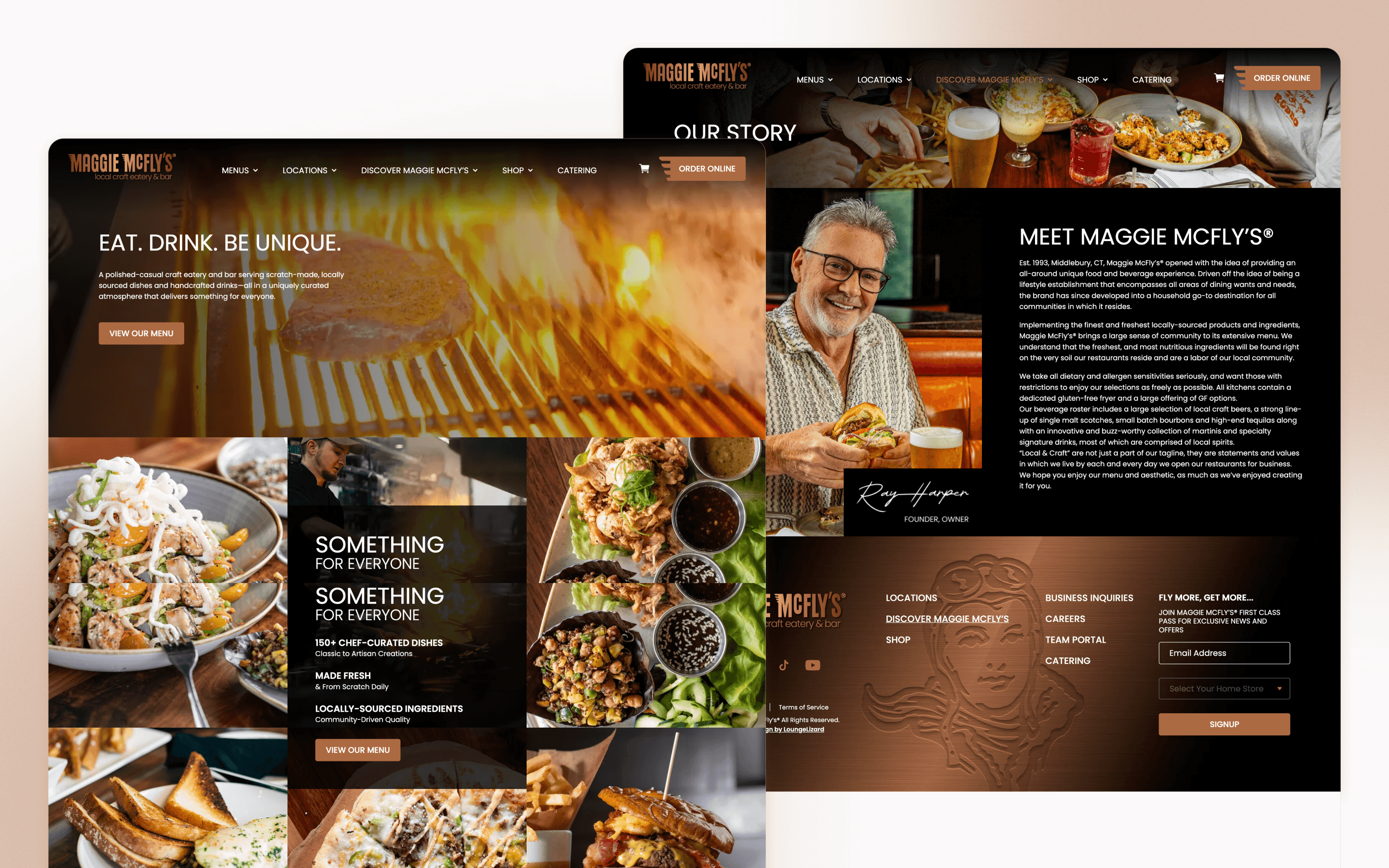
The selected pages use food and restaurant photography to introduce the experience, with a story page giving the business more context. For your own shortlist, ask to see the less glamorous parts too: how different menus are labeled, how guests choose a location, and how they move from browsing a dish to ordering or planning a visit.
8. The 215 Guys: Best Restaurant Web Design Agency for WordPress
 8
8The 215 Guys
A web design and development agency building WordPress restaurant websites with straightforward navigation, clear ordering links, and room for seasonal promotions.
A neighborhood restaurant needs a website that feels like its own place and stays useful as things change. The 215 Guys offer a straightforward example of how WordPress can support that, combining restaurant website design with the everyday information and promotions guests need to find.
This is a useful team to consider if you want to discuss both the finished pages and the editing experience behind them. A new seasonal menu or special event shouldn’t require staff to rethink the layout every time there is something worth sharing.
Featured project: Bridget Foy’s
The agency’s Bridget Foy’s case study identifies website design and WordPress development, with streamlined mobile navigation, ordering calls to action, and a promotional lightbox. Those details make the project relevant to a restaurant that wants a recognizable website with practical ways to direct attention when something changes.
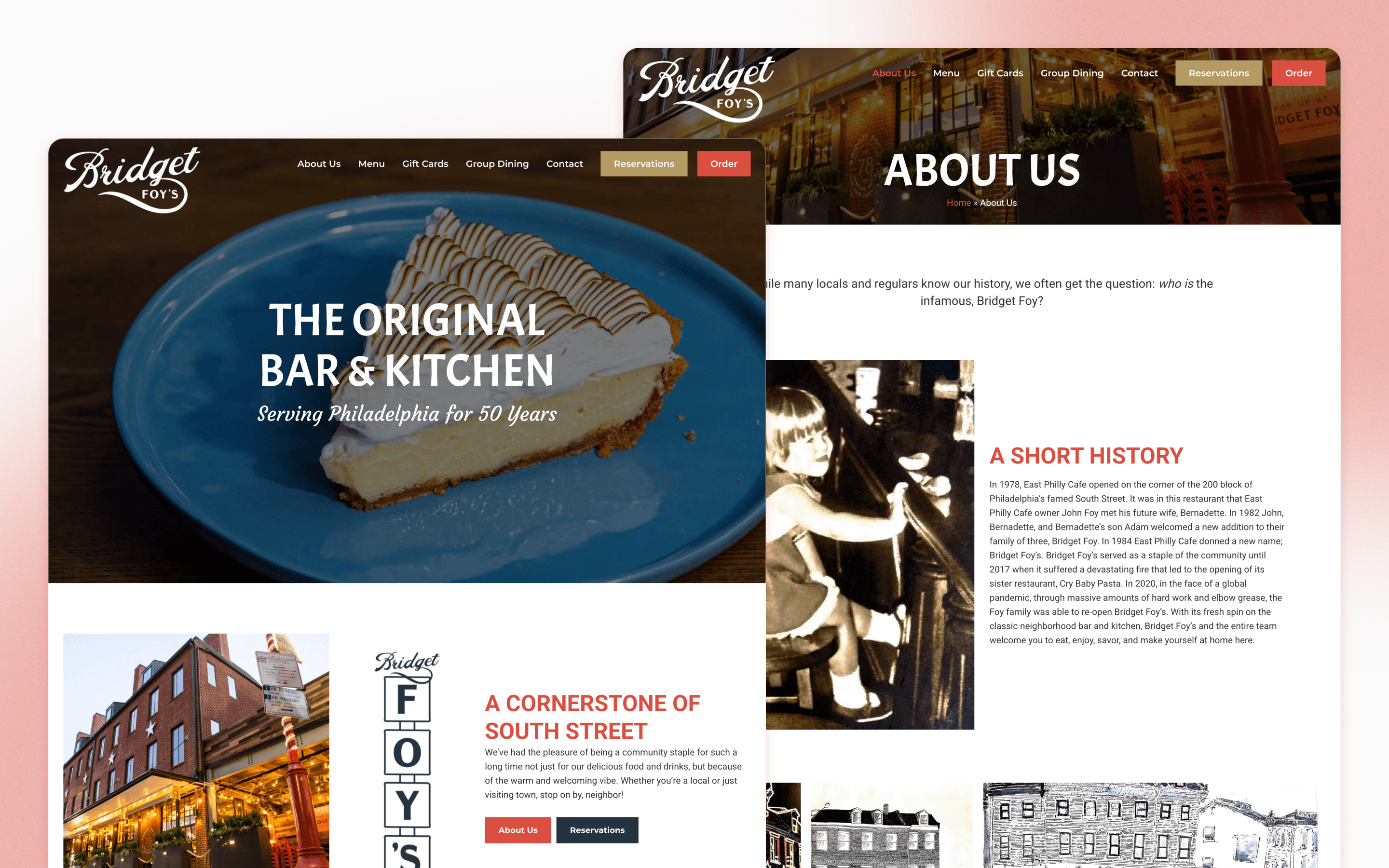
Bridget Foy’s pairs food imagery with the character of its Philadelphia location, giving the restaurant a sense of place rather than presenting a menu in isolation. Use the project to ask how routine updates would work for your team, including who can change promotions and how an announcement behaves on a small screen.
9. Happy Cog: Best Restaurant Web Design Agency for Multiple Brands
 9
9Happy Cog
A design and development agency organizing restaurant group websites around shared content systems that still give individual dining concepts their own identity.
A restaurant group can share an operations team without wanting every concept to look alike. Happy Cog is a relevant option when you need that balance: a common way to build and maintain websites, with enough flexibility for each restaurant to express its own identity.
That kind of project involves decisions beyond individual page layouts. You need to decide what belongs to the group, what belongs to each venue, and how the people responsible for updates can work within that structure without constantly asking for new development.
Featured project: Garces Group
Happy Cog’s Garces Group case study documents an earlier responsive redesign and development engagement with reusable modules, identity guidance, cross-promotion, and staff training. The image below is the current Garces Group website, included as a view of the business today rather than a claim that every visible detail remains Happy Cog’s design.
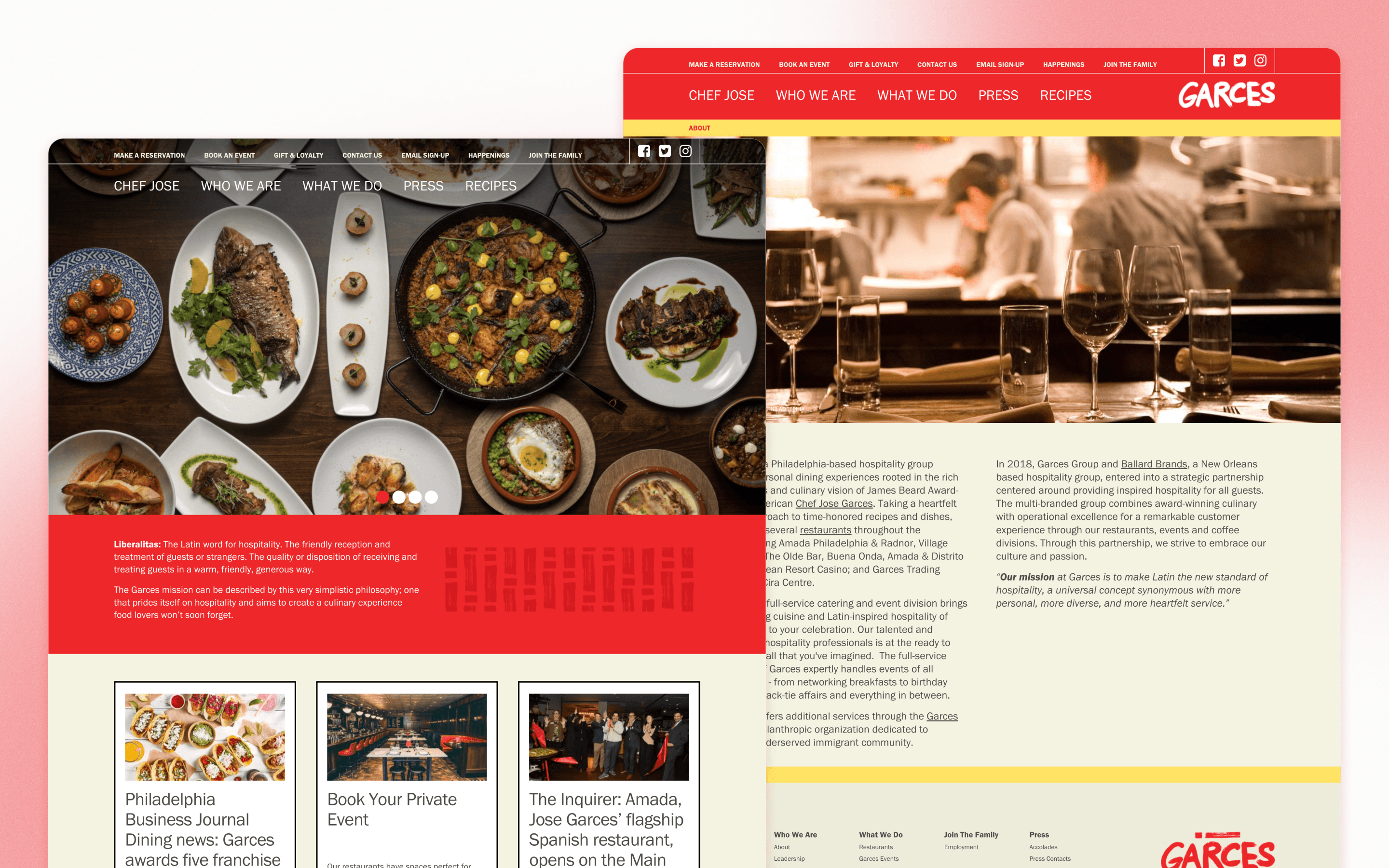
The group’s range of restaurants shows why a shared publishing approach can be valuable: the overall business needs a clear introduction while each dining concept needs its own presence. Ask Happy Cog how that division would work for your group, especially when you launch a new restaurant or give an existing one a different identity.
10. Ignite Media: Best Restaurant Web Design Agency for Bars and Lounges
 10
10Ignite Media
A creative agency combining website design and development with brand graphics for restaurant concepts that connect dining, drinks, and nightlife.
When a restaurant moves from dinner into a late-night experience, the website needs to communicate more than the food. Ignite Media has documented work for a concept combining dining, drinks, and nightlife, making it a relevant agency to explore for that kind of atmosphere-led project.
Its case study is also useful for a business with several destinations under one name. It describes a group entry point and coordinated location websites, an approach that lets guests choose where they want to go before getting into the details of that venue.
Featured project: JING Restaurants
Ignite’s earlier JING Restaurants engagement lists website design, development, concepting, branding, and graphics. The selected image shows JING’s current website, whose footer now credits Pochatko Media for design and development; Ignite’s own case study is the reference for the work it delivered.
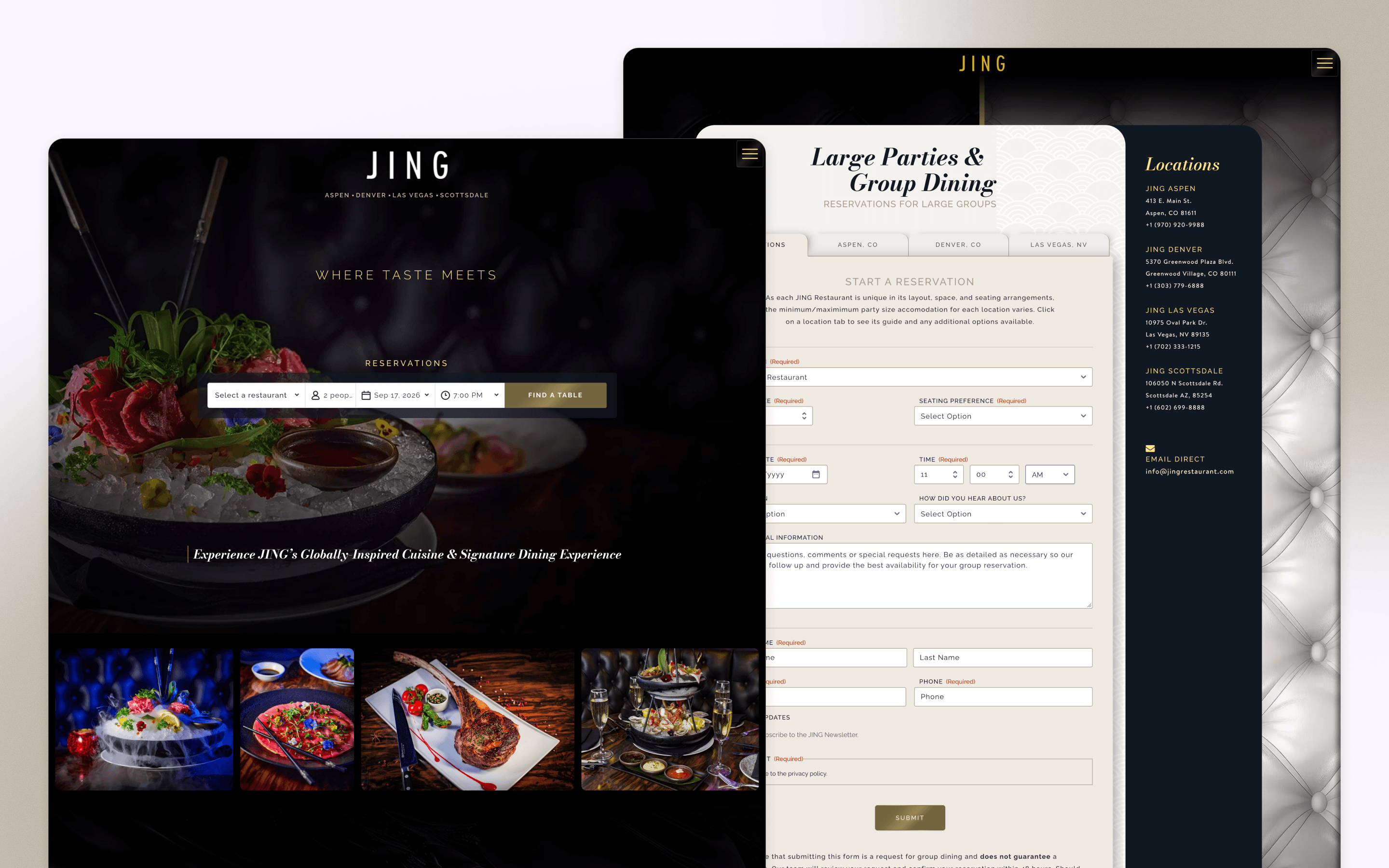
For a bar or lounge project, this distinction also points to a useful hiring question: ask the team to show its original screens and explain its contribution. From there, discuss how your website would introduce the atmosphere, separate locations, and make reservations or large-party inquiries easy to reach before the evening begins.
What does a restaurant web design agency do?
A restaurant web design agency turns your identity, food, and guest information into a website people can actually use. The work can include page planning, writing, design, development, and setting up a content management system, or CMS, so your team can edit information after launch. Some agencies also create the brand or arrange photography, while others expect those materials to be ready before design begins.
The connections matter just as much as the pages. A restaurant site may send guests to a reservation platform, open an online ordering service, introduce private dining, or help them choose a location. Ask the agency to explain which of those steps it will design and test, and which parts remain controlled by a separate provider.
Finally, make room for the handover. Someone on your team should know how to publish holiday hours, replace a menu, and check an inquiry form without relying on the original designer for every small change. A useful deliverable is a website you can keep accurate on a busy week, along with clear support when something falls outside routine editing.
How to choose a restaurant web design agency and compare costs
Start with the parts of your restaurant that make the website project more involved. A café with one location and a stable menu has a different brief from a group with separate dinner menus, booking providers, and private event spaces. Write those differences down before asking for quotes so the agencies are estimating the same job.
Then choose 2–3 agencies whose work fits both the mood of your restaurant and its practical needs, and send each one the same outline. Include your existing tools, who will maintain the site, and what content is ready; the email below gives you a starting point you can adjust to your business.
Subject Website for [restaurant name], [number] locations, opening [month]
Hi [name],
We run [restaurant name], a [type of restaurant] in [city or neighborhood]. We found your team in BRIX Agency’s restaurant web design guide and would like to discuss a website that helps guests [reserve a table, order directly, or explore our new concept].
We have [number] locations and need pages for [menus, each location, private dining, catering, and our story]. We currently use [reservation provider] for bookings and [ordering or POS provider] for takeaway orders.
Our menu changes [frequency], and [staff role] will maintain the website. We already have [brand files, food and interior photography, menu copy] and need help with [remaining materials]. Please include training and explain how we would update prices, specials, and holiday hours.
We’re aiming to launch by [date], with a budget of [range]. Could you share a relevant restaurant project and a proposal covering design, development, content entry, and the connections to our existing tools?
Please list hosting, software subscriptions, photography, and ongoing support separately, and explain what would need to be ready before you can commit to the launch date.
Thank you,
[Your name]
[Role and restaurant]
When proposals arrive, compare what each fee includes before comparing the totals. One quote might cover design and development with your team entering all the menus, while another includes content entry, photography planning, and staff training. Neither scope is automatically better, but the difference should be visible before you make a decision.
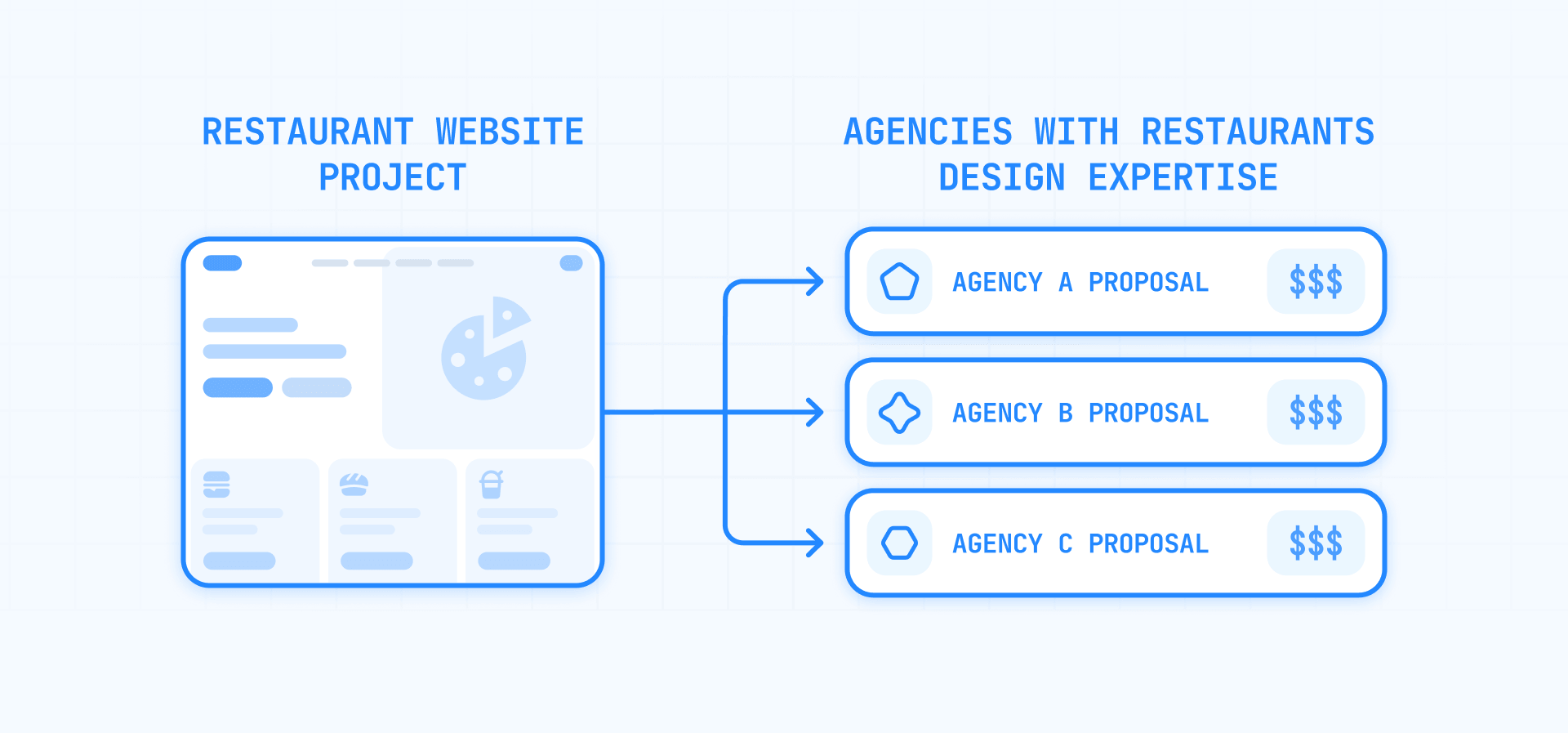
Pay particular attention to menu and location setup. Ask how many menus and venue pages are included, whether your ordering and reservation tools will be linked or embedded, and what happens if those providers change. The agency should also explain the cost of adding a future location, rather than leaving you to discover that after launch.
Separate the initial build from hosting, subscriptions, support, and any ongoing marketing. Before you sign, ask for a short demonstration of a comparable editing setup and agree on who supplies the final food photography and menu text. Build a photography shot list around the planned pages and confirm permission to use the final images across your materials.
Agree on the launch schedule in stages, with deadlines for your menus, photography, and feedback before design, development, and testing can finish. Confirm ownership and access for the domain, website content, hosting, and connected accounts too, along with how another partner could take over support in the future.
Choosing a CMS your restaurant can keep up to date
Think about the last change you needed to make before service: a new lunch price, a holiday closure, or a special that sold out. Your CMS should make that kind of update easy for the person who will actually do it, with clear fields and a way to preview the result before guests see it.
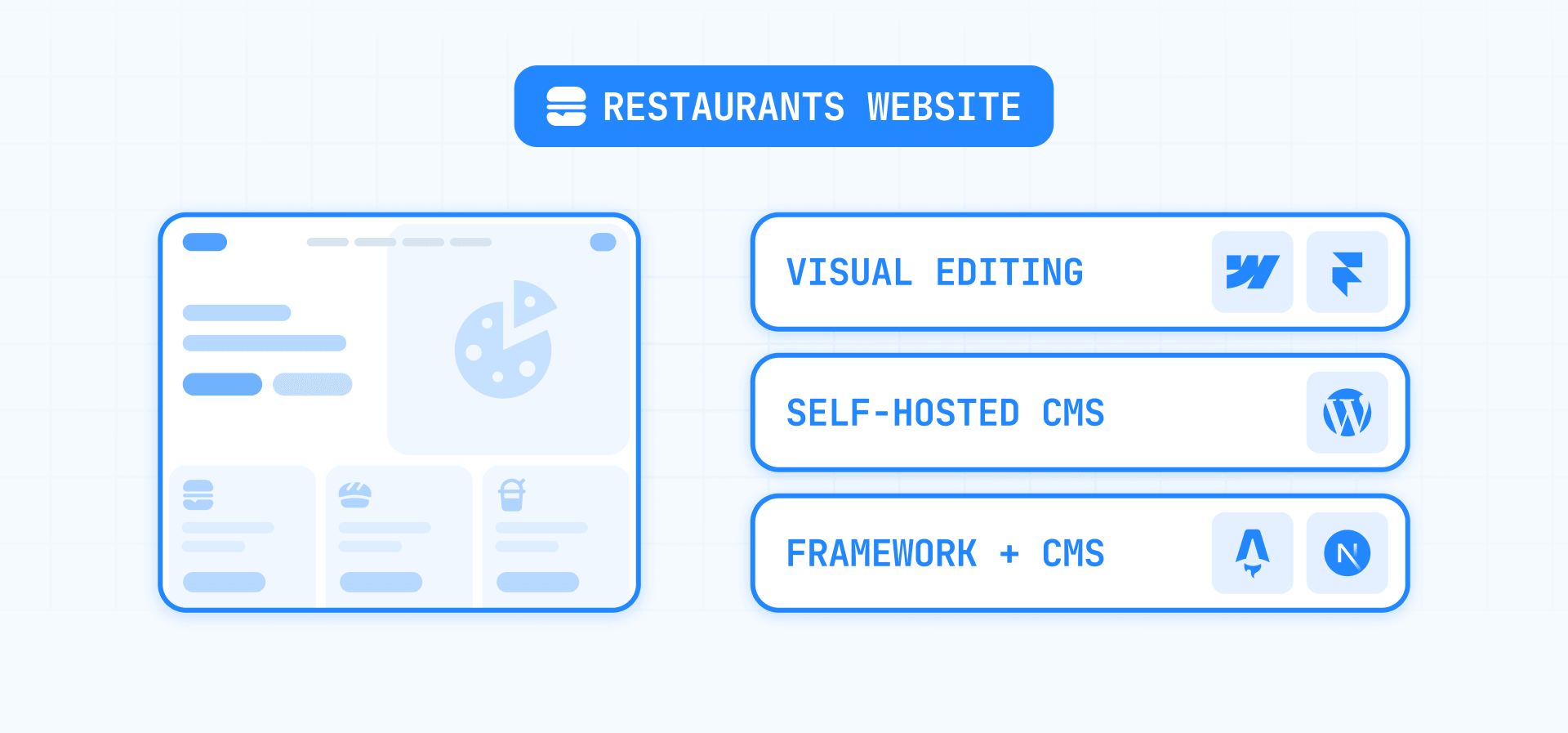
Webflow can suit a restaurant that wants a distinctive design with structured content for menus, locations, and events. Framer is another option for visually focused sites, particularly when the content is relatively straightforward. With either platform, ask the agency to demonstrate your actual update routine and confirm how the booking and ordering tools will work within the proposed setup.
WordPress is worth considering when you need control over your hosting or a broader range of publishing and integration options. The editing experience depends on how the site is built, so ask for a focused dashboard rather than a collection of page layouts staff have to rebuild. Include responsibility for updates, backups, and plugin maintenance in the handover discussion.
Astro and Next.js can support a more tailored website, but they are development frameworks rather than the editing screen your restaurant team will use. A proposal built around either should also name the CMS, explain who maintains the code, and show how an employee makes an ordinary menu change without a developer.
Keep one more distinction clear: the website’s menu and the menu inside your ordering or point-of-sale system may be separate. Agree on one source for menu updates, whether that means a supported connection or a simple staff process for maintaining both. A beautiful editing screen doesn’t solve the problem if guests still see yesterday’s prices in another place.
Restaurant website details worth getting right
Make restaurant menus easy to read on a phone
A guest should be able to browse the food without downloading a large file, pinching a tiny image, or starting an order. Give the menu readable text, clear sections, and a visible link from the main navigation, with a downloadable version as an extra when it serves a purpose.
Keep the content practical: dish names, prices, descriptions, and the service or location each menu belongs to. If you offer lunch, dinner, and weekend menus, explain when each applies so a visitor doesn’t plan around something you won’t be serving when they arrive.
Keep restaurant reservations and ordering distinct
Book a table and Order online lead to different experiences, so give each a clear label instead of asking one vague button to cover both. On a multi-location site, the venue choice should carry through to the correct booking or ordering destination, with an obvious way to change it if a guest chose the wrong one.
Review the whole handoff on a phone, including what happens when the destination opens in another page. For private dining, a short inquiry form can collect the date, group size, and preferred location without making someone complete a full booking flow that wasn’t designed for an event.
Give each restaurant location useful information
Each location should answer the questions that shape an actual visit: address, opening hours, menus, booking options, and details such as parking or outdoor seating when they matter. Link those pages consistently from the main website and keep the corresponding business listings current, so a guest doesn’t encounter conflicting instructions along the way.
Pair those details with real food and interior photography that represents the location. Large images still need to load comfortably, and the site should remain usable with a keyboard and readable contrast; the goal is for the atmosphere to add to the experience while everyone can reach the information they came for.
Frequently asked questions about restaurant web design agencies
Does a restaurant need a website if it already uses Instagram?
A website gives guests a reliable place to find your menu, hours, locations, and booking options without searching through posts. Instagram can help people discover your restaurant and get a feel for it, while the website brings together the information they need when they are ready to visit or order.
You don’t need to turn it into another daily publishing job. Start with a small set of useful pages and decide who keeps them accurate, then use social posts to point people toward those pages when relevant. A current menu and clear reservation link can be more helpful than a busy site your team struggles to maintain.
Should a restaurant menu be a web page or a PDF?
A readable menu page is a good starting point because it can fit the screen someone is using and keep links, prices, and sections easy to navigate. A PDF may be useful as a downloadable or printable extra, but it should not be the only convenient way to find out what you serve.
Ask your agency how staff will maintain the menu when dishes or prices change, including whether the downloadable version is separate. For several locations or different meal services, make those distinctions visible before guests start reading. The better option is the one that gives visitors current information without creating an update process your team cannot keep up with.
How can restaurant staff keep website menus up to date?
Give staff a defined editing process with a clear owner, rather than assuming everyone will remember which pages need changes. A structured CMS can provide fields for dish names, descriptions, prices, and availability, making a routine update less dependent on someone knowing how the page was originally designed or built.
Before choosing the setup, identify where the menu also appears, including your ordering platform and downloadable files. Ask the agency whether a supported connection can share that information or whether staff must update each place separately. Then practice a real menu change during handover so the process is understood before the next busy service begins.
Can a restaurant website work with an existing reservation system?
In many cases, the website can link to or embed the reservation provider you already use, depending on what that provider supports. Give the agency the exact system and account requirements before it quotes the work, and ask to see how guests will choose a location, date, and party size.
The design proposal should explain where the website’s role ends and the booking provider takes over. Test that handoff on mobile, along with confirmation and the route back to restaurant information, before launch. If you are considering a different reservation system, make that decision early enough for the website scope and launch plan to reflect it.
Can a web design agency add online ordering to a restaurant website?
An agency can often connect the site to an existing ordering service through a clear link, an approved embed, or an integration supported by that provider. Those approaches involve different amounts of work, so ask the agency to describe the exact guest journey rather than accepting “online ordering included” as the complete scope.
Share the ordering and point-of-sale systems you already use, including any differences between locations. The website should send customers to the correct menu and make pickup or delivery choices understandable, while the ordering platform continues to manage the parts it is responsible for. Include a test order in launch planning with the people who operate that system.
Do restaurant web design agencies include food photography?
Some agencies arrange photography as part of a broader creative engagement, while others design with images your restaurant supplies. Confirm that responsibility before comparing quotes, along with the number of shoot days, locations, and final images included. Interior and team photography may need separate planning from photographs of individual dishes.
Ask for a shot list that follows the planned pages, rather than commissioning a large set of images before anyone knows how they will be used. A wide homepage composition has different needs from a close-up menu image. Make sure the agreement also explains your permission to use the photographs across the website and other restaurant materials.
How much does a custom restaurant website cost?
The scope is more useful than a single industry-wide price. Location count, menu complexity, content creation, custom design, and connections to booking or ordering providers all affect the work involved. Ask agencies to quote the same brief so you can see what each price actually buys, including content entry and testing.
Keep the initial project fee separate from hosting, software, photography, and ongoing support, and ask what would trigger an additional charge. A lower quote may be perfectly suitable if your needs are simple and your materials are ready. It becomes harder to compare when the missing work is something your team will still need someone else to complete.
How long does it take to build a restaurant website?
The schedule depends on the agreed scope and how much of the restaurant’s content is ready to use. A site with final branding, photography, and menus can move differently from a new concept whose food offering and opening date are still changing, even when the two websites have a similar number of pages.
Ask the agency to separate discovery, design, development, content entry, and testing in its timeline, with clear dates for your feedback and materials. If the site supports an opening, discuss what must be available first and what can follow. Booking and ordering setup should have time for testing instead of being left until the day you announce the launch.
How should a restaurant website handle multiple locations?
Give each restaurant a useful location page with its own hours, address, menu, and relevant reservation or ordering links. A visitor should be able to tell which venue they are looking at and switch locations without starting over, especially when services, menus, or booking arrangements differ across the business.
Behind the scenes, ask the agency how shared information and local exceptions will be managed. A common page structure can make maintenance easier, but the setup should still accommodate a location with a private dining room or a different lunch service. Test the process of adding a new venue before assuming future expansion will be straightforward for your team.
Will I own and be able to update my restaurant website?
That depends on the agreement and the platform, so confirm account access, content ownership, design rights, and ongoing responsibilities in writing. Your restaurant should know who controls the domain, hosting, CMS, and connected services, with a clear process for granting or removing agency access when the working relationship changes.
Being able to update the site also requires more than receiving a login. Ask for training around the changes you expect to make, such as replacing a menu, editing holiday hours, or promoting an event. For work outside those controls, agree on support arrangements and how another developer could take over if you need a different partner later.
Give guests a reason to visit before they arrive
A restaurant website works best when the atmosphere and the useful details belong together. The food photography might make someone curious, but an easy-to-read menu, the right location information, and a clear next step help turn that interest into plans for the evening.
As you explore these agencies, choose a few projects that feel relevant to your own restaurant and look beyond their homepages. Try the menu and reservation paths on a phone, then ask the teams how they would make those same everyday tasks work for your guests and staff.
If you’d like our help, tell us about your restaurant website and what you want guests to experience when they land on it. We reply in less than 24 hours, and during PST business hours you can expect a response from our team in 1–2 hours.



Join readers commenting on this post!