Open a few cybersecurity websites and you will quickly meet the same words: trust, protection, resilience. The harder question is what a company actually does, who it helps, and why its approach is different. A good website answers that without asking the reader to decode a page of security terminology.
That balance matters because your visitors do not all arrive with the same background. A security engineer may want technical detail, while a business buyer needs to understand the problem and the next step. The agency you choose should be able to serve both without turning the website into two unrelated stories.
We've selected 13 cybersecurity web design agencies with work you can explore, covering brand launches, product explanations, content libraries, and more expressive visual directions. Below, you'll find the reason to consider each team, a named project, and practical advice for turning your own website needs into a brief agencies can respond to.
How we selected these cybersecurity web design agencies
We focused on marketing websites for cybersecurity and closely related technology companies, looking at both the work and the agency’s role in delivering it. The list includes brand, design, and development specialists, with client websites you can explore to see how each team approaches a technical offer.
BRIX Agency publishes this guide and appears first. The specialties describe a useful angle for reviewing each team, rather than a universal ranking of quality; a launch website, a technical content library, and a new brand identity can call for very different strengths.
The cybersecurity web design agency shortlist
- BRIX Agency: A web design agency creating custom technology websites, with cybersecurity portfolio work and hands-on experience developing marketing sites.
- Yaya: A branding and design agency helping cybersecurity companies bring positioning, messaging, and a new website together for launch.
- Non-Linear Studio: A design and development studio combining technical storytelling, distinctive art direction, and interactive motion for cybersecurity brands.
- Punch: A brand and digital agency translating complex cybersecurity-related products into clearer marketing websites and supporting visual identities.
- Bluetext: A branding and digital agency supporting enterprise cybersecurity websites through design, development, integrations, and ongoing creative work.
- Fixel: A web design and development agency building cybersecurity marketing sites with structured resources, integrations, and ongoing publishing support.
- EIGHT25MEDIA: A web design agency creating marketing websites for technology platforms that need to explain broad capabilities to business buyers.
- Blend: A B2B website agency combining strategy, copywriting, design, and HubSpot development for cybersecurity companies with active marketing teams.
- Sköna: A B2B creative agency connecting cybersecurity website design with brand identity, campaign ideas, and motion across marketing materials.
- Octave Agency: A digital agency designing cybersecurity marketing websites that explain training products through clear content, navigation, and product presentation.
- Aftershock: A branding and digital agency rebuilding cybersecurity company identities and websites through strategy, copywriting, design, and development.
- Watkins Web Design: A web design studio building cybersecurity marketing sites with custom content structures, headless WordPress, and Next.js development.
- Pixelfit: A design and development agency refining cybersecurity marketing websites through clearer content structure, responsive layouts, and consistent visual design.
1. BRIX Agency: Best Cybersecurity Web Design Agency for Custom Design
 1
1BRIX Agency
A web design agency creating custom technology websites, with cybersecurity portfolio work and hands-on experience developing marketing sites.
A cybersecurity website has to make a complicated product feel understandable without making it sound simplistic. At BRIX Agency, we bring together custom design and development to help technology companies explain their offer, show the product clearly, and give different buyers a useful place to start.
Our portfolio includes both original template designs and client website development. The examples below show several ways to present a technical business, from a direct security product introduction to a broader technology story, while our work for Todyl provides a separate example of bringing a marketing website into production.
Examples from our cybersecurity and technology portfolio
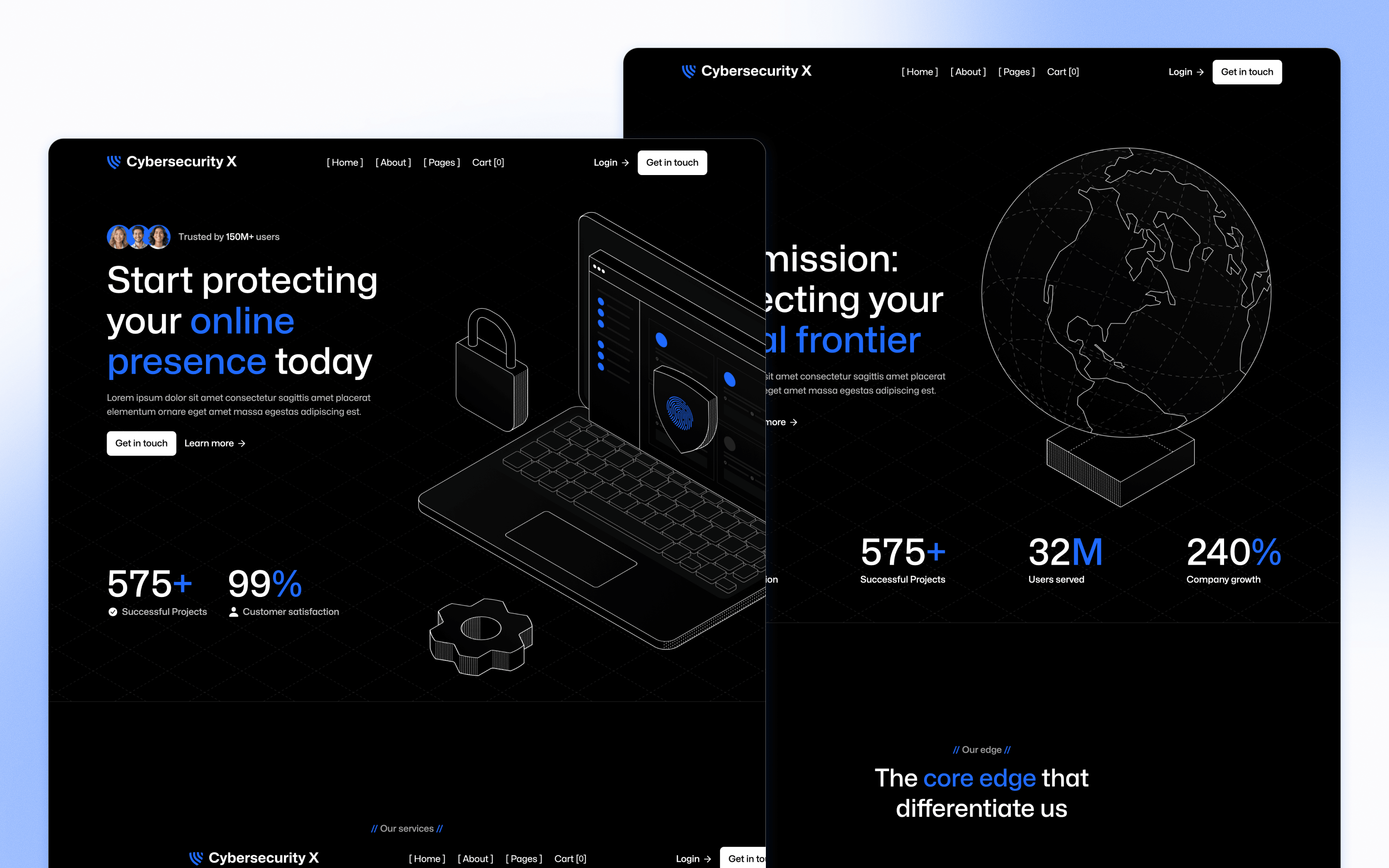
Our Cybersecurity X template introduces a security business through a direct product message and supporting service information. The layout gives the company a clear opening while leaving room for the details a prospective customer needs to understand the offer, showing how we bring structure to a technical subject.
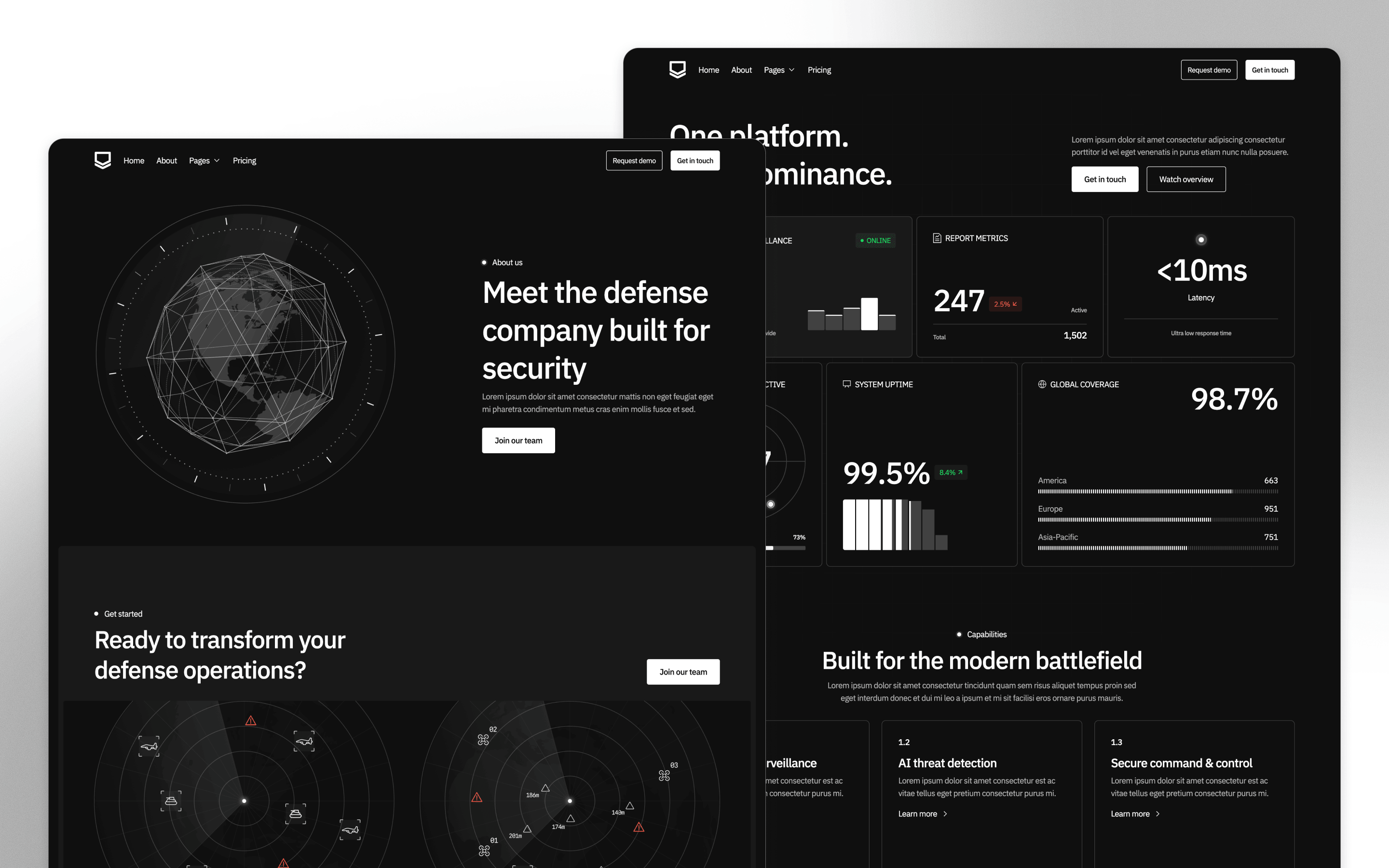
Our Defenseflow template explores a different technology setting, with a visual direction built for a defense platform. The example shows how we use imagery, space, and a clear information hierarchy to introduce a complex business while giving the supporting pages their own role in the story.
Featured project: Todyl
For Todyl, our contribution was marketing website development. The project gives you an example of our implementation work for a cybersecurity company, with a site that needs to introduce a broad platform and make its capabilities accessible to prospective customers and partners.
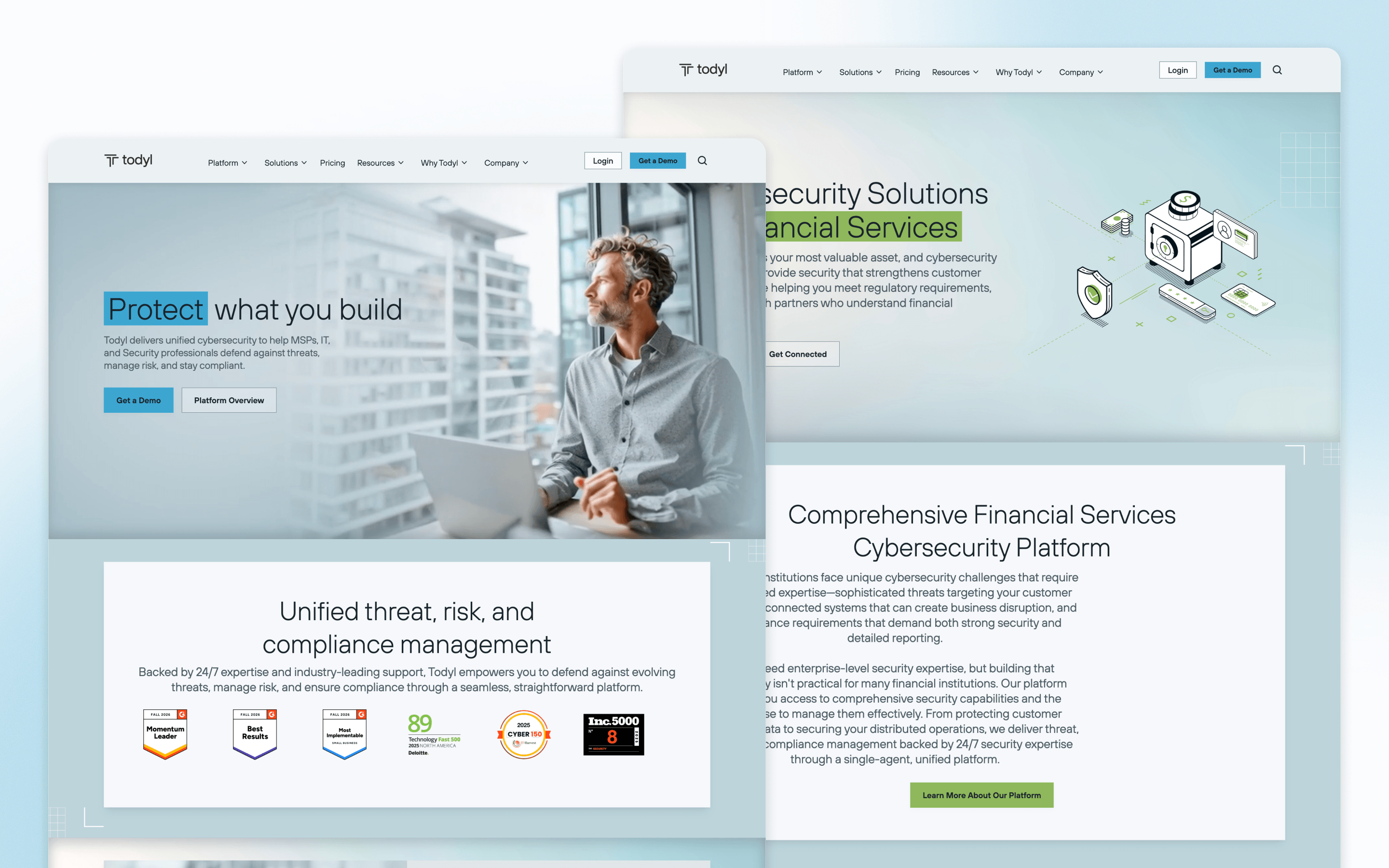
The useful detail to consider is how a technical website moves from its main promise into the individual parts of the offer. When discussing a similar project with us, we can plan that content structure alongside the implementation, including the pages your marketing team will need to maintain as the business grows.
Our templates are used by more than 60,000 websites across all categories, giving us extensive experience creating designs for different kinds of businesses. When you work with BRIX Agency, we create a fully custom website around your product, brand, and buyers, using that experience to shape something specific to your company.
2. Yaya: Best Cybersecurity Web Design Agency for Brand Launches
 2
2Yaya
A branding and design agency helping cybersecurity companies bring positioning, messaging, and a new website together for launch.
Yaya is worth a look when the website brief starts with a more fundamental question: how should this security company introduce itself? Its selected work brings positioning and messaging into the same engagement as brand identity and the launch website, giving a new business a connected starting point.
That approach suits a team coming out of stealth or entering a category where the product needs explaining before the visual design can do its job. Review how Yaya moves from the central idea into supporting content, and discuss the amount of product input and decision-making your founders will need to provide.
Featured project: Aryon
For Aryon, Yaya's work included positioning, messaging, brand identity, a launch website, and ongoing design support. The engagement is a useful example of shaping a cybersecurity company's public introduction, with the brand and site considered together rather than as separate assignments handed from one supplier to another.
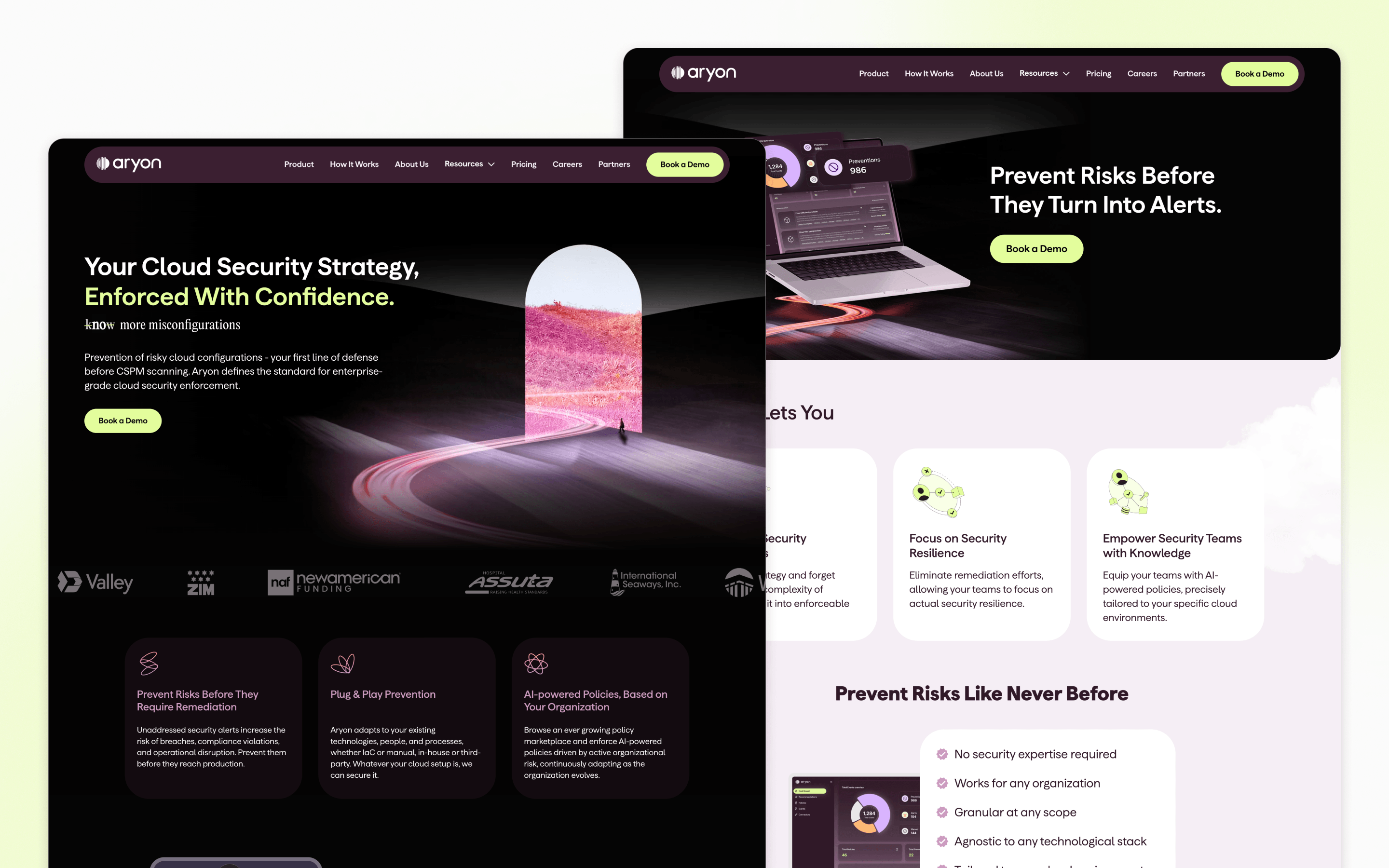
Look at the way the website establishes the offer before asking readers to explore it further. For your own launch, the relevant discussion is how the agency will turn a technical product brief into clear language and a repeatable visual direction that can continue into later pages and communications.
3. Non-Linear Studio: Best Cybersecurity Web Design Agency for Motion Design
 3
3Non-Linear Studio
A design and development studio combining technical storytelling, distinctive art direction, and interactive motion for cybersecurity brands.
Non-Linear Studio offers a more expressive route for a cybersecurity company that wants its website to feel closely connected to the technology it sells. Its selected project spans branding, information architecture, art direction, and development, with 3D motion and WebGL included in the work.
The appeal is the relationship between the story and the interaction, rather than movement added for its own sake. If this direction fits your brand, ask the studio to explain how the experience will remain useful on smaller devices and how the core product message works for visitors who prefer reduced motion.
Featured project: Shift5
The studio worked on Shift5, delivering branding, website design and development, and a visual approach that connects the company's software with physical systems. The project brings a technical subject into a more tangible setting, with industrial imagery and motion forming part of the site's presentation.
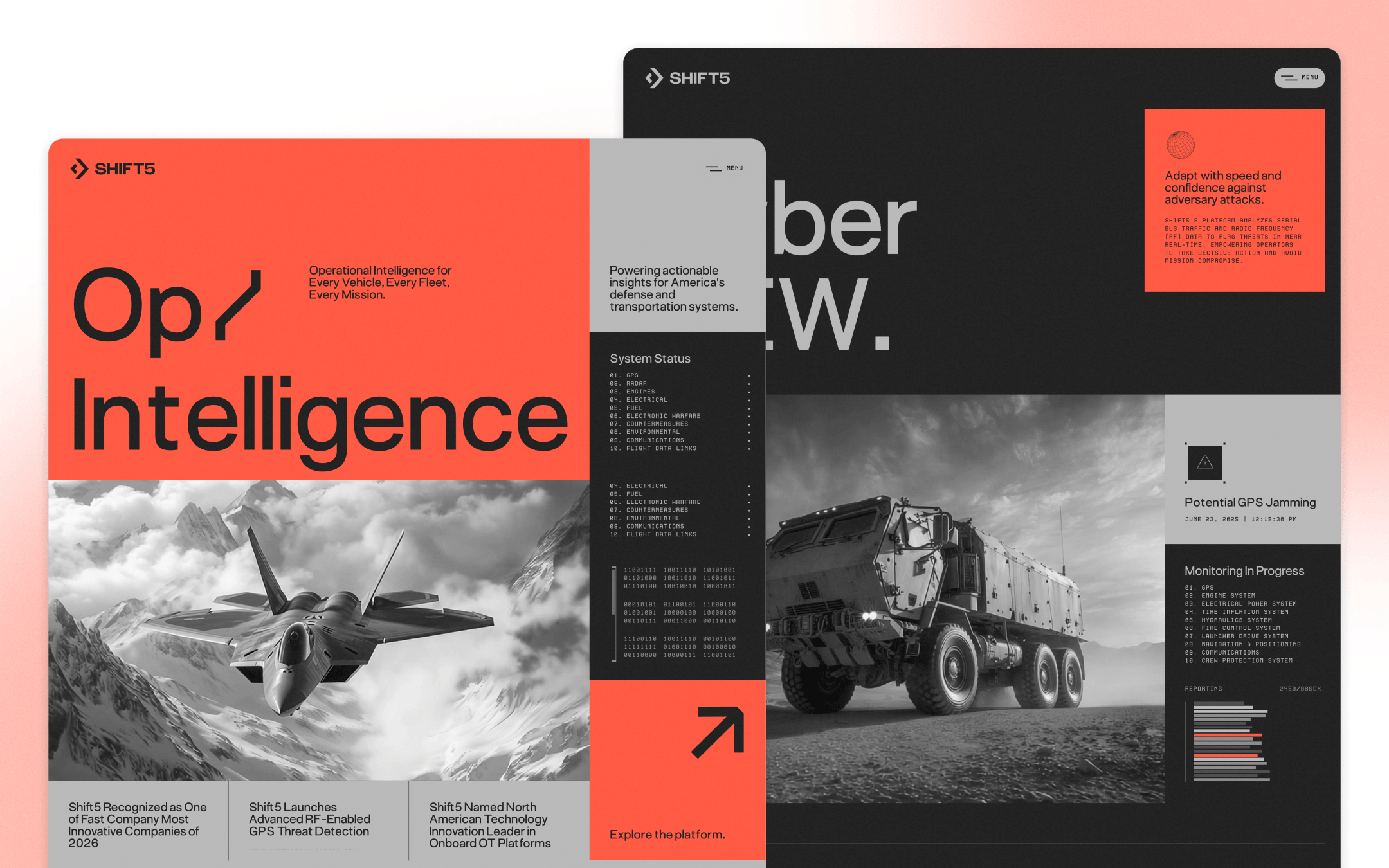
Use the example to assess whether a stronger visual narrative would help explain your own product. It is especially relevant when the environment in which the technology operates matters to the buyer, and you want the website to communicate that context before moving into detailed capabilities and use cases.
4. Punch: Best Cybersecurity Web Design Agency for Product Storytelling
 4
4Punch
A brand and digital agency translating complex cybersecurity-related products into clearer marketing websites and supporting visual identities.
Punch is a useful agency to consider when your product does not fit neatly into a familiar security category. Its work for Blackbird.AI connects brand development with the structure and presentation of a marketing website, making product storytelling the most relevant angle for this list.
A project like this calls for more than a short headline explaining what the software does. Buyers need enough context to understand the problem, recognize where the product fits, and decide what to explore next. Review Punch's work with those questions in mind before discussing a comparable brief.
Featured project: Blackbird.AI
For Blackbird.AI, Punch delivered brand work along with marketing website design and development, including navigation and content presentation. Blackbird.AI works in narrative intelligence, a field related to risk and security but broader than conventional endpoint or network protection, which makes careful explanation particularly important.
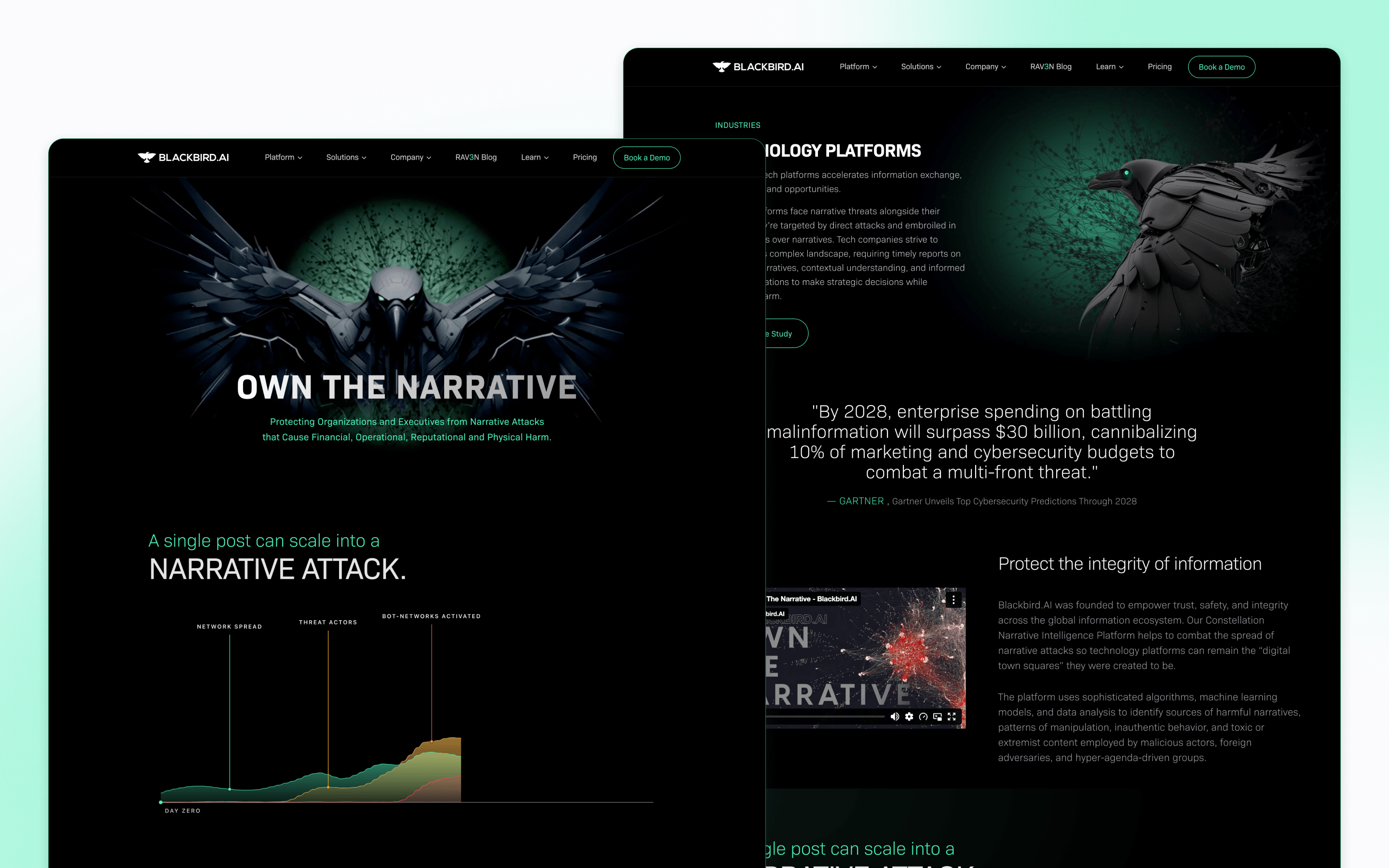
The example is worth reviewing if your company needs to introduce an unfamiliar concept without overwhelming readers with terminology. Ask how the agency would separate the high-level story from the evidence, product details, and industry examples that more knowledgeable visitors will want to examine before speaking with your team.
5. Bluetext: Best Cybersecurity Web Design Agency for Enterprise Brands
 5
5Bluetext
A branding and digital agency supporting enterprise cybersecurity websites through design, development, integrations, and ongoing creative work.
Bluetext's selected engagement extends beyond a single website launch, which makes it relevant for an established security company with several ongoing marketing needs. The work brings together branding, development, integrations, motion, and video, giving you a broader example of enterprise brand support.
Consider this type of agency when the website needs to work alongside campaigns, product communications, and an evolving content library. Before choosing a long-term partner, ask how website improvements are prioritized and how the team keeps the design system coherent as new materials and capabilities are introduced.
Featured project: SecurityScorecard
Bluetext's work for SecurityScorecard included branding, marketing website design and development, integrations, and subsequent enhancements, alongside motion and video assets. The case provides evidence of a relationship covering both the site's initial presentation and additional work as the company's marketing needs developed.
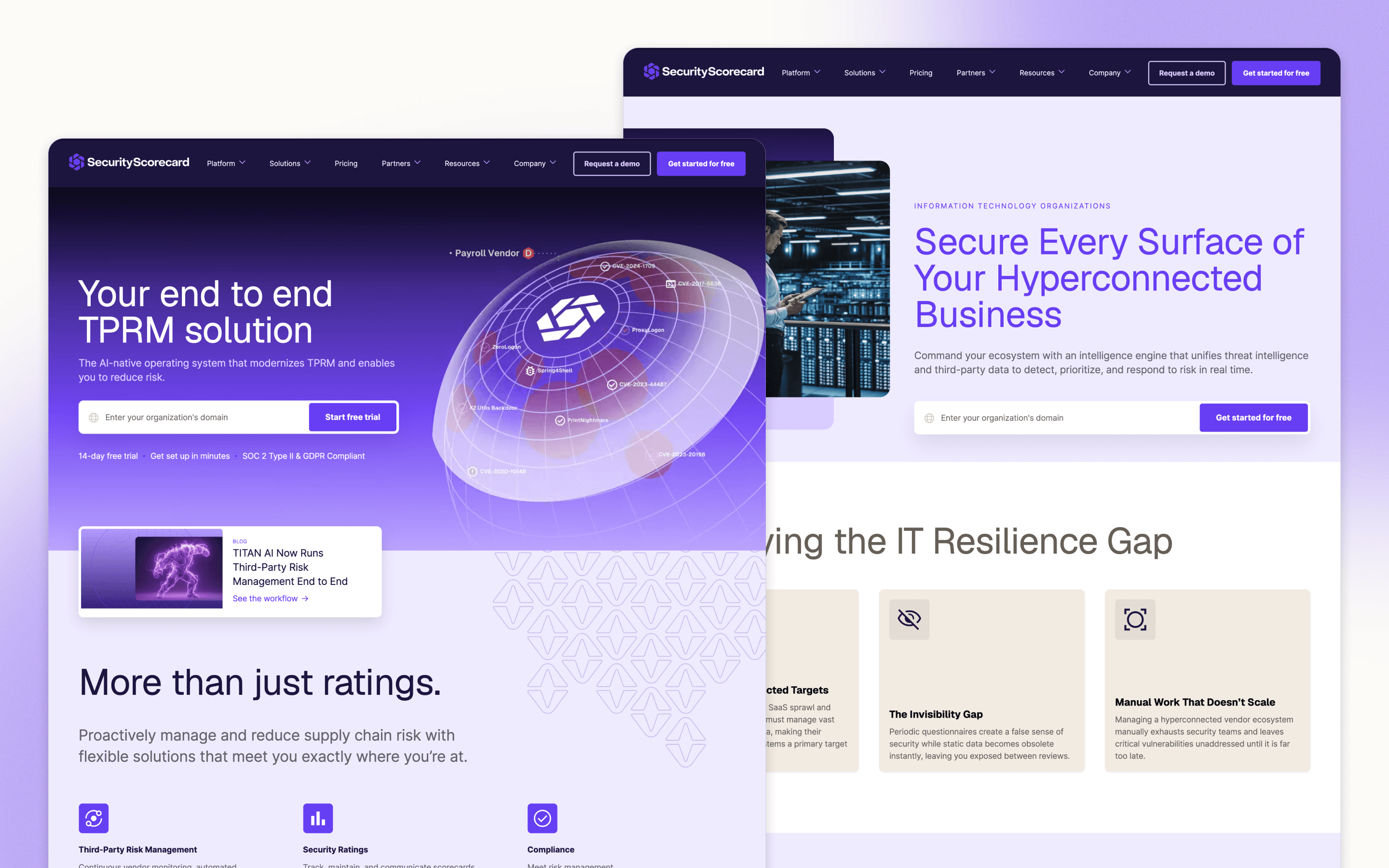
Explore the project as an example of a substantial cybersecurity brand presented across several types of content. For your own brief, distinguish the core redesign from ongoing requests so the proposal explains the delivery team, review process, and support arrangement for each, rather than grouping everything into an undefined retainer.
6. Fixel: Best Cybersecurity Web Design Agency for Resource Libraries
 6
6Fixel
A web design and development agency building cybersecurity marketing sites with structured resources, integrations, and ongoing publishing support.
Fixel is a strong candidate to review when your website must support a growing library of technical and marketing material. Its selected work combines a resource hub, landing pages, and an integration with HubSpot, with content operations forming a practical part of the website scope.
That matters when different teams publish webinars, research, product updates, and campaign pages, because a redesign needs to account for what happens after launch. Ask Fixel to show how the proposed content model would let your editors organize those materials and create new pages without gradually losing consistency.
Featured project: Cyolo
For Cyolo, Fixel delivered website design and development using Statamic and Laravel, with HubSpot integration, a resource hub, landing pages, and ongoing support. The project offers a concrete example of a marketing site planned around both product presentation and the tools needed to keep publishing.
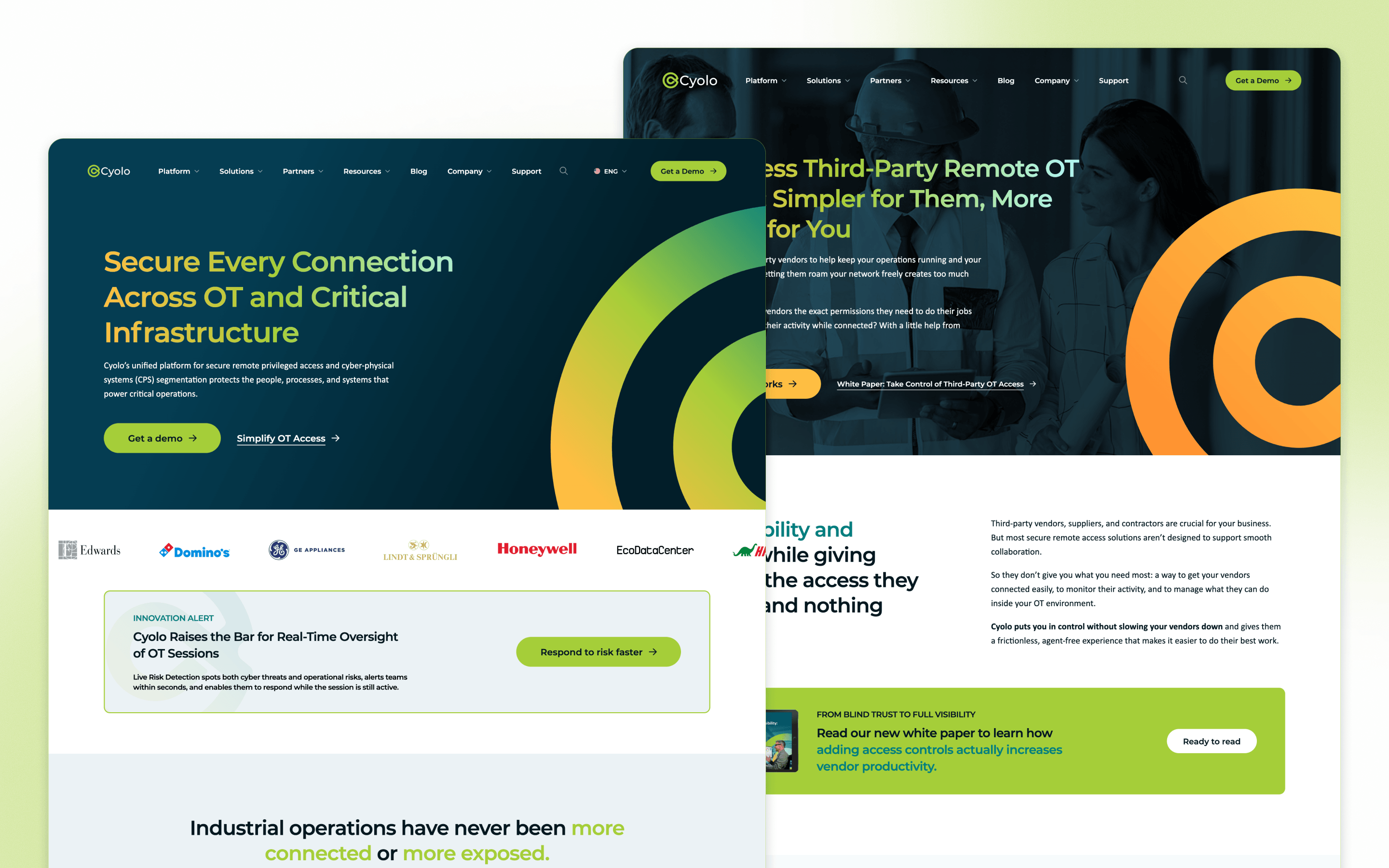
Look beyond the first screen and consider how readers find the next relevant piece of information. If your own site has a large collection of resources, discuss categories, search, campaign tracking, and editor responsibilities early, then ask the agency to demonstrate those workflows using content your team actually produces.
7. EIGHT25MEDIA: Best Cybersecurity Web Design Agency for Platform Websites
 7
7EIGHT25MEDIA
A web design agency creating marketing websites for technology platforms that need to explain broad capabilities to business buyers.
EIGHT25MEDIA belongs on the shortlist for a security business with a platform story to organize. Its work for Swimlane provides an example of a marketing website designed and built for a company whose offer needs more explanation than a single feature or narrowly defined service.
The key question is how a site makes the overall platform understandable while still giving interested readers a way into individual capabilities. Review the project for message hierarchy and page flow, then ask how the agency would handle the different audiences, use cases, and sales conversations in your own business.
Featured project: Swimlane
EIGHT25MEDIA designed and built the marketing website for Swimlane. The selected example introduces a security automation business and provides a useful reference for presenting a technical platform through a public-facing site, rather than through the detailed interface an existing customer uses inside the product.
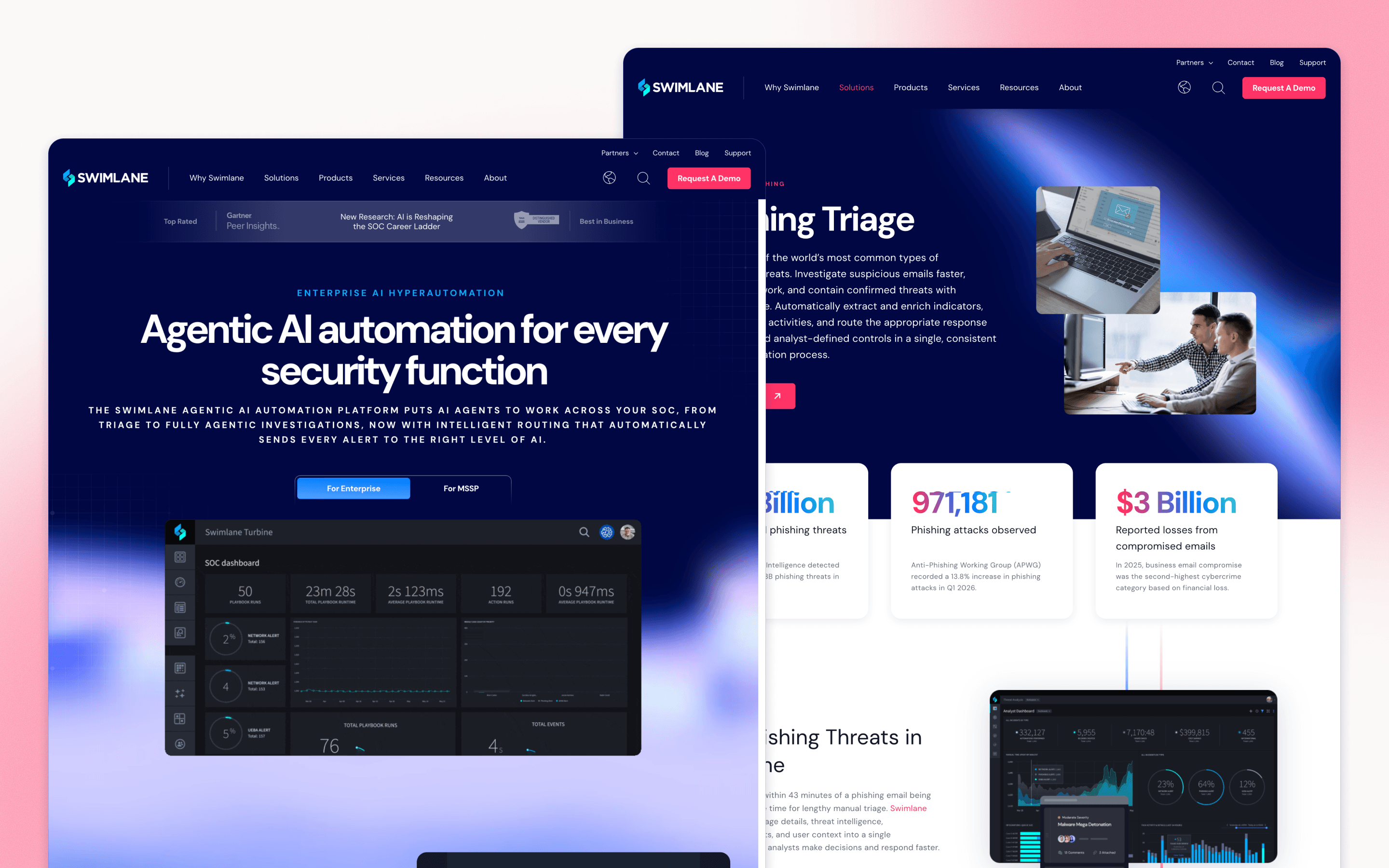
A comparable project should establish which questions the website needs to answer before a demonstration, and which are better explored with a specialist. Use your first conversation to discuss those boundaries, the content your product team can supply, and the agency's plan for connecting platform pages with relevant proof.
8. Blend: Best Cybersecurity Web Design Agency for HubSpot Websites
 8
8Blend
A B2B website agency combining strategy, copywriting, design, and HubSpot development for cybersecurity companies with active marketing teams.
Blend is a relevant option when your marketing team wants the website built within HubSpot and needs help with the story as well as the implementation. Its selected project includes brand, strategy, copywriting, design, and development, so the engagement reaches beyond assembling a set of finished page designs.
That combination can be helpful when a technical company needs to simplify its public explanation while keeping marketing workflows connected. Ask how Blend would organize your product and resource content, and have the team demonstrate what an editor can change without involving a developer in each update.
Featured project: CybExer
For CybExer, Blend delivered strategy, branding, copywriting, website design, and development on HubSpot CMS. The client works with cyber ranges, making the project a useful example of turning a specialized technical offer into a website that gives prospective buyers a clearer route into the subject.
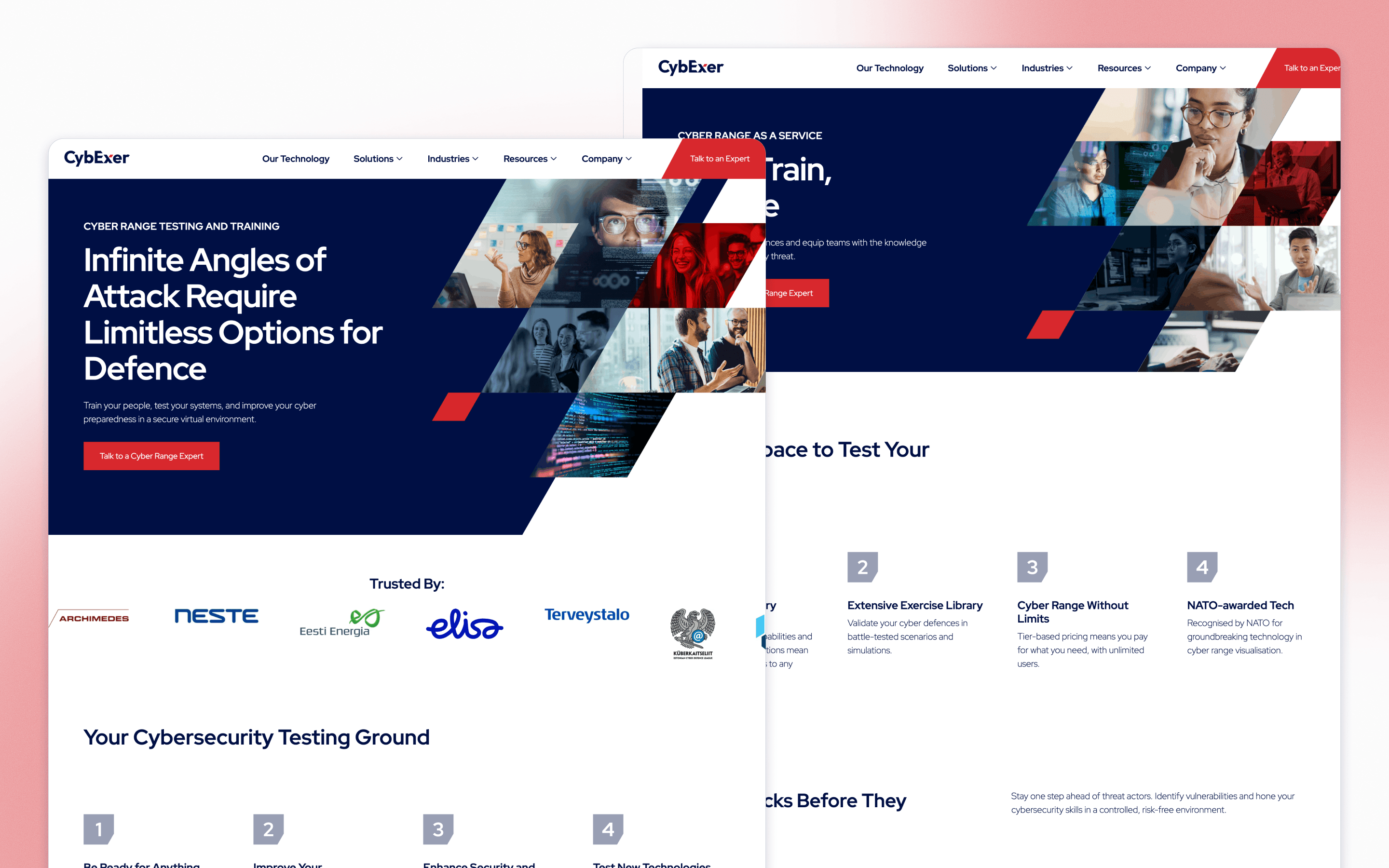
Review the relationship between the positioning and the page structure, particularly where the site introduces a concept that visitors may understand at different levels. For your project, clarify whether the scope includes messaging interviews and copy approval, as those decisions will shape both the design and the eventual publishing setup.
9. Sköna: Best Cybersecurity Web Design Agency for Visual Identity
 9
9Sköna
A B2B creative agency connecting cybersecurity website design with brand identity, campaign ideas, and motion across marketing materials.
Sköna is worth exploring when your website needs a more recognizable visual identity that can extend into campaigns. Its selected engagement includes strategy, identity, campaign concepts, website design, and motion, with brand consistency providing the clearest reason to consider it for this guide.
That scope suits a company that already has a substantial offer but wants a more coherent way to present it across its public materials. Discuss how the website direction will translate into practical page layouts and ongoing marketing assets, along with who will be responsible for building and maintaining the finished site.
Featured project: Sectigo
Sköna's work for Sectigo brought together strategy, visual identity, campaign concepts, website design, and motion. The example shows a cybersecurity-related brand presented through a coordinated creative direction, with the website acting as one part of a wider set of marketing communications.
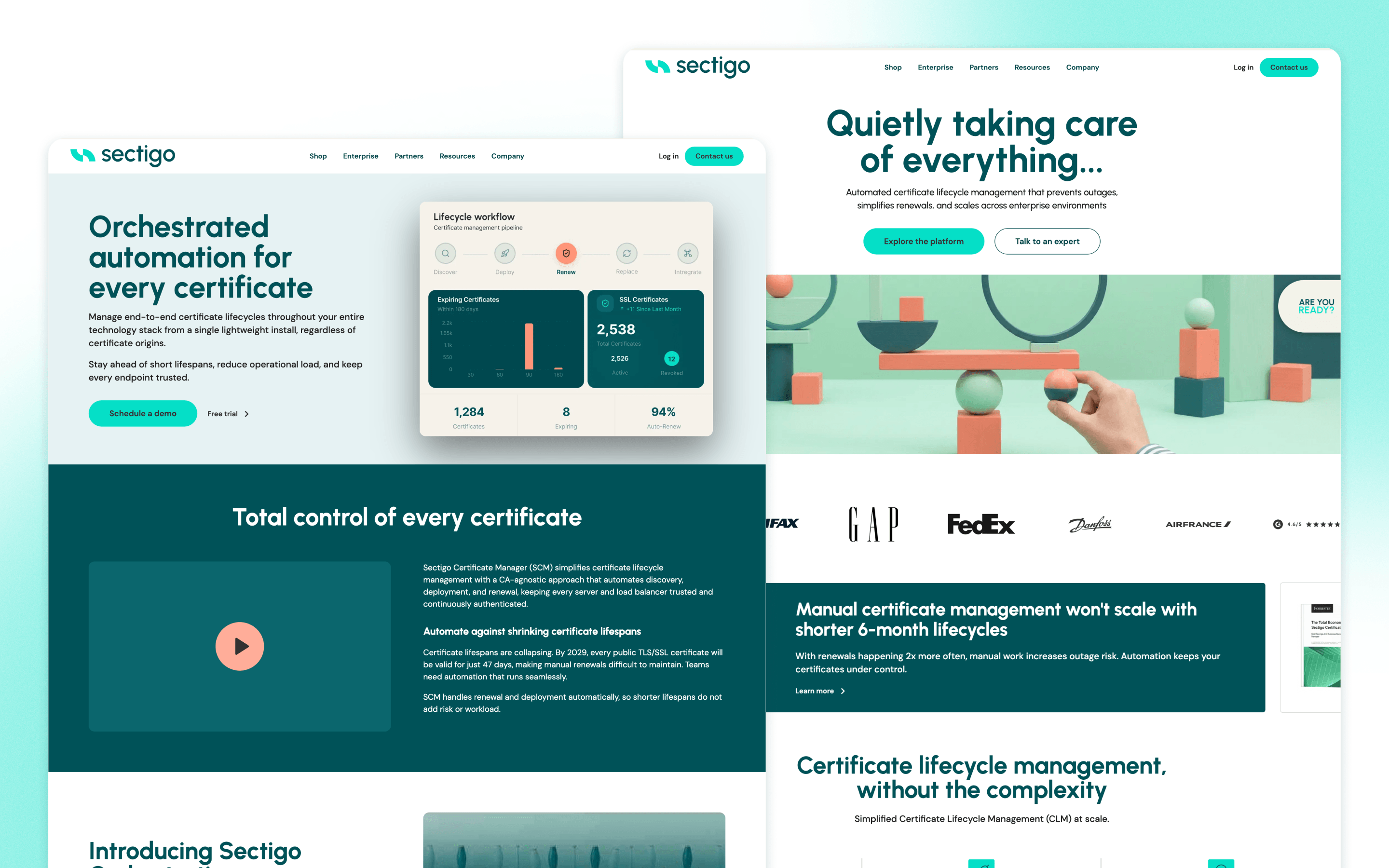
Look at how the main message carries through the visual presentation instead of judging the project solely by its homepage. If that is the kind of consistency your team needs, ask for a clear split between creative deliverables, development responsibilities, and the assets your in-house team will receive for future campaigns.
10. Octave Agency: Best Cybersecurity Web Design Agency for Training Platforms
 10
10Octave Agency
A digital agency designing cybersecurity marketing websites that explain training products through clear content, navigation, and product presentation.
Octave Agency is a useful option for companies selling security awareness or training products to business teams. Its selected work for Boxphish includes website design, development, UX, and SEO, giving you an example where product clarity matters alongside the site's overall visual presentation.
For this kind of offer, visitors need to understand what the training involves and how it fits into their organization before they are ready to request a demonstration. Review the project with that buying journey in mind, including how the site moves from an introduction to more detailed product information.
Featured project: Boxphish
Octave delivered website design and development, UX, and SEO for Boxphish, with separate print design also listed in the engagement. The marketing website uses product-related material to explain the offer; those visuals should be understood as part of the website presentation rather than evidence of a separate product-interface commission.
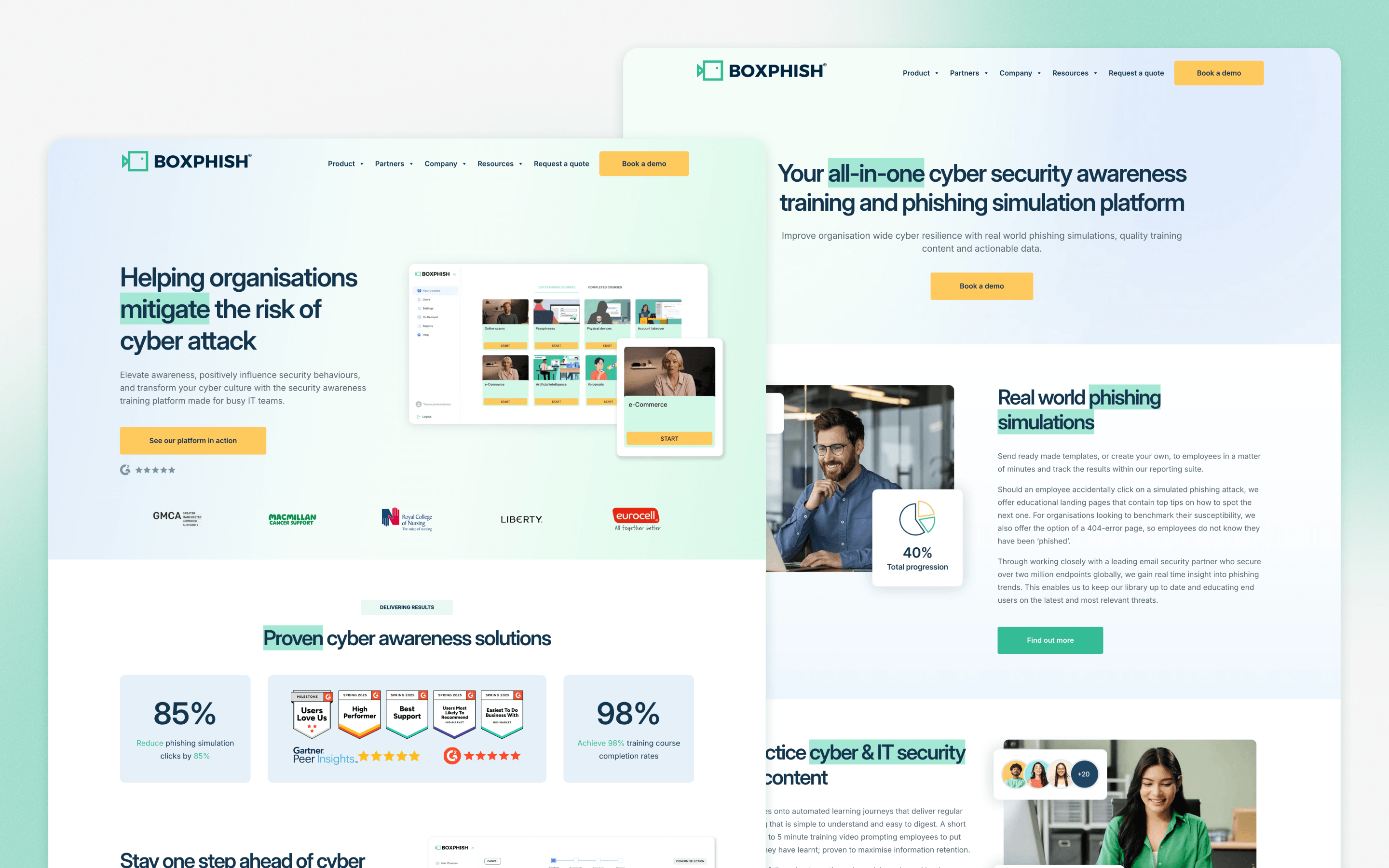
The example is relevant if your business needs to make an intangible training service easier to evaluate. Ask how the agency would help select the right screenshots, explain the learning experience, and keep the route to an inquiry clear without requiring every visitor to read the whole product story first.
11. Aftershock: Best Cybersecurity Web Design Agency for Company Rebrands
 11
11Aftershock
A branding and digital agency rebuilding cybersecurity company identities and websites through strategy, copywriting, design, and development.
Aftershock offers a broader starting point for a cybersecurity business whose name, identity, and website need to move together. Its selected engagement covers rebranding and website delivery, including content and copywriting, rather than focusing only on the appearance of an existing set of pages.
This is a useful direction when a company has outgrown its previous introduction or needs to explain several related services under one identity. Ask how the agency will gather input from leadership and technical teams, and how it will turn those decisions into a website structure that remains easy to expand.
Featured project: Cycurion
For Cycurion, Aftershock's work included naming and rebranding, UX strategy, UI design, content, copywriting, and frontend and backend marketing website development. The engagement provides a connected example of changing how a security and technology business presents itself, from its public identity through to the working website.
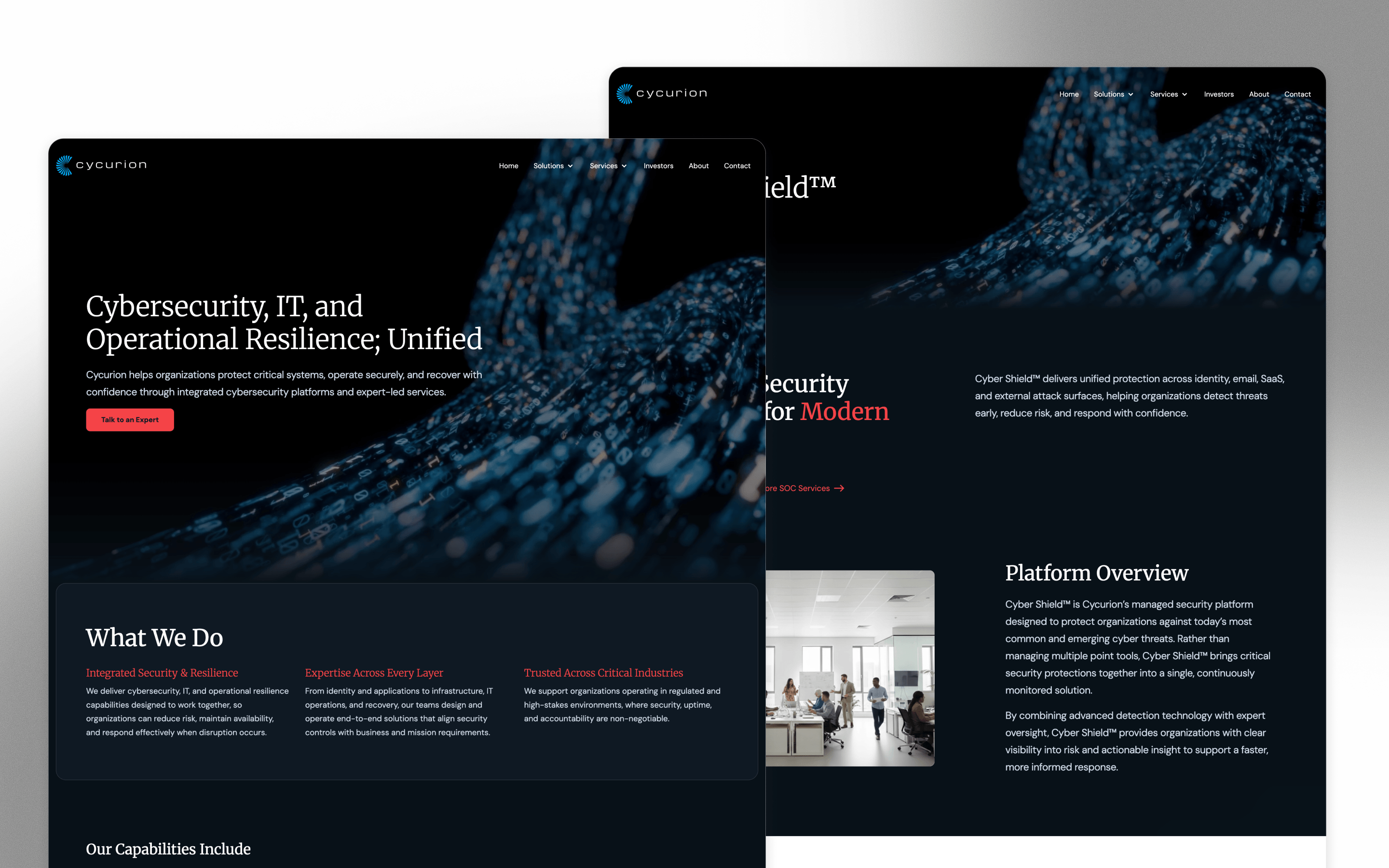
When reviewing the project, consider whether your own difficulty starts with the website or with how the company describes its offer. If both need attention, request separate milestones for positioning, content, and page design so your team can resolve the underlying story before committing to the final presentation.
12. Watkins Web Design: Best Cybersecurity Web Design Agency for Headless Websites
 12
12Watkins Web Design
A web design studio building cybersecurity marketing sites with custom content structures, headless WordPress, and Next.js development.
Watkins Web Design provides a particularly useful reference for teams considering a headless website. Its selected work combines WordPress content management with a Next.js frontend, alongside reusable components and editor onboarding, giving the technical approach a clear connection to day-to-day publishing.
The important question is whether that setup solves a real requirement for your team. Ask the studio to demonstrate how editors preview and publish changes, how the components are maintained, and what support is needed after launch, rather than choosing a framework simply because it appears in a proposal.
Featured project: Seamless 24/7
For Seamless 24/7, documented in the agency's Seamless Recovery case study, Watkins built a marketing website with headless WordPress and Next.js. The scope included brand-brief implementation, searchable incident content, comparison material, motion, reusable components, and onboarding for the people managing the site.
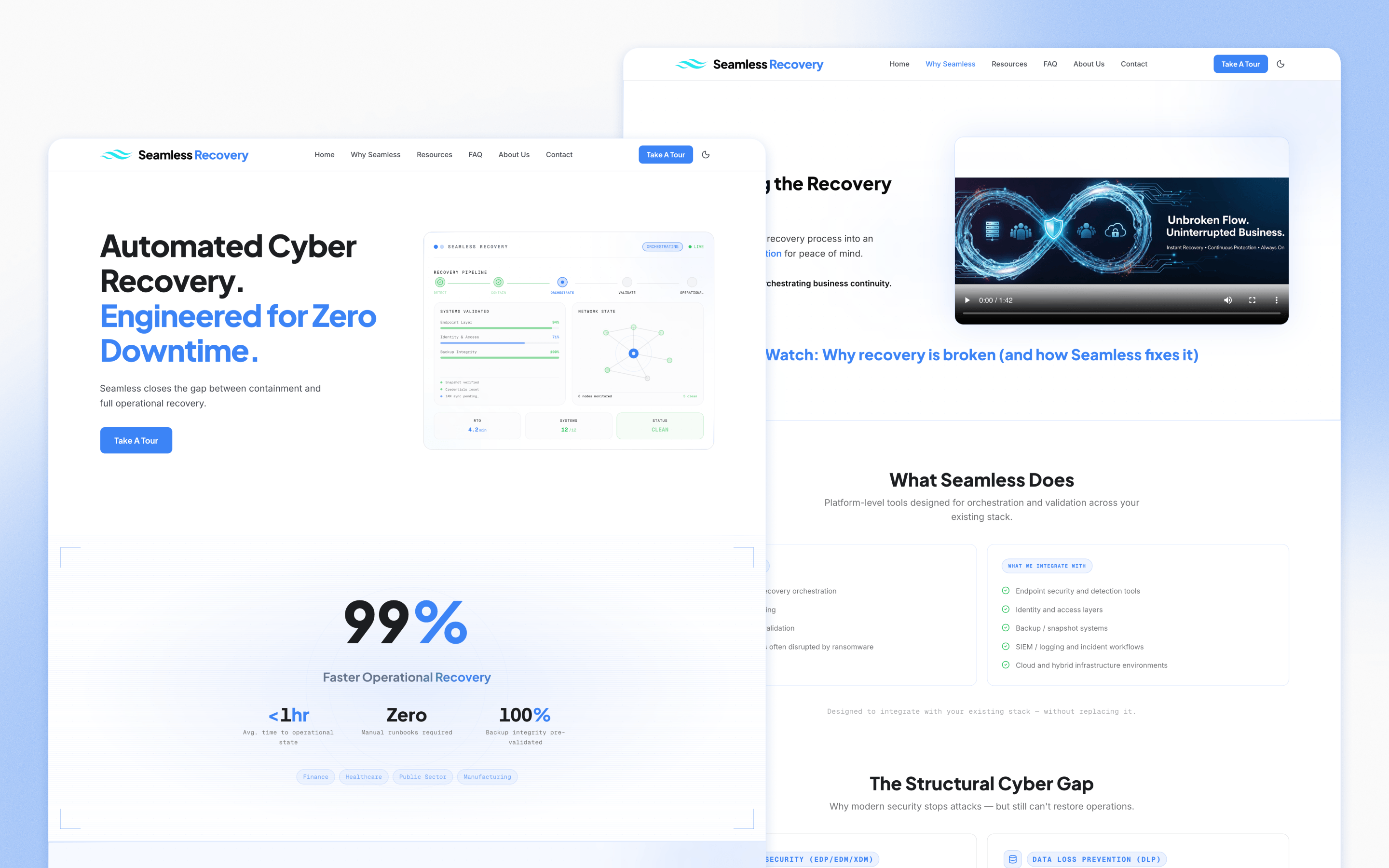
The example stands out because it connects a technical build with a specific content job: helping visitors explore recovery-related information. If your company publishes detailed incident or product resources, discuss their structure first, then evaluate whether the proposed architecture makes those materials easier for both readers and editors to use.
13. Pixelfit: Best Cybersecurity Web Design Agency for Content Hierarchy
 13
13Pixelfit
A design and development agency refining cybersecurity marketing websites through clearer content structure, responsive layouts, and consistent visual design.
Pixelfit is an option to review when the central problem is how information is arranged on an existing cybersecurity site. Its selected work addresses content hierarchy, responsive layouts, motion, and visual consistency, with the marketing website treated as a distinct part of the client's public presence.
That focus can be useful when a product has accumulated several messages and pages that no longer feel connected. Start a discussion with examples of where visitors struggle to understand your offer, then ask how the agency would simplify the page flow while retaining the details technical buyers need.
Featured project: WatchDog Security
Pixelfit's named work for WatchDog Security includes marketing website redesign and development. The selected example is the public website, with recognizable marketing content and a route into the company's offer, rather than a product dashboard being presented as evidence of a website project.
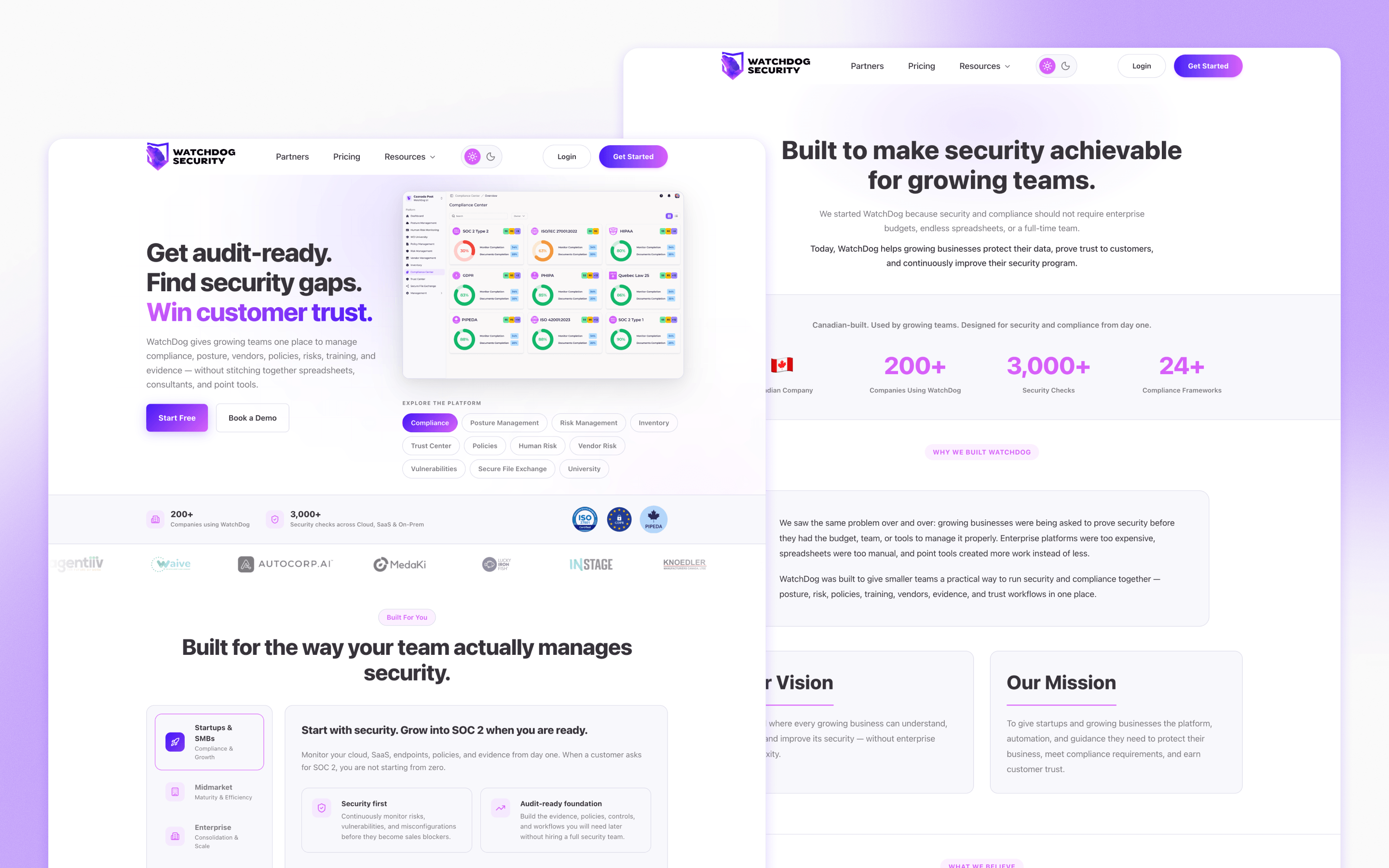
Review the structure and responsiveness of the client site, and ask Pixelfit to walk through the parts it delivered. For a similar engagement, agree on the pages, content responsibilities, and implementation scope upfront so the proposal clearly connects the intended improvements with the actual website work you will receive.
What cybersecurity website design services should you include?
Start with the questions a buyer needs answered before a sales conversation. What does the product protect? Who uses it? How does it fit with the systems already in place? Your website agency should help arrange those answers into a clear product story, with enough depth for technical readers and a straightforward introduction for everyone else.
A complete brief can include messaging, information architecture, website design, development, product visuals, resource templates, campaign pages, and CRM connections. Decide whether the work concerns the public marketing site, the product interface, or both, and price those responsibilities separately. Experience designing a dashboard does not automatically demonstrate experience delivering a marketing website.
Bring product and security reviewers into the content plan early. They can approve capability descriptions, architecture illustrations, customer references, and any certification statements before those materials become the foundation of the page designs. That avoids a polished site built around language the company cannot confidently publish.
How to choose a cybersecurity web design agency and compare proposals
Choose 2 or 3 relevant teams and send them the same product context. Include the audiences you serve, the questions that slow down sales conversations, and examples of content that is difficult to find today. Ask each agency to explain its role on a comparable project, including who handled strategy, copy, design, development, and maintenance.
Use the proposal to understand the working relationship, not just the price. A rebrand with product messaging is a different assignment from development of approved designs, while a large resource migration adds work that may be invisible in a homepage mockup. Make those differences explicit before comparing totals.
Subject [Company] website project: [product], [audiences], and [launch window]
Hi [name],
We found your work through BRIX Agency’s cybersecurity web design guide. We’re [company], and our product helps [audience] with [problem]. We want our next website to make [main message] clearer and support [demo requests, partner inquiries, or another goal].
Our expected scope includes [product and solution pages], [resource library], and [campaign pages]. We have [brand assets and approved product material] and need help with [positioning, writing, design, or development].
The site should connect with [CRM, marketing automation, and other systems]. Our [product, marketing, and security reviewers] will review the relevant parts, and [team] will own publishing.
We are aiming for [date] with a budget of [range]. Could you explain your recommended phases, show a comparable project, and separate launch work from ongoing costs?
Please include your approach to content migration, editor training, testing, account ownership, and post-launch support.
Thanks,
[Your name]
[Role and company]
Compare the deliverables against your publishing needs: product pages, solution pages, integrations, resources, campaigns, and regional content. Check whether the quote includes writing, illustration, motion, migration, form testing, and training. Then separate the initial fee from hosting and ongoing support, including the cost of maintaining custom functionality.
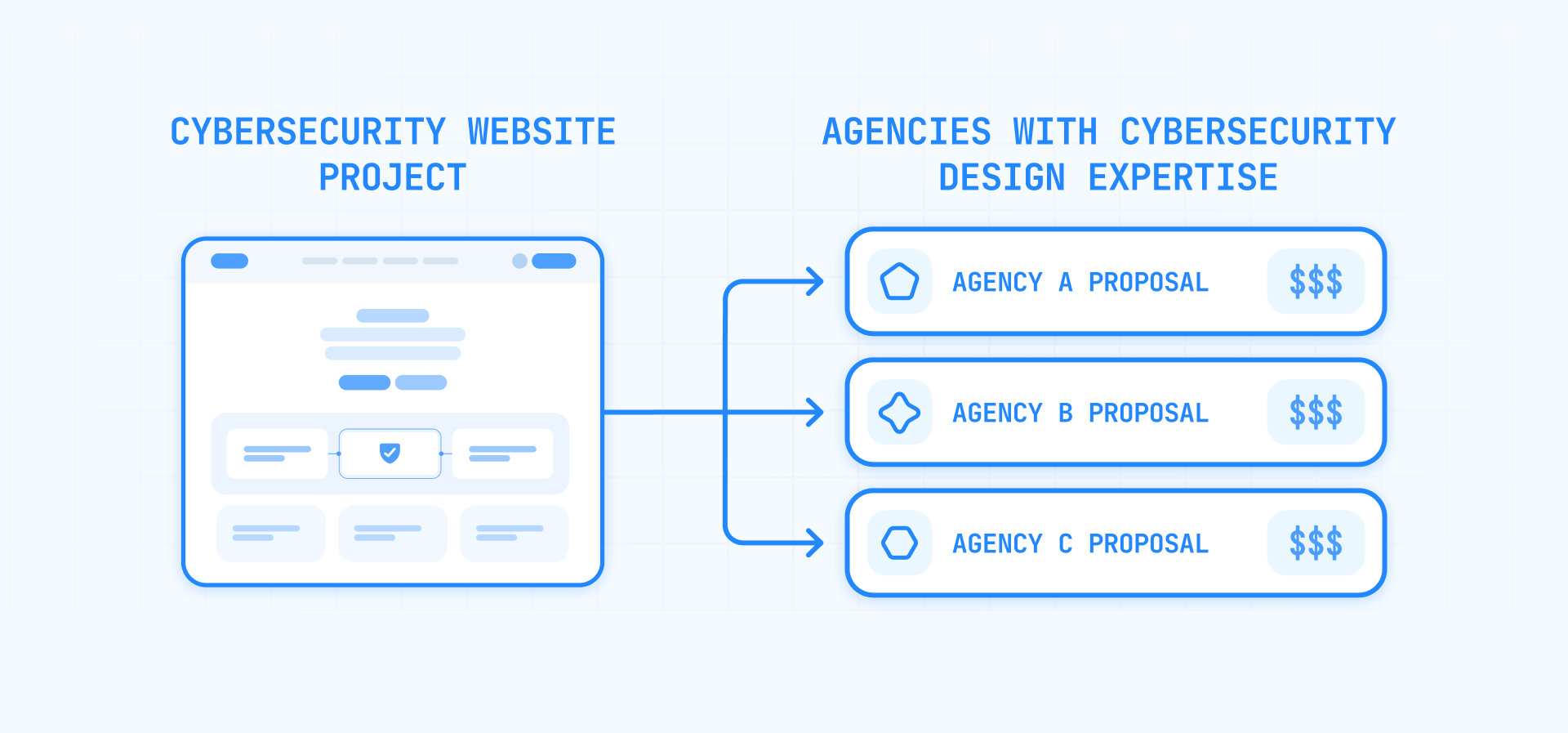
The schedule should account for product reviews and any coordination with your existing security or infrastructure team. Ask for a working preview before launch, a clear acceptance process, and a plan for keeping current URLs useful. Agree on who owns the domain, source files, website accounts, and integrations so the handover is practical.
Choosing a CMS your cybersecurity marketing team can use
Imagine publishing a product update on a busy launch day. Your team may need to change a feature page, add a supporting resource, and create a campaign destination without breaking the design or waiting for a developer. Use that small sequence as the test for the editing setup an agency recommends.
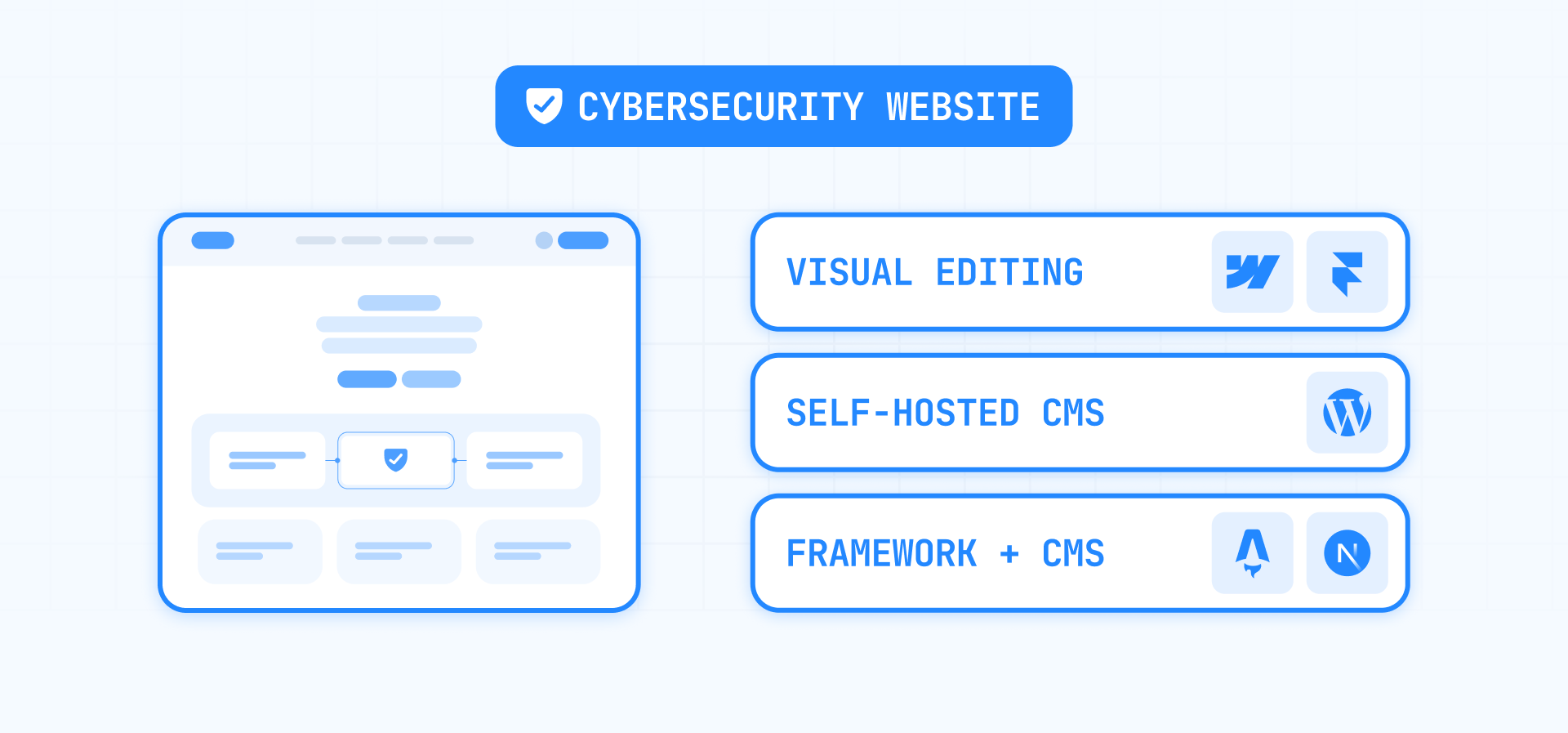
Webflow and Framer can be useful for visually managed marketing websites, provided the agency builds the collections and reusable sections your team needs. Ask for a demonstration with your own product content, including a new page, a preview, and a correction after publication. Confirm that the proposed plan supports the languages, permissions, and integrations in your brief.
WordPress gives you a self-hosted option when your organization wants to choose its hosting environment and manage a larger publishing operation. That choice comes with ongoing responsibilities for the installation and its extensions, so define who owns updates, backups, and maintenance instead of leaving them between the agency and your internal team.
Astro or Next.js may suit a more customized frontend, but neither replaces an editing system. Ask which CMS will sit behind the website and why the additional architecture is useful for your requirements. A technical stack is only helpful when it supports a clear business or publishing need and your team can maintain it.
Ask for a comparable technology website delivered on the recommended stack, including an explanation of how the marketing team publishes technical resources and product updates. An actual handover example is more useful than a platform preference on its own.
Cybersecurity website priorities: clarity, proof, and useful next steps
Separate product detail from the main explanation
The homepage can introduce the problem, audience, and offer without containing every service description. Give interested readers routes into capabilities, integrations, and use cases, and make technical resources easy to find. If you use animation to explain a system, keep the message understandable without the animation and test the experience on smaller screens.
Make trust claims specific and reviewable
Use approved customer examples, accurately described capabilities, and current documentation instead of broad promises about being completely secure. Your security and legal reviewers should confirm any certification or compliance statements. The marketing site should also have clearly assigned ownership for its forms, third-party scripts, updates, and maintenance; visual design is not a security assessment.
Offer more than one useful path
A visitor doing early research may want a product explanation or technical resource before requesting a demo. Provide those routes alongside a clear contact action, and measure meaningful steps such as completed inquiries and resource engagement. Preserve useful existing URLs during a redesign and check that search visitors still land on content that answers their question.
FAQs about cybersecurity web design agencies
How do I choose a cybersecurity web design agency?
Choose a team that can show relevant marketing website work and explain its contribution clearly. Cybersecurity product dashboards, campaign graphics, and public websites involve different responsibilities, so ask which of those the agency delivered. Then review how its websites introduce the product, support technical research, and guide readers toward a useful next step.
Give shortlisted teams the same brief and ask how they would address your biggest communication problem. Their questions should help clarify audiences, content ownership, integrations, and review responsibilities. Compare that thinking with the proposed deliverables, and speak with a client whose project involved a similar level of technical input rather than relying only on an attractive portfolio image.
Can one agency handle our cybersecurity rebrand and website?
Yes, if both are included. Several agencies in this guide have selected work spanning positioning, identity, and website delivery, but the precise responsibilities differ. A team may design the site while another partner develops it, so confirm who owns each stage and how the people involved will work together on your project.
Resolve the product story and core brand decisions before treating page layouts as final. Ask for milestones that let your leadership and product reviewers approve the direction without reopening every decision at launch. If the agency is also creating campaign materials, identify those deliverables separately and make sure your team receives the files and guidance needed to use the new identity consistently.
Should a cybersecurity homepage include every service?
Introduce the offer, then guide. A homepage should give visitors enough information to understand the company and choose a relevant route, rather than forcing every capability into one long explanation. The right amount of detail depends on how familiar your audience is with the product and how many distinct needs the business serves.
Group services or capabilities around questions buyers recognize, then connect those introductions to more detailed pages. Test whether someone unfamiliar with your internal terminology can find a relevant solution and understand the next step. If the page feels crowded, improve the hierarchy before simply removing information, because technical readers may still need that detail elsewhere in the site.
How much does a cybersecurity website redesign cost?
Cost follows the scope of the work, including messaging, page types, development, content migration, and integrations. A website built from approved designs is a different project from a rebrand that requires product interviews, new copy, custom illustrations, and a resource library, even if the two sites end up with a similar number of pages.
Ask agencies to quote against the same brief and separate initial delivery from recurring costs. Identify which product materials your team will supply, which assets the agency will create, and how many review rounds are included. Compare hosting, software, maintenance, and future campaign support as well, so the lower launch price does not hide responsibilities you still need to fund.
How long does it take to build a cybersecurity website?
A realistic schedule includes technical content review as well as design and development. Product claims, architecture diagrams, customer examples, and integration descriptions may need approval from several people, while a large resource library introduces migration work. Those dependencies make a fixed timeline difficult to judge without first understanding the actual scope.
Request a sequence of milestones with clear inputs and reviewers for each. Ask when your team must supply content, when a working preview will be available, and how launch testing will cover forms and connected systems. If the website must accompany a product announcement, identify the essential launch pages and agree how any later content will be delivered.
What is the best CMS for a cybersecurity company website?
The best choice supports your marketing workflow and the website requirements your team can explain. Webflow and Framer can provide visual editing, WordPress offers a self-hosted route, and a custom frontend using Astro or Next.js can connect to a separate CMS. None of those choices removes the need to plan content and maintenance.
Test the setup with a product update, resource entry, and campaign page before committing. Ask about permissions, previews, integrations, account ownership, and support, particularly if marketing and infrastructure teams share responsibility. A platform recommendation should explain how your editors will work and why the chosen architecture fits the site, rather than relying on its popularity with developers or designers.
Do cybersecurity websites need technical content and a resource library?
Include useful buying evidence when it helps visitors evaluate the product, but do not create a library merely to fill a navigation item. Technical explanations, integration information, research, and customer examples can answer different questions during a longer evaluation, provided each resource is accurate, current, and easy to find from relevant pages.
Define categories around the way buyers look for information, and assign someone to maintain each type of material. Consider which content should be openly accessible and which genuinely benefits from an inquiry or registration step. Ask the agency how resources will connect to product and solution pages, so a reader can continue exploring without returning to the main navigation every time.
Should a cybersecurity website use animation?
Use motion with a purpose. Animation can help explain a system, relationship, or sequence that is difficult to communicate with a static image, and some agencies in this guide make it a distinctive part of their work. It should support understanding without delaying access to the product information visitors came to read.
Ask to review the proposed experience on a phone and with reduced motion enabled. Check that the message remains understandable when an effect is absent and that essential controls do not depend on a complex interaction. Agree on the assets, development, and maintenance included in the scope, because a custom interactive sequence involves different work from a simple page transition.
Can a new cybersecurity website help generate demo requests?
A website can make the next step clearer by explaining the product, providing relevant evidence, and giving visitors a useful route to contact your team. That creates better conditions for inquiries, but a redesign alone does not guarantee a particular number of demo requests or qualified opportunities for the business.
Decide what a useful inquiry looks like and connect the form with the people who will respond. Measure completed submissions and the quality of resulting conversations rather than judging the site only by clicks on a button. Also give earlier-stage visitors a way to learn more, since a technical buyer may need substantial information before agreeing to a sales discussion.
What should happen to existing content and SEO during a redesign?
Plan the migration explicitly. Inventory useful product pages, resources, and campaign destinations before changing their structure or addresses. Decide which content stays, which needs improvement, and where old URLs should lead, so visitors arriving through existing links can still reach a relevant explanation instead of a missing page or unrelated homepage.
Include redirects, metadata, internal links, sitemap checks, and post-launch monitoring in the agency's scope. For a cybersecurity business, review technical claims while moving content, since an old resource may describe a product capability that has changed. Ask who will test the migration and investigate problems after launch, and keep the original content available until the replacement has been checked.
Build a cybersecurity website people can understand
A useful cybersecurity website gives readers confidence through clear explanations and relevant evidence. It lets a newcomer understand the offer while giving a technical buyer room to investigate, with a consistent story connecting the homepage, product pages, resources, and contact experience.
Use the selected projects to find agencies whose strengths match the work ahead. Some briefs call for a new identity, others for a better content structure or a more capable publishing setup, so make that distinction before comparing proposals and choosing a team.
If your website needs a clearer way to present a complex product, share your cybersecurity project with BRIX Agency. We reply in less than 24 hours, or in 1–2 hours during business hours in PST, and can help you work out the next step.




Join readers commenting on this post!