

Before a family visits your school, they often visit its website. They may be trying to picture an ordinary day, understand an unfamiliar curriculum, or work out whether the school is right for their child. A beautiful opening image helps, but the answers they find afterward are what make that first visit useful.
The same website also has a more everyday job for your existing community, from finding dates and documents to reaching the right portal. A good school website design company can bring those needs together without making admissions information compete with every notice the office needs to publish.
This guide introduces 17 school website design companies with selected projects you can explore. Some focus on school identity and storytelling, while others bring experience with publishing platforms, connected systems, or school networks, giving you several ways to approach the website your own community needs.
How we selected these school web design agencies
We reviewed named school projects and the work each team delivered, from a new identity and full website to a focused improvement in admissions pages. The examples include different types of schools and publishing arrangements, helping you compare both the family experience and the support your staff would need.
BRIX Agency publishes this guide and takes the first position with our education design portfolio. Use the specialties to narrow your options, then explore the school websites with your own community in mind, considering the institution’s character, its audiences, and the work your team can manage internally.
The school web design agency shortlist
- BRIX Agency: A web design agency creating custom education websites with distinctive visual identities and clear ways to explore programs and learning experiences.
- The Web Kitchen: A creative web agency combining school research, brand evolution, website design, development, and practical CMS training for staff.
- Interactive Schools: A school-focused creative agency using community research, photography, and interactive storytelling to bring distinctive educational experiences into view.
- Mission Minded: A branding and design agency translating a school’s positioning into clearer website content, information architecture, and an admissions-focused visual story.
- JTB Studios: A digital studio connecting specialist school identities with custom website design, reusable components, content migration, and staff publishing tools.
- Thursday Studio: A design studio pairing school brand refinement and photographic direction with website structures built around prospective families and admissions.
- IGNITE: A digital agency rebuilding school websites in Webflow with refreshed branding, clearer family navigation, and practical enrollment routes.
- Design TLC: A website agency connecting school UX and WordPress development with reusable modules, content migration, and established school-management tools.
- Finalsite: A school website provider combining design services and a publishing platform with workflows that support an active in-house communications team.
- Studio Bravo: A digital studio combining school websites and microsites into a coordinated experience with shared forms, calendars, and content management.
- Thirst Creative: A creative agency connecting school brand research and visual guidelines with the development of a new custom public website.
- The Curious: A digital agency improving school admissions pages through clearer information architecture, practical FAQs, specific booking actions, and local search work.
- Tassel: A school marketing agency connecting website redesigns and academic branding with clearer program explanations and routes to inquire, visit, and apply.
- Cleverbox: A school branding and website agency coordinating central and academy sites with shared identity and centralized document-management structures.
- Hatched: A creative agency updating existing school websites through hosting moves, CMS improvements, refreshed pages, and clearer school-stage navigation.
- Remedy Studio: A web design studio building school websites with organized program content, mobile usability, staff training, hosting, and continued support.
- Metric Marketing: A marketing agency connecting school identity and website design with online-learning systems, registration information, and mobile-friendly public content.
1. BRIX Agency: Best School Web Design Agency for Custom Design
 1
BRIX Agency
A web design agency creating custom education websites with distinctive visual identities and clear ways to explore programs and learning experiences.
At BRIX Agency, we help education businesses and institutions give their work a clear, distinctive presentation online. We consider the opening impression alongside the pages that explain programs, introduce the people involved, and help a visitor decide what to explore next.
Our education portfolio spans campus-focused designs, online courses, and learning platforms, with each example taking its own visual direction. The work below comes from our original template designs and shows how we adapt imagery, page hierarchy, and supporting content to different kinds of educational offers.
Education website designs from our portfolio
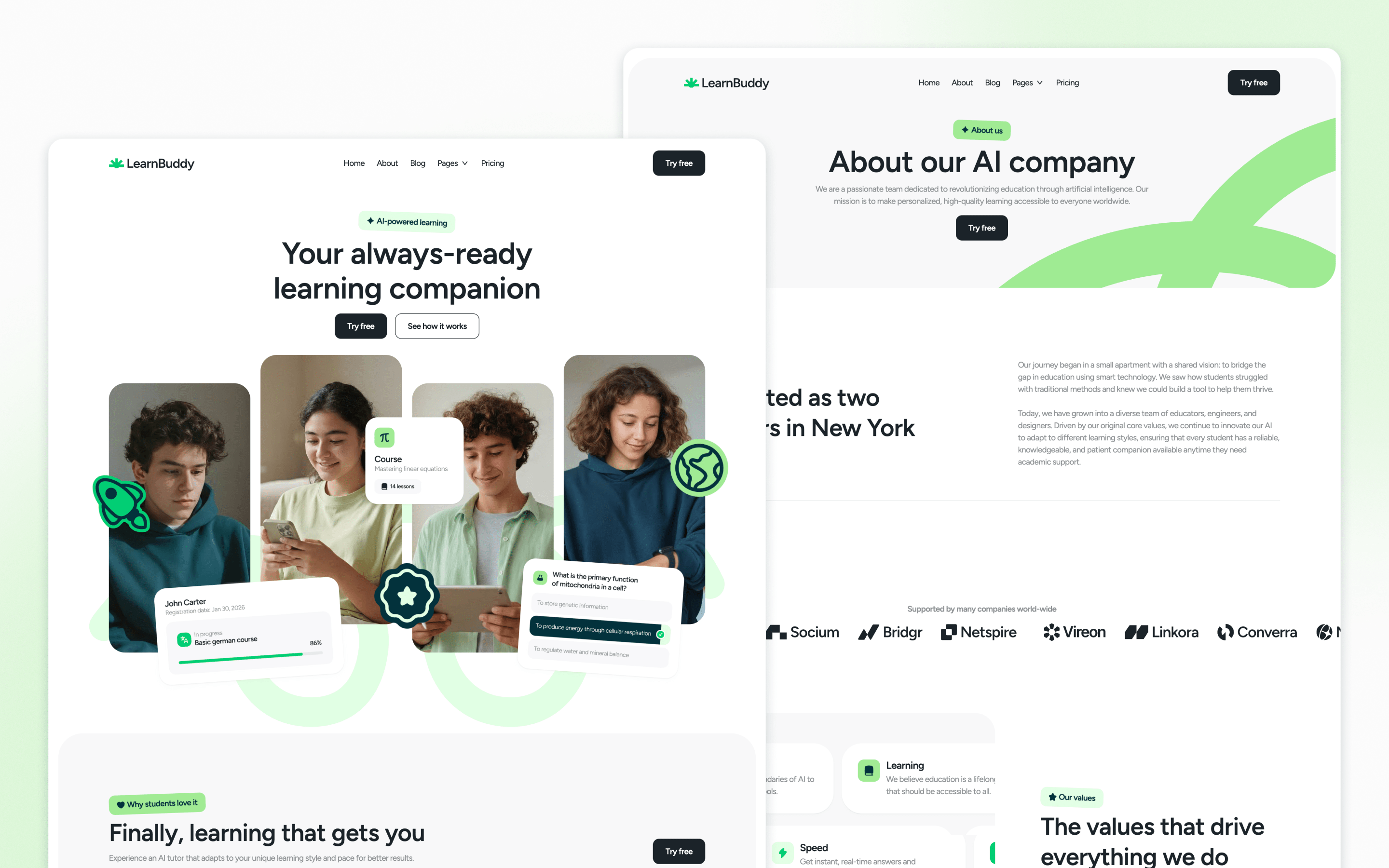
Our LearnBuddy template introduces an AI learning platform with an approachable visual language and a clear explanation of the product. The example shows how we make a technology-based learning offer feel accessible while leaving room for the company story and the ideas behind the service.
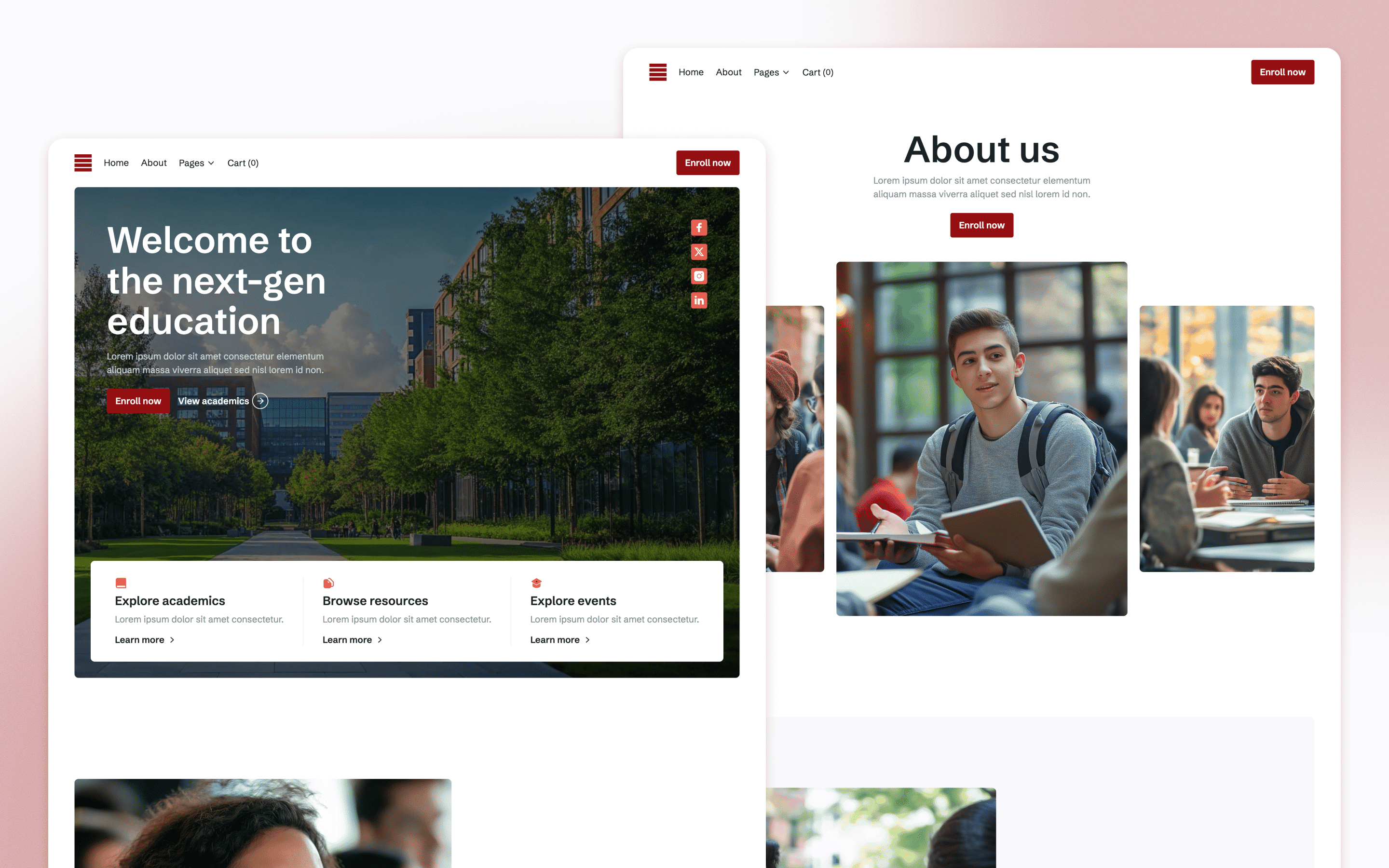
Our University Campus template uses campus imagery and a more traditional academic direction to introduce an educational institution. The supporting pages carry that character into information about the school, demonstrating how we connect a strong sense of place with a clear structure for learning more.
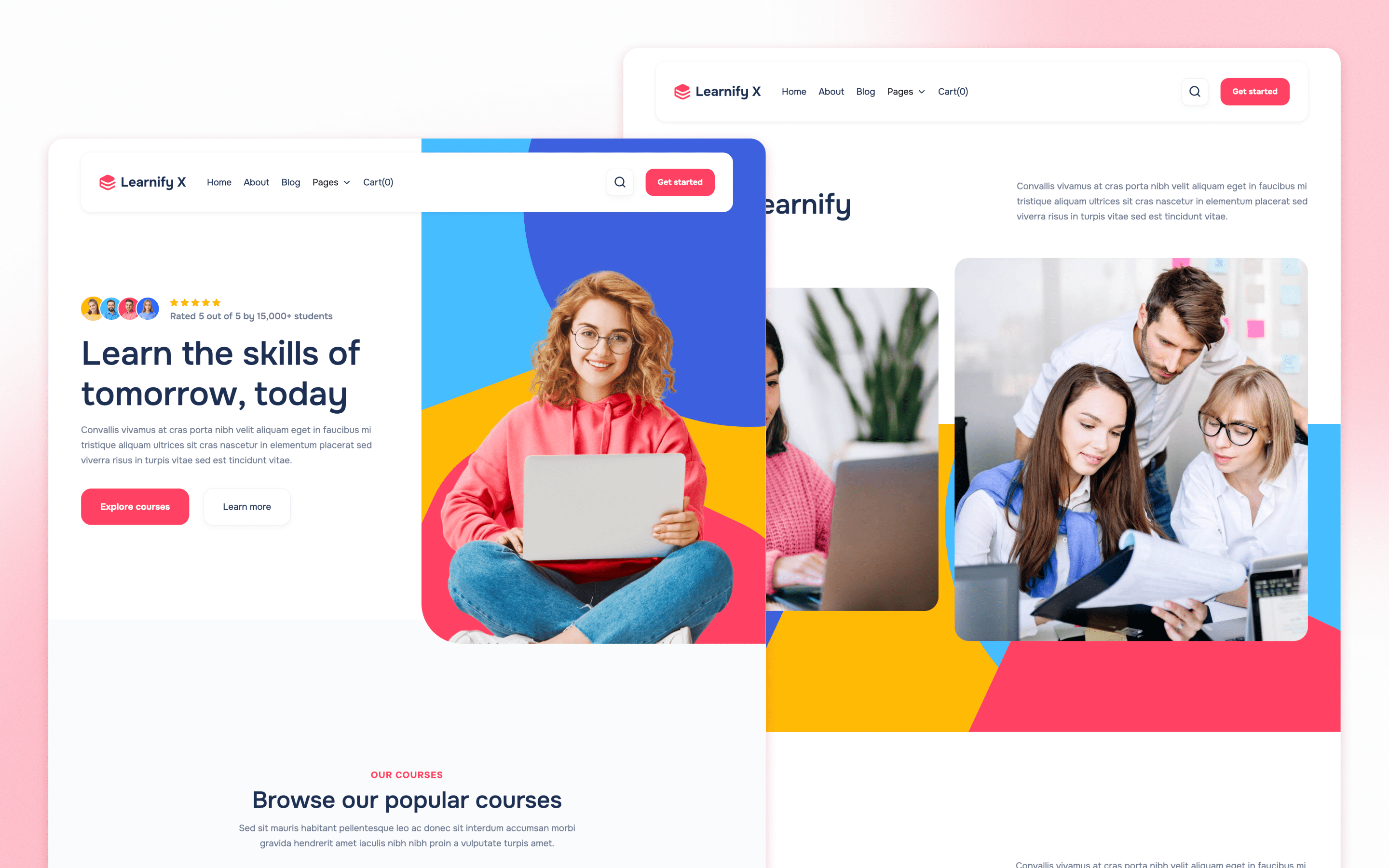
Our Learnify X template takes a brighter, more informal approach to online education. Course and learner imagery sit within a clear hierarchy, while the company pages give the offer a human context. It is a different direction for an education business that wants to feel open and easy to explore.
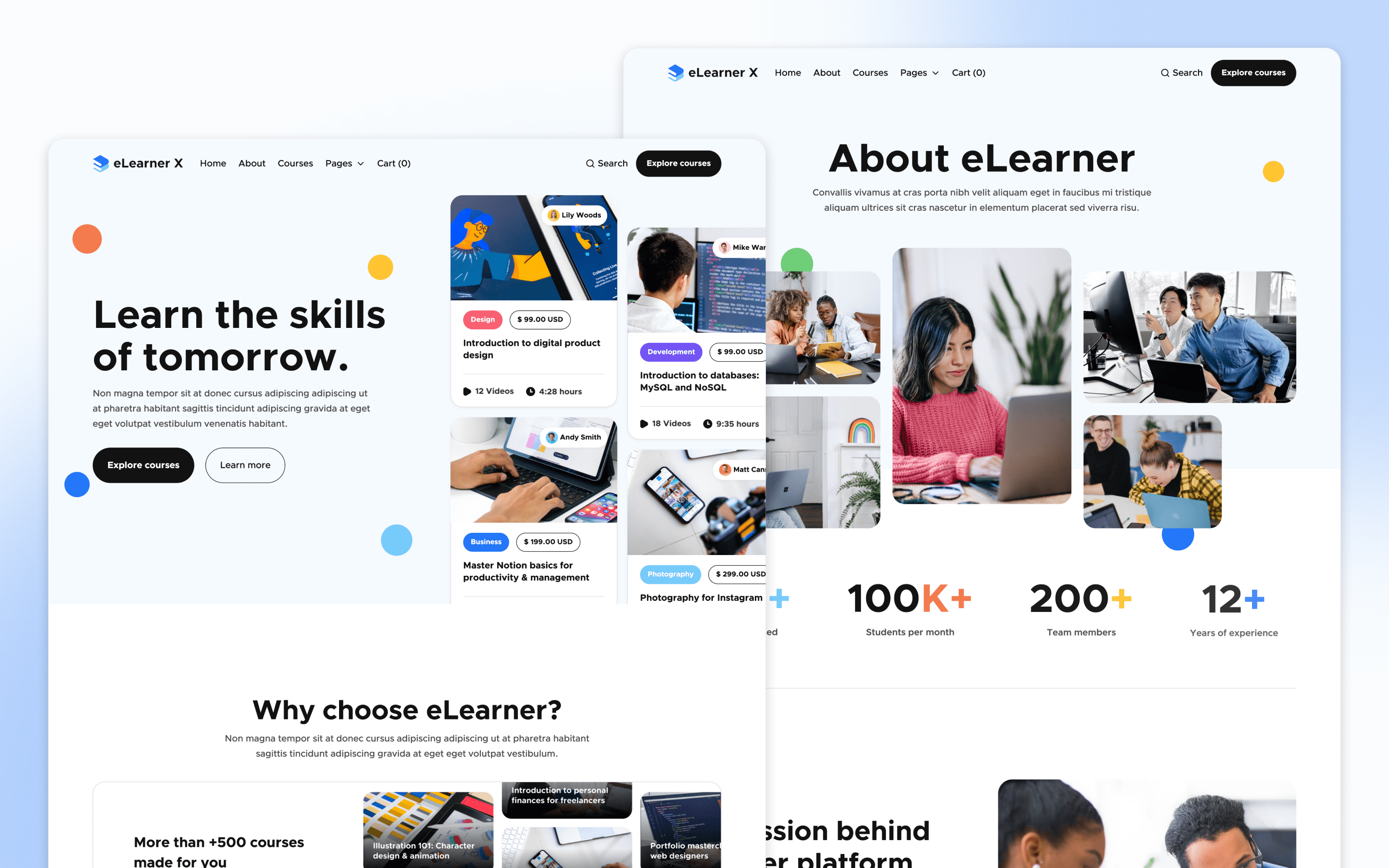
Our eLearner X template brings an online learning catalog and its wider story into one design system. The opening helps visitors recognize the offer, with supporting sections for the people and purpose behind it, showing how we create room for both course discovery and an introduction to the business.
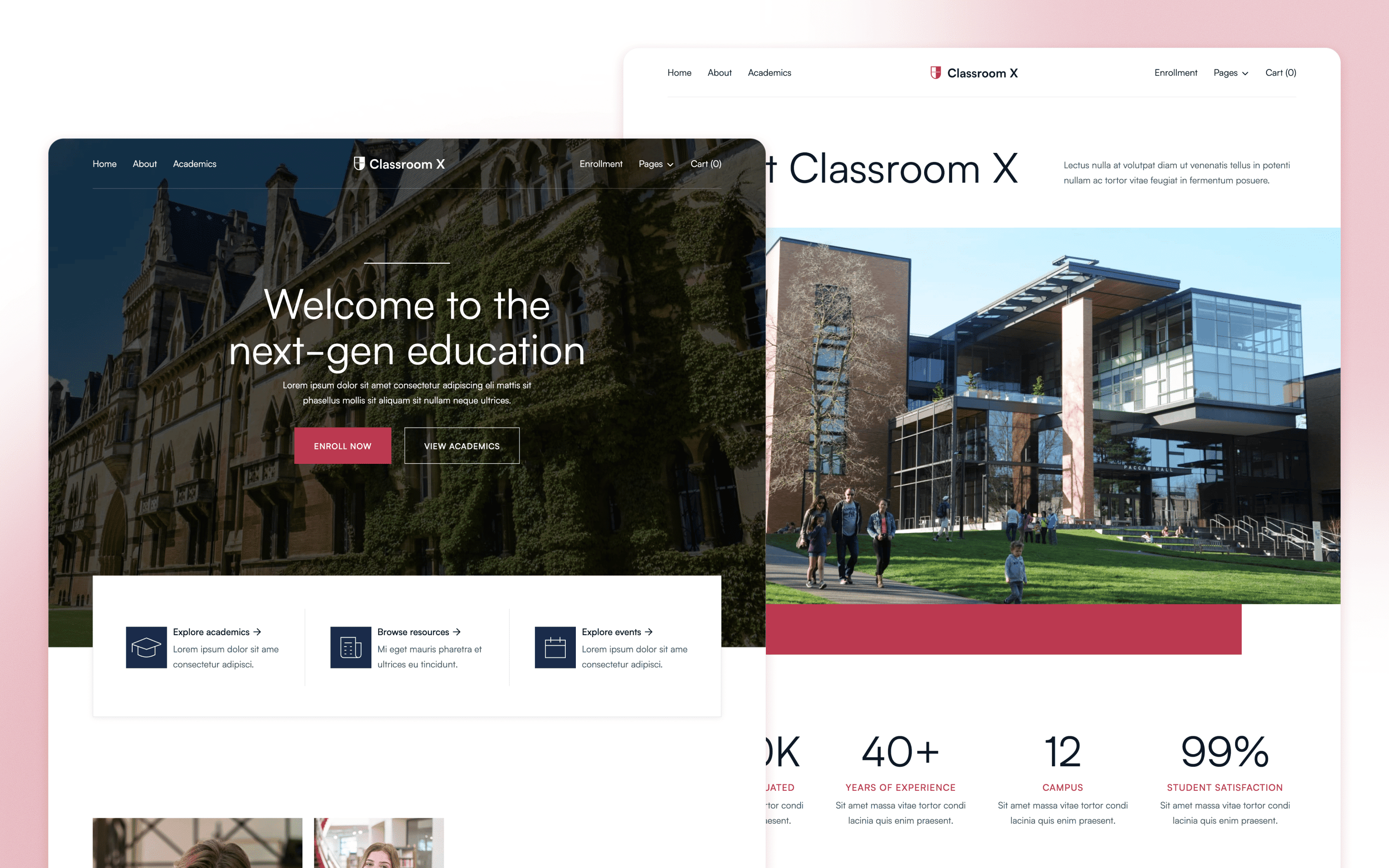
Our Classroom X template uses a campus-focused presentation with a restrained academic palette and substantial photography. The design makes the institution itself visible before continuing into its background and educational offer, giving prospective visitors several ways to build a clearer picture of the school.
Our templates are used by more than 60,000 websites across all categories. When you work with BRIX Agency, we bring that experience to a fully custom website designed around your institution, its character, and the families or learners you want to reach.
2. The Web Kitchen: Best School Web Design Agency for School Branding
 2
The Web Kitchen
A creative web agency combining school research, brand evolution, website design, development, and practical CMS training for staff.
The Web Kitchen is a useful starting point when a school wants its website and visual identity to develop together. Its selected engagement spans research, strategy, brand evolution, design, and development, with CMS setup and training included in the work rather than left outside the creative brief.
For a school, that combination can help connect the impression made on prospective families with the practical needs of the communications team. Ask how the agency will learn what distinguishes the school and how that understanding will appear across program, admissions, and community content, not only in the homepage concept.
Featured project: Rumsey Hall School
For Rumsey Hall School, The Web Kitchen delivered research and strategy, visual brand evolution, creative web design and UI, development, SEO, and CMS work. The school's current footer credits TWK for website design, supporting the named relationship described in the agency's case.
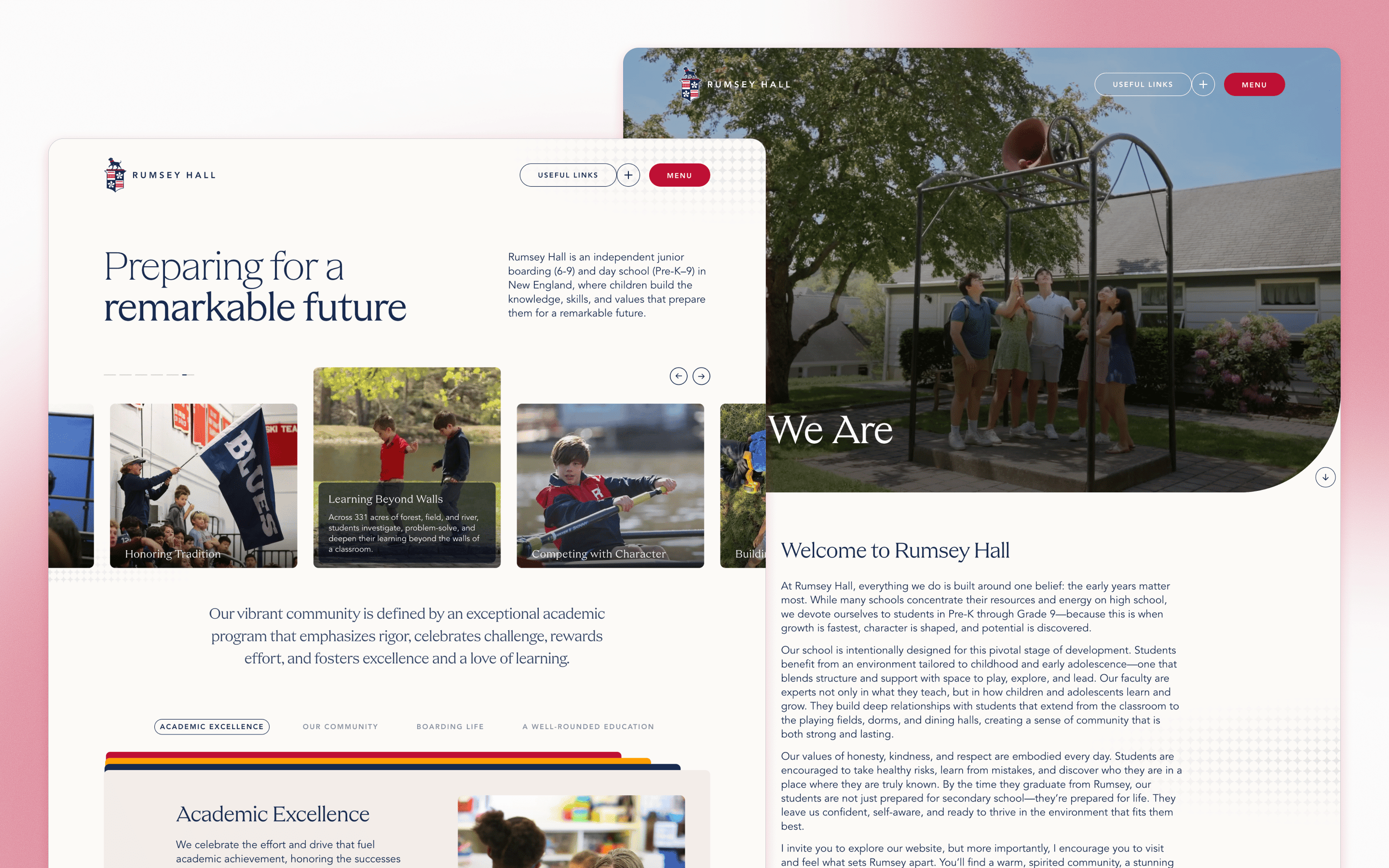
Review the site for how it introduces the school before moving into the information families need. In your own project, ask to see both the proposed visitor journey and the staff publishing experience, so the design you approve remains practical when the school needs to update content during the term.
3. Interactive Schools: Best School Web Design Agency for School Storytelling
 3
Interactive Schools
A school-focused creative agency using community research, photography, and interactive storytelling to bring distinctive educational experiences into view.
Interactive Schools is an option when the school has a distinctive experience that deserves a more engaging explanation. Its selected work combines community focus groups, photography, responsive design, and a bespoke storytelling feature, using specific aspects of school life to shape the website rather than relying on general educational claims.
That approach needs real stories and access to the people who can tell them. Ask how the agency will work with your community and turn the resulting material into a maintainable website, including who will refresh the stories and imagery as students move on and programs develop.
Featured project: The Madeira School
For The Madeira School, Interactive Schools developed a creative concept and responsive website design with photography and an internship story randomizer. The project puts the school's distinctive experience into the public presentation, and the current school website includes an explicit agency credit.
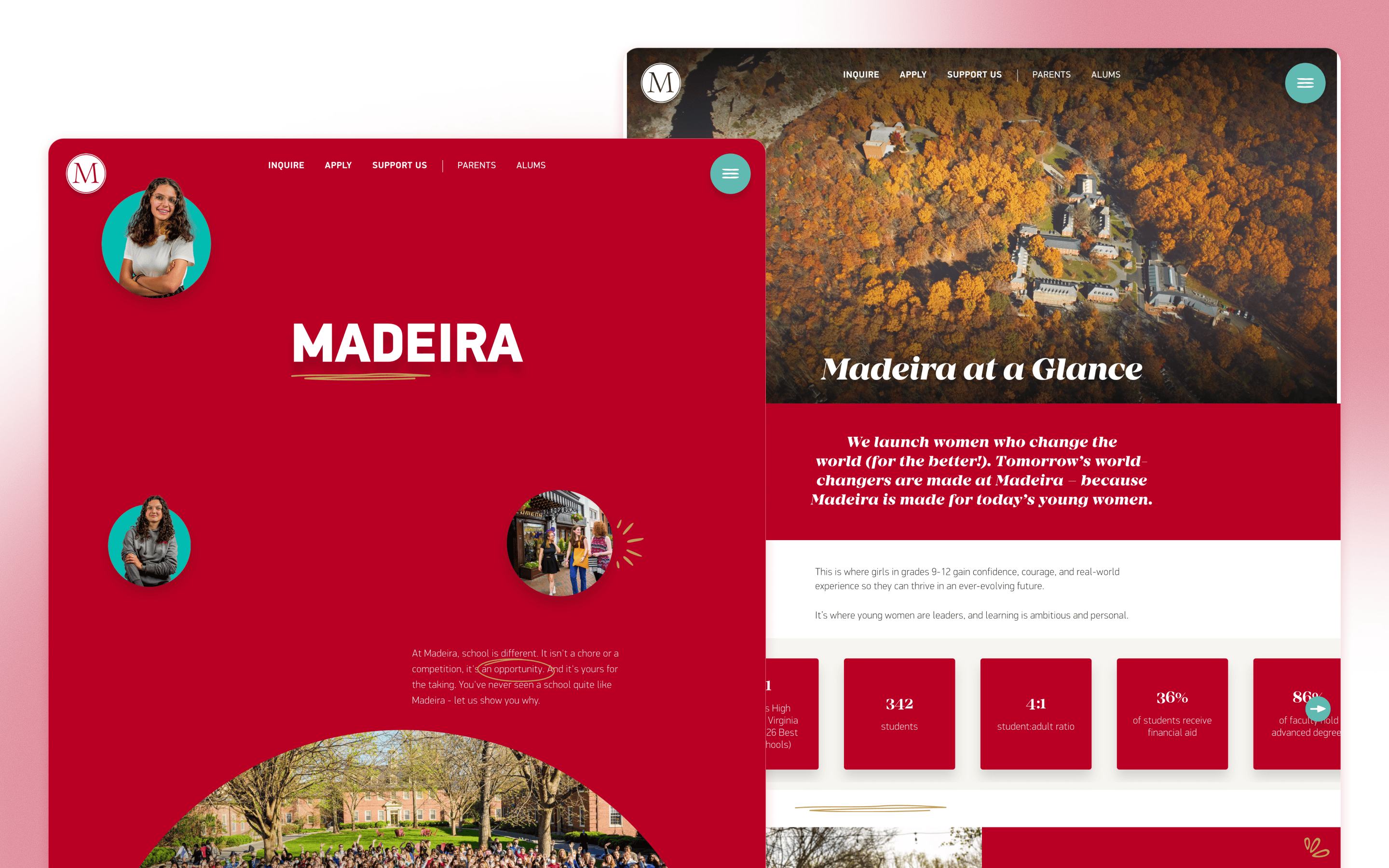
Explore how those stories help a prospective family understand the school beyond its standard program descriptions. For a comparable brief, identify the experience you most want to communicate and ask the agency how the interactive element supports that goal, including how the story remains accessible without depending on a particular effect.
4. Mission Minded: Best School Web Design Agency for Admissions Messaging
 4
Mission Minded
A branding and design agency translating a school’s positioning into clearer website content, information architecture, and an admissions-focused visual story.
Mission Minded is worth considering when the school's website needs a clearer explanation of what makes its education different. Its selected project includes research, architecture, wireframing, and design, with school positioning translated into an admissions story rather than treated as a statement that sits apart from the website.
That focus can help when families understand the facts but do not yet understand the character of the school. Ask how the team will connect your values with concrete examples of learning and community, and how it will keep the resulting language approachable for someone exploring the school for the first time.
Featured project: Carolina Friends School
For Carolina Friends School, Mission Minded delivered website research, information architecture, wireframing, and design around the school's positioning. That design work connects the school’s positioning with the order and presentation of information a family encounters while exploring its educational approach.
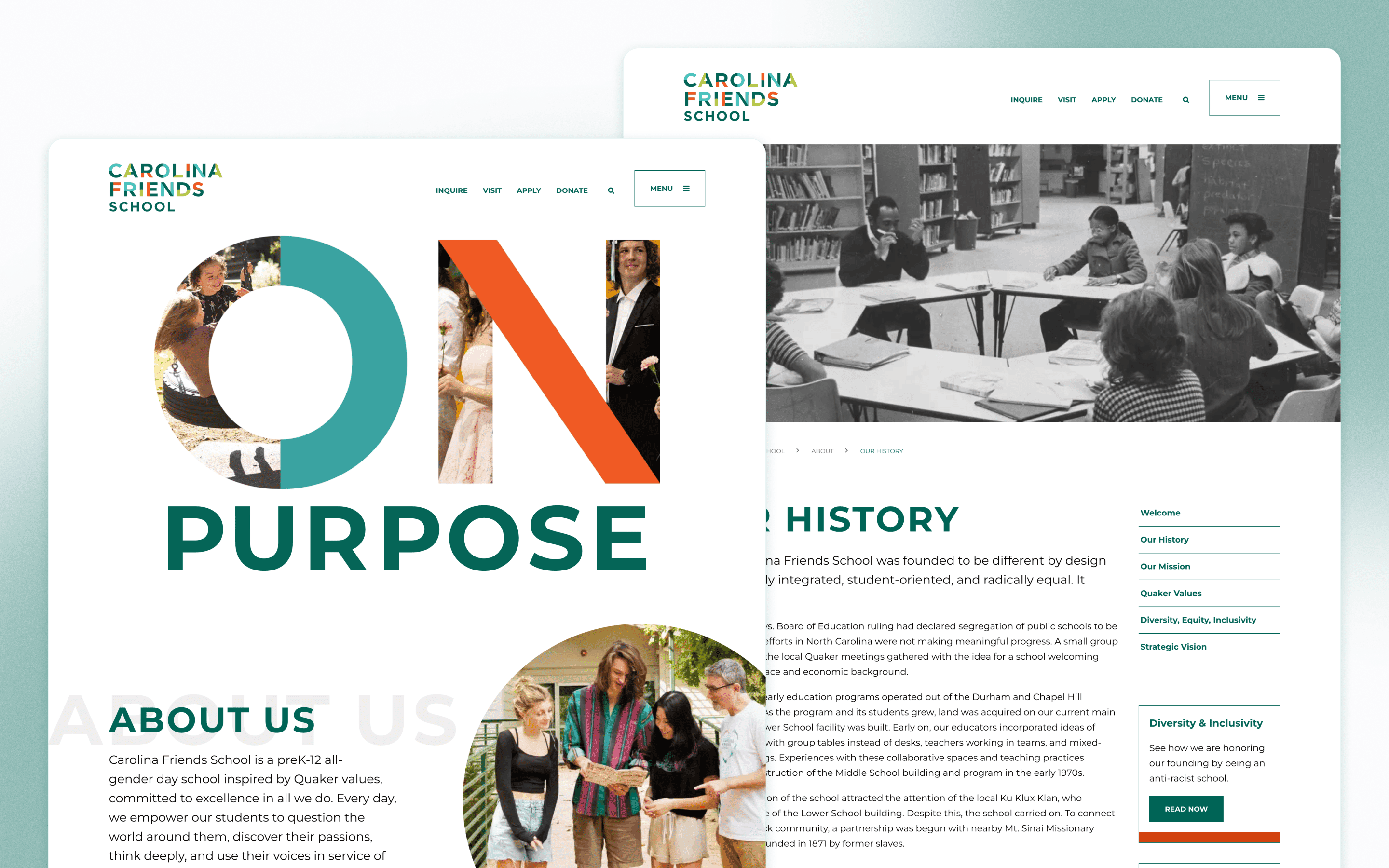
Review the way the school introduces its approach and leads families toward admissions information. If messaging is your main challenge, clarify how the strategy and design will be handed into development, with named responsibilities for content, implementation, and checking that the finished pages preserve the intended story.
5. JTB Studios: Best School Web Design Agency for Creative Schools
 5
JTB Studios
A digital studio connecting specialist school identities with custom website design, reusable components, content migration, and staff publishing tools.
JTB Studios offers a useful reference for a school with a distinctive creative focus. Its selected engagement brings brand refinement and a visual system into the same scope as UX, development, and CMS setup, giving specialist education a coherent presentation from the opening page through to supporting content.
For a school whose programs are not easily summarized by conventional categories, the website needs to make the difference understandable. Ask how the studio would organize your academic and specialist offers, and how reusable components will help the team publish detailed information without losing the visual consistency of the original design.
Featured project: Victorian College of the Arts Secondary School
For the Victorian College of the Arts Secondary School, JTB delivered brand and logo refinement, UX/UI, reusable components, website development, CMS setup, migration, and SEO configuration. The example connects the school's particular identity with both the public website and the structure needed to maintain it.
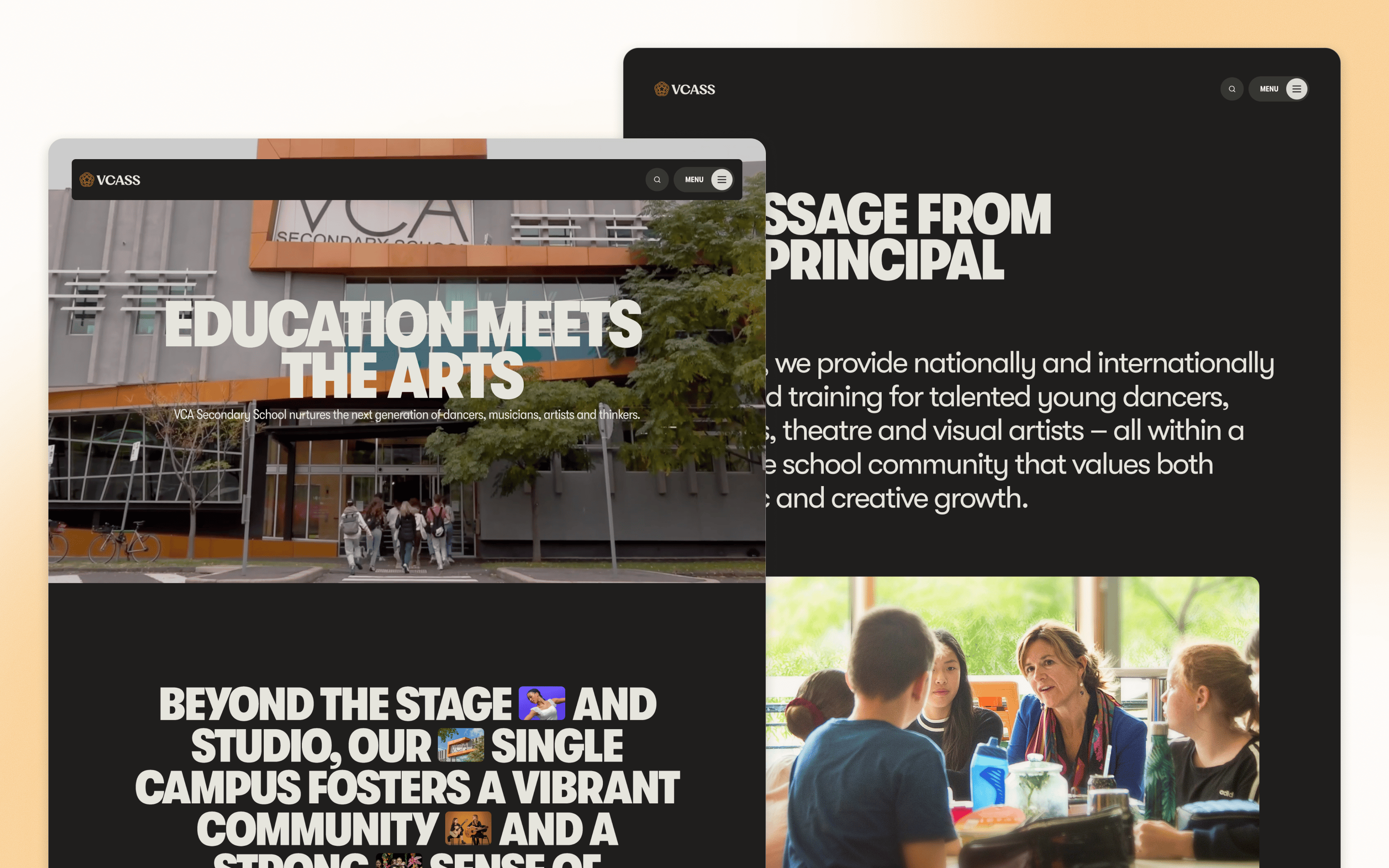
Look at how the school communicates its creative character alongside family-facing information. In a similar project, discuss how your team will update program details and imagery, and confirm the content review process so the website's expressive direction remains supported by clear, accurate information about the education offered.
6. Thursday Studio: Best School Web Design Agency for Family Navigation
 6
Thursday Studio
A design studio pairing school brand refinement and photographic direction with website structures built around prospective families and admissions.
Thursday Studio is a relevant choice when a school needs to make a substantial history and identity easier for families to explore. Its selected work combines family-focused architecture with visual identity refinement, typography, and photographic direction, linking the brand to the practical route through the website.
That can be useful when a school has several stages or related institutions and the existing site reflects internal structures more than a family's questions. Ask how the studio will help visitors identify the right entry point while preserving a clear relationship between the different parts of the school group.
Featured project: Rugby School
For Rugby School, Thursday delivered a website redesign and implementation, admissions navigation, visual refinement, and brand architecture for the wider group. The current school site credits Thursday, while the agency's case explains the role of imagery and typography in the broader presentation.
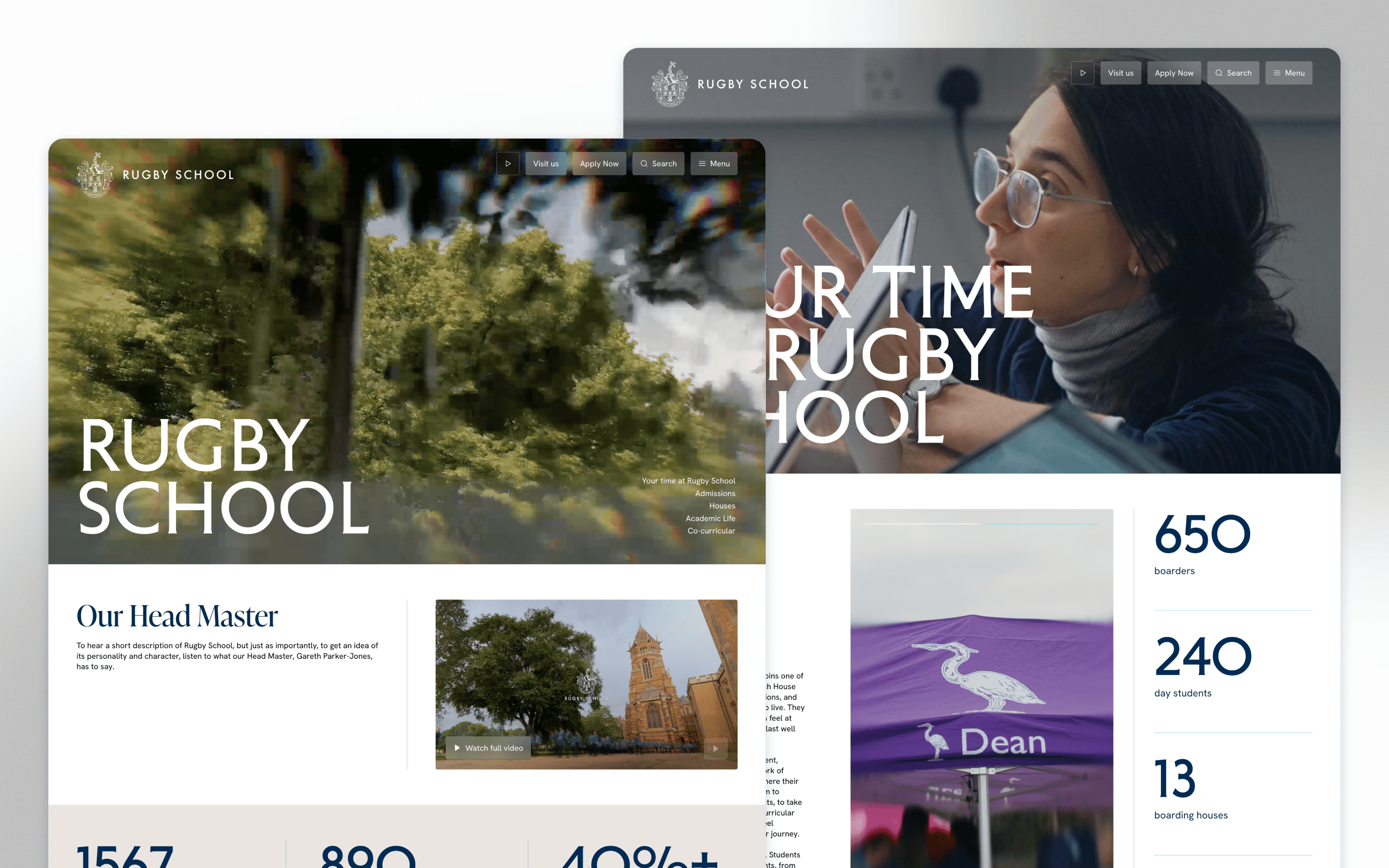
Review how the site lets a family move from a sense of the school into specific admissions information. For your own brief, map the age groups, stages, and associated schools first, then ask the agency to show how that structure will remain understandable as visitors move between the relevant pages.
7. IGNITE: Best School Web Design Agency for Webflow Websites
 7
IGNITE
A digital agency rebuilding school websites in Webflow with refreshed branding, clearer family navigation, and practical enrollment routes.
IGNITE provides a concrete school example for teams considering a move to Webflow. Its selected work involved rebuilding a WordPress site while applying refreshed branding, with family navigation and enrollment actions forming part of the documented brief rather than a platform change pursued in isolation.
A CMS move should make the school's publishing and visitor experience more useful, so ask what will improve for both groups. Discuss the content that must transfer, the integrations that must remain available, and the edits staff need to make throughout the year before agreeing that a new platform is the right answer.
Featured project: Marcellin College
For Marcellin College, IGNITE delivered a WordPress-to-Webflow rebuild with family navigation, enrollment calls to action, search, and a rotating hero gallery. The case includes a named school testimonial and links to the public school website, supporting the specific implementation described.
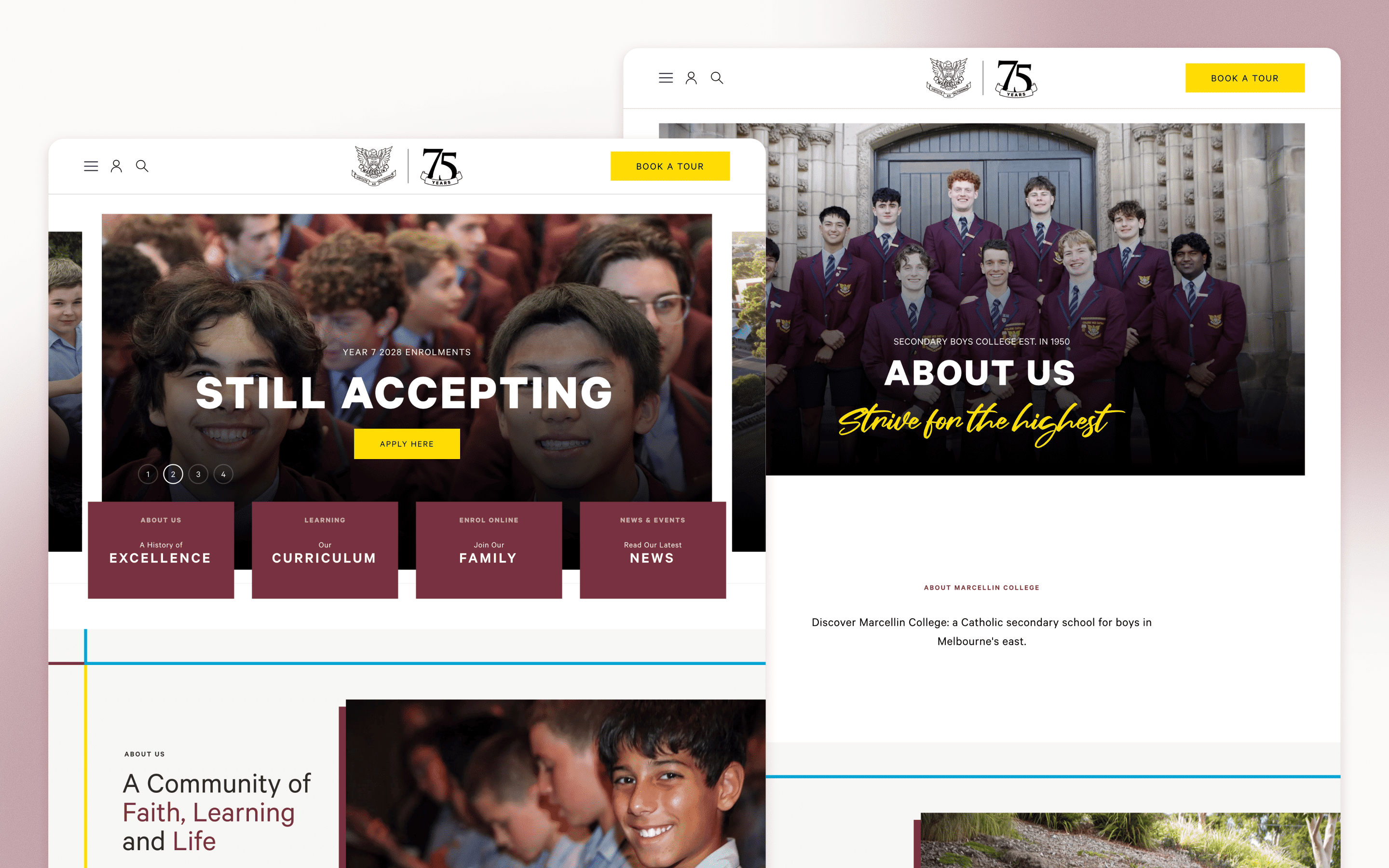
Use the example to explore how the refreshed brand and the website's practical routes work together. In your own project, request a demonstration of the editor with real school content and clarify training, account ownership, and support so the migration delivers a manageable system rather than simply a different one.
8. Design TLC: Best School Web Design Agency for School Integrations
 8
Design TLC
A website agency connecting school UX and WordPress development with reusable modules, content migration, and established school-management tools.
Design TLC is an agency to review when the website needs to work with systems the school already uses. Its selected engagement includes Blackbaud integrations, WordPress development, content migration, and reusable modules, with a separate creative partner contributing messaging and design direction.
That division of work can be helpful when a school has approved its creative direction and needs a team to bring it into a working publishing environment. Ask how the agency will coordinate with the design partner, verify connected tools, and make the handover clear for staff who will maintain the site.
Featured project: The Winsor School
For The Winsor School, Design TLC delivered UX and custom WordPress development, integrations, migration, and modules. E&A Collaborative supplied messaging and creative design direction, so this example preserves the distinction between the partners rather than attributing the whole visual concept to the implementation team.
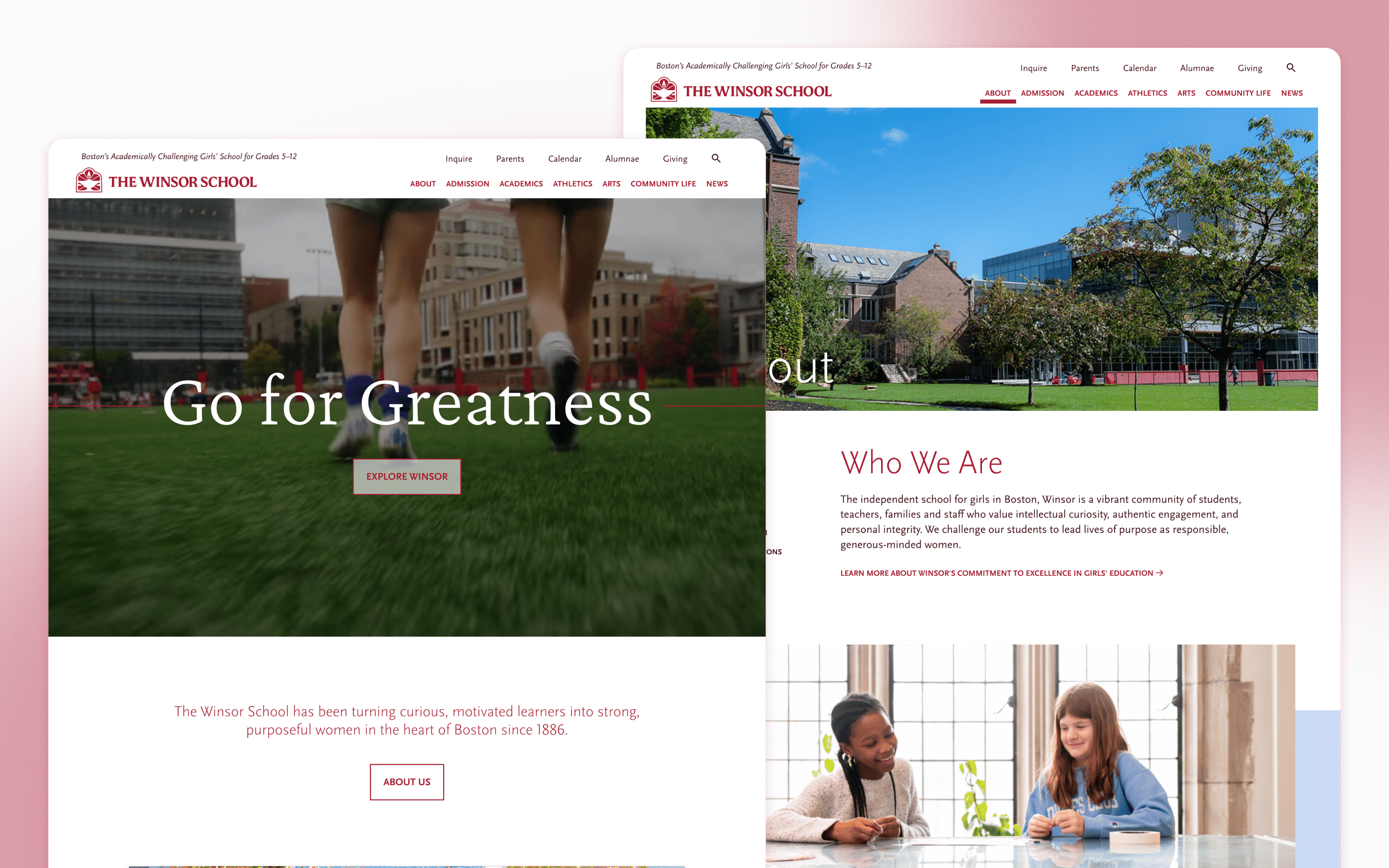
Explore the public site, then discuss the less visible connections that matter to your school. A good scope should explain what data or links move between systems, who supplies access and configuration, and how the complete journey will be checked before the redesigned website becomes the main public destination.
9. Finalsite: Best School Web Design Agency for School Publishing
 9
Finalsite
A school website provider combining design services and a publishing platform with workflows that support an active in-house communications team.
Finalsite is a relevant option when the school wants a specialist platform alongside website design support. Its selected example also shows the importance of in-house participation, with the school team taking substantial responsibility for architecture, page building, content, and publishing rather than handing every decision to an external agency.
That model may suit a communications team with the capacity to shape and maintain the website directly. Ask what the provider will deliver, what your staff will build, and how training and support work, so the quoted service matches the amount of internal time the project will require.
Featured project: Francis Parker School
Finalsite identifies Francis Parker School in its design portfolio, with Composer used as the website platform. The school led significant parts of the structure and content work, making the project an example of a collaborative publishing approach as well as a finished public school website.
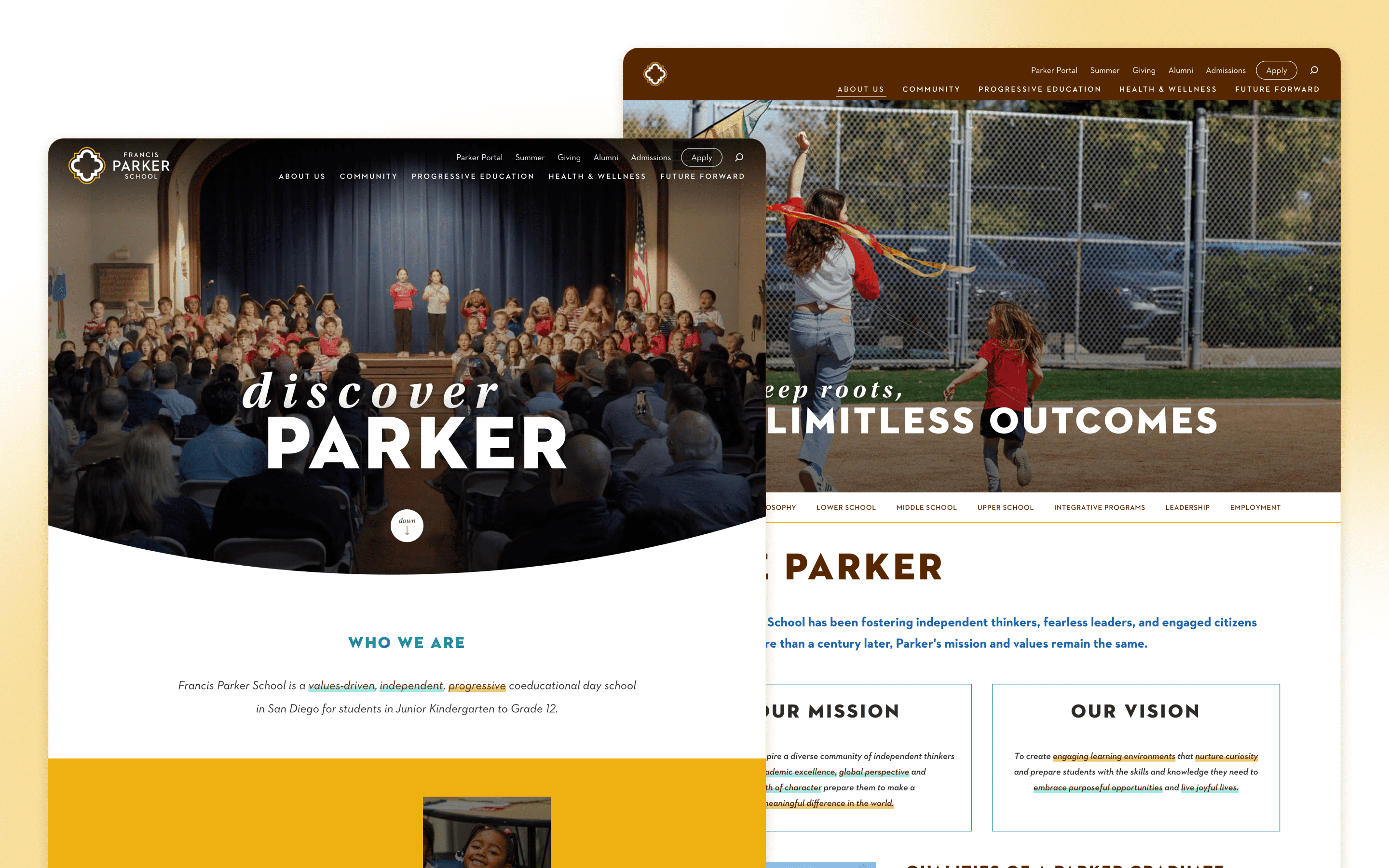
Review the result with your own staffing capacity in mind. If your team wants similar control, ask for a realistic walkthrough of page creation and daily updates, then clarify where provider support begins and ends so the project does not rely on an internal workload the school cannot sustain.
10. Studio Bravo: Best School Web Design Agency for Website Consolidation
 10
Studio Bravo
A digital studio combining school websites and microsites into a coordinated experience with shared forms, calendars, and content management.
Studio Bravo is worth considering when a school has several websites that no longer feel connected. Its selected engagement includes four-microsite consolidation, with discovery, architecture, design, and development bringing the public experience into a more coordinated structure instead of simply restyling the existing destinations.
That kind of project needs a clear account of where content belongs and who maintains it. Ask how the studio will handle overlapping information, forms, calendars, and old links, and how the new site will support both prospective families and people already part of the school community.
Featured project: Methodist Ladies' College
For Methodist Ladies' College, Studio Bravo delivered responsive design, frontend and backend development, Umbraco CMS, centralized forms, calendars, and ongoing hosting and support. The consolidation work provides a practical example of the technical and content responsibilities involved in bringing several school sites together.
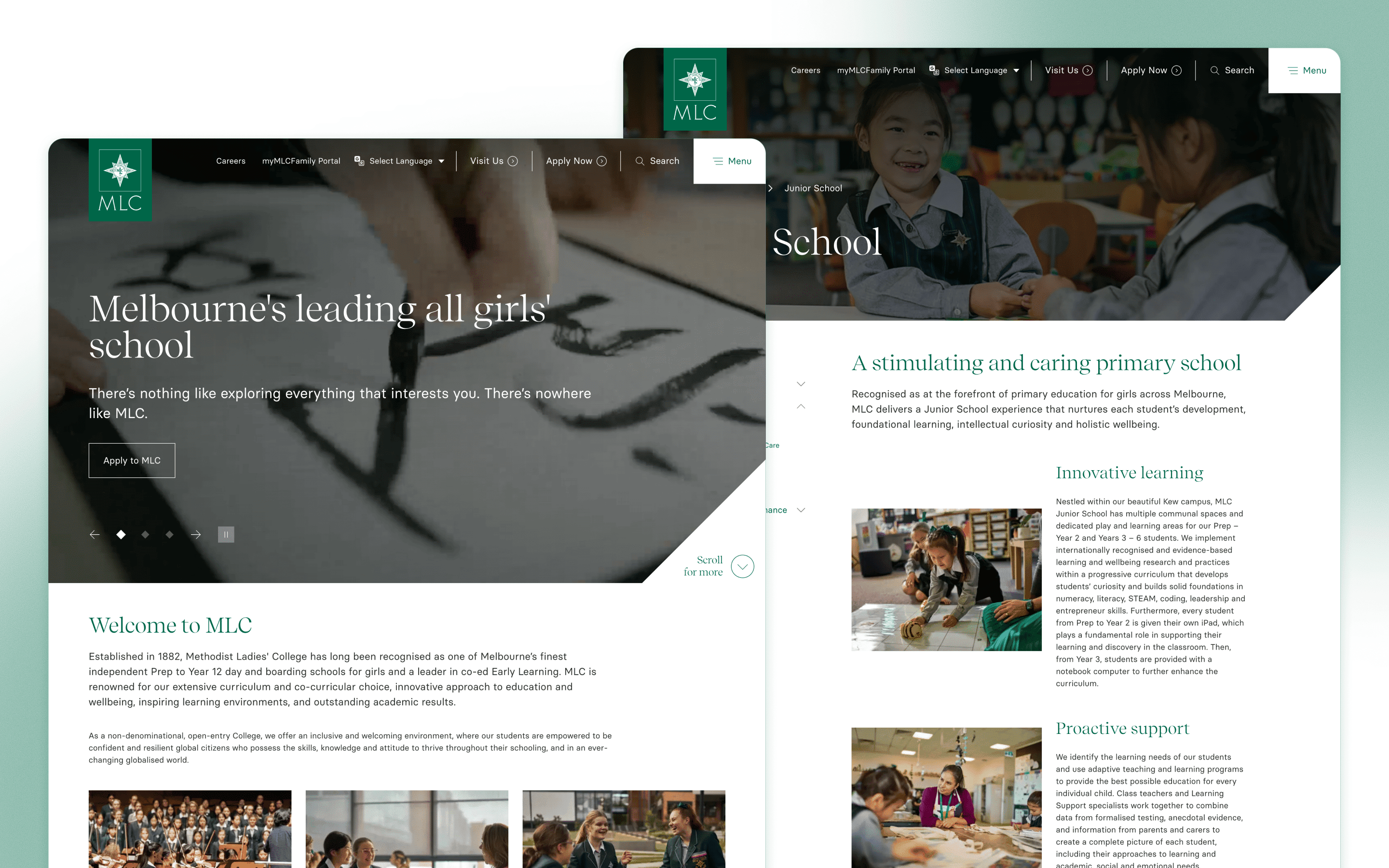
Explore how the resulting website organizes the school's information without requiring visitors to understand its previous systems. For your own consolidation, identify the useful content and active processes on every existing site, then ask the agency to explain how those will be migrated and verified before the old destinations are retired.
11. Thirst Creative: Best School Web Design Agency for Brand Identity
 11
Thirst Creative
A creative agency connecting school brand research and visual guidelines with the development of a new custom public website.
Thirst Creative is a useful candidate when a school wants its website to reflect a renewed identity. Its selected engagement includes research, brand identity, guidelines, and custom website development, giving the digital work a clear relationship to the way the institution presents itself more broadly.
A brand project can affect everything from the first impression to the tone of admissions information. Ask how the agency will translate the approved direction into usable page structures and content, and which parts of the creative and technical work are included, so the school has a clear understanding of the complete delivery.
Featured project: John Septimus Roe Anglican Community School
For John Septimus Roe Anglican Community School, Thirst delivered brand identity and guidelines, research, and development of a new custom website. The school network also documents the new website, providing a separate confirmation of the project and its family-facing content direction.
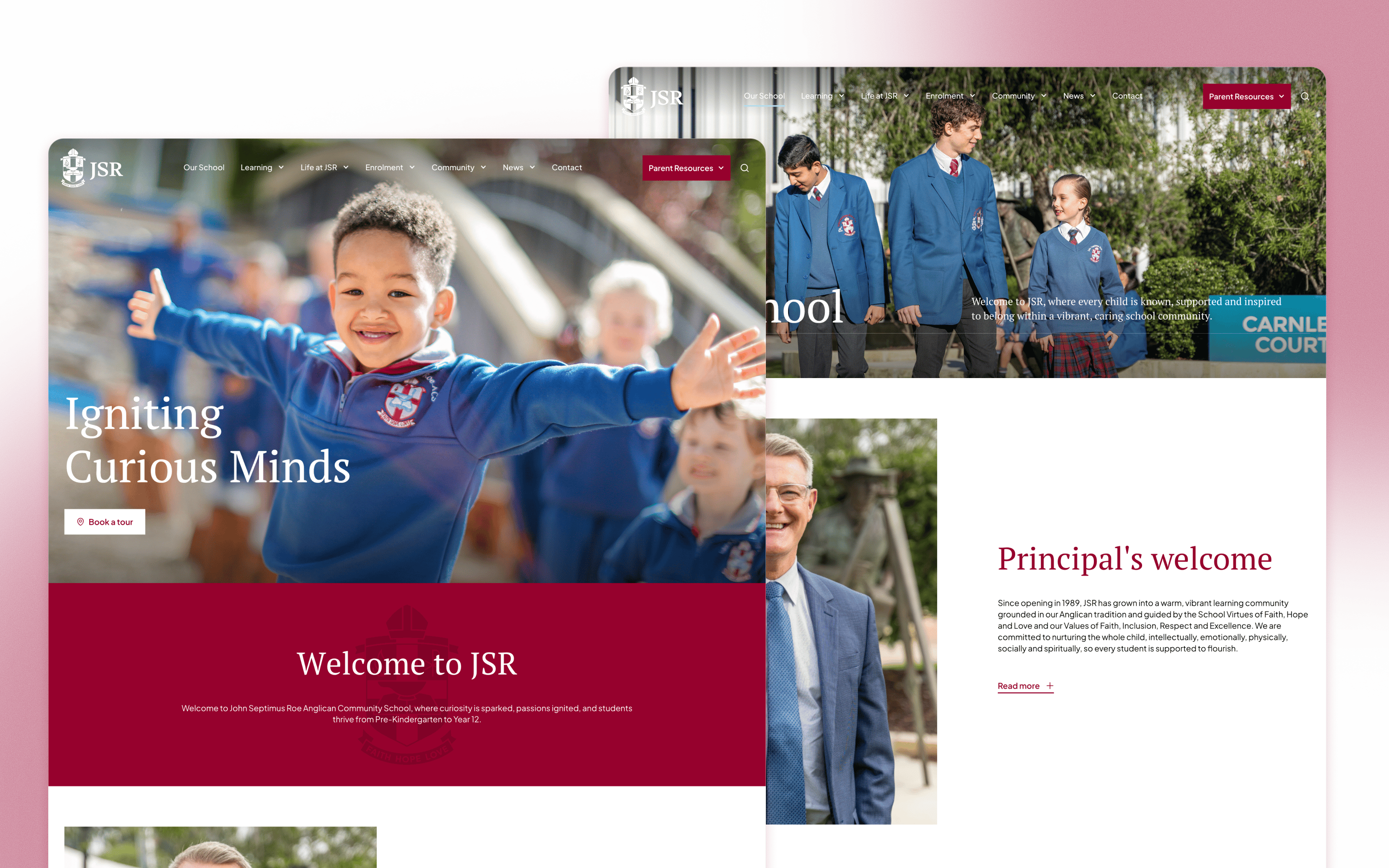
Review how the school introduces its educational journey and how that presentation continues into the practical information families need. In your own brief, identify the brand materials that must be created or updated and ask how staff will apply the new direction consistently when adding pages and communications after launch.
12. The Curious: Best School Web Design Agency for Admissions Journeys
 12
The Curious
A digital agency improving school admissions pages through clearer information architecture, practical FAQs, specific booking actions, and local search work.
The Curious offers an important alternative to a complete rebuild: a focused improvement to an existing school website. Its selected engagement addresses admissions journeys, showing how architecture, FAQs, and more specific calls to action can form a defined project without claiming ownership of the whole original site.
This can be useful when the website already has a workable foundation but families struggle to find the information needed to arrange a visit or apply. Ask the agency how it will identify the obstacles, decide what to change, and assess whether the revised journey is clearer for prospective parents.
Featured project: Newcastle-under-Lyme School
For Newcastle-under-Lyme School, The Curious worked on admissions information architecture and UX, logistical FAQs, booking calls to action, and local SEO. The selected example is a targeted website improvement engagement, rather than evidence that the agency redesigned the entire school identity or website.
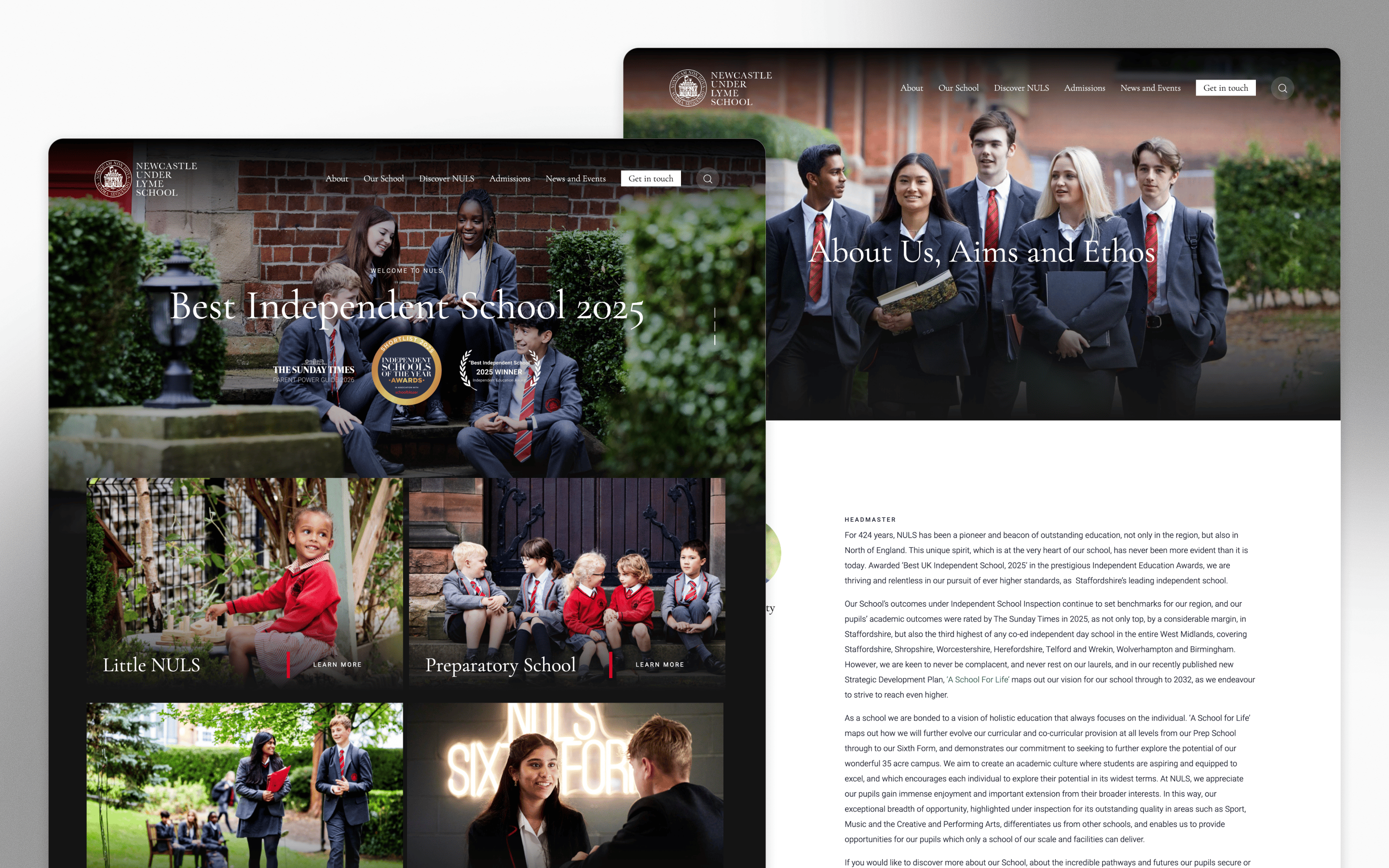
Look at the practical questions a family needs answered before taking the next step, such as what a visit involves and where to begin. If those are the weak points in your own site, a focused scope may be worth comparing with a larger redesign before committing to either approach.
13. Tassel: Best School Web Design Agency for Program Messaging
 13
Tassel
A school marketing agency connecting website redesigns and academic branding with clearer program explanations and routes to inquire, visit, and apply.
Tassel is a relevant agency when a school needs to explain its programs more distinctly. Its selected engagement combines website redesign with academic and athletic brand development, using program messaging to connect the institution's identity with the decisions a prospective family needs to make.
That focus can help when several parts of school life deserve attention but the existing website makes them feel interchangeable. Ask how the agency will turn the school's particular strengths into useful content, and how the inquiry, tour, and application routes will support families at different stages of their decision.
Featured project: Twin Tiers Christian Academy
For Twin Tiers Christian Academy, Tassel delivered a website redesign, brand development, and differentiated program messaging with admissions pathways. The engagement brings the school’s different programs into a shared presentation, with practical routes for families who want to inquire, visit, or apply.
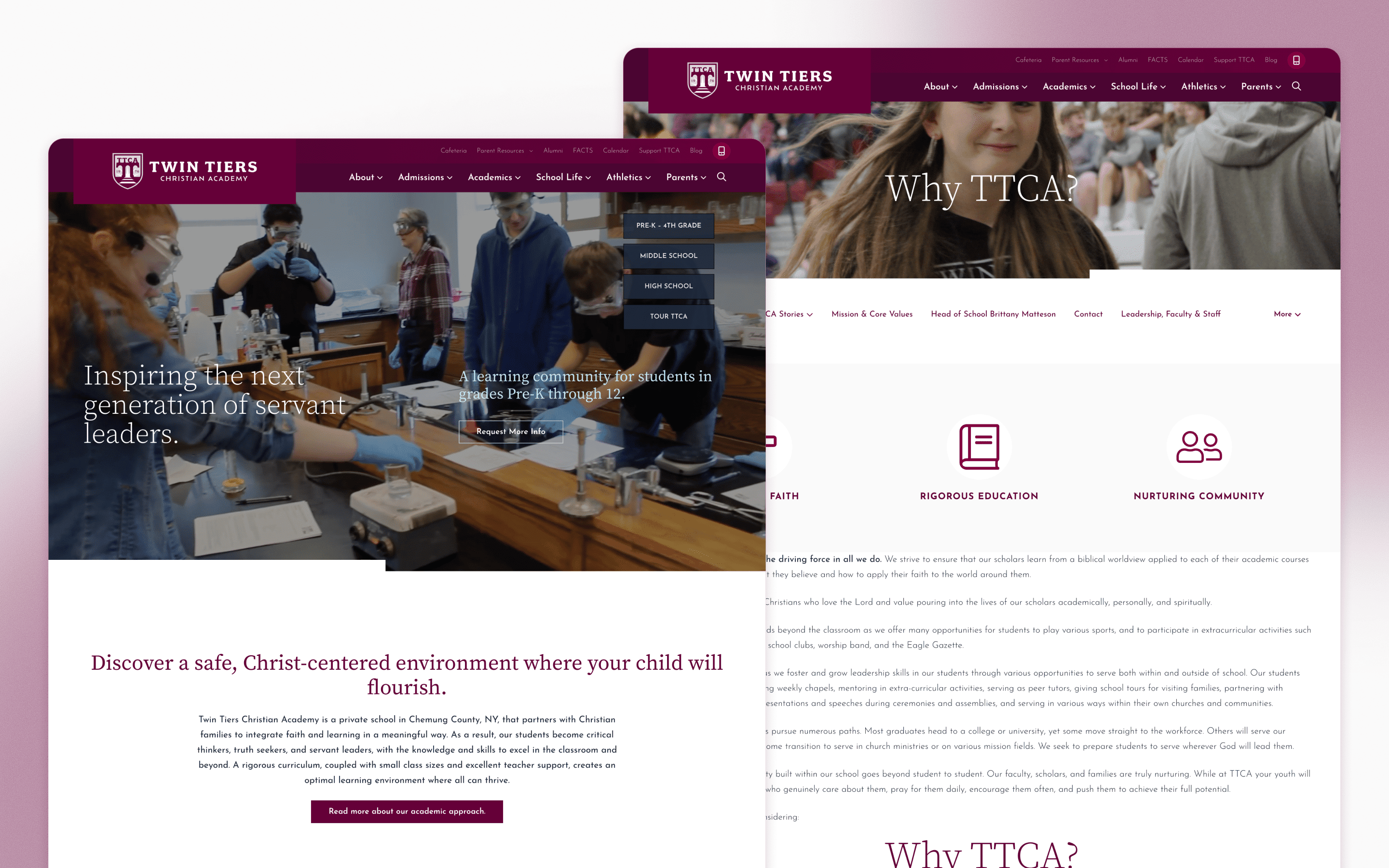
Review the relationship between the academic story and the practical admissions steps. For a similar project, give the agency accurate program and entry information and identify who will maintain it, so the website can reflect changes in the school's offer without losing the clarity established during the redesign.
14. Cleverbox: Best School Web Design Agency for School Networks
 14
Cleverbox
A school branding and website agency coordinating central and academy sites with shared identity and centralized document-management structures.
Cleverbox is an option for a school network that needs consistency across several public websites. Its selected work includes a central federation site and related academy sites, with centralized policy management forming part of the system rather than leaving every school to maintain duplicate documents independently.
That approach can be useful when a network wants a common identity without losing the information specific to each institution. Ask how the agency separates shared content from local responsibility and how a central update reaches the relevant sites, including the checks that confirm the right version is visible.
Featured project: Harris Federation
For Harris Federation, Cleverbox delivered design and development for the central website and related academy sites, a consistent brand rollout, and centralized policy and statutory-document management. The federation homepage also credits Cleverbox, supporting the selected network-level website relationship.
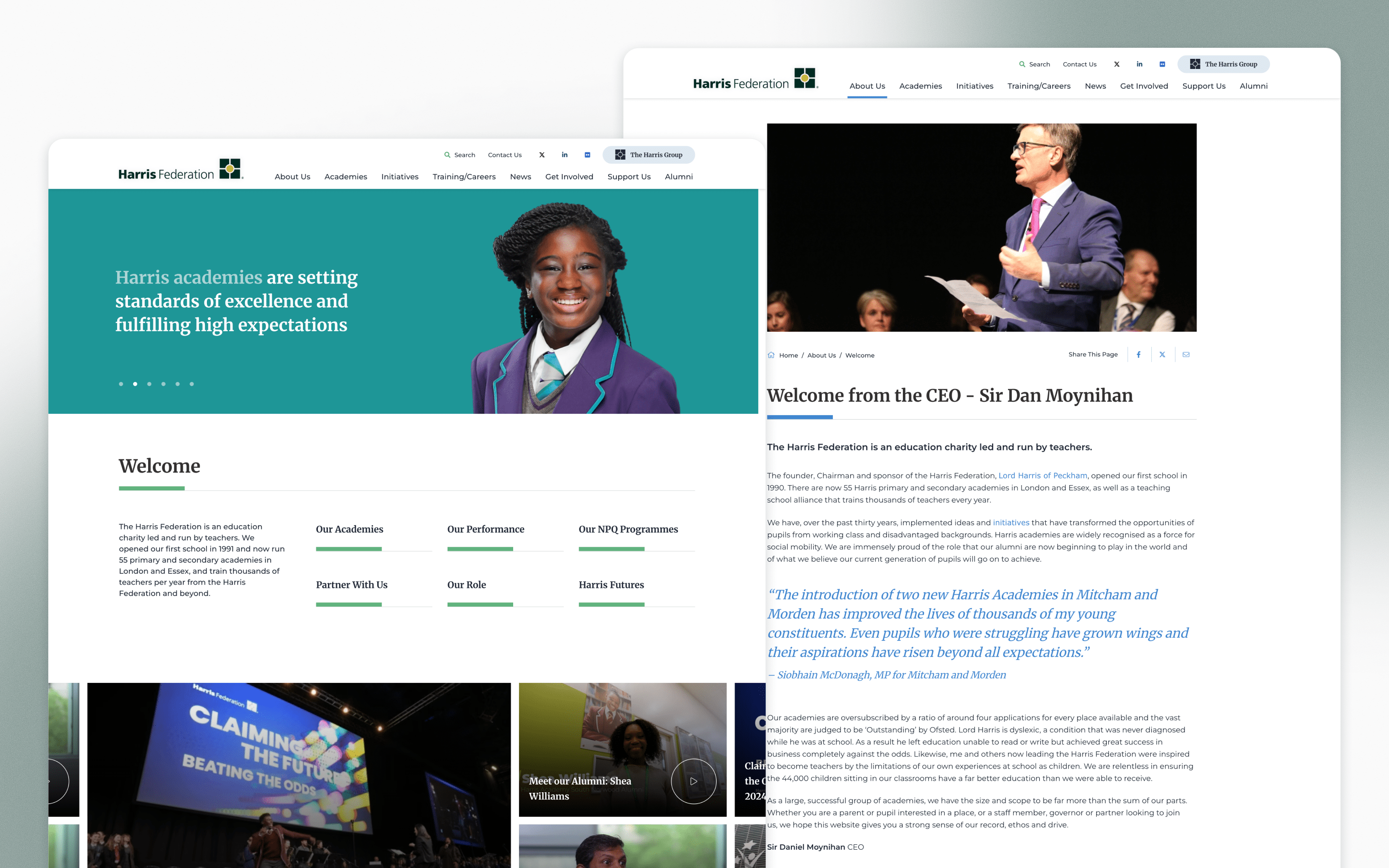
Explore the central site for the way it introduces the organization and connects visitors with individual schools. In your own brief, map the publishing responsibilities across the network and ask the agency to demonstrate how shared documents, local information, and permissions will work together for the people maintaining them.
15. Hatched: Best School Web Design Agency for Website Refreshes
 15
Hatched
A creative agency updating existing school websites through hosting moves, CMS improvements, refreshed pages, and clearer school-stage navigation.
Hatched provides another useful example of improving an existing site without treating every project as a blank-sheet redesign. Its selected work includes migration and front-end updates, with CMS upgrades and a homepage refresh supporting a more usable public presentation for the school.
That can suit an institution that needs a better-maintained foundation and clearer navigation while retaining parts of the current website. Ask what the agency recommends keeping, what it would change, and how it will protect useful content during the move, so the scope is based on actual problems rather than a default rebuild.
Featured project: King's School Rochester
For King's School Rochester, Hatched handled website and hosting migration, CMS upgrades, a homepage refresh, revised school-stage navigation, and additional content sections. The work is a focused refresh of an existing website, combining technical upkeep with clearer routes through the school’s stages and supporting information.
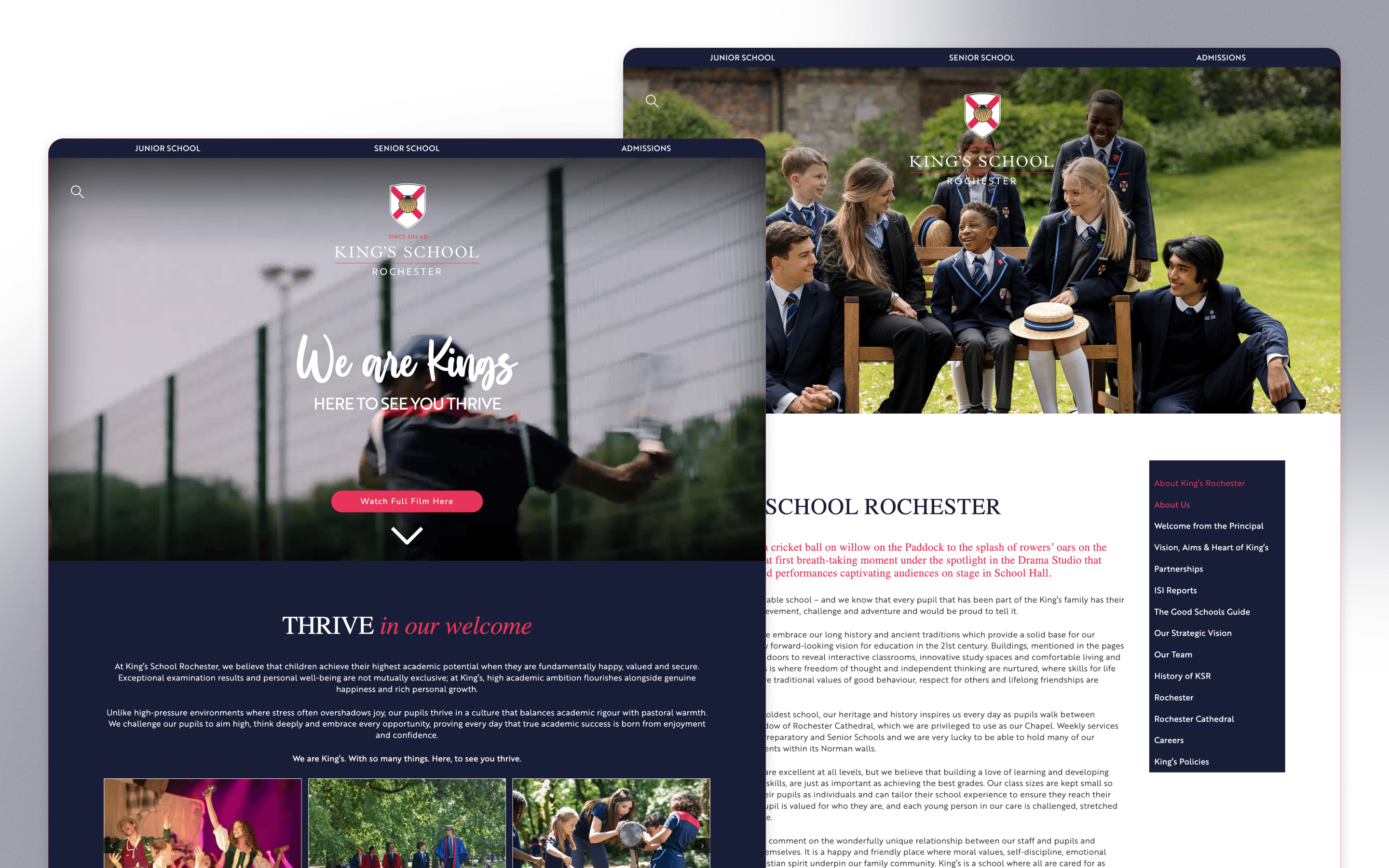
Review the example with the distinction between refresh and rebuild in mind. For your own project, request an inventory of the proposed changes and the acceptance checks for each, including content, navigation, and hosting responsibilities, so the school can see exactly what the improvement engagement will deliver.
16. Remedy Studio: Best School Web Design Agency for Staff-Friendly Websites
 16
Remedy Studio
A web design studio building school websites with organized program content, mobile usability, staff training, hosting, and continued support.
Remedy Studio is worth reviewing when the school needs the website to be manageable for staff as well as useful to families. Its selected scope includes strategy, custom design and development, staff training, hosting, and ongoing care, connecting the launch work with the practical life of the site afterward.
That is a helpful focus for a school where website responsibilities sit alongside many other tasks. Ask how the agency will structure program content, which updates staff can make directly, and how support works when something falls outside those routines, so the school has a realistic plan for keeping the website current.
Featured project: Comet Bay College
For Comet Bay College, Remedy delivered website strategy, design, development, program content structure, and mobile-oriented work, with training and ongoing support. The current school website credits Remedy, reinforcing the project attribution in the agency's own detailed account.
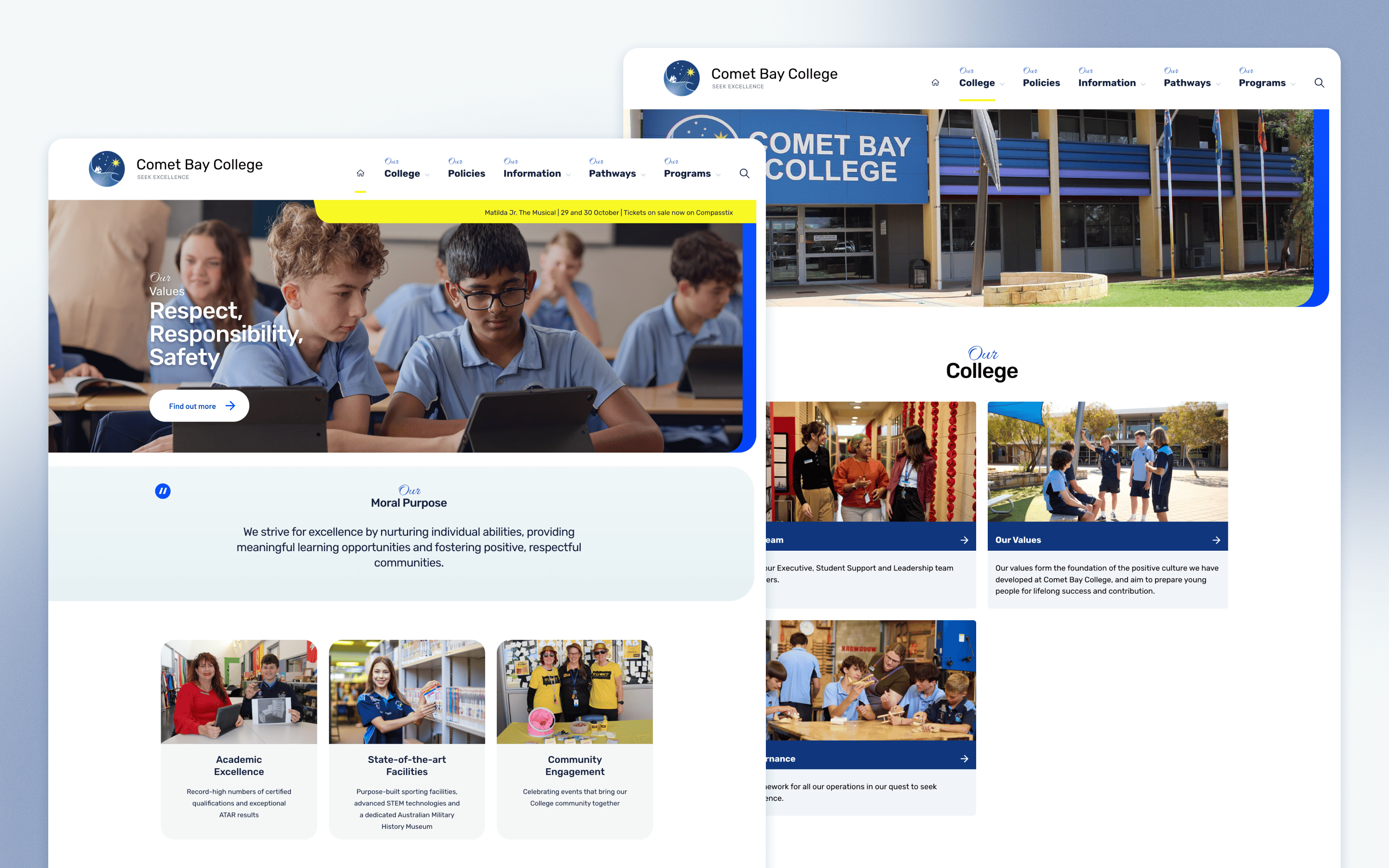
Explore the program information and the public routes a family might use on a phone. In a comparable project, ask the agency to include an editor exercise using the school's real content, and make sure the handover covers the staff who will publish during term as well as the project lead.
17. Metric Marketing: Best School Web Design Agency for Online Schools
 17
Metric Marketing
A marketing agency connecting school identity and website design with online-learning systems, registration information, and mobile-friendly public content.
Metric Marketing offers a relevant reference for a school whose education is delivered online. Its selected work connects a public WordPress website with Brightspace, making the relationship between the school's introduction and its learning environment a concrete part of the project rather than an assumed background detail.
An online school still needs to explain who it serves, what it offers, and how someone begins. Ask how the agency will distinguish public information from the experience for enrolled learners, and how it will make registration routes clear without requiring a prospective student to understand the technology behind the school.
Featured project: InformNet
For InformNet, Metric delivered a visual identity refresh, website architecture and design, WordPress implementation, Brightspace integration, mobile optimization, and data-capture forms. InformNet is an actual high school, so the example concerns a school's public website rather than marketing for education software.
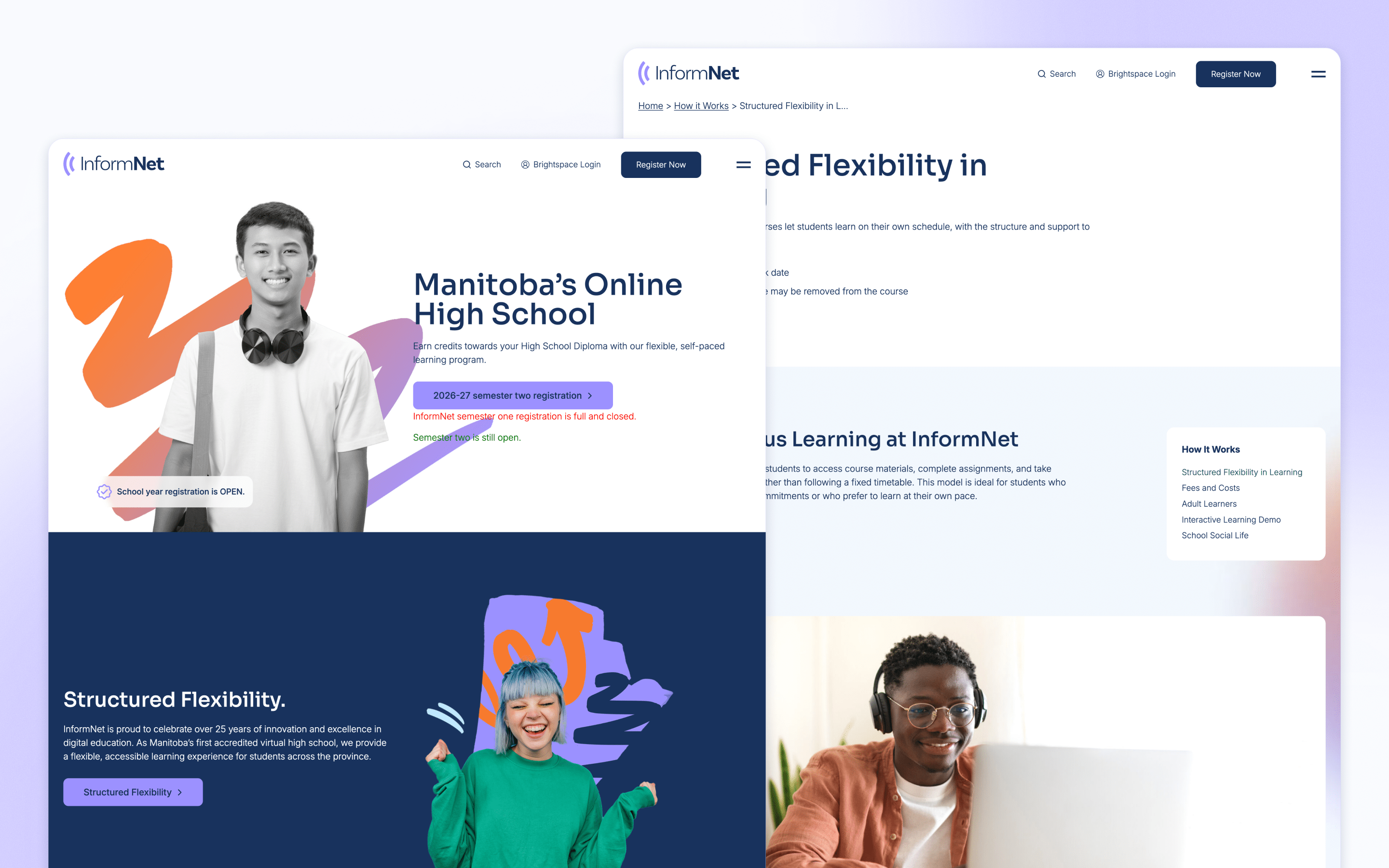
Review the route from learning about the offer to finding registration information, then consider the equivalent steps for your own institution. A useful scope will identify the boundaries between the public website and learning systems, with named responsibilities for maintaining content and testing the links or data connections between them.
What should school website design services include?
A school website project should begin with the questions families and staff need it to answer. Prospective parents may be comparing educational approaches, entry points, and visits, while current families need dates, documents, and portal access. Plan clear routes for both groups before deciding how much information belongs on the homepage.
The scope can include research, messaging, photography, content architecture, design, development, and migration, with reusable structures for programs, news, staff, and events. Identify the admissions, student-information, learning, and communications systems already in place, then specify whether the website links to them or exchanges information with them.
Include staff training and an agreed review process for content, accessibility, and launch. School imagery needs the institution's approval and permissions, and important documents need owners who can keep them current. Decide which work the agency will complete and which pages your own team will build, since both models can work when expectations are explicit.
How to compare school website design companies and costs
Begin with 2 or 3 providers whose experience matches your institution. A school network, a specialist secondary school, and a small independent school may need very different publishing setups. Explore the selected sites as a prospective family and as a current parent, noting whether the website supports both without making the navigation confusing.
Give each team the same scope, including your content inventory, connected systems, staffing capacity, and preferred launch window. Ask for a clear explanation of what is custom-designed, what uses existing platform components, and what your staff will be expected to create. Compare the total commitment, including any multi-year platform agreement, rather than only the setup fee.
Subject [School] website project: [audiences], [systems], and [launch term]
Hello [name],
We are reviewing website partners for [school], serving [ages or stages]. We found your work in BRIX Agency’s school website design guide and want to improve [admissions, community information, publishing, or another priority].
Our site includes [programs, school stages, documents, events, and other content]. We use [admissions, student, learning, or parent systems], and the public website needs to [link to or integrate with them].
We can provide [approved copy, photography, and brand materials], and need support with [research, content, design, development, or migration]. Our [staff roles] will maintain the website.
We would like to launch in [term or date] with a budget of [range]. Please explain your proposed milestones, comparable school work, accessibility testing, editor training, and launch checks.
Please identify responsibilities for our staff and existing providers, and separate the project cost from licensing, hosting, maintenance, and ongoing support.
Thank you,
[Your name]
[Role and school]
Separate strategy, photography, writing, design, development, migration, and training from recurring hosting, licensing, and support. Check the cost of additional modules and integrations, and ask to see a demonstration of the features you will actually receive. A feature name in a proposal is less informative than watching it work with a realistic school task.
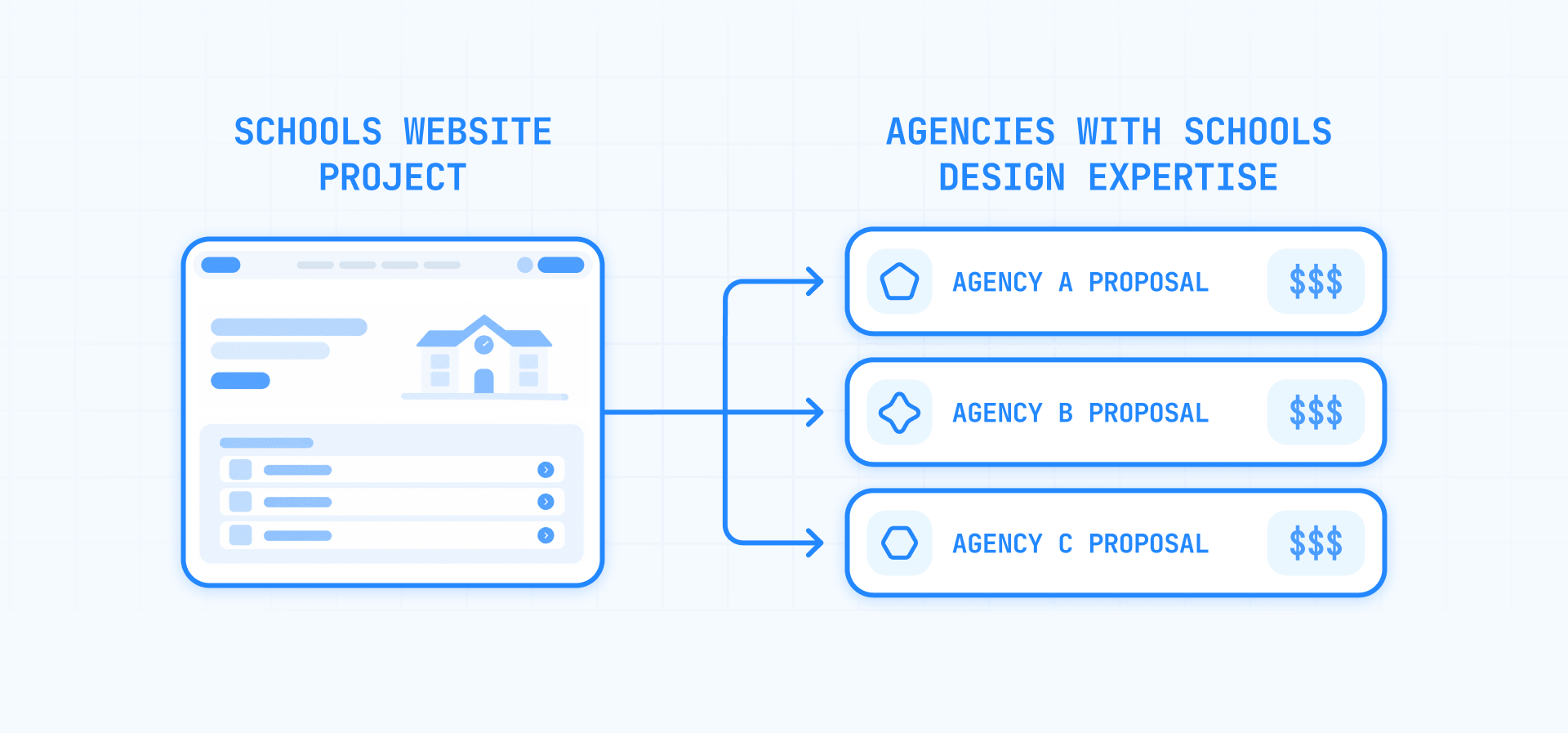
Plan the schedule around admissions activity, term dates, and the availability of staff reviewers. Request a working preview with representative content before final approval, then test forms, calendar information, documents, and portal routes. Agree who can resolve launch issues and how the school will maintain the site when the project lead is unavailable.
Choosing a school website CMS staff will want to use
The CMS should make everyday school updates feel manageable. Ask a staff member to add an event, correct a program detail, replace a document, and prepare a news item in the proposed editor. That exercise reveals more about the fit than a demonstration performed entirely by someone who already knows the system.
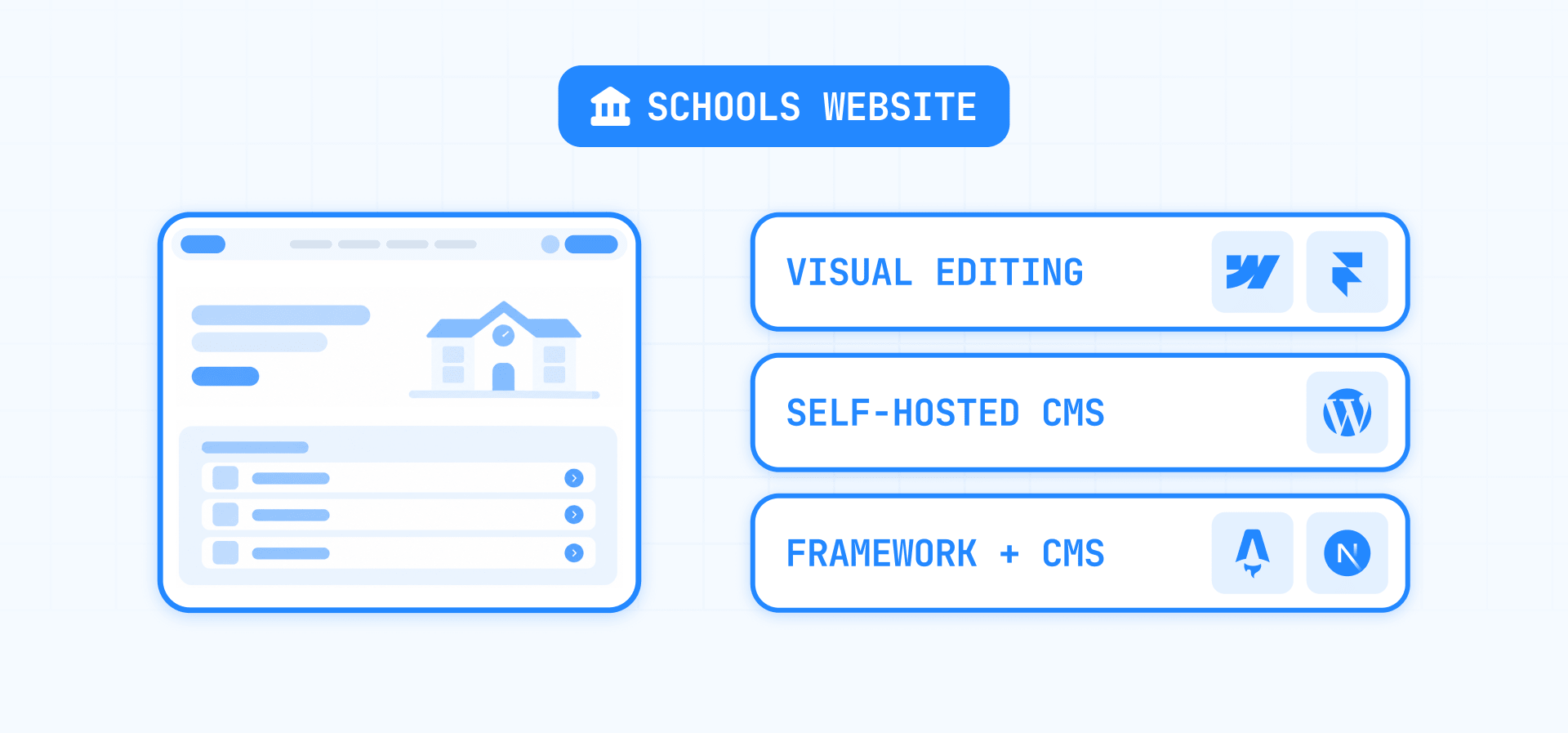
Webflow and Framer offer visual editing approaches for public websites, with the exact publishing experience shaped by the agency's setup. Check collections, permissions, search, and the connections your school needs. They should be assessed as website platforms, with separate consideration for student records, parent portals, or learning systems.
WordPress provides a self-hosted route and can support a tailored editor for school content. Confirm who maintains the installation, extensions, and backups, and whether staff can make routine changes without navigating unrestricted layout controls. Specialist school platforms are also worth comparing when their supported integrations and workflows match your requirements.
Astro and Next.js are options for a custom frontend connected to a separate CMS. Ask what the architecture solves for your school and how editors preview, publish, and correct changes. The best technical choice should come with a clear ownership and support arrangement, not just a list of modern tools.
Request a school website built on the proposed platform and ask who maintains admissions information, community updates, and shared documents. The agency should be able to explain the handover and support arrangement as clearly as the design.
School website priorities: admissions, community information, and inclusion
Help families picture the school and take the next step
Use accurate program information and approved photography to show what the school offers. Explain entry stages, visit options, and application steps in plain language, with the dates and contacts families need. The route to a tour or inquiry should make the next step specific, rather than sending every question to a generic contact page.
Keep everyday information easy to maintain
Give calendars, policies, staff details, and portal links clear owners, with a process for replacing outdated material. A school network may benefit from centrally maintained documents alongside local content. Preserve useful existing URLs during migration and check that links shared in emails, newsletters, and parent materials still lead somewhere helpful.
Test beyond the homepage
Review navigation, forms, document access, keyboard use, contrast, and mobile layouts across representative pages. The school's responsible advisers should confirm its accessibility, privacy, and publication requirements, and the agency should explain how it will implement and test them. Include staff in the handover so future updates preserve the clarity and usability of the original build.
FAQs about school website design companies
How do we choose a school website design company?
Look for experience relevant to your school, with a clear account of what the provider delivered. A specialist school platform, a creative agency, and a development partner may all contribute differently, so compare their responsibilities as well as their finished websites. Test whether the examples make sense for prospective and current families.
Ask each shortlisted team to respond to the same content and system requirements. Discuss the staff time needed, the approval process, and the support available after launch, then request a realistic editor demonstration. A good fit should give the school confidence in both the public experience and the work required to keep it useful throughout the academic year.
How much does a school website cost?
Compare the complete project and commitment, including design, content, photography, development, migration, and training. A school building many pages internally has a different scope from one asking an agency to deliver everything. Platform fees, additional modules, integrations, hosting, and support can also make the ongoing cost different from the initial quote.
Provide the same requirements to each company and ask which deliverables are included at the proposed price. Review the term of any agreement, ownership of content and accounts, and the cost of future changes. If your budget is fixed, ask the provider to explain a coherent launch scope rather than assuming a lower quote includes the same work and support as another.
How can we tell whether a school CMS will be easy for staff?
Test real publishing tasks. Have someone from the school add a news item, update an event, replace a policy document, and correct a program detail in the proposed system. Ask them to preview and publish the changes, rather than judging ease of use from a presentation delivered by the provider's own expert.
Check permissions, training, and support alongside the editor interface. Confirm which features are included in the plan and which require additional payment or technical help, especially when the school expects to manage the site with limited staff. The system should work for the people who will use it during a busy term, including a backup person when the main editor is unavailable.
Should our school use a specialist platform or a custom agency website?
Compare the actual requirements. A specialist platform may offer school-oriented publishing and connections, while a custom agency project can provide a distinct design and tailored structure. Neither description alone tells you how well the result will fit your institution, because the included services, integrations, and staff responsibilities vary between providers.
List the essential visitor tasks and editing workflows, then ask each option to demonstrate them. Review design flexibility, supported systems, recurring costs, account ownership, and the process for leaving or changing the arrangement. A useful decision is based on how the complete setup will work for the school over time, not only the appearance of the provider's best portfolio example.
How long does a school website redesign take?
The timeline needs to include school content and approvals as well as the agency's design and development work. Photography, program information, document review, migration, and system connections can create dependencies, while term dates and admissions activity affect when staff can participate. A realistic schedule should acknowledge those constraints at the beginning.
Ask for milestones showing what the provider will deliver and what the school must supply at each point. Plan a working-site review before launch and leave time to test forms, portal links, and representative content. If a particular admissions period matters, agree which pages and functions must be ready for it and how any later additions will be completed.
What information should a school website include for admissions?
Give families a clear route to understanding fit, including the school's approach, stages or programs, and the practical steps involved in visiting or applying. Use specific examples of school life and approved imagery to support that explanation, then provide the dates, contacts, and process details people need to take the next step.
Organize the information around a family's questions rather than expecting them to know the school's internal terminology. Keep entry requirements and time-sensitive details current, with an owner for each. Before launch, ask someone outside the project team to find the right stage, understand a visit option, and explain how they would begin an inquiry or application.
Can a school website connect with admissions and learning systems?
Yes, when the connection is defined. A link to a parent portal, an embedded admissions form, and an exchange of data with another system are different requirements. Tell the provider which systems your school uses and what information or action should pass between them, including who owns each system internally.
Ask for a demonstration of the proposed connection and confirm the features included in the quoted plan. Test the complete journey with the relevant staff before launch, including what happens when a form is submitted or a destination is unavailable. Keep responsibilities clear so a future issue can be directed to the website team or the connected provider without uncertainty about who should investigate.
Can we improve admissions pages without rebuilding the whole website?
A focused project may be enough when the existing website is technically sound but families struggle with particular information or actions. Clearer navigation, better program explanations, practical FAQs, and more specific visit or inquiry routes can form a useful scope without replacing the entire design, platform, and content collection at once.
Start by documenting the questions admissions staff receive and the steps that confuse visitors. Ask an agency to assess those problems and compare targeted improvements with a larger redesign. If the platform or content structure prevents the necessary changes, that may justify a broader project, but the decision should follow the school's actual obstacles rather than an assumption that every website needs rebuilding.
How should school website accessibility be reviewed?
Set a clear review scope covering representative pages and important tasks, including navigation, forms, documents, and mobile use. Ask the provider which standard it will work toward, how it combines automated checks with human evaluation, and how findings will be corrected. The school's responsible advisers should confirm the particular requirements that apply to the institution.
Include content creators in training because a newly uploaded document, image, or page can affect accessibility after launch. Keep responsibility for those updates clear and agree how the site will be reviewed over time. A homepage that looks readable is not enough to establish that the full experience works for the families, students, and staff who need to use it.
What should we check before launching a new school website?
Check the journeys people rely on, including admissions inquiries, visits, calendars, documents, staff contacts, and links to existing portals. Verify the content with its owners, test forms with the people receiving submissions, and review the site on smaller screens. Confirm that useful old URLs redirect appropriately and that the main pages can be found through navigation.
Also confirm staff access, training, backups, support contacts, and the process for urgent corrections. The school should know who can publish a change and who can resolve a technical issue during launch. Keep the remaining findings in an agreed list with owners, so the decision to go live is based on completed checks rather than the arrival of a date alone.
Give families a clearer first visit to your school
Your website should help a family understand the school before they walk through the doors, while remaining useful to the community already inside them. That takes a clear story, practical information, and an editing setup that staff can maintain through the ordinary rhythm of the school year.
Choose a few providers whose selected work reflects your needs, then compare the design, content, systems, and staff responsibilities in their proposals. The right partnership should make the project manageable as well as give the school a website it is proud to share.
If you are ready to explore a custom direction, tell BRIX Agency about your school's next website. We reply in less than 24 hours, with responses in 1–2 hours during business hours in PST.





Join readers commenting on this post!