

Choosing a physical therapy clinic often starts with a question the website should be able to answer: is this practice right for me? A patient may have a referral, a particular activity they want to return to, or simply a clinic name from a friend. Clear information about the team, its focus, and the first visit helps that person decide what to do next.
The right design agency should understand how those details work together. A sports-focused practice needs a different introduction from a clinic emphasizing pelvic health, while a group with several locations needs to connect each service with the right people and place. The 10 agencies below offer different strengths within that shared task.
We've included selected work for practices such as Haven Physical Therapy & Wellness, Myo, and Active Health Riverina so you can compare actual clinic presentations. Look at the information surrounding the photographs as closely as the opening design, then use the sections after the list to plan your content, appointment route, and agency brief.
How we selected these physical therapy web design agencies
We selected agencies with identifiable physical therapy or physiotherapy website work and reviewed the documented role behind each project. The list includes brand-led practices, specialist clinics, and larger service groups, with design, development, and booking work distinguished where different teams were involved.
BRIX Agency is the publisher and appears first with projects from our own portfolio. Each specialty highlights a useful aspect of the selected work rather than a clinical endorsement or a universal ranking. Use the projects to compare how a practice introduces itself, explains its services, and helps someone reach the appropriate next step.
The physical therapy web design agency shortlist
- BRIX Agency: A design and development agency creating distinctive clinic websites that connect practice identity, service information, and the first patient inquiry.
- Rockfish Design Studio: A boutique branding and website studio giving independent physical therapy practices a consistent identity and a personal introduction to care.
- Herman-Scheer: A brand and digital studio shaping physical therapy identities through art direction, clear positioning, and a coordinated website presentation.
- Corey Hiben / Andro Brands: An independent health-brand studio connecting sports physical therapy positioning with website design, appointment integration, and a recognizable practice identity.
- Adcraft Studio: A creative studio connecting specialist physiotherapy branding with distinctive website design, service content, and an external appointment route.
- Dot The i Studio: A Webflow studio connecting physiotherapy services, practitioners, and locations through structured content that clinic teams can maintain over time.
- Contrast Design Studio: A brand and website studio giving sports physiotherapy practices a distinctive identity and focused pages for the patients they serve.
- Modal Digital: A digital agency organizing physiotherapy services, clinicians, and locations into clear website journeys that lead toward an appropriate appointment.
- Underline: An independent branding and digital agency organizing physiotherapy conditions, services, and practitioner information within a consistent clinic website.
- Pagency: A creative and web agency combining physiotherapy branding, treatment pages, and appointment connections in a coordinated patient-facing website.
1. BRIX Agency: Best Physical Therapy Web Design Agency for Custom Design
 1
BRIX Agency
A design and development agency creating distinctive clinic websites that connect practice identity, service information, and the first patient inquiry.
At BRIX Agency, we design and develop websites that make a practice's identity and services easier to understand. For physical therapy, the important decisions include how to introduce the clinicians, explain the focus of the practice, and help someone find the right information before contacting the team.
Developing our own templates gives us another way to explore those decisions through different layouts and audiences. The portfolio projects below show how we adapted that work for a practice focused on everyday movement, a more editorial care presentation, and a sports-oriented rehabilitation offer.
A closer look at our physical therapy web design portfolio
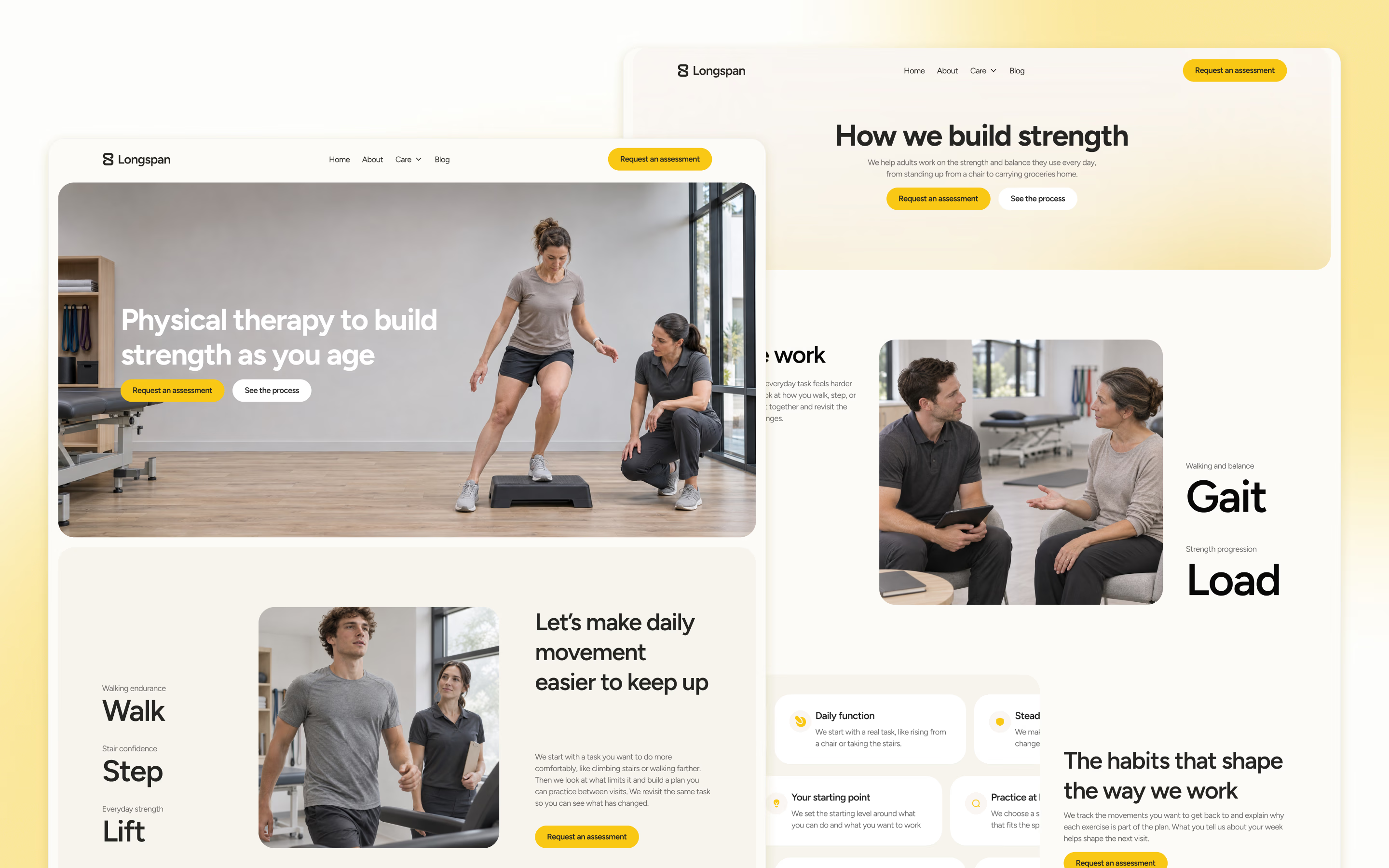
For Longspan, we adapted one of our templates around physical therapy for everyday strength and movement. The opening photograph introduces the work through a patient and therapist, while the following sections organize the message around walking, stairs, and lifting. The company page continues that practical language, connecting the visual identity with activities visitors can recognize.
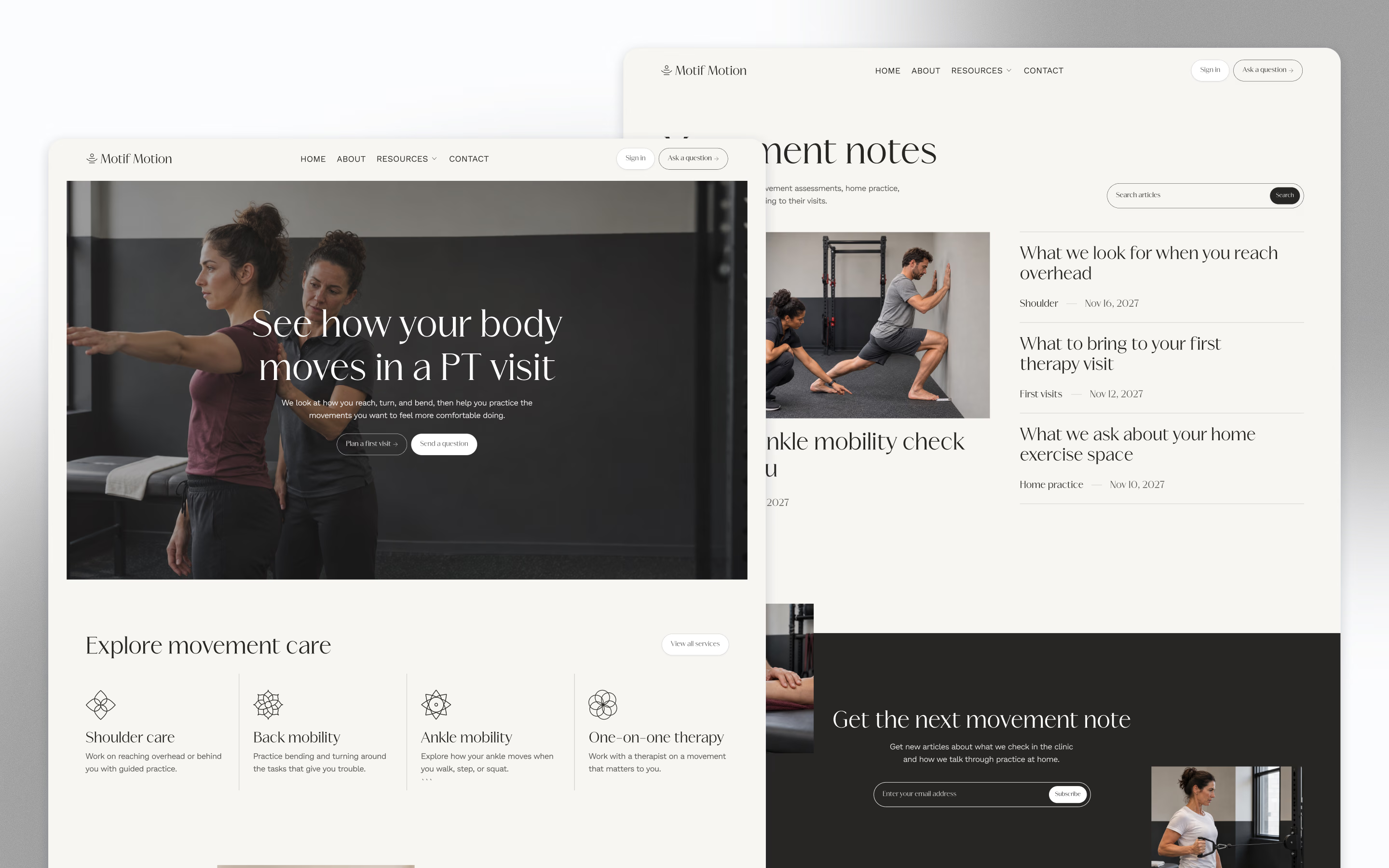
For Motif Motion, we adapted a template with a quieter editorial style, pairing treatment photography with a clear introduction to a PT visit. Service categories lead into movement-focused resources, and the article page gives the practice a place to answer questions before someone gets in touch. The same restrained typography and imagery keep the care pages and written content connected.
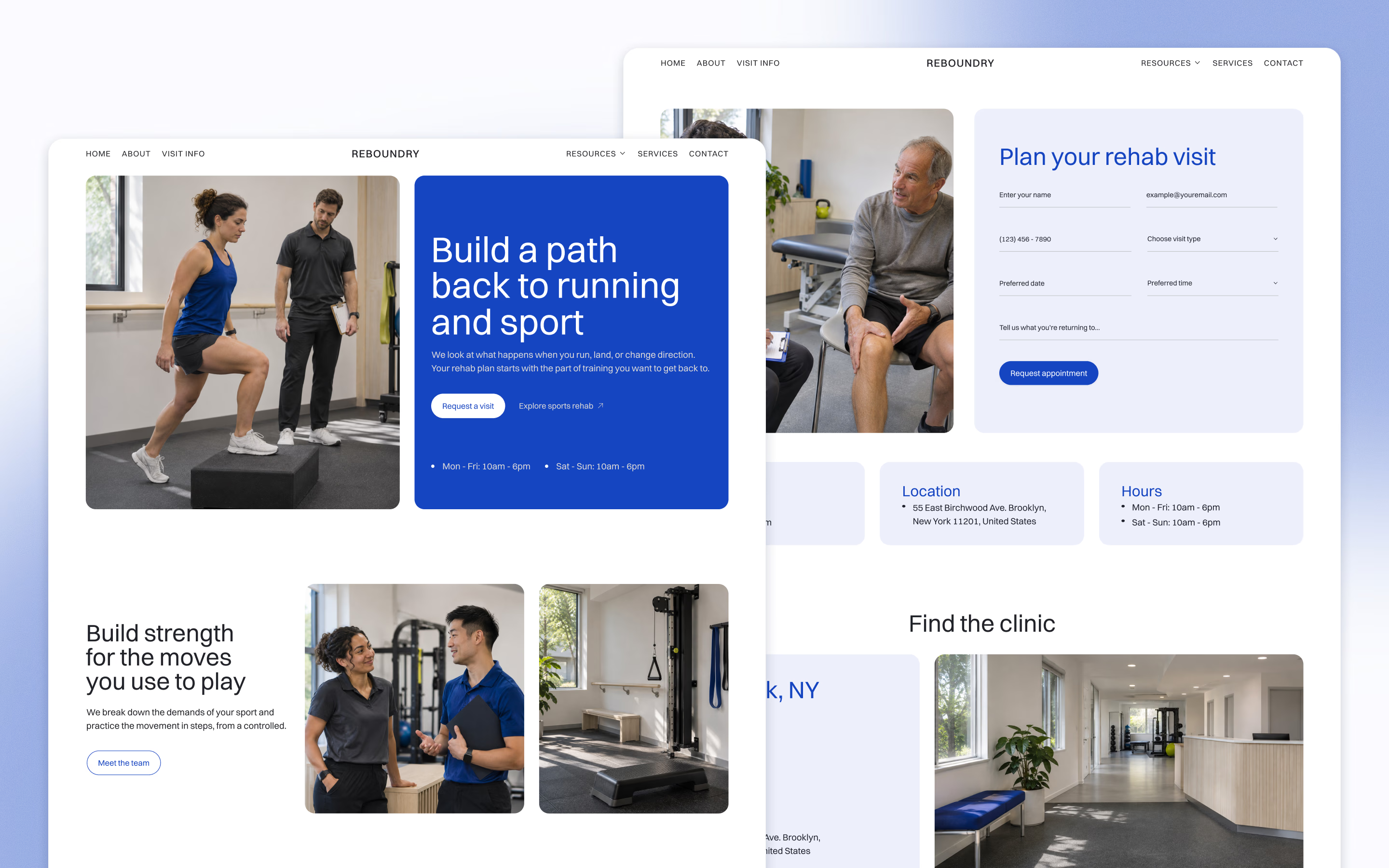
For Reboundry, we adapted a template around returning to running and sport. A split opening places the service message beside a treatment photograph, while the visit page organizes appointment details, location, and hours into distinct blocks. That gives the project a more direct path from understanding the practice's focus to planning a conversation about a visit.
Our templates are used by more than 60,000 websites across the complete collection. That product experience helps us approach the relationship between a clear visual identity and useful service information. When you hire BRIX Agency, we design a fully custom website around your practice, its people, and the patients you want to reach.
2. Rockfish Design Studio: Best Physical Therapy Web Design Agency for Practice Identity
 2
Rockfish Design Studio
A boutique branding and website studio giving independent physical therapy practices a consistent identity and a personal introduction to care.
Rockfish Design Studio works on identities and websites for independent businesses and practitioners. Its selected physical therapy project has a clearly defined audience, making it a useful reference for a clinic that wants its website to reflect a particular kind of care rather than present a long, general treatment menu.
For an owner-led practice, the therapist's introduction and the visual identity often need to work closely together. A visitor should be able to recognize the focus of the clinic and understand who they will meet, while the design leaves space for practical information about arranging a first conversation.
Featured project: Haven Physical Therapy & Wellness
Rockfish created the visual identity and website design for Haven Physical Therapy & Wellness, including its logo system, typography, and brand elements. The supplied pages introduce pelvic floor and orthopedic physical therapy through a warm, restrained palette, then give the practitioner and the philosophy of the clinic a prominent place.
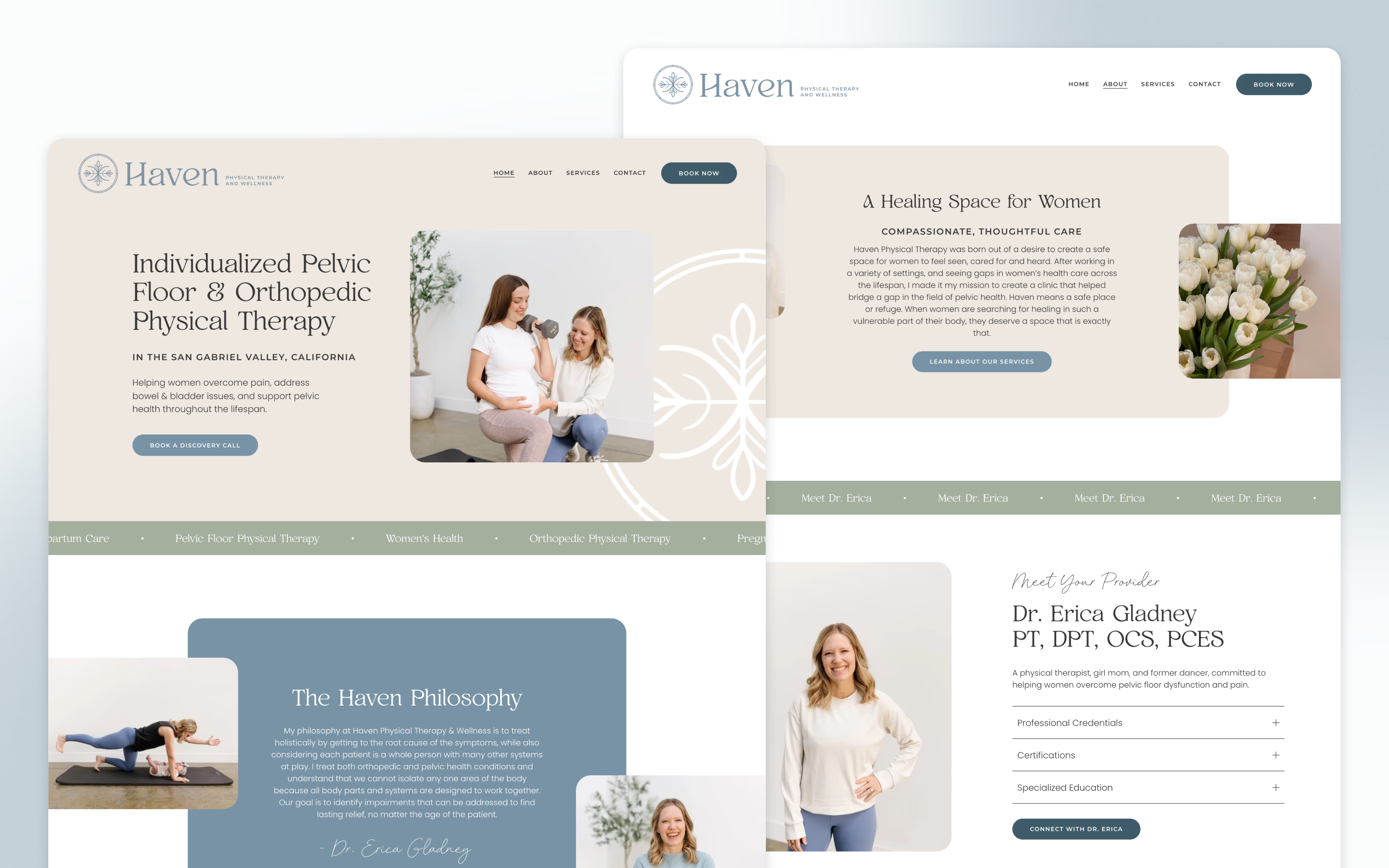
The project demonstrates a consistent practice identity across service and company information. For your own site, consider which photographs and clinician details help introduce the care setting accurately. Discuss image permissions and the role of the photographer separately, rather than assuming website design automatically includes producing the practice's photography.
3. Herman-Scheer: Best Physical Therapy Web Design Agency for Health Branding
 3
Herman-Scheer
A brand and digital studio shaping physical therapy identities through art direction, clear positioning, and a coordinated website presentation.
Herman-Scheer focuses on health, wellness, and consumer brands, with physical therapy work that joins positioning and design. Its selected project is relevant when a clinic group wants to change how people understand the brand, rather than simply place the same information inside a new page layout.
That kind of assignment needs a clear distinction between the brand promise and the clinical information supporting it. Review how the creative direction carries across the homepage, company story, and service content, and ask which team members will be responsible for each part of the finished website.
Featured project: Myo
Herman-Scheer led the Myo rebrand, from Myodetox to Myo, including strategy, identity, art direction, and website design, while Flow Sparrow implemented the website in Webflow. The selected pages pair movement photography with a strong blue identity and a separate introduction to the founders, giving the broader brand story a recognizable visual form.
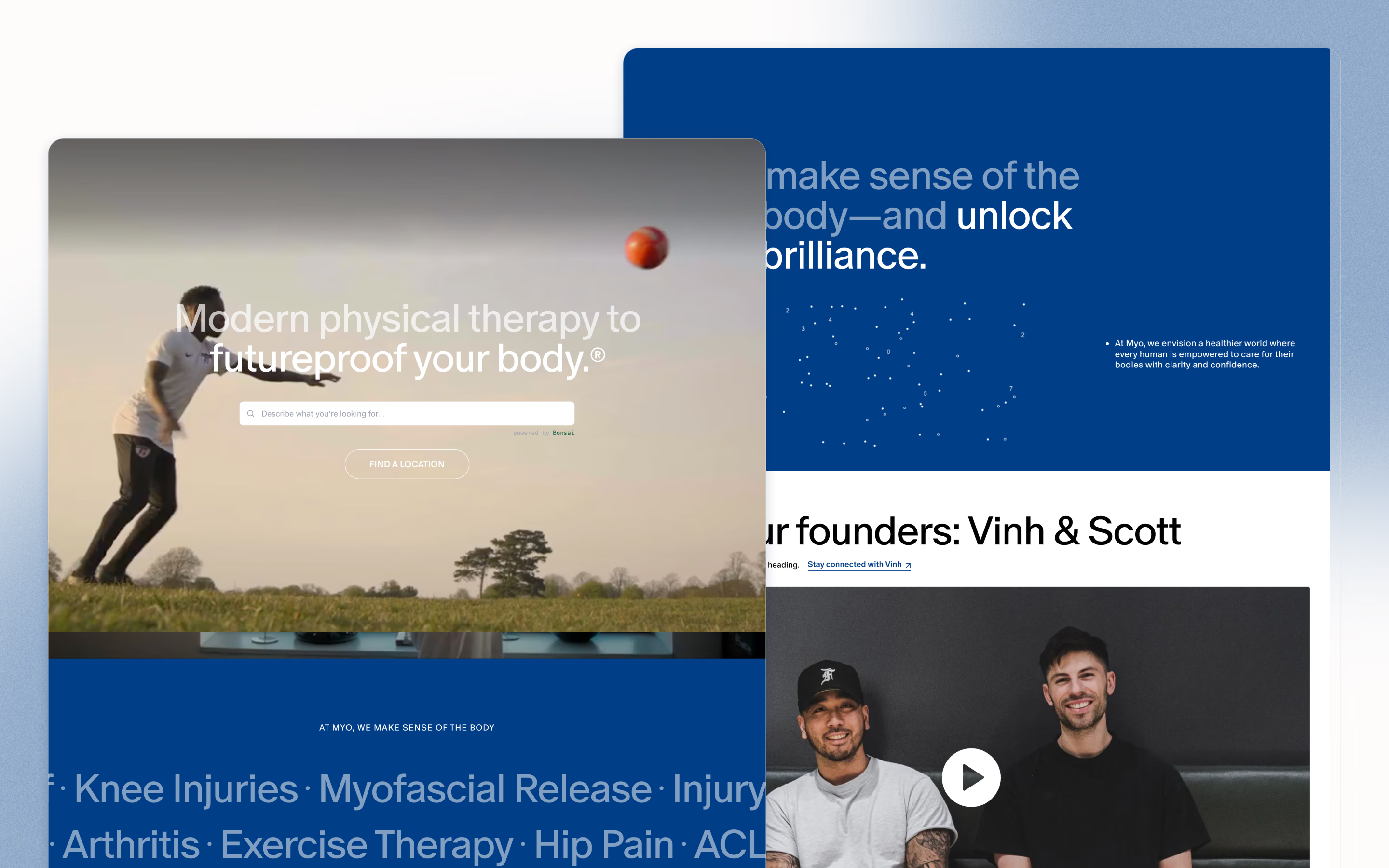
The useful reference is brand consistency across a larger care business. A bold opening still needs supporting information that helps someone understand the practice and arrange the next step. If several partners participate in your project, confirm the design and development responsibilities before comparing proposals or planning the handover.
4. Corey Hiben / Andro Brands: Best Physical Therapy Web Design Agency for Sports Practices
 4
Corey Hiben / Andro Brands
An independent health-brand studio connecting sports physical therapy positioning with website design, appointment integration, and a recognizable practice identity.
Corey Hiben, through Andro Brands, works with health businesses on strategy, branding, and websites. The selected physical therapy project speaks to a specific audience of runners, which is useful when a practice wants to explain its focus without making every visitor read through a broad list of possible treatments.
A specialist message works best when the rest of the site supports it. The people, photographs, service explanations, and appointment route should help someone understand the practice's actual work, while leaving room for staff to answer individual questions through the appropriate clinical process.
Featured project: Shift Performance Physical Therapy
The Shift Performance Physical Therapy engagement includes brand strategy, logo design, website design and development, booking integration, and marketing consulting. The supplied homepage introduces running-focused care through active imagery, while the team page explains the people behind the practice using the same dark-and-turquoise visual identity.
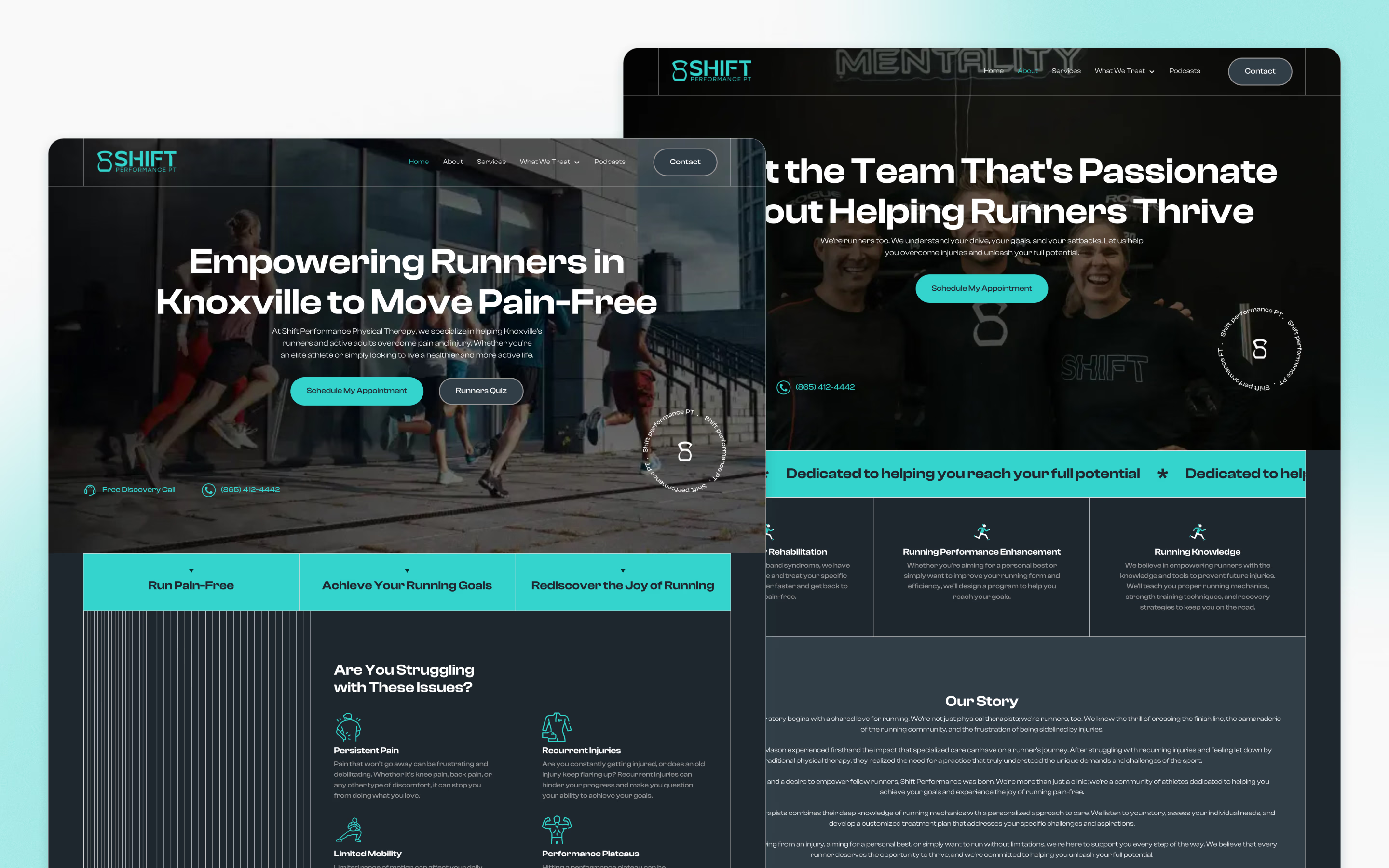
The strength is a recognizable patient audience. Rather than trying to communicate every service in the opening line, the site establishes the practice's focus and develops it through the team and supporting content. Ask your agency how it would express your own specialization without turning general website copy into a promise of individual treatment results.
5. Adcraft Studio: Best Physical Therapy Web Design Agency for Specialist Clinics
 5
Adcraft Studio
A creative studio connecting specialist physiotherapy branding with distinctive website design, service content, and an external appointment route.
Adcraft Studio combines branding, website work, and media services. Its selected physiotherapy project introduces a clinic through the activity its patients share, showing how a specialist audience can influence the identity and the choice of imagery without requiring a crowded or technical homepage.
This is worth reviewing if your practice serves a defined community and already understands its questions. The agency's role is to bring that knowledge into an organized website, with enough information about the clinician, services, and first visit to support the distinctive visual direction.
Featured project: The Dance Clinic Wollongong
For The Dance Clinic Wollongong, Adcraft created the identity and custom letterforms, designed the website, integrated an external booking route, and established service content and search foundations. The supplied pages use dance photography and large graphic forms to introduce the clinic, with the company information maintaining the same restrained visual treatment.
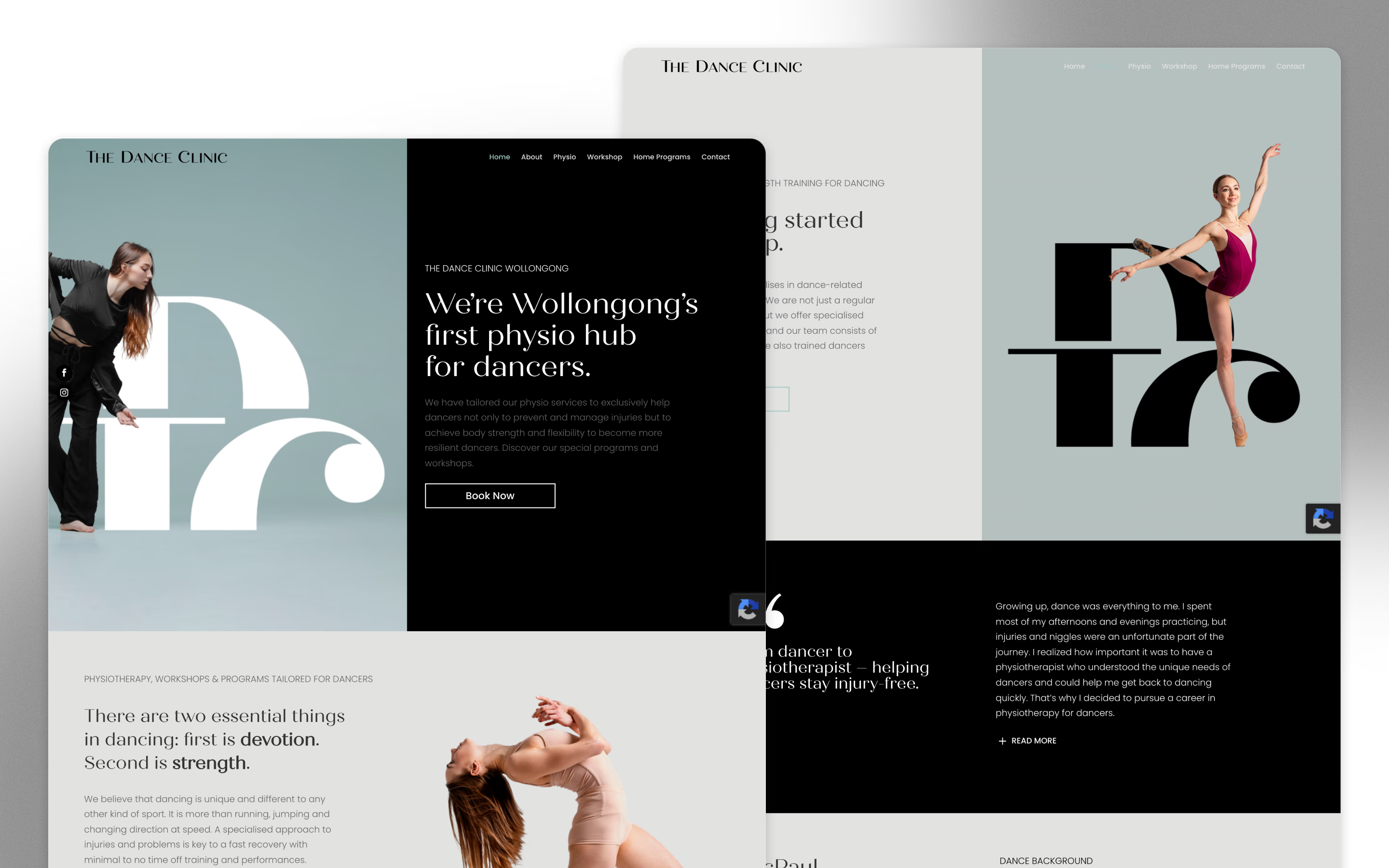
The specialist visual language makes the practice's audience immediately recognizable. For a similarly focused clinic, choose images that accurately represent the people and activities involved, then connect them with useful service descriptions. Make sure the booking destination retains enough context for visitors who arrive from a specific treatment or audience page.
6. Dot The i Studio: Best Physical Therapy Web Design Agency for Clinic Networks
 6
Dot The i Studio
A Webflow studio connecting physiotherapy services, practitioners, and locations through structured content that clinic teams can maintain over time.
Dot The i Studio plans, designs, builds, and maintains Webflow websites. Its selected clinic work addresses an organizational challenge: patients need to understand which services and practitioners are available at each location, while staff need a reliable way to keep those relationships current.
For a group offering several kinds of allied health care, separate lists of services and team members can leave visitors guessing. Review how the content is linked, not just how each individual page looks, particularly if clinicians work across locations or the practice offers both appointments and classes.
Featured project: Active Health Riverina
Dot The i designed Active Health Riverina's website and migrated it from Squarespace to a custom Webflow build. The project uses linked collections for locations, practitioners, services, conditions, and recruitment. The selected pages introduce the practice through treatment imagery and then develop its team and regional service information.
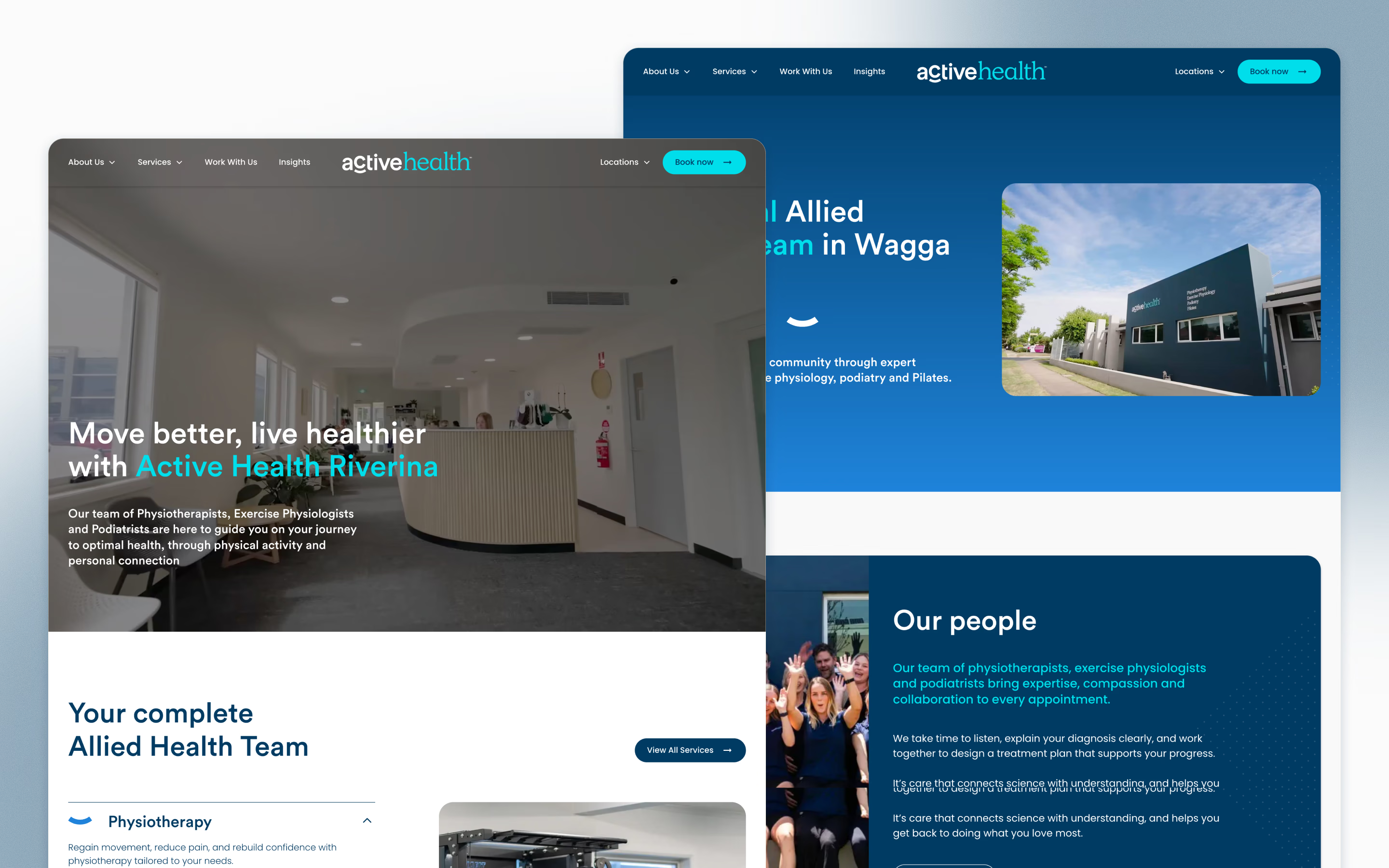
The main benefit to assess is connected clinic content. When a practitioner or location changes, the CMS should help staff update the relevant information consistently. Ask the agency to explain how a patient finds an appropriate service and how the receptionist or marketing coordinator maintains those connections afterward.
7. Contrast Design Studio: Best Physical Therapy Web Design Agency for Sports Branding
 7
Contrast Design Studio
A brand and website studio giving sports physiotherapy practices a distinctive identity and focused pages for the patients they serve.
Contrast Design Studio works across brand identity and websites, with a selected physiotherapy project aimed at active adults and younger athletes. Its work is useful for a practice that needs a more recognizable introduction but does not require every part of the website to be developed from scratch.
The distinction between design scope and implementation scope matters when comparing proposals. A coordinated brand and a semi-custom website can still involve thoughtful work, but the agency should explain what is tailored, which existing foundations are used, and what the practice receives when the project is finished.
Featured project: Bound Physio
Contrast created Bound Physio's brand identity and a semi-custom WordPress website. The selected pages use dark teal, cream, and bright yellow to connect a sports-focused opening with the practitioner introduction. Its distinctive palette connects the service introduction with the more personal story behind the practice.
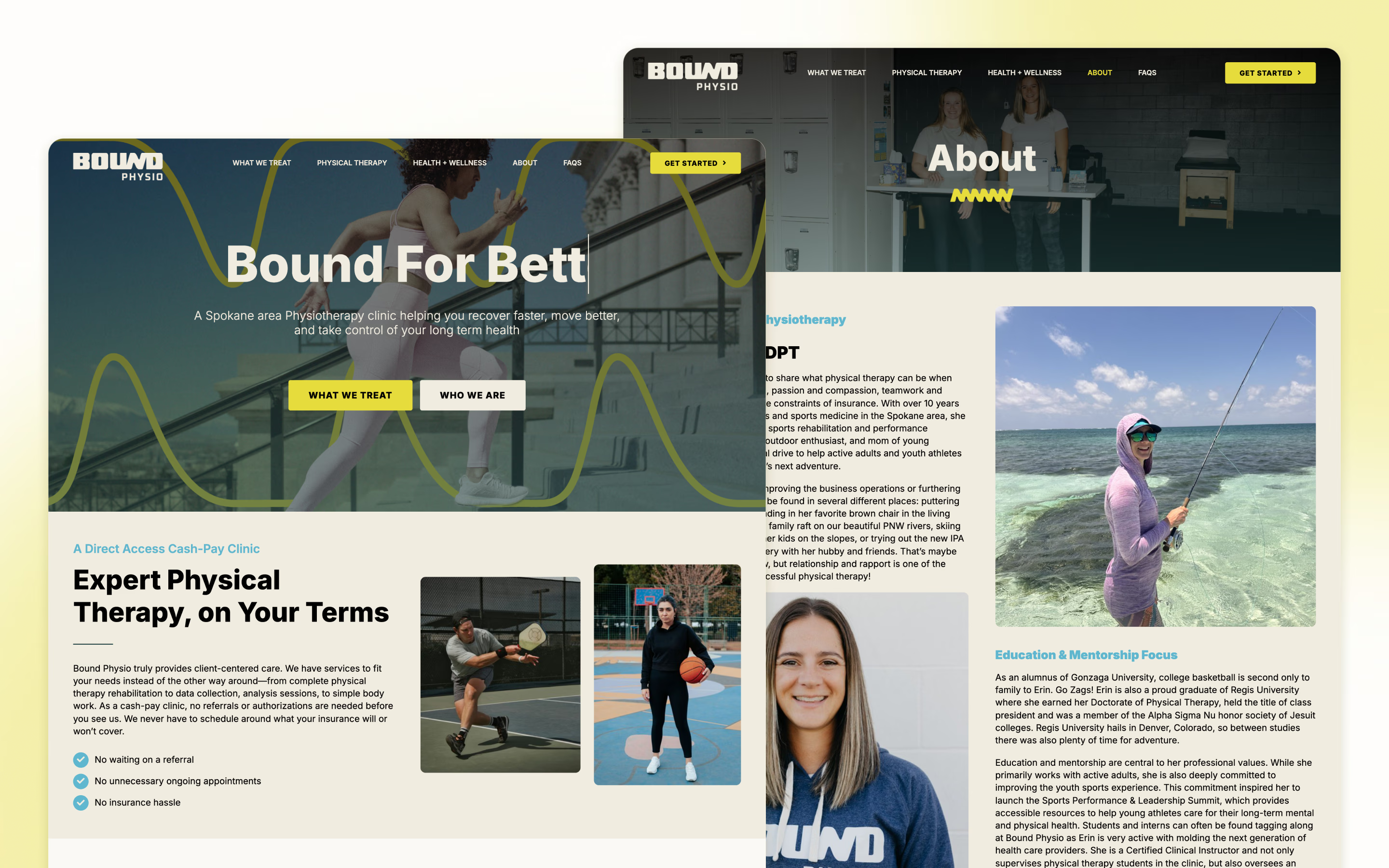
The sports identity gives the service presentation a clear character while the practitioner page adds a more personal introduction. If you are considering a similar scope, ask how your own brand, service structure, and appointment journey would be adapted, and which parts of the page system would remain shared foundations.
8. Modal Digital: Best Physical Therapy Web Design Agency for Patient Journeys
 8
Modal Digital
A digital agency organizing physiotherapy services, clinicians, and locations into clear website journeys that lead toward an appropriate appointment.
Modal Digital combines web design, development, and user-experience work. Its selected physiotherapy engagement starts with how patients move through the website, which is particularly useful when a practice has several locations or a service menu that has become difficult to follow over time.
A clearer journey involves more than placing another booking button on the homepage. Visitors need enough information to choose a location, recognize a relevant service, and understand who they might see, with the appointment route connected to those decisions rather than presented as a separate task.
Featured project: Dan Rix Physio
Modal carried out a user-experience audit and sitemap planning for Dan Rix Physio, then designed and developed the website. The scope organizes injuries, services, clinicians, and clinic locations. The supplied pages pair treatment photography with a clear practice introduction and supporting company information in a consistent white-and-blue design.
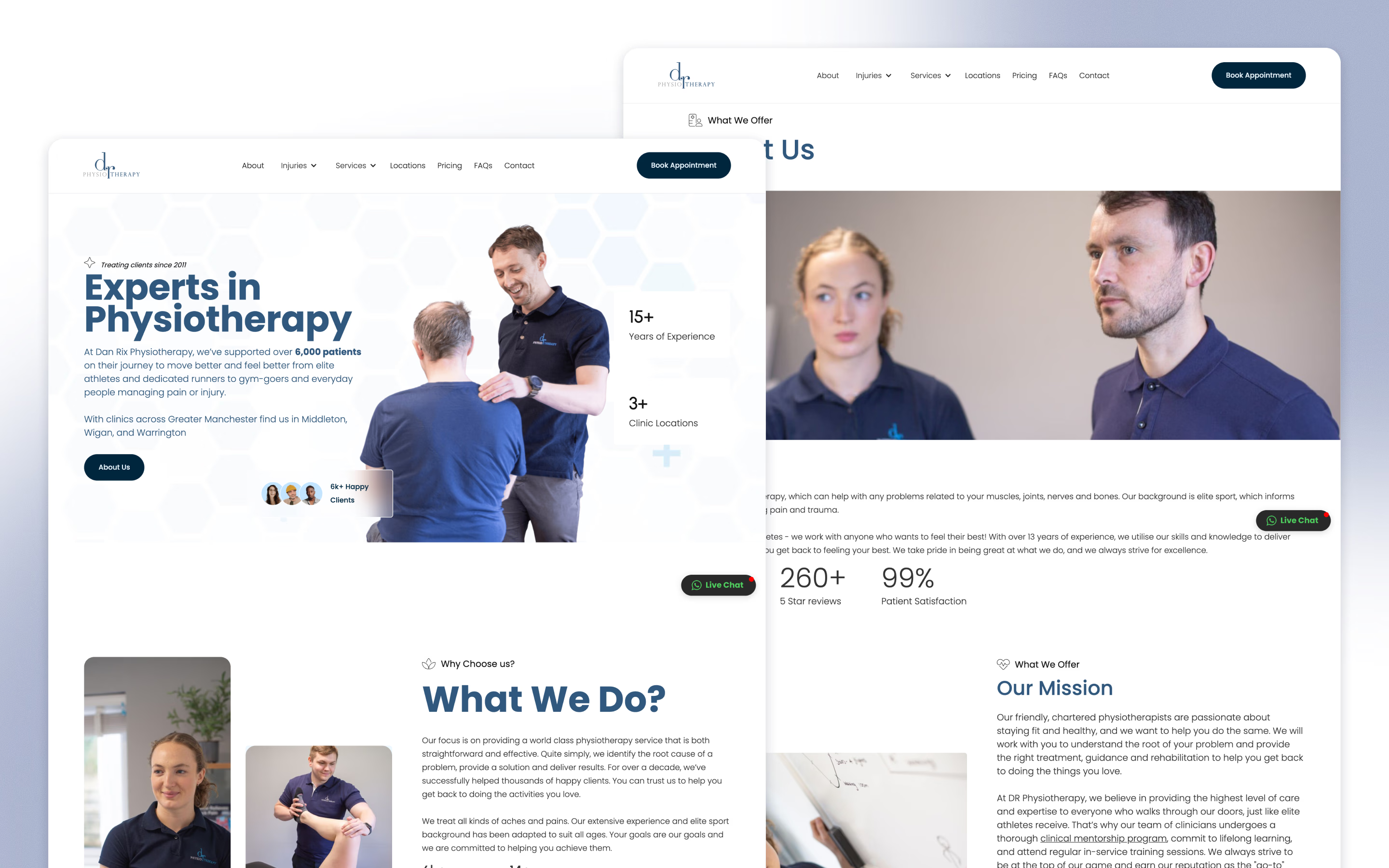
The project is useful for reviewing patient navigation across a growing practice. Ask an agency to map a few real routes, such as a new visitor choosing a clinic or a returning patient finding a known practitioner. Test those routes on mobile as well as reviewing the individual page designs.
9. Underline: Best Physical Therapy Web Design Agency for Service Architecture
 9
Underline
An independent branding and digital agency organizing physiotherapy conditions, services, and practitioner information within a consistent clinic website.
Underline joins identity design with website planning and development. Its selected physiotherapy work is relevant to clinics that offer several related services and need to explain their differences without making the navigation feel like an internal list of clinical terminology.
Patients may arrive knowing a service name, a condition, or neither, so the structure should give them more than one useful way to explore the practice. That does not mean publishing a diagnosis tool; it means organizing reviewed information so someone can understand the offer and contact the clinic with appropriate questions.
Featured project: Optimove Clinic
Underline created Optimove Clinic's identity and designed and developed the website, including service architecture, clinician content, contact routes, and search foundations. The selected pages present a broad physiotherapy and movement offer with prominent service words and a separate clinic introduction, while the navigation distinguishes conditions, services, and fees.
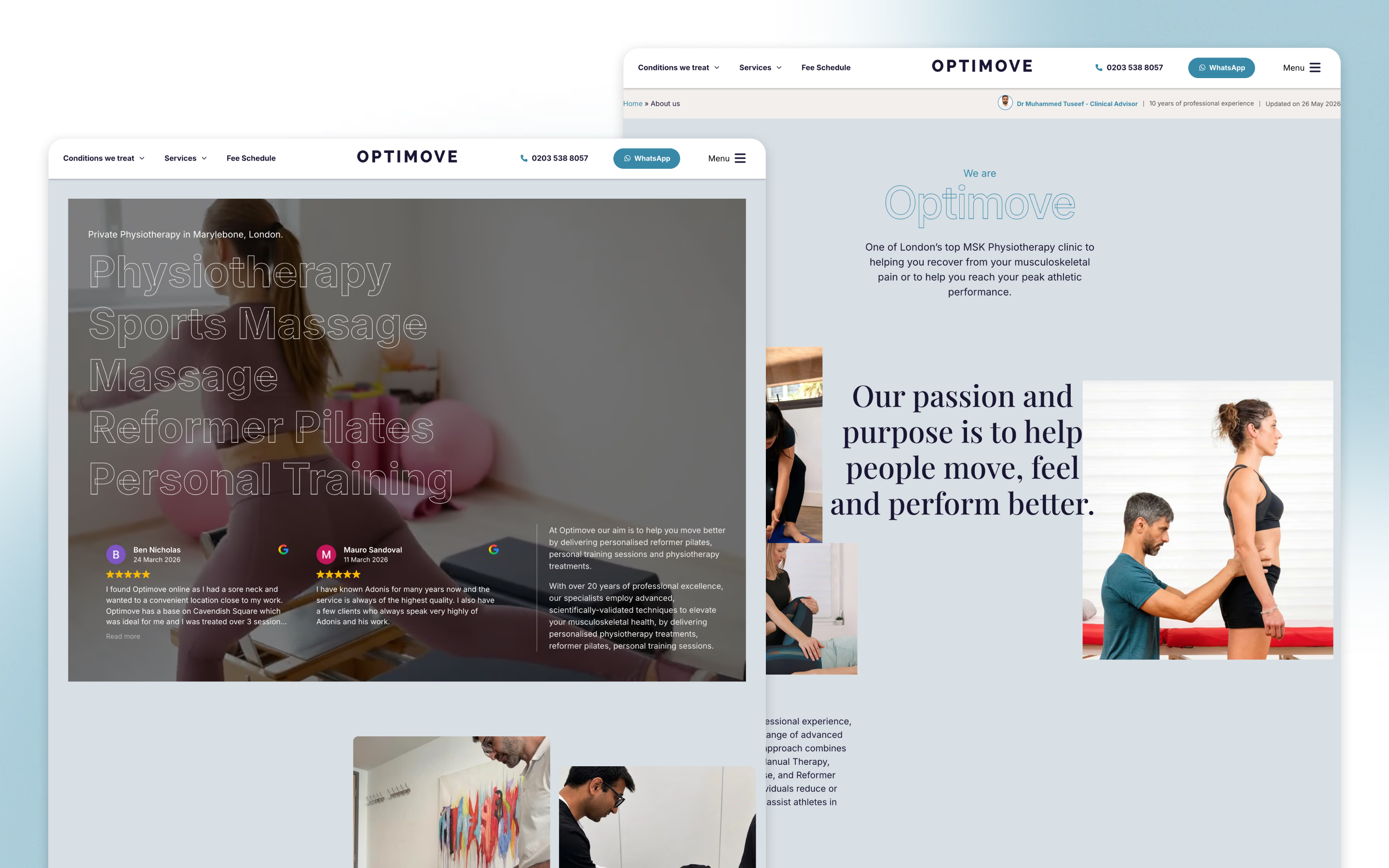
The relevant detail is service organization around different ways of looking for care. If your site uses both condition and service pages, ask who will review the language and maintain the connections between them. Keep the route to the clinic visible so a visitor can seek clarification rather than choose treatment solely from a page label.
10. Pagency: Best Physical Therapy Web Design Agency for Appointment Booking
 10
Pagency
A creative and web agency combining physiotherapy branding, treatment pages, and appointment connections in a coordinated patient-facing website.
Pagency's selected physiotherapy work brings the practice identity and appointment journey into one engagement. This is useful when a clinic's website looks consistent until the visitor tries to arrange a visit, then sends them into a separate process with little explanation of what to select.
The booking connection should follow the way the clinic actually operates. Before reviewing visual layouts, decide whether new patients can choose a visit directly or need a conversation first, and how the website will explain locations, appointment types, and payment information along that route.
Featured project: SDM Physio
Pagency developed SDM Physio's brand identity, designed and built the website, refined its service structure, and integrated appointment booking and payment. The supplied pages use a restrained green identity and treatment photography to introduce the practice, with the company page developing its approach and clinical experience.
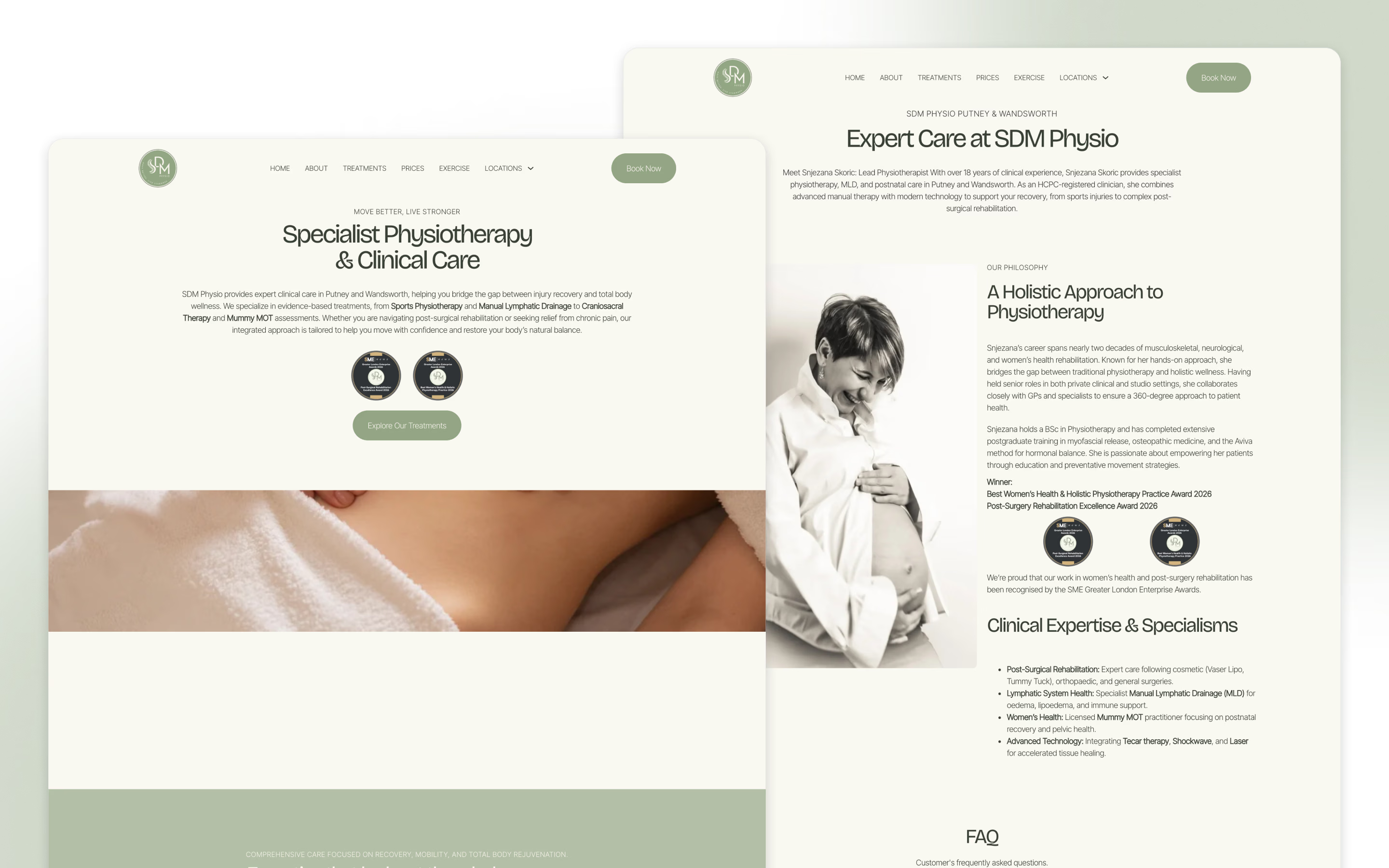
The booking integration is part of the website scope rather than an unexplained link added at the end. For your own practice, request a demonstration of the entire path and establish which information belongs in the booking system. Test the confirmation and staff workflow as carefully as the public page that starts the process.
What a physical therapy web design agency should help you with
A clinic website project should establish what a new patient needs to understand before contacting the practice. That includes the focus of care, the people providing it, where visits happen, and how someone starts. The agency can help organize and express that information, while your clinical team remains responsible for reviewing the substance of treatment descriptions.
Plan the content and appointment route together. A service page should lead toward a suitable next step, whether that is a call, an appointment request, or a booking system. Decide what reception needs to receive and what belongs in the practice's intake process, then test the journey from the patient's first click through the staff response.
The scope should also cover the material used to introduce the practice. Clinician biographies, location photographs, service descriptions, and patient resources need an owner and a review process. Agree on permissions for images and quotations, and keep clinical statements accurate rather than treating the website as a place for unsupported outcome promises.
How to choose a physical therapy website design agency and compare costs
Choose 2–3 agencies whose projects reflect a problem your clinic needs to solve. A solo specialist may prioritize a clearer identity and a first-visit page, while a clinic group may need better relationships between services, practitioners, and locations. Send the same outline to each team so you can compare their proposed work on a useful basis.
Subject Website project for [Practice Name]
Hi [Agency Team],
We found your clinic work in BRIX Agency's physical therapy web design guide. We're [Practice Name], with [Number of Locations] in [Area]. We focus on [Patient Groups and Services], and want the website to make [First Visits, Specialist Care, or Location Choices] clearer.
We need [Service Pages], [Clinician Profiles], [Location Information], and [Patient Resources]. Our appointment system is [Tool], and the website should [Request a Call or Open the Correct Booking Route]. We can provide [Reviewed Clinical Copy and Approved Photos], with help needed on [Remaining Content and Design].
Could you outline a comparable project, the proposed scope, and the responsibilities for content, integrations, migration, and testing? Please separate build costs from continuing fees and explain how reception will update routine information. We're aiming for [Date], with an optional budget of [Range and Currency].
Thanks,
[Name]
Compare the content responsibilities before the fees. Check whether each proposal includes writing, clinical review coordination, photography, page entry, appointment integration, migration, and staff training. A design using supplied content is a different scope from a project that creates a new identity and prepares an entire clinic's website material.
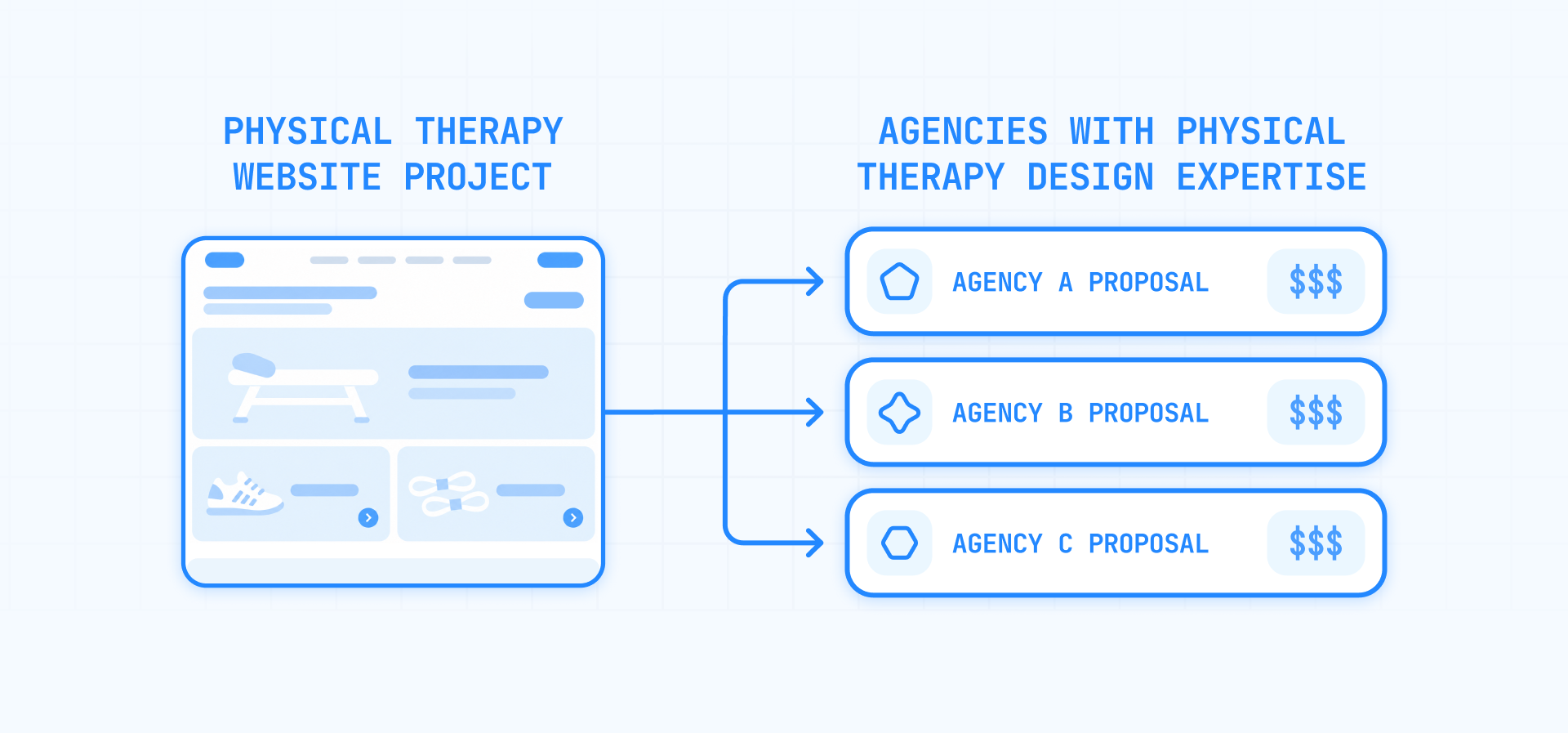
Ask for ongoing charges separately, including website hosting, software plans, maintenance, and any continuing content support. Clarify which subscriptions belong to the clinic and which are part of an agency service. The proposal should identify revision allowances, currency, payment stages, and how additions to the agreed scope are priced.
Content availability has a direct effect on the schedule. Plan time for clinician approval, team photography, and checking location and appointment details, rather than treating those tasks as items to finish after development. If the launch date is fixed, establish which pages and connections are essential and who can approve each one.
How to choose a modern CMS for your physical therapy website
The best content system for your practice is one the responsible staff member can use with confidence. Start with routine changes such as updating hours, adding a therapist, or revising a service description, and ask how those changes are published. Keep the public website editor distinct from the clinical systems used to manage care.
Visual tools for practice content
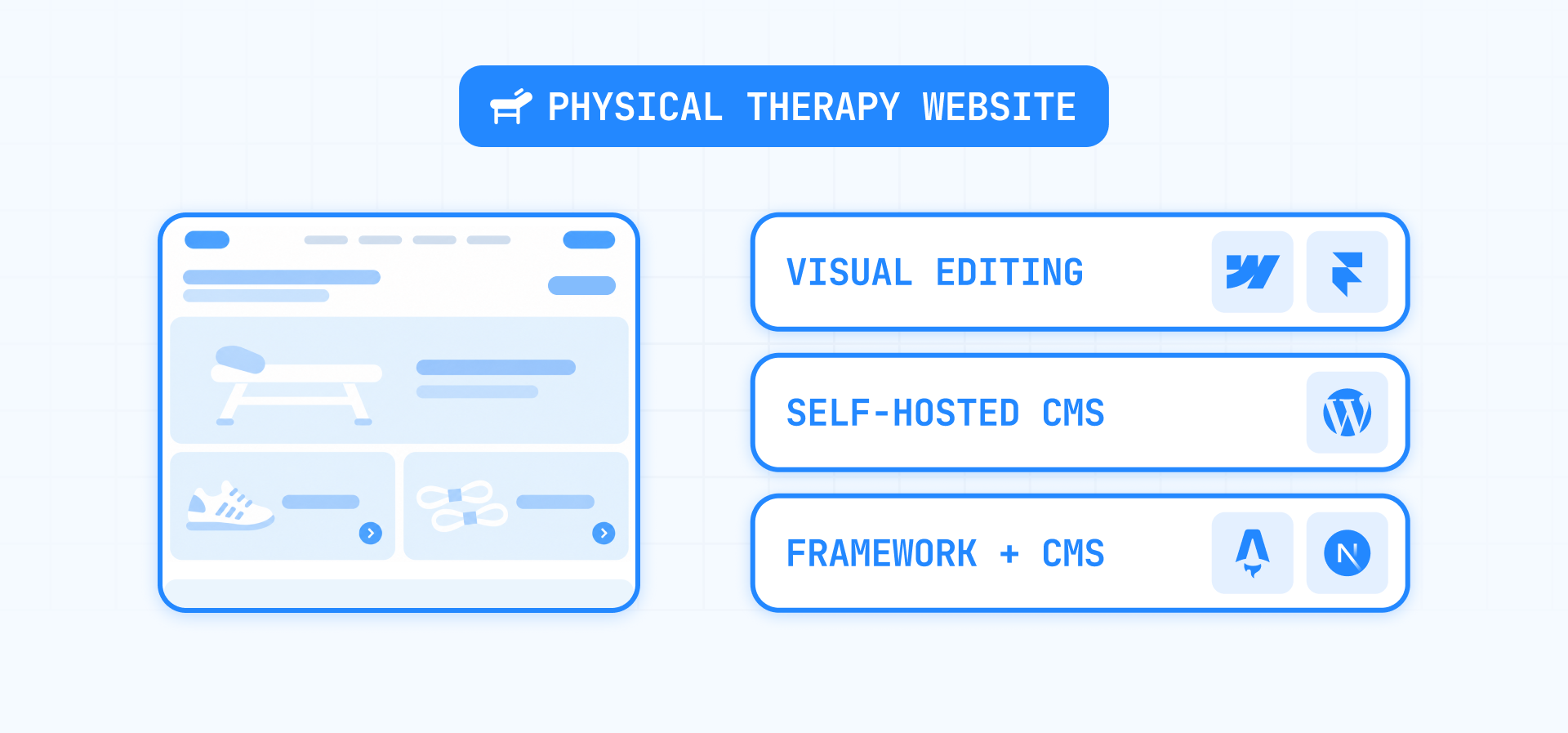
Webflow and Framer offer visual website tools with CMS features and managed hosting. Discuss how the site would store clinician, service, and location information and which changes staff can make. A clear editing structure should support the clinic's publishing needs without asking reception to reconstruct a page layout for every update.
WordPress with agreed support
WordPress can be hosted with its CMS database on a server the practice chooses. If that arrangement suits your requirements, establish who manages updates, backups, and plugins. The hosting decision does not settle where a separate booking or intake service stores information, so review those connected systems on their own terms.
Custom development with a usable editor
Astro and Next.js are website development frameworks, and a separate CMS supplies the content-editing interface. Ask the agency to explain why that setup benefits the practice and what a normal update involves. The technology should support a fast, readable patient experience while leaving staff with a manageable publishing process.
Request a walkthrough of a website the agency has already built with its proposed tools. Review the editing responsibilities, access, and continuing support together, including how an appointment-system change would be handled. A finished project gives you something concrete to evaluate beyond a platform recommendation.
Physical therapy website design essentials: practice fit, first visits, and locations
Help patients recognize the practice's focus
Explain the people and activities your practice works with in language a visitor can understand. A sports clinic, pelvic health specialist, and general physiotherapy practice may share services, but their introductions should make their own focus clear. Connect those descriptions with clinician information reviewed by the practice and photographs you have permission to use.
Educational pages can answer common questions about the visit and the practice's approach, with an identified clinical reviewer for treatment-related information. Keep general website content distinct from individual clinical advice. If the clinic has a particular specialty, explain it directly rather than relying on imagery or professional abbreviations to communicate it.
Make the first visit easier to plan
Give visitors a useful explanation of how to arrange a visit, where to ask payment or insurance questions, and what the practice wants them to know beforehand. Where fees are published, show the service and conditions they cover. Avoid wording that implies a specific insurance benefit or individual treatment outcome without a basis for that statement.
Label an appointment request as a request if staff still need to confirm it. If the site opens an external calendar, identify which location and appointment route the visitor should use. Keep general contact forms brief and direct detailed clinical information into the practice's established intake system, with the privacy review handled by the responsible team.
Connect the location with the available care
For a clinic group, give each location accurate contact details, hours, practitioner information, and service availability. A patient should not have to compare several unrelated pages to find out where to go. A mobile practice needs a similarly clear explanation of its service area and how a visit is arranged.
Keep those details consistent with the practice's business listings and review them when staff or hours change. Retain useful existing URLs or redirect them to relevant replacements during a redesign. Local search work should make the clinic easier to identify and understand; it cannot guarantee a full appointment schedule.
Before launch, review the pages on a phone and with a keyboard. Check readable text, visible form labels, helpful errors, image loading, and the route into booking. Have reception follow a test request through its normal process so the site is reviewed both as a patient-facing experience and as something the practice must operate.
Frequently asked questions about physical therapy web design agencies
Can a new physical therapy website help a clinic attract patients?
It can support discovery and patient understanding. A clear website helps someone learn what the practice offers, where it operates, and how to arrange a first conversation. It can also support a referral by giving the person a place to read about the clinicians and confirm practical details before contacting reception.
A new design does not guarantee appointment growth, because the outcome also depends on local demand, the practice's services, and follow-up. Agree on useful measures such as relevant inquiries and completed appointment requests, then review them with staff. Choose an agency that can explain the website's role without promising a full schedule from design alone.
How should a mobile physical therapy practice explain its service?
Make the service area and visit process clear. Someone considering a mobile practice needs to know whether the clinic travels to their location and how to start the conversation. Explain the actual arrangement in familiar language, with accurate contact information and a visible route for questions about availability and practical requirements.
Use reviewed service descriptions and clinician information to introduce the practice, rather than relying on an industry term that patients may interpret differently. Ask the agency to show how location coverage will appear on mobile and how staff can update it. Keep individual clinical questions within the practice's normal assessment and intake process.
What should a specialist physical therapy clinic emphasize on its website?
Explain who the practice is designed to help. A specialist clinic should introduce its focus through clear service information, relevant clinician experience, and appropriate imagery. Someone arriving through a referral or local search should be able to understand that focus without working through professional abbreviations or guessing from a general treatment list.
The design can support that explanation with patient-oriented navigation and a practical first-visit route. Have the clinical team review treatment descriptions and keep individual outcome promises out of general promotional copy. Ask the agency to demonstrate how a new visitor would move from understanding the specialty to contacting the right person at the practice.
How much does a physical therapy website design project cost?
The content and delivery scope determine the estimate. A practice supplying approved text and photographs requires different work from one commissioning a new identity, a photo shoot, and a complete service library. The number of locations and the appointment connection also affect what the agency needs to design, build, and test.
Request comparable proposals with writing, migration, integrations, training, and launch support identified separately. Ask which fees continue after completion and which accounts belong to the clinic. Include the currency and revision terms, then compare the responsibilities behind each figure rather than relying on a general price for a physical therapy website.
Should our physical therapy website offer direct online booking?
Use the route your practice can reliably support. Some clinics allow visitors to choose a time through a booking system, while others need reception to confirm the right appointment first. The website should explain which arrangement applies and use labels that distinguish a confirmed booking from a request for staff follow-up.
Ask the agency to demonstrate the complete route, including location selection, confirmations, and the information staff receive. Keep detailed intake in the practice's established system rather than expanding a general website form without review. Test the process with reception before launch so the public instructions match the way appointments are actually handled.
What information belongs on a physical therapy first-visit page?
Include the practical details patients need to prepare. Explain how to arrange the visit, where it takes place, and where to ask questions about fees or insurance. The clinic should approve any instructions about what to bring and how the visit works so the page reflects the practice's current process.
Connect that information with the relevant location and clinician pages, and make it easy to find from the appointment route. Keep the wording readable on a phone and give patients a way to ask for clarification. Review the page whenever reception procedures change instead of treating it as content that is finished permanently at launch.
Can a physical therapy website keep its existing appointment software?
Often, the website can retain the existing route. The agency needs to review the actual software and determine whether the appropriate connection is a link, an embed, or another supported integration. Include the clinic's account requirements and appointment process in the brief before assuming the website and booking system must be replaced together.
Confirm which team maintains the connection and how changes to locations or appointment types reach the public site. Test the route on mobile and check what patients see after completing a request. Keep the content CMS and clinical systems clearly identified so staff understand which tool owns each part of the experience.
Which CMS should a physical therapy web design agency recommend?
The CMS should fit the staff's editing tasks. A clinic updating therapist profiles, location hours, and service descriptions needs a clear way to maintain those details. Webflow, Framer, and WordPress offer different editing and hosting choices, so the recommendation should explain how the practice will use the system after the project ends.
If the proposal uses Astro or Next.js, ask which separate CMS provides the editor and who supports the connection. Review a completed site with the same setup and discuss access, training, and ongoing costs. Select a system that makes ordinary clinic updates manageable while keeping the patient-facing pages readable and efficient.
How should a website organize several physical therapy locations?
Connect each location to its actual services and team. Patients need accurate hours, contact details, and a clear appointment route, along with information about the practitioners working there. A central service page can introduce the offer, but it should help a visitor establish which clinic provides the care they are looking for.
Ask the agency how those relationships will be stored and updated in the CMS. Review a staff change or revised opening time as a practical example, checking that it does not leave conflicting information elsewhere. Keep business listings consistent with the website and assign responsibility for reviewing location details as the practice grows.
How can we redesign a clinic website without losing useful existing pages?
Include a migration plan in the project. Record the current service, clinician, location, and resource pages before deciding which ones to keep or revise. The agency should map old URLs to relevant destinations and preserve the appointment routes people already use, rather than treating the redesign as a completely unrelated website.
Have staff review the important content and test redirects, contact links, and booking connections before launch. Check the new pages on mobile and confirm that reception can receive requests correctly. Search performance may change, so monitor activity afterward and give the team a clear way to report missing information or a broken patient route.
Give patients a clearer introduction to your practice
The strongest starting point for a clinic website is a clear account of the practice itself: its people, its focus, and how a first visit begins. The selected projects show different ways to communicate those things, from a specialist identity to a connected system of services and locations.
Choose 2–3 agencies whose work reflects your clinic's needs and give them the same description of your patients, content, and appointment process. Compare how they would organize that information and what your team would maintain afterward. A good fit should make sense to both the clinicians reviewing the content and the staff helping patients use the site.
To explore a project with us, tell BRIX Agency about your physical therapy practice. We respond in less than 24 hours, usually within 1–2 hours during business hours (PST), and can help plan a website that introduces your team and gives patients a clearer next step.





Join readers commenting on this post!