
A crypto website can look impressive and still leave you wondering what the company actually does. If the first screen gives you an unfamiliar term, an animation, and a button to launch an app, there may be a missing step: a clear reason to keep exploring, along with enough explanation to understand where that button leads.
The right design team helps you fill that gap without making the website feel like a technical manual. Some teams are especially good at giving a new product a recognizable identity, while others bring experience with interactive storytelling, content-heavy sites, or the handoff between a public website and an application.
We’ve brought together 13 crypto web design agencies with work you can open and compare, including projects for Silo, Phantom, Circle, and other companies in the space. Start with the examples closest to your product, then use the hiring, CMS, and project-planning sections to turn that visual shortlist into a brief an agency can quote.
How we selected these crypto web design agencies
This list combines the agencies and projects selected for this guide with case studies describing their website contributions. We looked beyond client logos to distinguish branding, public website design, development, and application work, because those are different things to hire a team for even when they appear in the same portfolio.
BRIX Agency publishes this guide and takes the first position, with our own portfolio included for comparison. The specialties help you find a relevant starting point; open the work, read the agency’s account of the project, and use your first conversation to explore how that experience would apply to your company.
The crypto web design agency shortlist
- BRIX Agency: A design and development agency creating custom crypto websites with clear product stories, distinctive graphics, and approachable page layouts.
- Properly Studio: A digital design studio organizing DeFi brands and websites around the different questions lenders, borrowers, and developers bring.
- Pony Studio: A branding and web design studio giving blockchain companies a recognizable visual identity and a clearer introduction to their technology.
- Avark: A Web3 design agency bringing game-focused brands to life through interactive websites, visual worlds, and connected product experiences.
- Bakken & Bæck: A design and technology studio making consumer crypto brands feel approachable through expressive identities, illustrations, and public web experiences.
- Otherlife: A creative agency combining brand design, three-dimensional visuals, and interactive websites for companies explaining technical crypto products.
- 14islands: A design and development studio creating interactive blockchain websites with connected branding, product pages, and room for ecosystem content.
- Webstacks: A web development agency building reusable marketing websites that let crypto content teams publish without routing every change through engineering.
- Clay: A branding and digital design agency shaping new crypto products through coordinated identities and public website experiences.
- Veza Digital: A Webflow agency restructuring blockchain websites with clearer content organization, custom visuals, and a migration plan for existing material.
- Arounda: A digital design agency using illustration and motion to help crypto businesses explain products and organize different audience journeys.
- Merge: A product and website design agency refreshing crypto marketing sites while coordinating their relationship with the wider application experience.
- Flight3: A Web3 creative agency presenting investment businesses through coordinated websites, brand materials, and clear introductions to their work.
1. BRIX Agency: Best Crypto Web Design Agency for Custom Design
 1
1BRIX Agency
A design and development agency creating custom crypto websites with clear product stories, distinctive graphics, and approachable page layouts.
At BRIX Agency, we design and develop websites that give a technical product a clear story and a distinctive visual identity. For crypto companies, we bring those two jobs together, so the graphics, page structure, and product explanation feel like parts of the same conversation.
We are also the team behind BRIX Templates, where our work includes designs for crypto platforms, decentralized finance, and financial apps. The examples below show several directions we have developed for this space, from expressive dark interfaces to lighter layouts that give product information more room.
A closer look at our crypto web design portfolio
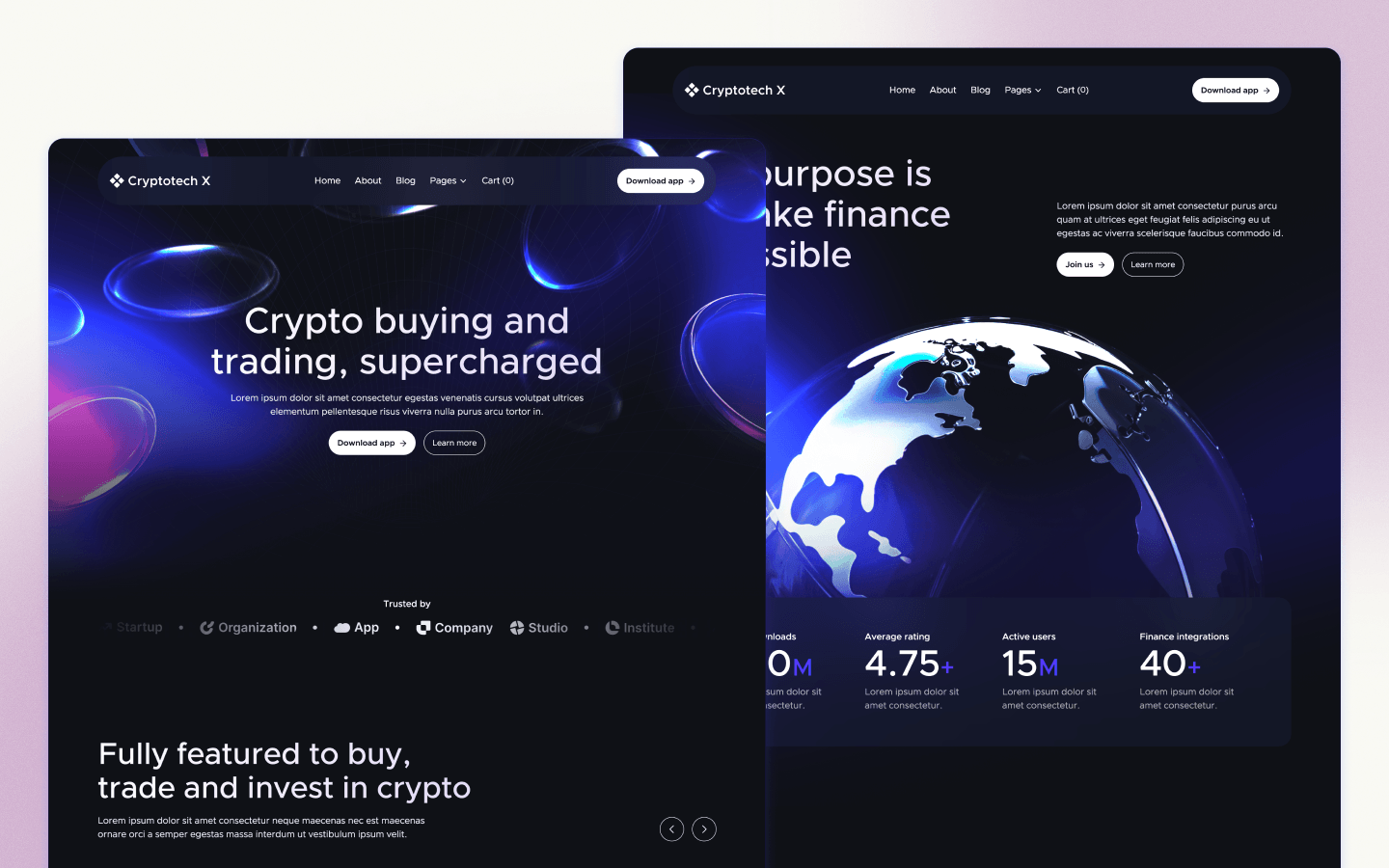
Our Cryptotech X template introduces a crypto product through large coin imagery and a globe that give the opening screen a clear visual focus. The dark design carries into the company page, while the layout leaves space for a straightforward explanation of the business. It shows how we can give a technical offer a strong personality without making every section compete for attention.
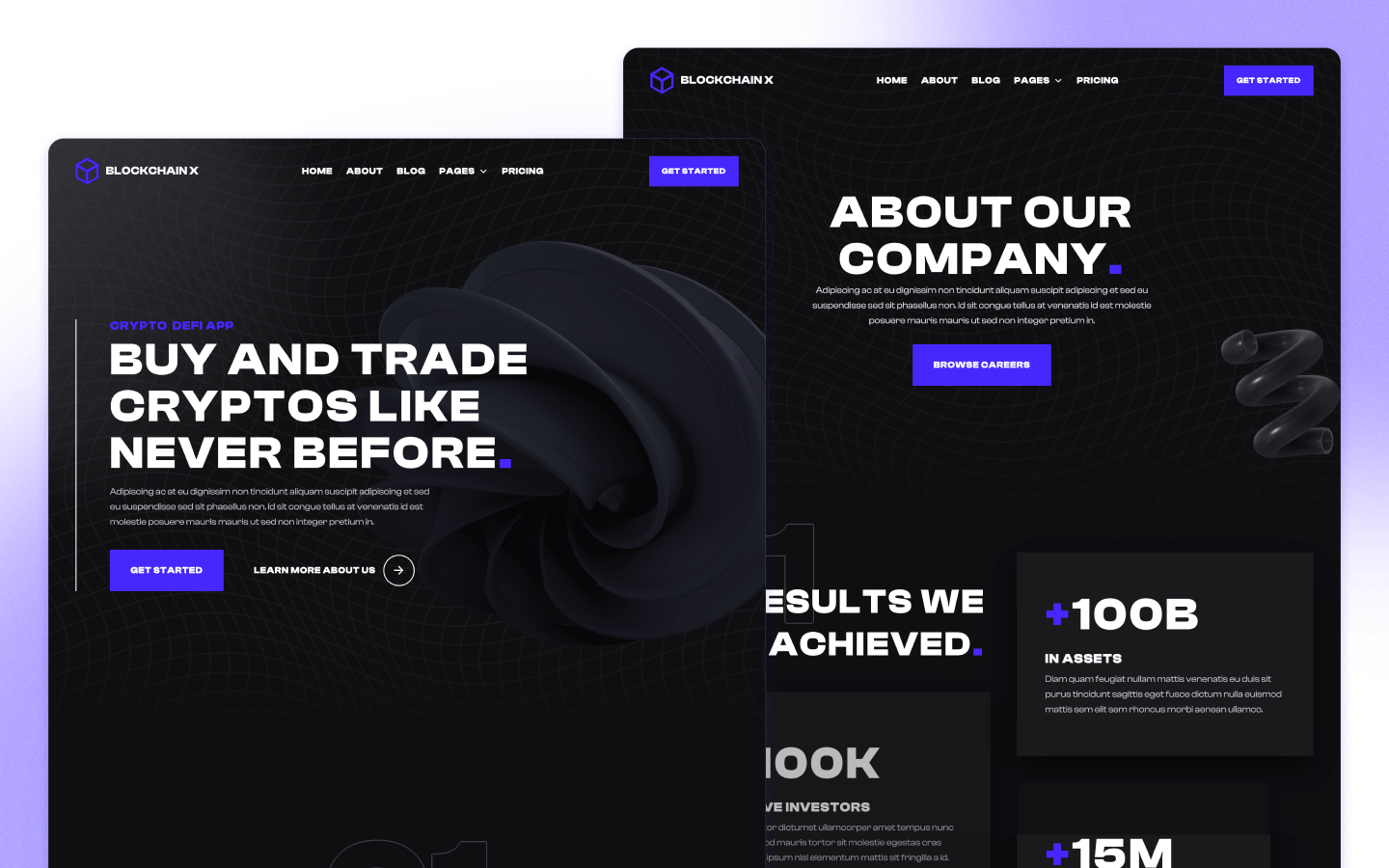
Our Blockchain X template takes a bolder approach, pairing large headings with dark three-dimensional forms and focused accent colors. It was designed for blockchain and crypto businesses, with company, resource, and integration pages extending the introduction beyond the homepage. That combination gives a team room to tell its story and organize the information visitors want to explore next.
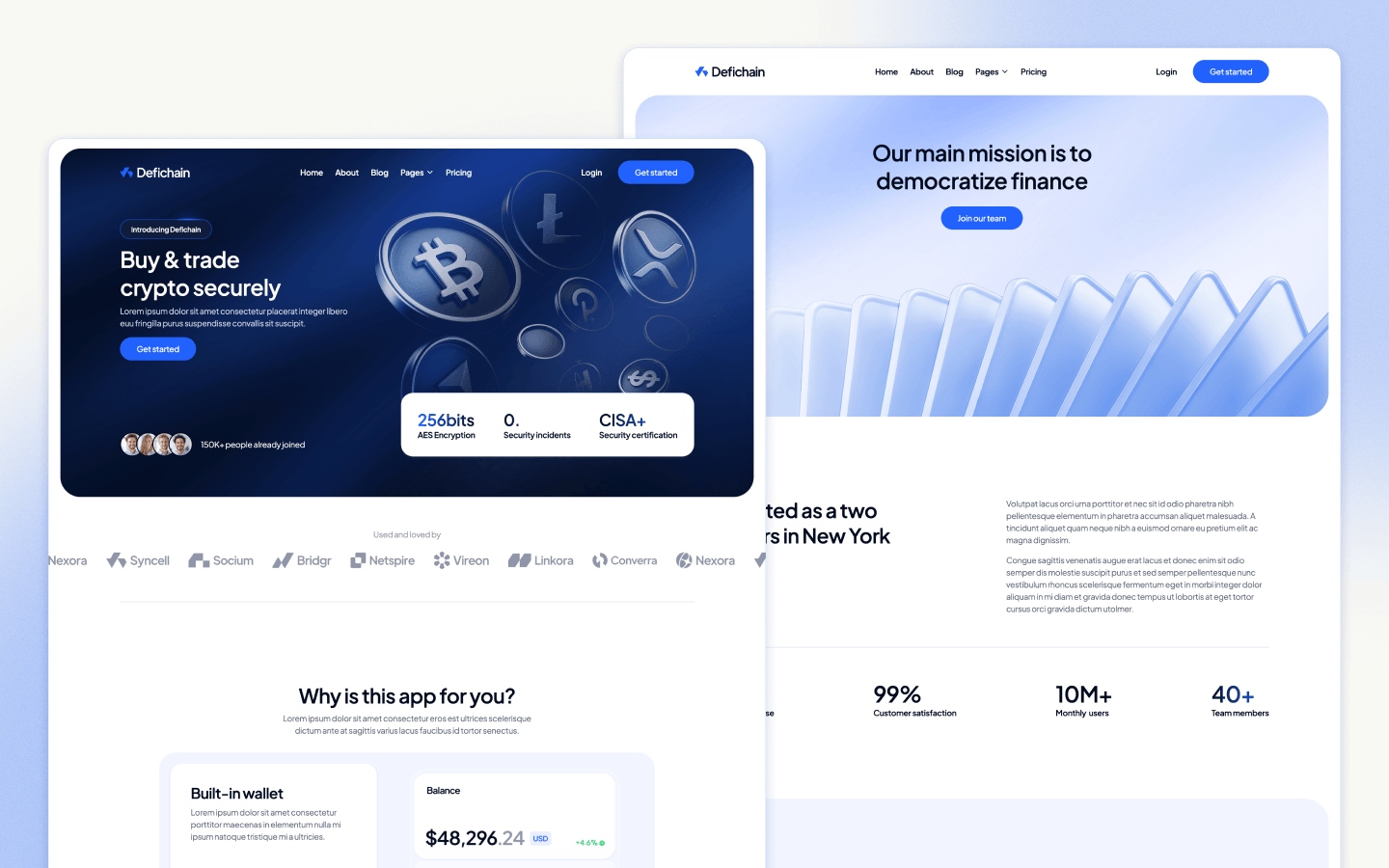
With DeFiChain, our DeFi template, we use a lighter setting around the product visuals. Blue accents connect the homepage and company story, while generous spacing separates the main ideas. This direction can be useful when the website needs to make a technical subject feel approachable and let readers move comfortably between an introduction and more detailed content.
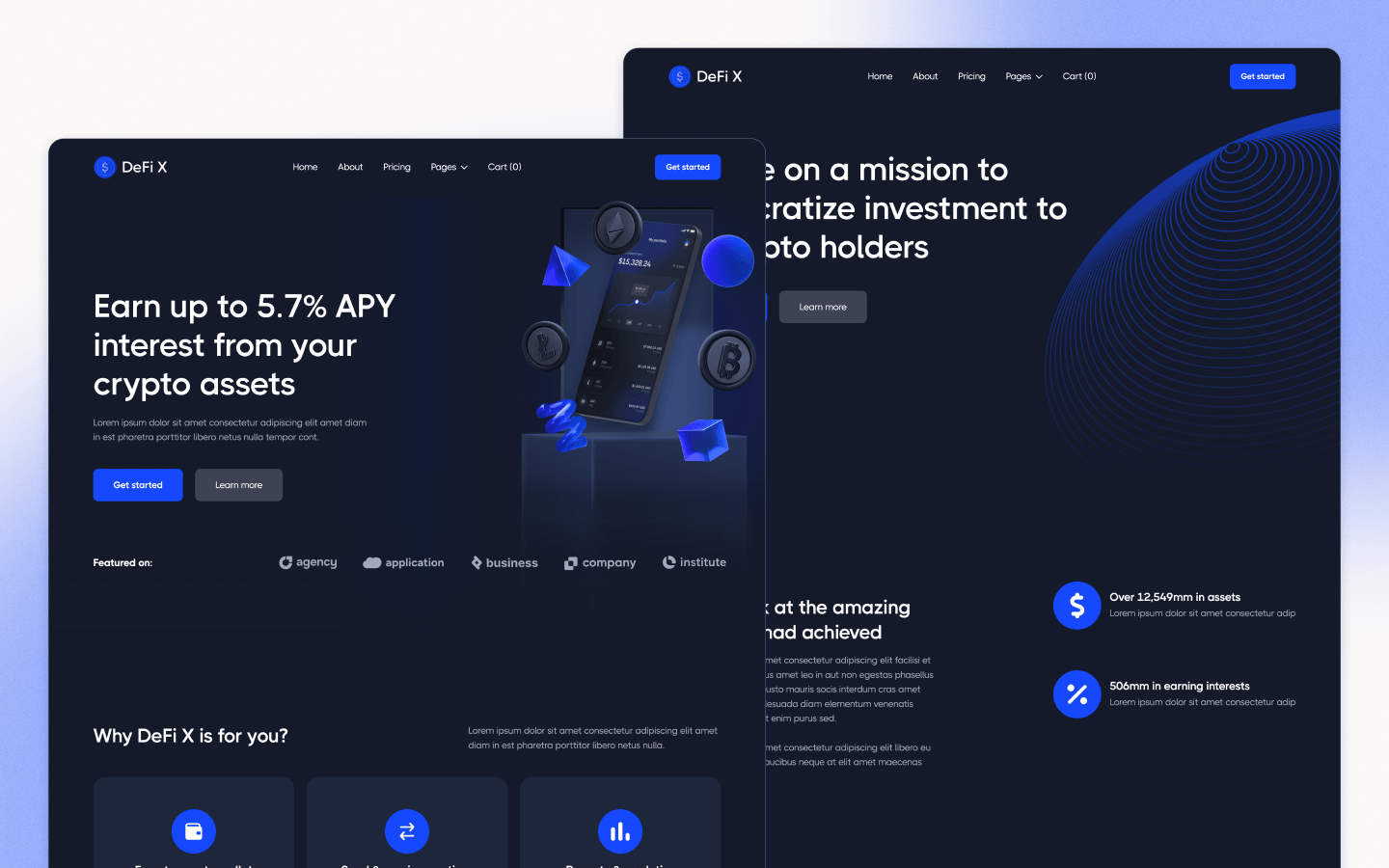
Our DeFi X template uses a deep-blue palette and floating product imagery to introduce a decentralized-finance business. The feature-led layout brings the offer into the opening screen and continues into a company page with room for supporting explanations. It is an example of how we give product information a visual hierarchy, so the reader knows where to begin.
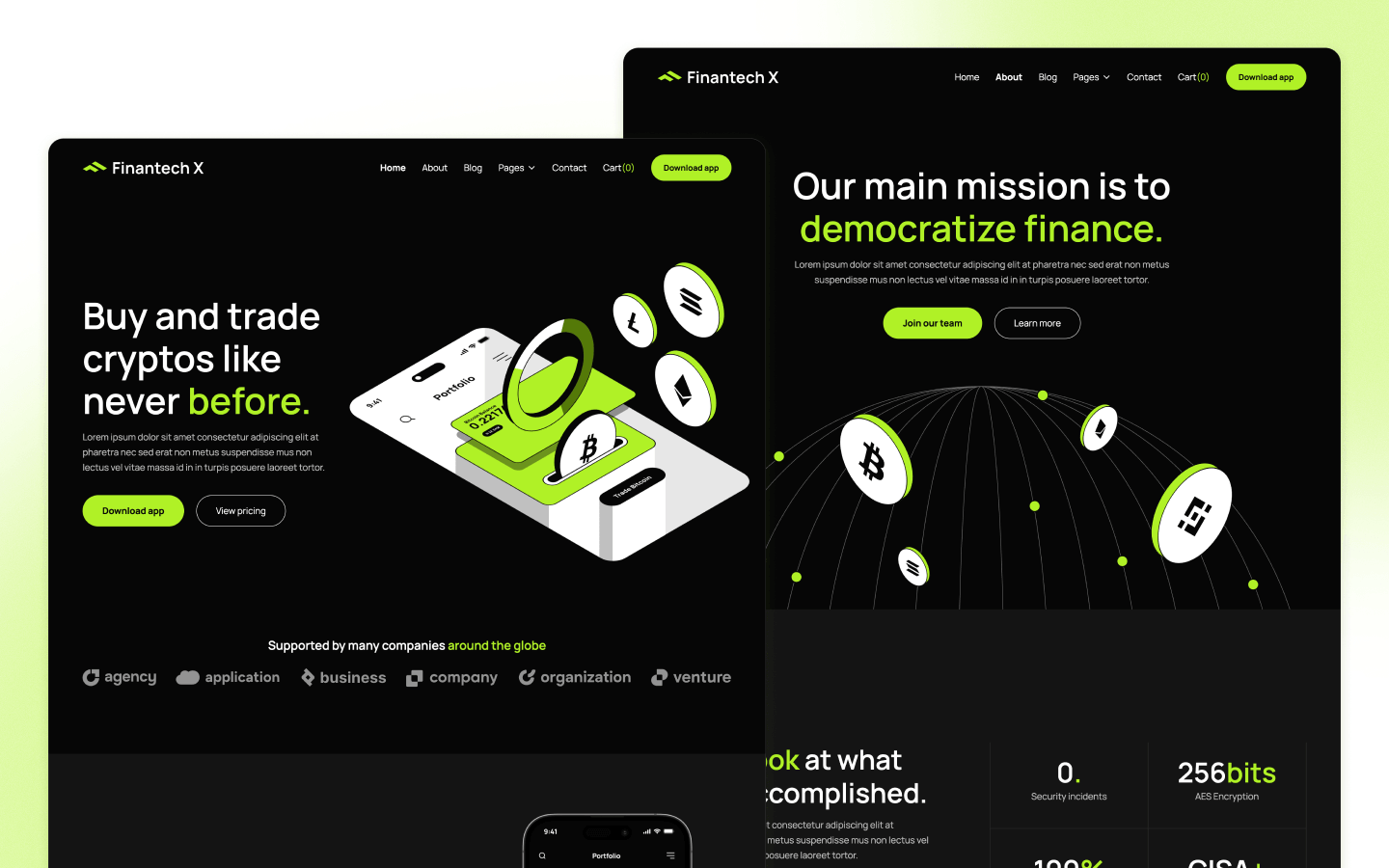
Our Finantech X template explores a sharper visual direction for fintech and crypto products, with bright green accents against a dark background. The coin graphics and confident typography give it a recognizable character, while the supporting page layouts carry that identity into the company story and feature information. It adds another approach to presenting a financial product without relying on the same visual style.
Across all categories, our templates are used by over 60,000 websites. The work here gives you a look at our design experience in crypto, and when you work with BRIX Agency, we create a fully custom website for your company, shaped around your product, brand, and audience.
2. Properly Studio: Best Crypto Web Design Agency for DeFi Websites
 2
2Properly Studio
A digital design studio organizing DeFi brands and websites around the different questions lenders, borrowers, and developers bring.
Properly Studio is a useful place to start when your website has to explain a DeFi product to several audiences without sending everyone through the same technical introduction. Its work for Silo combines brand design, website structure, and product explanation, giving you an example of how those decisions can support one another.
The strength to look for is audience-specific navigation. A developer looking for implementation details has a different task from someone exploring a lending product, and a good public website makes those routes recognizable before either visitor needs to open the application.
Featured project: Silo
For Silo, Properly redesigned the brand and public website, with motion and navigation explaining the protocol to lenders, borrowers, and developers. The engagement also included a lending application redesign, which was a separate part of the work. On the website, the team focused on explaining the model before users entered the app.
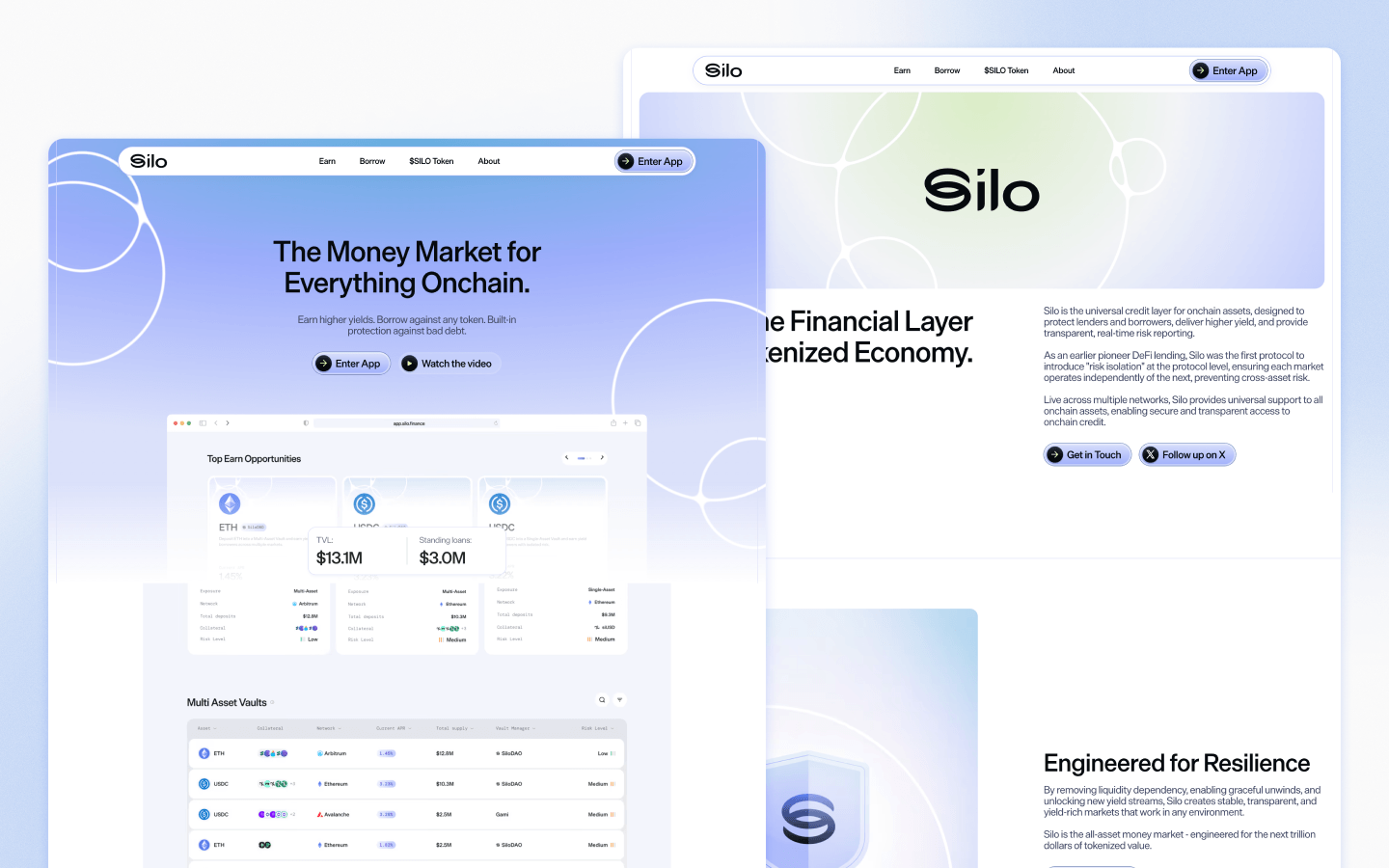
If your product has a similar mix of audiences, use this project to discuss the order of information on your own pages. Ask what a first-time visitor should understand immediately and what belongs in a deeper product page, then see how the agency would connect those explanations with your documentation and application.
3. Pony Studio: Best Crypto Web Design Agency for Brand Identity
 3
3Pony Studio
A branding and web design studio giving blockchain companies a recognizable visual identity and a clearer introduction to their technology.
Pony Studio is worth considering when the brand and the website need to take shape together. Its Fluent project connects a technical blockchain proposition with a distinctive visual identity, so the site has a recognizable character instead of depending on another collection of generic technology illustrations.
For a crypto team, that can be useful when the product is ready to explain but the company still lacks a consistent visual language. Look at how the identity carries through the website, then ask which parts of the brand system your team would receive for future pages and announcements.
Featured project: Fluent
Pony’s Fluent project covered brand identity and public website design for the blockchain company. The work presented its blended blockchain proposition through a coordinated visual direction. It is a relevant example of branding and web design developed together, rather than evidence of application engineering.
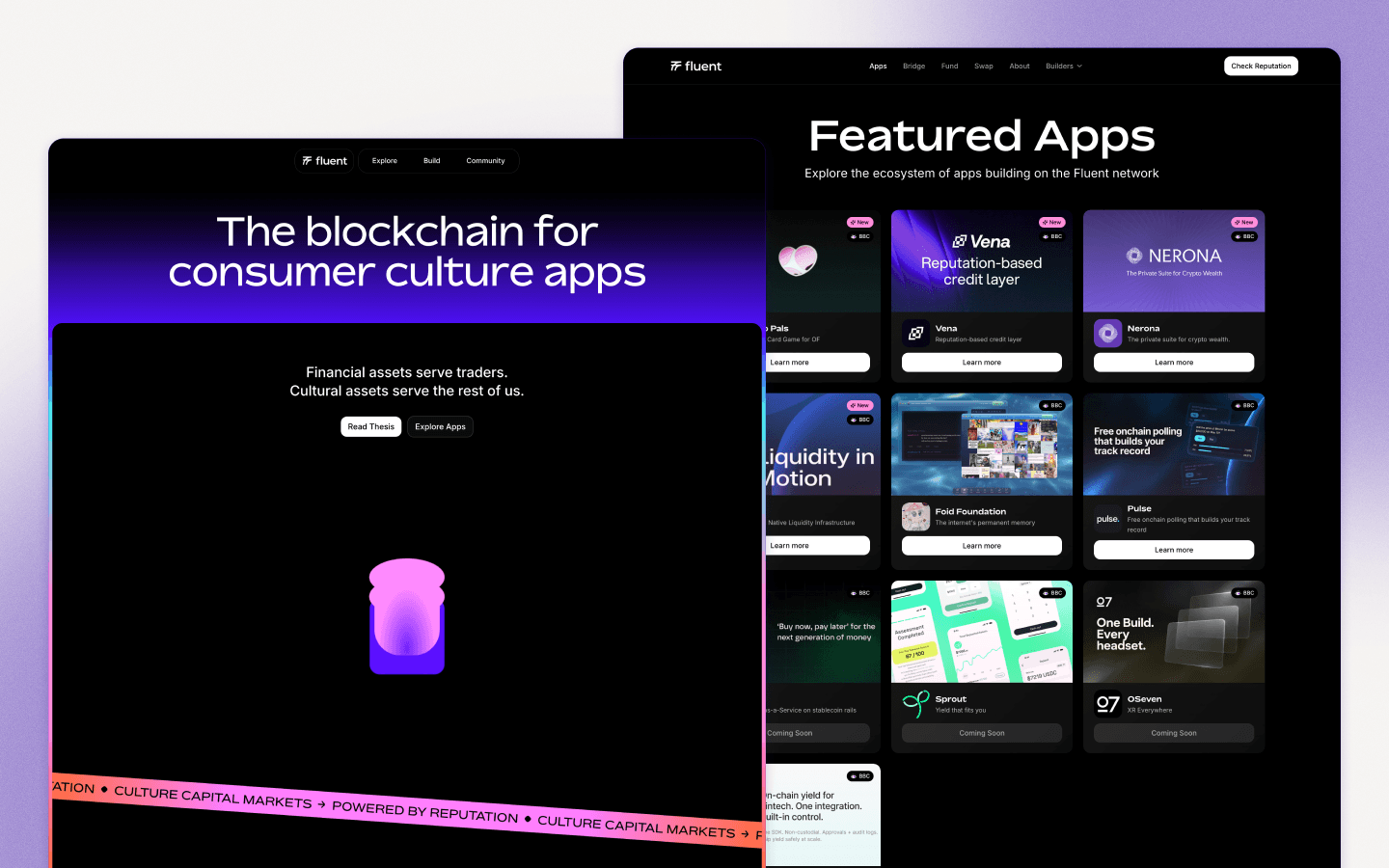
When reviewing Fluent, compare the introduction with the way the site presents the wider ecosystem. A memorable first screen is useful, but the identity also needs to work around product details and examples. Bring Pony a page with your densest content and ask how that same visual direction would remain readable there.
4. Avark: Best Crypto Web Design Agency for Web3 Gaming
 4
4Avark
A Web3 design agency bringing game-focused brands to life through interactive websites, visual worlds, and connected product experiences.
Avark brings a gaming-oriented approach to crypto websites, with work that gives visitors a visual world to explore. Its Metacade engagement is relevant when the website needs to feel connected to a game or entertainment platform while still helping people understand what they can actually do there.
That is a different brief from a quiet institutional finance site. If your audience includes players and game developers, ask how the creative direction will support game discovery, community information, and the route into the product, with enough room for each audience to find its way.
Featured project: Metacade
For Metacade, Avark worked on brand strategy and an interactive public website, including website design and development. The case also describes a 3D visual direction and later product work, keeping the marketing website and gaming-platform build as distinct parts of the engagement.
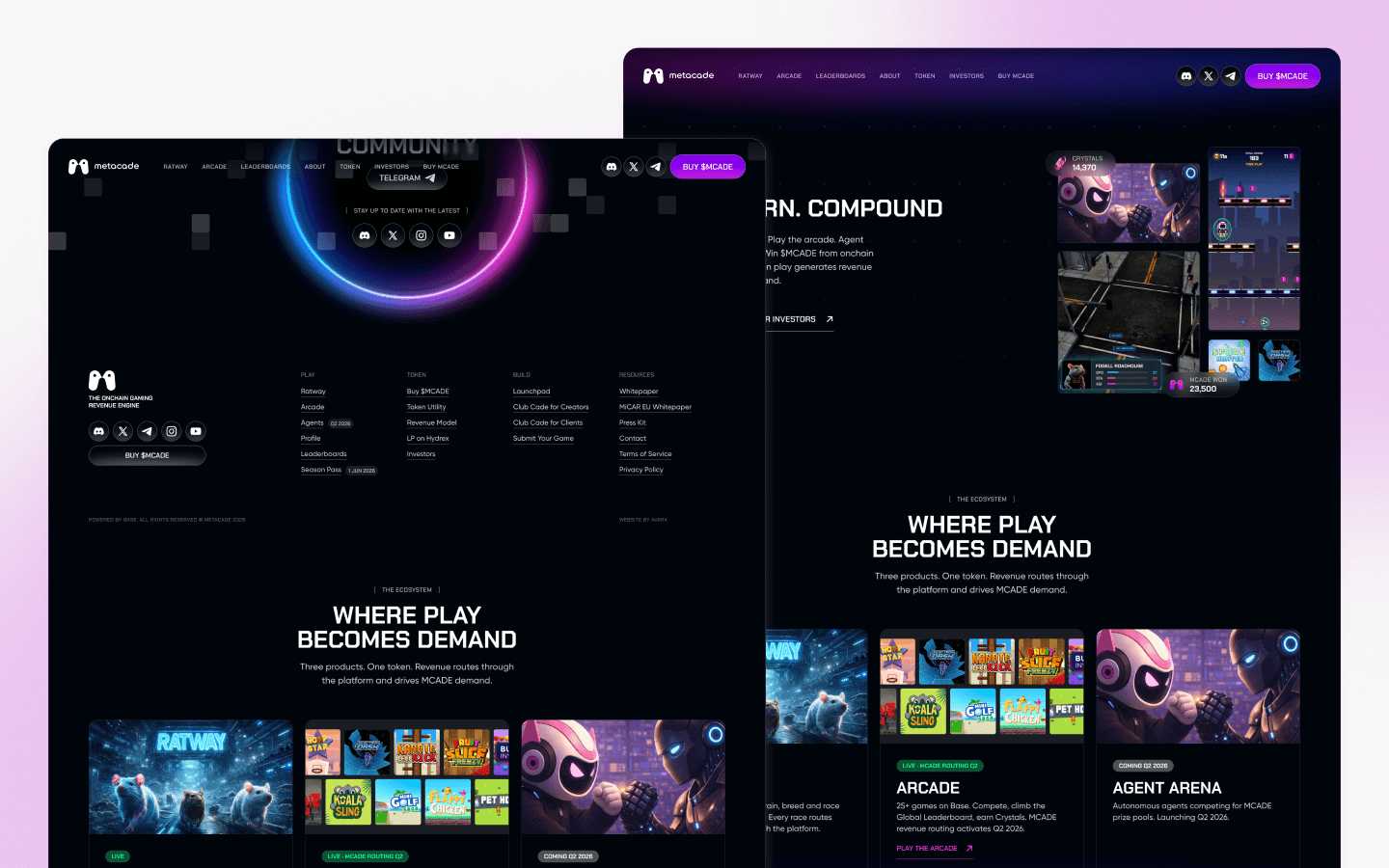
This is a helpful reference if your site needs more atmosphere than a conventional product page. In the agency conversation, go beyond the opening animation and ask how the experience behaves on a phone, how new games or updates are added, and which interactions help visitors reach the content they came for.
5. Bakken & Bæck: Best Crypto Web Design Agency for Consumer Apps
 5
5Bakken & Bæck
A design and technology studio making consumer crypto brands feel approachable through expressive identities, illustrations, and public web experiences.
Bakken & Bæck’s Phantom work shows a friendlier direction for a crypto brand, where illustration and character help introduce a product to people outside a narrow technical audience. Consider the studio when your website needs to make a consumer app feel approachable without flattening the personality of the brand.
The useful question is how that personality translates into product explanation. A visitor should be able to enjoy the design and still understand what the app offers, where to learn more, and how to reach the next step. Bring those tasks into your review of the work.
Featured project: Phantom
Bakken & Bæck helped Phantom develop its brand and public web presence during its multichain transition. The engagement brought together illustration, motion, and website implementation, using an expressive identity to introduce a broader product story. The case documents the website contribution alongside the brand work.
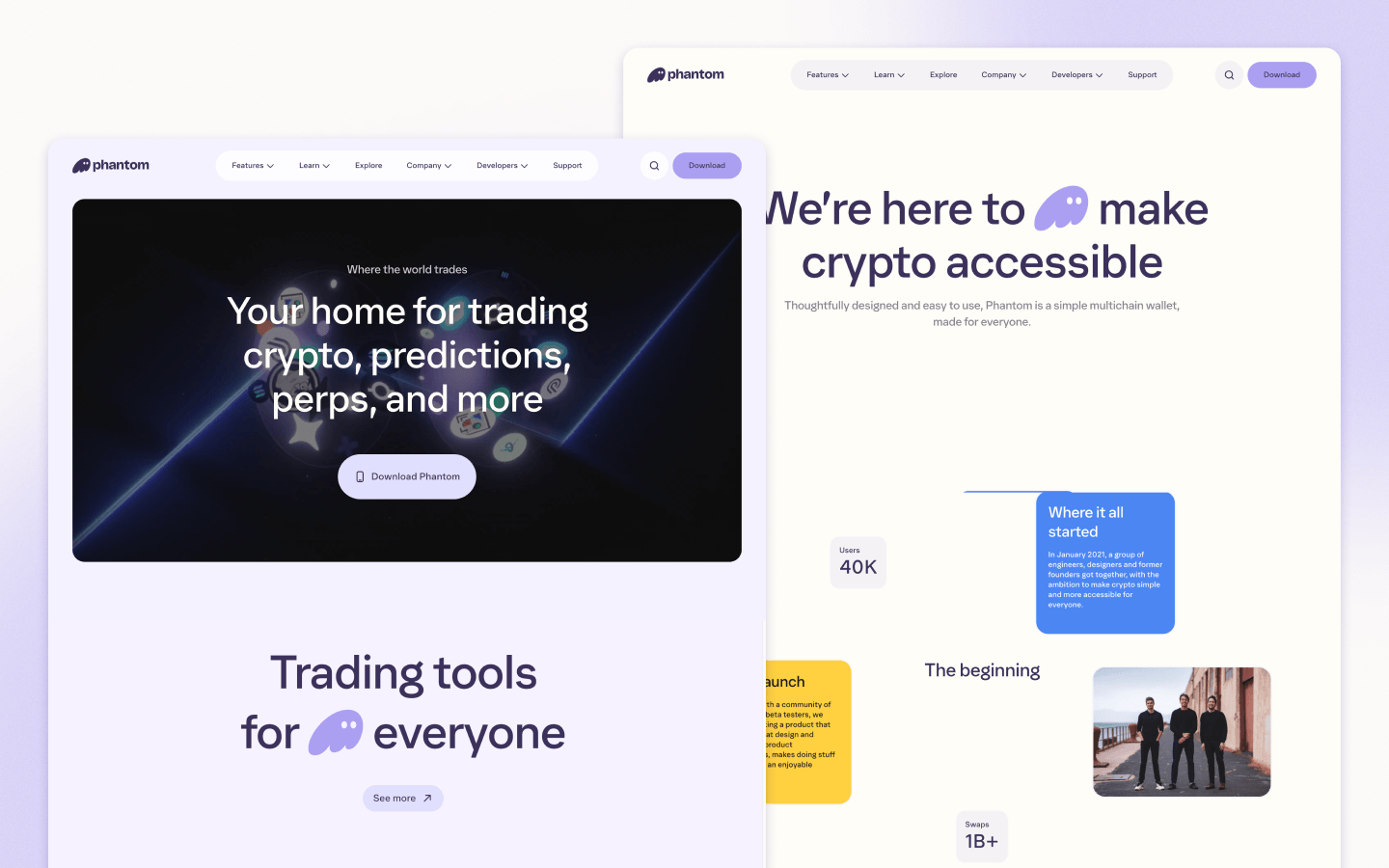
For a consumer-facing crypto business, this example opens a useful discussion about how much explanation belongs on the homepage and how visual assets can support it. Ask the studio to show how its approach would work across a product introduction, a help page, and the handoff into your application.
6. Otherlife: Best Crypto Web Design Agency for 3D Design
 6
6Otherlife
A creative agency combining brand design, three-dimensional visuals, and interactive websites for companies explaining technical crypto products.
Otherlife is a candidate for teams that want a strong visual system built around 3D design. Its Hypernative project shows how an agency can move from a compact landing page to a broader website while using a shared set of visual assets to connect the pages.
For technical products, that approach is most useful when the graphics have a clear role in the explanation. Ask how the team would represent your product without making the visitor decode an abstract animation before finding the basics, and which parts of the visual system your marketers could reuse.
Featured project: Hypernative
The Hypernative engagement included branding, visual design, engineering, and an interactive public website for the onchain security company. Otherlife developed a 3D motion system and applied it across a more extensive website, giving the brand a consistent presentation beyond its original landing page.
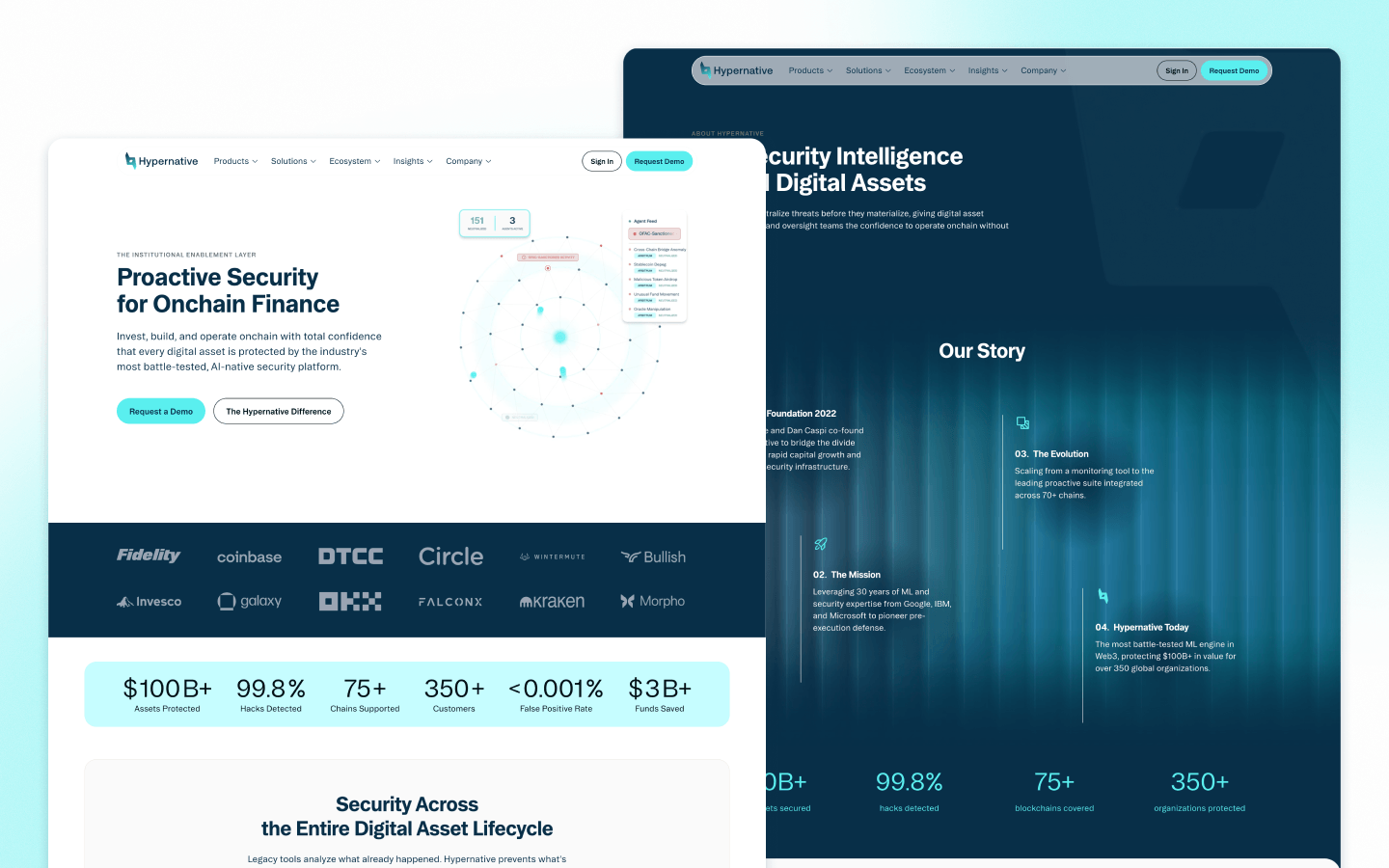
This project is relevant if your website has outgrown its first launch page and now needs space for products, company information, and supporting content. Use it to ask how the agency plans the expanded structure and keeps visual production manageable as new pages are added.
7. 14islands: Best Crypto Web Design Agency for Interactive Websites
 7
714islands
A design and development studio creating interactive blockchain websites with connected branding, product pages, and room for ecosystem content.
14islands combines design and development with interactive website work, which makes it worth exploring when you want the public site to have a distinctive sense of movement. Its Galxe and Gravity engagement also shows how that creative direction can extend across related brands without making their websites identical.
The fit here depends on what the interaction is meant to accomplish. A blockchain website still needs readable product information, useful navigation, and a clear next step, so ask the studio how it chooses where to add movement and where to keep the experience straightforward.
Featured project: Gravity
14islands created a coordinated brand and website ecosystem for Galxe and Gravity, including separate public websites with interactive components, blogs, and detailed product pages. Gravity is the selected example here, showing the blockchain website within that broader engagement rather than a separate unrelated commission.
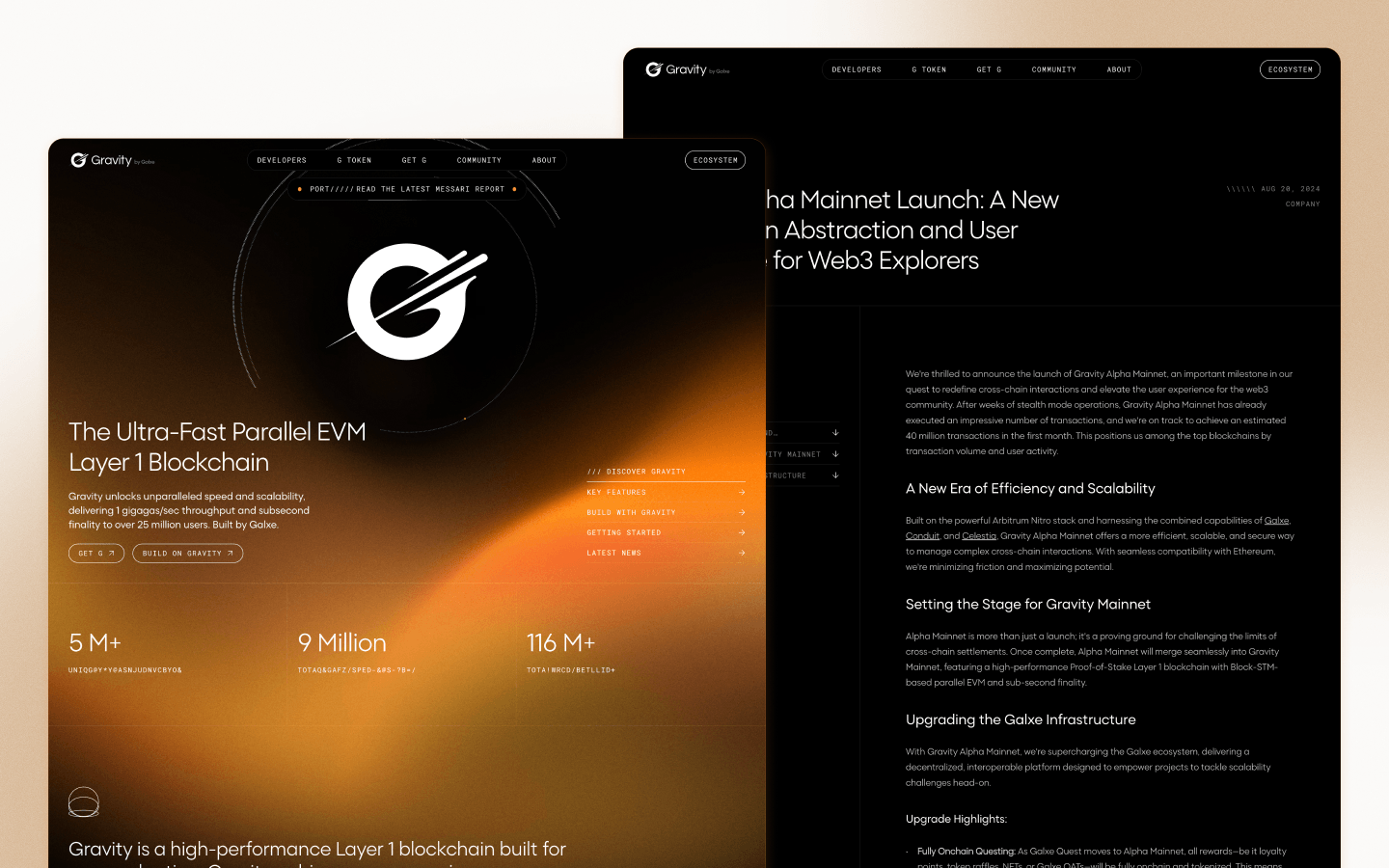
Look at this work if you need interaction across several page types, not only an animated hero. A useful follow-up is to ask how a new ecosystem story or technical update would fit into the existing design, and how the site would remain understandable when animations are reduced.
8. Webstacks: Best Crypto Web Design Agency for Content Management
 8
8Webstacks
A web development agency building reusable marketing websites that let crypto content teams publish without routing every change through engineering.
Webstacks is especially relevant when publishing has become a bottleneck. Its Circle case focuses on the marketing team’s ability to manage the website, with reusable modules and a content migration supporting a brand refresh that Circle’s own creative team led.
That makes it a useful comparison for an established crypto company with several products, resources, and campaigns. Instead of judging only the final homepage, ask what the agency changed behind the scenes and how the content team used the system after the initial release.
Featured project: Circle
For Circle, Webstacks developed a responsive marketing website with reusable HubSpot modules and migrated content into the new setup. The documented objective was to reduce dependence on engineering for website updates. The brand refresh was client-led, so the relevant agency contribution is the website implementation and publishing system.
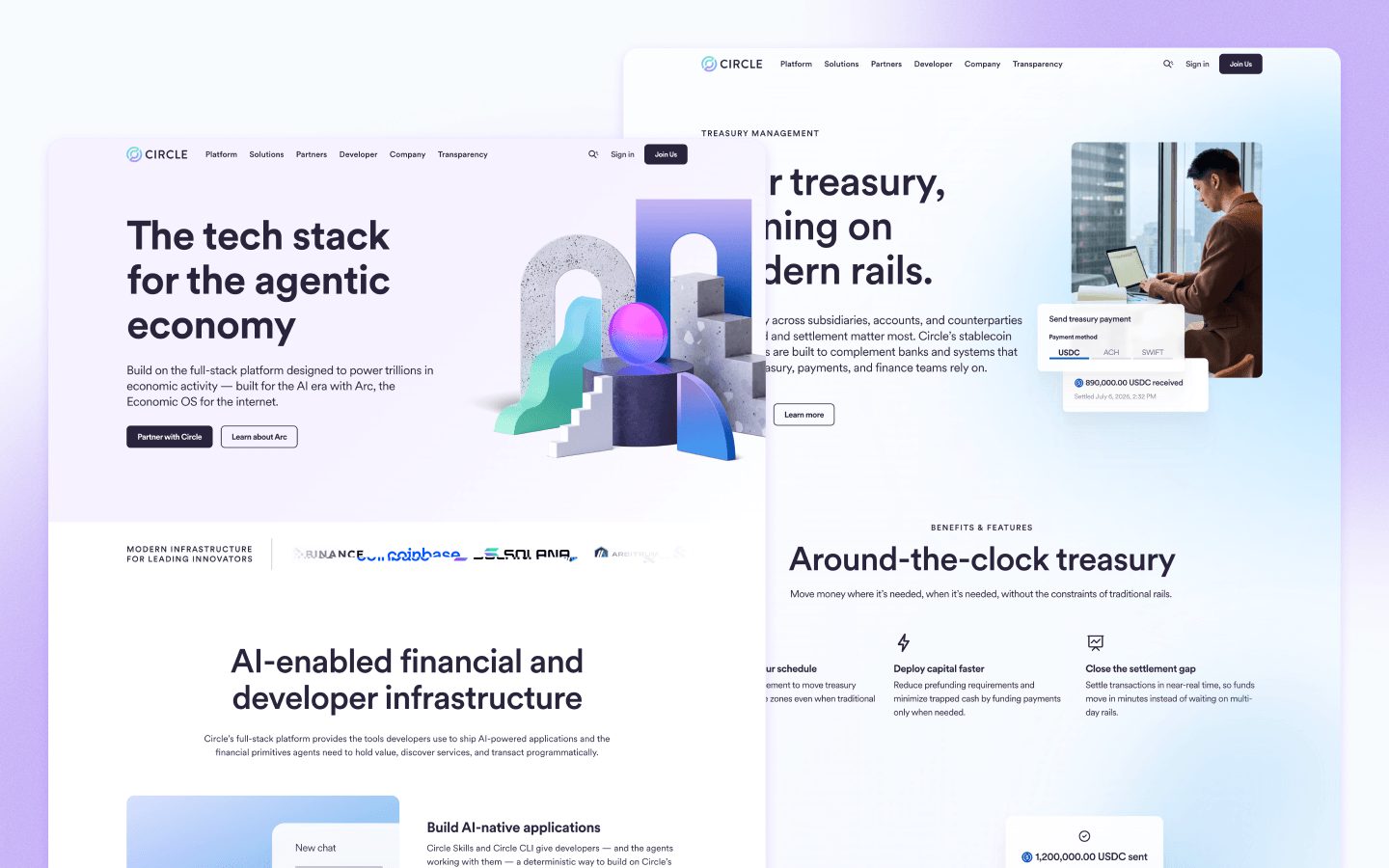
If your team regularly publishes product announcements or builds campaign pages, use this case to discuss the content model you need. Ask which sections editors can assemble, how design consistency is preserved, and who maintains the modules when the website needs a capability the original build did not include.
9. Clay: Best Crypto Web Design Agency for Product Launches
 9
9Clay
A branding and digital design agency shaping new crypto products through coordinated identities and public website experiences.
Clay is a candidate when a new crypto product needs a public identity as well as a website. Its Spark work sits within the wider Sky engagement, making it useful for teams thinking about how a product should relate to a parent brand while still being recognizable on its own.
When reviewing this kind of project, ask how the agency moves from the launch story into the pages people will use afterward. The identity needs to support the initial introduction, but it also has to hold up around product information, company updates, and more detailed explanations.
Featured project: Spark
Clay’s Sky case study includes the brand identity and public web experience for Spark, introduced as the first StarDAO in that engagement. The relevant work connects product identity and web experience within a broader brand system. Spark is the selected project in this list.
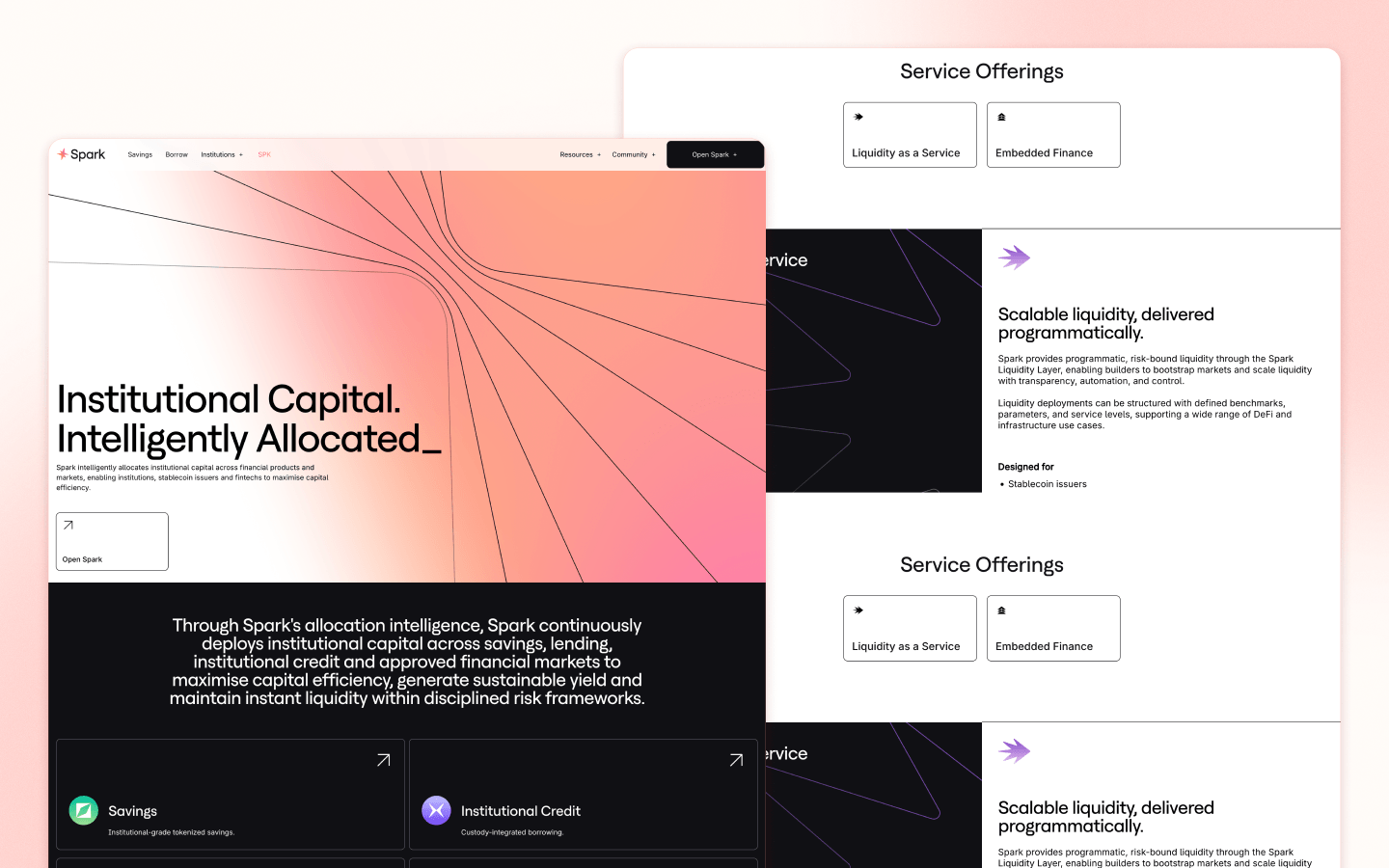
This example is useful if you are introducing a product within an existing ecosystem. Discuss which visual elements should be shared, which should belong to the product, and how visitors will move between related sites without losing track of the company or service they are evaluating.
10. Veza Digital: Best Crypto Web Design Agency for Webflow
 10
10Veza Digital
A Webflow agency restructuring blockchain websites with clearer content organization, custom visuals, and a migration plan for existing material.
Veza Digital is worth reviewing when the assignment includes moving an existing blockchain website into Webflow. The Concordium engagement combines information architecture, visual design, development, and content migration, so it provides more to discuss than a fresh homepage built on an empty site.
For a team with existing resources and product pages, the transition matters as much as the new appearance. Ask how the agency will organize the material you already have, what needs rewriting, and how it will check the migrated pages before your new website becomes public.
Featured project: Concordium
Veza’s Concordium project covered a website overhaul, including information architecture, redesign, Webflow development, content migration, and custom animation and video assets. The case describes a brief centered on the blockchain’s capabilities and community, with the website structure and creative work planned together.
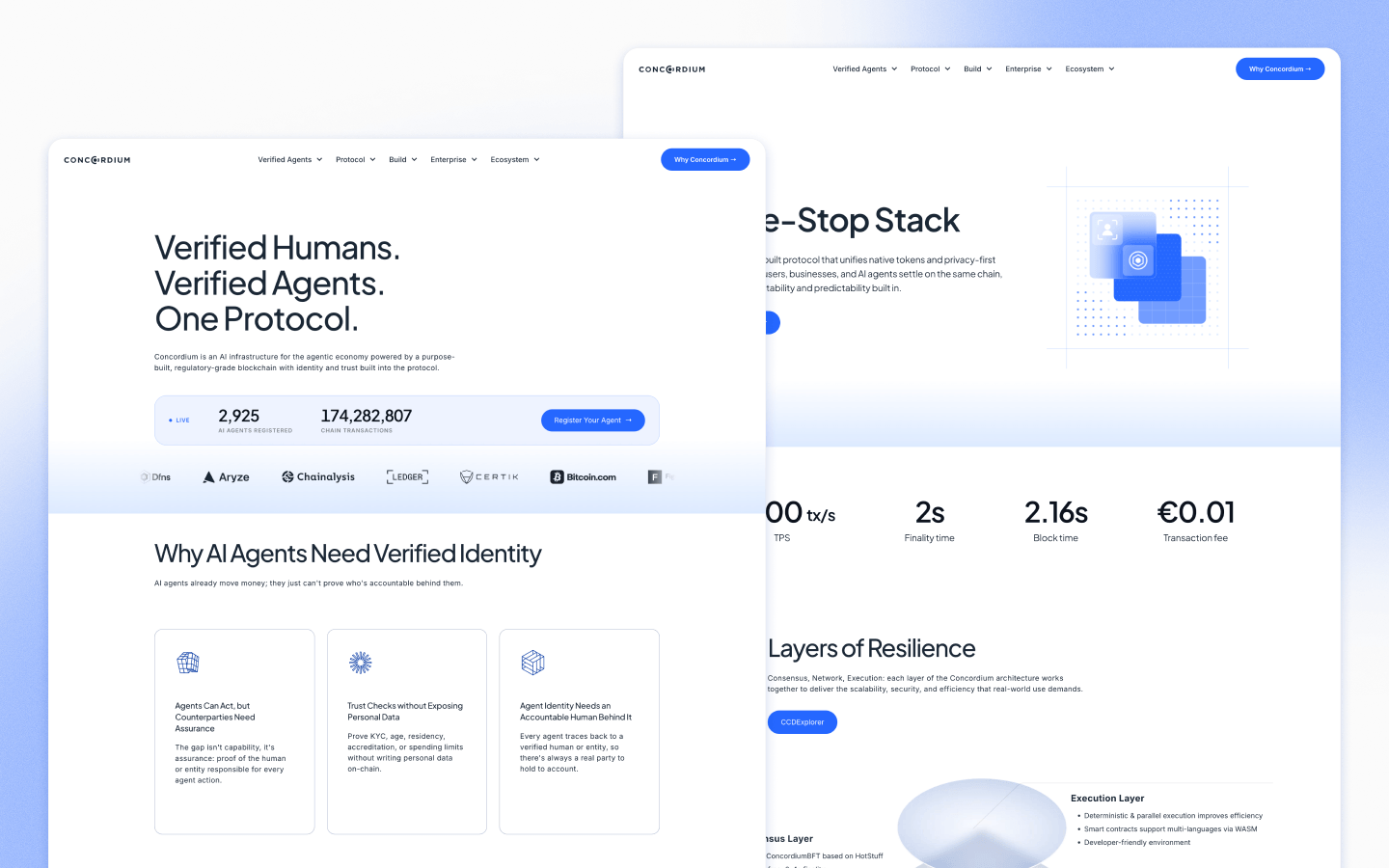
Use this project to ask what a complete platform transition would involve for your business. A useful proposal should account for content entry, reusable page structures, redirects, and editing responsibilities, alongside the motion and visual elements that make the new design recognizable.
11. Arounda: Best Crypto Web Design Agency for Motion Design
 11
11Arounda
A digital design agency using illustration and motion to help crypto businesses explain products and organize different audience journeys.
Arounda’s Enzyme work is useful when the website needs to explain a technical financial product through a combination of layout, illustration, and motion. The agency’s case also considers distinct audiences, which matters when one brand serves both institutions and individual users.
The strongest reason to explore this approach is explanation rather than decoration. Ask what a visitor should learn from an animated section and how that same information will be available in the surrounding copy, especially on mobile or when someone prefers less movement.
Featured project: Enzyme
For Enzyme, Arounda worked on brand and public website design, with modular content, illustration, and motion supporting the product story. The case describes website work for the DeFi platform and its different offerings; implementation collaboration should not be confused with sole ownership of the engineering.
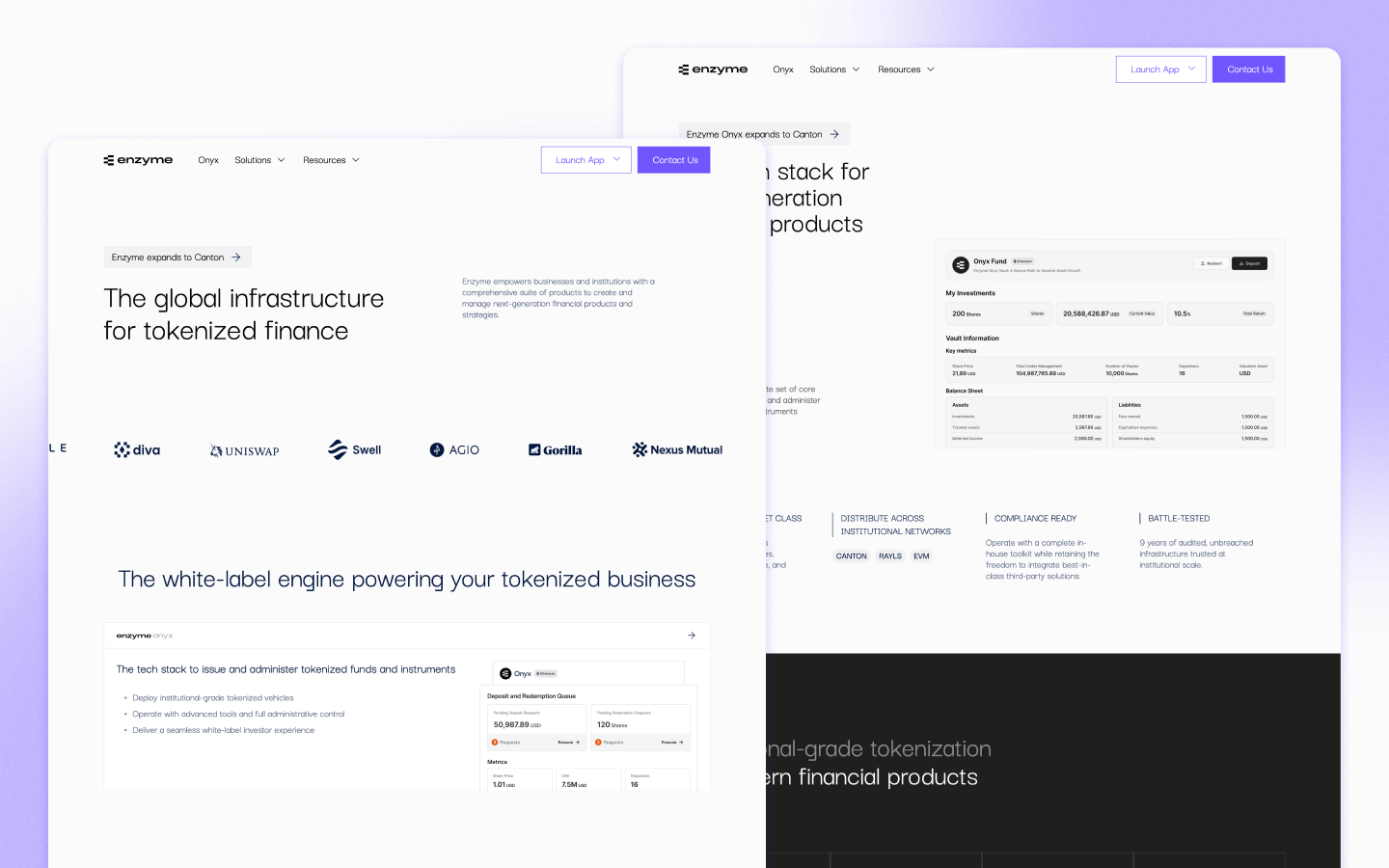
Bring this example into the conversation if your product has several related offers that need their own explanations. Review how an introductory visual leads into concrete information, then ask the agency how your own diagrams, product views, and calls to action would work together on a complete page.
12. Merge: Best Crypto Web Design Agency for Website Redesigns
 12
12Merge
A product and website design agency refreshing crypto marketing sites while coordinating their relationship with the wider application experience.
Merge is relevant when the public website needs to catch up with an evolving crypto product. Its Block Earner engagement included a website redesign as well as separate mobile application work, offering a useful starting point for discussing where the marketing experience and the product should meet.
If both are changing, you will want a team that can describe the boundary clearly. Ask which pages and screens belong in the website proposal, who owns implementation, and how design decisions will be shared with your product team rather than leaving that handoff until launch.
Featured project: Block Earner
Merge’s Block Earner case study identifies a public website redesign within a broader financial-product engagement. The website work focused on an accessible presentation of the offer, while mobile design and development were documented separately. That distinction makes it a useful example of coordinated website and product work.
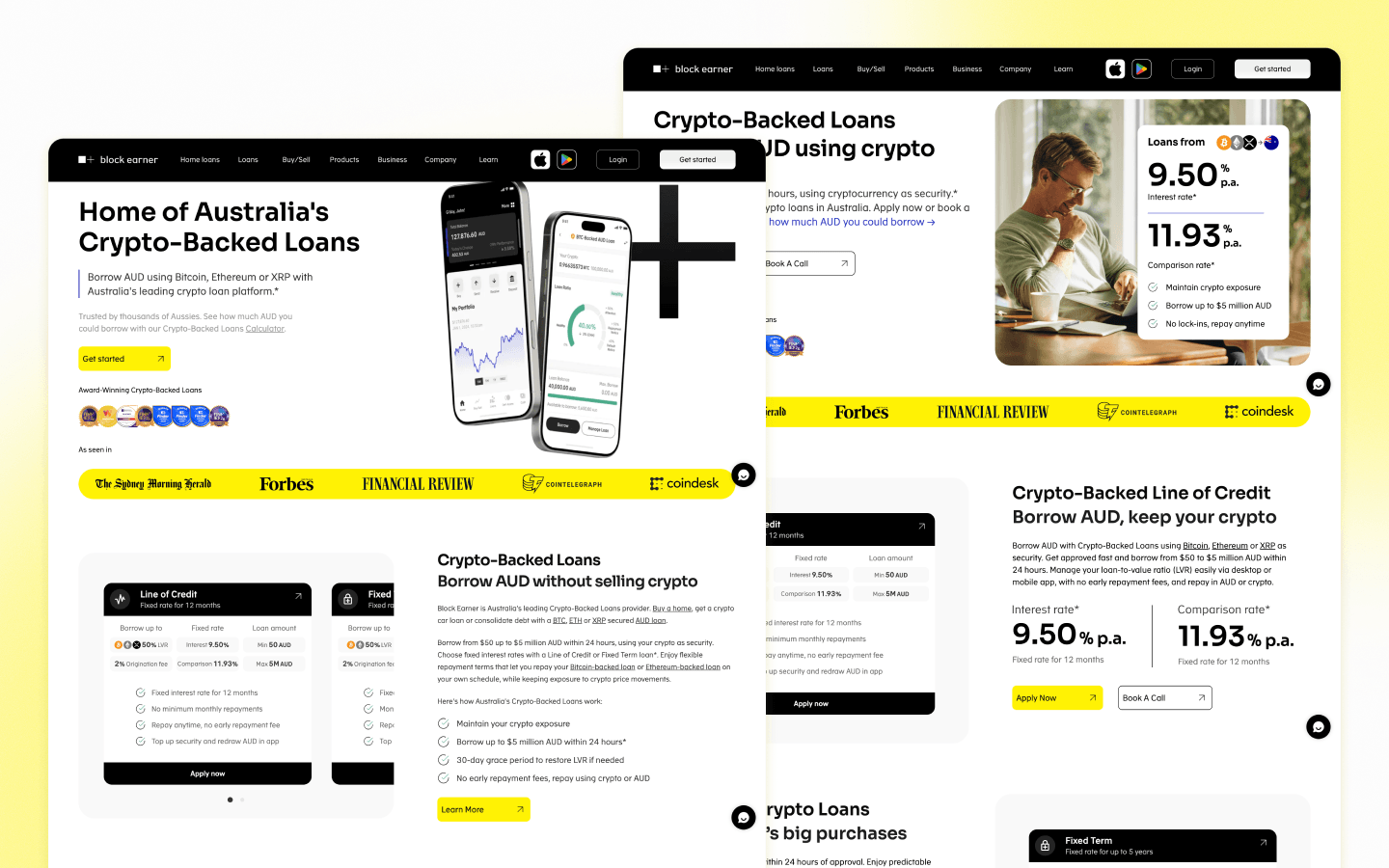
For your own redesign, compare the agency’s proposed page structure with the current product journey. The important question is whether visitors will understand the offer before entering the app, and whether the team has a clear plan for carrying the approved visual direction across that transition.
13. Flight3: Best Crypto Web Design Agency for Investment Firms
 13
13Flight3
A Web3 creative agency presenting investment businesses through coordinated websites, brand materials, and clear introductions to their work.
Flight3 offers a different reference point in this list: a website for a firm investing in the technology ecosystem. Its Fabric engagement is relevant if your visitors are founders, investors, or partners who need to understand the organization and its perspective before making contact.
In that setting, the website is part of a wider set of communications. Ask how the identity and content structure will work alongside presentations and other materials, and how your team will publish new portfolio information or insights without losing the original design direction.
Featured project: Fabric
For Fabric, Flight3 delivered public website design and development alongside brand and creative work for the venture firm. The case includes an interactive website within a broader collection of communication materials. It is an investment-firm example with Web3 relevance, rather than a crypto trading application.
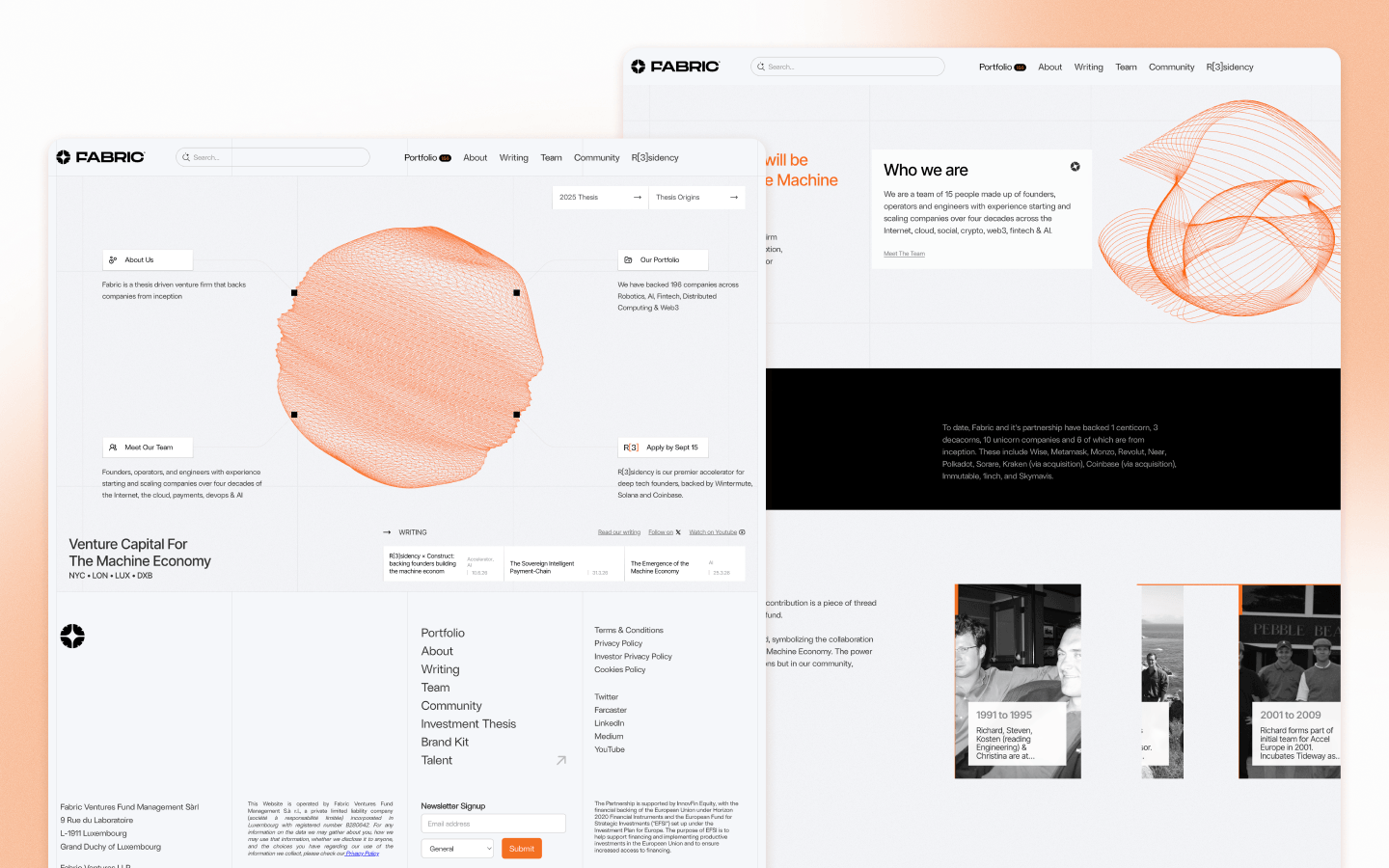
This is worth exploring if your organization’s story is about the companies and ideas it backs. Review the balance between the firm’s introduction, its people, and its work, then ask how the proposed site would make those details easy to maintain as the portfolio develops.
What a crypto web design agency should help you with
Start with the conversation your public website needs to have. A wallet company may be introducing an app to new users, while a blockchain infrastructure team needs to help developers understand where the technology fits. Your agency should turn that audience and purpose into a page plan, with a clear route from explanation to action.
That plan can include positioning, copy structure, design, illustration, motion, development, and a CMS, but the proposal should say which of those are included. Name the pages and content types you need, from product and company pages to ecosystem directories, announcements, or a resource library. Decide who will supply technical diagrams, screenshots, and approved product information.
Separate the public site from the software behind it. Designing a marketing page does not automatically include building a wallet, a trading interface, or smart contracts. If visitors continue into an application, agree on the destination, the visual handoff, and the team responsible for that experience. You can coordinate the two scopes without treating them as the same project.
The finished website also needs a launch and ownership plan. Include mobile testing, keyboard navigation, form delivery, analytics, account access, and editor training, then identify who supports the website afterward. For a redesign, add an inventory of existing URLs and a redirect plan so useful product pages and resources still have somewhere to go.
How to choose a crypto website design agency and compare costs
Take one example from your own business into the first conversation: the feature people struggle to understand, the audience your current site overlooks, or the content your team cannot publish easily. Ask the agency how a project in its portfolio addressed a similar problem. You will learn more from that explanation than from a long list of services.
Then send the same brief to 2–3 teams, including the public website scope, any application handoff, your content needs, and your target launch. This example keeps the discussion centered on the site you want to commission while leaving room for the agency to recommend a different page structure.
Subject Crypto website for [company], targeting [audience]
Hi [name],
We’re [company], building [plain-language product description] for [audience]. We found your team in BRIX Agency’s crypto web design guide and would like help with [a launch website, a redesign, or a clearer product story].
The public site would include around [number] pages, with content for [products, resources, ecosystem partners, and company information]. Visitors should be able to [read documentation, request a demo, or continue into our app]. Our application is owned by [team], and the website needs to connect with [CMS, CRM, analytics, or other systems].
We have [brand assets, copy, screenshots, and technical diagrams] ready and need support with [remaining work]. We’re planning to launch by [date], with a budget of [range]. Product content will be reviewed by [person or team].
Could you share a relevant project and explain your proposed scope, schedule, and handover? Please separate the project fee from hosting, paid tools, and ongoing support, and identify any work our team would need to supply.
Thanks,
[Your name]
[Role and company]
Compare the returned proposals by what each team will deliver: copy, brand work, page designs, motion assets, development, content migration, testing, and training. Check whether integrations are working implementations or only design concepts, and who supplies their data. A price difference becomes easier to assess once you can see which responsibilities each quote covers.
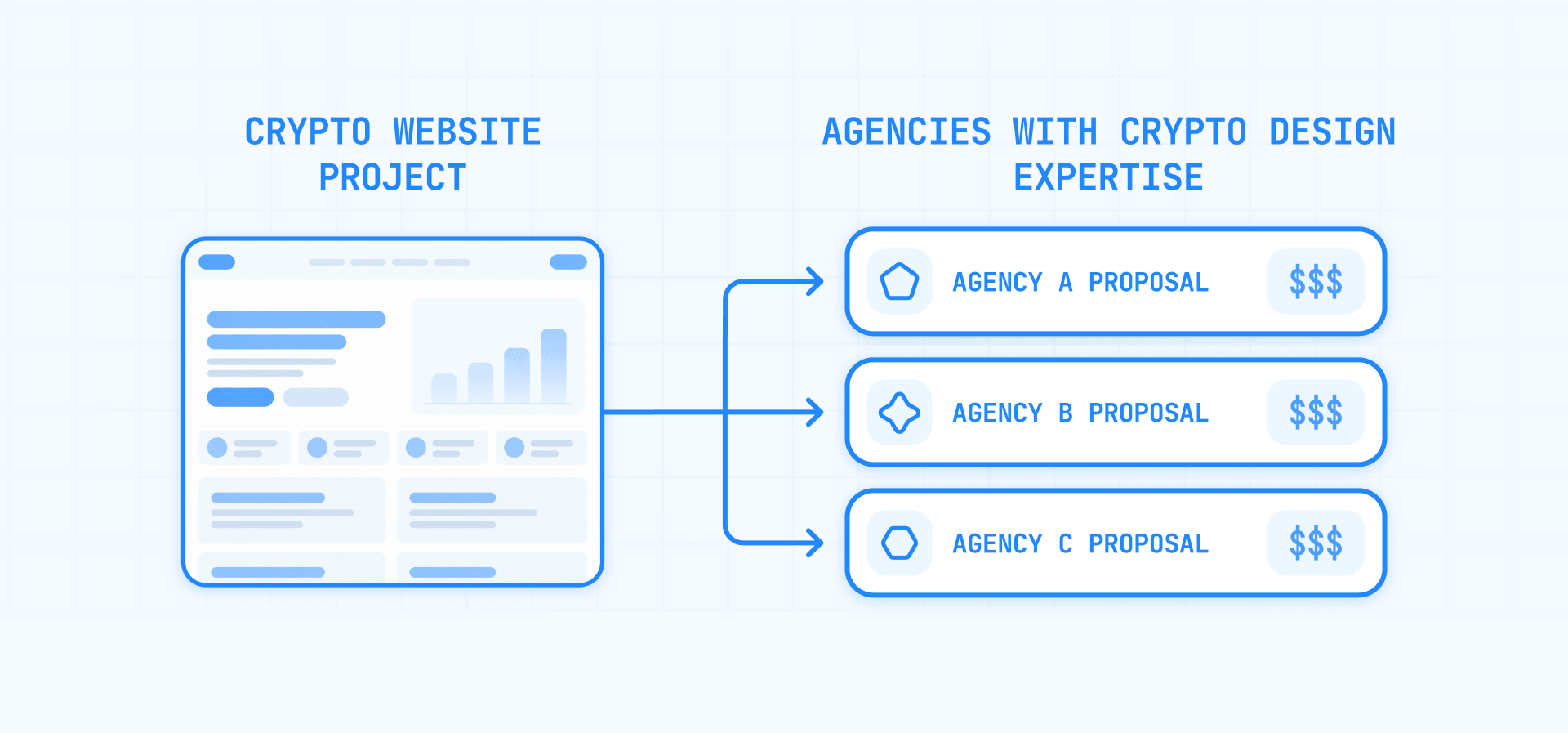
There is no useful single price for everything called a crypto website. A public launch page and a multilingual product site with a content migration are different assignments, even before anyone adds application features. Request a project total for the agreed scope, then separate hosting, paid tools, maintenance, and ongoing design support so you understand what continues after launch.
Ask for a schedule built around decisions your team can actually make. Product messaging, design approval, content delivery, development, and release checks all need time, and a launch announcement can create a fixed deadline. If the date comes first, define the pages required for that release and put later additions into a separate phase with their own estimate.
Choose a CMS that keeps your crypto website current
Imagine announcing a new integration on the same day your product team ships it. You may need to update an ecosystem entry, add a resource, and adjust the homepage without rebuilding three pages. A good CMS makes that work easy to edit and review, while the finished pages stay fast and comfortable to read.
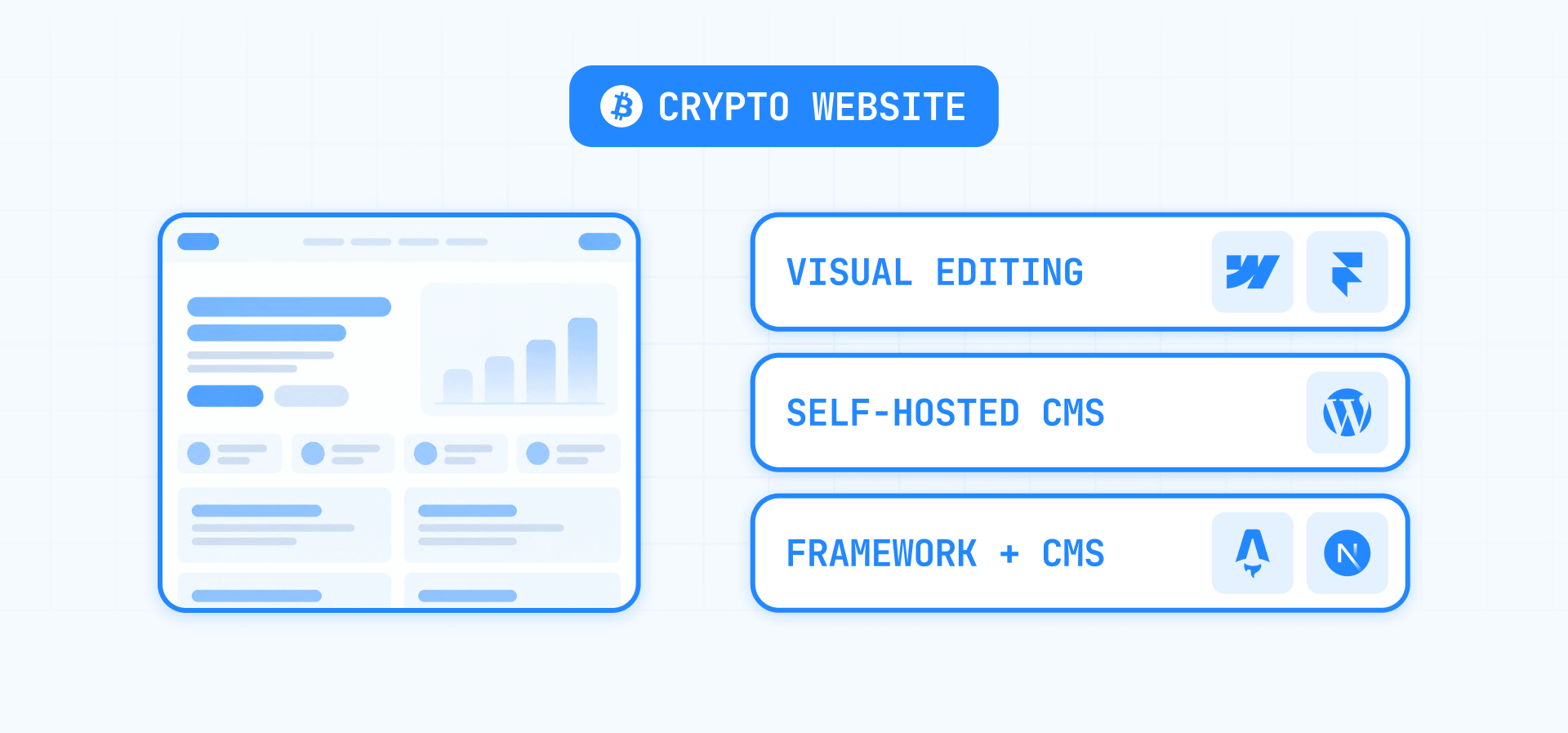
Organize the content your team publishes repeatedly
List your recurring content before choosing a platform: product updates, ecosystem partners, research, team profiles, and campaign pages. Ask the agency to explain how those entries will be organized and reused, including what happens when an integration changes its name or a resource moves. The editor should reflect the way your team works, with fields that make sense to the people filling them in.
Webflow and Framer are options for teams that want visual editing alongside CMS content. Evaluate the proposed setup using a representative announcement and a product page, then confirm the publishing access and plan features you need. A visual editor is most useful when the agency has also built reusable sections that your team understands.
Match hosting and development to the publishing job
WordPress is an option when you want to choose the server hosting your website and CMS database. Include updates, backups, plugins, and ongoing support in that decision, and have the agency show the actual editing experience it proposes. Hosting the site yourself does not determine where separate tools such as your CRM keep their data.
Astro and Next.js are development frameworks that can be paired with a separate CMS when your team needs a custom build. The important detail is which editor comes with that setup, how changes reach the website, and who maintains the code. Ask for a relevant site the agency has delivered with the proposed technology, including what its client can update independently.
Crypto website design essentials: explanation, navigation, and product handoffs
Explain the product before asking visitors to use it
Give someone who has never heard of your company a way into the subject. Explain what the product does, who it serves, and what a practical use looks like before introducing the deeper terminology. A product diagram or short sequence can help, but the central explanation should also exist in text so the visitor is not dependent on an animation to understand it.
Your technical documentation has a different job from your homepage. Keep a recognizable route to the docs for developers while giving less technical visitors an introduction they can follow. Use clear labels for product pages, resources, and ecosystem information, and let the reader choose the depth they need instead of forcing every audience through the same long page.
Make evidence and destinations easy to find
Organize company information, product documentation, support, and relevant technical evidence where visitors can locate them. If you mention an audit, a partner, or a product capability, link the supporting information and have the responsible person on your team approve the description. A visual badge should help someone find evidence rather than stand in for it.
Public explanatory content should be available without requiring someone to connect a wallet. When a task does need an account or wallet, introduce that step where the task begins and make the destination clear. A newcomer exploring the product should be able to read about it before being asked to participate.
Plan the transition from website to application
Review the journey from a mobile visitor’s perspective: finding an explanation, opening a resource, and continuing into the product. Give actions descriptive labels and check that they lead to the expected domain or app. If the journey crosses into a wallet or another application, your website and product teams should agree on the instructions and test that handoff together.
Motion can help explain relationships or bring personality to a brand, but it should leave navigation, text, and calls to action usable. Ask for checks on phones, keyboard controls, loading behavior, and reduced-motion preferences. Give your team a clear way to report issues after launch, particularly when a product release changes where the website needs to send visitors.
Frequently asked questions about crypto web design agencies
What does a crypto web design agency do?
A crypto web design agency helps you explain and present your business online, from the structure of the pages to their visual design and implementation. Depending on the engagement, it may also create brand assets, illustrations, motion, and a CMS. The relevant scope is the public website visitors use to learn about your company and find a next step.
Some teams also design applications, but that work needs its own deliverables and responsibilities. Before commissioning the site, identify the pages, content, integrations, and handoffs you expect, then ask which parts the agency will own. Choose the team using a relevant project and a written scope that covers the actual website you need.
How much does a crypto website design project cost?
The cost depends on the work included in your brief, so a scoped proposal is more useful than a general crypto website price. Branding, original graphics, animation, content migration, and integrations can change the assignment substantially. A public marketing site also needs a different budget from an application that supports transactions or customer accounts.
Give the same page list, content requirements, and launch goal to a small shortlist of agencies, then compare their deliverables before their totals. Request separate figures for hosting, paid software, maintenance, and continuing design work. If the first proposal exceeds your budget, ask for a defined initial release rather than removing unspecified parts of the project.
How long does it take to build a crypto website?
The schedule follows scope and approval dependencies, including when your team can supply product information and sign off on designs. A site with a new identity, original motion, and a resource migration has more work to coordinate than a focused launch page. Ask the agency to show milestones instead of offering a date without explaining the route to it.
Include content preparation, design review, development, and launch checks in that plan, with a named person responsible for decisions on your side. If an announcement sets a fixed deadline, agree on the pages and features required for that moment. Keep later additions separately scheduled so the first release has a clear, realistic finish line.
Can an agency turn our crypto whitepaper into website content?
Yes, when content strategy and writing are included in the engagement. The job is to translate the product’s purpose into an accessible introduction, supported by examples, diagrams, and links to deeper material. It is not simply a shorter copy of the whitepaper, because a first-time visitor and a technical reader arrive with different questions.
Your product team should supply the source information and review the resulting explanations, while the agency helps organize it into pages. Ask to see how one difficult concept would be introduced before committing to the whole content plan. Keep the technical detail accessible through documentation, and approve both the plain-language explanation and the visuals that accompany it.
How should a crypto website serve developers and nontechnical visitors?
Give them recognizable paths to different levels of detail. A developer may need documentation or integration information, while a business visitor first needs to understand the use case. The homepage should provide a shared introduction, with clear navigation into product pages, resources, and technical material rather than expecting every reader to follow the same sequence.
Ask the agency to map those journeys using examples from your actual audiences. Review page labels, calls to action, and the transition into documentation, then check the paths on mobile as well as desktop. Keep the deeper material available without allowing it to overwhelm the first explanation, and make both routes part of the approved website structure.
Can our team update a crypto website after launch?
Yes, if the build includes a CMS organized around your content and a handoff that teaches your team to use it. Product announcements, ecosystem entries, and resources should have a defined editing path. Discuss those tasks before design starts so the publishing setup supports everyday changes instead of treating each update as a new development request.
Ask what editors can change, who can publish, and which updates still require technical help. Include account access, instructions, and support responsibilities in the handover, with any recurring software costs identified. Review a site the agency has already built with the proposed system and ask how its client maintains similar content after the project ends.
Which CMS should we use for a crypto marketing website?
Choose the CMS around editing needs and maintenance ownership, not the industry label alone. Webflow and Framer offer visual website workflows with CMS content, while WordPress can run on a server you choose. A custom build using Astro or Next.js needs a separate CMS and a clear plan for previews, publishing, and code maintenance.
Give the agency examples of the content you update most often and any hosting or integration requirements. Ask it to explain the complete setup, including access, ongoing costs, and support, using a delivered project as evidence. Select the option that your team can realistically manage, with development help available for changes outside the editor’s intended scope.
How can a crypto website make a complicated product easier to understand?
Start with the visitor’s use case, then introduce the technology in the order needed to explain it. People should be able to identify what the product does and who it is for without opening an FAQ or decoding a technical slogan. Plain-language copy, an example, and a supporting visual can give them an understandable starting point.
Review the first page with someone unfamiliar with your product and ask what they think it offers. Use the answers to refine the explanation before adding more detail or animation. Keep the key information in readable text, then connect it to product pages and documentation so curious visitors can continue at their own level of familiarity.
Should visitors connect a wallet to read our crypto website?
For public product explanations, keep reading separate from wallet connection. Visitors should be able to understand the business, browse resources, and find support before deciding whether to use the product. Requiring participation at the start adds an unnecessary step when the content does not depend on the person’s account or a specific application task.
When a feature does require a wallet, plan that interaction with the team responsible for the application. Make the destination and purpose clear, and explain the next step where the relevant task begins. Ask the website agency to review both the visitor’s reading journey and the handoff into the product before approving the final navigation and calls to action.
What should we check on the mobile version of a crypto website?
Check the complete journey into the product, alongside the appearance of individual pages. A visitor should be able to read the explanation, use navigation, open supporting material, and follow the main action without losing context. If the next step opens an app or wallet, include that transition in the review with the responsible product team.
Also check text size, interactive controls, loading behavior, and how motion affects access to information. Ask for keyboard and reduced-motion checks as part of the website’s broader usability review. Record which team fixes issues after launch, and repeat the handoff checks whenever a product change alters the destination or instructions shown on the public site.
Find a crypto design team that understands your product
The most useful portfolio example is the one that helps you picture a better version of your own website. It might show how to introduce a protocol, give a consumer app a warmer identity, or let a marketing team publish without waiting on engineering. Start there, and use the first conversation to understand the decisions behind the result.
Once you have a shortlist, share the same project outline and compare how the agencies explain their responsibilities. A good proposal should make the work easier to understand, from the content your team supplies to the website you will manage after launch, with the application boundary and ongoing costs clearly accounted for.
If you would like us to explore the direction for your site, bring your crypto website brief to BRIX Agency. We reply in less than 24 hours, or 1–2 hours during business hours (PST), and can talk through the product story, visual direction, and custom website your team has in mind.


Join readers commenting on this post!