

You can spend years bringing a building to life, then have just a few moments to introduce it on your website. The photographs might be beautiful, but someone discovering your studio also wants to understand the thinking behind them, the kinds of projects you take on, and what working with your team could be like.
Finding a web design partner who understands that balance takes a little looking. Some agencies are particularly good at giving a practice its own visual voice, while others know how to organize a growing project archive or make publishing easier for a busy studio. The right choice depends on what you want your next website to do.
To give you a useful starting point, we’ve put together 12 architecture web design agencies with work you can explore. You’ll find the studios behind websites for Morris Adjmi Architects, SERA, Warren and Mahoney, and other practices, along with examples that show how each team approaches the relationship between architecture, photography, and the web.
How we put this architecture agency list together
We reviewed the agencies’ published project information alongside the selected website examples, looking for a clear connection between each team and the work shown. Our selection includes 11 external agencies and BRIX Agency, with strengths ranging from editorial design to WordPress development. The specialties below are a way to compare those strengths, rather than a claim that every studio needs the same kind of website.
BRIX Agency publishes this guide and appears first, with our own portfolio included for you to review. Where a project involved a design partner or focused on development, we’ve explained that role in the profile, so you can look at the work with a clearer idea of what the agency contributed.
The best architecture web design agencies at a glance
- BRIX Agency: A design and development agency creating distinctive architecture websites around project photography, studio identity, and a practical publishing setup.
- The Future Forward: A brand and digital studio giving architecture portfolios a clear visual identity through considered typography, project imagery, and website design.
- For Office Use Only: A design studio bringing an editorial approach to architecture websites, connecting a practice’s projects with its people and point of view.
- Ten4: A digital agency pairing architecture website design with content management that helps practices maintain their projects, news, and team information.
- Rabbithole: A branding and digital studio translating an architecture practice’s identity into a distinctive website with a strong visual voice.
- FINE: A brand and digital agency connecting extensive architecture portfolios with services, people, and stories through flexible website content systems.
- Sons & Co.: A design studio creating expressive architecture websites where typography gives the practice a recognizable voice alongside its project photography.
- Mucho: A design studio developing restrained architecture websites that give project imagery room while keeping the practice’s identity clear and consistent.
- Athletics: A brand and design studio organizing architecture websites around the relationships between built work, research, and a practice’s broader story.
- Cliff Studio: A development studio collaborating with design partners to bring distinctive architecture websites to life through carefully implemented layouts and interactions.
- Plug & Play: A digital agency improving architecture websites through WordPress development, flexible content management, and practical support for the people publishing them.
- Designpluz: A design and development agency creating landscape architecture websites that connect garden photography, studio services, and an accessible project portfolio.
1. BRIX Agency: Best Architecture Web Design Agency for Custom Design
 1
1BRIX Agency
A design and development agency creating distinctive architecture websites around project photography, studio identity, and a practical publishing setup.
At BRIX Agency, we design websites for businesses that care deeply about how their work is presented. We’re also the team behind BRIX Templates, a collection used by thousands of people, with designs for architecture, construction, and interiors among the work we create. Creating those designs has given us plenty of experience bringing spaces, services, and the people behind them together on the web.
For an architecture practice, that means thinking about more than the opening photograph. We’d want to understand the projects you’re proudest of, the work you’d like to attract, and how you describe your approach in person, then carry that character through the portfolio, studio pages, and everyday details of the website.
A closer look at our architecture and interiors web design portfolio
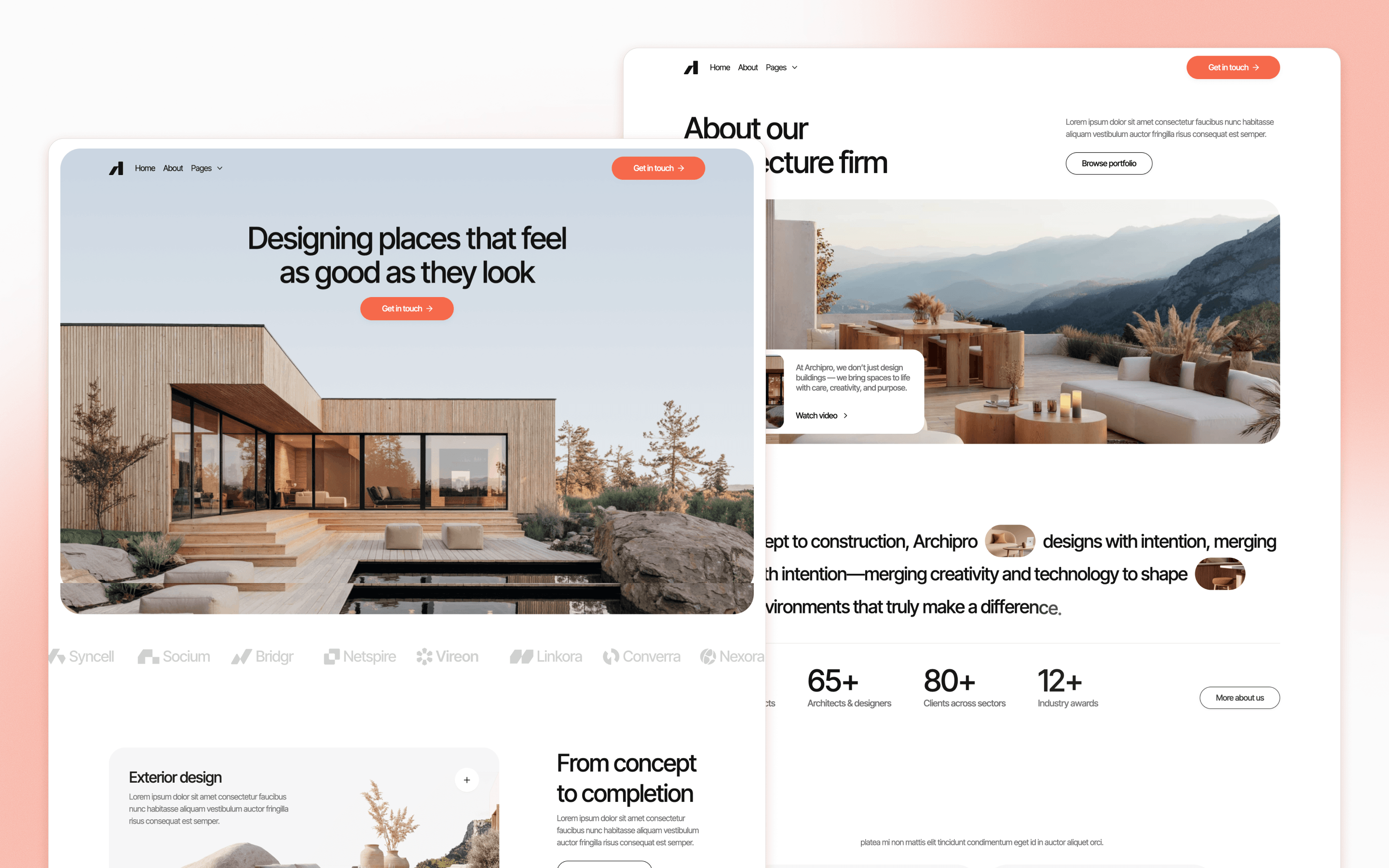
Archipro is our template for architecture firms, with generous project photography and a warm, approachable introduction to the practice. The light blue background and coral accents give the studio its own personality, while the company page leaves room to explain the people and ideas behind the work.
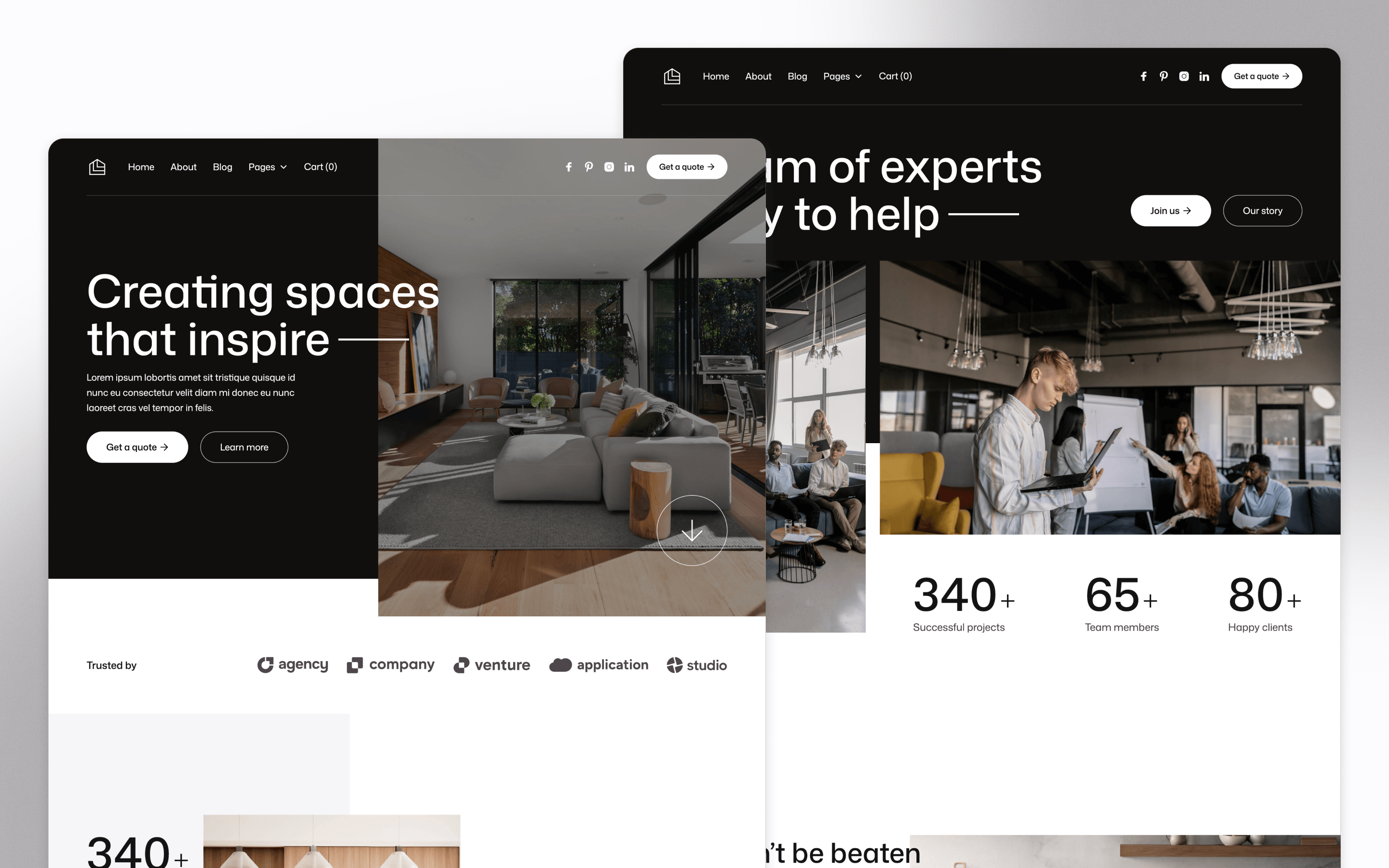
With Construktion X, our construction services template, we bring a more dramatic direction to the built environment. Large interior photographs sit beside confident typography, and the team page continues that visual language with space to introduce the business. It shows how the same attention to materials and spaces can extend into the company’s online identity.
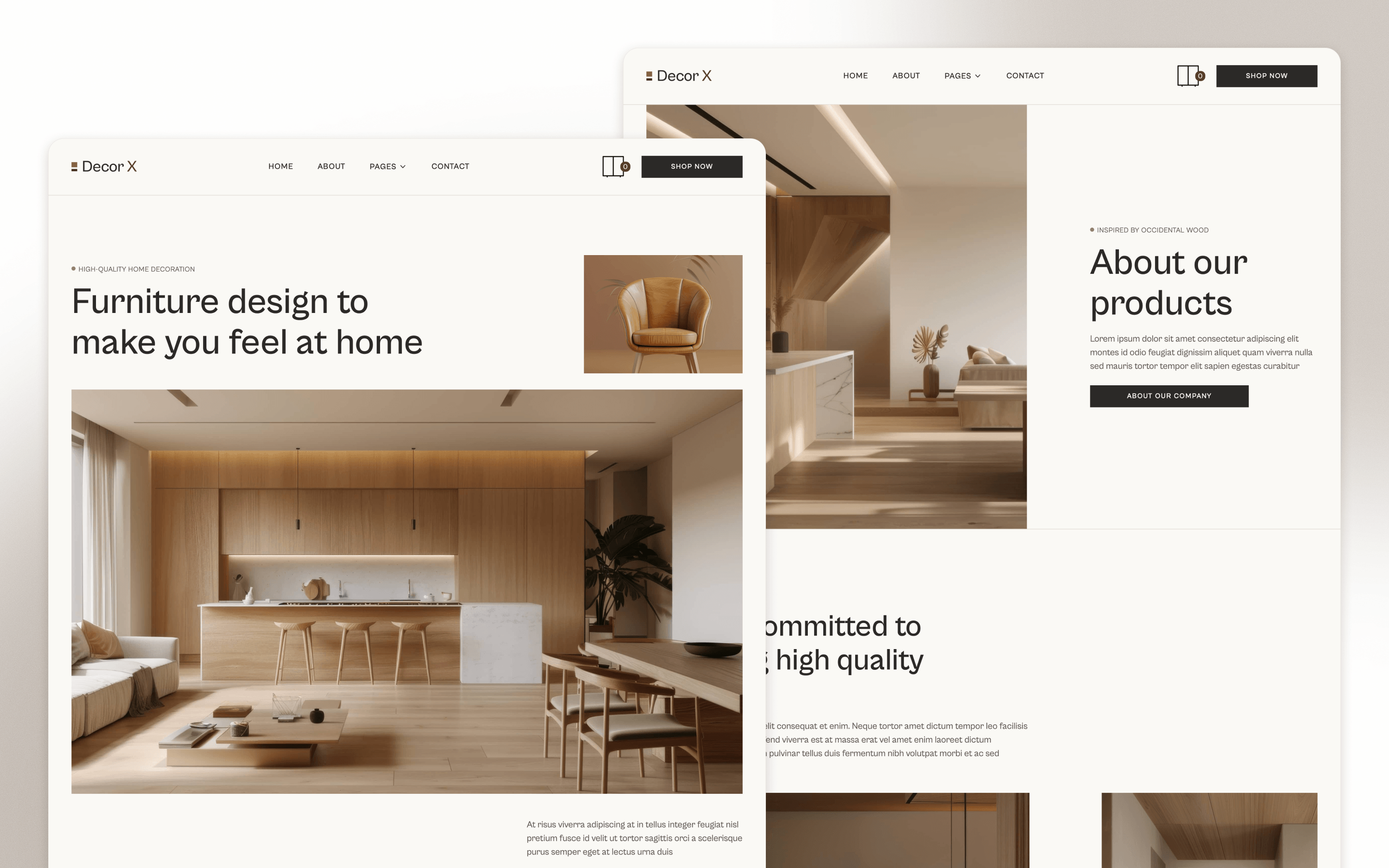
Decor X is our furniture ecommerce template, designed to give products a sense of place through inviting interior photography. Its quieter palette and clear page layouts keep the furniture in focus, offering another view of how our team approaches design for businesses whose customers care about the details of a space.
When you work with us, we bring this experience to a custom website built around your practice, your portfolio, and the people you want to reach. The design should feel as considered as the work you put into your projects.
2. The Future Forward: Best Architecture Web Design Agency for Portfolio Design
 2
2The Future Forward
A brand and digital studio giving architecture portfolios a clear visual identity through considered typography, project imagery, and website design.
The Future Forward is a brand and digital studio with architecture work at the center of its portfolio. Its approach is worth exploring if you want project photography to make a strong first impression while the typography and surrounding pages still feel unmistakably connected to your practice.
That balance becomes especially useful when your buildings vary widely in scale or setting. A consistent website can give them a shared home without making each project look the same, helping visitors recognize the studio’s point of view as they move from one piece of work to another.
Featured project: Morris Adjmi Architects
For Morris Adjmi Architects, The Future Forward’s published engagement included brand identity, website design and development, and collateral. The presentation pairs prominent architectural imagery with a distinct typographic style, connecting the practice’s project portfolio with the broader identity around it.
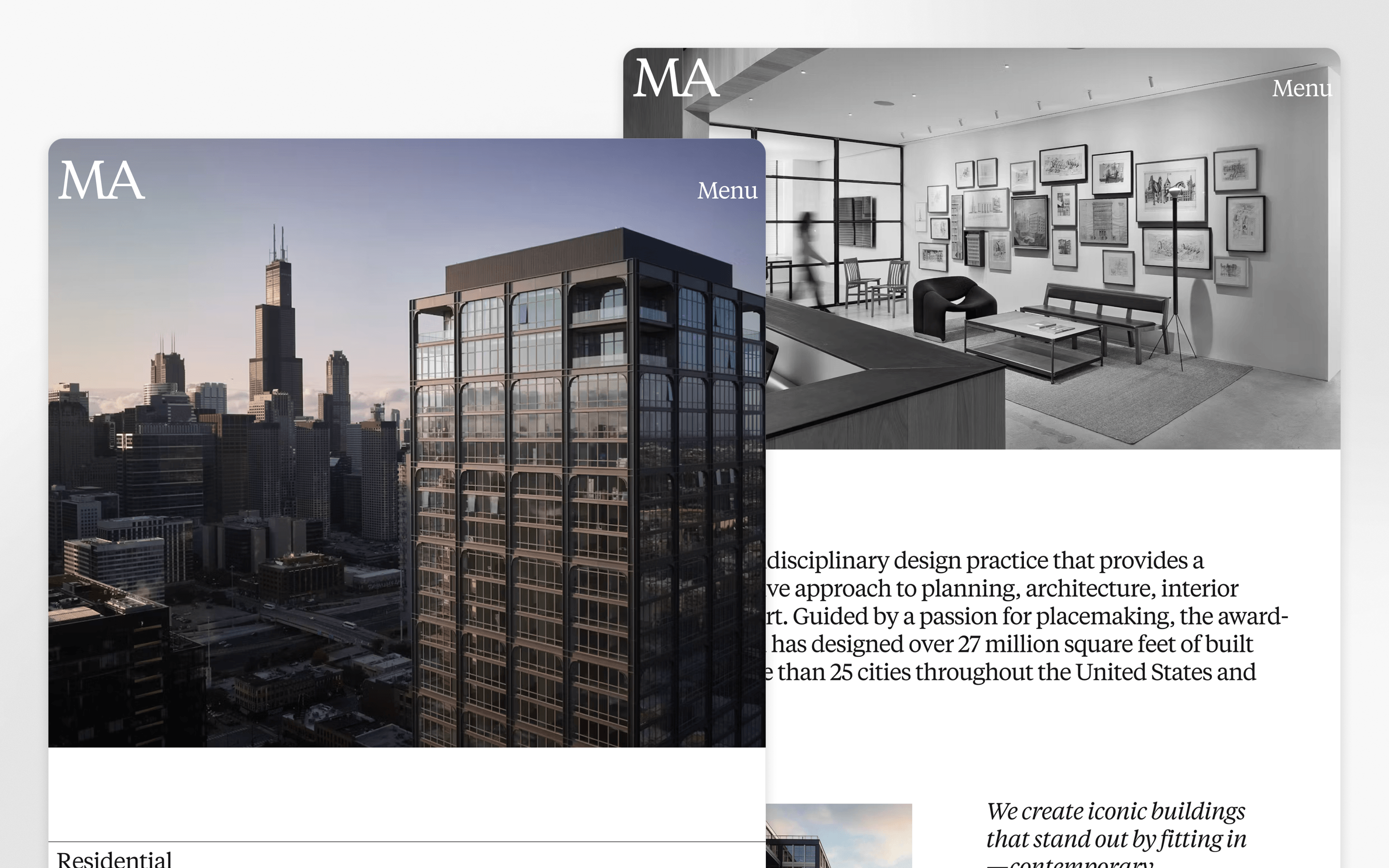
Notice how much of the introduction comes from the relationship between the photographs and the text. The work has room to speak, but the website also gives visitors a way to get to know the firm. It’s a helpful reference for a practice that wants a memorable portfolio alongside a thoughtful introduction to its people and approach.
3. For Office Use Only: Best Architecture Web Design Agency for Editorial Design
 3
3For Office Use Only
A design studio bringing an editorial approach to architecture websites, connecting a practice’s projects with its people and point of view.
For Office Use Only brings an editorial approach to architecture websites, giving the words, images, and sequence of a page a role in explaining the practice. Its work is a good place to look when you have a strong portfolio but feel that the website only tells part of your story.
An established firm may be known for one kind of work while doing much more today. In that situation, the redesign needs to introduce a broader range of projects and ideas without losing the experience people already associate with the studio, which makes the content choices as important as the visual ones.
Featured project: Beyer Blinder Belle
The studio’s work for Beyer Blinder Belle helped present the architecture and planning practice beyond its reputation for preservation. The website experience brings project imagery together with writing about the firm, making space for both its history and its wider body of work.
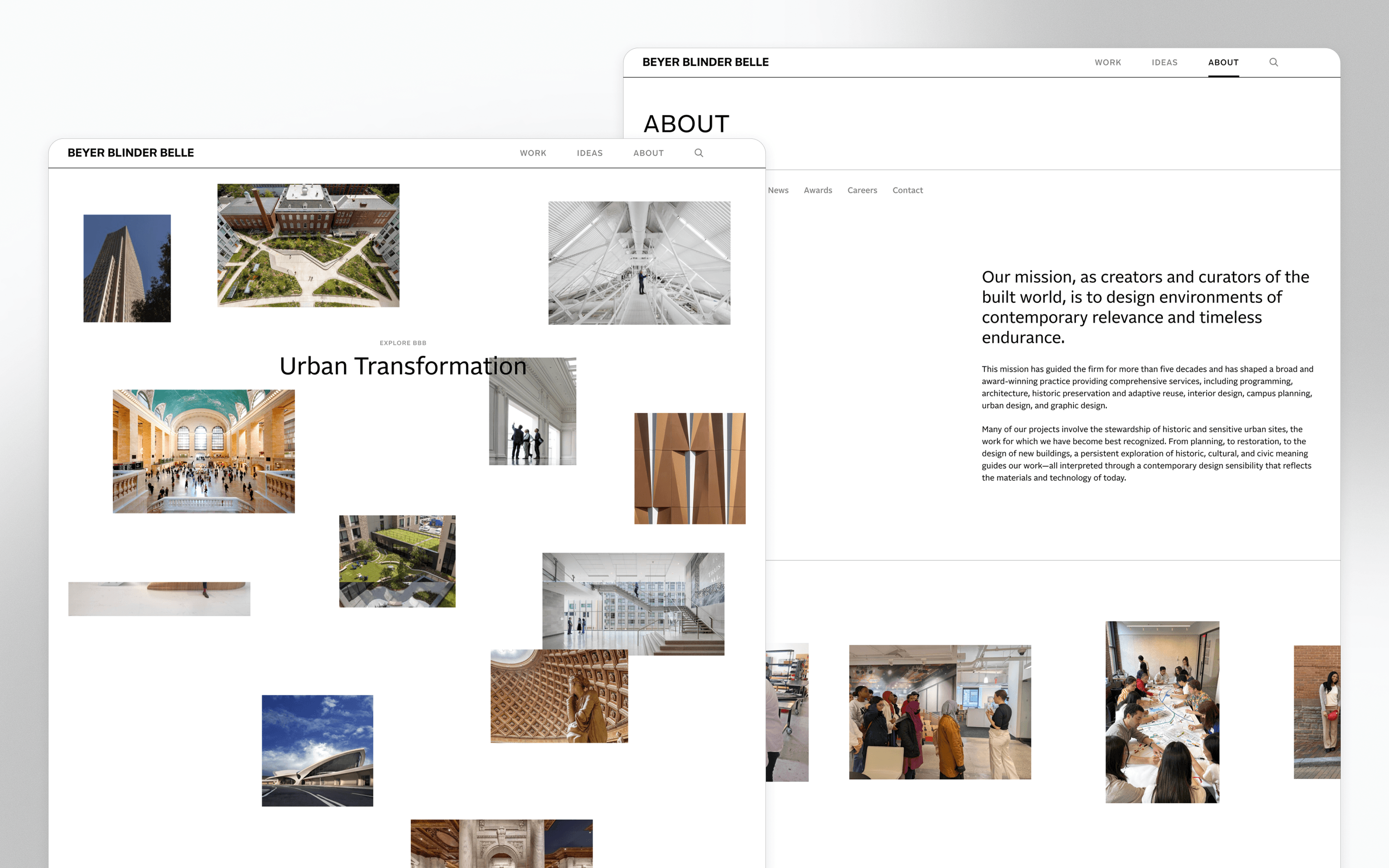
The mixture of project images and substantial text gives the site the feel of a publication you can explore, rather than a gallery you simply pass through. Consider this direction if explaining what your practice believes, how it has evolved, or where it wants to go next is part of your website brief.
4. Ten4: Best Architecture Web Design Agency for Easy Editing
 4
4Ten4
A digital agency pairing architecture website design with content management that helps practices maintain their projects, news, and team information.
Ten4 is a digital agency with a dedicated architecture, engineering, and design portfolio. Its emphasis on websites and content management makes it relevant for practices that want a strong public presentation and a practical way to keep adding work after the launch team has moved on.
That second part deserves attention early. A portfolio can become dated when publishing a finished project requires several people, a development request, and a long wait, so it helps to choose an agency that will discuss the editing routine alongside the layouts your visitors see.
Featured project: Gillespies
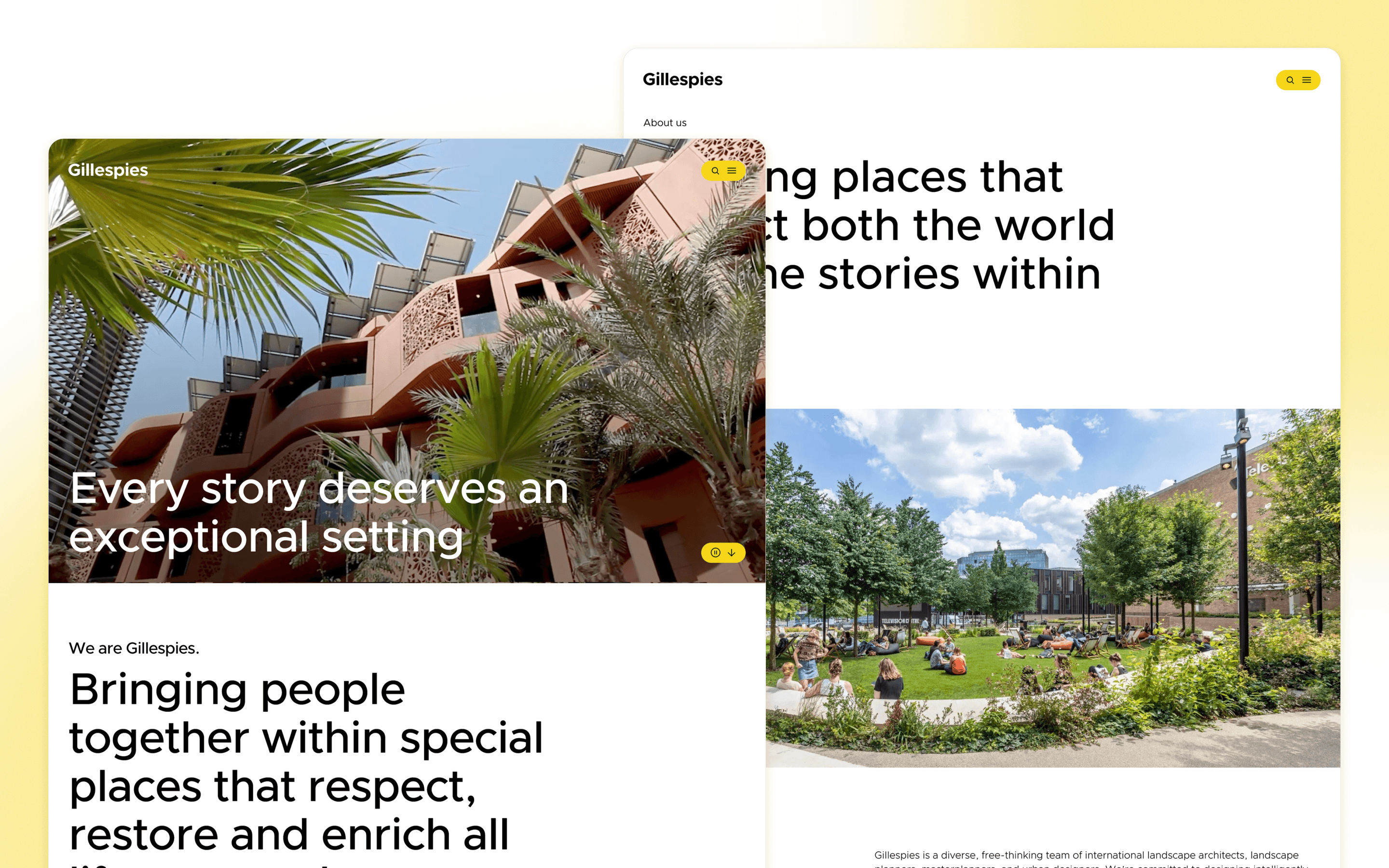
Gillespies, the landscape architecture practice, appears in Ten4’s industry portfolio, and its website credits the agency. The selected design combines expansive photographs of places and landscapes with clear introductions to the practice, its people, and its work.
For your own project, use this example as the start of a conversation about the publishing experience behind the pages. Ask Ten4 to demonstrate how a team member would add a new landscape project, organize its images, and connect it with the relevant practice information, so the visual direction comes with a manageable ongoing workload.
5. Rabbithole: Best Architecture Web Design Agency for Branding
 5
5Rabbithole
A branding and digital studio translating an architecture practice’s identity into a distinctive website with a strong visual voice.
Rabbithole is a branding and digital studio for practices that want their website to carry a clear personality. Its architecture work connects the visual identity with the way a studio introduces itself online, making it an interesting option when a rebrand and a new website belong to the same project.
That can be particularly valuable if your current site looks polished but could belong to almost any architecture firm. A more distinctive voice can come from the typography, language, movement, and way projects are introduced, as long as those decisions still leave visitors comfortable exploring the work.
Featured project: Bond Bryan
For Bond Bryan, Rabbithole’s case study covers strategy, identity, campaign, and website work, with motion collaboration credited to Sayeed Islam. The strong lettering and vivid accents carry the practice’s refreshed identity through its online presentation, alongside large photographs of its architecture.
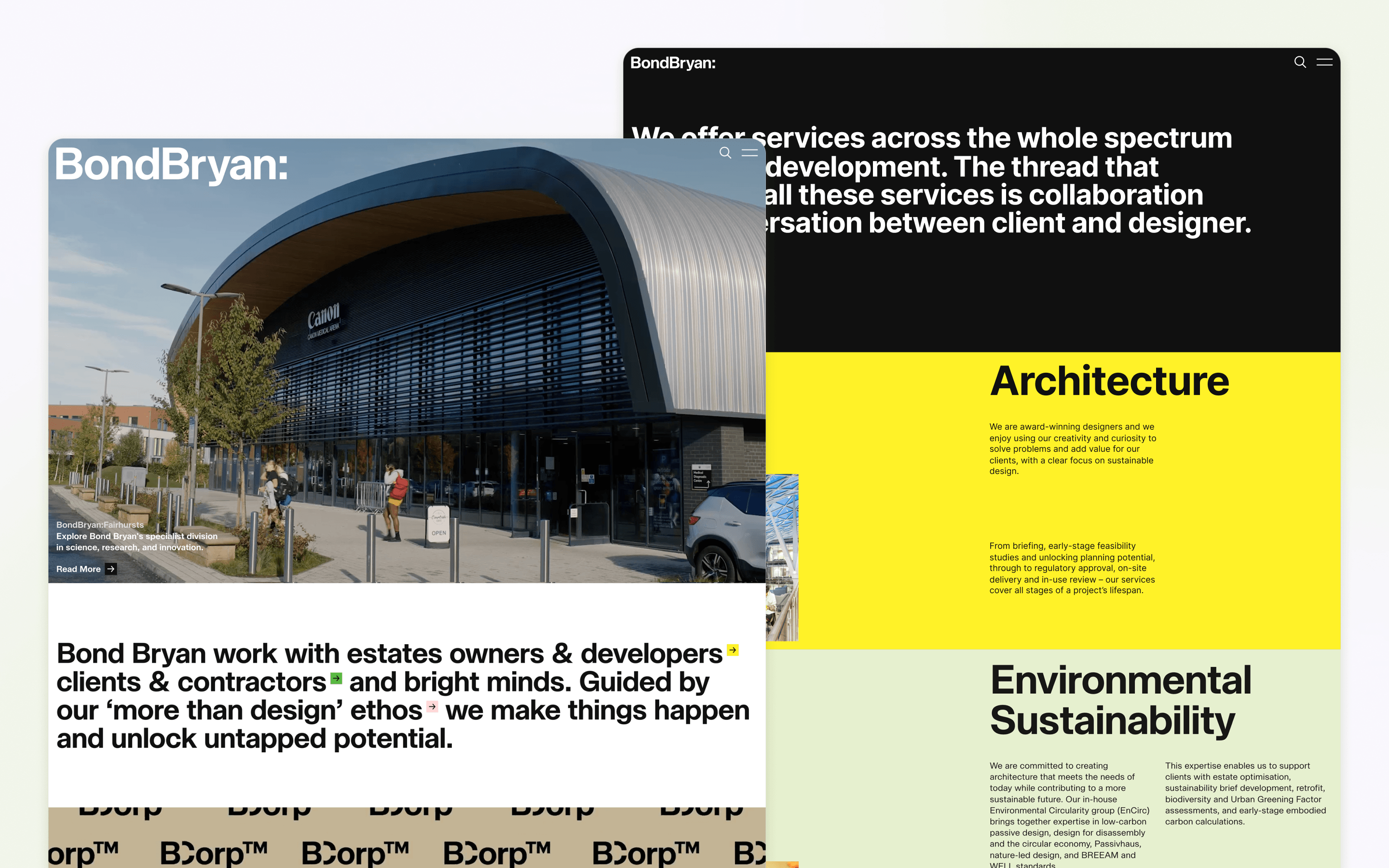
The useful lesson here is how consistently the character of the brand travels from one part of the site to another. If you’re changing how your practice describes itself, this is a good example to discuss with an agency before separating the website, identity, and written voice into unrelated assignments.
6. FINE: Best Architecture Web Design Agency for Large Portfolios
 6
6FINE
A brand and digital agency connecting extensive architecture portfolios with services, people, and stories through flexible website content systems.
FINE is a brand and digital agency whose architecture work gives particular attention to the connections between projects and the rest of a practice. It’s worth considering when you have a large portfolio, several areas of expertise, and more to publish than a series of finished-building photographs.
For a growing studio, those connections help visitors find their way through the work. Someone looking at a project may want to meet the people behind it, understand the relevant services, or read more about a design idea, and the site needs to make those next steps feel natural.
Featured project: SERA
FINE’s work for SERA included website design and a flexible content system joining projects, services, sectors, people, and stories. The agency describes reusable components and editorial tools that let the practice arrange its material in different ways while keeping a coherent overall presentation.
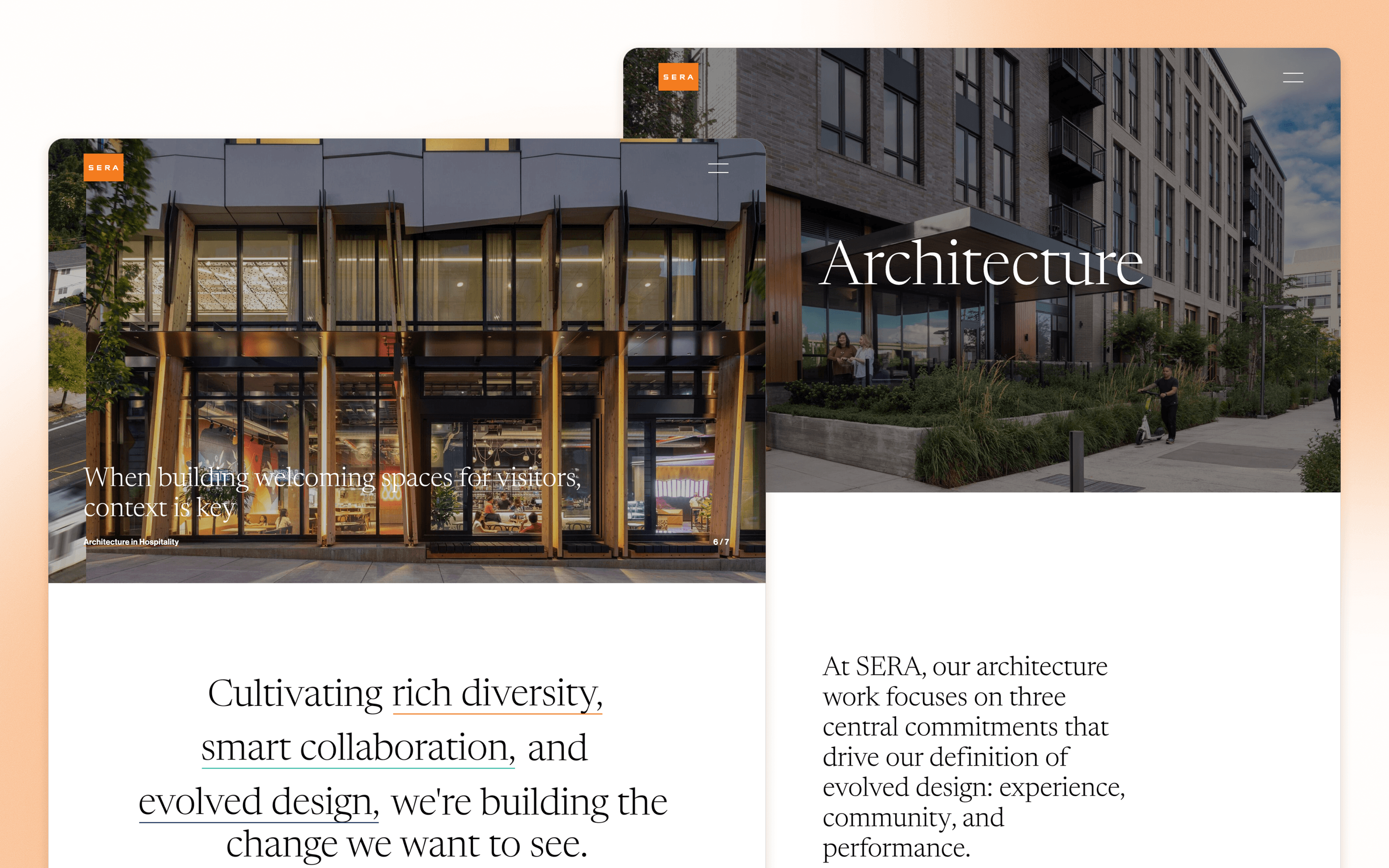
This is a useful reference when the question is how to make a substantial body of work easier to explore. Rather than planning every page as an isolated layout, ask how your agency would connect related material and give your team enough freedom to tell different project stories within a recognizable design.
7. Sons & Co.: Best Architecture Web Design Agency for Bold Typography
 7
7Sons & Co.
A design studio creating expressive architecture websites where typography gives the practice a recognizable voice alongside its project photography.
Sons & Co. is a design studio whose work shows how typography can give an architecture website an identity of its own. Large letters and expressive compositions can make the introduction memorable, especially when a practice wants its online presence to reflect an equally confident approach to design.
The important question is how that expression works alongside the buildings. Look for a team that can make the typography feel purposeful across project pages, studio information, and smaller screens, so the visual character adds something to the experience of exploring your work.
Featured project: Warren and Mahoney
The Designers Institute of New Zealand’s project record credits Sons & Co. for the Warren and Mahoney website, with Design by Toko named as a contributor. The selected example combines bold graphic forms and lettering with architecture imagery, extending that confident language into news and practice content.
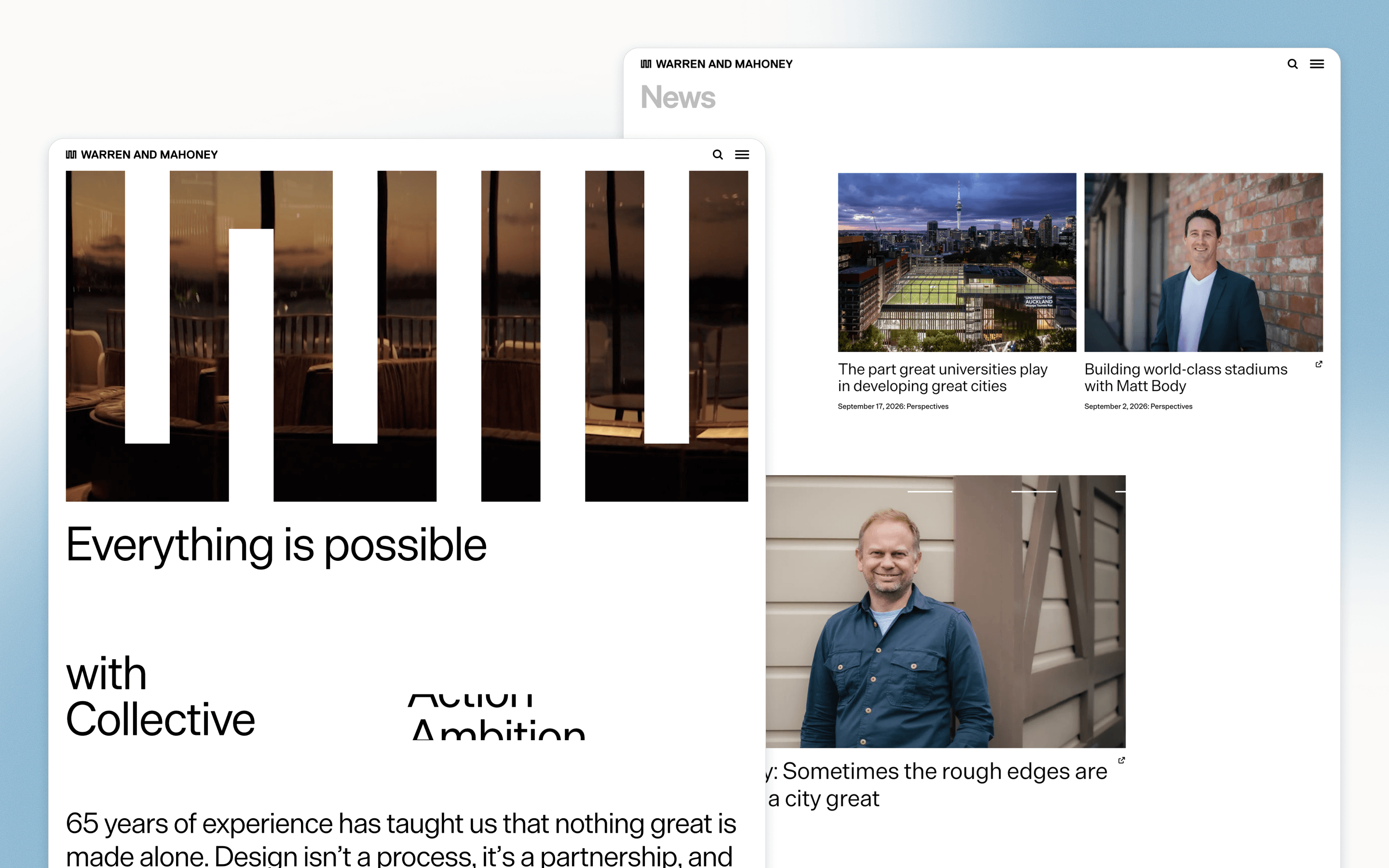
It’s a strong reference if you want the site to have a recognizable visual voice before a visitor reads much about the firm. When reviewing this direction for your own practice, look beyond the opening screen and consider whether project names, navigation, and longer descriptions remain comfortable to read throughout the site.
8. Mucho: Best Architecture Web Design Agency for Minimal Design
 8
8Mucho
A design studio developing restrained architecture websites that give project imagery room while keeping the practice’s identity clear and consistent.
Mucho is a design studio to consider when you want a restrained website that still feels carefully authored. Its architecture work demonstrates how spacing, image selection, and a consistent identity can give a practice a clear presence without asking every page to compete for attention.
This direction places more responsibility on the material you publish. The photographs and project descriptions need to be thoughtfully chosen, while the navigation needs to make sense without relying on visual spectacle, so discuss content and design together when you brief an agency on a minimal approach.
Featured project: Bohlin Cywinski Jackson
For Bohlin Cywinski Jackson, Mucho worked on a responsive website redesign in collaboration with Bureau for Visual Affairs. The project gives architectural photography a generous presence, with a quiet page structure that supports the practice’s identity and lets visitors concentrate on the work.
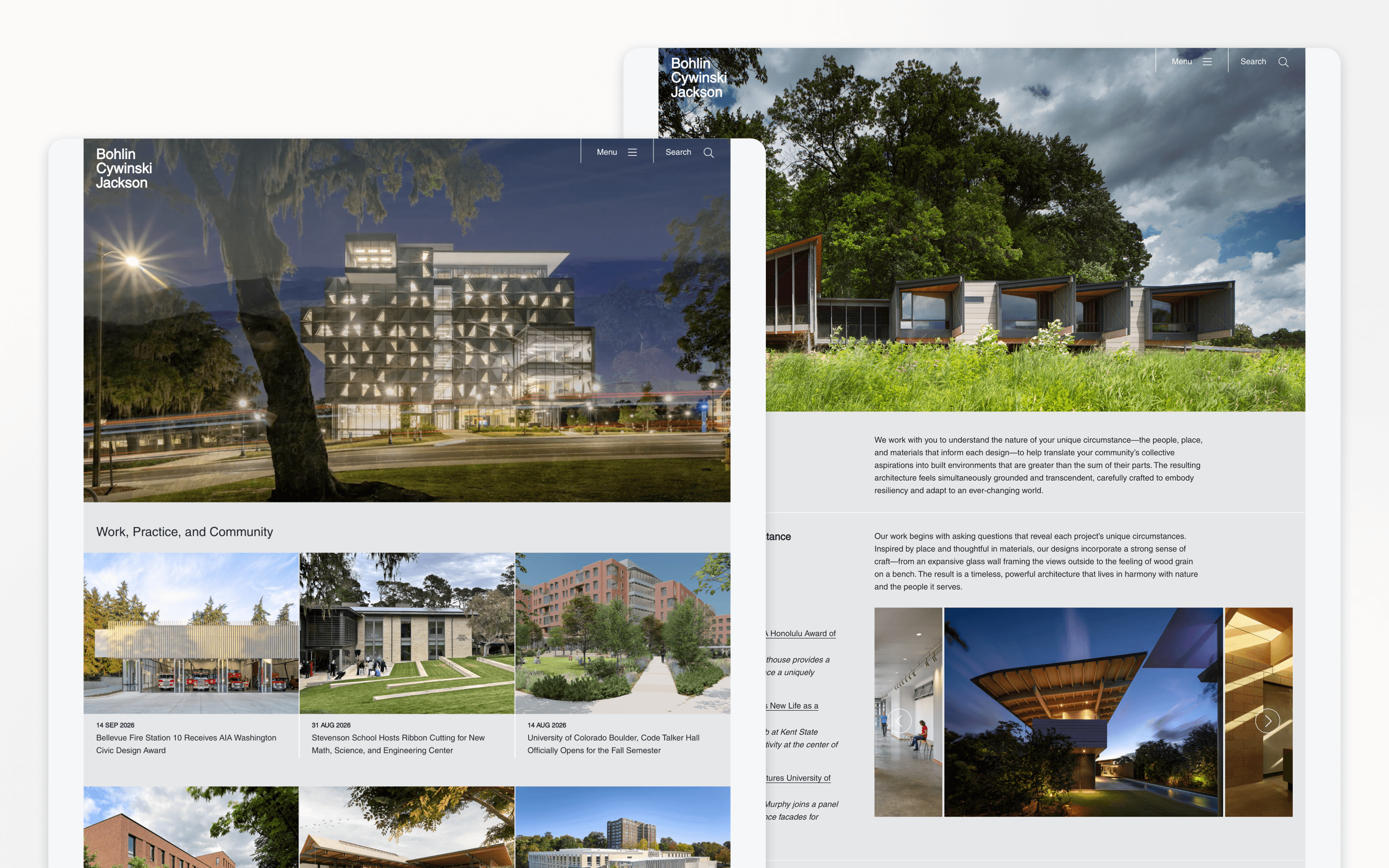
The example is particularly useful if your projects have rich material detail or strong relationships with their surroundings. A simple interface can leave room to notice those qualities, provided the site also offers enough context to understand each commission and an obvious route to learn about the firm behind it.
9. Athletics: Best Architecture Web Design Agency for Project Archives
 9
9Athletics
A brand and design studio organizing architecture websites around the relationships between built work, research, and a practice’s broader story.
Athletics is a brand and design studio with experience bringing a practice’s built work and wider ideas into one website. Its approach is relevant when your project archive also includes research, experiments, and stories that help explain how your firm thinks about architecture.
A visitor may arrive through one building but stay because of the ideas around it. Organizing those relationships well gives the site more depth, especially for practices that want prospective clients, collaborators, and future employees to understand the work beyond its final photographs.
Featured project: KieranTimberlake
Athletics’ engagement for KieranTimberlake brought together brand strategy, identity, messaging, content organization, UX/UI, and website design and development. The selected presentation moves between architecture, people, and material imagery, giving the practice’s broader story a visible place alongside its buildings.
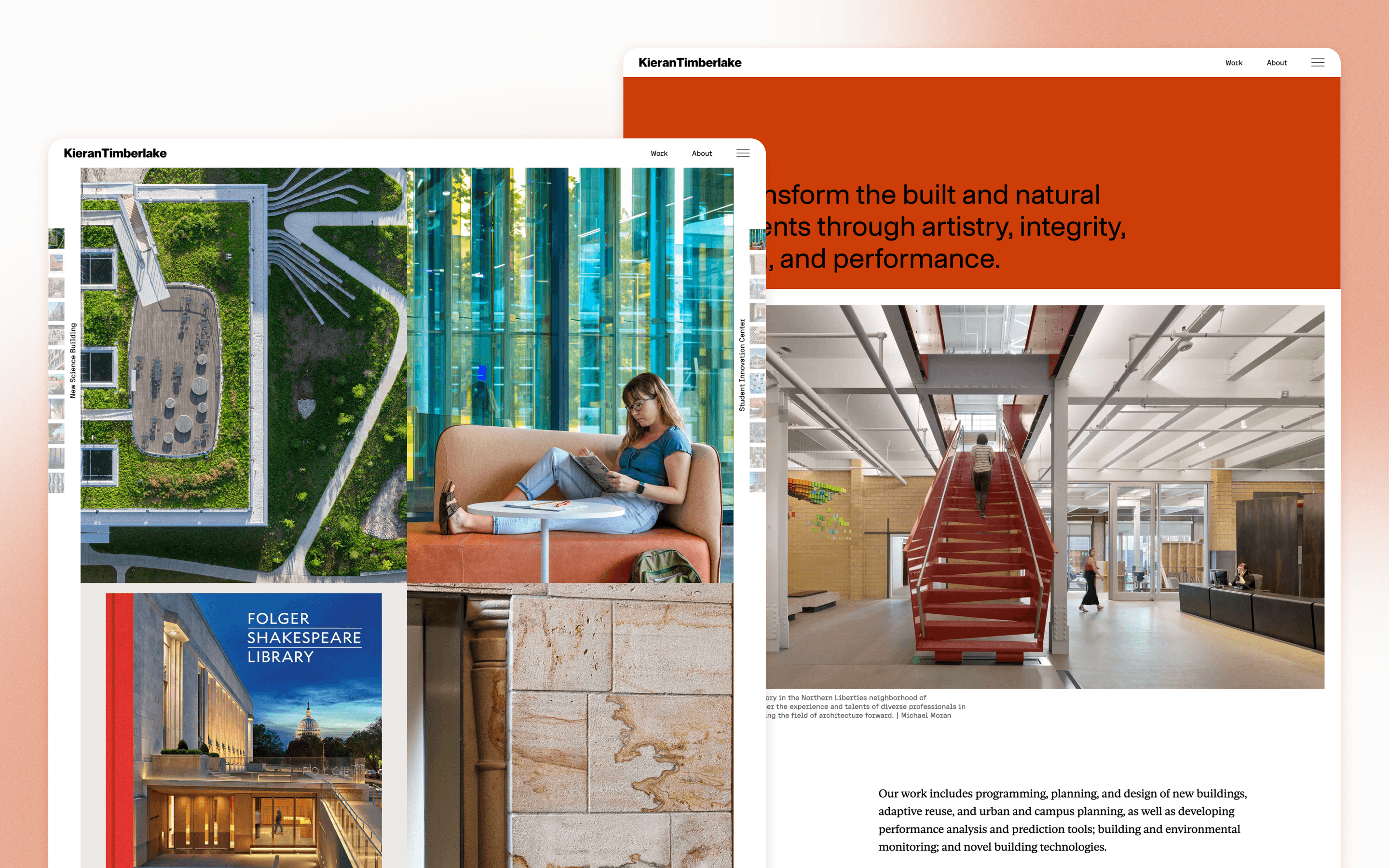
For a studio with years of material to draw from, this is a helpful example of the decisions that precede the visual design. Ask an agency how it would sort your existing archive, connect related content, and decide what deserves a place in the main navigation, so the finished site invites exploration without overwhelming the visitor.
10. Cliff Studio: Best Architecture Web Design Agency for Web Development
 10
10Cliff Studio
A development studio collaborating with design partners to bring distinctive architecture websites to life through carefully implemented layouts and interactions.
Cliff Studio is a development studio that collaborates with design partners on websites with a distinct visual direction. It’s an option to explore when you already have a creative team and need a development partner who can turn that design into a usable, maintainable website.
In that arrangement, the handoff matters as much as the opening concept. Your designers and developers need to agree on how image layouts, interactions, and project pages behave, including what happens when a title is longer than expected or the site is viewed on a smaller screen.
Featured project: Dowen Farmer Architects
Cliff’s project index lists Dowen Farmer Architects with DutchScot, and the project’s development credit identifies Cliff Studio’s role. Its contribution was website development, bringing the design into a working site with a strong typographic presence and a varied presentation of the practice’s architecture.
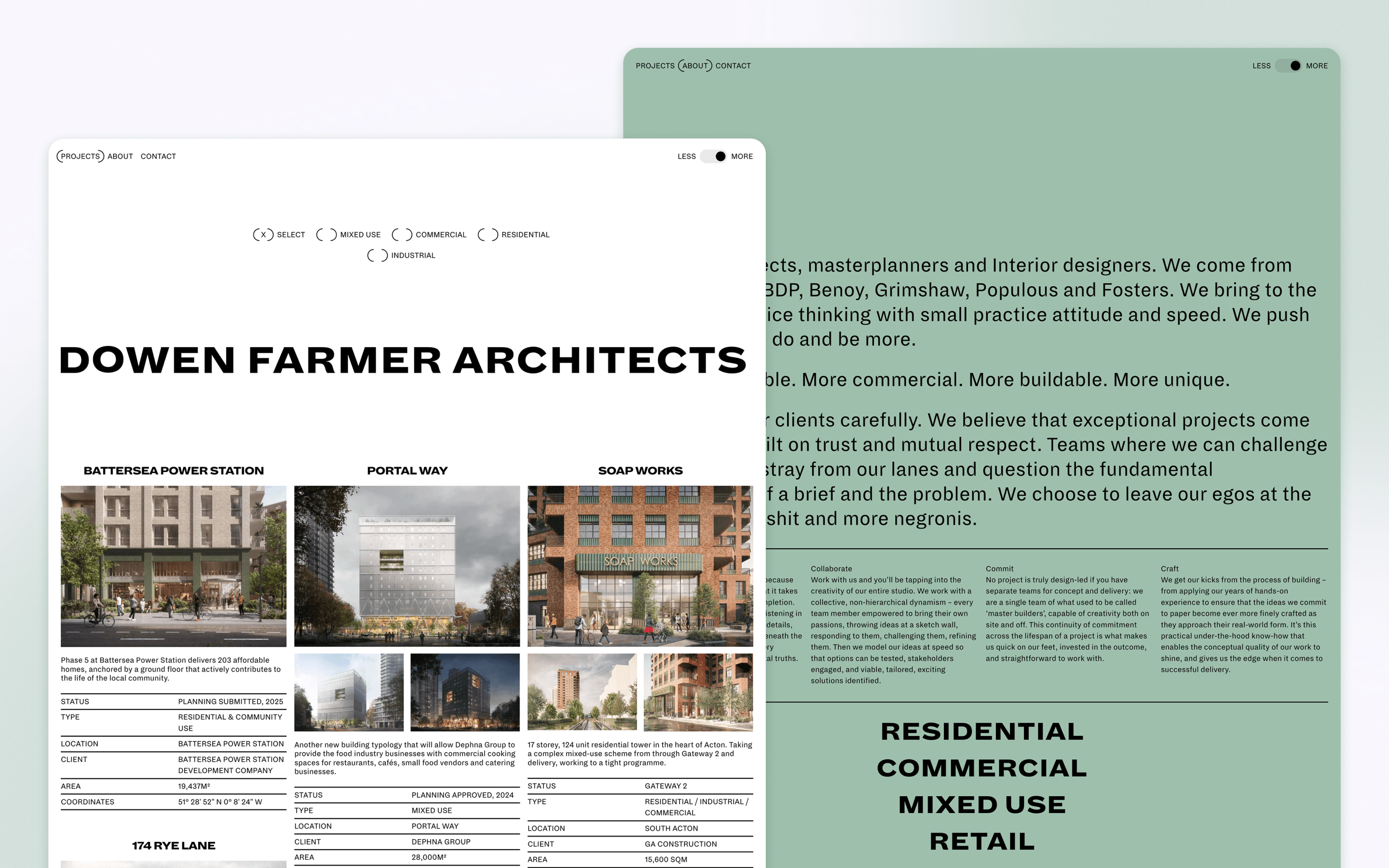
The example is useful if the visual direction is already settled and you want to preserve its character through the build. Share more than the homepage when discussing scope: project layouts, mobile behavior, editing needs, and small interactions all affect how faithfully the finished website carries the design through everyday use.
11. Plug & Play: Best Architecture Web Design Agency for WordPress
 11
11Plug & Play
A digital agency improving architecture websites through WordPress development, flexible content management, and practical support for the people publishing them.
Plug & Play is a digital agency to consider when the main difficulty with your architecture website is what happens behind the pages. Its work includes WordPress development and more flexible content management, making it relevant for teams that want greater control over publishing without necessarily starting the visual identity again.
That distinction can save a useful part of the discussion. If you still like the way your website looks, an agency should help you understand whether the problems come from its structure, its editing tools, or its design before proposing a complete replacement.
Featured project: Janine Stone & Co.
For Janine Stone & Co., Plug & Play’s case study describes rebuilding the website’s backend on WordPress while retaining another agency’s existing visual design. The work included flexible content management, content entry, navigation updates, and marketing, giving the team a more useful foundation for managing the site.
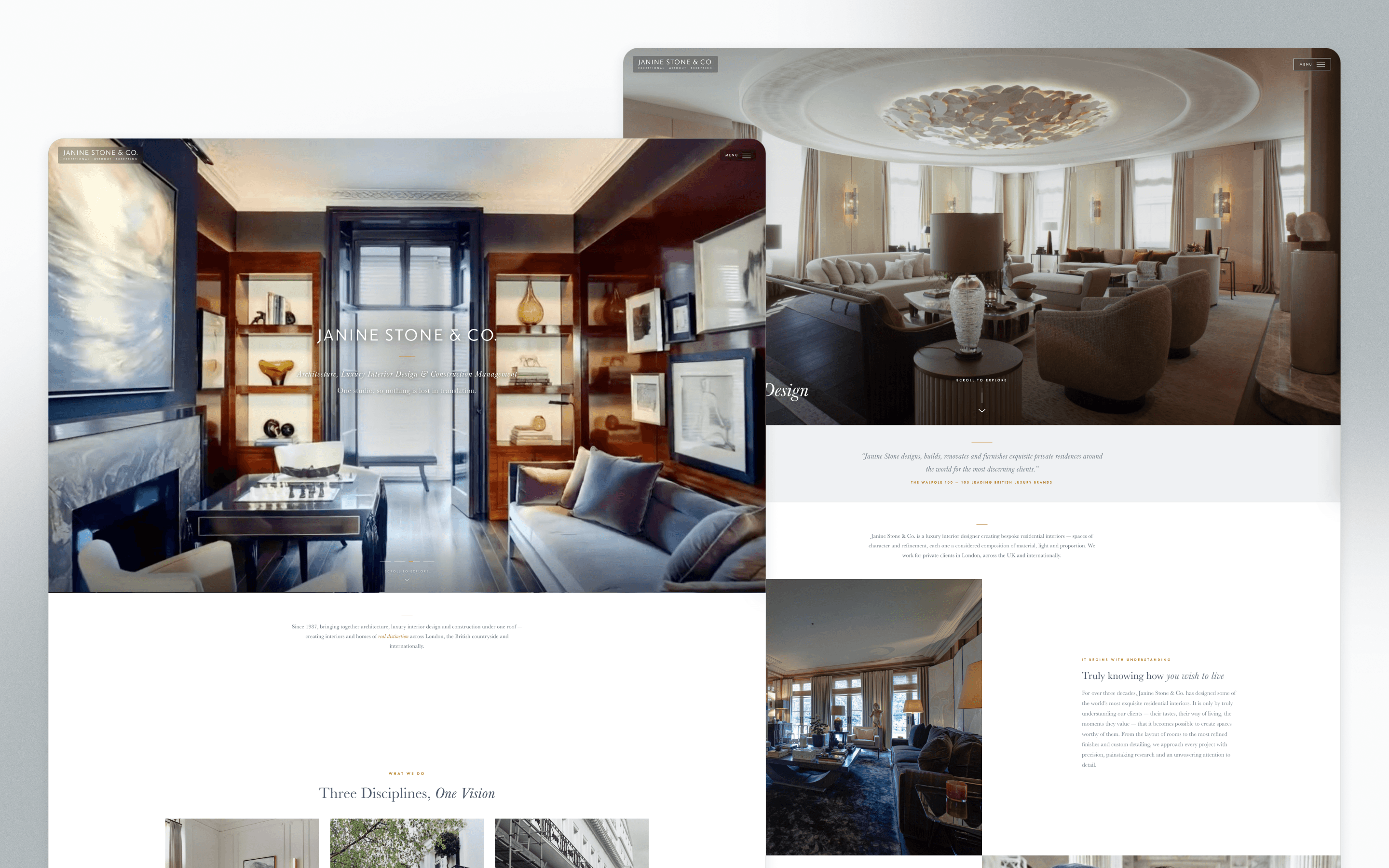
The photograph above shows the public presentation, while the value of this particular engagement sits largely in the tools supporting it. Ask to see that side of the work during a conversation with the agency, especially if your own team struggles to add projects, update text, or make routine changes without outside help.
12. Designpluz: Best Architecture Web Design Agency for Landscape Architecture
 12
12Designpluz
A design and development agency creating landscape architecture websites that connect garden photography, studio services, and an accessible project portfolio.
Designpluz is a design and development agency with a relevant example for landscape architecture practices. Its work for Ecodesign connects the visual appeal of gardens and outdoor spaces with information about the studio and the services it provides, giving visitors more to explore after the opening photograph.
Landscape projects often need a little explanation to show their full value. Planting, the relationship with the house, and the way people use the space can be difficult to convey in a single image, so the website should give those details room without making the project feel overly complicated.
Featured project: Ecodesign
For Ecodesign, Designpluz’s published project covered UI/UX design, website development, portfolio and service presentation, and the content-management experience. The selected pages lead with garden photography and continue into an introduction to the studio’s landscape architecture work.
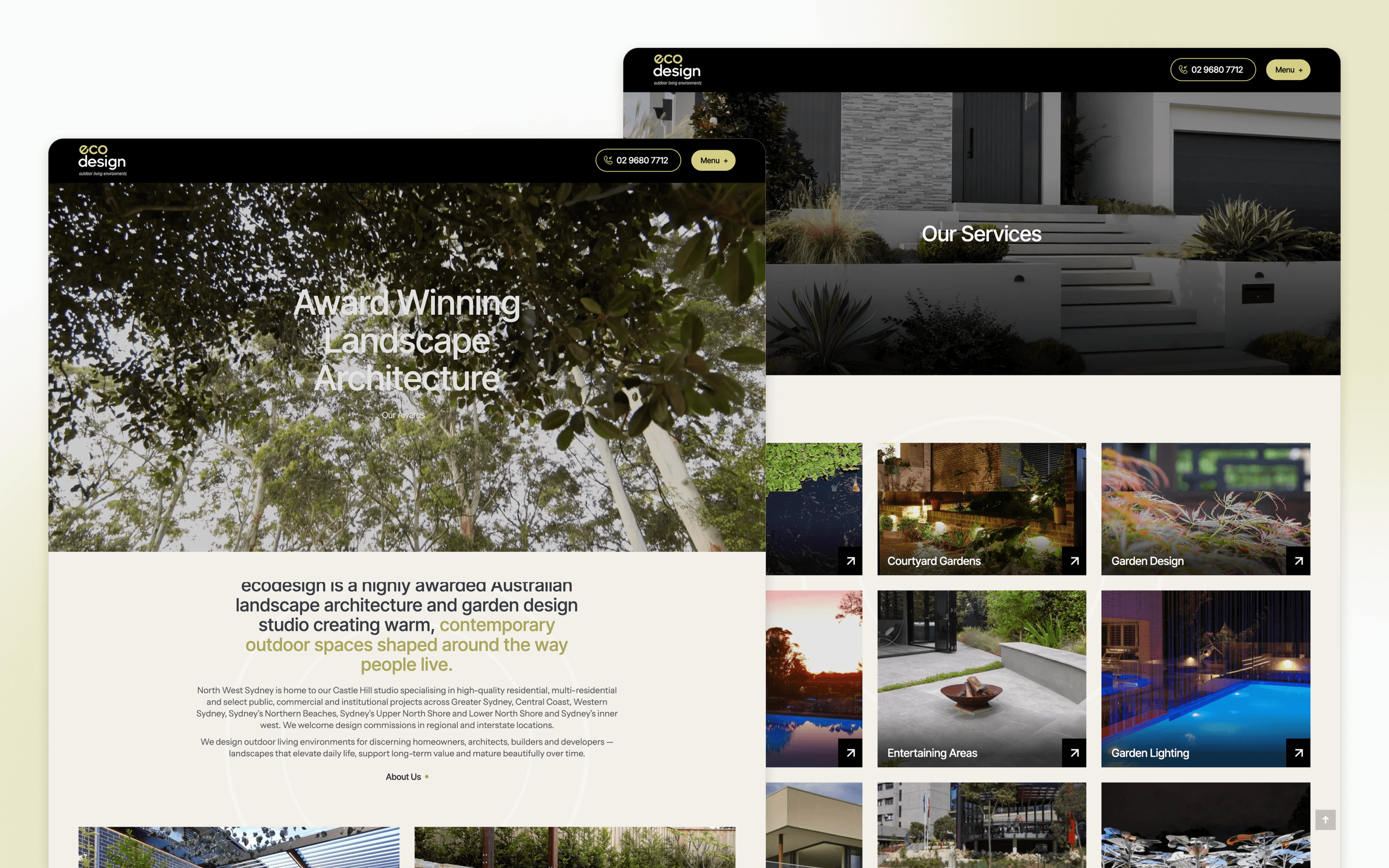
The useful comparison is how easily a visitor can move from enjoying the images to understanding the kind of work they could commission. For a landscape practice, a good website should help someone recognize a relevant project, learn about the design service, and find a clear way to start a conversation with the team.
What an architecture web design agency can help you with
A website project is a good opportunity to decide how your practice wants to be understood. Your agency can help turn that direction into a useful page structure, a visual identity for the web, and a portfolio system your team can keep adding to, with enough flexibility for different kinds of commissions.
Before asking for a proposal, decide which parts of the work you already have covered. Some studios have complete brand guidelines and edited project stories, while others need help choosing photographs, writing introductions, or deciding how their services fit together. The agency’s scope should reflect that starting point.
A typical brief can include the following:
- Content planning: selecting the launch projects, organizing the archive, and deciding what belongs on practice, service, people, and careers pages.
- Website design: developing the visual direction and layouts for project photography, drawings, text, navigation, and mobile screens.
- Development and CMS: building the pages and the editing tools your team will use to publish new work.
- Migration and launch: transferring agreed content, redirecting old URLs, checking image behavior, and testing the main visitor journeys.
- Handoff and support: training the people who will manage the site and defining responsibility for maintenance and future changes.
Ask who will actually do each part, including any design or development partners. The profiles above show why that distinction matters: an excellent development engagement and a full brand-and-website project can both be valuable, but they answer different needs.
How to choose an architecture web design agency and compare costs
Start by choosing 2–3 agencies whose work feels relevant to your practice. Then spend a few minutes on the project pages behind their strongest homepages, looking at how the sites introduce a building, explain the studio’s role, and let a visitor move between different kinds of work.
Send each team the same short brief so their proposals answer the same question. Include the number of projects you want online at launch, the material you already have, who will approve the design, and what your team needs to update afterward. This example gives you a starting point:
Subject Website for [studio name], with [number] projects to launch
Hello [name],
We’re [studio name], an architecture practice working on [project types] in [locations]. Your work caught our attention in BRIX Agency’s architecture web design guide, and we’d like to discuss a website that helps us [introduce a new practice direction, present our completed work, or reach a different client audience].
We expect to launch with [number] project stories, alongside pages for our studio, people, services, and inquiries. We’d like visitors to browse by [sector, location, or project type]. Our team also needs to publish [news, job openings, or research].
We have [photography, drawings, project descriptions, brand guidelines] ready, with [remaining materials] still in progress. Please include help with [content editing, design, development, migration] and training for [the people who will update the site].
Our target launch is [date], and our working budget is [range]. Could you suggest a scope, share a relevant project, and explain how you’d build the portfolio and editing setup?
Please separate the initial project fee from hosting, software, maintenance, and future design support, and tell us how much content entry your proposal includes.
Best,
[Your name]
[Role and studio]
When the replies come back, compare the included work before comparing the total. One proposal may cover a reusable project-page design with your team entering the content, while another includes editing and uploading an entire archive. Those are different amounts of work, even if the final websites have the same number of pages.
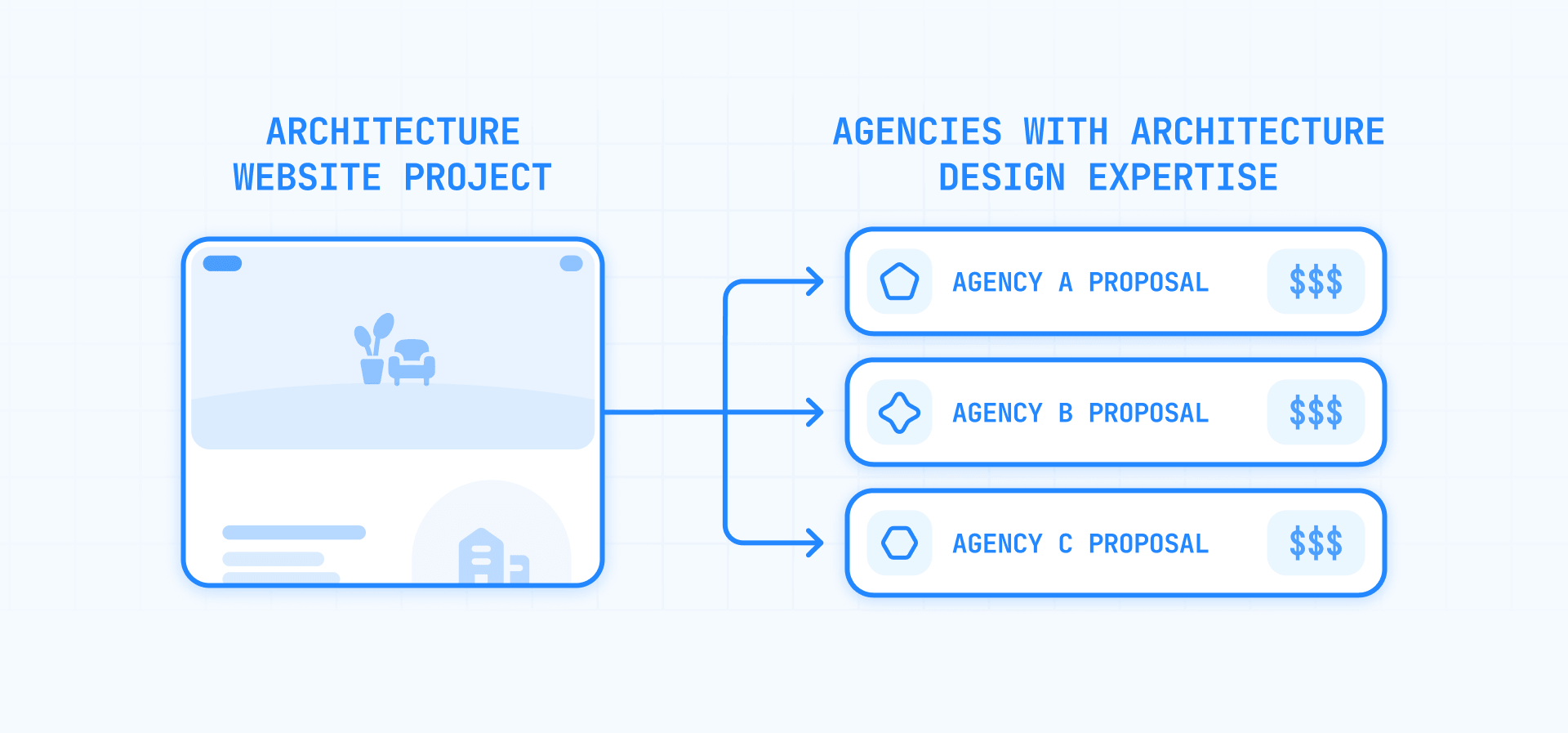
Ask each agency to separate design, development, content entry, and ongoing costs, and check how many rounds of feedback are included. For an image-heavy architecture website, also clarify who prepares the photographs for the web, checks crops, and enters captions and credits; those details can become a substantial part of the launch effort.
A useful schedule should name the decisions your team needs to make, with room for partners to review the design and project leads to approve their content. Content readiness affects timing, so agree on a realistic launch collection rather than leaving the website dependent on every project being ready at once.
Before choosing, request a short walkthrough of the editing setup and ask what support looks like after launch. The best proposal should make it clear what you will receive, what your studio will need to contribute, and how the website will stay useful as your practice adds new work.
Choosing a CMS for an architecture portfolio you can keep updating
Imagine the week a new building is photographed. Someone in your studio needs to choose the images, add a description, credit the collaborators, and publish the project without rebuilding the page. That small routine is a useful starting point for choosing your CMS, because it reveals whether the website will be comfortable to maintain once the launch is behind you.
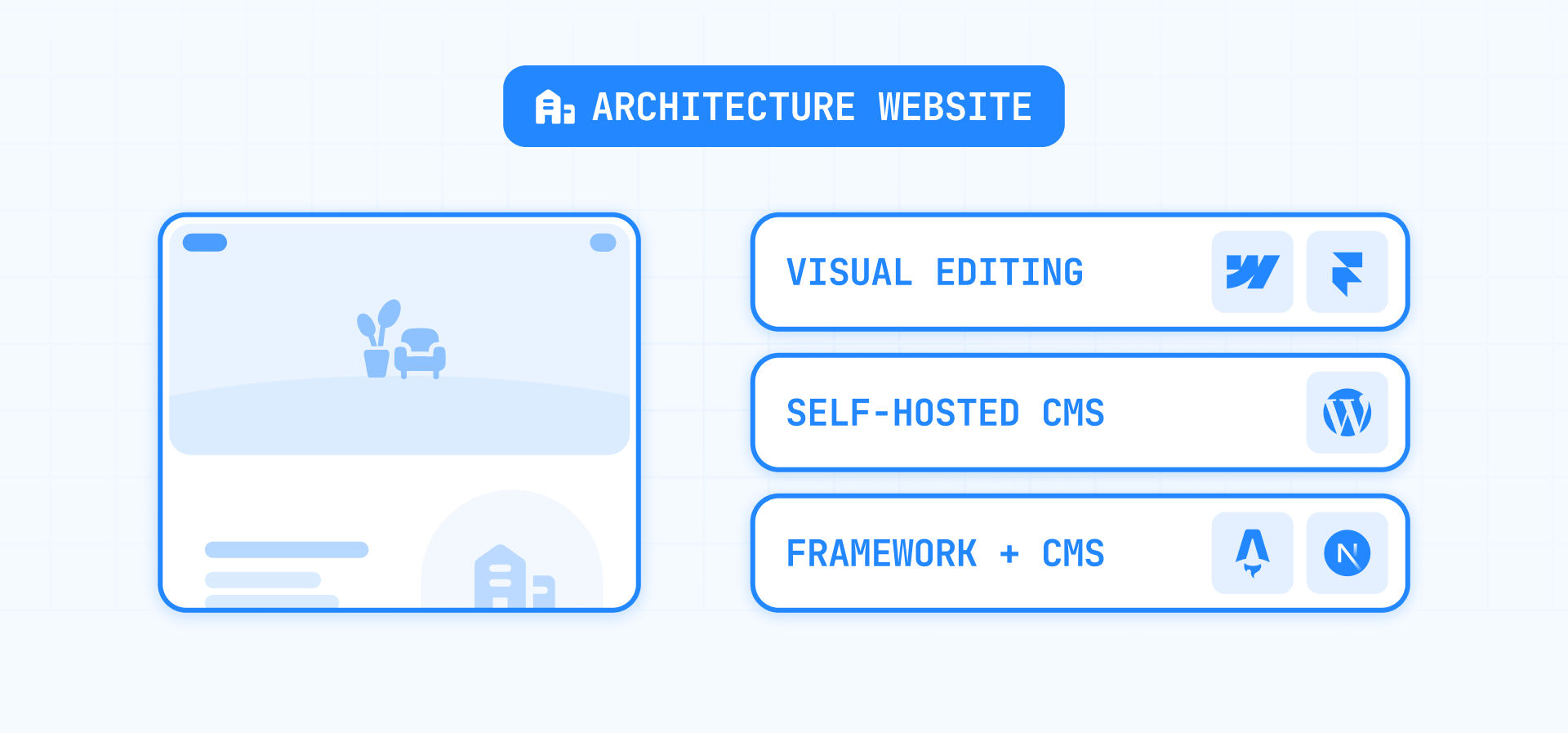
Webflow and Framer are worth exploring when you want a visually considered website with a friendly editing experience. Ask the agency to demonstrate your actual content: a project with a long name, a mixture of portrait and landscape photographs, and a connection to the relevant service or sector. A platform’s demo is less useful than seeing how your own portfolio would work inside it.
WordPress can be a good fit when you want to host the website on your own server or have specific publishing needs. The quality of the editor depends heavily on how it is built, so ask for clearly named fields and reusable layouts that your team can manage comfortably, along with a plan for updates, backups, and technical support.
If the brief calls for a custom codebase, your agency may suggest Astro or Next.js, with a separate CMS supplying the project content. These are development frameworks, so the proposal should name the CMS as well as explain who maintains the code, how content is previewed, and how changes reach the live website.
Whichever route you choose, test one complete update before signing off: create a project, arrange the gallery, add credits, preview it on mobile, and publish it. That exercise tells you much more about the everyday experience than a long comparison of features you may never use.
Architecture website design details worth getting right
Give architecture project pages a story, not just a gallery
A beautiful image can start the conversation, but a little context helps someone understand why the project matters. Introduce the brief, the setting, your studio’s role, and the main design decision, then use photographs, drawings, and short captions to carry that story through the page.
For a new practice with fewer completed buildings, a smaller set of well-explained projects can still give visitors a useful view of its approach. Identify conceptual work, work in progress, and each person’s role clearly, and use materials you have permission to publish. The aim is to make the experience understandable, including the experience behind a newly established studio.
Plan architecture photography for mobile and search
Choose images for the size at which people will actually see them. A wide exterior photograph may need a different crop on a phone, and a detailed drawing may deserve its own enlarged view. Ask the agency to check both before approving a layout, with clear controls and reduced-motion behavior where animation is used.
Image performance belongs in the same conversation. Responsive image sizes and careful loading can help keep a photography-led website comfortable to browse, while readable project text, descriptive image alt text, and useful page titles give the work context beyond the pictures. When replacing an existing site, plan redirects for project URLs that will change so older links still take visitors somewhere relevant.
Make the architecture practice easy to understand and contact
Your website may be the first introduction to your studio, or it may be where someone goes after a recommendation. In both cases, visitors should be able to understand your services, the places you work, the people behind the practice, and the kinds of projects you would like to discuss.
Keep new project inquiries easy to find without asking for a complete architectural brief on the first visit. A short form or a clearly named contact can open the conversation, while separate routes for careers and press help those audiences reach the right person. Your services and relevant project pages should also make sense on their own, because a visitor may enter the site somewhere other than the homepage.
Frequently asked questions about architecture web design agencies
Does an architecture firm need a website if most work comes through referrals?
Yes, it can still be useful because a recommendation often leads someone to look up your practice before getting in touch. Your website gives them a place to explore relevant projects, understand your services, and meet the people they might work with, helping them arrive at the first conversation with a clearer picture of the firm.
The brief should reflect that role instead of assuming every practice needs the same approach to lead generation. If referrals are central to your business, prioritize a convincing project portfolio, a clear studio introduction, and an easy contact route. You can also give future employees and collaborators useful information without turning the site into a constant publishing commitment.
Can our team update an architecture portfolio without a developer?
Yes, with a well-planned CMS, routine updates can be part of your studio’s normal work. The agency can create fields for project names, descriptions, images, credits, and categories, along with reusable layouts, so a team member can publish new material without making design or code changes each time a building is completed.
Ask to try the editor with a real project before accepting the site, including a long title and photographs in different proportions. Check that you can rearrange the gallery, preview the page on a phone, and correct a credit without outside help. Training and a clear support contact should cover the occasions when a change goes beyond those everyday tasks.
What should a new architecture studio put on its website?
Start with a focused portfolio, a clear explanation of your services, an introduction to the team, and a simple way to contact you. A new studio does not need a large archive to make those pages useful, but visitors should understand what kind of work you do, where you work, and the experience you bring to a commission.
Give each selected project enough context to explain its brief and your contribution, and distinguish completed buildings from concepts or work in progress. When showing earlier experience, describe the individual role accurately and use material you have permission to publish. A few carefully presented examples can tell a more coherent story than a broad collection with little explanation of how it relates to the practice.
How much does an architecture firm website cost?
The scope determines the price, particularly the amount of design, development, and content work involved. A compact studio website with a few prepared project stories is a different assignment from a large practice website with multiple sectors, people profiles, research content, and an archive that needs to be reorganized and migrated.
For a useful comparison, send the same brief to a small group of agencies and ask them to itemize their proposals. Look at how many page layouts they include, how much content they will enter, and who prepares the images. Keep hosting, software, maintenance, and future support visible as separate costs, so the initial project fee does not become your only basis for choosing.
Is WordPress or a hosted CMS better for an architecture website?
Either can work well, depending on who will manage the website and the flexibility your practice needs. Webflow and Framer are worth considering for a visually focused site with a hosted publishing setup, while WordPress can suit a team that wants self-hosting or a more customized editorial environment with ongoing technical support.
Rather than deciding from the platform name alone, ask each agency to show how it would build your project archive. Compare the steps for adding images, changing their order, connecting projects to sectors, and previewing updates. If Astro or Next.js is proposed, also ask which CMS your editors will use, because the development framework itself does not define that everyday publishing experience.
How can an image-heavy architecture website load quickly?
Prepare images for the web and make their delivery part of the design and development brief. Your agency should plan responsive sizes, sensible loading behavior, and crops that work across screens, so the website can present strong photography without asking every visitor to download the largest version of every image on a page.
Review a complete project gallery on mobile as well as the homepage, because a striking opening screen may hide a much heavier browsing experience further into the site. Ask how your team should prepare future uploads and whether the CMS helps with that process. Treat video and animation just as deliberately, keeping the main project information accessible without making movement a requirement for understanding the work.
What pages should an architecture firm website include?
Most practices need projects, studio, services, and contact pages, with individual project stories that explain the work in more depth. Depending on the firm, people profiles, sectors, careers, news, or research may also deserve their own space. The right structure helps visitors answer useful questions rather than filling out a standard list of pages.
Plan the connections between those pages while the site is being designed. Someone viewing a cultural project might want to explore similar commissions, meet the relevant team, or learn about the service your practice provided. A smaller studio can keep that journey simple, while a larger firm may need categories and related content to make its archive easier to explore.
Does an architecture website need SEO?
SEO belongs in the plan, even when the website mainly supports referrals. Clear page titles, readable project descriptions, descriptive image alt text, and sensible navigation help give your work context, while service and location information can help visitors understand whether your practice is relevant to the project they have in mind.
Discuss those basics with the agency before the pages are built, and include redirects if the redesign changes existing URLs. Keep the writing natural and specific to the work rather than repeating architecture keywords across every heading. If you want ongoing search marketing after launch, ask for that scope separately, so it is clear how it differs from the website’s initial design and technical setup.
How long does an architecture website redesign take?
The timeline depends on scope and readiness, including how much content is available and who needs to approve it. A project with settled brand guidelines, edited text, and selected photography has a different starting point from one that also needs a new identity, an archive review, and writing across several areas of the practice.
Ask the agency for milestones covering content planning, design, development, review, and launch, with the decisions your team needs to make at each stage. Agree on the projects that must be ready for the first release and how additional work will be added afterward. That gives you a more practical schedule than setting a launch date before anyone has assessed the material.
Who maintains an architecture website after launch?
Agree on ownership before launch, separating content updates from technical maintenance. Your studio may manage project stories, people profiles, and news through the CMS, while the agency or another provider handles software updates, backups, technical issues, and changes to the underlying design or functionality when those responsibilities are part of the agreement.
Ask for a handoff that names the accounts you control, the tasks your editors can perform, and how to request help when something falls outside them. A hosted platform and a self-hosted WordPress site have different maintenance arrangements, so the support proposal should describe your actual setup. Keep recurring costs and response expectations clear alongside any optional design or marketing work.
Give your architecture portfolio a website worth exploring
The strongest direction for your studio will come from the work you want to share and the people you want to reach. A residential practice may need a warm introduction to its approach, while a larger firm may need to connect years of projects, research, and team experience in a way that feels easy to explore.
Use the examples above to find a few agencies whose choices resonate with you, then ask how they would approach your own material. A useful first conversation should make the scope clearer, from the project stories you’ll launch with to the way your team will publish the next one.
At BRIX Agency, we’d be happy to help you shape that direction. Tell us about your architecture practice and the website you have in mind; we reply in less than 24 hours, or typically 1–2 hours during business hours PST, so you can get the conversation started without a long wait.




Join readers commenting on this post!